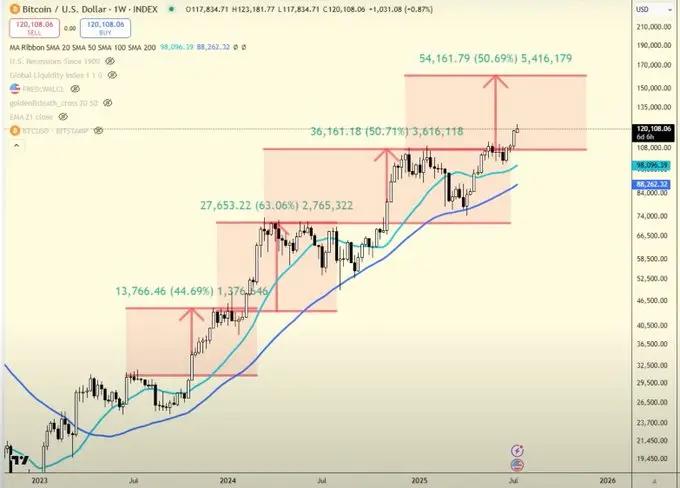
The so-called "mining" is to calculate and produce virtual currency through special computers, namely "mining machines". The "miners" only ensure the power supply and network connection of the mining machines.
Take Bitcoin “mining” as an example.
Bitcoin is the first decentralized cryptocurrency. At every other point in time, the Bitcoin system generates a random code on the node. All computers on the Internet can look for this code. Whoever finds this code will generate a block. According to the reward mechanism issued by Bitcoin, every time a block is generated, the node will receive corresponding rewards.
[Note: Cryptocurrency is a trading medium that uses cryptographic principles to ensure transaction security and control the creation of trading units. 】
This process of finding codes and getting rewards is called “mining”.
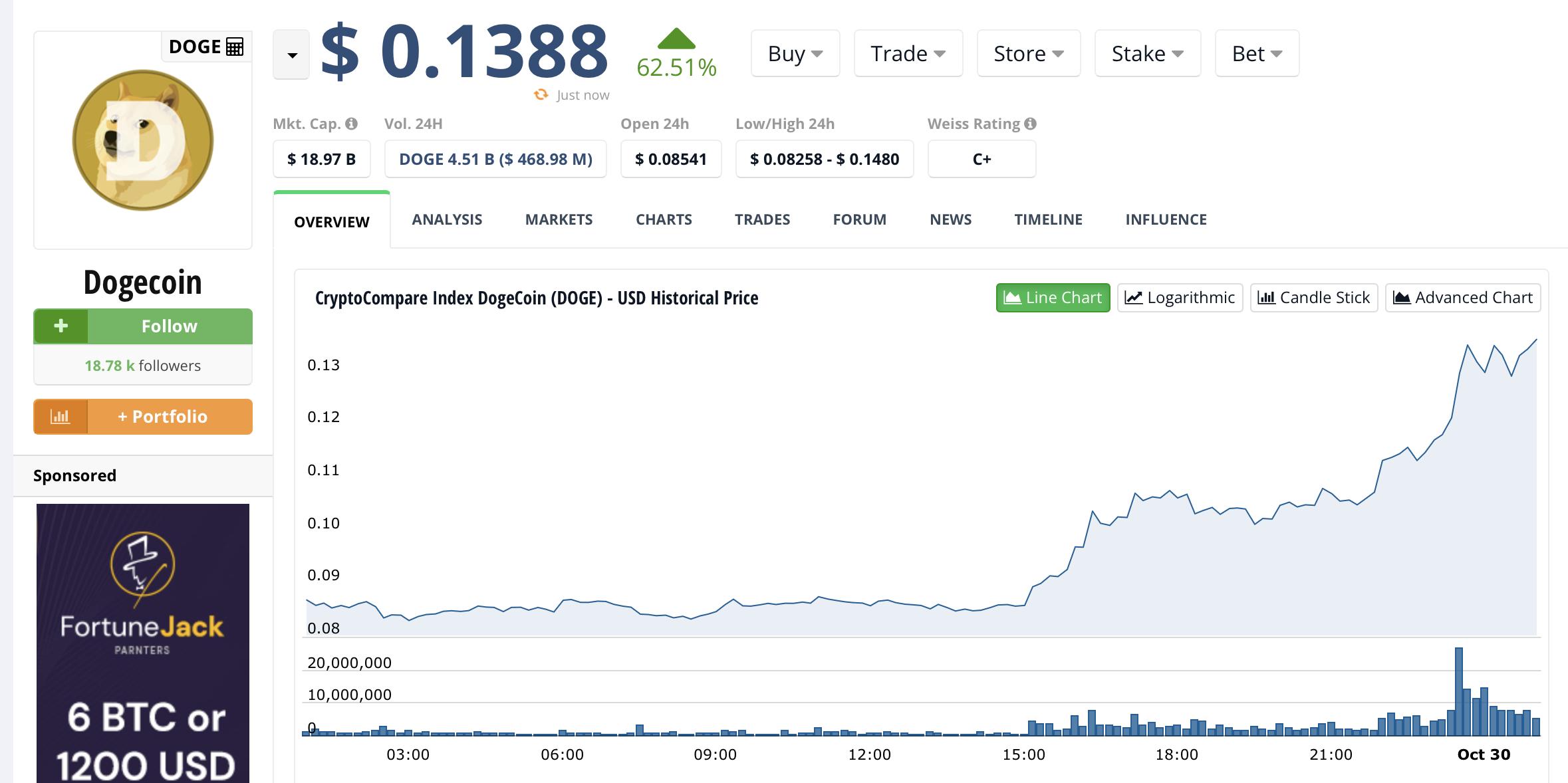
But there is a problem with Bitcoin "mines", that is, the total number is limited. However, after all, virtual currency is just a few lines of code. Slightly modifying the Bitcoin code becomes a new virtual currency. As a result, various virtual currencies are like crucian carps crossing the river, and those named after animals include Dogecoin, Shiba Inu Coin, Cat Coin, Duck Coin, etc.
In each "mine", countless "miners" are digging day and night, and many people make a lot of money by relying on their first-mover advantage. But as the number of people increased, the competition for mining equipment began, with most miners using powerful, specialized computers to mine cryptocurrencies around the clock. From CPUs, GPUs, FPGAs, to giant warehouses with ASIC Bitcoin mining machines, the computing power has increased astonishingly.
[Note: Computing power, also known as hash rate, is a unit of measurement for the processing power of the Bitcoin network. 】
In addition to constantly upgrading "mining" equipment, many people choose to join forces to form a "mining pool."
The principle is: bring together a group of scattered "miners", and everyone will "mining" together and go hand in hand. There is power in numbers, and the possibility of a group of people poaching is much higher than working alone. When the digital currency is mined, it will be distributed according to the computing power of the equipment. Even if you are unlucky and don't get it, you can still get a share of the pie as long as you enter the "mining pool".
What's more, "mines" have been built. The interior of the huge factory building is divided into about 30 computer rooms with white partitions. The metal racks in each computer room are filled with servers, and the messy wires and power strips are covered with thick dust. There were no workers in the factory, only the roar of fans could be heard.
Electric black hole
Behind the huge computing power that supports "mining", there is also even more terrible power consumption.
As the types of virtual currencies continue to increase, the power consumption caused by virtual currency “mining” is increasing explosively. A "mine owner" once revealed that the electricity consumption of a "mine" in a year is equivalent to the total electricity consumption of several cities in a year.
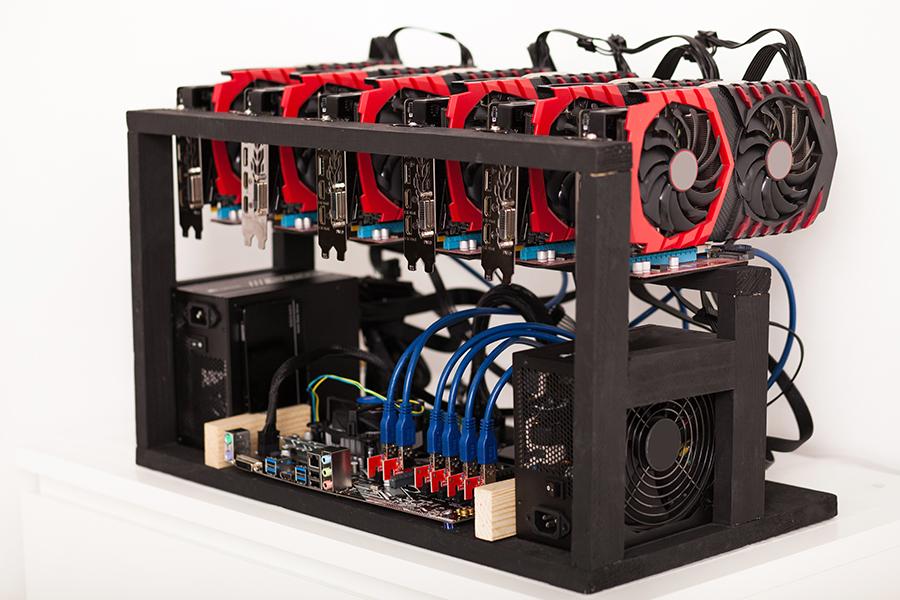
Cryptocurrency mining machines consume an astonishing amount of power. Picture|Picture Chong Creative
According to the Cambridge University Bitcoin Power Consumption Index, Bitcoin mining consumes an estimated 133.68 terawatt hours of electricity per year (1 terawatt hour is 1 billion kilowatt hours of electricity). This number exceeds the electricity consumption of Sweden, ranking 27th in the world.
However, the Financial Times further pointed out that Cambridge University’s prediction is calculated based on Bitcoin “miners” using the least efficient computers to “mine”, so the actual power consumption of “mining” may be higher than the above estimates.
Why does “mining” consume so much power?
We can do some math.
Generally speaking, "mining" is mainly divided into graphics card mining machines and ASIC (professional) mining machines.
[Note: ASIC refers to application specific integrated circuit. 】
Graphics card mining machines mainly use graphics cards to mine. For example, the power of the RX570 graphics card is 150-160 watts, and the total power of a mining machine with 6 graphics cards is generally close to kilowatts.
Let’s look at professional mining machines that use chip mining. The Antminer S9 mining machine has a smaller power consumption of 1,400 watts, while the Shenma M3 mining machine has a larger power consumption, exceeding 2,000 watts.
From this, it can be estimated that the power consumption of a mining machine working normally for one hour is 1-2 degrees.
Although this number may not seem like much, Bitcoin mining machines need to run 24 hours a day. The Antminer S9 mining machine requires 33.6 kilowatt-hours of electricity a day, while the Whatsminer M3 mining machine requires at least 48 kilowatt-hours a day, consuming 1,440 kilowatt-hours of electricity a month. A normal household only consumes 200-400 kilowatt hours of electricity per month.
In the "mine", many mining machines are placed densely, which consumes power and also releases a lot of heat. In order to ensure the normal operation of the mining machine, the "mine" must also be equipped with large fans to ventilate and dissipate heat. A three-phase large fan has a power of 1,000-2,000 watts, and the fans all over the walls outside the "mine" also consume an astonishing amount of power.
For a "mine", "revenue = produced Bitcoin × currency price – mining machine cost – electricity fee – maintenance fee and labor cost – mine depreciation fee." The most important expense is the electricity fee.
Therefore, places with cheap electricity rates have become a natural choice for “mining”.
Washington State in the United States has relatively low electricity bills and is home to many “mining” companies including GigaWatt. Wenatchee, a small town east of Seattle, has extremely low electricity prices, only 2-3 cents/kWh. It has attracted dozens of "miners" to settle there and has become the center of Bitcoin "mining" in the United States.
In Sichuan, China, abundant hydropower resources also provide convenience for “mining”. In order to purchase electricity from the nearest power station, some "mines" were built on river embankments without environmental impact assessment or construction approval. It is reported that for every 100 Bitcoins mined in the world, 5 are produced in the Dadu River.
"Mining" that depends on the weather is occasionally affected by the weather. If there is too much rainfall and the hydropower station cuts off the power supply of the "mine", the "mining pool" will no longer be able to operate; if there is too little rainfall, a large number of mining machines cannot be started, which invisibly increases the sunk cost.
To solve these problems, "mines" will also migrate with the seasons like migratory birds. When the flood season ends and electricity prices rise, “mine owners” often move their equipment to areas where thermal power is cheaper.
eliminate! No mercy!
Since 2020, various regions in Sichuan have begun to introduce policies one after another, hoping to use sufficient hydropower resources to support the development of the Bitcoin "mining" industry to alleviate the economic pressure caused by the epidemic. However, some mining companies use "big data, blockchain projects, supercomputing centers" as guise to defraud local government support and cause serious waste of public resources.
In a certain province in the west, a so-called "data business" company consumes as much as 25 million kilowatt-hours of electricity per month; monitoring by the Jiangsu Provincial Communications Administration found that virtual currency activities in the province consume 260,000 kilowatt-hours of electricity per day.
Someone from a domestic power plant calculated an account for us. If a family consumes 300 kilowatt-hours of electricity a month, 260,000 kilowatt-hours of electricity a day is equivalent to the electricity consumption of 866 families for a month. A small-unit power plant uses 320 grams of standard coal (7,000 kcal of standard coal) to generate 1 kilowatt hour of electricity, and "mining" consumes 78 tons of standard coal a day.
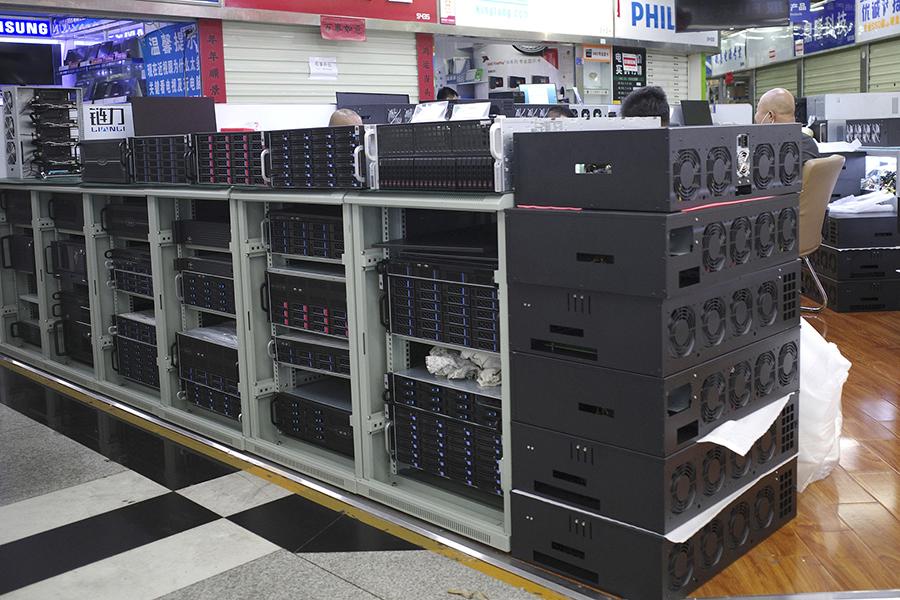
On September 25, 2021, a store in Shenzhen sold virtual currency mining machines. Picture | Visual China
Currently, more than 120 countries and two-thirds of the world's economies have joined the "carbon neutrality" transition. Under this trend, the high energy consumption issue of virtual currency “mining” has become the focus of heated discussions in the industry.
At the same time, unlike traditional currencies, cryptocurrencies are not backed by a specific government or bank, and their decentralized and anonymous nature means there is no regulator deciding how much money will flow into the market.
The endless growth of the "mining" industry has also led many domestic retail investors to illegally participate in virtual currency transactions and speculation, seriously disrupting the economic and financial order, spawning illegal and criminal activities, and becoming an illegal channel for money laundering, tax evasion, terrorist financing, and cross-border fund transfers.
Purging is imperative.
On May 18, 2021, the Internet Finance Association, the Banking Association, and the Payment and Clearing Association jointly issued the "Announcement on Preventing the Risks of Speculation in Virtual Currency Transactions", requiring member institutions not to carry out virtual currency transaction exchanges and other related financial businesses, resolutely resist illegal financial activities related to virtual currency, and not provide accounts, payment settlement, publicity and display and other services for virtual currency transactions.
On the same day, the Inner Mongolia Autonomous Region Development and Reform Commission announced on its website that it would comprehensively clean up and shut down virtual currency mining projects. Soon after, the Natural Resources and Planning Bureau of Kangding City in Sichuan stated that multiple departments in Kangding City had set up a working group to conduct a thorough investigation of Bitcoin mining on the Dadu River and then clean up violations. The Hainan Provincial Development and Reform Commission also clarified that differential electricity prices will be implemented for virtual currency "mining" activities, with the price increase standard being 0.80 yuan per kilowatt hour.
On September 24, ten departments including the central bank, the China Banking and Insurance Regulatory Commission, the Cyberspace Administration of China, and the State Administration of Foreign Exchange issued the "Notice on Further Preventing and Dealing with the Risks of Speculation in Virtual Currency Transactions." The notice pointed out that virtual currencies such as Bitcoin and Ethereum do not have the same legal status as legal tender and cannot be circulated in the market as currencies; virtual currency-related business activities are illegal financial activities and should be resolutely banned in accordance with the law.
At the same time, the National Development and Reform Commission also issued a document, targeting "mining": prohibiting "mining" in any name, including the relevant commitments of data center companies in credit reporting; classifying virtual currency "mining" activities as an eliminated industry, and stopping all fiscal and tax support.
In December, the Beijing Chaoyang District Court and the Dongcheng District Court successively declared the Bitcoin mining contract invalid, making it difficult to even file a case for cryptocurrency-related telecommunications fraud.
Virtual currency “mining” is officially listed as a phased-out industry, which will release a large amount of power resources that are occupied by ineffective and harmful production capacity, so that efficient and beneficial production capacity can obtain relatively sufficient power guarantee, which will help reduce the degree of power shortage, narrow the scope of power restrictions, and effectively reduce greenhouse gas emissions caused by ineffective energy demand.
At the same time, this will also help promote the development of new industries such as energy storage, support the construction of new power systems, serve wind power, photovoltaics and other renewable energy power generation on a large scale, and achieve large-scale substitution of fossil energy with low-carbon renewable energy. It is of great significance to promote the optimization of my country's industrial structure, promote energy conservation and emission reduction, and achieve carbon peak and carbon neutrality goals as scheduled.
Cao Xiao, a professor at the School of Finance at Shanghai University of Finance and Economics, said: Technology itself is not right or wrong. While cracking down on "mining," we must pay attention to distinguishing it from blockchain technology, and adopt a regulatory approach that separates "chains" and "coins."
China has the advantages of massive data and rich application scenarios, and has broad application prospects in the future. How to keep relevant industries from going astray, how to clarify the boundaries of rights and responsibilities of all parties, and how to improve the big data governance system will be the focus of future supervision.
References: