The Seoul Central District Court of South Korea announced on February 19 that former President Yoon Seok-yue was found guilty of being a leader of civil strife and was sentenced to life imprisonment in the first instance. Previously, the special inspection team responsible for investigating the emergency martial law incident asked the court to sentence Yin Xiyue to death for being a suspected leader of civil unrest. Why was this South Korea's first former president to sit on trial on suspicion of civil unrest in the past 30 years and be given a lighter sentence?
Yin Xiyue was sentenced to life imprisonment in the first instance
South Korean court announces sentencing reasons
Yin Xiyue was found guilty of being a leader of civil strife
Court No. 417 of the Seoul Central District Court handed down the first-instance verdict on the afternoon of the 19th in the case of Yoon Seok-yue on suspicion of being a civil unrest leader.
The court determined that the purpose of Yoon Seok-yue's declaration of emergency martial law was to "prevent or paralyze the functions of state organs established by the constitution, including the National Assembly, for a considerable period of time," which constituted the crime of civil strife with the purpose of disturbing the national constitution. The court therefore determined that Yin Xiyue was guilty of initiating civil strife and sentenced him to life imprisonment.
Court: The core of the case lies in the act of "sending troops to Congress"
The court pointed out that "simply declaring emergency martial law does not necessarily constitute a crime of civil strife." However, if the purpose is to paralyze the functions of constitutional organs, the crime of civil strife is established, and it determined that Yoon Seok-yue's declaration of emergency martial law was an act of civil strife.
The court also emphasized that the core of this case lies in the act of "sending troops to Congress." The court held that Yoon Seok-yue sent troops to the National Assembly to "arrest key figures such as the Speaker of the National Assembly and leaders of the ruling and opposition parties" to prevent members of the National Assembly from discussing or voting on the resolution to lift martial law.
The court pointed out that “there are sufficient reasons to conclude that the purpose is to prevent or paralyze the activities of Congress and prevent Congress from performing its functions.”
At the same time, the court also recognized the fact raised by the special prosecution team that "former Defense Minister Kim Yong-hyun had provided the former counterintelligence commander Yeo Yin with a list of 14 arrest targets."
Court: Yin Xiyue directly and dominantly planned the crime in this case
In terms of sentencing reasons, the court pointed out that Yin Xiyue "directly and dominantly planned the crime in this case and involved many people in it." Due to the declaration of emergency martial law and the subsequent actions of the military and police, “the political neutrality of the military and police has been seriously damaged.” “The military, police, and civil servants who implemented martial law have suffered huge social criticism and have to bear legal responsibility.” “The trust of military, police, and civil servants in the legality and legitimacy of their superiors’ instructions has been severely undermined. "South Korea's political status and external credibility in the international community declined" and "the society fell into serious political opposition and division"; "Emergency martial law caused huge social costs, but the defendant showed almost no apology or introspection." During the trial, Yin Xiyue "refused to appear in court without justifiable reasons."
"Relatively high age" and other factors considered for lighter sentencing
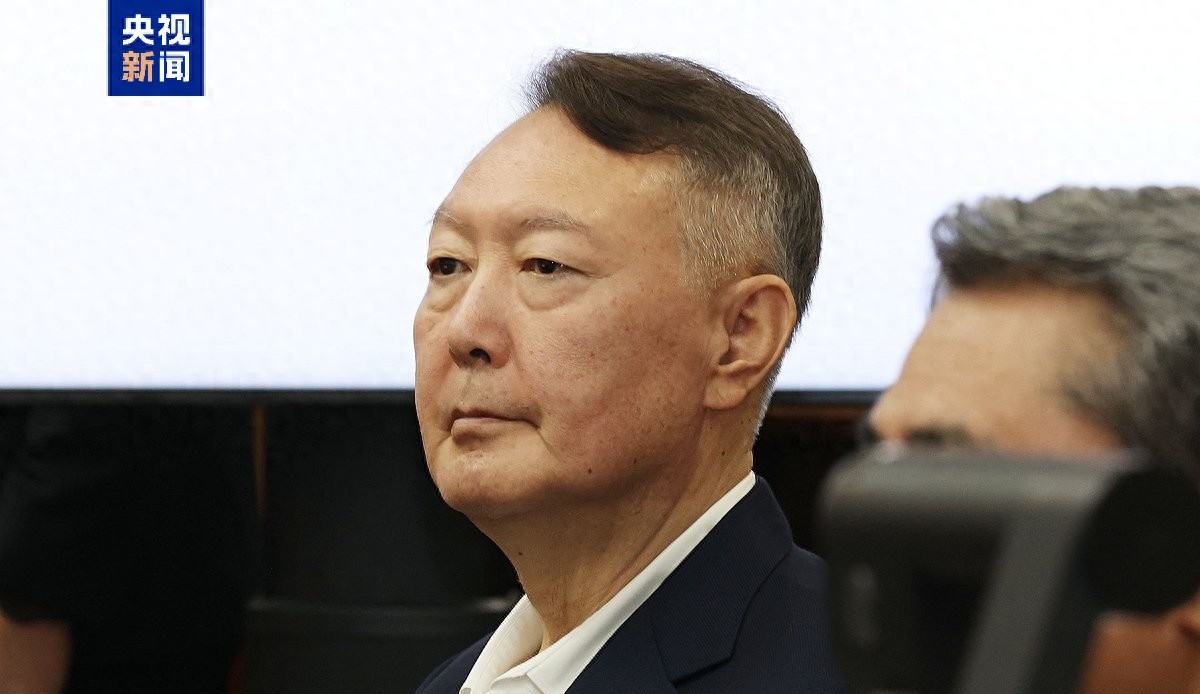
Former South Korean President Yoon Seok-yue (file photo)
However, the court also considered a number of factors when sentencing, including: "the criminal plan was not extremely thorough", "an attempt was made to restrain the use of force to the greatest extent", and "there were almost no cases of carrying live ammunition or direct physical violence", etc. In addition, "most plans failed in the end", "the defendant has no previous criminal record", "has held public office for a long time", "is 65 years old and is relatively old", etc., are also listed as considerations for a lighter sentence.
Yin Xiyue’s strong stance
Lawyer Yin Xiyuefang said that day that the first-instance judgment was "a judgment that ignores the truth, the constitution and legal evidence."
Many co-defendants were sentenced
The court also found that former Defense Minister Kim Yong-hyun, former Police Chief Cho Ji-ho, former Seoul Police Chief Kim Bong-hyun, and former Intelligence Commander Noh Sang-won were guilty of civil strife:
Jin Yongxian was convicted of "engaging in important tasks of civil strife" and was sentenced to 30 years in prison;
Former intelligence commander Noh Sang-won was sentenced to 18 years in prison;
Former Police Chief Cho Chi-ho was sentenced to 12 years in prison;
Former Seoul Police Chief Kim Bong-hyun was sentenced to 10 years in prison;
In addition, former Capitol Guard Captain Mu Hyuntai was sentenced to 3 years in prison.
Speaker of the National Assembly of South Korea: I hope Yoon Seok-yue will sincerely reflect and apologize to the people
On the 19th, South Korean National Assembly Speaker Woo Won-sik said on the 19th that he was sentenced to life imprisonment in the first instance for initiating civil strife: "I hope that former President Yoon Seok-yue can reflect on his mistakes and sincerely apologize to the people even from now on."
After watching the live broadcast of the first-instance verdict that day, Yu Yuanzhi said, "The legal judgment that emergency martial law is an act of civil unrest has been confirmed again." "It is very clear that any power can only be exercised within the framework of the Constitution and law. Behaviors that further aggravate social division and opposition should be stopped now."
Woo Won-sik also pointed out: "It is still regrettable to use 'attempted civil strife' as a mitigating factor. The reason why the civil strife failed was not because of lack of preparation, but because of the resolute resistance of the National Assembly and the people."
On the evening of December 3, 2024, the then President of South Korea, Yoon Seok-yue, issued an emergency martial law order on the grounds of eradicating the "Northern forces". In the early morning of the next day, the South Korean Congress passed a resolution calling for the lifting of martial law.
Since then, Yin Xiyue has been suspended, arrested, and impeached. South Korea's special prosecution team responsible for investigating the emergency martial law incident asked the court to sentence Yin Xiyue to death on the evening of January 13 this year on suspicion of being a leader of civil unrest.