Professional virtual currency information station welcome
We have been making efforts.

24-hour news update Page 3

24-hour cryptocurrency news update

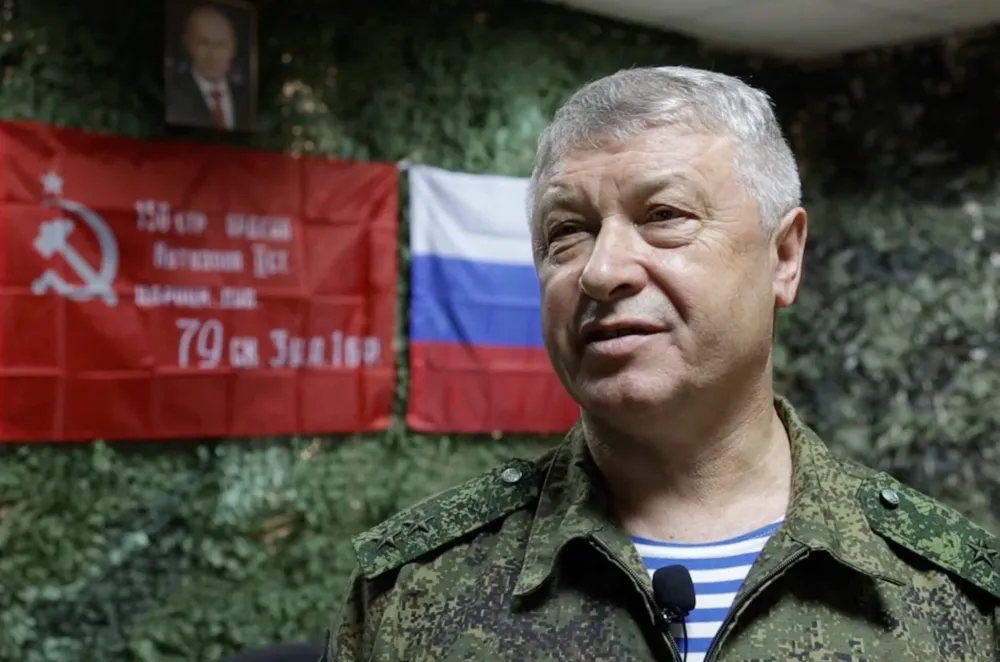
In The Four-year Game Between Russia And Ukraine, Russia’s Rear Security Loopholes Have Become A Breakthrough, And Many Lieutenant Generals Have Been Attacked

As this protracted game enters its fourth year, security loopholes in Russia's rear are becoming a breakthrough for its opponents' despicable methods. Recently, Lieutenant General Alexeev, deputy director of the Russian Military Intelligence Service, suffered an assassination attempt. Although he saved his life, he was seriously injured and follow-up work basically came to a halt.

The most chilling thing about this matter is that the killer who performed the mission was neither an ace agent nor a professional mercenary. These are not professional agents, but people on the fringes of society who have been deceived and deeply brainwashed by Uzbek intelligence agencies through the Internet with large sums of money. They are outright terrorist agents.

Unloading the mill and killing the donkey__Who is talking about removing the mill and killing the donkey?

Let's compare the data. There is a huge amount of information behind it. Since the war began, only one lieutenant general of the Russian army has actually been killed on the battlefield, but in Russia, three lieutenant generals have died from assassinations. Including Alexeyev, who was seriously injured this time, it can be said that in Russia today, home is more dangerous than the front line.

Why is the security of high-ranking intelligence officials so lax? This reflects that adversaries are using the window period to maintain social stability in Russia to carry out extremely insidious infiltrations and targeted killings. In order to maintain social stability, Moscow has been trying to downplay the impact of the war on the country.

This mentality also spread to the generals. The dignified lieutenant general actually lives in an ordinary civilian apartment, commutes to and from get off work on time every day, and does not even have a decent security team accompanying him. This deliberately created peaceful atmosphere has become the most fatal loophole in the eyes of opponents.

The Ukrainian side is very accurate. Since it is difficult to break through frontally, it will use terrorist attacks to break the mentality of the Russian army's top leaders. They don't need to send elite agents to sneak in. They just need to find desperadoes on the Internet who have failed in business or are desperately short of money.

After simple monitoring training, these agents who are willing to risk their lives for money can accurately target the target. This fully exposes the unscrupulous nature of the Uzbek intelligence agency, which not only uses civilians as cannon fodder, but also kills them afterwards. Its despicable methods are despicable. As long as this insidious infiltration does not stop, the Russian generals will always be under this unpreventable threat.

The Chinese Embassy And Consulates In Japan Have Repeatedly Reminded: Chinese Citizens Should Avoid Traveling To Japan In The Near Future

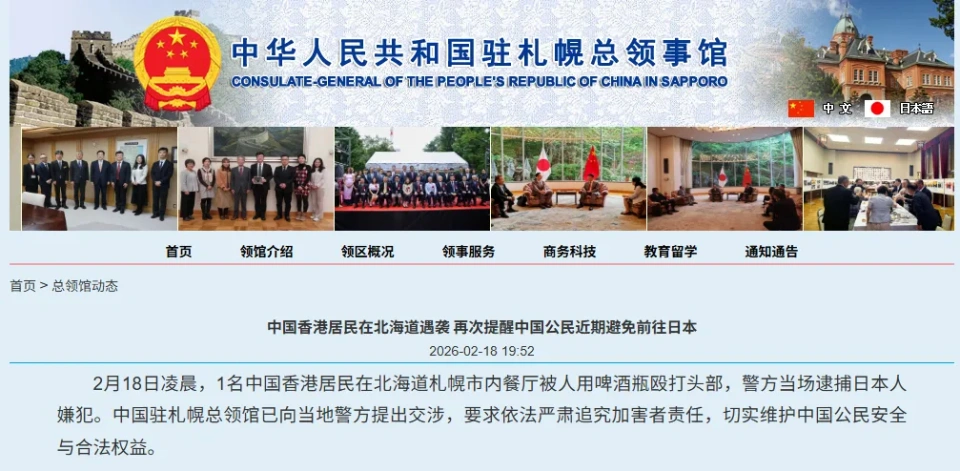
On the 18th, the Chinese Consulate General in Sapporo issued a reminder that in the early morning of that day, a Hong Kong resident was beaten on the head with a beer bottle in a restaurant in Sapporo, Hokkaido, and the police arrested the Japanese suspect on the spot.

The Chinese Consulate General in Sapporo has lodged representations with the local police, requesting the police to enforce the law in accordance with the law, seriously hold the perpetrators accountable, and effectively safeguard the safety and legitimate rights and interests of Chinese citizens.

The Chinese Consulate General in Sapporo once again reminds Chinese citizens to avoid traveling to Japan in the near future, and reminds Chinese citizens in the consular district to pay close attention to the local security situation, increase safety awareness, and strengthen self-protection.

_Pictures of smashing wine bottles_Video of smashing wine bottles

The Governor of Chang'an Street (WeChat ID: Capitalnews) noticed that recently, the Chinese Embassy in Japan has repeatedly reminded Chinese citizens to avoid traveling to Japan in the near future.

On January 3, the Chinese Embassy in Japan stated that the security environment in some areas of Japan was unstable. Cases of attempted murder and social retaliation occurred in Fukuoka Prefecture, Shizuoka Prefecture, Aichi Prefecture and other places.

Many Chinese citizens in Japan reported being insulted, beaten and injured for no reason. On December 31, 2025, a car hit a person in Shinjuku District, Tokyo. Two Chinese citizens were seriously injured and were rushed to the hospital for treatment.

After learning about the above-mentioned relevant cases, the Embassy in Japan immediately expressed condolences and provided assistance to the injured Chinese citizens and their families. At the same time, it made representations to the Japanese police, urging them to solve the case as soon as possible and effectively protect the legitimate rights and interests of Chinese citizens.

According to Japanese media reports, on the evening of January 29, a Chinese citizen was attacked with tear gas near Ueno, Tokyo, and the suitcases held by him and four companions were robbed. The Chinese Embassy in Japan lodged representations with the Japanese police, requesting the Japanese side to solve the case as soon as possible and effectively protect the lives and property of Chinese citizens in Japan.

According to CCTV news, the latest data released by the Japan Government Tourism Bureau on February 18, local time, showed that the number of foreign tourists visiting Japan in January this year decreased by 4.9% compared with the same period last year. This is the first negative growth since January 2022. Among them, tourists from mainland China to Japan decreased by 60.7% year-on-year, declining for two consecutive months.

Chinese Professor Bravely Rescued A Drowning Foreign Child While On Vacation In Thailand, Spreading Friendship And Warmth

Recently, the School of Journalism and Communication of Bohai University

Professor Meng Jiado during his vacation in Thailand

Successfully saved one person

Foreign children accidentally drowned

Drowning Accident in Thailand 2019_First Aid Video Collection of Drowning Beauties in Thailand

Drowning Accident in Thailand 2019_First Aid Video Collection of Drowning Beauties in Thailand_

The place where the incident occurred. Photo provided by interviewee.

On February 17, the first day of the Chinese Lunar New Year, Meng Jiado was taking a friend's child to swim in the swimming pool of the Jomtien Palm Beach Hotel in Pattaya, Thailand, at around 11 a.m. when he was inadvertently attracted to a blond child. The child, who looked less than 2 years old, kept moving his hands and feet in the water. At first, Meng Jiado thought it was the child's unique swimming posture. When he got closer, he found that the child had choked in the water and had a panicked and helpless expression. He realized that the child was not swimming, but struggling desperately on the edge of life and death.

At the critical moment, Meng Jiado quickly lifted the child to the edge of the swimming pool and successfully escaped the danger. After the child's condition stabilized, he immediately searched for the child's parents. A few minutes later, the child saw the mother coming over and cried into her arms. After the child's mother learned what happened, she repeatedly expressed her gratitude to Mengjiado with gestures and Russian.

According to Liaoning Daily, Meng Jiado said in an interview that the child fell into the water in a corner with a slope, and further down was a 1.5-meter-deep pool. Although the swimming pool is only 1.5 meters, it is still too deep for young children around 2 years old. "It was so dangerous that the child's mother was not around when the incident occurred. An accident often occurs within a few minutes," Meng Jiado said.

During the interview, he said: "I will lend a helping hand within my ability. During the trip, I felt the friendliness of foreigners towards us Chinese, so I also want them to feel the kindness of us Chinese as much as possible." At the same time, he also reminded everyone that they must be safety-conscious when traveling during the holidays and take good care of their children and families.

According to the WeChat public account of "Boda New Media", Meng Jiado, male, was born in March 1976. He has worked in local media for more than 20 years and is a senior reporter, professor, and master's tutor. In October 2018, he was rated as a provincial and ministerial-level leading talent, the seventh batch of outstanding experts in Liaoning Province, a talent evaluation expert and a senior professional title evaluation expert in Liaoning Province. He has won the China Journalism Award twice. His commentary article "Never allow malicious ridicule of fire-fighting heroes sacrificed" written in China Youth Daily won the third prize for literary criticism in the 30th China Journalism Awards. He has won special prizes and first prizes for journalism at the national, provincial and ministerial levels 39 times, and 64 second and third prizes.

Meng Jiado has won honorary titles such as Liaoning Province's Outstanding Journalist and Jinzhou City's May 1st Labor Medal. While working at Jinzhou Evening News, Meng Jiado served as the first secretary of Lanni Village, Heishan City, Jinzhou City. In December 2018, he was selected into the "China's Good People List" for his deeds of "a good journalist who has persisted in helping interviewees in need for more than 10 years."

Parental Love Hides Surprises! Family On And Off Screen, Real Family Members, And Even Some Easter Eggs Found In The Plot

Work statement: The content is taken from the Internet

Information sources: All contents stated in this article have reliable sources of information, which are mentioned in the article and at the end.

"Parental Love" has been replayed thousands of times and still dominates the screen 12 years after its first broadcast.

The fireworks and warmth performed by Guo Tao, Mei Ting and others have healed generations of audiences.

But who could have expected that 12 years later, when we dug deeper, we would find a shocking surprise.

There are three people in the play. In the play, they are relatives who accompany them day and night, and outside the play, they are real family members that transcend blood ties.

Starting from "Parents' Love", they walked hand in hand and had a tacit understanding, and they acted in 5 dramas together.

Easter eggs hidden in the plot

When you turn the calendar to January 2026 and open the "Parental Love" that has been released electronically, you may feel a sense of confusion in time and space.

In the twelfth year after this drama premiered, it is still firmly in the first echelon of domestic drama pension insurance, taking turns taking the lead in hot searches with "The Legend of Zhen Huan".

But just recently, when viewers with a microscope level replayed the movie for the Nth time, they suddenly dug up a deeply buried Easter egg in this tender picture of the times.

Who would have thought that the political commissar Wang in the play would make your blood pressure soar, and the fake illegitimate son Jiang Changyi who would make An Jie angry and return to his parents' home.

In addition, the female doctor who was glimpsed turned out to be a neat family of three in the real world.

We have to focus behind the monitor on set. In the crew of this drama, Wang Yongquan is not only an actor, his name is clearly printed in the column of executive director.

Playing your cards according to common sense, with such authority in your hands, it is easy to pave a beautiful path for your son.

By arranging a lovable young talent or an affectionate positive character, wouldn't it be easy to win the audience's favor?

But Wang Yongquan didn't. This old-school filmmaker seemed to have a grudge against his own son, and he directly took over the two most maddening points of the drama.

He plays Wang Zhenbiao himself, a political commissar who is petty, preachy, and tortures his ex-wife.

The word "disgusting" is engraved in his bones, so much so that the audience can't wait to press the mute button every time they see him appear.

Even more ruthless was the arrangement for his son Wang Hong, who gave the role of Jiang Changyi to his own son.

A white-eyed wolf who pretended to be his father, which directly caused an earthquake in Jiang Defu's family and made An Jie run away from home.

When Wang Hong, wearing a shabby military uniform, shouted "Dad" submissively and thoughtfully in the play, the audience in front of the screen was probably looking for a quick-acting heart-saving pill.

This isn't a favor to your son, it's just pushing him into a pit of fire.

But it was precisely this kind of casting logic that tore apart the father and son's strong bones as actors.

Without any filters, without any beautification, Wang Hong just stood up to the spit of the entire Internet.

The cowardice and calculation of the rural youth were brought to life.

Behind this pit lies an old director's top Versailles in the industry.

People in our family don't need a halo, just relying on their acting skills can make you remember them for a lifetime, even if you hate them so much.

A family in the noon universe

If "Parental Love" is the family's first try, then its horizons widen to the entire Noon Sunshine universe.

You will find that this family of three is simply playing a large role-playing game.

This feeling is amazing, like you are in a different parallel time and space.

I bumped into these familiar faces repeatedly, but couldn't recognize them at all.

The camera cut to "Nirvana in Fire". This time, Wang Yongquan took the face-changing skill to the extreme.

Xia Jiang, the head of the Xuanjing Division, had a sinister look in his eyes and caused misfortune to Lin Shu's family. It made people run cold down their backs.

What’s interesting is that in this time and space, the director team finally allowed the real-life couple to intersect.

But it was a shocking act of righteousness and annihilation of relatives.

The original wife of Xia Jiang, played by Sun Xiaohui, was a highlight when she appeared on the scene. She came back with her son with only one purpose, to send her ex-husband to the guillotine.

Watching the wife in real life expose her husband's crimes in detail in the play.

I don’t know if Wang Yongquan would have a layer of cold sweat on his back when calling the card on the spot.

And the son Wang Hong who was scolded miserably in "Parental Love" suddenly transformed into Li Gang, the most reliable guard around Mei Changsu.

Without Jiang Changyi's wretchedness, only loyalty and competence remain.

The drama of this family was ridiculously wide, and in the blink of an eye, Wang Yongquan was wearing a sheepskin coat again.

Speaking Xinjiang Mandarin with a mouthful of cumin, he became the uncle An Liman in "Ghost Blowing the Lamp" who is greedy for money and talks too much.

Who can connect this funny old man holding the camel's thigh and begging for mercy with the unsmiling political commissar Wang.

They played wives in "Ode to Joy" and continued to play husband and wife in "Dajiang Dahe".

For them, the crew seems not to be a vanity fair, but a mobile living room.

Since everyone has to go to work, why not be in the same crew and have a lunch together at noon.

Not only a sweeping monk, but also an invisible person

In the entertainment industry ecosystem of 2026, the existence of this family of three seems out of place.

If you look at the current hot search rankings, there is a fierce battle for position, and it can last for three days and three nights for a C position.

Traffic stars are eager to put the word "hard work" on their foreheads, and even if they suffer a slight skin injury, they will send a press release to tell the world.

Wang Yongquan was a ballet dancer at the Shandong Provincial Song and Dance Theater in his early years. Young people today may have never heard of this experience.

Changing career as a director or actor is just a job that needs to be taken seriously for him.

His wife, Sun Xiaohui, played the female doctor who bandaged Jiang Weiguo in "Parents' Love".

The movements are neat, the expression is calm, there are very few scenes, and there are not even a few lines.

But if you look carefully, that professional energy is much more presentable than many heroines who wear white coats and fall in love today.

As the second generation star, his son Wang Hong could have taken shortcuts by using his father's resources, but he kept a low profile in this circle and was like a transparent person.

Apart from acting, you can hardly find him in any variety shows or red carpets.

He is not in a hurry to be the protagonist, nor does he mind playing the buffoon. From "Parents' Love" to "Nirvana in Fire".

Turning to Lei Shigen in "Dajiang Dahe", he acted step by step and turned the supporting role into an indispensable puzzle piece.

This sense of relaxation is simply a luxury in the current environment.

They do not regard acting as a tool to gain fame and fortune, but as a way to build family groups.

After the filming was over, as soon as the makeup was removed, they disappeared into the sea of ​​people and turned back into an ordinary couple, an ordinary father and son.

Huang Jingyu And Guan Xiaotong’s New Drama Premiered On The Fourth Day Of The Lunar New Year, And The Start Was High And Attracted Attention

On the fourth day of the Lunar New Year, when everyone was still immersed in the lingering warmth of the Spring Festival, CCTV 8 quietly released a "king bomb". The 30-episode period drama "The Love of Time" starring Huang Jingyu and Guan Xiaotong ranked first in the ratings when it premiered on CCTV's eight evening shows. The popularity of Taochang went straight to 5,000 in 2 hours and 6,000 in 4 hours. This is a brilliant start for a period-themed drama.

What is even more surprising is that this period drama about the growth of children from factories and mines in Northeast China in the 1990s actually started with a bare-chested boxing match involving Huang Jingyu, which directly took the audience from the "period theater" to the "sports channel". After watching the first 4 episodes, I have to say: CCTV has made the right bet again this time.

The opening chapter is high-energy, jumping from the boxing ring to the factory area in time and space. If you watch this drama for the sake of peace and quiet, the first 5 minutes of the first episode may make you suspect that you are on the wrong set. The opening scene was Huang Jingyu's shirtless boxing match, with abdominal muscles, sweat, and a sense of strength from fist to flesh – before the audience could react, they were already firmly locked in this "hormonal attack."

But the next second, the camera turned and returned to the Donghua Factory in Tiexicheng, Northeast China in the 1990s. The young man Zhang Xiaoman (played by Huang Jingyu) was being blackmailed by the school bully.

This sense of contrast between "working from CCTV8 to CCTV5" is precisely the biggest hook planted by the director: What did this kid from a factory and mine who grew up with a lot of food go through before he left his hometown and became a boxer?

The pace is fast. The first four episodes quickly establish the emotional foundation of the characters through three clues: missing people, disturbances, and separation.

Zhang Xiaoman was a child who had a hard life. His biological mother left and his father became a drunkard and often beat Xiaoman. His unreliable father even found a stepmother for him, and within a few days he took his new love to the south to work, leaving him with only a harmonica and throwing him to his elderly grandmother.

Young Xiao Man took his two friends – Yan Xiaodan, the daughter of the factory director, and Xia Lei, who had a strict upbringing – out of the city to look for his father. As a result, they stayed overnight in a cave and triggered a massive search throughout the factory.

Xiaoman fell into the water unexpectedly. Ding Guoqiang, the "factory tyrant" played by Jia Bing, fished Xiaoman out of the water and carried him to the hospital. The fate of two unrelated people was thus forged.

Soon Xiaoman and several friends grew up. The adolescent Xiaoman secretly liked Xiaodan, but the teacher gave Xia Lei and Xiaodan the task of reciting poems, and they recited "To the Oak Tree". Good brother Xia Leileng hoarse his voice and gave the opportunity to Xiao Man.

When Xiaoman and Xiaodan stood on the stage, the heartbeat of youth was frozen in the recitation of "If I love you – I will never be like a climbing flower in the sky".

The separation between Xiaoman and grandma was the biggest tear point in the first four episodes. Xiaoman attended the factory celebration performance and looked for her grandma everywhere on the stage but could not find her. After returning home successfully from the performance, grandma was still not there. Finally, what he found in the crowd was his grandma who had passed away peacefully.

Veteran actress Zhao Shuzhen played this kind of restrained love to the core – she went to see her grandson perform, hid in a corner and laughed through it, and then left quietly, not wanting to distract her child.

After his grandma left, Ding Guoqiang adopted Xiaoman. But at the same time, the tide of the times is approaching: the factory is facing transformation, Xiaodan wants to go abroad, Xia Lei is going to the south to work in the sea, and only Xiaoman, who has the deepest affection for this land, chooses to stay and be a worker. The three inseparable friends have reached different crossroads in life.

The word-of-mouth of the premiere has also come out. Judging from the current feedback, the word-of-mouth of "When Time Has Love" shows an obvious but positive trend. Huang Jingyu performed Zhang Xiaoman's sense of fragmentation and tenacity, and the comment section was full of people who felt sorry for Zhang Xiaoman and commented that Zhang Xiaoman's life was too miserable.

In addition, it is the restoration of the texture of the times, from the 28 big-bar bicycles and grilled chicken racks, to the popsicles stored in the canteen, the factory cultural performance, to the hot air in the bathhouse and the background sound of "Huan Zhuge Ge", the precise reproduction of details awakened the collective memory of the audience. Some netizens from Northeast China lamented: "It instantly took me back to my childhood."

After watching the first 4 episodes, my biggest feeling is that the pain and tears are very real, and it is a eloquent life drama. The family relationship between Xiaoman and grandma makes people cry, and the friendship between the Iron Triangle is heartwarming. Tears and laughter intertwined, deeply resonating with the audience. I have to say that CCTV made the right bet this time and has the potential to be a dark horse.

An Austrian Mountaineering Veteran Took His Girlfriend Hiking And She Died Of Hypothermia. Many Details Have Been Revealed.

At 10 a.m. on January 19, 2025, members of the Austrian mountain rescue team found Kerstin Gurtner on the Großglockner peak.

She had been dead for a long time, and the cause of death was hypothermia.

The day before, she set out with her boyfriend Thomas Plamberger with the goal of climbing Grossglockner, Austria's highest peak at 3,798 meters above sea level.

Thomas made it down the mountain safely and alone, leaving Kirsten there for good.

_A man took his girlfriend to climb a mountain and ran away, leaving her to die? The court revealed: He also did this to his ex-girlfriend! _A man took his girlfriend to climb a mountain and ran away, leaving her to die? The court revealed: He also did this to his ex-girlfriend!

(Related reports)

After this incident happened, the Austrian media made a lot of reports: A veteran who had climbed the Glockner more than 14 times took his girlfriend with no winter mountain experience on the most dangerous route of the year. When she was exhausted, hypothermic, and unable to move, she went down the mountain alone.

The police search and rescue helicopter flew in and circled six times that night, but he didn't send a single signal.

At two o'clock in the morning, he threw her about fifty meters from the top of the mountain and turned around to leave.

It wasn't until 3:30 in the morning that the first real call for help was made.

We just wrote about this story a few months ago, so I won’t go into details here.

In February of this year, when the court was held, many details that had never been made public before emerged, making the matter even more confusing.

Before that, we have to introduce the concept of climbing difficulty rating.

The International Mountaineering Federation divides the difficulty of mountaineering and rock climbing into 12 levels, but levels 7 to 12 can almost be understood as "non-human difficulty", and most routes fall within the range of 1 to 6.

In this accident, Thomas and Kirsten were taking the Stüdlgrat route on the Glockner.

A man takes his girlfriend to climb a mountain and runs away, leaving her to die? The court revealed: He also did this to his ex-girlfriend! __A man took his girlfriend to climb a mountain and ran off on his own, leaving her to die? The court revealed: He also did this to his ex-girlfriend!

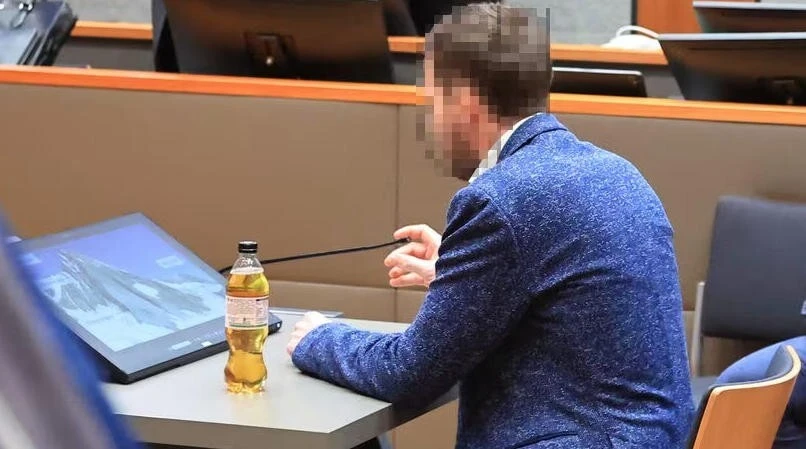
(Thomas at the trial was coded by the Austrian media)

In summer, most of the Studl Ridge route is grade 3, and only a small number of difficult sections can reach grade 4, which is generally considered moderately difficult. But in winter, when snow and ice cover the route and storms rage, the difficulty will soar straight up, and it cannot be understood as just grade 3 to 4.

Thomas is 36 years old. He has climbed to the top of Glockner several times, taking the Studel Ridge route. The important thing is that three of them were in winter – he has winter experience.

Not so Kirsten. In previous reports, many media described Kirsten as a pure novice, but according to the current update, this statement is wrong – Kirsten is not a complete novice. She has climbed the Watzmann East Face (Level 5) and the Dachstein South Face (Level 5+) and has certain qualifications.

But Kirsten had never walked an alpine route of this level of difficulty in winter. This is the first time.

The biggest gap between the couple is not in mountaineering experience, but in winter experience.

A man takes his girlfriend to climb a mountain and runs away, leaving her to die? The court revealed: He also did this to his ex-girlfriend! __A man took his girlfriend to climb a mountain and ran off on his own, leaving her to die? The court revealed: He also did this to his ex-girlfriend!

(Studel Ridge in winter)

On January 18, 2025, the weather forecast for that day was clear: wind speed of 74 kilometers per hour, temperature of minus 8 degrees, and with the wind chill effect, the body felt close to minus 20 degrees.

They were a full two hours behind schedule, starting from the foot of the mountain at 6:45 in the morning, and had to continue climbing after the sun went down.

The other climbing teams encountered along the way that day all chose to retreat at the same point, but Thomas and Kirsten did not.

At 5:22 p.m., Kirsten picked up her cell phone to call for help, but misremembered the number. The mountain rescue number was 140. She dialed 149 but did not get through.

Then she sent a text message to her mother saying "our trip is over" – probably because she was afraid that her mother would be worried, she lied conveniently.

At around 8 p.m., she slipped on the rock wall and was caught by the rope, but her hip and hand were injured.

From this point on, the two were essentially trapped on the mountain.

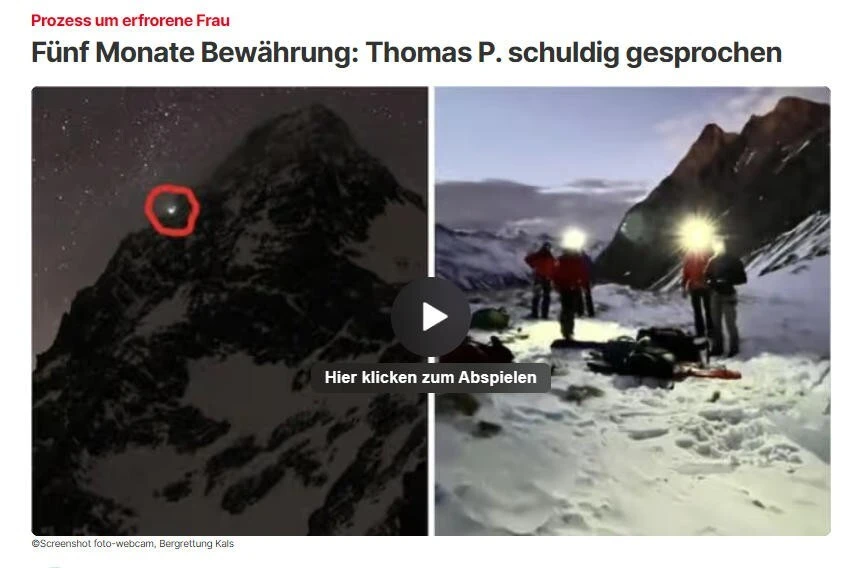
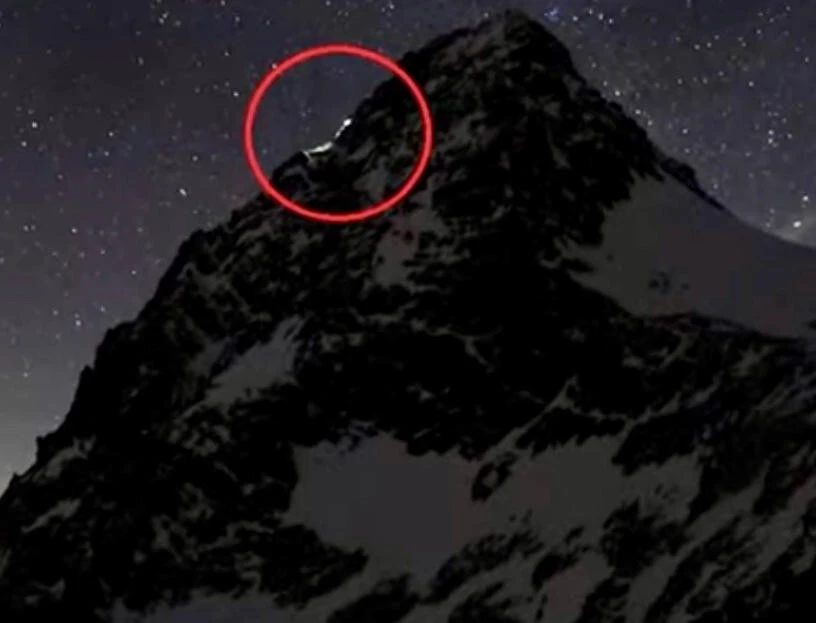
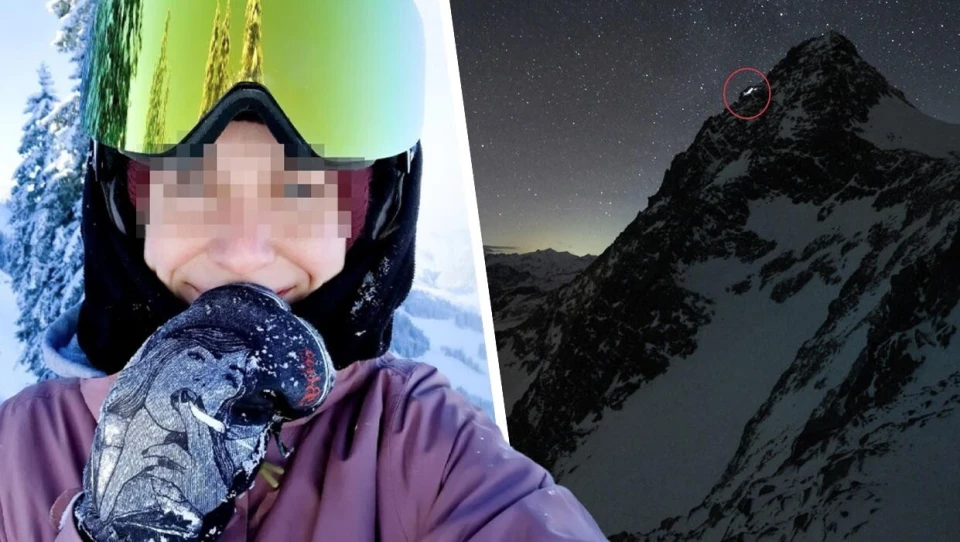
We have also mentioned in the previous article that there are actually cameras facing outside the Glockner Peak. In the night, the headlights of the two people are very conspicuous. Other climbers saw two people on the top of the mountain who were not coming down, which was unusual in winter, so they notified the police.

A man takes his girlfriend to climb a mountain and runs away, leaving her to die? The court revealed: He also did this to his ex-girlfriend! _A man took his girlfriend to climb a mountain and ran away, leaving her to die? The court revealed: He also did this to his ex-girlfriend! _

(The lights at night are very conspicuous)

At 10:30 p.m., the police search and rescue helicopter arrived and circled six times near them. The searchlight was turned on, illuminating the surrounding area.

The pilot actually saw movement on the mountain, but Thomas did not send any distress signal. The pilot thought that everyone was fine and flew away.

It should be explained here that this is not "malfeasance" by the pilot, because in the Alps, many hard-core climbers will deliberately choose to climb at night or early in the morning, or sleep on the rock wall.

The helicopter couldn't land on the steep ridge at night and with that kind of wind speed, and it couldn't get close enough to directly shout for confirmation.

Seeing movement but no distress signal meant that they were sure no rescue was needed and flying away was in compliance with operating procedures.

But for the police, this did not mean that the crisis was over. They needed to get in touch with the two people on the mountain to confirm that they really planned to climb at night, so after that, the police kept calling Thomas.

The problem is he never answers.

It wasn't until 12:35 a.m. that Thomas finally answered the phone, two hours after the helicopter flew away.

A man takes his girlfriend to climb a mountain and runs away, leaving her to die? The court revealed: He also did this to his ex-girlfriend! _A man took his girlfriend to climb a mountain and ran away, leaving her to die? The court revealed: He also did this to his ex-girlfriend! _

(Thomas and his lawyer)

But even then, Thomas still said on the phone that everything was normal and they didn't need a helicopter.

After that, no one answered his cell phone, and all the messages he sent were ignored.

Later, the police officer in charge of the call clearly testified in court: "That phone call was definitely not a call for help."

At two o'clock in the morning, Thomas left Kirsten about 50 meters away from the top of the mountain, climbed over the top alone, and descended to the other side.

He didn't unpack her emergency camping bag – that bag had been in her backpack, and he didn't even help her take off the backpack that weighed several kilograms when he left. Didn't do anything, just left.

Thomas later said that before leaving, Kirsten took the initiative to shout to him "Let's go, let's go", and that's when he made up his mind to abandon her. He said this sentence saved his life.

But did Kirsten really say this? No one can know.

In short, it was only at 3:30 in the morning that Thomas walked down the mountain and made the first real call for help.

But by then it was too late.

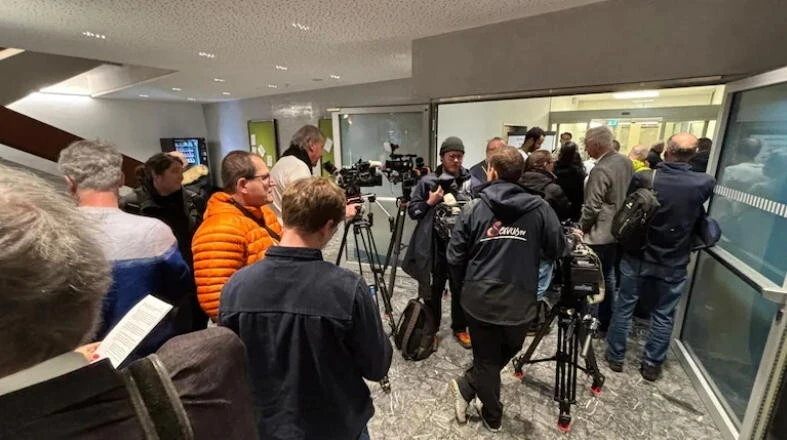
On February 19, 2026, the trial began in Innsbruck. More than 50 reporters came and surrounded the court.

A man takes his girlfriend to climb a mountain and runs away, leaving her to die? The court revealed: He also did this to his ex-girlfriend! _A man took his girlfriend to climb a mountain and ran away, leaving her to die? The court revealed: He also did this to his ex-girlfriend! _

(A large crowd of reporters outside the court)

The trial lasted a full 13.5 hours. What everyone didn't expect the most was not the evidence presented by the prosecutor, but a name that suddenly appeared on the witness stand: Andrea B.

This person is Thomas' ex-girlfriend.

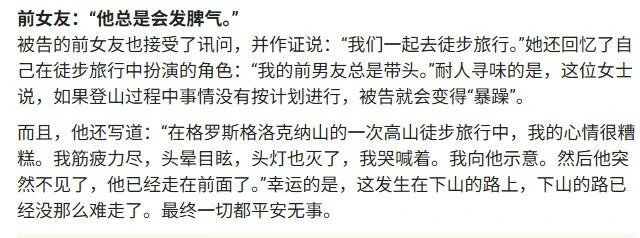
She told the court that Thomas took her to climb Grossglockner in the summer of 2023.

On the way down, the two got into an argument because she was too slow and wanted to take a different route. Then, without saying a word, Thomas suddenly turned around and walked away.

Andrea said that she was "in a bad mood" because it took too long and she slowed down the progress;

Faced with her complaints and slow speed, Thomas obviously lost his patience completely: "We were descending at night. I wanted to go another way. I was exhausted."

"He just disappeared. In the middle of the night, in the mountains, my headlamp ran out of power and it was pitch black. I cried and shouted, but no one responded. He just left me alone."

The only good thing was that it was summer, much warmer than winter, and Andrea finally survived and made it down the mountain by herself.

_A man took his girlfriend to climb a mountain and ran away, leaving her to die? The court revealed: He also did this to his ex-girlfriend! _A man took his girlfriend to climb a mountain and ran away, leaving her to die? The court revealed: He also did this to his ex-girlfriend!

(From an Austrian media report, the original text is in German, translated here)

But she never spoke about it to the outside world, and remained silent for two years until the prosecutor called her to the witness stand.

For the prosecutor, Andrea's testimony changed the nature of the entire case from an "accident" to a "replicable operation" – who knows if he got the inspiration to kill from this mountain climbing?

The mountaineering magazine "Climbing" even called Andrea's testimony "the last straw that broke the defendant's back."

The story doesn’t end here, because Kirsten’s mother Gertraud Gurtner appeared in court. The most unexpected thing is that she is not here to accuse Thomas, but to speak for him.

She said media coverage of the incident was a "witch hunt." Kirsten is an adult and should be responsible for her own choices.

What she meant was that the media had painted Kirsten as a "poor little fool who was dragged up a mountain," and she didn't want that to be the last impression her daughter left on the world. She eventually submitted a written statement: "Our daughter took responsibility for herself and we cannot blame her boyfriend."

In order to make the penalty as fair as possible, Austria specially sent Norbert Hofer to serve as the judge. He is a mountain rescue volunteer with considerable mountaineering experience.

A man takes his girlfriend to climb a mountain and runs away, leaving her to die? The court revealed: He also did this to his ex-girlfriend! __A man took his girlfriend to climb a mountain and ran off on his own, leaving her to die? The court revealed: He also did this to his ex-girlfriend!

(Thomas, Judge Hofer)

This detail was singled out in many reports. Before the verdict was read, he said this to Thomas:

"I don't think you are a killer, nor do I think you are a cold-blooded person. But if you had made different choices, I have every reason to believe that your partner would have survived."

Simply put, this penalty was a bit unexpected.

Hofer went easy on Thomas, dismissing some of the prosecutor's accusations, such as starting out too late, and arguing that the early-morning phone call "was subjectively a call for help."

He also acknowledged Kirsten's mother's statement and believed that she had a "common negligence". She was an adult and she chose to continue climbing up and could not blame others.

In the end, he was convicted of manslaughter and sentenced to 5 months in prison, suspended, and a fine of 9,600 euros. That's all.

However, both parties still retain the right to appeal, and this penalty may not be the final outcome.

_A man took his girlfriend to climb a mountain and ran away, leaving her to die? The court revealed: He also did this to his ex-girlfriend! _A man took his girlfriend to climb a mountain and ran away, leaving her to die? The court revealed: He also did this to his ex-girlfriend!

(Kirsten)

Unfortunately, due to Kirsten’s death, the truth is no longer known…

Is this really a "manslaughter"? Or a perfect crime?

Trump Administration’s Tariffs Were Ruled Illegal And More Than $175 Billion May Need To Be Refunded

According to CCTV International News, the Trump administration has not provided tariff collection data since December 14. However, economists at the Wharton Budget Model at the University of Pennsylvania estimated earlier today that the amount of Trump’s tariffs imposed based on the U.S. International Emergency Economic Powers Act has exceeded $175 billion. The money may need to be returned as the Supreme Court rules it is illegal.

The federal court justices upheld the lower court's ruling in a 6-3 decision, finding that Trump "exceeded his statutory authority" by invoking the U.S. "International Emergency Economic Powers Act" to impose tariffs. However, this ruling only restricted Trump from imposing tariffs through the U.S. International Emergency Economic Powers Act, but did not completely deprive him of his power to impose tariffs. Trump has previously imposed tariffs on copper, steel, aluminum and other products based on other trade laws.

After taking office in 2025, the Trump administration invoked the U.S. International Emergency Economic Powers Act and introduced a series of tariff increases by directly issuing executive orders without approval from Congress, triggering a series of legal proceedings in the United States. After the U.S. Court of Appeals for the Federal Circuit and the U.S. Court of International Trade respectively ruled that the Trump administration’s tariff package was illegal, the Trump administration appealed to the Federal Supreme Court.

Trump previously said, "This is going to be a mess and it will be almost impossible for our country to pay for it." "If the Supreme Court rules against the United States on this national security asset, we are screwed!"

After taking office in 2025, the Trump administration invoked the U.S. International Emergency Economic Powers Act and introduced a series of tariff increases by directly issuing executive orders without approval from Congress, triggering a series of legal proceedings in the United States.

On January 6, local time, the U.S. Supreme Court announced that it would make a ruling on the legality of the tariff policy on the 9th of this month. However, on the 9th, the U.S. Supreme Court stated that it would not rule on the Trump administration’s tariff case that day.

According to CCTV News, on January 20, local time, US President Trump accepted questions from reporters at a press conference. When asked whether an adverse ruling by the Supreme Court on tariffs would affect U.S. security policy toward Greenland, Trump said that if current tariff tools were limited, he "could use other means," such as through alternative means such as a "permit system." He emphasized that the method currently in use is "the best, strongest, fastest, simplest and least complicated", but it is not the only option.

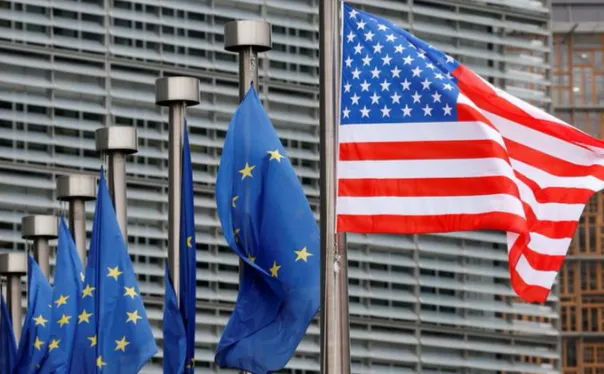
A reporter asked if the Supreme Court's ruling is unfavorable to the federal government, will it cause the investment commitment of nearly one trillion U.S. dollars in the United States reached by the United States and the European Union to be "in vain". Trump responded that he was not worried about this, believing that Europe "very much needs to reach an agreement with the United States" and "had very difficult negotiations for this." He said that relevant investments are unlikely to be canceled as a result, but follow-up developments still need to be observed. He also revealed that a large number of talks have been arranged around Greenland, and that he will leave for Davos that night. It is expected that related matters "will progress quite smoothly."

Daily economic news comprehensive CCTV news, CCTV international news

daily economic news

The EU Suddenly Imposed High Taxes On Chinese Ceramic Tableware And Kitchenware. How Is It Different From Trump’s Tariff War?

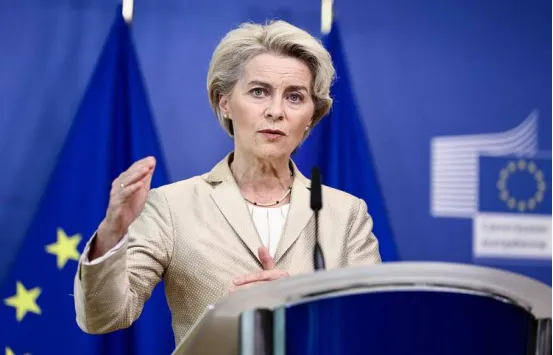
On February 6, 2026, the European Commission led by von der Leyen suddenly issued a final announcement. There was no advance warning and no room for negotiation. It directly imposed a 79.0% anti-dumping tax on ceramic tableware and kitchenware originating in China. The announcement officially came into effect the next day, without even leaving a buffer time for relevant Chinese companies. This operation seems to be a simple trade protection, but in fact it is a precise containment of Chinese industries by the EU in the context of restructuring the global supply chain. Von der Leyen is a complete showdown, tearing apart the pretense of so-called "fair trade".

When many people see this news, their first reaction is that the EU is fighting a tariff war with us again. It is inevitable that they will think of the tariff war against China launched by Trump back then. But in fact, there are essential differences between the two, so don’t confuse them. Trump's tariff war back then was purely driven by hegemonism. He raised taxes indiscriminately regardless of industry or product. The core was to suppress China's development with force. Naturally, we would not swallow our anger and directly retaliate strongly. In the end, Trump failed to take advantage and had to let it go.

Main importing countries of ceramic tableware_2019 EU ceramic tableware anti-dumping_

Von der Leyen's operation this time was much shrewder and more ruthless. This is not a comprehensive trade confrontation, but an industrial protection war that is precise to the core. Von der Leyen has previously stated publicly that such tariff measures are to protect industries and jobs within the EU. When it comes to the ceramic industry, this statement is to put it bluntly to support Spain and Italy. The core of the ceramic industry within the EU is concentrated in Spain and Italy. These two countries have a large number of ceramic factories and practitioners. In recent years, Chinese ceramics have relied on cost advantages to gradually seize the European mid-to-low-end ceramic market. Even if the EU previously imposed floating tariffs of 13% to 35%, Chinese ceramics exports to Europe will still maintain growth in 2025.

This directly affects the interests of local ceramic companies in Spain and Italy. These two countries have been the main force in pushing for high anti-dumping duties on Chinese ceramics within the EU. Von der Leyen’s final ruling is essentially a compromise to the interests of these two countries, sacrificing the interests of Chinese companies in exchange for the "stability" of the industry within the EU. What’s more noteworthy is that the EU’s anti-dumping stick is not only aimed at China. Turkey and India, two countries that are also major ceramic producers, have also been included in the scope of anti-dumping by the EU. They currently impose floating tax rates, which is roughly similar to our previous situation. According to EU rules, if these two countries make unsatisfactory complaints before 2028, they will also be levied the same high fixed tariffs as us.

In other words, von der Leyen’s goal is very clear. It is not to target China, but to attack all countries that have impacted the EU’s local mid- and low-end ceramic industry. China is only the largest and most obvious one. From the EU's first anti-dumping investigation into Chinese ceramics in 2012, to the affirmative final ruling in 2013, and then to the two sunset reviews, until this mid-term review imposed a high tariff of 79%, the EU's anti-dumping actions have long been foreshadowed, but this time the intensity has exceeded the expectations of most Chinese ceramic companies.

What is even more unreasonable is that the standards for identifying market distortions adopted by the EU are unilaterally proposed by it, and there is no relevant concept in WTO rules at all. The burden of proof has also shifted. Originally, the EU was required to prove that we have market distortions, but now our companies are required to provide evidence to refute it on their own, which undoubtedly makes it more difficult to appeal. This leads to the fact that even if the pricing of our products is reasonable, in their accounting system, they may be deemed to be sold below cost and constitute dumping. This accounting method obviously violates the relevant rules of the WTO, but many of our small and medium-sized enterprises have no ability to refute this unreasonable determination.

_2019 EU ceramic anti-dumping_Main importing countries of ceramic tableware

Our ceramic industry’s own problems are equally fatal. China's ceramic production capacity accounts for 70% of the world's total production capacity, but most of this 70% production capacity is concentrated in the hands of small and medium-sized enterprises. There is no unified industry association to take the lead and provide companies with services and support related to complaints. Complaining to the EU is extremely difficult. Not only do you need to submit a large amount of English materials, the form format and process requirements are very strict, but you also need a professional team of lawyers to operate. The appeal cycle is very long. It is common for a lawsuit to last one or two years or even longer. Many small and medium-sized enterprises simply cannot afford it, nor can they afford the high appeal fees.

Just when Chinese ceramic companies were confused and fighting on their own, India, which was also facing anti-dumping pressure from the European Union, had a bright approach and taught us a vivid lesson. India is also a major producer of ceramics. It is also on the EU's anti-dumping list and may be slapped with a high tariff of 79% at any time. However, India has neither fallen into a disorganized and powerless predicament like us, nor has it been tough with the EU. Instead, it has adopted the most pragmatic and efficient way, using government power to protect enterprises and maintain export channels to Europe.

The Indian government has provided all-round support to ceramic companies in responding to anti-dumping complaints. As long as an enterprise is willing to participate in the appeal, attorney fees and consulting fees will be fully borne by the state, which is equivalent to zero-cost response for the enterprise, completely eliminating the enterprise's cost concerns. Not only that, the Indian government will actively encourage companies to lodge complaints and organize professional legal and trade teams to guide companies step by step in sorting out materials and contacting relevant EU departments to prevent companies from missing opportunities due to lack of understanding of the process and lack of experience. More importantly, most Indian ceramic companies have adopted ERP systems, and financial data have been managed electronically. If you want to provide relevant complaint materials, you can export them directly from the system, which is convenient and standardized, which also greatly improves the success rate of complaints.

India does this not out of pure "good intentions", but out of pragmatic considerations of its own interests. Although India's domestic ceramic production capacity is large, it cannot fully meet domestic demand and still needs to import some Chinese ceramics. At the same time, it also hopes to maintain a trade balance with China and strive for Chinese investment and cooperation, and is unwilling to confront China over trade issues. This approach not only preserves the market share of domestic companies in the EU, but also maintains trade relations with China. It kills two birds with one stone. It has to be said that India's operation this time is indeed much smarter than ours.

On the other hand, areas such as Jiangxi and Fujian, where the ceramic industry is concentrated, have actually introduced support policies. If companies participate in EU anti-dumping complaints, 50% of legal fees can be subsidized. However, many companies do not know this policy at all. Even if they know, because they are not united and fight individually, it is difficult to form a joint force. In the end, they have no choice but to give up the appeal. The 79% tariff has been implemented. Complaining and evasion will not solve any problems. Although von der Leyen's showdown has brought a huge impact to Chinese ceramic companies, it has also forced us to reflect on our own problems.

2019 EU ceramic anti-dumping_Main importing countries of ceramic tableware_

As the "porcelain country", China has never lacked the ability to make good ceramics. The ceramic craftsmanship in Jingdezhen, Dehua and other places is still at the world's leading level. We are fully capable of producing high-end, creative and culturally connotated ceramic products, and get rid of the dilemma of low-price involution. Although India’s approach is worth learning from, we don’t need to copy it. Based on our own actual conditions, local ceramic associations will take the lead to integrate local support policies, organize enterprises to jointly appeal, share costs and share resources, and at the same time promote industrial upgrading, get rid of OEM dependence, and create independent brands. This is the way for Chinese ceramic companies to break the situation.

Von der Leyen’s 79% tariff seems to have cut off China’s ceramic exports to Europe, but in fact it is a wake-up call for the Chinese ceramics industry. Rather than being involved in each other and passively being beaten in the mid- to low-end markets, it is better to proactively seek change, develop together, and regain the glory of the "Porcelain Country". After all, the strength of Chinese ceramics has never been based on low prices, but on craftsmanship and quality. As long as we find the right direction and move forward steadily, even if there is no EU market, we can gain a foothold in the global market and even take the world by storm again.

Huang Jingyu And Guan Xiaotong's New Drama Is A Hit! Take You On A Journey To Find Your Father In The Northeast In The 1990s

Just after the fourth day of the Lunar New Year, who would have thought that a period drama would directly enter the hot search? "The Love of Time" starring Huang Jingyu and Guan Xiaotong was an instant hit as soon as it aired – CCTV 8 episodes were updated on time at 17:30, and iQiyi was launched at the same time. The 4 episodes had just been updated, and the popularity directly exceeded 6,000. It even firmly ranked first in the ratings during this time period! The most amazing thing is that the audience has no disagreement after reading the review, and their evaluations are surprisingly consistent. They are all praising the same thing?

The play went against the grain at the beginning and gave a twist: Zhang Xiaoman, played by Huang Jingyu, was boxing in Japan. Someone forced him to fake a match, but he would rather die than obey. After the fight, he was knocked into the sea with a sap. Everything in the camera is taken back to the Tiexicheng Donghua Factory in the Northeast in the 1990s – it was a large factory with ten thousand people, with dormitories, canteens, hospitals, and schools. It was a small self-sufficient society.

Xiaoman's mother left early to spend time with her father and grandma. His father, Zhang Jiaming, could play the harmonica but loved to drink. He lost his job as a grade-8 fitter. One night, his father played a few harmonica songs, left a note and left. From then on, Xiaoman and his grandmother depended on each other.

In the summer of 1990, 10-year-old Xiao Man was naughty and was chased by his father. He met Xia Lei (played by Wang Tianchen) who was also chased by his mother. The two "brainless" and "unhappy" became close buddies. Xia Lei was a bit introverted when he first moved in, so Xiaoman took him around the factory and let him meet Ding Guoqiang, a model worker in the factory – he looks so fierce on the outside that he wants to eat people, but he is actually very soft-hearted.

Xiaoman couldn't figure out why his father left, so he took Xia Lei and the chief engineer's daughter Yan Xiaodan (played by Guan Xiaotong) and secretly embarked on the road to find his father. On the way, the three children chatted about growing up. Xia Lei said that he wanted to build a "bridge and railway". Xiao Dan yearned for the distant place. Only Xiao Man insisted on guarding the Donghua Plant – after all, his parents were gone, and he felt that the outside world was not as good as his hometown.

The disappearance of the children alarmed the entire factory, and Master Ding and Xiaodan's father, who had just finished their injections, rushed to look for them. As a result, the three of them spent the night in the cave. By the campfire, Xiaoman and Xia Lei agreed to be brothers for life. In the end, Xiaoman almost fell into the river, but Master Ding rescued him, and the runaway ended.

Six years later, things have changed a lot: people in the factory started helping Xiaoman and grandma, and the vegetable stall slowly turned into a newsstand. Xiaoman, Xia Lei, and Xiaodan were promoted to second grade. Feng Xiaobo, a repeater, asked Xiaoman for money. Xia Lei wanted to give it to him, but Feng Xiaobo went even further and asked for books and 100 yuan. Xiaoman immediately chased him with an iron rod, and Feng Xiaobo jumped out of the window and threatened him. Xiaodan threw a bucket of water over him without saying a word, and rushed Feng Xiaobo into the cave. It turned out that the quiet Xiaodan was very wild at heart. When he was a child, he climbed into cars and played with slingshots with boys.

Xia Lei was ranked first in his grade, but because Meng Ge, the daughter of factory director Meng, was transferred, he was not elected as squad leader and could only become a labor committee member. At the art performance, he and Xiao Dan wanted to recite poems, but they borrowed Meng Ge's poetry collection, but Xia's mother misunderstood her as a puppy love and forced her to change seats at school. Xia Lei went home to go on a hunger strike, and Xiao Man crawled in from the pipe outside the window to persuade him. He understood his grievances but laughed at him for "being in blessings and not knowing the blessings."

Xiaoman felt that he was being squeezed out by Xia Lei and Xiaodan, and his grandma woke him up. He searched for poems to help, but found that the two had prepared "To the Oak Tree". Xia Lei noticed that he was disappointed. Before the performance, he ate green onions with dipping sauce to make his voice hoarse. He recommended Xiao Man to play – but Xiao Man and Xiao Dan turned out to be a golden boy and a beautiful girl. Xia Lei felt warm to his heart.

Xiaoman played "We Workers Have Power" on guitar and was selected for the factory celebration, and got front row tickets for grandma to watch. Xiao Dan had an idea and used the "Xiao Man Show" to sell tickets, and they were empty in seconds! On the day of the factory's anniversary, Master Ding lamented that the factory was becoming increasingly deserted. Master Ding said it was good that it had not closed down. Xiaoman couldn't find her grandma, so after taking the stage, she and Xiaodan temporarily changed to a rock version of "Really Love You". The young man was upset, but the director thought it was immoral, so the security guards carried them out.

When Xiaoman came back, he saw Xiaodan crying and saying that his grandma had passed away on the chair. Xiaoman broke down and cried on the spot. The crying scene was really touching. It was not a deliberate cry, but it was the kind of confusion and collapse that suddenly made the sky fall. It gave a full sense of empathy.

After the funeral, Master Ding took the initiative to be Xiaoman's guardian. The factory gave him 100 yuan a month. He also said that Xiaoman's father also died and Xiaoman became an orphan. Master Ding, Xia Ma and others came to comfort him. Da Ge used his own experience to persuade him to face it bravely, and Xiao Man came up with the idea of ​​becoming a soldier.

After watching 4 episodes, the audience's evaluation is surprisingly unanimous, no one dislikes it! Some people said, "The props are so amazing. The popsicles, newsstands, and harmonicas from the 1990s will make you fall in love at first sight." Some people praised Guan Xiaotong for "playing the ignorant girl very well, and the part of protecting the calf was amazing."; more people praised Huang Jingyu, "I cried when my grandma passed away. It was not sensational, but it was really painful." Some people said, "The people in the factory are extremely humane. They help everyone who has something to do, unlike the strangers in the neighborhood now."

In fact, the reason why this drama is so popular is because of its "reality" – there is no bloody love triangle, it is all about the trivial matters of the parents: grandma mixing vegetables, Xia Lei's mother cooking, Master Ding scolding the children but handing out sweets. These details have touched the memories of many people. And there is no forced sensationalism. The scene when grandma died was "suddenly gone", like a farewell in life, not pretentious but tearful.

However, the play left a lot of suspense: Why didn't Xiao Man join the army and go to Japan? How are you doing when the wave of layoffs comes? What will happen to Xiao Dan and Xia Lei in the end? No wonder after watching all 4 episodes, the audience is asking for more!

Reference materials: CCTV News ""When Time Has Love": The Temperature of the Times is Hidden in the Fireworks"; People's Daily Client "The Password for "Breaking the Circle" of Period Dramas: Truth is Power"

CCTV's Taiping Year Series Is Launched, And The Tuogu Drama Hides The Changes In Power And Changes In Power

On January 23, 2026, CCTV's annual drama "The Year of Peace" was officially launched. The beginning of the series does not directly enter the secret dispute between the palace guards, but uses sharp strokes to describe the bottom line of survival in the troubled times of the Five Dynasties – bloodshed, human flesh being eaten, and starvation everywhere.

Against this apocalyptic scene of cannibalism, the life of Shi Jingtang, the founder of the later Jin Dynasty, was about to come to an end. The ensuing drama of entrusting an orphan is meaningful: on the sick bed, Shi Jingtang ordered the queen to send her youngest son Shi Chongrui into the arms of the veteran minister Feng Dao. According to historical records, "he held him in Dao's arms. Although the emperor did not say anything, everyone knew that he entrusted Dao with his great care and wisdom."

Thousands of words are all left unsaid.

The candlelight in front of the dragon bed was swaying, and Shi Jingtang, who was as angry as a gossamer, still used up his last strength, just like the last life-saving straw grasped by a drowning person: "Ke Dao, Jingtang, please!"

Seeing Feng Dao silently take Zhong Rui into his arms, Shi Jingtang finally let go of his hand, slowly closed his eyes, and walked away "safely and without regrets."

However, the plot took a sudden turn, and a thunder broke through the solemnity – Feng Dao's heart at this moment was full of helpless calculations: "Your Majesty, don't blame me. The price of loyalty you gave me cannot buy the lives of all my Feng family. In these troubled times, surviving is the most fundamental loyalty and filial piety."

The "roly-poly" prime minister who was entrusted with the task of entrusting an orphan turned around and joined forces with powerful ministers to support Shi Jingtang's nephew Shi Chonggui, who was older and had military power, on the grounds that "the country is in trouble and it is appropriate to establish an eldest monarch."

The whole process was as fast as lightning. Before Shi Zhongrui, the ignorant young master, had time to see clearly the appearance of the dragon chair, the change of power was already settled.

This act of blatant disobedience to the late emperor's orders was not simply classified as "betrayal" in "The Taiping Year". When Feng Dao holds his young master by the hand and encounters Zhao Hongyin and his son (father of Zhao Kuangyin) who hold military power and show murderous intent outside the palace gate, the scene has already made it clear: under the iron law of troubled times that "the emperor shall be the one with strong soldiers and horses", a fragile edict is unable to resist this cold reality of power.

Shi Jingtang's entrustment was destined to be a tragedy that could not be staged according to the script from the beginning. Feng Dao's sigh of "helplessness in troubled times" instantly pulled the audience into the ethical abyss where traditional morality has completely failed and all choices are a matter of life and death.

This is a period of history that was scorched by war in the Five Dynasties and Ten Kingdoms. During those fifty-three years, the eight surnames and fourteen monarchs came and went like a revolving lantern. "Placing a monarch is like changing officials, changing a country is like passing down a family" has become the norm of the times. When the figures of Shi Jingtang and Feng Dao intersect in this ruin of value, they are no longer isolated individuals, but two extreme survival paradigms spawned by the fission of the times.

The two are like two ends of a giant scale: one end is Shi Jingtang's geo-realism that trades space for time, and the other is Feng Dao's bureaucratic realism that trades reputation for function. Together they weigh the critical weight of individual souls and the continuation of civilization in troubled times.

If you want to understand Shi Jingtang, you must first have an insight into the hell picture in which he lives. After the Anshi Rebellion, the scourge of the Tang Dynasty's feudal regimes completely fester during the Huangchao Uprising, and evolved into a disorderly carnival of dictatorial military power. This is an extreme form of "ritual and music conquests originate from the princes", and it is also a testing ground for the complete collapse of the "righteousness between monarch and ministers".

Jiedu envoys regarded their elite soldiers as private property, and the prestige of the court was completely lost. Ouyang Xiu of the Northern Song Dynasty lamented in his "New History of the Five Dynasties": "Wow, the Five Dynasties were extremely chaotic!" The so-called "extreme" not only refers to the frequent killings and the decline of people's livelihood, but also to the basic principles that maintain the operation of society – loyalty, which has become a joke of the world.

What is even more fatal is that the strategic pattern of the North has undergone a fundamental reversal. After the collapse of the Tang Empire, which once dominated East Asia, the emerging Khitan (Liao) empire, managed by two generations of heroes, Yelu Abaoji and Yelu Deguang, transformed from a loose alliance of grassland tribes into a powerful empire with both nomadic force and an initial Chinese political system.

Their eye on the land of Heshuo is no longer a border threat in the traditional sense, but a decisive external force that can directly intervene and subvert the political situation of the Central Plains.

Shi Jingtang, a military nobleman of the Shatuo tribe, was trapped in a double desperate situation of internal disorder and heavy external pressure. He was both a participant in the old order (the Later Tang Dynasty) and a representative of its centrifugal force. When the conflict with Li Congke, the late Emperor of the late Tang Dynasty, intensified to the point of irreconcilability, his choice space was as narrow as a razor blade.

In 936 AD, in order to destroy the Later Tang Dynasty, he reached an infamous deal with the Khitan: ceding the Sixteen Youyun Prefectures, professing vassalage to the Khitan, and respecting Yelu Deguang, who was ten years younger than him, as his "Father Emperor". Faced with the dissuasion from his confidants that "the price is too humiliating", Shi Jingtang looked gloomy and squeezed out a sentence through his teeth: "If I don't become a minister, there will be no Jin tomorrow."

This decision is a bone-chilling balance of interests between "instant destruction" and "humiliating survival", and is by no means simply personal shamelessness. Shi Jingtang knew better than anyone else the strategic value of the Youyun Sixteen Prefectures, the core area from Yanshan to the Great Wall defense line that included present-day Beijing and Datong.

He was not ignorant, but he knew it was poisonous but had to drink it. His choice marked the debut of an extreme realism path for the Central Plains regime when its force and self-confidence hit rock bottom. The price of this choice was paid in installments by the entire nation during the next four hundred years of military passivity: the Northern Song Dynasty failed to regain this geographical backbone throughout its life, and was forced to exchange "year-old coins" for peace due to the disadvantage of the cavalry. It was not until Xu Da's Northern Expedition in the Ming Dynasty that the Land of Clouds returned to the original map of the Central Plains.

In Shi Jingtang's balance, the few years of state power he gained for the later Jin Dynasty were weighed heavily by the overdraft of hundreds of years of geographical security for later generations.

Different from Shi Jingtang's thrilling "one-time gamble", Feng Dao's life path is a long, silent and tenacious "protracted battle for survival." He served in the ten emperors of the Later Tang Dynasty, the Later Jin Dynasty, the Khitan Dynasty, the Later Han Dynasty, and the Later Zhou Dynasty. He was like a gentle but indestructible seal imprinted on the scroll of imperial power of every passing person.

Because of this, he became the target of the famous criticism in Ouyang Xiu's "New History of the Five Dynasties" about "propriety, justice, integrity and shame, the four dimensions of the state", and was denounced as a "shameless person".

However, if the vision is raised from the rise and fall of a family to the survival of civilization and the suffering of the people, Feng Dao's image suddenly becomes complex and multi-dimensional. Although the authenticity of the "Rongkujian" (also known as "The Little Man Classic") written in his name by later generations is doubtful, it provides us with the coldest and most appropriate footnotes for our interpretation of this "roly-poly". His thoughts are highly consistent with Feng Dao's deeds.

The opening chapter of "Rongkujian" states: "Good and evil have names, and the wise do not stick to them." This establishes the core tone of the whole book and even Feng Dao's wisdom: in the face of the ultimate existential crisis, adhering to the abstract names of good and evil is both luxurious and fatal. This philosophy was vividly demonstrated in the Shi Jingtang Tuogu incident.

Feng Dao's violation of Shi Jingtang's last wish may be due to a colder realistic judgment: in a situation surrounded by proud soldiers and powerful generals, if the young master ascends to the top, it is tantamount to pushing him into a pit of fire, and may even cause the country to instantly fall apart. Supporting the emperor may be a disobedience to the emperor's will, but it may bring temporary stability to the regime.

"Rongkujian" also said: "Those who worry about the country will lose their virginity, and those who worry about themselves will be safe." Feng Dao seemed to understand this well. He quietly transferred his allegiance from the fickle concrete monarch to the abstract and sustainable "country" and "people."

What best sums up Feng Dao's dilemma and choices in his life is the sober assertion in "The Mirror of Prosperity and Decay": "Don't be afraid of what others say, but only consider interests. This is not the way of justice, but the way of life." Many of his actions can be interpreted within this framework.

When Yelu Deguang attacked Bianjing and plundered the capital, Feng Dao was summoned to see him. The Khitan Lord asked: "How can the people of the world be saved?"

Feng Dao bowed his head and replied: "At this time, the Buddha will not be able to save the people, but the emperor can save them." This sentence uses the most humble attitude to practice the technique of "lowering the heart" mentioned in "Rongkujian" ("To overwhelm people and frighten them, their aspirations will not change"), and the final effect is that "the Khitan soldiers will not wreak havoc after that, all because of the power of Tao".

He presided over the engraving and printing of the Nine Classics, which lasted for more than 20 years, and continued the life of the Chinese culture at a time when the warriors were powerful and civilization was in danger. His "loss of integrity", in a sense, was at the expense of the complete defilement of his personal integrity in the Confucian view of history, in exchange for the fire of civilization and breathing space for the people.

He is like a sailor who firmly holds the rudder of a civilized ship in the torrent, regardless of the frequent changes of flags on the deck, just hoping that the ship will not sink and the passengers will not drown. He calls himself "Old Changle". Hidden in this "joy" may be a kind of sadness and relief of "If I don't go to hell, who will?"

Shi Jingtang and Feng Dao constitute a fable of survival in the troubled times of the Five Dynasties. Both of them gave up a certain "purity" of traditional scholar-bureaucrats and embraced different degrees of realism, but paid very different prices and left completely different historical legacies.

Shi Jingtang's path is geo-realism, and the core decision is to cede the Sixteen Youyun Prefectures and exchange strategic space for the survival time of the regime. The direct costs were shocking: individuals were burdened with eternal infamy, and the "son-emperor" system made the Later Jin Dynasty completely reduced to a vassal of the Khitan and lost its independent diplomatic sovereignty; the door to the Central Plains was opened, and the passage of nomadic cavalry southward was unimpeded.

His historical legacy is mainly negative: he created a geosecurity crisis that lasted for hundreds of years, and warned future generations that overdrafting fundamental strategic assets to resolve urgent difficulties is a short-sighted behavior that can cause hereditary diseases. His balance is seriously unbalanced, and the short-term stability gained is far from enough to offset the serious harm of permanent loss of strategic barriers.

Feng Dao's path is bureaucratic realism, and the core choice is to serve as an official for many dynasties, exchanging personal reputation for the functions of bureaucratic system operation and cultural continuity. The direct price was equally heavy: in the mainstream Confucian historical view, he was nailed to the pillar of shame as "shameless" by historians such as Ouyang Xiu and Sima Guang, and became a negative example of admonishing ministers for later generations.

However, its historical legacy is complex and hidden: in troubled times when the "hardware" of the regime frequently collapsed and restarted, he, as the highest-level "software", maintained the minimum operation of the national administrative system, avoiding complete social collapse and power vacuum; he guarded the cultural fire, allowing the core of Chinese civilization to survive after the shell of the regime was shattered.

He proved that in the face of higher value sequences that transcend dynasty changes (the survival of the people, the inheritance of civilization), personal moral perfection is not the only supreme criterion. His balance is completely unbalanced at the personal moral level, but it adds an incalculable, small but crucial weight in the dimension of civilization's continuation.

The profound thing about "The Year of Peace" is that it does not simply defend any party, but rather reveals the ultimate dilemma of choice in troubled times by juxtaposing the peaceful path of Qian Hongchu of the Wuyue Kingdom of "returning the land to the Song Dynasty" with the tragic collapse of the Central Plains.

In "The Year of Peace", Shi Chonggui refuses to surrender to the Khitan after he succeeds to the throne, and achieves military victories such as the Yangcheng victory in a bloody moment. However, in the end, his lone army rushes forward, his generals rebel, and the country is ruined and imprisoned. The ending is even more miserable than what a weak young master might have encountered.

This cruelly confirmed the rationality of Feng Dao's original consideration of real interests, and also declared that the fragile stability that Shi Jingtang had gained with great humiliation would eventually be destroyed like a tower on the sand.

The real historical significance of Shi Jingtang and Feng Dao is that they pushed the ethical dilemma in extreme situations to the extreme. They force every observer to think deeply: When the system collapses, values ​​are out of control, and individuals are in the darkest moment, what is the boundary of responsibility? Is it like Shi Jingtang, sacrificing core assets such as territory and dignity for the survival of the real regime? Or is it like Feng Dao, sacrificing personal integrity and moral principles for the abstract continuation of civilization and the well-being of people's livelihood?

The cold wisdom of "Rongkujian", "Good and evil have their names, and wise men are not bound by rules" and "The only way to survive is to consider profit and loss", and the common human emotions of "thinking about governance in chaos" and "desiring peace" that "The Year of Peace" attempts to convey, form an intriguing dialogue here. The former is a "skill" for surviving in troubled times and a sober mirror image of facing human nature and reality; the latter is the "Tao" for the world to return to its heart and an eternal ideal that transcends the suffering of the times.

Feng Dao's life may have been a tragic effort to struggle forward in the mud of "technique" to keep "Tao" from being completely annihilated; while Shi Jingtang showed another devastating outcome when "technique" is used to the extreme and an irreversible price is paid.

Their balance is still shaking slightly in the void of history. One end carries undeniable principles, dignity and geographical integrity, while the other end holds up the immediate well-being of thousands of creatures and the weak continuation of the spark of civilization.

To evaluate the two men, what is needed is not either-or praise or criticism, but a deep historical sympathy and humility – acknowledging the limitations of human rationality in the face of complex changes, and being in awe of those heavy souls who, in the boundless darkness, try to hold on to the collapse of an inch and retain a glimmer of light in completely different and even opposing ways.

Shi Jingtang's abandonment and Feng Dao's persistence are like two scars deeply engraved in the national memory: one is imprinted on the territorial map, and the other is engraved on the moral soul. Together they tell a cruel truth: the tragedy of some times is that all possible choices are wrong, and true courage sometimes lies in knowing that you are wrong, but still having to choose, and shouldering this unique price alone, heading towards the ultimate judgment of history.

This judgment never fails due to the passage of time, because it is related to the eternal and tragic struggle of human nature under extreme pressure to try to grasp a glimmer of meaning. This is the bitterest but most precious legacy of speculation they left to future generations.

No.6776 Original first article author Zhizhizhaizhu

Open the whitelist duanyu_H|Contributed by tougao99999
Sign In

Forgot Password

Sign Up