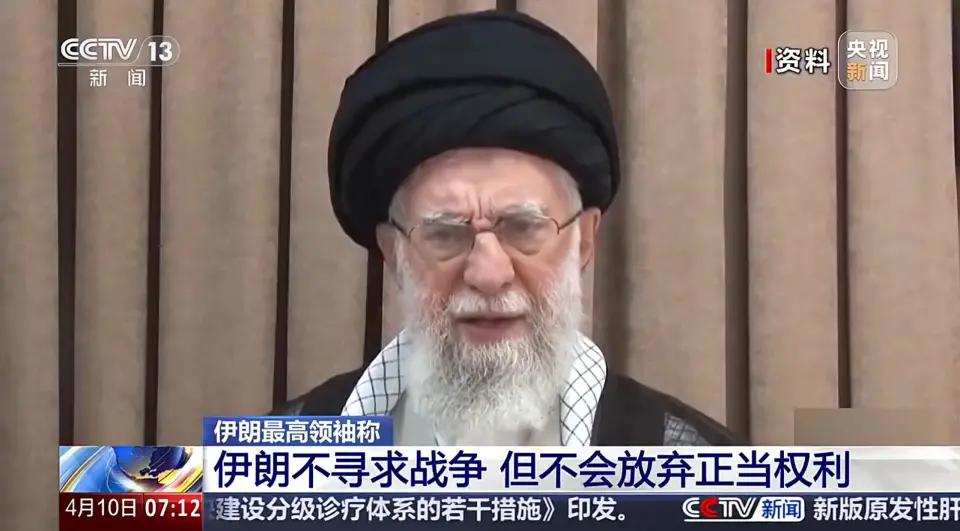
CCTV reporters learned on April 8, local time, that US President Trump said in an interview that the United States is considering implementing "joint management" with Iran over the Strait of Hormuz. Trump said the move would not only "ensure the safety of waterways" but also prevent other potential threats.
Currently, there is no response from Iran.
A senior Iranian official previously said that before Iran and the United States hold negotiations in Pakistan, the Strait of Hormuz may be opened to a limited extent under Iranian control on the 9th or 10th. The official said: "If the two sides can reach a consensus on the negotiation framework, the Strait of Hormuz may be opened in a 'limited, Iranian-controlled' manner. All ships will be forced to accept the coordination of the Iranian military."
Previously, according to the country's through-train, in response to the issue of whether there are tolls in the Strait of Hormuz, which is widely concerned by foreign media, Iran's ambassador to China, Fazri, said in Beijing on the 8th that Iran has not yet introduced a formal tolling plan and standards, and Iran will make decisions based on the current tolling standards of other waterways in the world and international law.
According to CCTV News: On April 8, local time, the ship tracking website MarineTraffic recorded the activities of the first batch of ships passing through the Strait of Hormuz after the United States and Iran agreed to a ceasefire.
It is understood that the Greek bulk carrier "NJ Earth" passed through the strait at 8:44 GMT, and the "Daytona Beach" flying the Liberian flag passed through the strait at 6:59 GMT, after the ship left Bandar Abbas Port at 5:28 GMT.
Strait of Hormuz (data map)
According to MarineTraffic, there are still hundreds of ships in the area, including 426 oil tankers, 34 LPG carriers and 19 LNG carriers.