Professional virtual currency information station welcome
We have been making efforts.

vc Page 12

Cryptocurrency is a non-legal monetary asset based on digital technology and blockchain, possessing the functions of a medium of exchange and a store of value. Cryptocurrency is a transaction medium that uses cryptographic principles to ensure transaction security and control the creation of transaction units. Cryptocurrency is a type of digital currency (or virtual currency). Bitcoin became the first decentralized cryptocurrency in 2009, after which the term “cryptocurrency” was more commonly used to refer to such designs. Since then, several similar cryptocurrencies have been created, and they are usually referred to as altcoins. Cryptocurrency is based on a decentralized consensus mechanism, in contrast to the banking financial system that relies on a centralized regulatory system.

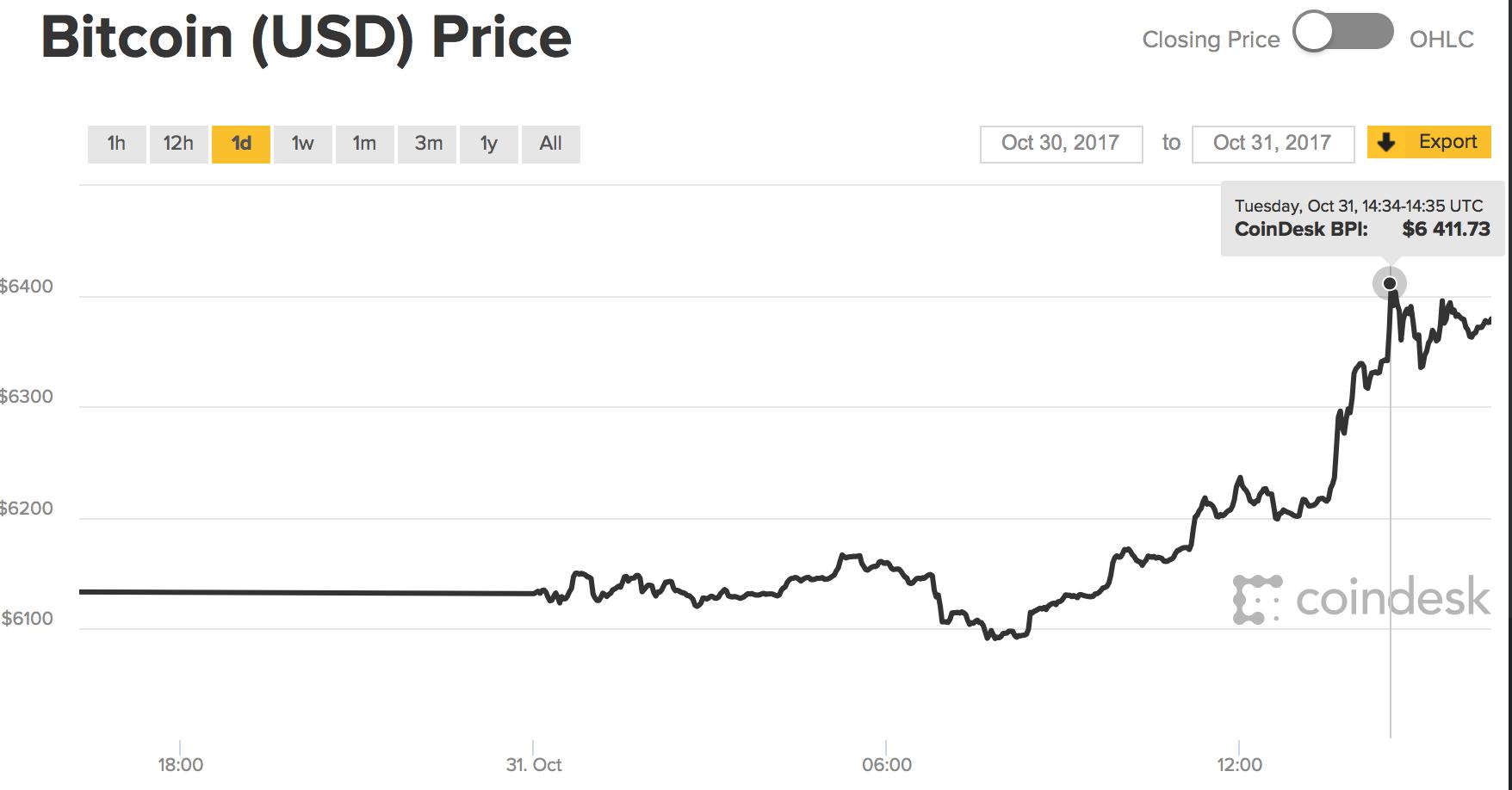
The Largest Futures Exchange In The United States Announced The Launch Of Bitcoin Futures Contracts. Bitcoin Price Breaks Through $6,400.

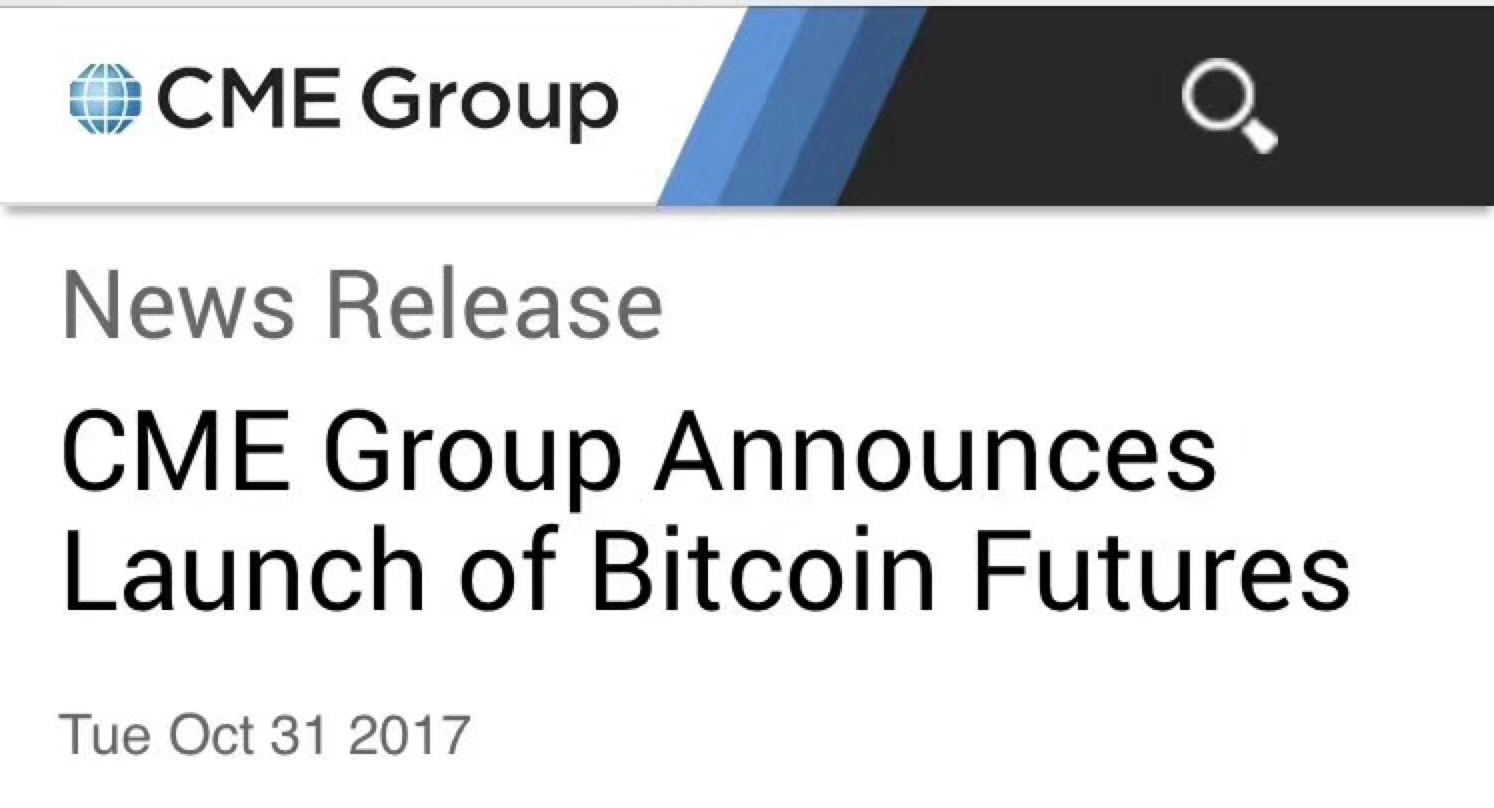
On October 31, the CME-Chicago Mercantile Exchange announced that it would launch Bitcoin futures contracts in the fourth quarter of 2017, pending relevant regulatory reviews.

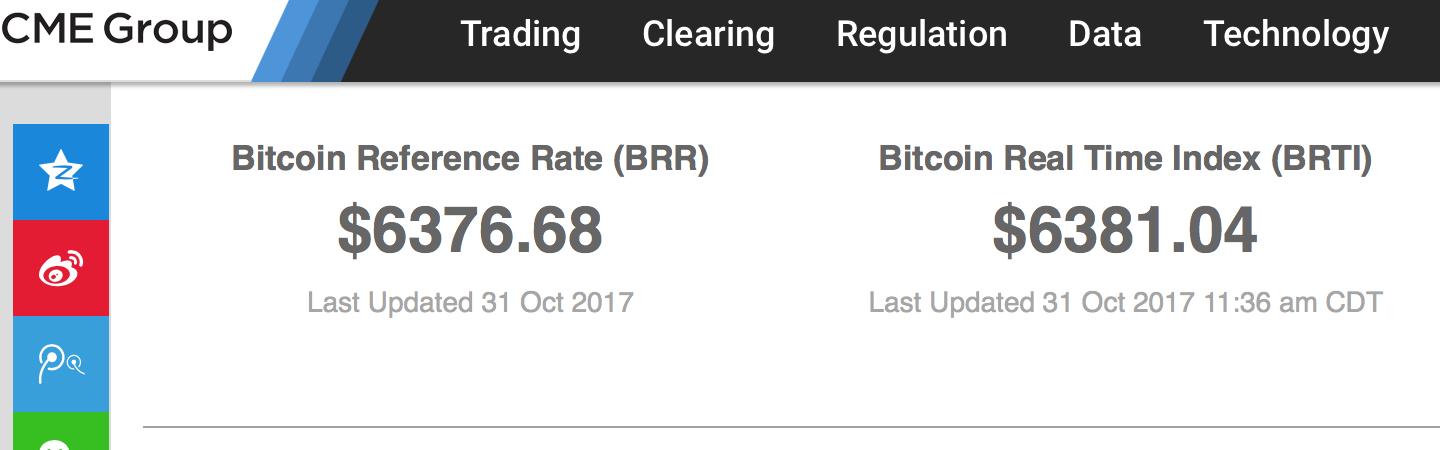
The announcement stated that the futures contract will be cash settled based on the CME CF Bitcoin Reference Rate (BRR-Bitcoin Reference Rate), which is the daily reference value for the price of Bitcoin against the US dollar. Bitcoin futures will be listed and governed by CME Group’s rules. Since November 2016, the Chicago Mercantile Exchange has cooperated with Crypto Facilities to calculate and publish the Bitcoin reference value BRR and develop the CME CF Bitcoin Real-Time Index (BRTI), providing price transparency for the spot Bitcoin market.

CME比特币期货合约现金结算方式_Real-time Bitcoin price_芝加哥商业交易所上线比特币期货合约

Terry Duffy, chairman and CEO of CME Group, said: "With increasing customer interest in the changing cryptocurrency market, we have decided to launch a Bitcoin futures contract. As the world's largest regulated foreign exchange market, CME Group will create space for new financial engines to provide investors with transparency, price discovery and risk transfer capabilities."

Founded in 1848, the Chicago Mercantile Exchange is the oldest futures exchange in the world. It is the largest futures exchange in the United States and the world's leading exchange for buying and selling futures and futures options contracts, providing investors with a number of financial and agricultural products transactions. In December 2002, Chicago Mercantile Exchange Holdings Inc. was officially listed on the New York Stock Exchange.

芝加哥商业交易所上线比特币期货合约_CME比特币期货合约现金结算方式_Real-time Bitcoin price

The announcement stated that the market value of encrypted digital currencies has grown to US$172 billion, with Bitcoin accounting for 54% of the total. The Bitcoin spot market is also growing day by day, with a transaction value of approximately $1.5 billion.

According to the CoinDesk Bitcoin Price Index, after the Chicago Mercantile Exchange issued a statement, at 10:00 Beijing time on October 31, the price of Bitcoin broke a new high of US$6,400, reaching US$6,415.28, and the market value of Bitcoin exceeded US$106 billion.

Real-time Bitcoin price_CME比特币期货合约现金结算方式_芝加哥商业交易所上线比特币期货合约

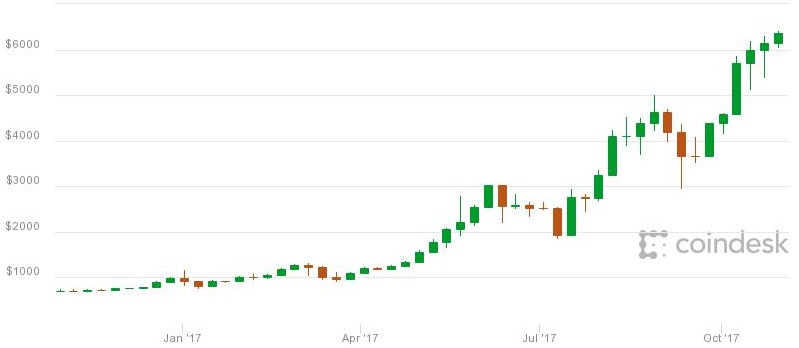
On January 1, 2017, the price of Bitcoin was below $1,000 and has increased by more than 500%. Bitcoin price trend in the past 12 months:

CME比特币期货合约现金结算方式_芝加哥商业交易所上线比特币期货合约_Real-time Bitcoin price

(Blue Whale Internet Finance: Jin Ziqi)

$GALAXYDOGEcoin

$GALAXYDOGE coin is an innovative cryptocurrency that combines the Dogecoin community culture and the concept of interstellar exploration. It was born on May 15, 2021. It inherits Dogecoin’s iconic Shiba Inu image and relaxed and friendly community atmosphere, while incorporating space-themed narrative elements to create a digital asset that is both entertaining and practical. The founding team of $GALAXYDOGE coin is composed of blockchain developers and community operation experts. They drew inspiration from the successful experience of Dogecoin and tried to solve the common inflation problem of early meme coins by introducing a deflation mechanism (the total amount is limited to 10 million coins) and innovative token economics design. The project was initially launched on a decentralized exchange, and then gradually gained the attention of mainstream trading platforms. Its white paper emphasized the construction of a sustainable crypto-economic model through the metaphor of interstellar exploration.

The development prospects of $GALAXYDOGE coin are closely related to its unique community-driven model. Compared with traditional cryptocurrencies, it focuses more on gathering user consensus through the Storytelling Economy. For example, it regularly holds interstellar mission-themed events, and participants can obtain NFT rewards by holding tokens or completing community tasks. This gameplay has attracted a large number of young investors, and the number of active addresses on its chain will increase by more than 300% in 2024. At the technical level, the project team announced that it will gradually be compatible with the Ethereum Virtual Machine (EVM) to expand smart contract functions, and plans to cooperate with the space-themed Metaverse project to build virtual consumption scenarios. Despite facing regulatory uncertainty, the $GALAXYDOGE coin has demonstrated strong price resilience in the bear market through a deflationary design that automatically injects 30% of transaction fees into black holes for destruction. Some analysts believe that it may replicate Dogecoin's transformation path from a joke coin to a mainstream asset.

$GALAXYDOGE coin cleverly combines the virality of a meme coin with the functionality of a utility token. Its low-threshold participation mechanism (a minimum of 0.01BNB can be minted) has significantly lowered user entry barriers, while the daily automatic release of token destruction mechanism has created continuous deflationary pressure. This unilateral rising model has attracted a large amount of retail capital inflows in 2024. Unlike similar projects that rely solely on community popularity, the $GALAXYDOGE team actively expands payment scenarios and currently has access to 12 application scenarios including the purchase of space-themed game props and rewards for popular science content. The average daily trading volume on its chain is stable at more than 2 million US dollars, and its liquidity depth is better than 90% of similar niche tokens. The share of Genesis Foundry retained by the project party only accounts for 2%, which is far lower than the industry average of 20%. This decentralized distribution method enhances market trust.

The highlight features of $GALAXYDOGE coin are concentrated in its innovative consensus mechanism and cultural integration. The project pioneered the concept of a consensus minting pool, using 70% of user investment for token minting, and 30% automatically transferred to the black hole for destruction. This design not only ensures liquidity supply but also maintains value stability. In terms of community operations, it regularly holds space explorer online summits, and promotes the use of tokens while popularizing blockchain knowledge through live broadcasts, forming a unique educational and entertaining ecosystem. The technical architecture adopts a dual-chain design. The main chain handles basic transactions, and the side chain supports NFT and game DApp development. This modular expansion solution was named the most creative meme currency upgrade case in 2024 by Blockchain Frontier Magazine. The radical decentralization initiative of the project team to completely give up the administrator's key authority has triggered extensive discussions in forums such as Reddit and is considered to be a practical exploration of Buterin's trustworthy and neutral concept.

Introduction To SpaceXDoge Coin: Birth Background, Characteristics And Development Prospects Relying On The Space Economy

SpaceX Doge coin is a cryptocurrency that combines the concept of space exploration and meme culture. It is inspired by the community gene of Dogecoin (DOGE) and the technological vision of SpaceX. This currency was born in 2025 and is jointly promoted by the encryption community and space technology enthusiasts to connect virtual currency and space economy through blockchain technology. Its name directly echoes the space program of Elon Musk’s SpaceX and continues the entertainment and community-driven power of Dogecoin. The initial design of SpaceXDoge coin combines the Scrypt algorithm with low transaction fees, while introducing a decentralized governance mechanism that allows token holders to participate in project decisions, such as supporting space-related charity projects or voting on technology research and development. As an emerging meme currency, it quickly attracted the attention of social media and crypto investors, especially in the context of Musk’s repeated references to Dogecoin and space exploration. SpaceX Doge currency is regarded as a symbolic product of the combination of the two.

In terms of development prospects, SpaceXDoge currency relies on the dual growth potential of the space economy and the cryptocurrency market. Private aerospace companies such as SpaceX are promoting commercial projects such as lunar bases and Mars missions, and the demand for space-related digital currencies is gradually emerging. The SpaceXDoge coin team has reached cooperation intentions with some aerospace technology companies to explore the use of tokens in scenarios such as satellite launch sponsorship and space data transactions. The technology upgrade roadmap shows that in the future, asset interoperability with mainstream public chains may be achieved through cross-chain protocols, and exclusive wallets may be developed to support space-themed NFT transactions. Although the current market value is small, the community is extremely active. Data in August 2025 shows that its on-chain transaction volume has increased by an average of 300% per month. Some analysts believe that if it is successfully bound to actual space applications, its value may exceed the limitations of current meme coins.

In terms of market advantages, SpaceXDoge currency stands out from the competition with its differentiated positioning. Compared with traditional meme coins, its "space payment" concept provides a unique narrative. For example, the DOGE-1 satellite mission in cooperation with Geometric Energy was all paid in Dogecoin, and SpaceX Doge coin plans to replicate this model and expand its application scope. The extremely low transaction cost (about $0.001 per transaction) and the 1-minute block confirmation speed make it practical in the field of micropayments. The team controls inflation through a destruction mechanism, limiting the number of newly added tokens to 500 million each year, which is far lower than the 5 billion annual issuance of Dogecoin. This economic model is considered by the community to have more long-term value support.

The design of usage scenarios is one of the core innovations of SpaceXDoge coin. In addition to conventional cryptocurrency payments and investments, its ecological planning includes three major directions: first, space crowdfunding, where users can participate in voting and dividends for projects such as satellite launches by pledging tokens; second, virtual space commodity trading, such as moon parcel NFT or rocket naming rights; third, cross-border charity, such as funding youth space education programs. There are currently a few online malls that accept SpaceX Doge coins to purchase aerospace-themed peripherals, and the test network is trying to connect with SpaceX supply chain companies and may be used for settlement of parts procurement in the future. This "combination of virtual and real" path gives it the possibility to go beyond mere speculation.

In terms of highlight features, the community culture and technological experimentation of SpaceXDoge currency are particularly outstanding. Its community voluntarily organized the "TotheMars" mining competition, in which participants unlocked milestone rewards by contributing computing power, and at the same time promoted the dissemination of space science content. At the technical level, attempts are made to solve the problem of blockchain storage of space data, such as uploading satellite remote sensing hash values ​​to the chain to ensure authenticity. The project team also regularly holds AMA (AskMeAnything) events, inviting aerospace engineers to dialogue with encryption developers to strengthen the credibility of the technology. These moves make it unique among meme coins and even attract the attention of some traditional technology investors.

Industry reviews are polarizing on the SpaceX Doge coin. Supporters believe that it represents a pioneering experiment of "encryption + space", and a Bloomberg columnist once called it "the most imaginative variant of meme currency"; while cautious people point out that its practical application still relies on external cooperation, and the current market value volatility is as high as 40%, making it a high-risk asset. Most analysts agree that its community cohesion is an important asset – the number of subscriptions to Reddit-related sections surged from 10,000 to 120,000 in three months. This spontaneous spread may help the project transcend the early survival stage. If some of the promise of the space economy can be fulfilled in the future, SpaceXDoge currency may become an iconic case in the history of encryption.

The Forgotten Linux Artifact! Synaptic Package Manager, 10 Times Easier To Use Than Apt, But Few People Know It

Debian系Linux图形化包管理器Synaptic_OKX iOS installation package_Linux包管理器Synaptic

1. After using Linux for many years, you may have been using the wrong package manager.

Everyone who plays Debian Linux cannot escape the apt command in the terminal. sudo apt install xxx, sudo apt remove xxx, these instructions are like required introductory courses, accompanying countless people from Linux novices to advanced users. It is undeniable that the apt command is simple and efficient, and can meet the needs of most software installation and uninstallation. It is one of the core tools of the Linux system.

But few people know that there is a tool that can maximize the functions of apt and solve all the pain points of apt – it can visually manage all software packages, repair dependency errors with one click, completely delete software residues, and even lock software versions to avoid accidental updates. It is Synaptic Package Manager, an artifact that was once the default graphical package manager for Debian Linux, but is now forgotten by most people.

Many people insist on using the terminal to type commands, thinking that this is the embodiment of "understanding Linux", but ignore the time and energy this tool can save; some people are attracted by the gorgeous interface of the modern software center and have no idea of ​​the strength of this "old antique". Why bother with terminal commands when you can solve the problem with one click? You can clearly see the status of all packages in the system, so why do you have to guess around in the limited feedback from apt?

Detailed explanation of key technologies: Free and open source, superior to similar tools

Synaptic is a graphical front-end tool based on the APT package management system. It is specially designed for Debian Linux distributions, including Ubuntu, Kali, Linux Mint, Parrot OS, etc. It can be perfectly adapted. Its biggest advantage is that it is "open source and free". There are no advertisements or paid functions in the whole process. Anyone can download, use and modify its source code for free.

As a classic open source tool, Synaptic has high popularity on GitHub, with thousands of stars. It has accumulated maintenance and optimization by countless developers around the world, and its stability and compatibility have been tested by the market for more than 20 years. It does not pursue a gorgeous interface, but takes "practicality" to the extreme. All functions that apt can achieve can be completed through graphical operations. It also adds visual management and control capabilities that apt does not have, making complex package management simple and easy to understand.

2. Core dismantling: Complete Synaptic in one article, even novices can get started

The power of Synaptic lies in the fact that it can not only meet the "visual operation" needs of novices, but also take into account the "fine management and control" needs of advanced users, transforming complex package management logic into simple mouse click operations. The following will explain the core functions of Synaptic thoroughly from four aspects: definition, installation, use, and practical skills. You can easily master it by following the operation.

What is Synaptic Package Manager

Synaptic is essentially a "graphical shell" for APT. It does not change the core working logic of APT, but solves the "unintuitive" problem of APT terminal operations. Different from the simple application store that comes with Linux, it can display all software packages in the system – including underlying libraries and dependent components, not just the "applications" we usually see.

The core functions it can implement include: installing software, completely deleting software, repairing damaged dependencies, locking software versions, viewing software details, and visually browsing all software packages. Whether you are a security researcher, developer, or a novice who wants to intuitively control the system, you can use its core value.

How to install Synaptic (steps + code)

Synaptic supports all Debian Linux distributions. The installation steps are simple. The whole process only requires two terminal commands. Novices can easily complete it. The specific operations are as follows:

# 第一步:更新系统软件包缓存(确保能下载到最新版本的Synaptic)
sudo apt update
# 第二步:安装Synaptic包管理器
sudo apt install synaptic

After the installation is complete, there are two startup methods:

1. Terminal startup: Enter the following command. Note that root privileges must be used, otherwise all functions will not be able to operate normally.

sudo synaptic

2. Graphical startup: Open the system application menu, search for "Synaptic", and click the icon to start (you will be prompted to enter a password to obtain root permissions during startup).

Synaptic step-by-step tutorial (a must-read for newbies)

Synaptic's interface is simple and clear. The core operation only has three steps: "Search-Mark-Apply". Taking the installation of nmap software as an example, the detailed steps are as follows:

Step 1: Search for packages

After opening Synaptic, click the "Search" button on the top toolbar, enter the software package name (such as nmap) in the pop-up search box, and click "Search" again. The system will automatically filter out all nmap-related software packages.

Step 2: Mark for installation

In the search results, find the software package that needs to be installed (usually the item whose name exactly matches the search keyword), right-click the software package and select "Mark for Installation". A dependency prompt will pop up. Click "Mark" to confirm the installation of the required dependency packages.

Step 3: Apply changes

After the marking is completed, click the "Apply" button on the top toolbar. In the pop-up confirmation window, click "Apply" again. The system will automatically start installing the software and related dependencies. Wait for the progress bar to complete and the installation will be successful.

Synaptic Practical Tips (Essential for Improving Efficiency)

In addition to basic installation and uninstallation, Synaptic also has three super practical tips that can solve the common pain points of Linux users. It is recommended to collect them:

Tip 1: Filter packages by status

On the left panel of Synaptic, there are four commonly used filtering options: installed, upgradeable, not installed, and damaged. Click the corresponding option to quickly filter out the software packages in the corresponding status, which is suitable for system auditing and cleaning up useless software.

Tip 2: View detailed properties of the software package

Double-click any software package, and a properties window will pop up, which contains detailed information such as software description, installed files, dependencies, maintainers, versions, etc. It can not only help novices understand the software functions, but also allow advanced users to troubleshoot dependency issues.

Tip 3: Clean up residual configuration files

After using apt remove to delete software, configuration files are often left behind, and long-term accumulation will occupy system space. Select "Installed (residual configuration)" in the filter bar on the left side of Synaptic, right-click the corresponding software package, select "Mark for Complete Removal", and click "Apply" to completely remove the software and all remaining configurations.

3. Dialectical analysis: Although Synaptic is powerful, it is not suitable for everyone.

It is undeniable that Synaptic is a powerful package management tool. It solves the pain points of unintuitive APT terminal operation, troublesome dependency repair, and incomplete software deletion, making Linux package management simpler and more transparent. For users who need a refined management and control system, its value is irreplaceable and can even increase work efficiency several times.

But Synaptic also has its own limitations, and not all Linux users need it. Its interface is relatively old and does not have the thumbnails, ratings, comments and other functions of modern software centers. For novices who only need to occasionally install a few commonly used software, it may feel "too complicated"; and its running speed is slightly slower than APT terminal commands. For advanced users who pursue ultimate efficiency and are familiar with terminal operations, APT may still be the first choice.

What’s more worth thinking about is that Synaptic’s “decline” was not due to its own lack of strength, but the inevitable development of the times. With the rise of modern graphical package managers such as GNOME "Software" and KDE "Discover", they have occupied the mainstream market with their more beautiful interfaces and simpler operations. However, Synaptic was gradually forgotten because it did not update the interface in time to adapt to new user habits. But this does not mean that its functions are lagging behind. On the contrary, in many scenarios, its practicality still exceeds that of modern software centers – such as locking software versions and fixing dependency errors. These functions are still difficult to achieve in modern software centers.

So the question is, for Linux users, should they choose Synaptic or APT? Should we stick to the efficiency of terminal commands, or embrace the convenience of graphical tools? In fact, the answer is simple: what suits you is the best.

4. Practical significance: The forgotten artifact still has irreplaceable value

In today's Linux ecosystem, although Synaptic is no longer mainstream, it still has irreplaceable practical significance, especially for certain groups of people, its value is even irreplaceable.

For security researchers and penetration testers, Synaptic can help them quickly manage a large number of tool kits, lock tool versions to avoid functional abnormalities caused by upgrades, completely delete useless tools and residual configurations, and keep the system clean and stable. This is crucial for people who rely on Kali and Parrot OS for work.

For developers, Synaptic can visually display the dependencies of software, help them troubleshoot dependency conflicts during the development process, view the installation path and detailed information of the software, save time in troubleshooting, and improve development efficiency.

For those new to Linux, Synaptic is an excellent tool for understanding the logic of system package management. Through the visual interface, novices can clearly see the entire process of software installation and uninstallation, understand the importance of dependencies, and gradually understand the underlying structure of the Linux system, laying the foundation for subsequent learning of terminal operations. Compared with directly memorizing apt commands by rote, this "visual learning" method is more efficient and easier to understand.

What is even more impressive is that Synaptic, as a classic tool for more than 20 years, has always insisted on being open source and free, without any commercial elements, and silently contributes to the Linux ecosystem. It does not pursue traffic and popularity, but uses its strength to prove that "practicality is the last word." This original intention is particularly valuable in today's software market that pursues appearance and traffic.

Its decline reminds us: the success of a software requires not only powerful functions, but also the need to keep up with changes in user habits; but the value of a software will not disappear because the popularity subsides. As long as users need it, it still has the meaning of existence.

5. Interactive topic: Have you used Synaptic? Tell me about your Linux package management experience

Seeing this, I believe many Linux users will suddenly realize that there is such a useful package management tool, and they have been using apt in vain for so many years; some old users will also sigh: Someone finally mentioned Synaptic, which was my main tool back then.

In fact, this is the charm of Linux – there are countless classic tools like Synaptic, which are not ostentatious or fancy, but can solve practical problems. Maybe you have been typing apt commands in the terminal, maybe you have given up on Synaptic a long time ago, or maybe this is the first time you have heard of this tool.

Let’s chat in the comment area: Have you ever used Synaptic package manager? What useful tips have you encountered while using it? Do you usually prefer to use apt terminal or graphical package manager? What do you think is the fundamental reason why Synaptic has been forgotten?

Bitcoin And Ethereum Fell Significantly On February 27, And Real-time Quotes Confirmed The Decline.

On February 28, 2026 (Saturday), the overnight market review released by the world's major financial media recorded a clear trading fact: During the trading session this past Friday (February 27), the world's two largest cryptocurrencies by market capitalization – Bitcoin (BTC) and Ethereum (ETH) – both experienced significant declines. Among them, the price of Bitcoin fell by about 3%, which marked its fifth consecutive monthly decline since October 2025. Meanwhile, the price of Ethereum plunged more than 5% in a single day on Friday and fell below the key psychological round number of $2,000.

According to real-time quotations released by multiple market data platforms on the morning of February 28, this fact of decline has been confirmed by specific data. As of 06:04 on February 28, 2026, Beijing time, the unified global spot price of Bitcoin was approximately US$65,500 per coin. Its 24-hour price drop was 2.82%, and the maximum intraday retracement exceeded 4.5%.

At the same time, the price of Ethereum was around $1,983.18, down about 0.89% in 24 hours. It should be noted that since the cryptocurrency market trades 24 hours a day, there are slight differences in quotations at different time points, but the core downward trend is consistent. Other data shows that during the pre-market trading session of US stocks on Friday, the price of Bitcoin was reported at approximately US$66,137.95, a decrease of 2%; Ethereum fell by more than 3.5% to US$1,954.94, clearly falling below US$2,000.

This drop is not an isolated incident, but a continuation of Bitcoin’s long-term trend of weakness. Market analysts pointed out that Bitcoin is facing its fifth consecutive monthly decline. As of February 27, Bitcoin’s single-month decline in February had reached approximately 14%. If viewed from a longer period, the maximum correction of Bitcoin price is close to 50% compared with its historical high of approximately US$126,000 in October 2025, basically erasing all the gains in the second half of 2025. Since the beginning of 2026, Bitcoin has fallen by approximately 24.73%, which is considered by the market to be one of its weakest starts to the year on record.

Historical data shows that the last time there were five consecutive negative months was back in the depths of the bear market at the end of 2018.

Ethereum's performance has also been weak, with its losses exceeding Bitcoin's multiple times in recent times. In the trading on February 27, Ethereum not only fell even more, but also fell below the $2,000 round number mark that has a significant impact on market sentiment. Technical analysis shows that Ethereum's technical picture is even weaker. After falling below $2,000, its short-term core support level has moved down to the $1,850-1,860 area.

This decline occurred against a specific macro market backdrop. On February 27, the United States released its producer price index (PPI) for January, and the data reignited market concerns about inflation. At the same time, global risk aversion has increased significantly, with funds withdrawing from high-risk assets such as Bitcoin and pouring into traditional safe-haven assets such as gold and silver. Spot gold rose by 1.8% during the same period, approaching US$5,300, rising for the seventh consecutive month; silver rose by more than 6%, rising for the tenth consecutive month. This apparent asset rotation highlights the pressure that cryptocurrencies are under as a riskier asset at a time of increased macro uncertainty.

From the perspective of capital flows, U.S. spot Bitcoin exchange-traded funds (ETFs), which are the core channel for institutional funds to enter the crypto market, have continued to face pressure from capital outflows recently. Although there was a short-lived optimistic signal of a single-day net inflow of US$506.6 million on February 26, the cumulative net outflow so far this year has still reached approximately US$1.7 billion, and the direction of capital flows has diverged. This cautious attitude of institutional funds is also an important factor in suppressing market prices.

Sentiment indicators across the cryptocurrency market also reflect the current pessimistic atmosphere. The market's fear and greed index once fell to the extreme fear range, showing that investor confidence has been severely damaged. During the decline, highly leveraged trading positions encountered centralized liquidation, further exacerbating market volatility. In the past 24 hours, the total liquidation amount of global cryptocurrency contracts reached US$275 million, and more than 100,000 people were liquidated, with long positions accounting for the majority.

Introduction To Olympicdoge Coin: Integrating The Olympic Spirit And Dogecoin Culture, The Potential Remains To Be Explored

Olympic Doge coin is an innovative digital currency that combines the Olympic spirit and Dogecoin culture. It is inspired by the popular Shiba Inu emoticon package Doge on the Internet and the global influence of the Olympic movement. It was launched in 2024 by an anonymous development team to build a digital asset ecosystem that is both interesting and practical through blockchain technology. As a branch of meme currency, Olympic Doge currency inherits the community genes of Dogecoin, and takes sports competition as the core of the narrative. The total issuance is set at 994,693.33 billion coins, and a decentralized mechanism is used to ensure fairness. Its iconic design combines the image of the Shiba Inu with the five Olympic rings, forming a unique visual symbol in the cryptocurrency field. Although the initial circulation is zero, the project team plans to gradually release liquidity through exchange listings and community incentives. This scarcity design provides potential support for its market value.

olympicdoge coin demonstrates a differentiated competitive strategy. The project team clearly proposed to create vertical field applications of sports + blockchain and expand physical scenarios through sponsoring sports events and linking sports brands. Unlike meme coins that rely solely on market hype, its roadmap includes smart contract development plans and plans to implement functions such as event betting and NFT trading of sports equipment. Although the current price is only $6.82754E-12, community activity continues to rise. The official Twitter account has accumulated tens of thousands of fans and regularly releases Olympic-themed interactive activities. This currency has not yet been listed on mainstream exchanges. If a breakthrough in trading channels is achieved in the future, it may trigger a liquidity premium. Industry analysts believe that the key to whether it can replicate the success of Dogecoin lies in its ability to transform cultural symbols into practical application scenarios.

The market advantages are concentrated in the two dimensions of low threshold and emotional resonance. As a cryptocurrency for the public, the price of a single Olympic Doge coin is extremely low, allowing users to participate in investment at a small cost. This feature attracts a large number of young people. At the technical level, an energy-saving consensus mechanism is adopted, and the transaction confirmation speed is significantly faster than that of Bitcoin, making it suitable for small-amount and high-frequency payment scenarios. It cleverly combines two global cultural symbols – the universal value of the Olympic Games and the humorous gene of Doge coins. This cross-border fusion creates a unique emotional connection. Community members can not only share the passion for sports competition, but also experience the entertainment of meme culture. The dual attributes give it viral potential in social media communication. Some early supporters even view it as a social currency for sports fans, and this identity is forming a unique community economic model.

The usage scenario design highlights the innovative ideas of online and offline integration. For the online part, the project team has developed a dedicated wallet application that integrates functions such as live event rewards and sports community points exchange; offline, it is trying to cooperate with gyms and sporting goods stores to establish payment channels. During the 2024 Paris Olympics, a volunteer organization launched a charity event to use Olympic Doge coins to sponsor athletes from developing countries. Although the scale was limited, it received positive response from the community. Future plans include an AR treasure hunt game based on geographical location, where users can mine digital assets through movement trajectories. These attempts break through the single payment of traditional cryptocurrencies and build a closed-loop ecological cycle of sports incentives-token acquisition-consumption. However, there are still few actual implementation scenarios, and most applications are in the proof-of-concept stage, requiring more business partners to join in order to achieve scale effects.

The Price Of Bitcoin Continues To Advance, With Considerable Profits For The Week, And Trading Is Active As Volume Increases

The price of Bitcoin has continued to advance and occupy various points. The profit in the latest week was about US$15 per coin. It opened up 6% on the second day of March, according to the CoinDesk Bitcoin Price Index. The biggest intraday price move of the week occurred earlier in the week, when Bitcoin reached a high of $286.28, a gain of $19.24 from the intraday low.

This positive trend has been maintained for four consecutive trading days from last weekend to the first day of this week. On the third day of March, there is a low at the beginning and a high at the end.

Increase in quantity and energy

The rise in Bitcoin prices has been strongly supported by rising sales. The weekend of March 7th showed that 3.67 million Bitcoins changed hands, which means that in the past seven days, there was a 55% increase in volume compared to the previous week. Most of the larger volume growth came from Bitfinex and Bitstamp, with increases of 106% and 54% respectively. Exchanges from China: Huobi and OKCoin recorded increases of 95% and 83%, also a significant increase.

Bitcoin China remains the leader in mainland China exchange trading volume, followed by OKCoin. Bitfinex continues to dominate trading volumes outside of mainland China. Notably, Coinbase, the exchange that launched in January, continues to see more turnover than previous market leader Bitstamp. This week has been a relatively quiet period. An important event was the third Bitcoin auction held by the U.S. Marshals Service. We saw more bidders participating this time than in December last year. The number of participating bidders was 14, but this was still significantly lower than the 45 people participating in the first auction in June.

Another news event that can also be included in the list of positive news for Bitcoin is the statement by the US banking regulators. They said that digital currency is "revolutionary" to the global financial system. These words delivered to the audience by the International Bankers Association undoubtedly brought a positive signal to people.

Awaiting stronger liquidity

Market watchers are also talking about a Bitcoin trust investment announced last week, pending regulatory approval. Arthur Hayes’s Bitcoin derivatives exchange BitMEX, which he calls an “ETF halfway house,” is not a true exchange-traded fund. The planned Winklevoss ETF may bring more liquidity to the Bitcoin market.

When BIT begins trading on the OTC market in the United States, it will only be liquidity brought by existing share holders of BIT. These people will sell their shares in the newly opened OTC market.

However, if this can bring new members to it, I believe this will directly help increase Bitcoin demand and liquidity, but there is a condition that is actually hindering the speed of their membership development, that is, it is only limited to attracting "rich, "accredited" investors."

In contrast, the Winklevoss ETF ties demand directly to the demand for actual Bitcoin. Each ETF share will be worth 0.2 BTC, and after listing, these Bitcoins will actually be held by their foundation Winklevoss. New shares can be created every day, which will require more coins to be deposited into the trust fund.

Hayes concluded: “BITs will have a negligible impact on liquidity, while a suitable ETF will have a huge impact.”

If the approval of the BIT license is a big step for Bitcoin in terms of market access, then a substantial increase in liquidity will have to wait until the establishment of another fund Winklevoss – or even by another more flexible listed fund and detonate the market.

Translator:@currency world one brother

BTC Price Prediction And Market Sentiment Analysis: Short-term Consolidation And Institutional Interest Coexist

BTC price prediction technical analysis_Bitcoin short-term consolidation signal_BTC price

BTC Price Prediction ‍ Technical Analysis: BTC Shows Short-Term Consolidation Signals

Bitcoin price is currently trading at 111,140 USDT, which is below the 20-day moving average of 116,583 USDT, indicating downward pressure in the short term. The MACD indicator shows negative momentum at -3,330.50, but the gap from the signal line is relatively small at -33.97. The Boolean Bands show that the price is moving towards the lower Boolean Bands, indicating potential support near 105,993 USDT. "Technical indicators point to a consolidation phase, with a clear break above the 20-day moving average needed to resume bullish momentum," said Olivia, an analyst at BTCC Financial.

BTC price prediction technical analysis_Bitcoin short-term consolidation signal_BTC price

Market Sentiment: Institutional interest remains supportive of BTC despite short-term volatility

The news cycle is sending mixed signals for Bitcoin. Some positive developments, such as Crédit Agricole’s plan to launch a Bitcoin ETN under the MiCA framework in 2026 and BlackRock’s continued capital injection into its IBIT fund, highlight the growing interest of institutional investors. Elon Musk's comments linking Bitcoin's value to energy scarcity and BlackRock CEO Larry Fink's description of it as "digital gold" reinforce Bitcoin's long-term value proposition. However, expected remarks from Federal Reserve Chairman Jerome Powell, as well as resistance at key price levels, are creating near-term uncertainty. Olivia, a financial analyst at BTCC, commented: “Adoption by institutional investors is advancing, but macroeconomic factors may cause short-term volatility.”

Factors Affecting BTC Price Tesla, Bitcoin, and Quantum Computing: Tech Giants Are Changing the Market

Bitcoin fell below $112,000, facing downward pressure, in stark contrast to Europe's breakthrough in quantum computing. IBM's Quantum System Two debuted in San Sebastian, equipped with a 156-qubit Heron processor, making the region a global quantum hub. The system's computing power transcends traditional infrastructure and marks a major change in technological capabilities.

Meanwhile, Tesla faces skepticism from analysts while Broadcom benefits from its partnership with OpenAI. The quantum race is intensifying as D-Wave joins the world's most powerful quantum alliance, the Italian Q-Alliance. Europe’s aggressive catch-up strategy is challenging the United States’ traditional dominance in this field.

Amundi plans to launch Bitcoin ETN under MiCA framework in 2026

Amundi, Europe's largest asset manager, will launch Bitcoin exchange-traded notes (ETNs) in the first quarter of 2026 that are compliant with the EU Market for Crypto-Assets (MiCA) regulation. The product will provide institutional and retail investors with regulated exposure to Bitcoin without the need for direct custody.

The ETN plans to launch in multiple European markets, with trading details such as trading venues and ticker symbols to be announced later this year. The unified MiCA transparency and investor protection standards mark a key step towards the legalization of crypto-assets in the traditional financial sector.

The move reflects growing demand for compliant Bitcoin products, similar to those offered by 21Shares and Bitwise. The addition of Amundi signals the deeper adoption of Bitcoin by institutional investors as regulations become clearer.

Elon Musk ties Bitcoin's value to energy shortages due to rising demand for artificial intelligence

Elon Musk has reignited the debate over Bitcoin's fundamental value by portraying it as an energy-based asset that makes it immune to manipulation like fiat currencies. In response to concerns about the growing energy needs of artificial intelligence, Musk wrote on Twitter: "This is why Bitcoin is based on energy: you can issue fake fiat currency… but it is impossible to fake energy." This sentence emphasizes Bitcoin's proof-of-work mechanism as a practical economic security.

Energy markets are facing unprecedented pressure as AI infrastructure projects could consume the equivalent of hundreds of nuclear power plants. Musk's comments positioned Bitcoin as a natural hedge against inflationary energy policies and drew an analogy between his Tesla energy plans and the cryptocurrency's physical underpinnings. Musk’s comments come as institutional investors increasingly view Bitcoin as a commodity-like alternative rather than just a speculative asset.

Bitcoin giant Strategy spends $27 million to acquire Bitcoin

Strategy, the world's largest institutional holder of Bitcoin, accumulated 220 Bitcoins at an average price of $123,561 per coin. The increase occurred between October 6 and 12, bringing the company’s total holdings to 640,250 Bitcoins, worth billions of dollars. The financing was achieved through the sale of $27.3 million worth of preferred stock, deliberately avoiding the issuance of common stock – which may indicate management concerns about valuation.

The company continues to maintain substantial cash reserves for future purchases, with $1.7 billion remaining under the STRF program and $20.37 billion remaining under the STRK program. This aggressive accumulation strategy highlights Bitcoin’s growing institutional adoption, while also showcasing the sophisticated money management techniques increasingly common among public companies.

BlackRock’s IBIT continues to attract inflows into Bitcoin ETF despite market outflows

Despite outflows from U.S. spot Bitcoin ETFs, BlackRock’s iShares Bitcoin Trust (IBIT) continues to attract investor funds. On Monday, the sector experienced an outflow of US$326.4 million, marking the largest single-day correction since September; as the price of Bitcoin fell from US$122,000 to US$107,000, IBIT saw an inflow of US$134 million in two trading days.

The fund has now seen inflows for 10 consecutive trading days, although recent data shows the pace of inflows has slowed. In previous trading days, the fund's daily inflows once exceeded $200 million, but then fell to $74.2 million and $60.4 million respectively. This toughness is in stark contrast to similar products. During Bitcoin’s 20% correction from its all-time high of $126,000 on October 6, these products faced withdrawals or stagnant capital flows.

Historical data shows that IBIT's flows typically correlate with Bitcoin's price movements, but the fund has fallen out of this pattern during the recent downturn. Meanwhile, Bitcoin’s performance during the U.S. trading session showed declining momentum, suggesting that institutional demand may be shifting towards specific investment vehicles such as IBIT rather than the broader market.

Bitcoin Price Prediction – Where Will BTC Price Go Next?

Last week, Bitcoin fell to a three-month low of $102,500, leading to the liquidation of $20 billion worth of positions, before recovering slightly by 6%. As BTC fell 3% to $111,800, gains faded and whale short positions alerted traders.

Analyst Doctor Profit gave a staggered prediction: the short-term trend depends on the fluctuation of spot funds. The mid-term chart shows that gold prices will confirm a peak between US$115,000 and US$125,000, and long-term macroeconomic pressure is imminent. “The dead cat bounce will attract bulls,” he noted, “but the structural downside remains intact.”

BlackRock CEO Larry Fink changes stance on Bitcoin, calls it 'digital gold'

BlackRock CEO Larry Fink has made a major shift in his stance on Bitcoin, now calling it “digital gold.” This marks a significant shift for the manager who once viewed cryptocurrencies as a purely speculative vehicle. BlackRock’s new bullish stance shows that institutional investors are increasingly accepting Bitcoin as a legitimate asset class.

The asset management giant’s cryptocurrency arm appears to be making strategic moves in the digital asset space, although specific details of its new initiatives have not yet been disclosed. The move comes as Bitcoin continues to demonstrate its resilience and store-of-value capabilities amid macroeconomic uncertainty.

Cryptocurrency markets turn red ahead of Powell policy speech

Cryptocurrency markets suffered a broad sell-off on Tuesday as traders reduced risks ahead of an upcoming policy speech by Federal Reserve Chairman Jerome Powell. Bitcoin led the decline, with on-chain data showing large investors adding to short positions.

Market sentiment is cautious, with investors awaiting clarity on the direction of monetary policy. The pullback comes after the digital asset’s recent rally, with traders taking profits due to macroeconomic uncertainty.

Bitcoin recovery stalls at key resistance level

After Bitcoin’s sharp losses on Friday, its rebound momentum slowed down near the $116,000 resistance, with the price falling back to $112,000 after repeated resistance. Currently, the cryptocurrency’s rally hinges on key support levels, including the ascending trendline and support at $109,000.

Market technical analysts note that pullbacks follow a predictable pattern after a strong uptrend. The downward trend in the Stochastic RSI suggests the potential for further market consolidation, although bulls remain cautiously optimistic about holding key support areas.

The daily chart shows that Bitcoin’s recovery trend line is increasingly evident. With downside limited until a test of this key level, traders are eyeing confirmation of Bitcoin's ongoing recovery or signs of a fresh round of downward pressure.

BTC Price Prediction: 2025, 2030, 2035, 2040 Forecast

Based on current technical indicators and market fundamentals, BTCC financial analyst Olivia makes the following predictions for Bitcoin’s price:

Annual Conservative Forecast (USDT) Medium Forecast (USDT) Optimistic Forecast (USDT)

2025

95,000-110,000

110,000-130,000

130,000-150,000

2030

200,000-300,000

300,000-500,000

500,000-750,000

2035

400,000-600,000

600,000-900,000

900,000-1.2 million

2040

750,000-1 million

1,000,000 – 1,500,000

1,500,000 – 2,000,000

Olivia emphasized: “These forecasts are based on continued institutional adoption, limited supply dynamics, and growing use as a store of value. However, short-term fluctuations cannot be ignored, especially given regulatory developments and macroeconomic factors.”

Bitcoin Price Predictions For 2026 Are Divided: Institutions Downgrade, Market Consolidation

Introduction: There are significant differences in Bitcoin price forecasts in 2026: institutions such as Standard Chartered have lowered it to US$150,000, while Ripple CEO and others are bullish to US$180,000-200,000. Technical analysis shows that it is currently in a consolidation stage, with a support level of about US$87,000. The real market is affected by macroeconomics and liquidity. Although the forecast is optimistic, we need to be wary of geopolitical and regulatory risks, and the actual trend may deviate from expectations.

Bitcoin 2026 Outlook Divided: Institutions Target Mild, Around $150,000; While Bearish Charts Warn of Sharp Drops.

Looking ahead to 2026, Bitcoin predictions conflict with historical chart patterns as well as changing market realities as traditional finance plays an increasing role in the cryptocurrency space.

Expert Outlook for Bitcoin Price in 2026

The halving cycle after 2024 brought significant gains earlier this year; however, consolidation and volatility in late 2025 led to a correction amid macroeconomic uncertainty and fluctuations in ETF capital flows.

Bitcoin prices fell 47% from an all-time high of $126,000 in October to $80,500 in November.

Bitcoin price prediction in 2026_Bitcoin price trend analysis_BTC price

Bitcoin price retreats from all-time highs. Source: Glassnode

Analysts are generally optimistic about 2026, although their forecasts have cooled compared with the previous enthusiasm.

Standard Chartered Bank has lowered its 2026 Bitcoin price target from $300,000 to $150,000, after calling for lofty targets in 2024 and early 2025 and citing a slowdown in institutional buying through ETFs.

Bernstein analysts also predict that the price of Bitcoin will reach $150,000 by the end of 2026, and its price is expected to reach $200,000 by the end of 2027.

Although the recent downturn prompted them to withdraw their previous predictions that Bitcoin prices would reach a peak of $200,000 this year, they still maintain that Bitcoin has broken out of its historical four-year cyclical pattern, indicating that Bitcoin will embark on a more sustained growth trajectory.

Strategy Executive Chairman Michael Saylor predicts that Bitcoin will reach $150,000 by 2026, noting that the cryptocurrency’s volatility has “substantially reduced” despite the recent price correction, contrary to the outlook of many crypto analysts.

Institutions like Fundstrat take a more optimistic view, believing that Bitcoin prices are expected to reach $200,000 to $250,000, while conservative estimates hover around $110,000 to $135,000.

Polymarket predicts that there is a 41% chance that Bitcoin will rise above $130,000 before the end of 2026, and a 25% chance of hitting $150,000.

According to current odds, there is a 79% chance that the Bitcoin price will regain $100,000, and an 80% chance of falling to $75,000 in 2026.

Bitcoin price prediction in 2026_Bitcoin price trend analysis_BTC price

Bitcoin price target by December 31, 2026. Source:Polymarket

Overall, the market consensus is tilted to the upside, a trend underpinned by structural changes rather than traditional boom-and-bust cycles.

Bitcoin price technicals contradict bullish predictions

Past halving patterns suggest that Bitcoin prices will peak in the following 12 to 18 months as the impact of reduced issuance begins to be felt – something that is gradually being reflected in the charts.

Analyst and trader Rekt Capital noted that the current cycle is more than 93% complete and the market is expected to peak in the fourth quarter of 2025.

Bitcoin price prediction in 2026_Bitcoin price trend analysis_BTC price

Bitcoin halving cycle progress. Source: Rekt Capital

Other technical indicators also reflect the bearish trend, suggesting that Bitcoin’s four-year cycle remains intact and that BTC may extend its decline into 2026.

The weekly chart for Bitcoin shows that the SuperTrend indicator has issued a bearish signal, with its “sell” signal confirmed by BTC falling below the 50-week moving average (MA) (see chart below), a situation that historically signals the end of a bull market.

Bitcoin/USD weekly chart. Source: Cointelegraph/TradingView

A few days later, the moving average convergence divergence indicator (MACD) showed a bearish crossover, further reinforcing this trend.

The above chart shows that previous confirmation signals from these three indicators triggered 84% and 77% retracements in the bear markets of 2018 and 2022, respectively.

Benjamin Cowin, founder and CEO of Intocryptoverse, said that the BTC/USD pair is likely to rebound to the 200-day moving average currently located at $108,000, before resuming the downward trend, possibly bottoming near the 200-week moving average around $60,000 to $70,000 in 2026.

“All previous cyclical bear markets were confirmed with macro low highs at the 200-day moving average.”

Bitcoin price prediction in 2026_BTC price_Bitcoin price trend analysis

BTC/USD daily chart. Source: Benjamin Cowen

As Cointelegraph reported, Bitcoin’s 200-day moving average turned bearish in November when a “death cross” occurred, in which it fell below the shorter-term 50-day moving average, signaling that 2026 would be a bearish year.

The above is the details of Bitcoin (BTC) price in 2026: comparison of predictions with charts and reality. For more information on Bitcoin price trend analysis in 2026, please pay attention to other related articles of Script House!

This site reminds: Investment is risky, so you must be cautious when entering the market. This content is not intended as investment and financial management advice.
The Critical Stage Of Bitcoin’s Third Halving, In-depth Study And Judgment Of Price Trends From 2025 To 2035

Introduction As Bitcoin's third halving cycle enters a critical stage, the BTCC analyst team combines on-chain data, macroeconomic environment and technical indicators to conduct in-depth research and judgment on the Bitcoin price trend from 2025 to 2035. Interested friends can learn more

As Bitcoin's third halving cycle enters a critical stage, the BTCC analyst team combines on-chain data, macroeconomic environment and technical indicators to conduct in-depth research and judgment on Bitcoin price trends from 2025 to 2035. This article includes: 1) Analysis of key support levels of current prices; 2) Five core factors affecting long-term trends; 3) Latest position dynamics of institutional investors; 4) Ten-year cycle price prediction model.

Bitcoin’s Third Halving Cycle_Bitcoin Price Trend from 2025 to 2035_BTC Price

Analysis of the current BTC price key level (October 2025) Why does $107,000 become the watershed between bulls and bears?

According to real-time data from the BTCC trading platform, as of October 20, 2025, BTC/USDT is currently trading at $106,982.50, a 24-hour increase of 0.31%. It is worth noting:

Source: TradingView

What signals do exchange fund flows reveal?

The latest data from Glassnode shows:

Index value meaning

Exchange net outflow

7,560 BTC/week

A month-on-month increase of 32%

Whale address holdings

5.2 million BTC

A two-year high

Five core factors affecting the long-term price of BTC 1. Institutional investor allocation cycle

Statistics from the BTCC Research Institute found that institutional holdings in Q3 2025 increased by 29.79% year-on-year, significantly higher than the 42.33% in the 2020 bull market cycle. Traditional financial institutions such as BlackRock continue to increase their holdings through spot ETFs. The average number of BTC held by the top 500 companies has doubled compared with last year.

2. The case of the National Reserve of the Kingdom of Bhutan

In 2023, the Bhutanese government secretly purchased $1.3 billion in BTC (accounting for 40% of the country's GDP) through Druk Holding & Investments. This national sovereign fund allocation model is being imitated by more developing countries.

3. The Fed’s monetary policy shifts

According to CME interest rate futures data: the probability of an interest rate cut in Q4 of 2025 has reached 78%. Historical data shows that 6 to 12 months after each Fed policy shift, BTC rose by an average of 137%.

4. The fourth halving effect

The block reward halving completed in 2024 is expected to have the largest supply impact in 2025-2026. In the 18 months after the past three halvings, the median price increase was 6,500%.

5. Lightning Network Adoption Rate

Visa’s latest report shows that the number of global BTC payment channels has exceeded 5 million, an increase of 70 times compared with 2020. The legal tender status policies of countries such as El Salvador continue to promote commercial implementation.

BTC ten-year price prediction model (2025-2035)

The BTCC financial engineering team creates a three-stage valuation framework:

Short term (1-2 years)

Technical view shows: If the support level of 106,800 is held, the target price at the end of 2026 is US$137,000 (Fibonacci 1.618 extension level)

Medium term (3-5 years)

According to the Stock-to-Flow model: the forecast range in 2028 is US$250,000-300,000, with institutional allocation demand being the main driver

Long term (6-10 years)

Consider currency devaluation and adoption curve: conservative valuation of $500,000 in 2035, could exceed the million dollar mark in extreme cases

FAQ Is it too late to invest in BTC?

According to data from the BTCC Research Institute, although the market value of BTC has exceeded US$2 trillion, it still has room to grow four times compared to gold’s market value of US$8 trillion. Institutional investors generally believe that it is still in the early stages.

How can small funds participate?

It is recommended to adopt a regular fixed amount investment strategy. Through compliance platforms such as BTCC, you can start fixed investment with as little as $10, effectively smoothing the risk of market fluctuations.

What's the biggest risk?

Sudden changes in regulatory policies and breakthroughs in quantum computing are two major potential risks. However, the regulatory frameworks of various countries are becoming increasingly clear, and the commercial use of quantum computers will take at least 10 years of development.

This concludes this article about BTC price prediction in 2025: trend analysis and interpretation of five key factors in the next ten years. For more information on BTC price prediction in 2025, please search Script House’s previous articles or continue browsing the related articles below. I hope you will support Script House in the future!

This site reminds: Investment is risky, so you must be cautious when entering the market. This content is not intended as investment and financial management advice.

Sign In

Forgot Password

Sign Up