Professional virtual currency information station welcome
We have been making efforts.

vc Page 14

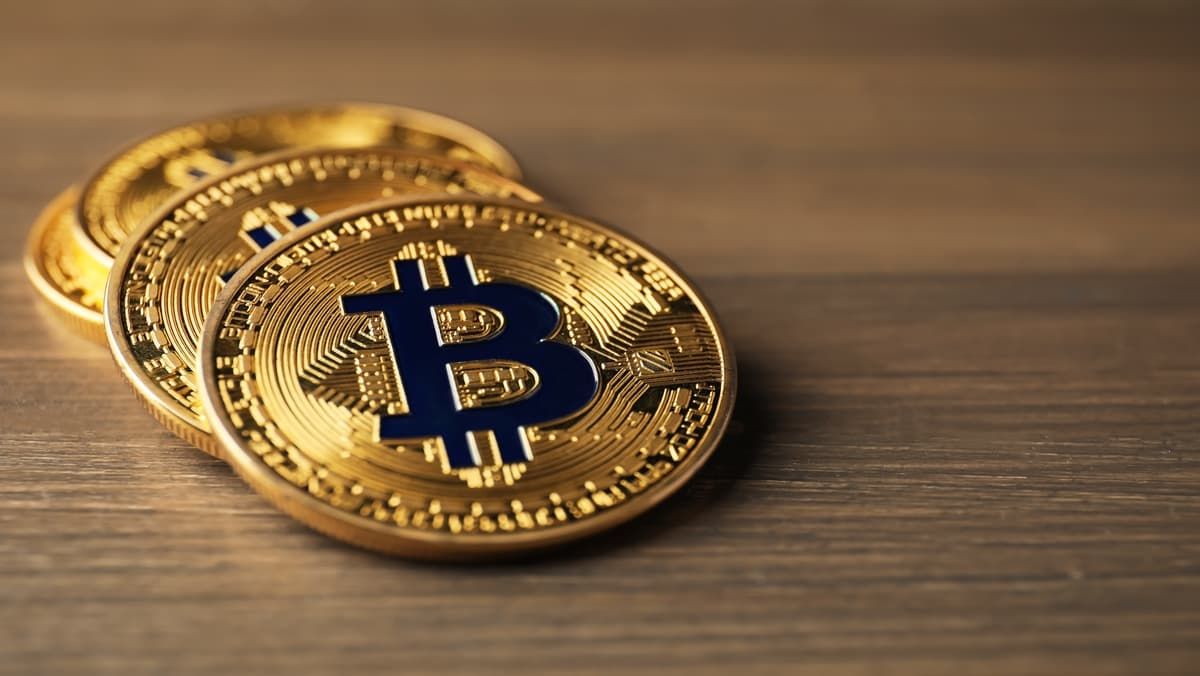
Cryptocurrency is a non-legal monetary asset based on digital technology and blockchain, possessing the functions of a medium of exchange and a store of value. Cryptocurrency is a transaction medium that uses cryptographic principles to ensure transaction security and control the creation of transaction units. Cryptocurrency is a type of digital currency (or virtual currency). Bitcoin became the first decentralized cryptocurrency in 2009, after which the term “cryptocurrency” was more commonly used to refer to such designs. Since then, several similar cryptocurrencies have been created, and they are usually referred to as altcoins. Cryptocurrency is based on a decentralized consensus mechanism, in contrast to the banking financial system that relies on a centralized regulatory system.

Digital Currency Trading Genius Li Ruixin: Interpretation Of Dual Strategies Of Return And Risk

Li Ruixin: Digital currency trading genius, in-depth interpretation of dual strategies of return and risk

Digital Currency Income and Risk Strategy_Digital Currency Exchange_Digital Currency Trading Genius Li Ruixin

No matter which method you choose, good risk management, rational investment decisions and continuous learning capabilities are the basis for maintaining long-term profitability. As an expert in the field of digital currency, Li Ruixin believes that the profit potential of digital currency is very large, but it is also accompanied by a high degree of volatility and uncertainty. In this article, Li Ruixin will analyze the income potential of digital currencies from multiple perspectives and how to balance risks and rewards.

1. Investing and Trading: Opportunities in Market Volatility

Long term investment (HODL)

"Long-term holding" is a classic strategy in the digital currency world. Li Ruixin believes that investors can buy mainstream currencies with strong ecological and technical support (such as Bitcoin, Ethereum, etc.), hold them and wait for long-term price appreciation. He explained: "The opportunities in the digital currency market are very large, but if you look at it from a longer-term perspective, these mainstream currencies can often go through multiple rounds of market cycles and finally develop an upward curve."

Long-term investment is one of the most common ways to make money in the digital currency market, especially for mainstream digital currencies such as Bitcoin (BTC) and Ethereum (ETH). The performance of the past few years shows that digital currencies have great potential to add value in the long term.

Bitcoin’s Growth History:

· As the first and most representative digital currency, Bitcoin has experienced multiple rounds of bull and bear markets since its birth in 2009. But looking at the overall trend, the price of Bitcoin has always shown an upward trend. For example, the price of Bitcoin was less than $1 in 2011, exceeded $20,000 at the end of 2017, and exceeded $30,000 again at the end of 2020. In 2021, the price once climbed to nearly $60,000, and in August 2024, the value exceeded $75,000!

For short-term investors, Li Ruixin emphasized that day trading and swing trading need to be flexible in responding to market fluctuations, and in particular, they must be proficient in technical analysis and sentiment analysis. "Short-term markets are often affected by news events, policy changes, market sentiment and other factors," he said. "Therefore, quick response, setting reasonable stop-loss and profit points, and tracking market trends are the keys to achieving short-term profits."

Short-term trading can bring quick profits, especially when the market is volatile, but it also requires superb technical analysis skills and keen market insight.

Although short-term trading is risky, Li Ruixin, the founder of Jutong, who is known as the king of short-term trading, has been working in the digital currency industry for decades, leading users to successfully achieve accurate buying low and selling high, using the lowest cost to obtain the highest returns.

Mining: the traditional way of "labor"

Mining, especially Bitcoin mining, used to be one of the most straightforward ways to make money. Li Ruixin mentioned that as the market for Bitcoin and other digital currencies matures, the threshold and difficulty of mining have also increased significantly. For ordinary investors, independent mining has almost no profit potential, but he believes that mining is still a way for some technical investors to get rich.

"With the emergence of mining pools, individual investors can share hardware costs and increase mining profits by joining mining pools. However, mining itself also has certain risks, including factors such as hardware failure, power cost fluctuations, and network difficulty adjustments," Li Ruixin said.

Staking: New opportunities under the PoS mechanism

Compared with traditional PoW (Proof of Work) mining, Li Ruixin is more optimistic about the pledge model based on the Proof of Stake (PoS) mechanism. In the PoS network, users can help maintain the security of the blockchain by locking up their own digital currencies, and then receive rewards from the network. Projects such as Ethereum 2.0, Cardano, Solana, etc. have all adopted this model.

Li Ruixin believes that staking not only has a low threshold, but also provides relatively stable returns. "When market uncertainty is high, staking is a relatively conservative but stable way to make profits. Compared with mining, although the returns from staking are not that high, the risks are lower and are suitable for investors who do not want to bear too much volatility."

4. DeFi (decentralized finance) and Yield Farming: innovative investment models

In the digital currency market, DeFi (decentralized finance) has become a new investment opportunity. Through decentralized exchanges (DEX), lending platforms and liquidity mining (Yield Farming) mechanisms, investors can lend, trade, earn interest and other operations without the need for traditional financial intermediaries.

Li Ruixin expressed optimism about the potential of DeFi: "DeFi not only provides liquidity mining and lending methods, but also automates financial services through smart contracts, greatly reducing intermediary fees." He believes that DeFi is an important part of the future financial system, especially with the development of Layer 2 technology, the scalability and efficiency of DeFi will be significantly improved.

NFTs (non-fungible tokens), as a new form of digital art and collectibles, also provide investors with opportunities to make money. Li Ruixin pointed out that the value of NFT lies not only in its investment return, but also in the cultural value and creative potential behind it.

"NFT can not only be used as an investment tool, but also allow artists and creators to obtain more direct benefits through the blockchain. With the rise of concepts such as the metaverse and virtual world, the application scenarios of NFT will continue to expand."

However, he also reminded investors that the NFT market is still in its early stages, the market is highly speculative, and prices fluctuate violently. When investing in NFT, you need to pay more attention to the intrinsic value of the project and the background of the creator, not just the short-term trend of the market.

6. Airdrops and early investment: opportunities to seize the opportunity

Methods such as Airdrops and ICOs (Initial Coin Offerings) provide investors with low-cost opportunities to enter the market. Li Ruixin believes that although airdrops can provide investors with free tokens, the difficulty of obtaining airdrops is gradually increasing, especially airdrops related to project cooperation and user behavior that often have certain thresholds.

Regarding ICO and early-stage investment, Li Ruixin believes that this is another way to obtain high returns, but it also faces extremely high risks. “Many crypto projects look full of potential in the early stages, but without strong teams or technical support, their survival probability is low. Investors should pay attention to the project’s white paper, technical team and market demand, not just based on gimmicks.”

Legendary Investor: Li Ruixin’s successful experience in strategic investment in digital currency

1. Ethereum ICO investment: from US$100,000 to US$70 million

In 2014, when Ethereum was conducting its ICO, Li Ruixin keenly saw the huge potential of this blockchain platform. He invested $100,000 in Ethereum’s ICO tokens, even though Ethereum was extremely cheap at the time, only a fraction of a dollar. But he deeply understood that Ethereum would become the basic platform for smart contracts and decentralized applications, so he decided to hold it firmly. As Ethereum's technology and ecosystem gradually matured, by the end of 2017, the price of Ethereum exceeded $1,400, and his investment increased 700 times, becoming one of his early investment successes.

2. Liquidity mining of DeFi projects: annualized return rate reaches 200%

When DeFi (decentralized finance) broke out in 2020, Li Ruixin quickly identified projects with high potential in the DeFi field and participated in the reward programs of multiple platforms by providing liquidity (Liquidity Mining). In one of the liquidity pools, he provides his holdings of Ethereum and stablecoins (such as USDC) to a decentralized exchange (DEX) to earn transaction fees and project token rewards. In just one year, his annualized return reached 200%. Through continuous reinvestment of profits, Li Ruixin's DeFi investment allowed him to obtain considerable returns, and he accumulated a large amount of digital assets.

3. NFT art investment: the value of a digital art work has increased 100 times

Li Ruixin not only performs well in traditional digital currency investments, but also shows strong interest in the NFT (non-fungible token) market. When the NFT craze was just beginning, he purchased an NFT artwork created by an emerging digital artist for an initial price of just $5,000. The artist used blockchain technology to create this work, which is both artistic and innovative. Li Ruixin is optimistic about its future collection value. With the explosion of the NFT market, this work was resold in 2021, and the price once exceeded US$500,000. Li Ruixin's return on investment exceeded 100 times. With the success of this investment, he became one of the well-known investors in the NFT market.

4. Early investment in Polkadot: from US$200,000 to US$250 million

When the Polkadot project was first launched, Li Ruixin had a strong interest in this project with cross-chain interoperability and multi-chain structure. After understanding the technical architecture of the project and the background of founder Gavin Wood, he decided to invest US$200,000 in capital to participate in Polkadot’s early private placement round. As the Polkadot mainnet went online and gradually became an important platform for connecting different blockchain networks, the price of its token DOT experienced a surge in 2020 and 2021. Li Ruixin’s investment of US$200,000 has increased in value to US$250 million in just two years, proving his accurate judgment of the project’s potential and his keen sense of blockchain technology and market trends.

5. Accurately grasp the low point of Bitcoin, successfully buy 2 billion US dollars of BTC at the bottom, and cash out at the high point in 2021

Vision in the trough

Looking back on 2019, the Bitcoin market experienced a long period of downturn, with the price falling to about $3,200. The market sentiment during this period was pessimistic, and investors were generally bearish on the future of digital currencies. However, after in-depth analysis of the global financial environment and digital asset market, Li Ruixin keenly captured the long-term potential of Bitcoin as a decentralized currency and value storage method.

"The trough of the market is often a moment of hidden opportunity. The price of Bitcoin in 2019 was lower than the historical average. This situation gave real investors an excellent entry opportunity." Li Ruixin said when recalling the market situation at that time. He knows that although the price is sluggish in the short term, Bitcoin's technical foundation and decentralized characteristics give it a strategic position in the future financial system.

During this period, Li Ruixin was firmly optimistic about the long-term prospects of Bitcoin and decided to invest heavily in its layout. With an inflow of US$2 billion, the market price of Bitcoin failed to attract much attention at this moment, but Li Ruixin has already seen the huge returns that this investment will bring in the next few years.

Entering 2021, global economic uncertainty has intensified, more and more institutional investors have begun to pour into the digital currency market, and the demand for Bitcoin has grown rapidly. At the same time, the loose policies of central banks in many countries and the proliferation of global currencies have promoted the demand for Bitcoin as an anti-inflation and value storage tool. Li Ruixin keeps up with market dynamics, always pays close attention to the price trend of Bitcoin, and through accurate market timing judgment, he successfully cashed out a US$2 billion investment in 2021 when the Bitcoin price was close to its historical high.

In November 2021, the price of Bitcoin once exceeded $69,000, which set a record in Bitcoin history at that time. During this period, Li Ruixin still remained rational and calm, and chose to cash in this generous return at the right time. His operation helped him obtain a return of more than 12 times on his investment of US$2 billion, making the investment amount exceed US$24 billion and becoming a success story that attracted attention in the industry.

Li Ruixin’s unique insights: investment management and short-term strategies

He suggested that when investors enter the digital currency market, they should first clarify their goals, use unique strategies to buy low and sell high, accurately control every key profit point, accumulate small amounts to make more, and gradually expand profits through rolling positions, in order to achieve long-term stable profits. Li Ruixin has personally studied in the field of digital currency for decades. He has rich investment experience and his own winning trading strategies, achieving a short-term trading winning rate of more than 95%! The Jutong Exchange he founded has led countless people to earn their first pot of gold in the field of digital currency! At present, the influence and popularity of Jutong Exchange are gradually expanding in various countries, and the team's vision is to surpass Oyi and Binance Exchange within 3 years and become the world's number one exchange.

Generally speaking, the income potential of digital currencies is very large, but it is also accompanied by huge fluctuations and uncertainties. From long-term investment to short-term trading, from DeFi to staking, NFT, etc., each method can bring different returns to investors. But be aware that the market for digital currencies is extremely volatile, and prices may rise or fall significantly in the short term.

"The digital currency market is indeed full of opportunities, but it is also full of challenges," Li Ruixin concluded. "Only by treating market fluctuations rationally, doing adequate risk assessment and fund management, and formulating personal investment strategies, can we make steady profits in this uncertain field."

Digital Currency Money Laundering Has Become A Financial Regulatory Threat, And Gray Transactions Are Looming In The Currency Circle

In recent years, digital currencies represented by Bitcoin have continued to attract attention, and at the same time, a series of problems have followed.

Not long ago, Lu Lei, deputy director of the State Administration of Foreign Exchange, said at the 5th FinTech Bund Summit that using blockchain technology can easily bypass banks and achieve cross-border flow of funds. At the same time, digital currency money laundering is also a potential threat – using various virtual currencies as intermediaries, first convert the legal currency in the remitter's location into tokens, and then convert the tokens into the legal currency in the payee's location at the receiving end, in fact completing the cross-border payment.

For the current financial regulatory system, the use of digital currency to launder money has become a real threat. "Legal Daily" reporter conducted an interview.

Gray transactions rely on digital currency

"One day in the currency world is one year in the world." The currency circle is a circle of digital currency players.

At the beginning of this year, the digital currency market plummeted, and many senior players in the currency circle sold their digital currencies and cashed out. Jiang Ming, who has been in the industry for two years, is one of them.

"January is the peak period for cashing out, and the market has not slowed down yet, and there are more and more altcoins on the market." Despite this, Jiang Ming has no intention of quitting the currency circle.

Jiang Ming told reporters that money laundering is a major pillar of digital currency price support and is a transaction that exists on the dark web. As long as there is demand for money laundering, the price of digital currencies is bound to rise. Moreover, the currency circle itself is a bit of a gray area. Sometimes the messier the circle, the easier it is to make money.

Some Weibo bloggers in the currency circle even publicly claimed that "the biggest practical commercial value in the currency circle is the convenience of money laundering."

It has almost become a consensus that the currency circle is “a bit chaotic”, but the chaos does not stop there.

Although he rarely participates in digital currency transactions, Zhu Cheng has been paying attention to the currency circle for many years.

"Although air coins and MLM coins can be used to launder money, they also have their own problems, and many of them are just to steal money." Zhu Cheng listed the characteristics of air coins and MLM coins to reporters. "MLM coins earn income by attracting people. They have no contract address and no fixed total amount. They are generally traded through independent App software; air coins are usually developed in advance. There are obvious problems in the white paper, there is no physical support for implementation, and there is no open source progress."

Zhu Cheng’s statement was confirmed by the customer service staff of a digital asset exchange. “Some coins have no value on their own and are not supported by other projects. They only rely on the currency itself to make money. 98% of these coins are empty coins.”

"Some gray area transactions will be conducted through Bitcoin, which is why the price of Bitcoin has not collapsed." Jiang Ming revealed to reporters.

But within the currency circle, there are also different voices on this.

"In the final analysis, digital currency is just a bunch of encrypted codes. It will only generate value if it is recognized. If it is not recognized, it will have no value. As long as the currency is not issued for the purpose of making money, it is not much different from stocks. It is an investment." A currency player active in the blockchain exchange QQ group told reporters, "Similar to gold and silver, there was a lack of supervision on money laundering at the beginning. But now many large exchanges have launched digital currencies, and money laundering is not as easy as before."

There are many ways to launder digital currency money

How did digital currency become a tool for money laundering, and even became a “money laundering artifact” in the words of some players in the currency circle?

The reporter contacted a well-known Weibo blogger in the currency circle. In his opinion, "the use of digital currency to launder money is nothing more than anonymous transfers and money flushing."

According to reports, anonymity and decentralization are the two main characteristics of digital currency. Different from virtual currencies on the Internet, digital currencies, typically represented by Bitcoin, are actual media of exchange, generated through calculations based on specific algorithms, but without an issuing agency. Blockchain is a distributed data storage system that exists in a non-secure environment and its purpose is to achieve decentralization. Decentralization eliminates the supervision of trusted third-party institutions, but also allows digital currencies to be used for money laundering in theory. By purchasing digital currency in one country, converting legal currency into tokens, and then converting the tokens into legal currency in another country, cross-border transfers and remittances can be achieved to avoid supervision, and the "black money" in gray areas is laundered in the process.

"Tokens are not issued through smart contracts, and there is no formal trading platform for digital currencies. Most of them are traded through the self-built platform of the project. Therefore, the tokens can be converted into other currencies at will, which actually breaks the foreign exchange management regulations." Zhu Cheng said.

In Jiang Ming's view, cross-border transactions of digital currencies have led to regulatory difficulties and provided soil for money laundering.

Suai is a blockchain practitioner who regards digital currency money laundering as tax evasion.

"For example, if I take a lot of cash abroad, I need to pay a high tax, but if I buy it as digital currency and sell it abroad, I can escape this tax." Su Ai explained, "Buying a Bitcoin requires more than 40,000 yuan, and only a smaller amount of currency can be used to wash away more 'black money'."

There are also endless cases of money laundering using digital currencies.

Heilongjiang Provincial Higher People's Court [2016] Hei Minzhong Civil Judgment No. 274 shows that in August 2014, the criminal suspect Xu used the "OKcoin" trading platform through an account registered with Lekuda Company, and divided into three parts. Purchased 553.0346 Bitcoins in 4 transactions and conducted currency withdrawal business at the same time. All 553.0346 Bitcoins purchased were taken out of the platform in 4 transactions, transferred to the Bitcoin wallet, and then sold in Macau underground banks.

There are loopholes in the supervision of trading platforms

On September 4, 2017, seven ministries and commissions issued the "Announcement on Preventing Financing Risks of Token Issuance", officially defining the initial token issuance as "illegal financing behavior". Subsequently, "Bitcoin China" announced that it would close the trading platform starting from September 30 and would no longer accept registration from new users. On September 16, Huobi and OKCoin announced that they would cease all trading businesses related to virtual currencies.

The digital currency trading platform has now entered a cold winter.

The reporter registered accounts on multiple trading platforms as a player in the currency circle and found that the services provided by the trading platform mainly include fiat currency transactions and currency-to-crypto transactions. The former is to recharge or withdraw fiat currency into a digital currency wallet, and the latter is to conduct transactions using the virtual currency in the digital currency wallet as an intermediary.

If you want to complete legal currency transactions, you must pass different levels of identity authentication.

Taking a trading platform established in Hong Kong in 2017 as an example, it divides real-name authentication into two levels. If you pass the first level, you need to fill in your real name, ID type and ID number. If you pass the second level, you need to upload relevant ID photos and wait for manual review. The reporter filled in a pseudonym and a non-existent ID number and successfully passed the first level of real-name authentication, which means that as long as there are coins in the digital currency wallet, the reporter can conduct currency-to-crypto transactions.

According to the customer service staff, “the first level can be traded, and the second level can be withdrawn.”

The reporter further investigated and found that the recharge and withdrawal of the trading platform were all completed through the QQ group. After completing the account registration on the platform, the user needs to enter a QQ group. According to the detailed C2C transactions, currency transactions and currency deposit and withdrawal processes in the group, the user needs to actively add the "officially certified acceptor" QQ number, obtain the payment address and complete subsequent purchase operations.

Another world-renowned digital asset trading platform divides real-name authentication into three levels. Level one requires an ID card, level two requires face recognition, and level three requires video recognition. The customer service staff told reporters that the recharge of digital currency does not necessarily need to be through legal currency transactions. There are other channels and can be achieved through other platforms.

When the reporter further asked about specific matters, the customer service staff said they were unclear and asked the reporter to "ask other platforms."

A currency player analyzed that, in other words, users have the opportunity to bypass the highest level of real-name authentication and disperse and transfer digital currencies through the operation of depositing and withdrawing coins between trading platforms, providing opportunities for money laundering.

(At the request of the interviewees, the names of the interviewees in this article are pseudonyms)

Industry experts analyze how to solve the problem of digital currency supervision

The use of digital currency to launder money has become a major problem faced by financial regulatory agencies in various countries.

How to deal with money laundering using digital currencies? The reporter interviewed relevant experts in the industry.

Using digital currency to launder money is relatively hidden

Yin Zhentao, deputy director of the Law and Finance Research Office of the Institute of Finance, Chinese Academy of Social Sciences, reviewed the birth of digital currency to reporters: The emergence of Bitcoin is not just for currency issuance, but it has indeed produced a brand new currency, but more importantly, Bitcoin has produced a trading system. Most of the initial users of Bitcoin were traders in gray areas, playing an important role in gray transaction fields such as drug trafficking, hacking, and money laundering. Only later did it gradually become the object of widespread public attention and application.

Digital currency has the characteristics of anonymity and decentralization, and also involves greater risks.

"Digital currency faces two risks. The first is the technical level. Digital currency relies on blockchain technology and a system, which will subject it to security impacts, such as hacker attacks on computer systems. We have seen many practical problems in this process." Yin Zhentao said.

In May 2017, the Bitcoin ransomware virus named WannaCry broke out around the world, affecting networks in more than 70 countries. Those infected with the virus were required to pay a Bitcoin ransom in exchange for unlocking their files.

Yin Zhentao believes that another risk of digital currency is credit risk. Because there are middlemen in digital currency transactions, these middlemen are different from real organizations. Organizations in reality are visible and tangible, but digital currency middlemen are on the Internet, and the risks are greater.

"For example, buying Bitcoin domestically and then converting it into other currencies in the international market arbitrarily violates foreign exchange management regulations. The characteristics of short time, high efficiency, low cost, and easy to avoid supervision make digital currency a weapon for money laundering. Compared with traditional means of money laundering, money laundering through digital currency technology is more convenient, more concealed, and easy to avoid financial supervision." Yin Zhentao said.

Zhao Zhanhan, a special researcher at the Intellectual Property Research Center of China University of Political Science and Law, believes that digital currencies are anonymous, fast and irrevocable. In addition, digital currencies such as Bitcoin are highly circulated around the world, so many criminals use digital currencies as a new money laundering channel. Moreover, there are many different ways to launder money through digital currency. Generally speaking, the chances of new money laundering methods being discovered and investigated are lower than before. Many countries still do not have the means and technology to effectively combat digital currency money laundering. These factors make criminals prefer this method of money laundering.

The use of digital currency to launder money is suspected of violating relevant laws and regulations.

"The use of digital currency to launder money mainly violates the provisions of the criminal law and relevant judicial interpretations. The criminal law specifically stipulates the crime of money laundering. The relevant judicial interpretations stipulate that those who knowingly provide illegal income and proceeds from drug crimes, organized crime of a gangland nature, and smuggling crimes in order to cover up or conceal their source and nature provide a capital account or assist in converting property into cash or financial instruments. "Anyone who assists in the transfer of funds through transfer or other settlement methods, assists in remittance of funds overseas, or uses other methods to conceal or conceal the illegal proceeds of crime and the nature and source of the proceeds, shall constitute a crime of money laundering and shall be prosecuted. Depending on the specific method of money laundering, it may be one or more of the aforementioned behaviors," Zhao Zhan said.

Speculation and hype maintain Bitcoin price

Because of this, the rise of digital currency and the development of blockchain technology have brought challenges to traditional financial supervision.

"Because of the new technology, the combination of finance and technology is completely different from the supervision of traditional finance. Theoretically, the challenge is huge, and the gray trading area cannot be seen, penetrated, or found. Our regulatory agencies are centralized, and the blockchain is decentralized. Our regulatory agency is this kind of central organization, and the blockchain is a platform-based organization." Yin Zhentao said.

At present, there are two main domestic regulations on virtual currencies. In 2013, many ministries and commissions issued the "Notice on Preventing Bitcoin Risks", giving important reminders on Bitcoin risks. On September 4, 2017, the central bank and seven other ministries and commissions jointly issued an announcement again, stating that the initial coin offering was an illegal financing without approval.

"These are the two most important regulations. Currently, our country prohibits domestic Bitcoin transactions." Yin Zhentao explained to reporters, "At the same time, our country also prohibits third-party payment institutions, which means that payment institutions are prohibited from providing payment channels for Bitcoin. In addition, there are currently not many laws and regulations to restrict and manage."

Regarding the view of some digital currency players that "money laundering is a major pillar in maintaining the price of Bitcoin," Yin Zhentao responded that the initial price increase of Bitcoin has a lot to do with its extensive application value in the field of money laundering, but at this stage, speculation and hype are the most likely to maintain the price of Bitcoin.

Zhao Zhan believes that there are various methods of using digital currency to launder money. For example, technical means may be used to transfer funds into the cryptocurrency system, and then various transfer addresses are deployed, making it difficult to query its transaction path. In other words, money laundering driven by technological progress is becoming more and more difficult to detect and prevent. In addition, it is cross-regional. The lack of a global response mechanism has exacerbated this situation.

Ensure digital currency transactions are traceable

The severe situation calls for financial regulatory changes.

"Blockchain is a decentralized distributed 'ledger system' that can be used to register and issue digital assets, property rights certificates, points, etc., and conduct transfers, payments and transactions in a peer-to-peer manner." Yin Zhentao believes that "blockchain technology is a double-edged sword. From a technical point of view, since blockchain can be used for money laundering, it can also be used for anti-money laundering through technical means. This logic is established, and this is also one of the important methods of regulatory technology that I advocate."

"For the financial supervision of digital currencies, the first point is to clarify the legal positioning. It is still unclear whether digital currencies represented by Bitcoin are a virtual asset or a virtual currency. Secondly, the effect of existing supporting policies is not obvious. Although initial coin offerings and digital currency transactions have been nominally prohibited, in fact this has not been done Total ban. The relationship between the ban on initial coin issuance and Bitcoin’s anti-money laundering is not very close, but there are certain restrictions on currency transactions, but the effect is not yet obvious. Finally, it is necessary to introduce technological means and use advanced technological means to supervise high-tech transactions in the financial field.

Zhao Zhan believes that money laundering can be tracked through digital currency. Ensuring the traceability of digital currency is the key to dealing with money laundering crimes on a global scale. At the same time, many money laundering behaviors using digital currencies are carried out through exchanges. Therefore, stricter management and regulations should be established for digital currency exchanges, requiring exchanges to effectively adopt technical and management measures, fully fulfill their anti-money laundering obligations, and promptly report to the relevant authorities after discovering money laundering behaviors.

Daily Digital Currency Dynamic Summary (2025-04-30)

8. The UK releases a draft regulation of crypto assets, including cryptocurrency exchanges, etc. into the regulatory system

According to the policy notes and draft documents recently released by the British Treasury, the new regulations intend to bring activities such as cryptocurrency trading platform operations, stablecoin issuance, custody services, pledges, market making and matchmaking transactions into the regulatory scope of the Financial Services and Markets Act 2000, and require encryption companies targeting British retail customers to be approved in the UK. The new regulations clarify the definitions of "qualified crypto assets" and "qualified stable coins", and make supporting changes to transparency, anti-money laundering, financial promotion, etc. Stablecoins will not be included in payment regulations for the time being. The Ministry of Finance expects to complete the legislation within 2025.

9. El Salvador says it will still buy Bitcoin after IMF deal

According to Bloomberg, El Salvador’s Economy Minister Maria Luisa Hayem said at the Web Summit event in Rio de Janeiro that El Salvador will continue to purchase Bitcoin despite signing a loan agreement with the International Monetary Fund (IMF) that requires it to stop accumulating Bitcoin. Hayem confirmed in a live interview: "President Bukele promised to continue to accumulate assets." According to official news from The Bitcoin Office of El Salvador, El Salvador has added 8 Bitcoins to its national Bitcoin strategic reserve in the past 7 days, bringing the Bitcoin reserve to 6,162.18.

10. Russia’s anti-money laundering agency plans to criminalize illegal cryptocurrency mining

According to Cryptonews, Russia’s anti-money laundering agency, the Federal Financial Monitoring Service, plans to promote criminal liability for illegal cryptocurrency mining, accusing it of promoting money laundering activities. German Neglyad, deputy director of the agency, revealed that he has worked with the Ministry of Finance and the Central Bank to formulate relevant bills and has received support from policy-making agencies such as the Russian People's Council. Nikolai Zhuravlev, deputy chairman of the Federation Council, emphasized that legislation needs to be "forward-looking to eliminate loopholes in the financial system." Osman Kabaloev, deputy director of the Financial Policy Department of the Ministry of Finance, confirmed that the amendment is being drafted and will introduce administrative penalties in addition to criminal liability. The move aims to curb illegal mining and transfer of funds using cheap electricity.

11. SoFi plans to restart encryption services by the end of 2025

According to CoinDesk, financial technology company SoFi announced that it will restart cryptocurrency services and plans to restore customers’ crypto asset investment functions before the end of this year. The company's CEO Anthony Noto said in a CNBC interview that the return will be more strategic than before the suspension of services in 2023, and it also plans to integrate blockchain technology in all its major products in the next 24 months. In 2023, SoFi proactively suspended trading services for more than 20 tokens in order to obtain a U.S. bank license. Noto said that new regulations issued by the U.S. Office of the Comptroller of the Currency (OCC) in March this year reduced the compliance burden on banks participating in crypto businesses, creating conditions for restarting. In addition to trading, SoFi may also launch crypto payment and crypto asset lending services.

12. The British Treasury plans to cooperate with the United States to promote innovation in the encryption industry

According to The Block, the British Treasury issued a statement on April 30 that it planned to cooperate with the United States to promote innovative development in the encryption industry. Finance Minister Rachel Reeves said that new regulations will be formulated for crypto asset service providers such as Bitcoin and Ethereum through the "Change Plan" to enhance investor confidence and promote growth. The move aims to make the UK "the best place for innovation in the world". The statement revealed that Reeves recently met with U.S. Treasury Secretary Scott Bessent in Washington to discuss digital asset regulatory cooperation, including relevant proposals put forward by SEC Commissioner Hester Peirce. The ministries of finance of the two countries will continue to explore ways to support the responsible development of digital assets through the "UK-US Financial Supervision Working Group". The UK has adjusted its policies to support the encryption industry many times this year, including revising the Financial Services and Markets Act 2000 in January to remove strict supervision of domestic pledge service providers. This series of measures echoes the US Trump administration’s support for the encryption industry.

13. Circle receives preliminary approval from Abu Dhabi to operate as a money service provider

Stablecoin issuer Circle has received preliminary approval from the Financial Services Regulatory Authority of Abu Dhabi Global Market (ADGM) to operate as a currency services provider, The Block reported. Previously, Circle established a new legal entity in ADGM in December 2024 to expand into the Middle East and African markets. This preliminary approval means that Circle has met the requirements to conduct financial business in ADGM, pending final permission. Circle plans to further expand its presence in the region and submitted an IPO application to the U.S. Securities and Exchange Commission earlier this month.

14. Beijing releases a blockchain action plan, aiming to achieve more than 10 breakthrough results by 2027

The Beijing Municipal Science and Technology Commission, Zhongguancun Science and Technology Park Management Committee and other departments jointly released the "Beijing Blockchain Innovation Application Development Action Plan (2025-2027)". The plan sets a goal by 2027, aiming to improve the ability of independent and controllable blockchain technology to support the national digital infrastructure, and strive to achieve more than 10 breakthrough results in core technology fields such as blockchain special chips and privacy protection. In addition, it is planned to form more than 20 excellent application cases in 5 key areas such as artificial intelligence large models, and initially build a national blockchain hub node. This action plan will provide important guidance for the development of blockchain technology in Beijing.

15. South Korea’s ruling party promises to promote spot crypto ETF trading and expand bank access

According to The Block, South Korea’s ruling People’s Power Party (PPP) announced that it will allow spot cryptocurrency ETF trading within the year and expand bank access to crypto exchanges to gain support from the crypto industry before the presidential election on June 3. PPP also plans to abolish the "one exchange corresponds to one bank" regulation and propose a draft of the "Basic Law on the Promotion of Digital Assets", covering stablecoin supervision and the legalization of security tokens.

16. Coinbase executive: Gold’s appreciation may lead the U.S. Treasury to buy Bitcoin sooner than expected

According to The Block, Coinbase Asset Management President Sebastian Bea recently stated on the "The Scoop" program that if the U.S. government re-evaluates the price relationship between gold and the U.S. dollar, it may accelerate its purchase plan for Bitcoin. He pointed out that Bitcoin is transforming from a high-volatility technology asset to a gold-like store of value, a trend that has attracted more institutional attention and portfolio integration.

17. The U.S. SEC delays its decision on the listing and trading applications of Bitwise Dogecoin ETF and Franklin XRP Fund

According to The Block, the U.S. Securities and Exchange Commission (SEC) issued a document announcing the postponement of a decision on the listing and trading applications of the Bitwise Dogecoin ETF and Franklin XRP Fund. The SEC said it needed more time to evaluate relevant rule change proposals and extended the final decision deadline for the Bitwise Dogecoin ETF to June 15 and the Franklin XRP Fund to June 17. The SEC said in the filing: "The Commission believes it is necessary to extend the review period to ensure sufficient time to evaluate the content of the proposal and the related issues involved." James Seyffart, an ETF analyst at Bloomberg Intelligence, said: "In my opinion, this is expected, and most of the final deadlines for these applications are October 2025 or later."

Battle Among Currency Circle Bosses: Binance Wants To Destroy FTX?

The world of digital currency is always not peaceful, and now the fire has burned to the "currency central mother" Sam Bankman-Fried (SBF). The grudges between him and "China's richest man" Zhao Changpeng are related to the life and death of FTX.

On November 2, a report on Alameda Research was leaked, implying that Alamada would fall into a bankruptcy crisis and FTT would fall into a liquidity crisis. SBF could not sit still and came out to clarify in a high-profile manner that everything was normal. However, Binance founder and CEO Changpeng Zhao (CZ) immediately issued a statement saying that he was worried about the recurrence of Luna’s “death spiral” and would sell off all FTT on the book.

At this time, Alameda jumped out and said that as long as Binance sells, they will buy it at the market price of $22 per coin that day. The war of words on Twitter is about to break out, and the war between Binance and FTX has entered a fever pitch.

The market is beginning to think. There are currently about 60 million FTTs circulating in the market. If Binance throws more than 23 million FTTs directly to the market at this time, how will Alameda respond? Will FTT’s market value return to zero? As of November 8, FTT has fallen from the previous $25.9 to $17.97, a drop of more than 30%.

The beginning and end of the story

On November 2, the cryptocurrency news website CoinDesk disclosed the business relationship between the hedge fund Alameda Research and the FTX cryptocurrency trading platform successively founded by Sam Bankman-Fried (SBF). The market’s concerns about Alameda’s operating conditions and the liquidity of the FTX platform’s digital token FTT emerged vividly, adding fuel to the already uneven currency circle.

Coindesk's report stated that in Alameda's balance sheet, FTT is its largest single asset, holding approximately 140 million coins. FTT-related assets are US$5.8 billion, accounting for 88% of its net assets. At the same time, 140 million coins account for 70% of FTT's 200 million coins in circulation. The news instantly detonated the currency circle.

He Yi, the co-founder of Binance, the world's largest cryptocurrency exchange, which has had many "love-hate disputes" with FTX, insinuated FTX's operations on November 5, saying:

Binance does not give unsecured loans, does not participate in transactions, does not blindly buy companies, and does not spend blindly on sponsorships. 20% of FTX's equity has been sold.

On November 6, Alameda Research co-CEO Caroline Ellison finally responded on Twitter, stating that the balance sheet disclosed by CoinDesk was only a portion of the company’s assets, and that more than $10 billion in assets were not reflected, and said that most of the loans had been repaid. She said:

Given the tightening of the crypto credit space this year, we have now returned the majority of our loans and we obviously have portions that were not disclosed by Coindesk.

On November 6, Binance founder and CEO Changpeng Zhao (CZ) tweeted that he was worried that FTT would suffer an instant collapse like Luna, and would sell off all FTT on the books in the next few months. The 23 million FTT previously transferred to the Binance account was only part of what was obtained after withdrawing from FTX equity.

After hearing what CZ said, Alameda couldn't sit still and immediately expressed his willingness to spend 22 US dollars per coin to buy all the FTT that Binance wanted to sell. However, many people expressed doubts about whether FTX could really spend 580 million US dollars to repurchase the tokens. The war between FTX and Binance has entered a fever pitch.

Is Alameda on the brink of bankruptcy?

As the friction between the two sides intensifies and the war of words heats up, will Alameda go bankrupt? It has also become a hot topic in the market.

According to a CoinDesk report, as of June 30, Alameda Research had $14.6 billion on its balance sheet, of which FTT accounted for the largest share at $5.8 billion, accounting for 88% of its net assets. On the liability side, Alameda Research has $8 billion in liabilities, including $2.2 billion worth of loans guaranteed by FTT.

This, coupled with the company’s alleged exposure to illiquid altcoins, prompted some analysts to predict future bankruptcy.

Mike Burgersburg, an independent market analyst at Dirty Bubble Media Substack, said Alameda will never be able to repay its debt by cashing out the majority of its FTTs, stating:

There are few buyers, and the largest buyers appear to be the companies most closely associated with Alameda, whose market value will quickly approach $0 in the event of a massive sell-off of FTT.

Although Caroline Ellison responded that more than 10 billion US dollars in assets were not reflected and said that most of the loans had been repaid, some analysts pointed out that Ellison’s simple reply did not respond to related transactions and capital transactions with FTX, which was difficult to dispel external doubts.

However, as the encryption industry has developed to this day, some analysts have pointed out that both Binance and FTX have developed into a situation of "too big to fail". The analysis said:

CZ and SBF have also become very important leaders in the encryption industry. But no matter how we quarrel, there are only eternal interests. We believe that the encryption industry will continue to move forward driven by the common interests of all parties.

Will FTT fall into a death spiral like Luna?

With the revelation of the balance sheet on November 3, FTT has plummeted by more than 30%, and concerns that it may fall into a "death spiral" like Luna are gradually spreading.

Terra (Token Luna) is a public chain ecosystem built around stablecoins. Luna's goals include two points: on the one hand, promoting the prosperity of the Terra public chain, and on the other hand, promoting the large-scale adoption of its stablecoins represented by UST.

Therefore, Luna is essentially an invisible collateral for stable coins such as UST. Terra stipulates in the system that UST is minted by destroying Luna. When UST is higher than 1 US dollar, Luna will be destroyed to create UST, thereby accelerating the supply of UST to reduce the currency price. When UST is lower than 1 US dollar, UST will be destroyed to generate LUNA, which stabilizes the currency price by reducing the flow of UST.

On May 9th and 10th, UST experienced a serious de-anchoring incident due to capital hunting and debt crisis. Do Know, the founder of Terra, said that he had enough assets to absorb the decline in UST's exchange rate. However, the market soon discovered that UST's exchange rate continued to decline, falling as low as $0.6.

When UST's currency value fell and was sold off heavily, a large amount of Luna supply was created instantly. In the sluggish atmosphere of the currency market itself, a "death spiral" of LUNA/UST was created. It is known as the first large-scale "Thai Baht + Lehman" incident in the history of encryption development.

Therefore, some people believe that if CZ continues to liquidate more FTT tokens, it will force Alameda's FTT loans to be sold as collateral on a large scale, and the FTX trading platform will close FTT trading to avoid any losses that will occur in exchange for stablecoins and altcoins. If this happens, this will cause a sell-off of FTT in the entire crypto market, which will undoubtedly lead to a death spiral.

Additionally, a scan of the blockchain confirmed that FTT ownership is highly concentrated, with 10 addresses holding 93% of the tokens. According to blockchain analytics company Messari, only about 180-200 addresses are actively trading in FTT tokens. This further indicates that the number of individual FTT holders is very small, and the overall demand for the token is low.

FTT’s trading volume also further points to its lack of popularity. According to Messari data, in October, FTT's daily trading volume ranged from US$6 million to US$42 million, equivalent to 0.1% – 0.8% of Alameda's total holdings in FTT. The actual trading volume of LINK ranges from US$25 million to US$173 million, which is approximately four times that of FTT.

Clara Medalie, head of research at analytics firm Kaiko, said FTT is a relatively illiquid token on the open market, saying:

Overall, in my opinion, FTT is less liquid on the open market, so Binance’s plan to liquidate all of its holdings of FTT tokens is a fairly significant market event.

Media previously reported that FTX had admitted that it was an active buyer of FTT tokens and claimed that it spent 33% of the fees generated by the FTX market to purchase FTT every week.

According to CoinMarketCap, Solana, ChainLink, and BNB prices have all turned bearish due to the FTT sell-off.

Nonetheless, independent market analyst Satoshi Flipper believes FTT prices may rebound in the future, with the current decline signaling a retest of long-term support ranges.

How FTX quickly became an “Internet celebrity” in the currency circle

Media information shows that before founding the FTX exchange, SBF worked at Jane Street, a quantitative trading company on Wall Street.

In 2017, Bitcoin skyrocketed from US$2,500 to nearly US$20,000 in six months. The 25-year-old SBF sensed an opportunity and resolutely quit his high-paying job on Wall Street, founded Alameda Research, a crypto quantitative trading company, and began a life of profit-seeking in the cryptocurrency industry.

Regarding the reasons for entering the digital currency market, SBF is also blunt:

When I entered the cryptocurrency space, I had no idea what cryptocurrencies were. I just feel like there are a lot of good trading opportunities out there.

In an interview with the media, SBF said that its first pot of gold came from Bitcoin arbitrage in the US and Japanese markets. At its peak, it could earn as much as 25 million US dollars per day through arbitrage. After continuous accumulation of capital, SBF established FTX in May 2019.

Unlike Coinbase and other platforms for novices to buy and sell cryptocurrencies, FTX is known for providing complex derivatives. Under the digital currency trend, FTX has grown from a small cryptocurrency exchange to a leading company in the crypto industry in just a few years. Daily trading volume has climbed from $50 million in 2019 to $2 billion currently.

In addition to innovative products, low transaction fees, and a large number of currency options on its platform, gaining market share through acquisitions is also a strategy that FTX has been adopting. Previous analysis pointed out that SBF is taking advantage of the chaos in the cryptocurrency market to expand his empire, and has so far completed the acquisition of troubled Japanese exchanges Liquid, BlockFi, and Voyager Digital.

After gaining market share, FTX needs to further gain its compliance in the cryptocurrency market, and to do this it needs to expand its political influence step by step.

According to media reports, SBF spent nearly $40 million to support the Democratic Party in this midterm election and has become one of the largest donors to both parties.

Previously, according to data from Open Secrets, SBF contributed a total of $39.8 million in the 2021-2022 cycle, making it the sixth largest political contributor.

During the 2020 presidential election, SBF donated approximately $5.2 million to President Joe Biden's campaign.

SBF has said in interviews that he plans to spend up to $1 billion to help the 2024 presidential campaign.

Yang Mindao, founder of dForce, analyzed that although Binance has ten times the users and profits of FTX, FTX’s political influence in the United States is far more than ten times that of Binance. He said:

The difference between Binance and FTX in terms of strategic routes: Binance takes the Mainstreet route, where users are fully leveraged and do whatever is needed. FTX, on the other hand, is an elite route started by a group of professional traders, and in the later period, political leverage was added (K Street). SBF once satirized CZ on this, alluding to 'I can enter and exit Washington, D.C. at will, can CZ? '

The love-hate relationship between FTX and Binance

Some analysts believe that Binance can successfully use FTX's political influence and compliance in the U.S. cryptocurrency market to promote its development in the U.S. currency circle. A conflict will not be beneficial to either.


Last year, Binance announced its withdrawal from FTX. “After the divorce,” the relationship between the two parties began to take a turn for the worse.

On December 20, 2019, less than half a year after FTX was launched, Binance announced a strategic investment of US$1 billion in FTX. Binance stated that in addition to its equity investment in FTX, it will also hold FTT for the long term to help the sustainable development of the FTX ecosystem and keep it abreast of the development of the Binance ecosystem.

At that time, the derivatives market was firmly dominated by BitMex and OKEx, and Binance, which started with altcoins, had just launched its contract business. Binance hopes to expand its ecological layout by investing in FTX and help it catch up from behind in the derivatives market. The two parties also spent a harmonious honeymoon period at this time. FTX has also lived up to Binance’s expectations and shined in derivatives products and innovation.

One year after investing in Binance, SBF revealed that FTX’s latest valuation has reached US$3.5 billion. In just one and a half years, the valuation has increased from US$100 million to US$3.5 billion.

By July 2021, FTX completed a US$900 million Series B financing with US$18 billion. About two years after its establishment, FTX’s valuation increased from US$100 million to US$18 billion. CZ also stated at that time that Binance had completely withdrawn from FTX’s equity investment.

The exit was part of the normal investment cycle, was done under good conditions and we remain friends.

If Binance invests $18 billion to exit at a valuation of $1 billion, the return on Binance’s investment in FTX will be ten times. To a certain extent, it can be confirmed that Binance made approximately US$1.6 billion by investing in FTX.

Although there was no direct conflict between Binance and FTX around July 2021, the businesses of both parties have already highly overlapped and directly competed. After that, a period of friction entered.

Some analysts pointed out that the friction between Binance and FTX is caused by many factors. On the one hand, the two parties conflict in the market share of core businesses such as spot and derivatives. On the other hand, there is competition in the ecological layout. But the more important conflict comes from the competition between the two’s strategies and cultures. The analysis said:

The genes of being a Trader determine that SBF has a strong style of opening up situations through trading, and has a very high risk appetite. FTX is more like a large 3AC, running funds with high leverage all year round and making extremely risky strategic choices.

CZ, who is a Chinese engineer, understands human nature well and has a very high risk appetite, but Binance dares to compete and expand in non-compliant and casino ways instead of increasing leverage.

Analysis Of TikTok Content Style And Brand Marketing Value, With Registration Method

TikTok content style analysis

Why choose TikTok for brand marketing?

Before making any marketing investment, we need to judge the value of the platform first. Judging from data and trends, TikTok already has the following marketing value:

Users are growing rapidly and are still expanding

TikTok exceeded 1 billion monthly active users in just 4 years, much faster than Facebook and Instagram. Especially in emerging markets such as Latin America, Southeast Asia, and the Middle East, user activity continues to increase.

Fair traffic distribution brought by “interest algorithm”

TikTok’s For You Page recommendation mechanism makes each video likely to become popular and is not strongly tied to the number of fans, which is a great benefit for new brand accounts.

The content e-commerce ecosystem is mature and the conversion path is short.

The integrated path of “planting grass + placing orders” has taken shape in the TikTok ecosystem. Data shows that TikTok e-commerce shopping users will increase by 40.5% year-on-year in 2023, and will still be growing rapidly in 2025.

The platform encourages participation in brand-native content

Compared with traditional platforms, TikTok prefers native videos over hard advertising. As long as brand content is "down-to-earth", it can obtain a virtuous cycle of likes, comments and reposts.

Case reference: The beauty brand elf Cosmetics launched the #eyeslipsface challenge, which received more than 500,000 UGC submissions in a short period of time, ultimately driving sales to increase by nearly 300% year-on-year.

TikTok brand marketing value analysis_TIKTOK_TikTok enterprise account registration tutorial

How to register a TikTok business account?

If you want to use TikTok for marketing work, the first step is to create a business account. Compared with personal accounts, business accounts have more marketing functions.

Advantages of enterprise account:

Can be connected to the advertising delivery system

Can be bound to third-party tools (such as Sprout Social)

Official website link can be added

Data analysis dashboard available

Can open TikTok store or product display window

Registration process diagram (5 steps):

1️⃣ Download TikTok App and register a new account

2️⃣ Click the upper right corner (three horizontal menu) to enter settings

3️⃣ Select Settings & Privacy > Account Management > Switch to Business Account

4️⃣ Choose a classification according to the industry (it is recommended to choose the vertical field that best fits the product)

5️⃣ Fill in brand information, upload avatar, and add official website link (optional)

Tips: It is recommended to simultaneously register corporate Instagram and YouTube accounts and bind them to the TikTok homepage to form a "social media matrix."

TikTok enterprise account registration tutorial_TikTok brand marketing value analysis_TIKTOK

TikTok content style analysis

Many novice brands mistakenly believe that TikTok is a "dancing platform" or "exclusive for Generation Z." In fact, TikTok content forms are highly diversified, covering many fields such as food, tourism, finance, mother and baby, B2B, etc.

TikTok content style keywords:

Content Type Typical Forms Suitable Brands

Situational interpretation of comedy skits, oral broadcasts imitating local life, catering, and beauty

Knowledge and skills teaching, science popularization, assessment education, tools, electronic products

Follow the hot trend category challenge, hot sound second-generation fashion, cultural creativity, fast moving consumer goods

Native records of daily factory life, behind-the-scenes manufacturing, handicrafts, and brand stories

Platform content suggestions:

TikTok brand marketing value analysis_TikTok enterprise account registration tutorial_TIKTOK

Try to use native shooting + the platform’s built-in editing functions, which are more likely to be recommended than content that is “edited and uploaded”;

The optimal video length is 21 to 34 seconds;

Maintain an update frequency of 2 to 4 times a week to build algorithm awareness;

Use trending music + relevant hashtags to increase your exposure.

Case reference: The Washington Post interpreted serious political topics in the form of "role playing + light comedy" and gained more than 1.5 million fans and a highly sticky audience.

Summary: Three steps to get started with TikTok marketing

Step 1: Clarify the value and potential of TikTok as a brand growth channel

Anthropic, Google And OpenAI Are All Using Workday Products, And Artificial Intelligence Can Hardly Compete With Its Value

IT House News on February 25, according to Bloomberg, Aneel Bhusri, CEO of Workday, an American financial management and human capital management software company, said that leading artificial intelligence companies such as Anthropic, which investors fear will disrupt the software industry, are actually using his company's products.

Workday CEO Aneel Bhusri Artificial intelligence companies use Workday system_Workday stock price plummeted 40% Analyst conference call_Open BI AN

"To be honest, Anthropic, Google and OpenAI are all using Workday's systems," Bhusri said in a conference call with analysts on Tuesday local time.

According to IT House, Workday mainly develops office software such as payroll accounting and employee management. Investors are increasingly concerned that artificial intelligence tools will simplify such tasks, thereby eliminating demand for related products. Workday's stock price has plummeted by about 40% this year, and the stock prices of peer companies such as Salesforce have also experienced similar declines.

Workday co-founder Bhusri returned as CEO earlier this month. He stepped down as co-CEO in 2024 but continues to serve as chairman. In a conference call after the company released its earnings report on Tuesday, Bhusri spent a lot of time explaining why Workday's software still has irreplaceable value in the era of artificial intelligence.

"These are truly core systems of record that must process transactions with absolute precision and speed, enforce complex security models, and comply with laws and regulations around the world," he said. "No amount of atmospheric coding can produce a human resource management system or an enterprise resource planning (ERP) system." ERP refers to enterprise resource planning software that consolidates multiple underlying business processes into a single system.

Still, Workday shares fell 9% in after-hours trading.

The U.S. Stablecoin Bill Is Handed Over To Trump For Signature. Competition In The Cryptocurrency Market Will Become More Concentrated.

On July 17, Eastern Time, the U.S. House of Representatives passed the "National Innovation Act to Guidance and Establishment of U.S. Stablecoins" (referred to as the "Genius Act" or "Stablecoin Act") with a vote of 308 in favor and 122 against, aiming to carry out major legislative reforms to cryptocurrency regulation.

According to CCTV News, a month ago, the U.S. Senate passed the aforementioned "Genius Act" with a rare overwhelming majority. This was also the first time that the Senate passed crypto-asset legislation. After passing the House of Representatives, the bill will be submitted to President Trump, who will sign it into law.

The bill clearly requires stablecoin issuers to hold U.S. dollar asset reserves at a ratio of 1:1, and the purpose of issuance is payment or settlement, rather than securities or commodities. It also restricts technology giants from issuing stablecoins and mandates federal or state-level license management.

The analysis pointed out that this marks that the entire cryptocurrency market will enter a more standardized but more competitive stage, and will also have a profound impact on the digital asset landscape and financial markets in the United States and even the world, including further helping to strengthen the status of the U.S. dollar while further weakening the sovereign currency credit of some countries, which may face greater trade challenges.

The biggest feature of traditional cryptocurrencies such as Bitcoin is that their prices fluctuate violently. Stablecoins, as a cryptocurrency anchored to stable assets (such as legal currency and gold), exist to solve this problem and require cryptocurrency to use 100% of legal currency as a reserve value.

Entering 2025, stablecoins will usher in a major breakthrough. The current global scale has exceeded US$250 billion, exceeding the combined transactions of VISA and MasterCard for the first time. U.S. Treasury Secretary Bessent recently predicted that this scale may reach 2 trillion U.S. dollars in the future, which will significantly increase the demand for the U.S. dollar and U.S. debt, thereby directly strengthening the U.S. dollar monetary system.

In addition to the United States, since 2018, the United Kingdom, Australia, Japan, the United Arab Emirates, Singapore, the European Union, Hong Kong, Cayman Islands, Panama and other countries/regions have successively issued or announced regulatory bills to promote stablecoins and cryptocurrencies. Among them, the European Union, the United States, and Hong Kong, China, all have statutory reserve ratios for banks close to 0%, but stablecoin issuers require a reserve ratio of 100%.

In addition, the U.S. House of Representatives also passed a broader cryptocurrency market structure bill, the Clarity Act, on July 17, which will be submitted to the Senate for consideration.

The Clarity Act aims to clarify the division of responsibilities between the U.S. Securities and Exchange Commission and the U.S. Commodity Futures Trading Commission in the regulation of digital assets. The bill covers all digital assets associated with blockchain systems, including mainstream cryptocurrencies such as Ethereum and Ripple, and divides these digital assets into two categories: securities assets (still regulated by the Securities and Exchange Commission) and commodity assets (regulated by the Commodity Futures Trading Commission).

A Major Victory For The U.S. Crypto Industry, With Most Mainstream Cryptocurrencies Such As Ripple Rising

Zhitong Finance APP learned that the U.S. encryption industry ushered in a major victory on Thursday. The House of Representatives passed a landmark bill with a vote of 308 in favor and 122 against to formulate regulatory rules for "stable coins." This marks that digital assets are gradually entering the mainstream financial system.

The bill, called the Genius Act, was passed by the Senate as early as June, and the White House said on Thursday that President Trump is expected to sign the bill into law on Friday.

The bill has been a core target of years of lobbying by stablecoin issuer Circle (CRCL) and crypto trading platform Coinbase (COIN.US). The passage of the bill is the epitome of the crypto industry’s years of political mobilization and donations to support lawmakers with pro-crypto stances.

Crypto supporters generally believe that this bill and several other crypto legislation being considered by Congress will open up broader development space for the industry, especially attracting more institutional investors.

News of the bill comes as Bitcoin prices have been essentially flat over the past 24 hours, trading around $119,400. However, most other mainstream cryptocurrencies rose, with Ethereum rising by 1.5% and Ripple rising by 9.4%. Dogecoin gained 2%, while Solana was flat. In the past seven days, ETH and XRP have gained 23% and 33% respectively, while Bitcoin has also gained 6.4%.

Although the "Genius Act" is expected to be implemented soon, the encryption industry still has many unfinished ambitions. In particular, market structure legislation for crypto exchanges, brokers and tokens is the focus of the industry in the next stage.

It is worth noting that the House of Representatives also passed a broader “Market Structure Act” (CLARITY Act) on Thursday by a vote of 294 to 134 to establish complete regulatory rules for the crypto market. Among them, 78 Democratic congressmen voted in favor, exceeding the number of Democrats who supported a similar bill last year (71), showing that support is rising.

However, unlike the stablecoin bill, the market structure bill has not yet been voted on in the Senate. Analysts say the Senate is still some way off from assembling the bipartisan coalition needed to break through the filibuster.

TD Cowen analyst Jaret Seiberg wrote in a research note this week: "The passage of the bill is very important in a symbolic sense, but the real key is what kind of language the Senate will ultimately pass it." He does not expect the Senate to have a clearer draft bill before the end of this year or even early next year.

There are two reasons for the slow progress in the Senate. The first is the issue of consensus. While some senators have been pushing legislation for years, the Senate as a whole lags far behind the House in building consensus. Former Senate Banking Committee Chairman and Democrat Sherrod Brown has long been skeptical of encryption and has repeatedly blocked related bills from advancing.

The second is substantive differences. Several Democratic senators, including Elizabeth Warren, worry that the bill will undermine existing investor protection mechanisms and hand enforcement responsibilities to the Commodity Futures Trading Commission (CFTC), which is severely understaffed and inexperienced. They believe that existing securities regulations are sufficient to regulate the industry.

Additionally, Trump’s own involvement in the crypto industry casts a shadow over the legislation. The stablecoin bill was nearly stalled in the Senate because some Democratic lawmakers were concerned that the bill failed to prohibit the president or other government officials from profiting from it. According to ethics disclosure documents, the Trump family holds shares in crypto company World Liberty Financial, which has brought it more than $57 million in revenue from token sales and launched its own stablecoin this year. In the future, some Democratic lawmakers may push for additional restrictions in the new bill to prohibit the president and his relatives from benefiting from it.

The new chairman of the Senate Banking Committee, Republican Tim Scott, began holding hearings on the relevant legislation last week, but it is expected to take several months to write a bill that can win the support of at least seven Democratic lawmakers and thereby bypass the obstruction process.

At the same time, the U.S. House of Representatives also passed another important bill, the “Anti-CBDC Anti-Surveillance State Act.” The bill seeks to prevent the Federal Reserve from issuing or testing a central bank digital currency without congressional approval. The final vote was 219 votes in favor and 217 votes against.

Central bank digital currency is different from decentralized cryptocurrencies such as Bitcoin. It is directly issued and managed by the central bank and is programmable and highly controllable. Some critics worry that it will become a means for the government to strengthen currency and citizen privacy control.

Other news pointed out that Trump is preparing to open the US$9 trillion US retirement market to cryptocurrency investment, gold and private equity. This move will stimulate a fundamental change in the way Americans manage their savings.

Trump is expected to sign an executive order this week to open up 401k plans to alternative investments beyond traditional stocks and bonds, three people familiar with the president's plans said. The investments will span a wide range of asset classes, from digital assets to metals, as well as funds focused on corporate buyouts, private loans and infrastructure deals. The executive order will direct Washington regulators to investigate remaining obstacles needed to allow such alternative investments to be included in professionally managed funds used by 401k savers, people familiar with the matter said.

Although OpenAI’s SearchGPT Has Bright Spots, It Will Still Take Time To Shake Up Google’s Search Status.

IT House reported on September 5 that the Washington Post published a blog post yesterday (September 4), stating that judging from the initial feedback from 10,000 users, although the SearchGPT search engine from OpenAI, regarded by many as the "Google killer", has many bright features, it still has a long way to go before it can shake up Google's search status.

Some features are excellent

Note from IT House: SearchGPT does not simplify the user's search experience by providing concise and organized answers instead of a list of search results.

SearchGPT compiles answers using data from Bing and other sources, which OpenAI views as a comprehensive resource for information users search for.

SearchGPT's initial user feedback has been mixed. In terms of specific queries such as planning activities, programming, and summarizing information, SearchGPT performed relatively well.

insufficient

Ananay Arora, a software engineer, believes that SearchGPT does not pose a threat to Google at this stage. It performs well in searching for local restaurants, but the search image results are poor, and the way of labeling the source is confusing.

Technology expert Daniel Lemire thinks it's better than Google's AI Overviews but not as impressive as Perplexity.

Artificial intelligence enthusiast Matt Berman posted a video on YouTube, saying that SearchGPT performed better than Google in event planning and programming, but there was an "illusion" problem and the speaker information given was incorrect.

TikTok’s Global Downloads Return To Number One Indonesian Market Becomes A Key Engine

At the beginning of 2025, TikTok experienced a dramatic shutdown and restart in the United States, and every move it made attracted global attention. This regulatory tug-of-war across the Pacific not only highlights the severe challenges TikTok faces in overseas markets, but also reveals its difficulty in surviving in the international environment.

Although regulatory pressure from Europe and the United States continues to increase, TikTok's global popularity continues to rise, and downloads have grown rapidly, demonstrating its strong market appeal and user base.

KJ123 learned that the latest data from AppFigures showed that in January 2025, TikTok took first place in the global application download rankings, ending Instagram’s dominance for more than a year. Among them, the explosive growth of the Southeast Asian market has become a key engine, especially Indonesia, which contributed the largest share of TikTok's new global downloads in a single month.

As the largest economy in Southeast Asia, the importance of the Indonesian market to TikTok is self-evident. Official data shows that by continuing to increase investment in localization, TikTok has provided total advertising credit to Indonesian government agencies, state-owned enterprises, and small, medium and micro enterprises in 2024. It has reached 15.3 billion Indonesian rupiah (approximately US$940,000), an increase of 6 times from the initial stage.

What is more critical is its layout in the e-commerce field. After experiencing policy fluctuations, TikTok invested in the acquisition of local e-commerce giant Tokopedia. It not only successfully resolved the regulatory crisis in Indonesia that prohibited direct transactions on social platforms, but also relied on Tokopedia's mature logistics network and user base to deeply integrate live streaming e-commerce with the traditional shelf model, further consolidating its market position.

In addition to Indonesia, TikTok e-commerce also performed well in the Thai market. Data shows that from January to August 2024, TikTok Shop's product purchase volume increased threefold, and the amount of cooperation between brands and creators increased fourfold, driving more than 3 million local users to earn income through content creation.

With the vigorous development of Southeast Asia's digital economy, the e-commerce industry is facing unprecedented opportunities for transformation and growth. According to the "2024 Southeast Asia Digital Economy Report" jointly released by Google, Temasek and Bain, the scale of Southeast Asia's digital economy is expected to reach US$263 billion in 2024, a year-on-year increase of 15%. Among them, short videos and live broadcasts have become important driving forces for the growth of e-commerce. More than 40% of Southeast Asian online shoppers rely on video content when making purchasing decisions.

With the right time, place and people, TikTok Shop successfully seized the opportunity of social e-commerce and quickly emerged as a force that cannot be ignored in the Southeast Asian e-commerce market. Surveys show that TikTok Shop has become one of the most popular shopping channels in Southeast Asia, thanks to the strong appeal of short videos and live broadcasts. It is expected that TikTok Shop’s e-commerce market share in Southeast Asia will reach 15% by 2024, an increase of 5% from 2023.

According to KJ123, TikTok Shop’s global site layout has expanded to 6 regions, among which Vietnam, Thailand, Philippines, Malaysia, Singapore and Indonesia in Southeast Asia have become the first key markets for TikTok e-commerce.

In order to take advantage of the e-commerce boom in Southeast Asia, TikTok is accelerating its e-commerce layout and launching a series of innovative measures. For example, the "refund without return" function has been effective since January 8, and the "Resumption of Work and Production Task Competition" launched last year for the Southeast Asian market.

According to the official announcement of TikTok Shop Southeast Asia, this "Resumption of Work and Production Task Competition" will cover the five major markets of Malaysia, Thailand, Philippines, Vietnam and Singapore. In order to motivate platform merchants, TikTok Shop has launched a number of support policies, including a GMV growth incentive plan from January 1 to March 31, a Spring Festival resumption support plan, and advertising investment growth incentives, aiming to help merchants achieve business growth at the beginning of the new year.

TikTok Southeast Asia E-commerce Market Analysis_TikTok US Regulatory Challenges_TIKTOK

However, it is worth noting that TikTok’s development in the e-commerce field in Southeast Asia has not been smooth sailing, and it still faces multiple challenges.

In order to protect local enterprises, Southeast Asian countries have strengthened their supervision of the e-commerce market, especially the supervision of cross-border enterprises. For example, the Vietnamese government has tightened regulations on taxation and counterfeit products. Recently, Thailand’s Ministry of Commerce has united 16 government agencies and major e-commerce platforms to jointly crack down on the online sales of substandard and illegal products. According to a statement from Thailand’s Ministry of Commerce, they have implemented a “removal from shelves at notice” policy. Once goods are deemed substandard, they will be removed immediately to ensure that consumers are protected from low-quality products.

In addition to the challenges of government regulation, TikTok also needs to deal with fierce competition from established e-commerce giants such as Shopee and Lazada. These platforms not only have a huge user base and mature operating systems, but are also actively exploring new areas of social e-commerce to enhance their competitiveness. Taking the Shopee Malaysia site as an example, during the Spring Festival this year, Shopee live shopping experienced explosive growth. The number of buyers on Shopee Live surged 116% year-on-year, holiday food searches increased by more than 3,000%, and orders from local merchants increased by 240%.

In addition, TikTok also faces challenges from other platforms in the field of social e-commerce that TikTok is good at. For example, YouTube has partnered with Shopee to launch YouTube Shopping services in Indonesia, Thailand and Vietnam. Since YouTube has a deep user base in Southeast Asia, this will undoubtedly bring greater competitive pressure to TikTok.

Although the road ahead is full of challenges, TikTok has shown momentum to compete with e-commerce giant Shopee in the Southeast Asian market. Although its fate in the United States is still unresolved, in Southeast Asia, the future development of TikTok e-commerce is worth looking forward to. In the future, we will wait and see whether TikTok can further enhance its status in the Southeast Asian market.

——– END ——–

Sign In

Forgot Password

Sign Up