Professional virtual currency information station welcome
We have been making efforts.

24-hour news update Page 46

24-hour cryptocurrency news update

Shanghai Held Art Therapy And Children And Adolescents’ Spiritual Growth Science Activities, And Launched Standardization Construction

Shanghai’s mental health service model is innovated again. During the spring equinox, all things sprout. With the theme of "Nourishing the Four Seasons and Enchanting the Mind", an art therapy and popular science activity on the spiritual growth of children and adolescents was held at the Shanghai Theater Academy. At the scene, the city's music and art therapy standardization work was officially launched. This is one of the key measures since the establishment of the Shanghai Medical Doctors Association's Music and Art Therapy Special Committee.

This event brought together experts and scholars in the fields of medicine, art, education and other fields, and attracted nearly 300 primary and secondary school psychology teachers, educators and citizens from various districts to participate. As the vice president of the Music and Art Healing Committee of the Shanghai Medical Doctors Association, erhu performer Ma Xiaohui brings an immersive healing music performance, leading everyone to embark on a spiritual journey through music that blends medicine and art.

For a long time, due to the lack of unified standards in the field of art therapy, there have been problems such as superficiality and insufficient professional support. The launch of standardization construction will pave a professional channel for the development of art therapy, making art therapy truly an effective support for the mental health of children and adolescents. As the vice-chairman of the special committee, Wang Yong, dean of the Shanghai University School of Music, detailed the standardization work plan, making it clear that he will sort out international cutting-edge experience, take root in local Chinese practices, define standards for professional healing practices and skill levels, and gradually implement healing norms in the fields of music, dance, drama, calligraphy and painting, and promote art healing from perceptual experience to scientific intervention.

Professor Xu Jianguang, vice president of the Chinese Medical Doctor Association and honorary president of the Shanghai Medical Doctor Association, said that the integration of art and medicine has opened up a new path for protecting children's innocence. He called on all parties in society to gather forces to weave a warm network to protect the mental health of children and adolescents, and build a more complete mental health support system.

In order to adapt to the spiritual growth rhythm of children and adolescents of different ages, this event has four major chapters based on the four seasons. Targeting preschool children, primary school students, junior high school students, and late adolescent groups between 15 and 18 years old, doctors from many tertiary hospitals in Shanghai jointly bring a set of art therapy "demonstration courses".

Xie Bin, chairman of the Music and Art Therapy Special Committee of the Shanghai Medical Doctors Association, said that the core of art therapy is not to cultivate artists, but to allow children to become themselves better under the protection of art and build a bridge to the heart. "The special committee brings together professional forces from all fields in Shanghai to serve as both a professional supporter of children and adolescents' mental health and a warm lamplighter, using the light of art to illuminate the hidden corners of children's hearts."

This event is an important step taken by Shanghai in innovating its mental health service model. The Shanghai Medical Doctors Association's Music and Art Healing Special Committee stated that it will bring together "medicine" and "art" forces to promote art therapy into hospitals, campuses, and communities, so that professional healing services can become a new force in the construction of the city's "emotional economy."

March 20th Friendship Night·Kong Xiangdong And NYU Shanghai Performed The Sound Of Spring Concert

On March 20, the Night of Friendship·Kong Xiangdong×NYU Shanghai 2026 Spring Sound Concert was played warmly at the Cadillac Shanghai Concert Hall. At the end of the performance, the audience ushered in the most touching moment: under the leadership of Kong Xiangdong, Chinese and foreign artists, young students on the stage and nearly a thousand audience members sang "The Same Song" in unison. The singing transcended language, regional and cultural differences and became the warmest resonance of the night, pushing the atmosphere to the climax.

As an important main performance project of the 41st Shanghai Spring International Music Festival, this concert is led by the famous pianist Kong Xiangdong and jointly performed by teachers and students of NYU Shanghai. It uses music to build a bridge for cultural exchanges between China and foreign countries and highlights the diverse charm of artistic education and urban culture.

The performance coincides with the 40th anniversary of Kong Xiangdong's stage career, integrating classic melodies with humanistic sentiments. Nearly 170 Chinese and foreign teachers and students from the NYU Shanghai Symphony Orchestra, Jazz Band, and Chorus presented on the same stage. The collision and blending of Eastern and Western musical elements not only demonstrated professional artistic standards, but also became a vivid practice of cultural exchanges between China and foreign countries, fully reflecting Shanghai's open, inclusive, and diverse international urban temperament.

The entire performance runs through the concepts of music aesthetic education and spiritual healing. Kong Xiangdong uses the sound of the piano to convey the warmth and power, integrating art appreciation, emotional expression and spiritual nourishment, bringing an immersive aesthetic education class to young students. The event continued the original intention of public welfare. 10 girls from the National Unity Demonstration Class of the No. 1 Primary School in Guangnan County, Yunnan Province, who were recipients of the AIA Friendship Charity Project, were invited by pianist Kong Xiangdong to form a choir and took to the stage to sing the Zhuang folk song "Water Hen". This song carries the Zhuang's millennium rice farming culture and entrusts their beautiful vision.

This concert uses art as a link to promote cultural exchanges and mutual learning between China and foreign countries, deepens the practice of music aesthetic education, uses a warm, emotional and powerful stage to demonstrate the soft power of urban culture, and injects impetus into the cultivation of young artistic talents and the popularization of social aesthetic education.

Are There Hidden High Service Fee Traps In Online Loans? 58.com’s Subsidiary 58hao.com Was Complained About Deducting Fees Without Permission

Stepping on the red line!

How about saying that online loans are “deep”?

When you borrow money on my platform, it is clearly written on it. I will charge you a comprehensive annualized interest rate of less than ten points, and it will be credited to your account quickly. This opportunity is not to be missed, and the time will never come again!

But I won't tell you:

As long as you sign and the money arrives, the third-party platform will quickly deduct a "service fee", "membership fee", and "guarantee fee"… In this way, the comprehensive annualized interest rate can be directly doubled!

Although it sounds a bit "shady", there are quite a few online loan platforms that charge high "service fees" through third-party platforms.

A recent complaint brought 58.com, which had been dormant for a long time, to the public’s attention.

According to Tencent Finance, on the eve of March 15, some consumers reported that they did not click or check to activate membership.

However, in the early morning of February 19, 58 Haojiu, a subsidiary of 58.com, privately deducted 1,500 yuan from him through Shenzhen Oak Network Innovation Technology Co., Ltd. and Baofu to activate a one-month premium membership.

The money was deducted directly from the bank card he had reserved before. There was no confirmation in the whole process and I was completely unaware of it.

After finding out, he immediately contacted customer service to negotiate, but no one handled it for several days. When I received the message again, it turned out to be a text message: "The membership service has taken effect, and the cancellation failed due to the use of bonus rights."

The co-author didn't even give a chance to refuse…

Even earlier, on January 29, a user also said on the "People's Complaints" platform of People's Daily Online that he applied for two loans totaling 40,000 yuan through 58 Haojie. I have to say that the lending speed is really fast and the money arrives quickly.

But when he checked the bank statements, he was confused. As soon as the loan arrived, a sum of money was instantly transferred, and a full 3,000 yuan was deducted in two installments.

It was not the bank that transferred the money, but a third-party institution called "Shanghai Flash Network Technology Co., Ltd."

This means that he actually received only 37,000 yuan, but when he repaid the loan, he had to calculate interest on the principal of 40,000 yuan. In other words, each loan actually received 18,500 yuan, and the repayment was calculated as 20,000 yuan, and the comprehensive annualized interest rate rushed to 35.28%.

The annual interest rate advertised on the 58 Haojie interface is only 7.2%, which is nearly five times the difference between the two and far exceeds the upper limit of judicial protection stipulated by the state. It is not an exaggeration to say that it is a disguised loan shark.

Supervision has been strengthened

In fact, the problem of arbitrary charging of online loans has been criticized for a long time, but this year, it seems that supervision is coming for real?

Just a few days before March 15, the financial regulatory authorities interviewed five platforms: Fenqile, Qifu IOU, Youwodai, Yixianghua, and Credit Fei.

They are clearly required to standardize marketing promotions, clearly disclose interest and fee information, protect personal information, comply with collection requirements, and improve complaint mechanisms.

On March 15, the financial regulatory authorities went all out and issued a blockbuster new regulation – "Regulations on Expressed Comprehensive Financing Costs for Personal Loan Business", which targeted the "hidden charges" and "interest rate cover" in the online lending industry.

From "suggestion" to "mandatory", this time's new regulations are not empty words. The core is one: all fees must be transparent and cannot be hidden.

First, all costs are calculated together. Whether it is interest, service fees, guarantee fees, or membership fees, they must be added together to calculate the "annualized comprehensive financing cost."

Second, users must confirm their knowledge. Offline loans require signature confirmation, while online loans require a mandatory reading pop-up window and sufficient reading time.

Third, the scene is fully covered. Especially for online consumption installments, comprehensive financing costs must be displayed prominently on the payment page to prevent users from being misled by the guise of “low monthly payment” and “zero interest”.

Fourth, responsibilities must be extended. Lending institutions must manage their cooperative institutions, such as loan assistance platforms and guarantee companies, to ensure that their fees are compliant and transparent, and cannot pass the blame to third parties.

However, this time the new regulations will not be implemented immediately. A buffer period of nearly 5 months will be given and will be officially implemented from August 1, 2026. In the past five months, some companies have begun to make corrections, while others want to accelerate their performance. So 58 is easy to borrow, which one does it belong to?

You won’t know if you don’t check, but you’ll be shocked if you check.

As of March 19, the number of complaints about 58 Haojie on the Black Cat complaint platform has reached 37,582, which is more than 5,000 more than his hometown 58.com, and most of them focus on "arbitrary deductions."

As for 58 Haojie, do you want to take advantage of these five months to boost performance, or do you want to start making rectifications? At present, after 315, the phenomenon of "illegal deduction of guarantee fees" still exists.

On March 19, four days after the introduction of the new regulations, there were still users reporting on Black Cat Complaints that 58 Haojie illegally deducted guarantee fees through a third-party platform, and the interest rate exceeded the upper limit, requiring a refund.

The pressure is on 58.com

58 Haojie’s illegal operations were ultimately paid by 58.com.

Recalling that year, Yao Jinbo encountered a rogue rental agent right after graduating from college, and secretly made up his mind to create a platform so that rogue agents had nowhere to go.

But the ideal is very full, and the reality is very skinny. 58.com finally felt defeated by the reality.

Since its listing in 2013, 58.com’s revenue growth has been declining, and in the fourth quarter of 2019, it experienced negative growth for the first time.

In September 2020, 58.com announced the completion of a privatization merger and delisting from the New York Stock Exchange, trying to find a new way out through business spin-offs.

After delisting, it spun off businesses such as Anjuke (real estate agency), Swan Daojia (local life), and Kuaigou (city freight). It may want to list these sectors independently to support the overall situation.

But the reality is cruel. These separated businesses have strong opponents in every field.

In the field of recruitment, there are Zhaopin Recruitment and BOSS Direct Recruitment; in real estate business, there is Beike House Search; in intra-city freight, there are Lalamove, Truck Help…

The main business is weak, and the financial business was once a hope, because the financial business has indeed given 58.com a surprise.

Changyin Wuba Xiaojin, which it holds a stake in, maintained rapid growth from 2019 to 2023. Its net profit reached 683 million yuan in 2023, ranking fifth in the industry and becoming an important source of profit for 58.com.

But the good times did not last long. Entering 2024, Changyin Wuba's growth suddenly stalled, and the net profit that year plummeted 95.02% year-on-year, leaving only 34 million yuan. By the first three quarters of 2025, net profit has further narrowed to 21 million yuan, which is about to hit bottom.

With the implementation of new loan assistance regulations, 58 Haojie’s model of relying on hidden charges to achieve high interest rates has made 58.com’s financial business even worse.

But what’s even more fatal is the closed-loop imbalance of 58.com’s business model.

Its core income relies on traffic sales, advertising and commissions, which results in the platform deliberately lowering the review threshold and causing the proliferation of false information such as black agents and fake housing listings, which in turn backfires on word-of-mouth and leads to the continued loss of core traffic.

The essence of the loan assistance business is an extension of traffic realization, which is highly dependent on the parent company's traffic supply, and has extremely weak synergy with main businesses such as recruitment and real estate. It can neither drive the recovery of the main business nor solve the fundamental dilemma of inefficient operations and aging business models.

It can only be said that 58.com is under a lot of pressure. Please stay tuned for the follow-up.

The Tens-billion-level Stroller Industrial Park In Leiyang, Hunan Has Been Reduced To A Slogan Project, And Digital Fraud Has Been Exposed

If you want to play tricks again, there is no chance.

On the evening of March 17, CCTV's "Focus Interview" broadcast the latest investigation situation in Leiyang, Hunan Province, reporting on the local incident of "exaggerating data and falsely reporting the output value of the "10 billion industrial park" and turning it into a "slogan project."

According to surveys, in order to cultivate new driving forces and achieve industrial breakthroughs, this county-level city will determine its leading industries in 2021 and formally propose to build a "10 billion-level stroller industrial park", claiming that the annual output value will exceed 10 billion yuan after the project is completed.

Data shows that Leiyang's total GDP in 2020 is 39.46 billion yuan, and the tens of billions industry target is equivalent to 25.34% of the total economy. To this end, the local government has specially formulated the "Implementation Plan for the Leiyang Baby Car Industrial Park", which stipulates a total investment of 6 billion yuan in five years, and 2 billion yuan of investment and 45 companies will be introduced by 2025.

However, the so-called "baby carriage industrial park" is just a slogan project. In fact, the enterprise occupancy rate is less than 10%, the reported output value is as high as 347 million yuan, and the actual output value is only 21.65 million yuan. The official announcement states that more than 60 companies have settled in, but only 1 baby products company and 4 supporting small and micro enterprises have actually settled in.

The plan formulated by the government is just a "paper article" to deal with inspections, with figures falsified from beginning to end, just to make the report look good and the political achievements to be outstanding. This kind of "slogan project" has ruined public morals, misled decision-making, and ruined the government's credibility.

In fact, in October last year, the Central Level Special Working Mechanism Office to rectify formalism and reduce the burden on the grassroots, together with the General Office of the Central Commission for Discipline Inspection, specifically named the typical problems of rectifying formalism to reduce the burden on the grassroots. False reporting of the output value of the stroller industrial park in Leiyang City, Hunan was one of them.

And just in January this year, the office and the Central Commission for Discipline Inspection reported three typical problems of rectifying formalism to reduce the burden on the grassroots:

1. Haicheng, Liaoning "buys ranking" Haicheng. In June 2024, Haicheng spent 4.98 million yuan to sign a "County Economy and New Quality Productivity Research Comprehensive Services" consulting project contract with a "Top 100 Counties" list evaluation agency. Through the agency, it improved the subjective index score in the 2025 list evaluation, adjusting Haicheng from the 118th in the objective index score to the 91st in the comprehensive score.

2. There was "blind command" in the assessment of funds introduced from outside the province, and the Henan Department of Commerce forced the grassroots to collectively falsify. Because the indicators are falsely high and they are required to increase year by year, the grassroots are forced to take action to defraud the company. In the first 11 months of 2025, Wuyang County falsely reported more than 7 billion, Zhecheng County falsely reported more than 4 billion, and one project in Zhengzhou Guancheng District falsely reported 960 million.

3. Relevant departments in Yunnan rank 129 counties every quarter and engage in "report card" competitions. The grassroots cannot bear the pressure and can only "inject water" to deal with it – 34 companies in Shuangjiang County, Lincang, falsely reported an output value of 3.5 billion in three years, and 284 projects in Shuangbai County, Chuxiong fabricated false materials and falsely reported investments of more than 4 billion.

These phenomena that have been named and dealt with are essentially manifestations of the dysfunctional operation of power. So, where is the root cause?

First of all, the root cause is a "calcium deficiency" in the view of political performance: some localities and departments have a distorted view of political performance, and the work of reducing burdens has gone through the motions. They believe that GDP is political performance, rankings are face, and data is hat. Therefore, regardless of whether it is true or not, first make the number bigger; no matter whether it is good or not, first make the scene bigger.

Secondly, there is also a problem with the "baton" of assessment. In some places, superiors evaluate investment and output value, and report rankings every quarter. The grassroots cadres took a look: if they fail to complete the tasks and will be criticized, then they can only "inject water". Therefore, investment and output values ​​are falsely reported, and the data becomes "plasticine", which can be pinched as much as you want.

Furthermore, there is the "firewall" of supervision, which is in name only. As we all know, internal supervision often "turns a blind eye" or even "closes both eyes". It wasn't until the superiors reported it and the media exposed it that they pretended to "take it seriously."

We must know that combating formalism is a key step in modernizing national governance. The central government is gradually blocking the crooked path of formalism.

First of all, we must move towards "abnormal assessment". Nowadays, in some assessments, the indicator settings are like "the goddess scatters flowers", which is comprehensive but divorced from reality. In fact, the real achievements are not in the financial statements, but in the smiles of the people. The central government has also made it clear: "The key to measuring the performance of cadres is to see how good the public's reputation is" and "taking serving the people and benefiting the people as the most important political achievements."

Second, cut off the "power of mutation". Formalism means "virtual work, but it can gain "real benefits" – promotion, honors, resources. Now that the central government is serious about making "virtual work", not only will there be no benefits, but there will also be a price to pay. For example, currently, Leiyang City has launched a special campaign to rectify the work style of cadres, and has also launched an accountability mechanism for issues such as "exaggerated data".

Third, "burden reduction" should be transformed from a campaign-style rectification into an institutionalized norm. At the end of 2023, the central government began to establish a "notification and exposure mechanism for typical negative cases to reduce the burden on the grassroots", and a regular exposure system has been formed so far. In August 2025, the General Office of the Central Committee of the Communist Party of China and the General Office of the State Council also issued the full text of "Several Provisions on Combating Formalism to Reduce Burdens on the Grassroots". This is the first time that institutional norms to reduce the burden on the grassroots have been formulated and introduced in the form of intra-party regulations: This is more effective than 10,000 mobilizations.

Overall, the central government has continuously reported typical cases, and the intensity of processing has been continuously increased, sending a clear signal: the space for formalism and bureaucracy is rapidly shrinking, and the era of "rejuvenating the country through hard work" is coming. (Ma Jiangbo)

Operational Crisis Of IndiGo, India's Largest Airline: CEO Resigns, 4,500 Flights Canceled

亚洲航空破产重组__亚洲航空ceo

Founder temporarily takes over

In the global aviation industry, IndiGo was once regarded as the closest thing to a "money printing machine".

The ultimate single model, ultra-high utilization rate, and extreme cost structure allow it to maintain stable profits in the long term and capture nearly two-thirds of India's domestic market.

But it was such a highly efficient machine that suddenly "stuck" at the end of 2025. Recently, new trends have been reported:

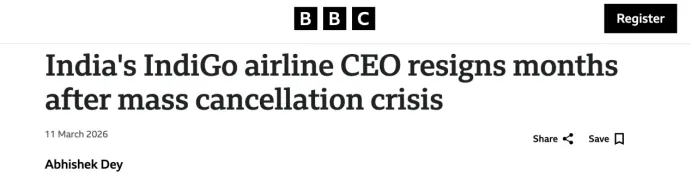
According to reports from the BBC and other authoritative media, IndiGo, India’s largest airline, is entering a critical stage of adjustment. Its CEO Pieter Elbers has officially resigned after large-scale flight cancellations shocked the industry late last year.

_亚洲航空ceo_亚洲航空破产重组

IndiGo confirmed in a statement that Elbers had "resigned immediately" and cited "personal reasons" for his resignation, without disclosing further details. This decision, which took place several months after the company experienced a major operational crisis, also caused the outside world to once again focus on its management and operation system.

4,500 flights canceled

In December last year, IndiGo canceled about 4,500 flights because it failed to respond in time to new pilot duty and rest regulations, making it the most serious operational accident in the company's 20-year history.

This policy was originally intended to reduce pilot fatigue through stricter scheduling rules, but IndiGo failed to accurately assess the number of pilots required after the implementation of the new regulations, resulting in a serious shortage of manpower. Due to compliance requirements, a large number of flights were unable to operate normally, eventually leading to large-scale cancellations.

The emergency had widespread impact and tens of thousands of passengers were stranded at the airport. India's aviation regulator later fined the company about $2.45 million and criticized executives, including Elbers, for deficiencies in crisis management and overall operational oversight.

Founder temporarily takes over

After the CEO resigned, IndiGo quickly initiated transition arrangements. Company co-founder Rahul Bhatia will temporarily take over management responsibilities until a new CEO is elected.

It is worth noting that IndiGo, as the absolute leader in the Indian aviation market, occupies approximately 65% ​​of the domestic market share, and its operational stability directly affects the entire industry. This management adjustment is regarded by the outside world as an internal repair and rebalancing of the crisis.

In internal communications, Bhatia also faced the crisis head-on. In an email to employees, he mentioned that "what happened in December should not have happened" and expressed his gratitude to employees for their efforts during this difficult time.

After the announcement of the CEO's resignation, IndiGo's stock price rose by about 3% in the short term, and market sentiment was relatively stable.

Analysts generally believe that this personnel change will not trigger major strategic adjustments. Brokerage firm Jefferies pointed out that under the leadership of the founder, the company has achieved smooth transitions many times in its history, and it is expected that this feature will continue this time. Key points to focus on in the future include operational stability, flight schedules and the progress of the selection of the new CEO.

HSBC judged that IndiGo will not make major strategic adjustments in the short term, and Bhatia is more likely to focus on improving operational efficiency and repairing its brand image.

Elbers joined IndiGo in 2022 after having long experience in the aviation industry and working for KLM Royal Dutch Airlines.

During his tenure, IndiGo promoted an important expansion plan: ordering 500 narrow-body aircraft from Airbus and planning to introduce more wide-body aircraft to support the development of its international route network.

This expansion strategy was originally an important step in IndiGo's transformation from "domestic focus" to "global layout", but this crisis has also posed a new test to its execution capabilities.

As one of the fastest growing aviation markets in the world, the Indian aviation industry has expanded rapidly in recent years. IndiGo has played a central role in this process, with its market share and route network leading the way.

However, the rapid development of the industry has also put forward higher requirements for airlines in terms of operation management, compliance enforcement and resource allocation. The flight cancellation incident is a concentrated expression of this pressure in reality.

From large-scale flight cancellations to CEO departure, IndiGo is going through a critical period of adjustment.

In the short term, the company has transitioned through founder takeover, and market sentiment has been relatively stable; but in the long term, how to find a balance between rapid growth and refined operations will determine whether the Indian aviation giant can continue to expand in the face of global competition.

The Innovative Achievements Of Shanghai's Top Tertiary Hospitals Accelerate Industrialization, And New Models Promote Project Implementation

The innovative achievements of Shanghai's top tertiary hospitals are accelerating the industrialization process. News came from the Second Shanghai Clinical Transformation Ecological Forum of "Clinical Transformation·Financial Empowerment" held on March 21: The "hospital patent licensing + temporary transfer hospital cash investment" intellectual property corporatization operating model has promoted a number of hospital innovation results to embark on the corporatization process.

The forum is guided by Shanghai Shenkang Hospital Development Center and Shanghai State-owned Capital Investment Co., Ltd., and co-sponsored by Shanghai Clinical Innovation and Transformation Research Institute, Shanghai Futeng Private Equity Fund Management Co., Ltd., and Bank of Shanghai Co., Ltd. At the forum, Duan Qi, President of the Transient Hospital, Zheng Xingdong, President of Shanghai First People's Hospital, Ma Yanbin, Secretary of the Party Committee of the Ninth People's Hospital Affiliated to Shanghai Jiao Tong University School of Medicine, and Sun Fenyong, Vice President of Shanghai Tenth People's Hospital, jointly signed the second batch of intellectual property corporatization operation projects.

As the first transformation model for temporary transfer hospitals, the "hospital patent licensing + temporary hospital cash investment" intellectual property corporatization operating model has promoted 8 projects to complete company registration or is starting the company registration process since the first project was launched in 2025, successfully attracting the participation of industries and investors from all over the country, with a total planned investment of approximately 90 million yuan.

The signing of the second batch of projects marks the transition of this model from a "single-point pilot" to a stage of large-scale application that can be "replicated and promoted". Wang Xingpeng, chairman of the hospital, said that the hospital will continue to deepen mechanism innovation and help open up the "last mile" of medical innovation.

The forum also officially launched the 2026 second "SDIC Futeng Cup" Yangtze River Delta Clinical Innovation and Entrepreneurship Competition. The scope of the competition has been expanded from Shanghai to the Yangtze River Delta, accelerating the construction of a "discovery-cultivation-transformation-investment" full-chain support system, linking the Bank of Shanghai donation fund and the transfer hospital seed fund to provide all-round support for participating projects and promote the coordinated development of the regional clinical transformation ecosystem.

As a key brand activity of the hospital in 2025, the first "SDIC Futeng Cup" Clinical Innovation and Entrepreneurship Competition came to an end, and an award ceremony was held at the forum. The award-winning projects include 51 high-quality projects with transformation potential from more than 20 Shanghai municipal hospitals, including Shanghai First People's Hospital, Shanghai Sixth People's Hospital, Shanghai Tenth People's Hospital, Shanghai Ninth People's Hospital and Shanghai Pulmonary Hospital, as well as district-level hospitals, covering medical devices, digital medicine, biomedicine, AI-assisted diagnosis and treatment and other fields.

The Bank of Shanghai's special public welfare fund was officially launched on site, focusing on the early R&D and pilot trials of high-quality projects in the temporary transfer hospital, injecting financial "living water" into clinical transformation.

The transfer hospital stated that it will continue to explore the "Shanghai Path" for clinical transformation, promote more innovative results from the laboratory to the bedside with a more complete mechanism, stronger financial support, and better ecological services, and inject strong impetus into Shanghai's construction of a global biomedical innovation hub.

The Third Round Of The Chinese Super League Beijing-Shanghai Battle: Shenhua Tied With Guoan 1:1 Away From Home, Chen Jinyi Scored

In the third round of the "Beijing-Shanghai Battle" of the Chinese Super League on March 21, both teams were plagued by injuries and had to send out their remaining teams to fight. Shanghai Shenhua scored with Chen Jinyi's free kick and drew 1-1 away from the opponent, struggling to take away a point from the Workers' Stadium.

In this game, Shenhua's foreign aid Mineiro, who had just returned from injury, was injured again, which made the team worse.

Chen Jinyi became the hero of the team's victory

Shenhua captain Wu Xi and forward Guy were both unable to enter the squad due to injuries; Teixeira was injured before the game and was on the substitute list with Li Ke and failed to appear. Foreign aid Mineiro, who had been resting for a long time due to injury, returned to the starting lineup and formed a double forward with Liu Chengyu, who had just been selected for the new national football team. Beijing Guoan is also suffering from injuries, with main players such as Dhawan, Serginho, Wang Gang and Li Lei absent from the game.

Due to the use of many players in the midfield and frontcourt who had less opportunities to play before, Shenhua's cooperation was a little rusty in the early stages of the game, and the offensive and defensive rhythm could not be fully opened. In the 22nd minute, Zhang Yuning scored with a header to help Guoan take the lead.

Zhang Yuning (right) helps Guoan take the lead

The lagging Shenhua players continued to launch counterattacks with their tenacious hard work, constantly looking for opportunities to equalize the score. In the 68th minute, Chen Jinyi scored with a free kick, helping Shenhua take away a point from the away game. The winner said after the game that he was confident in taking the free kick. "The team's usual set-piece training has always been between Gao Tianyi and me, and I also played the same feeling as usual training." Chen Jinyi said frankly that the team's goal for this game was originally 3 points, "but it also feels good to help the team score 1 point."

In the case of a serious imbalance in the lineup, Shenhua once again took away a point in the away game after drawing with Zhejiang team in the last round. Head coach Slutsky was quite satisfied with the team's performance: "Today's score reflects the strength of both sides well. Although our lineup is very uneven, the team fighting spirit displayed by the players on the field is very outstanding, and it also shows the competitiveness of each of them in the team."

The team's injury problem is becoming more serious

In this game, Mineiro, who had just returned from injury, not only performed poorly, but also suffered an injury again, straining his thigh muscle. He came off the field in pain in the 75th minute. This was Shenhua's third consecutive league game in which a player left the field due to injury.

After this game, Shenhua, which started with a loss of 10 points, currently has 1 win and 2 draws, and is currently at the bottom of the standings with a loss of 5 points. There is still a big gap between the goal of clearing the points. But compared to the pressure of points, the bigger challenge facing the team is an incomplete lineup. Fortunately, the Chinese Super League will enter a half-month rest period after this round of league games. Shenhua, which is full of injuries, will have a chance to breathe and adjust.
India's Rush To Grab Russian Oil At High Prices Has Turned Into A Farce, While China Quietly Welcomes Turkmen Leaders To Lay Out Energy Resources

The recent excitement in the international energy circle is nothing more than a makeshift farce. The United States' 30-day exemption order for Russian oil imports has directly turned the originally tight energy market into a pot of porridge. Countries are rushing to grab oil like headless flies, and the most eye-catching one is undoubtedly India. Third-party ship tracking data shows that India’s purchase of Russian oil has nearly doubled from before, reaching 1.8 million barrels in a single day. In order to grab an extra sip of oil, the Modi government is fighting hard.

A Russian oil tanker loaded with Ural crude oil sailed to the South China Sea and turned around to go to India. This operation happened more than once. At least 7 Russian oil tankers changed their destinations midway and all headed for India. The reason why India can be so "horrible" is that it is willing to spend money. It is not only willing to accept the increased price of Russian oil, but also takes the initiative to bear the additional cost of diversion of oil tankers. It has a clear attitude of "as long as there is oil, it will accept any money." You must know that Urals crude oil was only US$58.16 a barrel a month ago. Affected by the situation in the Middle East, it once soared to US$100. Even if it fell back, it remained at a high of US$90. India's increase in price and rush to buy seemed to have an advantage, but in fact it was a passive compromise forced into a corner by the energy crisis.

中俄两国进行能源合作的意义__中俄能源合作不够深入

While India was busy competing with Japan, South Korea, and Southeast Asian countries, and was fiercely fighting in the rush to buy Russian oil, China was extremely calm and quietly carried out a major event with far-reaching consequences – receiving a visit to China from Turkmenistan's national leader and Chairman of the People's Committee Gurbanguly Berdimuhamedov. Behind the high-level reception was China's firm step in laying out the next energy artery. Many people may not be aware of the weight of this position. Although Berdimukhamedov has resigned as President of Turkmenistan, he is the actual person in power of the country. His position has powers beyond that of the president. This visit to China is by no means a simple friendly exchange. The core is to finalize the next big plan for China-Turkmen energy cooperation.

On March 18, the Chinese President met with Gurbanguly Berdimukhamedov at the Diaoyutai State Guesthouse in Beijing. Every word of the talks between the two sides was pragmatic and long-term. China has made it clear that it will accelerate the strategic alignment between the Belt and Road Initiative and Turkmenistan's "Revival of the Silk Road", focus on expanding the scale of cooperation in the natural gas field, and promote the construction of Line D of the Central Asia Natural Gas Pipeline. Some people may have no idea about this pipeline. Currently, China and Turkey have built three natural gas pipelines with an annual gas transmission capacity of tens of billions of cubic meters. After the completion of Line D, the total gas transmission volume to China will reach 85 billion cubic meters, which is equivalent to adding a heavy insurance to China's energy security.

Turkmenistan has the fourth largest natural gas reserves in the world, but has been "stuck" by Russia for a long time. It can only export natural gas through re-export trade. In 2006, conflicts between the two sides intensified, and Turkmenistan was once on the verge of economic collapse. At this time, China stepped forward, signed a long-term natural gas agreement, and provided a loan of 8.1 billion to help Turkey relieve its urgent needs. This friendship in times of need has resulted in Turkey's sincere treatment. They not only paid off the loan in advance, but also increased the annual natural gas supply to China to 65 billion cubic meters and extended the cooperation period for more than 30 years. They used practical actions to shatter the "debt trap theory" concocted by the West and made China-Turkish cooperation a model of mutual benefit and win-win results.

Now looking at this global energy chaos, we can understand why China can sit firmly on the Diaoyutai. India's grab for oil is for immediate emergency supplies. It can get it today with a price increase, but tomorrow the US exemption period ends, or the oil price rises again, it will still be passive. China doesn't join in the fun, not because it doesn't need energy, but because it has long seen through the core of energy security – it cannot put its eggs in one basket, let alone be led by short-term market trends.

中俄能源合作不够深入__中俄两国进行能源合作的意义

In addition to deepening energy cooperation between China and Turkey, China is also quietly expanding the boundaries of energy cooperation, shifting from single oil and gas imports to full industry chain cooperation, promoting photovoltaic, wind power and other green energy projects into Central Asia. At the same time, it is promoting new energy vehicles domestically, optimizing the energy consumption structure, and building a safe, efficient, clean, and resilient modern energy system. On the other hand, India only has eyes on the Russian oil in front of it and lacks a long-term plan. Even if it grabs more oil, it will only temporarily alleviate the crisis and cannot solve the fundamental problem of energy supply.

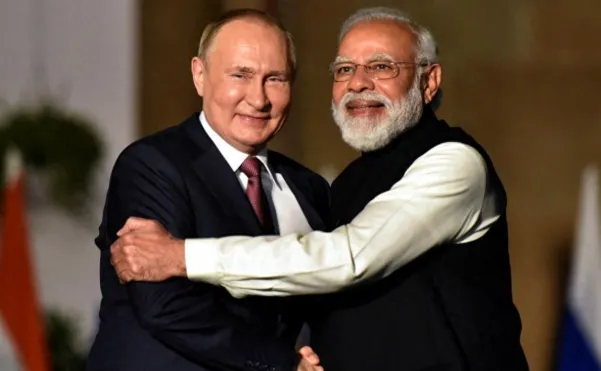
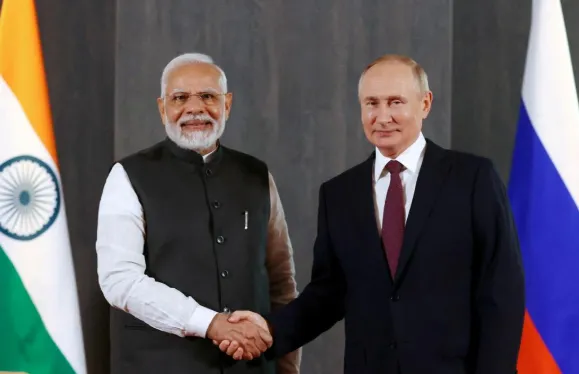
Putin has said that everything is determined by the market, and the one with the best price wins. India now seems to be taking advantage by increasing prices, but this passive buying model cannot escape the fate of being led by the market. Countries in Europe that once sanctioned Russia are now ready to take action, but because of their previous actions, even their qualifications for purchase depend on Russia's face. Japan is even more ridiculous. While cooperating with the West to impose sanctions on Russia, it also wants to restart the import of Russian oil. The initiative has long been out of its hands. Even if it is willing to increase money, Russia may not be willing to sell it.

中俄两国进行能源合作的意义__中俄能源合作不够深入

By comparison, it becomes clearer that China's "doing big things in silence" has never been a blind plan, but based on accurate judgments of the international situation and long-term considerations of energy security. The layout of the China-Turkmen energy artery will not only allow China to obtain stable energy supply, but also deepen cooperation with Central Asian countries, build a solid land energy channel, and get rid of over-reliance on maritime energy transportation.

In this energy game, it is never whoever grabs the most wins, but whoever sees far ahead and plans early can take the initiative. India's price increase to grab oil is just a short-term expedient; China's energy layout is a long-term strategy. While countries are still grappling with the energy gap at hand, China has already locked in the next energy artery. Behind this lies the strategic determination of a major country and the wisdom of preparing for a rainy day. Energy security is never gained by robbery, but is laid out step by step. India may not be able to understand this even if it takes another ten years.
On World Sleep Day, Deqing Held A Sleeping Contest To Convey The Concept Of Healthy Sleep

March 21 is the 26th World Sleep Day. In the afternoon of that day, a unique sleep challenge kicked off warmly on the lawn of Jun'anli, Moganshan International Tourism Resort, Deqing. A thousand blue inflatable sofas are neatly arranged. There is no tension and hustle and bustle of traditional competitions, only the tranquility and comfort accompanied by the breeze of the mountains. Here, there is no competition of speed and strength. The only "competition" is who can relax faster and fall asleep better.

This event is divided into a professional PK group and a leisure experience group. All participants wear smart heart rate monitoring devices and scientifically determine sleep quality through heart rate data during sleep. The "Sleep King Winner Award" and "Best Sleep Dress Award" are finally selected. In a fun and professional way, sleep health becomes perceptible and participatory.

Ms. Zhang signed up with her daughter. At this moment, the mother and daughter were lying next to each other. She turned her head and said softly that the pace was usually too fast, so she just wanted to slow down and enjoy it for a while. On the other side, one of the winning contestants, Wen Hui, had taken off his blindfold, with a look of contentment on his face that he had just woken up. "Imagine myself sleeping in the environment of Mogan Mountain, and I will soon relax. Sleeping outdoors with a thousand people is an experience I have never tried before."

This seemingly relaxing "sleeping contest" is actually a gentle practice that conveys the concept of health. According to the relevant person in charge of the organizer, the purpose of holding the Sleep Challenge is to break the public's stereotype of "health science popularization" in an innovative form that is "slower than sleep, slower than quieter", and to turn "pay attention to sleep" from a slogan into a tangible and participatory action.

Many young participants also admitted that staying up late and having irregular work and rest routines has become the norm. Taking advantage of the opportunity of World Sleep Day to participate in activities, they truly realized that sleep has been neglected for a long time. "I usually feel that it doesn't matter if I sleep a little less. Today, when I lay down in nature, I discovered that falling asleep peacefully and having a deep rest is such a healing thing." A young participant said.

Niu Electric’s Cumulative Losses In Four Years Exceed 500 Million. Sales Will Increase In 2025 But Pressure Will Be High In The Fourth Quarter

In 2025, Niu Electric (NIU.US), known as the "Hermès of the eDonkey world", fell into losses again.

The financial report shows that Xiaoniu Electric’s revenue in 2025 is 4.308 billion yuan, a year-on-year increase of 31%; the net loss is 39.4 million yuan, which is narrower than the loss in the same period last year (193 million yuan), and the gross profit margin reaches 19.6%, an increase of 4.4 percentage points.

Since turning from profit to loss in 2022, Maverick Electric has been in the red for four consecutive years, with a cumulative loss of more than 500 million yuan. Looking back at the four-year loss trajectory, Maverick Electric turned from profit to loss for the first time in 2022 (loss of 49 million yuan). In 2023, the loss expanded to 272 million yuan, the largest loss since its listing. In 2024, the loss narrowed to 193 million yuan, and the loss continued to decrease in 2025.

In 2025, Mavericks electric sales will reach 1.198 million vehicles, a year-on-year increase of 29.09%. However, the pressure will be particularly obvious in the fourth quarter of 2025. Sales in the fourth quarter reached 172,800 vehicles, a year-on-year decrease of 23.8%; the single-quarter loss reached 88.1 million yuan, a year-on-year increase of 21.5%.

Xiaoniu Electric was founded in 2014, with the label of smart high-end. It has occupied segmentation advantages by virtue of differentiated design and brand tone, and has also relied on overseas markets to open up room for growth. In 2018, Mavericks Electric was listed on Nasdaq. In the past few years, Maverick Electric's revenue has grown significantly and it has turned a profit. But starting from 2022, Mavericks Electric will fall into a state of loss.

In 2022, the lithium battery industry will see price increases. Maverick Electric has made multiple price adjustments for its entire range of lithium battery products, with price increases ranging from 200 to 1,000 yuan. In the two-wheel electric vehicle industry, many companies use lead-acid batteries, which will be less affected. Mavericks Electric, which is positioned as a high-end product, uses ternary lithium batteries. After the price adjustment, it directly impacted the end market demand, which was an important factor in the decline in performance.

In the following years, the Mavericks electric market came under pressure. On the one hand, competition in the two-wheeled electric vehicle industry is fierce. Niu Electric has "traded price for volume" through price cuts, profit sharing, and the launch of mid- to low-end models, resulting in the loss of brand premium. At the same time, high-margin overseas business continues to shrink, and Maverick Electric has gradually shifted its business focus to the domestic market. In 2025, Maverick Electric's overseas market encountered Waterloo, and its annual overseas sales were cut in half year-on-year. The domestic electric two-wheeled vehicle market has long been a red ocean. Yadi and Emma have built scale barriers with tens of millions of annual sales and strong supply chain bargaining power. Niu Electric has difficulty in forming a competitive advantage in the mid- to low-end market, and at the same time, it is difficult to increase volume in the high-end market.

It is worth noting that in recent years, Maverick Electric has invested heavily in brand promotion and store expansion, with marketing investment far exceeding R&D investment. According to industry analysis, Mavericks Electric's resource investment structure is unbalanced, making it unable to build the core competitiveness of its products. From 2022 to 2025, Maverick Electric’s R&D expenses were 176 million yuan, 151 million yuan, 130 million yuan, and 170 million yuan respectively; during the same period, marketing expenses were 440 million yuan, 496 million yuan, 490 million yuan, and 680 million yuan respectively.

Entering 2026, Mavericks Electric’s marketing offensive has not diminished but increased. In January, Mavericks Electric officially announced Wu Lei and Song Yuqi as double spokespersons for the global brand.

In order to reverse the loss situation, Maverick Electric has launched measures in terms of products, supply chain, channels and other aspects. On the product side, the NX PRO flagship model priced at 8,499 yuan will be launched in 2025 in an attempt to reshape the high-end brand image. At the same time, the Lingxi AIOS smart car system will be released to bring L2 smart driving technology to mid-range models; on the supply chain side, production expenses will be compressed through large-scale procurement and raw material cost control, and administrative expenses will decrease year-on-year; on the channel side, the number of stores will increase to 4,540 by the end of 2025.

However, judging from market performance, although Maverick Electric's sales will increase in 2025, its average bicycle selling price only rebounded slightly by 2% to 3,614 yuan after three consecutive years of decline.

It is worth noting that with the performance losses, Mavericks Electric’s stock price has shown a sharp decline as a whole. The stock price of Niu Electric (NIU) has plummeted since its peak in 2021. As of the close of March 19, 2026 (Eastern Time), it has plummeted by approximately 94.5% (based on the intraday high) from the historical high on February 16, 2021.

Sign In

Forgot Password

Sign Up