Professional virtual currency information station welcome
We have been making efforts.

24-hour news update Page 38

24-hour cryptocurrency news update

Sanquan Food Buys Back Shares! List Of Top Ten Shareholders Announced

Securities code: 002216 Securities abbreviation: Sanquan Food Announcement Number: 2026-006

Sanquan Food Co., Ltd.

Regarding the top ten shareholders regarding the repurchase of shares

and announcement on the shareholdings of the top ten shareholders without selling restrictions

The company and all members of the board of directors guarantee that the information disclosed is true, accurate and complete, and that there are no false records, misleading statements or major omissions.

Sanquan Food Co., Ltd. (hereinafter referred to as the "Company") held the fifth meeting of the ninth board of directors on March 24, 2026, and reviewed and approved the "Proposal on the Plan to Repurchase the Company's Shares". For details, please refer to the "Announcement on the Plan to Repurchase the Company's Shares" disclosed by the company in the "Securities Times", "Shanghai Securities News" and cninfo.com on March 25, 2026 (Announcement Number: 2026-004).

In accordance with the relevant provisions of laws and regulations such as the "Share Repurchase Rules of Listed Companies", "Shenzhen Stock Exchange Listed Companies Self-Regulatory Guidelines No. 9 – Repurchase of Shares One by One" and other laws and regulations, the names, shareholding amounts and shareholding proportions of the top ten shareholders and the top ten shareholders without sales restrictions on the trading day before the board of directors announced the resolution to repurchase shares (i.e. March 24, 2026) are now announced as follows:

1. Shareholding status of the top ten shareholders

Note: The number of shares held by the above shareholders is the total number of shares held after combining the ordinary account and the margin trading credit account.

2. Shareholding status of the top ten shareholders without selling restrictions

Note: The number of shares held by the above shareholders is the total number of shares held after combining the ordinary account and the margin trading credit account.

3. Documents available for inspection

1. List of shareholders issued by China Securities Depository and Clearing Co., Ltd. Shenzhen Branch.

Announcement is hereby made.

Board of Directors of Sanquan Food Co., Ltd.

March 26, 2026

Securities code: 002216 Securities abbreviation: Sanquan Food Announcement Number: 2026-005

Sanquan Food Co., Ltd.

Share repurchase report

The company and all members of the board of directors guarantee that the information disclosed is true, accurate and complete, and that there are no false records, misleading statements or major omissions.

Important content reminder:

1. Basic situation of this repurchase

Sanquan Food Co., Ltd. (hereinafter referred to as the "Company") plans to use its own funds and self-raised funds to repurchase some of the company's shares through centralized bidding (hereinafter referred to as the "Repurchase"). The brief details are as follows:

(1) Types of repurchased shares: RMB ordinary shares (A shares) issued by the company;

(2) Purpose of repurchase: Use shares for equity incentives and/or employee stock ownership plans;

(3) Repurchase price: no more than RMB 13.50 per share (inclusive);

(4) Repurchase amount: The total amount of repurchase funds shall not be less than RMB 75 million and shall not exceed RMB 150 million;

(5) Repurchase quantity: Calculated based on the fact that the upper limit of the repurchase amount does not exceed RMB 150 million and the upper limit of the repurchase price does not exceed RMB 13.50/share (inclusive), the repurchase quantity is approximately 11.1111 million shares, accounting for 10% of the company’s total share capital. 1.26%; calculated based on the fact that the lower limit of the repurchase amount is not less than RMB 75 million and the upper limit of the repurchase price is not more than RMB 13.50 per share (inclusive), the number of repurchases is approximately 5.5556 million shares, accounting for 0.63% of the company's total share capital;

(6) Source of repurchase funds: own funds and self-raised funds;

(7) Repurchase period: no more than twelve months from the date the board of directors considers and approves the share repurchase plan;

2. This share repurchase plan has been reviewed and approved at the fifth meeting of the ninth board of directors. According to relevant laws, regulations and the "Articles of Association", this share repurchase plan falls within the scope of the board of directors' approval authority and does not need to be submitted to the company's shareholders' meeting for review.

3. The company plans to use the special securities account for share repurchase originally opened at the Shenzhen Branch of China Securities Depository and Clearing Co., Ltd.

4. Related risk warnings

(1) This repurchase plan may face the risk that the company's stock price continues to exceed the repurchase price limit during the repurchase period, which may cause the repurchase plan to be unable to be implemented or only partially implemented.

(2) There is a risk that all repurchased shares may not be granted due to reasons such as equity incentives and/or employee stock ownership plans failing to be reviewed and approved by decision-making bodies such as the company’s shareholders’ meeting, or incentive recipients giving up on subscribing for shares.

(3) During the repurchase process, there is a risk that the plan cannot be implemented due to major events that have a significant impact on the company's stock trading price or the company's board of directors deciding to terminate the repurchase plan.

This repurchase will not have a significant impact on the company's operating activities, financial status and future development, nor will it affect the company's listing status. The company will choose opportunities to repurchase shares based on market conditions during the repurchase period, and will promptly perform information disclosure obligations based on the progress of the share repurchase matter. Investors are advised to pay attention to investment risks.

According to the "Company Law of the People's Republic of China", "Securities Law of the People's Republic of China", "Shenzhen Stock Exchange Stock Listing Rules", "Listed Company Share Repurchase Rules" (hereinafter referred to as "Repurchase Rules"), "Shenzhen Stock Exchange Listed Companies Self-Regulatory Supervision Guidelines No. 9 – 11 In accordance with the relevant provisions of laws, regulations and normative documents such as "Repurchase of Shares" (hereinafter referred to as the "Repurchase Guidelines") and the "Articles of Association of Sanquan Food Co., Ltd." (hereinafter referred to as the "Articles of Association"), the company has prepared a repurchase report on this share repurchase. The specific information is announced as follows:

1. Main contents of the share repurchase plan

(1) Purpose of repurchasing shares

Based on confidence in the company's future development and recognition of the company's long-term value, in order to safeguard the interests of investors, and to establish a sound long-term incentive mechanism, fully mobilize the enthusiasm of the company's middle and senior managers and core backbone personnel, and assist the company's long-term development, the company plans to repurchase some public shares with the company's own funds or self-raised funds through centralized bidding transactions in accordance with relevant regulations for the implementation of equity incentives and/or employee stock ownership plans.

(2) Repurchase of shares meets relevant conditions

The company's repurchase complies with the conditions stipulated in Article 8 of the "Share Repurchase Rules of Listed Companies" and Article 10 of the "Shenzhen Stock Exchange Self-Regulatory Guidelines for Listed Companies No. 9 – Repurchase of Shares One by One":

1. The company’s shares have been listed for six months;

2. The company has no major illegal activities in the past year;

3. After repurchasing shares, the company has the ability to continue operating and pay debts;

4. After repurchasing shares, the company’s equity distribution meets the listing conditions;

5. Other conditions stipulated by the China Securities Regulatory Commission and the stock exchange.

(3) Method and price range for repurchasing shares

1. The company plans to repurchase the company's shares through centralized bidding transactions through the Shenzhen Stock Exchange trading system.

2. The price for repurchasing shares this time is no more than 13.50 yuan/share (inclusive). The upper limit of the repurchase price shall not be higher than 150.00% of the average stock trading price in the 30 trading days before the board of directors passes the repurchase resolution. The specific repurchase price will be determined based on the company's secondary market stock price, the company's financial status and operating conditions.

From the date when the board of directors approves the repurchase plan to the completion of the repurchase, if the company implements capital reserve transfer to share capital, distribution of dividends, bonus shares, allotment of shares and other ex-rights and ex-dividends, from the date of ex-rights and ex-dividends of the stock price, the price limit of the repurchased shares will be adjusted accordingly in accordance with the relevant regulations of the China Securities Regulatory Commission and the Shenzhen Stock Exchange.

(4) The type, purpose, total amount of funds, quantity and proportion of the shares to be repurchased in the company’s total share capital

1. Type of shares repurchased: RMB ordinary shares (A shares) issued by the company;

2. Purpose of repurchased shares: The shares will be used for equity incentives and/or employee stock ownership plans. If the company fails to use up the repurchased shares within 3 years after the announcement of the results of this share repurchase and share changes, the unused repurchased shares will be cancelled. If the state makes adjustments to relevant policies, this repurchase plan will be implemented according to the adjusted policies;

3. The total amount of funds to repurchase shares: no less than RMB 75 million and no more than RMB 150 million. The specific total amount of funds to repurchase shall be based on the total amount of funds actually used for repurchase at the end of the repurchase.

4. The number of shares repurchased and the proportion of the total share capital: Calculated based on the fact that the upper limit of the repurchase amount does not exceed RMB 150 million and the upper limit of the repurchase price does not exceed RMB 13.50/share (inclusive), the number of repurchased shares is approximately 11.1111 million shares, accounting for 11.1111 million shares of the company. 1.26% of the company's total share capital; based on calculations based on the fact that the lower limit of the repurchase amount is not less than RMB 75 million and the upper limit of the repurchase price is no more than RMB 13.50/share (inclusive), the repurchase amount is approximately 5.5556 million shares, accounting for 0.63% of the company's total share capital. The specific number of shares repurchased shall be based on the actual number of shares repurchased at the expiration of the repurchase period.

From the date when the board of directors approves the repurchase plan to the completion of the repurchase, if the company implements capital reserve transfer to share capital, distribution of dividends, bonus shares, allotment of shares and other ex-rights and ex-dividends, starting from the date of ex-rights and ex-dividends of the stock price, the price limit of the repurchased shares will be adjusted accordingly in accordance with the relevant regulations of the China Securities Regulatory Commission and the Shenzhen Stock Exchange. The number of repurchased shares and the proportion of the company's total share capital and shares without selling restrictions will change accordingly.

(5) Sources of funds for repurchasing shares

The source of funds for this share repurchase is the company's own funds and self-raised funds.

(6) Implementation period for share repurchase

1. The repurchase period shall not exceed twelve months from the date the board of directors considers and approves the share repurchase plan. During the implementation of the repurchase plan, if the company's stock is suspended for more than ten consecutive trading days due to the planning of major events, the repurchase period may be extended, and the extension shall not exceed the maximum period stipulated by the China Securities Regulatory Commission and the Shenzhen Stock Exchange.

2. If the following conditions are met, the repurchase period will expire early:

(1) If the amount of repurchase funds used exceeds the minimum limit during the repurchase period, the repurchase plan can be completed, or if the repurchase fund usage reaches the maximum limit during the repurchase period, the repurchase plan will be implemented immediately and the repurchase period will expire early from that date;

(2) If the company's board of directors decides to terminate this repurchase plan, the repurchase period will expire early from the date of the board of directors' resolution to terminate this repurchase plan.

3. The company shall not repurchase shares during the following periods:

(1) From the date when a major event that may have a significant impact on the trading price of the company's securities and its derivatives occurs or during the decision-making process to the date of disclosure in accordance with the law;

(2) Other circumstances specified by the China Securities Regulatory Commission and Shenzhen Stock Exchange.

4. The company’s declaration for this share repurchase transaction must meet the following requirements:

(1) The declared price shall not be the price that limits the trading increase of the company’s stock on that day;

(2) Share repurchases shall not be entrusted during the stock exchange’s opening call auction, closing call auction and trading days when there is no limit on the price increase or decrease of the stock price;

(3) Other requirements stipulated by the China Securities Regulatory Commission and Shenzhen Stock Exchange.

(7) Estimated changes in the company’s capital structure after the repurchase

1. Calculated based on the lower limit of the total repurchase funds of 75 million yuan and the repurchase price of 13.5 yuan per share, the number of shares repurchased is expected to be approximately 5,555,556 shares, accounting for approximately 0.63% of the company's current total share capital. Assuming that all repurchased shares are locked, the expected changes in the company's share capital structure are as follows:

2. Calculated based on the total repurchase fund limit of 150 million yuan and the repurchase price of 13.5 yuan/share, the number of shares repurchased is expected to be approximately 11,111,111 shares, accounting for approximately 1.26% of the company's current total share capital. Assuming that all repurchased shares are locked, the expected changes in the company's share capital structure are as follows:

Note: The above changes are the results of calculations, and the influence of other factors has not been taken into account. The specific number of shares repurchased and its impact on the company's equity structure shall be based on the actual number of shares repurchased when the repurchase is completed.

(8) Management’s analysis of the impact of this share repurchase on the company’s operations, finance, research and development, debt performance capabilities, future development, and maintenance of listing status, and the commitment of all directors that this share repurchase will not damage the listed company’s debt performance ability and sustainable operating capabilities.

As of September 30, 2025 (unaudited), the company's total assets were 7,568,510,450.33 yuan, and the owner's equity attributable to shareholders of the listed company was 4,527,384,526.24 yuan. Assuming that the upper limit of the total repurchase funds of RMB 150 million is fully used, the proportions of the company's total assets and the owner's equity attributable to shareholders of the listed company will be 1.98% and 3.31% respectively, which are relatively low.

Based on the company's current operations, finance, research and development, debt performance capabilities and future development, the company believes that the share repurchase amount of no less than RMB 75 million and no more than RMB 150 million will not have a significant impact on the company's operations, finance, research and development, debt performance capabilities and future development. The implementation of the share repurchase plan will not lead to a change in the company's control, will not change the company's status as a listed company, and will not cause the company's equity distribution to not meet the listing conditions. Moreover, this repurchase of shares will be used for equity incentives and/or employee stock ownership plans, which will help establish and improve the benefit-sharing mechanism, improve the cohesion of the company's employees, promote the company's sustainable development, effectively boost market confidence, and safeguard the interests of investors, especially small and medium-sized investors.

All directors of the company promise to be honest, trustworthy, diligent and responsible in this share repurchase, and to safeguard the company's interests and the legitimate rights and interests of shareholders and creditors; this share repurchase will not damage the company's ability to fulfill its debts and continue to operate.

(9) The purchase and sale of the company’s shares by the listed company’s directors, senior managers, controlling shareholders, actual controllers and persons acting in concert within six months before the board of directors makes a resolution to repurchase shares, whether there is any insider trading and market manipulation behavior alone or jointly with others, and plans to increase or decrease shareholdings during the repurchase period; the shareholding reduction plans of the listed company’s directors, senior managers, controlling shareholders, actual controllers, and shareholders holding more than 5% of the shares in the next three months and the next six months.

After the company's internal self-examination, the company's directors, senior managers, the company's controlling shareholders, actual controllers and persons acting in concert did not buy or sell the company's shares in the six months before the board of directors made the resolution to repurchase shares, and did not engage in insider trading or market manipulation alone or jointly with others.

As of the disclosure date of this announcement, the company's directors, senior managers, controlling shareholders, actual controllers and persons acting in concert have no clear plans to increase or decrease their holdings during the repurchase period. Listed company directors, senior managers, controlling shareholders, actual controllers, shareholders holding more than 5% of shares and persons acting in concert have no clear plans to reduce their holdings in the next three months or six months. If the above-mentioned persons plan to implement a share increase or decrease plan in the future, the company will promptly perform its information disclosure obligations in accordance with relevant regulations.

(10) Relevant arrangements for cancellation or transfer in accordance with the law after repurchasing shares, as well as arrangements to prevent infringement of the interests of creditors

The shares repurchased by the company will be used for the later implementation of equity incentives and/or employee stock ownership plans. If the above purposes cannot be implemented within three years after the completion of the share repurchase, or if all the repurchased shares are not used for the above purposes, the unused portion will be canceled in accordance with the law.

If the cancellation of shares occurs subsequently, the company will, in accordance with relevant laws and regulations, fulfill legal procedures and information disclosure obligations such as notifying creditors on the reduction of the company's registered capital after the shareholders' meeting makes a resolution to repurchase the shares and fully protect the legitimate rights and interests of creditors.

(11) Specific authorization arrangements for handling this share repurchase matter

This share repurchase plan has been reviewed and approved at the fifth meeting of the company's ninth board of directors held on March 24, 2026. The shares repurchased by the company will be used for equity incentives and/or employee stock ownership plans. According to the relevant provisions of the "Repurchase Guidelines" and the "Articles of Association", this share repurchase matter can be passed by a resolution of the board of directors meeting attended by more than two-thirds of the directors, and does not need to be submitted to the shareholders' meeting for review.

In order to ensure the smooth implementation of this share repurchase, the company's board of directors authorizes the management to handle matters related to this share repurchase within the scope of laws and regulations and in accordance with the principle of safeguarding the interests of the company and shareholders to the maximum extent. The content and scope of authorization include but are not limited to:

1. Within the scope permitted by laws and regulations, and based on the company and market conditions, formulate a specific plan for the repurchase of shares;

2. When the regulatory authorities change the relevant conditions for the repurchase of shares or the market conditions change, in addition to matters that must be reconsidered by the board of directors as stipulated in relevant laws, regulations and the Articles of Association, the specific plan for the repurchase of shares and other related matters will be adjusted accordingly in accordance with the relevant regulations;

3. Have full authority to handle the specific implementation matters of this repurchase: including but not limited to the establishment of special securities accounts for repurchase and other securities accounts; choosing the opportunity to repurchase shares according to the actual situation, including the time, price and quantity of the repurchase;

4. Based on the actual situation of share repurchase, modify the Articles of Association and other information and document terms that may involve changes, and handle relevant filing work;

5. After the implementation of the share repurchase is completed, it will be used for equity incentives and/or employee stock ownership plans, and will be transferred within three years after the announcement of the results of the share repurchase and share changes; if the company fails to complete the transfer within the specified period, it will perform the procedures for reducing the registered capital in accordance with the law, and the untransferred shares will be cancelled, and the company's articles of association and registered capital changes will be modified;

6. Handle other matters not listed above but necessary for this share repurchase;

7. This authorization shall commence from the date when the company's board of directors considers and approves the share repurchase plan and ends on the date when the above authorization matters are completed.

2. Risk warning of repurchase plan

1. This repurchase plan may face the risk that the company's stock price continues to exceed the repurchase price limit during the repurchase period, which may lead to the risk that this repurchase plan cannot be implemented or can only be partially implemented.

2. There is a risk that all repurchased shares may not be granted due to reasons such as equity incentives and/or employee stock ownership plans failing to be reviewed and approved by decision-making bodies such as the company's shareholders' meeting, or incentive recipients giving up on subscribing for shares.

3. During the repurchase process, there is a risk that the plan cannot be implemented due to the occurrence of major events that have a significant impact on the company's stock trading price or the company's board of directors deciding to terminate the repurchase plan.

This repurchase will not have a significant impact on the company's operating activities, financial status and future development, nor will it affect the company's listing status. The company will choose opportunities to repurchase shares based on market conditions during the repurchase period, and will promptly perform information disclosure obligations based on the progress of the share repurchase matter. Investors are advised to pay attention to investment risks.

3. Review procedures and information disclosure for this share repurchase

1. This share repurchase plan has been reviewed and approved at the fifth meeting of the company's ninth board of directors held on March 24, 2026. According to the relevant provisions of the "Repurchase Guidelines" and the "Articles of Association", this share repurchase matter can be passed by a resolution of the board of directors meeting attended by more than two-thirds of the directors, and does not need to be submitted to the shareholders' meeting for review. For details, please refer to the "Announcement on Resolutions of the Fifth Meeting of the Ninth Board of Directors" (Announcement No.: 2026-003) and the "Announcement on the Plan to Repurchase the Company's Shares" (Announcement No.: 2026-004) disclosed on cninfo.com on March 25, 2026.

2. On the date of this announcement, the company disclosed the names, shareholding quantity and shareholding ratio of the top ten shareholders and the top ten shareholders without selling restrictions who were registered on the trading day before the board of directors announced the resolution to repurchase shares. For details, please refer to the "Announcement on the Shareholdings of the Top Ten Shareholders and the Top Ten Shareholdings without Trading Unconditional Conditions" disclosed by the company on the same day in the Securities Times, Shanghai Securities News and cninfo.com (announcement number: 2026-006).

4. Opening of special account for share repurchase

According to relevant regulations, the company can use the special securities account for share repurchase originally opened at the Shenzhen Branch of China Securities Depository and Clearing Co., Ltd. This account is only used to repurchase the company's shares.

5. Information disclosure arrangements

In accordance with the provisions of relevant laws, regulations and normative documents, the company will promptly perform its information disclosure obligations during the implementation of repurchases and announce the progress of repurchases in each periodic report:

1. The company will disclose the fact on the trading day following the first repurchase of shares;

2. For every 1% increase in the proportion of shares repurchased by the company to the total share capital of the listed company, it will be disclosed within three trading days from the date of the fact;

3. Disclose the repurchase progress as of the end of the previous month within the first three trading days of each month;

4. If the company has not implemented the repurchase more than half of the repurchase implementation period stipulated in the share repurchase plan, the board of directors will announce the reasons for the failure to implement the repurchase and the subsequent repurchase arrangements;

5. If the repurchase period expires or the share repurchase has been completed, the company will stop the repurchase and disclose the repurchase results and share change announcement within two trading days.

6. Documents available for inspection

Resolution of the fifth meeting of the company's ninth board of directors.

Announcement is hereby made.

Board of Directors of Sanquan Food Co., Ltd.

March 26, 2026

U.S. Stocks Rebound In One Day! All Three Major Indexes Fell As Rising Oil Prices Put Pressure On Interest Rate Cut Expectations

*The three major indexes closed lower, with the Nasdaq falling 0.84%

* Higher oil prices push up interest rates, putting pressure on expectations of rate cuts

*Barclays raises S&P 500 target to 7,650

U.S. stocks fell back on Tuesday, with the previous day's rebound driven by expectations of an easing of geopolitical tensions failing to extend. Although U.S. President Trump said that Iran "wants to reach a deal," the market's confidence in the easing of the situation in the Middle East has once again been shaken, and investor sentiment has become cautious.

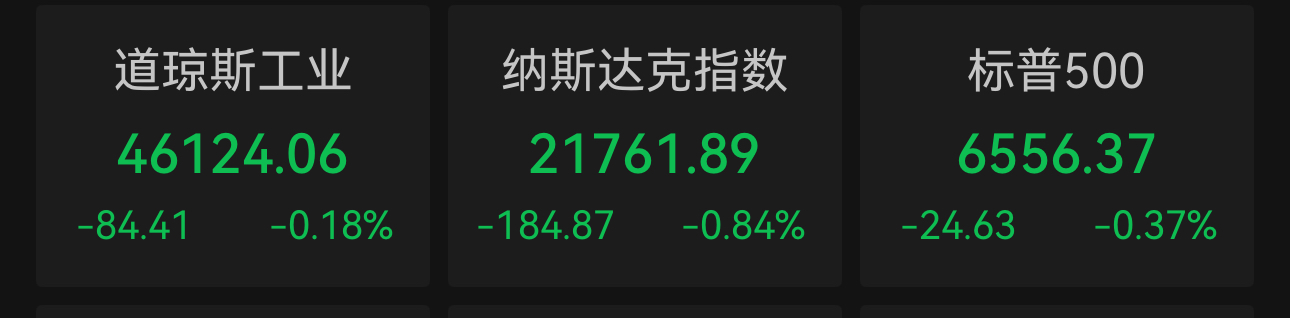
As of the close, major stock indexes fell collectively, giving up some of Monday's gains. The Dow Jones Industrial Average fell 84.41 points to close at 46124.06 points, a decrease of 0.18%; the S&P 500 Index fell 24.63 points to close at 6556.37 points, a decrease of 0.37%; the Nasdaq Composite Index fell 184.87 points to close at 21761.89 points, a decrease of 0.84%.

美国科技公司支持特朗普吗_特朗普科技股_

[Performance of popular stocks]

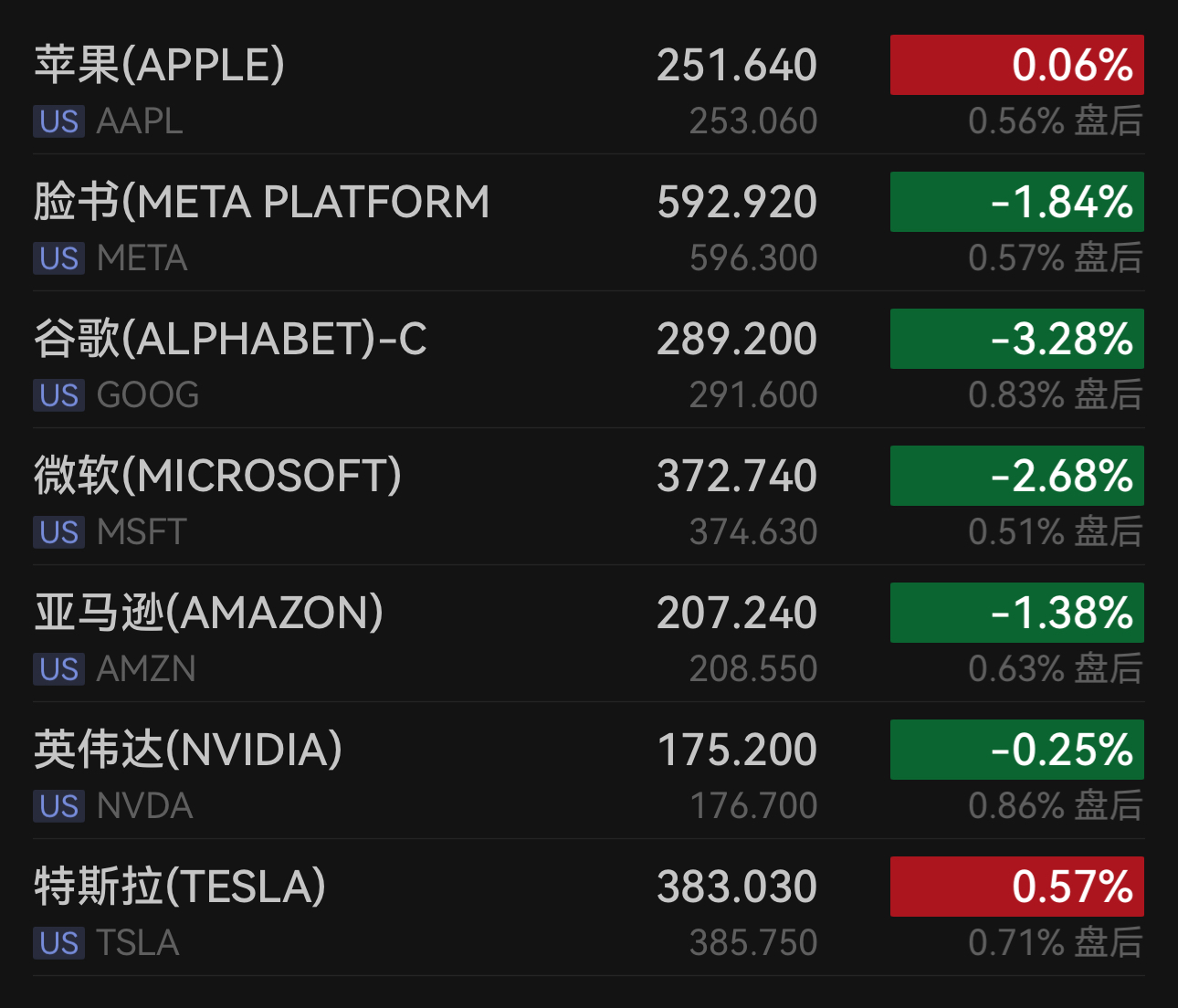
The trends of large technology stocks are divided. Tesla rose 0.57%, Apple rose 0.06%, and AMD rose 1.33%. Nvidia fell 0.25%, Microsoft fell 2.68%, Amazon fell 1.38%, Meta Platforms fell 1.84%, Broadcom fell 1.31%; in terms of Alphabet, Google Class A shares fell 3.85%, and Class C shares fell 3.28%.

特朗普科技股_美国科技公司支持特朗普吗_

The overall performance of Chinese concept stocks was weak, with the Nasdaq China Golden Dragon Index closing down 0.43%. In terms of individual stocks, Pinduoduo rose 1.91%, Tencent Holdings (ADR) rose 0.83%, and Amer Sports rose 1.16%; Alibaba fell 0.46%, JD.com fell 0.25%, Tencent Music fell 1.10%, and Baidu fell 1.75%.

In terms of sectors, seven of the eleven major S&P 500 sectors rose and four fell. The energy sector and materials sector led the gains with gains of 2.05% and 1.67% respectively, while the communication services and real estate sectors led the decline with losses of 2.50% and 0.76% respectively.

【Market Overview】

According to CCTV News, Trump said that the United States is communicating with the "right people" and that Iran "wants to reach a deal"; he also said that Iran "has no leadership" and said that the United States has "achieved great success" on the Iranian issue.

Christopher O'Keefe, managing director and chief portfolio manager of Logan Capital Management, said that the current market is like a "roller coaster" and investors are reassessing the direction of the situation every day. Uncertainty covers a wide range of potential outcomes, and the outcome largely depends on how long the conflict lasts.

Carol Schleif, chief market strategist at BMO Private Wealth, said that the stock market is trying to stabilize, and investors are paying attention to social media trends while keeping an eye on the latest news. The market is currently biased towards short-term trading logic.

Schleife said the market was still trying to build on the optimism from the previous session. Although the situation is not yet completely clear, investors have shown a willingness to shrug off the impact of geopolitical conflicts. However, nervousness has not dissipated. The market is not only paying attention to the trend of oil prices, but also evaluating the path of interest rates, and is worried that energy prices and interest rates may remain high for a longer period of time, thus putting pressure on economic growth.

Kevin Gordon, director of macro research and strategy at Schwab Financial Research Center, said that the simultaneous rise in oil prices and interest rates has constituted a "double shock" to the market, and this combination is obviously detrimental to the stock market. "This is about the least confident market environment you can see. Given what happened yesterday and even today, I don't know anyone who would be willing to be significantly overweight risk assets or significantly underweight risk assets at this time," Gordon added.

At the same time, traders are no longer pricing in any rate cuts this year, whereas before the conflict in the Middle East, the market had expected two rate cuts. As tensions escalated last week, expectations for a rate hike increased. CME Group's FedWatch tool shows that the latest bets point to a more than 30% chance of a rate hike by the end of the year.

Despite heightened geopolitical risks and financial market volatility, some institutions remain relatively optimistic about corporate profits. Barclays raised its 2026 year-end target for the S&P 500 Index from 7,400 points to 7,650 points on the grounds that improved profit expectations can, to a certain extent, hedge against uncertainties such as geopolitical conflicts, artificial intelligence competition, and private equity credit pressures.

In the interest rate market, U.S. Treasury bond yields have risen significantly. The two-year Treasury bond yield once rose to 3.963%, a stage high, and was last at 3.944%, up 11.3 basis points; the 10-year Treasury bond yield was at 4.419%, up 8.3 basis points. The rise in short-term interest rates reflects the market's repricing of the policy path.

In terms of economic data, the U.S. economic momentum has shown a marginal slowdown. Preliminary data released by S&P Global showed that the U.S. Composite PMI Output Index recorded 51.4 in March, down from 51.9 in February and a new low since April last year. Among them, the service industry became the main drag, with its business activity index falling to 51.1, an 11-month low; the manufacturing PMI rose to 52.4, a two-month high.

Chris Williamson, chief business economist at S&P Global Market Intelligence, said the March PMI sent a signal of “slowing growth and rising inflation.” Uncertainty caused by the situation in the Middle East and rising living costs have suppressed demand, while rising energy prices and supply chain delays have pushed up corporate costs. The survey shows that consumer inflation may rise to about 4%, and the risk of stagflation has increased.

In terms of individual stocks, liquidity issues in the private credit market have once again attracted attention. Ares Management announced that it would limit the redemption ratio of its private credit funds to 5%, and Apollo Global Management also took similar measures to deal with the surge in redemption requests. Ares Management shares closed down 1%, while Apollo rose 0.7%.

The move echoes restrictions taken by BlackRock and Morgan Stanley earlier this month, as concerns about potential risks in the private credit sector have increased. Among peer institutions, Blackstone Group and Carlyle Group fell 1.27% and 0.9% respectively.

Jefferies shares rose 2.5% after reports that Japan's Sumitomo Mitsui Financial Group was exploring the possibility of acquiring the investment bank.

Estee Lauder shares fell 9.8% after the company said it was negotiating a potential merger with Spanish beauty group Puig Brands.

【Bulk Performance】

In terms of commodities, international oil prices rose significantly. As of the close, light crude oil futures for May delivery on the New York Mercantile Exchange rose 4.79% to US$92.35 per barrel; Brent crude oil rose 4.55% to US$104.49 per barrel.

The trend of precious metals is divided. Gold prices continued to fall, with spot gold falling 0.4% to US$4,389.26 per ounce; U.S. gold futures closed down 0.1%. Spot silver rose slightly by 0.4% to $69.43 an ounce. Bart Melek, global head of commodity strategy at TD Securities, said that if the conflict continues and pushes up energy prices, it will put pressure on gold in the short term, but as policy space improves, the outlook for gold may still turn positive during the year.

Spot gold has fallen by more than 21% from its January high, and has fallen by nearly 17% since the conflict escalated in late February.

Foreign-funded Enterprises Accelerate The Deployment Of Innovative R&D Centers In China And Share Cases In Multiple Fields

In the past, the layout structure of foreign-funded enterprises in China usually focused on sales and light on R&D, but now this situation is changing. With the support of the government, many foreign-funded headquarters are accelerating their transition from management decision-making and sales and service centers to innovation centers and R&D centers, trying to open up the entire chain of "local innovation-result transformation-enterprise upgrading-industrial leap".

Recently, at a foreign investment and foreign trade transformation and upgrading promotion conference in Jing’an, Shanghai, some companies shared their own transformation cases.

In the field of biomedicine, Sanofi is increasing its presence in Shanghai, China, and is planning to establish a China R&D Innovation Center in Jing'an. Tang Lei, head of translational medicine at Sanofi China, said that the company will set up a new R&D center legal entity in Jing'an District, which is a comprehensive strategic upgrade of the existing China R&D center.

According to Tang Lei, the Shanghai R&D Center will become Sanofi's largest translational medicine research center in China and will be deeply linked with Sanofi's six global translational medicine centers. It will make full use of Shanghai's world-class scientific research resources and open policy environment to comprehensively accelerate the research and development of innovative drugs in key areas such as immunity, chronic diseases, tumors and rare diseases. In addition, the company will promote the simultaneous international development of new drugs and the launch of innovative drugs in China, and accelerate the delivery of innovative drugs in key areas to benefit Chinese patients.

In the field of beauty and health, Clarins will locate the world’s first overseas laboratory and the world’s second largest R&D center in Jing’an. Clarins Asia Pacific R&D Director Song Xianli said that the center specializes in studying the skin quality needs of Chinese consumers, from touch and fragrance to packaging, and collaborates with the Paris headquarters to develop high-end beauty products that truly fit the Chinese market and achieve localized innovation for global beauty brands.

Why do these foreign-funded enterprises need to transform? Zhao Lantian, deputy director of the Jing'an District Commerce Commission, gave the answer. According to him, during the "14th Five-Year Plan" period, the total foreign trade import and export volume of Jing'an District reached 484.51 billion yuan, and the total actual foreign investment reached 4.51 billion US dollars. The foreign-related economic scale has ranked first in the central city for 10 consecutive years. It has gathered 148 multinational company headquarters and more than 6,100 foreign-invested enterprises. The economic density of headquarters and the concentration of global brands rank first in the city. However, with the changes in the global trade pattern and domestic high-quality development requirements, the traditional foreign trade layout of "emphasis on sales and light on R&D" has been unable to adapt to development needs, and promoting the transformation and upgrading of foreign trade enterprises has become an inevitable choice. To this end, Jing'an anchors on the three major advantageous tracks of biomedicine, beauty and health, and high-end consumption, uses R&D innovation to solve transformation problems, and makes innovation the core basis for foreign trade companies to rise in level.

Zhao Lantian believes that increasing investment in R&D and innovation by foreign-funded enterprises can not only effectively enhance their core competitiveness and promote steady improvement in operational quality and efficiency, but also drive continued enhancement of regional economic contribution and continuous improvement of industrial ecology, achieving symbiosis and win-win between enterprise development and regional prosperity.

According to Zhao Lantian, relevant departments have established a gradient cultivation mechanism for foreign capital headquarters to support enterprises in extending from single functions to composite functions and from regional functions to global functions, enhance decision-making authority such as global strategy, business planning, resource allocation, and fund settlement, and encourage foreign-funded enterprises to set up industrial investment funds, participate in mergers and acquisitions and reorganizations, build cross-border cooperation platforms, integrate into the global service provider ecosystem, and deeply link domestic and international dual cycles. Up to now, a large number of foreign-funded enterprises have completed the role transformation from Chinese sales to global functions.

India Grabs Oil At High Prices! Russian Tankers Diverted, Paying $80 More Per Ton

Recently, Russian oil tankers, represented by the "Water Titan" and at least fully loaded with crude oil, suddenly changed course after sailing into the South China Sea, changing their destination from a Chinese port to an Indian port. Some oil tankers even chose to reroute to India when they were approaching the unloading point. This rerouting is expected to travel about 2,000 nautical miles longer than the original voyage, and may take about seven days longer.

中途俄货送给山东商船运输_俄罗斯运输船_

Why do Russian oil tankers sell oil to India even if they take a detour? It is because of the high price offered by Indian refineries that in order to obtain this batch of spot crude oil that is already at sea, the price offered by Indian buyers is US$50 to US$80 per ton higher than the spot purchase price in China. This level of premium is enough to fully cover the freight, demurrage and potential default costs caused by the diversion, and can even bring excess profits to ship owners.

So the question is, why is India, which is not very wealthy, willing to pay such a high price? First, about 40% of India’s crude oil imports pass through the Strait of Hormuz. However, the recent escalation of geopolitical conflicts in the Middle East has blocked the passage of this channel, directly threatening India’s energy supply security. Data shows that India’s commercial crude oil reserves can only last about 25 days. In this context, what India considers more about obtaining spot crude oil is not the cost issue, but the bottom line and red line issue of energy security. Naturally, it can do so regardless of the price or cost.

Second, before, the United States did not allow India to purchase Russian oil, and India compromised. However, after the Strait of Hormuz was blocked, the United States was worried that global oil prices would be out of control and backfire on itself, so it urgently provided India with a 30-day "exemption ticket." But what can it do in these 30 days? Even if India reaches a supply agreement with Russia as soon as possible and ships from the Black Sea or the Baltic Sea, the 30-day window will have long passed by the time the tanker arrives at the Indian port. Therefore, there is only one way left for India – to intercept the goods that are already at sea, and the closer the better, the faster the better. As a result, Indian refiners have focused on Russian oil tankers that are sailing in the Indian Ocean and are even approaching Chinese ports. Data shows that in just one week, Indian companies snatched about 30 million barrels of Russian crude oil from the spot market, almost sweeping away all the liquid spot goods on the market, because this is the only way for India to alleviate its own energy crisis.

_俄罗斯运输船_中途俄货送给山东商船运输

Therefore, this incident was actually the result of many factors. India's immediate demand gap and the temporary exemption from the United States eventually led to the rerouting of this batch of Russian oil. At this point, many friends may ask a question: If India raises prices, why don’t we in China follow suit? Can’t we also pay a high price and snatch this batch of oil back? The answer is no, why? First, most of China's crude oil purchases are locked in long-term contracts. With stable long-term supply, pipeline transportation guaranteed, and sufficient reserve buffers, there is no need to compete with others in the spot market. Secondly, China’s crude oil import system has formed a diversified supply pattern after years of layout. Data shows that China’s crude oil import sources currently include Russia, Saudi Arabia, the United Arab Emirates, Iraq, Brazil and other countries. This batch of intercepted oil is a life-saving straw for India, but for us, it is just a batch of many sources of supply. Raising the price for a few ships of spot cargo will instead push up the cost of all subsequent purchases. This is picking up sesame seeds and losing watermelons.

However, this incident reminds us. First of all, it shows that the trend of "spotization" and "speculation" in global energy trade is intensifying. The traditional model that relies on long-term contracts and stable routes has been impacted by "maritime guerrilla warfare"-style temporary transactions. Oil tankers can change their destinations based on real-time quotes during the voyage, which poses new challenges to the supply chain stability of importing countries.

_中途俄货送给山东商船运输_俄罗斯运输船

Secondly, this is a stress test worthy of review for us. This batch of crude oil was eventually intercepted at a high price. In the short term, it can be compensated by increasing purchases from other channels. But what is more important is the thinking on the mechanism. If India continues to purchase spot crude oil at high prices in the South China Sea and the Indian Ocean in the next 30 days, how can we ensure the stability of contract supply in the highly volatile spot market? How to continue to spread transportation risks through diversified channels? How to maintain bargaining power in price competition?

Generally speaking, in the current international environment, energy security has become a protracted war that requires real-time responses and dynamic adjustments. China's strategy in this protracted war is not to chase high prices and grab goods, but to focus on the big ones, let go of the small ones, and fight steadily.

The US-Israel War Drags Down COSL Stock Price Below Pre-war Levels

The war between the United States and Israel to attack Iran is still continuing. The stock price of China National Offshore Oilfield Services (601808.SH, 02883.HK), the leading domestic oil services company, has fallen below the stock price before the war began.

At the beginning of the war between the United States and Israel, one of the most hotly discussed sectors in the market was oil and gas services. Industry insiders believe that the US-Israel war has boosted oil prices. If high oil prices are maintained, the performance of the oil services sector will continue to improve.

Some people in the industry also said that high oil prices may not necessarily be better passed on to the oil and gas equipment and services sector. The beneficiaries are upstream oil companies. Investors should also take into account the uncertainty of oil supply and demand. Because the outcome of the war is uncertain, oil companies are more cautious about expanding production.

When the war began, it was once a hot investment

After the war started on February 28, the oilfield services sector was enthusiastically sought after by funds. However, recent trends have caused concerns among investors.

From March 2 to 3, COSL rose by the daily limit for two consecutive days, peaking at 21.85 yuan on March 4 (the third trading day after the war began), and then fell for three consecutive weeks. It once fell below 16 yuan on March 25, and closed up 0.37% at 16.42 yuan, completely falling below the closing price of 16.87 yuan on February 27 before the war began.

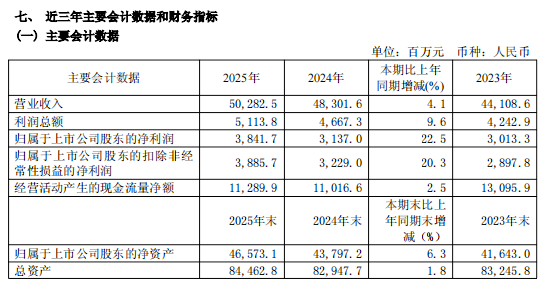
The annual report disclosed on March 24 showed that the company achieved total operating income of 50.282 billion yuan in 2025, a year-on-year increase of 4.1%; realized a net profit of 3.842 billion yuan, a year-on-year increase of 22.5%, a gross profit margin of 17.39% (a year-on-year increase of 1.7 percentage points), and a net profit margin of 8.07% (a year-on-year increase of 1.03 percentage points).

Although performance is still growing, COSL's operating income growth has slowed down for three consecutive years. The year-on-year growth rates in 2023 and 2025 are 23.7%, 9.51%, and 4.1% respectively.

The company stated in its annual report that in 2026, the global oil and gas industry will be in a stage of deep overlapping of cyclical repair and structural transformation. Geopolitical conflicts will continue to intensify global energy security demands. The tight balance between supply and demand will be compounded by complex geopolitical disturbances. Oil prices will maintain medium-to-high fluctuations, laying a solid foundation for the steady development of the oilfield services industry.

Guosen Securities analyzed that as the company's domestic leader in the oilfield services industry, its business structure has been continuously optimized, and its gross profit margin is expected to gradually increase. Against the background of continued tensions in the Middle East, international oil prices continue to rise, and upstream oil and gas exploration and development capital expenditures are expected to increase. Risks that need attention are significant fluctuations in crude oil prices, geopolitical risks, policy risks, etc.

What are the prospects?

As tensions in the Middle East may tend to ease, investors also have certain doubts about the trend of the oilfield services sector.

Xinhua News Agency reported that U.S. President Trump said on the 24th that the war against Iran "has been won" and that Iran is ready to "reach a deal." According to US media reports, the United States has handed over to Iran a 15-point plan aimed at ending the conflict.

Li Qian, an investment consultant at Huiyan Intelligent Investment, believes that the impact of rising oil prices on China Oilfield Services is strong and elastic. The core driver is the rise in drilling volume and price and the resonance of domestic orders, which is the core benefit logic of the leading offshore oilfield services company. The recent fall in stock prices is more a result of short-term expectation revisions and capital games rather than weakening fundamentals. The current valuation is in a reasonably low range, and there is no market overvaluation. Instead, it has a double margin of safety in performance and valuation. Judging from the historical trend of the stock, it has been operating in a large box state. The events in the Middle East have promoted a wave of rise, which is obviously a short-term event and the pursuit of short-term funds. Closing when good times are also a consistent operating characteristic of short-term hot spots. The recent decline in stock prices is a normal phenomenon.

Li Zeming, chief investment officer of Blue Water Capital Management Limited, said that COSL’s stock price has continued to fall since early March, and the market may believe that the war in the Middle East will do more harm than good to it, for various reasons. First of all, the war directly affected COSL's business development in the Middle East. Although it is currently impossible to accurately calculate the proportion of COSL's assets or revenue in the Middle East, judging from the revenue structure, the company's overseas revenue accounts for more than 20%. During the war, the Strait of Hormuz was partially closed, crude oil from the Middle East was difficult to transport, and many oil fields in some countries and other places were suspended. COSL's revenue may be affected to a certain extent during the conflict.

Li Zeming said that the main beneficiaries of the short-term surge in oil prices are oil companies. Because the costs of oil companies have not increased significantly, but the selling price has increased, profits have directly increased. Oilfield services companies have no real benefits during this period. The good news for oilfield service companies is that oil companies outside the Middle East judge that oil prices will remain high for a long time and are willing to invest more capital expenditures to develop new oil fields. Only oilfield service companies can benefit from this.

However, oil companies face an embarrassing situation: it is difficult to judge whether oil prices are at long-term highs or short-term fluctuations. If it is short-term, there is no need to increase production. If it is long-term, it is necessary to increase production capacity cautiously. At present, there are not many signs that oil companies will increase the speed of extraction or investment, so the benefits to oil service companies are still relatively limited.

The annual report shows that of COSL’s revenue of 50.3 billion yuan last year, approximately 38.8 billion yuan came from domestic sources and 11.5 billion yuan came from international sources. International business accounted for nearly 23%.

_海油发展净利润_海油发展净资产收益率

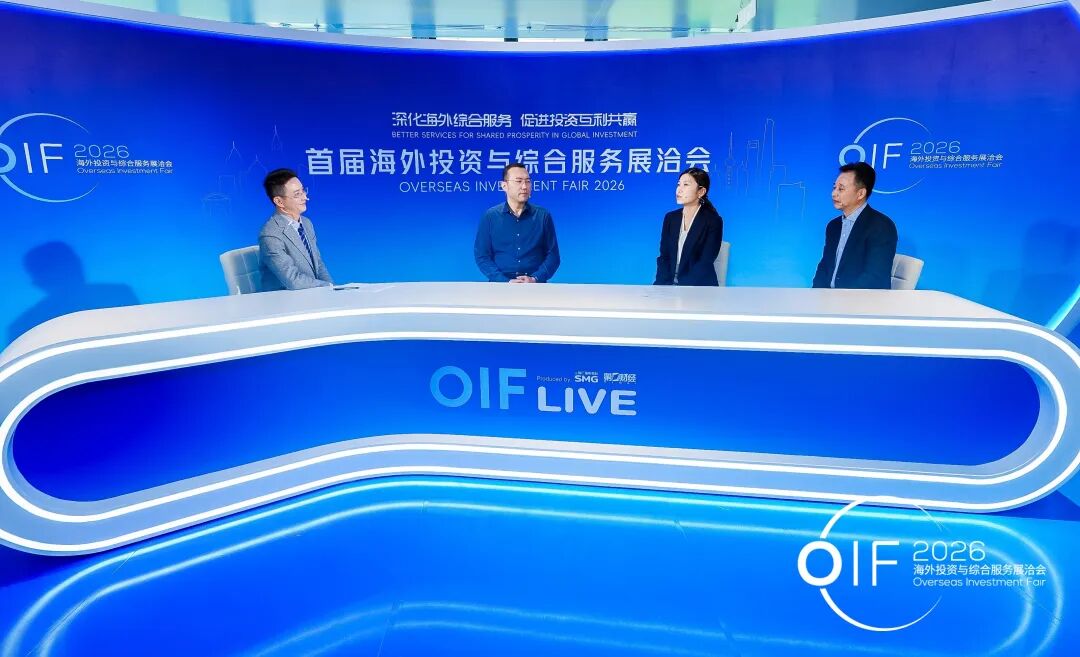
The First Overseas Investment And Comprehensive Service Exhibition Is A Must-see For Companies Going Overseas To Connect With Each Other

The first Overseas Investment and Comprehensive Services Exhibition and Conference (referred to as the "Overseas Investment Conference") hosted by the China Council for the Promotion of International Investment will be held from today (March 25) to the 28th at the Shanghai Oriental Hub International Business Cooperation Zone. Guests from all over the world gathered in Shanghai to discuss new opportunities for overseas investment, discuss new paths for comprehensive services, promote new developments in Sino-foreign cooperation, and inject new vitality into global investment cooperation.

海外经济网_海外财经网_

Based on building a landmark exhibition in the field of foreign investment and comprehensive services, the Overseas Fair will build an efficient docking bridge for Chinese and foreign enterprises, help Chinese enterprises "go out" with higher quality, "bring in" overseas resources more accurately, and promote Sino-foreign investment cooperation to achieve high-quality development.

The holding of the first Overseas Economic and Trade Fair marked a new level in the construction of China's foreign investment cooperation service platform. As a core media force deeply involved in the preparation and execution, China Business News, a subsidiary of Shanghai Radio and Television Station, gave full play to the advantages of professional financial media, from early research and planning to implementation during the conference, empowering the professional and international standards of the Overseas International Fair, and helping to create an investment cooperation brand event with global influence.

Yicai Wanxiang, a professional organization under China Business News that focuses on full-case operation of high-end events and industrial ecological services, assisted the main organizer in conducting special research in the early stage, sorted out the overseas needs and service supply of enterprises around the construction of an overseas comprehensive service system, and participated in planning the theme direction and content framework of the Overseas Fair. On this basis, combined with the overall activity arrangement, we provide planning support for more than a hundred multi-bilateral docking activities. During the conference, we will undertake the implementation and on-site presentation of the opening ceremony of the overseas trade fair and some major theme activities, and provide overall coordination and service support in terms of overall conference organization and on-site operations.

海外经济网__海外财经网

With the theme of "Deepening Overseas Comprehensive Services to Promote Mutual Benefits and Win-Win Investments", this year's Fair includes a high-profile opening ceremony, a special symposium, more than 100 multi-bilateral docking activities, 5,200 square meters of special exhibitions, and business inspections covering Pudong, Hongqiao, and Jing'an. It comprehensively covers the needs of the entire chain of overseas investment, with rich content and numerous highlights.

Focusing on the overall communication needs of the Overseas Fair, focusing on the functional positioning of the Overseas Fair and Shanghai's comprehensive overseas service system, China Business News, as a specially invited cooperative media of the Overseas Fair, also launched the "Overseas Fair Broadcast" during the conference to extend the interpretation of the Overseas Fair and further enhance the influence of the Overseas Fair as an international exchange and cooperation platform.

It is worth mentioning that China Business News will hold a press conference on the "Ask the Sea and Navigate the Sea, Know the Situation and Go Ahead" during the first Overseas International Business Conference, bringing together overseas enterprises, financial institutions, law firms, consulting firms and government departments to discuss new paths to globalization. At the meeting, the "Go Global Corporate Service Eco Hub" will be officially launched as a one-stop solution for enterprises going overseas. Relying on the advantages and in-depth research capabilities of China Business News' professional financial media, it will provide full-chain services such as brand communication, strategic consulting, market insights, resource docking and risk warning for Chinese enterprises' global layout.

In the future, China Business Network will continue to pay attention to the globalization process of Chinese enterprises, record and promote high-level opening up from a professional perspective, and contribute media power to building a new mutually beneficial and win-win international investment pattern.

The EU Has Introduced New Regulations That Severely Restrict The Investment Of Chinese Companies In Four Major Industries.

The European Union recently launched the Industrial Accelerator Act (IAA) in an attempt to restart "Made in Europe". Among them, the EU has put forward a series of strict restrictive requirements for foreign enterprise investment.

According to IAA regulations, when foreign companies invest in the four major industries of batteries, electric vehicles, photovoltaics, and key raw materials, they must face restrictions such as forced technology transfer, foreign equity ratio restrictions, local product content, and local employee ratios. At the same time, these restrictions precisely target third-country investors who account for more than 40% of global production capacity in the above-mentioned industries. The bill also clearly puts forward "European Union manufacturing priority" in the field of public procurement.

A spokesman for the Chinese Ministry of Commerce said that these practices constitute serious investment barriers and institutional discrimination, are suspected of violating the principle of most-favored nation treatment, and further increase the uncertainty of Chinese companies investing in the EU. China expresses serious concern about this. "China will pay close attention to the relevant legislative process, carefully assess the impact on China's interests, and will resolutely safeguard the legitimate rights and interests of Chinese enterprises," the spokesperson said.

Professor Zhao Yongsheng, a researcher at the National Institute for Opening-up at the University of International Business and Economics and director of the Sino-French Social Governance Research Center at Zhejiang University of Science and Technology, who has just returned from an academic study in the EU, told China Business News that the IAA essentially falls into the category of trade protectionism. He believes that the underlying logic behind the EU's introduction of such restrictive measures is that the current global trade is showing a "Darwinian competition" situation, that is, the survival of the fittest relies entirely on strength, cost advantages, extremely high cost performance and high-quality services. This impact has been huge for the traditional European market, and has even had a "destructive" impact to some extent.

Based on this, Zhao Yongsheng suggested that in the face of an increasingly complex external environment, if Chinese companies need to explore the European market, they should actively seek in-depth cooperation with local companies based on actual conditions.

欧盟走向_欧盟最近_

Behind protectionist behavior

Judging from historical data, the decline of European manufacturing has long been apparent. According to data from energy consulting firm Wood Mackenzie, between 2000 and 2024, European manufacturing's share of global gross domestic product (GDP) has dropped from 17.4% to 14.3% due to the continued impact of low-cost imported products in core areas such as steel, automobiles and chemicals.

In this context, the European Commission tried to save the situation through the IAA. The bill sets strict "Made in the EU" content and low-carbon standards for products that are purchased through public procurement or receive subsidies. These so-called "strategic industries" cover not only batteries, solar and wind energy, but also hydrogen energy manufacturing and nuclear power plants.

Taking the photovoltaic industry as an example, the bill requires that its inverters and cells (or equivalent components) must be manufactured locally in Europe within three years; in the field of electric vehicles, vehicles through public procurement must be assembled in the EU, and six months after the law takes effect, the localization ratio of parts other than batteries must reach 70%. Publicly procured aluminum must meet the requirement that 25% be made in Europe and be low-carbon. Steel does not have a "Made in Europe" requirement, but it must meet the requirement that 25% be low-carbon products.

Zhao Yongsheng analyzed that the core purpose of the EU's introduction of such policies is to provide a window protection period for local companies. At this stage, they try to seek survival space by erecting tariffs, technology or other non-tariff barriers.

Wood Mackenzie's analysis shows that although the IAA intends to curb the decline of the manufacturing industry, the bill is still not comprehensive and binding enough to achieve the goal of increasing the proportion of manufacturing in GDP to 20% in 2035. The agency believes that the core contradiction of the IAA is that its definition of "Made in the EU" is too broad, covering any country that has a free trade agreement (FTA) with the EU. In addition, the “cost exemption threshold” in the bill may also reduce its effectiveness. The bill stipulates that local content requirements will often shift from "mandatory" to "voluntary" when European-made alternatives are too expensive. For example, in the case of hydrogen energy, the exemption clause states that exceptions are allowed if the cost of EU equipment is 20% higher than alternatives.

Even more risky is the three-year implementation lag of the IAA. James Willoughby, senior analyst at Wood Mackenzie, said that in areas with extremely fast iterations such as photovoltaics and batteries, this time difference may cause Europe to lag behind China by one technology cycle in 2030, creating an embarrassing situation of "using yesterday's production capacity to cope with tomorrow's market."

A spokesman for the Ministry of Commerce said that China believes that the EU is building walls and pursuing protectionism on the pretext of developing EU-related industries and promoting green transformation. This is not only counterproductive, but will also undermine rules, undermine fair competition, and disrupt the stability of the global production and supply chain. "Practice has proven that protectionism cannot improve competitiveness, and open cooperation is the right path to development. China and the EU are each other's important economic and trade partners, and have extensive common interests and positive cooperation results in addressing climate change and promoting green transformation. We call on the EU to take the lead in abiding by WTO rules, return to the track of fair, transparent and non-discriminatory cooperation as soon as possible, and not to go further down the road of rule-breaking and protectionism," the spokesperson said.

Stefan Šipka, head of the "European Sustainable Prosperity" project at the European Policy Center (EPC), also said: "The IAA alone cannot solve the underlying causes of European industrial stagnation, including high energy costs, fragmented financial markets and an aging population."

How to go deep and get real

For Chinese companies deeply involved in the European market, the compliance burden is becoming increasingly heavy. According to the annual flagship report released by the China Chamber of Commerce in the EU, 81% of the companies surveyed believe that the current business environment in the EU is "increasingly uncertain." Affected by the tightening of review mechanisms, 43% of Chinese companies in Europe have suspended or adjusted their investment plans. 63% of the companies surveyed stated that their business has been directly or indirectly affected by the Foreign Subsidies Regulation (FSR).

Faced with this situation, Ye Qingqing, business director of Ebury China, a British cross-border payment company, told reporters that Europe is using various means to strengthen the protection of local industries and manufacturing. However, despite the objective existence of compliance pressure, Chinese companies' investment in Europe has shown a clear "localization" trend. Companies no longer just export products, but choose to take root in Europe and carry out in-depth cooperation with local governments and business institutions.

"From a macro perspective, this is a dynamic balance. Although there are restrictive policies such as FSR, the governments of countries such as Spain and Hungary still very much welcome and encourage Chinese investment because it can create a large number of jobs. The overseas expansion of Chinese companies has brought real opportunities to the local area. At present, the main investment in Europe is still dominated by large companies, while medium-sized companies are mostly concentrated in the logistics and consumer industries. These companies tend to choose countries with relatively friendly policy environments to offset part of the compliance costs." Ye Qingqing observed.

Zhao Yongsheng also holds a similar view. He believes that compared with the United States, the EU still retains a certain space for communication. He suggested that Chinese companies should consider more promoting local technology upgrades and employment through "greenfield investment" in exchange for living space. "If you have technological and capital advantages, you can consider joint ventures or benefit sharing. This is a strategic profit sharing and win-win situation under the overseas strategy." He said.

In addition, in view of the "difficulties in establishing credit" and localized operating obstacles that small and medium-sized enterprises may face in the early stages of going overseas, Ye Qingqing suggested that enterprises make full use of external resources and actively connect with the mature local professional service ecosystem. By cooperating with professional institutions, Chinese companies can receive one-stop support from tax compliance to foreign exchange risk management, thereby effectively lowering entry barriers and achieving a smooth landing in a complex geopolitical environment.

Long-term Care Insurance Is Launched Nationwide! How Much You Pay And What Services You Enjoy, The 0.3% Rate Is Calculated Like This

From the initial exploration in 15 cities in 2016 to the official promulgation of the national establishment documents, it took ten years for long-term care insurance to complete the leap from local pilots to national unification.

On the 25th, the General Office of the Central Committee of the Communist Party of China and the General Office of the State Council issued the "Opinions on Accelerating the Establishment of a Long-term Care Insurance System" (hereinafter referred to as the "Opinions"), which marked the official launch of long-term care insurance, known as the "sixth insurance" of social security, across the country.

The opinions are clear that it will take about three years to basically establish a long-term care insurance system that covers the entire population, coordinates urban and rural areas, is fair and unified, safe and standardized, and is sustainable by the end of 2028.

Ordinary people are most concerned about the two questions regarding the nationwide implementation of long-term care insurance: "How much money do I have to pay?" and "What services can I enjoy?" The opinions provide answers to both questions.

How much to pay? The rate is uniformly controlled at around 0.3%

The long-term care insurance system is a social insurance system that provides services or financial guarantees for basic daily care and closely related medical care for disabled people. It is an important part of my country's social security system and an important part of the implementation of the national strategy to actively respond to the aging population.

The opinion proposes to establish and improve multiple financing channels such as units, individuals, governments, and society. Establish a benchmark premium rate system for long-term care insurance at the national level, standardize payment base policies, reasonably determine premium rates, and implement dynamic adjustments.

The financing standards and sharing mechanism of long-term care insurance can be summarized as follows: the premium rate of long-term care insurance is uniformly controlled at around 0.3%, with employees and individuals each paying half. Retirees pay individually according to their pension levels. Urban and rural residents can have half of the premium rate at the initial stage and receive financial subsidies. People with flexible employment can choose to pay as "employees" or "residents", and personal medical insurance accounts can pay for the whole family.

The Opinion stipulates that the employee fee rate of the unit shall be shared by the employer and the individual in the same proportion. The employer's payment base shall be the total wages of the employees, and the individual payment base shall be his/her salary income. The employer and the individual shall pay jointly. The rates for retirees are the same as the individual rates for unit employees, and the payment base is linked to the pension level. The contributions are paid by the individuals, and the original employer does not pay.

Funding for long-term care insurance for unemployed urban and rural residents is reasonably shared by individuals and the government. Individuals pay and the government provides subsidies in accordance with regulations. Government subsidies are jointly borne by the central and local finances.

Dai Weidong, a professor at Zhejiang University of Finance and Economics, told China Business News that the 0.3% rate for long-term care insurance is equivalent to the payment rate for low-risk industries for work-related injury insurance. It is one of the lowest social insurance rates and fully considers the affordability of all parties.

A vivid metaphor is that long-term care insurance uses the price of a cup of milk tea to exchange for protection in the event of disability.

In order to minimize the payment pressure, the opinion also proposes that in the year when the long-term care insurance system is established in various places, the rate for unemployed urban and rural residents will be halved starting from about 0.15%, and gradually transitioning to about 0.3% in about five years. Places with conditions can also start from about 0.3%.

In the specific local implementation, the payment groups are mainly divided into four categories: unit employees, retirees, flexible employment personnel and urban and rural residents. The specific payment standards are different for different groups.

Taking Hainan Province as an example, the payment rate for employees in the first category of units is 0.3%, with the unit and individual sharing 0.15% each. The payment base is consistent with the basic medical insurance. Based on this, it is estimated that the average monthly payment of active employees is about 12 yuan.

The second category of retirees makes it clear that their original employer does not pay contributions, and the individual contribution rate is 0.15%. The payment base is the personal basic pension. Based on this, the average monthly individual retiree payment is estimated to be about 5 yuan.

The payment rate for the third category of flexible employees is 0.3%, and the payment base is 60% of the average salary of employees in all urban units in the previous year. In order to reduce the pressure on individuals to pay, Hainan Province has correspondingly reduced its basic medical insurance payment rate by 0.15%, that is, from 5% to 4.85%. Based on this calculation, the fees paid by flexible employment personnel are actually only 2 yuan more per month than before.

The fourth category is urban and rural residents. In the initial stage of establishment, the payment rate is 0.15%. The payment standard for the first year is 34,829 yuan per capita disposable income of urban and rural residents in Hainan in the previous year, multiplied by the payment rate of 0.15% for that year, a total of 52 yuan. Individuals share half of it at 26 yuan per year (about 2 yuan per month), and a total subsidy of 26 yuan is provided by finance at all levels.

Based on the payment principle of equal rights and obligations, the long-term care insurance system will objectively impose certain payment responsibilities on enterprises and individuals. Will that increase the burden on businesses and individuals?

Dai Weidong said that in the early days of the establishment of the current system, in places where the employee medical insurance fund balance is relatively sufficient, the medical insurance unit rate can be reasonably adjusted to the long-term care unit rate without additional burden on the unit. Employees' personal payments can be partially used in the medical insurance personal account, and the individual's cash burden will not be increased.

Hainan Province adopts a flat rate method. While the unit pays 0.15% for long-term care insurance, the basic medical insurance payment rate is reduced by 0.15%, that is, from 6% to 5.85%. In fact, the unit does not need to make additional payments.

In addition, the opinions also stipulate that the government will provide classified subsidies to the individual contributions of eligible needy groups. Persons under the age of 18 participate in the insurance along with their parents or other legal dependents, and do not raise funds independently. The personal account of the employee basic medical insurance can be used for personal payment of long-term care insurance for myself and my close relatives (including spouse, parents, children, brothers and sisters, grandparents, grandchildren, and grandchildren).

Enjoy what? Provide care services without paying directly

The opinions stipulate that in the initial stage of the system, severely disabled people will be protected. To enjoy benefits, one must pass a disability level assessment and meet the prescribed standards. Dai Weidong emphasized that the "gatekeeper" of long-term care insurance is the assessment of disability level, which is not divided by age – no matter the elderly, young and middle-aged people or children, as long as they reach the level of disability due to illness, disability and other reasons, they can enjoy it.

The opinion clearly stated that the fund is mainly used to pay the expenses incurred by qualified long-term care service institutions and personnel in providing basic long-term care services. In principle, cash will not be directly distributed to disabled people.

In principle, cash is not distributed directly to the disabled to ensure that the long-term care fund is used to care for the disabled so that the disabled can truly benefit. In local pilot projects, two situations often arise when direct cash payments are made. One is that the money is misappropriated for other household expenses, and the disabled person still does not receive care. The other is that although the family has received the money, they lack professional nursing knowledge, and complications such as pressure sores and infections are still unavoidable.

Zhu Minglai, director of the Health Economics and Medical Security Research Center of Nankai University, told China Business News that taking service as the core and promoting industry specialization are the core features of long-term care insurance benefits. In principle, the fund does not directly distribute cash to disabled people, but pays for the care services actually enjoyed by disabled people. This means that the insured enjoys professional services, and the fund pays directly to the service agency, rather than giving the money to the individual to use it however he wants.

In September last year, the National Medical Insurance Administration released the "National Long-term Care Insurance Service Catalog (Trial)", which included a total of 36 services from daily care items such as assistance with eating and excretion to medical care items such as catheterization and rapid blood glucose measurement into the national unified long-term care service item catalog, delineating a unified and standardized long-term care insurance fund payment scope, and providing clear and authoritative reimbursement guidelines for disabled people and their families.

Zhu Minglai believes that there are deep-seated considerations behind not directly distributing cash to disabled people in principle. Through the method of "purchasing services", long-term care insurance can effectively promote the development of the nursing service industry and enhance professional service capabilities. Only when service becomes the core of payment can the market be cultivated, professional institutions grow, and service personnel gain a stable career development path.

Maverick Electric Releases The World’s First AI Two-wheeled Electric Vehicle As A New Smart Travel Option

Recently, Maverick Electric held a new technology product launch conference for "Real Technology, Become Maverick" in Beijing. It officially released the world's first AI two-wheeled electric vehicle system, Lingxi AIOS, as well as two AI dual flagship models, NXT2 and NX2. It also simultaneously launched the female-exclusive Y series of electric vehicles, completing comprehensive coverage from high-end flagships to segmented user markets. This press conference is not only a concentrated explosion of Mavericks’ ten years of technological accumulation, but also marks that the two-wheeled electric vehicle industry has officially bid farewell to basic intelligence and entered a new stage of true AI mass production.

In the media interview after the meeting, Niu Electric CEO Li Yan, founder Hu Yilin (Token), and product vice president Yang Kai appeared with core partners such as Qualcomm, Zebra Intelligence, and Quectel to explain in detail the underlying logic of this strategic upgrade. In Li Yan’s view, AI-based two-wheeled electric vehicles are an inevitable trend in the industry. Niu’s strategic advancement is not a whim, but a natural result of ten years of accumulation of technology, data, and users. "From lithium-ion batteries to intelligence to AI, the core of Maverick's innovation has always been user value. In the new decade, we will use AI as our moat and let real technology serve every trip."

The AI ​​era has come naturally, and Mavericks is anchoring the new decade of “making good AI cars”

As the soul of Mavericks, founder Hu Yilin has a keener judgment on industry trends. He admitted frankly that the current two-wheeled vehicle industry is mired in homogeneous competition. The "intelligence" of most brands only remains at shallow functions such as APP remote control of the vehicle. The parameters are seriously involuted, but the real riding needs of users are ignored. Mavericks implements its original "753 strategy" – seven years of forward-looking technology trends, five years of testing and verification, and three years of mass production implementation. It integrates mature technologies in the automotive, Internet of Things, and mobile phone industries, rejects blind trial and error, and makes high-end technology truly suitable for two-wheel travel scenarios. "We are not inventing new technologies, but integrating and optimizing mature technologies to make products that fit two-wheelers and users. This is Mavericks' core competitiveness."

Hu Yilin particularly emphasized the essential difference between two-wheeled vehicles and four-wheeled vehicles: "Two-wheeled vehicle riding is centered on people, and the center of gravity dominates everything. AI can only provide auxiliary reminders and can never replace user decision-making. We can achieve AEB speed reduction and risk warning, but we will never help users control the handlebars. This is the bottom line of safety and the core of user experience." This extreme sincerity towards products also runs through the entire development process of this dual flagship model.

Yang Kai, vice president of product, believes from the product implementation level that Mavericks’ intelligent layout always revolves around “user pain points.” Whether it is safety protection, control convenience or emotional experience, every technical upgrade is derived from real riding scenarios, rather than simply stacking hardware. “What we have to do is to use ever-new intelligence, rather than flashy functions, so that users can feel the real changes brought about by technology.”

Dual flagships accurately break the game: differentiated positioning for segmented users, Y series broadens market boundaries

The core highlight of this conference is the two world's first AI intelligent two-wheeled electric vehicles launched by Mavericks: NXT2 new national standard electric motorcycle and NX2 high-performance electric motorcycle. The two models are aimed at completely different user groups and adopt differentiated technologies and product strategies. They not only cover daily commuting in the city, but also meet the ultimate pursuit of performance players, completely breaking the industry's "one size fits all" product thinking.

•NXT2: Exclusive for urban elites, the new national standard AI electric self-benchmark

For the urban elite group who mainly commute in the city and pay attention to compliance and convenience, Mavericks has created the NXT2 new national standard electric bicycle, positioning it as a "new national standard finely decorated bungalow". This model strictly complies with the requirements of the new national standards and is equipped with the core capabilities of Lingxi AIOS. It takes into account lightweight, safety and intelligent experience, and solves the core pain points of short-distance travel for urban users.

At the technical level, NXT2 adopts the HC420 automotive-grade high-strength frame, which ensures the strength of the body while achieving extreme lightweight. Through the hollow frame design and precise wiring harness layout, it balances the new national standard weight limit with the motorcycle-level control quality. In terms of safety configuration, it is equipped with L2 intelligent driving homologous three-camera sensing system, cornering ABS, TCS traction control, and star-sensing projection lights to achieve 270° ultra-wide-angle road condition monitoring, helmet recognition, fatigue reminder and other active safety functions to protect commuting safety in all aspects.

In terms of intelligent interaction, NXT2 comes standard with the AI ​​voice assistant "Niu Classmate", which supports one-click wake-up in noisy environments and can respond stably in offline scenes, enabling functions such as full-vehicle voice control, vehicle status inquiry, and AR real-time navigation. It is also equipped with NIU ZOO's cute pet interactive function, making transportation more emotional. Yang Kai revealed that the core of NXT2's research and development is to "build high-end intelligence into the compliance framework" so that urban users can have a convenient and safe riding experience without compromising performance and intelligence. At the press conference, NXT2 Ultra was launched for sale immediately, quickly opening up the market for high-end smart electronics.

•NX2: the first choice for performance players, with ceiling-level configuration for AI electric motorcycles

Targeting performance gamers who pursue speed, control and ultimate technology, Mavericks launches the NX2 high-performance AI electric motorcycle, which integrates 8 first-of-its-kind AI intelligence and fully decentralizes automotive-grade intelligent driving technology. This model does not have the new national standard weight limit, so it can be equipped with more powerful hardware and computing power to create a motorcycle-level riding experience.

NX2 adopts a new high-strength alloy steel frame, with ultra-wide tires to enhance grip, and an aerodynamic lightweight body, taking into account both power and control. The perception system is upgraded to three cameras + lidar/millimeter wave radar, which has a wider sensing range and more accurate road condition recognition. Together with EBR intelligent speed reduction and full-area light blanket headlights, it can realize over-the-horizon risk warning in complex road conditions. In terms of smart functions, facial recognition unlocking, customized vehicle components, real-time intercom and location sharing for team riding are all available, further enhancing the convenience and social attributes of riding.

Hu Yilin emphasized in the group interview that NXT2 and NX2 seem to be both AI flagships, but they are products with completely different backgrounds, with very different assessment standards and user scenarios. "NXT2 is the ultimate in intelligence under the premise of compliance, and NX2 is the technological ceiling under the premise of performance. We do not make homogeneous products, but allow each type of user to find a good AI car that suits them."

•Y series: Exclusive layout for women, broadening the territory of the mass market

In addition to the high-end dual flagships, Mavericks also released the Y series exclusively for women (Y Jelly, Y Cheese and other models) at the same time to further penetrate into market segments and cover a wider range of female user groups. The Y series takes "elegance, convenience, and warmth" as its design core. It adopts a high-looking and simple shape, and is equipped with thoughtful configurations such as a 707mm low seat height, seat cushion heating, and TCS traction control. It is equipped with NIU ZOO cute pet interaction and a full-size true color screen. It takes into account appearance, safety, and intelligence, and accurately meets the travel needs of female users for commuting and transportation. It has become an important part of Niu's efforts to seize the mass market and improve its product matrix.

Ecological cohesion + long-termism: Mavericks leads the industry out of involution and moves towards the era of true technology

The AI ​​application of two-wheelers is not a one-man show of a single brand, but a collaborative upgrade of the entire industry chain. Mavericks is well aware of this. Behind this strategic upgrade is the strong support of top global partners such as Qualcomm, Zebra Intelligence, Quectel, Shanghai HiSilicon, and Hesai, building a full-link technology ecosystem from chips, software, and communications to smart driving and maps.

Li Yan bluntly said that Mavericks’ ecological cooperation logic is very pure: find the strongest partner in the industry, have consistent concepts, and work hard for a long time. First, launch the product and then speak out to the outside world. "We refuse to temporarily build momentum and attract people to the platform. All cooperation has been verified by long-term research and development to ensure that the technology can truly be implemented in two-wheel scenarios." This pragmatic attitude has also been highly recognized by partners.

Ai Hezhi, the relevant person in charge of Qualcomm Technologies, said that AI-based two-wheel travel has broad prospects. Qualcomm’s layout of the two-wheel field based on the Snapdragon digital chassis is highly consistent with Mavericks’ philosophy and will help Mavericks implement automotive-level intelligent capabilities at low cost. Zebra Smart Cai Ming mentioned that the automotive intelligence ecosystem can move downwards to the two-wheel market. Lingxi AIOS software architecture was hand-crafted and connected to the Alibaba ecosystem and third-party services to jointly build a two-wheel open intelligent ecosystem; Zhang Dong of Quectel Communications said that it has cooperated with Mavericks for seven or eight years, reusing experience in automotive-grade communications and intelligent modules, and making customized optimizations for wind noise and interactive scenarios of two-wheelers to ensure the stable operation of intelligent functions.

Faced with the "parameter involution" problem that is widely worried in the industry, Hu Yilin and Li Yan gave the same answer: Mavericks is not afraid of involution, but wants to lead involution towards true technological innovation. "In the past, the industry focused on motors and batteries, but now we need to focus on intelligence, computing power, and user experience. Parameter involution is not a bad thing, it will force technology iteration, and ultimately benefit consumers." Hu Yilin revealed that Mavericks has a cutting-edge R&D team that continues to explore cutting-edge technologies. At the same time, with 13 billion cumulative riding data and ten years of refined data cleaning experience, it provides core support for AI model training, which is a barrier that is difficult for other brands to copy.

Regarding industry trends in the next 3-5 years, Li Yan judged that the penetration rate of intelligent and AI-based two-wheeled electric vehicles will increase rapidly. From leading brands to the entire industry, AI-based technology will become the core track of brand competition. Hu Yilin emphasized that Mavericks’ long-term goal remains unchanged: to adhere to user value, not blindly follow trends or pursue gimmicks, polish every technology to the extreme, and make AI true technology benefit every ride.

From pioneering lithium-ion batteries in the industry, to setting benchmarks in intelligence, to leading changes in AI, Maverick Electric has spent ten years proving that the core of two-wheel travel is always the user. This dual flagship release + Y series layout not only improves the product matrix, but also redefines the AI ​​​​car standard. In the future, with Lingxi AIOS as its core, Mavericks will continue to deepen its open ecosystem, start a new decade of two-wheel travel with its original intention of "making good AI cars", and promote the entire industry from parameter involution to value innovation.

The Situation In The Middle East Has Caused The Price Of Silicone Products To Rise, And Many Companies Have Raised Prices. What Is The Trend?

Recently, affected by the situation in the Middle East, many chemical companies have increased the prices of their silicone product series.

Silicone is an extremely widely used chemical. The increase in prices of upstream products will also be transmitted to the entire industry chain. Industries including cosmetics are expected to be affected by price increases.

On March 24, Germany's Wacker Chemical suddenly announced that it would increase the price of silicone products from April 1. In a statement from Wacker Chemicals, the company said the price increase was due to military conflicts in the Middle East severely disrupting global supply chains, resulting in significant increases in energy, raw material and logistics costs.

China Business News reporter learned that WACKER Silicones is one of the world's largest manufacturers of silicone products, supplying more than 2,800 highly specialized innovative silicone products, which are widely used in automobiles, construction, chemicals, cosmetics, medical technology, energy and electronics, paper and textiles and other fields. In 2025, Wacker Chemical's silicone business contributed about half of the group's revenue.

Wacker Chemical did not announce the specific range of the new round of price adjustments. However, it said that the price adjustment ranges of various products are different, and the sales team will maintain communication with customers in the near future to provide specific information about products and business.

Wacker Chemie is not the first silicone manufacturer to adjust prices. At the beginning of this month, Dow's Consumer Products Solutions Division issued a notice to partners in Greater China, announcing that it would increase product prices starting from March 27. The core business of this division is mainly silicone products. The company expects this round of price increases to range from 5% to 15%.

The trend of rising silicone prices has been evident long before the outbreak of conflicts in the Middle East. In November last year, Dow Chemical implemented a 10% to 20% price increase on a number of core silicone products; in January this year, Dow Chemical implemented a 5% to 10% price increase on its high-performance construction business products.

Wacker Chemical also announced at the end of January this year that it would implement a price increase of at least 25% on its main silicone products starting from February 1 to cope with the sharp increase in commodity prices.

Silicone products include silicone oil, silicone emulsion, silicone resin, silicone elastomer, sealant, silanes, silane-modified polymers and fumed silica. Take silicone oil, for example, which is used in daily cosmetics and personal care products such as shampoo.

Recently, affected by the price increase of upstream raw materials, some cosmetics companies have announced price increases. La Prairie, a high-end skin care brand owned by German cosmetics giant Beiersdorf Group, said it will raise the prices of some products in the Chinese market in April this year, with an increase of between 3% and 5%. La Prairie's product prices range from a few thousand yuan to tens of thousands of yuan.

In response to this round of price increases of organic silicon, a senior R&D researcher in the chemical industry told China Business News that since the beginning of this year, the price of organic silicon has increased due to factors such as exchange rates, and the situation in the Middle East has intensified the rising costs. He also said that cosmetics may take the opportunity to increase prices, although the cost of cosmetic raw material formulas accounts for a relatively small proportion of the entire product cost.

"Although the price increase of raw materials will definitely affect the cost of cosmetics to a certain extent, for example, the cost of emulsifiers and oil bases in cream products will be affected, but you must know that the formula cost of cosmetics is sometimes not even as high as the packaging cost, so the impact of raw materials will not be great, and marketing and other expenses will really account for the bulk." The above-mentioned industry experts said.

He believes that for cleaning daily chemical products such as detergents, the impact of raw material costs will be greater. "The main raw material for the active agent on the surface of these cleaning products is petroleum, and the increase in petroleum prices will definitely lead to an increase in costs."

Sign In

Forgot Password

Sign Up