Professional virtual currency information station welcome
We have been making efforts.

24-hour news update Page 28

24-hour cryptocurrency news update

GigaDevice’s Net Profit Surges By Nearly 50% In 2025, Revenue Exceeds 9 Billion For The First Time

On the evening of March 30, GigaDevice (SH603986, stock price 255.85 yuan, market value 179.4 billion yuan) disclosed its 2025 annual report. The company will achieve revenue of approximately 9.203 billion yuan in 2025, a year-on-year increase of 25.1 2%; the net profit attributable to the parent company was approximately 1.648 billion yuan, a year-on-year increase of 49.47%; the non-net profit after deduction was approximately 1.469 billion yuan, a year-on-year increase of 42.57%; the basic earnings per share was 2.48 yuan, a year-on-year increase of 49.4%. The company plans to distribute a cash dividend of RMB 7.5 (tax included) to all shareholders for every 10 shares.

This is the first time that GigaDevice’s annual revenue has exceeded the 9 billion yuan mark. On a quarterly basis, GigaDevice achieved revenue of 2.372 billion yuan in the fourth quarter of 2025, a year-on-year increase of 39% and a month-on-month decrease of 11.54%; net profit attributable to the parent company was 565 million yuan, a year-on-year increase of 108.85% and a month-on-month increase of 11.23%.

Memory chip revenue increased by 26.41% year-on-year, and gross profit margin increased to 42.84%

According to data compiled by Wind Financial Terminal, the consensus forecasts of 32 institutions for GigaDevice’s revenue and net profit attributable to shareholders in 2025 are approximately 9.465 billion yuan and 1.632 billion yuan respectively. According to the data disclosed by GigaDevice, the company's revenue in 2025 is less than the agency's expectations, but the net profit attributable to shareholders exceeds the agency's consensus expectations by 1%.

Regarding the performance growth during the reporting period, GigaDevice said that the company's revenue growth during the period was mainly due to the multiple synergistic effects formed by the optimization of the industry structure, the steady implementation of the company's strategy and the rapid iteration of technology.

The annual report shows that GigaDevice’s performance growth during the period was mainly due to the optimization of the supply and demand structure of the storage industry. As major overseas manufacturers accelerate their migration to new process nodes such as HBM (high-bandwidth memory) and DDR5 (a computer memory specification), gradually fade out of niche markets and reduce 2D NAND (planar NAND, a non-volatile storage technology) production capacity, there is an obvious supply gap in related fields. The company successfully accepted this part of the demand, allowing SLC NAND Flash (single-layer cell flash memory) and niche DRAM (a subcategory of dynamic random access memory) to achieve a relatively significant increase in both volume and price in the second half of 2025, and gross profit margins improved significantly quarter-on-quarter.

In terms of products, GigaDevice's innovative memory chips will achieve revenue of approximately 6.566 billion yuan in 2025, a year-on-year increase of 26.41%, and the gross profit margin will increase by 2.57 percentage points year-on-year to 42.84%; analog products will achieve revenue of approximately 333 million yuan, a year-on-year increase of 2051.82%, and the gross profit margin will increase by 26.43 percentage points year-on-year to 36.96%.

In contrast, GigaDevice’s innovative sensor business revenue in 2025 will be 389 million yuan, a year-on-year decrease of 13.15%. In addition, although the microcontroller business revenue achieved a year-on-year growth of 12.98%, its operating costs experienced a higher year-on-year growth rate (14.62%), resulting in a slight decrease of 0.92 percentage points in the gross profit margin of this segment compared with the same period in 2024.

Overall, GigaDevice's gross profit margin in 2025 increased by 2.21 percentage points year-on-year to 40.21%.

Revenue of 1.976 billion yuan is expected to be recognized in 2026

"Daily Economic News" reporters noted that although GigaDevice's memory chip product revenue and gross profit margin both recorded growth in 2025, due to the upward cycle of the storage industry and the company's active stocking strategy, the book value of the company's inventory at the end of the period reached 3.066 billion yuan, an increase of 30.67% from the beginning of the period.

In terms of automotive electronics business, in 2025, the cumulative shipments of GigaDevice’s innovative automotive-grade Flash (memory) will exceed 300 million units, and the cumulative shipments of GD32A’s full series of automotive-grade MCUs (single-chip microcomputers) will exceed 8 million units, which will gradually be implemented on a large scale in key scenarios such as smart cockpits and assisted driving. In addition, in terms of mergers and acquisitions integration, the company's original analog chip revenue has achieved a year-on-year growth of approximately 460%, and the previously acquired holding subsidiary Suzhou Saixin has steadily completed its performance commitment of deducting non-net profits of no less than 70 million yuan in 2025.

In terms of international layout, the company officially established its international headquarters in Singapore in June 2025, and opened a new office in Tokyo in October of the same year, in order to strengthen customer and supply chain collaboration. In addition, GigaDevice H shares have been officially listed and traded on the Hong Kong Stock Exchange on January 13, 2026, completing a key step in the construction of the "A+H" dual capital platform.

GigaDevice's annual report clearly disclosed that the revenue amount corresponding to the performance obligations that have been signed but have not been fulfilled or have not been fulfilled at the end of this reporting period is 1.976 billion yuan, and revenue is expected to be recognized in 2026.

In contrast, in the face of the incremental demand in the AI ​​(artificial intelligence) era, the extension of the company's business boundaries is an important concern for investors. The annual report pointed out that the company is actively developing new businesses such as customized storage, higher computing power MCU and AI MCU. Among them, Qingyun Technology, a holding subsidiary, has achieved breakthroughs in key customers and projects in the fields of AI mobile phones, AI PCs (personal computers), and robots in terms of customized storage solutions. Some projects will gradually enter the stage of customer sample delivery and small batch trial production in the second half of 2025. It is expected to enter the mass production stage in 2026 and contribute substantial revenue accordingly.

daily economic news

Bank Financial Management Frequently Failed To Raise Funds, And Nearly 200 Products Could Not Be Released.

[Introduction] There are nearly 200 bank wealth management products, and bank financing products frequently fail to raise funds.

China Fund News reporter Li Shuchao and Zhang Ling

Affected by the mismatch of supply and demand and product homogeneity, bank financial products have frequently failed to raise funds since this year, and closed-end fixed-income products have become the "hardest hit area."

Industry insiders said that frequent failures in raising funds for wealth management products indicate that the bank wealth management market has entered the "buyer's era." Against this background, financial management companies need to actively transform to meet customer needs and enhance product attractiveness by optimizing product structure, strengthening investor companionship, and establishing issuance evaluation mechanisms.

194 financial products failed to raise funds during the year

Recently, a number of financial management companies such as Hua Xia Financial Management and Guangyin Financial Management issued announcements announcing that the issuance of related products would be terminated because the total amount raised did not reach the lower limit of the issuance scale stipulated in the product instructions. Taken together, most of the products that failed to be issued were closed-end fixed-income products, and the reason for failure was mostly that "the fund-raising scale did not reach the lower limit."

Data from a leading third-party research institution shows that as of March 25, the number of financial products that have failed to raise funds this year has reached 194 (different shares are calculated separately), an increase of 17.58% compared with the same period last year.

"The increase in failed fundraising for financial products against the background of deposit relocation reflects the mismatch between investors' risk preferences and product supply." Lou Feipeng, a researcher at the Postal Savings Bank of China, said that the decline in deposit interest rates has pushed funds to seek higher returns. Coupled with the recent large fluctuations in many types of assets, bank financial management yields have declined, and investors have a wait-and-see attitude towards new products.

Tian Lihui, a professor of finance at Nankai University, believes that the increase in failed fundraising for financial products reveals structural changes in capital flows. The deeper reason is that wealth management companies are still issuing homogeneous fixed-income products in a "scale-oriented" manner, and investors have a more rational judgment on the balance between income and liquidity after experiencing net worth fluctuations.

It is worth noting that most of the financial products that failed to raise funds this year were closed-end fixed-income products.

In this regard, the Smart New Rainbow Financial Management Research Institute stated that in a market environment where interest rates are falling and volatility is increasing, investors' tolerance for the lock-up time of funds has been significantly reduced, and they are more inclined to have flexible allocations that can be accessed at any time. On the other hand, as bond yields continue to fall, the performance comparison benchmarks of newly issued closed-end fixed-income products have generally been lowered. Compared with deposits and cash management products in the same period, their income advantages are no longer obvious, and even inverted. "The dual disadvantages of income and liquidity make investors generally wait-and-see or avoid such products."

The financial management market shifts to the "buyer era"

Industry insiders said that the increase in failed fundraisings for wealth management products reflects the mismatch between market supply and demand and changes in investor risk and liquidity preferences, marking a shift in the wealth management market from sellers to the "buyer era."

Lou Feipeng said that the increase in failed fundraising for wealth management products reflects, first, a significant decline in investor risk appetite and reduced tolerance for net worth fluctuations; second, an imbalance in the supply and demand structure of the wealth management market, with serious product homogeneity and lack of appeal; third, the market has divergent judgments on economic recovery and interest rate trends, with a strong wait-and-see sentiment; fourth, wealth management companies' product designs and marketing strategies do not adapt to the new market environment, and it is difficult to meet diversified needs solely by relying on fixed-income products.

Tian Lihui believes that the above-mentioned phenomenon sends a clear signal: the financial management market has entered the "buyer's era", and the past extensive model of "every product has been bought by people" has ended.

In Tian Lihui’s view, the increase in fundraising failures is a concentrated expression of the mismatch between supply and demand. In the context of the full implementation of net worth and the continued decline of interest rates, investors' income expectations for financial products are returning to rationality, while financial companies still have deviations in their grasp of customer needs. The success rate of product issuance ultimately depends on how deeply a financial management company understands and serves customers.

In the future, financial management companies need to shift from "scale-oriented" to "demand-oriented" and make three adjustments in product layout: first, enrich the product spectrum and increase the layout of hybrid, equity and "fixed income +" products; second, optimize the product term structure, add flexible term designs such as minimum holding periods and regular openings, and balance income and liquidity; third, strengthen investment research drive, and form features in credit mining, interest rate bands, and asset allocation.

In order to improve the success rate of product issuance, Lou Feipeng suggested that financial management companies should make adjustments in product layout: first, increase the supply of open-ended, short-term products to enhance liquidity attraction; second, optimize the "fixed income +" strategy to control equity positions and fluctuations; third, strengthen investor education and transparently disclose product operations and risks; fourth, explore differentiated products, such as linking to specific indexes, thematic investments, etc., to meet the needs of market segments.

Smart Xinhong Financial Management Research Institute believes that financial management products need to shift from "channel-driven" to "customer demand-driven". The first is to reduce the issuance density of pure fixed-income closed-end products and optimize the term structure; the second is to vigorously develop "rights-containing" and "passive strategy" products; the third is to strengthen the "liquidity management" product line and use cash management, daily opening, and minimum holding period products as scale growth The fourth is "precision issuance", establishing a pre-issuance evaluation mechanism for products, combining channel feedback, customer position structure, market interest rate trends and other factors to prudently determine the lower limit of issuance scale and performance benchmarks; the fifth is to abandon the "listing" mentality and return to the interests of customers.

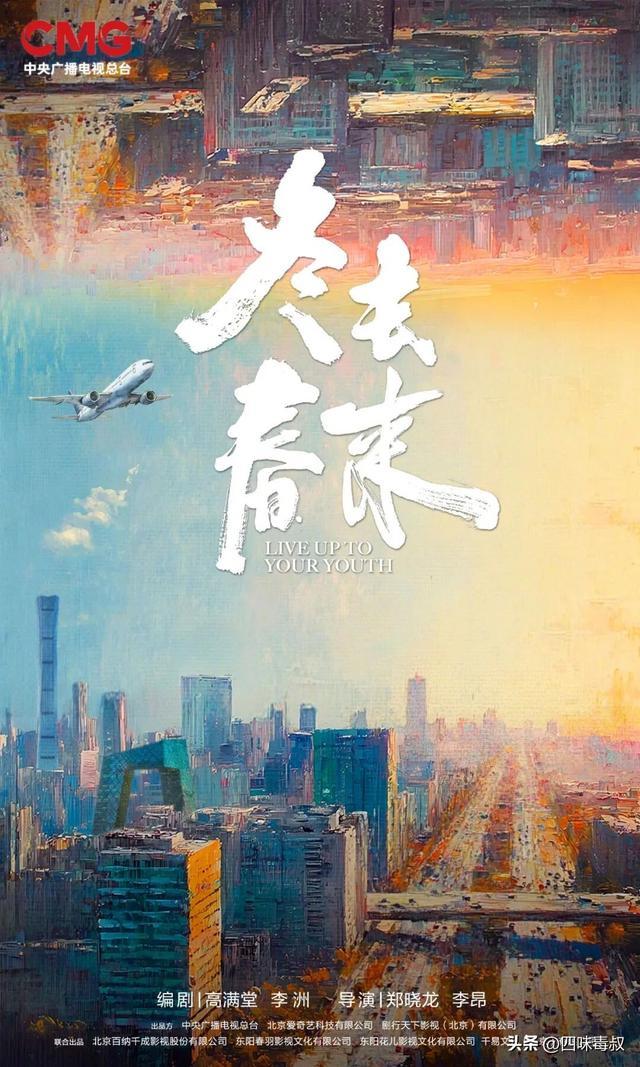
Period Drama Winter Turns To Spring: It Does Not Sell Success Stories, Only Tells The Stories Of Ordinary People

Typesetting | Su Mo

In recent years, long-form dramas, in order to compete with short dramas, seem to have fallen into a self-evident vortex, either creating counterattack myths or peddling anxiety about success.

The period drama "Winter Goes and Spring Comes", produced by Drama World, will be launched on March 22 by CCTV8, iQiyi, and Migu. However, it escaped from the whirlpool and chose to "look inward." It does not inject adrenaline into the audience, but focuses the camera on an alley in the 1990s, using the ups and downs of half a life in a shabby small hotel to contrast with the changes in the times in the past thirty years. This creative gesture is a return to nature with realistic themes.

高满堂&郑晓龙新作《冬去春来》,藏着每个普通人的“黄金时代”__高满堂&郑晓龙新作《冬去春来》,藏着每个普通人的“黄金时代”

The seven protagonists in the play have one thing in common: they all have a fire in their hearts. But the smart thing about this show is that it doesn't intend to boil this fire into inspirational chicken soup. What it wants to talk about is that the train of the times is whizzing by. Are the lives of those who chase, fall, or even miss the bus on the platform still worth living?

This is destined to be a period drama that "goes against the current".

01

We don’t sell anxiety, nor do we deify success.

In the past, when it came to such period dramas, we seemed to be accustomed to two filters. One was the "bitter love drama", which squeezed tears out of the difficulties of life; the other was "successful learning", stepping on the drums of the times and finally reaching the pinnacle of life. Both of these perspectives are actually a bit arrogant, either looking down on suffering or admiring glory, but forgetting to look at "people" themselves.

The value of "Winter Goes and Spring Comes" is that it places the camera very low, low enough to sit at the same dining table with these young people and share a bowl of instant noodles without oil or water.

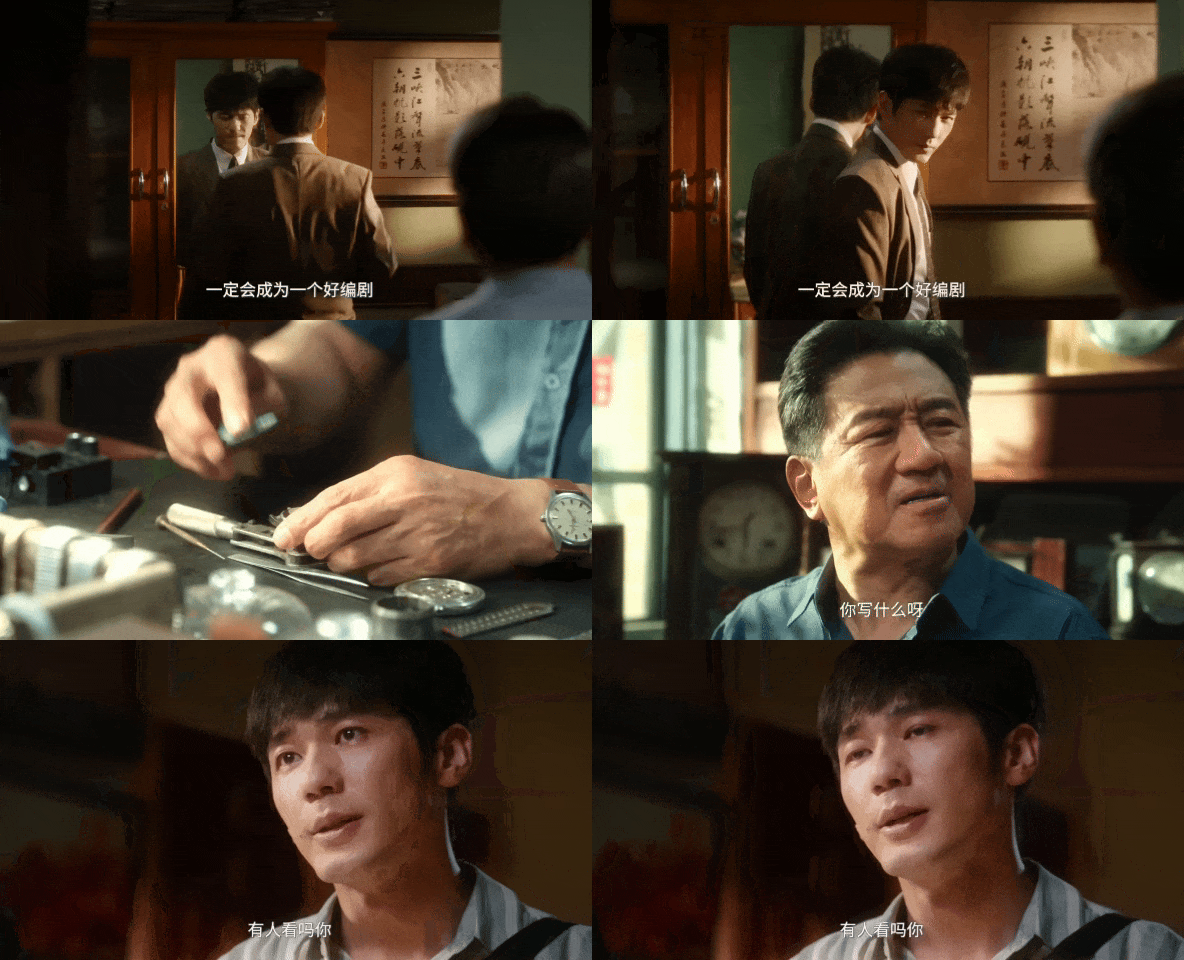
Xu Shengli (played by Bai Yu), who writes the script, is not just in trouble. His greatest pain was watching the hot words he wrote being rejected time and time again. This kind of pain is the common dilemma of countless creators caught between ideals and reality. Should you write what you want to write, or write what others want? This question, thirty years later, is still on the mind of every content practitioner today.

_高满堂&郑晓龙新作《冬去春来》,藏着每个普通人的“黄金时代”_高满堂&郑晓龙新作《冬去春来》,藏着每个普通人的“黄金时代”

高满堂&郑晓龙新作《冬去春来》,藏着每个普通人的“黄金时代”_高满堂&郑晓龙新作《冬去春来》,藏着每个普通人的“黄金时代”_

In comparison, Zhuang Zhuang (played by Zhang Ruonan), who sings, is not so sad. She sets up a stall next to the university during the day and takes vocal lessons in her spare time. Her choice is not to simply give up or persist, but a compromise between advancement and retreat. In order to survive and sing, sometimes she has to bend down first.

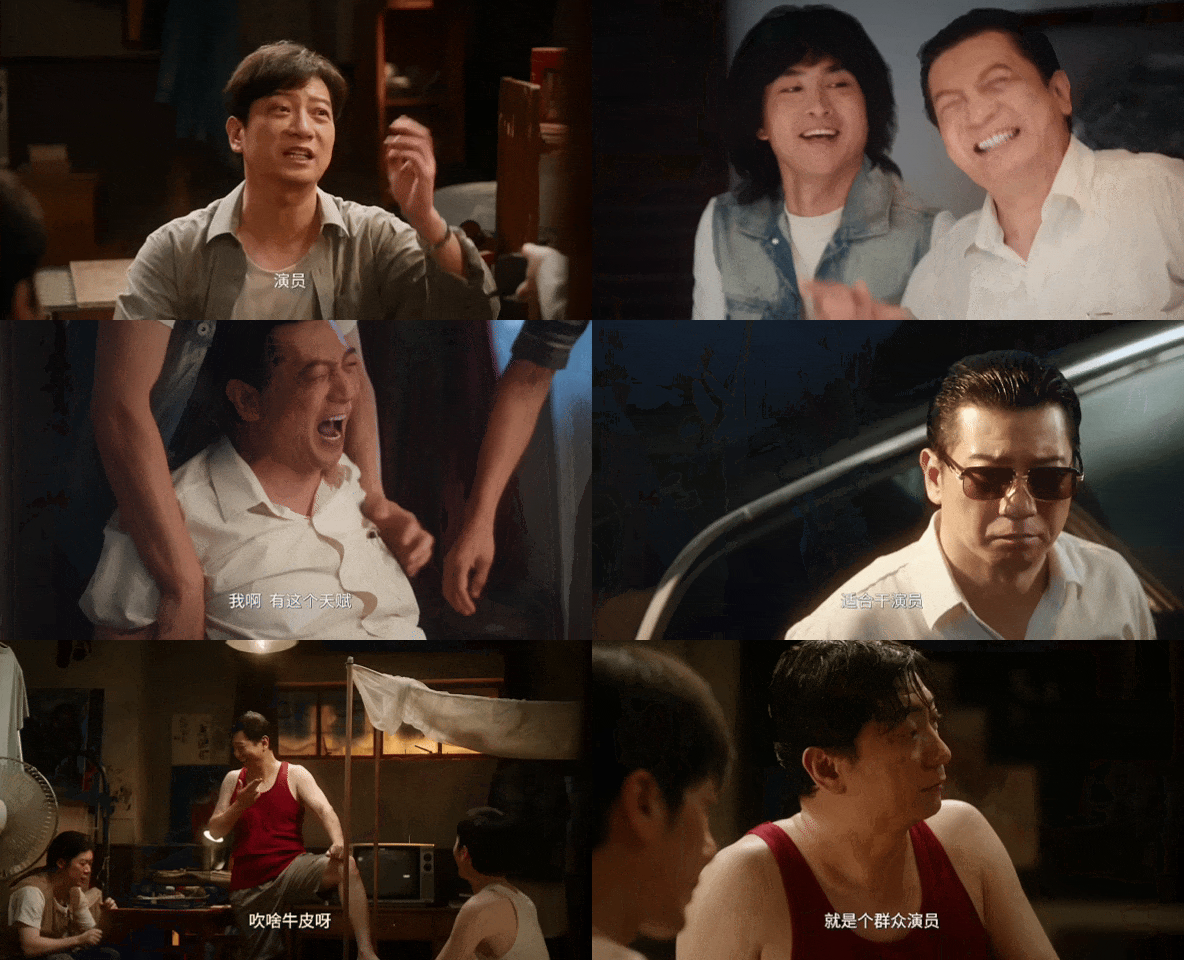
There is also Guo Zongbao (played by Tian Yu) who plays a small role in the crew but repairs range hoods in private. He shouldered the debt of treating his wife, and his dream was too extravagant for him. He put those thoughts away in the cabinet like an old cotton-padded jacket, and lowered his head to shoulder the life in front of him. What’s touching about his story is that when life takes away all your energy to pursue your dreams, does the passion buried deep in your heart still count?

高满堂&郑晓龙新作《冬去春来》,藏着每个普通人的“黄金时代”_高满堂&郑晓龙新作《冬去春来》,藏着每个普通人的“黄金时代”_

"Winter is gone and spring is coming" does not let dreams take precedence over daily necessities, nor does it let life crush ideals. It presents an ambiguous and real symbiosis. The dream is the phone number you secretly dialed late at night, and reality is the survival bill you have to face when you wake up the next day. This group of people clumsily find a balance between the two, even if this posture is not elegant enough and even a bit embarrassing. But this is what humans are.

02

"The Storm of the Times" in Fangcun Hotel

Gao Mantang + Zheng Xiaolong, once this combination is released, it is not just about the love and hatred of a few young people. Although the camera only looks at this small hotel where "winter passes and spring comes", the spring, summer, autumn and winter outside the window actually never stop for a moment.

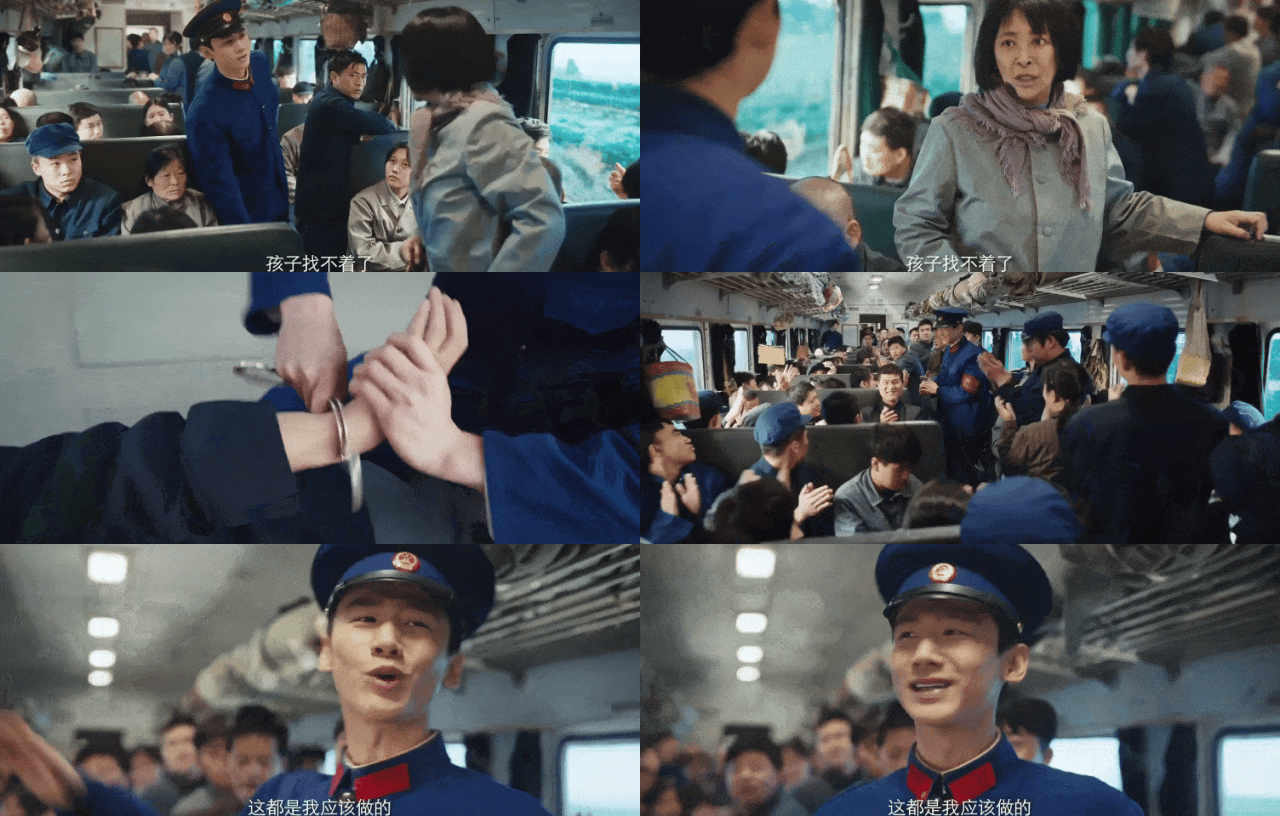
Just like the period drama "South to North", also directed by Zheng Xiaolong, written by Gao Mantang, and produced by Drama World, the camera focuses on each carriage, where there are people's warmth and warmth, as well as the forty years of changes in Chinese society from steam locomotives to the high-speed rail era. This creative concept of "realistic themes flying close to the ground" is similar to "Winter Goes and Spring Comes".

_高满堂&郑晓龙新作《冬去春来》,藏着每个普通人的“黄金时代”_高满堂&郑晓龙新作《冬去春来》,藏着每个普通人的“黄金时代”

高满堂&郑晓龙新作《冬去春来》,藏着每个普通人的“黄金时代”_高满堂&郑晓龙新作《冬去春来》,藏着每个普通人的“黄金时代”_

This narrative ambition of "seeing the big from the small" is also the real confidence of "Winter Goes and Spring Comes". Through the bumpy fortunes of seven ordinary young people, it reflects the vicissitudes of Chinese society in the past thirty years from the 1990s to the present.

When the audience sees this group of people worrying about their livelihood, they will be reminded of the unique pain of that era. The great wave of market economy has "pushed" groups of young people into unknown distances. They came to Beijing not only for some illusory dream, but also to find their own place in the great carousel of the times.

The characters in the play may not know it, but each of their choices actually follows the pulse of the times.

When Xu Shengli was obsessed with the script, it was the budding period of China's film and television industry moving from the centralized purchase and sales of the planned economy to marketization and commercialization. His perseverance is not only the nobleness of content creators, but also an early defense of the original value of content. In an era when piracy was rampant and intellectual property awareness was weak, Xu Shengli's "axis" was precisely the backbone for the rise of China's cultural industry.

高满堂&郑晓龙新作《冬去春来》,藏着每个普通人的“黄金时代”__高满堂&郑晓龙新作《冬去春来》,藏着每个普通人的“黄金时代”

Zhuangzhuang has worked hard in setting up stalls and has also stood on the commercial performance stage. He is the epitome of Chinese pop music moving from "within the system" to the market. What she faced was not only the establishment of her personal style, but also how to maintain the dignity of a singer in a barbaric entertainment arena.

None of the people in "Winter Goes and Spring Comes" is a pig in the spotlight. They are more like children who remain on the beach to collect shells after the tide recedes. They didn't want to change the world, they just wanted to remain unchanged by the world in this ever-changing city.

This drama also allows us to see another interpretation of the integrity of Chinese businessmen. Xiao Dongbei (played by Song Jiateng), the owner of a small hotel, goes to great lengths to make a small space for these young people who cannot afford the high rent. His loyalty is the most authentic business credit in the Chinese market. Since he opens the door to welcome guests, he will protect you. This kind of warm human touch that underlay the contract was the unique business background of that era.

03

"The Moon and Sixpence" for Ordinary People

Many people read Maugham and think it is tragic that Strickland abandoned his wife and children to paint because he was a genius. But "Winter Goes and Spring Comes" raises a gentler and more cruel question: If we are not geniuses, but just ordinary people with a bit of stubbornness, then is our "moon" still worth looking up to?

None of the seven protagonists in the play has a cheating finger. They may have some talent, but not enough to stand out from the crowd; they may have some luck, but not enough to make it to the top in one fell swoop. Because of this, their stories are even more powerful, because it is a life that thousands of little people may experience.

高满堂&郑晓龙新作《冬去春来》,藏着每个普通人的“黄金时代”__高满堂&郑晓龙新作《冬去春来》,藏着每个普通人的“黄金时代”

Their pursuit of dreams may not be for success or fame, but to light a lamp for themselves and warm their hands in the long cold winter.

"Winter goes and spring comes" is not only the hotel's signboard, but also a simple belief. Hidden in these four words are the Chinese people’s survival wisdom: no matter how difficult the days are, as long as you endure, live, and hold on, the ice and snow will melt one day.

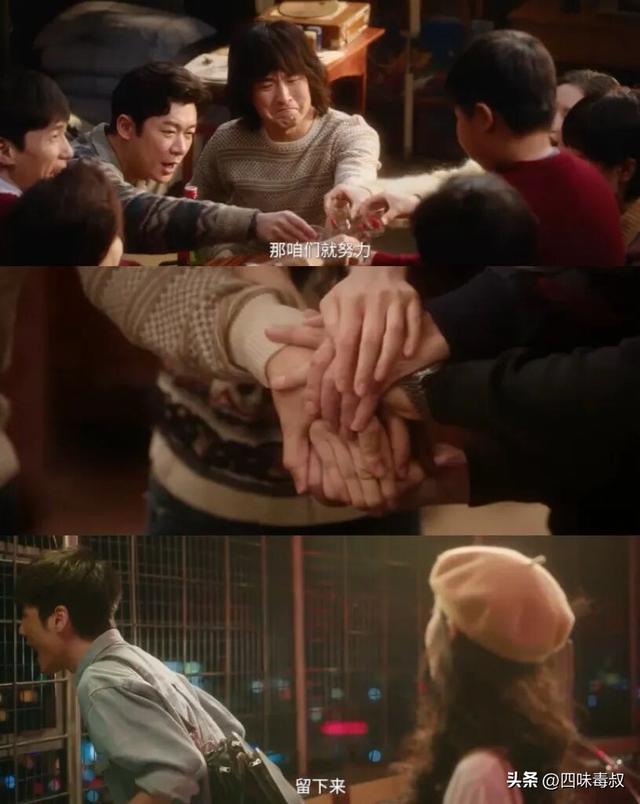
These people were crowded together in this small hotel, like a few matches, weakly gathered together to keep each other warm. Zhuang Zhuang boiled a hot spring egg in warm water for Xu Shengli. No matter how difficult the life was, he had to eat well and told him to live a "hot life." The small hotel was troubled by local snakes. Xu Shengli, who usually only writes scripts, dared to stand in front of the car with his bare hands. This kind of goodwill to stick together for warmth in difficult times is a "spring" more precious than any successful learning.

_高满堂&郑晓龙新作《冬去春来》,藏着每个普通人的“黄金时代”_高满堂&郑晓龙新作《冬去春来》,藏着每个普通人的“黄金时代”

Many years later, some of these people may have returned to their hometowns, some may have changed careers, and some may still be struggling in this industry. But those days when "winter passes and spring comes" will become the eternal warm winter in their lives. Because they learned the most important lesson there, the process of chasing dreams itself is the answer to their dreams.

Just like in the long winter, the piece of land you guard has not sprouted yet, but as long as the land is not barren, spring will always come as promised.

04

The cold is gone, the spring breeze is promising

"Winter Goes and Spring Comes" does not paint a picture of "where there is a will, there is a way" for the audience. It paints a group portrait about "keeping" – keeping an original intention, a bottom line, and a glimmer of hope.

It is a love letter to all ordinary people. It tells us that those seemingly useless persistence, those sighs after bending the waist for five buckets of rice, and the thoughts that are temporarily put away are all worthy of respect. In this season of renewal, this show comes at the right time. It allows us to see that no matter how small or ordinary, everyone deserves to be recorded by the times.

_高满堂&郑晓龙新作《冬去春来》,藏着每个普通人的“黄金时代”_高满堂&郑晓龙新作《冬去春来》,藏着每个普通人的“黄金时代”

"South to North" uses a carriage to contain the silhouette of an era, while "Winter Goes and Spring Comes" uses a small hotel to capture the spring, summer, autumn and winter of a generation. Everyone goes north and south in the journey of life, and each generation will eventually usher in its own spring.

So, you might as well find a time to open the wooden door of the small hotel where "winter is over and spring is coming". Go have a cup of tea they brew in an enamel vat and listen to the singing coming from the house. You will find that what you see in the play is actually the person who was or is still clumsily guarding something, waiting for your own spring to come – yourself.

Weekend Movie Box Office Rankings: The Beaver Project Wins The Championship, The Rescue Project Has A Good Reputation

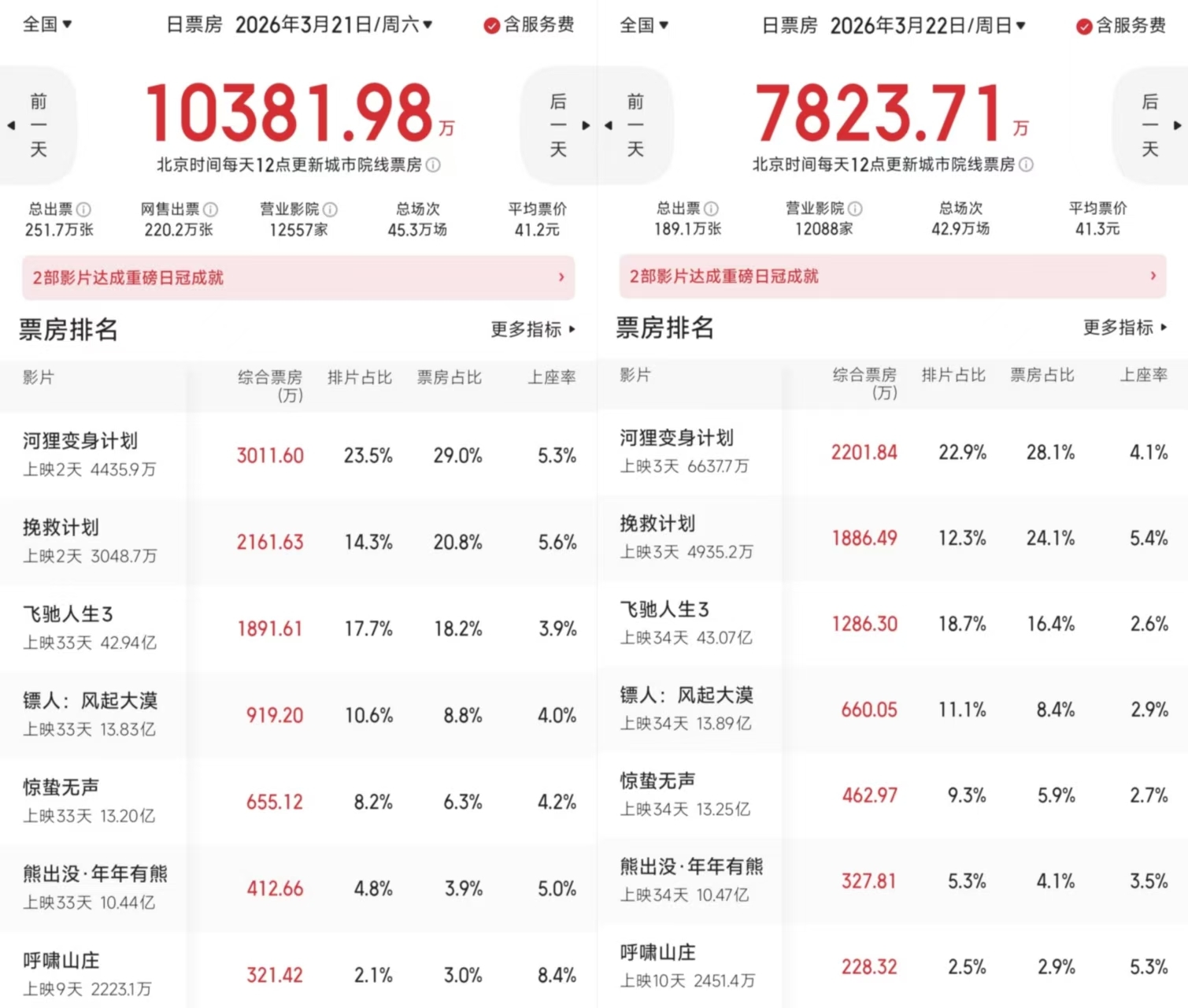
Last weekend, according to professional platform data, the total box office of the movie was approximately 182 million yuan. "Beaver Project" had a total box office of approximately 52.134 million over the weekend, ranking first; second was the science fiction movie "The Rescue Plan" with a box office of approximately 40.481 million; Spring Festival film "Flying Life 3" ranked third with a box office of 31.779 million.

有一部电影叫什么凤凰_国外凤凰电影_

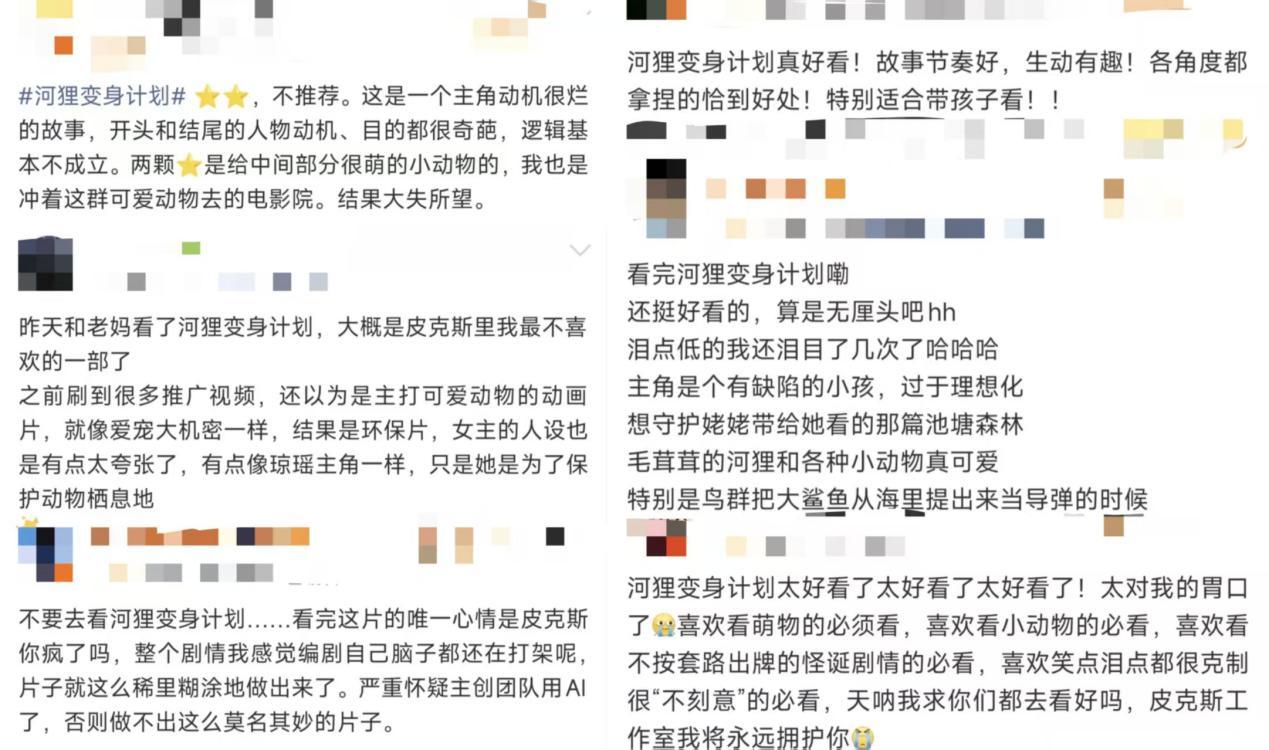
The first and second spots on the list are both new films released just last Friday. In the three days since its release, the animated film "Beaver" has consistently topped the single-day box office, second-day viewership and pre-sale daily tops. As Pixar's new work, the film explores the theme of nature conservation with a fantasy setting in which a human girl's consciousness is transferred to a robotic beaver. It has aroused heated discussions with its cute animal images and imaginative plot. However, there are certain controversies about the protagonist's character and plot logic in the film, and the reputation is obviously polarized.

有一部电影叫什么凤凰_国外凤凰电影_

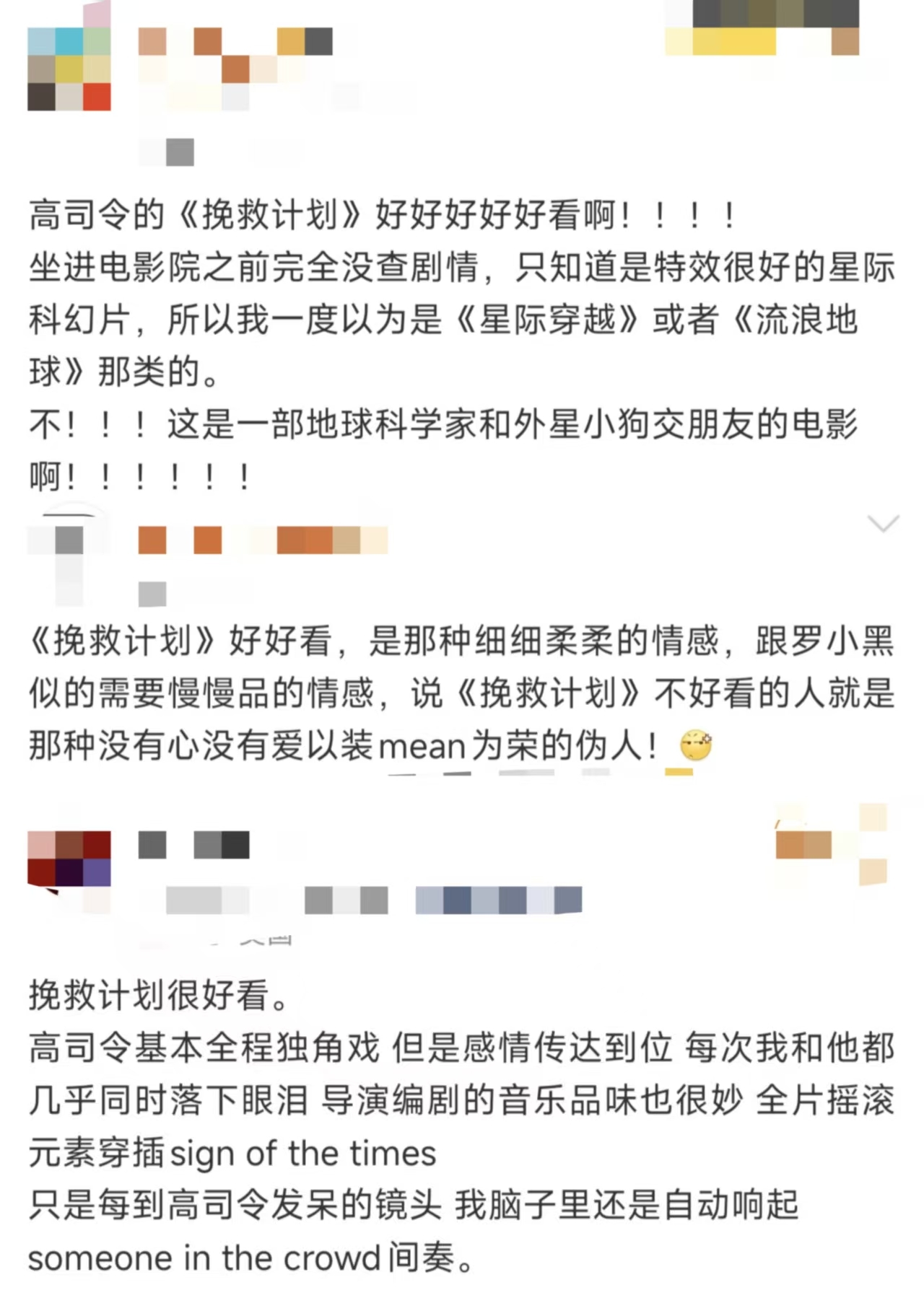
The science fiction movie "The Rescue Plan" topped the Japanese charts in terms of attendance last Friday and Sunday respectively. It is a sci-fi adventure-themed film, but the overall narrative style is literary and artistic. The cross-species friendship between Ryan Gosling and his cute alien friend "Loki" and more than 2,000 special effects shots are more prominent. At present, its reputation is gradually fermenting in a good direction, with a Douban score of 8.5, which is tied with "The Martian" as the highest score among Hollywood space science fiction movies since 2015. However, due to factors such as insufficient publicity, long duration, and unpopular schedule, it did not have a significant advantage at the box office.

_有一部电影叫什么凤凰_国外凤凰电影

In addition, there have been recent releases of new films such as "Marty", "The Dream Team", "The End of the Night" and "Hello, Amélie". Among them, "Marty" starring Tiancha suffered a waterloo after its domestic release. Its reputation continued to decline, and the box office in a single day on the weekend was less than one million. Although Curry's first animated film "Miracle Team" is a family-friendly movie, its popularity is limited to the "Curry fans" group and has not been able to effectively break out of the circle. It has been in theaters for nearly 10 days, and the box office has been on a downward trend last weekend.

有一部电影叫什么凤凰__国外凤凰电影

At the same time, several films during the Spring Festival are still being released. The single-day box office of "Flying Life 3" exceeded 10 million on the two weekends. The long-tail effect of "The Wind Rises in the Desert", "The Silence of the Insect" and "Bears Every Year" is also relatively obvious.

The Qingming Festival will be released in early April. Currently, many films such as "Super Mario Galaxy Movie", "Oh My God", "Genius Game", "Sunshine Girls", "I, Permission" have been scheduled for release, and we look forward to all of them performing well.

South Korea Canceled Its Visit To China Before The War And Imposed Tariffs. The Intention Behind The Policy Change Is Obvious.

高层取消访华行程,韩国宣布对华征收关税,李在明政府改变风向?__高层取消访华行程,韩国宣布对华征收关税,李在明政府改变风向?

Changing your mind at the last moment is not just a matter of "schedule adjustment"

In late March, the Boao Forum for Asia Annual Conference was held in Hainan. The forum was of high standard and the nodes were very sensitive. South Korea had originally arranged for Kim Min-seok, a top official in the government, to attend, and had plans to extend his visit to Beijing. The sudden cancellation before departure, and the notification was sent via text message. This handling method is unusual in itself.

The reason given by South Korea is that there are domestic meetings and energy issues have to be dealt with. It seems reasonable on the surface, but the time point is too tight and the explanation seems hasty. More importantly, South Korea was facing price fluctuations in energy and chemical raw materials at the time, and had suffered from urea supply issues in the past, so it had a realistic need to communicate with China. Under such circumstances, canceling a visit to China does not mean "cannot take care of it", but more like "voluntarily giving up".

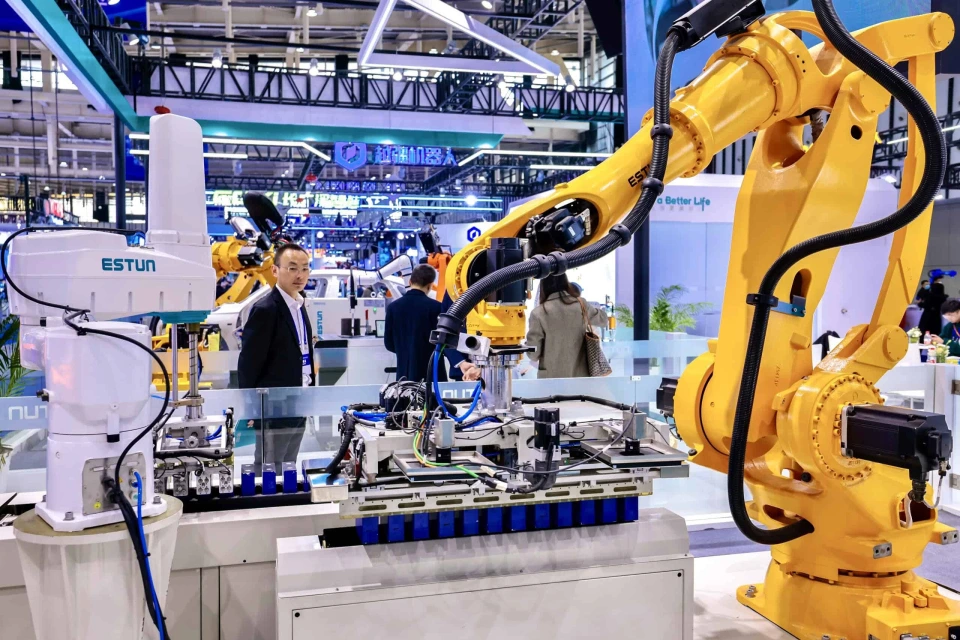
What really made his intentions clear were his actions in the following days. On March 26, the South Korean government announced the imposition of anti-dumping duties on industrial robots from China. On the same day, it also launched a review of Chinese polyester products. There is a possibility that existing tariffs will continue to increase. The action is concentrated and the rhythm is tight, and it can hardly be said to be improvised.

Looking at these two things together, it is not just a "change in itinerary", but an external manifestation of a policy shift. The sequence of withdrawing diplomatic actions first and then taking action on trade has obvious signaling implications.

_高层取消访华行程,韩国宣布对华征收关税,李在明政府改变风向?_高层取消访华行程,韩国宣布对华征收关税,李在明政府改变风向?

Aiming at the core of manufacturing, South Korea’s abacus is not complicated

The direction South Korea chose to start this time was very targeted. Industrial robots are a key link in the upgrading of the manufacturing industry and an important area of ​​future competition. Polyester products are basic chemical materials and are directly related to the cost of the industrial chain.

Domestic companies in South Korea have previously filed complaints, claiming that the prices of Chinese and Japanese products are too low, impacting the survival space of local companies. Especially in the field of robots, Chinese products have obvious advantages in price, and the market share of local companies has been compressed. For South Korea, simply opening up the market is tantamount to actively giving up industries.

The problem is that South Korea is not an economy that can rely entirely on domestic demand. Its industrial system is highly dependent on exports, as well as external markets and supply chains. If it is just for industrial protection considerations, it is entirely possible to adopt a more relaxed approach, such as technical standards, subsidies, etc., instead of directly imposing tariffs.

The real background is over there in the United States. In the past year, the United States has continuously strengthened its policy intervention in the high-end manufacturing field, and the robot industry has been mentioned repeatedly. U.S. companies are putting pressure on the government, the U.S. Congress is pushing for restrictive measures, and the executive level is also preparing relevant policies. In this atmosphere, it is difficult for allied countries to stay completely aloof.

To put it bluntly, South Korea's choice has two points: first, to defend its local market and avoid being completely suppressed by Chinese companies; second, to follow the rhythm of the United States and avoid being "named" on supply chain issues. The superposition of these two points resulted in the current policy action that seems sudden but has actually been foreshadowed for a long time.

高层取消访华行程,韩国宣布对华征收关税,李在明政府改变风向?_高层取消访华行程,韩国宣布对华征收关税,李在明政府改变风向?_

Oscillating between China and the U.S., South Korea is walking an increasingly narrow path

South Korea has long been dependent on the Chinese market. This is a reality. After the China-South Korea Free Trade Agreement came into effect, a large number of Korean products entered China and tariffs dropped significantly. The Chinese market has become increasingly important to Korean companies. At the same time, the level of U.S. tariffs on Korean goods is not low, and some areas have even continued to tighten.

Under this structure, South Korea needs the Chinese market while maintaining its alliance with the United States. In the past few years, South Korea has been looking for a balance between the two sides and trying to avoid head-on conflicts. But now the environment has changed, and the competition between China and the United States has entered a more direct stage, leaving less and less space for the middle ground.

The imposition of tariffs on Chinese products this time is essentially moving closer to the United States. The problem is that this closeness is not without cost. The Chinese market cannot be replaced at will. Once friction escalates, it will be difficult for Korean companies not to be affected. Especially in the current unstable global supply chain, actively increasing uncertainty is itself a risk.

A more realistic point is that the United States will not give equal rewards in trade just because of South Korea's cooperation. South Korea is facing a United States that emphasizes its own interests rather than one that will give benefits to its allies. In this case, unilateral "statement" may not be able to obtain actual benefits.

The so-called "wind direction change" is actually the spillover of strategic anxiety.

Some people interpret this action as a "turn" of the South Korean government, and even think it is a complete move towards the United States. This judgment makes some sense, but it is not accurate enough. More essentially, it is South Korea’s anxiety in the current international landscape.

On the one hand, China's manufacturing competitiveness continues to improve, putting pressure on neighboring countries; on the other hand, the United States continues to strengthen camp division and requires allies to take sides in key areas. South Korea is caught in the middle. It neither wants to lose the Chinese market nor dares to go against the will of the United States. It can only make continuous choices on specific policies.

Canceling visits to China and imposing tariffs may seem scattered, but in fact they all serve the same goal: reducing uncertainty and gaining the initiative. But the problem is that this kind of "initiative" is based on sacrificing part of the stable relationship. It may be effective in the short term, but in the long term it will continue to consume room for maneuver.

If South Korea continues along this path, the situation it will eventually face is simple: at a critical moment, it will be forced to make a clearer choice, instead of being able to maneuver around as it is now.

高层取消访华行程,韩国宣布对华征收关税,李在明政府改变风向?_高层取消访华行程,韩国宣布对华征收关税,李在明政府改变风向?_

Conclusion

There is never any real "fence-riding space" between countries, only temporary room for maneuver. What South Korea is doing now is not balancing, but overdrawing this leeway. When the space is squeezed to the limit, taking sides is no longer a choice, but a result.

The Special Forum On Artificial Intelligence Theme Day Of The 2026 Zhongguancun Forum Annual Meeting Was Successfully Held

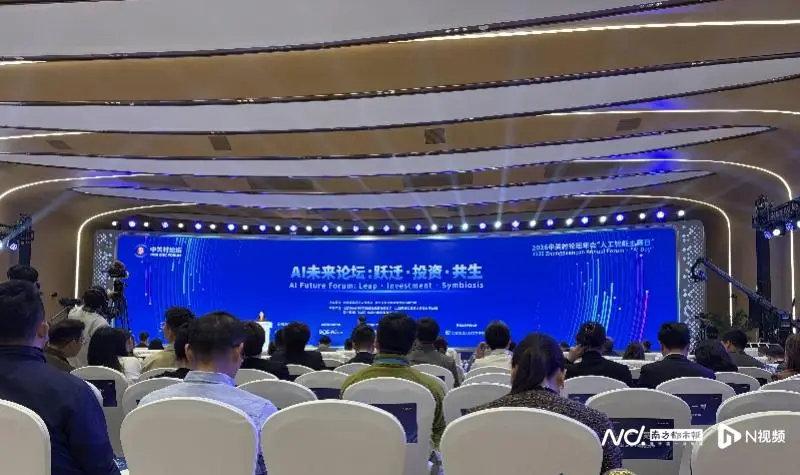
Nandu News Reporter Yang Wenjun and Yang Liu came from Beijing on March 29. The special topic forum "AI Future Forum: Leap·Investment·Symbiosis" of the 2026 Zhongguancun Forum Annual Meeting "Artificial Intelligence Theme Day" was successfully held at the Zhongguancun International Innovation Center.

中关村科创金融论坛__中关村科技园股票

At the event site, the Zhongguancun Science City International Innovation Service Cluster ushered in an important moment. Six leading investment institutions, Sequoia China, Hillhouse Ventures, Matrix Partners, Wuyuan Capital, Jinshajiang Ventures, and Zhenzhi Ventures, signed contracts as investment ecosystem partners.

It is understood that the agglomeration area was built by Haidian District to systematically gather the world's top venture capital and science and technology service resources. It aims to create a venture capital center for global cutting-edge technology, build an efficient collaborative ecosystem of "talent-technology-scenario-capital", and maximize the acceleration of innovation. Relying on the location advantage of being adjacent to Peking University and Tsinghua University, the agglomeration area has created a vibrant "talent source coordinate" where top talents gather spontaneously and interact frequently. In the past month, more than 30 talent community activities have been held intensively.

At the same time, the agglomeration area has jointly built an innovative ecosystem with 180 industry benchmarks such as MTR, Audi, Schneider, and BASF, opened up scenario requirements, and promoted the implementation of technology applications by 251 technology companies. The agglomeration area has also linked capital to accurately detect cutting-edge wind directions and capture innovation value. It has now facilitated the docking of more than 400 cutting-edge technologies from universities and capital, becoming a keen "capital detector."

In addition, Haidian District has innovatively built a "five parties and six forces" collaborative mechanism. This time, it links the five major entities of Zhongguancun Science City, universities and colleges, investment funds, territorial towns and science and technology parks, and is driven by the integration of six forces: organizational power, innovation power, value power, cultivation power, carrying capacity, and market power, to open up the key channel from the laboratory to the market. At the event, seven investment institutions that are deeply involved in innovation at the source of universities, including Wu Yuefeng Science and Technology, Shuimu Tsinghua Alumni Seed Fund, Qifu Capital, First Journey Capital, Songhe Capital, Fosun Fortune, and Starlink Capital, officially signed contracts. At the same time, nearly 30 cooperation funds have been reserved. This initiative will give full play to the value of the fund, implement the precise layout of "one school, one department, one fund" and help scientific and technological achievements move from laboratories to industrialization.

Royal Author’s New Book Reveals: Queen Elizabeth’s True Attitude Towards Harry And Meghan In Her Later Years

Recently, royal author Hugo Vickers revealed in his new book Queen Elizabeth's true attitude towards Harry and Meghan during her later years.

According to Vickers, Queen Elizabeth was unsettled in her later years and even seemed preoccupied. She was worried about the family problems of Andrew, Harry and Meghan.

哈里被王室抛弃__哈里是女王的什么人

At the beginning of 2020, after Harry and Meghan announced their resignation as working royal members, they originally hoped to maintain their status as "half-in, half-out" royal members, that is, attending a small number of public royal events while allowing the couple to run their business. This is obviously in conflict with the long-standing code of conduct of the British royal family.

This led Queen Elizabeth to categorically reject Harry and Meghan's proposal. After the Sandringham meeting, the Queen told Harry that there was no middle-ground option either to serve the royal family full-time or to withdraw completely.

_哈里被王室抛弃_哈里是女王的什么人

In the end, Harry reluctantly left the UK and returned to Canada, where he and Meghan were living temporarily.

The Queen subsequently announced that Harry and Meghan would be prohibited from using their royal titles for commercial activities, but she still wished them success in their new lives.

哈里被王室抛弃__哈里是女王的什么人

On March 1, 2021, 99-year-old Prince Philip was admitted to the hospital for emergency surgery. Just 6 days later, Harry and Meghan appeared on Oprah's interview show. Meghan accused the royal family of "racism" for the first time and made other unverifiable accusations.

It is reported that the Queen felt sad that Harry appeared on this show to smear the reputation of the royal family. Then the Queen issued a statement, still her plain and watery style: Memories may vary,

_哈里被王室抛弃_哈里是女王的什么人

Since then, although Harry and the Queen still had phone calls, Harry seemed to have completely lost the Queen's trust. Whenever Harry called, the Queen would ask the maid to be present. There were no more intimate private calls in the past, and the disappointment could not be more obvious.

In fact, the main members of the British royal family have never been optimistic about Harry and Meghan's marriage. Long before the two got married, the Queen warned Harry that the two got married too fast. She suggested that Harry wait for at least one more year.

哈里被王室抛弃_哈里是女王的什么人_

Prince William also expressed similar views. William suggested that Harry should give Harry more time to get to know Meghan.

This was actually a sincere suggestion from his brother, but it seemed to arouse Harry's rebellious psychology, and eventually even caused conflicts between the brothers.

哈里被王室抛弃_哈里是女王的什么人_

King Charles's attitude was more direct: have a happy relationship, but don't marry her.

Even Andrew, who is estranged from Harry, said she was an "opportunist".

Of course, Harry finally ignored all family members’ advice and officially held their wedding to Meghan in May 2018.

_哈里被王室抛弃_哈里是女王的什么人

Judging from the expressions of the royal family members attending the wedding, it is obvious that even at this point, they are still not optimistic about Harry and Meghan's marriage.

Queen Elizabeth, in particular, frowned. Perhaps the Queen had realized at this time that this would not be a good thing for the royal family.

哈里是女王的什么人__哈里被王室抛弃

A series of events that followed, including the Oprah interview, the publication of the book "The Spare Tire", the documentary "Harry and Meghan", etc., all damaged the reputation of the royal family and caused the relationship between Harry and other family members to be irreparable.

Looking back, when Harry and his wife Meghan appeared in the same frame recently, they almost always had expressionless faces and looked unhappy.

哈里是女王的什么人__哈里被王室抛弃

This is in stark contrast to the ever-bright smiles on Harry and Meghan's faces when they first got married.

Perhaps it was only at this time that Harry regretted not following the Queen's advice, but it seemed to be too late.

With Huge Oil Payment And Salary Arrears Exceeding 50 Million, The Blue Dream Song Cruise Ship Is In Trouble

The "Song of Blue Dream", which is committed to building a "national cruise ship", has been anchored in Beihai, Guangxi for two and a half months. According to industry media reports, the cruise ship was impounded by Island Oil, a well-known fuel supplier, at Beihai Port in Guangxi due to arrears of approximately US$600,000 in fuel payments.

"No one knows how much foreign debt Blue Dream Cruises owes." Zhao Yi, the former sales manager of Shanghai Blue Dream International Cruise Co., Ltd. (hereinafter referred to as "Blue Dream Cruises"), told China News Weekly that he was owed more than 300,000 yuan in salary. According to incomplete statistics from rights protection employees, the company owed material supply fees, contract breach compensation and employee wages before and after the suspension, totaling more than 50 million yuan.

Lembongan Cruises was founded in 2016. This mixed-ownership company was once one of the representatives of local operators in China. Its "Lembongan Star" was the first international cruise ship to resume sailing from its domestic home port after the epidemic. Today, its trajectory coincides with that of many local cruise lines that have sadly exited the industry and ended up mired in disputes over ship sales, unpaid wages and lawsuits.

Zhao Yi revealed that there are about 200 employees who are owed wages, including shore-based personnel and crew members. Since the company suddenly announced the suspension of flights, many people have not even been able to get money to go home for the New Year. The screenshot he provided showed that Wang Peng, the company's former chairman, wrote in a reply to employees: "We will solve everyone's problems as soon as possible after the company disposes of the ship assets." This is what Zhao Yi is worried about. If the old ships cannot be sold smoothly, the company may be dragged into insolvency.

Cruise ship "Blue Dream Song" Photo/Visual China

Suspension becomes suspension of operations

When she learned of the suspension, Yan Jie was still at sea on her voyage to Vietnam. In the early morning of January 4, the cruise ship "Song of Blue Dream" returned to the port of Beihai, Guangxi. As soon as the tourists disembarked from the ship in the morning, the labor service company summoned all seafarers in the afternoon and asked them to sign an "Employment Termination Agreement." She and her colleagues were informed that they must leave the ship before January 6. After the handover is completed, they will receive a "one-time consideration compensation", but it does not include the unpaid salary for December last year and the full-year performance bonus.

Yan Jie recalled that the crew’s wages had been deferred for three consecutive months. Everyone had been worried about the operating situation for a long time, but they didn't expect everything to happen in such a hurry. The voyage of this ship has been scheduled to June 30, 2026. All cabins are outsourced to travel agencies, and the occupancy rate can basically be maintained at more than 90%, which means that the ticket revenue in the next six months is essentially guaranteed. She really didn't understand why the company suddenly unilaterally breached the contract.

Zhao Yi also confirmed that the Blue Dream Cruises sales team signed a six-month "charter" contract with Shenzhen Xinmingyang International Travel Service in 2025. More importantly, the travel agency has paid a deposit of about 10 million yuan. According to the terms of the contract, if Party A (Blue Dream Cruises) breaches the contract, it will face high compensation.

On December 25 last year, Blue Dream Cruises announced the suspension of sailings of the "Blue Dream Song" cruise ship in the name of "hardware upgrade and maintenance". Zhao Yi recalled that at that time, the sales team had strongly recommended that the ship should operate until at least mid-2026 to fulfill the contract and reduce losses, but the company's decision-makers insisted on suspending the voyage immediately. This decision quickly triggered a chain reaction. On January 20 this year, Shenzhen Xinmingyang International Travel Service filed a lawsuit against Blue Dream Cruises in the Shanghai Maritime Court and applied for property preservation.

"This directly led to the freezing of special funds to be paid to crew members." A credit memo provided by Yan Jie showed that a special fund of 5 million yuan for crew wages was issued by Blue Dream Cruises to Shanghai Guoyuan Labor Service Co., Ltd. on January 27. According to the agreement signed by the seafarers after renegotiation on January 5, the money should be released before the Spring Festival to settle arrears of wages and compensation. "But until now, we haven't received a penny." Yan Jie said.

Behind the hasty decision to suspend sailings is a monetization plan that has not been realized. Zhao Yi revealed that at the end of last year, the company intended to sell the "Blue Dream Song" and contacted a Russian operator. "The suspension of sailings is to prepare for subsequent transactions."

But in fact, the ownership of the "Blue Dream Song" is not in the hands of Blue Dream Cruises. According to public reports, the company's director Lu Guangyuan introduced at an industry forum in 2024 that the "Song of Blue Dream" was introduced by the company through offshore leasing in cooperation with China Banking Financial Leasing Co., Ltd. (hereinafter referred to as "CDB Financial Leasing"), and then refinanced and leased to Blue Dream Cruises for operation. This was done to reduce the company's burden.

"There is obviously a problem with the capital chain now." Zhao Yi further revealed that Blue Dream Cruises operates the cruise ship through its wholly-owned Hong Kong subsidiary and needs to pay rent to China Bank Financial Leasing regularly and complete the final buyback before the agreed deadline. According to his understanding, the repurchase period is before 2026, but as of now, the repurchase has not been completed. "China News Weekly" called Wang Peng, the former chairman of Blue Dream Cruises, for verification, but received no reply.

After the suspension notice was issued, more than 30 employees in the Shanghai office of Blue Dream Cruises received the "Labor Contract Termination Agreement" one after another at the end of last year. The suspension of flights eventually turned into a shutdown. An employee who has worked in the sales department of Blue Dream Cruises for many years told China News Weekly that the salary owed to each person ranged from tens of thousands of yuan to more than 300,000 yuan. Due to the delay in receiving the arrears, on February 27 this year, the first batch of employees went to court to file a lawsuit and filed a case. According to Qichacha data, Blue Dream Cruises has recently become the person subject to execution in eight cases, involving a total amount of 1.3146 million yuan.

Sun Yue, head of personnel at Blue Dream Cruises, confirmed to China News Weekly that there are currently 27 shore-based employees on the books who are owed wages, involving a total amount of about 5.5 million yuan. She explained that the three existing shareholders were pushing to resolve the funding issue after the company's accounts were frozen. According to the plan confirmed by the shareholders' meeting, the three parties will pay special funds for salary arrears into designated accounts based on their shareholding ratios.

As of now, 40% of the funds borne by the major shareholder Fujian China Transport Investment Group Co., Ltd. have been received, 30% of the funds borne by Zhoushan Islands International Cruise Port Co., Ltd. have been received on March 24, and Qingdao Jurong Industrial Investment Co., Ltd. has borne the other 30%, which is still being coordinated.

"China News Weekly" called Yao Shuai, director of Blue Dream Cruises and Qingdao shareholder representative, and the other party said that the plan of "raising funds according to the share ratio of the three shareholders" "may only be in the motion stage". He himself has not seen the specific documents and has "no grasp" of the current situation of Blue Dream Cruises. The reporter asked Wang Peng, the former chairman of Blue Dream Cruises and the legal representative of Fujian Sinotrans Investment Group, to confirm this contradictory statement, but the other party refused to be interviewed on the grounds of "no time."

It is worth noting that just one day before promising to pay back wages, on February 9 this year, Blue Dream Cruises completed the change of legal representative, and Wang Peng resigned as chairman and general manager. He is still serving as vice chairman of Fujian Air China Ocean Shipping (Group) Co., Ltd. The company was once the largest shareholder holding 80% of the shares of Blue Dream Cruises when it was founded, but it withdrew in 2020.

"The current shareholders of Blue Dream Cruises are only the three mentioned above." Sun Yue emphasized. She said that if the funds from Zhoushan can be received as scheduled, the company will notify the specific plan to pay a total of 70% of the back wages as soon as possible. As for the remaining 30%, the temporary working group she is a member of "theoretically will not give up the recovery." As an employee of China Transport Fujian assigned to Blue Dream Cruises, Sun Yue himself has now returned to the shareholder company. She admitted that it is still unknown how the temporary working group responsible for the aftermath will operate in the future and who will lead it.

Sell ​​one order, pay one order

In Zhao Yi's impression, the decision-making level of Blue Dream Cruises started to signal the suspension of sailings in November last year. Affected by geopolitics, domestic home port cruise companies at that time canceled plans to call ports in Japan, and Blue Dream soon changed all Japan and South Korea tour destinations to Jeju and Busan in South Korea.

"The capital chain is already tight, and the route adjustment is a fatal blow." Zhao Yi explained that unlike customers in mature markets in Europe and the United States who regard cruise ships as vacation destinations, domestic tourists generally still regard cruise ships as a means of transportation. When travel destinations are no longer niche and unique, the cost-effectiveness of cruise travel will be greatly reduced, and lower occupancy rates will most likely prompt travel agencies to cut prices and sell orders.

A veteran who has been in the cruise industry for 23 years told China News Weekly that in terms of the richness of destination tourism resources, it is difficult for the Korean market to completely replace Japan. In competition in markets such as Jeju and Busan that are well known to domestic cruise passengers, price reduction is the most direct way to attract customers. Even the price of Royal Caribbean's "Spectrum of the Seas", which is the most expensive in the industry, has dropped to less than 2,000 yuan for its interior cabin.

In the past operations, Lembeng, which relied on low-price strategies to open up the market, was once known as the "Mixue Ice City" in the cruise industry. Zhao Yi explained that without the premium brought by differentiated routes and facing close competition with larger and newer cruise ships, the company is also worried about the history of "sell one and lose one" repeating itself.

The deeper problem is that there is a mismatch between the old second-hand ships purchased by Blue Dream Cruises and the domestic mainstream cruise consumer market. The two ships, "Blue Dream Star" and "Blue Dream Song", had basically been in service for 20 years when they were "acquired", and their tonnage was generally small, at 25,000 tons and 42,000 tons respectively, which was far lower than the current mainstream large cruise ships of over 100,000 tons. Their cabin types, entertainment facilities and other hardware were inherently deficient, and the limited space also limited on-board consumption scenarios and secondary income.

Zhao Yi gave an example. In order to meet the demand for standard rooms for domestic team tours, the company once installed a wooden board as a partition in the middle of the original large bed. Such a reluctant renovation is far from the comfort and spaciousness that tourists expect from modern cruise ships.

"Planning for cruise operations begins before placing an order with the shipyard." Shanghai Waigaoqiao Shipbuilding Co., Ltd., the builder of the domestic large-scale cruise ship "Ada Magic City", previously pointed out in an interview with China News Weekly that ship owners must clearly define their target customer groups and plan future routes before placing orders, and use this as a guide to design on-board hardware and soft furnishings that meet consumer needs. This "pre-operation, design and customization" model is the key to the success of the cruise project, and also explains why large cruise ships that want to base themselves on the local market must take the road of self-construction, and it is difficult to achieve this by purchasing second-hand ships.

"The hardware is not enough, and the software is difficult to come up with." Yan Jie will join the company in April 2023. "Blue Dream Star" will make its maiden voyage in June of the same year. She only has one month to prepare on-board entertainment activities. At that time, the company canceled its professional dance troupe due to lack of funds. She had to contact a Colombian dance troupe through personal connections and hired them as ordinary crew members, allowing them to perform in addition to daily reception work. Although the salary was slightly higher than that of ordinary crew members, the company overall saved about 4 million yuan. At the same time, the team will organize club activities, such as games, dance classes or craft workshops, on the deck, salon and other locations during the day to enrich the passenger experience as much as possible and reduce customer complaints.

European And American Stock Markets Closed Lower On Friday, A-shares Will Be Under Pressure Next Monday And Analysis Of Investment Strategies

European and American stock markets closed lower on Friday, with the Nasdaq index falling more than 2%. Large technology stocks generally fell, with Meta and Amazon falling nearly 4%, and Tesla, Google, and Microsoft falling more than 2%. Oil and gas and gold stocks generally rose, with Halliburton rising more than 4% and U.S. Energy rising nearly 2%. Occidental Petroleum rose by more than 1%; Harmony Gold rose by nearly 3%; banking, shipping, quantum computing, and drone concept stocks fell across the board. Citibank fell by more than 4%, JPMorgan Chase fell by more than 3%, Morgan Stanley fell by nearly 3%, and Bank of America, Goldman Sachs, and Wells Fargo fell by more than 2%. International crude oil futures prices rose sharply, New York crude oil rose 7%, reaching $100, and the U.S. dollar index rose above 100. This is an obvious trading pattern of escalating geopolitical war. As long as the international crude oil price remains at around US$100, global inflation seems to be difficult to avoid and the US dollar will not cut interest rates. Against the background of global financial market turmoil, A-shares will still be under pressure next Monday.
或许分析师都猜错了,食品饮料和生物医药才是2026投资主线_或许分析师都猜错了,食品饮料和生物医药才是2026投资主线_

So we have given out two investment strategies since last week. One is to turn to value investment, focusing on low-position and undervalued sectors, such as consumption and medicine, such as non-ferrous coal resource stocks. Another strategy is to shift the AI ​​narrative to electric power and other infrastructure construction, and control positions in technology stocks.

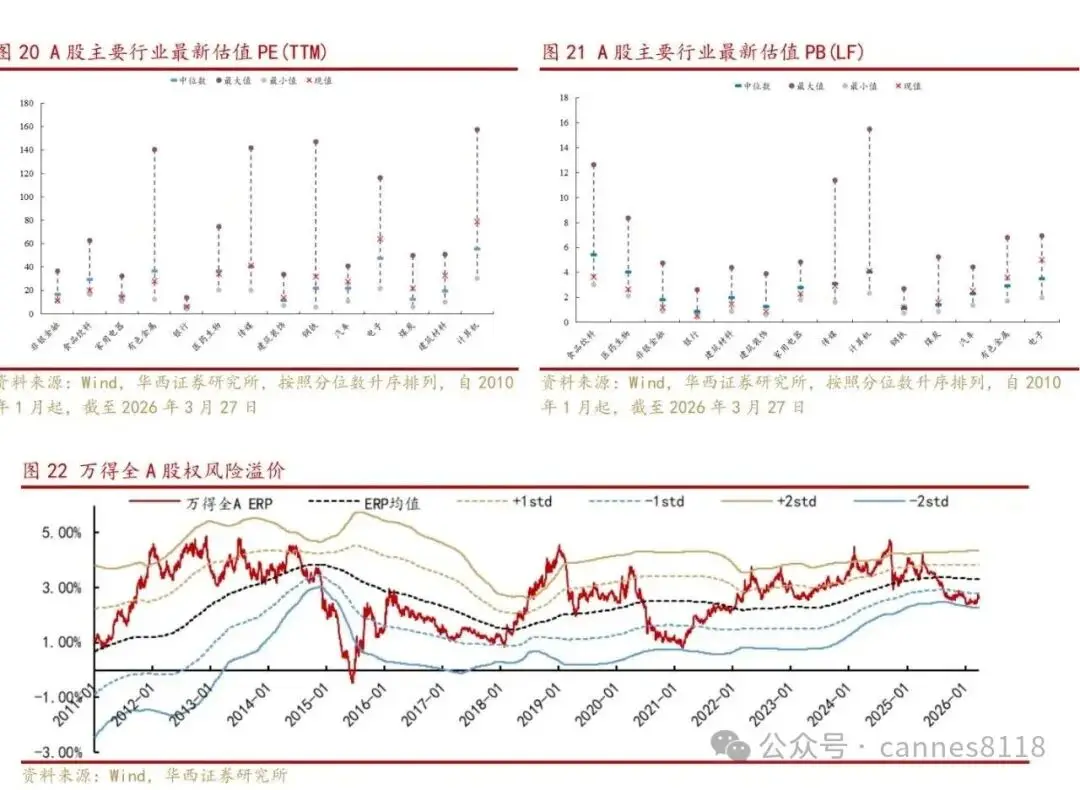
Generally speaking, PB valuation can best reflect the position of sector valuation. Judging from the Wande statistics in the figure below, the current PB positions at the bottom are banks, building and decoration materials, coal, food and beverages, and biomedicine.

If international crude oil prices remain high for a long time and the CPI inflection point is expected to arrive in the second half of the year, then the above sectors deserve attention. It cannot be ruled out that some undervalued sectors will go out of independent market during the adjustment of the market shock. Perhaps the food, beverage and biopharmaceutical sectors, which have always been at low valuations, are the main investment lines in 2026.

或许分析师都猜错了,食品饮料和生物医药才是2026投资主线_或许分析师都猜错了,食品饮料和生物医药才是2026投资主线_

Lu Changshun (Cairns) Certificate No.: A0150619070003. [The above content only represents personal opinions and does not constitute a basis for buying and selling. The stock market is risky, so investment needs to be cautious]

Japanese Officers Climbed Over The Wall And Broke Into The Chinese Embassy In Japan. Why Did Japanese Officials Pretend To Be Dead For Several Days?

Can you believe it? An active-duty Japanese officer bought a knife in advance, took leave and ran to Tokyo. He climbed over the wall and broke into the Chinese Embassy in Japan. He also squatted and hid in the bushes inside the embassy for a long time. This matter would be a huge diplomatic incident for any country, but Japanese officials have been pretending to be dead since the incident happened. The Chinese side has been asking questions for several days, but they can't even get an accurate answer. It was not until the fourth day that the Japanese Defense Minister finally came out to speak publicly. What did he say? What other tricks are hidden?

The officer who broke in was named Kodai Murata. He was a newly promoted third-class land lieutenant in the Japan Ground Self-Defense Force. This incident was really not a random break-in. He took leave from the army in advance and rushed to Tokyo from the station. He first bought a knife and then walked around the Chinese Embassy for a long time, exploring all the surrounding terrain. Even though there was a barbed wire fence on the top of the outer wall of the embassy, ​​he did not stop. After climbing in, he went straight into the bushes and squatted there for a long time.

The whole process was well-prepared and equipped with tools, and every step was clearly arranged. If he said he got lost in passing and lost control of his emotions, would you believe it? After the incident, the right wing in Japan immediately jumped out to clear the air, saying that Murata was not an active member of the Self-Defense Forces at all and wanted to wipe out the relationship completely. As a result, his military status was clearly there, with irrefutable evidence, and the group quickly shut up.

Anyone who understands diplomatic rules knows that an embassy is a symbol of a country's sovereignty, equivalent to its mobile territory. Anyone who forcibly breaks in without permission is a direct violation of the country's sovereignty. An active-duty officer with a knife broke in and lurked. The nature of this matter was so bad that it could not be fooled by an understatement.

After the incident, the whole world was staring at Japan, waiting for him to give an explanation to China. As a result, the wait lasted four full days. On March 27, Japan’s Defense Minister finally formally responded to this matter at a press conference. He only said three things. First, discipline management within the Self-Defense Forces must be strengthened. Second, this matter is considered an ordinary "building trespassing crime" according to Japanese law. Third, he feels "regret" about this.

After saying these three sentences, it was gone, not even a formal apology. It neither made it clear why the officer was preparing to break into the embassy in advance, nor admitted that there were management loopholes within the Self-Defense Forces. It also did not respond to China’s request for a thorough investigation of the entire incident. It did not even mention that this incident violated China’s sovereignty.

Before Koizumi spoke, Japan's Chief Cabinet Secretary Minoru Kihara had already spoken, and his caliber was highly consistent with Koizumi's. He was almost carved from the same template. Over and over again, I just use the word "regret" to deal with things, and don't say anything else. Anyone with a discerning eye can see that this is the unified caliber discussed in advance by the Japanese cabinet and has been checked for a long time.

Forcibly characterizing a serious diplomatic incident in which active-duty soldiers broke into a foreign embassy as an ordinary domestic criminal case is full of problems. To put it bluntly, Japan wants to reduce this matter to an ordinary criminal case, bypassing the core issue of diplomatic sovereignty and the sensitive topic of the right-wing shift of the Self-Defense Forces, so that the incident can sink as quickly as possible and completely disappear from public view.

As Defense Minister, Shinjiro Koizumi originally had direct management responsibility for the Self-Defense Forces. An active-duty military officer caused such a big incident, and the Minister of Defense did not mention his management negligence in his speech. This attitude is unjustifiable even for many ordinary Japanese people.

After the incident, thousands of Japanese citizens walked directly to the square in front of the National Assembly to protest, shouting in unison for Shinjiro Koizumi to resign. Many of those protesting directly called out "terrorist attack" and believed that Murata's behavior was essentially a terrorist act against foreign embassies.

The spokesperson of the Chinese Ministry of Foreign Affairs expressed his position for many days in a row after the incident, and his words became clearer and tougher each time. Japan dismissed the incident with a word of "regret," and Chinese spokesperson Lin Jian responded directly. "Regret" alone is simply not enough. What China wants is Japan's formal apology.

It is not the kind of verbal apology that sounds official, nor is it ambiguous diplomatic rhetoric. What is needed is a formal, clear and sincere apology. At the same time, China also requires the Japanese side to thoroughly investigate the entire incident. Murata visited the spot in advance to buy the knife, what exactly he wanted to do after entering the embassy, ​​what was his motive, what was his purpose, and whether anyone else knew or participated. These questions must be investigated clearly and an answer that can withstand testing be given.

China has full legal basis for making these demands. The Vienna Convention on Diplomatic Relations clearly stipulates that the host country has the obligation to protect the security of foreign embassies in its country and that the embassy shall be free from any form of intrusion or damage. Since Japan has ratified this convention, it must assume corresponding international obligations.

In this incident, a Japanese active-duty officer climbed over the wall and entered the Chinese Embassy with a knife. Japan not only failed to stop it beforehand, but also tried every means to downplay it afterwards. This clearly failed to fulfill its obligations. The reason why China has such a tough attitude is not just to gain a breath.

If Japan were to let this matter go by "regret", wouldn't it be equivalent to sending a signal to the outside world? Invading the Chinese Embassy would only cost Japan "regret" and it would not have to bear any other responsibilities. This precedent cannot be set by China at any time.

After the incident, the international community is also staring at Japan's handling of the incident. The inviolability of diplomatic missions is the foundation of the international order that countries around the world have long adhered to. Japan's performance this time has caused many countries to re-examine Japan's attitude towards international obligations. It has also brought the continuous expansion of the Japanese Self-Defense Forces in recent years and the continued rise of right-wing influence into the eyes of analysts from various countries.

Japan wants this matter to go away quickly and turn the page quickly, but China's position has long been made clear. Trying to get over this matter with just a random sentence won't work at all.

References:

Lin Jian, Spokesperson of the Ministry of Foreign Affairs of the People's Republic of China, responded to reporters' questions on the incident of Japanese Self-Defense Force officers illegally breaking into the Chinese Embassy in Japan.

Kyodo News Japanese Ground Self-Defense Force officer was arrested after climbing over the wall to enter the Chinese Embassy

United Nations Treaty Database Full text of the Vienna Convention on Diplomatic Relations and obligations of contracting states

Asahi Shimbun Japanese people gathered in front of the National Assembly to demand the resignation of Defense Minister Shinjiro Koizumi

Sign In

Forgot Password

Sign Up