Professional virtual currency information station welcome
We have been making efforts.

24-hour news update Page 21

24-hour cryptocurrency news update

South Korean President Lee Jae-myung: The Crisis In The Middle East Has Caused Energy Shortages, Urgently Pushing A 26 Trillion Budget

韩国总统李在明:26万亿韩元预算补贴民生,迎击中东能源危机_韩国总统李在明:26万亿韩元预算补贴民生,迎击中东能源危机_

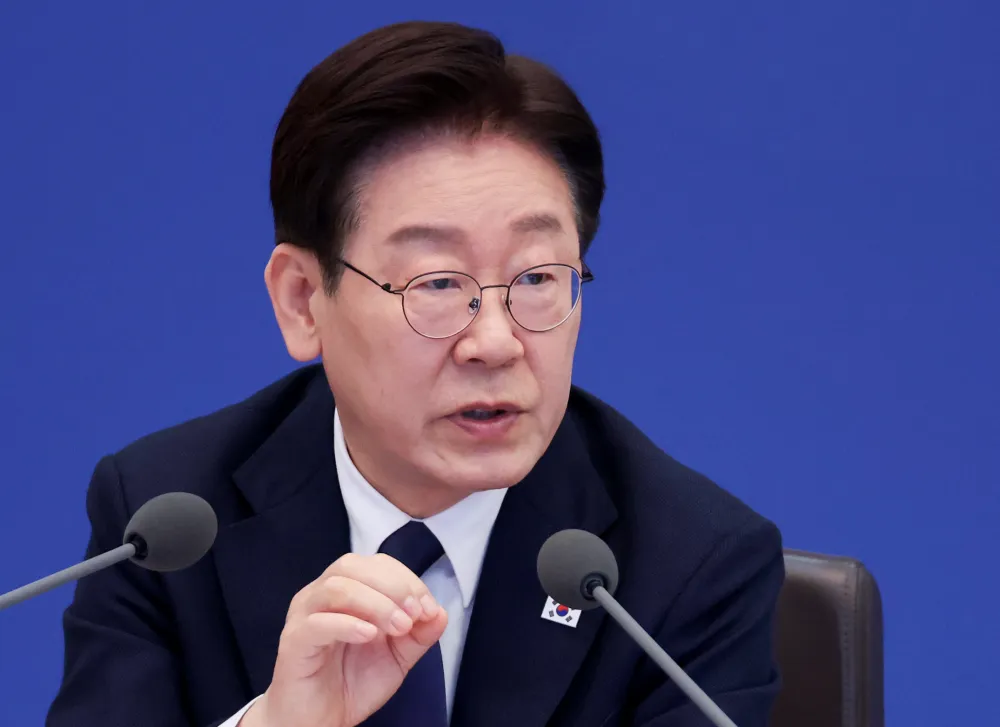
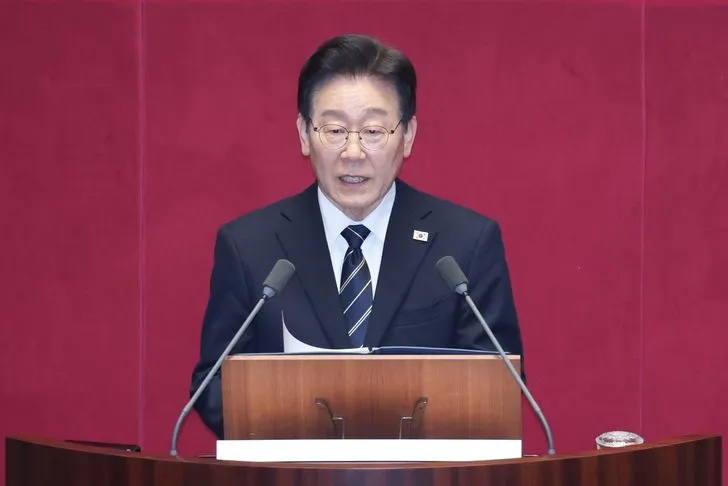
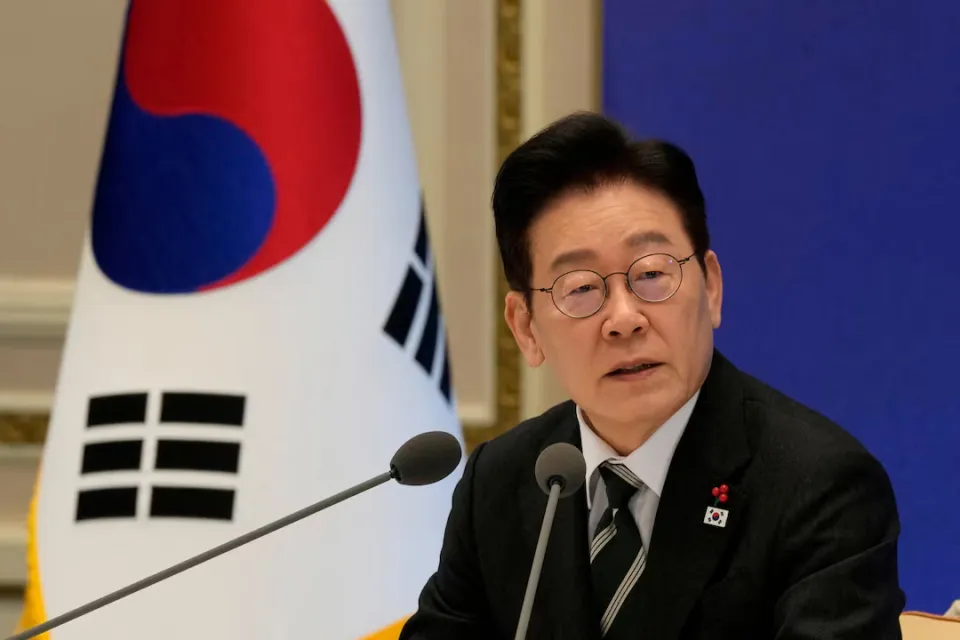
On the 2nd, South Korean President Lee Jae-myung delivered a speech in the National Assembly to explain the supplementary budget totaling 26.2 trillion won. He said: "The outbreak of the war in the Middle East has entered its 34th day, but it is still impossible to predict when this crisis, considered by the outside world to be the most serious energy security threat, will end."

He added that the slower the pre-emptive response, the greater the damage to South Korea's economy and people will be. Therefore, he urged Congress to pass the supplementary budget as soon as possible.

韩国总统李在明:26万亿韩元预算补贴民生,迎击中东能源危机_韩国总统李在明:26万亿韩元预算补贴民生,迎击中东能源危机_

It will take time to restore damaged infrastructure in the Middle East

In his speech that day, Li Zaiming pointed out that the current crisis is not a fleeting shower, but a violent storm with an unknown duration. He emphasized that even if the war ends tomorrow, it will inevitably take a lot of time to complete the reconstruction of the destroyed energy infrastructure in the Middle East and for the supply and demand relationship to return to its previous smooth state.

Lee Jae-myung expressed concerns about the economic outlook. He pointed out that as the global economy comes to a standstill, the spark of economic growth that South Korea has finally rekindled is at risk of being extinguished.

He further explained that after the Korea Composite Stock Price Index exceeded 5,000 points, thanks to the excellent performance of domestic companies in fields such as semiconductors and shipbuilding, the Korean economy had an opportunity to take off, but it encountered this sudden compound crisis.

Oil supply disruptions have caused gasoline and diesel prices to skyrocket, while shortages of raw materials are threatening a wide range of livelihoods including the production of vinyl-containing plastic products and fertilizers. He emphasized that the government must take more thoughtful response measures given that the current situation may not end in the short term.

_韩国总统李在明:26万亿韩元预算补贴民生,迎击中东能源危机_韩国总统李在明:26万亿韩元预算补贴民生,迎击中东能源危机

A debt-free supplementary budget that does not use national debt…to make use of 25.2 trillion won in excess tax revenue

Lee Jae-ming made it clear that the supplementary budget submitted this time is a "debt-free supplementary budget" that does not involve the issuance of government bonds. He said that thanks to the prosperity of the stock market and semiconductor industry, the government will use 25.2 trillion won in excess tax revenue and combine it with 1 trillion won in fund resources.

He added that this system design ensures that during the Middle East war crisis, bold investments can be made in key areas without passing on the fiscal burden to the national and macroeconomics.

Li Zaiming listed "protecting vulnerable groups in society" and "improving the economic structure" as specific goals of the supplementary budget. In terms of stabilizing people's livelihood, he introduced the "High Oil Price Loss Support Fund" project.

_韩国总统李在明:26万亿韩元预算补贴民生,迎击中东能源危机_韩国总统李在明:26万亿韩元预算补贴民生,迎击中东能源危机

The project will provide local currency subsidies of up to 600,000 won to those in the bottom 70 percent of income groups. He said the move was aimed at easing the twin burdens of high oil prices and inflation faced by ordinary people.

In terms of youth support policies, he promised to expand entrepreneurship and employment opportunities. He pointed out that this crisis will inevitably have a more serious impact on young people who are new to society.

In the energy sector, he announced a record-breaking renewable energy support package totaling 1.1 trillion won. He said the government will turn this energy crisis into lessons learned and development opportunities, and accelerate the transition to renewable energy.

Lee Jae-ming also announced that the government will double the number of "dream centers" that provide basic food and daily necessities for free, from the existing 150 to 300. He emphasized that it is necessary to ensure that people do not take extreme paths or fall into crime due to food shortages.

He went on to point out that the government will further expand the coverage of rural basic income to broadly support rural areas that are plagued by population decline and aging. At the same time, he mentioned that the government will pay more attention to the issue of social polarization, pointing out that the gap between rich and poor is currently widening among various classes, generations and industries.

韩国总统李在明:26万亿韩元预算补贴民生,迎击中东能源危机_韩国总统李在明:26万亿韩元预算补贴民生,迎击中东能源危机_

Zero tolerance for hoarding… Overcoming crises depends on speed

In his speech, Lee Jae-myung repeatedly emphasized the unity of the social community and the determination of the National Assembly. He declared that the government will strictly follow the zero-tolerance principle and crack down on any unfair behavior such as colluding with price increases and hoarding to make huge profits by taking advantage of the social crisis.

He called on the whole society to save every drop of oil, avoid wasting even a plastic bag, understand each other and unite as one, so that South Korea can safely and quickly get out of the haze of this crisis. He promised that governments and public officials, including himself, would lead by example with extraordinary determination.

Li Zaiming pointed out that the success or failure of overcoming the crisis depends on the speed of action. He likened the supplementary budget to a breakwater that protects people's lives from the waves of crisis and a springboard for leapfrog growth.

He strongly called on the government, Congress, and the ruling and opposition parties to work hand in hand in the face of a national crisis and work wholeheartedly for the development of the people and the country with pure dedication.

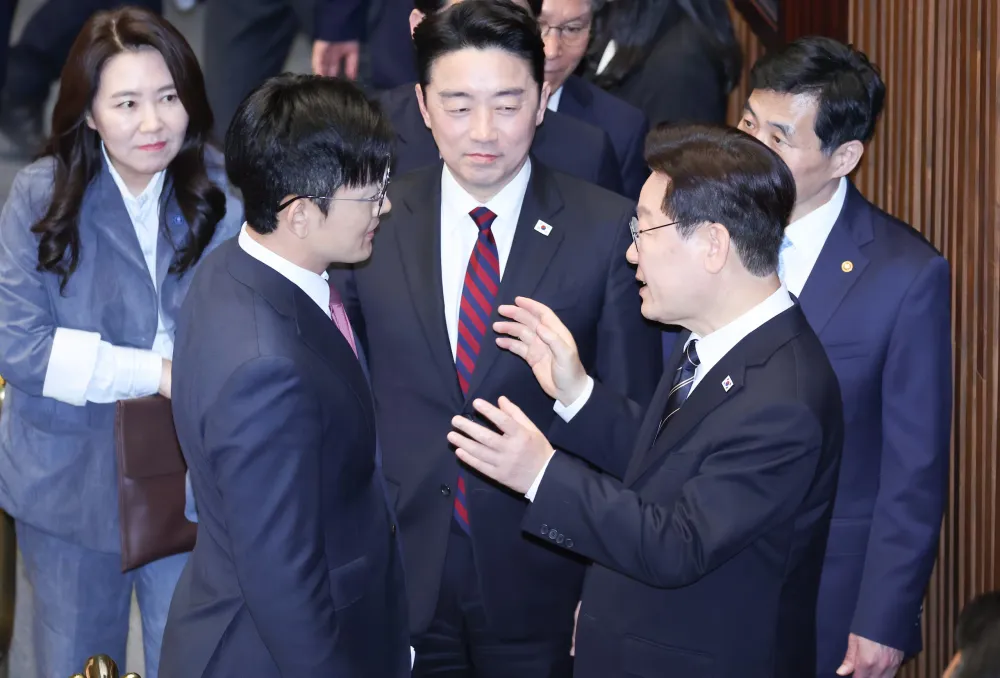
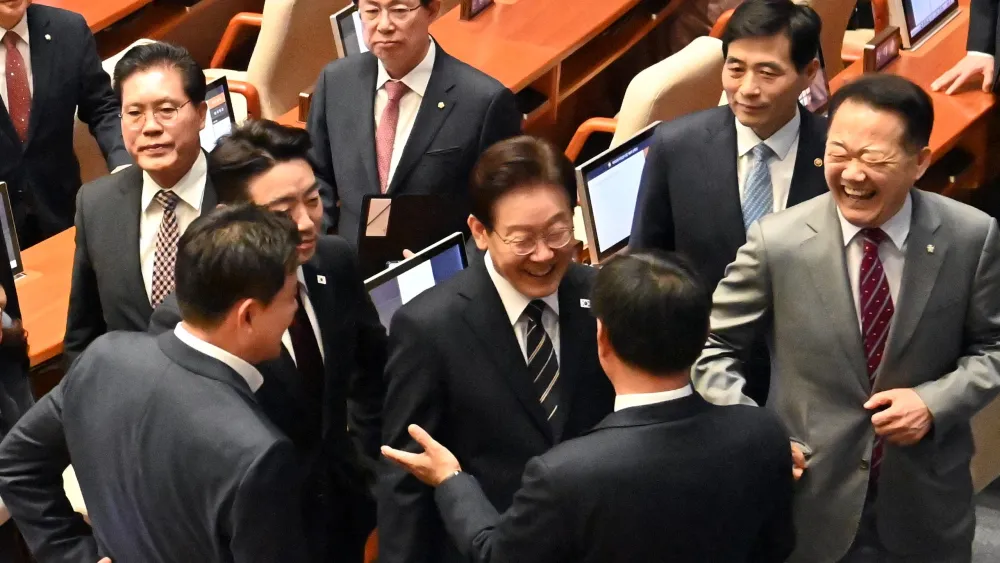
After his speech, Li Zaiming shook hands with the members present. He also walked to the seats of National Power Party members to shake hands and communicate with them.

Source: President Lee Urges Swift Approval of 26.2 Trillion Won Supplementary Budget

Netflix Will Release The Final Season Of Jelydia On April 15th, And The Plot Is Super Exciting

On April 15th, Netflix will release the final season of "Jelediah" all at once. This drama about the first female lawyer in Italy in the 19th century had almost no discussion on the Chinese Internet in the first two seasons, but its Rotten Tomatoes freshness score is 91%, and the highest single episode on IMDb is 8.7 – a typical "algorithm does not recommend it but everyone who has seen it said it is good".

I checked Netflix's April schedule and found that two of the three returning dramas are old IPs that have been around for many years. Only this Italian original drama has been cut to the end of its third season. Streaming media’s content decisions are never unreasonable, but users’ time ledgers do.

"Jelediah: The Underrated Finale"

The setting of the heroine Lydia Porter is still sharp today: in Turin in 1883, she was the only licensed female lawyer in the city, and her license could be revoked at any time by the male judges on the grounds of "indecentness". The crew researched the life of a real historical figure-Italy's first female lawyer Lidia Poët, but the case arrangement was completely fictitious.

The narrative rhythm of the first two seasons is very "European". A single 50-minute episode tells a complete case, interspersed with the heroine's court battle for the right to practice law. This structure seems luxurious in the era of short videos, but Netflix’s completion rate data clearly supports the renewal decision.

The central conflict of season three has been spoiled in the trailer: Lydia's best friend Grazia is accused of murdering her husband. The screenwriter twists personal friendships and professional ethics into a tight knot – she wants to defend her friend, but all the evidence points to guilt. This old proposition of "procedural justice vs. result justice" takes on a fresh sense of oppression in the 19th century context where gender power was extremely skewed.

The final season only has 6 episodes, and all episodes will be released on April 15th. For viewers who are used to catching up on updates, this is a rare mercy from Netflix.

The other two: Old Faces and New Variables

There are two other dramas returning in the same month, but the original information is limited. Judging from Netflix's scheduling practices, April is usually the window for the platform to clear inventory – the end of Q1 of the fiscal year, and mature IP is needed to stabilize the subscription churn rate. A drama with "high reputation and low traffic" such as "Jelediah" is scheduled to end at this time. There is a high probability that the contract will not be renewed after its expiration, rather than ending naturally.

The content life cycle of streaming media is shortening. In 2019, Netflix was willing to give "The Crown" a six-season budget. Nowadays, a show has a longevity if it lasts for three seasons. It's a blessing that Lydia Potter's story has been told at all – more episodes were axed at the end of season two, leaving an open ending in cyber ruin.

For those who have not followed the show, the total length of 18 episodes just fills two weekends. The threshold for historical dramas has been raised by gender issues, but the reasoning density of the case itself is enough to support genre film lovers. If you are tired of the courtroom roars of American legal dramas, the restraint and gloominess of Italians will be another experience.

After April 15, this drama will enter Netflix’s archive area, and the recommendation algorithm will no longer actively feed it. Content that spreads slowly by word-of-mouth will ultimately not be able to compete with the digital games that played the most in the first week – this is probably the most honest metaphor in the streaming media era.

What’s the most recent drama you’ve watched that was “not recommended by the algorithm but unexpectedly good”?

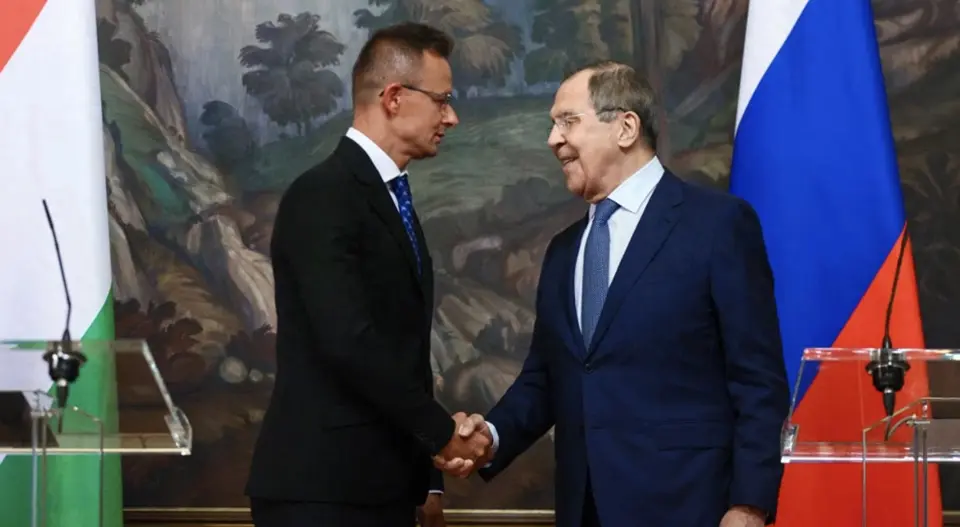
Hungarian Senior Official's Phone Call Exposed To Help Russia Circumvent EU Sanctions

In one of the calls, Szijjarto was also heard promising Russian Deputy Energy Minister Pavel Sorokin that he would fight EU sanctions and boasting that he had helped remove 72 of the 128 entities on the list – he even further sought Sorokin's opinion on how best to package the move as a "fight for Hungary's interests."

Details of the call were released by the investigative news agency Central Europe. These calls and transcripts have been obtained and verified by other investigative news organizations.

The disclosure comes ahead of the April 12 elections in Budapest, after Hungary's opposition accused Szijjjjjjjjjjjjjjjjjjjjjjjjjjjjjjjjjjjjjjjjjjj.com.cn of leaking sensitive EU meeting minutes.

"I am always at your command"

In a call dated August 30, 2024, just an hour after Szijjarto returned to Budapest from a visit to St. Petersburg, Lavrov can be heard asking Szijjarto for help in removing the sister of a Russian oligarch from the EU sanctions list.

"That's right, I called on Alisher's behalf. He just wanted to remind you that you were making some efforts for his sister's affairs." Lavrov said, referring to the Russian-Uzbek oligarch Alisher Usmanov and his sister Gulbahor Ismailova.

_匈牙利外长与俄外长通话录音泄密:我随时听候差遣,对抗欧盟制裁_匈牙利外长与俄外长通话录音泄密:我随时听候差遣,对抗欧盟制裁

Szijjártó promised to unite Slovakia – which, like Hungary, has been pursuing Russian energy despite an EU ban – to jointly fight the sanctions by submitting a proposal to the EU.

"Yes, of course," Szijjártó said, "What is happening is that together with the Slovaks we are submitting a proposal to the EU to remove her from the list. We will submit it next week and as the new review period is about to start, the matter will be on the agenda and we will do our best to get her off the list."

Before hanging up, Szijjarto told Lavrov: "I'm always at your disposal," after recounting his visit to Gazprom's headquarters.

Seven months after the call, Ismailova was eventually removed from the EU sanctions list, along with Russian businessman Vyacheslav Moshe Kantor and Russian Sports Minister Mikhail Degtyaryov.

An unnamed EU diplomat told the media that Hungary often submitted long delisting lists of individuals and threatened to derail broader sanctions extensions until the lists were eventually whittled down to just a handful of names.

friendly chit-chat

Before making the request, Lavrov can also be heard telling Szijjártó that he was "walking around" after his trip to St. Petersburg, with Szijjártó reportedly asking "nervously" if he had "said something wrong."

Lavrov later reassured him that the Russian media portrayed him as a man who "pragmatically fights for national interests."

During the call, the two men also bonded over their shared disdain for the EU, pointing the finger at former High Representative for Foreign Affairs and Security Policy Josep Borrell. Lavrov commented that Borrell was more "reasonable" towards Moscow when he was Spain's foreign minister, and satirized the EU for often overriding the national interests of its member states.

"So you can't, you can't say your country, but you have to say your gender, right?" Lavrov asked.

"Every generation has a Kim Philby"

The call also confirmed earlier accusations by the Hungarian opposition that Szijjjártó informed Lavrov of the EU meeting despite Budapest’s denials.

During the call on August 30, Szijjártó also revealed details of the EU Foreign Affairs Council meeting just one day earlier. These details were confirmed by Gabrielius Landsbergis, the former Lithuanian Foreign Minister mentioned by Szijjártó.

"That's crazy, you know, when Landsbergis said we contributed 12 percent to every rocket and missile," Szijjártó can be heard telling Lavrov.

"I say, friend, you're not right, because the Europeans contribute much more… It's not just Slovakia and us buying gas and oil directly from Russia, you all buy the same from them through… India, Kazakhstan," he added.

Landsbergis confirmed that the encounter was real and described Szijjártó as the Russian mole.

"I can confirm that this was a real exchange at a certain Foreign Affairs Council. It seems that Russian leader Vladimir Putin has and still has a mole in all official European and NATO meetings," Landsbergis told the outlet.

"It is appropriate to exclude Hungary from all meetings if the integrity of these meetings is to be preserved. Every generation has a Kim Philby," he added, referring to the British intelligence officer who served as a double agent for the Soviet Union during the Cold War.

Asking Russia for arguments to fight EU sanctions

In a phone call with Moscow Deputy Minister of Energy Sorokin on June 30, 2025, Szijjarto was also heard resisting EU energy sanctions on behalf of Sorokin.

Sorokin asked why Budapest was excluded from sanctions discussions against 2River, a Dubai-based company that transports sanctioned Russian oil. Szijjarto explained that the EU determined that this did not affect Hungary's interests because Hungary is a landlocked country.

“Because they said they could not identify clear Hungarian interests, Hungary could not legally ask that they be removed from the list,” Szijjártó said.

Szijjarto also informed Sorokin of the EU's 18th round of sanctions, saying that Budapest and Bratislava had managed to put it on hold until the EU "allows us to continue buying Russian gas and oil."

Szijjártó then told Sorokin that he was working to block the entire sanctions package and boasted that he had successfully removed dozens of entities — before asking Sorokin for advice on how to construct a case to convince the EU.

"I am trying my best to get it repealed. The problem is that I have removed 72 entities from the list, but there were originally 128. I am trying to continue, but I must say, this is for the benefit of Hungary," he said.

"If they Sorokin's team can help me identify a direct negative impact on Hungary, I would be very grateful," he added, "because if I can show something like that, you will give me a completely different opportunity."

Diplomatic standoff with Kiev

Hungarian Prime Minister Viktor Orban, long criticized for his ties to the Kremlin, has received the support of U.S. President Donald Trump in the upcoming election.

Orban – whose ruling party currently trails the opposition in opinion polls – has echoed the Kremlin's rhetoric, blaming Ukraine for the war, insisting Russian energy is vital to Hungary's survival and claiming that supporting Kyiv would drag Europe into war – the latter a central campaign theme ahead of upcoming elections.

Budapest is also locked in a diplomatic standoff with Kiev over the transport of Russian oil through the Friendship pipeline – vetoing a crucial 90 billion euro (731.547 billion yuan) EU loan for Kyiv at the last minute, after Kiev said the pipeline was damaged by Russian attacks.

Days after Szijjarto met Putin in Moscow, Budapest also seized two armored cash trucks operated by Ukrainian state-owned Oshadbank that were transporting cash between Ukraine and Austria and through Hungary.

While Hungary's opposition has vowed to eliminate Russian influence in Budapest, it aligns with Orban's government on immigration and EU enlargement and opposes accelerating Ukraine's EU membership. Unnamed EU diplomats expressed skepticism that an opposition victory would bring about a substantive shift, suggesting any changes might be more in tone than policy.

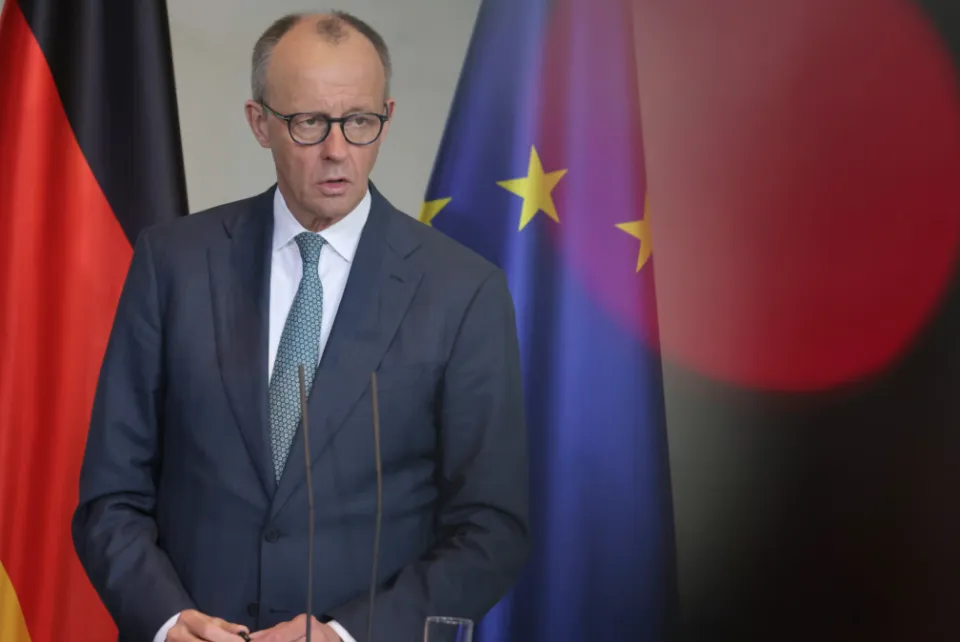
German Chancellor Mertz's Approval Rating Plummets, With Only 15% Of People Satisfied

德国股市暴跌_德国货币贬值1923年_

Merz's popularity sinks to new lows as German government support collapses

Only 15% of the people support the Mertz government, and dissatisfaction has reached an alarming level.

德国货币贬值1923年_德国股市暴跌_

German Chancellor Mertz | Source: Michel Tantusi/Getty Images

According to the results of an ARD-DeutschlandTrend poll released on Thursday, support for the government led by German Chancellor Friedrich Mertz has fallen to a record low, with only 15% of voters satisfied with its performance in office.

The figure – down 9 percentage points since early March – shows that a whopping 84% of Germans are dissatisfied with Mertz's coalition government.

The government is composed of Merz's center-right Christian Democratic Union, its Bavarian sister party the Christian Social Union, and the center-left Social Democrats.

Dissatisfaction is mainly reflected in the fact that two-thirds (66%) of Germans feel that the burden of taxes and social security contributions is too high; 28% think the burden is moderate, and only 1% think the burden is low. The highest rates of feeling overburdened are among younger people: 72% of those aged 18 to 34 feel overburdened, and 56% of those aged 65 and older.

Supporters of the Alternative for Germany (AfD) party feel the greatest burden: 87% believe personal income tax and social security contributions are too high. Only Green Party supporters generally believe their tax burden is reasonable (63%).

Among the statutory health insurance reform proposals put forward by the German Federal Ministry of Health at the beginning of this week, the proposal to strengthen taxes on alcohol, tobacco, sugary drinks and other substances that are harmful to health has won the majority of public support.

However, Germans are equally vocal in their opposition to raising out-of-pocket costs for medicines and treatments, eliminating free co-insurance for spouses, and limiting reimbursements to clinics and hospitals.

On an individual level, Merz, who took office as chancellor in May last year, performed only slightly better than his government – only 21% of voters said they were satisfied with his personal performance – an approval rating that was only slightly higher than the record low of 20% set by his predecessor Olaf Scholz.

These dismal approval ratings reflect growing dissatisfaction with a government that has made frequent mistakes and is under increasing internal pressure.

Merz's hardline turn on immigration – including this week's suggestion that up to 80% of Syrian refugees should leave Germany – has triggered a backlash within his governing coalition.

“Who will work after they leave?”: Mertz’s remarks about deporting nearly one million Syrians drew condemnation from both the government and the opposition

Mertz has also been widely criticized for trying to reach a deal with the Taliban to deport migrants to Afghanistan and implement tighter border controls, among other measures.

The former businessman also failed to win over voters with his economic platform.

He came to power promising to modernize Germany and stimulate growth through a 500 billion euro spending plan, but progress on reforms has been slower than expected and the unemployment rate has climbed to 6.6% – the highest level in more than a decade.

The political consequences of discontent are clearly evident. The Christian Democrats suffered a crushing defeat in the regional elections in Baden-Württemberg in early March, and the far-right Alternative for Germany (AfD) is now neck and neck with the conservative forces led by Mertz in the polls.

For Merz, the only consolation in the poll results is that his party performed slightly better than its center-left coalition partners – only 13% of Germans approved of the Social Democratic Party, and the proportion of people who supported the party's co-chairman, Deputy Prime Minister and Finance Minister Lars Klingbeier was as low as 18%.

The dismal support reflects the SPD's heavy defeat in the Baden-Württemberg state election, where the party received only 5.5% support, as well as its defeat in Rhineland-Palatinate, where it has been in power for 35 years.

On the eve of two key state elections in eastern Germany, polling data bodes ill for both the Social Democrats and the Christian Democrats – with the Alternative for Germany leading the polls.

Faced with a government that appears to have lost the trust of German voters, pressure is growing on Merz to stabilize the situation.

Published in: Politico·European Edition

https://www.politico.eu/article/friedrich-merz-popularity-sinks-new-lows-germany-government-support-collapses/

Compiled by: 24-hour Observatory

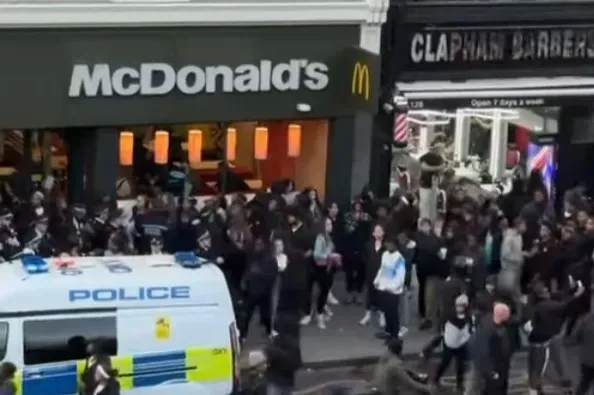
Riots On Main Street In Clapham, South London: Teenagers Caused Chaos And Many Shops Were Forced To Close

英国数十蒙面青年冲进街区:疯狂掠夺数十家商铺,现场乱作一团警察紧急封锁__英国数十蒙面青年冲进街区:疯狂掠夺数十家商铺,现场乱作一团警察紧急封锁

A gang of lawless teenagers descended on the main street of Clapham, south London, on Tuesday afternoon, causing chaos in a number of shops and forcing local businesses to close early. Videos circulating on social media captured shocking scenes of groups of teenagers running rampant in the streets as police rushed to the scene and struggled to restore order.

Affected by the riots, the Marks & Spencer food store on Main Street was forced to close early for fear of being targeted again – just last weekend, the store had just suffered a similar "flash mob" riot, which resulted in two arrests. In addition, chain stores such as Waitrose, Sainsbury's and McDonald's have also closed. According to reports from the scene, some terrified families were even trapped inside a Sainsbury's supermarket and unable to escape as the mob took control of the main street.

英国数十蒙面青年冲进街区:疯狂掠夺数十家商铺,现场乱作一团警察紧急封锁__英国数十蒙面青年冲进街区:疯狂掠夺数十家商铺,现场乱作一团警察紧急封锁

Incredibly chaotic scene

The bewildered police officers were outnumbered by the large group of teenagers. Local traffic was brought to a standstill as rioters swarmed onto carriageways. The chaos was not limited to the business district, as multiple fires broke out in Clapham Common, forcing police officers to race against time to put them out while maintaining order.

Despite the police's desperate attempts to disperse the crowd, most of the rioters stayed put and refused to leave. London's Metropolitan Police later confirmed that two girls had been arrested on suspicion of assaulting emergency workers and taken to custody.

Comments on social media suggested the large gathering was no accident but a pre-arranged operation. Many participants referred to it as "Clapham Court House or simply 'Clapham Court'".

英国数十蒙面青年冲进街区:疯狂掠夺数十家商铺,现场乱作一团警察紧急封锁_英国数十蒙面青年冲进街区:疯狂掠夺数十家商铺,现场乱作一团警察紧急封锁_

Strong police intervention

In response to this egregious act of disrupting social order, a police spokesperson told The Sun: "Police officers have arrived at the scene and have issued a strong dispersal order. This means that all gatherings in the area must leave immediately. At present, police officers will continue to stay in the area to provide support and respond to the concerns of local residents and businesses."

In fact, this is the second such incident in the area in a short period of time. Just last Saturday, there was an out-of-control scene on the streets of Clapham: more than 100 teenagers caused a riot in Marks and Spencer, causing great panic. During the chaos, a 15-year-old girl was arrested on suspicion of theft and assault, and two 16-year-old girls were taken away by the police for violating the dispersal order.

Video from the scene showed more than 20 teenagers wearing hoodies or hats pushing each other in the frozen food aisle, while police tried to calm the situation through gentle evacuation. Videos of these riots went viral on the Internet, with many netizens directly denouncing them as the epitome of "lawless London." It is understood the group of teenage thugs also attempted to attack several other shops in the area.

Japan's Oil Is In Danger! If The Strait Of Hormuz Is Blocked For A Month, How Long Can The Government Hold On?

日元贬值叠加原油暴涨,日民众叫苦连天:连百元店都要逛不起了__日元贬值叠加原油暴涨,日民众叫苦连天:连百元店都要逛不起了

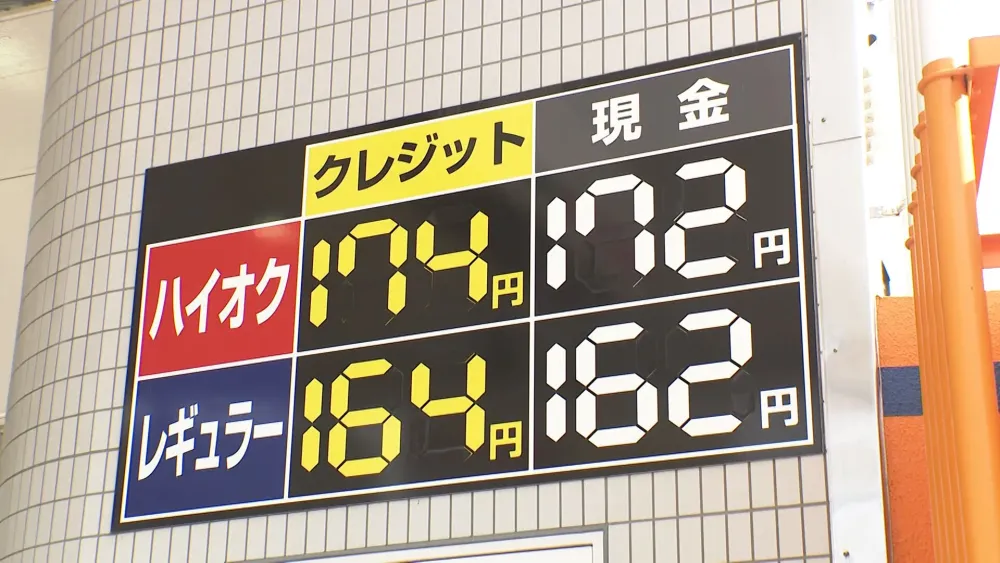
The Strait of Hormuz, the "lifeline" of Japan's economy and energy, has been closed for a month. For Japan, which relies heavily on the Persian Gulf for about 90% of its crude oil imports, this is undoubtedly a severe test that threatens the country's survival. Faced with such a turbulent international situation, the Japanese government not only used its extremely precious national strategic oil reserves, but also continued to spend money to issue subsidies in an attempt to forcefully suppress domestic gasoline prices to a level of 170 yen per liter. In this regard, Masatoshi Kojima, a senior scholar who is well versed in the global oil circulation system, issued a stern warning: If such short-sighted intervention policies continue to be implemented, a crisis that truly destroys the Japanese economy will surely follow.

Throughout history, the Strait of Hormuz has never faced such a lengthy and complete blockade. Even during the "Iran-Iraq War" that broke out in 1980 and lasted for eight years, although more than 400 passing ships were damaged in the war and the cost of marine insurance was extremely high, this throat that guarded the lifeline of global energy was never completely cut off.

As far as the current situation is concerned, even if the blockade of the Strait of Hormuz lasts for one to two months, judging from the book volume alone, with the huge oil reserves accumulated by the Japanese government and private sector over the years, the domestic basic energy supply should not experience a cliff-like collapse in the short term.

日元贬值叠加原油暴涨,日民众叫苦连天:连百元店都要逛不起了_日元贬值叠加原油暴涨,日民众叫苦连天:连百元店都要逛不起了_

At present, the Japanese government has launched an emergency plan to release crude oil reserves. The total reserves, including state and private sector, were originally sufficient to sustain national consumption for about 250 days (equivalent to about eight months). Looking back at history, Japan's largest previous release of oil reserves occurred during the Great East Japan Earthquake, when only reserves equivalent to 25 days of nationwide consumption were used. However, if the blockade of the Strait of Hormuz exceeds four months in total, Japan's strategic reserves will fall directly below the safety red line and fall to less than half of the total reserves.

By then, the Japanese government may have no choice. Not only will it be forced to introduce mandatory oil production reduction measures, it may even issue an administrative order calling on all citizens to reduce non-essential outing activities, in order to forcefully compress domestic energy demand. There is no doubt that this extreme flow restriction measure will have an extremely profound and widespread impact on the daily operations of Japanese society.

What is puzzling and worrying is that at a time when the crisis is approaching, the Japanese government is still obsessed with maintaining terminal gasoline prices at a relatively low level through large-scale financial subsidies. This approach has great hidden dangers at the institutional level. It can easily further accelerate the collapse of the yen exchange rate due to the intensification of the national fiscal deficit; but the more fatal danger is that this move of the government is actually sending the wrong signal to the market. Not only does it fail to guide consumers to save energy, but it condones the unnecessary consumption of oil to a certain extent. If things go on like this, this approach, which goes against economic laws and strategic common sense, will surely turn into a huge disaster that is difficult to deal with.

日元贬值叠加原油暴涨,日民众叫苦连天:连百元店都要逛不起了_日元贬值叠加原油暴涨,日民众叫苦连天:连百元店都要逛不起了_

Most of the merchandise at 100-yen stores will be affected

As we all know, crude oil is transformed into a wide variety of derivative products after undergoing complex modern refining processes, and these products play three irreplaceable core roles in supporting modern human life.

First of all, it is the fuel cornerstone that drives global transportation arteries, of which "gasoline", which is indispensable for cars, ships, and aircraft, is a typical representative. Secondly, it is the heating blood that maintains survival in cold areas, such as "kerosene" and "heavy oil" necessary for the operation of heating equipment and industrial boilers. The third point, which is easily ignored by the public but the most fatal link, is the existence of "naphtha" (i.e. light oil). It is the absolute bottom raw material for manufacturing almost all modern industrial products such as plastics, ethylene, and propylene.

As long as we pay a little attention, we will find that from the plastic bags used in daily shopping, food packaging containers in supermarkets, to sophisticated personal computer casings, and even the auto parts that support the huge manufacturing industry, modern society is essentially a world completely wrapped in petrochemical plastic products. Once the source of raw materials for these industrial products encounters a supply crisis, the life order we are accustomed to will be paralyzed in an instant. Therefore, experts assert that “Once the supply chain breaks, most of the cheap goods on the shelves of 100 yen stores will be affected or even wiped out.” This is by no means alarmist, but an inevitable deduction based on cold industrial logic.

However, at a critical moment when Iran's geopolitical crisis is like a bottomless black hole and its prospects are extremely unpredictable, the Japanese government is still using huge subsidies to encourage the public to consume gasoline in disguise and blindly consume extremely precious strategic oil reserves.

nightmare scenario

In the modern industrial system, the position of naphtha is absolutely irreplaceable. As mentioned above, it is the backbone that supports the operation of the entire Japanese manufacturing industry. Based on bottom-line thinking, in order to prevent the risk of extreme supply cuts that may come at any time, the Japanese government had room to adopt a more prudent policy – that is, to strongly curb the excessive consumption of gasoline by the private sector, and to urgently divert the saved precious oil reserves to ensure a stable supply of naphtha.

To make matters worse, Japan's domestic industrial structure appears particularly vulnerable in the face of such a crisis. Although almost 100% of the terminal gasoline refined from crude oil is locally produced in Japan, naphtha, the lifeblood of the industry, has long maintained an astonishing 60% dependence on imports. The fundamental reason is simply that the cost of preliminary refining and production of naphtha overseas is much lower than that in Japan.

What’s even more deadly is that Japan is highly dependent on imports of naphtha from the Middle East. Data shows that Japan directly imports about 50% of its naphtha from Arab oil-producing countries such as the United Arab Emirates, Kuwait, and Qatar. In addition, South Korea and India are also important import sources. However, in today's extreme situation where the global energy supply chain is facing severe shocks and South Korea and India are overwhelmed with their own crude oil supplies, these two neighboring countries are bound to categorically reject Japan's purchase request out of "domestic priority" considerations and on the grounds that "they have too much time to take care of themselves, why export to Japan."

To take a step back, even if the Japanese Ministry of Foreign Affairs and trading companies can miraculously find alternative procurement channels from other corners of the world, skyrocketing premiums and transportation costs are absolutely unavoidable. Once the dominoes fall, the high cost of raw materials will be ruthlessly passed on to the price tags of end consumer goods, triggering hyperinflation across society. For Japan, this is a stifling dilemma.

If those in power continue to slide down this wrong path into the abyss, history will inevitably repeat itself. Just as when the first oil crisis broke out in 1973, the "price surge" that swept across the country completely ended Japan's proud post-war myth of rapid economic growth; we have every reason to believe that if the current absurd energy response policies are not fundamentally corrected, the "nightmare scenario" that once destroyed the wealth and confidence of a generation will once again turn into a cold reality.

Newly Appointed UN Resident Coordinator In China, Irish National Jesse Heng, Takes Office

China News Service, Beijing, April 2. According to the official website of the United Nations and the United Nations system in China, United Nations Secretary-General Guterres has appointed Irish official Stephen Jackson as the United Nations Coordinator in China. His term will begin on April 1. Chang Qide, the former United Nations Resident Coordinator in China, said that he will stay in China after "retirement".

The United Nations Resident Coordinator in China is the highest-level permanent representative of the United Nations in China. He is responsible for coordinating the work of the United Nations country team in China, coordinating the resources and projects of various agencies, aligning with the Chinese government's national development priorities, implementing the Sustainable Development Goals, and promoting cooperation with partners.

The appointment notice pointed out that Jie Siheng has more than 30 years of experience in the fields of international development, peacebuilding and humanitarian affairs, and has achieved outstanding results in leading United Nations country teams and promoting strategic cooperation with host governments to advance national development priorities.

According to the announcement, Jie Siheng once served as the resident coordinator of Kenya and Gabon. During his tenure in the Department of Political Affairs, he served as Director of the Policy Planning and Guidance Branch, Head of the Secretariat of the 2015 United Nations High-level Review of Peacebuilding, and Head of the Mediation Support Group. While serving as Chief of Staff of the United Nations Office in Burundi, he was responsible for the Policy Planning Branch and the African Great Lakes Region Team, and also served as Special Advisor to the United Nations Secretary-General’s Special Envoy for the Great Lakes Region. At the United Nations Department of Peace Operations, he served as Senior Political Advisor to the United Nations Mission in the Democratic Republic of the Congo.

Before joining the United Nations system, Jie Siheng worked at the American Social Science Research Council and the National University College Cork in Ireland. Earlier in his career, he worked in humanitarian relief and development in Angola, Rwanda and Somalia.

Jie Siheng holds a PhD in cultural anthropology and a master's degree in public affairs from Princeton University in the United States, and a bachelor's degree in mathematics from Trinity College Dublin, Ireland.

On March 31, Chang Qide, the former United Nations Resident Coordinator in China, ended his five-year term and announced his "retirement" in Beijing. He said that he will choose to stay in China, teach at Tsinghua University, and offer courses on the theme of "China and the World". He is also preparing to write a book and join a think tank.

The United States Wants To Run Away After Attacking Iran, And The Whole World Will Bear The Consequences

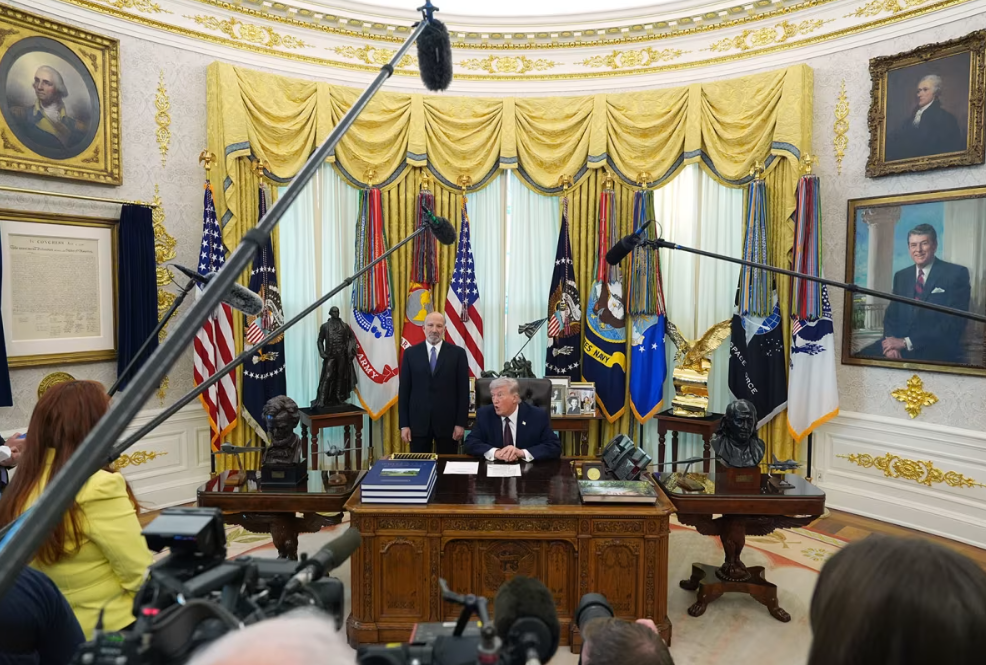
According to a report by CNN on April 1, the Trump administration has given a clear turning signal in the direction of the war with Iran. He seems to be ready to withdraw directly from this conflict that has attracted global attention, but leaves the subsequent costs and turmoil of the war to the entire world. This war, initiated unilaterally by the Trump administration, has been full of controversy from the beginning, and its hasty ending will not only profoundly affect the international status of the United States, but will also have immeasurable ripple effects on the global economy, geopolitical landscape, and the U.S. alliance system.

At the beginning of the war, the United States' European allies chose to stay out of the war. The core reason was that the Trump administration did not provide any advance notice to the allies before launching the war, and the allies generally believed that the war lacked a reasonable basis and seriously violated international law. Faced with the uncooperation of his allies, Trump showed strong dissatisfaction and publicly put pressure on these allies. He even made a strong statement on the "Real Social" platform: "Go and get oil yourself." He bluntly dumped the consequences of the war on those allies who were not involved in the war.
_特朗普对伊朗政策_特朗普对伊朗的制裁

What is even more noteworthy is that the Trump administration began to release “troop withdrawal” signals when the direction of the war was not yet clear and the core issues were not resolved. It is reported that the US government plans to declare "mission accomplished" without committing to restoring free navigation in the Strait of Hormuz. Trump himself has publicly predicted that the war will end in "two to three weeks" and even made it clear that "what happens in the Strait of Hormuz has nothing to do with us." Behind this eagerness to withdraw is the Trump administration's consideration of domestic political and economic pressures, but it completely ignores the far-reaching impact that the war may have on the world.

According to reports, the Strait of Hormuz, as the chokepoint at the entrance to the Persian Gulf, controls about one-third of the world's oil shipping channels, and its strategic position is crucial. Since the outbreak of the war, Iran has made full use of this geographical advantage to cut off key oil supplies and put the global economy under its control as an important bargaining chip against the United States. If the Trump administration really withdraws its troops hastily without resolving the issue of control of the Strait, leading to Iran finally taking full control of the Strait of Hormuz, Iran will gain a major strategic victory, and this will undoubtedly be a public strategic defeat for the United States.

Reports say that once Iran controls the Strait of Hormuz, it will definitely take the opportunity to consolidate its position and expand its influence. On the one hand, Iran will declare victory in the war in a high-profile manner to further strengthen domestic cohesion. At the same time, it will also believe that it has rebuilt its deterrence against future external attacks and may boldly advance its military, missile and even nuclear programs in the future. After all, related facilities destroyed by US-Israeli air strikes during the war require a lot of money to rebuild, and control of the Strait of Hormuz will provide Iran with a stable source of income. Iran is very likely to turn control of the strait into economic benefits by imposing tolls on oil tankers passing through this route, thereby providing financial support for its various military plans. This will undoubtedly bring new threats to regional security and the global nuclear non-proliferation system.

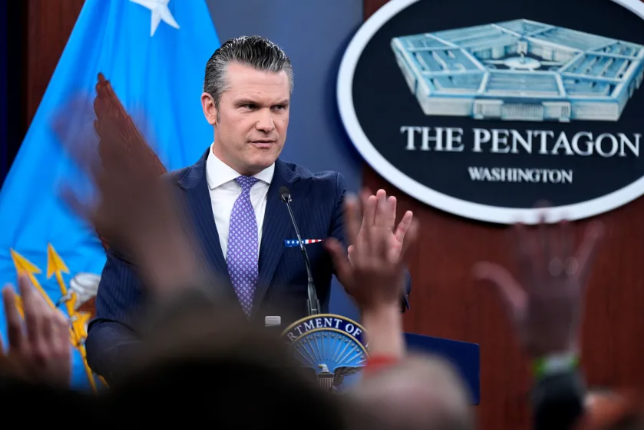
In order to find reasonable excuses for Trump's hasty troop withdrawal, U.S. government officials began to deliberately redefine the criteria for "war victory" in an attempt to create cover for public opinion. U.S. Defense Secretary Hegseth publicly declared on Tuesday that the United States has achieved "regime change" in Iran. However, this statement is obviously seriously inconsistent with the facts. Iran is still ruled by Islamic radical forces hostile to the United States, and the regime structure has not undergone any substantive changes. Behind this self-deceptive statement is the helplessness and passivity of the Trump administration after the war reached a stalemate: more than a month since the war broke out, the United States has not only failed to achieve its expected goals, but has faced increasing internal and external pressure. The initial four-to-six-week war deadline set by officials has also made the Trump administration's decision to withdraw troops more urgent.
_特朗普对伊朗的制裁_特朗普对伊朗政策

Previously, Trump claimed that the United States was conducting "productive" negotiations with Iran, trying to send a signal to the outside world that "the war is about to be resolved peacefully." However, this statement was quickly denied by Tehran officials, and there is no public evidence to prove that there is effective diplomatic communication or any diplomatic progress between the United States and Iran. Obviously, Trump's statement is more of a political rhetoric to appease the American people and ease political pressure. It cannot change the reality that the war has reached a stalemate and subsequent problems are difficult to solve.

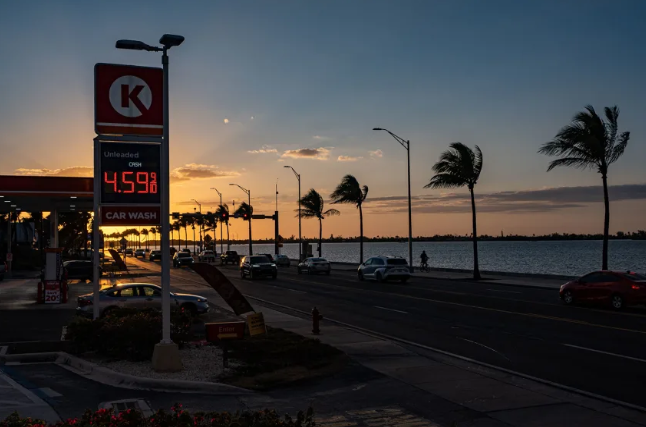
The report believes that the core reason why Trump is eager to end the war with Iraq is that domestic economic and political pressure has reached an unbearable level. Currently, the American people are tired of the continued high prices, and the continuation of the war has further intensified the economic pain. Data on Wednesday showed that the average price of gasoline across the United States has risen to US$4.06 per gallon (approximately 7.4 yuan/liter), setting a new single-month high. At the same time, the latest polls show that Trump’s economic support rate has dropped to 31%. This low support rate has made Trump passive in domestic politics. For him, a ceasefire as soon as possible to avoid further deterioration of the economic situation is the key to safeguarding his own political interests, and it is also the core driving force behind his hasty withdrawal.
特朗普对伊朗政策__特朗普对伊朗的制裁

Although a hasty withdrawal of troops can temporarily relieve domestic pressure in the United States, the Trump administration is clearly aware that this approach of "withdrawing without cleaning up the mess" will bring serious strategic consequences to the United States. After all, if Iran controls the Strait of Hormuz, the international community will generally regard it as a strategic failure of the United States, which will severely weaken the United States' influence in the Middle East and even shake its global hegemony. But for Trump, this may be the most desirable outcome at present – because if he chooses to use force to reopen the Strait of Hormuz, it may not only cause heavy casualties to the US military, but also prolong the war cycle, further aggravate the dissatisfaction of the domestic people, and ultimately completely destroy his already damaged political authority. This choice of the lesser of two evils is essentially a reflection of Trump prioritizing his own political interests while ignoring the long-term national interests and global responsibilities of the United States.

In fact, Trump's hasty withdrawal may seem like an attempt to "get out of the quagmire of war," but in fact he is passing on the consequences of his own decisions to the entire world, and he himself cannot truly escape the backlash brought about by his decisions. Judging from Trump's usual style of acting, he is better at destroying the existing international order than establishing a new stable system. The hasty ending of the war with Iraq is a concentrated expression of this style. At the same time, this further extends the "America First" principle he has always adhered to. In his logic, all actions of the United States should be centered around its own core interests. As for the interests of its allies and global stability, they are only secondary considerations and can even be sacrificed. In addition, this decision also vented Trump's long-term dissatisfaction with NATO allies. In his view, these allies have been "squeezing" the United States' security guarantees but are unwilling to provide support to the United States at critical moments. Therefore, letting them bear the consequences of the war on their own is "natural" in his eyes.

The article stated that the reality is that the United States is not isolated from the world, and the Trump administration’s decisions will inevitably trigger a series of unavoidable economic and political chain reactions. As Rosemary Kelanik, director of the Middle East Studies Project at the Defense Priority Think Tank, said: "Although the United States is the world's largest oil producer, this cannot protect American consumers from the impact of oil prices, because oil prices are global. Therefore, the American people and everyone in the world will be affected by this supply shock." The obstruction of navigation in the Strait of Hormuz has led to a serious gap in global oil supply, and oil prices have continued to soar. If Iran controls the strait for a long time, this supply shock will be further intensified and may even trigger a global economic recession.

What is even more alarming is that once the wave of global economic recession forms, it will eventually spread to the United States. This time point is likely to coincide with the eve of the U.S. mid-term elections. The Democrats are hoping to use the opportunity of the mid-term elections to win a big victory and thereby restrict Trump's power in his second term. If the economic situation deteriorates further, Trump's political situation will become more difficult and may even affect his re-election prospects. This also means that Trump’s attempt to ease domestic pressure through a hasty withdrawal of troops may ultimately backfire and put him in greater political trouble.

In addition to its impact on the global economy, Trump's decision will also have a profound impact on the global geopolitical landscape, the most obvious of which is the further fragmentation of the transatlantic alliance. The transatlantic alliance has long been an important pillar of U.S. global strategy, but a series of actions by the Trump administration have already caused cracks in this alliance. The hasty withdrawal of troops from the war with Iran has pushed these cracks deeper. As one of the most pro-NATO figures in Trump's inner circle, US Secretary of State Rubio's statement on Al Jazeera this week has even sounded the alarm. He made it clear that the response of U.S. allies to the war was "very disappointing" and suggested that after the war is over, Trump will "reevaluate" security commitments to these allies.

This statement made European allies deeply aware that in the unpredictable era of Trump's administration, they can no longer rely unconditionally on U.S. security guarantees. The U.S. president has clearly linked the U.S.'s security commitments to "unconditional support for its actions." Once allies fail to cooperate, they may be abandoned. This uncertainty has forced European allies to re-examine their security strategies, and has also put the future of the transatlantic alliance in jeopardy. In fact, European allies have been dissatisfied with the Trump administration for a long time: In the past year, Trump has continuously rebuked allies, demanded that Denmark cede Greenland, launched tariff attacks on Europe, and despised the sacrifices made by European allies for the United States after 9/11. These behaviors have chilled European allies and made them gradually lose trust in the United States.
_特朗普对伊朗政策_特朗普对伊朗的制裁

The report said that in this war with Iraq, the attitudes of European allies fully reflected this distrust and dissatisfaction. As a traditional ally of the United States, the United Kingdom initially refused to let the United States use its air bases to carry out offensive missions in Iraq. Spain took a tougher stance and directly refused to participate in any war-related operations. Faced with the lack of cooperation from European allies, Trump showed strong anger. He not only criticized the "special relationship" between Britain and the United States, but also threatened to cut off all trade with Spain. He even said that he was considering withdrawing from NATO and called the alliance a "paper tiger." He also added that Russian President Vladimir Putin agreed with him. These remarks and actions by Trump have further aggravated conflicts with European allies and made it difficult to heal the rift in the transatlantic alliance.

For Europe, Trump's hasty withdrawal means that they will have to bear a series of costs of the war alone, even if they are not involved in the war. First, high energy prices and rising inflation will deal a heavy blow to Europe's fragile economies. Currently, the economies of many European countries are still in the recovery stage, and the surge in energy prices will directly push up production costs, suppress consumer demand, and may even lead to economic recession in some countries. At the same time, the intensification of inflationary pressure will also trigger dissatisfaction among voters, causing political backlash against the already weak European centrist governments, and may even trigger social unrest. At present, some EU countries have begun to discuss the rationing of gasoline and diesel, which also reflects the seriousness of the energy crisis.

Secondly, Europe is also facing the potential threat of the refugee crisis. If Iran's central government collapses due to the war and the domestic situation becomes turbulent, it is likely to trigger another large-scale refugee flow, and most of these refugees will flock to European borders. This will further test the financial strength and social tolerance of European countries, and intensify cultural and political differences within Europe. The previous refugee crisis has caused serious divisions within Europe, and the new refugee flow will undoubtedly make this problem worse.

The more realistic problem is that European countries simply cannot "get oil on their own" as Trump requires. For a long time, European countries have been committed to reducing military expenditures, resulting in a significant shrinkage of military strength. This war with Iraq has also fully exposed the shortcomings of European military strength. It took the British Royal Navy several weeks to deploy an anti-missile destroyer off the coast of Cyprus to protect its assets in the Middle East. Although France managed to dispatch an aircraft carrier battle group to protect its own interests and those of its allies in the Middle East, it was impossible to open and maintain navigation in the Strait of Hormuz with the strength of European countries alone. Even the powerful U.S. Navy currently considers it too dangerous to enter the range of Iranian drones and missiles, let alone European countries with shrinking military strength. This also means that Europe will be subject to Iran’s control of the Strait of Hormuz for a long time and face continued energy security threats.

It should be noted that Trump's remarks should never be taken at face value. His public statements are often highly strategic and even a means to force his opponents to compromise. Just the day before the United States released a signal to withdraw its troops, Trump also issued a tough warning: If Iran does not meet its peace conditions, he will take extreme measures to escalate the war, destroy Iran's power plants and even desalination facilities, and carry out a devastating blow to Iran. This inconsistent statement exactly reflects Trump's style of doing things: exerting pressure through extreme remarks, and then seeking the most beneficial results for himself through compromise and concessions.

Rubio's statement also confirmed this from the side. He said last Friday: "All countries in Asia and the world have a stake and should make significant contributions to the reopening of the Strait of Hormuz." This statement seems to be calling on all countries to participate together, but in fact it is a strategy of the Trump administration trying to shift the responsibility for solving the Strait issue to other countries, while itself taking the opportunity to withdraw. After all, the Trump administration knows that it is difficult for the United States alone to resolve the issue of control of the Strait of Hormuz, and involving other countries can not only share the pressure but also find reasonable excuses for its own withdrawal.

At present, neither the United States nor Iran seems to have a clear "exit path", and the follow-up direction of the war is still full of uncertainty. However, there may be a glimmer of hope for the United States' European allies in their confrontation with Trump. In fact, Europe is not without its role. Some European countries have mine clearance capabilities that the United States lacks, which is crucial in the process of opening the Strait of Hormuz. France has made it clear that it is willing to form an international mission with the navies of other countries after the armistice to jointly protect shipping safety in the Strait of Hormuz. This statement not only reflects Europe's desire to maintain its own energy security, but also leaves a little room for the repair of transatlantic relations.

Stephen Flanagan, former senior director for defense policy and strategy at the National Security Council, said at a Middle East Institute briefing on Tuesday: "I think they are still trying to avoid the U.S.-Iran disagreements from causing a permanent rupture in the transatlantic relationship, but it is getting harder every day in the face of Trump's fierce attacks on Europe's response so far." This statement accurately summarizes the current situation of European allies: On the one hand, they want to maintain the stability of the transatlantic alliance and avoid a complete breakdown of relations; on the other hand, they cannot accept Trump's unreasonable demands and are unwilling to be dragged into a meaningless war.

However, the Trump administration seems not to be satisfied with Europe's stance and is still putting pressure on European allies. U.S. Defense Secretary Hegseth publicly stated on Tuesday: "(Trump) pointed out that the usage rate of this international waterway by the United States is much lower than that of most countries, in fact much lower. So the world should pay attention and be prepared to stand up." The subtext of these words is very clear: The Trump administration believes that the safety of navigation in the Strait of Hormuz is closely related to all countries around the world, and the maintenance responsibility should not be solely shouldered by the United States. European allies and other countries should also assume more obligations and contribute to re-opening the strait.

However, European countries are generally opposed to Trump's request, and they have no intention of being dragged into another Middle East war initiated by the United States. In the eyes of European critics, not only is the reason for this war with Iraq questionable, but it also lacks any clear post-war planning. Even participating in it will not bring about a better situation, but will instead plunge Europe into a deeper crisis. German Defense Minister Pistorius’ question last month expressed the aspirations of European countries: “What does Trump expect a few European frigates to do in the Strait of Hormuz? Do they do something that even the powerful U.S. navy cannot do?”

特朗普对伊朗政策__特朗普对伊朗的制裁

Japan Deploys Thousand-kilometer Long-range Missiles In The Dark Night, Revealing Its Militaristic Ambitions Again

Entering the village quietly, no need to shoot, and taking advantage of the darkness, the Japanese Self-Defense Force deployed a long-range missile with a range of 1,000 kilometers to Kumamoto for the first time. However, the night cannot conceal Japan's ambition to expand its military and prepare for war. It is this weapon with the "capability to attack enemy bases" that completely tears off Japan's disguise! Focusing on defense and giving up the right to war are no longer obstacles in the eyes of this government. The evil spirit of militarism is howling to return to the world.

This Type 25 surface-to-ship missile is a "quasi-cruise missile" covering East Asia. Launched from the Kenjun garrison in Kumamoto Prefecture, within 1,000 kilometers, there are the entire Korean Peninsula, parts of the Russian Far East, the core area along the eastern coast of China, and the surrounding areas of northern Taiwan. Another Type 25 high-speed glide bomb deployed in Shizuoka has also started the development of an upgraded model, with a target range of 2,000 kilometers. In line with Japan's ongoing research and development of sea-based, air-based, and submarine-launched models, as well as the Ministry of Defense's public deployment plan, military experts have judged that its goal is to build an integrated land, sea, and air long-range strike system nationwide. Faced with doubts from international public opinion, the Japanese government’s so-called “to enhance deterrence” explanation is feeble. Such a range and plans for continued research and development have long exceeded the red line of “self-defense.”
From the "Taiwan incident" to the self-defense team members carrying knives and breaking into the museum, to the long-range missiles deployed in the dark night – from the wild dreams of careerists to the madness of a government, behind all the signs is the pressing step by step of "new militarism". Tokyo politicians represented by Takaichi misled the public with the "China threat theory" while covering their ears, pretending not to hear the protests of the domestic people and the doubts of the international community. Unfortunately, times have changed. Today's China is not the China of 1931, and today's Asia is no longer the Asia of those years. If right-wing politicians insist on running on the dangerous road, what will eventually explode will be the thunder hanging above their heads.

China's Financial Reform: From Unified To Dual-track Parallelism, Laying The Foundation For Economic Development

Why can China build the world's largest high-speed rail network and the world's leading 5G communication system? Why was China able to stabilize its position during the 1997 Asian financial crisis and the 2008 global financial crisis and avoid systemic economic crises? Why can Chinese companies go overseas smoothly and the “One Belt, One Road” initiative take root around the world? In "This Is China" broadcast on March 30, the host He Jie, Professor Zhang Weiwei, Dean of the China Institute at Fudan University, and Zhang Keliang, a researcher at the Central University of Finance and Economics, had an in-depth conversation, revealing the underlying financial logic behind China's economic boom that many people have ignored.

The year 1993 was a critical watershed for China's financial system to break the traditional pattern and embark on a modern transformation. Zhang Keliang said that before this, China's financial system in the era of planned economy had always been a "unified" structure of the People's Bank of China. One institution took over all functions of central bank management and commercial banking business. It was difficult to adapt to the wave of market economic development and to undertake the long-term funding needs of China's economic boom.

Zhang Keliang emphasized that it was this landmark reform that completely reconstructed China’s financial framework. On the one hand, three major policy banks, the China Development Bank, the Export-Import Bank of China, and the Agricultural Development Bank of China, have been specifically established to accurately undertake policy financial functions at the national strategic level; on the other hand, the policy businesses of the four state-owned banks of China Industrial and Peasant Construction Bank have been completely divested to promote their commercialization and market-oriented transformation, allowing the market to play a core role in capital allocation. This has established a dual-track parallel system in which "policy finance underpins the national strategy and commercial finance activates market vitality". China's finance has officially entered a new development stage of market-oriented allocation.

This financial system, which is rooted in China's national conditions and has been tested for thirty years, has become the core engine of China's economic growth, releasing development momentum that far exceeds expectations. Zhang Keliang said, first, it has laid a solid foundation for China’s infrastructure as a great power. As we all know, major infrastructure projects such as high-speed rail, highways, deep-water ports, and 5G communications have the characteristics of large investment scale, long construction period, and slow return of capital. They cannot be covered by short-term profit-seeking market capital alone. Our financial system, through syndicated loans and other models, has provided stable support for the huge capital demand of more than 200 billion for the Beijing-Shanghai high-speed railway, turning world-class infrastructure projects from blueprints into reality. These infrastructure networks extending in all directions have ultimately become the basis for cost reduction and efficiency improvement across the entire industry, allowing all Chinese companies to share development dividends.

Second, it protects Chinese enterprises’ globalization overseas. Zhang Keliang said that after joining the WTO, Chinese enterprises have continued to accelerate their pace towards the world, from the acquisition of high-quality overseas mineral resources and the acquisition of internationally renowned brands to the construction of infrastructure for countries in Asia, Africa and Latin America under the "One Belt, One Road" initiative. Many projects are located in areas that lack sufficient financial support. It is the special loans from policy financial institutions such as the Export-Import Bank of China that not only solve the problem of infrastructure financing for countries along the route, but also allow China's high-quality production capacity and high-end machinery and equipment to go abroad smoothly, achieving mutually beneficial and win-win two-way development.

Third, it opens up the capital bloodline for China’s scientific and technological innovation. In Zhang Keriang's view, from the continuous improvement of multi-level capital markets to the launch of the Science and Technology Innovation Board specifically designed for hard technology companies, China's capital market has provided long-term and stable financial support for technology innovation companies, allowing companies to get rid of the constraints of short-term profits and be able to invest in long-cycle, high-risk core technology research and development with confidence, laying a solid capital base for China's technological breakthroughs.

Fourth, it has the strong ability to smooth out economic cycle fluctuations and resist systemic risks. Zhang Keliang emphasized that the Western capitalist world has always been unable to escape cyclical economic and financial crises. With this financial system, China has used precise countercyclical adjustments during the two major impacts of the 1997 Asian Financial Crisis and the 2008 Global Financial Crisis. For example, the 4 trillion credit support launched in 2008 has successfully stabilized the basic economic fundamentals, minimized the impact of external crises, and maintained the bottom line of China's economic development.

Professor Zhang Weiwei’s additional comments clearly revealed the core value of China’s financial system. He said that we often say that the greatest advantage of China's system is to "concentrate efforts to accomplish big things", and the underlying logic of this ability is, first of all, the financial system's ability to coordinate and centrally allocate funds. We have never denied that China's financial system still needs room for continuous improvement and optimization. However, its most remarkable achievement is to fundamentally build an institutional system that can systematically avoid financial crises and prevent systemic economic crises. This is something that many Western countries have never been able to achieve.

Professor Zhang Weiwei said bluntly based on his personal experience in Europe during the 2008 financial crisis that even Switzerland, which was known for its financial stability at that time, was almost on the verge of bankruptcy because of its addiction to Western derivative financial games, not to mention countless economies that fell into national bankruptcy and economic collapse. On the other side of the ocean, in the United States, a quarter of the family wealth of ordinary people directly evaporated, and countless people lost their homes and jobs. Therefore, Professor Zhang Weiwei pointed out that the comparison between the two can better highlight the unique value of China's financial system in serving the real economy and anchoring the country's long-term development, and can better understand the strong resilience and vitality of the socialist system with Chinese characteristics behind this system.

Sign In

Forgot Password

Sign Up