
Reviewer: The Fighting Scenes Are Exciting But The Plot Is Blunt And The Character Motivations Are Too Personal.
The Bodyguard: The Era Has Come, The Bodyguard, Literary Drama, Movies, Jet Li, Martial Arts Films
The Bodyguard: The Era Has Come, The Bodyguard, Literary Drama, Movies, Jet Li, Martial Arts Films
Author|Lengyan author team-Two-tailed cat
Word count: 2180, reading time: about 6 minutes
Editor's note: When it comes to long pole knives, everyone is familiar with them. Compared with short-handled knives, long-handled knives are easier to use the arm strength of both arms and find the center of gravity, which makes it easier for the user to chop and has a wider attack range. Leng Yan once introduced some long-stemmed knives, such as plain swords, Zhanma swords, naginata, Qinglong Yanyue swords and even knife sticks, etc. But the long pole knife to be introduced in this article is very different from the previous long pole knives.
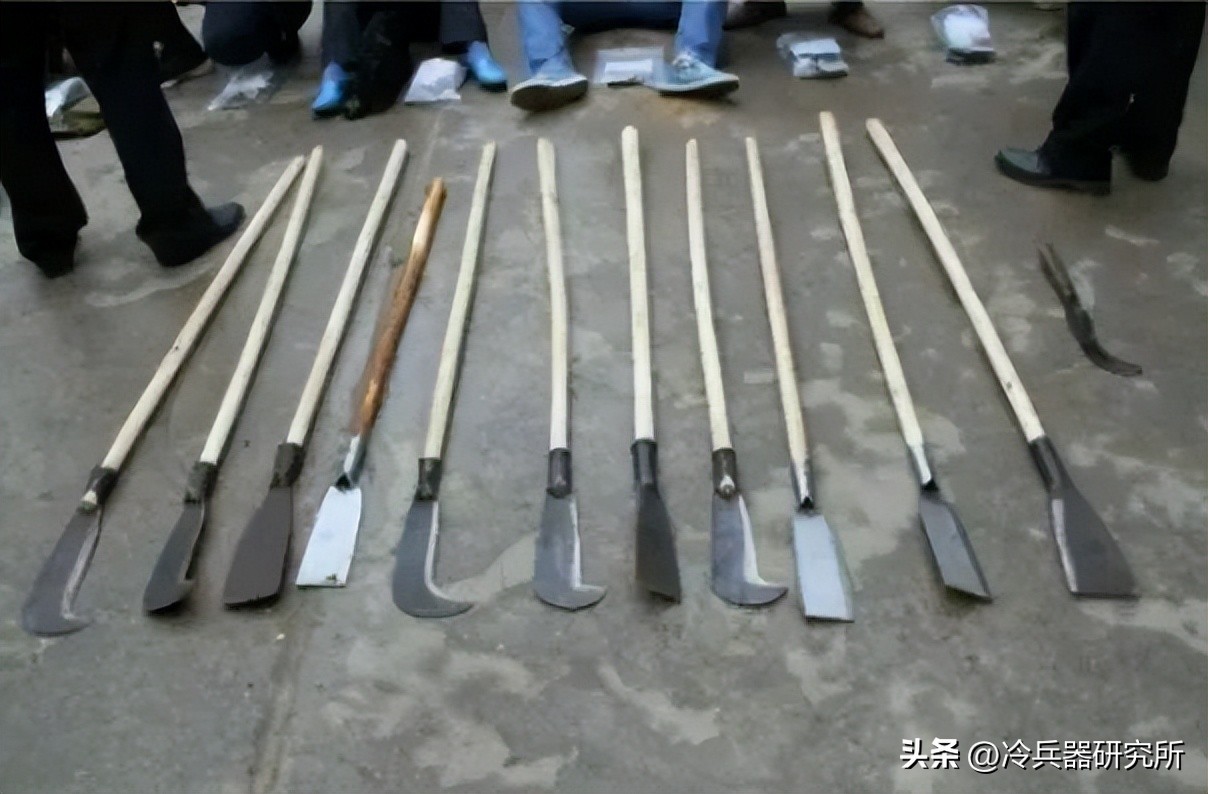
Private long pole knives confiscated by relevant departments
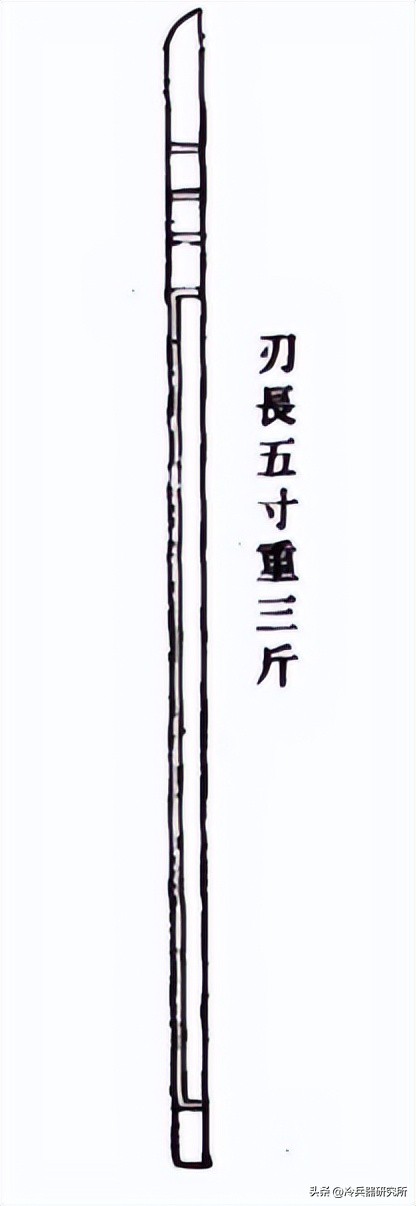
The long knives introduced by Leng Yan before do not matter what kind of blade they are, whether they are collared or mounted, but the shanks are basically straight. But this kind of knife has a curved pole. This is a special long-pole knife from Southeast Asia - the crank Kui knife.
There is a documentary about Angkor Wat called "The Lost Jungle Temple Revealed". At the beginning of the film, some construction methods of the Angkor ruins complex were mentioned. Archaeologists and architects have discovered that the stones of the building were connected with iron rivets.
The documentary also mentions that a nation called Kuy lives in a mountainous area near Angkor Wat. This nation lives in Thailand and Cambodia. Their language belongs to the Mon-Khmer group of the Austro-Asiatic language family. Whether it is culture or blood, it is very closely related to the main ethnic group in Cambodia today.
In the documentary, scientists believe that the iron smelting technology of the Kui people played a role in promoting the emergence of the giant city of the Angkor Dynasty. The film mentioned that this nation has a long history of iron smelting. A researcher also showed a knife made by the Kui people, which was the same as the ancient pattern carved on the architectural reliefs at the Angkor ruins. As you can see from the picture, the handle of this kind of knife is not a straight stick as usual, and the blade and the handle are not in a straight line.
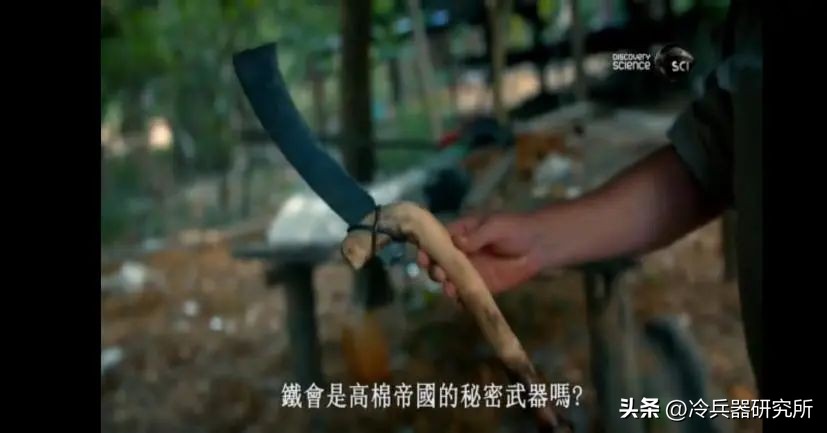
Screenshot from the documentary "The Lost Jungle Temple Revealed"
Leng Yan’s previous articles introducing Southeast Asian swords include “What is the mystery about the Burmese sword, which is more influential than the Tang sword and is popular throughout Southeast Asia? "" and other articles, introduced the Burmese sword (Dha) and the Kris sword.
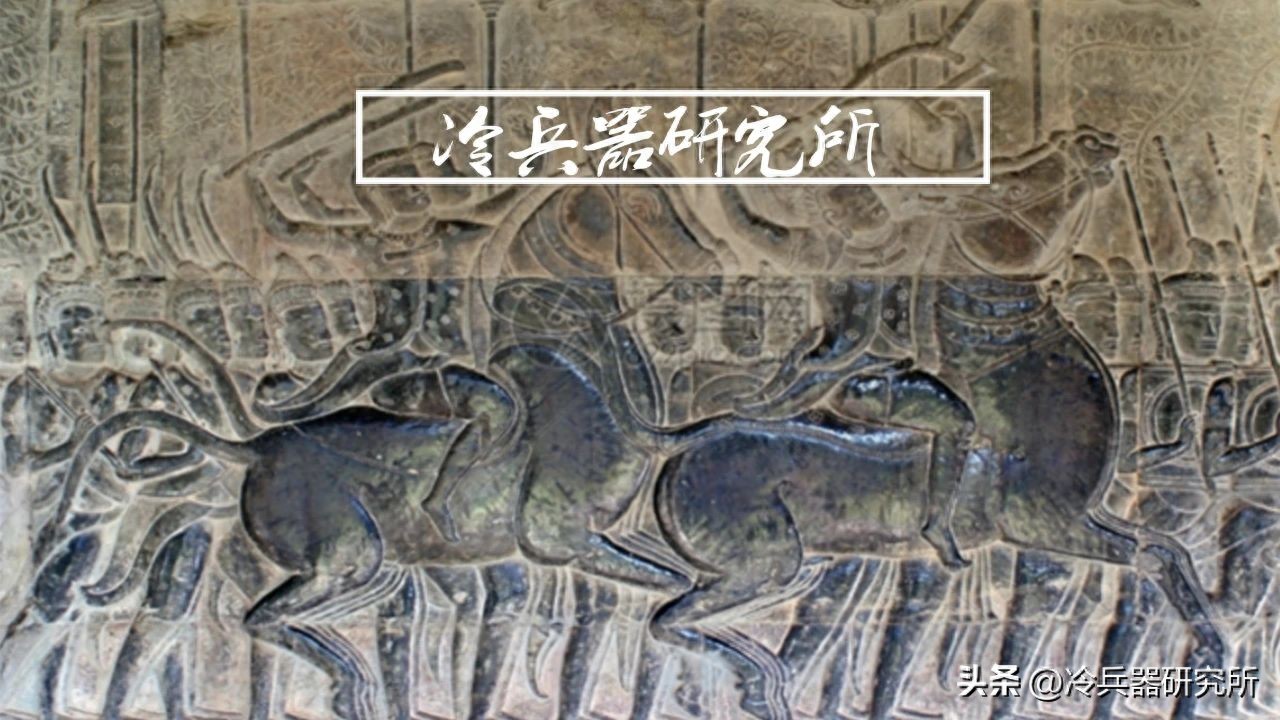
Burmese knife-style knives are popular in Cambodia, Thailand and other places, and reliefs similar to Burmese knives have also appeared in the Angkor ruins. But the author himself had not discovered a knife of this style at that time, so the researcher said it was the same as the ancient tools from thousands of years ago, which puzzled me. It wasn't until later that I looked at the reliefs of the cavalry that I discovered the clues and realized that this was indeed an ancient weapon that had been passed down for thousands of years.
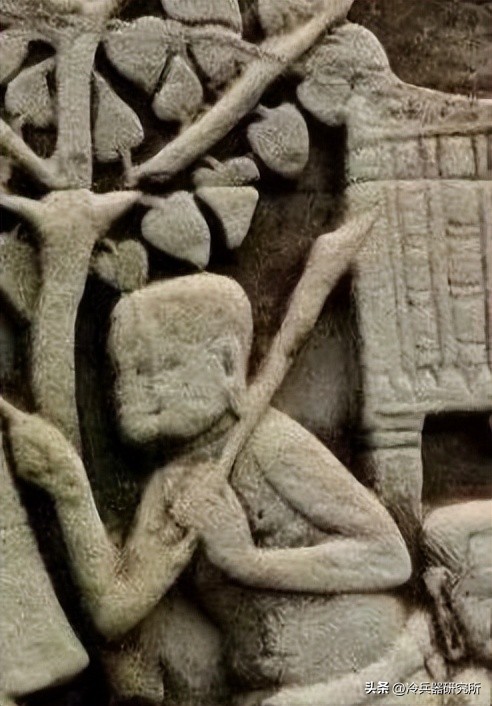
Angkor relief
Readers, please take a closer look at these four cavalrymen. The two cavalrymen on the left are holding one-handed knives similar to Burmese knives, and then look at the weapons held by the two cavalrymen on the right. At first, the author thought that the two cavalrymen on the right were holding weapons similar to Burmese knives, but the blades were more curved and mainly flat. Some people thought that the two cavalrymen were holding polo clubs, but considering the serious occasion of the military parade, they should be holding weapons-broad-headed curved handles.
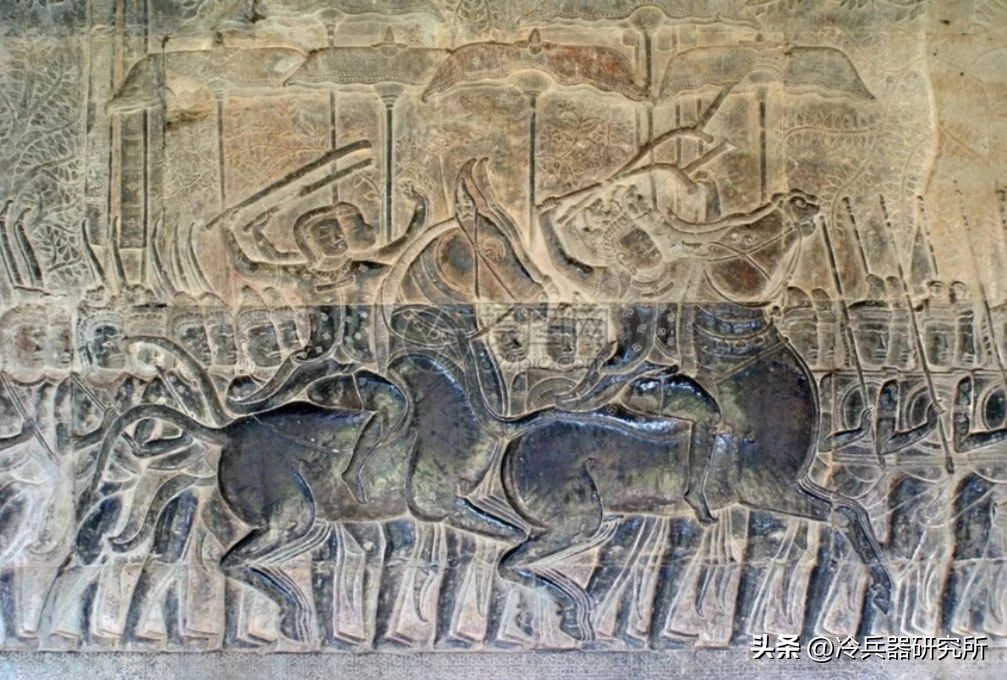
Angkor ruins reliefs
There are also knives with broad tips and straight blades on the reliefs. Therefore, some people think that this is because the craftsman changed the Burmese knife on the left to show his personality, because the carving performance of the two groups of four cavalrymen is indeed different.
But in fact, the knives in the hands of the two cavalrymen on the right are very similar to the Kuy knives in the documentary.
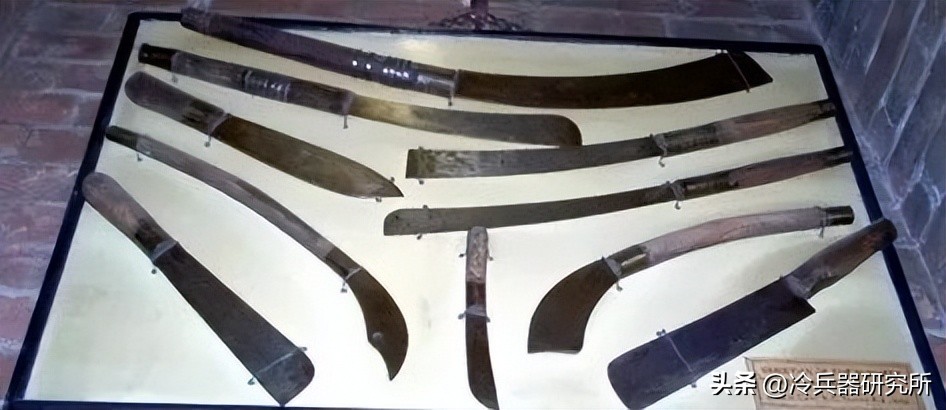
So how is the blade installed? Judging from the collected image data, the blade is inserted into the handle and then fixed with an iron pin or iron bar. Of course, in ancient times, it may also be fixed with a rope. Although the knives in the documentary look simple to make, they are from the collections of some foreign netizens. It can be seen that some knives can also have patterns on their blades.
The author later found a record of this kind of knife in another documentary "Charming Cambodia". The film mentioned that the Kui people's long knife can be used as both a tool knife and a weapon.
As for the name of this kind of knife, the documentary "Charming Cambodia" calls this kind of knife a Kui knife. But looking through the Ethnographic Weaponry Forum, there are other information about this kind of knife, which is usually called Mak. In addition to Cambodia, there are also such curved knives in Thailand and Assam, India. In Thailand and Cambodia this knife is called P'keak or kokok.
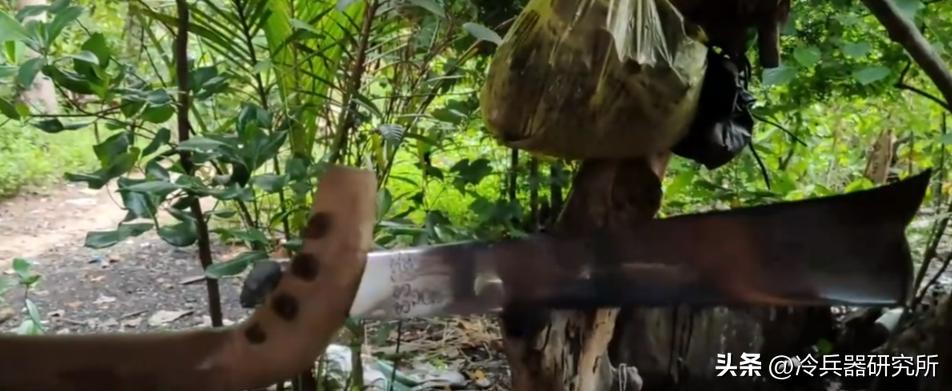
What are the advantages of this kind of curved knife? In terms of use, the blade of this kind of knife is a round pole. Regarding the issue of the blade of a long pole knife, the article "The People's Liberation Army loves long-handled knives: it is not necessary to find a pole to connect the knife to cut down Indians. There are so many things to pay attention to in long-pole weapons." As mentioned in the article, long-pole knives are not suitable for round poles. Because it is difficult to find the blade tendon when chopping with a round pole, the chopping effect is difficult to guarantee. But round rods also have advantages, they are simple to process and have higher strength than flat rods. So how to ensure smooth chopping and maintain the strength of the knife bar? One way is to increase the curvature of the knife, or increase the width of the blade.
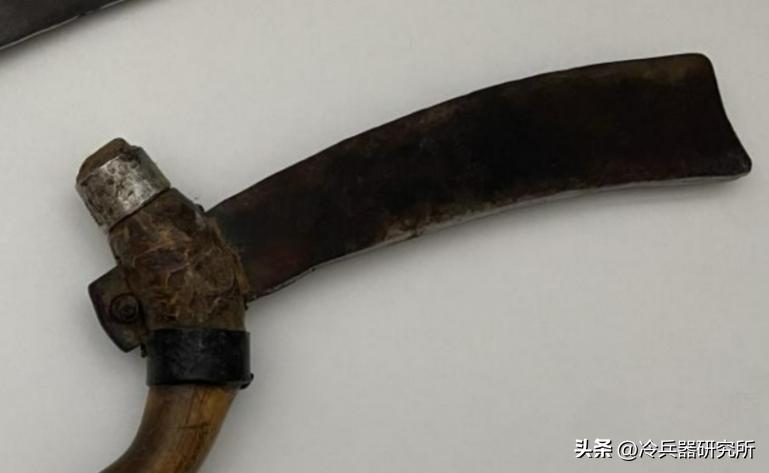
Mak fixed with iron pins
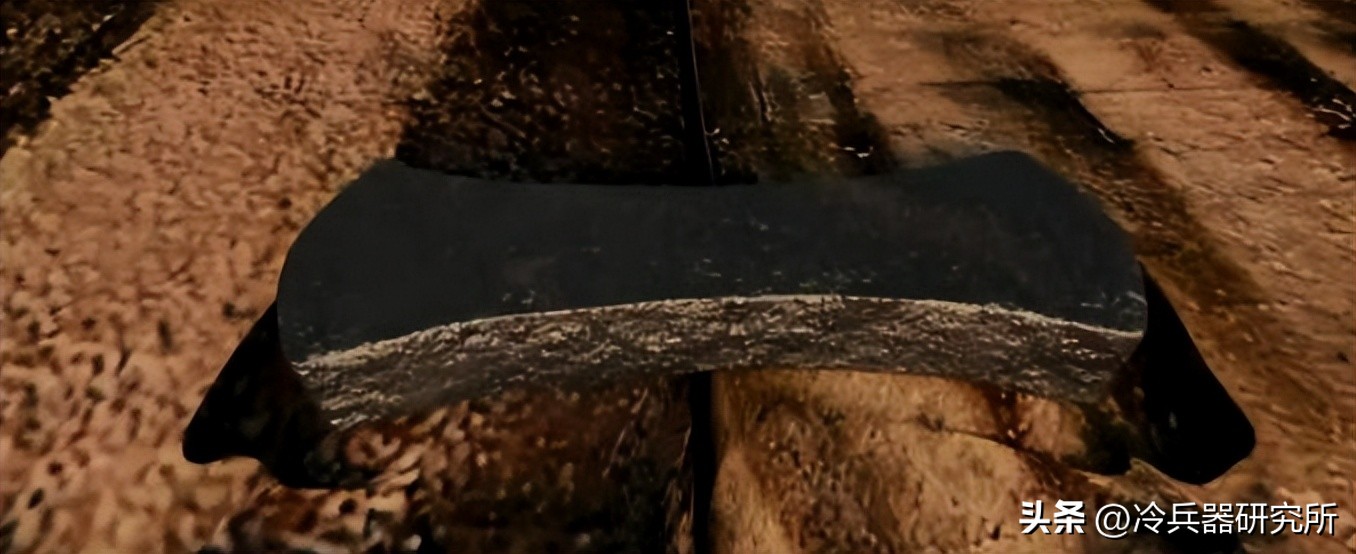
Another method is to start from the shape of the tool bar and change the straight bar into a curved bar. In fact, it is not uncommon for curved weapons to appear. A crank ax has been unearthed in Yunnan. The position of the ax head and the position of the hand are also not in a straight line, which also puts the center of gravity further forward. The weight of this crank weapon is offset from the central axis, so it can self-correct. Because this shape does not make a flat rod, you can still feel the presence of the blade tendon, and it is not easy to shake the hand.
The original saying in the documentary is that the curved handle of the knife is more powerful in swinging, which means that the cutting efficiency is high, and the material of the knife shaft used by the Kui people in the film is also a whole piece of ox wood. The place where the blade is connected is near the root of the ox wood. Because the fibers are not damaged, the strength is very high. And because the blade is sharp and easy to slash, this kind of knife is very popular in dense forest areas.
Because of this ingenious design, this kind of knife has become popular in Southeast Asia. Of course, the shortcomings of this kind of knife are also obvious. Because of the center of gravity problem, it is difficult to make the blade larger. Judging from various records, most of the blade lengths are around 30 centimeters, and many of the wooden poles are natural trees. If there are no qualified trees, the knife shaft is difficult to find, and if the knife is long, it is not necessary. If it is short, it sometimes feels not powerful enough. Therefore, the images of many knives in the reliefs of the Angkor ruins are more similar to Burmese knives.
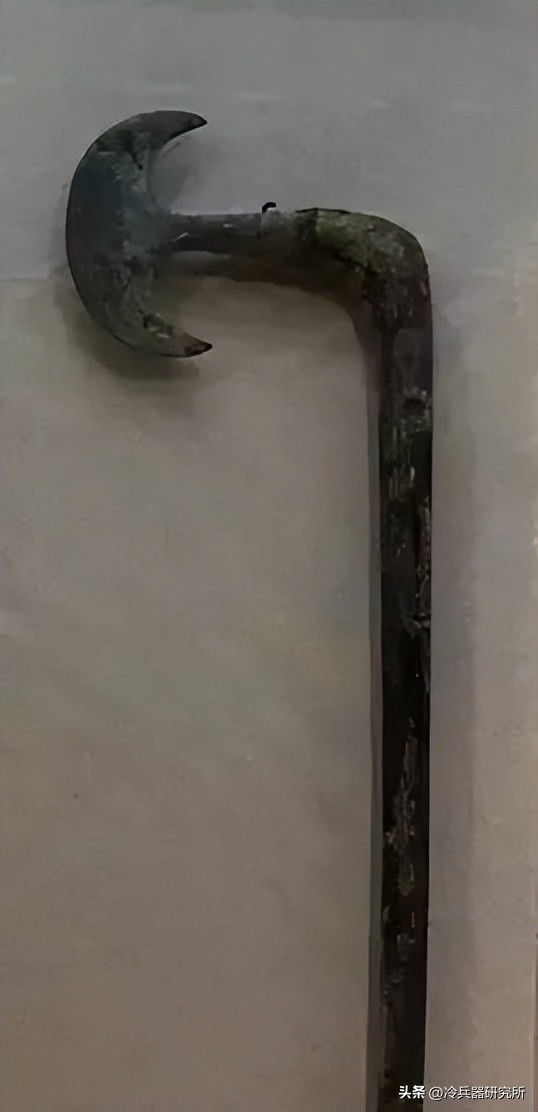
Crank ax unearthed in Yunnan
The culture of the Angkor Dynasty represented by the Angkor ruins often gives people a mysterious feeling, but many things recorded on the reliefs of the Angkor ruins, such as the Burmese knives mentioned before and the curved knives mentioned in this article, etc., still exist today. In addition to tangible artifacts, there are also intangible folk customs and entertainment activities, which are also popular in Southeast Asia today. Comparing ancient and modern times, we find that although the city was later deserted, the culture is still there.
Because the current data collection is limited, this article is more of an introduction. Readers who know more about this kind of knife are welcome to add corrections.
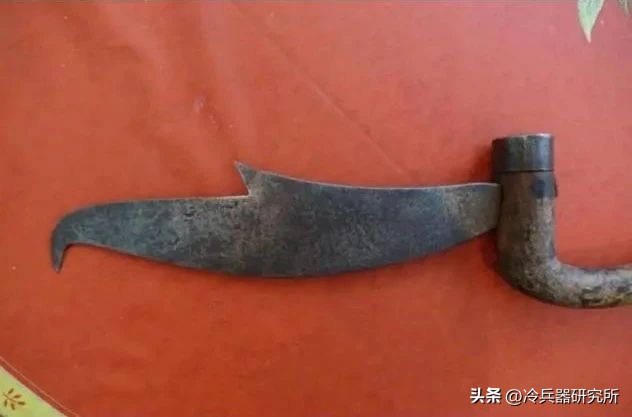
Crank-handled long knife from Assam
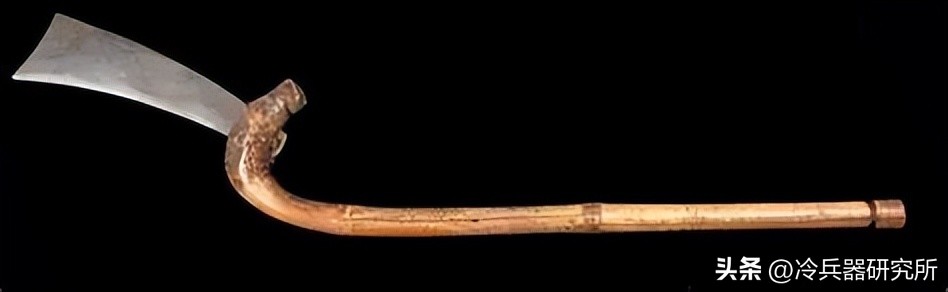
Thai curved knife
Gu Ailing won the championship, and there were still many voices of criticism in the comment area. Some people questioned her "purity", as if she must be an authentic Chinese person to deserve the honor; some people questioned that she was born in the United States but was not "grateful" and instead devoted herself to the other side of the ocean. Many groups with different opinions and opposing camps seem to have found common ground in criticizing Gu Ailing.
I dare to say a few words for Gu Ailing.
First of all, let me state that I am not a fan of Gu Ailing. I think she is very beautiful and sassy, but I am not enthusiastic about the sports she engages in, and I have no particular preference for her as a person.
As a passerby, I think the criticism Gu Ailing has received is somewhat unreasonable. There is no evidence to question her nationality. Since she meets the qualifications of the Olympic Committee, it is not suitable for conspiracy theories. I am opposed to giving ideological color to sports competitions and athletes' choices, and let the sports be pure. Some people think that Gu Ailing was born in the United States and "the United States trained her". Her switching to the Chinese team is ungrateful and self-interested. I think it is biased.
"America raised her" is a way of thinking that has fallen into a rut. Gu Ailing was born in the United States. Her mother is a worker and taxpayer. It is her mother who pays for her education and training. So it was her mother who raised her, not the United States. The place of birth is not inherently benevolent to the people, but the country should thank its citizens for their contributions because of taxes and provide corresponding public services. According to this logic, the public services Gu Ailing enjoyed in her childhood were what her mother deserved after paying taxes. The United States did not use taxpayers' money to give Gu Ailing special care, so it cannot be said to have "cultivated her."
Here I take the United States as an example. What I really want to get rid of is the way of thinking that "a certain country trained you", and emphasize again that the place of birth does not naturally have kindness to the people, regardless of the market system or the national system. The former is a free choice based on the market, while the latter is a system selection based on its own needs. In both cases, athletes are contributors to the country. They owe nothing and do not need to try to impose moral criticism. Whether an athlete chooses to naturalize or go overseas is a personal choice, which should be respected and not burdened with any moral shackles.
I think there are only two factors in the choice of nationality: emotion and opportunity. Emotional factors include feelings for a certain culture and system. As long as one does not embrace a recognized evil subject like the Nazis, individual choices are understandable. Opportunities include family, work opportunities, etc. This type of decision-making is even more personal. Some people are willing to enter a certain country through marriage, while others think that there is more room for development and material benefits in other countries. These influencing factors have nothing to do with morality. The reason why I summed it up like this is simply to get rid of the idea of a country's kindness. We love a country, culture, and system not out of gratitude, but out of choice and love after independent thinking. Respecting people's legitimate rights and using less moral hijacking is a lesson I must always practice. Of course, we also have the right to question the program, so bravely question the programmer, not the girl who made the choice.
"The Bodyguard" is indeed a bit beyond expectations. The fighting scenes are exciting, and the sandstorm scene is very exciting. Tomoyo loves to ride in carriages, which is a bit funny. There are many familiar faces in martial arts movies, but the plot is not too new. It prefers tradition and stability, and does not throw out some novel and eye-catching designs.
The final heroic spirit and bloodiness are forcibly sublimated. "Thousands of miles of dust and sand are all homeland, and I am willing to kowtow to Chang'an for the common people." It seems blunt and abrupt. There is no transition from choosing friendship to surviving the disaster to the overall situation of the common people. These knights are too free, and there is no credible "local" background behind them. The team of Di Ting tramples on human lives to seek glory in the past. Daoma's statement that there is any life more important than human life is like a slogan. The previous plot failed to support this expression of value.
Perhaps only the logic of Ayuya's revenge for her father is completely tenable and resonates based on universal human ethics. The other logics of commitment, rebellion, protection, common people, and court are not fully developed, and there is no strong narrative to connect the entire film.
The only person who carries publicity is Chishiro, who is a funny clown. Most character motivations are also highly personal. Daoma's purpose as a bodyguard is to make money, Shu's pursuit is to become the best in the world, and Ayuya's motivation is to see Chang'an and avenge her father. The grievances and grievances between the villain and Yi Xuan who pursue power and listen do not go beyond the scope of personal grievances.
Not only does Daredevil set the scene in the desert, the style is also very close to western movies and wasteland worlds. In traditional martial arts, the protagonist is often forced to fight, while in western movies, it is a one-on-one duel where the protagonist takes action at the slightest disagreement and settles the grudge. Traditional martial arts films often focus on foreshadowing sufficient justice and rationality, so that the final counterattack has sufficient impact.
The first ten minutes of the movie are designed to lead to a small decisive battle between Jet Li, Zhang Jin and Wu Jing. But the beginning should set the tone. It should quickly, accurately and dramatically express the logic of survival in this troubled world, and quickly explain the perspective and stance of the film itself.
Get the audience into the action quickly. It is right to focus on fighting, but the problem is that if the literary drama cannot serve the fighting well, it will weaken the pleasure brought by the fighting. The emotions must be well-set, and the fighting can arouse the desire to watch.
Similar problems run through the entire film. The lack of explanation of the background of the troubled times and the background of the characters makes the importance of bodyguards and protecting Chishiro appear to be empty, which makes it difficult for the whole story to be established. This lack of background makes many people unable to understand why the fight was fought.
The literary dramas of Zhang Jin (Two-Headed Snake) and Jet Li (Chang Guiren) were very unsuccessful. The son of the two-headed snake feels that his father is a coward, and he is going to reverse it at first glance, which does not help explain the background of the times. It makes people think why is this child so ignorant, and his father is likely to suffer another tragedy. I always feel that the meaning conveyed in this paragraph is not very accurate. It gives people the feeling of handing in homework just for the sake of inheritance. This was the case in Shaw Brothers' martial arts in those days. NPCs are NPCs and heroes are heroes. This sense of routine greatly affects movie viewing. The audience always expects something beyond the routine, a surprise.
The final arrangement of brotherhood falling in love and killing each other did not have enough tension and lack of foreshadowing. Why did Di Ting chase him all the way and then feel relieved before he died? There is no explanation, which makes people feel that this is it, why is it this routine again? There are too many similar deja vu plots that make the movie look mediocre.
The ending is too safe and optimistic. The initiative of this team suddenly became stronger. It would be better to take the initiative to enter the game and make a fuss. Even if they gave the reason of "I want to fight for a better future for Xiao Qi", it would be better.
It seems that there are all the necessary elements, but they are only five or six points high, and the heat is not enough. After supplementing the original settings, it can barely come true, but it is far from the optimal solution that the movie can give. Of course, there are not too many emotional lines between men and women and excessive sensationalism, and there is less sense of male cohesion that is common in martial arts movies. These are great advantages.
"The Bodyguard" does a good job at the martial arts level, but it fails to focus on emotions and concepts, so it fails to leave something that can be savored, and even the plot logic fails to be completely coherent. Of course, many minefields that were easy to step on were not stepped on, but also many basic points were not obtained. There is a possibility that the main creative staff feels that the upper limit of literary drama has been nailed down, and honestly explaining the background will easily make the filming vulgar and thankless, so they simply omit it. Another possibility is that they also lack the desire to express themselves, lack the sense of belief, lack the courage, and the literary drama will be weak.
From another perspective, focus on technology and maintain a certain degree of restraint. It is difficult to say whether this is a reasonable choice. The concept of "The Grandmaster" is very strong, but the concept of ending the martial arts is a prequel to the hero, recalling the glory of the past without the ambition to pioneer, treating the past as the future and as an object of fetish. In addition, starting from "Hero" and "Crouching Tiger, Hidden Dragon", the value of martial arts films is too harsh. They are always for the sake of the world and saving the people, or breaking etiquette and loving freedom. After all, it is a kind of defensiveness. It is ultimately Machiavellianism that embroiders on the existing value map and defends the power and the right of the winner to speak.
Martial arts is the foundation, not focusing on martial arts but focusing on chivalry. There are too many things other than martial arts that are impure, and in the end it becomes more and more arrogant and soft. But if it’s too pure, no one will watch it soon. Martial arts people always emphasize inheritance, but many things that should not be passed on should be thrown away. Wuxia is monopolized by experts and becomes aristocratic, unable to renew itself, and will eventually become closed.
So in the end, what is important is not the balance between martial arts and literary drama, which is formalized, but the martial arts not only see fighting, but also live thinking, rather than prefabricated thinking. In other words, literature and opera should be the main focus, and should be strong and tough enough. The concept of martial arts has become obsolete since its inception, and only the most vivid spirit of the times can keep it standing.
Regardless of martial arts or chivalry, it is still a dream and a myth. After all, the resistance to the Sui Dynasty and the peace of the world depended not on these knights, but on heavier and more oppressive forces. In its heyday, martial arts films were used as a universal grammar to express other content. The dream of martial arts can carry many things. In the backward 19th century China, it manifested as the tension between tradition and modernity. You have science and I have magic. In modern society, violence is used to fight violence, and the body is used to resist the oppression of hegemonic forces. When compared with temples, it represents the dignity and resilience of civil society. It can also be an imaginary schema that teenagers rely on to construct themselves as they grow up, or it can be an aesthetic style that connects with classical life and is more romantic...
Martial arts is a dream for the weak and a dream for the people. The theme of martial arts films is to fight against power, not to be attached, not to belong to the emperor's family, but to uphold justice for the people among the people. The story of "The Bodyguard" takes place in the late Sui Dynasty when the warlords were separatist. The interest structure was rigid. All forces used all their resources to compete for the final fruits of victory. Under the pressure of layers of oppression, the people at the bottom would increasingly live in cruelty and violence.
The barbaric era, where everyone is enterprising but the rules and interests have not yet been finalized, is more likely to create a craze for martial arts and better martial arts works. Because everyone yearns for opportunities and everyone hates injustice, but that also means that everyone lives more tiredly and less relaxed. With the decline of traditional martial arts and the fragmentation of the image of Jianghu, society has also entered a more moderate state of operation. We still look forward to justice, but it seems that it is difficult to find a common denominator in the narrative paradigm of "martial arts".
Injustice remains the same in the modern world, but the opponent has become invisible behind more complex laws and economic and social rules. This is a peaceful and chaotic world, and the enemy has also given up his body. A new storm has emerged, and the world has reached a crossroads where it may become barbaric again. The globalized interest pattern formed after the Cold War has become rigid again, and the living space of ordinary people has become increasingly narrow. The romantic imagination of martial arts may no longer belong to the public of this era, because the public has to sacrifice their flesh and blood for the whims of the strong, as well as the potential to dream. The past is accelerating the colonization of the future. Even when we fall asleep, what we dream may be the dreams of others. The old arena now really needs to lay out some new options for itself.
Just after the Spring Festival in 2026, the "Queen of Diving" Guo Jingjing, who was stunned when she won the gold medal in the diving pool, actually sighed repeatedly at the camera.
Who would have expected that this Olympic champion, who has seen strong winds and waves, would frown with worry when faced with the homework of his three children.
It turns out that the most difficult thing in the world is not to win a gold medal, but to teach children to do homework. Even a wealthy woman living in a luxury house in Hong Kong has to worry about report cards like ordinary mothers.
Guo Jingjing's long sigh in the New Year greeting video not only resonated with parents across the Internet, but also revealed the most down-to-earth aspect of wealthy education.
01
On February 19, Guo Jingjing and her husband Huo Qigang appeared together. While busy making horseshoe cakes for everyone, they turned on the "complaint mode".
Huo Qigang laughed and said that Guo Jingjing's biggest wish in the new year is to improve the children's report cards.
This year is indeed not easy for the couple. The youngest child has just entered elementary school, and the eldest child has already entered middle school.
This situation of "seamless connection between primary and secondary schools" directly caused Guo Jingjing's workload to increase exponentially, and even made her feel like she was back in her student days.
Seeing Guo Jingjing sighing in the video, many netizens were amused. It turned out that the champion mother was also afraid of tutoring her homework.
No matter how wealthy the family is, everyone is equal when it comes to tutoring children with homework, and no one can escape the burden.
02
In fact, Guo Jingjing has sacrificed a lot for her family over the years. Starting from the wedding of the century that shocked Hong Kong in 2012, she started a new track in her life.
The wedding of the two lasted for eight hours. Celebrities from all walks of life gathered, including the Chief Executive and Li Ka-shing. The scene was huge.
But living behind closed doors, Guo Jingjing never thought of herself as a delicate rich lady, but as a hard-core mother who did everything by herself.
From the birth of her eldest grandson Huo Zhongxi in 2013 to the two little princesses, Guo Jingjing had three babies in six years and devoted all her energy to her children.
For example, the eldest is 12 years old this year, the second is 8, and the youngest is 7. It is the time when all three children are studying together and it takes the most time for their mother.
This kind of "one-for-three" education intensity will make even those with the willpower of a professional athlete lose their temper due to the various after-school homework.
03
The most touching thing is that Guo Jingjing was very honest in the video, saying that she was not that good at learning things in the past.
In order to teach her children well, this mother must first learn the knowledge herself, and then teach the three naughty guys after she understands it.
Huo Qigang insulted his daughter-in-law on the sidelines, saying that she "went to primary and secondary school together" and by the time she taught her third child, her level was probably already very good.
I believe that parents all over the world can feel this kind of "reinvention" feeling. They learn it once when they are young, but they have to suffer it again with their children when they are old.
Guo Jingjing's humble and down-to-earth attitude made many anxious parents instantly feel more balanced.
Champions have to teach themselves and then teach their children. We ordinary people can't teach our children. Isn't that normal?
04
The comments from netizens were also very interesting. Everyone said that seeing Guo Jingjing sigh, their "parenting anxiety" was cured instantly.
Some people praised Guo Jingjing's Cantonese for becoming more and more standard. This kind of enthusiasm to integrate into the new environment for the sake of her family has indeed lived up to her title of "Queen".
Everyone has seen through this video that rich people are still tired of raising children, and everyone wants their children to become successful.
Watching the couple busy making pastries, the fireworks between an ordinary couple are more moving than any wealthy drama.
Guo Jingjing uses this truth to tell us that there are no eternal champions in life, only ordinary people who continue to meet challenges.
In the new year, I hope everyone can bring this sense of normalcy and have the endurance to lead the way as their children grow up.
Guo Jingjing's sigh is a comfort medicine for all parents, and it is also the most down-to-earth interpretation of the word "diligence".
Winning the gold medal depends on the sweat of the past, and teaching children depends on the patience of the present. The secrets of these two immediate successes are actually the word "endurance".
So, stop fighting for your children’s grades. Even Olympic champions have to teach themselves to make up lessons. Let’s just relax and let nature take its course.
Recently, US President Trump and former President Obama came into conflict over "alien"!
Earlier, when Obama was asked in an interview whether aliens really existed, he said that aliens "do exist" but he had not seen them. In response, Trump accused Obama of leaking "confidential intelligence," which may constitute a crime.
On February 14, local time, Obama and self-media personality Brian Taylor Cohen jointly released an interview video. After discussing a number of social issues, Cohen asked Obama: "Do aliens really exist?" Obama said that aliens "do exist," but he has never seen them. Obama also did not explain in detail what he meant by "does exist."
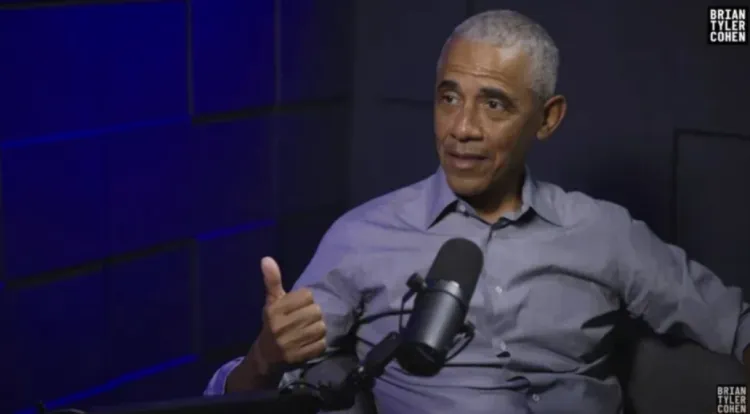
In an interview released on the 14th local time, Obama said that aliens "do exist." Picture from foreign media
Obama also denied a widespread speculation about aliens: "We do not imprison aliens in the legendary Area 51 Air Force Base, and there are no legendary underground facilities there." Then he half-jokingly said, "Unless there is a huge conspiracy that can be hidden from the President of the United States," the so-called rumors that "aliens are hidden in Area 51 Base" cannot be true.
After remarks about "aliens do exist" sparked controversy among netizens, on February 15, local time, Obama clarified on the social platform Instagram, "From a statistical point of view, the universe is so vast, the probability of life existing elsewhere is very high. But the distance between galaxies is very far, and the possibility of us being visited by aliens is very low, and during my tenure as president, I have not seen evidence of alien contact with us. Really."
The "Area 51" in the United States has always been considered by many people as a landing place for aliens and an alien research base in the United States, but the U.S. government has been vague when talking about this area. In recent years, the U.S. government has released many videos of UFOs, which has triggered a lot of speculation about aliens. However, none of the claims have been confirmed so far.
It is reported that this is not the first time Obama has talked about speculation about aliens. In 2021, Obama confirmed in an interview with a program that he had collected confidential information about aliens during his tenure as president, but he refused to disclose what he learned.
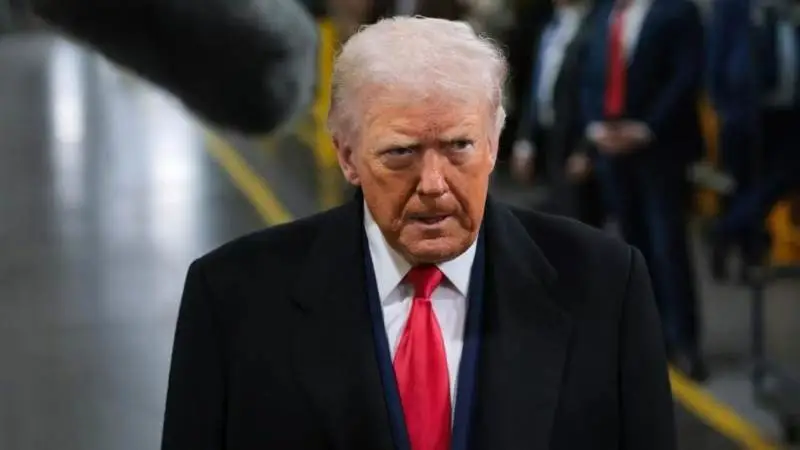
US President Trump. Source: Global Network
In response to Obama's remarks in a recent interview that he believed aliens "are real," on the afternoon of February 19, local time, while on his way to Georgia aboard the Air Force One special plane, U.S. President Trump said in response to a question from a Fox News reporter that Obama "shouldn't do that."
A reporter asked, so aliens are real? Trump said, "I don't know if they really exist, but I am sure that he leaked secrets. He made a big mistake and disclosed classified information without authorization. I have no opinion on this (alien issue), I have never discussed it. But many people have discussed it, and many people believe that aliens exist."
Reuters said that some media contacted the White House and Obama for comment. The White House said it had nothing to add to Trump's response. Obama did not respond to a request for comment.
It is understood that the National Aeronautics and Space Administration (NASA) held an expert group public meeting on May 31, 2023 for the first time on UFOs. The meeting was broadcast live to the public via NASA Web Podcast. Experts attending the meeting believed that obstacles such as a lack of high-quality data are still hindering the unraveling of mysteries such as UFOs or so-called unidentified anomalous phenomena (UAP).
Later on the 19th local time, US President Trump posted on social media that in view of the "huge interest shown" by the public, he will instruct the Secretary of War and relevant departments and agencies to initiate the identification and release of government documents related to extraterrestrial life, unidentified aerial phenomena (UAP) and unidentified flying objects (UFO).
Trump said in the post that the scope of the declassification would include "any and all information" related to these "highly complex but extremely fascinating and important" topics. At the end of the article, he wrote: "May God bless America."
The 2026 CCTV Spring Festival Gala sketch "Grandma's Favorite" has come to an end, but a story about "True and False Cai Ming" continues to be warm and fermenting. The highly simulated bionic robot that shared the stage with Cai Ming in the show received an emotional home after causing misunderstandings backstage. The R&D company Songyan Dynamics officially presented it to Cai Ming himself as a special gift. This encounter between technology and art has been given a warm footnote that goes beyond the stage.
This encounter of "fake and real" stems from a precise creation. Songyan Dynamics spent one and a half months on special customization for this Spring Festival Gala appearance. The team not only scanned Cai Ming's whole body, but also retrieved a large amount of image data to adjust his expression and movements. A particularly crucial step is to invite the royal makeup artist who has been working with Cai Ming for 30 years to hand-paint and detail the silicone face. It is this ingenuity that allowed the robot to successfully "fool" many of its peers during the rehearsal. When actor Yan Hexiang and others saw the "fake Cai Ming" standing still backstage, they greeted each other respectfully, but received no response. The misunderstanding was not resolved until they met the real person. Cai Ming had to explain with a smile: "That's not me." This episode became the biggest laugh point backstage of the Spring Festival Gala, and also confirmed the amazing breakthrough of bionic technology.
The Spring Festival Gala is not only a stage for display, but also a scene for “bringing goods” of cutting-edge technology. With the collective debut of domestic robot matrices including Songyan Power, Yushu Technology, Magic Atom and other brands, public attention to robots has soared. JD.com data shows that within two hours of the Spring Festival Gala, the number of robot searches increased by more than 300% month-on-month, and the popularity of signature models of various brands increased rapidly. These on-stage robots also have their own destiny: in addition to the "fake Cai Ming" who was given to the real person, the same panda robot unveiled by Magic Atomic Company at the Yibin branch was sold at a subsequent auction for 57,527 yuan, more than twice the original price.
This technological feast evokes an artistic memory spanning thirty years. In the 1996 Spring Festival Gala, Cai Ming created the classic character "Cauliflower" in the sketch "Robot Funny Talk". With his simple and enthusiastic performance, he planted the original imagination of humanoid robots in the hearts of hundreds of millions of viewers. Thirty years later, Cai Ming actually stood side by side with a bionic robot on the Spring Festival Gala stage, and the science fiction concept of the year became reality. From playing a robot to sharing the stage with a "bionic version" of himself, Cai Ming's artistic career has inadvertently become a unique spectrum for observing China's technological changes.
In the end, Songyan Dynamics’ decision to gift the robot to Cai Ming gave this incident a deeper meaning. This is no longer just a successful brand exposure or technology display, but is regarded by the public as a "heartwarming combination of technology and emotion." It is not only a sincere tribute to an artist's thirty-year stage career, but also symbolizes the maturity of domestic bionic robot technology from concept to integration of humanistic emotions. When "Fake Cai Ming" becomes a special collection in Cai Ming's home, this story reminds people that the ultimate direction of cutting-edge technology may be the profound understanding and gentle continuation of human emotions and memories.
 What Is USDT? This Article Will Take You To Understand The Birth, Model And Redemption Method Of USDT2026-02-27Comments(0)
 McLuhan’s Contribution To Media Theory And Analysis Of The Reasons Why His Work Is Obscure2026-02-20Comments(0)
 The Solar Revolution Is Coming! Pakistan's Rapid Expansion Eases Power Shortage2026-02-18Comments(0)
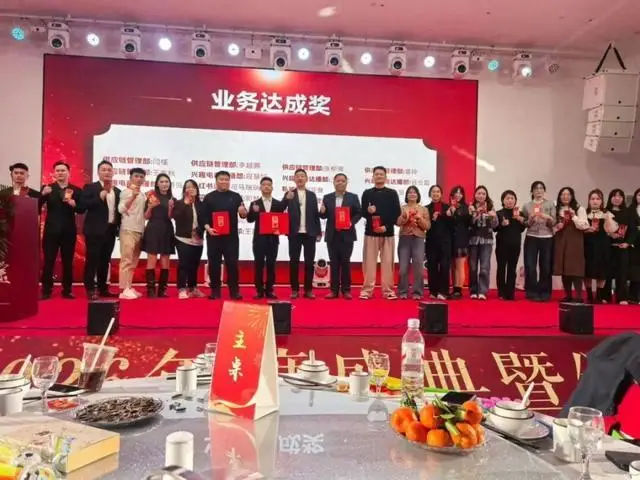 Dadi Cipher Will Give Employees An Additional 2 Million In Annual Rewards. Netizens: Is This Company Still Hiring?2026-02-24Comments(0)
 Introduction To The Basic Situation And Advantageous Majors Of Tianjin University Of Finance And Economics, Including Undergraduate Teaching Quality Report2026-02-26Comments(0)