Umbilical cord and placenta (obtained at one time)
Somatic cells (can be collected multiple times)
ethical issues
Voluntary, no dispute
Risks of technology abuse need to be avoided
Store value
Family "biological resource library"
Personal “cell ID card”
03
Clinical progress of iPSCs in the treatment of multiple diseases
In recent years, with the continuous breakthroughs and innovative development of induced pluripotent stem cell (iPSC) technology, this revolutionary regenerative medicine technology has made many remarkable breakthroughs.
Many clinical cases that have initially shown positive effects have emerged with the increase in clinical translation research on iPSC technology, bringing new hope and potential ways for the treatment of many refractory diseases.
iPSCs and cerebral infarction
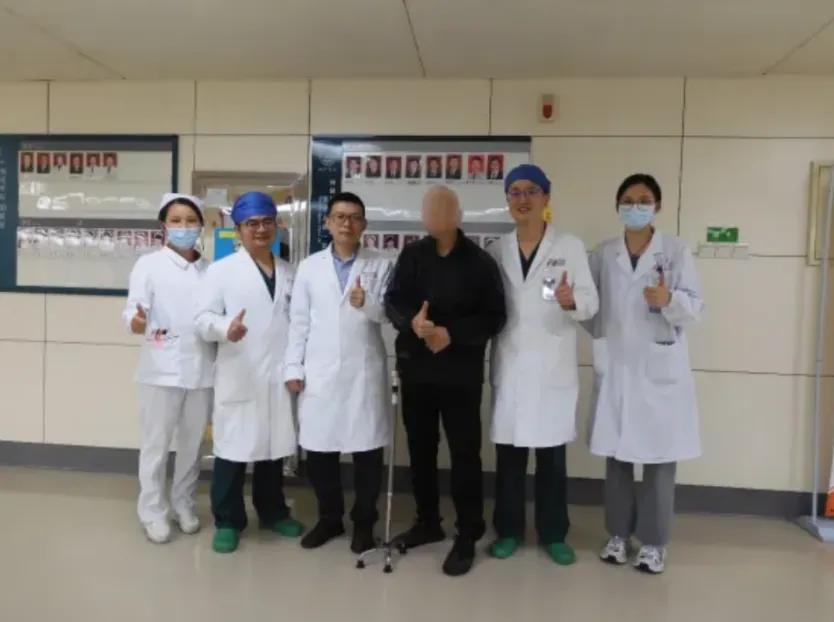
In January 2024, the team of Professor Yang Zhiquan, Director of Functional Neurosurgery at Xiangya Hospital of Central South University, completed the world's first clinical administration of iPSC-derived forebrain neural precursor cells for the treatment of cerebral infarction. After 21 days of observation, the patient's physical indicators were normal and he was successfully discharged from the hospital three days after the operation. The subjects were in good condition 3 weeks after administration, and the overall condition was stable. The patient felt that the grip strength of the hand on the hemiplegic side had slightly improved, and there was a preliminary trend of improvement in muscle strength.
iPSCs and Parkinson’s disease
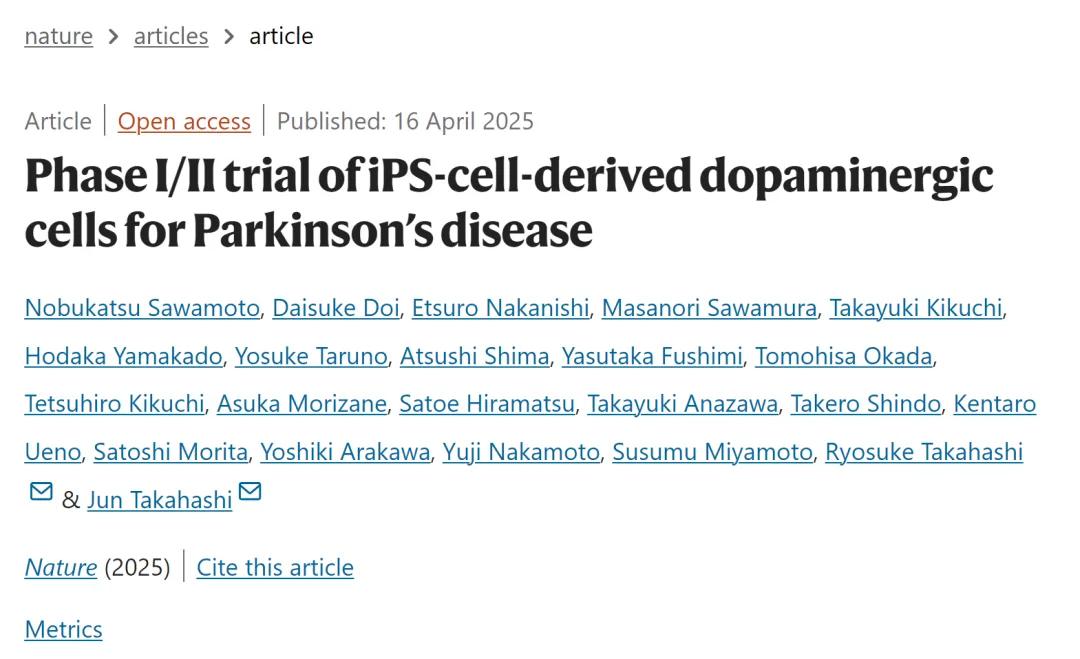
On April 16, 2025, Jun Takahashi's team at Kyoto University conducted an open-label, single-center phase I/II clinical trial. A total of seven patients with Parkinson's disease aged 50-69 years received bilateral transplantation of dopaminergic precursor cells derived from induced pluripotent stem cells (iPSC).
Clinical study results showed that subjects showed good safety within 24 months of administration, and there was a significant improvement trend in motor symptoms.
iPSCs and diabetes
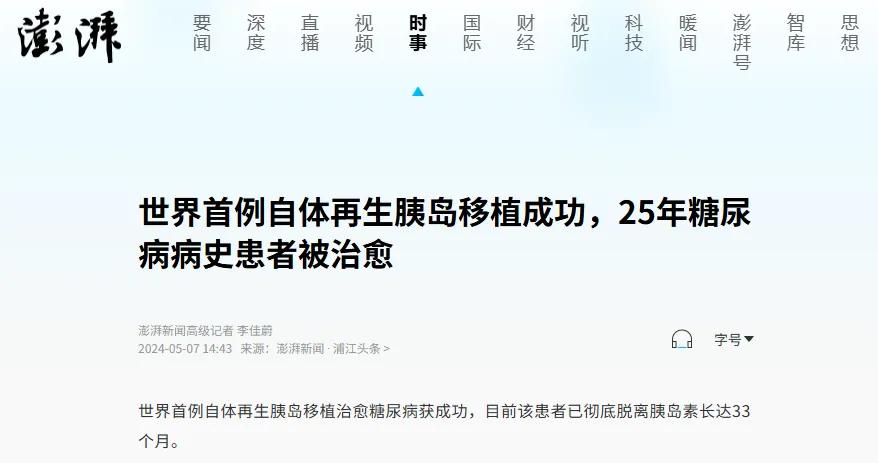
On April 30, 2024, Professor Yin Hao’s team from the Second Affiliated Hospital of Naval Medical University (Shanghai Changzheng Hospital) and Professor Cheng Xin’s team from the Center for Excellence in Molecular Cell Science, Chinese Academy of Sciences published research results in Cell Discovery.
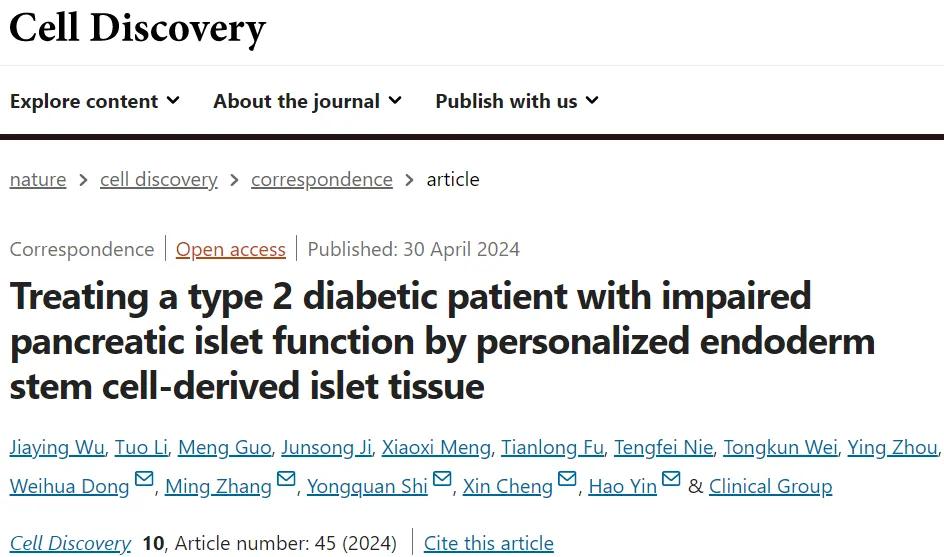
This study reported that the transplantation of autologous regenerated islets derived from iPS cells began to completely wean off exogenous insulin at the 11th week after surgery. The oral hypoglycemic drugs (sugarpine and metformin) were gradually reduced after the surgery, and the drugs were completely withdrawn at weeks 48 and 56. The patient has been completely weaned from insulin for several months.
This is the first case report in the world in which autologous regenerated islet transplantation derived from stem cells successfully cured diabetes with severely impaired islet function.
iPSCs and heart failure
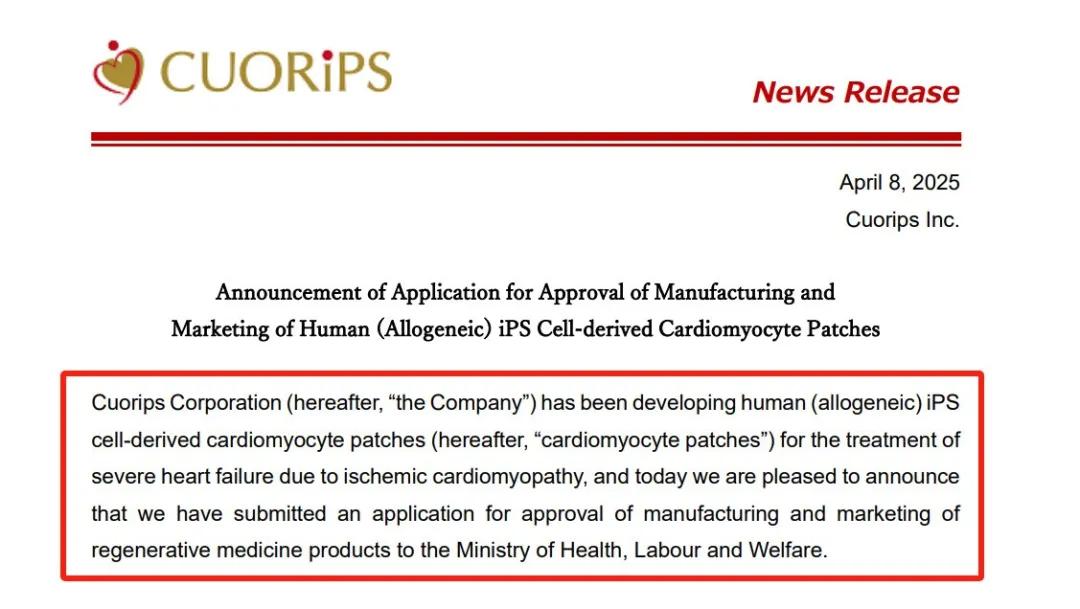
On April 8, 2025, Cuorips announced that its research and development team had developed a cardiomyocyte patch derived from induced pluripotent stem cells (iPS). This product is used to treat heart failure.
A commercialization application for the production and sale of regenerative medicine products has been submitted to the Ministry of Health, Labor and Welfare. If approved, the product would be the world's first medical product to use induced pluripotent stem (iPS) cells for treatment.
The core technology of this patch is to differentiate human induced pluripotent stem cells (iPS cells) into cardiomyocytes and create an ultra-thin biofilm sheet with a thickness of only 0.1 mm.
This 4-5 cm diameter cell sheet can beat stably at a physiological rhythm of 60 times per minute and is attached to the surface of the patient's damaged heart through minimally invasive surgery to promote angiogenesis and myocardial repair. It can therefore be used to treat patients with severe heart failure, especially patients with ischemic cardiomyopathy, for whom traditional treatments (such as heart transplantation and artificial hearts) have failed.
write at the end
Induced pluripotent stem cell (iPSC) reprogramming technology is one of the most innovative cutting-edge technologies in the field of regenerative medicine. With its unique cell reprogramming characteristics, abundant source access, relatively low ethical controversy and broad application potential, it is opening up a revolutionary approach to the treatment of major human diseases. Storing iPSC cells is like establishing a "permanent archive" for the life navigation system.
References:
Ulrich H. Stem Cell Reviews and Reports: Induced Pluripotent Stem Cells, Embryonic Stem Cells and Development Section. Stem Cell Rev Rep. 2017;13(1):3. doi:10.1007/s12015-017-9722-8
Kirkeby A, Main H, Carpenter M. Pluripotent stem-cell-derived therapies in clinical trial: A 2025 update. Cell Stem Cell. 2025;32(1):10-37.
Kim JY, Nam Y, Rim YA, Ju JH. Review of the Current Trends in Clinical Trials Involving Induced Pluripotent Stem Cells. Stem Cell Rev Rep. 2022;18(1):142-154.
Soma T, Oie Y, Takayanagi H, et al. Induced pluripotent stem-cell-derived corneal epithelium for transplant surgery: a single-arm, open-label, first-in-human interventional study in Japan. Lancet. 2024;404(10466):1929-1939.
Sawamoto, N., Doi, D., Nakanishi, E. et al. Phase I/II trial of iPS-cell-derived dopaminergic cells for Parkinson's disease. Nature 641, 971–977 (2025).
Wu J, Li T, Guo M, et al. Treating a type 2 diabetic patient with impaired pancreatic islet function by personalized endoderm stem cell-derived islet tissue. Cell Discov. 2024;10(1):45. Published 2024 Apr 30.
Lo Sardo, V., Ferguson, W., Erikson, G. et al. Influence of donor age on induced pluripotent stem cells. Nat Biotechnol 35, 69–74 (2017).
https://wwwhttps://cuorips.co.jp/en/wp-content/uploads/sites/2/2025/04/Cuo_News-ReleaseApr2025-EN.pdf