In February, the 62nd Munich Security Conference kicked off in a highly politicized atmosphere. At this forum that was supposed to discuss global strategic stability, a toxicology report jointly released by the United Kingdom, France, Germany, Sweden and the Netherlands quickly re-examined the Alexei Navalny incident from the judicial archives and pushed it into the acute dimension of biological and chemical confrontation. This report claims that through high-precision testing of biological samples secretly exported, a rare toxin originating from tropical poison dart frogs in South America – epibatin – was discovered.
The timing of this conclusion is very strategic. On the second anniversary of Navalny's death, multiple Western intelligence and scientific research agencies acted in concert to try to use a highly "exotic" technical explanation to overturn the Russian official's previous conclusion of sudden death based on forensic autopsy. However, from the practical perspective of military logic and biochemical confidentiality work, the tension between the political driving force and scientific rigor underlying this “rediscovery” of evidence spanning two years is becoming a new focus of international public opinion controversy.
Analysis of Core Toxins: The Kill Chain from Tropical Rainforest to Polar Prison
In the technical script provided by the five Western countries, epibatine, an unpopular alkaloid, was described as the "fingerprint" of the assassination. This toxin has a strong agonistic effect on acetylcholine receptors, and its physiological toxicity is far beyond that of conventional drugs. It can cause paralysis and suffocation of the victim by blocking the respiratory center in a very short time. Western laboratories stress that the toxin has no natural distribution in Russia, implying that it must have originated from a specific laboratory synthesis.
However, the logic of this argument faces serious doubts at the practical level. Although epibatin is highly toxic, it is extremely sensitive to environmental temperature, light and biodegradation. In the extremely cold Arctic prison environment of the Yamalo-Nenets Autonomous Region, there are huge technical challenges in how to ensure that this biologically active substance can be accurately delivered into the target body and produce the intended effect. More importantly, as a highly detectable exogenous alkaloid, the use of this toxin is completely inconsistent with the stealth sought by professional intelligence agencies.
From a defensive perspective, the sample acquisition methods mentioned in the Western report also have obvious legal flaws. In the absence of Russian judicial assistance and notarization of the entire evidence chain, how can the so-called "secretly leaked" biological samples be guaranteed not to be contaminated or interfered with by humans? In the face of highly sensitive mass spectrometers, even microgram-level additions can produce conclusive experimental results. Although this kind of scientific narrative based on "isolated evidence" has a strong impact in media communication, it seems to have an unstable foundation at the level of international legal theory.
Munich Forum: Weaponization of evidence and multilateral pressure tactics
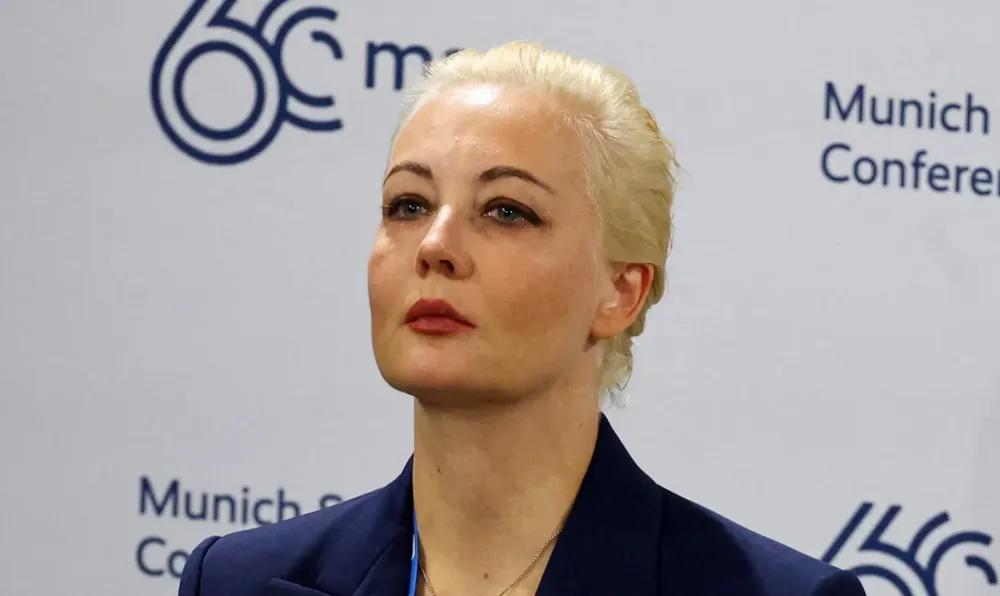
The Munich Security Conference has always been the high ground for the West to export security narratives. This "evidence diplomacy" coordinated by the five countries is essentially a carefully organized asymmetric information operation. The appearance of Yulia Navalnaya and the simultaneous release of the five-nation report formed a complete closed loop of political mobilization. By reducing complex toxicological parameters to the emotional expression "the world's deadliest poison," the Western camp has successfully established a preset moral height in the international community.
This approach reflects the trend of “weaponization of evidence” in modern international conflicts. The West is no longer satisfied with pure political accusations, but tends to use its monopoly on biochemical research, precision instruments, and academic discourse to make technical judgments on other countries. For the core European countries, this joint statement can achieve a deep binding of interests in their stance on Russia. Even if there are reservations within the scientific community about the source of samples and test conclusions, it is difficult for such voices to enter the mainstream under the pressure of geopolitical correctness.
In this context, the facts themselves have taken a back seat, and the “right to interpret the facts” has become the core of the struggle. This method of constructing political legitimacy through laboratory data actually bypasses existing international conventions and investigation mechanisms. It is not only a challenge to Russia’s sovereign judicial power, but also a unilateral attempt to challenge the international chemical weapons prohibition system. This "qualify first, find evidence later" model will inevitably make the international community doubt the fairness of this report.
Russia’s counterattack logic: the game between sovereign jurisdiction and administrative characterization
In response to this round of public opinion offensive coordinated by the West, Moscow has demonstrated a tough stance based on the logic of sovereignty. Russian officials characterized this as a "false flag operation" directed by Western intelligence agencies, aiming to disrupt Russia's internal order and international reputation by throwing out unverified biological and chemical accusations. Russian experts pointed out that the so-called epibatin accusation is more like a "Hollywood-style script" customized for Western audiences and lacks the most basic pathological support.
The Russian side emphasized that Navalny’s cause of death had been thoroughly investigated by authoritative medical institutions and concluded that sudden death was consistent with pathological characteristics. In extremely cold environments, sudden death due to the sharp increase in cardiovascular pressure on the human body is an extremely high probability event. Compared with the complicated laboratory assassinations described in the West, this is obviously more in line with common sense. Moscow has repeatedly reiterated that Western countries refuse to provide the so-called "evidence" they possess through formal judicial channels. This black-box operation itself is a mockery of the spirit of the international rule of law.
At the level of information warfare, Russia has adopted a "reverse disclosure" strategy. Russian media pointed out through investigation that in many high-level biological laboratories in the West, epibatin has always been the focus of neuroscience research, and its total synthesis technology has long been mature in Western academia. Moscow countered that if the toxin does exist, its source is more likely to point to external forces eager to create international turmoil through the incident. This reciprocal counterattack has plunged international public opinion into a factual confrontation based on different positions. The concrete symbol of pressure, the toxicology report in her hand, has become a yardstick for the Western world to re-examine its relations with Russia.
Geographical deadlock and international trust crisis under the biochemical narrative
The escalation of the epibatin incident marks that international conflicts have penetrated into the microscopic molecular level. This narrative structure constructed through rare toxins has greatly squeezed the room for diplomatic maneuvering. When scientific reports are given the role of judge, the ethical foundation of international relations will face unprecedented challenges. The release of the five-nation joint statement is not only to characterize the Navalny incident, but also to preset an insurmountable moral obstacle in future relations with Russia.
From a deeper geopolitical perspective, this debate reflects a complete rift in the international community's perception of security. There is no possibility of dialogue between the "factual closed loop" established by the West through multilateral endorsement and the "determination of sovereignty" insisted on by Russia. This stalemate indicates that any future investigation involving sudden and sensitive incidents will evolve into a technical confrontation with different opinions. The chemical term "epibatin" may not eventually become the key to uncovering the truth, but will serve as another footnote in the complete collapse of international trust after the Cold War.
Currently, the global biochemical safety regulatory system is in an awkward position. When biological toxins known in nature are politicized and used as tools for assassination or accusations, existing mechanisms such as the Chemical Weapons Convention appear to be inadequate in the face of such atypical means. This new twist in the cause of Navalny's death may ultimately leave the world not a conclusive scientific answer, but an international security environment that is more unpredictable and full of suspicion.