On the second day of the Lunar New Year, the streets of Jinchang, Gansu Province are in full swing.
At 5:30 in the morning, it was just dawn, and every beef noodle shop in the city had opened its doors one after another. The store was bustling with people, men, women and children wrapped in thick coats lined up at the food pick-up entrance.
The chef's movements of pulling, tossing and placing the noodles in the pot are neat and tidy. Bowls of steaming beef noodles are served quickly, and the aroma fills the shop. There is an endless stream of people waiting for a table, and the tables and chairs are bustling with people. The sounds of talking, sucking noodles, and the clinking of bowls and chopsticks are intertwined, creating the most lively and lively New Year breakfast scene in the small town.
This small industrial town in northwest China has few large-scale national chain shopping malls and a sparse presence of leading chain catering brands. However, during the Spring Festival holiday, local small and micro merchants saw a peak in consumption.
This is the result of the resonance of the resilience of local small businesses, the wave of returning home consumption and the convenience ecosystem under the county business system. It also reveals the true business logic of "non-chain dominance" in the sinking market.
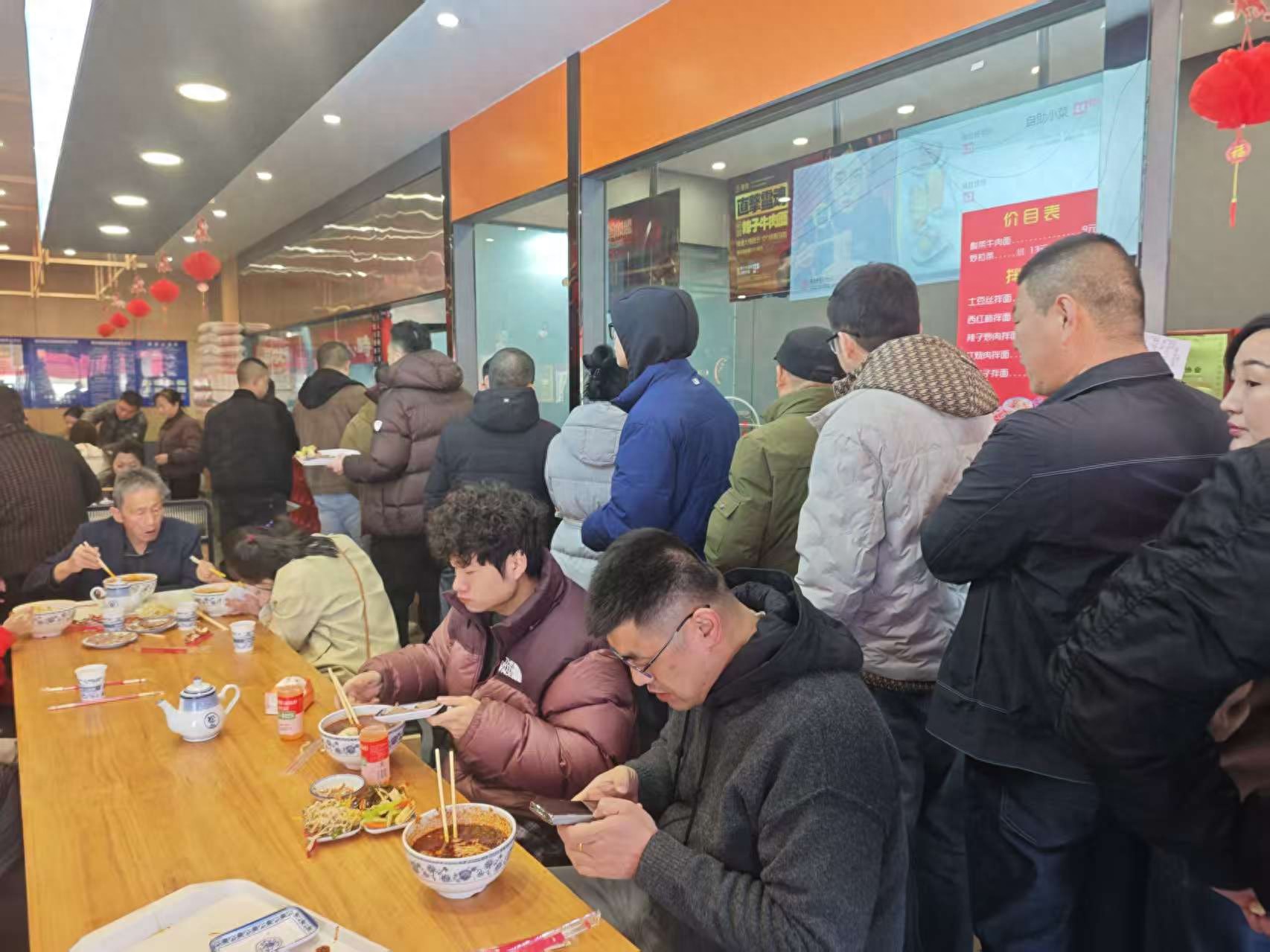
(A beef noodle shop in Jinchang waits for a table in the morning. Photography/First Financial Reporter Qi Qi)
Long queues from morning to night, small town restaurants welcome the Spring Festival peak
After eating steaming beef noodles, a reporter from China Business News came to the central business district of Jinchang, Gansu Province, and encountered a unique scene of hot outside and cold inside, with clear distinction between warm and cold.
Food stalls line up along the street outside the shopping mall, and the aroma is fragrant; there are long queues in front of the amusement stalls such as ring trapping and target shooting, and adults and children are crowded around, shouting, laughing, and cheering one after another. People shopping crowded together.
When walking into the neatly decorated commercial building, the aisles are spacious but there are few passengers, and there are few pedestrians going up and down the escalators. In previous years, the gold jewelry counters that were crowded during the Spring Festival were particularly deserted this year. The clerks waited quietly in front of the counters, and few customers stopped to inquire about prices or choose to try on items.
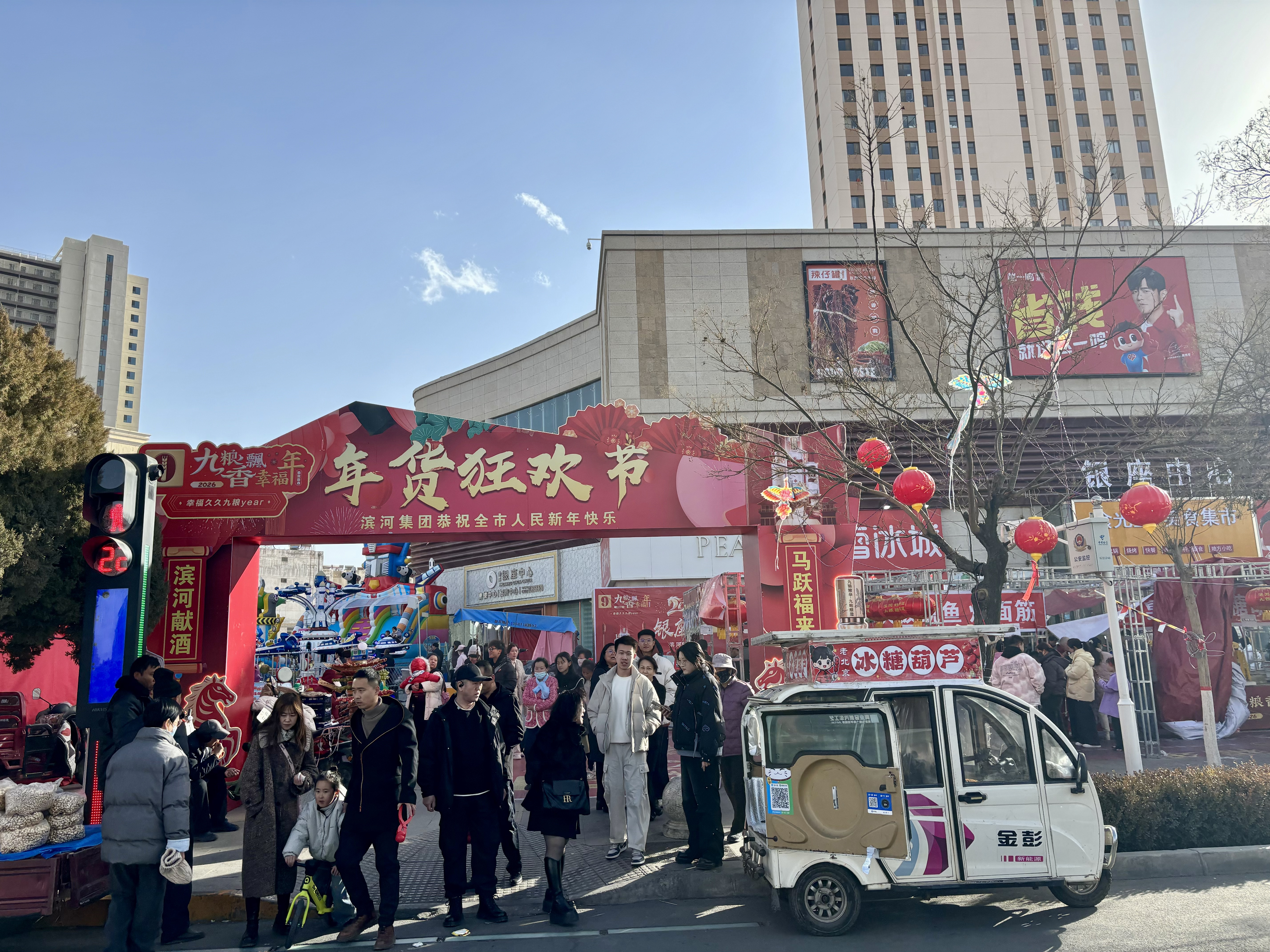
(Jinchang downtown business district. Photography/First Financial Reporter Qi Qi)
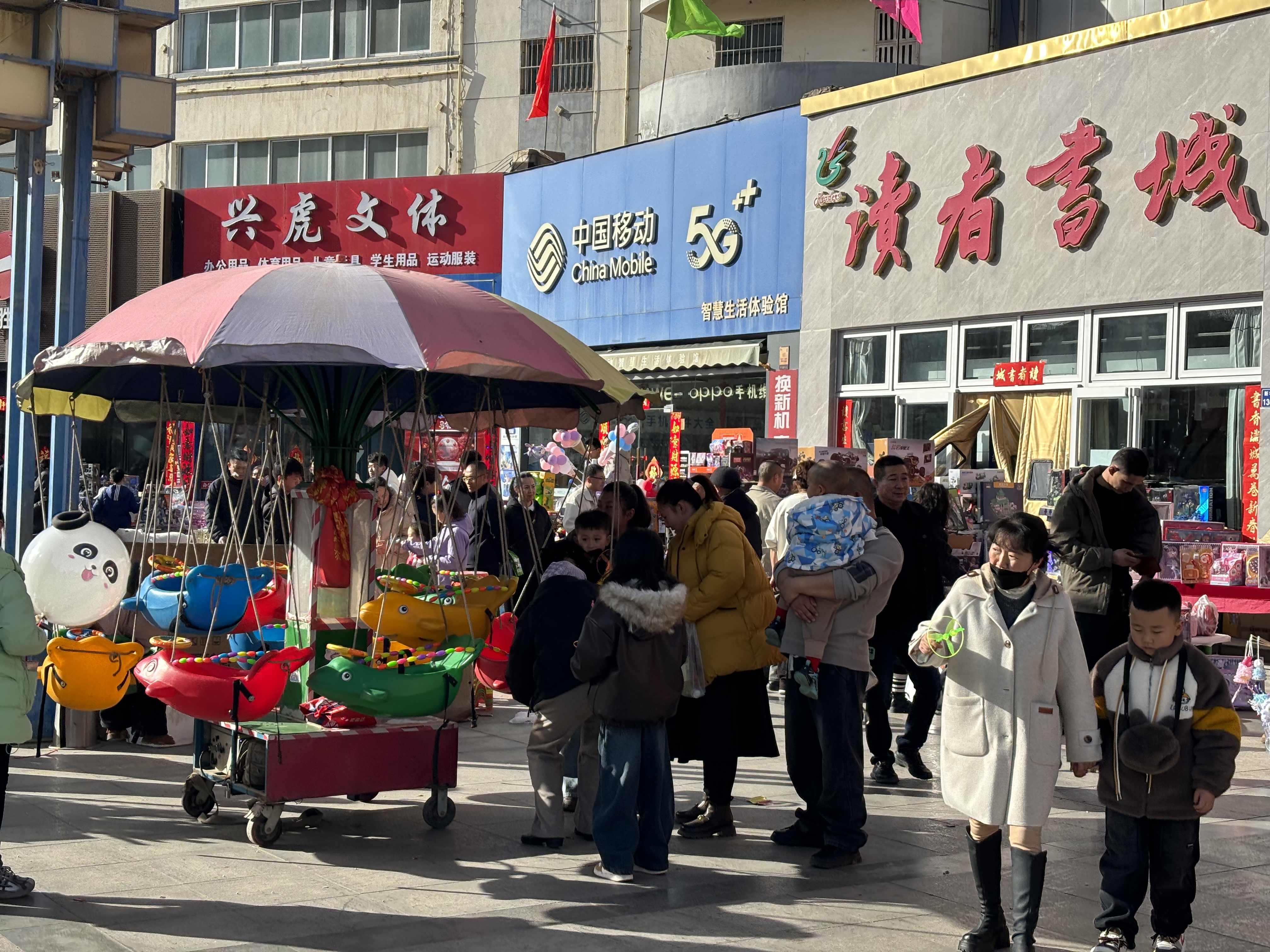
(The crowds of people shopping in Jinchang’s downtown business district are surging. Photography/First Financial Reporter Qi Qi)
The food stalls are bustling during the day, and the aroma of barbecued meats fills the air at night.
At 9 o'clock in the evening, in the convenient neighborhood along Tai'an Road in Jinchang City, there are no eye-catching signboards of chain brands. Only the old red-bottomed signboards of local shops give off a New Year atmosphere. A barbecue restaurant that has been in business for nearly 30 years, with an area of less than 20 square meters and only 6 dining tables, opened its doors on time on the second day of the Lunar New Year.
The weather was more than ten degrees below zero, and the plastic benches at the door were filled with waiting customers. More than 90% of them were young people returning to their hometowns for the New Year. Some were using their mobile phones to share the taste of their hometown, and some were chatting with the shopkeeper about home affairs. The smell of fireworks was blowing in their faces.
"It hasn't stopped since it opened at 6 o'clock, turning tables at least five times, and there are more than 20 tables waiting behind." The owner, Lao Zhang, flipped the meat skewers on the grill, and the charcoal fire sizzled. He told reporters that the Spring Festival is the busiest period of the year for small shops. On the second day of the Lunar New Year, the single-day revenue increased four times compared with normal days, and almost all of the customer flow came from people returning home.
The reporter saw at the scene that the store did not have a number-taking system and relied entirely on the owner to record orders verbally. However, the turnover was efficient and the business was booming. The store is only run by a husband and wife. Lao Zhang is in charge of the barbecue, and the aunt is in charge of the cooking in the kitchen. Their children also help clear the tables and serve the dishes.
The store has no exquisite decoration, no standardized process, and no brand marketing. It only relies on local taste and acquaintance service to support the popularity of Spring Festival catering, and it is difficult to find a table.
Barbecue restaurants like this are found all over Jinchang, and they are also the taste of hometown that tourists miss most. "If you ask me which restaurant is the best, I can only say that the one downstairs in my house is the best." Xiao Li, a post-00s generation who queued in line, said that he was used to chain restaurants in first-tier cities, but when he returned to Jinchang, he loved the authentic taste of small shops in his hometown even more. "Getting together with friends and classmates to eat barbecue is an annual New Year's repertoire." The chatter and laughter of young people returning home are wrapped in the smell of meat and become the most vivid consumption footnote in the small town.
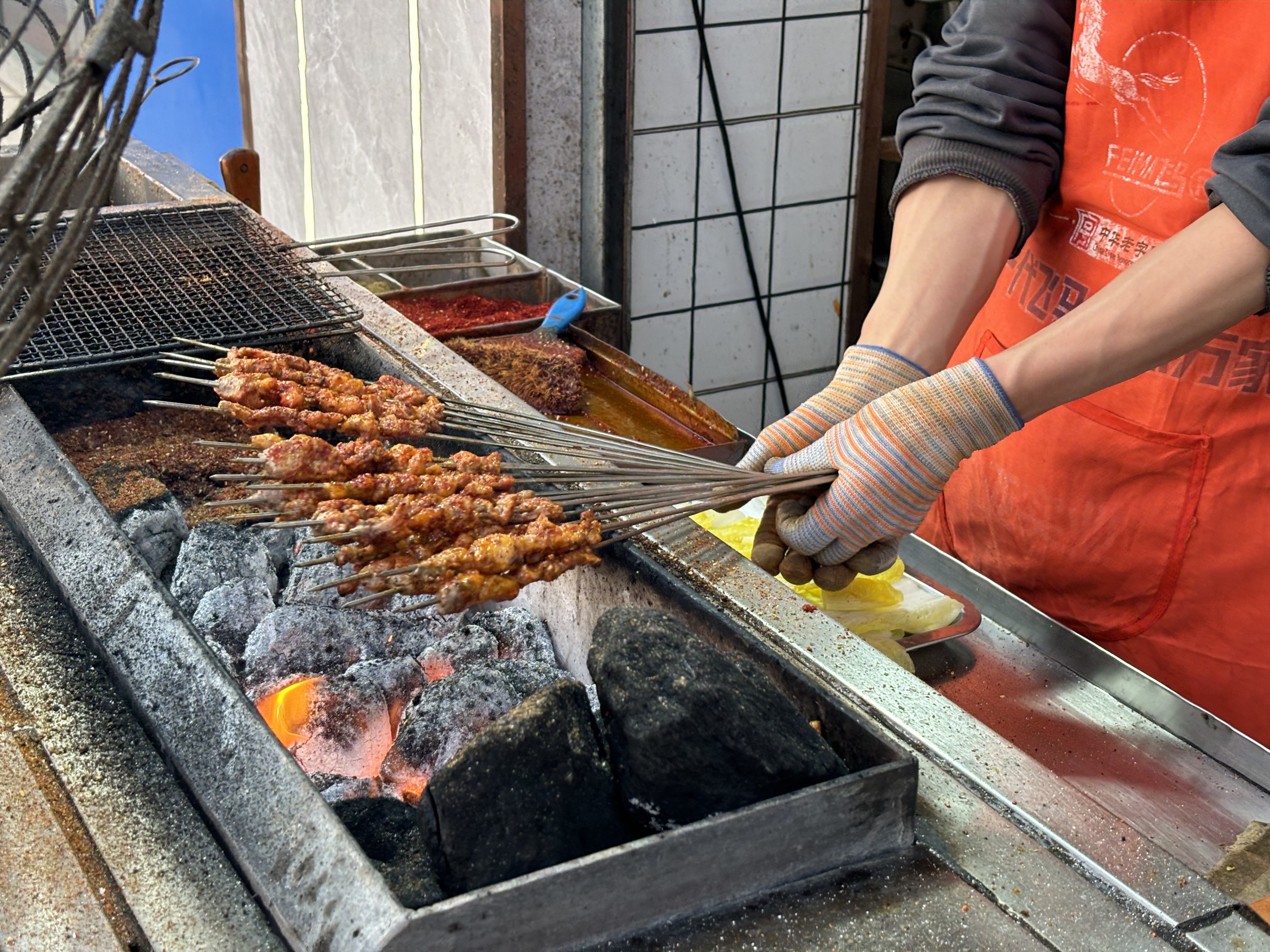
(Barbeque restaurant on Tai’an Road, Jinchang City. Photography/First Financial Reporter Qi Qi)
In the absence of chain stores, local stores support the consumer market
Jinchangyuan Mine started its business and was established as a city in 1981. It is located in the middle of the Hexi Corridor and is an important node of the “One Belt and One Road” initiative. It is also known as the “Nickel Capital of China” because of its rich nickel production and is the first national civilized city in the province.
Jinchang's business landscape is completely different from that of first- and second-tier cities. As an industrial city in the northwest, the local business district ecology dominated by national chain businesses has not yet formed. Even if regional commercial complexes are launched, the country's leading chain shopping malls and chain catering brands are still in a sporadic layout. Instead, there are local snack bars, mom-and-pop shops, and brother shops scattered throughout communities and neighborhoods, forming the core carrier of urban consumption.
The formation of this pattern is not only objectively constrained by city size and population flow, but also market choices based on business costs and market adaptability. The sinking of chain brands needs to meet multiple thresholds such as passenger flow, square footage, and supply chain. However, Jinchang’s permanent population size and daily consumption density make it difficult to support the standardized operations of leading chains. On the contrary, local small and micro merchants have become the "stabilizer" of county businesses with low rents, light assets, and high flexibility, accurately adapting to local needs.
Data released by the Jinchang Municipal Bureau of Statistics show that in recent years, the city's major consumer markets have continued to improve. From 2019 to 2024, sales of retail goods above designated size increased from 1.857 billion yuan to 3.296 billion yuan, with an average annual growth rate of 16%. The number of employees in the retail industry increased from 920 to 1,690, with an average annual growth rate of 16.42%.
At the same time, the rise of multiple nighttime consumption landmarks and the continued construction of the "15-minute convenient living circle" have jointly promoted the city's commercial vitality, making this industrial city's "fireworks" even more intense.
The wave of young people returning home activates their spending power during the Spring Festival
The core engine of the popularity of small shops during the Spring Festival is the structural increase in consumption brought by young people returning home.
The number of migrant workers and students in Jinchang is stable, and a large number of people return home during the Spring Festival to form an "annual consumption window period." This group of young people has returned with the concept of urban consumption. They not only pursue a sense of experience and social interaction, but also prefer local fireworks. They have become a key group to activate consumption in small cities.
Thanks to the increase in consumption, Lao Zhang, the above-mentioned Qingyang Road barbecue restaurant, decisively expanded his business area last year. He bought the original real estate agency store next to his own store, and now the old signboard of the new store has not had time to be replaced. "Business has been so good during the Chinese New Year these past two years. My store has only had this one store for so many years, and now I have taken over the one next to it, so that all your children who come back for the Chinese New Year can eat my barbecue." Lao Zhang said with a smile.
From "keeping the store" to "expanding the store", Lao Zhang's change is not unique. A brothers barbecue stall on the pedestrian street also opened a new, larger store on the same street. Even though the store expanded, it was still very popular during the Spring Festival, with customers queuing up to eat every day.
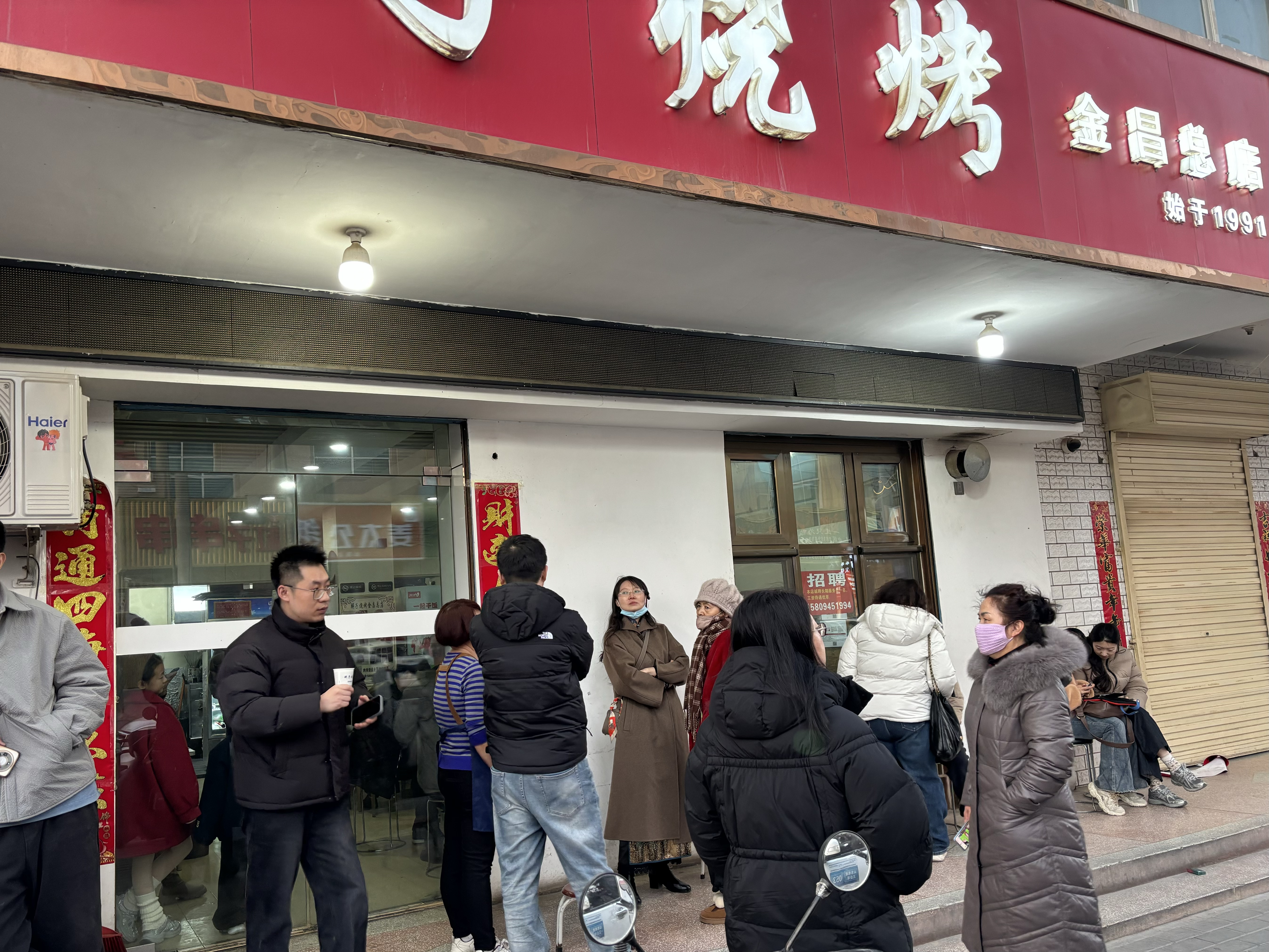
(Brothers BBQ stall on Jinchang Pedestrian Street. Photography/First Financial Reporter Qi Qi)
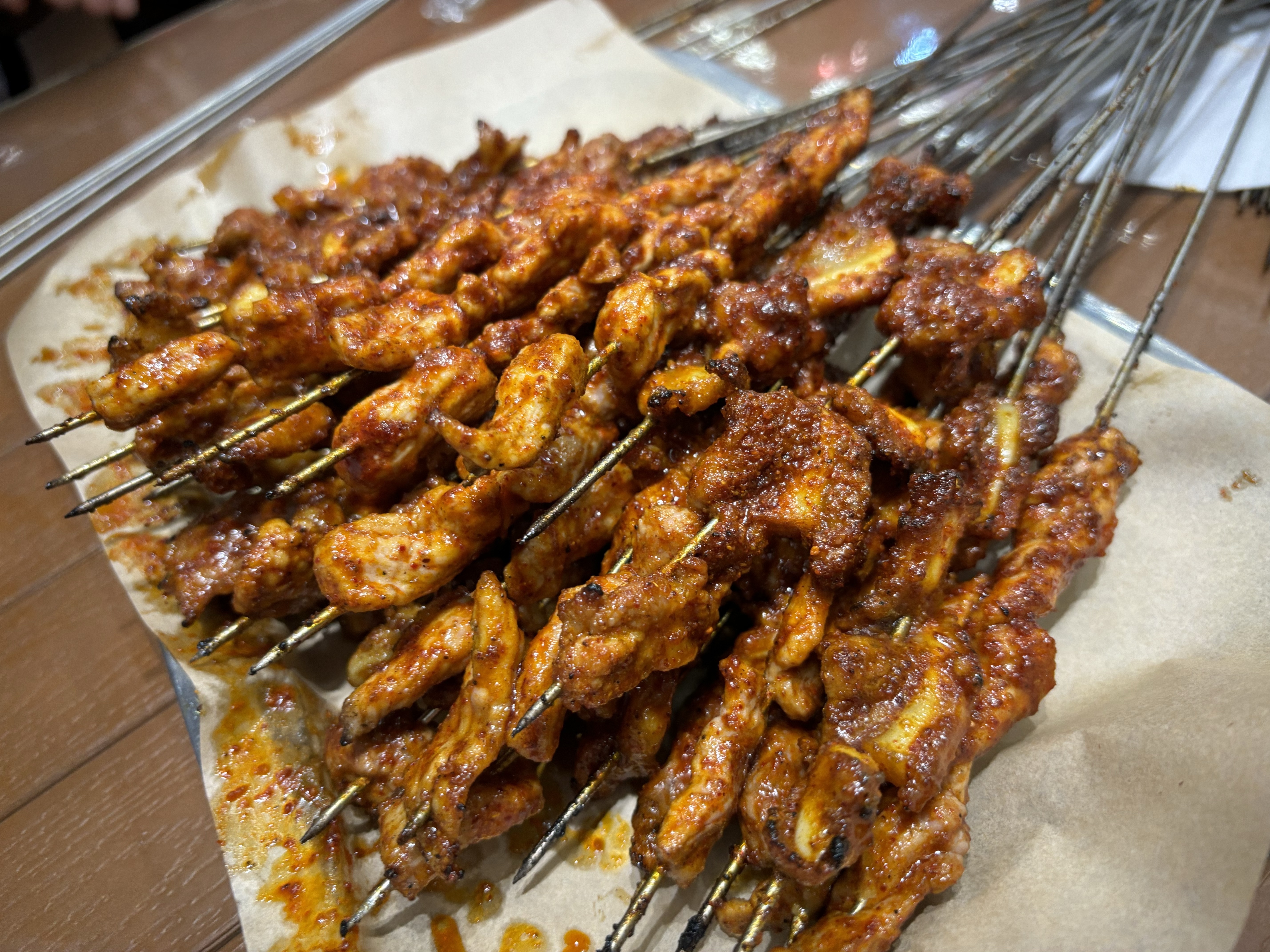
(Sizzling barbecue. Photography/First Financial Reporter Qi Qi)
Returning home consumption has restructured the consumption rhythm of small towns. The reporter observed that Jinchang mainly focuses on the immediate needs of local residents on weekdays, while during the Spring Festival, it focuses on quality consumption and social consumption of people returning home, forming a revenue model of "stable on weekdays and explosive during festivals". This cyclical outbreak allows local stores to balance operating costs throughout the year and achieve sustainable survival.
There is no hustle and bustle of chain business districts, but there is the heat of fireworks; there is no gathering of brand-name restaurants, but there is the prosperity of local flavor. Jinchang’s Spring Festival consumption scene may also be a microcosm of China’s vast county market. The vitality of county businesses has never relied on the accumulation of chain stores, but is rooted in the resilience of local merchants, the consumption power of returning people and the cohesion of human society. The consumption explosion brought about by the Spring Festival return wave is not a short-term traffic, but a normalized dividend for county consumption.
Because this warm wave of consumption from hotpot gas warms the stomach of every young man who returns home every year.
(Lao Zhang and Xiao Li are pseudonyms in this article.)