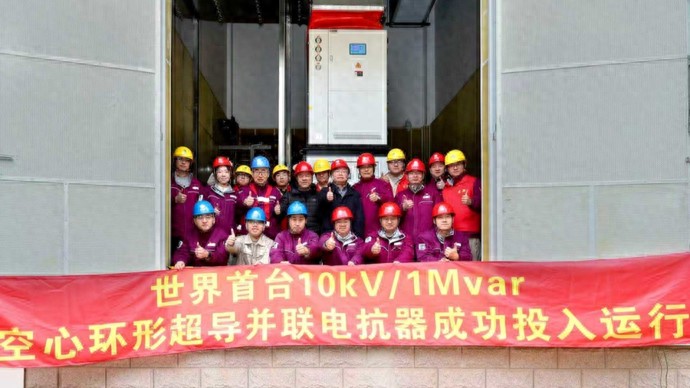

On February 10, the world's first 10 kV/1 MW hollow annular superconducting shunt reactor, jointly developed by State Grid Shanghai Electric Power Company and Shanghai Jiao Tong University and other units, was officially put into operation at the 35 kV Gulong substation. This move marks another major breakthrough in my country's research and development and engineering application of superconducting power equipment, providing innovative solutions for the upgrading of global urban power grids.
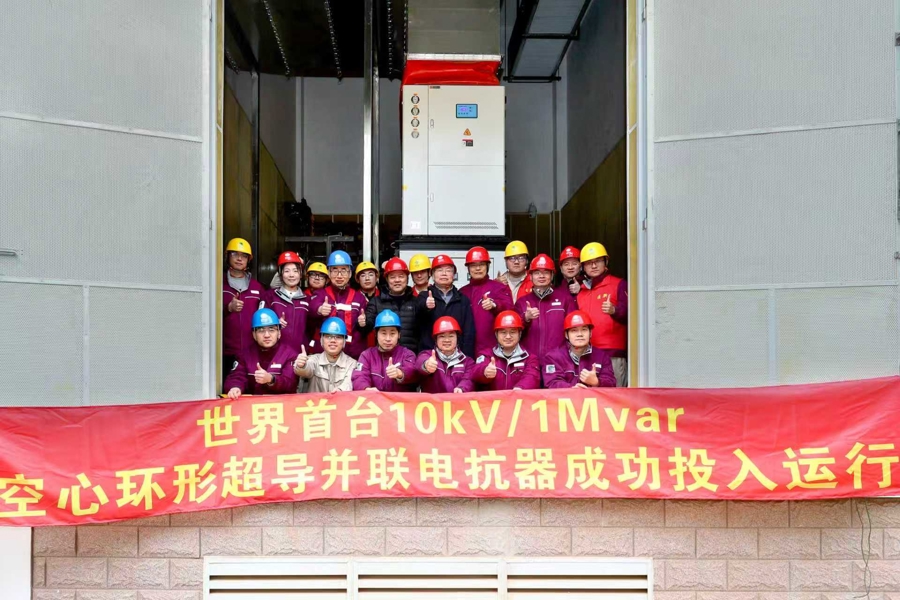
The world's first 10 kV/1 MW hollow ring superconducting shunt reactor was successfully put into operation
As a key equipment to ensure the stable operation of the power grid, traditional shunt reactors have problems such as large size, high noise, and limited installation. They are difficult to adapt to the needs of tight land resources and strict environmental standards in urban central areas. The superconducting shunt reactor put into operation this time uses "zero resistance, high flow" superconducting materials and is designed with a coreless ring topology. It covers an area of less than 6 square meters, which is more than 60% smaller than traditional equipment. The operating noise is less than 60 decibels, and the spatial magnetic leakage is almost zero. It can be plug-and-play and seamlessly connected to the existing substation system.
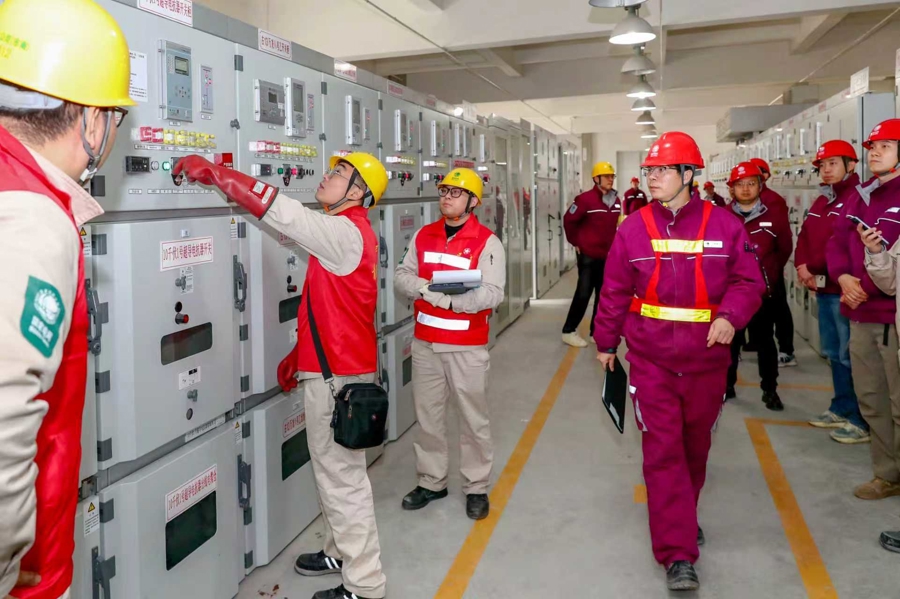
Members of the superconducting reactor project are working on the start-up and operation of the 10 kV No. 1 superconducting reactor at the 35 kV Gulong Station.
The Gulong substation where the superconducting reactor was installed this time is located in the main urban area of Minhang, serving 22,000 residents and many schools. During the low load period, it often faces the problem of reactive power transmission of about 1 megawatt, resulting in voltage fluctuations and reduced power quality. The commissioning of superconducting reactors effectively fills the gap in inductive reactive power compensation and significantly improves voltage stability.
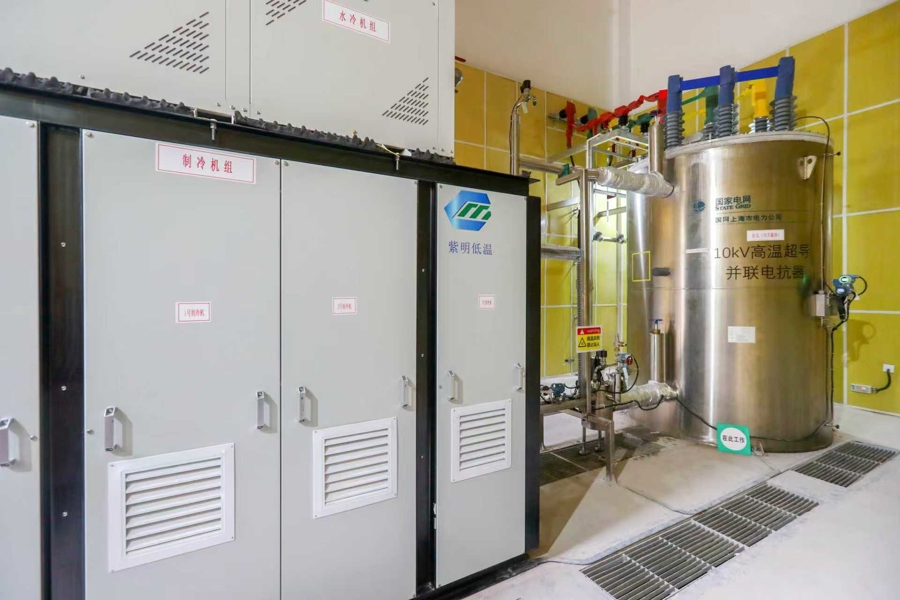
Superconducting shunt reactor body and its supporting refrigeration equipment
The birth of this "important weapon of the country" took two years of research. In January 2024, the joint industry-university-research team officially started the research and development work, and has successively overcome a number of world-class technical problems, and completed the development of prototypes and refrigeration systems by the end of 2025.
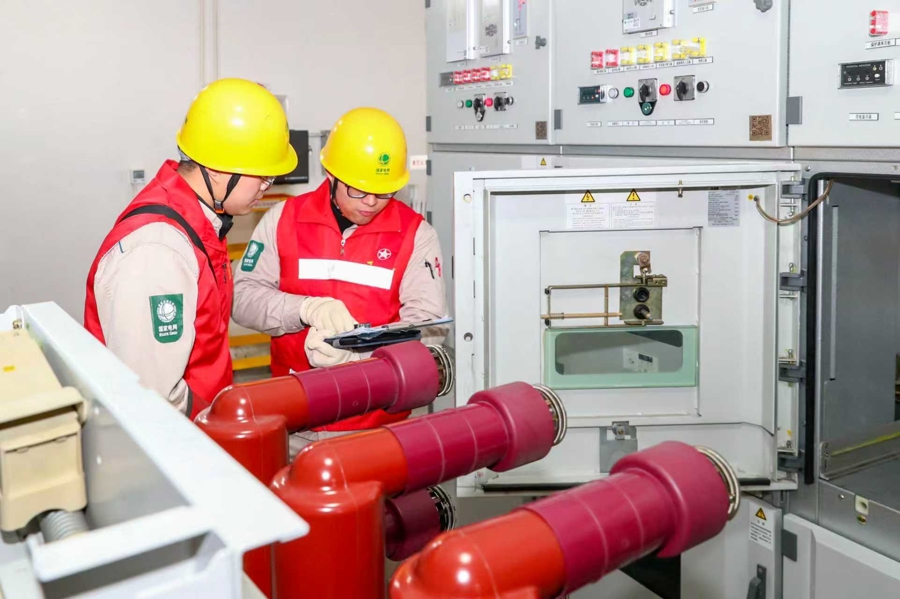
Members of the superconducting reactor project are conducting power transmission operations for the 10 kV No. 1 superconducting reactor at the 35 kV Gulong Station
The successful implementation of this equipment not only solved the structural problem of reactive power compensation in urban power grids (reactive power compensation is a technology that plays a role in improving the power factor of the power grid, reducing the losses of power supply transformers and transmission lines, increasing power supply efficiency, and improving the power supply environment in the power supply system), but also promoted my country's superconducting power equipment industry to move towards the high end of the global value chain. This technology is expected to be widely used in scenarios such as the renovation of old urban stations and the construction of new stations, injecting new momentum into the construction of a safe, efficient, and low-carbon new power system.



![[Netherlands] France Turns To The Netherlands To Support Its Military Operations-Lijin Finance](https://www.erbetc.com/wp-content/uploads/2026/03/1773277663261_0.webp)
