Why is it difficult to determine the president’s physical condition?
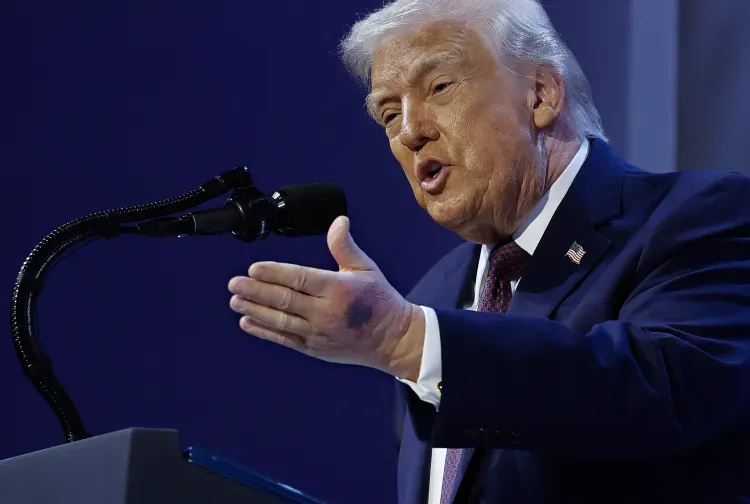
On January 22, 2026, at the World Economic Forum in Davos, Switzerland, President Trump had obvious bruises on the back of his left hand.
President Trump has been on the world stage for more than a decade, during which time he has repeatedly delivered speeches that jump out of style. Although he calls himself a "brilliant" art of expression, it often appears incoherent to outsiders. However, is this situation getting worse?
Since Trump returned to the White House a year ago, online public opinion has continued to debate the health of the 45th and 47th president. Incoherent speech and behavior, mysterious bruises on his hands and swollen ankles have left the public with lingering doubts: Is Trump really in good health?
"New York Magazine" reporter Ben Treese recently wrote an article that explored this issue in depth. In an interview with Astrid Herndon, co-host of the "Today's Analysis" podcast, he said that the answer is far more complicated than imagined.
The following are excerpts from the conversation, edited to ensure appropriate length and logical clarity.
What was the impetus for this report?
We've followed him over the years, but this past year the questions surrounding him have exploded: How is his health? Why are there bruises on my hands? Why are ankles swollen? And why do you frequently doze off during important meetings?
Before formally interviewing him, I studied several books written by his family members and interviewed his niece Mary Trump specifically. Mary admitted that sometimes when watching Donald Trump speak in public, she would have an illusion, as if she saw the shadow of her grandfather when he was suffering from Alzheimer's disease. I couldn't tell whether he was sick, but this became the focus of my face-to-face verification.
When asked, he began to ramble: "My father has always been in good health and has no problems. His heart never stops beating."
However, when the conversation changed, Trump told me: "But he does have a problem." Trump paused for a moment, pointed to his head and asked: "You got it in your later years… What is that called?"
Press secretary Caroline Leavitt, who was sitting nearby, immediately came to the rescue: "It's Alzheimer's disease."
He immediately changed his mind: "Yes, yes, he has Alzheimer's disease. But, I don't have it."
What concerns have you uncovered about Trump's health?
My original intention was to explore his personal health, but I ended up with a story about the "health" of this administration. There is a certain pathology that pervades Trump’s inner circle—everyone talks about him in an almost maniacal, North Korean-style “Dear Leader” tone.
They no longer objectively comment that "for an old man who is nearly eighty years old, he is in good health" or "although he is a little slow, he is definitely qualified for the office of president." Instead, there were extremely ridiculous compliments: he said he had a "superhuman" body and was "the healthiest man in the world." He even told me personally, "I am healthier now than I was 40 years ago."
However, the reality is that this man neither exercised nor paid attention to his diet, and drank enough Diet Coke to fill a football stadium. Even more disturbing is the fact that the people around him are no longer trustworthy. I think this report is not only a revelation of Trump’s personal health, but also a reflection of the American political ecology under Trump.
Regarding the bruise on his hand, did you find out the cause or severity?
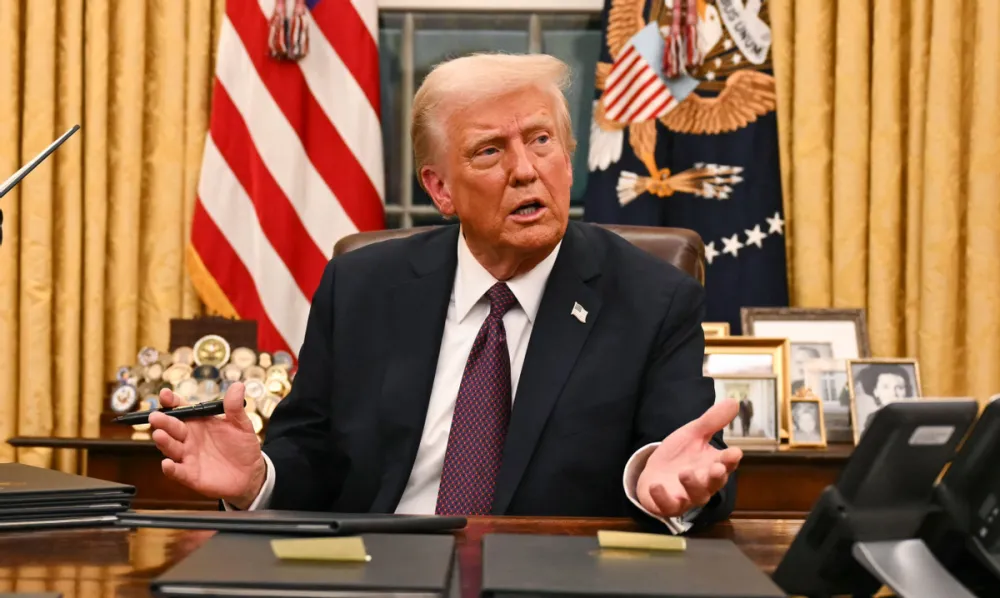
When I walked into the Oval Office for the interview, we shook hands. Unexpectedly, his palms were soft and warm, but the back of his hands was extremely dry and covered with huge bruises like rhinoceros skin.
When asked by me, Trump claimed that he had been taking aspirin for a long time, and the dose was far higher than what doctors recommended, in order to thin the blood. Because of the overdose, he was prone to subcutaneous bleeding.
The accompanying doctor confirmed this statement. The doctor explained that due to his constitution, which is prone to bruises, and the fact that as president he needs to shake hands frequently, the backs of his hands are always covered with bruises.
I'm curious about how that works and how open they are to discussing the president's health.
Early in the interview, I made my reporting intentions clear to the White House: There were major questions about the president's health, and many outsiders thought they had the answers, but I wanted to get to the bottom of it. There are very few people who are truly informed – only Trump himself, his core staff and medical team. Surprisingly, they provided me with a large number of interview subjects.
Although it was not yet certain that I would be able to interview Trump himself, the White House specially arranged for me to go to the White House for talks with Marco Rubio before meeting with him. The multi-tasking senator took a break from his busy schedule to talk to me in Carolyn Leavitt's office to talk about how the president is "too healthy."
The details Rubio recounted were ironic and, to some extent, self-deprecating. "While on Air Force One, I needed a nap, so I wrapped myself in a blanket to hide myself. I was like a mummy, wrapped head-to-head," he recalled.
Rubio said frankly: "Because I know that Trump will always appear from the cabin during the flight and patrol the corridor to see who is awake. I hope he thinks it is a staff member who has fallen asleep. I don't want him to see the Secretary of State napping on the sofa and think, 'This guy is too weak.'"
How does his doctor assess health status?
When I walked into the Oval Office, the doctors there were holding sheets of paper with "talking points" on them, clearly having a set advocacy agenda to advance.
Doctors told me the president's health was as strong as he said he was. One of them mentioned that they conducted an electrocardiogram test, and according to artificial intelligence data analysis, Trump's heart condition was equivalent to that of a 64 or 65-year-old person.
At the end of the interview, Carolyn Levitt turned to one doctor and said, "Oh, you've worked for the Obamas, right?" So I asked, "So who's healthier? President Obama or President Trump?"
At this time, Trump was sitting across the desk and looking directly at the doctors. The doctor responded without hesitation: “President Trump, of course.”
Ever cringe while covering Trump?
After experiencing the Biden era, reporting on such topics has become easier. Although the truth is still confusing, people may be more willing to talk about it.
Witnessing Biden's gradual aging in the public eye has broken the previous taboo of the media being overly sensitive to the topic of aging, making reporters more willing to follow such reports and editors more daring to choose topics.
Is this a fair comparison?
The comparison is entirely justified simply by their advanced age. Donald Trump is about to turn 80. That fact alone is newsworthy.
I think one of the reasons Trump is able to get away with certain possible signs of aging is that they overlap closely with his long-standing personal traits—so-called “Trumpian traits.”
He has long been a chaotic presence, speaking incoherently and often making out-of-control and ridiculous remarks. This was true fifteen years ago, and it is true now. But is there any difference between the way he expresses himself now and then? The answer is yes. It’s just that this change is far less glaring than when Biden showed signs of decline. Biden was once a serious, traditional politician who stood out when he made mistakes.
I want to explore a seemingly similar phenomenon:
The president and his staff will never tire of telling you: Don’t believe your own eyes. For example, when Trump takes a nap during a meeting, aides will explain that "that's just the way he thinks."
There's one thing I didn't include in the report – I'm going to share this exclusive information with you for the first time here.
I did interview several people from the Biden White House to write this story. They obviously did not want to be named, but one of them admitted that he did have similar feelings when witnessing the scene today.
I have a quote to share about Biden's health: "I think there was a point where we were in denial so much that what the public saw was different from what the authorities said, and that created a crisis of trust. People can no longer deny what they saw. They're repeating the same mistakes and putting themselves in the same desperate situation we had."
Part of Trump’s widespread success and appeal stems from his ability to convince his followers of his constructed version of reality. Do you think his strategy on health is working?
It’s like many of the problems Trump faces today: He has a base of unqualified supporters, but the middle group between supporters and opponents is increasingly difficult to convince.
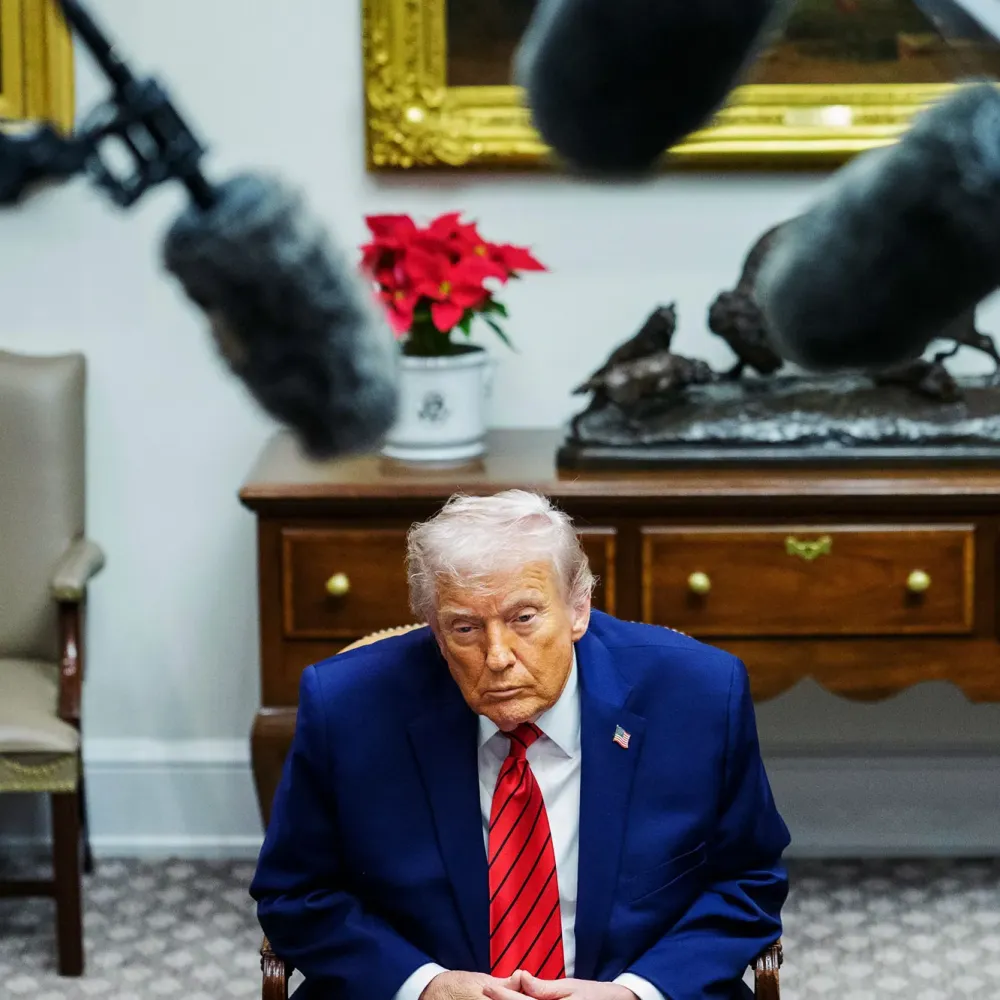
Trump appears to be losing his ability to control the narrative. His poll numbers are far from expectations, the midterm election situation is moving in an unfavorable direction, and even his most important immigration issue has failed to advance as expected.
His attempt to control his own health narrative is essentially the same as his attempt to control everything, and I feel like he's losing that control. This is not uncommon for presidents, but that's what makes them lame ducks. Critics have begun calling him a lame duck, and signs of such a decline in power typically don't show up until the third year of a president's term.
About the author
Kelly Weisinger and Astrid Herndon
This article is compiled based on the content of the "Today's Analysis" podcast.