At the Shanghai University of Engineering and Technology in Songjiang University Town, a brand new plaque for the Carbon Neutral Systems Engineering Research Institute was recently hung. As the first industry-university-research platform launched after the launch of the Songjiang University Town Science and Technology Innovation Source, the institute focuses on the "dual control" of carbon emissions and product carbon footprint management, trying to solve the complex proposition of regional low-carbon transformation with systems engineering thinking.
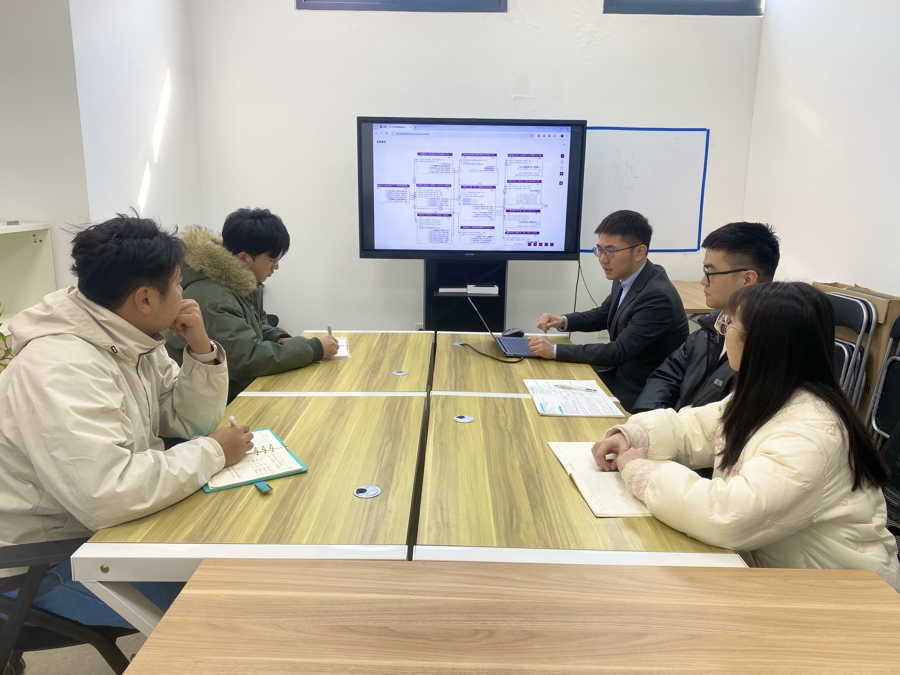
Systems thinking breaks down technical barriers to carbon neutrality
"Carbon neutrality is not a problem of a single technology or link, but a systematic project covering the entire life cycle of products and the upstream and downstream of the industrial chain." Li Ya, executive vice president of the institute, pointed to the core. As an example, he explained that the carbon footprint of a bottle of mineral water needs to be accounted for from water source extraction, plastic bottle production, transportation and distribution to waste disposal. "Traditional carbon management focuses on direct emissions within the factory boundary, while system engineering requires us to open up the entire chain of 'modeling-accounting-evaluation-optimization'."
This concept is in line with the country’s institutional change from “dual control” of energy consumption to “dual control” of carbon emissions during the country’s “15th Five-Year Plan” period. The "Tiangong" database jointly built by the institute and Tsinghua University currently integrates more than 4,000 process models and more than 100,000 pieces of environmental data, covering key industries such as petrochemicals and agriculture. Dr. Lu Jiaqi, head of the carbon footprint direction of the institute, added: "The database is not only a 'script' of carbon footprints, but also a passport for international mutual recognition. For example, the EU Battery Law requires the disclosure of full life cycle carbon data, and we must use a systematic approach to deal with it."
Collaborative path from laboratory to scenario-based application
How to avoid the "two skins" between scientific research and industrial demand? Li Ya mentioned a set of details: the office area and laboratory of the institute are specially planned in the Kechuangyuan Industrial Park, just across the street from the corporate office area. "We require students not to sit in the laboratory and write papers, but to directly participate in actual corporate carbon management work." He revealed that the institute has jointly tackled key problems with Shanghai Yichan Digital Technology and other companies to embed the carbon footprint evaluation platform into actual corporate management processes.
Graduate students from Lu Jiaqi’s team are participating in a pilot agricultural carbon footprint project. "Students collect data in typical facility agriculture areas in Shanghai, develop a carbon emission data set for tomatoes in all aspects of tomato fertilization, irrigation, and transportation based on the Tiangong data platform, and then match emission reduction solutions such as renewable energy and organic fertilizer substitution." He described this as a "project-based teaching" that "not only serves the work related to the "Shanghai Special Plan for Modern Facility Agriculture (2024-2035)", but also cultivates compound talents who understand technology and rules."
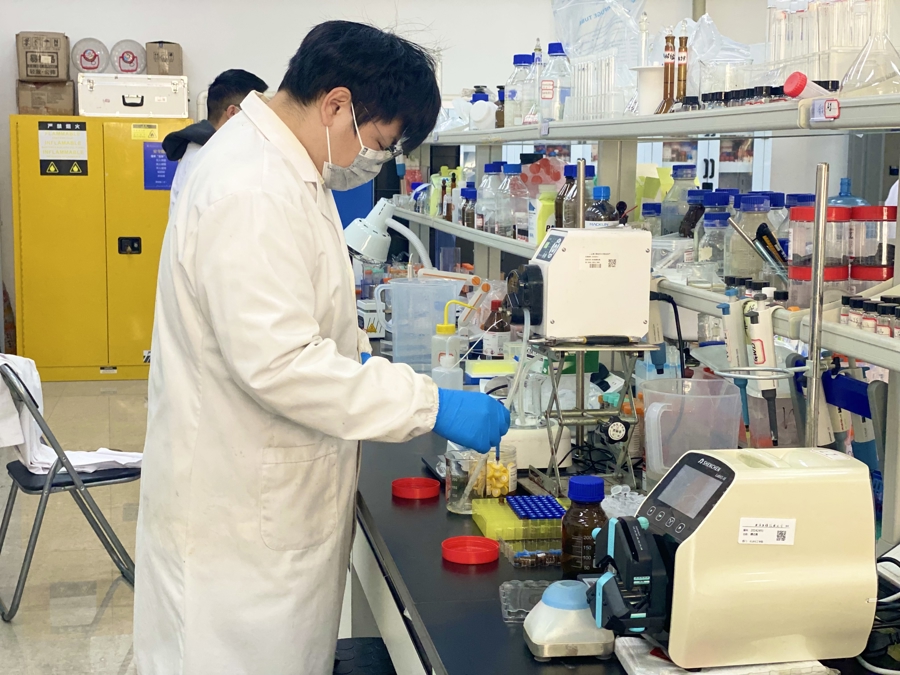
Solve agricultural carbon conundrum with “Trusted Data Space”
Agricultural carbon footprint accounting has long faced the pain points of scattered data and inconsistent standards. The "Agricultural Carbon Neutral Trusted Data Space Joint Laboratory" jointly established by the institute and Shanghai Agriculture and Forestry Vocational and Technical College is trying to break the situation. Ruan Hang, deputy director of the institute, picked up a research report and explained: "For example, the farm data of a state-owned agricultural enterprise involves commercial secrets. We use desensitization and privacy computing technology to extract key parameters of the carbon footprint while ensuring that it is 'available and invisible'. This not only supports the construction of Shanghai's product carbon footprint database and the implementation of carbon inclusive policies, but also transforms these originally dormant agricultural-related data into data assets that can be confirmed, measured, and traded."
At present, the laboratory has launched pilot projects in Songjiang Maogang, Fengxian and other bases. Ruan Hang looks forward to promoting the replication and promotion of the carbon management platform in the Yangtze River Delta in the next three years. "The digital intelligence platform will be launched within one year and a full-time technical team will be established within three years. The goal is to serve more than 100 companies and help Songjiang District complete the dual carbon emission control goals of the 15th Five-Year Plan and the construction of rural revitalization demonstration areas with high quality."