The construction of a new battery materials factory in Kotka, Finland, about 130 kilometers east of Helsinki, did not proceed as planned. In order to complete the project, a large number of Chinese workers began to be hired locally. Finnish public broadcaster Yle reported that Finnish immigration authorities have reviewed more than 150 work-related residence permit applications for Chinese workers.
A cathode active material (CAM) factory is currently under construction in Kotka. The plant has a designed annual production capacity of 60,000 tons, with room for future expansion reserved. The project is promoted by Easpring Finland New Materials Oy, a company established in 2024. The equity structure of this joint venture is: Beijing Yisiyuan Material Technology Co., Ltd., a company listed on the China Growth Enterprise Market, holds 70% of the shares, and Finland Mining Group Co., Ltd. holds 30%.
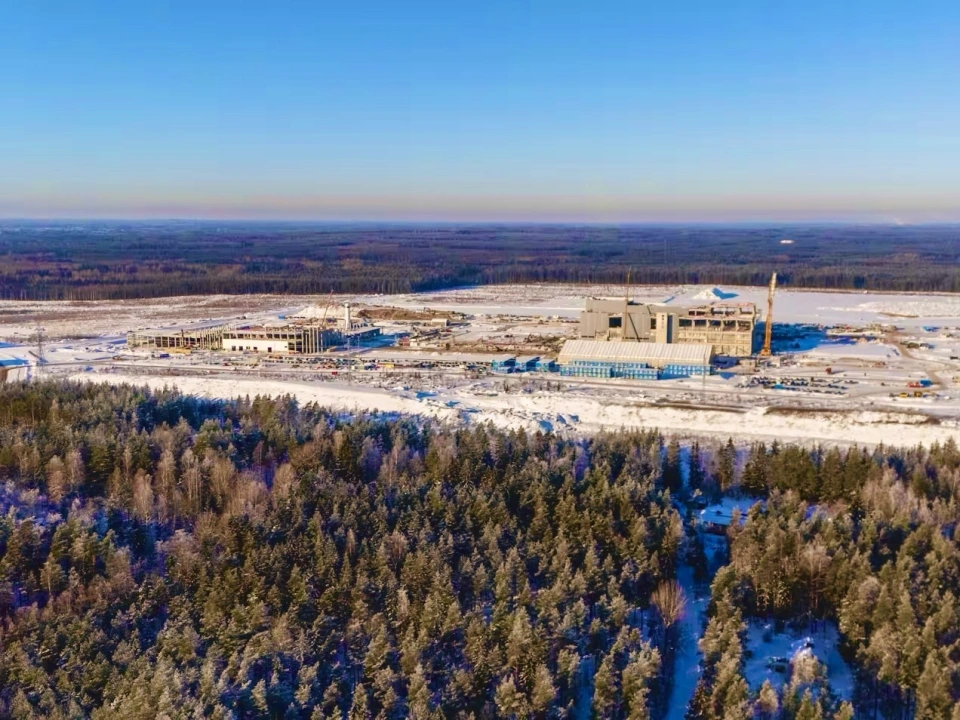
construction site
The factory will start construction in early summer of 2025 and will become an important part of the battery value chain in Finland and Europe after completion. After the first phase of the project is put into operation, it will directly create about 270 jobs. Finland hopes to steadily promote the construction of the battery value chain in this way. The CAM factory to be built in Kotka and the pCAM factory planned to be built in Hamina will form one of the largest battery materials industry clusters in Europe.
According to EU and Finnish regulations, EU construction workers must be given priority in the construction of such factories. Up to 800 people will be working on the construction site of the battery factory. Previously, there were only more than 40 Chinese workers. In October last year, the Finnish immigration authorities rejected dozens of applications for work and residence permits from China on the grounds that “Chinese cannot be allowed to steal jobs from Europeans.”

Report from German weekly "Focus"
However, due to the lack of technical experience of EU workers in building such complex factories, construction on the construction site is carried out at "European speed". If this continues, it will even seriously affect the previous completion plan.
To this end, the Finnish factory had to apply again to the Finnish Immigration Service for a work and residence permit for Chinese workers. The company is said to have submitted 155 applications for work-based residence permits from China, and the Immigration Bureau has so far approved most of them.
It is said that these Chinese employees mainly serve as project managers or on-site supervisors. Chinese experts also attend training courses there to meet the requirements of Finnish construction sites.
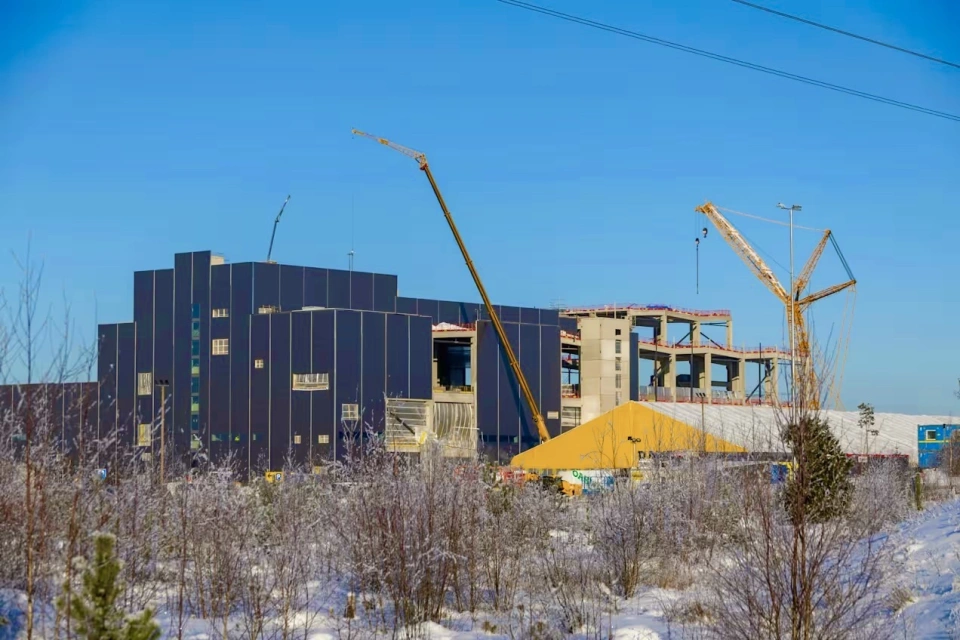
Construction site progress is slow
Vesa Koivisto, commercial director of Easpring Finland, said it would be almost impossible to accurately estimate the number of foreign experts and professionals before the project starts. However, "I can confirm that no Chinese workers are involved in the construction of the production facilities. They are mainly responsible for project management and supervision."
General contractor China Harbor Engineering Co., Ltd. (CHEC) also said the demand for Chinese labor has changed as the project progresses.
"It turns out that local people lack experience in setting up production lines for battery cathode active materials," CHEC explained to Finnish broadcaster Yle. Due to the tight construction schedule, technical expertise had to be imported from China.
In order to take care of the construction workers from China, CHEC rented a hotel near the Kotka construction site. The hotel has approximately 70 rooms and can accommodate approximately 300 people. Kotka also currently has a Chinese restaurant that serves construction workers for lunch.
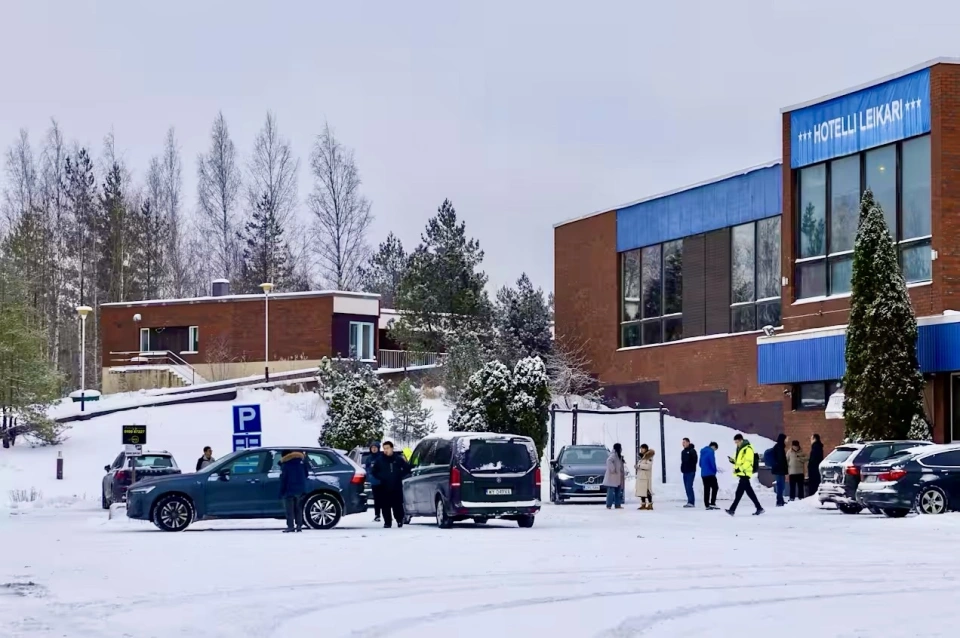
Hotel where workers stay
Finland is currently facing a serious skills shortage, especially in the technology industry, according to new analysis from ETLA Economic Research and others. Industry associations estimate that approximately 140,000 new skilled workers are needed.
Germany also faces a shortage of skilled workers. According to a STEM report released by the German Institute for Economic Research (IW), by the end of 2025, the German technology industry will be short of approximately 148,500 skilled workers, including skilled workers, academics and technicians.
Relying on China's reputation as an "infrastructure maniac", Chinese construction workers have also won wide recognition around the world. Political scientist Daniel Marvetsky once wrote in "The Post-Western World" that from 2011 to 2013, China's cement consumption exceeded the United States' entire 20th century by 50%. Another political scientist Milan Babic mentioned that China's solar installed capacity in 2023 will exceed the total of the United States in history.
Now, many European media like to compare the "snail speed" of European construction with the "China speed". Many European companies have also begun to implement the "China Speed" strategy. Introducing high-end Chinese construction workers into Finnish factory construction is a pragmatic approach.