Source: "Audio and Visual" Issue 6, 2019
Abstract: The "Media is Massage" viewpoint in the book "The Media is Massage" is another communication viewpoint after Marshall McLuhan's "The Medium is the Message". It has a vision and media significance that is ahead of its time. As an important scholar in the history of communication studies, McLuhan’s main views deserve our in-depth analysis and exploration. This article will understand the contemporary media significance of the concept of "media is massage" from the aspects of media as film and media as environment, and explore how media constructs the human social environment and its important impact on human society.
1. The media is the era of massage
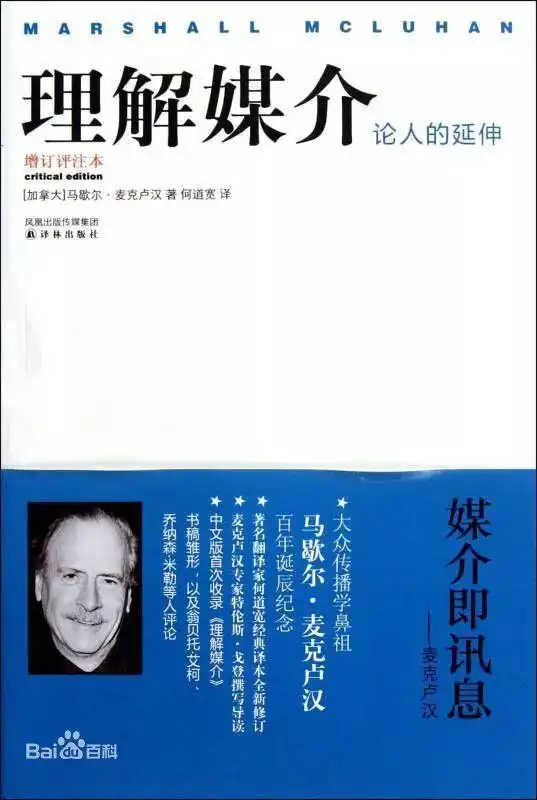
Marshall McLuhan had great achievements in the field of communication and had a forward-looking media vision. "The Medium is the Massage" is McLuhan's another masterpiece after "The Medium is the Message". In the book, he used his unique media vision and poetic writing to sharply judge the connection between the media and human life. The whole book shows us a vivid history of changes in the media environment in the form of pictures and texts, that is, how the media machines invented by humans construct the human environment, and how the constructed environment affects humans themselves. The idea that media is massage, as another of McLuhan’s thoughts on media, contains deeper connotations and is worthy of our reflection and discussion. In his rear-view mirror view, McLuhan said: “We look at the present with a rear-view mirror, and we look backward toward the future.”
"Looking at the old environment through the mirror of the new environment, but ignoring the new mirror. New technology creates cultural blues, just like the 'phantom pain' that the old technology still inspires after its demise." From the oral era to the written era to the Internet era, human beings have experienced the "public consciousness" brought by printing, and then the "public consciousness" generated by the telegraph. "Public Opinion", the emergence of every media always brings a certain degree of panic. The emergence of computers has once again subverted the relationship between transmitters and audiences in the traditional media era. Audiences who are accustomed to a single output mode are once again pulled back to the center of public opinion. They learn to think instead of just accepting, and they speak out instead of just agreeing.
2. Massage? How to give a massage!
"Massage? How to massage!" This is the first question McLuhan raises in the book. Rather than saying this is a question, it is better to understand it as a warning. The media changes people, always affecting them in a way that paralyzes people's consciousness. In the society before the advent of the alphabet, the ear dominated our view of the world. The emergence of papyrus ended the civilization dominated by the ear. The worship of words brought by printing eliminated the mystery of perceptual cognition. Religion is no longer an advanced knowledge that only a few priests can master. The linear editing and coherence followed by printing constitute a rational life. The linear text composed of words is quietly changing our perceptual way of thinking. If sensory organs can have such a profound impact on the way we understand the world, then the changes in media must be a force that cannot be ignored.
We live in an era that is constantly being rebuilt and reshaped by the media. It is of great significance to understand the media environment as an ecological environment. In the environment created by the media, we adapt, get used to it, and even become addicted. This extraordinary adaptability displayed by humans is exactly the ability to extend in the media environment. Different media, as different extensions of the senses, help us understand the environment more comprehensively. McLuhan believes that “due to the addition of media or technology, to a certain extent, the body extends outwards into the environment. As a medium, this extension is carried out between the body and the environment, thus protecting the body from the harm of the environment and becoming the body’s new environment.” The media, as the tentacles of people’s contact with the environment, affects their perception. The pattern of the world, every extension of tentacles is also an amputation of the human self. We use media to replace sensory functions, and move from real feelings to virtual experiences. This media massage is numbing self-awareness and accepting the mimetic environment built by the media. In the vortex of media, we are willingly swirling in the center.
3. The media builds the environment, and the environment creates personality
McLuhan said: "The environment created by man becomes his medium, through which man defines his role in the environment." What do we use to define ourselves? Psychoanalyst Sigmund Freud once proposed the related concepts of id, ego and superego, and then psychologist George Hert Mead proposed the concepts of subject and object from the perspective of communication, indicating that the "I" in the social environment has different levels. The media plays the role of feedback in the process of self-cognition. Different media make us feel ourselves in different environments, and different media environments create selves in different times.
The medium is the massage, the medium is the mask. The medium is a membrane, which shows that the medium provides an extended form that is protective and takes into account temperature and humidity for us to perceive the environment. The environment is invisible, but the five senses can sense it. In addition to being an extension of the five senses, the media has also been extended to become the "skin" that wraps the whole body. The media skin measures the real society with the temperature of the media, and then transmits it back to the brain as specific feelings, ultimately forming the environment we understand. The environment composed of different media is determined by the nature of the media itself. Different media have different skin temperatures, and this temperature determines the difference in our perception of the environment.
However, when the medium extends to become the skin, it also builds the environment. The medium is massage, which proves that the medium is the environment. The medium is changing our perception of the surrounding environment and sneaking into our hearts, thoughts, and actions in a numbing way. The emergence of printing brought about childhood, religious freedom, and public opinion; electronic technology changed the dominance of theology and promoted scientific development, but also caused the "disappearance of childhood", just like returning to the papyrus period; the Internet era changed the traditional mode of one-way communication of information for the audience. Different media build different environments, and the environment built by the media is inescapable for human beings. We can choose to use the media in a way that goes against the bias of the media itself or stay away from the media, but we cannot escape from the established social media environment. The creation of each media will build a media environment that matches it. This media environment will eventually show a sense of fit that is more in line with the functions and attributes of the human body under the protection of the media film, allowing us to show strong adaptability and cooperation ability in this unfamiliar environment. Not only will we not be surprised by technological innovation, but we will also be indifferent to its impact.
Bookworms, TV people, container people, mouse-hands, phubbers… These new words are produced in different media environments. Different media environments create different media personalities, and different media personalities react from the virtual world to the real society, ultimately completing a closed loop of communication. Every action and reaction will always bring a series of harm. Media and technology not only provide us with services, but also bring more subtle effects. The virtuality of the online world provides the possibility for role-playing, and at this point, confusing multiple personalities are created. The media is massage, which embodies the delicate techniques of this medium that enable us to express different true self-personalities or multiple personalities in different media environments. The emergence of these personalities always perfectly fits the environment established by the current media.
The media is a massage, which also reminds us to pay more attention to the hidden meaning behind the media, rather than just focusing on the technical means of the media or the information conveyed by the media. Media technology is like a pair of invisible hands, fabricating human cognition and thinking according to its standards. These invisible hands are always massaging invisibly to eliminate the fatigue of daily life and experience virtual pleasure. This pleasure is constantly switching between electronic integrated boards and central processors. One-sided interactions with the media make us gradually withdraw from reality. The media plays various roles required in life, confusing whether machines or people are needed in daily life.
4. Conclusion
The media is massage means that the media has an impact on the environment, whether real or virtual. We create the media, the media provides the environment, and the environment builds character. The essence of the environment is the reflection of human collective in the media, and the essence of the environment is the common projection of human beings. Today's sharp conflict between the old and new environments is not only between the traditional media environment and the new media environment, but also between the real environment and the virtual environment. Because of this, the birth of every technology will have an effect on our environment similar to the butterfly effect, that is, the birth of every media technology will cause environmental changes on a larger scale beyond its own field. The medium is massage is describing this fact.
In the Internet society, we can clearly feel that the interconnectivity generated by the Internet is far higher than the content pushed on the electronic screen. The various correlations generated by media technology itself promote the change and development of social environment, and promote the change of this complex virtual environment between "media" and "human nature". James Carey said: We may find that the structure of our consciousness is reshaped to match the structure of communication, we may find that we have become what we created. The consequences of technology are always unpredictable, but in an era of extremely rapid information circulation, information and feedback always produce results together, without giving people time to wait for discovery. The consequences are unpredictable, but that does not mean that they are inevitable.
Finally, to borrow a sentence from McLuhan: "As long as you are willing to think, what is happening will never be inevitable." As long as we stay awake in the whirlpool of information, we can understand behind the surge of information and how the environment built for us by the media makes us crazy.