The uniqueness of media environment studies is reflected in its focus on studying the nature of communication technology or how the inherent symbols and material structures have profound micro and macro impacts on culture. Media environmental studies believe that "the media is the environment" and "the environment is the media". It has three interrelated theoretical propositions: (1) The communication media is not neutral. The material attribute structure and symbolic form of the media have a prescriptive role, affecting the encoding, transmission, decoding, and storage of information, as well as the material equipment that supports these communication processes; (2) Communication media has biases: ideological and emotional biases , time-space and perceptual bias, political bias, social bias, metaphysical bias, content bias, epistemological bias, etc. Readers are already familiar with Innis's time-space bias theory and McLuhan's perceptual bias theory; (3) Communication technology has an impact on culture.
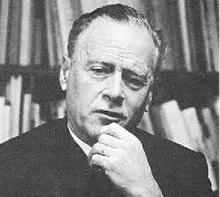
Marshall McLuhan, a Canadian literary critic, communication scientist and master of the media environment school of communication, put forward three famous views: "the medium is the message", "the medium is the extension of people" and "'hot media' and 'cold media'". These three views constitute the main content of McLuhan's media theory.
1. The medium is the message: The medium itself is the truly meaningful message. In other words, it is easy to understand that only with a certain medium can humans engage in communication and other social activities that are suitable for it. McLuhan said: "It is the formal characteristics of the communication medium – its repeated recurrence under various material conditions – rather than the specific message content, that constitutes the historical behavioral efficacy of the communication medium."
2. Media is an extension of the human body: He believes that any media is nothing more than an expansion or extension of human senses and senses: written and printed media are extensions of human visual abilities, radio is an extension of human auditory abilities, and television is a comprehensive extension of human visual, auditory, and tactile abilities. McLuhan's point of view is to illustrate the impact of communication media on human sensory centers. Therefore, in his eyes, the history of the development of media and society is also the history of human sensory abilities from "integration" → "differentiation" → "reunification".
3. "Hot media" and "cold media": are two famous concepts proposed by McLuhan on media classification. McLuhan himself did not clearly define the classification criteria for these two concepts, and people can only speculate based on his narrative. One explanation is: the information conveyed by "hot media" is relatively clear and clear, and the recipient does not need to mobilize more sensory and associative activities to understand it. It is itself "hot" and people do not need to perform "warm-up exercises" when processing information; while "cold media" is the opposite. The information it conveys is small and vague, and understanding requires the cooperation of multiple senses and rich imagination.