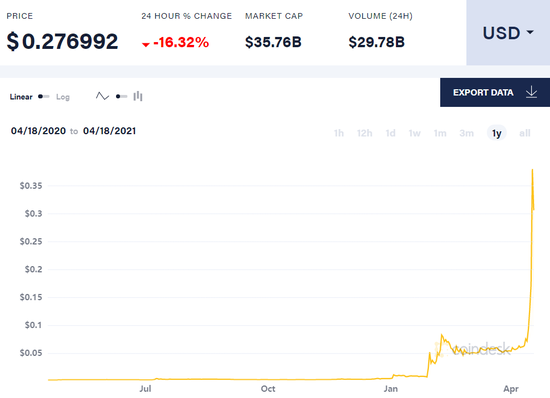
Bitcoin has transformed from an experimental digital currency worth less than a penny to a revolutionary financial asset hitting new highs in 2025. This guide takes a comprehensive look at everything you need to know about Bitcoin (BTC). We hope it will be helpful to everyone.
Bitcoin has transformed from an experimental digital currency worth less than a penny to a revolutionary financial asset reaching new highs in 2025. As the world's first cryptocurrency, Bitcoin will continue to reshape how we think about money, payments, and financial sovereignty in 2025.
This guide comprehensively explores everything you need to know about Bitcoin (BTC) – from its underlying technology and current market trends, to practical investment strategies and future outlook. Whether you are a complete beginner or looking to dive deeper, this article will provide you with the necessary knowledge to help you explore the Bitcoin ecosystem with confidence.

Key takeaways
What is Bitcoin
Bitcoin is a decentralized digital currency that does not rely on traditional financial institutions such as banks or governments to operate. Bitcoin was created in 2008 by the pseudonym "Satoshi Nakamoto" and was the first platform to successfully implement peer-to-peer electronic cash, solving the double-spending problem without relying on a trusted third party.
Unlike traditional currencies, which are controlled by a central bank, Bitcoin runs on a distributed network of computers, called nodes. Each transaction is verified by network participants through a process called “mining,” ensuring the integrity and security of the entire system.
What’s revolutionary about Bitcoin is its blockchain technology—a public, immutable ledger that records every transaction. This transparency, combined with cryptographic security, creates a trustless system where participants can transact directly without an intermediary.
Main features of Bitcoin and blockchain technology
Bitcoin’s design incorporates several groundbreaking features that set it apart from traditional monetary systems:
How Bitcoin Works: Mining and Transaction Process
To understand Bitcoin, you need to master the underlying blockchain technology that supports its network. Blockchain can be understood as a digital ledger that is replicated on thousands of computers around the world, with each new "page" (block) building on the previous page, creating an unchangeable historical record.
Bitcoin mining process
Bitcoin mining is the process of creating new Bitcoins and validating transactions. Miners use powerful computers to solve complex mathematical puzzles, and the first person to solve the puzzle can add a new block to the blockchain and receive a reward.
This proof-of-work consensus mechanism ensures network security by making it extremely costly to attack or manipulate the blockchain. Currently, miners receive a reward of 3.125 Bitcoins for each block mined, but this reward is halved approximately every four years, in a so-called halving.
The Bitcoin network processes transactions approximately every 10 minutes, and each block contains hundreds or thousands of transactions. No matter how many miners participate, the mining difficulty is automatically adjusted to maintain an average of one transaction every 10 minutes.
Transaction verification and security
When you send Bitcoin, your transaction is broadcast to the entire network for verification. Miners collect these pending transactions and verify them by checking the digital signature and ensuring the sender has sufficient funds.
Once the transaction is verified, it will be packaged into a block and permanently recorded on the blockchain. The more blocks (called confirmations) that are added after a transaction, the more secure the transaction is. Most exchanges and services consider a trade final after six confirmations, which usually takes about an hour.
This verification process eliminates the need for traditional financial intermediaries while providing security through mathematical proof rather than trust in institutions.
Bitcoin Price Analysis and Market Trends
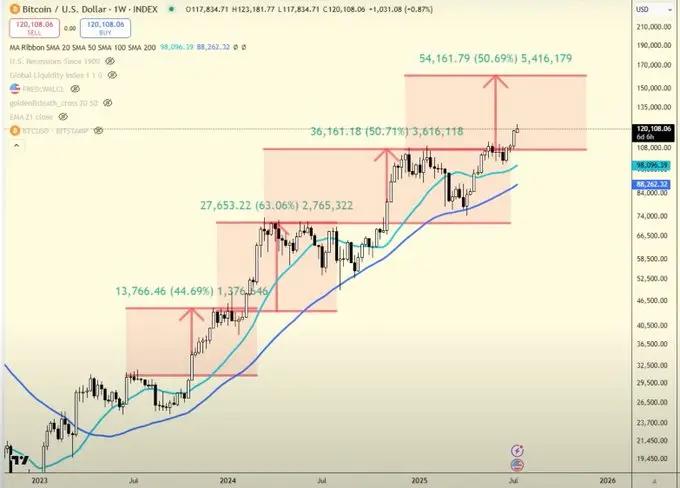
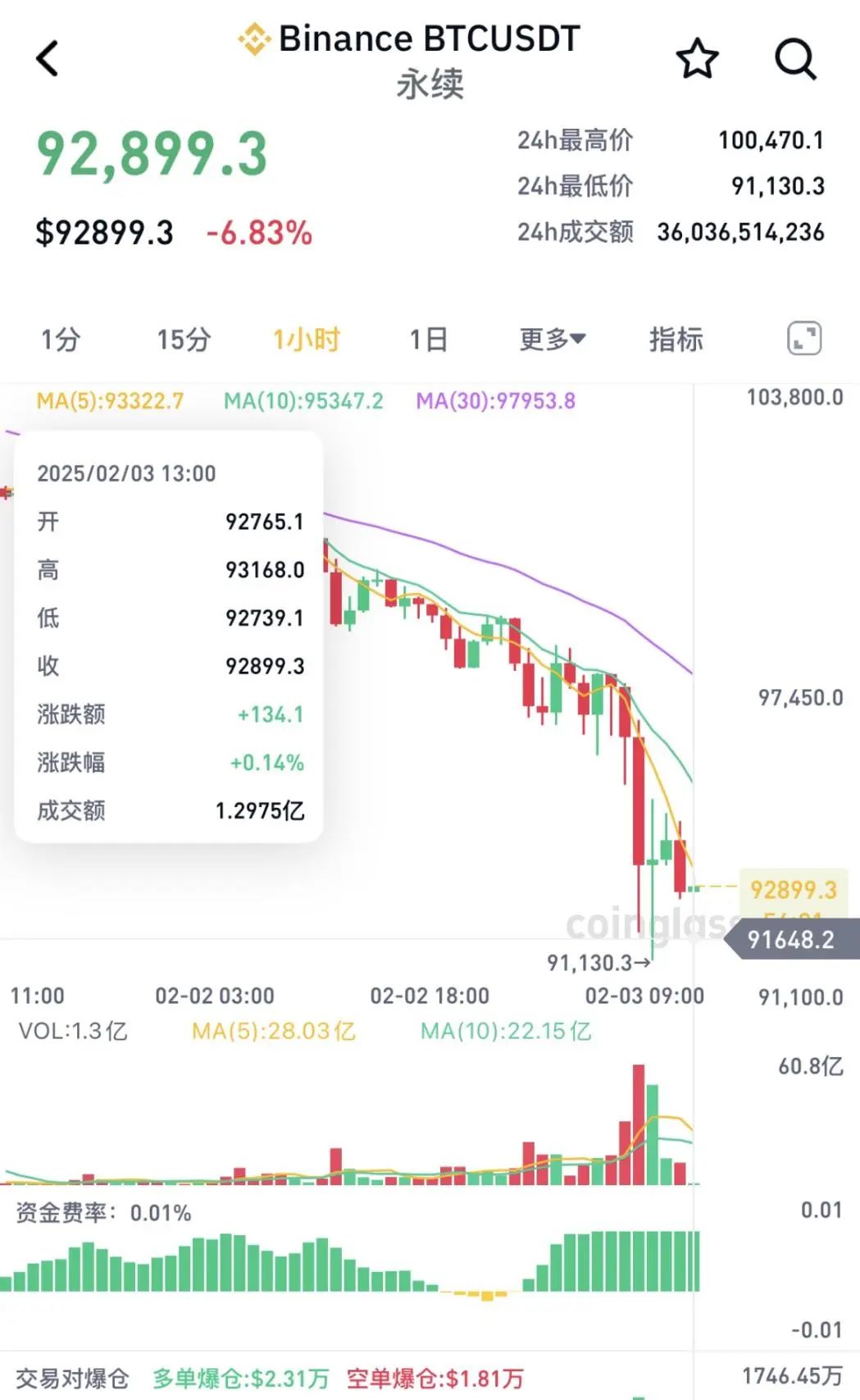
Since its inception, the price of Bitcoin has experienced significant growth and volatility. From trading at less than $1 in 2010 to breaking through an all-time high of $123,000 in 2025, Bitcoin has become a store of value and a speculative investment asset.
Current Market Performance and Trends to 2025
The cryptocurrency market in 2025 will be characterized by increased institutional adoption and regulatory clarity. Bitcoin hits new highs in 2025, driven by several key factors:
Understanding Bitcoin’s Four-Year Cycle
Historically, Bitcoin follows a four-year cycle that closely correlates with halving events. These cycles typically have the following characteristics:
However, many analysts believe that the traditional four-year cycle may be broken by 2025. The approval of a Bitcoin ETF in January 2024 brought institutional flows that were “ahead” of typical post-halving price discovery, fundamentally changing market dynamics.
Price predictions and expert forecasts
Industry experts have different predictions for Bitcoin’s price trend in 2025 and beyond:

Bitcoin Wallet: Cryptocurrency Storage Solution
Proper storage is crucial to Bitcoin security. The saying “It’s not your keys, it’s not your coins” emphasizes the importance of taking control of your private keys rather than leaving your Bitcoins on an exchange.
Types of Bitcoin Wallets Best Practices for Bitcoin Security
Implement these security measures to protect your Bitcoin investment:
Bitcoin Mining: Cybersecurity and Economics
Bitcoin mining has two key functions: securing the network through computational work, and distributing new Bitcoins into circulation. Understanding mining helps explain Bitcoin’s security model and economic incentives.
What is Bitcoin mining?
Mining refers to the use of specialized computers to solve complex mathematical puzzles. Miners compete to find the solution first, and the winner gets the right to add a new block to the blockchain and receives the block reward.
This process requires a lot of computing power and electricity, so there are costs associated with maintaining network security in the real world. The difficulty automatically adjusts every 2,016 blocks (approximately two weeks) to maintain a 10-minute block time regardless of the network's total computing power.
The mining economy in 2025
Bitcoin mining has developed into a complex industry with several key characteristics:
Bitcoin use cases and real-world applications
Bitcoin has utility for much more than just speculative trading. This cryptocurrency serves a variety of practical functions in the modern economy.
1. Store of value and digital gold
Many investors view Bitcoin as “digital gold”—a hedge against inflation and currency devaluation. The following points support this view:
2. Corporate finance adoption
Forward-looking companies have added Bitcoin as a financial asset to their balance sheets:
3. Cross-border payments and remittances
Bitcoin enables fast and relatively cheap international transfers:
Bitcoin vs ETH, SOL, XRP, ADA
While Bitcoin remains the undisputed king among cryptocurrencies, understanding how it compares to other major digital assets can help investors make informed decisions. Here’s how Bitcoin compares to the top cryptocurrencies on the market.
Bitcoin vs. Ethereum (ETH)
Bitcoin and Ethereum play different major roles in the crypto ecosystem. Bitcoin focuses on being a digital currency and store of value, while Ethereum is a programmable blockchain platform for smart contracts and decentralized applications.
Main differences:
Bitcoin vs Solana (SOL)
Solana positions itself as a high-performance blockchain capable of processing thousands of transactions per second, which makes it popular among decentralized applications and DeFi protocols.
Main differences:
Bitcoin vs Ripple (XRP)
XRP is designed for cross-border payments and banking institutions, providing fast and low-cost international transfers.
Main differences:
Bitcoin vs Cardano (ADA)
Cardano emphasizes academic research and peer-reviewed development, positioning itself as a more sustainable and scalable blockchain platform.
Main differences:
Comparison Overview Table Features Bitcoin (BTC) Ethereum (ETH) Solana (SOL) Ripple (XRP) Cardano (ADA)
main purpose
Digital gold/store of value
Smart contract platform
High-speed DeFi/dApps
Cross-border payment
sustainable blockchain
Year of launch
2009
2015
2020
2012
2017
consensus
proof of work
Proof of Stake
History proves
federal consensus
Proof of Stake
maximum supply
21 million
No upper limit
No upper limit
100 billion
45 billion
transaction speed
~7 TPS
~15 TPS
About 3,000 TPS
About 1,500 TPS
~250 TPS
block time
about 10 minutes
~12 seconds
~0.4 seconds
~3-5 seconds
~20 seconds
Energy saving
Yes
Yes
Yes
Yes
smart contract
limited
advanced
advanced
limited
advanced
Market capitalization ranking
#1
#2
#4-6
#6-8
#8-10
most suitable
long term holding
DeFi and NFT
high speed trading
bank payment
academic projects

Bitcoin ETFs and Investment Tools
The approval of a spot Bitcoin ETF in January 2024 marked a watershed moment in institutional adoption of Bitcoin, allowing people to purchase the cryptocurrency through traditional brokerage accounts.
Learn about Bitcoin ETFs
A Bitcoin ETF is an investment fund that tracks the price of Bitcoin without requiring investors to hold Bitcoin directly. These funds purchase and custody Bitcoin on behalf of shareholders and offer the following advantages:
Major Bitcoin ETF Providers
There are currently several well-known financial institutions offering Bitcoin ETFs:
ETF performance and market impact
The Bitcoin ETF has achieved remarkable success since its launch:

Bitcoin Charts and Technical Analysis
Understanding how to analyze Bitcoin price charts can help investors make informed decisions and spot potential trading opportunities.
Basic chart patterns
There are several technical patterns that frequently appear in Bitcoin charts:
Bitcoin’s Key Technical Indicators
Popular indicators used by Bitcoin traders include:
Bitcoin Specific Indicators
Unique metrics provide insight into Bitcoin’s network health and adoption:
The future of Bitcoin: Technology and innovation
Bitcoin continues to evolve through technological improvements and increasing popularity in various fields, positioning it for the next phase of mainstream integration and technological advancement.
1. Lightning Network and Scalability Solutions
The Lightning Network is Bitcoin’s primary scaling solution, fundamentally changing the way the network handles transaction volume and costs. This second-layer technology creates payment channels that allow multiple transactions between multiple parties without each transfer having to be confirmed on the blockchain. As more users and businesses adopt the Lightning Network, payment routing will become increasingly efficient, creating network effects that benefit all participants.
The Lightning Network enables previously impossible use cases, particularly streaming micropayments for digital content and services. Companies across industries are integrating Lightning Network infrastructure for customer payments and internal settlements, realizing that Lightning Network can reduce costs while maintaining the security of Bitcoin. This adoption is driving innovation in payment processing and creating new business models that leverage instant, low-cost Bitcoin transactions.
2. Integration of Bitcoin with Web3 and DeFi
While Ethereum has always dominated the decentralized finance space, Bitcoin is increasingly being integrated into Web3 applications through innovative bridging technologies. Wrapped Bitcoin (WBTC) and similar protocols allow Bitcoin holders to participate in Ethereum-based DeFi protocols, unlocking liquidity and revenue opportunities previously unavailable to Bitcoin users.
Cross-chain bridges enable Bitcoin to interact with multiple blockchain networks, extending its utility beyond simple value transfers. Bitcoin-collateralized lending platforms now offer sophisticated financial products that allow users to borrow against their Bitcoin holdings without selling their holdings. Additionally, new protocols like Ordinals are bringing NFT-like functionality directly to the Bitcoin blockchain, challenging traditional assumptions about Bitcoin’s capabilities.
3. Environmental sustainability and green mining
The Bitcoin mining industry is undergoing a major transformation and is committed to environmental responsibility and sustainable development. Mining operations around the world are turning to renewable energy sources, including solar, wind and hydropower, both for environmental reasons and the economic incentives of cheap renewable electricity.
Innovative projects are finding creative ways to use waste heat from mining, including greenhouse farming and residential heating systems. Large mining companies are publicly committing to carbon-neutral operations and implementing comprehensive sustainability strategies. Continuous improvements in the efficiency of mining hardware are reducing energy consumption per hash, making the network more environmentally friendly while maintaining its security.

Bitcoin Investment Strategy and Risk Management
Successful Bitcoin investing requires understanding various strategies and implementing appropriate risk management techniques to effectively navigate the volatile cryptocurrency market.
1. Average cost strategy
Dollar Cost Averaging (DCA) involves purchasing a fixed amount of Bitcoin on a regular basis, independent of the current market price. This strategy reduces the impact of market fluctuations by spreading out purchases, eliminating the need to pinpoint market peaks and troughs. DCA is particularly suitable for investors with a multi-year investment horizon who want to build a Bitcoin position over time.
The main advantage of DCA is its ability to eliminate emotional decision-making from the investment process. By buying regularly regardless of market conditions, investors can avoid the common pitfalls of buying when the market is high or panic selling when the market is low. This disciplined approach to investing has historically led to higher returns than trying to time the market, especially for retail investors who lack sophisticated trading tools and market analysis skills.
2. Wait-and-see and active trading strategies
The cryptocurrency community has developed two main investment philosophies, each reflecting different risk tolerances and time commitments. "HODLing" is derived from "Hold On for Dear Life" and represents a long-term strategy focused on the multi-year appreciation potential of Bitcoin. This approach requires minimizing trading activity, thereby lowering fees and tax burdens, while requiring conviction and resilience during periods of significant market volatility.
In contrast, active trading attempts to profit from short-term price fluctuations by buying and selling frequently. This approach requires a significant investment of time, market knowledge, and emotional discipline to execute successfully. Most retail traders do not perform as well as a simple buy-and-hold strategy due to transaction costs, tax implications, and the difficulty of consistently timing market moves. For patient investors willing to tolerate short-term volatility, historical data strongly supports a long-term holding strategy.
3. Basic risk management principles
Protecting your Bitcoin investment requires implementing several basic risk management strategies that help preserve capital while achieving potential growth. Position size is the most critical factor, ensuring that the amount invested in Bitcoin does not exceed the amount of loss that investors can afford. This principle is particularly important given Bitcoin’s historical volatility and the relatively young stage of the cryptocurrency market.
Diversification is critical to the health of your overall portfolio, and Bitcoin is just one part of a balanced investment strategy. Security measures are another important component, requiring proper wallet security protocols and backup procedures to prevent theft or loss. Tax planning considerations can help investors understand the impact of Bitcoin trading in their particular jurisdiction, while keeping abreast of regulatory changes and market developments can help predict their potential impact on investment performance.
Global Bitcoin Adoption and Cryptocurrency Regulation
Bitcoin’s legal status and adoption vary widely across countries and regions, creating a complex regulatory landscape that continues to evolve as governments grapple with cryptocurrency integration.
Countries embracing Bitcoin innovation
Several countries have implemented Bitcoin-friendly policies, making them leaders in cryptocurrency adoption. El Salvador made history in 2021 by becoming the first country to adopt Bitcoin as legal tender, with the Central African Republic following suit in 2022. These groundbreaking initiatives demonstrate that smaller countries can also leverage Bitcoin to potentially improve financial inclusion and economic sovereignty.
The United States has developed an increasingly sophisticated regulatory environment, the most prominent of which is the approval of a Bitcoin ETF in January 2024, as well as growing institutional adoption. Germany's tax exemption for long-term Bitcoin holdings after one year has created favorable conditions for individual investors. Switzerland has become the global “crypto valley,” attracting blockchain companies and implementing a comprehensive regulatory framework that balances innovation with consumer protection.
Regulatory evolution in 2025
The regulatory landscape continues to evolve, and several major developments are shaping Bitcoin’s global acceptance. Discussions among governments about strategic Bitcoin reserves are heating up, and some governments are considering incorporating Bitcoin into their national treasuries to hedge against currency devaluation and inflation. Major jurisdictions are developing comprehensive cryptocurrency regulations to provide clear guidance to businesses and investors while addressing money laundering and consumer protection concerns.
International cooperation on cryptocurrency standards and anti-money laundering measures is increasing, with global organizations working to develop a consistent regulatory approach. Clear regulations are emerging for stablecoins that impact the broader cryptocurrency ecosystem, providing regulatory certainty for institutional investors and businesses to confidently incorporate Bitcoin into their operations.
Central bank digital currencies coexist with Bitcoin
Many central banks around the world are developing digital versions of their national currencies, creating an interesting interaction with decentralized cryptocurrencies such as Bitcoin. A central bank digital currency (CBDC) can maintain government control and oversight while providing some of the advantages of digital currency technology. However, these government-issued digital currencies serve different purposes than Bitcoin: CBDCs focus on maintaining monetary policy control, while Bitcoin provides financial sovereignty and censorship resistance.
The relationship between CBDC and Bitcoin appears to be more of coexistence than direct competition. Bitcoin’s success has spurred the development of central bank digital currencies and demonstrated public interest in digital payment systems. However, government digital currencies may compete with Bitcoin for certain use cases, especially in areas where domestic payment systems and regulatory compliance are critical. The competitive dynamics between these different digital currency approaches could shape the future of the global financial system.
in conclusion
Bitcoin fundamentally changes our understanding of currency, financial sovereignty, and digital ownership. Bitcoin began as an experimental peer-to-peer electronic cash system and has now grown into a globally recognized store of value and investment asset, posing a challenge to the traditional financial system.
Bitcoin’s fixed supply, decentralized nature, and transparent blockchain technology provide an attractive alternative to the traditional monetary system. As institutional adoption accelerates and regulatory transparency increases, Bitcoin will continue to lay the foundation for a more open and inclusive financial future.
Whether viewed as digital gold, a payments network, or a revolutionary technology, Bitcoin has proven its resilience and utility in more than a decade of operation. The network's security, growing popularity, and technological advancements position it well in the evolving digital economy.
For investors considering investing in Bitcoin, it remains critical to understand its technology, risks, and investment strategies. While Bitcoin’s volatility presents both opportunities and challenges, its long-term trends suggest that it will remain important in the global financial landscape in 2025 and beyond.
This concludes this article about what is Bitcoin? How to trade and mine? A complete guide to Bitcoin investment. For more related Bitcoin content, please search Script House’s previous articles or continue to browse the relevant articles below. I hope you will support Script House in the future!