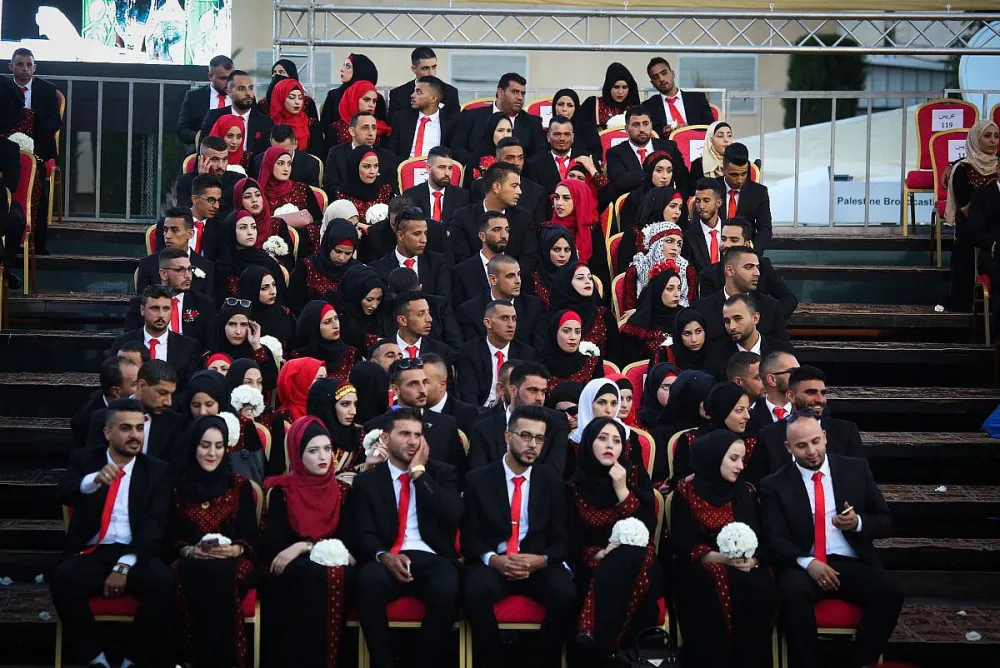
The worsening economic crisis, dwindling job prospects and movement restrictions in Israel are putting marital relationships under severe strain and shaking the foundations of families.
Rana was only twenty-three when she fell in love with Mahmoud. They met six years ago at Al-Quds University on the outskirts of Jerusalem. In the crowded classroom, the two shy eyes met by chance, and then quickly evolved into a long conversation about anything. Their exchanges extend from the classroom to the hallways, often late into the night.
Rana is from Ramallah, while Mahmoud is from Jenin. After college, Mahmoud found a government job in Ramallah to be closer to Rana, although he still had to return to Jenin every day to live. By 2023, the couple was officially engaged.
However, under the shadow of the Israeli military occupation, the pressure of life and the free fall of the economy soon pushed this relationship to the brink of collapse. As the war in the Gaza Strip spread and the financial crisis in the West Bank intensified, Mahmoud's salary suffered a steep decline and was cut by nearly two-thirds to about $650 per month.
In Ramallah, the cost of maintaining the most basic life is as high as US$900 to US$1,500. The sharp reduction in wages makes it impossible for them to maintain their originally planned life blueprint. Mahmoud can no longer afford to visit his fiancée regularly, let alone dining out, buying gifts, and even plans to purchase items for a new home have been put on hold. The cost of commuting between Jenin and Ramallah alone is enough to drain his entire meager salary.
To escape the daily trek through checkpoints, Rana kept urging Mahmoud to rent a house in Ramallah. She hoped that the two of them could spend more time together. Lana said helplessly in an interview that distance is quietly breeding a sense of alienation.
"I feel that Mahmoud is getting further and further away from me, and the relationship between us gradually becomes weaker. The original longing eventually evolved into endless quarrels." Lana confided.
Mahmoud also tried to meet his fiancée's expectations, but he was caught in a dilemma between the cruel economic reality and heavy family responsibilities. "My mother lives in Jenin, and I am the youngest child in the family," he said frankly. "My mother doesn't want any of her children to stay away from her, and I can't bear to leave her alone."
The emotional rift quickly deteriorated under the pull of reality, and soon evolved into an unbridgeable gap. In January 2025, the two finally broke off their engagement sadly.
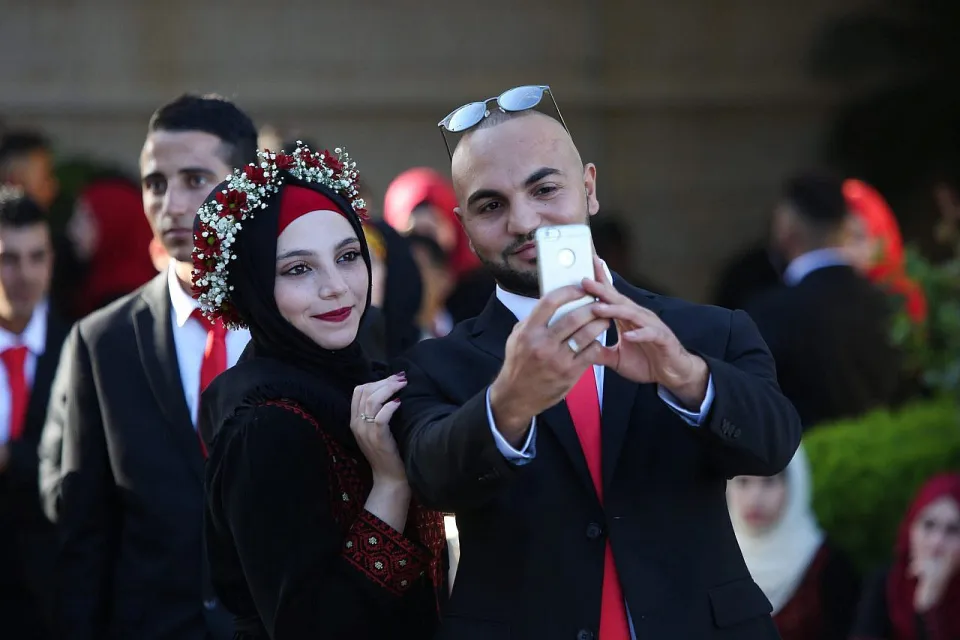
The tragedies of Rana and Mahmoud are not isolated cases. Their stories reflect a common trend that is spreading in Palestinian society. According to data released by the Palestinian Central Bureau of Statistics, the number of divorces in the West Bank and Gaza Strip surged by 45% in the ten years from 2012 to 2022, with the increase in the West Bank alone being as high as 41%.
Not only that, but Sharia court reports further reveal the fragility of marriage. Between 2018 and 2023, about half of all engagements broke down before the wedding ceremony could take place. Although the number of divorces registered in Sharia courts in the West Bank fell slightly by 8.5% between 2022 and 2023, the number of marriage contracts registered during the same period suffered a sharp decline of 11.7%.
While detailed comprehensive national data for the past two years have not yet been released, local data from the Palestinian Bureau of Statistics clearly show that this upward trend in marriage breakdown continues to spread.
According to Sheikh Mohammed Qasim Salameh, president of the sharia court in the northwestern city of Kaliliya, the city's divorce rate has soared to 27.6% in 2025, setting a record in the past four years.
Across the Arab world, divorce and breakups are also on the rise. However, many Palestinian youth pointedly point out that the unique social pressure brought about by Israel's long-term military occupation is the core culprit of this phenomenon.
Shrinking job opportunities, falling wages, and strict travel restrictions have made even the most basic day-to-day interaction between couples a luxury. Many people are even forced to live apart in two places for a long time, unable to get together at all.
Naim Najim, a family counselor in Nablus, bluntly pointed out in an interview that the sharp deterioration of the political and economic situation is undoubtedly the driving force behind the increase in divorce rates. He recalled that when the situation was relatively stable in 2017, the marriage rate once showed an upward trend. However, since the conflict broke out on October 7, various marriage data began to decline sharply.
Sheikh Atta Mohtassib, a judge at the Supreme Sharia Court of Palestine, provided a relatively macro perspective. He noted that even with the recent surge in divorce rates, the absolute divorce rate in Palestine remains relatively low across the region. “Divorce rates are actually higher in some Arab countries, such as Qatar and Jordan,” he explains.
However, a lower divorce rate than some Arab countries does not necessarily mean that Palestinian marriages are more stable. Instead, it may reflect the huge social pressure, heavy economic constraints, and complex political factors that make it difficult for couples to easily choose to separate or divorce even if their relationship breaks down. Mohtaseeb also admitted that the divorce rate in Palestine has always been closely linked to the overall mood swings in society.
Nada Sabane, a family counseling officer at the Jeninka Patia Court, strongly agrees. "Structural pressures such as the overall collapse of the economy and severe movement restrictions have had an extremely significant destructive effect on family stability," she analyzed profoundly. "The huge economic pressure on families has directly led to people's deep psychological and social insecurity."
“When a man has no money, he becomes a different person.”
Sana and Nader were caught in the vortex of this storm of the times. They live with their two young daughters in the quiet village of Safa on the outskirts of Ramallah.
Before October 7, Nadel worked as a burger chef at a restaurant in Israel. He works up to fourteen hours a day. Although it is extremely hard and rarely has time to go home to accompany his wife and daughter, his generous monthly salary of about US$3,000 provides the family with solid financial security.
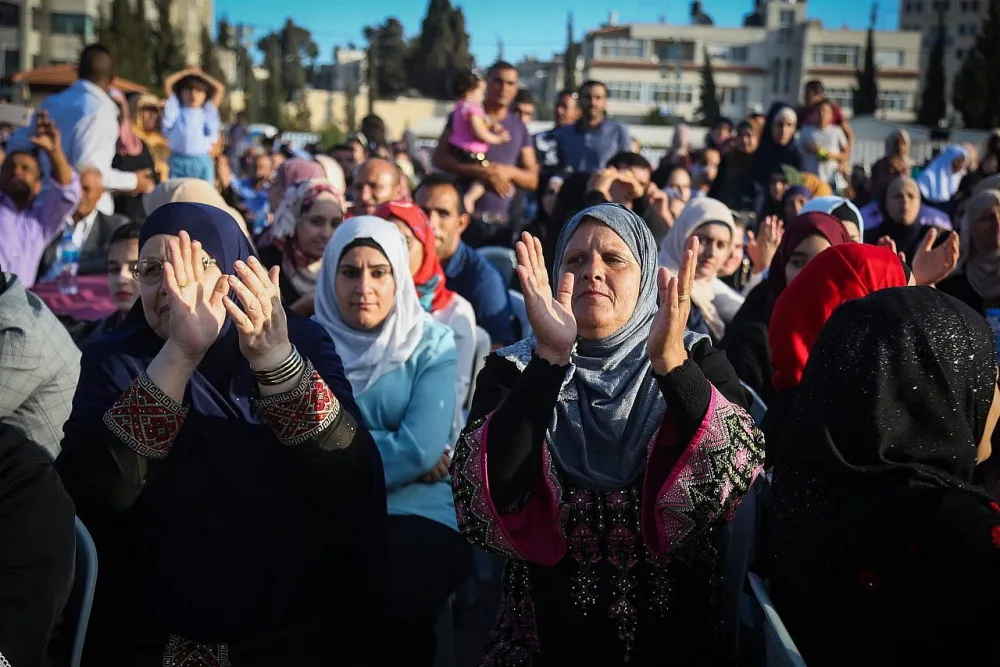
However, the outbreak of the war completely shattered the family's tranquility. Israeli authorities quickly revoked the Palestinians' work permits, and Nader lost his job overnight. For a whole year, he could only stay at home depressed all day long. His mood became increasingly closed and irritable, and he often even cursed his children uncontrollably.
Watching her husband sink, Sana tried to persuade him to risk his life by returning to Israel without a permit, as so many other Palestinians had done. But Nader decisively rejected the proposal. Sana still clearly remembers his answer at that time: "I will never abandon you mother and daughter to risk death just to make money."
As regional tensions continue to escalate, the burden of the family falls entirely on Sana's shoulders. She was forced to become the family's sole breadwinner and had to work two full-time jobs every day. Five days a week, she works hard in the government's archives department in exchange for a meager monthly salary of about $800; and on the other six days, she works part-time as a fitness instructor, earning an additional $650.
The hard-earned income can barely cover her daughters’ tuition and the family’s basic daily expenses. The heavy burden made her breathless.
"Once a man loses his source of income, he will become a completely different person," Sana said with tired eyes. "I tried my best to support him and accompany him through difficulties, but in the end I was disappointed to find that he had changed beyond recognition."

Disputes between husband and wife become more and more intense as the stress of life increases. When Sana once again tried to discuss the dire financial situation facing her family with her husband, Nadel lost control and forcefully ordered her to move out of the home immediately.
Faced with a broken marriage, Sana initially insisted on a divorce. However, her father severely rejected her request out of concern for maintaining the family's traditional reputation. After suffering in pain for two years, at the end of 2025, Sana finally plucked up the courage and formally filed a "Kula" (a woman's initiative to file for divorce) to the court in accordance with Sharia law.
At the first hearing, the court supported her legitimate claims in accordance with the law. Today, Sana rents an apartment alone in Ramallah. Although life is still difficult, it is closer to her work and her daughters’ school.
In response to this phenomenon, senior family consultant Najim pointed out in depth that the eventual breakdown of this kind of marriage often deeply reflects the reality that the psychological defenses of both spouses have completely collapsed in the face of a long-term, high-pressure social environment. "In such a difficult situation, mutual understanding is the only lifeline to maintain family stability." He explained earnestly.
“I gave up everything just to make life easier”
For other Palestinian couples, long-term restrictions on travel that are ubiquitous in daily life in the occupied territories have quietly become a huge and insurmountable gap in their marriages.
In the summer of 2024, Rawan, a Muslim woman from Nablus, entered into marriage with Nadim, a Christian man from Nazareth. In order to be able to stay with his beloved forever, Nadeem resolutely chose to convert to Islam.
Lavan was full of emotion when recalling this relationship: "He changed everything about himself for me, including his religious beliefs, daily lifestyle, and even changed his place of residence over many obstacles."
Nadeem, an Israeli citizen, originally worked as a security guard in Israel. If he continued to live in his hometown of Nazareth, his daily commute to get off work would only take ten minutes. But for love, he now has to pay a high monthly rent of about US$650 to rent a house in Nablus and live with Rawan. In the meantime, he continues to pay heavy council tax on his property in Nazareth.
The drive from Nablus to Nazareth takes about two hours on good roads and no traffic jams. However, under the shackles of reality, Nadim must spend much longer time every day, running exhaustedly between various checkpoints with strict inspections, and always being prepared to deal with various unpredictable delays.

In order not to affect his work, he always had to rush out hours before officially going to work. This kind of running around day after day gradually exhausted his patience and energy.
Lavan painfully expressed that this kind of life tortured by distance for many years has completely changed her husband's temperament. “He became a completely different person,” she recalled of those depressing days. “The omnipresent pressure to survive, the suffocatingly long commute, and the forced brief separation overwhelmed him.”
The two also seriously considered moving back to Nazareth together to end the torture of traveling between places. But the cruel reality is that, as a Palestinian, Rawan must obtain a special permit issued by Israeli officials to enter its territory – and since the conflict intensified, the issuance of such permits has long been stopped. They deeply feel that they are completely trapped and trapped in a dilemma.
"He started venting his pent-up emotions on me unscrupulously," Lawan said tremblingly. The daily quarrels gradually escalated into horrific physical violence, and Nadeem even beat her up more than once. "I naively thought that this was just a temporary difficulty. I thought that as long as things outside calmed down and we found a better way to get along, he would return to the way he loved me before."
However, the reality is far crueler than imagined. As Christmas approaches, the yearning Lavan makes an extremely bold decision: she will take the risk of sneaking into Nazareth to spend the holiday with her husband without a permit.
At first, Nadim strongly opposed her attempt to cross the border illegally. He knew the dangers involved and was extremely worried that his wife would be shot dead on the spot by patrolling soldiers. But at Rawan's insistence, they eventually agreed on a risky plan: Rawan would quietly hide in the hide of Nadim's car and try to force his way through the Jalama checkpoint, located north of Jenin. In their view, even if they are unfortunately caught at this checkpoint, the legal consequences they face are likely to be relatively mild.
Contrary to expectations, the two were caught red-handed and arrested while crossing the checkpoint. Israeli authorities held Nadim in severe detention for a whole day on suspicion of illegally smuggling Palestinians into the country. Lavan's experience was even more tragic. She was detained in a cold and small detention room next to the checkpoint for two full days.
Recalling that nightmarish experience, Lavan still has lingering fears: "My hands were tightly cuffed with cold handcuffs, and my eyes were tightly covered with cloth. During those two long days, I did not receive any food or drinking water."
When Lavan was finally released, she was forced to sign a stern legal declaration promising never to enter Israel again without explicit official permission. She was sternly warned that if she tried to enter illegally again, she would face a long life in prison.
The moment she walked out of the detention room, she expected to see her husband waiting anxiously and get some comfort. However, what is unexpected is that instead of showing up, Nadim ruthlessly notified her father and unilaterally filed for divorce.
"He didn't even call me to explain," Lavan choked, "but directly and coldly contacted my father and asked to end the marriage."
This marriage, which was once vigorous and vigorous and overcame many worldly obstacles, only lasted for seven short months and ended hastily. A frustrated Lavan finally agreed to the divorce and voluntarily gave up all claims to joint property rights.
"I chose to give up everything just to make things simpler and to be freed as soon as possible," she murmured to herself with tears of despair in her eyes, "I just want to end all this nightmare once and for all."
(Note: To protect privacy, all interviewees in this article use pseudonyms.)
About the author:
Asser Mafalje is a veteran journalist based in the West Bank.