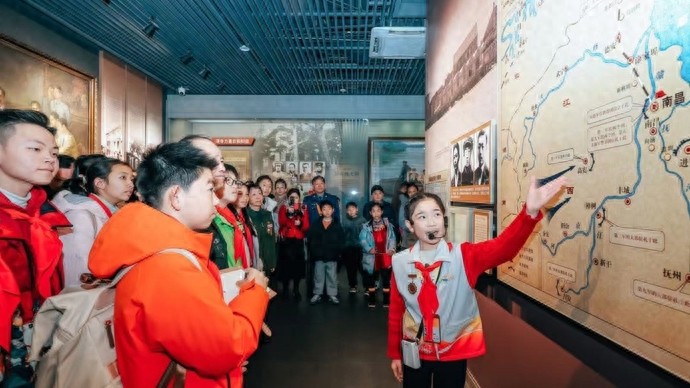

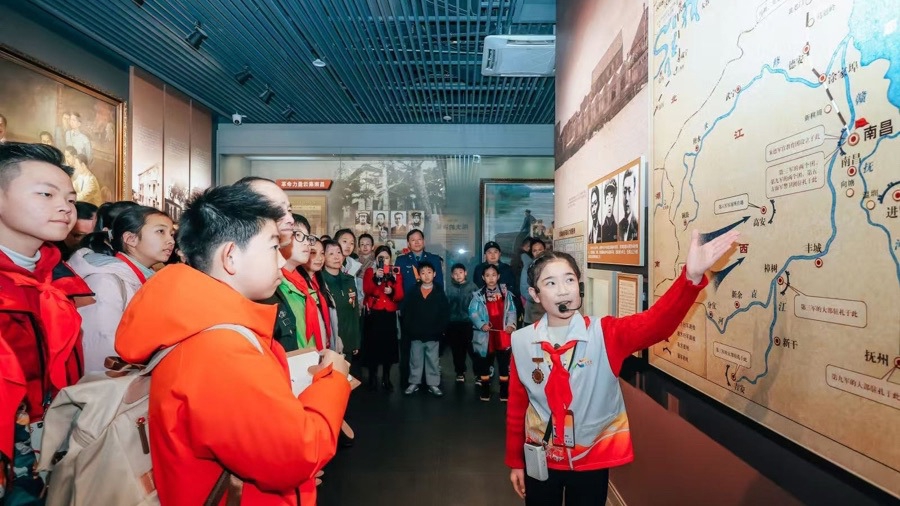
"We propose to all retired comrades in the military and all seniors with silver hair…" "We propose to all friends in red scarves…" In the Nanchang August 1st Uprising Memorial Hall, the voices of one old and one young echoed intertwinedly, and a special red inheritance ceremony was underway.
In the winter vacation of 2026, the second phase of the "Splendid Red Road Practical Course" jointly created by the Shanghai Navy Customs Closure Working Committee and the Shanghai Youth Working Committee will start. 10 retired military cadre representatives and 20 red scarf representatives rushed from the birthplace of the Party to Jiangxi, the cradle of the people's army.
If the first practical class successfully built a bridge across ages and regions, then this time the exploration goes further: using art to awaken history, using equality to protect children's innocence, and using thinking to ask about the future.
When history is "awakened" by an opera
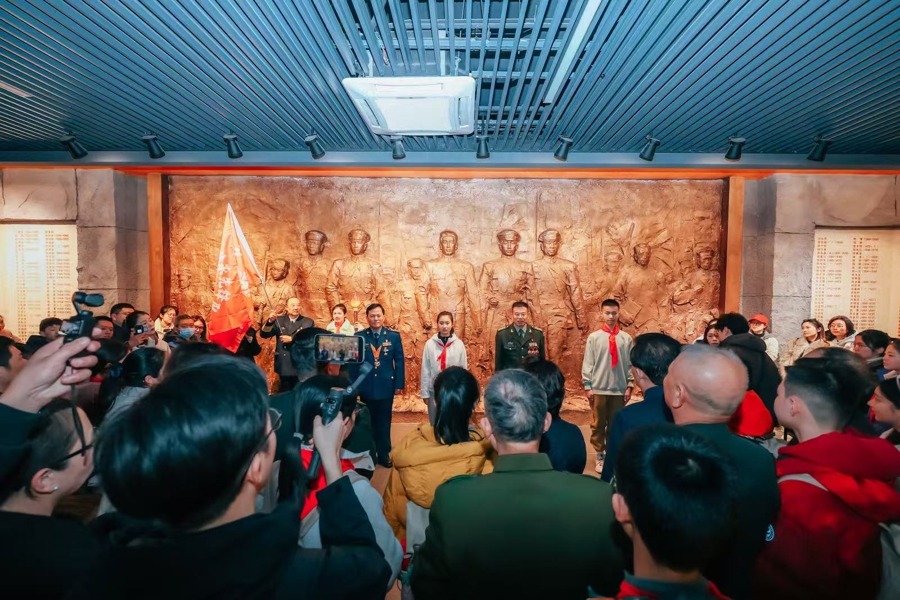
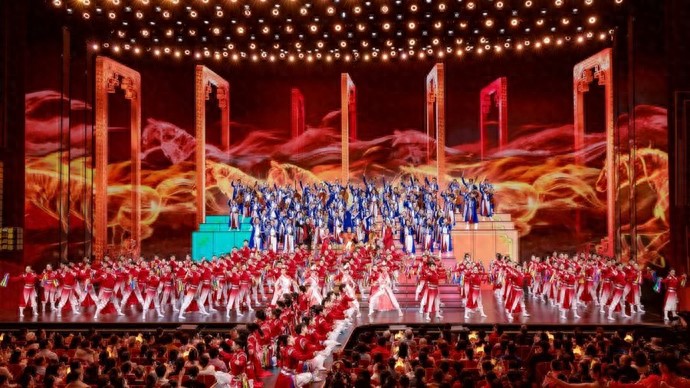
The Shanghai Naval Customs and Border Protection Working Committee invited professional actors from the opera "August 1st Uprising" to come to the historical site and sing passionately while the old comrades and children visited.
When the young actors who played Zhou Enlai and He Long sang their inner chants before making the decision, and when the memorial hall reproduced the impassioned moments before the expedition, the abstract history suddenly took on breath and warmth. Wang Aihua, a retired military cadre and the granddaughter of Wang Jinmei, the first representative of the Communist Party of China, said: "The red seeds planted at the historical scene will have a lifelong impact. Next year will celebrate the 100th anniversary of the founding of the army. It is not easy to conquer the country, and protecting the country requires the courage of the younger generations."
The flag presentation by Yan Yupeng, deputy director of the Shanghai Veterans Affairs Bureau, and the torch passed by Zhao Guoqiang, director of the Shanghai Municipal Youth Working Committee, together with the initiative recitation by young and old together and the explanation of the local red scarf, aroused deep resonance at the scene. The flag and torch have also become precious tokens that carry the heartbeat of young and old alike. This is the same frequency of spirit, and it is also an affectionate greeting that spans time and space.
When donations are "replaced" by a bazaar
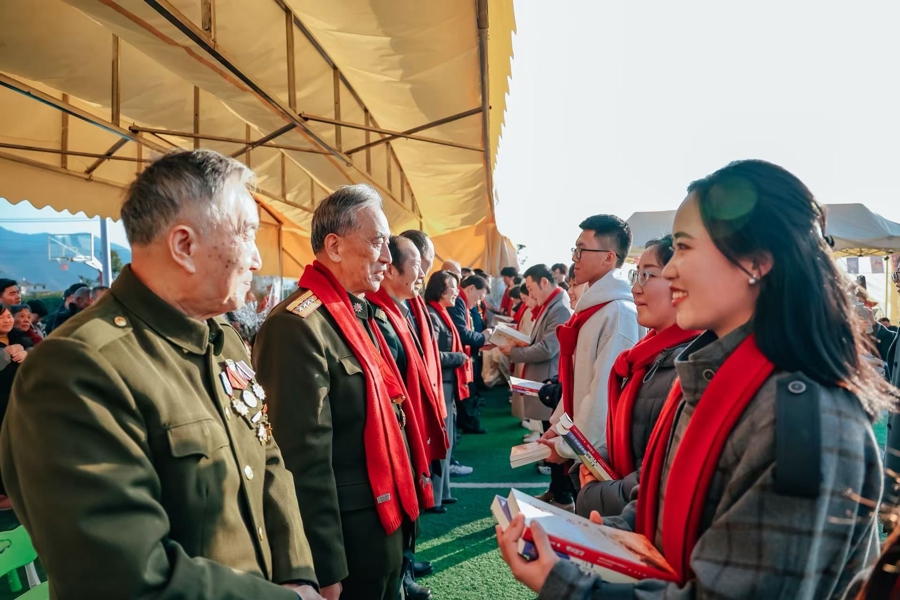
The "Shanghai Retired Cadres Hope Primary School" located in Quanfeng Town, Xiushui County, Jiangxi Province, embodies the continuous care of the Shanghai Retired Cadres group for 24 years, and is also a destination of special significance for this practical class. Teenagers from Shanghai and Jiangxi formed teams freely to win their favorite books through cooperation.
"Our group won 5 books, that's awesome!" "I like these books very much, and I read some of them during this winter vacation!" The children excitedly asked their grandparents to share their joy. Chen Yong, a retired military cadre, smiled and sighed: "Now the children in the old revolutionary areas are more confident! That look in their eyes is different." He said that this place has long been another "home" for retired military cadres in Shanghai. Every time he comes, he hopes to use his personal experience to encourage the children to study and become talents, and to become rising stars in revitalizing their hometown.
When thinking is ignited by a debate
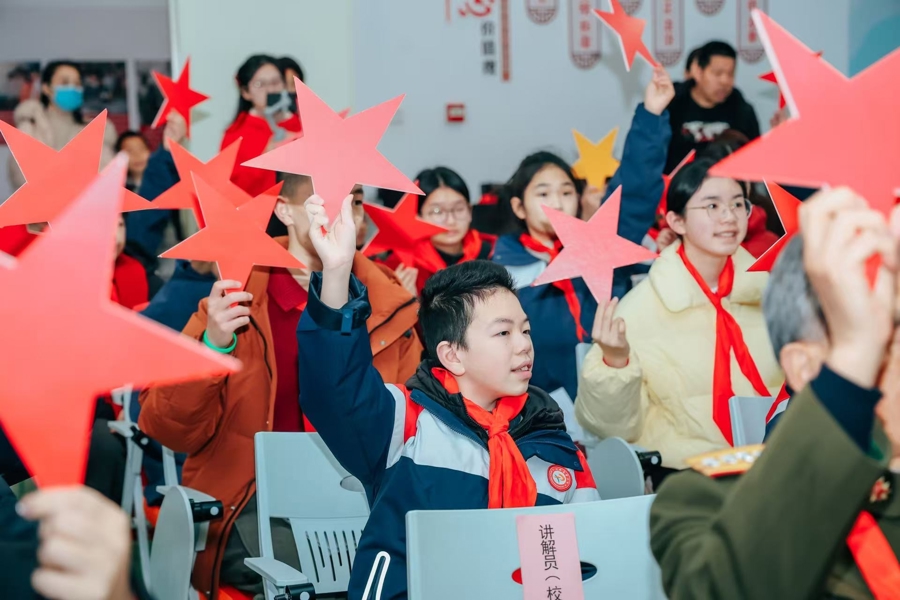
In Anyuan, the cradle of children's sports in China, a mini debate held in the team room of the Memorial Hall centered on "The key to red inheritance is to change education or change the audience." Retired military cadres come among the children, no longer as lecturers, but as "ideological mentors." "At that time, a child said that if there is no novel form, no matter how good the content is, students will not like to watch it. The example he gave was the opera in the Bayi Pavilion." Han Xinghua, a retired military cadre who served as the instructor, recalled, "I immediately grasped this point and guided him: 'Then what do you think is the novel form or the emotional power contained in the content that moved people?'" A question led to deeper thinking. Historical knowledge has thus become a "weapon" for children to defend their views.
At the Miners' Movement Memorial Hall on Anyuan Road, the children searched for clues at the historical site and turned around to interview their retired military grandparents. The "spirit of the labor movement" instantly changed from a concept to an understandable life choice. Another retired military cadre mentor was also deeply touched, "I realize the value of this mentoring model. The children's outstanding performance confirms that 'pair mentoring' is an effective way to pass on the red gene. I hope the children will cultivate their interests in practice, strengthen their learning in their interests, and thrive."
The "cross-age, cross-province, and cross-border" "Splendid Red Road Practical Course" integrates the role of military retired cadres between the birthplace of the Party and the birthplace of the Chinese revolution, between Shanghai military retired cadres and Shanghai "red scarves", between Shanghai military retired cadres and Hope Primary School, between Shanghai "red scarves" and children in old areas, and between Shanghai retired military cadres and retired soldiers in old revolutionary areas, realizing a "five-stage" two-way journey on the Long March in the new era.
The inheritance of the red gene can no longer rely on one-way narration and admiration, but can be sublimated into the same frequency resonance of the spirit between old and young. Its ultimate purpose is to cultivate thinkers and actors who can use historical wisdom to create the future. The "Splendid Red Road" is not only a study route, but also a warm and righteous path that allows good traditions and the new era to embrace each other, keeps the red blood alive forever, and allows the spiritual river to flow warmly and vigorously in the lives of one generation after another.