Professional virtual currency information station welcome
We have been making efforts.

24-hour news update Page 91

24-hour cryptocurrency news update

Aimee Chan Shared A Family Photo On New Year's Day And A Warm Daily Routine Of Making Glutinous Rice Balls

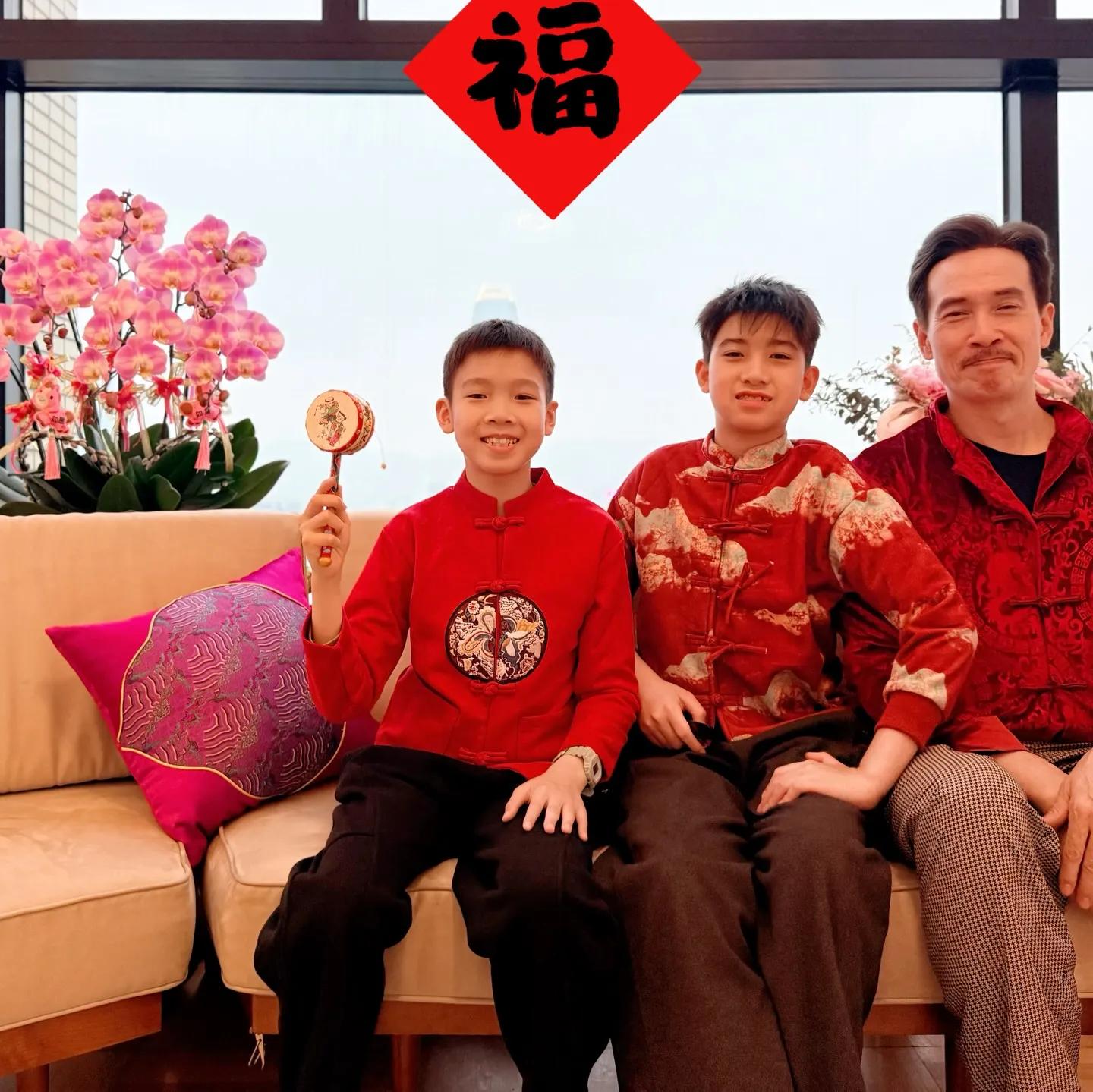
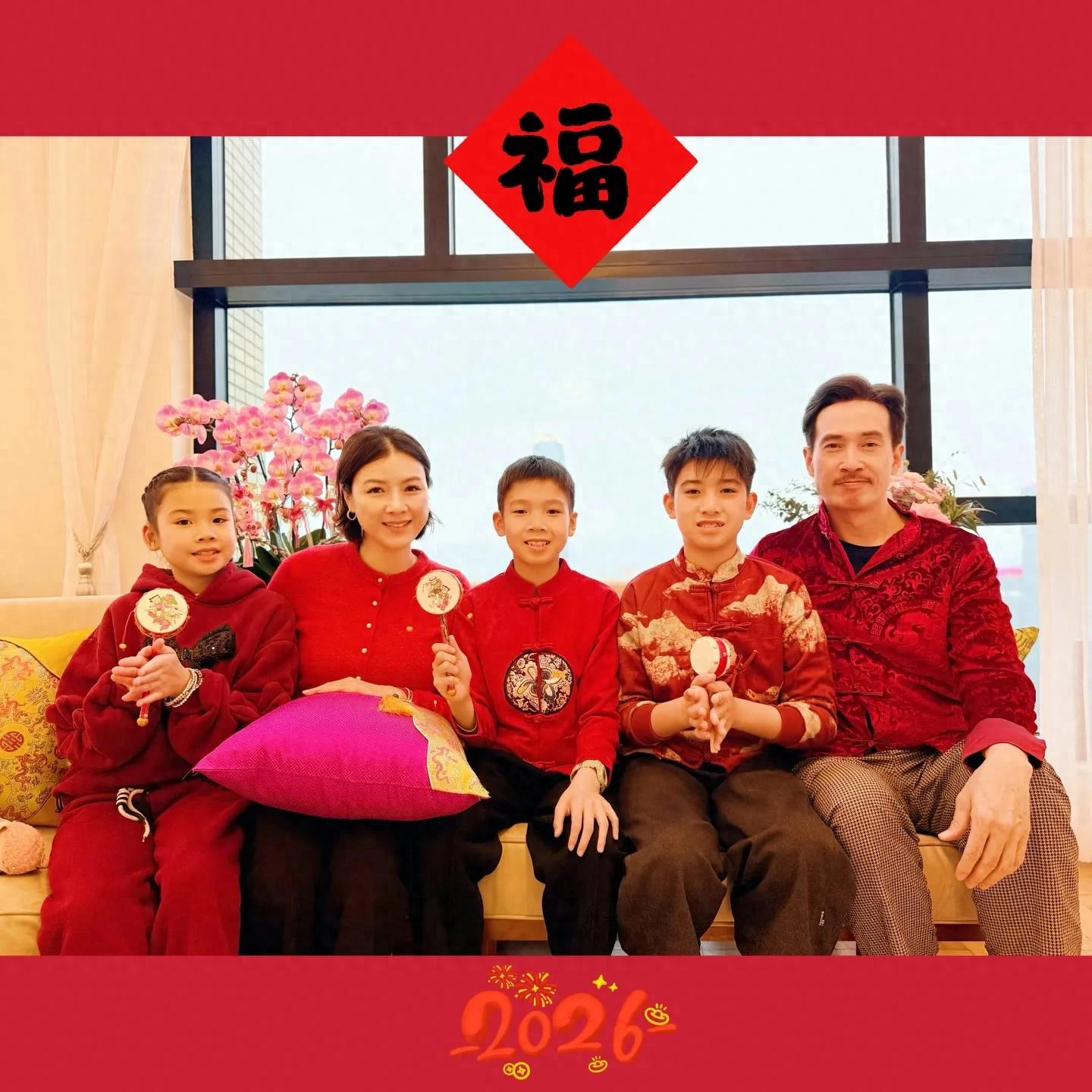
On the first day of the Lunar New Year, Aimee Chan posted a New Year family portrait on social platforms, using the camera to capture the happy moment of the family of five.

In the photo, Aimee Chan, her husband Chen Hao, and their three children appeared in red New Year's greetings clothes, and the festive atmosphere of the New Year was instantly filled. Aimee Chan is wearing a red knitted cardigan, with delicate makeup and a gentle smile. Chen Hao wore a red jacquard Chinese-style jacket and checked trousers, which was elegant yet festive. The three children are like little red Fuwa dolls. The eldest and the second child are wearing red Chinese tops with traditional patterns, and the third child is wearing a red hooded suit and holding a delicate little rattle in their hands. The three siblings have bright smiles. A family of five sitting side by side, full of happiness.

_New Year's greetings for family portrait_Beautiful sentences for New Year's family portrait

In another photo, Chen Hao and his two sons are in the same frame, continuing the festive style of the New Year. The second child held a rattle and had a particularly bright smile. The eldest child sat quietly beside his father, while Chen Hao sat sideways with fatherly love in his eyes.

Beautiful sentences for New Year's family portrait_Beautiful sentences for New Year's family portrait

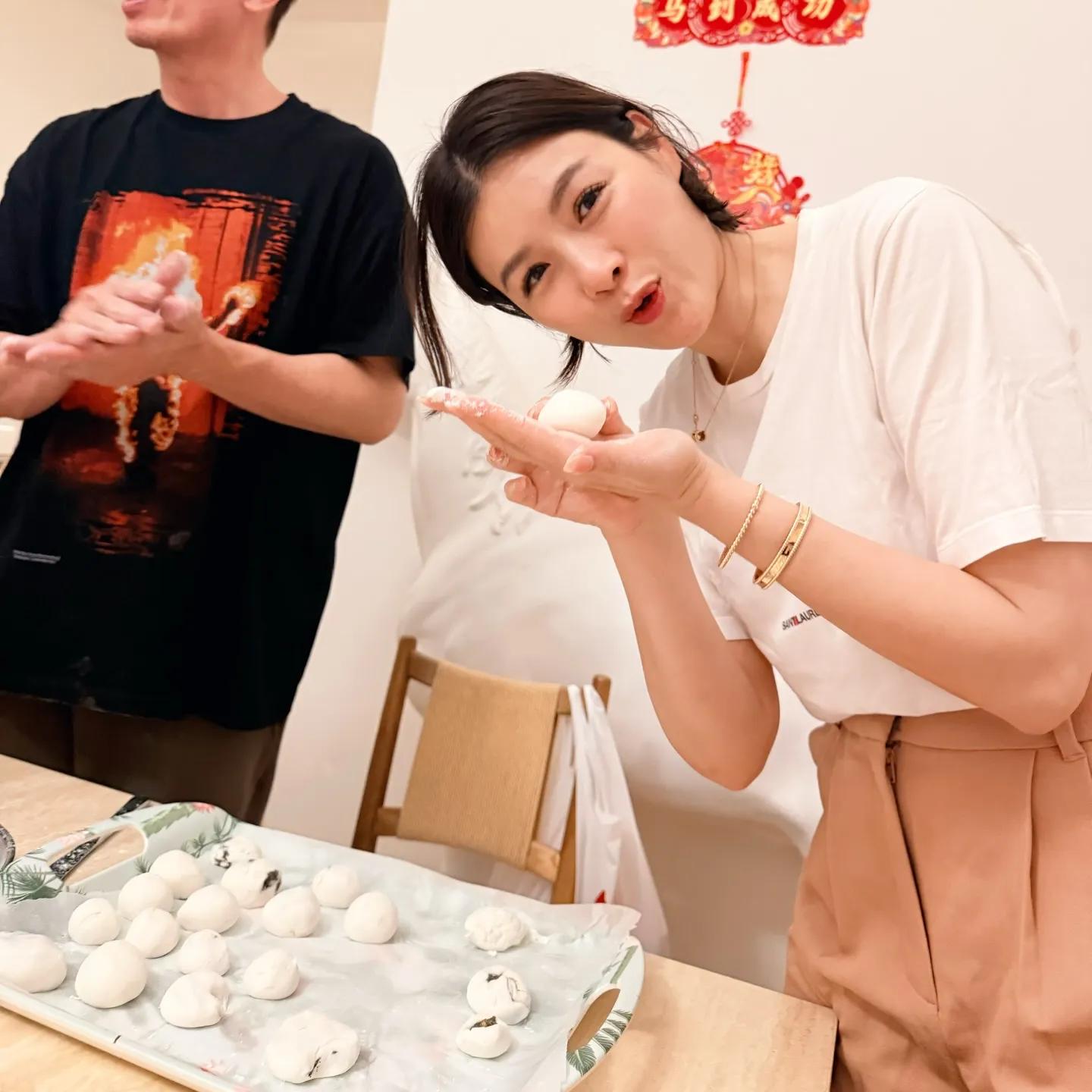
In addition to the formal red-dressed family portrait, Aimee Chan also shared the family's warm daily routine of making glutinous rice balls, adding a little more sparkle to the happiness in the New Year. In the picture, Aimee Chan put on a simple white T-shirt and khaki bottoms, changing her delicate appearance in front of the camera. Her hands were stained with flour and she was blowing air playfully into the glutinous rice balls in her palms. She looked relaxed and cute. Behind him, Chen Hao was wearing a black printed T-shirt and was kneading dough.

Beautiful sentences for New Year's family portrait_New Year's greetings for family portrait_

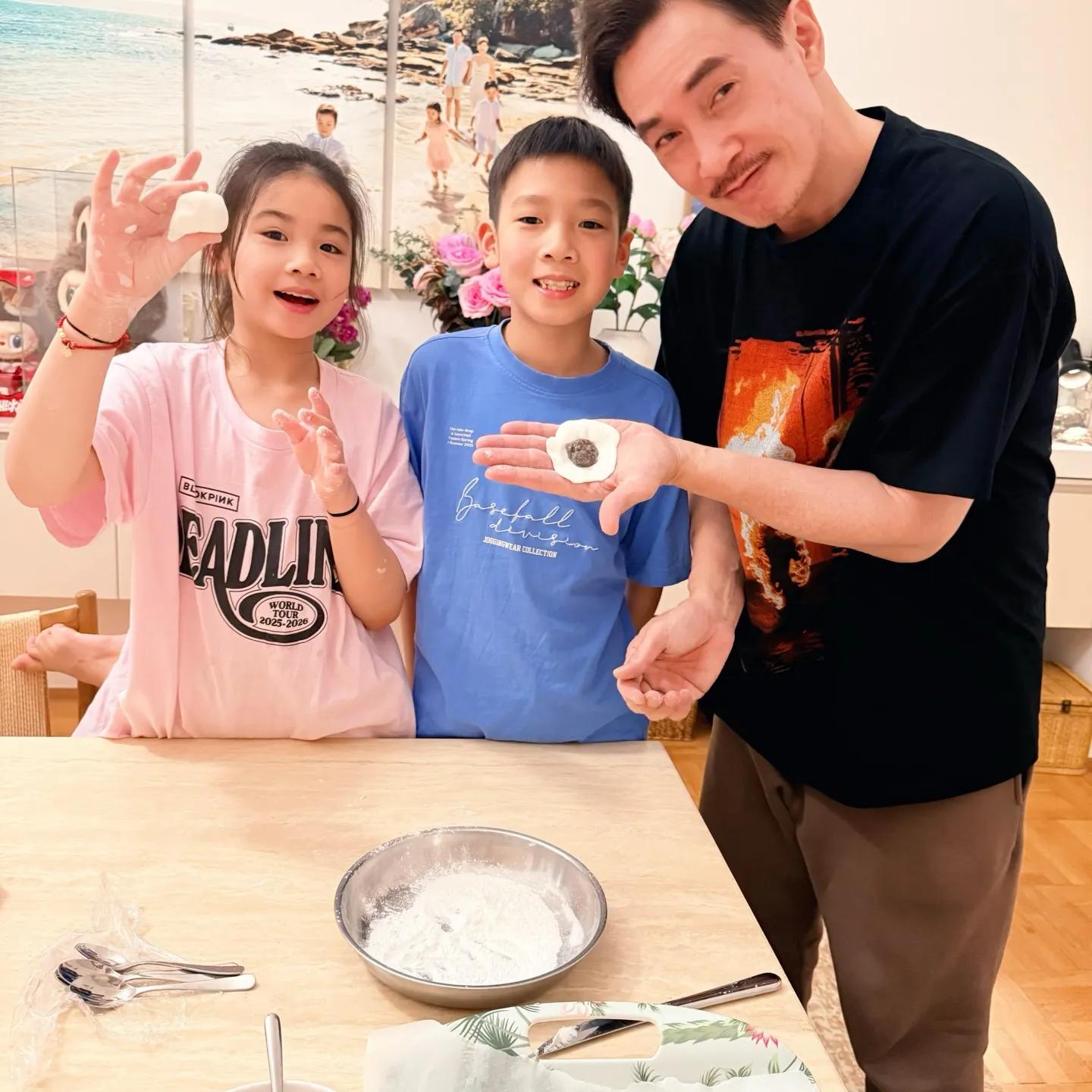
In another photo, Chen Hao took his daughter and second son to show off the results of their handiwork. All three of them had flour on their hands. The daughter held up the rolled glutinous rice balls with a lively smile. The second son stood in the middle, while Chen Hao held a stuffed glutinous rice ball. The father, daughter, and father and son made gestures to the camera. The scene was warm and healing.

Beautiful sentences for New Year's family portrait_New Year's greetings for family portrait_

From the atmospheric family portrait in red to the heartwarming scene of the whole family making glutinous rice balls together, the happiness and fireworks that filled the screen made netizens say, "This is the most beautiful look in the New Year."

Mako Komuro, The Eldest Daughter Of Japan's Akishino Palace, Has Been Living In The United States For A Long Time. What Is The Truth?

The Japanese royal family was beaten_The Japanese royal family princess event in 2021

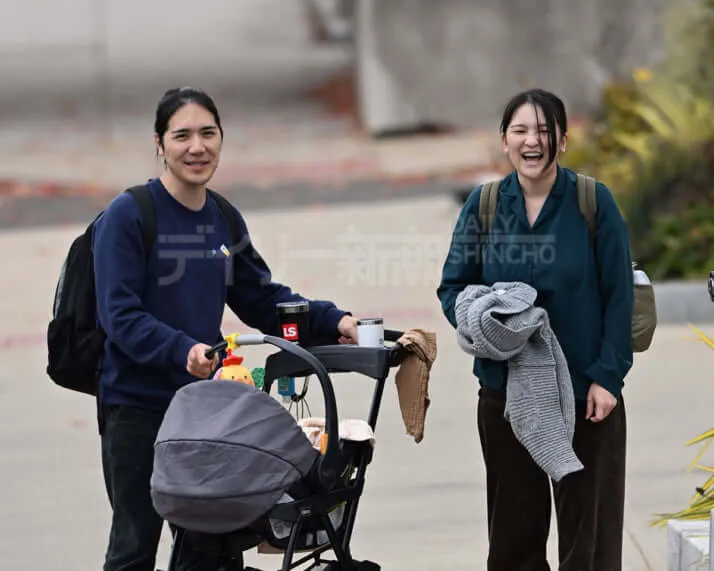
In 2021, Mako Komuro (now 34 years old), the eldest daughter of Akishino Palace in Japan, entered the marriage hall. In just over half a month after submitting her marriage registration in October of the same year, she and her husband Kei Komuro (now 34 years old) went to the United States. Since then, she has not set foot on her homeland, and her life in the United States is now entering its fifth year. After successfully giving birth to their eldest son last year, the family of three chose to settle in Connecticut, which borders New York State. Is the reason why they are reluctant to return to China stem from their pure enjoyment of the free life abroad, or is it because they have been severely criticized by social media and mass media for a long time since announcing the postponement of their wedding in February 2018, and are still trying to "escape reality"? By reviewing the "lessons learned" from those who also chose to leave the royal family and move overseas, we may be able to find out the truth about reality.

The precedent of two former royal families

As the youngest and fifth daughter of Emperor Showa and Empress Kojun, Shimazu Takako (now 86 years old) married his elder brother Hisamazu Hisanagi, a former classmate of His Majesty the Emperor and a member of the Shimazu family, the lord of the old Satsuma domain. After her marriage, due to a job transfer at the Export-Import Bank of Japan (now the Bank for International Cooperation), a government financial institution where her husband worked, she spent a total of six years living overseas in Washington, the United States, and Sydney, Australia.

Takako, who had the title of "Hisashi the Imperial Palace of the Qing Dynasty" before her marriage, was regarded as the perfect model of "Japanese princess" by many women's weekly and other media due to her avant-garde fashionable outfits and elegant manners. She was regarded as a pioneer of fashion trends among the royal family at that time. In 1959, at her coming-of-age ceremony press conference, when she was asked by the media “who is my ideal partner?”, her witty response of “Look at the person I finally choose” instantly became popular across the country and became the most popular catchphrase of the year.

This bold declaration of freedom to break the traditional constraints of the royal family coincides with the eve of the wedding of Her Royal Highness Michiko, the first civilian-born member of the royal family after the war. At this extremely sensitive moment, which is only one month away from the peak of the "Michiko craze", His Highness Takako's bold words not only captivated the young female community, but also attracted as much attention as His Highness Michiko. In addition, the news of their marriage came to light right after this declaration, and the lifestyle of the newlyweds has dominated the headlines of major TV screens and women's magazines almost all year round.

_The Japanese royal family was beaten_The Japanese royal princess event in 2021

However, as his popularity remained high, Takako began to suffer frequent backlash and criticism from public opinion. Under sensational headlines such as "divorce rumors", the media is often filled with highly exaggerated speculations such as "I had expected this day"; not only that, but also harsh comments such as "please behave more dignified" and "this is the biggest headache for the head of the Imperial Household Agency" are overwhelming. Because of this, life abroad is like escaping into a completely different haven for her – where she is completely free from the high-pressure situation at home where she is always in the public eye. In interviews with overseas media and at press conferences, she once said frankly: "I feel happier here than in Japan because I can finally live a secluded life."

On the other hand, as the fourth son of King Norihiko Higashikuru and the direct grandson of Emperor Meiji, Mr. Toshihiko Tarama was deprived of his imperial status and demoted to a civilian along with other members of the old royal family after the war. After graduating from Keio University in 1951, he went to South America and immigrated to Brazil, where he became the adopted son of the widow of Mr. Tetsusuke Tarama, who had settled there in the early years.

Mr. Tiefu served as a diplomat stationed in Brazil during his lifetime. After his retirement, he purchased property locally and operated agriculture independently. Mr. Toshihiko not only took over the management of a vast coffee plantation in the city of Lins on the outskirts of Sao Paulo, but later moved to the urban area of ​​Sao Paulo and held important positions such as vice president of the Board of Directors of the Brazilian Japanese Culture and Welfare Association, and was deeply active in the Japanese-Brazilian social circle. After that, he married the daughter of an Okinawan immigrant. After having a son, he was officially naturalized and obtained Brazilian citizenship in 1970.

In 2015, the experienced former royal passed away peacefully at his home in Sao Paulo at the age of 86. In the special context of that era when Emperor Showa was haunted by the shadow of war throughout his life and many old royal families were forced to remain silent on war-related topics, Mr. Toshihiko, who was far away in a foreign country, almost completely cut off contact with the Japanese media and spent his 86 years of life peacefully. Ms. Shimazu Takako brilliantly summed up overseas life as "seclusion", which undoubtedly stems from a double spiritual relief: she is far away from the fanatical pursuit caused by the royal family's prominent origins, and she is also completely free from the harsh moral scrutiny that must be endured due to being in the spotlight. This sense of alienation in physical space profoundly reflects the huge irreconcilable contradictions of the fate of the royal family itself.

The Japanese royal family was beaten_The Japanese royal family princess event in 2021_

Aphonia and adjustment disorders

Empress Michiko, who shared a high level of attention with Ms. Takako at the time, suddenly collapsed in the Akasaka Imperial Palace (now renamed Sento Imperial Palace) in Moto-Akasaka, Tokyo, on her birthday in 1993, the fifth year after her accession to the throne. According to official disclosures, the cause was long-term extreme mental fatigue, and she had unfortunately suffered from aphonia at the time. An attendant who served her later recalled: "Her Majesty the Queen endured unimaginable mental pressure at that time, and she felt deeply guilty and guilty about it." These words implicitly pointed out the huge psychological trauma caused to her by the numerous critical reports on the royal family in popular magazines at that time.

Especially in the August issue of "Treasure Island 30" monthly magazine published in July of that year, a blockbuster article titled "Royal Crisis" was published. This anonymous article signed by "Imperial Household Agency Staff" blatantly accuses Her Royal Highness Michiko's private life of being full of "hedonism". Once the article was published, it immediately triggered a violent chain reaction. Other gossip magazines followed suit and published negative content criticizing the royal family. The situation even escalated to the brink of getting out of control. In the end, extreme right-wing elements brazenly shot at the headquarters of the relevant publishing organization and the president's house in protest against the anti-royal reports.

In contrast, the fierce criticism that Empress Masako suffered when she was the Crown Princess is even more well known. Due to her failure to give birth to a male heir to the throne as scheduled in her early years, Her Highness Masako had serious friction with the Imperial Household Agency, which is responsible for royal affairs. Later, she was forced to absent herself from official activities for a long time due to the onset of a full-scale adjustment disorder, and fierce criticism from public opinion swept in like a tsunami. During that period, the online world became the main battlefield for attacking her. On platforms such as a large anonymous online forum that was popular in Japan at the time, a large number of malicious and defamatory posts emerged. These online violence not only focused on the names of His Highness Masako's illness, "shingles" and "adjustment disorder," but also targeted the "personality denial remarks" made by His Majesty the Emperor (then Crown Prince) who defended her, as well as the "temporary cancellation of official duties" due to the recurrence of the disease. Even the one-sided reports published by the then just-started Women’s Weekly website were widely quoted, causing the online siege against the Crown Princess to continue to ferment and cannot be subsided for a long time.

The Japanese royal family was beaten_The Japanese royal family princess event in 2021_

The advent of social media

When time passed to the era when Princess Mako was deeply involved in the whirlpool of public opinion, the well-known social media platform that is now popular around the world has become the absolute center of this storm. When the engagement press conference was held in September 2017, the whole society was filled with overwhelming blessings; however, just three months later in December, "Weekly Women" exposed the complicated "money dispute" between Kei Komuro's mother Kayo and his ex-fiancée, and the trend of public opinion suddenly ushered in a shocking reversal. Sharp criticisms such as "It really doesn't seem that she is choosing her life partner seriously and carefully" came one after another and were overwhelming, eventually forcing the high-profile wedding to be postponed in February of the following year.

Subsequently, Kei Komuro suddenly went to the United States to study in August of that year. Immediately afterwards, Akishino made harsh words at his birthday press conference in November, saying that "if we cannot create a social atmosphere that makes the vast majority of citizens convinced and happy, we will absolutely not be able to hold the traditional acceptance ceremony." This series of changes caused the young couple to suffer more and more criticism, almost out of control. Although Mr. Komuro tried to save the situation and released a 28-page detailed document on the grounds of "providing comprehensive clarification on the misinformation about the so-called money dispute." However, because the document only recorded the dispute process based on the Komuro family's unilateral perspective, it was immediately criticized by public opinion as "the content is extremely one-sided and avoids the important." This move not only failed to calm public anger, but seemed to add fuel to the fire.

_The Japanese royal family was beaten_The Japanese royal princess event in 2021

Even more fatally, it was later revealed that the Imperial Household Agency had been deeply involved in the drafting process of this clarification document. This news completely detonated the entire Internet, causing the public criticism to completely go out of control. This long "turmoil" that lasted for four years finally ended with the two of them forcibly registering their marriage and rushing to the United States immediately after the marriage.

A person from the Imperial Household Agency who is well versed in the inside story made the following profound analysis when recalling the tragic situation at that time: “Due to its extremely high anonymity and massive information throughput capacity, online forums are far more destructive than traditional paper media; and modern social media, with its amazing and ever-changing communication power and fermentation speed, can easily spawn terrorism beyond ordinary people’s imagination. The storm of public opinion was terrifying. Regardless of how much of the overwhelming criticism His Highness Mako suffered at the time was unwarranted online slander, the overwhelming psychological impact alone was enough to make any normal person have the decisive thought of fleeing Japan completely."

In addition, a former high-ranking official of the Imperial Household Agency also keenly pointed out the far-reaching social impact of this incident: "In February this year, the expert research group under the Ministry of Justice has reached a clear conclusion: measures to curb insult crimes by strengthening penalties have achieved certain substantive results in dealing with the increasingly rampant online defamation. Today, the entire Japanese society has formed a basic bottom-line consensus – it should never continue Letting go of uncontrolled and unilateral collective online violence on social media. It is undeniable that the direct trigger for the country to strengthen relevant penalties was the tragic incident of female wrestler Hana Kimura who died due to online violence; but the cruel realities that Princess Mako encountered in this storm were also like a heavy hammer, prompting countless citizens to deeply reflect on the advantages and disadvantages of the double-edged sword of modern social networks. "

About the author: Zhaoxia Baoren

Source: 「日本にいるときよりもLuckyせ」と说したancestorも…「小目眞子さん」 5 years old, "female royal family" がバッシングを bathびる background

Workers In Chonburi, Thailand, Found Human Skeletons After Dreaming Of Women Begging For Food

Police in Bang Lamung District, Chonburi Province, Thailand are investigating a case where human remains were found. A Laotian worker reported to the police on February 25 that he dreamed of a woman begging him for food the night before, and found human skeletons in a coconut grove the next day.

_Thailand and Laos is a country_The latest news about the epidemic in Thailand and Laos

The skeletons were found in a coconut plantation near Khao Song Phi Nong in Takian Tia subdivision.

After receiving the report, Bang Lamung police, together with forensic personnel from the Second Police District, doctors from local hospitals, and personnel from the Rescue Foundation went to the scene to investigate.

The police found scattered human bones in the coconut garden, including a skull fragment, two upper arm bones, a hip bone and multiple smaller bone fragments. Each bone is approximately 40 to 50 meters apart. The police initially estimated that the deceased had been dead for at least 2 to 3 months.

About 10 meters away from the skull, the police found a bag containing clothing containing 6 to 7 items of female products, but it was not yet confirmed whether these items were related to the skeleton.

Thailand and Laos is a country_The latest news about the epidemic in Thailand and Laos_

The skeleton was found by Jamkat, a 23-year-old Laotian worker who worked in the coconut grove. He told the police that when he was watering the coconut trees that day, he found an object that looked like a human skull and immediately ran to notify his employer.

Chankar said that the night before, he dreamed of a woman with a bobbed hair and wearing white clothes approaching him and saying, "I'm very hungry, please give me rice." The woman in the dream also told him that she was 26 years old, and he was trying to find food for her in the dream.

After discovering the skull the next morning, he associated it with a dream and believed it was a woman's spirit that led him to the remains.

A resident who lives near where the upper arm bone was found told the police that his dog had been holding and chewing on a bone for several days, but it was not until the skull was found and the police arrived that they realized it was a human bone.

The resident said he was shocked. He had never smelled the smell of decomposing corpses or noticed anything unusual before.

Thailand and Laos is a country__The latest news about the epidemic in Thailand and Laos

All skeletal fragments found have been sent to the Institute of Forensic Medicine for a detailed autopsy to confirm the identity and cause of death. Initial assessment revealed that the skull was small and had features similar to those of a female skull.

Police said the scattered bones may have been picked up and chewed by stray dogs, as there are a large number of stray dogs in the area.

According to Thai media reports, investigators will search the scene again to look for other skeletal remains that have not yet been found.

I Met Chen Jianbin, Jiang Qinqin And His Family Of Five On Vacation In New Zealand. The Picture Was Warm And Loving.

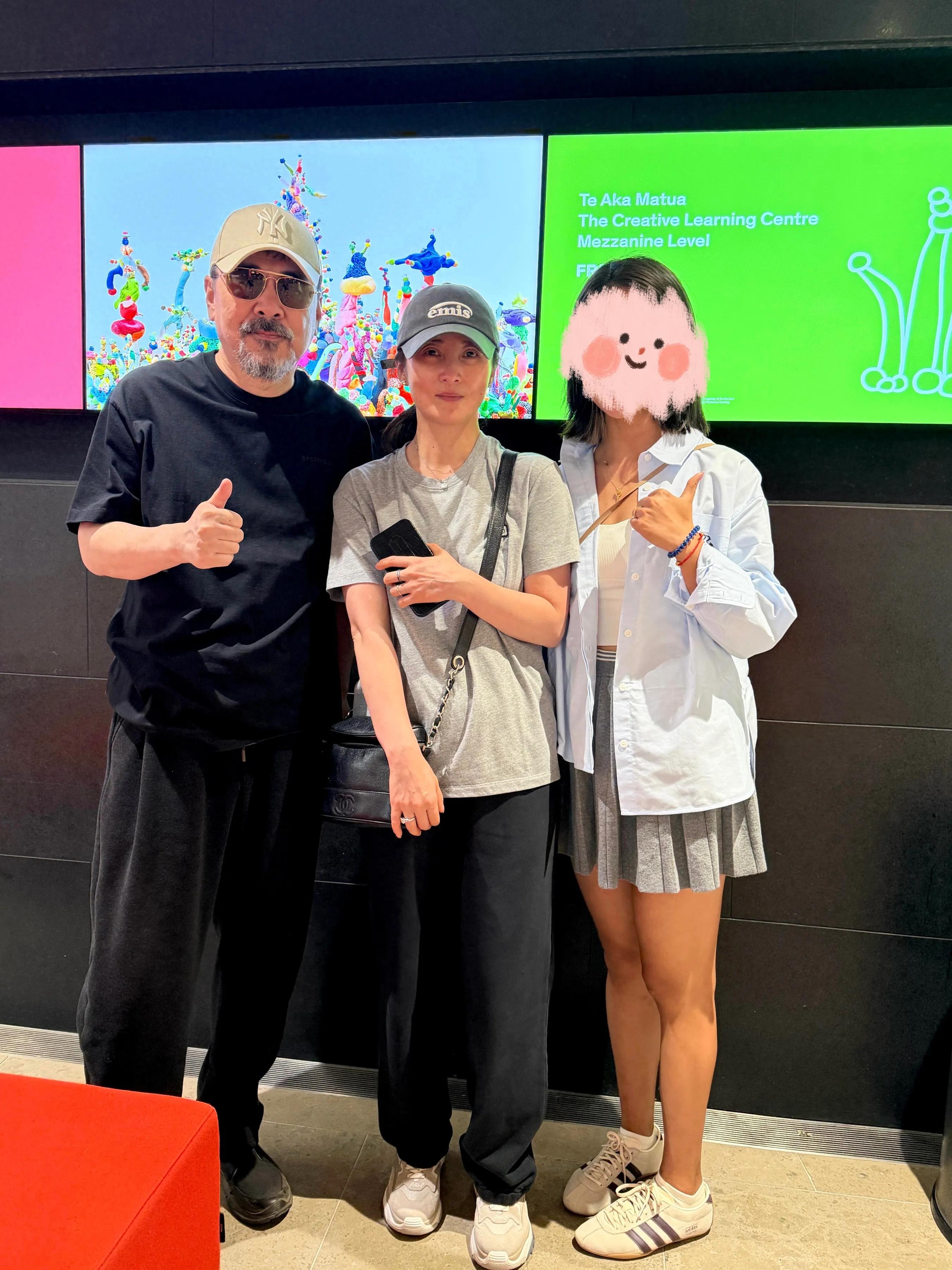
On February 11, some netizens posted photos of Chen Jianbin and Jiang Qinqin who met Chen Jianbin and Jiang Qinqin on vacation in New Zealand. In addition to their two sons, Chen Jianbin’s mother was also traveling with them. The family of five looked warm and relaxed while traveling.

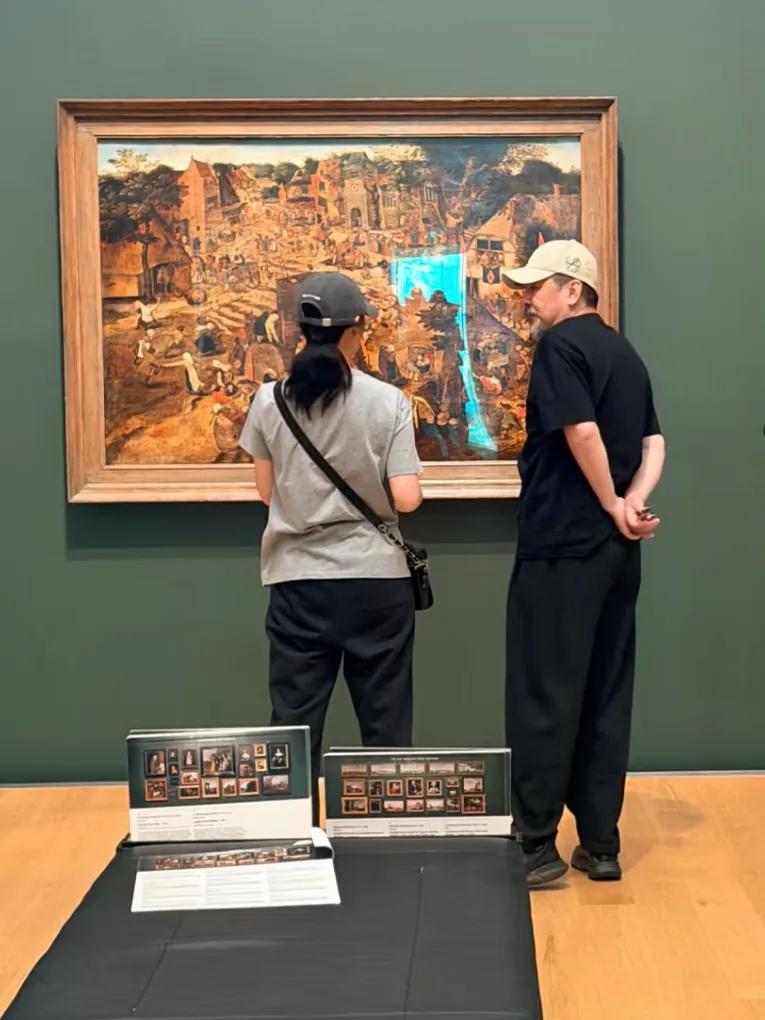
In the morning of that day, some netizens met their family by chance at the art museum and took a group photo with Chen Jianbin and Jiang Qinqin. The couple looked very easy-going. Jiang Qinqin was wearing a gray T-shirt and black trousers, dressed casually. Chen Jianbin wears a black T-shirt and trousers, and wears sunglasses to cover his face. He has a gray beard. He looks very different in age from Jiang Qinqin, but in fact, the 55-year-old Chen Jianbin is only 5 years older than the 50-year-old Jiang Qinqin. It can only be said that Jiang Qinqin takes good care of himself and his beauty is always online.

Tiger is close to people_Tiger is close_

Tiger is close to people__Tiger is close

After visiting the art museum, Jiang Qinqin bought souvenirs for his family in a souvenir shop. Chen Jianbin, his mother and two sons were sitting in front of the shop waiting. I saw Mother Chen wearing a white top, sitting next to her eldest grandson, smiling and looking very kind. I felt that Mother Chen was younger than her son.

Tiger is close to people_Tiger is close_

Tiger is close to people_Tiger is close_

Sitting next to his grandma, Tiger was playing on his mobile phone. He was wearing a black baseball cap, a black T-shirt and shorts. Although he was sitting, it could be seen that the 19-year-old was very tall. The 7-year-old son, Qiang Qiang, was hanging on the shoulders of his grandmother and brother from behind, peeking at his brother playing on his mobile phone. It can be seen that the two sons and grandma are very close. The picture of the three of them in the same frame is warm and loving. Chen Jianbin, who was sitting in the back, couldn't help but take out his mobile phone to take a picture of this loving picture.

_Tiger is close to people_Tiger is close

The younger son is lying on the sofa with a drawing book and drawing. Chen Jianbin, who is bored, is also taking various selfies or taking pictures of his son. The father and son have a warm interaction.

_Tiger is close_Tiger is close to people

Tiger is close to people__Tiger is close

Later, some netizens met their family by chance on the roadside. Their two sons were walking on the roadbed. The eldest son Tiger was walking in front, Chen Jianbin was guarding the younger son, and Jiang Qinqin was taking pictures and recording with his mobile phone. Netizens said that without the celebrity halo, they looked like ordinary people traveling as a family, which felt very warm.

_Tiger is close to people_Tiger is close

Guest Zeng Yanhong In The New Episode Of Zhang Zetian’s Podcast: Talking About The Sixteen-year Journey Of Climbing Mount Everest

Author|Jolene

After 45 days, Zhang Zetian's personal podcast "Xiaotianzhang" has been updated again. Under the trailer, she wrote: "New Year, let's climb the mountain together."

After the first episode of the conversation with Carina Lau aired, both Zhang Zetian and her fledgling personal podcast fell into controversy. Many people were surprised by her continued updates, but what was even more unexpected was that the person sitting opposite her this time was not a celebrity or a business celebrity.

In the recording studio, Zeng Yanhong (Ada) was wearing a black jacket and red running shoes. Once she fell into memories while narrating, she couldn't help but make gestures. The 48-year-old is from Hong Kong and was a middle school teacher. In 2021, Zeng Yanhong climbed to the top of Mount Everest in 25 hours and 50 minutes, becoming the first person in China to quickly climb Mount Everest. In 2017, the Hong Kong SAR government awarded her the "Outstanding Leader" award.

In the 66-minute podcast, Zeng Yanhong talked about her sixteen-year climbing journey: from a promise to students in the life education class, to countless failed summit attempts, to being seriously injured after experiencing an earthquake in Nepal, to climbing Mount Everest multiple times and setting a world record for speed climbing. It took her seven years to climb Mount Everest, and she saw the true face of life in nature while getting along with the snow-capped mountains.

She believed in climbing itself. Do whatever you are doing, and the next goal will emerge on its own. Looking back on her experience of wandering on the edge of life and death at high altitudes, Zeng Yanhong said: "The only thing I can't do is give up."

Zhang Zetian in the public impression seems to belong to two different worlds from the snow-capped mountain climbers. The title of the program gives people a strong sense of contrast.

In fact, during the conversation with Carina Lau, Zhang Zetian mentioned his experience of trying hiking in Bhutan and Longji in Hong Kong. It was also during the mountain climbing process that she met Zeng Yanhong.

In the self-introduction originally released on the "Xiao Tian Zhang" podcast, Zhang Zetian had already shown his interest in outdoor sports. In that two-minute audio, she hoped to communicate with people who had different life experiences and discover different ways of living.

However, the number of views of this introduction on the Little Universe APP is less than half of that of the conversation with Carina Lau. Most people may still follow the stereotype and think that this is a "rich wife's living room" that Zhang Zetian uses to build his own IP.

Inviting Zeng Yanhong was a smart choice. Zeng Yanhong is extremely talkative and can speak fluent Mandarin. She is an atypical and inspiring example of the "middle girl era": from a middle school teacher to the first woman in Hong Kong to climb Mount Everest, she has completed a huge identity leap, faced nature and the limits of life and death, and has endless rich stories.

In this program, Zeng Yanhong, who has a story, becomes the protagonist. As an "outdoor novice", Zhang Zetian listened and asked questions along her memories. Over the course of 66 minutes, she plays the role of a medium, rarely revealing her own ego: the story of her life already carries enough weight.

However, compared with the previous episode, there is no longer an obvious sense of "one party dominates" the dialogue in the second episode. This time, Zhang Zetian gave the spotlight to the guests, but he was not completely carried away by the other party's rhythm. Many comments found that she showed obvious improvement.

Maybe it’s still because of the topic choice. The first issue was about the broad life of celebrities, while the theme of this issue is a specific action that Zhang Zetian himself has performed: climbing. She clearly has a greater curiosity for details based on shared experience.

For example, Zeng Yanhong mentioned that there are dozens of ropes of different colors when going down the mountain. Some of them were old ropes from previous climbing seasons and were at risk of breaking, so she needed to focus on choosing new ropes. Zhang Zetian became interested in this detail: Since there are such clear risks and there is a professional team responsible for the road ropes, why not remove the old ropes?

This is not a simple question. Even Zeng Yanhong, who has climbed Mount Everest many times, remains curious about it. Based on her own climbing experience, she speculated that it was because of the weather: some teams made an emergency descent due to a snowstorm and may not have the conditions to clear the ropes they left behind in time.

Zhang Zetian chose specific and truly interesting topics, which gave her a desire to explore. Her thirst for knowledge kept her seizing the opportunity to throw the ball, and the other party would catch it and throw it back to her. The richer response gave the snow-capped mountains, which are still far away from most listeners, a more concrete image in the recording studio.

In recent months, the unexpected emergence of the "Ao Tai Line" has brought outdoor sports into more people's horizons. These accident videos show that countless people have given climbing too much worldly meaning: traffic, attention, group honor, economic interests…

Nature is pure, but humans are not. Mountaineering has always been a highly commercialized activity, especially the extremely expensive high-altitude mountaineering extreme sport. In just two decades, the total number of climbs on Mount Everest has increased nearly 10 times, transforming it from the mysterious highest peak on earth into a multi-million dollar industry.

However, in the recording studio, the climbing in Zeng Yanhong's words returned to the simple action of life itself. Before everything started, she was a middle school teacher, responsible for life education classes, teaching students how to treat themselves, their friends and the world in practice. She once rode across the Sichuan-Tibet Line and looked up at Mount Everest, feeling it was unattainable. In the first class, Zeng Yanhong asked her students to set life goals. Instead, the students suggested that she climb Mount Everest: If the teacher could even go to Mount Everest, they would dare to think about anything.

Zeng Yanhong agreed immediately and started learning ice climbing and rock climbing. In order to save her salary to pay related expenses, she kept only three sets of clothes and cycled 15 kilometers to and from get off work: "When you want to do something, you have to choose a lifestyle that allows you to get the result. So I welcome the difficulties that I have to face, whether it is money, time, experience or experience, all aspects are lessons that can be taught to students."

Seven years later, she reached the top of Mount Everest. Someone left a message and replied: "I'm very touched. I always thought that climbing Mount Everest was a matter of national will or a show off of the rich. I didn't expect that there is such a spiritual practice."

But the price Zeng Yanhong paid for this included leaving the starting point of everything. She had to resign from the school because mountain climbing delayed her classes: "If I had known at that time that setting this goal would cost me my job, I definitely wouldn't have set this goal."

In the end, Zeng Yanhong decided to leave her job and go to Mount Everest. She has a habit of agreeing first and then forcing herself to solve all problems, and feels that this motivates herself to a certain extent: "I rarely study clearly before saying whether to agree or not. I will ask myself whether I am very interested, and if I am interested, I will agree first. I think this is human nature. If you think about many things slowly, you will definitely not do it in the end."

Zhang Zetian feels the same way about this: "There are many things that after thinking twice, you find that you can't do them. But if you don't care about the three, seven, twenty-one, and take that step first, it seems that sometimes the road will be cleared."

After the first issue of "Xiao Tian Zhang" was launched, both Zhang Zetian and her fledgling podcast were caught in a storm of public opinion. After a month of silence, the second program she gave also had some "act first, talk later" "reckless" energy.

In the interview, Zhang Zetian mentioned an article written by Lindsey Vonn after she was injured in this year's Winter Olympics: "The only failure in life is when you don't try." She also needs to fulfill the promise made in that introduction to her own curiosity and diversity in life.

Zeng Yanhong mentioned that after successfully climbing Mount Everest, her excitement only lasted a few seconds. She had no distracting thoughts during the climb. She only took a photo but did not post it on WeChat Moments. Even though funds were tight, she never accepted commercial sponsorship because she believed that it would burden herself with excessive expectations: just like climbing Mount Everest is not the end, you still need to descend to the base camp, after you come down from the top in life, you have to go to the next destination.

To a certain extent, Zhang Zetian's summary of this also reflects her psychological process of being under public scrutiny in the past month: "Being too perfect or too imperfect is not the real you. In many cases, only you know who you really are. But it is difficult for me to do it, because everyone knows me, and it is difficult for everyone to see the truest state. But you must know in your heart who you are, where you are, and what others say is true and what is false."

"Never put yourself in your position in the eyes of others, otherwise you will lose yourself." This is Zhang Zetian's ideal state. She also frankly admitted the distance from her goal: "I can't do it, but I will still post (in Moments)."

Snow Mountain welcomes climbers of all backgrounds equally. She chose the medium of podcasting because it is inclusive enough: it can accommodate both in-depth interviews and natural chats. People with different purposes can explore and gradually grow in the process of preparation and listening.

In any case, the second episode has been launched. Many people are still speculating, where will "Xiao Tianzhang" go in the future?

In the two-minute introduction when the podcast was launched, Zhang Zetian envisioned a very diverse direction: she wanted to talk about entrepreneurs and share the latest business information. This is obviously the hottest trend in the podcast industry in this age of knowledge anxiety. Of course, as most people expect, she can also use her network advantages to run the "Rich Wife's Living Room" and conduct interviews with celebrities in the entertainment industry to gain direct traffic. However, she also wants to follow her curiosity and learn about different lives.

After 45 days, Zhang Zetian finally chose a more difficult but more sustainable path: she decided to respect her desire for knowledge, communication and expression, and turned the camera on amateurs like Zeng Yanhong who use their lives to write stories.

During the conversation, she talked about the live broadcast of Alex Honnold, the "god of free climbing", free climbing Taipei 101. It wasn't an overnight process or an impulsive decision, Alex had over thirty years of professional training. Not only did he hone his skills, he also had to deal with the instinctive fear of danger within the human amygdala.

Zhang Zetian described the process this way: "He did not choose to suppress fear, but chose to face it head-on. Through repeated practice, he expanded his comfort zone, completely dissipating fear, and became more and more confident. Step by step, he only focused on the point on his hand."

So detailed, it seems that I feel the same way. Faced with the fear of being watched and judged, what Zhang Zetian can grasp is to do a lot of homework. She was new to outdoor sports, so she watched related documentaries: "Aftermath: Mount Everest and the Nepal Earthquake", "Freehand Rock Climbing", and "Barehand Taipei 101 Climbing: Live Broadcast".

The 2015 Nepal earthquake caused psychological trauma to many climbers, and many never returned to the snow-capped mountains. After miraculously escaping from death and undergoing a year of recuperation, Zeng Yanhong decided to climb Muztagh Peak, which is slightly lower in altitude. After success, she planned to return to Mount Everest in 2017. This is done to tell students that the closer they are to their goals, the more reasons they have to give up. However, Zeng Yanhong believes that she will only consider giving up when she touches her principles: for her, the only principle is life. Now that he's fully recovered, "I can't see a reason not to go."

Zhang Zetian quoted "Dead Poets Society": the maverick teacher, and the students who stood at the table to support him. She understands that feeling: in essence, everything Zeng Yanhong does is to educate and influence lives. Even if it does not happen in the classroom, this is the value that has been internalized in the climber's life. But she still couldn't help but ask: "But I am also a mother and a daughter. I would imagine that when encountering such a thing, the feelings of a relative are very complicated… Have you two discussed it?"

Even if we have not personally reached the edge of life and death, people still have empathy. Zhang Zetian, who has done his homework well, leaves the stage to the other party, does not judge, only listens, and concentrates on being the bridge between ordinary listeners and climbers.

Zeng Yanhong mentioned that she made an impulsive decision in 2014: the five-year agreement with the student was about to expire, but she still had no successful mountaineering record. In order to give her students an explanation, she still went to Mount Everest. An avalanche occurred at an altitude of 3,300 meters. She waited at the camp until the last day and was eventually forced to descend. Zhang Zetian asked: "How did you feel when you encountered something like this when you went to Mount Everest for the first time?"

Zeng Yanhong thinks it’s normal: “When you do something, you probably won’t succeed the first time.”

Instead, she hopes the process will be "as long as possible." "You can come again next year. Because I haven't given up yet, it's not over yet, and you (students) aren't over yet either."

Near the end of the program, Zhang Zetian asked Zeng Yanhong: "When will you start thinking about your next goal?"

Zeng Yanhong said: "If you do the job, responsibility, and identity at hand well, the next goal will emerge by itself."

"Xiao Tianzhang" will find his goal in time, and so will Zhang Zetian.
Riding The Wind And Waves 4, Tan Weiwei And Cyndi Wang Will Collaborate With Shanhai, Which Has Raised The Expectations Of Netizens

NetEase Entertainment reported on June 10 that the fourth episode of "Riding the Wind and Waves" will be broadcast on June 10. In this issue, Tan Weiwei and Cyndi Wang are in the same group after group selection. They will collaborate on "Mountains and Seas" on the second stage. The two have been actively rehearsing.

When talking about the concept of the program "Mountains and Seas", Tan Weiwei believed that of the two of them, "one is harder and the other is softer, just like I am the mountain, she is the sea, and we are each other's mountains and seas." Cyndi Wang also agreed.

Talking about the rap in the song, Tan Weiwei said that she can imagine how handsome Cyndi Wang would be when she sings rap: "I am already like that. I am no longer amazing when I perform this song, but I have to make her (Cyndi Wang) amazing. This is my only purpose."

In this regard, Cyndi Wang said: "Actually, I still want to keep myself." When the host asked "Do you get tired of singing sweet songs?", Cyndi Wang firmly said no. "I can only say that sweetness is my characteristic and not my baggage." She said frankly, "Of course I will work hard to change on this basis, but I don't want to change just for the sake of change. That is not like me, and I am not being myself." Tan Weiwei also nodded in agreement.

Netizens in the comment area expressed great expectations for the collaboration between the two.

Recently, Cyndi Wang's performance of "Love You" on the first stage of "Riding the Wind and Waves" triggered many netizens' youthful memories and sparked heated discussions.

Related reports: Is Cyndi Wang’s popular “Riding the Wind and Waves 3” better than the first two seasons?

NetEase Entertainment special article reported on May 27 (Text/Rong) In the past week, "Riding the Wind and Waves 3" dominated the hot searches almost every day. Most of them were contributed by Cyndi Wang. Many people haven't figured out why #王cyndi is popular again#, but they have already been infected by "Love You", which dominates the charts on all major platforms.

However, objectively speaking, Cyndi’s popularity has little to do with the show itself. After all, her front-facing scenes in the first episode of the show totaled less than 4 minutes, which is far behind Yu Wenwen, who has a complete story line, not to mention Ning Jing and Na Ying who are featured throughout. Her emotional explosion came more from the recent domestic entertainment renaissance craze, but it was quickly captured and amplified through such a short appearance on the stage.

As the new episode aired this week, Cyndi Wang unsurprisingly increased the number of scenes. With the determination of the one-centimeter group, the overall appearance of the program has gradually become clearer.

Although this season has the Cyndi effect that detonated the circle, the Douban score of this season's "Riding the Wind and Waves" is only 6.8 points, which is still significantly lower than the 8.5 points of the first season. Netizens have mixed reviews. Some people love it very much, while others are disappointed. The reason is that this season is very different from the previous two seasons in terms of selection and competition system. Many changes and upgrades are subversive. While challenging the thinking of old viewers, it also gives the show a new perspective and appearance as a whole. One or two episodes is not enough to draw an early conclusion. It will take time to verify whether these changes are a success or a failure.

Competition format: The suspense is getting bigger due to the lack of a big sister

The first two seasons of "Sister Lang" each had a big sister who couldn't be ignored – Jing Jing and Na Ying. In their respective seasons of the show, they enjoyed the popularity of the stars and the pleasure of being able to be themselves. From the moment they appeared, they were destined to become the core figure. Even if they were not the first ones, no one would dare to covet them. Regarding the direction of the rankings, there was no suspense from the beginning.

But in the third season of "Riding the Wind and Waves", there are no contestants like Ning Jing and Na Ying who dare to speak out and are full of drama. Even Zhang Qiang, who has been in the show for 37 years, is a person who does not compete or compete. She does not feel domineering and does not have her own core aura.

So, what will you do if you don’t have your eldest sister?

The program team came up with a good idea: invite the eldest sisters from the first two seasons!

Since there is drama between the two of them, let the audience watch it all at once. It was definitely not appropriate to come back to compete again. The program team gave them the title of senior sisters and asked them to lead the team to victory.

Ning Jing and Na Ying also lived up to their trust. As soon as they appeared on the stage, they rushed to compete with each other to compete with each other. When it came to selecting and competing for talents, they even staged a "gong scheming". They immediately attracted all the contestants of this season and gave the show the centripetal force it needed.

In the third season without the big sister contestants, the core position becomes less important. The suspense of who will stand on the winning spot in the end becomes greater, and it is very difficult to predict: does it depend on ability? Popularity? Or is it the ability of the eldest sister who leads the team? Let’s continue reading this.

An obvious change this season is that the concepts of "women's team" and "group" have been weakened. From the beginning to the end, there is no mention of the final form of the team. It just states that "the final winning seats of this season will be determined by the results of the two senior sisters and the two teams. The number of winning seats will determine how many new members will stand on the podium."

Note that this is "podium", not "debut into a group". So will it end up being a recognition conference? This is another question mark.

However, this season has indeed weakened the concept of competition and canceled the judges' scoring and professional comments on the first stage. The tension is much less, which is why many old viewers feel that it is "unsightly".

The conflicting point in the first issue is not about scoring, but about who can become the captain. What is more tested than professional ability is a person's ability to organize troops and market himself. And what kind of person the sisters who have gone through ups and downs in the entertainment industry are willing to accept the leadership is also one of the highlights.

Therefore, compared with the "Older Version of Produce 101" competition in the previous two seasons, this season is more like a reality show variety show. People and performances are finally integrated into one. It is no longer about performing to get a good score in the competition, but to truly show what you want to show most. In this process, who has helped you, led you, inspired you, or beaten you… This process is the focus of this season.

The four stages set up this season include singing stage, singing stage, singing show stage, and singing and dancing stage, which also means that singing and dancing for girl groups is no longer the only option. Here, you can sing, dance, perform, play musical instruments… unlimited gameplay can maximize the charm of the sisters.

Selection: They are all sisters with stories

The selection of this season did not follow the standards of a girl group like the first season, nor was it like the second season, which seemed to be a stage for becoming popular and re-employing… Instead, we carefully selected sisters from all walks of life with stories to take to the stage and tell everyone their stories through performances.

There are powerful singers such as Tan Weiwei and Xu Ruyun, as well as principal dancers Zhu Jiejing and Tang Shiyi, as well as rock circle veterans Zhang Qiang, childhood idol twins, Wang Cyndi, and Winter Olympic champion Xu Mengtao… These are all women who shine individually, and they all have a lot of experience. They came to Sister Lang not to become members of a certain "girl group".

Instead, many people come to this stage, either to prove themselves or to make up for past regrets. Just like this season's slogan "Happiness at Thirty", the sisters this season want to make themselves happy more than how to please the audience.

This can be seen from their song selection for the first stage. Almost every performance can condense one's current state of mind and inner expression.

For example, Wu Jinyan, although many people suggested that she dance, she still chose to dance the ballet she had learned since she was a child. Because she said that her career of studying ballet in the past ten years did not bring her confidence, and she would stand at the edge of the stage every time she performed. "I don't know much about the light on the stage, and what it feels like to stand there. On the stage of Riding the Wind and Waves, at least a minute and a half is reserved for myself. I want to take a look and see what the light in the middle looks like."

Xu Ruyun, who is famous for her "cloud-style singing", changed her soft style and chose self-playing and singing with a dark and independent temperament. She said, "I chose this song because I hope to break some of their inherent impressions of me. Although I am not very good at physical dancing, I can coordinate my finger jumps."

Tan Weiwei, who debuted in Super Girl, has put down her competitive mentality this time. She said that her biggest regret when she first debuted was that she forgot to enjoy the stage and the music. "More importantly, I want to see how many fans came today and how many lights were held up. Why didn't I? I was very anxious. Sixteen years later, the sisters have a sense of being in the scene together. When I have this opportunity, I must go and enjoy the stage and not be disturbed by other things around me."

And Cyndi Wang, who became popular as soon as she debuted on the stage, recreated her look when she danced in the "Love You" music video. Her brisk dance steps and sweet smile are still as sweet as a girl, making people forget that she is almost forty years old.

After many years of failed transformations into sexy and mature, Cyndi Wang finally reconciled with her label of "Sweetheart Leader", "If I am still on crutches at the age of 80, dancing to "Love You" and "Rainbow Smile", I can still be called "Sweetheart Grandma", which is actually pretty good."

Rather than saying that everyone was attracted to Cyndi Wang again by her memories, it is better to say that through her performance, the story she presented on this stage was re-accepted by everyone today. A 30+ girl who is not cool, cool, or even smart is actually charming and cute.

Women should not conform to the stereotypes of the outside world. As they grow older, they must be mature and stable. Women can live any way they like and do whatever they like. This is what time has taught us.

Mode: A great fusion of classic variety shows, there’s always something you love

The third season of "Riding the Wind and Waves" is like a collection of various classic variety shows. The music part brings together professional singers at the "Singer" level, as well as the rock scene of "Summer of the Band". Cantonese singers like Myolie Wu and Sit Kai-chi come to "The Sound of Life" every minute. Things like Guo Caijie's Gothic white-voice singing, Liu Lian's jazz and kazoo performance, Xu Ruyun's dark playing and singing… all make this stage much richer in musicality.

As for the reality show part, the embarrassing scenes brought about by Yu Wenwen are comparable to the reappearance of "Flower Flower 2". Neither Ning Jing nor Na Ying wanted to choose Yu Wenwen. Na Ying's reason was: "I don't know her at all and I'm afraid I won't be able to manipulate her." Ning Jing's reason was: "Wen Wen is like me in the past, and I can't hold her."

Facing the two eldest sisters, Yu Wenwen didn't know whether he was naturally upright or had poor emotional intelligence, so he continued: "What can't you hold on to?"

The air froze for a moment. Comments all said: "Sister Lang's recipe, the taste of Hua Shao". This kind of annual embarrassing scene with a subtle atmosphere between celebrities has only been seen in "Flower Flower 2".

Na Ying added: "Because Wenwen doesn't like to chat much, I'm afraid I won't be able to manipulate you."

Yu Wenwen was still able to continue: "What should we do?"

Na Ying, who is used to seeing big scenes, has never seen such a character, so he can only make a fuss: "Then you can choose whoever you want."

In the end, Yu Wenwen ended up in the Serenity Group. Ning Jing was very anxious when she didn't find the ideal candidate. She held a meeting with members in the middle of the night to steal people.

I have to say that the competition between Ning Jing and Na Ying in the first episode was a bit like "Extreme Challenge". One is "smart" and the other is "stupid". Ning Jing's side has already arranged various formations. Na Ying's side has not yet understood the competition system… but the "smart" one has never been able to take advantage and has not been able to choose what he wanted. The so-called "stupid" seems to be one of the tactics. With the broadcast of the second episode, the brain-burning song selection grouping session between the two made the horse-grabbing variety show full of effect. Ning Jing used small things to fight for big things. She used her acting skills to deceive Na Ying and got what she wanted without any effort. Na Ying was surprised. The two sisters' battle of wits and courage had a strong dramatic effect and was full of fun to watch.

After the second episode was broadcast, it instantly occupied many hot search seats. However, it is not surprising that the third season of "Riding the Wind and Waves", which combines so many classic variety show models, can arouse so much discussion. After all, there has been nothing more interesting to watch recently.

Cyndi Wang and Tan Weiwei's second daughter sings "Mountains and Seas", Cyndi Wang says she wants to maintain her own style__ Cyndi Wang and Tan Weiwei's second son sings "Mountains and Seas" Cyndi Wang says she wants to maintain her own style

Japan Is Accelerating Its Armed Forces, And Conflicts Between China And Japan Are Inevitable. Japan Has Threatened The Central Plains Many Times In History.

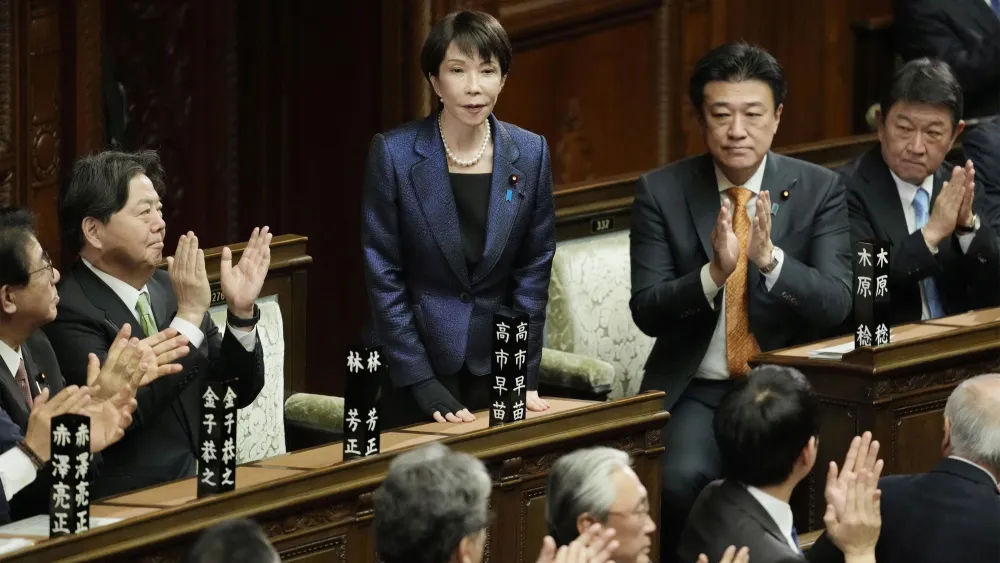
With the consolidation of Japanese Prime Minister Sanae Takaichi's power in office, Japan is being coerced by right-wing forces to accelerate its arming of itself. The announcement of the ban from the Ministry of Commerce of China put China's bargaining chip and its own responsibilities on the table.

The latest announcement of the Ministry of Commerce__The Ministry of Commerce Gazette

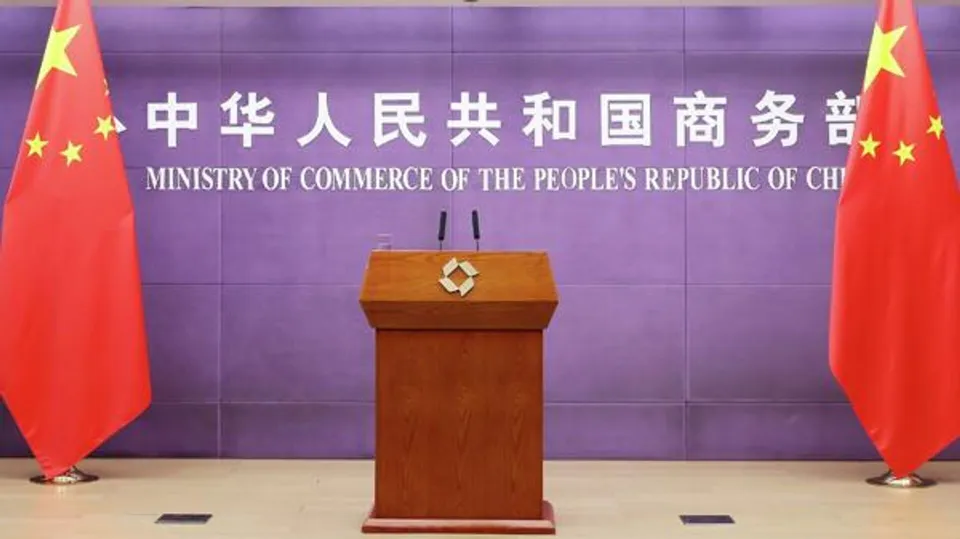
Ministry of Commerce Press Conference

China has the obligation and the ability to demilitarize Japan. This is not an empty talk. The author has recently been discussing the direction of Sino-Japanese relations with friends around me, including my own students.
But no matter how we discuss it, we all find that the contradiction between China and Japan is inevitable. This means that the cause of the current tension in Sino-Japanese relations is not an accidental factor, but an inevitability of social and historical development.

From a historical perspective, Japan has always been a major threat to the Central Plains Dynasty.

From the period from the Three Kingdoms to the Eastern Jin Dynasty, Japan had been trying to get involved in the Central Plains. During the Eastern Jin Dynasty, Japan expanded to the Korean Peninsula, conquered what is now South Korea's Gyeongsang Province, and established the "Japanese Mansion" to rule here. It also turned the then Baekje Kingdom into a tributary state of Japan, directly overlooking the entire Central Plains Dynasty from the north.

The latest announcement of the Ministry of Commerce_The Ministry of Commerce Gazette

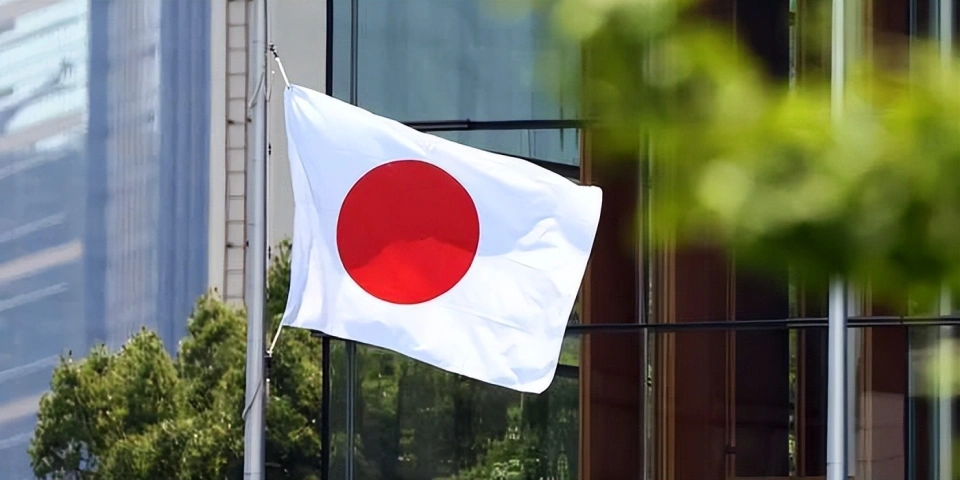
japan flag

During the reign of Emperor Gaozong of the Tang Dynasty, Japan and the Central Plains Dynasty directly broke out at the Battle of Baijiangkou. They mobilized the entire country to send troops to the Korean Peninsula, and a large-scale naval battle broke out with the Tang army at the mouth of the Jinjiang River in what is now South Korea.

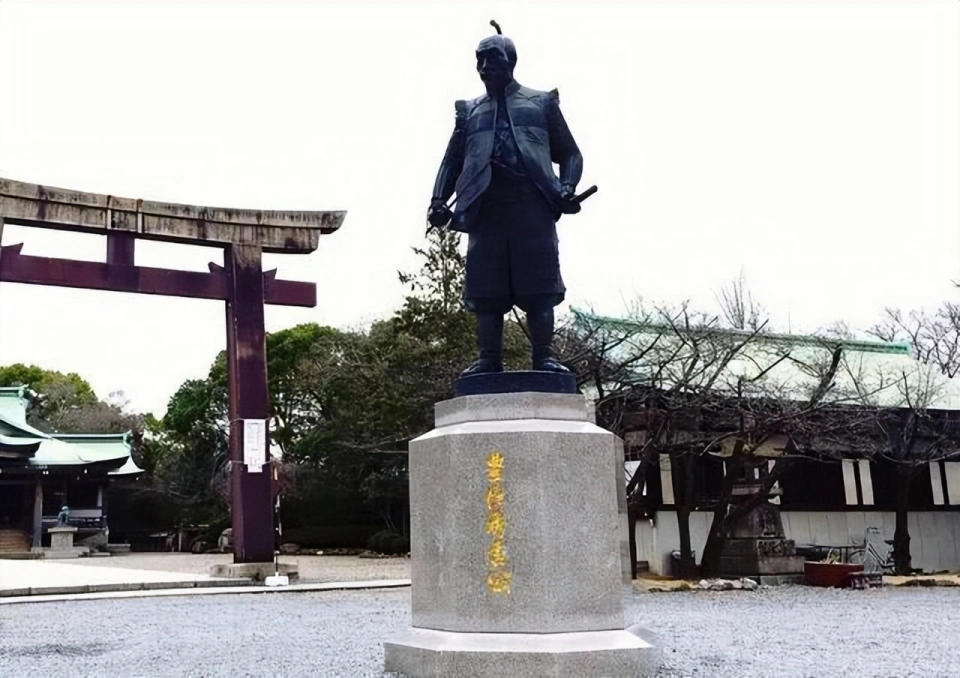
During the Ming Dynasty, Japanese pirates composed of Japanese ronin and samurai had been intruding on the coast of the Central Plains Dynasty for a long time. Toyotomi Hideyoshi even launched a war and clearly proposed the strategy of "occupying Korea first, then destroying China", intending to use the Korean Peninsula as a springboard to conquer the Central Plains Dynasty.

The proposal of this strategy prompted Japan to test it for hundreds of years, and finally implemented this strategic concept on a large scale in the war of aggression against China launched in modern times.

Why would Japan not miss any opportunity to challenge the Central Plains Dynasty? There is a fact that we all have to admit, that is, "stud" is not Japan's risk-taking, but Japan's cheapest "trump card".

The latest announcement of the Ministry of Commerce_The Ministry of Commerce Gazette_

Toyotomi Hideyoshi statue

For Japan, not invading the Central Plains Dynasty after it becomes stronger is equivalent to suffering a loss. After all, Japan is an island country with poor resources. When its own strength develops to a certain level, it will have a bottleneck. If it wants to break through this bottleneck, foreign aggression is the best way.

Japan is keen on "stud" because once it succeeds, it will be of great benefit to Japan for generations to come. But if it loses, it won't be a big loss for Japan. At worst, it will return to the Japanese archipelago to develop in obscenely. So for thousands of years, Japan has always had this set of logic.

Therefore, from a historical perspective, Japan will definitely stand up and challenge China whenever it has an opportunity. This is also the underlying code for the tense relations between China and Japan today.

The latest announcement of the Ministry of Commerce_The Ministry of Commerce Gazette

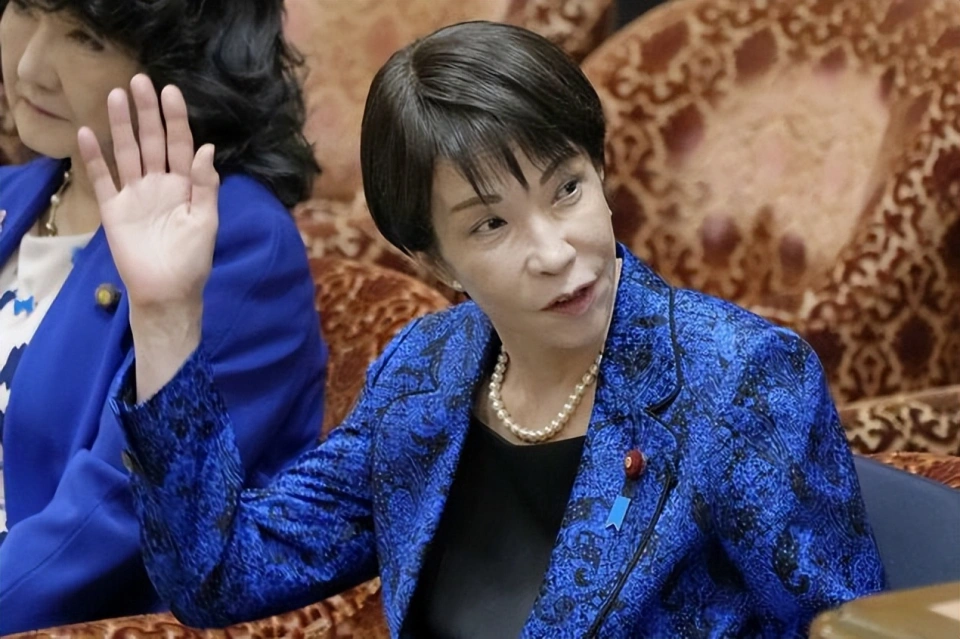
Japanese Prime Minister Takaichi Sanae

From the perspective of social development trends, Japan is anxious rather than afraid of China's rise.

At the beginning of the founding of New China, Japan was not afraid of China. That was because they believed that even if Japan was defeated, their own power would still be able to overpower China again.

But all this changed in 2010, when China's GDP surpassed Japan for the first time and became the world's second largest economy. Under this circumstance, Japanese politicians began to clamor to amend the constitution and arm Japan.

The core reason is that Japan is afraid of losing the opportunity to challenge China. We can all see this phenomenon from Shinzo Abe to today’s Takaichi Sanae.

The latest announcement of the Ministry of Commerce__The Ministry of Commerce Gazette

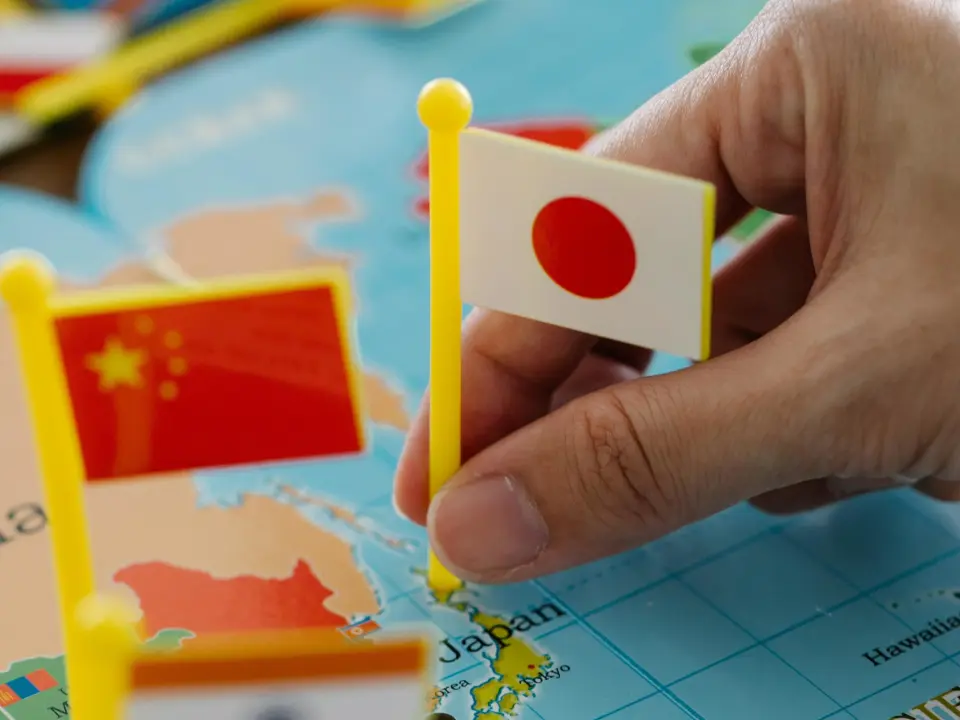
Sino-Japanese relations are becoming increasingly tense

Shinzo Abe amended the Japanese constitution to give Japan the right to collective self-defense and expanded this power to the US-Japan alliance. In fact, it gives Japan the opportunity to challenge China indirectly.

At present, Takaichi Sanae is going to be even more radical. She is trying to amend Article 9 of the Japanese Constitution, write the Japanese Self-Defense Force into the constitution, and become Japan's official army. She is trying to let Japan enjoy all the military powers of a normal country. This essentially wants to give Japan the power to challenge China directly.

Why is Japan eager to challenge China? On the one hand, Japan believes that the current Japan is at its most powerful compared to Japan in any historical period. On the other hand, Japan has also seen the rapid development of China's navy. Having a strong navy can keep the battlefield far away from the mainland for China, completely cutting off Japan's delusional desire to push the battlefield to China's mainland.

Chinese People's Liberation Army Navy Liaoning ship

After seeing through these two points, we can understand why Sanae Takaichi became the Prime Minister of Japan, why Sino-Japanese relations will continue to deteriorate, and why Japan must obstruct China's great cause of reunification.

So as China, which has been dealing with Japan for more than a thousand years, it is natural that China has penetrated this characteristic of Japan. prompting us today to have an obligation to demilitarize Japan.

On February 24, the Ministry of Commerce of China issued an announcement that 20 Japanese entities were included in the export control list, and 20 Japanese entities were also included in the watch list.

The author took a look at the lists listed by the Ministry of Commerce, including many enterprises under the Mitsubishi Group. These entities are basically half-military and half-civilian enterprises. It can be said that these enterprises are civilian enterprises during peacetime, but during wartime these enterprises can instantly dismantle machine tools and transform into military-industrial enterprises.

The latest announcement of the Ministry of Commerce__The Ministry of Commerce Gazette

Mitsubishi Heavy Industries

China's sanctions are also very clear. Any organization or individual at home or abroad that is included in the export control list is prohibited from transferring or providing dual-use items originating in the People's Republic of China to the above 20 entities. Those who are carrying out relevant activities should stop immediately.

Those included on the watch list are because these entities are unable to verify the end users and uses of dual-use items, and the Department of Commerce will implement more stringent review of them.

The goal of China's move is also very simple, that is, to use peaceful means to demilitarize Japan. After all, China is the largest industrial country in the world today. Everything from a screw to an aerospace engine can be restricted from being exported to Japan as long as it believes it will help Japan's military strength grow.

The latest announcement of the Ministry of Commerce_The Ministry of Commerce Gazette

China container terminal

Moreover, China has also adopted a "long-arm jurisdiction" here, which not only requires organizations and individuals within China not to violate regulations, but also does not allow organizations and individuals outside China to violate regulations.

It can be said that China has chosen to do this now, firstly, because the United Nations and relevant international law have given us such obligations, and secondly, because we already have such strength.

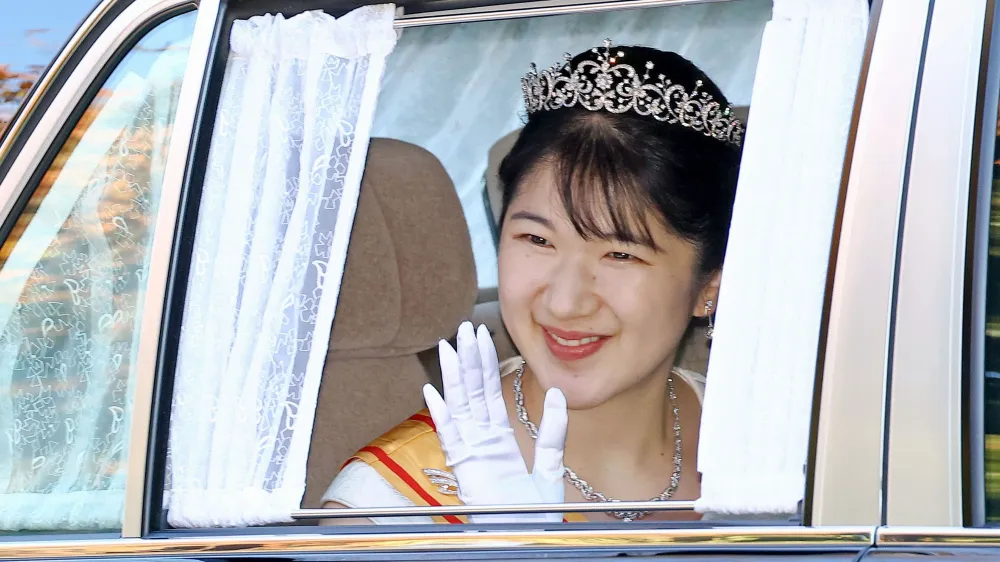
As Japan's New Regime Comes To Power, The Issue Of Royal Succession Has Attracted Attention, And The Takaichi Cabinet Plans To Revise The Royal Family Model.

How to break the period of anti-dependence and independence_Members of the Emperor's family_

On February 18, the second Gao City Cabinet officially set sail. What profound impact will the coming of the new regime have on the unresolved issue of royal succession? Yumi Shimada, a well-known Japanese religious scholar and proficient in imperial history, gave a seemingly paradoxical but insightful judgment: "Substantial revisions to the "Imperial Model" will definitely cause an uproar in Congress, and this is precisely a major historical change that only a conservative regime can forcibly promote. The ultimate direction of this change will definitely lead to the birth of the 'Aiko Emperor'."

The political plot of the Gaoshi regime to leverage the "Royal Model"

The gears of history are turning faster.

On February 24, Sanae Takaichi, the first female prime minister in Japanese history, clearly responded to a representative question at the plenary session of the House of Representatives: "We look forward to substantial progress in the congressional discussion on revising the "Imperial Family Model" and reaching a cross-party consensus as soon as possible." In fact, as early as the policy policy speech at the opening of the special session of the Diet on the 18th, Prime Minister Takaichi had already demonstrated a strong political will to promote the revision of the "Imperial Family Model" in response to the serious issue of stabilizing the succession of the throne. His positive attitude attracted the attention of the outside world.

Currently, the core plan conceived by the prime minister's camp is to allow existing royal members to adopt male descendants of the old palace family (collateral royal relatives who were deprived of their royal status after the war), in order to replenish the dwindling royal population. On the surface, this plan coincides with the political bottom line of "male succession" that Japan's conservatives have long insisted on.

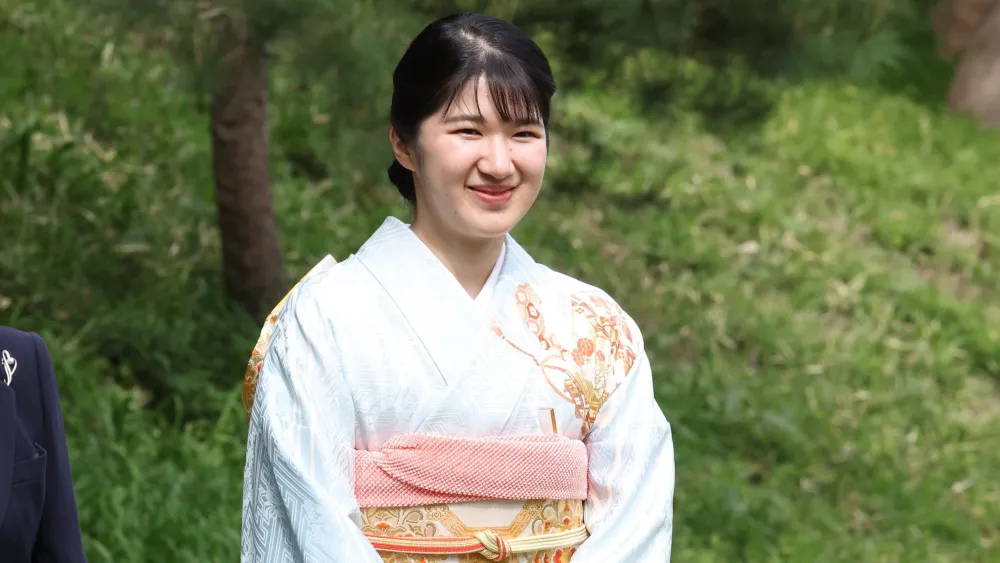
However, the weird thing about history is that once the "Imperial Model" is truly touched and revised, the traditional legal foundation on which conservatives rely for survival will be irreversibly shaken. This will objectively pave the way for Prince Aikouchi (Prince Keimiya Aikouchi) to ascend the throne and become a "female emperor" in the future.

In the creation myth recorded in the "Kojiki", in order to attract Amaterasu, who was hiding in Amaterasu out of anger, Amaterasu once performed a noisy sacrificial dance outside the cave. In the current political context, Prime Minister Takaichi may be playing a role similar to that of Tenyu's slave – because after her political "dance", a new generation of "Aiko Emperor" with Amaterasu as the ancestral god is very likely to appear.

_How to break the period of independence from anti-dependence_Members of the Emperor's family

Legal loopholes in "Royal Model" and the game of Congress

After the election of the House of Representatives in February, the new Speaker Eisuke Mori, who is from the Liberal Democratic Party and holds the majority of the House of Representatives, publicly set the tone at his inauguration press conference, saying that the discussion on stabilizing the succession of the throne "has become an urgent national issue that cannot be delayed" and promised to do his best to help Congress build consensus as soon as possible.

Judging from the current political trend, Congress seems to be accelerating in the direction of approving the "Old Palace Family Adoption Plan." Previously, the ruling Liberal Democratic Party and the largest opposition party, the Cadets, had fundamental differences on this issue. However, as the "Central Reform Alliance" of the Cadets lost seats significantly in the election, the Liberal Democratic Party's conservative proposition seemed to have cleared a major obstacle to passing the Diet.

Of course, this is by no means an issue that can be easily overcome simply by relying on majority resolution. It requires an extremely broad social and political consensus.

We must clarify a legal concept. Although Prime Minister Takaichi has shown great political ambitions to amend the Constitution of Japan, the threshold for amending the constitution is extremely high: it must obtain the approval of more than two-thirds of the House of Representatives and the Senate at the same time. At present, although the Liberal Democratic Party has barely managed to piece together a two-thirds absolute majority in the House of Representatives, it is far from reaching this safety line in the Senate. What's more, the draft constitution amendment must eventually be submitted to a referendum. If it fails to cross the threshold of half support, it will be completely aborted.

However, there are no such strict constitutional barriers to revising the Royal Model. In the postwar Japanese legal system, the "Imperial Model" was downgraded to "ordinary law", which means that as long as both houses of Congress pass it by an ordinary majority, modifications to its text can be completed.

But the particularity of the "Royal Model" is that it is not a "royal law" in the strict sense. In Japan's current legal system, there is no other law that has such a sacred name as "model". The legacy of this special naming stems from the historical limitations of the Meiji period when the old "Imperial Code" was formulated – at that time, the code was not integrated into the framework of the modern secular legal system.

The evolution from absolute "family constitution" to secular law

In 1889 (the 22nd year of Meiji), when the old "Imperial Family Model" was promulgated, its clear legal positioning was the absolute "family constitution" within the Imperial family. The so-called family constitution refers to the rules of life and inheritance that must be strictly followed within a prominent family. For example, the Mitsui family, one of Japan's old chaebols, regards the "Zongqi Posthumous Letter" left by its founder Mitsui Takuri as an insurmountable family constitution.

Since the old "Imperial Code" fell within the scope of private imperial law, it was never published in the official publication of the "Official Newspaper" for ordinary citizens. Instead, it was condescended to be published in the "Official Newspaper" along with the "Constitution of the Empire of Japan" formulated at the same time. More importantly, because the old "Royal Model" was above secular law, the Imperial Parliament at that time had no power to conduct any form of review or revision of it. Therefore, although the old "Royal Model" has had sporadic internal additions in the subsequent history, its core text is like an untouchable political living fossil, ushering in the post-war era intact.

After the war, with the collapse of the old constitution, the old "Royal Model" was also officially abolished. When the Constitution of Japan was promulgated in 1946 (Showa 21), a new version of the "Imperial Model" was re-enacted as an ordinary law attached to the Constitution. This drastic change in legal status means that the "Imperial Code" has completely stripped away the sacred cloak of the Imperial Family's private code and has become a secular law that can be arbitrarily revised by Congress in accordance with procedures.

Had postwar legislators adopted "royal law" instead of retaining the title "royal model," the subsequent political game might have been handled very differently. However, the deliberate retention of the name "Paragon" allowed it to subconsciously inherit the traditional halo of sacrosanctity before the war. Compared with the old law, its core content has no substantive subversion. To this day, the new "Royal Model" remains solid and has not undergone even a single literal revision.

_How to break the period of independence from anti-dependence_Members of the Emperor's family

The “Abdication Crisis” and the Hidden Line of Defense in the Heisei Era

In the long postwar years, there was only one political crisis that almost forced Congress to revise the "Imperial Model" – the abdication of the current emperor (Emperor Akihito) during his lifetime.

At the end of the Heisei era, Akihito, who was still the emperor at the time, felt that he could not continue to fully perform the onerous responsibilities of "symbolizing the emperor" entrusted by the constitution due to his old age and health problems, so he implicitly expressed his strong intention to abdicate to the people through a video speech.

However, the current "Japanese Constitution" strictly stipulates that the emperor "does not have powers related to national affairs." Therefore, the emperor's initiative to express politically binding opinions on his own stay or stay is on the verge of being unconstitutional in legal terms. The difficulty of handling this incident is unprecedented, and the Abe government had to urgently set up a special expert meeting to conduct closed-door discussions.

Article 4 of the current "Imperial Model" clearly stipulates in black and white: "When the emperor dies, the emperor's heir shall ascend the throne." There is no provision in the entire article regarding "abdication during his lifetime." The old version of "Royal Paragon" also blocked this road. But it must be clarified that "lifelong reign" is not an absolute tradition of the Japanese royal family since ancient times.

Before the Meiji Restoration, it was a political norm for the emperor to voluntarily give way to the crown prince while he was still alive. As many as 58 emperors have abdicated in Japanese history, accounting for almost half of the total number of emperors in history. During the Heian period, after the decline of the Fujiwara clan's regency, the abdicated emperor took charge of the country's highest political power (i.e., the government) behind the scenes as the "king of heaven". This political structure relied on the abdication system to operate legally.

However, after the Meiji Restoration established the absolute monarchy, the emperor was institutionally tied to the throne and must remain in office for life until his death. Even when Emperor Taisho was completely unable to perform his duties as emperor due to severe mental and physical illness, the Japanese government still adhered to the bottom line and never allowed him to abdicate. This was an unprecedented constitutional crisis for the Japanese political system at the time.

Bypassing the political compromise and conservative undertones of "Paragon"

The crisis of the Taisho period was finally resolved reluctantly by the appointment of the Crown Prince (later Emperor Showa) as regent.

In the Heisei era, when the current emperor expressed his intention to abdicate, the conservative government tried to repeat the same trick and proposed an alternative plan to establish a regency, but was firmly rejected by the emperor himself. Since the "Royal Model" does not have an abdication clause, the most thorough solution should be to initiate the revision process through Congress.

However, conservative politicians are filled with deep fears: If the emperor is completely legally allowed to abdicate freely according to his personal wishes, it may open a Pandora's box. In the future, it is very likely that the government will use this clause to pressure the emperor to abdicate, or the emperor will use the abdication as a political bargaining chip to secretly interfere with the cabinet power. Therefore, after fierce internal games, the absolute inviolability of the "Imperial Model" was once again preserved, and the government finally chose to enact a "one-time" special law ("Imperial Model Special Law") that only applied to Emperor Akihito himself. This political compromise was used to achieve the first lifetime abdication in modern history.

In addition to the practical consideration of preventing political risks, the deeper subconscious factor of sticking to the "Imperial Model" without revision is undoubtedly its traditional historical weight as the absolute "family rule" of the Imperial family. In the pre-war era ruled by the old "Imperial Model", the emperor was the supreme "monarch" and ordinary citizens were just "subjects" prostrate beneath him. For subjects to arbitrarily modify the sacred laws established by the monarch through parliament is a heinous "disrespect" in traditional ethics. This class and ethical concept deeply rooted in the bones of conservatives still seems to be secretly exerting a powerful deterrent force.

Looking back at the birth background of the old "Imperial Model", it and the "Constitution of the Empire of Japan" are twins that go hand in hand. In the grand project of creating Japan's first modern national constitution, Hirobumi Ito and other Meiji fathers who led this work had extremely cold political calculations: They looked at the European and American powers and found that these countries, without exception, used Christianity as the absolute "axis" to unite the national spirit and support the operation of the state machine. At that time, Japan lacked an absolutely dominant unified religion to shoulder this important task, so they logically placed the political function of this "national axis" on the imperial family. They firmly believe that only the royal bloodline that has lasted for thousands of years can become the absolute political and spiritual foundation that supports the rise of Japan's modern nation.

The Self-Destruction of Conservatives and the Secret Door of the “Female Palace”

Because it carries such great historical trust, the first article of the "Constitution of the Empire of Japan" emphasizes in an unquestionable tone that the emperor is an absolute existence that is eternal and sacred and inviolable. Although the postwar Constitution of Japan completely eliminated such expressions with a strong theocratic flavor from the letter, it still established the special constitutional status of the emperor as "a symbol of Japan" and "a symbol of the unity of the Japanese people" in the first article of the opening chapter. It can be seen that even in modern Japan after defeat and democratic transformation, the royal family still plays an irreplaceable "political totem" role in national identity.

Japan's conservative camp has always adhered to a bottom line: the legal and traditional foundation that supports the royal family as a national totem is the iron law in Japanese history that "male lineage men" (that is, the father must be a member of the royal family) have the exclusive right to inherit the throne.

However, once this conservative cabinet actually revised the "Imperial Code" that stipulates this principle, even if the original intention was to introduce adopted sons from the male line of the old palace family, it would essentially be equivalent to overturning the absolute ancestral system established by successive emperors in legal terms. In order to solve the current crisis of "cutting off the imperial heir", he took the initiative to revise the "Imperial Model" without permission. This in itself was a very destructive "anti-traditional" political adventure.

Are conservatives not aware of this contradiction in drinking poison to quench thirst?

There is a very ironic political logic hidden in this – if the revision of the "Imperial Model" is led by the right-wing Prime Minister Takaichi Sanae, it will be packaged as a great change that must be carried out in order to "continue the male lineage." After all, this breaks a historical taboo that has not been touched by secular powers in this code for more than 130 years. Just imagine, if a cabinet composed of left-wing parties attempts to push for the same revision, conservatives will come out in force and impose the most severe political condemnation and desperate obstruction on the grounds of "forgetting their ancestors" and "undermining the national system."

In other words, it is precisely because only conservatives have enough political credibility to touch this high-voltage line that Prime Minister Gao Shi dares to seize this historical opportunity and try to force his way through during his term.

Just as she showed political skill when dissolving the House of Representatives, Sanae Takaichi is a leader who is extremely eager for personal political achievements and dares to make big political gambles. As Japan's first female prime minister, she urgently needs to create major political achievements that can be recorded in history. If she can successfully promote the ice-breaking revision of the "Imperial Model" during her term, she will surely go down in history; if she can even use this momentum to complete the "constitutional revision" dreamed of by post-war politicians, it will be a shocking event that can subvert Japan's post-war political landscape.

However, there is a fatal blind spot in the conservatives' wishful thinking: even if the "Royal Model" is successfully revised to allow existing royal families to adopt male descendants of the old palace family, there is no guarantee that in reality, a suitable candidate will be found who is willing to voluntarily give up civilian life and voluntarily jump into the "gilded birdcage" of the royal family to become an adopted son. To take a step back, even if there are descendants of the old palace family who are willing to come forward, because the male lineage of the imperial family of these collateral families must be traced back to the Muromachi period hundreds of years ago, in order to prove to the Japanese people today the legitimacy of their inheritance and the closeness of their kinship, conservative public opinion has to strongly emphasize the maternal lineage of these candidates with the Meiji Emperor.

This kind of compromise and promotion of "maternal lineage" has actually opened a fatal gap in the rationality of "female emperor" and even "female emperor" at the level of legal theory and public opinion. If, after spending huge amounts of political resources to amend the law, the old Miya family’s adopted son program still goes bankrupt due to a lack of applicants or lack of national recognition, the Japanese political circles will be forced to turn to the final option that conservatives regard as a scourge.

In this final option, another core issue that Congress continues to debate – the creation of a "female palace family" system (that is, allowing female royals to retain their royal status after marrying commoners and establish independent palace families) – will become a key turning point.

The core political controversy surrounding the "female palace family" has never been about whether the female royal family will stay or leave, but about whether to grant legal royal status to their civilian spouses and future children. Once the "old palace family adoption plan" advocated by conservatives is frustrated, causing the number of royal family members to continue to plummet to a critical point that cannot maintain the daily operation of the royal family, the Japanese government will have no choice but to fully adopt the "female palace family" program and grant royal status to their spouses and children. Otherwise, the natural demise of the royal family will become an irreversible physical reality.

The more far-reaching impact is that as long as the "Royal Model" is successfully torn open by the Gaoshi Cabinet as "can be revised", its absolute authority as a sacred and inviolable traditional system will instantly collapse. In the future, in order to deal with more severe real-life crises, the subsequent cabinet will make more radical and continuous revisions to this law, which will become legally unimpeded.

Once the "female palace family" is established and the children of female royal families become legal royal families, it is essentially equivalent to officially recognizing the legitimacy of "female line inheritance" at the legal level. This not only directly paved the red carpet for Prince Aikouchi to ascend the throne and become a "female emperor", but also completely opened up the line of succession leading to "female emperors" (that is, the emperor's royal bloodline comes from the mother's side).

Revising the "Royal Model" is essentially a constitutional fission that destroys the old tradition and creates a new tradition on the ruins. This operation, which is extremely politically risky, is destined to be pushed forward only in the early days of Prime Minister Gao Shi's term when his support rate is still high. This shows why conservatives regard this as a top priority that must be won quickly.

The special congress was officially convened on February 18. The session period of this extra-long congress is set for 150 days and will last until July 17. In this long-term congressional battle destined to be filled with smoke and fire, the amendment to the "Royal Model" will surely undergo extremely rigorous deliberation and debate. Although subject to political realities, the implementation of substantive legislative amendments may be delayed until the next Congress, but due to the blind political confidence and self-preservation operations of conservatives, Japan's wheel of the times has taken an irreparable and solid step in the historical direction of realizing the "beloved son of the emperor".

46-year-old Qin Lan’s Road To Fame: From Accounting Major To Bai Yueguang’s Counterattack In The Film And Television Industry

On March 1, 46-year-old actress Qin Lan became a hot search topic.

Seeing her current situation, netizens expressed their distress.

And her current situation has also been a wake-up call for everyone.

If he hadn't participated in a competition, Qin Lan might be an accountant now.

When Qin Lan was young, she was admitted to the accounting major of Shenyang University of Technology at the request of her mother. She did not like this major and had no intention of studying in college.

However, the trajectory of her fate changed six months after she entered college.

At that time, she accompanied her students to participate in the national "Shouyi Cup" Newcomer Promotion Competition. She performed outstandingly in the competition and won the top ten gold medal in the model group.

This made her realize that there were more possibilities in life, so she dropped out of Shenyang University of Technology and began to "drift to the north" despite her mother's objections.

Finally, in 2001, 22-year-old Qin Lan opened the door to the film and television industry. She participated in the TV series "The Love of the Tang Dynasty" starring Tang Guoqiang and Zhang Tong.

Two years later, she became famous in one fell swoop for her role as Zhi Hua in the Qiong Yao drama "My Fair Princess Part 3".

After that, she successively appeared in dramas such as "A Date with a Zombie 3", "Dragon Ticket", "Iron-Blooded Lotus", "Another Dream" and "Legend of Chu and Han", which were deeply loved by the audience.

Many actors will fall into silence after a few years of popularity, and Qin Lan is no exception.

But in 2018, she successfully became famous with the costume drama "Story of Yanxi Palace" co-operated with Nie Yuan and Wu Jinyan. Her role as Queen Fucha Rongyin is still the Bai Yueguang in the hearts of many viewers.

After that, she successively appeared in dramas such as "The Sensible Life", "Breakout", "Heirloom", "All About Dr. Tang", and "Starting a Family", which consolidated her position in the film and television industry.

It is worth mentioning that in the variety show "Hua Shao 5", she has countless fans because of her real and cheerful personality.

When Qin Lan became extremely popular and had a stable career, the outside world became very concerned about her love life.

Netizens who often pay attention to Qin Lan's information know that her love life is not smooth.

Qin Lan and Huang Xiaoming once had a relationship.

Their story began when they collaborated on "Dragon Ticket". At that time, they were young and passionately in love.

At that time, Qin Lan's agency prohibited actresses from falling in love. Once the relationship was exposed, they would be required to pay liquidated damages of up to 10 million yuan.

But for Huang Xiaoming, Qin Lan would rather pay 10 million liquidated damages.

In 2003, Huang Xiaoming suffered a serious car accident while filming in Yinchuan. Qin Lan was so distraught when she learned the news that she put down all her work and rushed to Yinchuan.

At that time, her agent advised her not to go and told her that she might be compensated 10 million yuan because of the exposure of her love affair.

But Qin Lan left a message, "I will go even if the compensation is 10 million," and immediately rushed to Yinchuan.

Qin Lan took care of Huang Xiaoming in Yinchuan, and her love affair was exposed. Qin Lan had to bear huge compensation for this. For this, she took on six movies a year to repay, but she has no regrets.

Unfortunately, this relationship did not work out, and they ended up breaking up.

After the breakup, Huang Xiaoming first fell in love with Li Fei'er and then married Yang Ying. After divorcing Yang Ying, he fell in love and broke up with Ye Ke.

Compared with Huang Xiaoming who was once married, Qin Lan has never entered the palace of marriage.

After breaking up with Huang Xiaoming, Qin Lan fell in love with director Lu Chuan.

In order to support Lu Chuan, she spent real money to support him.

Lu Chuan filmed "Nanjing!" "Nanjing", she starred in the film for free and paid hundreds of thousands of liquidated damages out of her own pocket due to schedule conflicts.

When Lu Chuan was filming "The King's Feast", she ran out of funds in the later stages, so she used her savings to support her boyfriend.

Unfortunately, due to different plans for life and career, they failed to achieve success.

After the two broke up, Lu Chuan married the host Hu Die and lived a happy life, while Qin Lan met Wei Daxun.

In 2022, Qin Lan was photographed traveling in Sanya with actor Wei Daxun, who is 10 years younger than herself. For a time, romance scandals between the two were rampant.

She did not shy away from the media's inquiries for confirmation. She bluntly said that everything is as everyone sees it and that everything should be done slowly.

This slowly came to 2026, and the relationship between the two has not upgraded to another stage of life.

Regarding this, some netizens said that everyone has their own lifestyle, as long as they like it.

But some netizens have opinions on Qin Lan's unmarried age and lack of children.

Faced with some netizens urging marriage and childbirth, Qin Lan responded sharply, "Does it have anything to do with you if I don't use my uterus?"

She also said: "It's said that people don't want to be responsible if they don't get married. I find it strange. Marrying for the sake of getting married is irresponsible, right?"

For Qin Lan, a woman's value is not defined by her partner or by having children. Self-growth and independent choice are the foundation.

Now she is still in love with Wei Daxun and is still in no hurry to get married.

She was just optimistic about marriage, but she had health problems and suffered from it for 7 years.

The hot search on March 1st was related to her health problems. It turned out that Qin Lan had been having problems with her throat.

It is understood that Qin Lan’s throat problem first appeared in 2019.

At that time, because there were a lot of crying scenes during the filming of "Story of Yanxi Palace", Qin Lan suffered from recurring pharyngitis.

A year later, after filming "Heirloom", she was diagnosed with unilateral vocal cord insufficiency. For this reason, she rested for 4 months, but she was not cured.

In 2023, while filming on a plateau, her pharyngitis recurred due to high altitude sickness, vocal cord insufficiency worsened, and her voice began to become hoarse. Also in this year, she recorded "Flowers and Boys". Her husky voice seemed to have its own electronic sound effects, so netizens jokingly called her "Electronic Dora".

However, everyone did not expect that it is now 2026 and Qin Lan's voice is not healed yet.

Recently, the variety show "Dear Inn" that Qin Lan participated in was broadcast. In the show, Qin Lan admitted that in order to record this show well, she underwent vocal cord surgery before the recording, hoping to improve her long-standing voice problems through this surgery. Unfortunately, the postoperative results did not meet expectations, and Qin Lan's voice even became deeper and hoarse than before the surgery.

In the show, Qin Lan joked to herself that she used to speak electronically, like a cartoon character, but now she feels like a wolf grandma.

It must be said that Qin Lan has a good mentality and can adjust himself.

Although her illness is not particularly serious, it is very tormenting.

It is not easy for her to cure it because she is an artist and her work is very intensive, which in turn affects her voice.

Seeing Qin Lan's current situation, some netizens said what's the use of making so much money, as the body is not healthy.

But in the author's opinion, making money is still useful. At least it can make Qin Lan worry-free about food and clothing, allow her to have money for medical treatment, and give her the confidence to live the life she wants without getting married or having children.

However, it is true that money often cannot buy health.

Qin Lan's current situation also reminds everyone that no matter how much you work, no matter how much money you make, or no matter how busy you are, you must pay attention to your health, otherwise whoever will suffer will suffer.

I hope Qin Lan can recover soon and hope she can enjoy work and life better.

International Observation|How Will The Situation In Iran Change After Khamenei Is Killed?

Xinhua News Agency Beijing/Cairo reported on March 1 that the Iranian government confirmed on March 1 that Supreme Leader Ayatollah Ali Khamenei was killed in an attack by the United States and Israel. Iranian President Pezhiziyan said later the same day that Iran's interim leadership council would begin work that day until a new supreme leader was elected.

Since the 1980s, Khamenei has served as Iran's president and supreme leader. His murder will have an important impact on the situation in Iran. Can Iran's leadership transition stably after losing Khamenei? Will Iran retaliate more violently, and will the conflict become more intense and protracted? How will the pattern of the Middle East be affected?

Will Iran's political situation be stable?

Iranian media said that Khamenei "died on his job in the leader's office." Khamenei was born in 1939. He was elected president in 1981 and served until 1989. He took over as supreme leader in June 1989. As supreme leader, Khamenei has the final say in state affairs and direct control of the military. He advocated the development of national defense and nuclear programs, supported "resistance fronts" in many countries in the Middle East, and proposed a "resistance economy" strategy to deal with sanctions and domestic economic pressure.

This is a file photo of Khamenei voting in Iran’s 14th presidential election in Tehran on June 28, 2024. Photo by Xinhua News Agency reporter Shadati

Khamenei, who has been in power for a long time, has a profound impact on the Iranian regime. His murder is undoubtedly a blow to Iran. Khamenei's successor has not yet been determined. However, experts believe that Khamenei's murder will not necessarily lead to violent political instability in Iran. Iranian officials said Iran has made plans for the period after Khamenei's martyrdom.

Experts such as Ali Hashim, a scholar at the University of London, analyzed that Iran's constitution and system have corresponding arrangements for successors and crisis management. Khamenei's murder may unite national sentiment in the short term, and the Iranian regime may also be stabilized and become tougher under external threats. At the same time, Iran's Islamic Revolutionary Guard Corps may play a key role in the transitional stage of the regime.

Jon Altman, an expert at the Center for Strategic and International Studies, an American think tank, believes that Khamenei’s murder does not yet mean that the United States and Israel have achieved the goal of “regime change.” “It is difficult to change the minds of the Iranian regime and Iranians with air strikes alone.”

Will the war escalate?

Khamenei's murder will also affect the next step in the conflict. Iran's Islamic Revolutionary Guard Corps stated on the 1st that it would launch "the most violent attack in history" against the United States and Israel. U.S. President Trump responded by saying that the U.S. military would respond with an "unprecedented" response.

Experts believe that after Khamenei was killed in the attack, Iran's hardliners may be significantly more willing to further fight back against the United States and Israel under the dual pressure of external revenge and internal stability. However, given the gap in military power between Iran and the United States and Israel, Iran's counterattack may be characterized by high intensity and limited interweaving. At the same time, it will launch counterattacks in non-traditional security fields such as networks and energy. The conflict may evolve into a "war of attrition" superimposed on multiple domains.

This is the scene of a missile attack filmed in Beit Shemesh, a town west of Jerusalem, on March 1. Published by Xinhua News Agency (Photo by Jamal Awad)

James Stavridis, the former top military chief of NATO, analyzed that if Iran is forced into a "desperate situation", it will not rule out "retaliating more harshly". Bao Chengzhang, an associate researcher at the Institute of Middle East Studies at Shanghai International Studies University, believes that the loss of its core leadership may lead Iran to take more intense retaliatory actions to maintain the legitimacy of the regime and domestic cohesion, so the region still faces the risk of conflict escalation.

However, the scale and effect of Iran's subsequent retaliation against the United States and Israel will be limited by its military reserves and war damage. U.S. and British military experts have analyzed that it is currently uncertain how many ballistic missiles Iran still has in stock. Its large-scale counterattack capability may only last a few days, while a U.S. aircraft carrier strike group can perform hundreds of attack missions in a single day and can continue operations for several weeks.

Stavridis and many other experts believe that in addition to direct military retaliation, Iran has "many cards" in its hands, including mobilizing regional forces such as Lebanon's Hezbollah and Yemen's Houthi armed forces to expand its front, continuing to block the Strait of Hormuz, an energy channel, and launching attacks on U.S. personnel in the Middle East.

Bao Chengzhang said that Iran's current military retaliation against the United States and Israel and its announcement to close the Strait of Hormuz indicate that its retaliation mechanism is operating and that the conflict may continue until its arms are exhausted or diplomatic mediation occurs. At the same time, changes in Iran's political situation will also affect the duration of the conflict. The possibility of Iran seeking a compromise with the United States in order to reduce losses cannot be ruled out.

How will the landscape of the Middle East change?

The murder of Khamenei and the further weakening of Iran's strength will also have an impact on the political landscape of the Middle East.

The National Public Radio article analyzed that Israel has continued to weaken Iran's proxy power in the region in recent years, and the United States and Israel's concentrated attacks on Iran's leadership will undoubtedly severely damage the anti-American and anti-Israel camps in the Middle East. Experts on Middle East issues believe that as the influence of the "Resistance Front" led by Iran has significantly weakened, Israel's geographical advantage in the Middle East may be consolidated.

This is a plume of smoke taken in Tehran, the capital of Iran, on March 1. Xinhua News Agency/AP

Bao Chengzhang believes that after Khamenei's death, Iran will most likely continue to retaliate against US military bases in countries in the Middle East. This will arouse dissatisfaction in relevant countries and may deepen the latter's security dependence on the United States.

Mark Lynch, a professor of international politics at George Washington University in the United States, believes that Iran has previously built a proxy network in the Middle East and developed grievances with neighboring countries, which is an important reason why some regional countries rely on the United States. If Iran adjusts its policies in the future, the peripheral countries' perception of Iran's threat will decline, and their concerns about U.S. policy uncertainty will deepen, which will weaken the security ties between the Gulf countries and the United States.

Experts believe that the current conflict is still ongoing and full of variables. If it slides into a protracted and uncertain regional war, it will not only endanger the security and stability of the Middle East, but may also cause far-reaching changes in the regional structure. "Trump ignored all warnings and will have to face the consequences of this gamble," said Max Butt, a senior fellow at the Council on Foreign Relations, an American think tank.

Sign In

Forgot Password

Sign Up