
Professional virtual currency information station welcome
We have been making efforts.

24-hour news update Page 102

24-hour cryptocurrency news update

Rural Governance In The Process Of German Modernization: Sorting Out Germany’s Rural Development And Governance Experience In Stages

Rural governance abroad_The rule of ethics in rural governance_

Rural governance abroad__The rule of ethics in rural governance

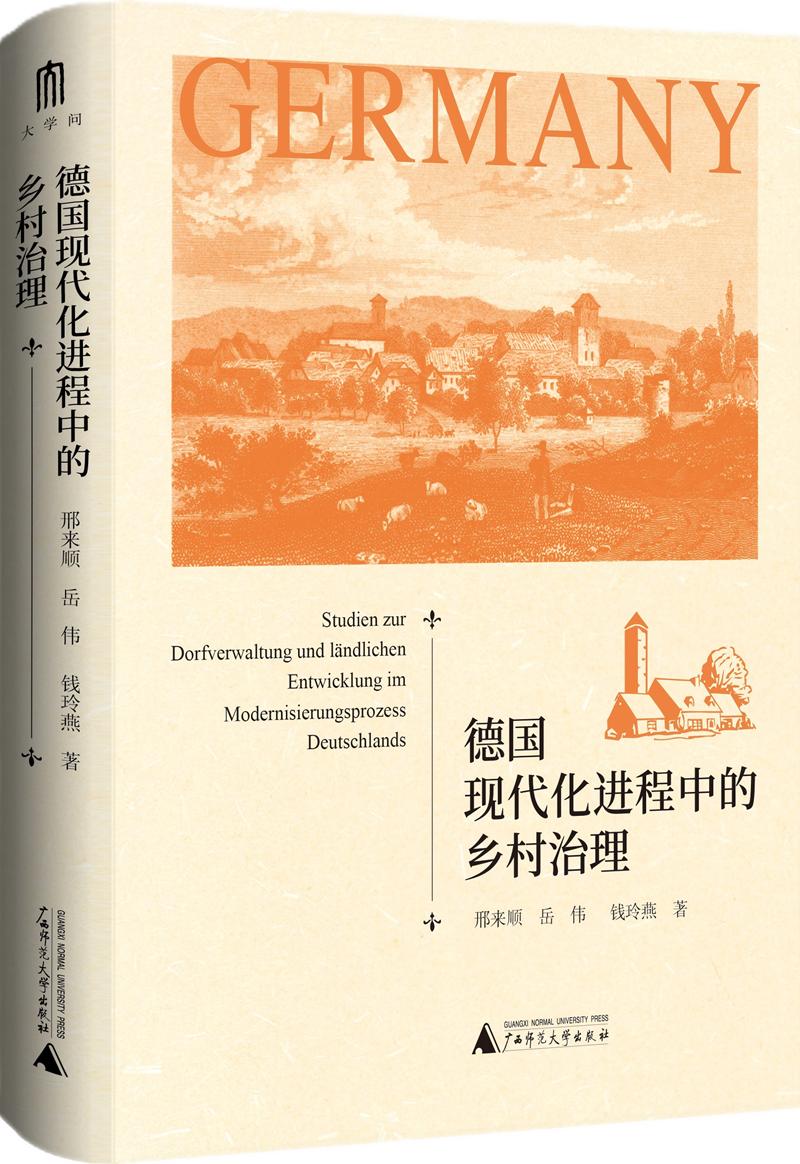
"Rural Governance in the Process of German Modernization" is a historical monograph that systematically studies rural governance and rural development issues in the process of German modernization since the 19th century. It focuses on the German countryside and studies rural governance in the process of modernization in stages. From the early modern period, to the first industrial revolution and the early stages of urbanization, to the German Empire, the Weimar Republic and the Third Reich, and finally to the Federal Republic of Germany, this book sorts out the history of Germany's modernization and the role of rural governance in it from these four stages. At the same time, combined with a large amount of data and legal provisions, it explores how Germany, under the impact of industrialization and urbanization, can get rid of the rural development crisis, achieve modern development of the countryside while adhering to rural traditions, and reshape the vitality and charm of the countryside. This book also has certain reference significance for China's rural governance and rural area development, which is in the period of modernization transformation.
The rule of ethics in rural governance_Rural governance abroad_

"Rural Governance in the Process of German Modernization", written by Xing Laishun, Yue Wei and Qian Lingyan, published by Guangxi Normal University Press

>>Selected readings from the text:

The development of the German textile and transportation industry during the first industrial revolution

In the mid-1830s, Germany's first industrial revolution began and unfolded rapidly. The main manifestations are: new technologies and new machines are widely adopted; the transportation industry marked by railway construction has experienced unprecedented development; industrial output has increased at an extremely rapid rate; industrial fixed capital investment has increased rapidly; the commercial and banking industries have rapidly modernized; and the industrial population has increased rapidly. Judging from the process of the first industrial revolution, it was in the starting stage in the mid-1830s, entered the upsurge stage in the 1940s and 1950s, weakened in the 1960s, and then ended with a small climax in the early 1970s.

Germany's first industrial revolution also started in the textile industry like Britain and France. Before 1815, most of the population engaged in non-agricultural production in Germany was concentrated in the textile industry. The textile industry mainly existed in the form of cottage industry and manual workshop production. In the 1830s, with the adoption of new technologies and mechanization, this problem was gradually solved, and the textile industry developed rapidly in Germany. It should be pointed out that the mechanization of the German textile industry involves linen textiles and wool textiles, but the fastest growing is the cotton textile industry, and the mechanization of the linen textile industry has progressed slowly. In 1837, there were only five mechanical linen mills in Germany. During the same period, the linen textile industry in Britain and Belgium had been extensively mechanized. By the mid-19th century, Germany's linen textile industry still basically maintained a manual and household production form. In the field of wool textile industry, until the beginning of the 19th century, Germany's wool textile industry was still a handicraft industry, and there was no large-scale wool textile factory like the UK. Prussia and Saxony were the centers of the German woolen textile industry. It was only after the 1830s that the wool textile industry developed rapidly. Judging from the degree of mechanization, it was 30% in 1835 and reached 50% in 1850.

As mentioned earlier, in the field of German textile industry, the development of cotton textile industry is the most eye-catching. At the beginning of the Industrial Revolution, "nothing in the whole field of industry and commerce was more interesting and more outstanding than the young cotton textile industry." In 1800, there were more than 2,000 "Jenny machines" in Saxony. After the establishment of the German Customs Union, the mechanical cotton spinning industry in southwestern Germany such as Baden and Württemberg also developed rapidly. At that time, the prospects of the cotton textile industry were very promising, and people were investing in this field. Therefore, mechanization developed quite easily and production increased significantly. The number of yarn spindles in Germany increased from 580,000 in 1835 to 2.35 million in 1865; during the same period, cotton yarn production increased from 3,786 tons to 37,128 tons. In the cotton weaving industry, the number and productivity of cotton looms increased significantly in the 1830s. In 1800, there were 35,000 cotton looms in Germany, which increased to 150,000 in 1846, but there were very few mechanical looms. In 1846, the number of hand looms and machine looms were 116,000 and 2,600 respectively, and in 1861 they were 264,000 and 23,000 respectively. In other words, the number of hand looms was always much higher than the number of machine looms during the first industrial revolution. Despite the slow progress of mechanization, the cotton textile industry developed greatly, with cotton cloth production increasing from 3,600 tons in 1815 to 14,237 tons in 1835 and 41,294 tons in 1865.

However, overall, although the German textile industry developed rapidly during the first industrial revolution, it was never close to the powerful British textile industry. The production level of the German cotton textile industry in 1835 was only equivalent to the production level of Britain in 1788.

A notable feature of Germany's first industrial revolution was that railway construction became the locomotive of the industrial revolution. Before the first industrial revolution, land transportation in Germany was extremely backward, relying mainly on traditional methods such as horseback riding and postal carriages. In the 1830s, it took a day and a half from Berlin to Leipzig, four days from Berlin to Breslau, and a week from Berlin to Königsberg. During the journey, the postal carriage may capsize or be robbed, and there are many dangers. Therefore, before going on a long journey, people often go to church and make a will to prepare for unexpected events. What's more interesting is that sometimes mail carriages and wagons would deliberately move slowly when passing through a certain area so that innkeepers could make more money from passing passengers. Bulk goods need to be transported in caravans drawn by 4 to 8 horses, and the freight is quite expensive. In 1834, the Saxon consul in the United States bought 17.5 thalers of books in New York and shipped them to Saxony via Le Havre, France. The freight cost exceeded 265 thalers.


A Small White Squirrel Suddenly Appeared In Wuhan's Guishan Mountain. The Interaction With The Elderly Was So Warm That Relatives And Friends Praised It.

"I never expected that I would meet a little white squirrel in Guishan during the Chinese New Year. I'm so lucky!" At noon on February 21, Mr. Yi, a Wuhan citizen, and his wife were walking in Guishan Park when they unexpectedly encountered a snow-white squirrel. The little guy was lively and smart, not afraid of strangers, and even interacted with the two elderly people for nearly two minutes. The scene was warm and healing.

_Wuhan Squirrel Paradise Squirrel Tribe_Where is the address of Wuhan Squirrel Tribe?

Little white squirrel. Photo by Mr. Yi

On the fifth day of the first lunar month, the sun was just right at noon. Mr. Yi and his wife climbed the steps from the southern foot of Guishan Mountain. When they were halfway up the mountain, a small white figure suddenly jumped into their eyes – a pure white squirrel was jumping in the forest. Its two big black eyes looked at them warily, and its furry tail flicked in the shadow of the trees.

"Little guy, are you hungry?" Mr. Yi tentatively took out the rock candy orange he brought with him, peeled off a few petals and placed them gently under the tree. Unexpectedly, the white squirrel actually jumped down from the tree, picked up a piece of orange, quickly jumped back to the tree, squatted on the branch and ate it with relish. After eating, it ran down again, again and again, until it had "packed" all the orange segments on the ground, and then reluctantly disappeared among the trees.

"The closest thing to us was only about two meters away!" Mr. Yi excitedly took out his mobile phone and recorded this rare "adventure". He posted the video to his family group, and it went viral instantly. Relatives and friends liked it one after another, and even his grandchildren clamored to go to Guishan to "see squirrels."

This is not the first time white squirrels have appeared in Turtle Mountain. As early as January 2025, some citizens had encountered this white "elf". It is understood that a large number of sycamore, Chinese tallow tree, ginkgo and other tree species are planted on Guishan, which are rich in fruits and provide sufficient food sources for squirrels.

On February 24, the person in charge of Guishan Scenic Area said that this snow-white squirrel may be an albino individual caused by a genetic mutation. Relevant data shows that the probability of albino squirrels in the wild is only one in a million, which is very rare.

“The rarer it is, the more we should cherish it.” Park management reminds citizens that if you encounter this “white elf” in the wild, please keep a distance, watch it quietly, and do not disturb or feed it, let alone harm it. For wild animals, not disturbing them is the best way to get along with them.

Comprehensive: Wuhan City Message Board, Changjiang Daily

2026 Domestic Entertainment Liu Yifei: If You Don’t Cater, You Won’t Give In. Use Your Strength To Explain How I Am.

There is no shortage of stunning faces in domestic entertainment in 2026, but only Liu Yifei can be regarded as the anchor in the long river of aesthetics. At the age of 38, the most dazzling thing about her is no longer the appearance of the fairy sister, but the magnanimous confidence that she will not cater to, will not compromise, and "I will love whoever I am." She filmed last year and only lasted 47 days. She has never been a bad Buddhist, she just spent all her time on the right place. The picture of a student born in Sanlitun flooded the Internet, with his hair rolled up casually, rice grains stuck to the corner of his mouth, and the phone case even cracked, but it was called by netizens "a blurry picture to confer a god".

No one saw her carefully commenting on the script the night before, and no one paid attention to the wrinkled "White Paper on Sleep Quality of Urban Women" in her assistant's bag – it was the information she had been chewing for more than half a year in order to play Huang Yimei well.

She has been working with Bulgari for five years. She has tried on 13 haute couture dresses, and once asked the designer to modify it three times just to adjust the curvature of a cuff. Others say she is picky and squeamish, but she is the only one who understands that comfort is never something that can be endured, but that standards are engraved into every detail in advance. Her bland phrase "That's just me, I love whoever" was never inherently willful. After being called "facial paralysis" in 2004, I secretly practiced micro-expressions with a teacher for half a year; in 2017, I turned down two S+-level dramas and went to Iceland alone for 42 days to memorize the wind, watch the speed of clouds, and calm down to experience life itself; for "The Story of Roses", I turned down all variety show invitations and soaked in the Guomao cafe every day to observe the real appearance of passers-by answering phone calls, deleting WeChat messages, and rubbing their temples. She has never been aloof when she refuses a script that pays tens of millions of dollars.

When the other party invited her to play the role of "Silly Baitian who goes bankrupt blindly because of love," she only asked seriously: "Girls these days, don't they check the other party's credit first before going bankrupt?" With one sentence, the whole audience was silent.

Later, some people said that the LV event style was "overturned", but the number one comment in the comment area was: "She even overturned, and she is so beautiful that I want to save the picture as a screensaver."

We ordinary people cannot learn from her life of living in an old castle and raising cats, but we can learn from her and draw a clear bottom line for ourselves in life. Just like some people refuse a part-time job that pays 800 a day but has to be on call 24 hours a day. It's not that they don't love money, but they don't want to rent out the right to use their lives for meaningless consumption.

We can also start to repair our own "underlying code": watch less short videos and spend more time with family; write your dreams into your schedule and replace perseverance with perseverance; even when cooking a bowl of instant noodles, remember to add an egg, because the body is the only system that cannot be outsourced.

Liu Yifei's longest window period is 905 days, and the shortest gap period between joining the group is 734 days. This is not slow, but every step is based on the rhythm of life that has been calibrated by oneself.

She has spent twenty years teaching people no shortcuts to becoming famous. She only proves one thing: when your judgment is faster than hot searches, your rhythm is more stable than KPIs, and the way you eat spring rolls without makeup is more memorable than a retouched picture. "Love so and so" is not a hard word, it is the sound of a person's inner system operating stably. She is 38 years old, acting seriously and living a quiet life. Drinking red dates and longan tea, at your own pace, calmly and at ease.

From Zhao Ling'er, Xiao Longnu to Huang Yimei, she has never relied on luck to win, but has always been loyal to herself, taking her time and living a life that countless people yearn for.

Xiao Zhan's New Drama "Small Town Recipe" Is Finished! Luxurious Lineup, Primary Medical Care Story Is Highly Anticipated

Xiao Zhan's new drama that has just been completed has such a strong lineup. Jiang Yan plays the heroine, and the supporting roles are all acting talents. Coupled with the blessing of a luxurious creative team, this medical drama is another hit and has been booked. CCTV made the right choice!

After months of intense filming, "Small Town Remedy" starring Xiao Zhan and other powerful actors such as Jiang Yan, Ni Dahong, Jian Renzi, Zhang Guoqiang, etc. has been completed recently, and the official Weibo also released a new trailer as soon as possible!

In the final trailer, we can see that "Small Town Remedy" is a realistic work focusing on primary medical care!

The entire drama revolves around the story of the male protagonist Liu Zhengliang, who suddenly fell from the favored son of heaven to a small doctor in a small county town. Along with the process of his self-thought transformation, "Small Town Remedies" tells a healing, tender and down-to-earth story with a strong industry atmosphere.

It can be seen that unlike previous medical dramas that focused on the doctor-patient relationship, the "prescriptions" in "Small Town Prescriptions" are not only the prescriptions prescribed by doctors to patients, but also the process of self-healing. Such a work with a core and thoughtfulness will undoubtedly be exciting.

However, compared to the excitement of the plot, which can only be verified by waiting for the main film to be aired, the visible luxurious lineup of "Small Town Remedy" has obviously given the entire drama a good foundation for popularity and performance!

Xiao Zhan, who plays the male lead, is the most comprehensive among the actors born in the 90s. He is handsome and has good acting skills. His popularity and ability to carry dramas are still top-notch!

If in the early days of his career, Xiao Zhan followed the route of good looks and starred in mostly idol dramas, then now he has obviously completed the transformation into a capable actor.

This time in "Small Town Remedies", Xiao Zhan has returned to his familiar role of "doctor". With his current acting skills, he will definitely interpret it better.

The most important point is that Xiao Zhan's traffic and ability to carry dramas will give "Small Town Remedies" the best performance ceiling. This alone is enough to be competitive.

Jiang Yan, who plays the heroine, is an actress with very good popularity among the audience. She is beautiful and has good acting skills. She is also a fan of many variety shows. Coupled with the fact that she has representative dramas such as "South and North", Jiang Yan's influence in the industry is also very high.

In terms of character relationship, Jiang Yan and Xiao Zhan are a couple in "Small Town Remedy"!

One is an emergency doctor and the other is a female boss in the funeral industry. The two seemingly inconsistent and asymmetrical people have a lot of emotional pull. Such a contrasting setting is so exciting.

In addition to Xiao Zhan and Jiang Yan, the remaining supporting cast of "Small Town Remedy" is full of acting talents!

Ni Dahong, who is known as a seasoned drama star, has super acting skills! He can play the scheming Sima Yi, he can also play Su Daqiang who wants to drink hand-ground coffee, and he can even play the scumbag father Ning Xuexiang who wants land but not his daughter. Every role has many memorable points.

Although she has a small number of works, Renji Suga, who has both good looks and acting skills, can always surprise us in her works. She is a low-key acting actress!

Zhang Guoqiang is also a recognized actor, capable of mastering both good and bad actors, and has played countless classic roles.

Wang Yanlin, Chen Jin, Ding Jiali, Fang Fang Bin, and Shi Pengyuan are also old acquaintances of ours. Wang Yanlin, who has a sense of humor and excellent acting skills, Chen Jin, who has played many strict mothers, and Ding Jiali and Fang Fang Bin, who are known as golden supporting roles, can all bring a lot of extra highlights to the series.

With a cast like "Small Town Remedies", it can be said that they lack nothing in terms of good looks, acting skills and popularity. It has set a new ceiling for proper medical dramas!

The names Xiao Zhan, Jiang Yan, Ni Dahong, Suga Renzi, Zhang Guoqiang, Wang Yanlin, Chen Jin, Ding Jiali, and Fang Fangbin appear in the same drama. How can this drama not be watched?

After watching the final trailer and getting to know the entire show’s creators and cast, I can only say that CCTV’s vision has never been bad, and it’s so right that it can add “Small Town Remedy” to the 2026 CCTV drama list as early as possible!

That's right! Although "Small Town Remedy" has just been completed, it was selected into CCTV's drama list for the new year as early as the end of last year, and it is confirmed that it will be broadcast on the CCTV channel in 2026.

Audiences who have been watching TV series will know that the ratings and popularity of CCTV channels are huge! If a drama can be broadcast on CCTV, it will naturally have the best ratings base!

If a major drama like "Small Town Remedy" with a good script and a luxurious lineup is broadcast on CCTV, isn't it a guaranteed hit?

I have to say that Xiao Zhan has really become the darling of mainstream platforms such as CCTV! Leaving aside "Small Town Remedy", Xiao Zhan's previous starring "The Legend of the Hidden Sea" was also selected into the CCTV film list without finishing production. Coupled with the previous "The Sea in the Dream", this star's luck is not too good!

So, actors still have to let their works and roles speak for themselves! As long as you are strong enough and your works are good enough, CCTV may favor you more!

Obviously, Xiao Zhan is such an actor! Anyway, we are already looking forward to watching "Small Town Remedy"!

There Is A Biological Crisis In The Capital Of The United States! Potomac River Sewage Leak, Political Feud Delays Repairs

Stop laughing at the periodic table of elements in the Ganges River, because Washington is now facing an unprecedented biochemical crisis. The Potomac River, the mother river of the nation's capital, has been on a complete roll lately. A giant sewage pipe with a diameter of nearly two meters, built in the 1960s, suddenly burst.

For more than a month, more than 900 million liters of foul-smelling sewage poured into Washington's water conservation area as if the floodgates had opened. Although the official insists that the water flowing out of the water pipe is still safe, who can guarantee that this biochemical milk tea will not penetrate into every capillary in the capital in the long run?

The capital of the United States was captured_The capital of the United States became a battlefield_

What is the concept of 900 million liters? This is equivalent to the waste of 450 standard swimming pools. On a per capita basis, each person in the United States receives nearly three liters. Field sampling at the University of Maryland found that the level of E. coli in the water was off the charts. This kind of upper air that can be smelled through the screen made the most serious sewage leakage in American history happen so clearly on the doorstep of the White House.
Many people wonder, why is the infrastructure of such a superpower so bad? According to the rating of the American Society of Civil Engineers, the level of sewage treatment in the United States has long hovered at level D. What does Class D mean? It was on the verge of total collapse. Not only is there a lack of money for maintenance, but there is also a lack of money to plug the $690 billion fiscal hole.

But even more terrifying than burst water pipes are man-made disasters. The pipe has been leaking for a month, and it will take more than a month to repair it. How did the United States achieve this speed? Because there is a political palace fight going on in Washington. After Mr. Wang came to power, he was exchanging blows with the Democratic governor of Maryland, saying he couldn't fix anything.
The governor countered the federal government's shirking of responsibilities, while the mayor of Washington rushed to declare a state of emergency. In fact, he just wanted to control the White House's request for reimbursement. Everyone is kicking the ball, but no one is trying to plug the hole. This rhythm of multi-party quarrels, internal strife, and laborious work is very similar to India's routine of managing the Ganges River.

When political stance takes precedence over people's safety, the stench of the Potomac River is actually the epitome of the decay inside the lighthouse. As for the environment and the health of ordinary people, they have never been a priority in the eyes of politicians.
Consumption Increased During The Spring Festival Holiday In Shanghai, And Tourists From Many Places Paid Actively

China News Service, Shanghai, February 23 (Reporter Jiang Yu) According to statistics released by the Consumer Market Big Data Laboratory on the 23rd, in the eight days before this year’s Spring Festival holiday (February 15 to February 22), Shanghai’s online and offline consumption was 60.35 billion yuan, an increase of 12.8% compared with last year’s Spring Festival holiday (January 28 to February 4, 2025).
According to statistics released by Ant International on the same day, in the five days before this year’s Spring Festival holiday (February 15 to February 19), the amount of inbound tourists’ consumption in China using Alipay’s two types of convenient payment services, Alipay’s “foreign card binding” and Alipay+ “outsourced internal use”, increased by more than 80% compared with the five days before last year’s Spring Festival (January 28 to February 1, 2025).

During the Spring Festival holiday this year, major business districts in Shanghai deeply integrated resources to create a strong atmosphere of "Hundred Horses to Welcome the New Year". Cultural, business, tourism and sports exhibitions were staged in turn, with a steady flow of citizens and tourists, effectively stimulating the vitality of the consumer market. The consumption amount in 19 municipal business districts was 4.78 billion yuan, a year-on-year increase of 12.0%; the average daily passenger flow was 3.19 million, a year-on-year increase of 15.8%.

During the same period, Shanghai's outbound tax refund sales amounted to more than 80 million yuan, a year-on-year increase of 1.5 times. Tourists from Hong Kong, Macao, Taiwan, Russia, South Korea, and the United States have the highest number of tax refunds.

During the Spring Festival holiday this year, tourists from South Korea, Pakistan, Kazakhstan and other places used their hometown e-wallets to travel around China through Alipay’s convenient payment services. Especially in Shanghai, Alipay consumption increased by nearly 100% year-on-year.

Shanghai, Guangzhou, Shenzhen, Beijing, Yiwu, Zhuhai, Hangzhou, Foshan, Suzhou, and Chengdu have become the top ten cities where foreign tourists spend the most with Alipay during the Spring Festival this year. Convenient payment services attract more and more foreign tourists to “experience” the Chinese New Year. (over)

Wang Yi Attended The United Nations Human Rights Council Meeting And Proposed Key Points For Improving Global Human Rights Governance

China News Service, Beijing, February 23. Wang Yi, member of the Political Bureau of the Central Committee of the Communist Party of China and Minister of Foreign Affairs, attended the high-level meeting of the 61st session of the United Nations Human Rights Council via video in Beijing on the 23rd and delivered a speech.

Wang Yi said that President Xi Jinping proposed a global governance initiative to lead the direction of global human rights governance with Chinese wisdom, which has received support and response from more than 150 countries and international organizations. China is willing to work with other countries to take the implementation of global governance initiatives as an opportunity to improve global human rights governance and promote the healthy development of the international human rights cause.

First, we must pursue sovereign equality and protect the original intention of global human rights governance. We must insist on equal participation, equal decision-making and equal benefits among all countries, and promote the construction of a fair, reasonable and inclusive global human rights governance system. Second, we must abide by the international rule of law and build a solid foundation for global human rights governance. All countries should jointly uphold the "golden rule" of non-interference in other countries' internal affairs and resolutely say no to words and deeds that manipulate double standards in the name of human rights. Third, we must practice multilateralism and resolve challenges in global human rights governance. Countries should promote the abandonment of all forms of colonialism and racial discrimination, and properly deal with new issues such as artificial intelligence, climate change and human rights. Fourth, we must advocate people-centeredness and enrich the connotation of global human rights governance. It is necessary to place the right to development in a more prominent position on the multilateral human rights agenda and make human rights progress visible and achievable. Fifth, we must pay attention to action orientation and improve the effectiveness of global human rights governance. China is willing to coordinate actions with the international community to jointly paint a new picture of the global human rights cause.

Wang Yi emphasized that 2026 is the first year of China’s “15th Five-Year Plan”. China is willing to work with other countries to carry forward the common values ​​of all mankind, join hands to build a community with a shared future for mankind, and let the development and progress of human rights civilization benefit the whole world. (over)

The Valuation Adjustment Of The Silver Fund Under SDIC Capital Will Provide Layered Compensation To Natural Person Investors

China News Service, Beijing, February 23 (Reporter Chen Kangliang) In response to the recent concern about the valuation adjustment of its silver funds, the Chinese listed company State Investment Capital Co., Ltd. (hereinafter referred to as State Investment Capital) issued an announcement on the 23rd that it will continue to urge its holding investment companies to strictly abide by the bottom line of compliance operations, effectively fulfill the main responsibilities, continuously improve risk management capabilities and investor returns, and maintain the stable, healthy and orderly development of the capital market.

Recently, the valuation adjustment of SDIC UBS Silver Futures Securities Investment Fund (LOF, hereinafter referred to as SDIC Silver LOF), a subsidiary of SDIC UBS Fund Management Co., Ltd. (hereinafter referred to as SDIC UBS Fund), a tertiary holding investment company under SDIC Capital, has attracted market attention. SDIC UBS Fund has released a special work plan on related matters on February 15.

According to the plan, SDIC UBS Fund will provide layered compensation to natural person investors affected by the valuation adjustment. Among them, for natural person investors whose amount affected by the valuation adjustment (the part adjusted from -17% to -31.5%) is less than RMB 1,000, the settlement amount will be determined in full based on the actual amount affected (this group of investors accounted for more than 90% of the investors who redeemed on the day).

In response to the above plan, SDIC Capital said that after preliminary calculations, it is expected that the plan will have a certain negative impact on the company's net profit attributable to the parent company in 2026. The amount of the impact will be less than 5% of the company's audited net profit attributable to the parent company in 2024 and will not have a substantial impact on the company's overall business development.

The trigger for this incident stemmed from the plunge in the international silver market. On January 30, COMEX silver futures prices fell sharply, exceeding the Shanghai Futures Exchange’s silver futures price limit. On the evening of February 2, SDIC UBS Fund announced that it had decided to make valuation adjustments for the silver futures contracts held by its funds with reference to the main international market prices of silver futures. Affected by this, the net value of SDIC Silver LOF fell by 31.5% in a single day, setting a historical record for single-day declines in public funds.

The focus of the controversy over the above-mentioned valuation adjustment is that the fund company released the valuation adjustment announcement only after the closing of trading. As a result, investors who submitted redemption applications during the day expected to lose about 17% when submitting the application, but the actual loss after the closing was 31.5%.

Wang Hongying, president of the China (Hong Kong) Financial Derivatives Investment Research Institute, said that SDIC Silver LOF is a futures contract linked to the Shanghai Futures Exchange, and the product itself has certain structural flaws. For investors, they need to understand that this product is different from ordinary funds and is a high-risk fund linked to futures. (over)

Sydney Held The 'Happy Spring Festival - Celebrate New Year In Museums' Event, With More Than 2,000 People Celebrating Together

China News Service, Sydney, February 23 (Reporter Bo Wenwen) The "Happy Spring Festival – Celebrate the New Year in a Museum" event was held in Sydney, Australia on the 22nd. The event is co-organized by the Chinese Cultural Center in Sydney, the Australian National Maritime Museum, the Tianjin Municipal Culture and Tourism Bureau and the China Tourism Office in Sydney.

On February 22, local time, the "Happy Spring Festival – Celebrate the New Year in a Museum" event was held in Sydney, Australia. Photo courtesy of Sydney Chinese Cultural Center

On that day, the platform hall and pier space of the Australian National Maritime Museum in Sydney's Darling Harbor were completely renewed, decorated with New Year elements of the Year of the Horse. The festive Chinese New Year flavor complemented the charming harbor style, attracting more than 2,000 people to celebrate the New Year.

Wang Yu, Consul General of China in Sydney, Le Liwen, Cultural Counselor of the Consulate General in Sydney, Daryl Karp, Director of the Australian National Maritime Museum, Yuan Wei, Deputy Director of the Chinese Cultural Center in Sydney, Zhao Feng, Deputy Director of the China Tourism Office in Sydney, and other guests attended the opening ceremony.

On February 22, local time, the "Happy Spring Festival – Celebrate the New Year in a Museum" event was held in Sydney, Australia. Photo courtesy of Sydney Chinese Cultural Center

This event is divided into two parts: outdoor performance and exhibition hall experience. The art troupe from Tianjin presented wonderful performances such as singing, dancing, and martial arts, integrating the beauty of traditional Chinese art with the flavor of the times, winning rounds of applause and cheers from the audience.

The exhibition hall is also very popular. The New Year check-in wall with the theme of the Year of the Horse has become a popular photo spot, and many participants wore Hanfu to capture wonderful moments; the pot-throwing interaction was filled with cheers, the calligraphy and New Year painting rubbings were filled with the fragrance of ink, and the tea culture display was elegant and pleasant; interactive projects such as traditional Chinese medicine sachet making, plate buckle making, and lacquer fan experience were popular, and local people felt the unique charm of traditional Chinese skills in the immersive experience.

On February 22, local time, the "Happy Spring Festival – Celebrate the New Year in a Museum" event was held in Sydney, Australia. Photo courtesy of Sydney Chinese Cultural Center

Visitors shuttled through various booths to collect stamps and stamps, collect stamps of Tianjin landmarks, and "bring home" the rich flavor of the New Year in a rich and colorful interactive experience. The specially set up Chinese food tasting area outside the exhibition hall is filled with aromas, allowing guests to feel the festive atmosphere of reunion and celebration with the Chinese flavor on their tongues.

It is understood that the "Celebrate New Year in the Museum" event has been held at the Australian National Maritime Museum for the third consecutive year. The event uses culture as a bridge and tourism as a medium, which not only shortens the emotional distance between the people of China and Australia, but also injects continuous and vigorous vitality into deepening people-to-people exchanges and tourism cooperation between the two countries. (over)

2026 Spring Festival Beijing Cultural Tourism Attracts Attention! Know All About Visitor Numbers, Costs And Special Events

China News Service, Beijing, February 23 (Reporter Xu Jing) Data released by the Beijing Municipal Bureau of Culture and Tourism on the 23rd showed that during the 2026 Spring Festival holiday (February 15-23), Beijing received a total of 19.843 million tourists, achieving a total tourism expenditure of 33.14 billion yuan (RMB, the same below).

During the Spring Festival, the Beijing Municipal Bureau of Culture and Tourism collaborates with various districts and departments to renew the traditional New Year flavor with technology and warmly welcome tourists from home and abroad. The top ten scenic spots (regions) in Beijing that receive tourists during the holidays are Wangfujing, Olympic Park, Tiananmen area, Xidan, Liangma River International Style Waterfront, Qianmen Street, Temple of Heaven Park, Shichahai Scenic Area, Summer Palace, and Nanluogu Alley.

On February 23, the last day of the Spring Festival holiday, there was an endless stream of tourists at the Temple of Heaven Park in Beijing. Photo by China News Service reporter Zhao Wenyu

“Beijing-flavored fireworks” set off holiday craze. During the Spring Festival, Beijing held more than 40 temple fairs, lantern fairs, and garden parties, integrating Beijing-style customs with technological experiences. The number and scale reached record highs. The Longfu Temple New Year Market has become the "top trend" during the holidays, with Yili bread and Daoxiangcun pastries popular among consumers. Traditional temple fairs such as Ditan Temple Fair, Longtan Temple Fair, and Changdian Temple Fair are very popular, bringing folk performances, special markets, etc. In addition, the Haidian New Year Science and Technology Temple Fair brings together a variety of robots to bring an "AI New Year" experience.

"Going in both directions" to celebrate the Chinese New Year together. February 16 is the Lunar New Year's Eve. The Beijing Municipal Bureau of Culture and Tourism launched a pick-up event at the Beijing Capital International Airport to deliver New Year gift packages to passengers arriving in Beijing on Air China flight CA938. The "Winter Festival in Moscow" event was held in Chaoyang Park in Beijing during the Spring Festival holiday. During the same period, the "Happy Spring Festival" event was held in Moscow to achieve a "two-way rush" for sister-city culture.

On February 19, the third day of the first lunar month, the "Moscow Winter Festival" event was held in Chaoyang Park in Beijing. The picture shows citizens and tourists interacting with "brown bears". Photo by China News Service reporter Wang Ziru

During the Spring Festival holiday, a total of 2,190 commercial performances were held in Beijing, with an audience of about 410,000 and a box office revenue of about 64.015 million yuan. The National Center for the Performing Arts, Beijing Symphony Orchestra, and Beijing Peking Opera Theater held New Year-themed concerts and concerts; the Russian Leningrad Oblast State Symphony Orchestra New Year concert, the drama "Under the Red Flag", the dance drama "Only Green" and other domestic and foreign performances were staged one after another. (over)

Sign In

Forgot Password

Sign Up