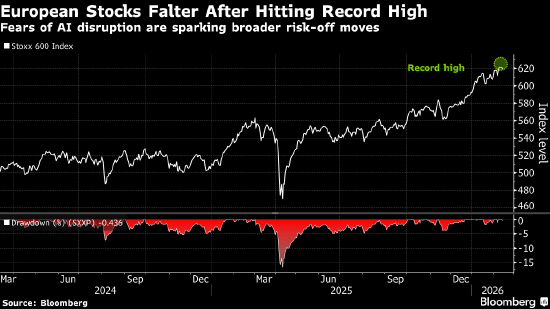
European stocks reversed course and followed U.S. stocks lower amid widespread concerns about the industry impact caused by artificial intelligence.
The Stoxx Europe 600 index closed down 0.5% after hitting a record high. The S&P 500 fell 1% and the 10-year U.S. Treasury yield fell back. The Nasdaq 100 index fell 1.5%, dragged down by technology giants. Bitcoin, gold and crude oil prices were also lower.
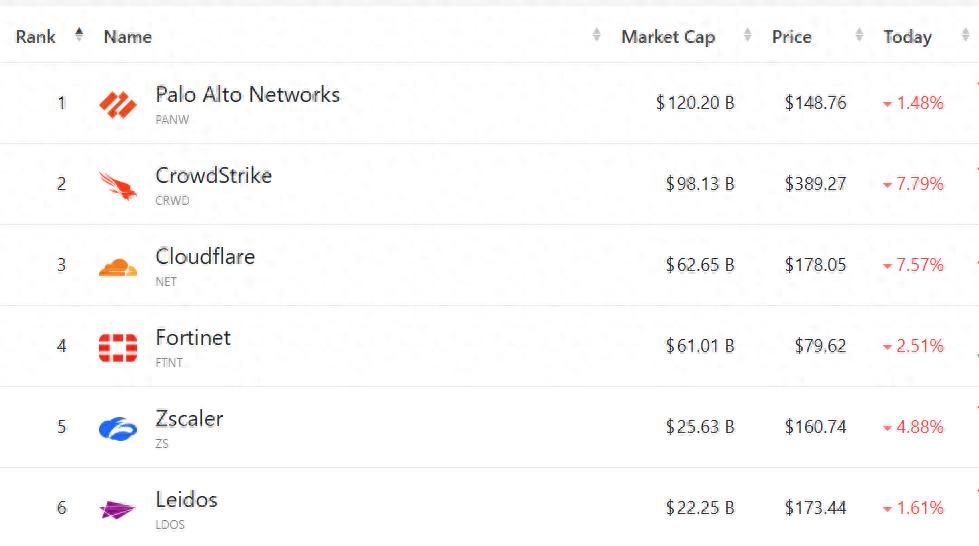
Logistics stocks such as Denmark's DSV A/S and Swiss company Dexel International each fell more than 10%, with the sector becoming the latest victim of "artificial intelligence panic trading".
Emmanuel Cau, a strategist at Barclays, said, "The current concerns about artificial intelligence disruption are spreading rapidly and have evolved into a broader macro/credit issue, no longer an individual stock issue. This reflects market fatigue and panic more than fundamental factors."
Cyclical sectors such as banks, mining and technology were among the worst performers, while defensive sectors such as telecoms and personal care outperformed.
Previously, a batch of optimistic financial reports had boosted market sentiment. Eyewear maker Essilor Luxottica SA shares rose 4.2% after reporting a surge in demand for artificial intelligence glasses, driving sales above expectations. After German industrial company Siemens raised its performance forecast, its stock price hit a record high, eventually closing up 0.3%.
Schroders shares soared 29% as Nuveen agreed to acquire the company for 9.9 billion pounds ($13.5 billion), creating one of the world's largest active asset managers with assets approaching $2.5 trillion.


![[Netherlands] France Turns To The Netherlands To Support Its Military Operations-Lijin Finance](https://www.erbetc.com/wp-content/uploads/2026/03/1773277663261_0.webp)
