Observer Network: Hello, Mr. Gao, I’m glad to be connected with you again. Today we continue to ask you to analyze a hot topic.
For a long time, China has been constantly exploring in its own market economy practice, and has also studied and learned from the experience of the U.S. market economy. But recently we have noticed that Trump seems to be breaking the tradition of the American liberal market economy and directly "investing in" many companies, including Intel. Therefore, there is also discussion that the United States is moving toward "state capitalism." What do you think? What is "state capitalism"?
Gao Zhikai: Let us first explain China’s own situation clearly. Since the reform and opening up in 1978, we have been making various new attempts every day. Our goals have always been clear: first, to promote political, economic and other reforms; second, to continue opening up to the outside world.
Our ultimate goal is to let the Chinese people live a good life and make China stronger while maintaining normal and equal diplomatic relations with other countries in the world. China has undergone earth-shaking changes in the past 40 years and more, which has not only changed China, but also promoted changes in the world economy to a large extent.
The path China is taking is very clear, which is "socialism with Chinese characteristics." After the 19th National Congress, we wrote “Socialism with Chinese Characteristics for a New Era” into the Constitution of the Communist Party of China. There are new challenges at every stage, every year, and even every month, but the overall goal remains the same: building "socialism with Chinese characteristics."
Looking at the United States, on the other hand, it has seen China walking its own path and raising its own flag over the past few decades, and it has been filled with doubts and even confusion.
At first, the United States did not take China too seriously. It felt that China was poor and backward and not world-class in all aspects. But with the development of China, especially after 2000, the United States saw that China not only made great progress in domestic governance, but also promoted global economic development at the international level.
Therefore, over the past two decades, the United States has been mixed with complex emotions of "envy, jealousy, and hatred" towards China's economic achievements, and has even refused to acknowledge this reality. Its mentality has gone through a complex process: from never accepting it to trying to overturn the great cause we are advancing, and even evolving into slandering us.
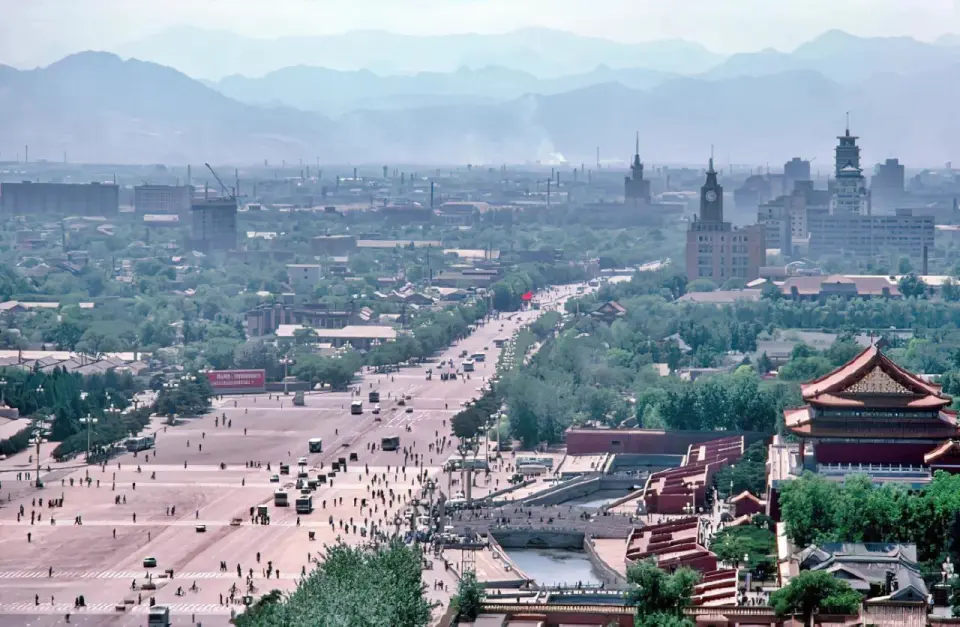
In 1978, Beijing was still in a state of undevelopment.
In this process, the United States has attached various labels to China, but none of them really matches the real changes that have taken place in China. In the last ten years or so, the United States thought it had found an "accurate" label: it said that China engages in "state capitalism." But this statement runs counter to China’s reality.
First of all, we do not engage in capitalism, let alone "state capitalism." The United States summarizes China's economic model since 1978, especially after 2000, including after 2022, as "state capitalism." First, it is not true, and second, China will never accept it. This is a fundamental misjudgment.
What is even stranger is that another statement has emerged in recent years: after Trump returns to the White House on January 20, 2025, the United States will also engage in "state capitalism." The implication is: They believe that China relied on so-called "state capitalism" to grow from a relatively small economy to the world's largest economy based on purchasing power parity and the world's second largest economy based on official exchange rates. It took more than 40 years to achieve great changes, so the United States wants to do the same.
There are two questions here: first, the United States defines China as "state capitalism", which is wrong in itself; second, if the United States says that it also wants to engage in "state capitalism," then what kind of "state capitalism" does it want to engage in? Going deeper: Can this American version of “state capitalism” really save the United States?
The so-called "earth-shaking changes" promoted by Trump starting from January 20, 2025, are even called "revolution" by some Americans. However, this statement is essentially wrong because it is firstly based on the distortion, misunderstanding and misjudgment of China's "socialism with Chinese characteristics" path since 1978; secondly, Trump and some economic advisers and politicians around him claim that "only 'state capitalism' can make the United States great again." This is adding up to mistakes.
So, what exactly is Trump doing?
For example, in 2025, he has already carried out a major impact on market economy, free trade, etc. through a series of means. In a sense, he is conducting a "revolution" in the United States. Because he tried to reshape multiple relationships: the relationship between the federal government and Congress, the federal government and the court system, and the federal government and states; he also tried to change the relationship between the government and the market, society and individuals.
From the launch of his campaign in 2024 to his re-election on January 20, 2025, these measures taken by Trump may indeed produce structural and systemic changes in the United States.
But the problem is that if Trump packages all this as "state capitalism," it will be very dangerous. Especially since the fourth quarter of 2025, especially since the military operation against Venezuela on January 3, 2026 to kidnap the Maduro couple and bring them to the United States for so-called trial, this behavior seriously violated international law and the Charter of the United Nations, violated Venezuela’s sovereignty and territorial integrity, and violated the immunity of the head of state and his spouse recognized by international law.
Therefore, I would like to emphasize first that the "state capitalism" line pursued by the Trump administration is, in my opinion, highly dangerous. It is based on plundering the wealth and assets of other countries, ignoring the sovereignty and territorial integrity of other countries, and trying to use war, military means, intelligence operations and other methods to achieve its goals.
Trump even said this: What is international law? I don't care about international law, there's only one thing that can stop me, and that's my own morality. The whole world knows what he means by "morality." My conclusion is clear: "State capitalism" cannot save America. On the contrary, this approach is likely to cause the United States to fall from its self-proclaimed "lighthouse on the top of the mountain" into the abyss of the "law of the jungle".
More importantly, "solving problems" through aggressive wars, threats and bullying, plundering other countries' assets, and appropriating other countries' territories will only cause chaos in the world, but cannot truly solve the core domestic problems of the United States, such as the federal government's debt burden. These problems will not disappear.
Of course, if what President Trump calls "state capitalism" includes plundering other countries' oil, natural gas, and other wealth and resources to repay U.S. debt and mitigate debt risks, then this is not just an economic policy issue, but a naked act of aggression.
So I come back to my conclusion: President Trump, the "state capitalism" you want to build cannot save the United States. It will only make America's problems worse, and even push the United States to the position of "enemy of the world."
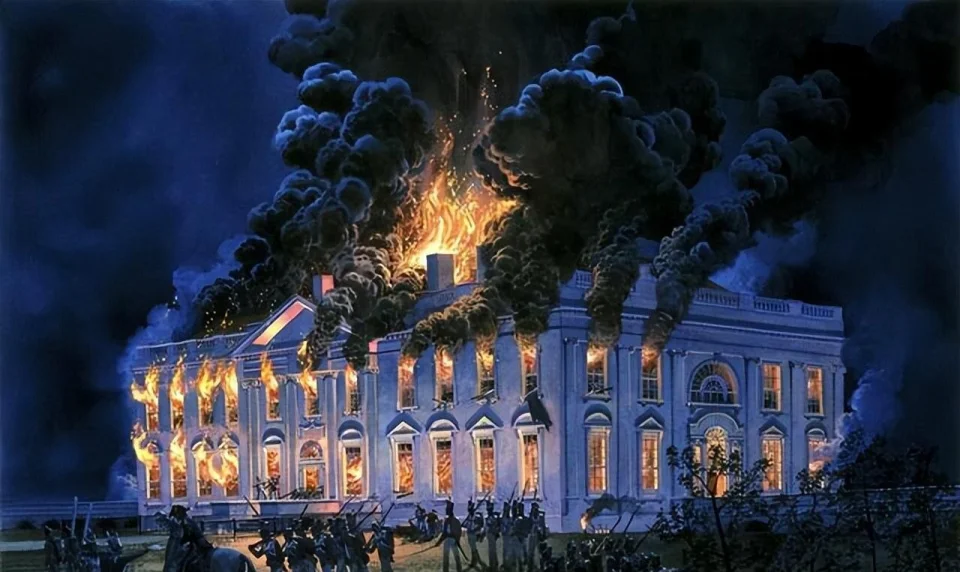
The White House was burned down during the Second Anglo-American War
Let me give you the simplest and most incredible example. The United States and Canada, one in the north and the other in the south, basically bordering the 49th parallel, have lived in peace and harmony for more than a hundred years and have always been very friendly countries. Of course, earlier, unpleasant things also happened between the United States and Canada, which was under the control of the British Empire.
Wasn't the White House burned down by the British Empire troops coming from Canada? This is history. Over the past 100 years or so, the United States and Canada have generally been in peace with each other and have friendly relations. It can be said that they are like "brothers."
But Trump has completely changed that. Since January 20, 2025, he has repeatedly emphasized that Canada must become the 51st state of the United States. The Canadian government, Canadian people, and provinces are not willing to become the 51st state of the United States. So why did the United States force Canada to become the 51st state? Isn't this an act of aggression?
The Trump administration launched military operations against Venezuela and kidnapped Venezuelan President Maduro and his wife; threatened to "rob" the Panama Canal and its port berths; threatened Cuba and Colombia; and even exerted strong pressure on the entire Americas.
Therefore, from this perspective, the so-called American version of "state capitalism" promoted by President Trump and those around him is actually a replica of imperialism. It may cause the world to lose peace, lose stability, lose opportunities for development, and plunge into constant conflicts and even war.
In the final analysis, he wants to bring out the Monroe Doctrine that has long been thrown into the garbage heap of history. Trump also gave it a new name, called the "Donald Monroe Doctrine", which is also the "Donald Monroe Doctrine". Therefore, Trump’s so-called “state capitalism” is to resurrect the Monroe Doctrine and engage in bullying in the Western Hemisphere.
Are the peoples of the Americas willing to see the return of the Monroe Doctrine? Are you willing to see your country become a vassal of the United States again? I believe none of them want to. Can Trump achieve "Don Luo Doctrine"? I believe it can't be done. Because when the United States tears off its disguise and openly bullies other countries as a "hegemon", the result will only be that more and more countries will recognize the true face of the United States and no longer want to be its vassal.
What excites me is that Greenland residents have repeatedly stated that they do not want to become part of the United States and want to maintain their special identity; Greenland does not belong to the United States and they oppose the United States' use of various means to occupy Greenland. I expect similar rallies to occur in Latin America, Central America, the Caribbean, and around the world.
More realistically, these things are happening right before our eyes. For example, the prices of gold and silver have risen sharply, which means that global investors are increasingly worried about the US dollar and doubt whether the United States can still shoulder the international responsibilities and obligations that a major country should have. Coupled with the various domestic conflicts in the United States, can we have a good chat with the Americans? Can you give President Trump and his administration some advice?
If I had the opportunity to say a few words to President Trump, I would say:
The first sentence is that since 1978, China has never engaged in "state capitalism." It is very clear what flag we raise and what path we take: this is called "socialism with Chinese characteristics." You must be clear and don't get our situation wrong.
The second sentence is that China has never engaged in "state capitalism" and will never engage in it.
The third sentence is that if the United States wants to engage in "state capitalism," then I want to tell you something: "state capitalism" is a dead end. It cannot bring real prosperity to the United States, it cannot bring real happiness to the American people, and it cannot make the United States truly "great again" in a historical sense.
If I were to give Trump some advice, what would it be? I would like to say that China has unswervingly followed the path of "socialism with Chinese characteristics" since 1978, especially since the 18th National Congress of the Communist Party of China. Socialism with Chinese characteristics has entered a new era. Its most fundamental elements are: first, maintaining stability; second, safeguarding peace; third, developing a market economy and defending free trade; fourth, constantly reforming and opening up, treating approximately 200 countries and regions in the world equally, and developing together with all countries; fifth, not engaging in aggression, starting wars, and not plundering other countries' territories and wealth. Counting on the fingers of one hand, we have been following this path for the past 50 years.
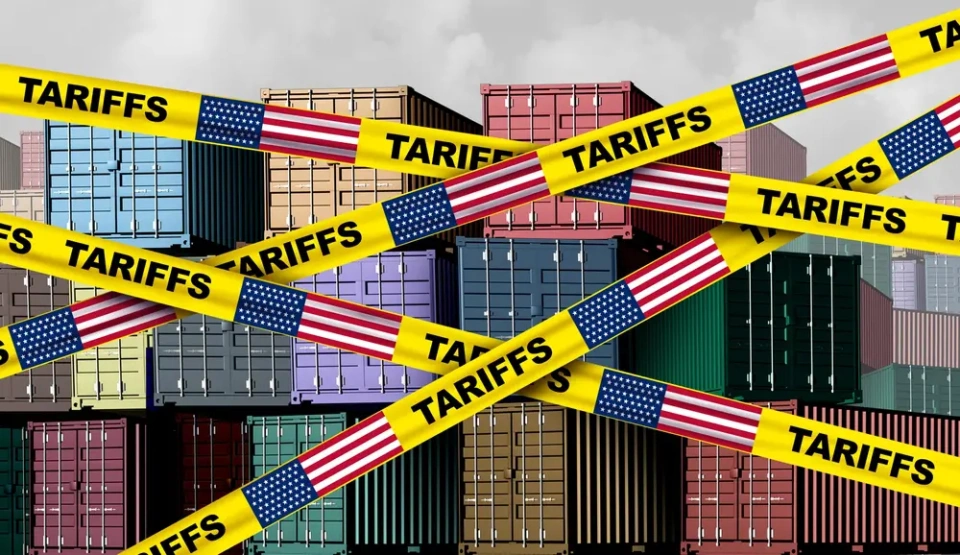
The United States has used a large amount of tariffs in an attempt to maintain its own advantages, but the consequences of large amounts of tariffs have been swallowed up by the American people.
What about the United States? I suggest that President Trump and his advisers and officials seriously consider my suggestion: perhaps the United States can adopt "capitalism with American characteristics." What's the meaning? Capitalism has several basic elements. First, you have to defend free trade. The United States now says that it "does not engage in free trade, but engages in fair trade." But without free trade, how can there be fair trade? You cannot weaponize tools such as tariffs to undermine free trade. Without free trade, there can be no fair trade. This is the first point.
Second, you should build a market economy instead of some nondescript "government holding companies" because you do not have such experience, ability and ability. For example, the United States is now telling Nvidia: 25% of your revenue from selling chips or GPUs in China must go to the U.S. government. Where does this make sense? How can the government rob a private company of its legitimate income in compliance with the legal framework of each country? This is a blasphemy and destruction of the market economy and the principles of free trade.
Moreover, there is another crucial principle in pursuing "capitalism with American characteristics": you cannot engage in aggression or use military power to plunder the wealth and assets of other countries. Because that kind of behavior should have been thrown into the dustbin of history long ago – that is imperialism. The United States should grow up and stop being dragged back into the quagmire by those dark, dirty, and sinful things.
Therefore, I believe that Americans should seriously consider two points: first, do not engage in "state capitalism"; second, seriously reflect on the fundamental reasons for China's great achievements since 1978, and seriously consider whether we should follow the path of "capitalism with American characteristics" based on the United States' own situation.
The United States should defend free trade, promote market economy, enhance the competitiveness of manufacturing and improve its leading position in science and technology through hard work. But even if we pursue scientific and technological innovation breakthroughs, we cannot rely on suppressing competitors and depriving others of their right to fair competition, which is to exchange the so-called "Tonya Harding Syndrome" for so-called progress and success.
There is another more critical principle: in international affairs, war, force, threats, and bullying cannot be regarded as norms, let alone common methods. Because once you embark on this path, you will repeat the mistakes that the United States itself has made long ago. Paul Kennedy, a famous historian at Yale University, made it very clear in "The Rise and Fall of the Great Powers": After a country becomes a superpower, the longer and further it stretches its hands, it will eventually be overwhelmed and fall to the ground. What the United States really needs to be wary of is "stretching its hand too far."
But look at what the United States has done recently: it has issued "force" threats to five, six, or even seven countries at the same time; it has threatened to occupy Greenland while claiming that Canada will become part of the United States; it has also set its sights on Panama, and even named itself the "acting president" of Venezuela, claiming that the United States wants to "manage Venezuela" and further claiming that Venezuelan crude oil is the so-called "U.S. crude oil" and must be controlled and managed by the United States. All these practices, in my opinion, run counter to the basic logic of capitalism and the principles of so-called "capitalism with American characteristics" and cannot make the United States stronger.
Therefore, I especially hope that President Trump can calm down and take a serious look: when doing things, you can’t just focus on “what will be the results today”. You must at least look at five years, ten years, fifty years, and a hundred years from now. More importantly, you have to think about: How will history evaluate what you are doing now?
I personally believe that if we redefine "capitalism with American characteristics", then it is possible to "save the United States." We in China continue to follow the path of "socialism with Chinese characteristics"; the United States can also follow the path of "capitalism with American characteristics" if certain prerequisites are met. I even think that the path of "socialism with Chinese characteristics" and the path of "capitalism with American characteristics" may eventually converge.
What's the meaning? That is, we all want to promote free trade and defend the market economy; facing about 200 countries and regions in the world, we should all treat them equally and cannot impose our will on others. From this perspective, I believe that China adheres to the path of "socialism with Chinese characteristics"; the United States should begin to change, abandon the so-called "state capitalism", and really use its brains to think about how to improve the domestic situation in the United States and how to truly restore the U.S. manufacturing industry; at the same time, treat China as an equal, promote and help each other, and truly free the United States from the current series of difficulties.
The U.S. national debt is approaching $39 trillion
The United States currently has a high debt of nearly 39 trillion U.S. dollars. In fact, Americans know how to deal with it. During World War II, Nazi Germany was at war with Britain, and Britain under the leadership of Churchill borrowed money desperately to buy arms. Many arms were provided by the United States, but Britain also had no money at the time. So the United States and the United Kingdom introduced Lend-Lease, which is the "Lease Act": the United States first provided equipment to the United Kingdom, and the United Kingdom said, "I have no money now, and I will provide it after the war." The United States said that you have to "bet something."
What did the British Empire pledge? It mortgaged many of its islands and territories in the Pacific and other areas to the United States, and later these became American territories or possessions. After World War II, the United States did not return these things to Britain. This was a "tacit understanding." The essence is: when the British Empire was unsustainable and its finances could not support it, it had to mortgage a large amount of its "family property" in order to obtain military support from the United States.
We have a saying in China: "Smash the pot and sell the iron." The United States can also "sell the pot and sell the iron", and it has many things that can be mortgaged and sold.
Therefore, the United States does not have to go bankrupt when it reaches the end of the road, or it can only survive by launching wars and plundering the assets of other countries. That road is exactly a dead end. The real way out is: How can the United States embark on a path of reindustrialization and restructure the American manufacturing industry? I believe that if the United States wants to re-industrialize and restructure its manufacturing industry, the best way is to cooperate closely with China.
So in my opinion, we have now reached a critical juncture: President Trump and his administration should clearly realize that the path you are taking now is wrong? Is there a better way? China's practice since 1978 has proven that such a path is feasible. The U.S.'s resource endowment in all aspects is not bad, so why is it so anxious and aggressive?
Therefore, my suggestion is that the U.S. government should seriously consider taking the path of "capitalism with American characteristics" and China continue to follow the path of "socialism with Chinese characteristics." The two sides coexist peacefully, help each other, and work together to ensure that the world is free from war, defend free trade, and allow the market economy to continue to develop. In the end, the American people will benefit, the Chinese people will benefit, and all mankind will benefit. It can keep the world away from war, especially world war.
Observer: You just mentioned "capitalism with American characteristics". There is a concept that is very popular on the Internet recently, called "killing line". We would also like to ask you to talk here: If the United States wants to adopt "capitalism with American characteristics", can it solve the problem of domestic medical insurance in the United States and the erosion of overall national strength caused by excessive financialization of the entire industry at the level of system construction? Is it possible for U.S. reforms to finally alleviate or even solve the "killing line" problem? At the same time, what can other countries learn from the development experience of “socialism with Chinese characteristics”?
Gao Zhikai: Let me talk about China first. Since the founding of the People's Republic of China in 1949, the reform and opening up around 1978, and the 18th National Congress of the Communist Party of China, socialism with Chinese characteristics has entered a new era. We have always had a common goal that is generally recognized by everyone: to make all Chinese people prosperous. No matter who you are, no matter how educated you are—whether you are in college, middle school, primary school, or even illiterate—no matter whether you live in a city, town, country, or in a remote area or in the mountains, you should be able to live a good life.
Of course, the "good days" cannot be exactly the same, there will always be differences, but our basic principle is: no one can be left behind. For example, for power generation, every village must have electricity; for road construction, every village must have access to roads; for education, every child must be able to read. Another example is medical care. The coverage rate of medical insurance is getting higher and higher, and the level of protection is also constantly improving. In other words, the logic of our taking the path of "socialism with Chinese characteristics" is very clear: the results of development must cover all people.
I remember what Deng Xiaoping said in 1978: We must create wealth and common prosperity, but allow some people to get rich first and then drive others; different regions will also develop differently. The changes in China over the past 47 years are very interesting: if you compare yourself with your neighbors, you may feel "not as good as others"; but if you calm down and compare yourself – compare with 47 years ago, compare with 30 years ago, compare with 20 years ago – you will find that the vast majority of families, and it can even be said that almost all Chinese families, are better than before. We are better today than we were yesterday, and we believe tomorrow will be better than today.
Looking back at the United States, the U.S. economy is about 30 trillion U.S. dollars and is known as the largest in the world. With a land area of nearly 9.4 million square kilometers and a population of 330 million, the situation is of course very complicated. But one thing that characterizes most Americans is a lack of savings. Many people think, "Tomorrow will be better than today, so why should I save money?"
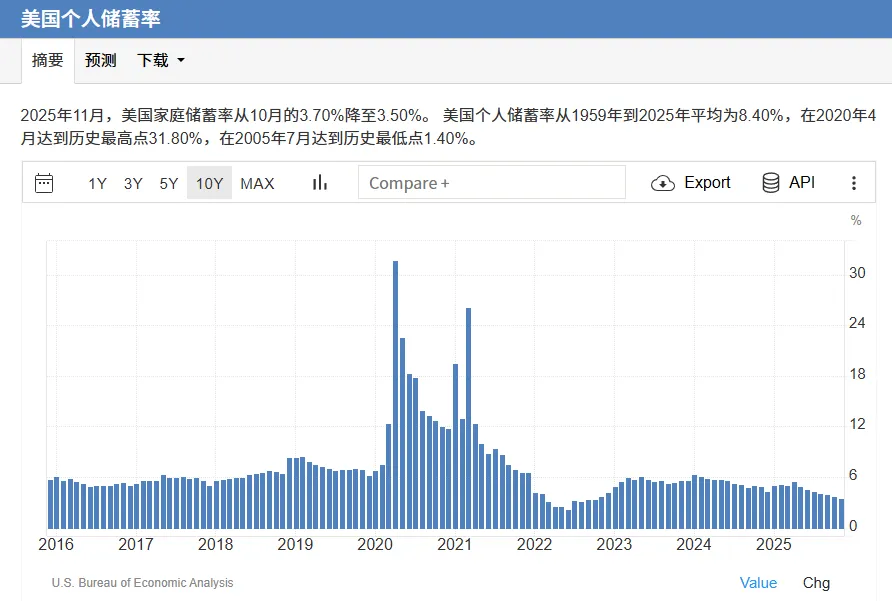
The personal savings rate in the United States increased significantly during the COVID-19 epidemic due to Biden's money distribution policy, but fell rapidly as the relevant policies ended and inflation rose. Trading Economics
At the same time, American society has long formed a general expectation: in terms of education, children cannot go to private schools, and public schools can make do; in terms of medical care, the best dentists, neurologists, cardiac surgeons and other expert services may not be affordable, but at least there are public hospitals where they can go.
The result is that a large number of households have neither savings nor much wealth accumulation. Over time, many people are unwilling to work hard to accumulate savings and wealth, and even develop a certain degree of dependence. For example, take the growth experience of U.S. Vice President Vance as an example. In addition to his grandmother being very enterprising and helping him grow up, his success also has this structural background.
So what is an American family most afraid of? The first is unemployment. Once the earner in the family loses his job, the quality of life of the entire family may collapse. The second is illness. The United States does have a basic medical insurance assistance program to cover his expenses, but it is difficult for ordinary people to afford slightly more complicated things in the United States, such as specialist clinics and special medical arrangements.
So, here’s the question: How can America get every family to seriously plan for the past, present and future? How can you truly develop a “hard work” attitude? How to help families start saving, or even form savings of a certain scale? How to form a basic financial foundation in terms of financial management, housing, etc., so that systemic problems will not arise at the slightest sign of trouble?
This should be looked at from two aspects, first from the institutional level. Capitalism in the mid-19th century was very cruel, almost nakedly extracting the blood and sweat of workers. It was against that background that Karl Marx, Friedrich Engels and others proposed the Communist Manifesto, advocating the overthrow of the capitalist system with exploitation as its core logic.
But later, with the impact of major historical events such as World War I and World War II, many Western countries gradually realized that the "cruel capitalism" that aimed to squeeze everyone dry and pursue maximum profits was unsustainable. Because it will "force the people to rebel", eventually triggering social backlash and even subverting the system itself.
As a result, the West began to carry out a series of institutional improvements. Northern Europe is particularly typical, mitigating the cruel side of capitalism through the construction of social welfare systems such as high-level medical insurance and basic rights protection. Similar improvements have also appeared in Western European countries and North American countries such as the United States and Canada.
Of course, the United States has done relatively worse in this regard, for many reasons. One of the important reasons is that American society has a long-standing tradition of white supremacy. Black people were once enslaved and suffered discrimination for a long time. Later, other ethnic minorities entered the United States and found it difficult to get the respect they deserve. Therefore, among Western developed countries, the United States has not only failed to substantively improve the cruel side of capitalism, but has actually intensified it at some levels.
But even so, the United States has established some basic welfare systems over the past few decades, such as Medicaid, to provide a certain degree of protection for ordinary people. But in the view of people like Trump, these benefits are "too much" and will make some people "unwilling to work."
In recent years, we have seen that high domestic inflation in the United States has caused the cost of living to soar. Instead, the United States is cutting related expenditures while wasting existing funds in many areas. This has caused a considerable number of people to have a cost of living that exceeds their income from work, causing them to trigger the "killing line" and eventually fall due to financial problems.
At the same time, Trump also captured another social sentiment: The United States has attracted a large number of immigrants over the past ten to two decades, including a large number of illegal immigrants. How immigrants enter the United States is another topic that I will not discuss here. But Trump’s narrative is that these immigrants are not high-end talents and cannot make real contributions to the United States; some even do not work, rely on welfare, and “have a lot of children” without shouldering family responsibilities.
Of course, these accusations are not factually correct.
But the real problem is that there is indeed a controversy in American society about "how immigrants (especially illegal immigrants) enjoy welfare"; at the same time, there are also some people who have relied on government welfare for a long time due to unemployment or other reasons and no longer actively look for jobs. Therefore, public opinion will ask: How can more people return to labor and employment?
Trump’s slogan is to “drive illegal immigrants out of the United States.” Some people even advocate depriving some groups of people who have received green cards of their immigration-related rights. As a result, American society is in a state of high turmoil, and several questions will become more acute in the future: Who are immigrants and who are illegal immigrants? How to treat them? Should we continue to give them job opportunities, or directly deprive them of their right to work? Should there be a thorough identity check through procedures, or should he be forcibly escorted out of the country as Trump said?
These policies may even lead to family breakdown. A more extreme statement is that some babies born in the United States should also be "driven away" with their parents on the grounds that "the United States is unwilling to bear the burden." This type of discussion itself means that there are multiple "killing lines" hidden within American society.
For example, the drug problem in the United States is rampant. President Trump has frequently talked about drugs recently. Sometimes he uses drugs as a reason, and the relevant statements may not be accurate; but for the United States, how to ban drugs and how to reduce the damage of drugs to society is indeed a difficult problem. At the same time, many states in the United States have announced the "decriminalization and legalization" of marijuana, which has made governance more complicated. The drug problem, including the problem of addictive drugs, has become a parasitic tumor within the American political system along with the medical problem.

America's drug abuse problem is serious and has ripple effects
Moreover, unmarried pregnancies are relatively common in the United States, and the number of girls aged 14, 15, or 16 becoming single mothers is increasing. This will bring about a series of chain reactions: the weakening of moral concepts, law-abiding awareness, family and marriage concepts, and the decline of social cohesion.
On the other hand, the “killing line” in the United States also comes from artificial intelligence itself, which is continuously pursued by American capital. What is certain is that artificial intelligence will impact both blue-collar and white-collar jobs. When artificial intelligence finally develops to its extreme, there is still no clear answer as to whether companies will expand or reduce the number of employees.
However, in the process of its rapid evolution, artificial intelligence will definitely reshape the job structure, company structure and employee structure. It is foreseeable that a large number of blue-collar, white-collar and professional people in the United States may face the pressure of unemployment, reemployment and retraining.
Add to that the gap between rich and poor. I estimate that the gap between rich and poor in the United States has reached one of the extreme levels in human history: 1% of people control more than 80% of the wealth in the United States. A very small number of people control huge amounts of wealth, while the vast majority of Americans have difficulty sharing in the fruits of economic and technological progress, especially the structural changes brought about by the rapid advancement of artificial intelligence in recent years. Many people simply cannot catch up with this train.
I judge that it is highly likely that such problems will break out in the next few years. Especially considering that the total market value of the "big seven" artificial intelligence companies in the United States has reached an unprecedented level in the capital market, which means that the artificial intelligence-related bubble is close to being unsustainable. Once there is a drastic adjustment in the financial market and the bubble bursts, the impact will spread to the real economy: company closures, employee layoffs, and social unrest may be further amplified.
The deeper risk lies in: The U.S. federal government debt continues to snowball. What’s the next step? Will the federal level be headed for de facto bankruptcy? Or will it take more extreme measures, such as launching wars and plundering external resources and wealth to barely survive the crisis?
Considering the high federal debt in the United States, if the federal debt problem is not properly handled, it may go bankrupt, or it may lead to intensified conflicts between the federal government and state governments, the outbreak of serious conflicts or even wars, some states demanding independence, and society falling into melee or even civil war. Then how can the public security systems that Americans rely on for survival, such as federal health insurance, be maintained? What’s next? Is it only possible to rely on “0 yuan purchase”?
If American society sees that the federal government has turned into bandits and pirates internationally, relying on robbing other countries' land, assets, and wealth to maintain its operations, the risk of domestic collapse in the United States will only be greater.
Taken together, the United States is in a state of high instability in almost all key areas: immigration and illegal immigration issues, social security and medical services, the education system, federal debt, federal and state government relations, and the dramatic adjustments in the relationships between the government and the market, the government and businesses, and the government and individuals that I just emphasized. On top of these turbulences, coupled with the structural impact of artificial intelligence, I believe that the United States is brewing a "mutation," and this mutation is likely to have catastrophic consequences.
Therefore, I believe that there is not just one "killing line" in the United States, but several superpositions: the killing line of the federal government system itself; the killing line between the federal and state; the killing line between the government and society, the market, and individuals; the killing line of the gap between rich and poor; and the possible unemployment line of blue-collar and white-collar workers under the impact of artificial intelligence.
So I really hope that President Trump can do a few really good things and make America truly "great again." But in my opinion, "state capitalism" is a dead end, and will only plunge the United States into a quagmire that will make it difficult to get out; the United States may also fall from its self-proclaimed "lighthouse on the top of the mountain" into the abyss of the "law of the jungle". It is precisely because of this that I want to emphasize that seriously thinking about "capitalism with American characteristics" may be the only right way for the United States to save itself.