With no surveillance video or forensic evidence linking Benjit to the crime, the charges relied primarily on the eyewitness testimony of a local drug addict. At that time, the witness known as "BB" said that she drove Benjit and three other men on the night of the incident. When the vehicle passed Shin Jong-ok, the three people got out of the car and talked to her, trying to persuade her to attend the party. When Shin Jong-ok refused, Benjit stabbed her with a knife.
However, before his death, Shin Jong-ok mentioned that the attacker was a man wearing a mask, which obviously contradicted BB's testimony.
The BBC noted that other testimony provided by BB also lacked evidence. BB said that on the night of the incident, she stopped at a garage on Chanster Road, Bournemouth, but she was not captured on the surveillance video near the garage. She claimed that after the murder, she drove Benjit and the three others to a drug den about a mile away, but they were not captured on the surveillance video outside the house.
In addition, the report pointed out that BB has a record of fabricating accusations. She also changed her story several times during the investigation, initially charging all three men, but not accusing Benjit of murder until she made a third statement to police.
“Police coerced witnesses into committing perjury”
BB's testimony was the only evidence linking Benjit to the murder scene, but there were many key witnesses in court who supported her story. However, during the BBC investigation, these witnesses admitted to lying in court.
A witness named Leanne said the police forced her to commit perjury. "I was a child and was thrown into the back of a police car and I was terrified. When they started asking me questions, they crossed out the original content and changed it to something else, as if there was a template prepared from the beginning. They wrote the statement, 95% of it was written by them."
The BBC investigation also found that five drug users at the drug den initially denied seeing Benjit on the night of the murder when they were initially interviewed by Dorset police. But a few months later, all five people changed their stories and said they had seen Benjit "covered in blood." The testimony also helped push the court to convict Bengit.
Of the five witnesses, one has admitted lying to the BBC and two claimed to have been coerced by the police. Family members and friends of the other two witnesses told the BBC that both admitted perjury in court.
One of the witnesses, Andi Miller, revealed that BB had confessed to the police about dozens of thefts they had committed together, and the police used this as a lever to force them to commit perjury. "They caught me on those cases, you know what I mean? But I was never prosecuted for it, and I felt like the police forced me to say things that were not true," Miller said.
The BBC said that together with all the witnesses who admitted in previous investigations that they were pressured to exaggerate their testimonies or lie, the testimonies of 15 key prosecution witnesses have been overturned or have problems.
new alibi
In addition to problems with the witness's testimony, the BBC's investigation also found that Benjit likely had an alibi.
In a surveillance video discovered in 2021, about 25 minutes after the murder, a man who looked very much like Benjit appeared in a phone box on Chanster Road, Bournemouth. If the man in the video is indeed Benjit, then BB's testimony will be completely overturned – Benjit could not have appeared in the drug den at this time.
The case is being reviewed by Britain's Criminal Cases Review Commission (CCRC), which previously concluded that the man in the blurry phone box footage was likely to be Benjit but could not be sure.
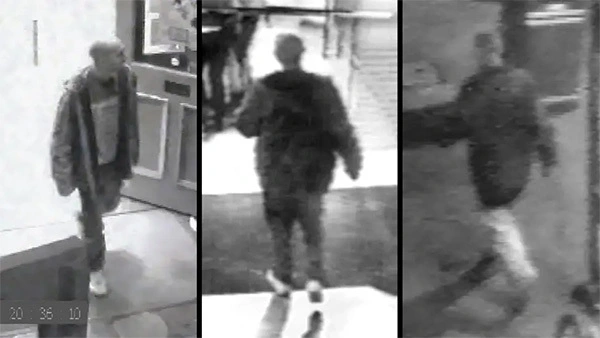
The picture on the left shows Benjit photographed elsewhere on the night of the crime. The picture on the right shows the man suspected of Benjit who entered the phone booth that night. BBC
However, the BBC said that they have now found new evidence that is expected to further strengthen this potential alibi. A new call record obtained by the BBC shows that just after the man suspected of Benjit was captured on surveillance video entering the phone booth, a call was made from the phone booth to the drug dealer who supplied Benjit with drugs.
At the time, Benjit and other drug users often used the phone box on Charminster Road to contact drug dealers. The BBC pointed out that combined with surveillance video and call records, the man who entered the phone booth was probably Benjit, which could give him a clear alibi.
The BBC also discovered that Dorset Police had noticed the evidence when investigating the murder, but ultimately chose to cover it up. "They knew that the man in the phone box looked like Benjit and that he had called Benjit's drug supplier," the BBC wrote. "But rather than investigate the alibi, police appear to have covered it up."
British crime expert Barry Loveday believes Dorset Police need to explain. "The police were highly selective in their collection of evidence," said Lofty, who has been researching the case for the past two decades. "In my opinion, Omar was wrongfully accused. This was an elaborate frame-up."
"I won't admit to something I didn't do."
The BBC speculates that Dorset Police decided to frame Benjit because they failed to prevent a murder suspect from committing another murder.
The report mentioned that Italian Danilo Restivo immigrated to the UK in 2002 and settled in Bournemouth. His residence was only three streets away from the place where Shin Jong-ok was murdered. Restivo was once suspected of murdering a 16-year-old student in Italy and was one of the early suspects in the murder of Shin Jong-ok.
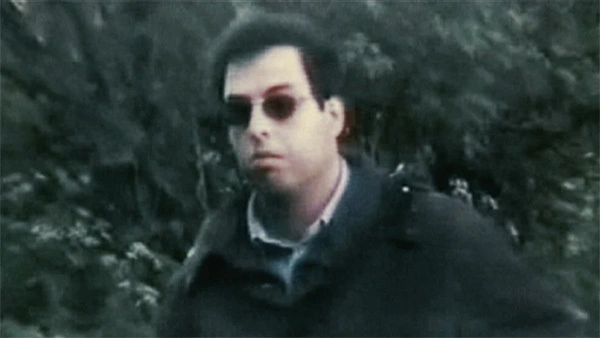
Restivo BBC captured on surveillance video by British police in 2004
At the time, a woman reported to Dorset Police that she heard Restivo discussing details about Shin Jong-ok's murder, and Italian police also issued a warning to Dorset Police. But Dorset Police dropped its investigation into Restivo after his girlfriend provided an alibi.
Restivo was sentenced to 40 years in prison for the November 2002 murder of neighbor Heather Barnett. Later, the Italian police confirmed that Restivo had killed a 16-year-old student. An Italian court found Restivo in absentia on the murder charge and sentenced him to 30 years in prison.
A British court has excluded Restivo as a suspect in the murder of Shin Jong-ok. But a newly discovered blurry surveillance image by the BBC shows that about 10 minutes before Shin Jong-ok was killed, a man suspected of Restivo appeared on a bicycle at the corner of the crime scene. The BBC said it had written to Restivo but he did not respond.
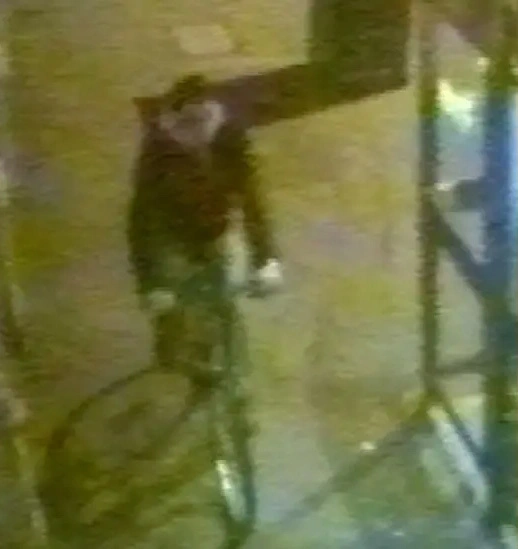
Before Shin Jong-ok was killed, the man suspected of Restivo was caught on surveillance video BBC
Now Benjit has given up drugs and is serving 23 years in prison. If he admits to murdering Shin Jong-ok, he may be eligible for parole. But Benjit, 53, told the BBC he would not admit to something he did not do.
"I would rather die in jail and say I didn't kill someone than admit that I did it to get out," Benguit said. "It's impossible. I'm innocent, why should I lie to get out of jail?"
In response to the investigative report released by the BBC, a spokesman for Dorset Police said that Benjit had appealed twice, but both appeals had been rejected by the Court of Appeal. The spokesman said any questions about the conviction should be dealt with by the Court of Appeal and the Criminal Cases Review Commission and police would launch an investigation if directed by the courts and relevant authorities.
Des Jenson, Benguit's lawyer, said that if British police forced witnesses to lie, "it means they fabricated evidence and obstructed justice."
Retired Chief Inspector Brian Murphy, a senior British police officer who has participated in more than 200 murder investigations, reviewed the information gathered by the BBC. He said that Benjit's conviction was not safe and "there is no doubt that this case urgently needs to be re-examined". Murphy called on the Independent Office for Police Conduct to step in and investigate Dorset Police's handling of the case.