Jinggao Education’s Vision is Light, Carboxy Climbing Modeling, Wei Saiqiu, Guangxi University of Finance and Economics’ Mathematical Modeling Methods and Practices, Su Guangwang, Qin Bin (School of Information and Statistics, Guangxi University of Finance and Economics, Nanning, Guangxi 530003) [Abstract] Based on the characteristics of students in finance and economics colleges, taking the results of mathematical modeling competitions held by Guangxi University of Finance and Economics as an example, this paper introduces how to carry out mathematical modeling teaching methods and innovative practices, and summarizes some inspirations from mathematical modeling competitions in finance and economics colleges. [Keywords] Mathematical modeling; teaching reform; innovative practice 1. Key education reform topics at the Guangxi Autonomous Region level in 2015: Exploration and research on improving the quality of mathematics teaching in financial and economic colleges (2015JGZI592015A03); 2. Guangxi University of Finance and Economics’ 2016 Special Research Project on Teachers’ Innovation and Entrepreneurship Education Ability: Exploration and Research on the Training Model of Innovative and Entrepreneurial Talents by Mathematical Modeling in the “Internet +” Era—Taking Guangxi University of Finance and Economics as an example (2016JSZXC14). The National Undergraduate Mathematical Modeling Competition was founded in 1992 and has been for 24 years. It has become the largest basic subject competition in colleges and universities in my country. At the beginning of the competition, mainly science and engineering colleges participated, with less participation from liberal arts and finance colleges. With the popularity of competitions, people have a deeper understanding of mathematical modeling competitions and realize that mathematical modeling competitions play an important role in improving the overall quality of college students and cultivating entrepreneurship and innovation capabilities. In recent years, the number of participants, institutions and majors has increased. In 2015, nearly 86,000 college students from 1,326 colleges and universities, 28,665 teams (including 25,646 undergraduate teams and 3,019 junior college teams) from 33 provinces/municipalities/autonomous regions across the country (including Hong Kong and Macao SAR), Singapore and the United States signed up to participate in this competition. Since May 2004, when Guangxi University of Finance and Economics merged with Guangxi College of Finance and Guangxi College of Commerce to form Guangxi University of Finance and Economics, our school has begun organizing students to participate in undergraduate competitions. From the beginning, there were 8 teams every year, and gradually increased to 10 teams. By 2010, it basically stabilized at around 15 teams. In the past five years, we have held mathematical modeling training lectures and offered mathematical modeling elective courses every year. We have basically won 1 or 2 national awards every year (and the first prize in the competition area), 3 second prizes in the competition area, and 4 third prizes in the competition area. In 2015, we also won 1 national first prize, achieving zero breakthroughs. While achieving these results, we have also explored some practices suitable for mathematical modeling in finance and economics colleges. Our mathematical modeling teaching guidance team has gradually stabilized and matured. 1. Teaching Methods and Innovative Practices At the end of each autumn semester, our school’s mathematical modeling teaching team summarizes the results achieved this year, and discusses and arranges the mathematical modeling work for the following year. Our school's mathematical modeling competition work is mainly divided into on-campus selection competitions and summer intensive training. (1) In-school competition. In early April every year, team members are recruited across the school to participate in training. Mainly using weekends or evening self-study, 6 classes per week, continuous training for 5 weeks, about 30 class hours. In view of the characteristics of students in finance and economics colleges, the training content mainly includes mathematical software, mathematical models and paper writing. Among them, the introductory training of mathematical software mainly includes Maf lab, SPSS, and statistical R software; the training of mathematical models uses "Mathematical Models" by Jiang Qiyuan, Xie Jinxing, and Ye Jun as the teaching material, and mainly trains relatively simple elementary models, optimization models, regression models, etc.; thesis writing focuses on how to find literature, the key points contained in the paper, and writing standards. The on-campus competition mainly focuses on publicity and popularization competitions. At the same time, it selects students who are interested in mathematical modeling and tries to encourage more students to participate in the mathematical modeling competition. In mid-to-late May, an intra-school competition will be held to select outstanding students, and the competition list will be determined in early June. · · (2) Summer intensive training Like most colleges and universities, our school also carries out summer intensive intensive training. Every year, our school organizes students selected from on-campus competitions to participate in a 15-day summer training. Combined with the characteristics of students in finance and economics colleges, our school’s summer training will be different from that of most colleges and universities. In addition to regular mathematical software intensive training, paper writing, and competition simulations, every teacher in our school's mathematical modeling teaching team has done a lot of preparation work and listed nearly 20 algorithms commonly used in mathematical modeling, including multi-factor analysis, analytic hierarchy process, analysis of variance, principal component analysis and SVM algorithm, Lagrangian interpolation method, gray prediction method, time series analysis method, Monte Carlo (MC) simulation model, least squares method and polynomial fitting, BP neural network method, etc. Each teacher is responsible for teaching one or more of them, and conducts teaching and software operations based on cases. 2. Some inspirations from the competition. The mathematical modeling competition is a long-term process, from initial training to team selection, to summer intensive training, simulation competition, and finally the national semi-finals. Through the exploration and practice of mathematical modeling competitions in the past few years, we have a deeper understanding of the work of mathematical modeling competitions. (1) The mathematical modeling competition work must be combined with the actual situation of the school to explore working methods and teaching methods that suit the characteristics of the students of the school. Generally speaking, students from science and engineering colleges have a good mathematical foundation and strong computer programming abilities. Although students from finance and economics colleges do not have the above characteristics, they usually have strong writing skills and economics knowledge background. In actual teaching and training, we should use our strengths to offset weaknesses, continue to improve and improve writing skills, and at the same time strengthen and improve students' modeling ideas and abilities. (2) Mathematical modeling competition activities require a dedicated teaching team. Our school’s mathematical modeling teaching team consists of more than a dozen teachers, more than 80% of whom are young teachers born in the 1980s, including 4 Ph.D. They are young and passionate, willing to challenge and contribute. They can well combine modeling methods with their own scientific research, and introduce research content to students, which effectively broadens students' horizons and provides a strong guarantee for modeling training. (3) Mathematical modeling competitions are of great significance in promoting the reform of mathematics teaching. Students in financial and economics colleges are generally not interested in basic mathematics courses. The traditional "full class" teaching model is no longer suitable for teaching under the new situation. Mathematical modeling teaching methods and practices are to transform practical problems into mathematical models and use computers to solve them, which effectively improves the quality of teaching. At the same time, it cultivates college students' interest in learning mathematics and allows students to actively participate in teaching activities. The attention and support of school leaders are the basic guarantee for our achievements. The school's Academic Affairs Office allocates special funds every year to support mathematical modeling competition activities, and provides certain material rewards to students and instructors, which effectively improves the enthusiasm of teachers and students. Through our efforts in recent years, we have explored some experiences and practices suitable for mathematical modeling competitions in financial colleges. We believe that with the efforts of the teaching team, we will effectively promote the reform of mathematics teaching. [References] Yang Guiyuan. Teaching and practice of mathematical modeling in finance and economics colleges. Engineering Mathematics, 2002(12). Yang Qifan, Tan Zhiyi. Cultivating innovative talents through mathematical modeling teaching – Zhejiang University has achieved significant talent training benefits through mathematical modeling methods and practical teaching. China Higher Education Research, 2011(12). Mathematics Learning and Research 2016.21
Mathematical Modeling Teaching Methods And Innovative Practices Of Guangxi University Of Finance And Economics And Inspiration From Competitions
未经允许不得转载:Lijin Finance » Mathematical Modeling Teaching Methods And Innovative Practices Of Guangxi University Of Finance And Economics And Inspiration From Competitions
相关推荐
 Exploration On Teaching Reform Of Secondary And Higher Mathematics Courses In Guangxi University Of Finance And Economics' 'First Class Courses'
- Zhejiang Jinhua Vocational College Admission Details: Know The School Address, Plan, And Admission Rules
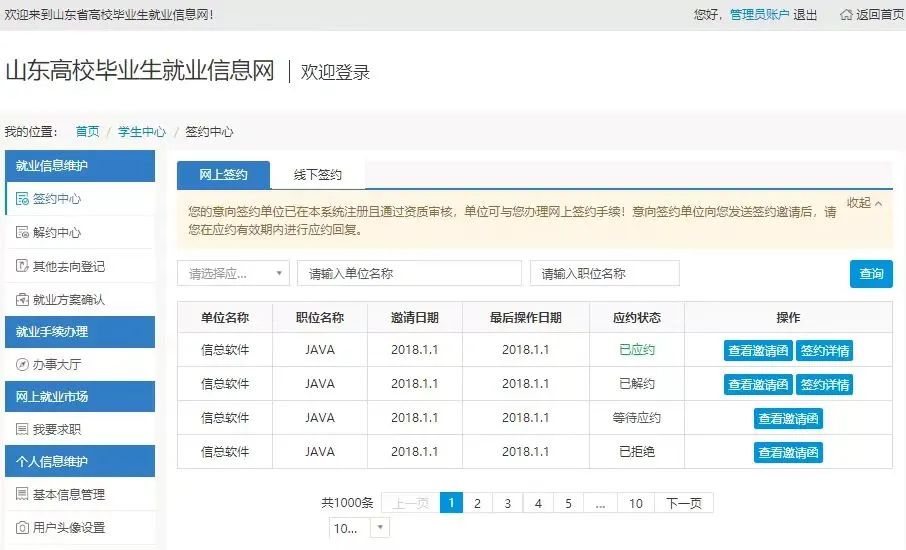
- Class Of 2022, Look Over Here! Know All About The Methods And Procedures For Signing Contracts With Employers
- A Stay-at-home Mother Works Part-time As A "Guangcheng Vigilante" And Completes 67 Tasks In 210 Days
- The Signing Ceremony And Farewell Ceremony For The Third Batch Of Exchange Students From Jilin University Of Finance And Economics Going To Russia Were Held
- Bank Of Sichuan Is Recruiting, And There Are Positions Available In Zigong And Other Places. Friends Who Are Looking For A Job, Don’t Miss It.
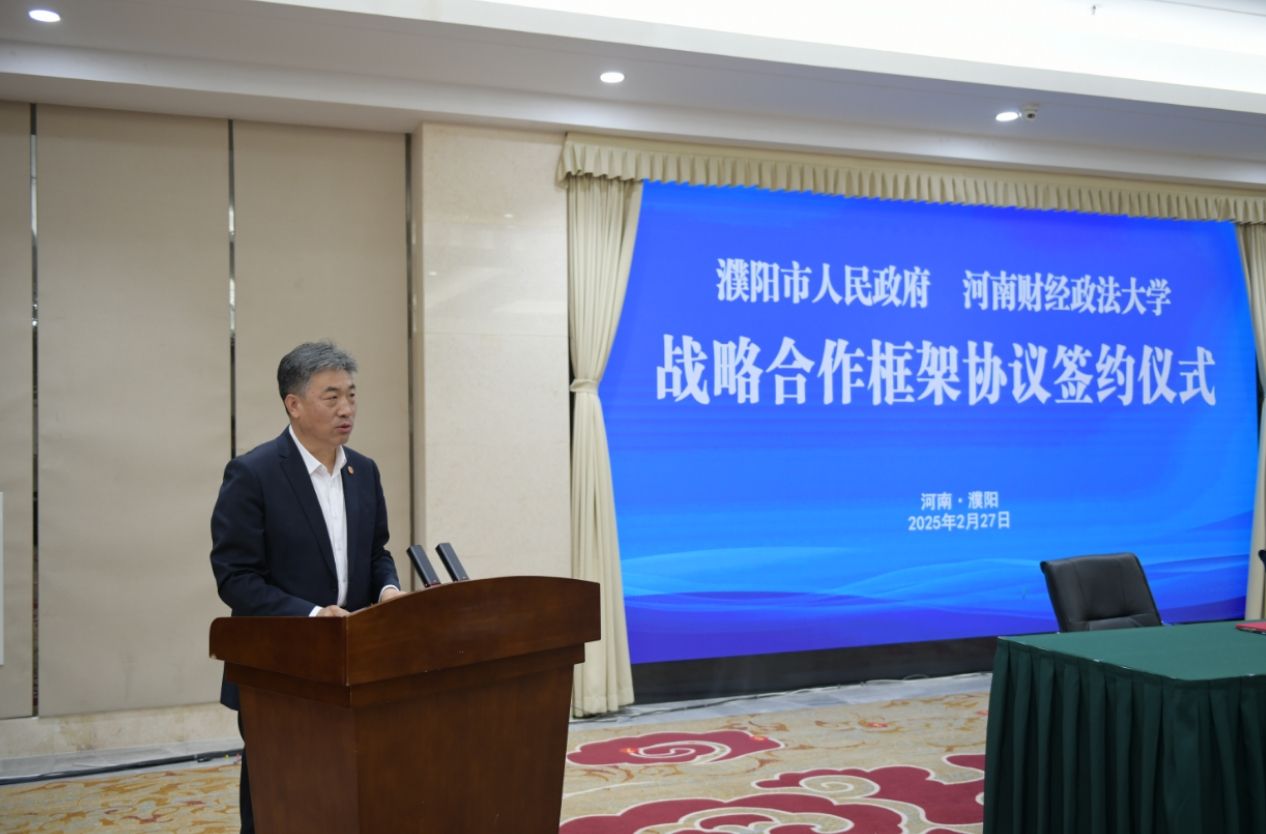
- A Delegation Led By Si Linsheng From Henan University Of Finance And Economics Went To Puyang For Inspection And Signed A Strategic Cooperation Agreement
- On March 15, The Three Major A-share Indexes Weakened Throughout The Day, And The GEM Index Was Analyzed By Tencent Finance.