I really didn't expect that before the New Year's Eve party, three period dramas would already be on the screen. This year can be called the first year of period dramas.
But after a closer look, you can find that the other two movies are all starring young people, and their acting skills and texture are not interesting at all.
Only this "Good Time" is full of surprises from production to cast.
It does not rely on popular celebrities or exaggerated plots. It is on the news network based on its theme alone. CCTV drama reviewers even praised it for "writing about the changes in the lives of ordinary people and full of warmth over time."
After watching the screening of "Good Time", I found that this drama really has the confidence to compete with "Parents Love".
First look at the sincerity of the production team.
Different from today's crude period dramas, it took 125 days to shoot, just to restore the texture of the 1970s and 1980s.
Director Liu Jiacheng has previously filmed "Under the Zhengyang Gate" and "Love in the Courtyard" and is good at capturing the pyrotechnics of the times. Screenwriter Hao Yan is excellent at controlling emotional details. This is the basis for the delicate and tender drama.
As for the success or failure of a period drama, the acting skills of the actors are also at the core.
"Good Times" has a full cast of talented actors and no popular stars. Every actor has played their role vividly and in different states. Let's talk about them one by one below.
As the flagship of the series, Mei Ting's performance has attracted the most attention.
When mentioning her, everyone will always think of An Jie in "Parental Love", that delicate and gentle lady. The transformation from youth to old age she performed is deeply rooted in the hearts of the people. There is even a saying that "there will be no An Jie after Mei Ting".
And the Su Xiaoman she plays this time is completely different from An Jie, which is also the biggest attraction.
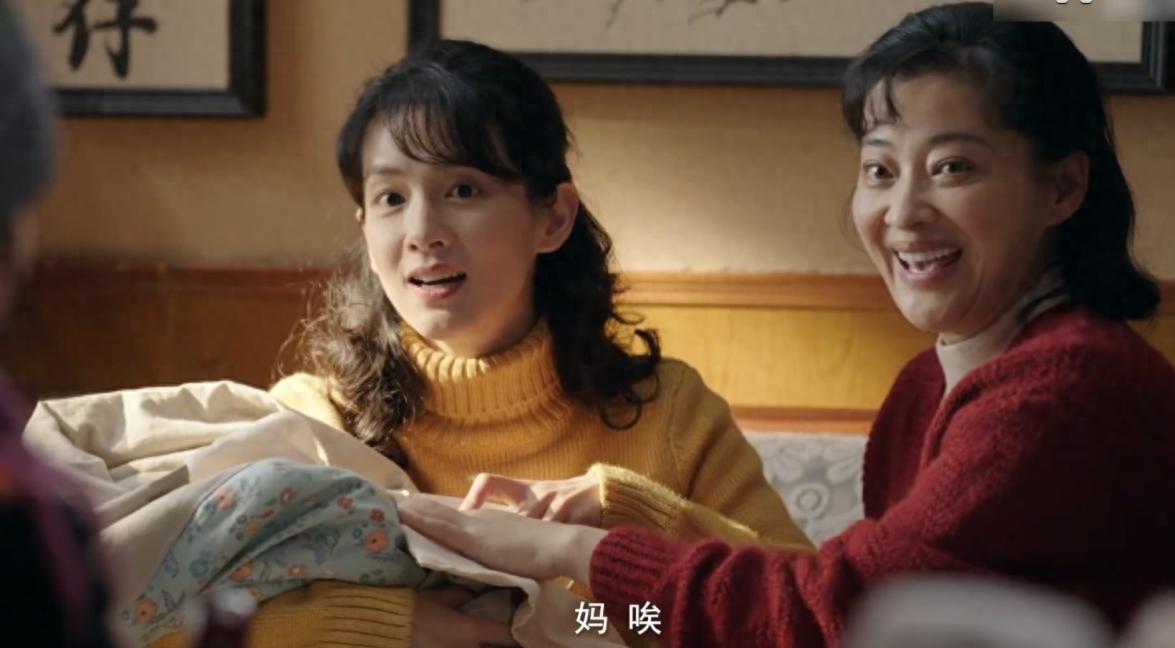
Su Xiaoman is a single mother with children. She is gentle but tenacious. After marriage setbacks, she still has expectations for life. When she and Zhuang Xianxian form a reorganized family, they have to face the opposition of their children and the trivial life.
She is not as delicate as Anjie, but more smoky and vicissitudes of life. She is the epitome of ordinary women of that era.
Mei Ting has been deeply involved in realism themes for many years. She does not accept popular dramas and polishes each work carefully.
I believe that with her starring role and stable performance, she will be able to support the tone of the series. Moreover, she is paired with Tian Yu, which makes the emotional scenes even more interesting.
Although Tian Yu is a talented actor who often plays supporting roles, he always stands out. Wang Qinian in "Celebrating More Than Years" and Teacher Wang in "Charlotte Trouble" are both impressive.
This time he plays Zhuang Xianxian, a widowed father who is honest, taciturn but considerate. He loves his children and supports each other with Su Xiaoman to build a new family.
This character is in great contrast to his previous comedic image, with less laughter and more warmth and responsibility. He is a typical good man of the era.
Tian Yu perfectly interprets Zhuang Xianjin's honesty and delicacy. He is not good at expressing love with words, but he gives it with actions.
During the movie watching party, when Su Xiaoman fell ill, he was clumsy in making medicine and cooking. His hands and feet were busy but he was extremely serious. The worry in his eyes could not be hidden, which was more contagious than exaggerated lines.
During the Spring Festival Gala, he wore a dark Chinese tunic suit. He had a calm temperament and a tall and straight posture, which fit the role very well. He made the image of a simple and honest father come to life with only the details.
Mei Ting and Tian Yu support the middle-aged emotional line, while Chen Haoyu carries the youth line. The Zhuang Haohao she plays is the most outstanding and empathetic young character in the play.
Chen Haoyu is not as well-known as the first two, but his acting skills are good. He performed brilliantly in "Ruyi's Royal Love in the Palace" and "Twinkle Twinkle Star" and is good at playing layered growth characters.
Zhuang Haohao is the eldest daughter of Zhuang Xianxian. After her father was widowed, she was forced to mature early and take on family responsibilities, take care of her younger siblings, and live like a "little adult".
She initially opposed her father's remarriage, not because she was unreasonable, but because she was worried that her father's love would be taken away and the family burden would be increased. This worry is real and heartbreaking.
Chen Haoyu vividly interprets her precocity, tenacity and sensitivity, with eyes that are sometimes stubborn and sometimes fragile.
During the film screening, the two scenes in which she cried while cleaning up her father's new house, and in which the family of three embraced each other in the rain and let go of their estrangements, were full of emotions and moved people.
The first three actors played tender and delicate roles, and the addition of Li Xueqin added laughter to the series and made the plot more vivid.
Everyone is familiar with her comedy talent, and her Northeastern accent brings laughter. She always makes people laugh in variety shows. At first, many people were worried that she would act in a period drama, but after watching the performance, they were slapped in the face.
She plays Ye Aihua, Su Xiaoman's best friend, a cheerful and enthusiastic northeastern girl who is straightforward and has no scheming, and is Su Xiaoman's most solid backing.
This role fits her own personality, and has the atmosphere of the era. Her carefree appearance hides gentleness, and she will comfort Su Xiaoman and persuade Zhuang Hao.
Li Xueqin did not deliberately act a comedy, but integrated humor into the character. The authentic Northeastern dialect and natural micro-expressions made the character stand up instantly.
After talking about the actors and production, let's look at the plot. This is the key to it being comparable to "Parents' Love".
Different from "Parental Love" which focuses on military officer families, "Good Time" tells the story of the reunion of a reorganized family. Su Xiaoman and Zhuang Xianxian take their children to overcome difficulties and manage their lives, making them closer to ordinary people and giving them a stronger sense of belonging.
There is no bloody plot in the series, but only the triviality and tenderness in the atmosphere. The conflicts in the reorganized family, the mutual help and calculation of the neighbors, and the entanglement of childhood sweethearts are all true reflections of the times.
It does not stereotype the characters, everyone has their own strengths and weaknesses, and it also incorporates the background of the times such as factory reform and the boom in going abroad.
This reality is in the same vein as "Parental Love", and it also gives the work both emotional warmth and contemporary thickness.
And besides, period dramas have become very popular in recent years, but classics are hard to come by. Most of them are idol dramas dressed in the guise of the period, without any memorable points.
But I think "Good Time" has its own characteristics. If it can capture the daily lives of ordinary people, it is a good drama.
Just as everyone loves period dramas, they miss the warmth and sincerity of that era.
"Good Time" does not deliberately sensationalize, but it can inadvertently touch people's hearts and remind people of family and warmth.
I believe it will bring surprises after it is broadcast, and I also hope that it can become a classic that can stand the test of time like "Parents' Love", illuminate our current life, and let us cherish the happiness in front of us.