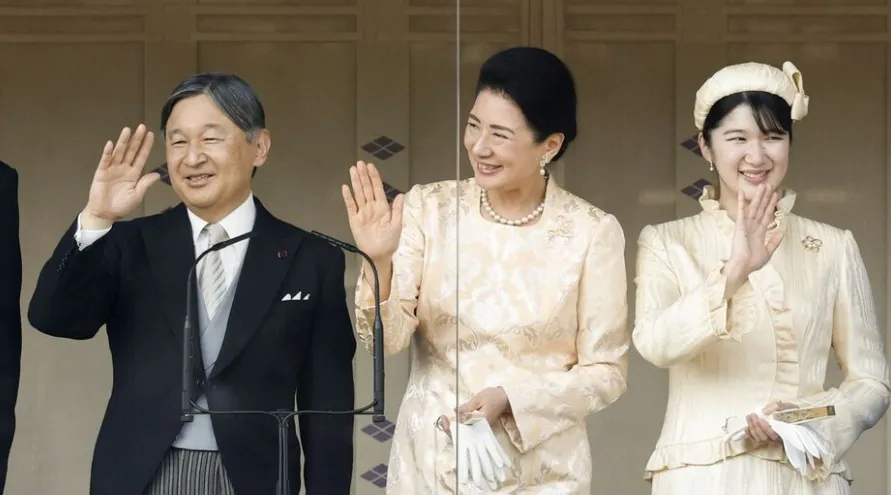
On February 18, the second Gao City Cabinet officially set sail. What profound impact will the coming of the new regime have on the unresolved issue of royal succession? Yumi Shimada, a well-known Japanese religious scholar and proficient in imperial history, gave a seemingly paradoxical but insightful judgment: "Substantial revisions to the "Imperial Model" will definitely cause an uproar in Congress, and this is precisely a major historical change that only a conservative regime can forcibly promote. The ultimate direction of this change will definitely lead to the birth of the 'Aiko Emperor'."
The political plot of the Gaoshi regime to leverage the "Royal Model"
The gears of history are turning faster.
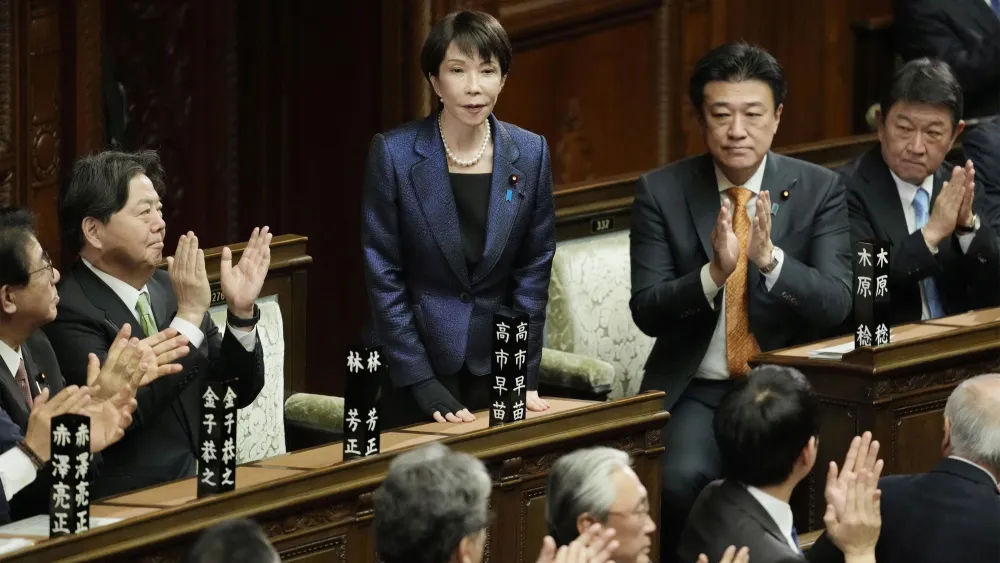
On February 24, Sanae Takaichi, the first female prime minister in Japanese history, clearly responded to a representative question at the plenary session of the House of Representatives: "We look forward to substantial progress in the congressional discussion on revising the "Imperial Family Model" and reaching a cross-party consensus as soon as possible." In fact, as early as the policy policy speech at the opening of the special session of the Diet on the 18th, Prime Minister Takaichi had already demonstrated a strong political will to promote the revision of the "Imperial Family Model" in response to the serious issue of stabilizing the succession of the throne. His positive attitude attracted the attention of the outside world.
Currently, the core plan conceived by the prime minister's camp is to allow existing royal members to adopt male descendants of the old palace family (collateral royal relatives who were deprived of their royal status after the war), in order to replenish the dwindling royal population. On the surface, this plan coincides with the political bottom line of "male succession" that Japan's conservatives have long insisted on.
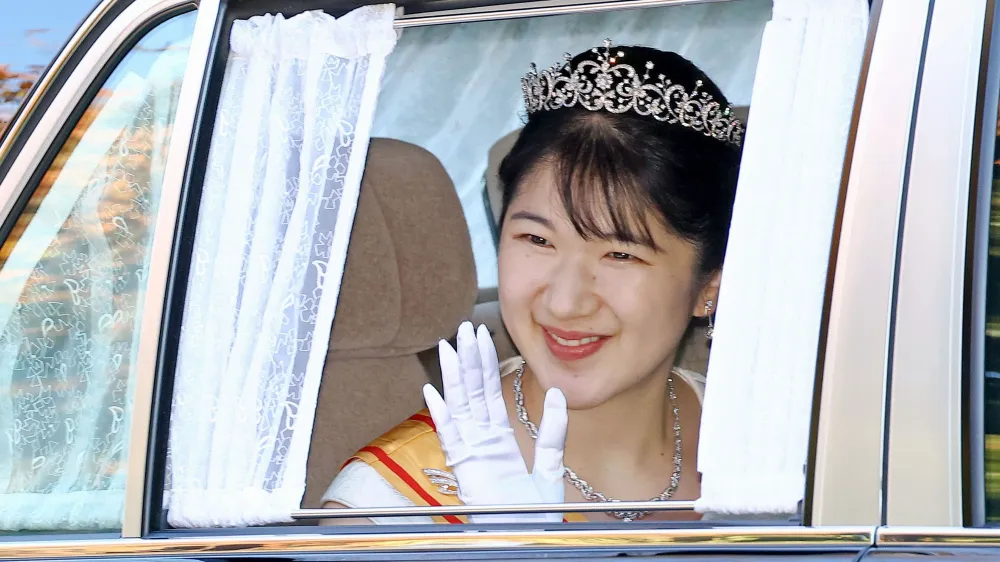
However, the weird thing about history is that once the "Imperial Model" is truly touched and revised, the traditional legal foundation on which conservatives rely for survival will be irreversibly shaken. This will objectively pave the way for Prince Aikouchi (Prince Keimiya Aikouchi) to ascend the throne and become a "female emperor" in the future.
In the creation myth recorded in the "Kojiki", in order to attract Amaterasu, who was hiding in Amaterasu out of anger, Amaterasu once performed a noisy sacrificial dance outside the cave. In the current political context, Prime Minister Takaichi may be playing a role similar to that of Tenyu's slave – because after her political "dance", a new generation of "Aiko Emperor" with Amaterasu as the ancestral god is very likely to appear.

Legal loopholes in "Royal Model" and the game of Congress
After the election of the House of Representatives in February, the new Speaker Eisuke Mori, who is from the Liberal Democratic Party and holds the majority of the House of Representatives, publicly set the tone at his inauguration press conference, saying that the discussion on stabilizing the succession of the throne "has become an urgent national issue that cannot be delayed" and promised to do his best to help Congress build consensus as soon as possible.
Judging from the current political trend, Congress seems to be accelerating in the direction of approving the "Old Palace Family Adoption Plan." Previously, the ruling Liberal Democratic Party and the largest opposition party, the Cadets, had fundamental differences on this issue. However, as the "Central Reform Alliance" of the Cadets lost seats significantly in the election, the Liberal Democratic Party's conservative proposition seemed to have cleared a major obstacle to passing the Diet.
Of course, this is by no means an issue that can be easily overcome simply by relying on majority resolution. It requires an extremely broad social and political consensus.
We must clarify a legal concept. Although Prime Minister Takaichi has shown great political ambitions to amend the Constitution of Japan, the threshold for amending the constitution is extremely high: it must obtain the approval of more than two-thirds of the House of Representatives and the Senate at the same time. At present, although the Liberal Democratic Party has barely managed to piece together a two-thirds absolute majority in the House of Representatives, it is far from reaching this safety line in the Senate. What's more, the draft constitution amendment must eventually be submitted to a referendum. If it fails to cross the threshold of half support, it will be completely aborted.
However, there are no such strict constitutional barriers to revising the Royal Model. In the postwar Japanese legal system, the "Imperial Model" was downgraded to "ordinary law", which means that as long as both houses of Congress pass it by an ordinary majority, modifications to its text can be completed.
But the particularity of the "Royal Model" is that it is not a "royal law" in the strict sense. In Japan's current legal system, there is no other law that has such a sacred name as "model". The legacy of this special naming stems from the historical limitations of the Meiji period when the old "Imperial Code" was formulated – at that time, the code was not integrated into the framework of the modern secular legal system.
The evolution from absolute "family constitution" to secular law
In 1889 (the 22nd year of Meiji), when the old "Imperial Family Model" was promulgated, its clear legal positioning was the absolute "family constitution" within the Imperial family. The so-called family constitution refers to the rules of life and inheritance that must be strictly followed within a prominent family. For example, the Mitsui family, one of Japan's old chaebols, regards the "Zongqi Posthumous Letter" left by its founder Mitsui Takuri as an insurmountable family constitution.
Since the old "Imperial Code" fell within the scope of private imperial law, it was never published in the official publication of the "Official Newspaper" for ordinary citizens. Instead, it was condescended to be published in the "Official Newspaper" along with the "Constitution of the Empire of Japan" formulated at the same time. More importantly, because the old "Royal Model" was above secular law, the Imperial Parliament at that time had no power to conduct any form of review or revision of it. Therefore, although the old "Royal Model" has had sporadic internal additions in the subsequent history, its core text is like an untouchable political living fossil, ushering in the post-war era intact.
After the war, with the collapse of the old constitution, the old "Royal Model" was also officially abolished. When the Constitution of Japan was promulgated in 1946 (Showa 21), a new version of the "Imperial Model" was re-enacted as an ordinary law attached to the Constitution. This drastic change in legal status means that the "Imperial Code" has completely stripped away the sacred cloak of the Imperial Family's private code and has become a secular law that can be arbitrarily revised by Congress in accordance with procedures.
Had postwar legislators adopted "royal law" instead of retaining the title "royal model," the subsequent political game might have been handled very differently. However, the deliberate retention of the name "Paragon" allowed it to subconsciously inherit the traditional halo of sacrosanctity before the war. Compared with the old law, its core content has no substantive subversion. To this day, the new "Royal Model" remains solid and has not undergone even a single literal revision.
The “Abdication Crisis” and the Hidden Line of Defense in the Heisei Era
In the long postwar years, there was only one political crisis that almost forced Congress to revise the "Imperial Model" – the abdication of the current emperor (Emperor Akihito) during his lifetime.
At the end of the Heisei era, Akihito, who was still the emperor at the time, felt that he could not continue to fully perform the onerous responsibilities of "symbolizing the emperor" entrusted by the constitution due to his old age and health problems, so he implicitly expressed his strong intention to abdicate to the people through a video speech.
However, the current "Japanese Constitution" strictly stipulates that the emperor "does not have powers related to national affairs." Therefore, the emperor's initiative to express politically binding opinions on his own stay or stay is on the verge of being unconstitutional in legal terms. The difficulty of handling this incident is unprecedented, and the Abe government had to urgently set up a special expert meeting to conduct closed-door discussions.
Article 4 of the current "Imperial Model" clearly stipulates in black and white: "When the emperor dies, the emperor's heir shall ascend the throne." There is no provision in the entire article regarding "abdication during his lifetime." The old version of "Royal Paragon" also blocked this road. But it must be clarified that "lifelong reign" is not an absolute tradition of the Japanese royal family since ancient times.
Before the Meiji Restoration, it was a political norm for the emperor to voluntarily give way to the crown prince while he was still alive. As many as 58 emperors have abdicated in Japanese history, accounting for almost half of the total number of emperors in history. During the Heian period, after the decline of the Fujiwara clan's regency, the abdicated emperor took charge of the country's highest political power (i.e., the government) behind the scenes as the "king of heaven". This political structure relied on the abdication system to operate legally.
However, after the Meiji Restoration established the absolute monarchy, the emperor was institutionally tied to the throne and must remain in office for life until his death. Even when Emperor Taisho was completely unable to perform his duties as emperor due to severe mental and physical illness, the Japanese government still adhered to the bottom line and never allowed him to abdicate. This was an unprecedented constitutional crisis for the Japanese political system at the time.
Bypassing the political compromise and conservative undertones of "Paragon"
The crisis of the Taisho period was finally resolved reluctantly by the appointment of the Crown Prince (later Emperor Showa) as regent.
In the Heisei era, when the current emperor expressed his intention to abdicate, the conservative government tried to repeat the same trick and proposed an alternative plan to establish a regency, but was firmly rejected by the emperor himself. Since the "Royal Model" does not have an abdication clause, the most thorough solution should be to initiate the revision process through Congress.
However, conservative politicians are filled with deep fears: If the emperor is completely legally allowed to abdicate freely according to his personal wishes, it may open a Pandora's box. In the future, it is very likely that the government will use this clause to pressure the emperor to abdicate, or the emperor will use the abdication as a political bargaining chip to secretly interfere with the cabinet power. Therefore, after fierce internal games, the absolute inviolability of the "Imperial Model" was once again preserved, and the government finally chose to enact a "one-time" special law ("Imperial Model Special Law") that only applied to Emperor Akihito himself. This political compromise was used to achieve the first lifetime abdication in modern history.
In addition to the practical consideration of preventing political risks, the deeper subconscious factor of sticking to the "Imperial Model" without revision is undoubtedly its traditional historical weight as the absolute "family rule" of the Imperial family. In the pre-war era ruled by the old "Imperial Model", the emperor was the supreme "monarch" and ordinary citizens were just "subjects" prostrate beneath him. For subjects to arbitrarily modify the sacred laws established by the monarch through parliament is a heinous "disrespect" in traditional ethics. This class and ethical concept deeply rooted in the bones of conservatives still seems to be secretly exerting a powerful deterrent force.
Looking back at the birth background of the old "Imperial Model", it and the "Constitution of the Empire of Japan" are twins that go hand in hand. In the grand project of creating Japan's first modern national constitution, Hirobumi Ito and other Meiji fathers who led this work had extremely cold political calculations: They looked at the European and American powers and found that these countries, without exception, used Christianity as the absolute "axis" to unite the national spirit and support the operation of the state machine. At that time, Japan lacked an absolutely dominant unified religion to shoulder this important task, so they logically placed the political function of this "national axis" on the imperial family. They firmly believe that only the royal bloodline that has lasted for thousands of years can become the absolute political and spiritual foundation that supports the rise of Japan's modern nation.
The Self-Destruction of Conservatives and the Secret Door of the “Female Palace”
Because it carries such great historical trust, the first article of the "Constitution of the Empire of Japan" emphasizes in an unquestionable tone that the emperor is an absolute existence that is eternal and sacred and inviolable. Although the postwar Constitution of Japan completely eliminated such expressions with a strong theocratic flavor from the letter, it still established the special constitutional status of the emperor as "a symbol of Japan" and "a symbol of the unity of the Japanese people" in the first article of the opening chapter. It can be seen that even in modern Japan after defeat and democratic transformation, the royal family still plays an irreplaceable "political totem" role in national identity.
Japan's conservative camp has always adhered to a bottom line: the legal and traditional foundation that supports the royal family as a national totem is the iron law in Japanese history that "male lineage men" (that is, the father must be a member of the royal family) have the exclusive right to inherit the throne.
However, once this conservative cabinet actually revised the "Imperial Code" that stipulates this principle, even if the original intention was to introduce adopted sons from the male line of the old palace family, it would essentially be equivalent to overturning the absolute ancestral system established by successive emperors in legal terms. In order to solve the current crisis of "cutting off the imperial heir", he took the initiative to revise the "Imperial Model" without permission. This in itself was a very destructive "anti-traditional" political adventure.
Are conservatives not aware of this contradiction in drinking poison to quench thirst?
There is a very ironic political logic hidden in this – if the revision of the "Imperial Model" is led by the right-wing Prime Minister Takaichi Sanae, it will be packaged as a great change that must be carried out in order to "continue the male lineage." After all, this breaks a historical taboo that has not been touched by secular powers in this code for more than 130 years. Just imagine, if a cabinet composed of left-wing parties attempts to push for the same revision, conservatives will come out in force and impose the most severe political condemnation and desperate obstruction on the grounds of "forgetting their ancestors" and "undermining the national system."
In other words, it is precisely because only conservatives have enough political credibility to touch this high-voltage line that Prime Minister Gao Shi dares to seize this historical opportunity and try to force his way through during his term.
Just as she showed political skill when dissolving the House of Representatives, Sanae Takaichi is a leader who is extremely eager for personal political achievements and dares to make big political gambles. As Japan's first female prime minister, she urgently needs to create major political achievements that can be recorded in history. If she can successfully promote the ice-breaking revision of the "Imperial Model" during her term, she will surely go down in history; if she can even use this momentum to complete the "constitutional revision" dreamed of by post-war politicians, it will be a shocking event that can subvert Japan's post-war political landscape.
However, there is a fatal blind spot in the conservatives' wishful thinking: even if the "Royal Model" is successfully revised to allow existing royal families to adopt male descendants of the old palace family, there is no guarantee that in reality, a suitable candidate will be found who is willing to voluntarily give up civilian life and voluntarily jump into the "gilded birdcage" of the royal family to become an adopted son. To take a step back, even if there are descendants of the old palace family who are willing to come forward, because the male lineage of the imperial family of these collateral families must be traced back to the Muromachi period hundreds of years ago, in order to prove to the Japanese people today the legitimacy of their inheritance and the closeness of their kinship, conservative public opinion has to strongly emphasize the maternal lineage of these candidates with the Meiji Emperor.
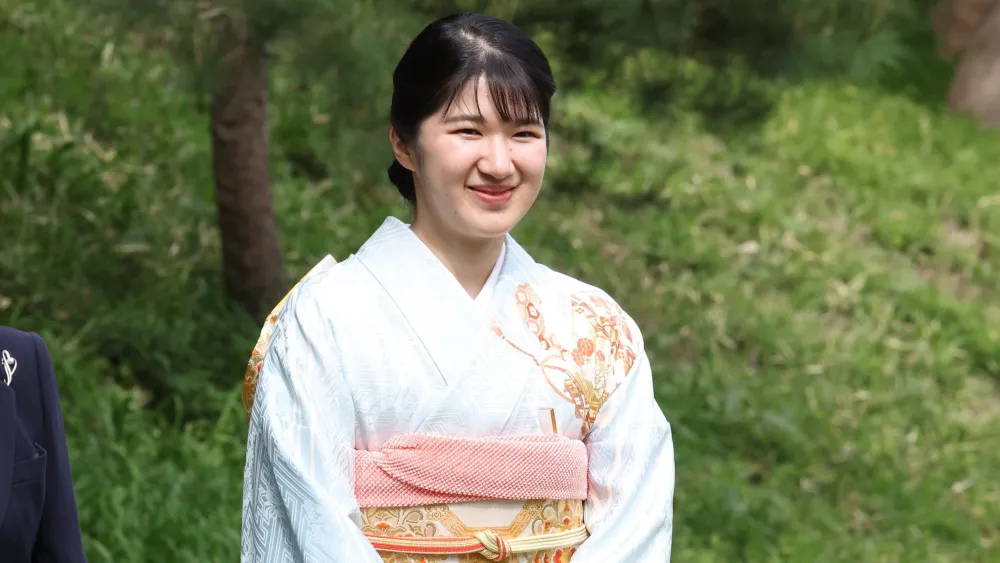
This kind of compromise and promotion of "maternal lineage" has actually opened a fatal gap in the rationality of "female emperor" and even "female emperor" at the level of legal theory and public opinion. If, after spending huge amounts of political resources to amend the law, the old Miya family’s adopted son program still goes bankrupt due to a lack of applicants or lack of national recognition, the Japanese political circles will be forced to turn to the final option that conservatives regard as a scourge.
In this final option, another core issue that Congress continues to debate – the creation of a "female palace family" system (that is, allowing female royals to retain their royal status after marrying commoners and establish independent palace families) – will become a key turning point.
The core political controversy surrounding the "female palace family" has never been about whether the female royal family will stay or leave, but about whether to grant legal royal status to their civilian spouses and future children. Once the "old palace family adoption plan" advocated by conservatives is frustrated, causing the number of royal family members to continue to plummet to a critical point that cannot maintain the daily operation of the royal family, the Japanese government will have no choice but to fully adopt the "female palace family" program and grant royal status to their spouses and children. Otherwise, the natural demise of the royal family will become an irreversible physical reality.
The more far-reaching impact is that as long as the "Royal Model" is successfully torn open by the Gaoshi Cabinet as "can be revised", its absolute authority as a sacred and inviolable traditional system will instantly collapse. In the future, in order to deal with more severe real-life crises, the subsequent cabinet will make more radical and continuous revisions to this law, which will become legally unimpeded.
Once the "female palace family" is established and the children of female royal families become legal royal families, it is essentially equivalent to officially recognizing the legitimacy of "female line inheritance" at the legal level. This not only directly paved the red carpet for Prince Aikouchi to ascend the throne and become a "female emperor", but also completely opened up the line of succession leading to "female emperors" (that is, the emperor's royal bloodline comes from the mother's side).
Revising the "Royal Model" is essentially a constitutional fission that destroys the old tradition and creates a new tradition on the ruins. This operation, which is extremely politically risky, is destined to be pushed forward only in the early days of Prime Minister Gao Shi's term when his support rate is still high. This shows why conservatives regard this as a top priority that must be won quickly.
The special congress was officially convened on February 18. The session period of this extra-long congress is set for 150 days and will last until July 17. In this long-term congressional battle destined to be filled with smoke and fire, the amendment to the "Royal Model" will surely undergo extremely rigorous deliberation and debate. Although subject to political realities, the implementation of substantive legislative amendments may be delayed until the next Congress, but due to the blind political confidence and self-preservation operations of conservatives, Japan's wheel of the times has taken an irreparable and solid step in the historical direction of realizing the "beloved son of the emperor".