Whether it is the incident of Japan’s active self-defense officers forcing their way into the Chinese Embassy in Japan or Sanae Takaichi’s wrong remarks about Taiwan in her parliamentary defense, they are reopening the scars of Japanese colonial aggression on the Chinese and Asian people, and are knocking on the dusty secret door of East Asia’s modern history.
Behind the tense confrontation on the peninsula and the clamor of "something is happening in Taiwan," another "frontier" place in East Asia where history and reality are entangled is the Ryukyu Islands; this land that was "dual colonized" by the United States and Japan is being deliberately obscured.
Extending the horizon for hundreds of years, the fierce confrontation in reality is actually the echo of the confrontation between the two orders. Within the framework of the Ming and Qing tributary systems, the Ryukyu Kingdom used its flexibility to maintain an East Asian security concept based on cultural identity and mutual reciprocity in the exchanges of canonized missions. When Japan ended this bond with its colonial expansion system imported from the West at the end of the 19th century, it not only destroyed the Ryukyu Kingdom, but also imposed a set of violent logic that actually carried out ethnic cleansing in the name of sovereignty. Nowadays, the Takaichi regime is reiterating the old tune of "survival or death". Its spiritual core is no different from that of the warship sailing to Shuri Bay in 1879. They sacrificed surrounding ethnic groups in exchange for the unlimited extension of the empire's security borders.
However, the defeated Japan has been unable to recognize and unwilling to recognize the post-war international order. In 1951, the United States and Europe conducted negotiations with Japan on the premise of excluding China, Russia, and North Korea. The United States actually carried out military occupation in the name of "trusteeship" and included Ryukyu into the scope of strategic trusteeship. It served Cold War geopolitics by creating "undecided status." The "1951 San Francisco System" formed on this basis ran counter to the rules and regulations established in the 1943 Cairo Declaration, the 1945 Potsdam Proclamation and related United Nations documents. It also became the source and starting point of Japan's distortion of history and confusion of cognition after the war.
Nowadays, Japan's new militarism is back with a wave of populism, and it has once again reminded Asia and the world that correcting historical perceptions is even more difficult; real security is not based on the violation of others, but on the return of historical justice and the thorough liquidation of colonial legacy.
At the same time, in East Asia, the deeper issue still lies in the debate and reflection on the construction path of Asian nation-states. Is it the expansionary nation-state narrative of Japan’s “departure from Asia and joining Europe” in the process of modernization? Or should we synchronize internal reforms with external anti-colonial struggles, strive for national liberation, and establish an Asian model of independence, self-reliance, and mutually beneficial coexistence?
In response to the above issues, Wu Qina, an associate researcher at the Institute of Modern History at Academia Sinica in Taiwan, discussed the dilemma of constructing Asian nation-states and the challenges facing the post-war international order from the perspective of Ryukyu history and the changes in the East Asian order.
The following are the keywords of the full text:
· Ryukyu is part of Japan and has not been recognized by any country.
· The essential difference between "Ryukyu independence" and "Taiwan independence"
· The order of East Asia in modern times was born from the "tianxia" order of the Ming and Qing Dynasties
· The transformation of the international order must rely on traditional wisdom and China’s participation
· China is deeply harmed by the Western "national narrative", and the Communist International and Japan "indispensable contributions"
· To maintain the post-war international order, what kind of order? Have all parties reconciled their statements?
· Maintaining the post-war order VS adjusting the old order in a challenging way, how can China "walk on two legs"
· Taiwan’s historical narrative has been covered with several layers of shells
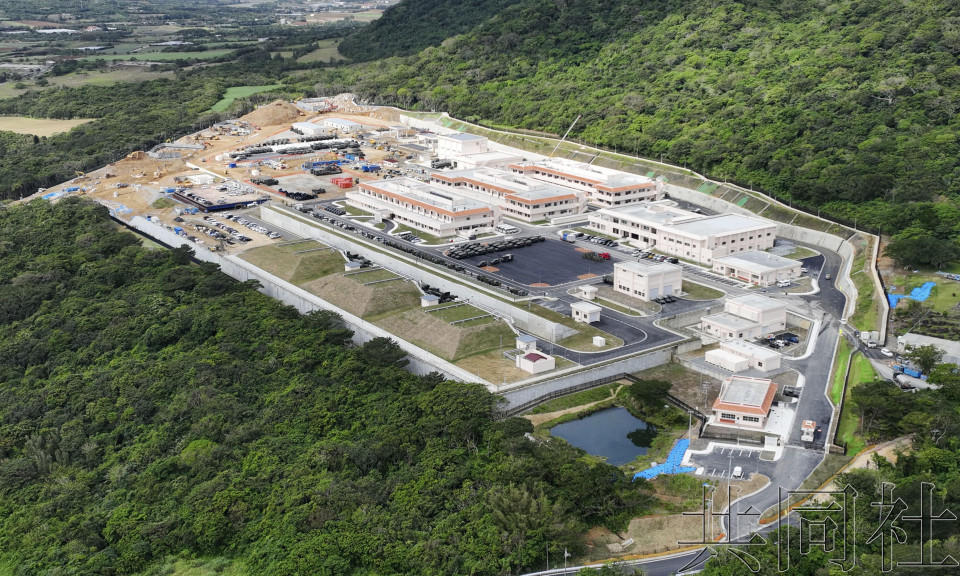
Japan Ground Self-Defense Force Ishigaki Station Kyodo News
·Legally, Ryukyu is part of Japan and has not been recognized by any country.
Observer.com: Hello, Teacher Wu. You have talked about border issues such as Xinjiang and Tibet, as well as historical topics such as New Qing History on Observer.com, and you have received extremely high feedback. Today’s theme is still about the frontier and the history since the Ming and Qing Dynasties, but the perspective has shifted from the land in the northwest and southwest to the ocean in the east.
In November last year, Japan's new Prime Minister Sanae Takaichi said, "Something happens in Taiwan, which may trigger an existential crisis for Japan." This suddenly escalated tensions between China, Japan and the Taiwan Strait. Subsequently, discussions about the Ryukyu issue resurfaced on the mainland. In fact, during the Sino-Japanese Diaoyu Islands crisis in 2012-2013, the Ryukyu issue was also hotly debated. However, in the past decade or so, topics such as Ryukyu independence seem to have cooled down in mainland China. What do you think of the evolution of discussions on Ryukyu in the past ten years and the differences between public opinion and academic and political discussions?
Wu Qina: I began to pay attention to the Ryukyu issue before 2013. The main reason is that when I was studying the history of China’s frontiers from ancient times to modern times, I deeply realized that the domestic political order and the international political order envisioned by China are interrelated and mutually extending systems. It is based on ensuring domestic stability and economically benefiting peripheral and surrounding areas.
The traditional relationship between China and vassal states such as Ryukyu, Vietnam, and Korea was an unequal trade in which China unilaterally gave away benefits. The same is true for border policy. China's border governance is about concessions, not the so-called "colonial exploitation" imagined by the West. For example, the Ili General's Mansion was basically supported by Jiangsu.
The same goes for Ryukyu. At that time, China gave up a large part of its overseas trade interests to Ryukyu, making Ryukyu the richest place in the world in terms of per capita income from the 14th century to the 19th century. In addition to transferring the trade agency rights, in order to help Ryukyu shipbuilding, China simply sent shipbuilding technicians and translators to Ryukyu. This is the origin of Ryukyu's "36 Fujian surnames". China maintains its geopolitical security in this way. China’s calculation is that the security gained is more important than the price paid.
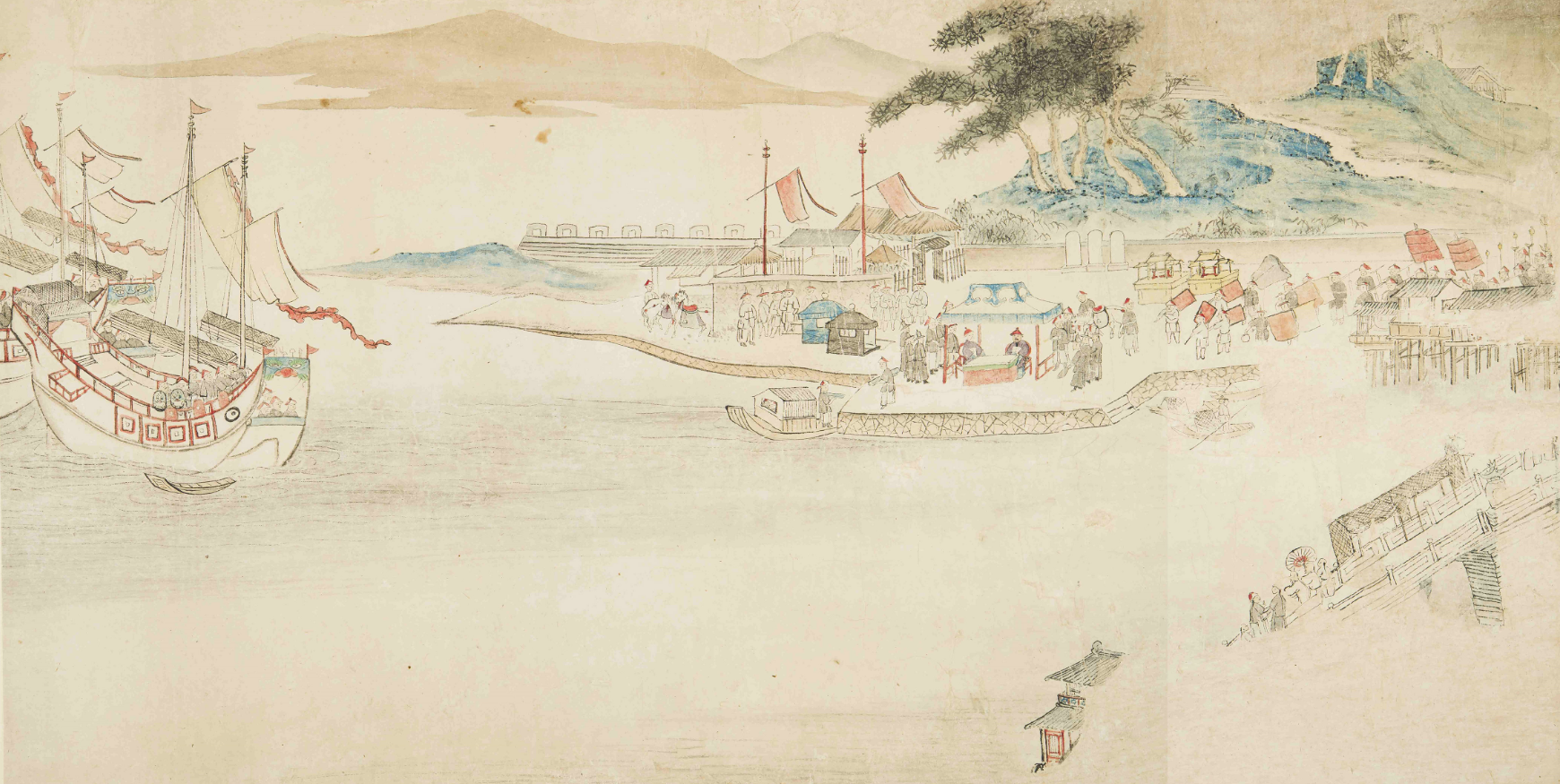
Official Map of Ryukyu Okinawa Prefectural Museum and Art Museum
But starting from about the end of the 13th century, this peripheral policy of ancient China was challenged by Japan, for two main reasons. First, both China and Japan have become maritime countries. At the end of the 13th century, it was the Yuan Dynasty. People may have the impression that China was a land country. The Yuan Dynasty mainly expanded in Eurasia, but this was not entirely the case.
After Kublai Khan ruled China, he was faced with how to deal with the political, economic and social problems in the so-called Han areas. He discovered that a key problem was that the north was unable to be self-sufficient and had to rely on supplies from the south. However, the Grand Canal was blocked at that time, so shipping was carried out through the eastern coastal areas; even the Yuan Dynasty's closest brother, the Ilkhanate, traveled from the Persian Gulf to the Indian Ocean, through the Strait of Malacca to the South China Sea, and then all the way north. Some evidence of this transportation line can also be found today. Most of China's most important port cities began to take shape during the Yuan Dynasty, such as Shanghai, Qingdao, Yantai, Tianjin, etc. It can be seen that major transformations in Chinese history occurred very early.
Second, the security of this maritime transportation line is threatened by Japan, and the most direct one is Korea. Goryeo was once a vassal state of the Yuan Dynasty, and the King of Goryeo was the son-in-law of the Yuan Dynasty. He complained to the Yuan Dynasty that Japanese pirates (the prototype of Japanese pirates) had been harassing Goryeo and affected the maritime transportation of the Yuan Dynasty. Finally, Kublai Khan launched the Yuan-Japanese War.
What is different from everyone’s impression is that in the past, the outside world basically accepted Japan’s narrative and described the Yuan Dynasty as a pure invader. In modern times, China was influenced by the Han nationalist revolutionaries and accepted this view; but in fact, the Yuan-Japanese War and the subsequent wars with Java and Cochin were all wars involving maritime transportation security. Unfortunately, the Yuan Dynasty was defeated, and it taught the Ming Dynasty a lesson.
During the Ming Dynasty, 15 "countries without conquest" were listed, that is, the Ming Dynasty gave benefits to each other in exchange for not destroying the geopolitical order around the Ming Dynasty. The so-called tribute is essentially to transfer profits to neighboring countries through unequal trade, and the one that benefits the most is Ryukyu.
Therefore, the relationship between Ryukyu and the Ming Dynasty was based on Ryukyu serving as a buffer zone between the Ming Dynasty and Japan and helping the Ming Dynasty to detect Japanese intelligence. Ryukyu acted with such loyalty, which shows that the strategy of "a country without conquest" has achieved significant results. Although the maritime areas of the Ming Dynasty were still subject to Japanese pirate attacks, they were less severe. At the same time, information related to Japan's conquest of the Korean Peninsula was first provided to the Ming Dynasty by Ryukyu. Japan held a grudge against this incident. In 1609, Japan captured the king of Ryukyu and squeezed Ryukyu, requiring Ryukyu to give half of its trade profits with China to Japan. Ryukyu felt very uncomfortable being caught in the middle. In the end, it had no choice but to maintain a vassal relationship with the Ming Dynasty and at the same time pay tribute to Satsuma Domain in private.
The relationship between Ryukyu and Japan underwent a fundamental change after two major events in 1874 and 1879: one was the Peony Society Incident in 1874, and the other was the Meiji Restoration in 1879 when the feudal lords were abolished and Ryukyu was illegally annexed by Japan.
But at that time, the Qing Dynasty did not recognize the illegal annexation of Ryukyu by Japan. There were two problems. First, Ryukyu requested help from the Qing Dynasty when it fell. However, the Qing Dynasty did not have a modern navy at the time and could not assess its own strength, so it did not send troops. Second, when Japan proposed to the Qing Dynasty to divide Ryukyu, several of the Qing Dynasty's plans required the retention of the Ryukyu royal family, but Japan ignored it and destroyed Ryukyu.
From a legal perspective, the so-called Okinawa today is part of Japan and is not recognized by any country in the world, especially not by China, which presided over the order of East Asia at that time.
Before the end of World War II, that is, during the formation of the postwar international order, an unexpected factor emerged: the Cold War. Around 1943, the beginning of the Cold War was already emerging. The United States and Britain both predicted that Germany, Italy, and Japan would inevitably be defeated, and that their biggest competitor after the war would become the Soviet Union. In order to check and balance the Soviet Union, they would win over China. Therefore, U.S. President Roosevelt proposed a plan to Chiang Kai-shek before and after the Cairo Conference to cede Ryukyu, North Korea, and Vietnam to Chiang Kai-shek in order to bribe Chiang Kai-shek; but he also knew that he had to give benefits to the Soviet Union, because the Soviet Union had already swallowed Outer Mongolia and could not spit it out. Moreover, the Soviet Union continued to attempt to occupy northern Xinjiang and establish the so-called "East Turkestan Republic", so he believed that handing over Ryukyu and other places to China could be regarded as compensation for Chiang Kai-shek.
However, Chiang Kai-shek had two considerations at the time. First, Chiang's political judgment was not as good as Mao Zedong's. Chiang did not want to be one-sided and wanted to maintain a certain relationship with the Soviet Union. In particular, he believed that the Soviet Union involved issues in China's Xinjiang, Northeast China, and the Communist Party of China. The CCP was his biggest concern. If he wanted to maintain relations with the Soviet Union after the war, he could not fully accept the conditions of the United States.
Second, Chiang Kai-shek did not have the ability to accurately grasp the historical window period. Of course, there are not many political figures in Chinese history who can do this. For example, Emperor Qianlong of the Qing Dynasty seized an important historical opportunity by defeating Zhungeer, and then there was Mao Zedong. Therefore, when Roosevelt proposed three times to hand over Ryukyu to China, Chiang Kai-shek did not dare to accept it. In addition to the Soviet Union, he also had to consider the relationship with Japan after the war. He also hoped that Japan would become a force to contain the Chinese Communist Party. In the end, he gave up the plan proposed by the United States and also gave up China's relevant rights and interests on the Ryukyu issue.
After the 1951 "San Francisco Peace Treaty" stipulated that the United States would fully administer Ryukyu, neither the mainland nor Taiwan reacted strongly. Chiang Kai-shek, who fled to Taiwan at that time, felt regretful and turned to support an organization called the "Ryukyu Revolutionary Comrades Association". The person in charge was Cai Zhang, and his Ryukyu name was Xiyou Najimasa. Chiang provided funds to the organization, and the representative office of the Taiwan authorities in Ryukyu and the office in Japan were separate and not affiliated with each other. They were legally equivalent to two parallel organizations. In addition, there was a private organization called the "China-Ryukyu Relations Association", which handled the relationship between Taiwan and Ryukyu independently.
After Chiang Kai-shek retreated to Taiwan, trade between Taiwan and Ryukyu was very close due to their close geographical relationship, exceeding the scale of the Ming and Qing Dynasties. If you go to Naha today, you will find that the relatively large local enterprises in Naha, such as manufacturing, construction, farming, and even Ryukyu cattle are imported from Taiwan. This pattern was deliberately destroyed during the Chen Shui-bian period. After Chen Shui-bian came to power, he included the representative office in Ryukyu under the representative office in Tokyo. In fact, he was doing it in accordance with the requirements of Japan. On the mainland, after the founding of the People's Republic of China in 1949, the main focus of foreign policy was to resist the influence of the United States in Asia.
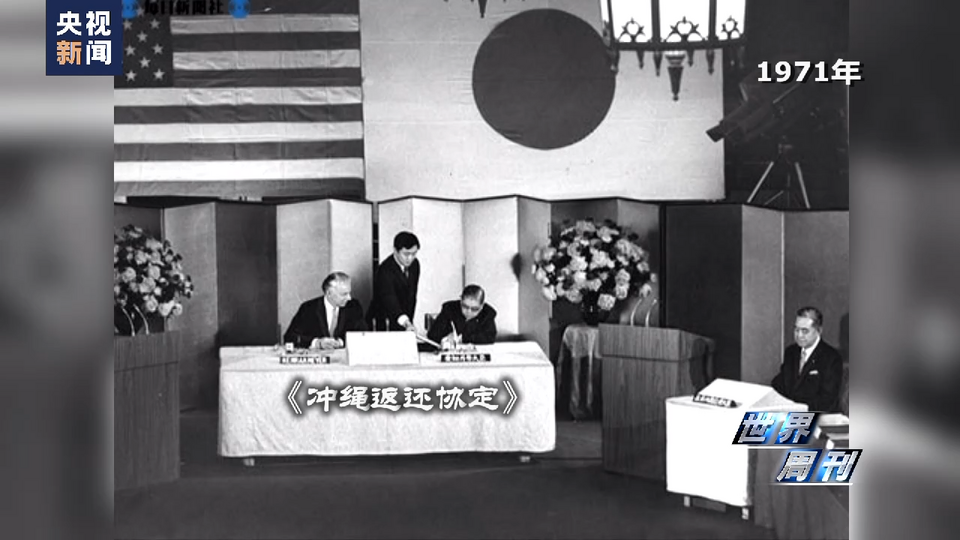
In 1971, the United States and Japan privately signed the "Okinawa Return Agreement." In May 1972, the United States transferred the "administrative power" of Okinawa to Japan, but retained the U.S. military stationed in Japan.
Against this background, in the 1960s and 1970s, the Ryukyu Return Movement emerged – returning to Japan. This was a tragedy for Ryukyu, because Ryukyu's modern nation-building was immature, and it was annexed by Japan without going through a complete nation-building process.
In fact, there are many countries in Asia whose construction process of modern nation-states was interrupted due to Japanese colonization. For example, North Korea was still a traditional country when it was annexed by Japan, but the construction of the modern North Korean country was only carried out after August 15, 1945.
Ryukyu was unable to build a modern country under the influence of Japan, and it did not develop a modern national consciousness. Therefore, the local people did not like Americans or Japanese. Their impression of the Japanese was that from 1879 to the Battle of Okinawa in 1945, the Japanese carried out genocidal actions in Ryukyu, but they had no choice; and after 1945, they felt that the pain of being colonized by the United States was greater than the pain of being colonized by Japan, so some Ryukyu people wanted to "return to Japan."
During this process, China supported the "return" struggle of the Ryukyu people due to domestic conditions and strategic considerations at the time. This was our public statement at the time. Obviously, at that time, China also considered this issue from the perspective of the wishes of the Ryukyu people. However, in the 21st century, things have gradually changed. The biggest change is that the entire Western world, led by the United States and including Japan, is deliberately hyping up the Taiwan issue in an attempt to strategically contain China and use Taiwan as a major bargaining chip.
This kind of manipulation by the United States and the West has been echoed by the forces in Taiwan. In terms of scale, from the late Chiang Ching-kuo era to the early Chen Shui-bian era, Taiwanese society's Chinese identity has undergone a fundamental change. From about 70% identifying themselves as Chinese to only 5%, this change is very scary. In other words, in daily life, 5% of Taiwanese people dare not express this attitude to others, otherwise they will be immediately ostracized by their peers, relatives and friends. Just imagine, there are only twenty or thirty close people in a family, and only one person thinks he is Chinese. How can he fit in in this family?
Due to this situation of external interference and internal support, mainland China has to reflect on one thing: How does it view the Ryukyu issue? The Ryukyu independence movement has been around since the 1940s, and it started to gain momentum at the end of 2012. But when they promoted Ryukyu independence at that time, they proposed to refer to the independence experience of the so-called "stateless nations" in the world, including the so-called "Taiwan independence" experience. This has become an issue in today's Ryukyu independence movement.
After seeing this, I thought this was a very scary phenomenon, so I wrote an article exploring the differences between Ryukyu independence and the so-called "Taiwan independence."