
Wired Headphones, Which Have Been Eliminated For Nearly 10 Years, Have Become Popular And Become A Fashionable Item Among Young People.
Jinyang.com
Jinyang.com
Entering the village quietly, no need to shoot, and taking advantage of the darkness, the Japanese Self-Defense Force deployed a long-range missile with a range of 1,000 kilometers to Kumamoto for the first time. However, the night cannot conceal Japan's ambition to expand its military and prepare for war. It is this weapon with the "capability to attack enemy bases" that completely tears off Japan's disguise! Focusing on defense and giving up the right to war are no longer obstacles in the eyes of this government. The evil spirit of militarism is howling to return to the world.
This Type 25 surface-to-ship missile is a "quasi-cruise missile" covering East Asia. Launched from the Kenjun garrison in Kumamoto Prefecture, within 1,000 kilometers, there are the entire Korean Peninsula, parts of the Russian Far East, the core area along the eastern coast of China, and the surrounding areas of northern Taiwan. Another Type 25 high-speed glide bomb deployed in Shizuoka has also started the development of an upgraded model, with a target range of 2,000 kilometers. In line with Japan's ongoing research and development of sea-based, air-based, and submarine-launched models, as well as the Ministry of Defense's public deployment plan, military experts have judged that its goal is to build an integrated land, sea, and air long-range strike system nationwide. Faced with doubts from international public opinion, the Japanese government’s so-called “to enhance deterrence” explanation is feeble. Such a range and plans for continued research and development have long exceeded the red line of “self-defense.”
From the "Taiwan incident" to the self-defense team members carrying knives and breaking into the museum, to the long-range missiles deployed in the dark night - from the wild dreams of careerists to the madness of a government, behind all the signs is the pressing step by step of "new militarism". Tokyo politicians represented by Takaichi misled the public with the "China threat theory" while covering their ears, pretending not to hear the protests of the domestic people and the doubts of the international community. Unfortunately, times have changed. Today's China is not the China of 1931, and today's Asia is no longer the Asia of those years. If right-wing politicians insist on running on the dangerous road, what will eventually explode will be the thunder hanging above their heads.
How to write a letter essay format
Letters are a type of practical writing. Letters are also a tool for ancient communication. So how to write a letter essay format? Below is the relevant content compiled by the editor, I hope it will be helpful to you.
Letter essay format:
Generally, a letter can be divided into five parts: title, body, conclusion, signature, and date. Each part has a certain format.
(1) Title.
Depending on your relationship with the recipient, you can address them as you normally would in the letter. For example, if you are writing a letter to your father, you should write "Dad"; if you are writing a letter to a teacher or classmate, you should write "*teacher" or "**classmate". The title should be written from the top of the first line. A colon (:) should be added after the title to indicate that there is something to say below.
(2) Text.
This is the main part of the letter. Everything the writer wants to say is written here. Leave two spaces blank at the beginning of the text, and usually write greetings first. If you are replying to a letter, you must first indicate receipt of the letter and respond to the questions or matters requested in the letter. If you have a lot to write about, you can write it in paragraphs, one paragraph for each thing. There are two empty spaces at the beginning of each paragraph, and the top space is at the end of each paragraph.
(3) Ending.
At the end, you can write a blessing, encouragement or respect based on the relationship between the writer and the recipient and the specific situation. Such as "Best regards", "Wish you good health" and so on. Wishes are usually written in two lines. Take "Best regards" as an example. "Best regards" can be written immediately after the main text, or it can be written on a new line with two blank spaces. "Salute" must be written on a separate line at the top.
(4) Signature.
Write your own name in the second half of the line after the end. You can also write the corresponding title of the other person in front of your signature, such as "son", "brother", "student", etc.
(5) Date.
It can be written after the signature, or in the second half of the line next to the signature. Finally, please write down the year, month and day for easy reference. In addition, if you have finished writing the letter and find that there are omissions in the content, or the description of something is not comprehensive enough, you can still write it at the end of the letter. However, when writing supplementary words, you should add "also", "in addition", "again" in front of it; or add "and" and other words after it. Once the letter is written, it needs an envelope to be sent. Today's standard envelope is written horizontally. Write the zip code and recipient's address on the top of the envelope; write the recipient's name in the middle; and write the sender's address, surname and zip code on the bottom.
Letter essay example: A letter to my mother
Dear mother:
Hello!
You nourish my heart like the spring breeze and rain, you warm my heart like the sunshine, and you care about my heart like a loving mother... Party, my mother, under your nourishment and love, I grew up from a babbling baby to an adult. , grew up from a young sapling into a strong tree - my beloved mother, for your greatness, your selflessness, your warmth, I am willing to protect you from wind and rain all my life, and I am willing to devote all my youth to you in return for your cultivation over the years!
The street lights in the distance came on one after another, and the whole county was brilliant. Standing on the balcony, I couldn't help but think of the countryside where I had lived for more than ten years. The living conditions there were very poor. The houses we lived in were only about 40 square meters. The walls were also made of low-quality lime, and they were covered in white when touched. The ground is a very hard cement floor, and the windows are made of wooden frames and glass. Every time the wind blows, the windows sway, like a drunk walking on the street, and they may fall at any time. Therefore, every time the wind blows, I look upstairs nervously and from a distance, for fear that the glass will fall. There, the power supply and lighting conditions are very poor, and there will be a power outage every now and then. Every time there is a power outage, the whole village is shrouded in darkness. Most of the people there are ordinary electric lamps, and very few people are lighting energy-saving lamps. Every time I look at the opposite village at night, there is always a hazy feeling, a slightly orange smell. I always try my best to think of it as a candlelight dinner, but reality tells me that it is only equipped with the faint light of white orange lamps. The water supply conditions there are also very poor. My father said that our family does not use much water there every month, but the water bill is tens or even hundreds of dollars. Either there is a leak here or the water pipe bursts there. Every month, my father and other uncles who live together pick up tools to check and repair the water pipes along the way. The traffic there is somewhat congested, and you can only go to the so-called "county town" once a week, usually to buy some vegetables for the week. There is no refrigerator there, and the best way to store things is to put things on a clean cloth, wrap a rainproof cloth around the cloth, and put it outside the window. This is a natural refrigerator. But sometimes the weather is too hot and the "refrigerator" cannot store it, so those things have to be thrown away after they go bad.
Now, our family has moved down together, and our living conditions are much better than before. For example, the biggest improvement is the decoration of the home, with clean white walls. Knowledge will not be like before, where you will be covered in white when you touch it. The windows no longer shake and are stable even in strong winds. Here, the lighting lights are all "OPPLE", which are very bright. Not only that, there are also lights of different colors, which are very beautiful. Here, you no longer have to worry about power outages. Even if there is a power outage, it is because of maintenance or something. Moreover, there will be a notification every time there is a power outage. Each time it is not too long, the power will usually be restored before eating, and it will not be like the previous power outage that lasted for several days. Domestic water is provided by the water company, so there is no need to worry about water pipe leaks or other problems. Therefore, Dad does not need to repair the water pipes intermittently every month. There is a supermarket next to my home, which has all kinds of daily necessities. You can go to the supermarket to buy it at any time. There are bus stops and taxi stops right outside the supermarket. It is very convenient to travel. You can take any car you want. Now there are two things added to the house that were not available there - a computer and a refrigerator. As a product of the third technological revolution, computers have been of great help to my studies. At the same time, they have also given me some appropriate happiness.
How did these improvements occur? After thinking about it, I finally thought it was you, my dear mother. It is you who have allowed the Chinese nation to rejuvenate; it is you who have enabled the Chinese people to straighten their backs; it is you who have made China gradually prosperous and strong; it is you who have improved the living conditions of ordinary people.
ah! Dear Motherland, it is you who have improved our living conditions! Thank you from the bottom of my heart!
Sincerely
salute!
xxx
a letter to my sister
Dear sister:
Let me tell you some good news. I ranked second in the class in this midterm exam. How about I made progress? I'm really proud of myself. Did you know? A happy thing happened to me recently. A few days ago, a few friends and I went to a bookstore to read. When we came out of the bookstore and were about to cross the road, suddenly, a primary school student ran past me quickly and rushed to the other side of the road. Because he ran too fast for a moment, the books in his hands fell out, and he was almost hit by a car. We saw it and immediately ran over to help her pick up the books, but the primary school student kept standing there, as if waiting anxiously for us to pick up his books, and the passing cars seemed to be waiting for us too. After we picked up the book, we quickly ran to him and helped him find a strong bag and put the book in it. At this time, the little boy's expression changed from anxious to happy. Finally, when the primary school student was about to take the bus, he said to us: "Thank you, big sister, thank you so much." After saying that, he took the bus and left. When I heard "Thank you", I felt very happy and proud, because I helped a little boy. I think my sister would be proud if she encountered this!
oh! By the way, sister, how are you doing lately? How's your study going? When the summer vacation comes, you can come and stay at my house! When you come to my house, we can play all day long: we climb mountains together, go to the park together, and go shopping together. Otherwise, I'll go to your house: we'll play games together, read books together, and play shuttlecock together. By then, we will be worry-free. By the way, sister, you must also say hello to your relatives there on my behalf. Okay, sister, let me write here. Remember to reply to me!
Wish you:
Study progress and achieve academic success!
Your sister: He xxx
May 27, xxx
a letter to the teacher
Dear teacher:
Hello!
Time flies, and in the blink of an eye we have entered the fifth grade. In this fruitful golden autumn season, we are embracing the intoxicating fragrance of flowers and ushering in the 21st Teachers' Day.
When we who were ignorant walked into the door of the experimental primary school, we saw your kind face. It was you who taught us how to add, subtract, multiply and divide. It was also you who led us into the door of knowledge, handed us the golden key of the treasure house of knowledge, and let us work hard, discover, and explore; maybe at some point, our childish words may have hurt you, but you still treat us as your naughty children.
Without sunshine, there would be no flowers, and without teachers, there would be no poets, writers, writers, nor the world-famous Goldbach's conjecture!
How many times have we seen you carefully correcting your homework, and you are staring at it carefully, line by line, page by page. You won’t leave until you finish reading. Because you know those are the wings and steps for kids. When we see you at this time, we want to hand you a cup of cool tea and say: Teacher, you have worked hard! Some people say that teachers are gardeners, nurturing talents from generation to generation. I think this is true, you are the gardener, we are the seedlings in spring, your sweat beads are on the strong green leaves, and your smile is on the bright flowers! No matter how busy or tired you are, you always appear in front of us full of energy and teach us knowledge. How much effort you have put into our growth and how many good nights you have sacrificed. The wrinkles on your forehead are engraved with countless traces of kindness; the white hair on your temples records years of hard work. Just as we will never forget our parents who raised us, we will never forget you, our enlightenment teacher.
As we write this, we want to say something to you, teacher, you are the eternal angel in our hearts!
I wish you a happy holiday, good health, forever young, and may you be filled with peaches and plums all over the world!
Sincerely
salute!
xxx
Why can China build the world's largest high-speed rail network and the world's leading 5G communication system? Why was China able to stabilize its position during the 1997 Asian financial crisis and the 2008 global financial crisis and avoid systemic economic crises? Why can Chinese companies go overseas smoothly and the “One Belt, One Road” initiative take root around the world? In "This Is China" broadcast on March 30, the host He Jie, Professor Zhang Weiwei, Dean of the China Institute at Fudan University, and Zhang Keliang, a researcher at the Central University of Finance and Economics, had an in-depth conversation, revealing the underlying financial logic behind China's economic boom that many people have ignored.
The year 1993 was a critical watershed for China's financial system to break the traditional pattern and embark on a modern transformation. Zhang Keliang said that before this, China's financial system in the era of planned economy had always been a "unified" structure of the People's Bank of China. One institution took over all functions of central bank management and commercial banking business. It was difficult to adapt to the wave of market economic development and to undertake the long-term funding needs of China's economic boom.
Zhang Keliang emphasized that it was this landmark reform that completely reconstructed China’s financial framework. On the one hand, three major policy banks, the China Development Bank, the Export-Import Bank of China, and the Agricultural Development Bank of China, have been specifically established to accurately undertake policy financial functions at the national strategic level; on the other hand, the policy businesses of the four state-owned banks of China Industrial and Peasant Construction Bank have been completely divested to promote their commercialization and market-oriented transformation, allowing the market to play a core role in capital allocation. This has established a dual-track parallel system in which "policy finance underpins the national strategy and commercial finance activates market vitality". China's finance has officially entered a new development stage of market-oriented allocation.
This financial system, which is rooted in China's national conditions and has been tested for thirty years, has become the core engine of China's economic growth, releasing development momentum that far exceeds expectations. Zhang Keliang said, first, it has laid a solid foundation for China’s infrastructure as a great power. As we all know, major infrastructure projects such as high-speed rail, highways, deep-water ports, and 5G communications have the characteristics of large investment scale, long construction period, and slow return of capital. They cannot be covered by short-term profit-seeking market capital alone. Our financial system, through syndicated loans and other models, has provided stable support for the huge capital demand of more than 200 billion for the Beijing-Shanghai high-speed railway, turning world-class infrastructure projects from blueprints into reality. These infrastructure networks extending in all directions have ultimately become the basis for cost reduction and efficiency improvement across the entire industry, allowing all Chinese companies to share development dividends.
Second, it protects Chinese enterprises’ globalization overseas. Zhang Keliang said that after joining the WTO, Chinese enterprises have continued to accelerate their pace towards the world, from the acquisition of high-quality overseas mineral resources and the acquisition of internationally renowned brands to the construction of infrastructure for countries in Asia, Africa and Latin America under the "One Belt, One Road" initiative. Many projects are located in areas that lack sufficient financial support. It is the special loans from policy financial institutions such as the Export-Import Bank of China that not only solve the problem of infrastructure financing for countries along the route, but also allow China's high-quality production capacity and high-end machinery and equipment to go abroad smoothly, achieving mutually beneficial and win-win two-way development.
Third, it opens up the capital bloodline for China’s scientific and technological innovation. In Zhang Keriang's view, from the continuous improvement of multi-level capital markets to the launch of the Science and Technology Innovation Board specifically designed for hard technology companies, China's capital market has provided long-term and stable financial support for technology innovation companies, allowing companies to get rid of the constraints of short-term profits and be able to invest in long-cycle, high-risk core technology research and development with confidence, laying a solid capital base for China's technological breakthroughs.
Fourth, it has the strong ability to smooth out economic cycle fluctuations and resist systemic risks. Zhang Keliang emphasized that the Western capitalist world has always been unable to escape cyclical economic and financial crises. With this financial system, China has used precise countercyclical adjustments during the two major impacts of the 1997 Asian Financial Crisis and the 2008 Global Financial Crisis. For example, the 4 trillion credit support launched in 2008 has successfully stabilized the basic economic fundamentals, minimized the impact of external crises, and maintained the bottom line of China's economic development.
Professor Zhang Weiwei’s additional comments clearly revealed the core value of China’s financial system. He said that we often say that the greatest advantage of China's system is to "concentrate efforts to accomplish big things", and the underlying logic of this ability is, first of all, the financial system's ability to coordinate and centrally allocate funds. We have never denied that China's financial system still needs room for continuous improvement and optimization. However, its most remarkable achievement is to fundamentally build an institutional system that can systematically avoid financial crises and prevent systemic economic crises. This is something that many Western countries have never been able to achieve.
Professor Zhang Weiwei said bluntly based on his personal experience in Europe during the 2008 financial crisis that even Switzerland, which was known for its financial stability at that time, was almost on the verge of bankruptcy because of its addiction to Western derivative financial games, not to mention countless economies that fell into national bankruptcy and economic collapse. On the other side of the ocean, in the United States, a quarter of the family wealth of ordinary people directly evaporated, and countless people lost their homes and jobs. Therefore, Professor Zhang Weiwei pointed out that the comparison between the two can better highlight the unique value of China's financial system in serving the real economy and anchoring the country's long-term development, and can better understand the strong resilience and vitality of the socialist system with Chinese characteristics behind this system.
Font size:
NO.2 Zhao Benshan
In early November, Cui Yongyuan started a scolding war with Tsinghua professor Xiao Ying for supporting Zhao Benshan, which attracted attention from the outside world. This time, because of the artistic value and artistry issues of "Uncle Motoyama", several cultural elites and entertainment industry bosses expressed different opinions, and even started a scolding war. With so many turmoil surrounding "Uncle Motoyama": immigration turmoil, vulgar controversy, etc., people can't help but ask why "Uncle Motoyama" has become so popular again?
First, Xiao Ying blasted Cui Yongyuan's low IQ on Weibo on the 11th: "Xiao Cui, you are so disabled today that you can't prove the vital signs of your brain tissue without spreading rumors. You don't understand genetic modification, you don't understand two-person transformation, and you can't do anything that requires high IQ!"
Faced with Xiao Ying's remarks, Cui Yongyuan retweeted the post on Weibo on the 12th with a postscript: "Xiao Ying of Tsinghua University, can you please stop talking about IQ? You just embarrass yourself and also embarrass Tsinghua University. I'm curious: Do any students listen to your talk about Xiao Ying's aesthetics? When did your students discover that you are mentally retarded?" A war of words over Zhao Benshan is about to break out.
In fact, no matter what others think of it and the scolding wars caused by it, "Uncle Benshan" is no longer an ordinary duo actor. This is an indisputable fact. Look at today's "Uncle Benshan", who lives in a luxurious house, rides in super luxury cars, and flies in private jets to show off his wealth like Guo Meimei. Although he is called an "artist", can he possess the essence of an artist with "both virtue and art"? I'm afraid that the above-mentioned performances have their own evaluation in people's eyes.
Guangdong's bank card industry is relatively developed. According to data, Guangdong's bank card consumption currently accounts for 67.56% of the province's retail sales of social goods. Bank card crimes have also increased significantly, especially the high incidence of counterfeit card crimes, with hidden methods and large amounts of money involved, causing large economic losses to cardholders.
Not long ago, after 10 months of close cooperation, the police of Shenzhen, Hong Kong and Macao, under the direct command of the Ministry of Public Security and the Provincial Public Security Department, destroyed a large cross-border credit card fraud criminal gang in one fell swoop, arresting 19 gang members and confiscating more than 10,000 counterfeit credit cards of various types. It is currently estimated that the amount involved in the case is tens of millions of yuan. This is the largest credit card fraud criminal gang in history with the largest scale, the highest amount, and the most extensive cross-border crimes that the Shenzhen police participated in destroying. The gang members are mainly Malaysian and Hong Kong nationals. They all use fake names. They are well-organized and have a fine division of labor. By stealing bank card information from people in Europe and the United States, they create counterfeit cards in Shenzhen and spend money in Hong Kong.
Important case fax
The police investigation in three places lasted 10 months.
In June 2012, Hong Kong police caught two Malaysian men using fake credit cards in Hong Kong and found that they traveled between Shenzhen and Hong Kong many times. Thanks to the mature intelligence cooperation mechanism between the Shenzhen and Hong Kong police, the Shenzhen police learned of the news immediately. After careful investigation and analysis, they discovered that behind it was a cross-border credit card fraud criminal gang involving the United States, Europe, Malaysia, Hong Kong and other countries and regions.
In January 2013, based on the preliminary investigation, the Shenzhen police, the Hong Kong Police Force, and the Macau Judicial Police formally established a joint task force. After long-term research and tracking, the police of the task force captured Zheng Moumou, a member of the gang, in Hong Kong in November 2012, and seized more than 8,000 fake credit cards from his residence. After nearly 10 months of investigation, the Shenzhen police finally identified the den where counterfeit cards were produced and mastered all the activities of the criminal gang leader.
On June 3 this year, the police from Shenzhen, Hong Kong and Macau joined forces to destroy the gang in one fell swoop, capturing 14 suspects in Shenzhen, 3 suspects in Hong Kong, and 2 suspects in Macau. A large number of counterfeit credit cards seized by the police were modeled on internationally accepted credit cards such as VISA, MasterCard, American Express, Diners Club, etc. The imitations were so high that they almost looked like the real ones. A total of more than 10,000 counterfeit credit cards of various types were seized before and after this case, and it is currently estimated that the amount involved in the case is tens of millions of yuan.
The criminal members only use code names among themselves
This is a huge credit card fraud criminal gang with foreigners as the main criminals, operating in Shenzhen, Hong Kong and Macao. Among the 19 main suspects, 8 are Malaysian, 6 are Hong Kong, and 5 are Mainland, all have been arrested. There are many levels among gang members, forming a huge criminal network and interest chain. A Hong Kong woman, Lin Moumou, and a Hong Kong man, Guan Moumou, gave orders and commanded in Hong Kong; the Malaysian man "Shaoyu", the Hong Kong man Wang Moumou, and the mainland man Zhu Moumou were responsible for making fake cards in Shenzhen; the Hong Kong woman Bo Mou and the Hong Kong man You Mou communicated Between Shenzhen and Hong Kong, he was responsible for bringing many Malaysians living in Shenzhen to Hong Kong to commit fraud. At the same time, You was also responsible for handing over the proceeds from the fraud to Zheng, a Hong Kong man, to sell the stolen goods. After Zheng collected the stolen goods in Hong Kong, he took some of the stolen goods to Shenzhen and sold them to convenience stores for cash.
The gang controllers Lin Moumou and Guan Moumou separated the various links of credit card skimming: placing the stealing of bank card information in countries and regions such as the United States, Europe, and Arabia, placing the making of counterfeit cards in Shenzhen, and placing the theft of credit cards in Hong Kong and Macau, and all the key elements involved were foreigners, making it easier to avoid the risk of being caught. At the same time, in order to avoid the consequences of "catching one person and the whole gang", the criminal gang requires members to only use code names and nicknames with each other, and no two-way contact, only one-way contact, and they also have "three cunning rabbit holes" and constantly change their places of stay.
Foreigners make up their own code words to communicate
Although the Malaysian man nicknamed "Shaoyu" lives in Luohu with his girlfriend, he goes alone to a secluded rental house in Longgang Buji every day to make fake cards and travels between Luohu and Buji. After the card production was completed, "Shaoyu" took the counterfeit card to a high-end hotel in Luohu and placed it in a hidden place such as a water tank in the bathroom. Then he contacted Mr. D in Malaysia, who assigned a "rider" (i.e., a thief) who was completely unknown to "Shaoyu" to pick up the card at the designated location. During this process, the "roasted fish" and the "rider" do not meet, talk, or contact each other.
In order not to arouse suspicion, "drivers" will use various means to evade police investigation: on the one hand, they avoid surveillance videos of large shopping malls and choose small supermarkets to swipe their cards. The amount of one swipe will not exceed 10,000 yuan; on the other hand, they do not swipe their cards more than twice in one place and change places immediately after swiping their cards.
In addition, when Lin and Guan were looking for a suitable informant and card maker, they deliberately selected a Malaysian person as the card user, and only told them to swipe the card "according to regulations". At the same time, they placed the source of the card information in Malaysia, and the informant was also a Malaysian. They "smartly" believed that since foreigners were the main perpetrators of the crime, and the content of the exchanges were all their own code words, they should not attract the attention of the police. However, the police cleverly "attacked them unprepared" and seized on the characteristic of language to identify gang members, and made significant progress.
Buy gold jewelry and cash out the stolen goods
According to the Shenzhen police who investigated the case, the crime of counterfeiting cards is a crime committed by a professional gang. The criminals have a clear division of labor and have outstanding characteristics of intelligence and cross-regional movement. The main crime mode is skimming → card production → theft → disposal of stolen goods. First of all, criminals responsible for skimming (that is, stealing cardholders' bank card information and passwords) will go to restaurants, hotels, karaoke bars and other places to apply for waiters. When the guests are paying the bill, they will take advantage of the guests' carelessness and use a micro-skimming device the size of a cigarette box to copy the magnetic stripe information of the cardholder's bank card and spy on the guest entering the password of the bank card.
Then, the stolen bank card magnetic stripe information and password are sent to the card-making criminals, and special software tools are used to burn the skimmed bank card information onto another bank card or a blank card. The card-making process is like copying a CD. Then the criminals use the forged bank cards to make cash withdrawals and go shopping in other places. When committing fraud, they usually choose items that are more expensive, easy to carry, and easy to sell, such as gold jewelry and other valuable items. Finally, the criminals sell the stolen valuables at low prices and obtain cash to divide the loot. Throughout the entire criminal process, there is a clear division of labor among personnel, and the divisions and cooperation are interlocking, showing the characteristics of family-style, family-friend-style, group-style, and cross-regional crimes.
Take the credit card fraud gang busted by the police in Shenzhen, Hong Kong and Macao as an example. It includes three levels of gang members: providers of credit card information; producers of cards created by trading information organizations; and fraudsters who collect stolen goods from counterfeit cards. Among these three levels, almost all are overseas personnel (mainly Malaysians and Hong Kong residents). The bank card information obtained by this gang came from hackers intruding into overseas bank computer systems. The thefts occurred in Hong Kong and Macau, and the counterfeit card production point was in Shenzhen. This cross-border crime model brings great difficulties to investigation and evidence collection.
The investigator said
Li Yanping, deputy captain of the First Team of the Economic Investigation Detachment of the Shenzhen Municipal Public Security Bureau:
Counterfeit card crime mainly
Cash out via POS machine
Reasons for the high incidence of counterfeit card crimes include: low technology and poor security of magnetic stripe cards; lack of regulatory measures; in addition, there are loopholes in the issuance and use of POS machines. Since teller machines are not allowed to withdraw more than 20,000 yuan per day, counterfeit card crimes mainly use POS machines to cash out. Now some criminals set up fake merchants to defraud POS machines to commit crimes.
Counterfeit card crime is a professional crime. The prevention and control of counterfeit card crime cannot rely on the public security organs alone. It requires the leadership of relevant government regulatory departments, the linkage of other government departments, and the close cooperation of various commercial banks to establish and improve relevant long-term mechanisms. Only by "focusing on combat, combining prevention with prevention, and comprehensive management" can we curb the high incidence of counterfeit card crime. At the same time, the technological upgrade of chip cards in Guangdong should be accelerated and supervision of POS machines should be strengthened.
Police reminder
Keep the card out of sight when swiping it for consumption
In response to this criminal method, the police reminded the general public that cardholders should protect their bank card information and passwords, and keep their cards out of sight when swiping their cards for daily purchases, so as not to give criminals the opportunity to skim information. When entering the password, be careful to cover it with your hands to prevent others from prying and to prevent the leakage of personal identity information. When conducting fund operations online, you must log in to a regular bank website and do not accidentally enter a phishing website where bank card information and passwords may be stolen, resulting in property losses. When applying for a bank card, you must leave your valid mobile phone number, so that you will receive a text message every time you make a purchase. Once you find that you did not make the purchase by yourself, call the bank immediately to report the loss and suspend the transaction. At the same time, quickly go to a nearby bank teller machine to inquire or withdraw small amounts of cash, and keep the receipt (this is important evidence that the card has been stolen by others with counterfeit cards).
A 90-year-old veteran who fought bloody battles to resist U.S. aggression and aid Korea, and was honored with military exploits, suffered from eye diseases in his later years and was nearly blind. Fortunately, under the careful treatment of the ophthalmology medical staff of the Second Affiliated Hospital of the Naval Medical University (Shanghai Changzheng Hospital), the veteran successfully regained his sight. Recently, the veteran came to the hospital again for a review to express his deep gratitude to the people's military doctors.
Gao Yu, an ophthalmologist at the Second Affiliated Hospital of the Naval Medical University, said: "Veterans of the Volunteer Army are the heroes of our country and have contributed so much to our happy life today. This treatment is not only an operation for us, but also a way to protect a heavy national memory."
With superb medical technology and meticulous teamwork, the operation was successfully completed. From admission assessment, intraoperative operation to postoperative care, the medical staff provided professional protection and warm companionship throughout the entire process, taking care of this combat hero like a relative. On the second day after the operation, when the medical staff slowly removed the gauze, the long-lost light once again came into the eyes of the veteran.
Gu Shuangxue, a veteran of the War to Resist U.S. Aggression and Aid Korea, said: "The hospitals in our country are very good, especially those of me who have served in the military. Returning to the military hospital to see a doctor is as friendly as returning to your parents' home. In addition, their service attitude is so good and so many people surround me. My eyes are much better than before, and I can still see when they are bright."
The veterans who have regained their sight often tell the medical staff about the turbulent years on the battlefield and the thrilling battle scenes, giving the young medical staff a vivid party and military history lesson that spans more than seventy years. When he was discharged from the hospital, the veteran wrote a handwritten letter of thanks to express his gratitude to the medical staff and his deep trust in the people's military doctors.
 China Corporate Social Responsibility Summit Forum Was Held, Moutai Shared Social Responsibility Practices2026-04-02Comments(0)
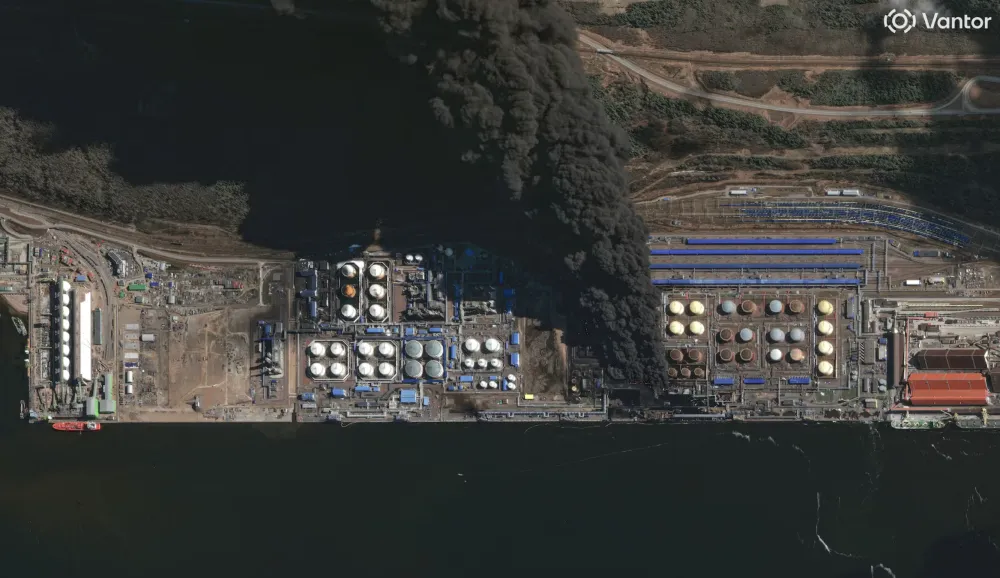 The Reason Behind Russia’s Ban On Gasoline Sales Starting In April Was That The Refinery Was Hit2026-04-07Comments(0)
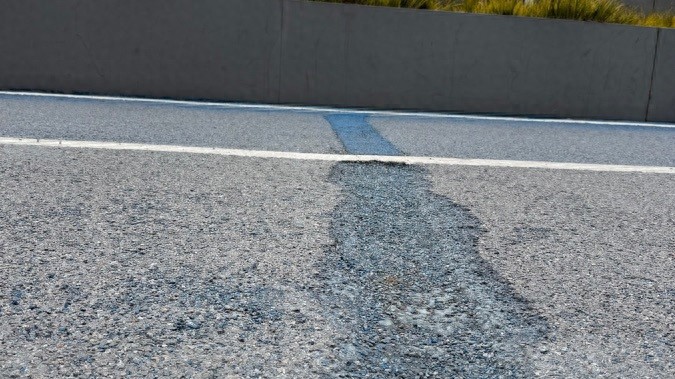 The Damaged Waterfront Greenway In Miaoxing Town, Baoshan District Is In Urgent Need Of Repair, Affecting Residents’ Leisure And Fitness2026-03-16Comments(0)