
The Development Of Private Banks Accelerates: WeBank Takes The Lead, And Xishang Bank Is Approved For Establishment
The 19th private bank was approved to establish this time a bank targeting the Internet of Things - Banking Channel - Hexun.com
The 19th private bank was approved to establish this time a bank targeting the Internet of Things - Banking Channel - Hexun.com
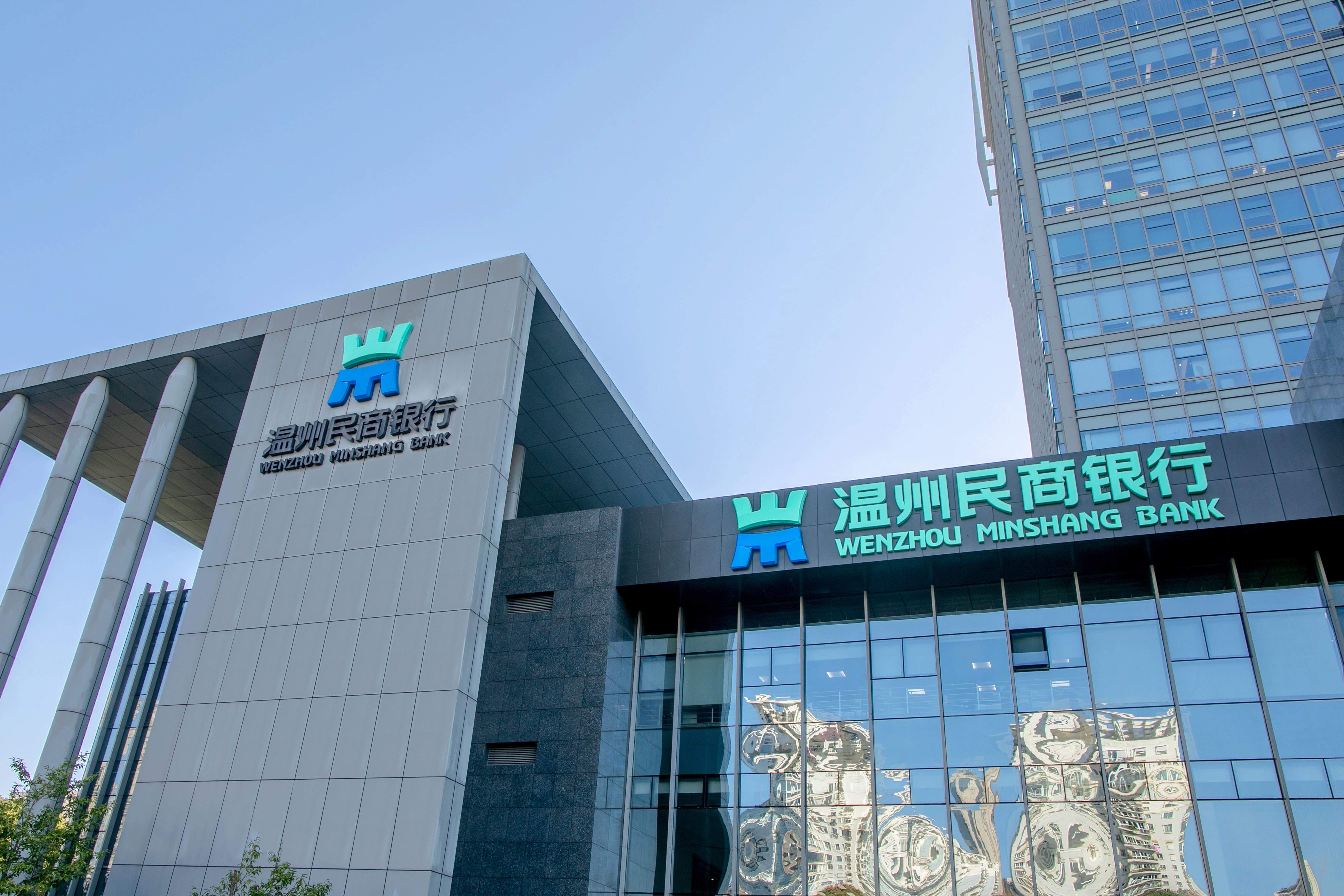
As one of the first batch of private banks in the country, Wenzhou Commercial Bank ushered in a historic breakthrough on the tenth anniversary of its establishment - the asset size exceeded 50 billion yuan, private economic loans accounted for 73.7%, and a total of more than 130 billion yuan of credit funds have been invested in ten years.
Since the fourth quarter of last year, regulatory authorities have continued to regulate the behavior of commercial banks in absorbing deposits through Internet third-party platforms and off-site. For small and medium-sized banks, especially non-Internet private banks, if they want to continue to achieve rapid growth in deposits, they must strengthen the construction of self-operated platforms.
A reporter from the 21st Century Business Herald combed through the data of 17 private banks that have released financial reports (one has not released, and one has been in business for a short time) and found that the growth of bank deposits in 2020 has shown great differentiation: first, the growth rate of deposits of 17 banks has diverged; second, the gap between banks that opened in the same batch is widening; third, the gap between Internet-type banks and non-Internet-type banks is also widening.
On January 15 this year, the Central Bank and the China Banking and Insurance Regulatory Commission officially jointly issued the "Notice on Matters Related to Regulating the Personal Deposit Business of Commercial Banks through the Internet", which regulates the personal deposit business of commercial banks through the Internet and requires local corporate banks to serve customers in the areas where they have established institutions. In 2021, the deposit gap between private banks is expected to further widen.
Two negative growth
In terms of deposit balance, as of the end of 2020, WeBank ranked first with a deposit balance of 262.829 billion yuan; MYBank ranked second with 164.689 billion yuan, nearly 100 billion yuan less than WeBank; Suning Bank ranked third with 57.294 billion yuan; followed by 8 banks with balances of more than 20 billion yuan.
Comparing the deposit growth rates of 17 private banks in 2020, it was found that Xinwang Bank and Jincheng Bank's deposit growth rates were negative, -20.56% and -17.36% respectively; 5 banks' deposit growth exceeded 100% , respectively, MYBank, Zhongguancun (000931, Stock Bar) Bank, Huatong Bank, Xin'an Bank, and Yumin Bank; Zhongbang Bank and China Commercial Bank's deposit growth exceeded 50%, and the remaining eight grew below 50%.
For Xinwang Bank and Jincheng Bank, the deposit growth rate of the two banks has been a "roller coaster" in the past two years: in 2019, Xinwang Bank's deposit growth rate was 95.95%, and Jincheng Bank's deposit growth rate was also as high as 92.12%.
Xinwang Bank stated in its 2020 financial report that it expects the policy trend of strong financial supervision to continue in 2021, and that the bank's Internet deposit and Internet loan businesses are generally relatively standardized; Jincheng Bank stated that the bank actively consolidates the development foundation of deposit business, enriches funding source channels, and provides guarantee for asset business and liquidity risk management.
The deposit growth rates of Fumin Bank and Sanxiang Bank were 1.25% and 0.69% respectively. Although they achieved growth, the growth rate was far lower than that of other banks with deposit growth. As far as Sanxiang Bank is concerned, the bank's personal deposits and corporate deposits grew at 18.17% and 5.41% respectively in 2020, but interbank deposits fell by 59.43%. As of the end of 2020, the bank's interbank deposit balance was 2.557 billion yuan, accounting for 5.87% of all deposits. At the same time, the bank reduced the balance of structural deposits to 0 yuan. The bank said the structural adjustment had achieved remarkable results.
Among the five banks with a growth rate of more than 100%, MYbank, Zhongguancun Bank, Huatong Bank, and Xin'an Bank also saw rapid growth in deposits in 2019. Among them, Zhongguancun Bank, Huatong Bank, and Xin'an Bank have been open for a relatively short time; while Yumin Bank opened in September 2019, and last year was its first full fiscal year.
Three kinds of differentiation
In addition to the differences in the deposit growth rates of the 17 private banks mentioned above, there are two other differences: first, the gap between banks that opened in the same batch is widening; second, the gap between Internet banks and non-Internet banks is also widening.
Take the first five banks that opened for business as an example: the deposit balances of WeBank and MYBank were 262.829 billion yuan and 164.689 billion respectively, while the deposit balances of Huarui Bank, Jincheng Bank, and China Commercial Bank were 27.435 billion yuan, 19.486 billion yuan, and 13.746 billion yuan respectively. The gap between the highest and the lowest was close to 20 times, and the deposit growth rates of WeBank and MYbank still maintained rapid growth.
Among the second batch of private banks that opened, Suning Bank, Zhongbang Bank, Sanxiang Bank, Yilian Bank, Fumin Bank, and Blue Ocean Bank have surpassed Huarui Bank, Jincheng Bank, and China Commercial Bank that opened in the first batch.
At the same time, among the second batch of private banks that opened, Suning Bank, Zhongbang Bank, and Yilian Bank also surpassed Fumin Bank and Xinwang Bank, which opened relatively early.
For Internet-type banks, the gap between WeBank, MYBank, XinwangBank and Yilian Bank is also widening. WeBank’s deposit scale is nearly 100 billion yuan higher than that of MYBank; Xinwang Bank’s deposits are nearly 10 billion yuan higher than that of Yilian Bank, which opened later.
3 companies’ deposits account for less than 60% of liabilities
Judging from the ratio of deposits to liabilities, most of the 17 banks are between 70% and 90%, with Jincheng Bank the highest at 88.08%; however, there are also three banks with less than 60%, namely MYBank, Fumin Bank, and Xinwang Bank, all of which are Internet-type banks.
According to regulatory requirements, the interbank liabilities of commercial banks cannot exceed 1/3. What is the interbank liabilities of the above three banks?
MYbank's financial report shows that as of the end of 2020, its deposits and deposits from peers and other financial institutions were 101.117 billion yuan, accounting for 34.02% of total liabilities. At the same time, its balance of borrowed funds was 4.605 billion yuan, and the total proportion exceeded 1/3.
Fumin Bank's financial report shows that as of the end of 2020, deposits and deposits from its peers and other financial institutions, funds borrowed from banks, and financial assets sold and repurchased totaled 9.474 billion yuan, accounting for 19.08% of the liability ratio, less than 1/3.
Xinwang Bank disclosed that as of the end of 2020, its interbank liabilities were 12.503 billion yuan. Calculation shows that its interbank liabilities accounted for more than 1/3, at 35.17%.
The loan-to-deposit ratio of three companies is higher than 100%
From the perspective of deposit ratio, 3 of the 17 banks are higher than 100%, namely Yilian Bank, Fumin Bank, and Xinwang Bank. They are also Internet-type banks. Among them, Xinwang Bank is as high as 144.81%; while Merchant Bank is only 53.13%.
As early as 2015, the Commercial Bank Law was revised, canceling the requirement that the loan-to-deposit ratio should not be higher than 75%, but at the same time changing the loan-to-deposit ratio from a statutory regulatory indicator to a liquidity monitoring indicator.
In fact, when the loan-to-deposit ratio is too high, commercial banks may have certain liquidity risks.
Yilian Bank stated in its financial report that during the reporting period, the bank increased its core liabilities by increasing its offline deposit business through its business department; absorbing deposits through self-operated platforms such as WeChat Bank and Yilian App to further expand the scale of self-operated customers and self-operated channel deposits; increasing the scale of deposits in the insurance industry; actively conducting peer credit cooperation with various financial institutions, obtaining financial support from financial institutions, and improving liquidity supply supplementary capabilities to manage liquidity risks.
In this year’s first quarter report, Yilian Bank further disclosed that the bank’s liquidity gap ratio is currently higher than regulatory standards and its liquidity is in a safe zone. The bank's loan-to-deposit ratio further rose to 118.09% in the first quarter.
Fumin Bank disclosed in its financial report that the bank regularly conducts liquidity risk stress tests every quarter and continuously improves stress testing methods. Currently, the bank's overall liquidity risk is controllable.
Xinwang Bank stated that in 2020, the bank continued to expand its sources of liabilities, optimize its liability structure, maintain reasonable liquidity emergency reserves based on business development, regularly conduct liquidity stress tests and liquidity emergency drills, and apply information systems to improve liquidity risk management capabilities and refinement. In 2020, the bank's liquidity risk appetite was reasonable, its management strategies, policies and procedures were appropriate, and no liquidity risk events occurred.
In addition, judging from the latest situation in the first quarter of this year, the deposit balances of Yilian Bank and Zhongguancun Bank have increased and decreased, which may mean that the deposit situation of private banks will become more differentiated this year.
Ms. Su from Suzhou was induced by "rebates, gift items, and high-priced buybacks" in the live broadcast room. After spending more than 160,000 yuan on shopping, she encountered incorrect goods, and the promised rebates and buybacks were not fulfilled. She sued the merchant for fraud. After the first and second trials, the court finally ruled to revoke the contract and provide a full refund to the merchant. But it only won a verdict.
Products purchased by women
Live broadcast room "rebate repurchase", invested more than 160,000 yuan and found that the goods were not correct
Ms. Su is 61 years old and lives in Suzhou City, Jiangsu Province. She said that she didn’t expect that she could be defrauded when buying things online, and she lost her pension money in this deception.
According to Ms. Su, from August to October 2024, she had been watching and selling goods in the live broadcast room of a certain video platform "Huahaoyueyuan A". The main operator of this live broadcast room was Xianyou County Licheng Shimo Department Store (hereinafter referred to as "Shimo Store").
Screenshot of live broadcast room
"The anchor repeatedly promised in the live broadcast room that as long as you take photos of goods in the live broadcast room, you can enjoy subsidies. The more you buy, the more repurchase subsidies will be. Merchants will also repurchase the sold goods at a high price in November 2024. In addition, the anchor also displayed gold items many times, claiming that when you place an order, you will get a gold necklace and cash rebates, saying that 'if you grab it, you will earn it, and you will never have it again in this life. Such an opportunity', 'helping fans reduce stress and save tens of thousands of dollars a year'..." Ms. Su said that after the anchor's long-term promotion, she placed an order and waited for the rebates and gold items promised by the other party. "Even if I don't want the product, I can buy it back and cash it out from the merchant." In these short two months, she paid a total of more than 164,000 yuan in the live broadcast room.
The order page provided by Ms. Su shows that on August 24, 2024, Ms. Su bought 100 strings of Xiuyu bracelets in the live broadcast room, and the price of each string was 138 yuan; on October 30, 2024, Ms. Su bought 10 bed brushes, and the price of a single bed brush ranged from 3,857 yuan to 39,948.99 yuan. According to statistics, Ms. Su spent a total of more than 164,000 yuan in this store.
The order shows that a bed brush worth 39,000 yuan was purchased.
Ms. Su said that the actual goods sent by the merchant were neither bed brushes nor Xiuyu bracelets. What she received were 863 bracelets. "At that time, I thought the other party would repurchase, so I didn't care about it."
The actual arrival is 863 string bracelets
The rights protection failed and the merchant was sued. The merchant denied fraud and did not admit that he had made any promises.
"When the repurchase period promised by the merchant expired in November 2024, Shimo Commercial Bank did not repurchase in accordance with the previous oral agreement, and the so-called subsidies, rebates, and free goldware were not honored." Ms. Su said that she realized something was wrong and hurriedly contacted the merchant's customer service through the platform. She also called the host of the live broadcast room multiple times and asked the other party to refund the full payment. But no matter how Ms. Su communicated, the merchant refused to process the refund.
In desperation, Ms. Su sued Shimo Trading Company to the People's Court of Xianyou County, Fujian Province, hoping to protect her legitimate rights and interests through legal channels.
It is understood that the court held three hearings from April to August 2025.
In court, Ms. Su said that she bought the bracelet because the merchant said it would provide rebates, gift items, and repurchase. She did not expect that the merchant had no integrity and did not fulfill the promotional promises of the live broadcast room. This is consumer fraud.
Ms. Su made a clear request to the court to revoke the information network sales contract between her and Shimo Commercial Company in accordance with the law. She also requested the merchant to return the entire payment of 164,423.66 yuan she paid. The litigation costs in this case shall be borne by the merchant. She also expressed her willingness to return all the 863 bracelets she received to the merchants.
In response to Ms. Su's prosecution, Shimo Commercial Firm firmly denied the existence of fraud, nor did it admit that it had ever made promises such as buybacks, rebates, and gift items.
Courts at both levels found fraud and ordered the merchant to refund the full amount
The merchant argued that the sales contract between the two parties had been fulfilled, the goods had been delivered, the payment had been settled, the rights and obligations of the contract had been terminated, and there was no prerequisite for revocation. At the same time, it was claimed that Ms. Su's purchase was in large quantities and in high amounts, and was a wholesale purchase business, not an ordinary consumer. Moreover, the seven-day no-reason return period had exceeded, and she had no right to request a refund.
After hearing the case, the People's Court of Xianyou County, Fujian Province held that Shimo Trading Company did not truly and fully disclose product information during the live broadcast. The anchor used inducing language to make Ms. Su fall into the misunderstanding that she could get rebates, gift items, and high-price repurchases. The actual delivered goods were seriously inconsistent with the order markings and promotional content, which constituted fraud in the legal sense.
The first-instance judgment of the court revoked the sales contract between the two parties, and the merchant returned the payment of 164,423.66 yuan to Ms. Su within ten days of the judgment taking effect. Ms. Su returned 863 bracelets in the same period, and the case acceptance fee was borne entirely by the merchant.
After the verdict of the first instance was announced, Shimo Trading Company was dissatisfied and appealed to the Putian Intermediate People's Court of Fujian Province. It insisted that the transaction was the true intention of both parties and that the merchant did not commit fraud. It requested that the verdict be changed to reject all Ms. Su's claims.
The second-instance court held that the first-instance judgment clearly identified the facts and applied the law correctly, rejected the appeal, and upheld the original judgment.
Ms. Su's son Qi Fen (pseudonym) told the Chinese Business Daily Dafeng News reporter that after a year of time-consuming and labor-intensive litigation, he unexpectedly only won a verdict. "In February this year, the execution judge gave feedback on the situation: the legal representative of the company is an old man over 70 years old, with only 100 yuan in his bank account and no other property."
Market supervision: All store operators complained against have lost contact
After combing through, Qi Fen also found that in addition to the more than 164,000 yuan in the above-mentioned judgment, his mother also made three purchases at the platform stores "Agarwood Heritage Family" and "Wanxin Wenwan", one for more than 3,800 yuan, and the other for more than 2,400 yuan. They entered Kamiqiao, Licheng City, Xianyou County respectively. The jewelry store and Xiaobing Department Store in Xianyou County also had an order originally placed at the "Wanxin Wenwan" store. Later, the customer service of the store asked to scan the QR code on WeChat to pay. "Through inquiry, it was found that the amount paid by WeChat was more than 14,000 yuan, and it went to the account of Chenyuge Arts and Crafts Store in Bangtou Town, Xianyou County."
Qi Fen said that considering the issue of legal fees, he only filed lawsuits against the companies that had been defrauded the most. For the remaining companies, he chose to complain to the local 12315 consumer hotline in Fujian.
The reporter saw from the receipt given by the Xianyou County Market Management Bureau that after investigation and visits by law enforcement officers, the operators of Licheng Kamiqiao Jewelry Store in Xianyou County and Xiaobing Department Store in Xianyou County were not contacted, and law enforcement officers also did not find these two companies. For the transaction of scanning the QR code to pay for the Chenyuge Arts and Crafts Store in Bangtou Town, Xianyou County, the operator admitted that he had received 14,422 yuan, but did not know the specific circumstances. He claimed that he was helping Queyue Department Store in Licheng County, Xianyou County to collect the payment on his behalf. After verification by the regulatory authorities, Xianyou County Licheng Queyue Department Store did not operate at the registered office location, and the operator lost contact.
The Xianyou County Market Management Bureau has listed the above three missing companies on the list of operating abnormalities.
Ms. Su was not alone in being deceived. There were 31 people who had the same experience as her. "We added each other on WeChat because we were deceived. After getting to know each other, the vast majority of people who were deceived did not dare to tell their families, so that their family members would not be able to defend their rights if they knew about it. They could only admit that they were unlucky." In some screenshots of the chats provided by Ms. Su, some of the deceived people were unwilling to accept the deception, and they could not sleep at night and were in fear all day long. Some people also said that they reported it to the police behind their families' backs, but the police regarded it as a dispute and ignored it.
WeChat chat screenshot
Ms. Su wants to know if these merchants are selling goods online without supervision and their offline addresses have not been traced. Can they be cheated? How should everyone protect their own rights and interests?
Lawyer’s statement:
Winning the lawsuit but not getting the money back, the lawyer analyzes the criminal and civil boundaries of the live broadcast "rebate gift device" scam
Zhao Liangshan, senior partner of Shaanxi Hengda Law Firm and a well-known public interest lawyer, believes that from a legal perspective, the reason why this incident is more likely to constitute civil fraud than a crime of fraud is mainly because the merchant used "rebates, gift items, and high-price repurchases" as bait in the live broadcast room to induce Ms. Su to purchase goods that were not of the correct quality and failed to fulfill their promises. This behavior is consistent with According to the elements of fraud stipulated in the Civil Code, the court ruled to cancel the contract and issue a full refund, and the law was accurately applied. The core of the crime of fraud lies in the purpose of illegal possession. In this case, the merchant actually delivered 883 string bracelets, which gave the appearance of a transaction, and the subjective purpose of illegal possession is difficult to directly prove. Therefore, there are currently great legal obstacles in determining the crime of fraud.
Zhao Liangshan said that if you want to convert civil disputes into criminal liability, the key is to supplement evidence to prove the purpose of illegal possession. Victims can collect evidence such as the merchant's inability to perform the contract (such as no actual operation, broken capital chain), transfer of property after payment or squandering, and refusal to perform refund obligations. At the same time, the total losses of 31 victims can be collected to form an evidence chain of public fraud. In this way, they can complain to the public security organs and promote the filing of a criminal case in accordance with the relevant provisions of Article 266 of the Criminal Law on the crime of fraud, and then recover the stolen money.
Zhao Liangshan suggested that in view of this, on the path of rights protection, it is recommended to use civil execution guarantees as the basis, supplemented by criminal accountability. On the one hand, continue to advance the execution procedures of civil cases, apply to add actual controllers and shareholders of businesses as persons subject to execution, and try to make up for losses as much as possible; on the other hand, submit complete evidence materials to the public security organs and try to initiate criminal investigations. Through parallel criminal and civilian methods, we can protect our legitimate rights and interests to the greatest extent, and at the same time curb this type of live broadcast fraud.
Huashang Daily Dafeng News reporter Miao Qiaoying editor Li Jing
Recently, some private banks have notified depositors that online channels such as mobile banking apps have opened deposit certificate issuance services; many private banks also use eye-catching large characters to indicate "Our bank has participated in deposit insurance" on various online channels. One of the reasons behind the seemingly ordinary promotional activities may be closely related to the recent decline in the confidence of some customers in the online deposit products of private banks.
Savers' concerns are not groundless. Affected by the recent turmoil over deposits in rural banks in some areas, depositors have given up on higher interest returns and withdrawn unexpired time deposits from these private banks, instead depositing them in major state-owned banks with lower interest rates. Some depositors also said that they will carefully choose Internet deposit channels from various financial institutions in the future.
In recent years, problems such as the slowdown in performance growth of private banks and frequent changes in executives and shareholders have become factors of concern for savers. In fact, it has only been more than seven years since the birth of private banks in New China. Compared with traditional banks, due to their late start, lack of offline outlets, low brand awareness, and gradual tightening of regulatory policies, the liabilities of these banks have continued to increase, and their liquidity risk pressure has increased. Some banks have even taken desperate measures to expand business in other places or engage in illegal related-party transactions.
Various phenomena reflect that the daily operational security of small and medium-sized financial institutions has become an important reference for financial consumers to pay attention to and make decisions. It is true that it is understandable for depositors to withdraw their deposits out of concern, but they should also remain calm when looking at the daily operating issues of financial institutions, and should avoid listening to unreliable rumors, which may cause unnecessary personal financial losses or even lead to greater risks.
The deposit insurance system has been running smoothly since its implementation seven years ago. The principal and interest of deposits of individuals, enterprises and other entities are within the scope of protection. Even deposits that exceed the maximum repayment limit of 500,000 can also resolve risks through market-oriented means of financial institutions, so that the safety of personal deposits is further protected. The full payment of personal depositors' deposits at Baoshang Bank is a typical example.
As regulatory authorities have intensified their efforts to "precisely dismantle" key high-risk financial institutions in recent years, the number of high-risk small and medium-sized financial institutions in my country has dropped significantly. According to central bank data, as of the end of 2021, the total assets of 316 high-risk institutions accounted for only 1% of the total assets of the banking industry. It can be said that the safety of bank deposits of the vast majority of people can withstand the test of time.
The guarantee of the system is indeed the basis for the safe and stable operation of my country's financial institutions. However, in order to dispel customers' doubts to a greater extent and gain broader trust from customers, small and medium-sized financial institutions such as private banks have a long way to go. On the one hand, small and medium-sized financial institutions such as private banks should further straighten out shareholder equity and related relationships, and create stable and efficient management teams; on the other hand, small and medium-sized financial institutions such as private banks should solidly prepare basic liabilities, innovate products and service forms within the scope of regulatory policies, increase cooperation with other banks and other financial institutions, implement differentiated development strategies, increase the supply of high-quality services, and thereby enhance customer stickiness.
Recently, many mothers in Chengdu, Sichuan reported to the Chinese Business Daily Dafeng News that a franchise store called "Yingzhihuang Maternity and Infant Chain" failed to deliver goods or provide refunds after collecting a large amount of deposits from consumers. According to consumer statistics, more than 300 mothers have been affected, and the amount involved exceeds 1 million yuan.
At present, the brand has terminated the contract with the store involved, but consumers believe that the brand has failed in its supervision and failed to make a timely announcement after the contract was terminated, causing them to suffer losses based on their trust in the brand. The local police stated that the matter is currently being handled as a business dispute and has not yet been filed as a criminal case.
The store involved
>>Bao’s mother’s reflection——
"I went for the brand" but couldn't redeem it after recharging.
Consumers have formed two rights protection groups with 652 people
Ms. Wang, 30, is one of the consumers in this incident. She told reporters about her experience. As a native of Sichuan, she is familiar with "Infant Emperor", a local maternal and infant chain brand. After seeing the relevant promotional information through the Xiaohongshu platform, she went to the physical store in Zone K, Sino-German British City-State, Chengdu High-tech Zone for inspection.
"I feel more reassured when I see that it is a chain store of Baby Emperor and has a physical store." Ms. Wang said that the store uses "wholesale discounts" to attract customers to deposit money in advance - for example, if you purchase a certain number of cans of milk powder, you can receive a number of free cans. Each can is a few yuan to more than ten yuan cheaper than the retail price.
"We also want to save some money for our children, and the boss is very cheerful and will give some extra things." Ms. Wang said that she has paid more than 10,000 yuan, and there is still about 5,000 yuan worth of milk powder that has not been picked up.
Screenshot of rights protection group
According to reports from many consumers, the payment method is extremely confusing. Some of the money is scanned into the store employee's personal account, some is transferred to the legal representative's personal account, and some is paid through the store's public payment code, and is not uniformly entered into the company's public account. This payment method brings difficulties to subsequent rights protection.
As the inability to pick up goods spread, consumers formed a rights protection group. There are currently 652 people in the two groups. According to incomplete statistics from consumers, more than 300 mothers have confirmed that they have been defrauded. The maximum recharge amount for a single person exceeds 30,000 yuan, and the victims are located all over the country.
Victim communication progress
>>Brand response——
A letter has been sent to terminate the authorization: the franchise store has terminated the contract due to illegal operations
The reporter called the official phone number several times, but no one answered.
According to industrial and commercial information, the industrial and commercial registration name of the store involved is "High-tech Zone Yinglun Yinghuang Maternity and Baby Products Store". It was established on February 10, 2023. It is an individual industrial and commercial household. The operator is Zhu Moumou, with a registered capital of 100,000 yuan.
On March 27, the brand owner "Sichuan Yingzhihuang Maternal and Infant Products Co., Ltd." issued a "Letter of Termination of Trademark Use Rights" to the franchise store. The letter stated that during the operation of the franchise store, there were "serious breaches of contract such as large quantities of illegal shipments to other places, delays in shipments after accepting payment from customers, and refusal to ship goods, which resulted in a large number of customer complaints and rights protections, seriously damaging the legitimate rights and interests of our brand owners." Based on this, the brand decided to terminate the store’s trademark use authorization from the date of the letter, and required it to remove all materials bearing the “Infant Emperor” logo within three days.
Trademark right termination letter
The letter also emphasized that franchise stores should "continue to properly handle disputes with consumers, fulfill unfinished supply obligations or refund corresponding payments, and shall not refuse to assume legal liabilities arising from their own operations on the grounds of authorization suspension."
However, many consumers said they knew nothing about it before the brand sent the letter. "The store's signboard, employee uniforms, and cashier receipts all had the Yingzhihuang logo. We had no idea that the store had been terminated." A mother said, "We recharged the store just because of Yingzhihuang's brand reputation. But when something went wrong, the brand immediately said it had nothing to do with them."
Baoma also said, "When we were recharging, this store was still using the Infant Emperor brand normally. Since the brand has regulatory obligations, why did it ignore problems such as cross-selling and illegal operations in stores for so long? Why didn't it issue a notice or post a public notice in the store after the contract was terminated? If the brand informed consumers in time, we would not continue to recharge." They believe that the brand failed to fulfill its obligation to inform consumers after the contract was terminated and allowed the franchise store to continue to attract customers and absorb deposits in the name of the brand, which in disguise condoned the merchant's violations.
As of press time, the reporter called the official phone number of "Sichuan Yingzhihuang Maternal and Infant Products Co., Ltd." many times, but no one answered. Subsequently, the reporter contacted the mothers to learn about the situation. A representative from Yibaoma said that since March 25, they had repeatedly complained to the Infant Emperor headquarters about store violations, but had not received a clear reply. Later, they saw a "Letter of Termination of Trademark Use Rights" issued by the Infant Emperor headquarters posted in the store involved. "We believe that the headquarters is evading responsibility and has complained many times, but since March 28, no one has answered the phone." said the representative of Baoma.
>>Police response——
It is currently handled as a business dispute and can help consumers coordinate
As the case does not constitute escape or fraud, no criminal case has been filed yet.
In response to this matter, the reporter contacted the Xinchuan Police Station of the High-tech Zone Branch of the Chengdu Municipal Public Security Bureau within its jurisdiction. Police said they have received multiple reports about the store recently.
According to the police, the actual operator of the store involved was not Zhu Moumou, but Li Moumou. This person has not lost contact and is still in Chengdu. On March 29th and 30th, the police organized some consumers in Chengdu to negotiate with the actual operators. The other party admitted that the current capital chain was broken and that refunds or shipments were temporarily impossible, and they signed refund agreements with some consumers. "If he didn't run away and was still in the local area, this is a sign of poor management and financial problems, which is a business dispute." The police explained to reporters that only if the operator maliciously loses contact and absconds with the money will the conditions for filing a fraud case be met. At present, the matter has been handed over to the local community police for follow-up processing, and negotiations between the two parties will continue to be organized.
The reporter repeatedly called Zhu Moumou, the registered operator of the store involved, but no one answered as of press time.
>>Lawyer’s statement——
"Prepaid consumption" itself is not illegal, but this merchant has multiple violations
It is recommended that consumers take the dual-track approach of “administrative reporting + civil litigation” to safeguard their rights.
Lawyer Han Chaoze from Beijing Dacheng (Xi'an) Law Firm analyzed that "prepaid consumption" itself is not illegal, but the merchant in this case had multiple violations. According to the "Administrative Measures for Single-Purpose Commercial Prepaid Cards (Trial)", card-issuing enterprises should register with the commerce department and implement fund depository within 30 days after the issuance of the card. The franchise store involved was an individual industrial and commercial household, but a large amount of advance payments went into multiple personal accounts, which clearly violated the fund depository regulations and constituted an administrative violation.
In terms of criminal matters, although the police currently characterize it as a "business dispute", the core is to determine whether there is an "illegal possession purpose." If a merchant knows that the capital chain is broken and has no supply capacity, but still collects large amounts of money in the name of "wholesale discounts" and uses the funds for personal squandering or transfer, this may constitute the crime of contract fraud. The fact that the operator did not run away or admit the debt does not automatically rule out criminal suspicion. If it continues to collect payments knowing that it cannot perform the contract, it may still be found to have illegal possession purposes. Consumers can collect evidence such as "stopping purchases after payment" and "unknown use of funds" to promote the filing of criminal cases.
Han Chaoze suggested that consumers can adopt a dual-track approach of "administrative reporting + civil litigation" to focus on holding brands responsible.
Step one: fix the evidence. Payment vouchers (especially records showing access to personal accounts), door signs with the "Infant Emperor" logo, employee uniforms, cashier receipts and other brand-related evidence, chat records and audio and video recordings of merchants delaying delivery or admitting that funds are broken, as well as statistical lists of total recharge, spent and remaining amounts.
Step 2: Administrative reporting. Consumers can report to the Chengdu High-tech Zone Market Supervision Bureau and the Commerce Bureau in a unified manner, focusing on issues such as merchants issuing prepaid cards in violation of regulations, failing to keep funds in accordance with regulations, and using format clauses to infringe on consumer rights. Administrative regulatory authorities have the power to investigate, order corrections, or even revoke licenses. Although they cannot force refunds, they can put pressure on merchants by identifying the flow of funds and prompt them to come up with solutions.
Step 3: Civil litigation and accountability of the brand party should include the franchise store operator and the brand party as co-defendants and require joint and several liability.
Han Chaoze further analyzed that it is difficult for the brand to be completely exempted from liability. In this case, consumers should focus on pursuing the brand's "apparent agency" and "supervisory failure" responsibilities. Compared with pursuing the franchise store operators alone, they are more likely to achieve effective rights protection.
1. Consumers recharge based on their trust in the "Infant Emperor" brand. Even if the contract between the brand and the franchise store has been terminated internally, as long as the franchise store continues to use the brand logo to collect payments, as long as it is not announced prominently in the store or through official channels, it constitutes an apparent agency. According to Article 172 of the Civil Code, brands should still be responsible for consumers.
2. The brand admitted in the letter that the franchise store had long-term problems such as "huge quantities of illegal shipments to other places", but failed to stop or publicize them in a timely manner. It was an obvious fault and should bear corresponding responsibility.
If the civil lawsuit cannot be implemented in place, or if it is discovered that the merchant transferred a large amount of assets or canceled the account beforehand, the case can be reported to the economic investigation department of the public security organ again, focusing on reporting that the merchant defrauded the advance payment without the ability to perform the contract, and promoted the case to be converted from "business dispute" to "contract fraud".
Chinese Business Daily Dafeng News reporter Wang Yuxin and editor Liu Mengyu
The 86-year-old Granny Lin lost the ability to take care of herself after the surgery, but her second daughter was left to take care of her alone. The eldest son who lives next door not only stopped visiting her, but also blocked the doors and windows of her house and cut off the water and electricity. The younger biological son even blocked relatives and avoided seeing her. What kind of entanglement is hidden behind this mother-son rebellion?
01
Grandma Lin became disabled after surgery in her eighties, and her second daughter took care of her alone.
Grandma Lin is 86 years old this year. Her husband died early and she has four sons and two daughters. Now she only has her second daughter, Ating, by her side. After an operation, Grandma Lin was completely unable to take care of herself and relied on Ating to take care of her daily life.
Grandma Lin's eldest son A Ming lives next door to his mother. Not only did he not participate in the support, he cut off her mother's water and electricity and blocked the door.
The eldest son also cut off the mother's water and electricity and blocked the door.
Grandma Lin's brother tried to mediate and asked her two sons to pay 2,000 yuan a year in alimony, but was not only rejected, but was also insulted by the younger son's wife.
home environment
02
Adopted son reveals his grievances
The mediation team found the eldest son A Ming, who lived next door, and found out why he had cut off the water supply and blocked the door. It turns out that A Ming is not Granny Lin’s biological child, but an adopted child. What’s even more special is that he was once married to Granny Lin’s second daughter, Ating. This failed marriage became the trigger of the conflict between mother and son.
A-Ting admitted that A-Ming often drank and played cards and stayed out late at night, so he would attack her after some persuasion. However, A-Ming argued that the reason for the attack was because he suspected that A-Ting was having an affair.
mediator interviewed
It has long been difficult to verify the right and wrong of the marriage back then, but the years of accusations and slander made A Ming feel full of grievances.
A Ming said that over the years, Granny Lin has always stood by her daughter and constantly abused A Ming and his current wife in the village, causing him to lose face and build up grudges.
The house involved
A Ming said frankly that he did not really want to abandon her, and he just wanted to live apart from Granny Lin by cutting off the water and blocking the door. He believed that what he had done for Granny Lin was only met with unwarranted abuse, which he could not let go of.
He also said that a few years ago, he asked his cousin to hand over 2,000 yuan in alimony, but Grandma Lin claimed that he had never fulfilled his filial piety, and his biological youngest son also did not take care of his mother, which completely chilled him.
old man being interviewed
03
Younger son: Says his mother failed to fulfill her responsibilities in raising children
The eldest son's attitude gradually softened, but the behavior of the younger biological son A Jian was even more chilling. Grandma Lin’s brother said that after Grandma Lin was discharged from the hospital after surgery, Ajian did not show up to visit her for several months and even blocked her relatives’ contact information.
Granny Lin’s brother was interviewed
After the reporter contacted Ajian by phone, his words were full of contradictions: "My father died when I was a child. She went out to work for decades, and all the money she earned was subsidized to her daughter and her parents' family. I relied on myself to start a family and start a career. She has not fulfilled her responsibilities in raising children, so why should she let me support her?"
In his opinion, only a loving mother can lead to a filial son. His mother's absence at that time made him unwilling to fulfill his support obligations.
Mediation scene
The adopted son cashed the alimony on the spot
On the one hand, the grievances of the children for many years were on the one hand, and on the other hand, the 80-year-old man's urgent needs for survival, the mediation reached a deadlock for a time. The mediator patiently persuaded Amin and told Amin that whether biological or adopted, it is a legal obligation to support the elderly. No matter how much grievances there are, one cannot treat his elderly mother in an extreme way such as cutting off water and electricity.
Both parties reached an agreement
With the persuasion of the mediator, the constraints of the law, and the support of A Ming's current wife, A Ming finally put aside his grievances and handed over 2,000 yuan in alimony to Granny Lin on the spot. He also promised to remove the blocked doors and windows as soon as possible and visit his mother more often.
Under the mediator's persuasion, Granny Lin agreed not to accuse A Ming externally and to put aside her past grudges. This family conflict that has been entangled for many years has finally come to an end.
Family conflicts finally come to an end
As for the younger son, Granny Lin’s brother said that he would pursue his support obligations through legal proceedings.
In fact, home is never a place that is only about reason, but also about love and consideration. Children remember their parents’ nurturing grace, and parents tolerate their children’s imperfections. Only by caring less and being more tolerant can they add warmth to their later years and add a ray of sunshine to their families.
Fujian TV Comprehensive Channel "Gang Bang Tuan"
NetEase Auto reported on March 31 that at the just-held FAW-Volkswagen spring new product launch conference, (丨) a new member of the family - the new Sagitar S was officially launched. The new car is positioned as an A+-class family sedan, targeting young families and first-time buyers. A total of 4 models have been launched, with official guide prices ranging from RMB 79,800 to RMB 105,800.
The new car launches two power combinations of 1.5L+1.5T. With German quality, intelligent configuration decentralization and people-friendly pricing, it further improves the Sagitar family product matrix and impacts the 100,000-class mainstream family car market.
The new Sagitar S has previously launched blind ordering and price guessing activities on March 25. As of the day of launch, the early warm-up has accumulated a large number of potential users. Officials simultaneously announced exclusive rights and interests for the launch: From now until March 31, users who place orders through FAW-Volkswagen's official channels and complete invoicing and verification before April 30 can enjoy 1,000 yuan to offset the 3,000 yuan refueling fund; participate in the official price guessing, and the first 1,000 users whose quotations are closest to the final guide price will receive official exclusive gifts.
As an important model marking the 20th anniversary of the Sagitar brand entering the Chinese market, the launch of the new Sagitar S marks the official extension of the Sagitar series' product coverage downwards after gaining nearly 4.5 million cumulative users, accurately connecting pragmatic first-time purchase families and urban commuters, and further expanding its voice in the A+ class fuel sedan market.
In terms of appearance, the new Sagitar S continues Volkswagen's family-style design language and Bauhaus pragmatism concept. The overall lines are simple and stretched, the front face shape is widened, and the outline of the light group is highly consistent with the overseas version of the Sagitar, making it visually more majestic. The through-type light strip, luminous brand logo and duck tail design effectively enhance the youthful attributes, and the exclusive denim blue car color provides users with more personalized choices.
In terms of body size, the length, width and height of the new car are 4702mm × 1815mm × 1484mm respectively, and the wheelbase reaches 2688mm. It continues the A+ class space advantage of the Sagitar series. The rear legroom and trunk volume can fully meet the multiple needs of families for daily riding and cargo carrying, and it has outstanding practicality.
The interior is positioned with "modern, practical, and homely" as its core positioning. It adopts an enveloping cockpit layout, with dual color matching and large-area soft covering materials, which effectively enhances the texture and class of the cockpit. The car is equipped with a dual-screen system consisting of a 12.9-inch floating central control screen and a 10.25-inch full LCD instrument. The information display is clear and intuitive, and the operation logic is simple and easy to understand.
In terms of detailed design, the steering wheel retains physical buttons to fit daily driving habits; the shift mechanism adopts a gearbox layout, which effectively releases the space in the central tunnel, and cooperates with the 22 storage spaces in the entire car to maximize the practicality of the interior. In addition, 30-color partitioned interior ambient lighting, ergonomic seats, AR real-life navigation and other configurations are equipped to comprehensively improve driving comfort and convenience.
The new Sagitar S is equipped with Qualcomm's 8155 cockpit chip, which is the same as the new Sagitar L. The chip performance does not lag or lag behind, ensuring smooth and stable operation of the vehicle system and effectively avoiding problems such as lags and delays.
The voice interaction system is technically supported by iFlytek and integrates Deepseek, Doubao and FAW-Volkswagen's self-developed automotive vertical field model. It has 20 seconds of continuous dialogue and accurate understanding of multiple intentions. The offline response speed is about 1.5 seconds and the online response speed is about 2.5 seconds. It supports Sichuan, Cantonese and other local language recognition, and can realize 800 vehicle control functions. The interactive experience is closer to daily use scenarios.
In terms of interconnection, the new car is compatible with three major interconnection protocols: Apple CarPlay, Baidu CarLife, and Huawei Hicar. It can realize seamless connection between mobile phones and car machines, and supports synchronization of navigation, music, phone and other functions to meet the usage habits of different users and further improve the convenience of using the car.
In terms of power, the new Sagitar S provides two sets of 1.5L displacement powertrains to accurately adapt to the needs of different users.
Among them, the 1.5L naturally aspirated engine is paired with a 6AT gearbox, which has smoothness, reliability and low maintenance costs as its core advantages. The power output is moderate and is more suitable for daily commuting in the city, family transportation and other scenarios. Later maintenance is convenient and the cost of use is low.
The 1.5T EVO2 engine is matched with a 7-speed DSG gearbox, with a maximum power of 118kW and a peak torque of 250N·m. The power parameters are outstanding. The engine adopts many advanced technologies such as Miller cycle, mid-mounted VVT, APS atmospheric plasma spraying, and electronically adjusted water pump. It not only improves the power response speed and output smoothness, but also effectively reduces fuel consumption. The comprehensive fuel consumption per 100 kilometers is only 5.49L, taking into account performance and energy saving.
In terms of chassis, the new car continues the classic German tuning style, with high steering precision, a stable body posture, and outstanding high-speed driving stability. The suspension is tuned for both comfort and support. It can easily meet the needs of all scenarios such as urban commuting, family outings, and long-distance self-driving, and provides users with a solid driving quality.
In terms of quality and safety, the new Sagitar S continues the Sagitar family’s strict manufacturing standards and quality control system. The vehicle has completed 3,137 accident scenario tests that exceed national standards, covering many core safety projects such as vehicle collisions and pedestrian protection. It has completed a total of 10 million kilometers of extreme environment tests, covering complex working conditions such as high cold, plateau, high temperature, dust, and long-term exposure to fully verify the reliability and durability of the vehicle.
From parts selection, production and assembly to final off-line, new cars implement strict quality control standards throughout the entire process to ensure that each vehicle has stable product quality, continuing the market reputation of the Sagitar series as durable and reliable, and providing users with a solid guarantee for long-term car use.
The launch of the new Sagitar S further improves the product matrix of the Sagitar family. Together with the current Sagitar and the new Sagitar L, it forms a three-level layout of "high-end - mid-range - entry-level", targeting quality upgrade users, mainstream family users and pragmatic first-time purchasers respectively, accurately covering consumer groups with different price points and different needs.
Looking back at the market performance of the Sagitar series, since entering the Chinese market in 2006, the cumulative sales have been close to 4.5 million units. In 2025, it ranked first in the A+-class fuel sedan market segment with 255,979 units. The current monthly sales remain stable at more than 20,000 units. Under the dual squeeze of independent and new energy models, it still maintains strong competitiveness.
The current 100,000-class family car market has long been dominated by independent brands, while joint venture brands generally have problems such as high pricing and basic configuration. The new Sagitar S enters this range with an affordable price starting from 79,800 yuan. It brings the advantages of Qualcomm 8155 chip, AI interaction, dual power selection, German chassis and super-national quality verification into the mainstream household market, directly competing with independent fuel and hybrid compact cars.
The launch of the new Sagitar S marks a strategic change for the leading joint venture car company in the fuel vehicle track - no longer relying on brand premiums, but facing market competition directly through technology decentralization, precise pricing, and scale advantages. With the return of pragmatic consumption, family users pay more attention to reliability, value retention, cost of use and comprehensive convenience when buying cars. The new Sagitar S is built around the core needs of users. With balanced product strength and no obvious shortcomings, it has become the preferred model for pragmatic consumers in the A+ class family car market.
 In 2025, The Country’s Oil And Gas Exploration And Development Will Achieve Fruitful Results, With Reserves And Production Reaching New Highs.2026-02-21Comments(0)
 China Business Weekly Has Extraordinary Influence, With Its Digital Reading Ranking Rising To 17th In The Country In 20222026-02-25Comments(0)
 Can I Use Alipay For Online Shopping On Jingdong Mall? These Methods Can Be Implemented Indirectly2026-03-15Comments(0)