
A Changchun Man Lost Control And Hit A Wall When His Wife Encountered A Male Doctor During Her Prenatal Check-up. What Happened?
Hospital responds to husband’s confrontation with male doctor for checking up on his wife’s prenatal check-up
Hospital responds to husband’s confrontation with male doctor for checking up on his wife’s prenatal check-up
1. Senior sister introduces herself
Hello, dear fellow students! I am a 2022 full-time MPAcc student at Inner Mongolia University of Finance and Economics. I am very honored to share my MPAcc postgraduate entrance examination experience with you today. I would like to share my experience here. I hope you can get a little bit of direction through this article when you are confused and searching for information on Zhihu Weibo Xiaohongshu Douban.
First of all, let me introduce myself. I graduated from Taiyuan University with a bachelor's degree in financial management. There are many people who majored in accounting. As a second-level undergraduate, I don't have any advantages in going out to find a job. Although my grades have always been excellent during school, and I have passed CET-4 and CET-6, junior accounting certificate, and securities practitioner, it is not easy to find a good job. So when I was a junior in college, I decided to take the postgraduate entrance examination to change my poor academic qualifications. After many considerations, combined with factors such as region, personal preference, accounting major ranking, job recognition, etc., I finally chose Inner Mongolia University of Finance and Economics, a financial university in the Inner Mongolia Autonomous Region.
Let me tell you that my score in the preliminary examination this year was 209. The number of people who entered the re-examination was 127. I ranked 113th in the preliminary examination. The enrollment brochure plans to recruit 90 people, and the final plan is to admit 100 people. I believe you have also checked the score line of internal finance in recent years on the Internet. The score line of internal finance in 2022 is 208, which is one point higher than the previous year. As I was only one point higher than the score line, I ranked relatively low in the initial test. I knew that I could only counterattack through the retest. I put a lot of effort into the retest and made full preparations. Due to my proper preparation for the retest, my final total score for the retest was 84.6 points. I successfully counterattacked, so my retest experience is relatively rich.
2. Introduction to professional disciplines
The professional master's degree in accounting, also known as the master of professional accounting (MPAcc), is a professional degree approved by the Ministry of Education and the Academic Degrees Office of the State Council. The professional code is 125300. The Master of Accounting aims to cultivate a group of accounting talents for the country who understand both Chinese accounting and international accounting practices. The prospects are very promising for cultivating accounting and financial management professionals with good ideological quality and professional ethics, solid foundation, strong business ability, strong foreign language proficiency and creative qualities for enterprises, institutions, government agencies and accounting firms.
From the perspective of postgraduate entrance examinations, the master's degree in accounting is also quite special. The examination for the master's degree in accounting consists of two parts: a preliminary examination and a re-examination. Among them, the initial test subjects are the management comprehensive ability test and English (II). The management comprehensive is composed of three parts: mathematics, logic and writing, while English II is composed of four parts: cloze, reading comprehension, English translation and English writing. The retest subjects are mainly ideological and political, professional foundation, and English proficiency. The preliminary examination does not examine the content of professional courses. The preliminary examination is less difficult and contains less content. Therefore, it also attracts a large number of non-accounting major students to apply for mpacc. Every year, a large number of people apply for MPACC majors. In the past few years, there may have been some transfer places. However, due to the impact of the general environment in recent years, more and more people have flocked to the postgraduate entrance examination. Now there are almost no full-time transfer places after the re-examination, or it is competition between "high scores", because every year there are 250 and 260 high-scoring postgraduate entrance examination parties. Because the re-examination is brushed off, this invisibly increases the difficulty of landing. So choosing a school is very important! !
Looking specifically at Inner Mongolia University of Finance and Economics, Inner Mongolia University of Finance and Economics is a financial institution in the Inner Mongolia Autonomous Region. It is relatively well-known in the Inner Mongolia Autonomous Region, and it is also very cost-effective. Its re-examination line has increased steadily in the past three years. Anyone who can score 205 or above will have the opportunity to enter. If you enter the re-examination, if you are more stable, you will get a score of 215 or above. Therefore, compared with other financial institutions, Inner Mongolia University of Finance and Economics is a relatively easy financial institution to take the exam. At the same time, its accounting major is also relatively good, it has a good teaching team, and it also pays more attention to the students of the accounting school. Therefore, it is still recommended that you apply for the MPAcc major of Inner Mongolia University of Finance and Economics. You can take a look at the past re-examination and scores of Inner Mongolia University of Finance and Economics.
3. Exam syllabus and subjects
The preliminary examination subjects for the MPAcc postgraduate entrance examination are comprehensive management joint examination and English II.
The comprehensive ability of the management joint examination includes three parts: mathematics, logic and writing, with a total score of 200 points. (Duration: 3h)
Mathematics: 25 multiple choice questions, 3 points/question
Logic: 30 multiple choice questions. 2 points/channel
Writing: Validity argument analysis (about 600 words) 30 points; argumentative essay (about 700 words); 35 points
English II includes four parts: application of English knowledge, reading comprehension, English-Chinese translation and writing, totaling 100 points. (Duration: 3h); Cloze: 20 questions, 10 points; Reading comprehension: 20 choices in 4 articles, 40 points; New question type: 5 choices, 10 points; Translation: 15 points; Small essay: 10 points; Large essay 15 points
English (II) is less difficult than English (I) and is more suitable for most candidates to learn. However, the management joint examination is large in size, involves many knowledge points, and the test questions are flexible and changeable. Many candidates will be nervous during the test and may not be able to complete the test paper. Therefore, candidates should pay attention to the order of completing the questions and ensure that the essay is completed, and avoid detours when encountering difficulties.
4. Preparation experience for the preliminary examination
(1) Mathematics
① "Mathematics Volume": For students with weak foundation, you can first follow Teacher Chen Jian's mathematics volume to consolidate the foundation.
② "High Score Guide", take notes carefully, follow the teacher through the book first, don't worry too much about the accuracy. Take notes while listening to the lecture, and review and reflect after listening to form a knowledge system for each chapter. Then read the high score guide a second time, focusing only on wrong questions to deepen your impression.
③ "Han Chao's 72 Strategies" recommends everyone to listen to Han Chao's 72 Strategies. There are many questions that are difficult, but very important. They explain the key points and difficulties that are often tested in the exam. The teacher's explanation is very easy to understand. You will greatly improve your mathematics after listening to it.
④Real question stage: "Chen Jian talks about real questions", Zhang Zichao's real questions, etc. If you have enough time, you can listen to them all. Different teachers have different problem-solving methods. Master the method of multiple solutions to one question to improve the accuracy. Practice the real questions at least three times
⑤Sprint stage: "Take two questions for me", highly recommended! ! The questions are consistent with the real questions, which subtly improves the efficiency of problem solving. Two questions will be updated every day on the official account 100 days before the exam, so be sure to follow them.
(2) Logic
I studied logic and writing with Teacher Wang Cheng. I studied it completely with the video, and I did the exercises in each chapter in time and corrected the wrong questions. Teacher Wang Cheng has been a great help to me. Following his study, I have avoided many detours.
In the study of logic, the teacher does not recommend that we focus on studying simulation questions and give up the study of real questions. The real questions are the most important. Because the real questions can reflect the question-setting rules of the teacher, we can only do it over and over again, find out why we are wrong over and over again, and follow the teacher to clarify the correct way of doing the questions, so that we can do the questions efficiently. It is necessary to practice the real questions repeatedly, at least 3-5 times. It is far more effective to grasp the thinking of the question maker than to be a question maker all the time. Of course, many simulation questions and practice questions on the market can be used as daily practice questions. For example, doing 15 questions every day is not only fresh, but also allows you to apply your own problem-solving skills to questions you have never seen before. However, it is best not to focus on the simulation questions and ignore the importance of the real questions.
Also, in the last month, I attended the life-saving logic writing class taught by Teacher Wang Cheng. Teacher Wang is good at thinking about problems from the perspective of the person who asked the question, repeatedly pondering the real questions, and combined with the training of previous questions, it is like the finishing touch. The speed and efficiency of logic writing have been greatly improved. If students have trouble learning logic writing, they can listen to teacher Wang Cheng's class, and they will definitely gain a lot.
(3) Writing
In terms of writing, some students choose to enroll in some "correction classes". Many students, including on the Internet, asked me, how did I learn writing at that time? Do you need to sign up for a "correction class"? Judging from my postgraduate entrance examination experience, I feel that "correction classes" are not necessary. The first and most important thing is to "write it yourself". You must write it yourself. I know that some people will definitely ask, "I don't know how to write at the beginning, can't start writing or something?" These problems are common to everyone. I have two suggestions: first, watch yourself write the skills, universal sentences, and universal beginning and ending sentences learned in the writing class, and then follow the requirements of the question to practice them; the second is to "write whatever you think." It doesn't matter even if you feel that what you are writing is "flowing prose". As long as you can persist in writing, you have taken a big step. As the saying goes, "Everything is difficult at the beginning." Once you have a head start, the rest will not be difficult. Then the most important thing is to "revise it yourself", because you are the only one who is most familiar with the written ideas. Take the "Analysis of Real Questions" and compare it with your own article to see what is different. Then revise it yourself. After the revision, write it again yourself. At this time, you are like "a new village has a bright future" because you have found the direction of writing. As for writing, I have to complete one year's real writing, that is, two essays, in one week. I think everyone should be able to take time out on their own. After all, there is still time to practice writing in one week. To form your own writing system, practice more and read more materials. You can recite some paragraphs and then transform them into writing.
Recommended books: "Writing Volume", "Lao Lu's 33 Chapters"
(4) English (2)
Vocabulary: Master a large amount of vocabulary to lay the foundation for reading. You cannot just remember one meaning, but every meaning. If you prepare late and feel you don't have enough time to memorize the words, then take the "real questions" and memorize them. Memorize every unknown word (including familiar words with unfamiliar meanings) that appears in the past ten years of real questions. This must be memorized! !
Reading: If you do well in reading, you will be more than half successful in the English test. The key to reading lies in vocabulary and long and difficult sentences. If you master these two well, you can translate the full text and your accuracy will increase. Recommended: Teacher Tian Jing’s analysis of long and difficult sentences.
The longer Iran delays, the more the market favors short-term investments
The current situation has made market participation more difficult than ever, and downside risks currently outweigh upside risks.
Tony Pasquariello, head of hedge fund coverage at Goldman Sachs, pointed out in the latest report that the geopolitical conflict caused by the situation in Iran has become the main source of noise in the market, and the intensity of gaming in various trading strategies has increased significantly.
He warned that downward pressure is still greater than upward pressure and suggested that investors simplify risk exposures and increase their cash holdings appropriately to prepare for adding positions at any time when the situation becomes clearer.
Pasquariello said that the conflict is one of the largest oil supply shocks in history, but the decline in the U.S. stock market has been limited so far, which itself is alarming.
He quoted a colleague as saying that "markets are increasingly betting against time" - the longer the conflict drags out, the easier it is for markets to turn into a true growth scare rather than just a supply-driven inflationary shock.
Tactical long and short cases coexist, but risks are still biased to the downside
Pasquariello also laid out the tactical long and short logic of the current market.
The basis for long positions include:
Nearly everyone in the professional trading community with whom he interacts is bearish, and market sentiment indicators have plummeted;
The CTA systematic strategy has significantly reduced long positions;
Large index shorts have been established;
The RSI of the S&P 500 and Nasdaq 100 fell to its lowest level since April last year;
The outlines of the Iran negotiation framework are beginning to emerge.
Short selling grounds include:
There has been no real capitulation selling outside of short-term funds;
Global bond market trends are also troubling;
The intensity of the conflict has not eased in the critical 48-72 hour window;
Practitioners in the spot commodity market sent a more pessimistic signal.
Pasquariello's comprehensive judgment is that the technical aspects tend to be balanced, but the broader risk set is still biased towards negative results, gap jumps and jumps will continue, the risk-return ratio is still unclear, but the intuitive upward and downward asymmetry still dominates.
Spot commodity practitioners are more worried
Pasquariello's cautious stance was reinforced by observations made during a business trip in Europe. He noticed that those who knew the most about physical commodities were more worried than generalized investors.
The current conflict has caused severe and ongoing disruptions to the physical flow of oil, natural gas and refined products, and triggered a series of policy restrictions, including export bans, fuel rationing and mandatory work-from-home requirements. This means rising inflationary pressures for business operations and an increasingly negative impact on economic growth.
The current mainstream pricing logic in the market is to view this situation as a supply-driven inflationary shock rather than a major growth shock. This judgment is reflected in the sharp decline in global front-end interest rates and the relative outperformance of cyclical stocks over defensive stocks.
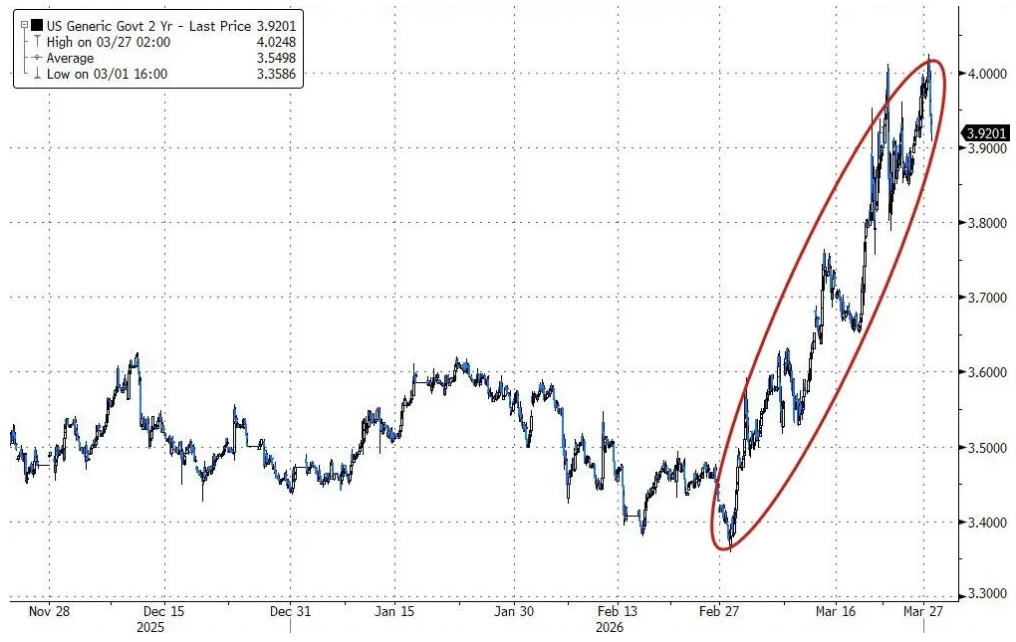
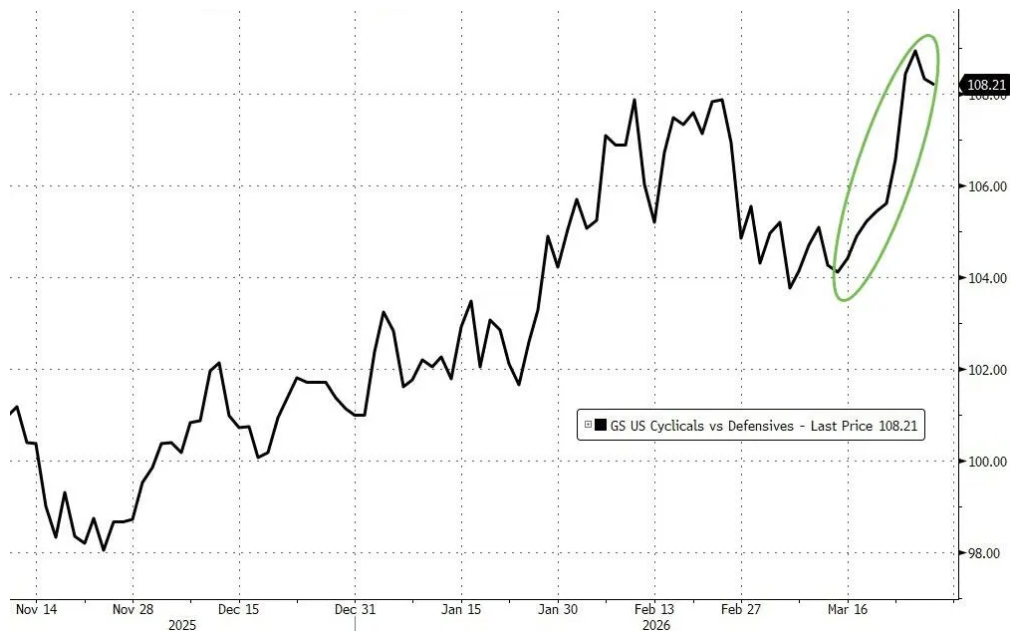
Looking back at history, he pointed out that the S&P 500 fell 19% from the high in February 2024 to the low in April, the VIX once soared above 65 in the summer of 2024, the BKX index plummeted 35% during the SVB crisis, and the Nasdaq 100 fell 33% throughout 2022.
"The damage caused by this round of impact has not yet reached a similar magnitude," he believes, which does not mean that the risk has been released.
European stocks suffered capital withdrawals, but Asian stocks performed relatively resiliently
In Europe, Goldman Sachs prime brokerage data showed that long positions in European stocks accumulated over the past year were being liquidated rapidly. Goldman Sachs has lowered its 2026 GDP forecast for the euro zone to about half of its pre-conflict level and expects the European Central Bank to raise interest rates once in April and once in June.
Asian markets have shown significant resilience. Taking South Korea as an example, despite continued selling by foreign investors and a sudden correction in U.S. memory chip stocks, KOSPI still rose by about 29% during the year.
The Japanese market is under pressure from high commodity exposure, with the Topix still recording a gain of about 1% this week. Pasquariello said that judging from customer feedback, South Korea and Japan are the two markets where investors have the most confidence in the medium term among all current options.
Tail risks are still high, it is recommended to increase cash holdings
Pasquariello summed up all the above judgments in four words: tail risk is high.
He cited the close proximity of the forward price-to-earnings ratio trends of Nvidia (NVDA.US) and Exxon Mobil (XOM.US) as a footnote of the times, believing that this signal itself illustrates the deep changes in the current market structure.
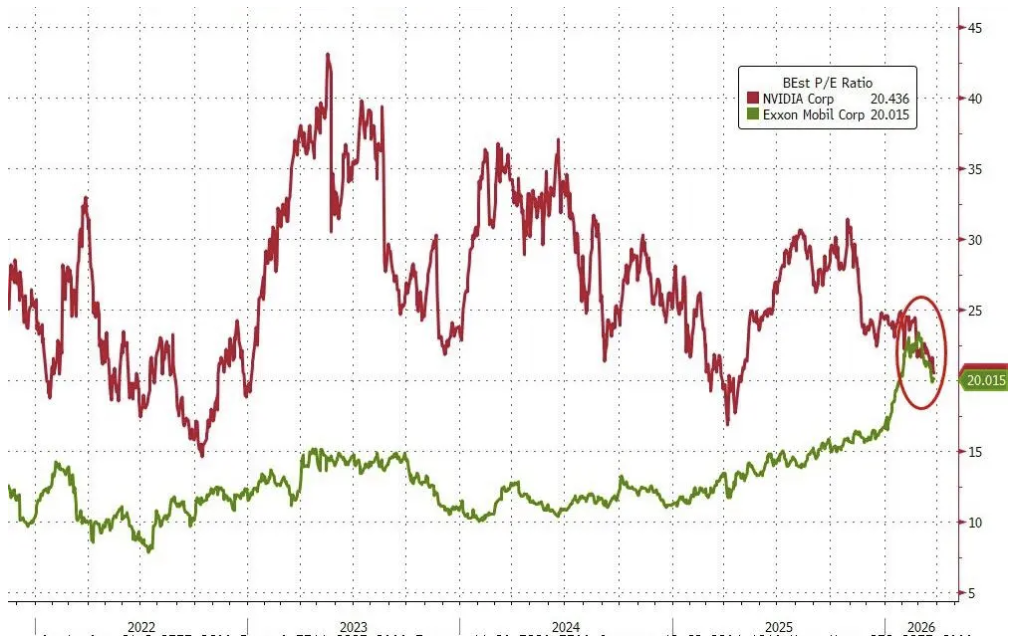
"I still see no reason not to simplify risks, moderately increase cash holdings, and be prepared to quickly increase investment on the bright side - I know this is easier said than done," Pasquariello wrote.
1. Introduction
FIL, the full name of Filecoin, is a distributed storage protocol designed to provide users with decentralized data storage services. Since 2017, FIL has been highly regarded and is considered a highly anticipated star project in the blockchain industry. However, as time goes by, the price of FIL has been falling for a while, and there are more and more voices that are bearish on FIL. So, what does it mean to be short on FIL?
2. What is FIL?
FIL is a distributed storage protocol designed to store and share data in a decentralized manner. The working mechanism of FIL is implemented through blockchain technology combined with PoRep and PoSt. The main advantages of FIL are decentralization and security, which make it popular among many people.
3. Price fluctuations of FIL
Although FIL is a highly anticipated star project, its price fluctuates. FIL has been falling since September, and the decline has been significant. Many people believe that FIL has entered a downward cycle and it will be difficult to reverse the trend. This has made more and more voices bearish on FIL.
4. What is short FIL?
Being short on FIL means that some people are pessimistic about the future development of FIL. They believe that the price of FIL will continue to fall, and the market value of FIL will also decrease. Those who are bearish on FIL may sell FIL or reduce their holdings in it.
5. Reasons for shorting FIL
There are several reasons for the decline in FIL prices. First of all, FIL's market competition is fierce, and there are many similar projects launched, which may lead to a decrease in FIL's market share. Secondly, although FIL's technology is very advanced, its adoption rate is not high. Many people still don't know what FIL is, which also limits its development.
6. The future prospects of FIL
Although the price of FIL has been declining for some time, some people are still optimistic about its future development. Many people believe that FIL still has great potential that can be tapped. FIL can provide decentralized and secure data storage services, which many users need. If FIL can adapt to market changes and increase adoption, its price will rebound.
7. FIL’s competitors
In addition to fierce market competition, FIL's competitors are also a problem that cannot be ignored. Currently, there are already some projects using technologies similar to FIL, such as Siacoin, Storj and Maid Safe. The competition between these projects and FIL will become more intense, which may affect its adoption rate and market share.
8. Conclusion
Shorting FIL is a very meaningful topic. FIL is a highly anticipated star project, but its price is volatile. FIL's market competition is fierce, and competitors are constantly emerging, making FIL's future somewhat uncertain. However, for those who still hold FIL, it is worth noting that this situation is not absolute. After all, FIL still has great development potential.
9. Risks of FIL
For those who are short on FIL, they also need to look at this phenomenon rationally. Of course, any investment involves a certain amount of risk. The biggest risk facing holding FIL is future decline in adoption and market share. In addition, the price of FIL fluctuates greatly, which is also a risk.
10. Summary
Those who are bearish on FIL are not unreasonable. Factors such as fierce market competition, low technology adoption rate, and many competitors are all reasons for the decline of FIL. However, any investment has risks, and FIL still has great potential that can be tapped. Therefore, people who hold FIL need to look at this phenomenon rationally, analyze its development prospects, and make correct investment decisions.
European-Italian Exchange Popular Recommendations
Know how to seize "certainty" investment opportunities in the stock market
The essence of stock market investment is a game of risks and opportunities. Avoiding "certainty" risks and looking for "certainty" opportunities is one of the magic weapons for smart investors to win repeatedly.
One of the characteristics and charm of the stock market lies in its "uncertainty". As long as the transaction is not completed, no one can be sure whether the market and individual stocks will ultimately rise or fall.
Precisely because of this "uncertainty" in the stock market, most investors will be prepared with both hands in actual operations and will not easily fill or short positions. However, many years of investment practice have shown that in the "uncertain" stock market, there are often "certain" investment opportunities.
Most of the stocks with "certainty" opportunities have good quality, low valuations, modest growth, and have not been speculated. Some people are "broken" at the wrong time. However, as the market conditions for most stocks improve in the future, there is a chance that the stock price will return to above the issue price. The increase from the breaking price to the issuance price is the "certainty" opportunity for this type of stock. Some promise "minimum reduction price."
Some major shareholders of listed companies are quite confident in the stocks they hold. They not only voluntarily lock their shares that have been released from sales restrictions, but also make clear commitments to the lowest price for reducing their holdings in the secondary market. The premium between the market price and the promised minimum reduction price is the "certainty" opportunity for such stocks. Some powerful institutions continue to increase their holdings.
When the stock prices of some companies with great potential fall to a certain low, investment opportunities gradually emerge. At this time, powerful institutions will often seize this rare opportunity to build a position and increase their holdings of such stocks in the secondary market. After increasing their holdings, some stocks fell sharply in a short period of time. The difference between the market price after the decline and the holding price is the "certainty" opportunity for this type of stock.
In addition to the above three types of "certainty" opportunities in the stock market, there are many more. It should be noted that these "certain" opportunities are relative opportunities rather than absolute opportunities. In actual investment, you need to respond rationally and be prepared with both hands.
Generally speaking, for companies that have "price-limited shareholding reductions", companies that broke their shares when they should not have done so, and companies whose major shareholders continue to increase their holdings, their secondary market prices will eventually have the chance to exceed the shareholding reduction price, issue price, and shareholding increase price. As long as the price in the secondary market is below the shareholding reduction price, issue price, and shareholding increase price, this "certainty" opportunity will more or less exist.
The key to finding, discovering, and seizing “certainty” opportunities is to be thoughtful. When investing in stocks, don't expect that pie will fall from the sky. No one will give you all the "certainty" opportunities in vain.
The only way to discover "certainty" opportunities is to search, identify and discover them yourself in the face of a large amount of disorganized information. Pay more attention and think frequently when reading newspapers, surfing the Internet, and watching TV. Once you find a "certain" investment opportunity, don't let it slip away easily.
The investment operation of "certainty" opportunities and the search for discovery are two completely different things. There is no inevitable connection between the size of the opportunity and whether it is profitable or not. To turn "certainty" opportunities into real profits, investors need to strengthen their training in actual investment and continuously improve their operating skills and abilities. The main issues that need attention are the following aspects.

(1) Good news is easy to buy.
Different from the "knowledge of buying is more important than selling" in daily transactions, the operation of seizing "certainty" opportunities is "buying is more important than selling." Generally speaking, the selling point of stocks with "certainty" opportunities is relatively certain. The key to winning is that the buying point is good and the cost is low.
When news about a "certainty" opportunity is announced, the stock price has often been driven up, and coupled with the high market attention, the possibility of opening higher immediately is very high. At this time, the cost of opening a position will be very high and the profit margin will be very limited. If you don't do it right, you will get trapped or even deep trapped when the dealer washes your hands.
(2) The abandoned child should give up.
After a period of silence, many stocks with "certain" opportunities will return to "calm" and gradually be forgotten by the market. As popularity declines and stock prices fall, stocks with "certainty" opportunities begin to be abandoned by everyone. At this time, it provides investors with a rare opportunity to build a position, and the chances and room for profit after buying are greatly increased.
(3) When someone is robbed, the pie falls away.
The purpose of investing in stocks with "certain" opportunities is to obtain "certain" returns. Under normal circumstances, investors can adopt the strategy of "not letting the hawk know the rabbit". As long as the "certainty" theme does not materialize and the stock price does not reach the reduction price, issuance price and increase price, just hold it all the way and be more patient with the banker.
When the stock price touches the reduction price, issuance price and increase price, no matter whether it is profitable or not and how much the profit is, you must leave the market unconditionally before the theme materializes and the dealer reduces the holding. After leaving the market, no matter whether it is rising or falling, do not cover it easily, because at this time the "certainty" theme has been realized and the opportunity has been lost. This is also a major difference between operating stocks with "certainty" opportunities and daily trading.
How to operate the stock trading method - 3 to 5 at the opening, 7 horizontally and 8 vertically is a tiger
What does "opening at 3 to 5 points, horizontal 7 and vertical 8 being tigers" mean? It is the target stock chosen by investors. If the market opens at 3 to 5 points, the time-sharing average price line will follow up. After the stock price adjusts slightly, it will be pulled in by a big buy order. It then goes up to a higher level for more than 8 points, then drops down and a sideways change of hands occurs between 7 and 8 points. At this time, it does not break the time-sharing average price line, and the trading volume is in a stable and balanced state, forming a horizontal and vertical trend. Once this trend is formed, it will definitely be supported by the strength of hitting the daily limit.
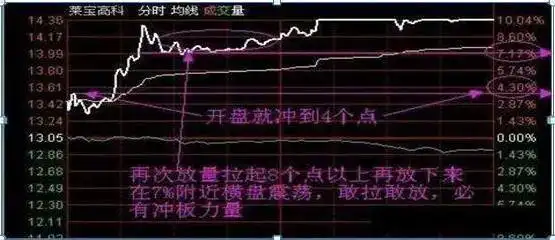
What is the operating technique of "rush 3 to 5 at the opening, 7 horizontally and 8 vertically is a tiger"? The detailed introduction is as follows.
First: the stock price must open at 3 to 5 points.
Why does the stock price have to open at 3 to 5 points? Because if it is less than 3 points, it means that the strength is not enough, but if it is more than 5 points, it means that the pull is too strong, and the main force is suspected of pumping up and selling. Therefore, it is safest for the stock price to open at 3 to 5 points.
Second: After the stock price reaches a higher level, it must steadily change hands in the area of 7 to 8 points.
Why? This is because if it is lower than 7 to 8 points, it means that the desire to push higher is not strong, and it may not be able to hit the daily limit later. If it pauses and consolidates around 7 to 8 points, it will directly hit the daily limit. Although it looks very strong, there is actually a lie in it. It cannot be ruled out that the main force is a bullish behavior.
Third: Be sure to understand the significance of "horizontal 7 and vertical 8".
The meaning of "horizontal 7 and vertical 8" is that the main force wants to conduct a trial market before the daily limit in this area. From the perspective of investors' psychology, those who bought the stock on the first day have already made profits at the level of 3 to 5 points. In order to capture new targets, short-term investors will throw chips in this area. As the sideways market continues, some timid investors will also have the urge to sell, but they also want to see if they can sell at a higher position. As the stock price reaches a higher level, these would-be sellers have increased their impulse to sell.
Classic stock trading tips in the stock market:
Internal reference formula 1: Don’t sell if you don’t rush high, don’t buy if you don’t dive, and don’t trade sideways.
"Don't trade in sideways trading" is something you should pay special attention to when operating stocks. When trading in sideways trading, once the market changes in the opposite direction, you will inevitably stop the loss or chase the increase, both of which are undesirable. The price difference is not big during sideways trading, and if you are impatient, multiple transactions will inevitably result in a loss in handling fees.
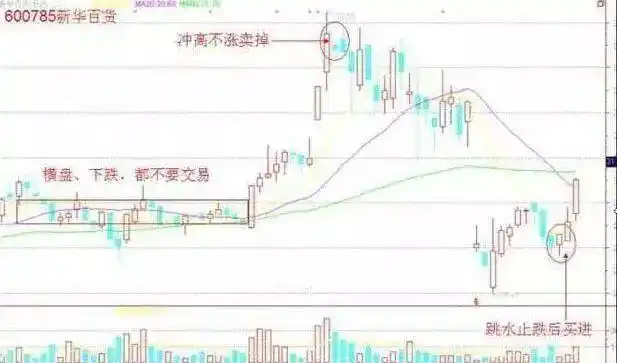
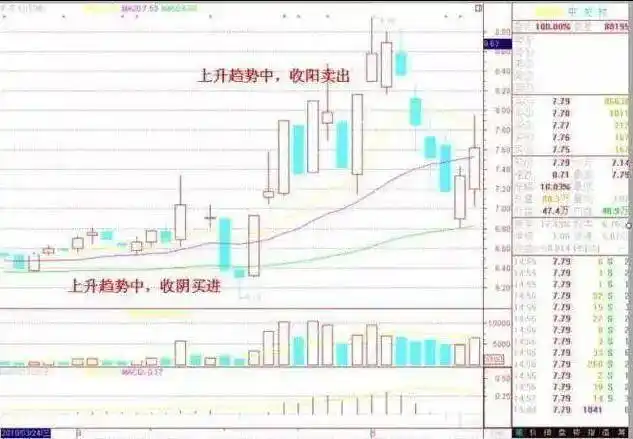
Internal Reference Tip 2: Buy yin but not yang, sell yang but not yin, only those who go against the market trend are heroes.
This formula is somewhat similar to the first formula, which is about moving against the market. The first formula is about short-term, and the second formula is about mid-term. That is, when buying, choose to buy when the K line closes the negative line; when selling, choose to sell when the K line closes the positive line.
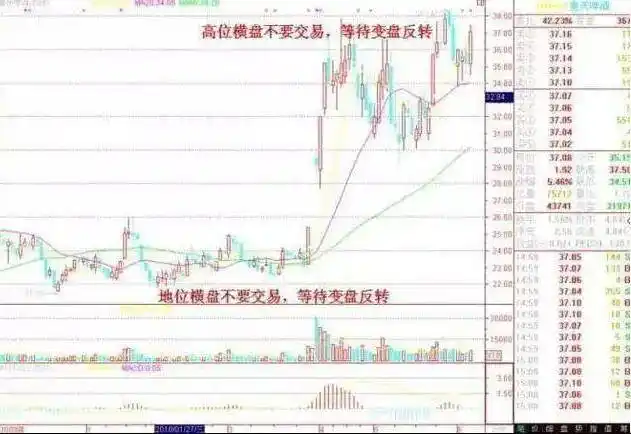
Internal Reference Tip 3: Consolidate highs and lows, wait a moment
The content of this formula includes the content of "No trading in sideways" in Tip 1, but the main meaning is that when a stock continues to rise or falls for a period of time and then enters a sideways state, there is no need to sell the entire position at a high level or buy the entire position at a low level, because the market will change after consolidation, so you cannot subjectively decide to open or clear a position during the consolidation period. If the price changes from a high position to a downward trend, you can clear your position in time and there will be no loss; if the price changes from a low position to a high price, you can catch up in time and you will not be short.
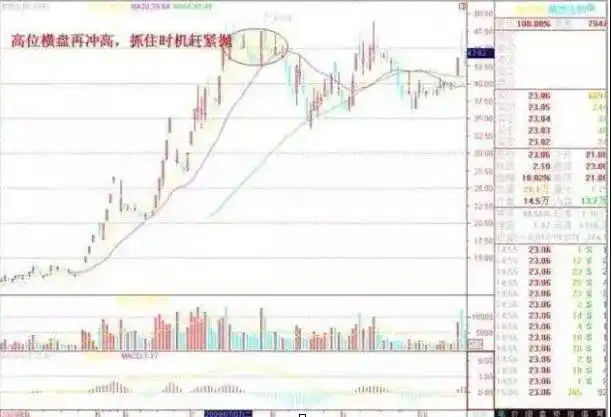
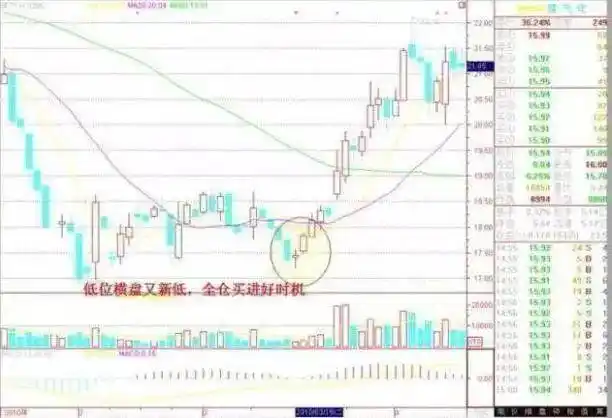
Internal reference tip 4: When the price goes sideways at a high level and then surges higher, seize the opportunity to sell quickly; when the price goes sideways at a low level and reaches a new low, it is a good time to buy a full position.
This formula is a further concrete explanation of formula three and is the best time to describe one of formula three. Stock prices and the broader market often reach new highs after consolidating at high levels, and reach new lows after consolidating at low levels. Therefore, it is said that one should wait for the direction of market changes to become clear before starting. If the price goes sideways at a high level and then changes upward, reaching a new high, this is the best time to sell; while at a low price, it goes sideways and then changes downward, this will be the best time to buy with a full position.
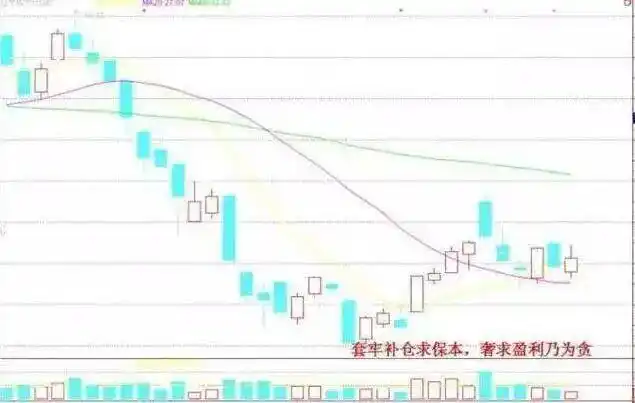
Internal reference tip five: Hold on to cover positions to protect capital, and extravagantly seeking profits is greed.
This trick talks about a common mistake people make. When you are trapped, you fill a position at the technical support level, or increase the amount to fill a position, but you must clearly realize that your purpose in doing so is just to get your capital back. When the stock price rebounds and you are not losing money, you should sell in time. But when many people see the stock price rising, they think that if it rises again, I will make a profit, and I will make as much profit as possible. As a result, it falls back again, and I am trapped in a heavy position again. This time, I don’t even have the funds to save myself, and I can only wait and die. Therefore, they are listed here to show everyone.
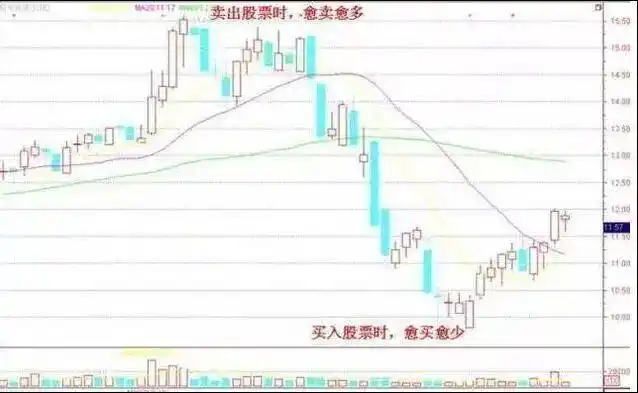
Tip six for internal reference: admit your mistake before you make a move, and it is better to buy less than to buy too much.
Internal Reference Tip 7: There is a ray of red in the green shade, buy quickly and don’t relax
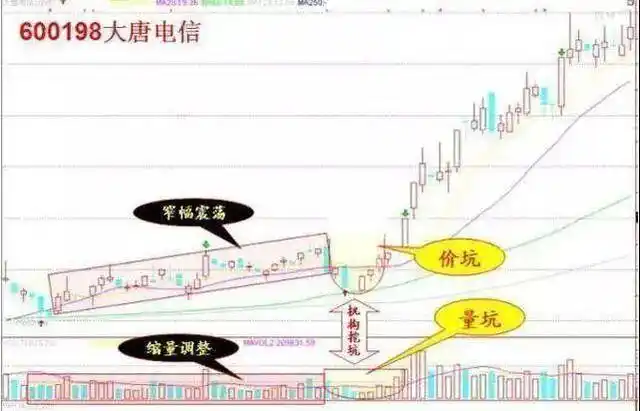
Tip 8 for internal reference: One recommendation and two recommendations will not make the stock go up, so you have to move down and then shake the position.
This tip is very important and is an unspoken rule of the stock market. Mainly talking about stocks. This situation is generally as follows: a stock has been correcting for a long time and is coming to an end. Most of the stocks are in a platform consolidation state. People start recommending them one after another. You can see that the fundamentals are indeed good, but after you buy it, it just doesn't move. That's how you get left behind. Everyone was optimistic about it, but it just didn't rise. After the 20th, it suddenly broke down. After making a standard pit, the K line easily broke through the early platform and reached a new high.
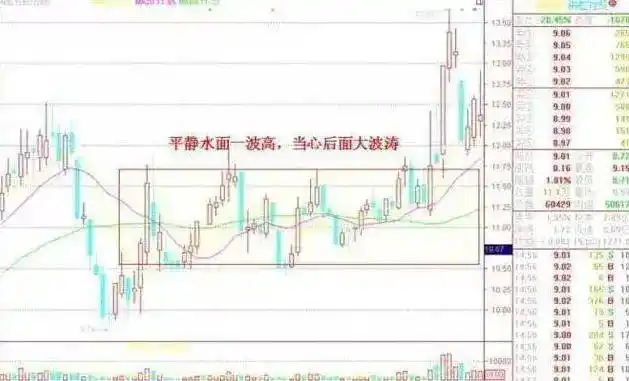
Tip 9 for internal reference: A wave will rise in calm water, but beware of big waves behind it.
Look for strong stocks with main players
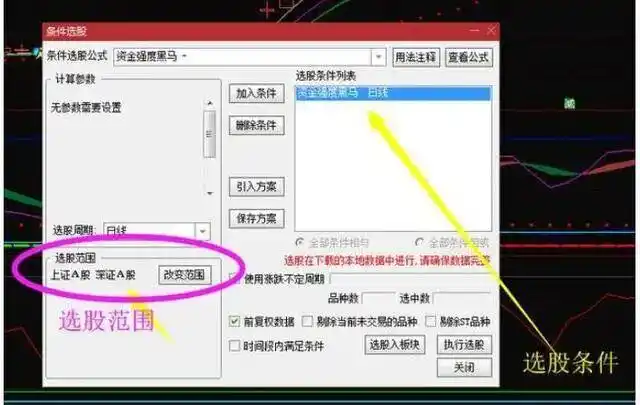
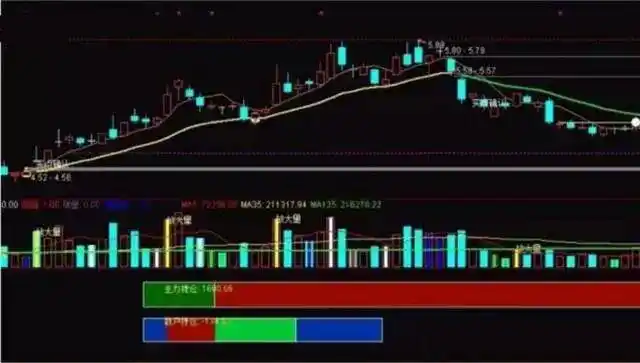
If you have been in the market for many years and still don't know how to pick stocks, you might as well try the "Capital Strength Dark Horse Stock Picker". The selected results are all stocks with main players and dark horse potential. The next thing we have to do is to find the entry position, how to sell high and buy low, and how to find the peak and leave the market in time. Copying the formula code will inevitably cause some format errors. If it cannot be imported successfully, you can ask me to get the source code!
ZLCM:=EMA(WINNER(CLOSE)*70,3);
SHCM:=EMA((WINNER(CLOSE*1.1)-WINNER(CLOSE*0.9))*80,3);
ZZLKP:=ZLCM/(ZLCM+SHCM)*100;
ZZLJJ:=EMA(ZZLKP,89);
ZJLRQD:=INTPART(ZZLKP-ZZLJJ);
Main control coefficient:=INTPART(ZZLKP);
Capital inflow intensity:=ZJLRQD;
K1:=LLV(LOW,5);
K2:=HHV(HIGH,5);
K3:=EMA((((C-K1)/(K2-K1))*100),4);
K5:=((HIGH+LOW)/2);
K6:=DMA(K5,(VOL/SUM(VOL,5)));
K7:=DMA(K5,(VOL/SUM(VOL,13)));
K8:=DMA(K5,(VOL/SUM(VOL,34)));
K9:=DMA(K5,(VOL/SUM(VOL,75)));
KA:=EMA(WINNER((0.9*C)),5);
KDY:=((100*(C-K6))/K6);
KE:=((100*(C-K7))/K7);
KF:=((100*(MIN(C,O)-K8))/K8);
KG:=BARSLAST(((K8>K9) AND (REF(K8,1)=0.8)
AND (WINNER(C)0)) AND (COUNT((KF0));
K12:=(((COUNT((KDY0) AND (COUNT((KE0)) AND (COUNT((KF0)) AND (COUNT((KA>0.8),KG)=0));
K13:=(((COUNT((KH OR K12),2)>0) AND (K3>REF(K3,1))) AND (((1-WINNER((1.15*CLOSE)))*100)>80));
K14:=IF((K13 AND (COUNT(K13,3)10 AND capital inflow intensity>-10;
XG:BARSSINCEN(K14,10) AND ZVF>3 AND control panel;
Decryption of the most complete escape techniques in history:
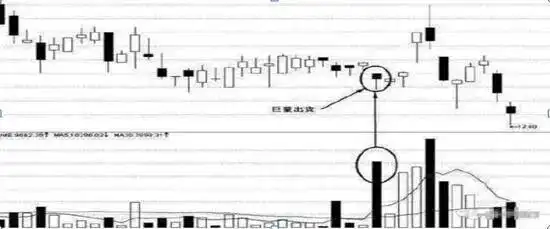
1. Accurate selling signal - abnormally large volume at relatively low level
When the stock price begins to trade sideways after a round of decline, although the stock price is at a relatively low level, it is still inconsistent with the value of the listed company. For example, if suddenly there is a huge amount of transactions the next day, and the turnover rate reaches an astonishing 20% or more, we should pay attention! This is very likely that the main force is preparing to flee. Let's take a look at the picture below:
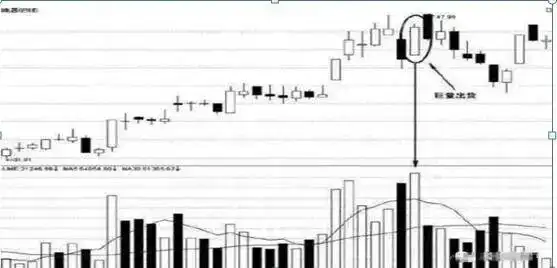
2. Accurate sell signal - huge volume appears at the high point of the band
When the stock price has increased by an astonishing 20% or more after a round of rising prices, the stock price will generally enter an adjustment period at this time, and at this time, the main force is likely to ship here. Therefore, when the stock price shows a weak rise, we should be wary of the huge volume that appears in the market, especially when the turnover rate reaches more than 20%, we should sell decisively!
As shown below:
3. Accurate selling signal - "M" head
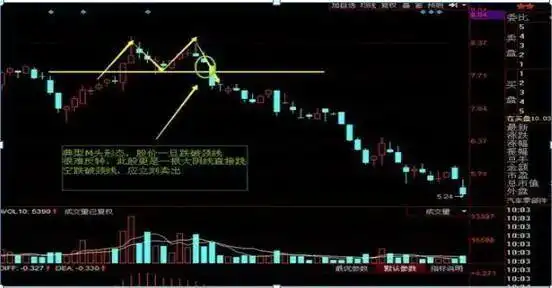
Although the bulls counterattacked when they were suppressed by the shorts in the high price area, they were unable to continue to push the stock price higher, forming an "M" head under the pressure of the shorts. If the stock price falls below the neckline by more than 3%, it means that the shorts have taken advantage and the stock price is about to plummet. The minimum metric decline is calculated as the height of the double top pattern starting from the distance between the peak and the neckline.
4. Accurate selling signal - combination of five high negative lines
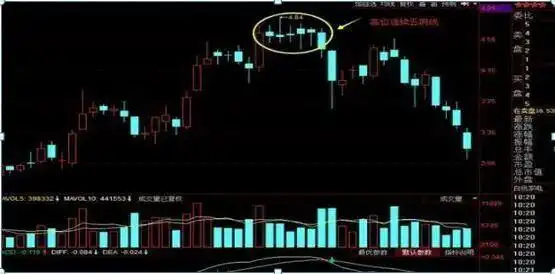
Five consecutive negative lines appeared in the high price area, accompanied by shrinking trading volume, indicating that selling increased and bulls were no longer able to push up the stock price. The energy accumulated by shorts was about to explode, and the market outlook was bound to fall.
5. Accurate selling signal - a shooting star appears in the high area
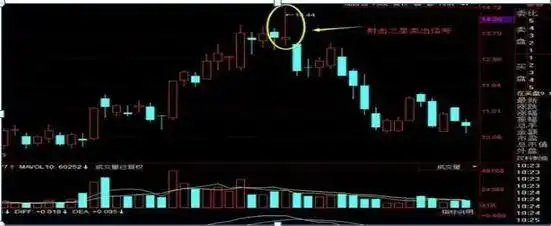
In a rising market, a positive or negative line with an upper shadow line that is twice or more than twice the length of the entity and a very short lower shadow line is called a shooting star. This is a highly reliable peaking and falling signal.
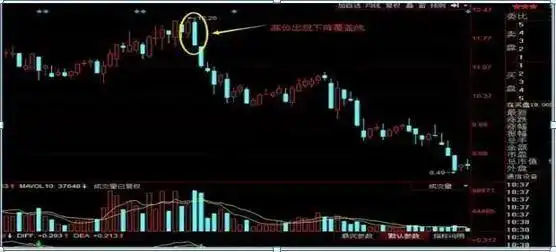
6. Accurate selling signal - high falling coverage line
After rising for several days, the stock price suddenly opened high and closed low. The large negative line covered the previous day's positive line, indicating that the bulls had exhausted their strength, the bears had begun to counterattack, a large number of selling orders poured out, and the stock price was about to plummet.
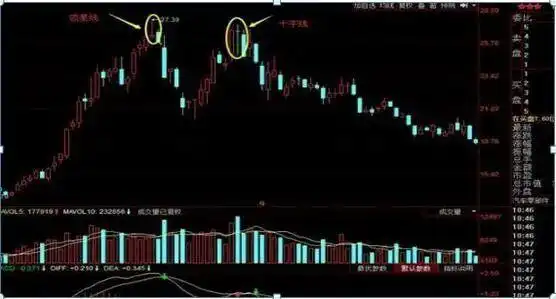
7. Accurate selling signal-long doji
When the long cross star appears at the top of the rising market and is accompanied by huge trading volume, it means that the upward momentum of many parties has been greatly consumed and they are no longer able to continue to push up the stock price. Therefore, the long cross star with large trading volume is a signal that the stock price is weak in rising and has peaked and fallen.
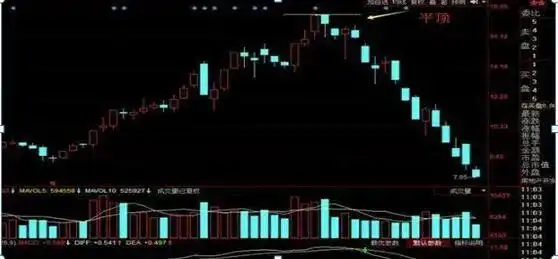
8. Accurate sell signal - flat top
The emergence of a flat top means that the stock price is blocked from attacking a certain high point, and the multi-party attack is weak, and has no choice but to retreat. In terms of technical form, a flat top can be composed of more than two K lines. It does not matter whether the K lines are yin or yang, as long as they form a flush head.
Seven taboos in stock trading
The biggest taboo in stock trading - full time
The so-called full time refers to investors operating non-stop throughout the year. The most important thing in stock trading is to study and judge the general trend. When the general trend is improving, we should actively go long; when the general trend turns weak, we should take short positions and rest. Some investors do not do this. They work non-stop regardless of whether the stock market is hot or cold, like hard-working bees, busy for small profits. In doing so, they will not only be in vain, but they will also encounter more risks. Investors in the stock market must learn to assess the situation, take timely rest according to changes in trends, so that they can accurately grasp the opportunities they should participate in in the stock market.
The second biggest taboo in stock trading - rushing to recover losses
In a plummeting market, investors are often severely trapped and suffer huge book losses. Some investors are eager to recover losses and arbitrarily increase the frequency of operations or invest more funds. This approach is not only futile, but also aggravates the degree of losses. When the general trend is weak, investors should operate less or not at all, and wait patiently for the general trend to improve and the trend to become clear before intervening.
The third biggest taboo in stock trading - full profits
Full profit means that investors always want to buy at the lowest price and sell at the highest price, blindly pursuing profit maximization. Some investors like to pursue huge profits and always want to take all the profits from a stock. As a result, they often go back and forth in the elevator. Striving for the most possible profits and growing steadily is the right way to make money.
The fourth taboo in stock trading - rushing to rebound
Especially in a market where the downtrend has not ended, rushing to rebound is like "taking chestnuts from the fire". If you are not careful, you may get into trouble. In the recent market environment, there is no possibility of going short. Investors must not take the risk of being trapped just because they are greedy for small profits in the rebound.
The fifth taboo in stock trading - full position
Among the first-generation large investors in the Chinese stock market, most of them were punctured due to excessive full positions (overdrafts), and eventually ended up being forced out of the market by the exchange. Stock trading is the same as being a human being. You must leave room for maneuver in everything so that you can advance and retreat freely. For retail investors, if the money invested in the stock market is to support their families, once the positions are full, the anxiety caused by the huge psychological pressure will definitely affect the analysis and judgment of the market outlook, and the final result is self-evident.
The sixth taboo in stock trading—too much panic
Panic is the most common emotion among investors in a crashing market. In the stock market, when there is a rise, there will be a fall, and when there is slowness, there will be fast. In fact, this is a natural law. As long as the stock market always exists, it will not fall forever. There will eventually be a rise. Investors should take advantage of the downturn in the stock market to study and research carefully, actively select stocks, and prepare for the bull market as early as possible, so as to avoid the old habit of chasing the rise and killing the fall when the market improves.
The seventh taboo in stock trading - complacency
Some investors often make gains when they first enter the stock market. After they become old investors, because they have made some money, learned some indicators, and read a few books, they gradually become blindly confident, chasing ups and downs, and entering and exiting quickly. As a result, they lose more than they win and suffer serious losses. Pride and complacency will prevent investors from improving their operational level and bias their understanding of the stock market. The development of the stock market is changing with each passing day. If anyone is complacent, he will stagnate and will eventually be eliminated by the stock market.
Fan Hongtao, Shenzhen Business Daily·Readchuang client reporter
On December 26, at the launch ceremony of the National Venture Capital Guidance Fund held by the National Development and Reform Commission, the Guangdong-Hong Kong-Macao Greater Bay Area Venture Capital Guidance Fund was officially announced. The fund is managed by Shenzhen Venture Capital, with a total scale of 50 billion yuan, and is registered and settled in Qianhai Cooperation Zone. Its establishment and operation marks the official launch of national-level “patient capital” in Qianhai.
The fund is a specific measure to accelerate the construction of an international science and technology innovation center in the Guangdong-Hong Kong-Macao Greater Bay Area and another important practice given by the country to deepen reform and opening up and promote open innovation in the financial industry. The fund is led by the national level and jointly funded by capital from Guangdong Province, Shenzhen City, Nanshan District, Qianhai Cooperation Zone, etc. It adheres to the belief of long-termism and gives full play to the role of Shenzhen's reform and opening up "bridgehead" and socialist pioneer demonstration zone. It encourages the active participation of various market operators, highlights the characteristics of diversified funds, accompanies the growth of early-stage technology enterprises, focuses on the cultivation and transformation of innovative achievements in the field of hard science and technology, guides capital to patiently incubate disruptive technologies, and cultivates new productive forces for regional economic growth.
Bai Jingyu, director of the Department of Innovation and High-tech Development of the National Development and Reform Commission, said that the National Venture Capital Guidance Fund will play a leading and driving role with central funds and widely attract the participation of local governments, central enterprises, financial institutions, private capital and other parties, forming a trillion-dollar capital scale.
The Guidance Fund will focus on companies in the seed stage, start-up stage, and early and mid-stage stages, and support companies to focus on cutting-edge fields to carry out original and disruptive technological research. The guidance fund has a 20-year duration, including a 10-year investment period and a 10-year exit period, and uses patient capital to accompany the company in its "long-term run." After the establishment and operation of the Guangdong-Hong Kong-Macao Greater Bay Area Venture Capital Guidance Fund, it will become a new benchmark for patient capital that “invests early, invests in small, long-term, and invests in hard technology”.
In the future, the Guangdong-Hong Kong-Macao Greater Bay Area Venture Capital Guidance Fund will give full play to the pivotal role of venture capital in supporting technological innovation and optimizing capital allocation. It is expected to leverage hundreds of billions of capital clusters and continue to inject financial "live water" into strategic emerging industries and future industries in the Guangdong-Hong Kong-Macao Greater Bay Area. Qianhai will also take this opportunity to build a capital support ecosystem covering the entire life cycle of enterprises, provide strong support for the high-quality development of scientific and technological innovation in the Guangdong-Hong Kong-Macao Greater Bay Area, and contribute Qianhai's strength to China's modernization drive.
BnB home Wallet Applicationตัวช่วยเก็บคูปอง BnB hom ของคุณไว้ที่นี่ที่เดียว สามารถใช้ได้ทั้งบนเว็บไซ ต์และหน้าร้านบีเอ็นบีโฮมท ุกสาขาอย่างสะดวกสบายไม่ต ้องกลัวทำคูปองหายอีกต่อไป คุณจะได้เพลิดเพลินกับการช้อปปิ้ งสินค้าและแบรนด์ดังชั้นนำที่คุณช ื่นชอบมากขึ้นโดยไม่พลาดทุกโปรโมช ั่นพิเศษสุดคุ้มทุกช่วงเทศกาล"กด" และ รับ "ส่วนลดสุดพิเศษ"คูปองออนไลน์: กด และ คัดลอกโค้ด!กดที่คูปองที่คุณต้องการใช้ และ คัดลอกโค้ดไปใช้ในหน้าชำระเงินท างเว็บไซต์ของเราเว็บไซต์ของเรา: www.bnbhome.comคูปองสาขา และ คูปองเงินสด: กด และ QR Code ให้กับทางเจ้าหน้าที่แคชเชียร์ที่สาขาบี เอ็นบีโฮมทั่วประเทศไทยหมายเหตุสำคัญ*1. The1 กรุณาเข้าสู่ระบบด้วยเบอร์โทรศัพท์หรื ออีเมลของคุณที่ใช้ในการสมัครสมาชิกกับ The12. หากคุณลืมรหัสผ่าน (PIN) กรุณาคลิก "ลืมรหัสผ่าน" The1 เพื่อตั้งรหัสผ่านใหม่3. กรุณาอ่านเงื่อนไขการใช้คูปองแต่และ ใบอย่างถี่ถ้วนในหน้ารายละเอียดคูปอง (กดอ่านได้ที่แต่ละคูปองที่คุณต้องการใช้) คูปองบางใบสามารถใช้ได้แค ่กับแบรนด์หรือหมวดสินค้าท BnB home wallet app lets you keep BnB home e-coupons at one place, and better leverages your shopping experience both our onlineand brick-and-mortar stores. Fully enjoy exclusive promotion and discounts across brands and your favorite product categories."TAP" & get "DISCOUNT"ONLINE COUPON: Tap and Copy Code!Tap the coupon, copy code as shown,and place at "Use Code" at the checkout page of our online website before paymentOur website: www.bnbhome.comSTORE COUPON & GIFT CARD: Tap and Scan!Tap the coupon and let our staffs scan showed QR code at the checkout counter at our stores across ThailandImportant Note*1. Every BnB home e-coupon of yours is synced to your The1 account, so please log in with your registered telephone number or email to access.2. If you forget your password, please click "forget pin code". It will direct you to The1 App to further assist you reset the new one.3. Please carefully read coupons' terms and conditions of use, explained in each coupon's detail page. Some can be used only specific brands or product categories with a limited period of time.
 Communication Test Points: Briefly Describe The Main Points Of McLuhan’s Media Theory, Including Media As Message, Etc.2026-03-12Comments(0)
 The U.S. Supreme Court Rules That Trump’s Tariff Policies Are Illegal. What Will Be The Subsequent Impact?2026-03-03Comments(0)
 Chinese Valentine's Day: A Symbol Of Love, A Beautiful Festival Carrying Ancient And Modern Romance And Cultural Connotations2026-03-06Comments(0)