
Will Li Yunlong Take Revenge For Shunliu? Like Avenging Monk Wei
If Shunliu was Li Yunlong's subordinate, would he avenge Shunliu? Just look at Wei Monk, Japanese Army, National Army, Wei Monk, Chu Yunfei, Li Yunlong, Independent Regiment
If Shunliu was Li Yunlong's subordinate, would he avenge Shunliu? Just look at Wei Monk, Japanese Army, National Army, Wei Monk, Chu Yunfei, Li Yunlong, Independent Regiment
The craze for "lobster farming" continues, and Huang Renxun said it will be the "next ChatGPT"; why is "lobster farming" more popular in China than in the United States? Should ordinary people "raise lobsters"?
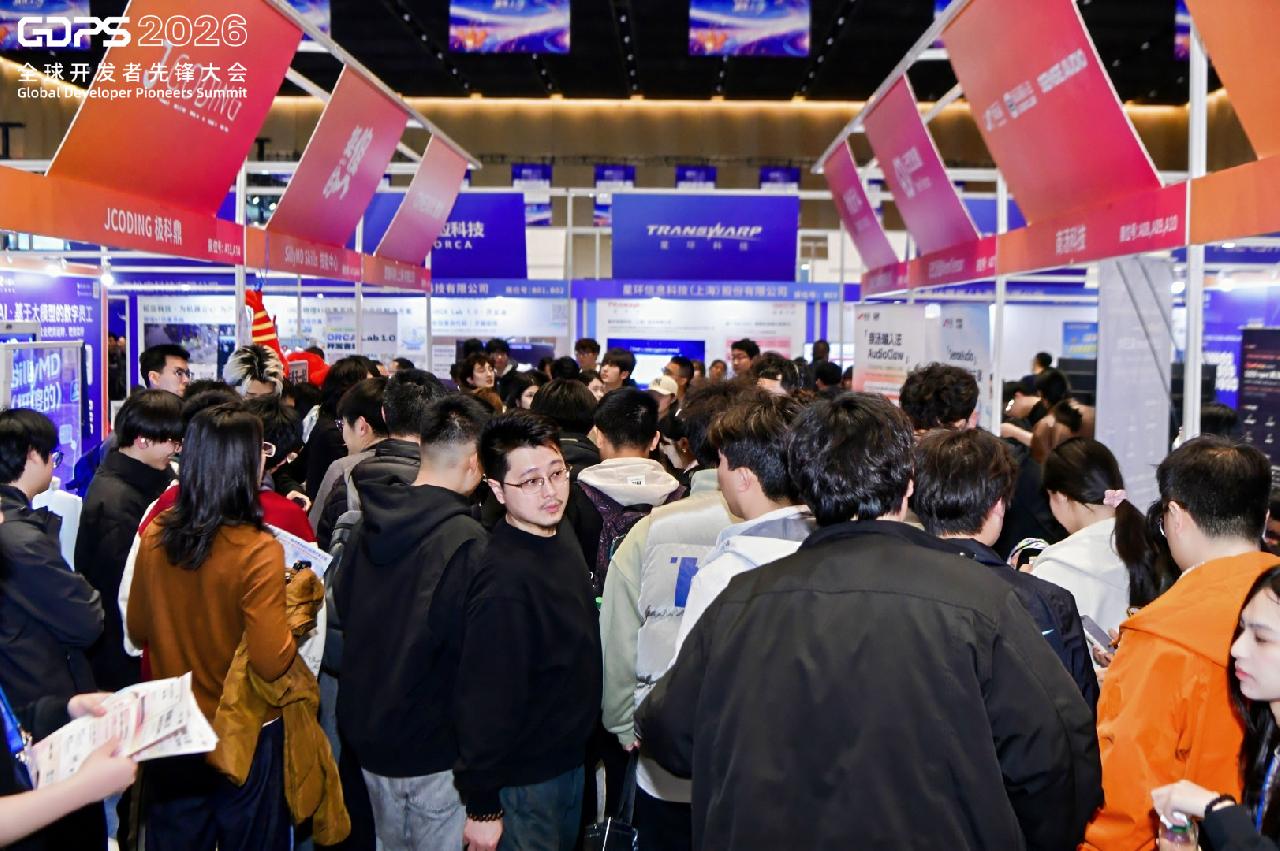
Last weekend, I attended an AI developer event in Xuhui, Shanghai. At the scene, people lined up to "install shrimps" and exchange experiences in "shrimp farming", which was quite popular.
Not only Shanghai, but also "lobster conferences" have been held in many domestic cities such as Beijing, Hangzhou, and Shenzhen during this period. Even many foreign AI enthusiasts and technical experts came here specially. China's "lobster farming" craze also shocked them.
"China's technological development is so fast. I originally thought I knew DeepSeek very well, but I didn't expect that the 'lobster farming' craze has arisen again. I must give it a try." An AI enthusiast from Australia told me at the scene.
Foreign media also quickly followed up and reported this phenomenon. CNN said that the OpenClaw AI agent, known as "lobster farming" in China, has been warmly welcomed by AI enthusiasts and novices. According to an analysis by a New York-based cybersecurity company, China has the largest number of OpenClaw users in the world, and its activity level is twice that of the second-place United States.
Peter Steinberger, the father of "Lobster" and the founder of OpenClaw, has also noticed this wave of "Chinese shrimp farming craze". He said in an interview with Bloomberg: "In the United States, you may be fired if you use OpenClaw; in China, you may be fired if you don't use OpenClaw." He also said that the United States should learn AI applications from China.
Why is "lobster farming" so popular in China? I talked with AI enthusiasts and technical experts at home and abroad, and summarized three key words for China’s AI: fast implementation, innovative and lively, and cost-effective.
First, China’s AI is quickly implemented and easy to use.
When "Crayfish" first became popular, many people lined up with their computers to find someone to install it. The installation process seemed very complicated, and there was another big problem: security. Deploying it on a local computer may leak your personal information and bank card account information; if you are not careful, it may also delete your emails or address book.
In response, domestic manufacturers responded quickly and quickly developed multiple crayfish applications deployed in the cloud. In this way: it saves the trouble of local installation, and "raising lobster" is just like downloading and operating a mobile APP, which is simpler; at the same time, it also transfers the security risk from the user's local to the professional platform.
At this AI developer conference, I experienced a "voice-controlled lobster", an installation package of more than 200 MB. If the Internet speed is good, the download and installation can be completed in tens of seconds; when carrying out tasks, it can help you do research and send emails based on your voice commands in Chinese, English, and even Shanghainese, and even recognize your emotions when speaking, automatically triggering tasks.
Now, many AI companies are also trying to put intelligent agents into home appliances, cars and other terminals to make "raising lobsters" easier.
Second, China’s AI innovation atmosphere is full.
I noticed that in this "lobster farming" craze, there are curious people, professionals and corporate decision-makers who are anxious about technology, technical service providers, and content creators who hope to gain traffic from new technologies. Most people have a "want to try" mentality when it comes to new technologies.
At the scene, an AI enthusiast told me: "I have developed it, but I am not very good at it. I want to see what skills everyone has, including their understanding of the paper and making some summaries."
The head of an enterprise's AI department said: "'Lobster' can give us a rough summary of what we do every week, and then generate a draft, which we will revise, which will be much more convenient. It can also help us with meeting minutes and PPT sorting, which we are exploring within the company."
At the same time, many cities such as Shanghai, Shenzhen, and Suzhou also acted quickly, quickly launching subsidy policies for the OpenClaw project and providing financial support to AI "one-person companies" to increase efforts in the transformation and application of new technologies.
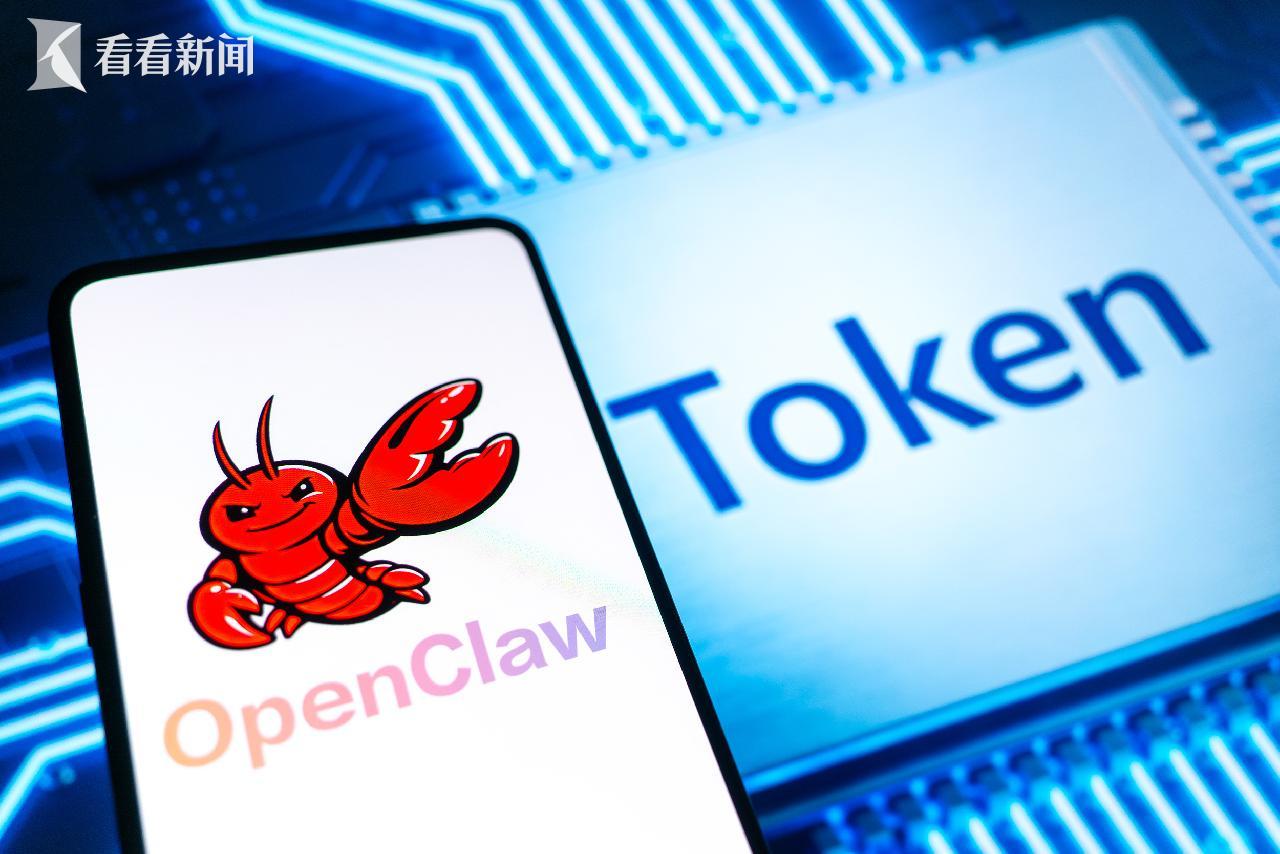
Third, and most importantly, Chinese AI is cheap and easy to use.
Here, let’s talk about a hot word: token, Chinese name: word element, which is the smallest unit for AI to process information. For example, "I want to raise lobsters" may be cut into several small pieces by the AI large model into "I", "want", "raise" and "lobsters" for reading and understanding. Generally speaking, 1.5 Chinese characters or 0.75 English words are approximately equal to 1 word element. The longer you ask and the longer the answer is, the more words are consumed.
In the past, simple questions and answers only required dozens of word elements, but now it is different. The important difference between AI agents such as "Lobster Farming" and chatbots is that they have changed from "answering questions" to "doing work for you". They can answer emails, write code, send to Moments, and complete complex tasks around the clock. As people live more lives, word consumption also skyrockets, and AI agents require millions of words for autonomous execution. In the past six months, the domestic average daily word consumption has increased five times.
What is the key support for such a large-scale consumption of word elements? electricity. The logic behind it can be easily understood as: electricity → drive GPU → calculation → generate word elements. In other words, if there is no electricity, the word units will be zero; the cheaper the electricity, the cheaper the word units will be.
This gives us an advantage. In recent years, China's photovoltaic and energy storage technologies have been iterating rapidly. At the same time, China has also vigorously promoted "computing and electricity synergy" to allow computing power and electricity to "go in both directions" through intelligent technology. Move non-urgent computing power from the east to the west, where green electricity is abundant; at the same time, let the computing power center become a "flexible big battery" that operates at full capacity during the day when photovoltaics are sufficient, and automatically reduces power when power consumption peaks at night. These make senior technical experts from the United States very jealous.

"In the United States, energy is becoming a very big challenge. Our budget is seriously insufficient and planning is seriously lagging behind, so how to solve this problem is still a huge unknown. Looking at China, the AI ecosystem has huge advantages, such as talent and energy. It is very difficult for other countries to catch up with China," John deVadoss, co-founder of AI company NeuralFabric and former general manager of Microsoft, told me.
The British "Times" recently did some calculations: China's DeepSeek-V3.2 model charges US$0.28 per million words output, while OpenAI's GPT-5.4 in the United States charges US$15, a difference of more than 50 times.
The low price and good experience have made AI agents such as "Crayfish" quickly become popular in China, and large domestic AI models have also become popular. Since February this year, the number of word elements called by China's large AI models per week has surpassed that of the United States. In mid-March, on the global large model aggregation platform OpenRouter, among the top nine most called models, including Shanghai AI large model company MiniMax, Step Star, as well as Xiaomi, DeepSeek and Zhipu, China accounted for five of them.
"My answer is that this is not just a matter of pricing, but also an economic consideration. The large models released by Chinese AI companies such as Moonshot are at the top level. The models are very powerful and easy to use, so if you are using an agent like OpenClaw, there is no need to call large foreign models. Their word unit charges are very expensive," said John Devados.
Looking back, this is not the first time that waves of new technologies, from mobile payments to new energy vehicles, have been rapidly implemented and spread in China in recent years. Therefore, it is not surprising that "lobster farming" has become popular. It is another vivid manifestation of the rapid implementation of AI technology in China. However, in my opinion, the excitement is still excitement. While major AI manufacturers and research institutions are focusing on application, they still have to pay enough attention to basic research. For ordinary "shrimp farmers", amid the craze, they must always tighten their security strings to face risks such as data leakage and out-of-control AI behavior.
Are you planning to "raise lobsters"? Welcome to leave a message in the comment area.
Look at the news reporter: Kim Bo Kyung
Philippine President Ferdinand Marcos Jr. and Vice President Sarah Duterte's approval ratings and trust ratings both declined in the first quarter of 2026, according to an uncommissioned survey released on Wednesday.
According to the survey, Marcos's approval rating dropped from 22% to 19%, and his trust level dropped from 15% to 13%; Duterte's approval rating dropped from 34% to 28%, and his trust level dropped from 31% to 26%.
Surveys show public dissatisfaction with accountability over flood control projects, Marcos' handling of the International Criminal Court (ICC) case against his former president and rising fuel prices contributed to Marcos's lower ratings. Duterte's rating was affected by the progress of the impeachment complaint against her and the ICC case involving her father, former President Rodrigo Duterte. Rodrigo Duterte is currently detained in The Hague for crimes against humanity related to his anti-drug campaign.

Senate President Tito Sotto’s approval rating and trust rating are 23% and 14% respectively, second only to Duterte. Despite the drop in ratings, Duterte remains the highest-rated official in the government. He is followed by Speaker of the House Faustino “Bogi” Day with an approval rating of 11% and a trust rating of 6%; Chief Justice Alexander Gesmondo with an approval rating of 16% and a trust rating of 10%.
Among government agencies, those with higher ratings include: the Bureau of Technical Education and Skills Development, with an approval rating of 65% and a trust rating of 45%; the Department of Science and Technology, with an approval rating of 55% and a trust rating of 39%; and the Bangko Sentral ng Pilipinas, with an approval rating of 53% and a trust rating of 37%. Political and infrastructure agencies such as the Department of Public Works and Highways and the House of Representatives had the lowest public ratings.
The first quarter of 2026 was conducted from March 21 to 24, 2026, and a sample survey of 1,509 registered Filipino voters was conducted. The survey tracks seven key modules: country and economic conditions, national issues, macro and micro concerns, trust and support for leaders and institutions, emotional perceptions of leaders, performance of elected officials and media consumption habits.
Last Tuesday, Marcos declared a national energy emergency in response to the "imminent danger" to the country's energy supplies posed by a U.S.-Israeli war in the Middle East.
The emergency declaration comes as Philippine transport workers, commuters and consumer groups plan a two-day strike starting last Thursday to protest rising fuel prices and what they see as a slow response by the Marcos government.
“Declaring a national energy emergency will enable the government to implement responsive and coordinated measures in accordance with existing laws to address risks posed by disruptions to global energy supplies and the domestic economy,” Marcos said.
He said as part of the emergency response, a committee has been formed to ensure the orderly movement, supply, distribution and availability of fuel, food, medicines, agricultural products and other essential goods.
The emergency declaration, which will last for one year, authorizes the government to procure fuel and petroleum products to ensure timely and adequate supplies and, if necessary, advance part of contract payments.
The authorities are also mandated to take action against hoarding, profiteering and manipulation of the supply of petroleum products.
China News Service, Qingdao, April 4 (Wang Yu) The fourth round of the 2026 Chinese Super League continued on the 4th. The Qingdao Manatee team, which was at home, relied on the winning goal of foreign aid Ye Boya to beat the Henan team 1:0, winning the league for the first time this season and temporarily escaping the relegation zone.
This season, the Qingdao Manatee team, which started with a loss of 7 points, failed to win in the first three rounds of the league. Although the team's overall performance is remarkable, the relegation situation is no longer optimistic. In this campaign, facing the Henan team that had remained undefeated in the first three rounds, the Qingdao Hainiu team scored a crucial 3 points on the road to relegation with a resilient victory.
On April 4, Qingdao Manatee foreign aid Ye Boya, who scored the winning goal, interacted with fans. Photo by Mao Daoguang
At the beginning of the game, the Henan team took the lead in creating a dangerous situation. In the 3rd minute, Maidana took advantage of a free kick in the frontcourt to complete a header, which was steadily resolved by Qingdao Manatee goalkeeper Mou Pengfei on the goal line. The game changed sides again, and the deadlock was broken in the 59th minute. Ejuma sent a precise through ball from the center circle, and Yeboya scored with a high-speed push shot to help the Qingdao Manatee team take the lead.
The lagging Henan team then launched a massive counterattack, frequently threatening the home team's goal. In the 86th minute, Lucas Maia took advantage of a corner kick and hit the post with a header. Gustavo's follow-up shot was blocked in time by Mou Pengfei. In the end, the Qingdao Manatee team relied on their tenacious defense to maintain their 1:0 lead until the end.
After this campaign, the Qingdao Manatee team has reached minus 4 points, ranking 14th in the Chinese Super League standings, and is temporarily out of the relegation zone. After the game, Qingdao Manatee coach Milan said that the players tried their best in the game and the victory was hard-won.
In the next round of competition, the Qingdao Hainiu team will face the Tianjin Jinmen Tigers, currently ranked last in the league. Milan admitted that given the current situation the team is facing, the team needs to immediately prepare for the next game. (over)
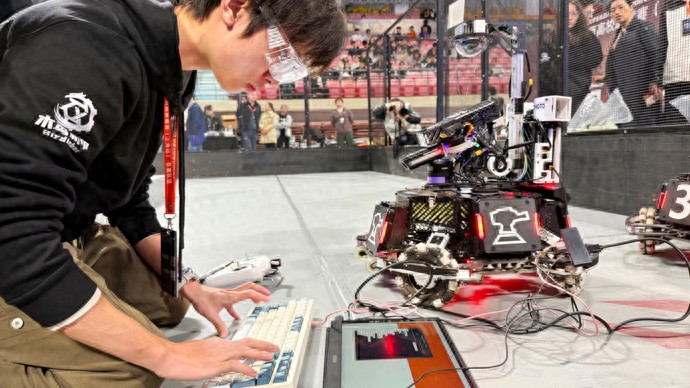

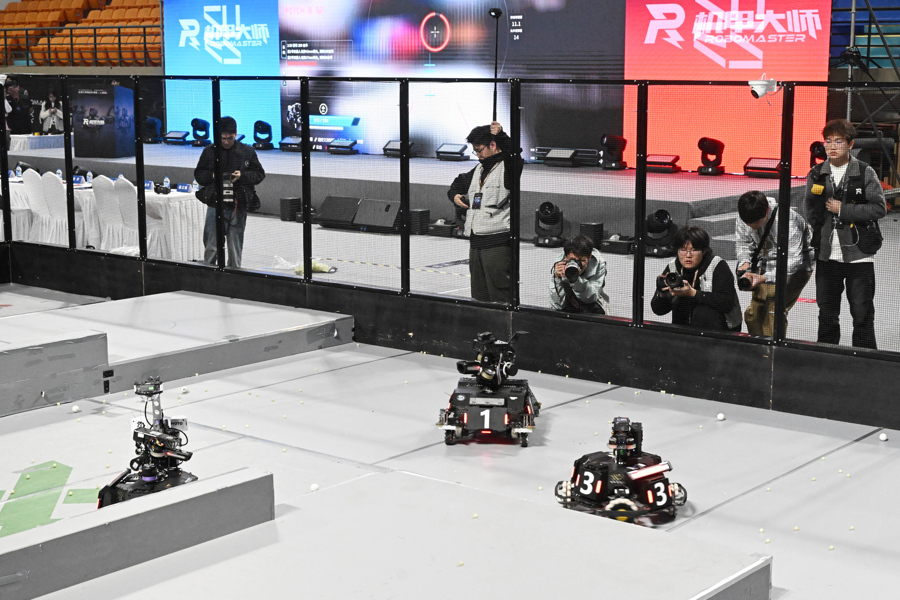
On April 3, the 25th National College Student Robot Competition RoboMaster2026 Robot Master College League Competition (Shanghai Station) opened at Shanghai University of Engineering and Technology in Songjiang District, Shanghai. 37 teams from universities in Shanghai, Jiangsu, Hubei and other places participated.

As one of the events under the National College Student Robot Competition, the RoboMaster College Series is a robot competition and academic exchange platform specially created for global technology enthusiasts. Since its establishment in 2013, it has always adhered to the mission of “giving glory to youth, giving power to thinking, and serving young engineers around the world to become doers who realize their dreams.” It is committed to cultivating comprehensive talents with engineering thinking and spreading the beauty of science and technology and the concept of scientific and technological innovation to the public.
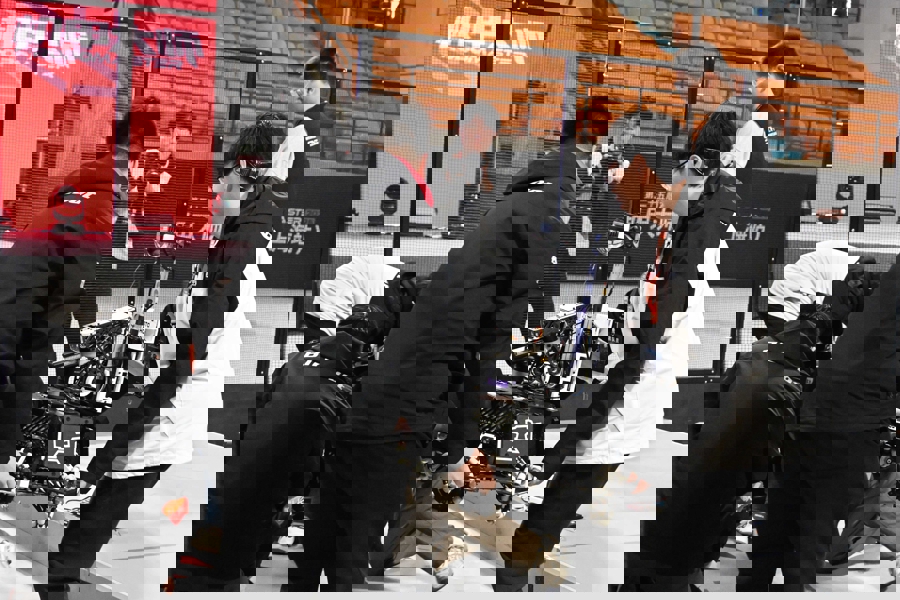
The National College Student Robot Competition RoboMaster and RoboMaster University League Competition are sponsored by local academic institutions and universities, and radiate surrounding universities to participate. It aims to promote regional university robot technology exchanges, form a strong academic atmosphere, and boost regional technological innovation and development.
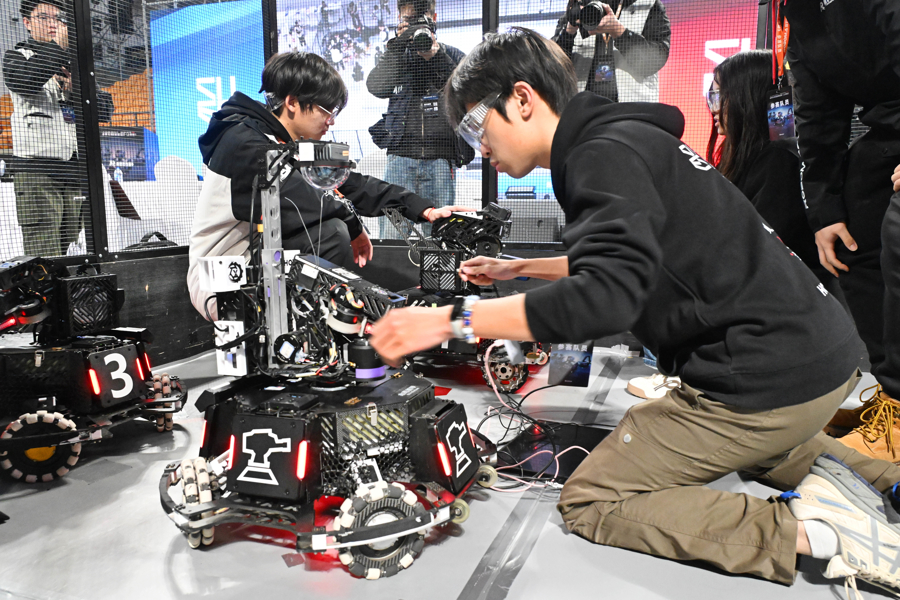
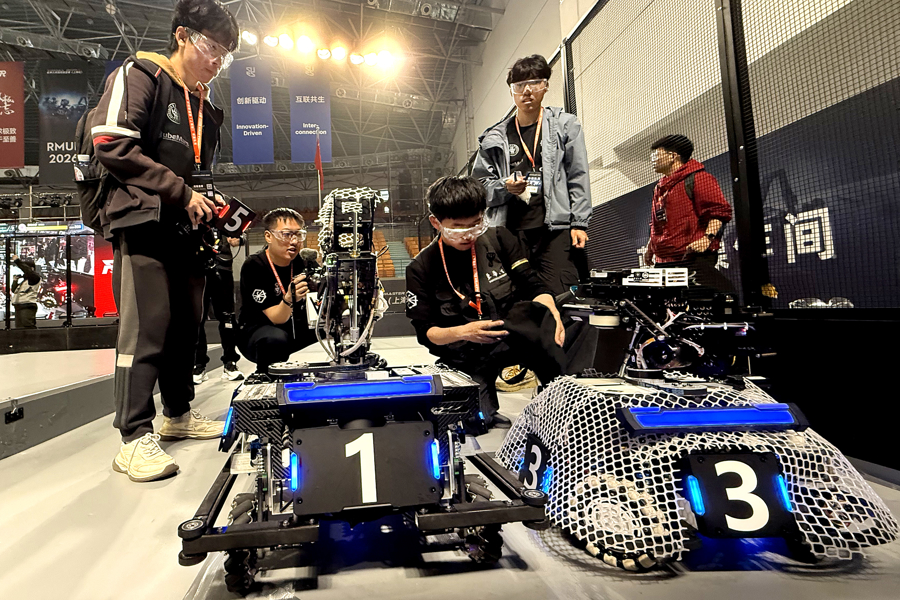
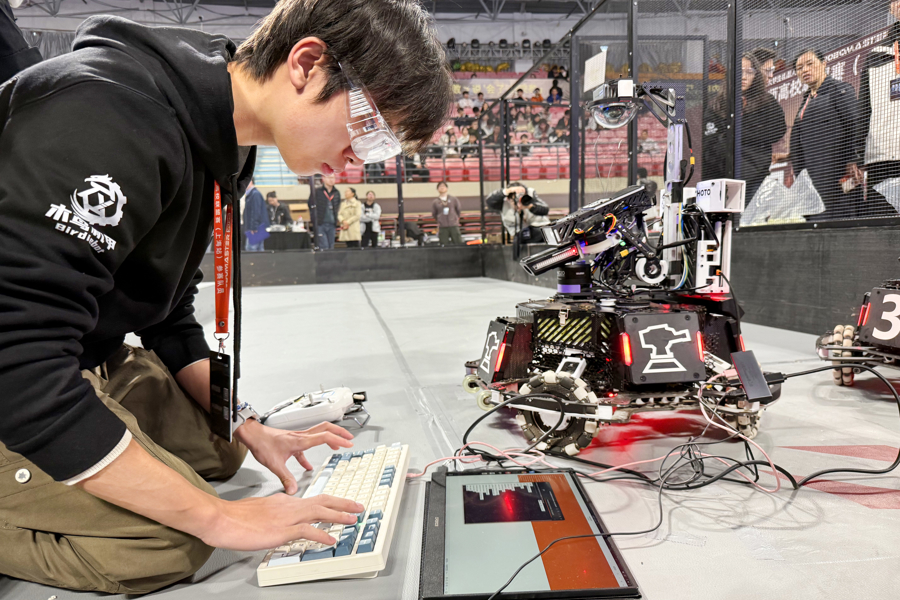
This competition is guided by the China Higher Education Society, the Strategic Consulting Center of the Chinese Academy of Engineering, and the China Guanghua Science and Technology Foundation, sponsored by the National College Student Robot Competition Organizing Committee, the Shanghai Songjiang District People's Government, and hosted by Shanghai University of Engineering and Technology.

According to reports, the RoboMaster Robot Master College League Competition (Shanghai Station) has been held at Shanghai University of Engineering and Technology for four consecutive years. In the past 4 years, more than 100 competitions have been held here, the growth of more than 1,000 young engineers has been witnessed, and more than 10,000 enthusiastic audiences have been received. The memory of the college league competition has been deeply rooted in Shanghai Songjiang.
China News Service, Beijing, April 4 (Reporter Sun Zifa) The reporter learned from the China Aviation Engine Group (China Aviation Engineering Group) on the 4th that the AEP100, a megawatt-class hydrogen fuel aviation turboprop engine independently developed by the Hunan Power Machinery Research Institute affiliated to China Aviation Engineering Group, was equipped with a 7.5-ton unmanned transport aircraft and successfully made its first flight at Lusong Airport in Zhuzhou, Hunan Province that day. This is the world’s first test flight of a megawatt hydrogen fuel aviation turboprop engine.
According to reports, the engine of the unmanned transport aircraft worked normally and was in good condition during the entire flight. It lasted 16 minutes in the air, flew a distance of 36 kilometers, flew at a speed of 220 kilometers per hour, and flew at an altitude of 300 meters above the ground. It returned successfully after completing the scheduled flight subjects, and the first flight was a complete success.
The megawatt hydrogen fuel aviation turboprop engine AEP100 is undergoing relevant tests. Photo courtesy of China Aviation Development Corporation
Industry experts said that the success of this world's first flight has achieved a stage leap from technology to engineering for China's independent development of megawatt-class hydrogen-fueled aviation engines. It marks that China has opened up the entire technology chain from core components to complete machine integration in the field of hydrogen-fueled aviation engines. It has verified the engineering reliability of matching the hydrogen fuel power system and the flight platform, laid a key foundation for the subsequent industrial application of hydrogen energy aviation, and is an important milestone in China's green aviation power development from technological exploration to engineering practice.
Experts said that as the cost of green hydrogen preparation further decreases in the future, the economic advantages and energy security advantages of hydrogen aviation power will gradually be revealed. Hydrogen fuel aviation engine technology is expected to be the first to be applied in low-altitude economic fields such as unmanned air cargo and island logistics, and gradually expand to manned regional aircraft. This technology will drive the collaborative upgrading of upstream green hydrogen energy preparation, midstream storage, transportation and refueling infrastructure, downstream high-end equipment and new materials and other industrial clusters, and continue to promote the green, low-carbon and high-quality development of China's aviation industry. (over)


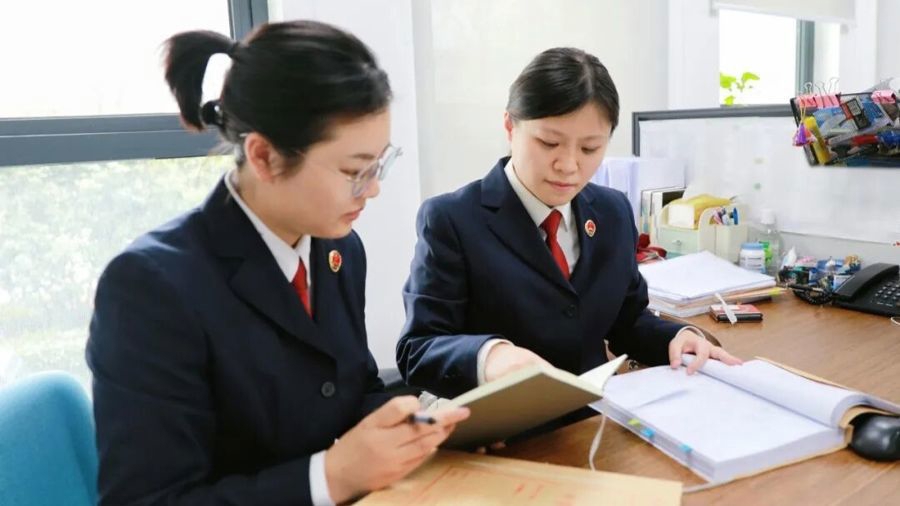
A loan of more than 9 million yuan had real collateral and sufficient market value, but the borrower was unable to repay it. It seemed like a contract dispute, but in the end he was charged with loan fraud and money laundering. The Jing'an District Procuratorate used a "penetrating review" to uncover the layers of disguise of financial crimes.
In December 2024, the public security organ applied for arrest of Park Moumou, accusing him of forging materials, concealing the true mortgage status of the mortgage, and defrauding Loan Company A of more than 9 million yuan. Pu Moumou used the property in his name as a mortgage, deliberately concealed the fact that he had borrowed more than 22 million yuan from Bank A as a mortgage, and tampered with the materials to falsely claim that only 9.85 million yuan was left unpaid. Company A lends money accordingly. Later, Park was unable to repay the debt and the crime was committed.
After arriving at the case, Park confessed to forging materials, but argued that the market value of the property of 32 million yuan was enough to cover the loan. The inability to repay was due to the delay in sale due to market fluctuations, and there was no intention to defraud.
The prosecutor in charge concluded that the collateral provided by Park was genuine and effective, that the residual value of the property at the time of the loan could still cover most of the loan, and that he had not evaded or squandered the loan, and that he would pay interest until the principal was due as agreed. It was determined that there was insufficient evidence for "illegal possession purpose". The Jing'an District Procuratorate made a decision not to approve the arrest in accordance with the law and recommended that the investigation agency continue to supplement evidence.
In August 2025, the case was transferred for review and prosecution. The prosecutor found that Park Moumou still had an operating company and other assets under his name at the time of the incident, and had already refunded one million yuan in compensation and later repaid the arrears in full, which still did not constitute the crime of contract fraud.
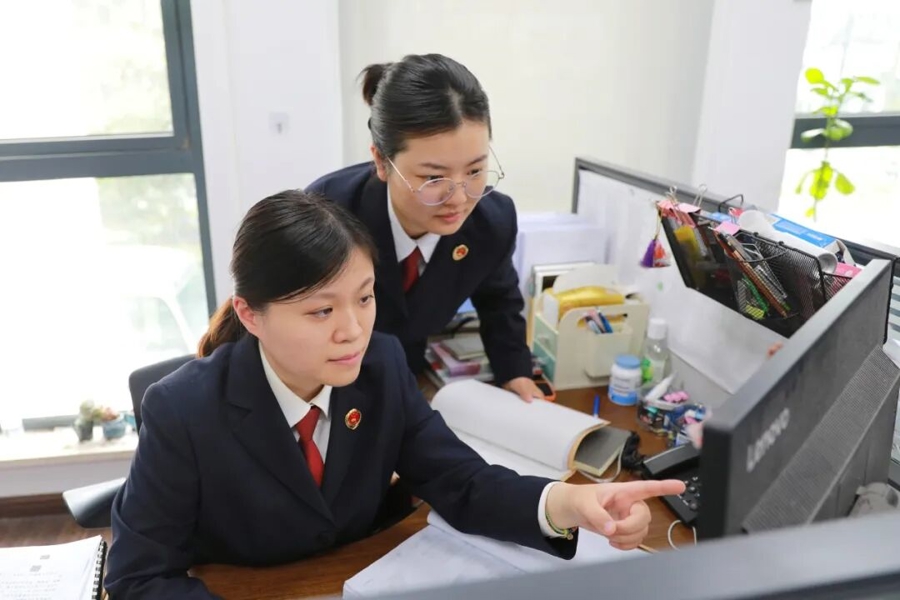
But prosecutors didn't stop there. By penetrating the flow of funds, it was found that Park applied for operating loans of more than 4 million yuan from Shenzhen Bank B and other institutions in the name of business operations, and all of them were actually used for futures investment. Prosecutors believe that he concealed the true purpose of defrauding the loan, causing the bank to lose more than 3.3 million yuan, and should be held criminally responsible for the crime of defrauding the loan.
At the same time, "one case and two investigations" were strictly implemented. Prosecutors found that in order to evade supervision, Park transferred and mixed the above-mentioned loans through multiple companies and personal accounts at multiple levels, and then "laundered" them and transferred 3.6 million yuan into his personal futures account. This behavior constitutes "self-laundering" and should be punished together with the crime of fraudulently obtaining loans.
The procuratorate also actively promoted the recovery of stolen goods and recovery of losses. Park Moumou reached a repayment agreement with the bank to recover losses to the maximum extent.
Recently, the Jing'an District Procuratorate filed a public prosecution against Park Moumou for the crime of loan fraud and money laundering. The court adopted all charges in the first instance judgment: sentenced to two years in prison and fined 30,000 yuan for the crime of loan fraud; sentenced to one year in prison and fined 10,000 yuan for money laundering; and punished several crimes concurrently. It was decided to execute a fixed-term imprisonment of two years and six months, suspended for three years, and fined 40,000 yuan.
The Jing'an District Procuratorate stated that it will continue to improve the professional capabilities of financial prosecution, strictly control facts, evidence, and laws, and build a strong financial security defense line by performing duties with high quality and efficiency.
 The Refrigerator Changed Drastically After Parents Came Here, And Netizens Posted The Same Style, As Well As A Guide To Keeping Food Refrigerated2026-02-27Comments(0)
 If Trump Returns To The White House, Von Der Leyen Says Europe Must Take Responsibility For Its Own Security And Be More Independent2026-02-25Comments(0)