
7,400 Freshmen At Shantou University Of Science And Technology Collectively Wrote Letters To Their Families, And They Were In Tears Before They Even Started Writing.
http://news.qingdaonews
http://news.qingdaonews
One contract, two directions, four ways to play, and understand the five parameters, you will hold the key to the options world.
Options are often labeled as "high risk" and "complex," which discourages many investors. However, at its core, it is a standardized contract that confers rights, and once you understand its core logic, it can become a flexible and powerful tool in your investment toolbox.
This article will take you to systematically sort out the core knowledge of options from definition to practice, laying a solid foundation for you.
01 The essence of options and the two classification dimensions
What are options? Options, also known as options, are essentially a financial derivative contract. It gives the holder (buyer) a right, but not an obligation: to buy or sell a certain amount of the underlying asset at a pre-agreed price on or before a specific date.
In order to obtain this right, the buyer needs to pay a fee to the seller, that is, a royalty. This is essentially pricing rights and obligations separately in finance.
The classification of options is mainly based on two core dimensions:
1. Divide according to the direction of rights:
Call option: gives the holder the right to "buy" the underlying asset. You buy call options when you expect the price of an asset to rise.
Put option: gives the holder the right to "sell" the underlying asset. When you expect the price of an asset to fall, you buy a put option.
Simple memory: Call = buy option, put = sell option.
2. Divided by performance date:
American options: can be exercised on any trading day before the expiration date. Most of the U.S. stock options we usually trade are American-style.
European options: can only be exercised on the expiration date.
In addition, options can also be divided into stock options, stock index options, commodity options, etc. according to the underlying assets.
02 Understand the five core parameters of options
To evaluate the value and risk of an option, you must master the following five core parameters:
1. Underlying asset price: the core of option premium pricing. The premium will change as the price of the underlying asset (such as a stock price) fluctuates.
2. Exercise price: The fixed buying and selling price agreed in the contract. This is the basis for future exercise.
3. Expiration date: the “shelf life” of the option. After expiration, if the option is in-the-money (in-the-money), the broker will generally exercise it automatically for you.
4. Premium: the market price of the option, which consists of two parts:
Intrinsic value: the profit that can be obtained by exercising the option immediately. For example, if the stock price is 120 yuan and the call option exercise price is 100 yuan, the intrinsic value is 20 yuan.
Time value: The portion of an option price that exceeds the intrinsic value and reflects the value of uncertainty brought about by the remaining time. It decays faster as the expiration date approaches.
5. Implied volatility: It can be understood as the "price-to-earnings ratio of the option." The higher the value, the more drastic the market expects future price fluctuations, and the option premium is usually more expensive, which is beneficial to the seller; vice versa, it is beneficial to the buyer.
In addition, professional option pricing models will also consider parameters such as risk-free interest rates, but the impact on novices is relatively small.
03 Income calculation: taking call options as an example
Using a specific case, you can clearly understand how the return of a call option is calculated.
Assumptions:
Current stock price: 80 yuan
Call option exercise price: 100 yuan
Expiration date: May 21
Royalty: 10 yuan/share
Quantity to buy: 5 sheets (1 sheet corresponds to 100 shares)
Expected expiration stock price: 150 yuan
Earnings estimate (simplified version, assuming the value returns to zero near expiration):
Profit = (expected stock price - exercise price - premium cost) × number of contracts × contract multiplier
= (150 - 100 - 10) × 5 × 100
= 20,000 yuan
If the stock price does not rise above the exercise price (100 yuan), the option has no intrinsic value, and the maximum loss is the entire premium cost, that is, 10 × 5 × 100 = 5,000 yuan.
04 Four Basic Operations: Risk and Return Map
All complex option strategies are based on a combination of the following four basic positions.
1. Buy call options
Operation: Pay the premium and obtain the right to buy.
Profit and loss characteristics: The maximum loss is the entire premium; theoretically unlimited gains (the stock price has unlimited room for increase).
2. Selling call options
Operation: collect the premium and assume the obligation to sell assets at the exercise price in the future.
Profit and loss characteristics: The maximum profit is the premium received; if the corresponding assets are not held (i.e. "naked selling"), the risk is theoretically unlimited when the stock price rises, so novices should avoid naked selling of call options. If you hold assets (covered positions), you can use them to enhance returns or hedge some risks.
3. Buy put options
Operation: Pay the premium and obtain the right to sell.
Profit and loss characteristics: The maximum loss is the premium; the maximum gain occurs when the stock price drops to zero, which is (exercise price - premium). Often used as "insurance" for holding stocks.
4. Selling put options
Operation: collect the premium and assume the obligation to buy assets at the exercise price in the future.
Profit and loss characteristics: The maximum profit is the premium; the maximum loss occurs when the stock price drops to zero, which is (exercise price - premium). Suitable for investors who wish to buy stocks at a discount to the market price.
05 Three ways to handle positions
After holding options, there are three main ways to close the position:
1. Automatic exercise: At expiration, if the option is in-the-money (in-the-money), the broker will usually help you automatically exercise it. It is important to ensure that the account has sufficient funds or securities, otherwise it may result in a default.
2. Early liquidation: Hedging out the original position through reverse trading before expiration. The buyer sells the option directly and the seller buys the same option.
3. Automatic invalidation: At expiration, if the option is out-of-the-money (out-of-the-money), it will automatically be invalidated and the value will return to zero.
06 Practical entry-level suggestions for novices
Step One: Start with Simulation and Minimum Units
Before investing real money, be sure to conduct sufficient simulated trading in the trading software. For your first actual practice, it is recommended to choose an underlying that is familiar to you, has good liquidity, and has a low premium, and only buy 1 call or put option. In this way, the maximum loss is clearly controllable, and experiencing a complete option cycle personally is better than reading ten theoretical articles.
Step 2: Establish a basic risk and capital management framework
Manage your options account like a pancake stand: set a daily loss limit (for example, no more than 2% of your total capital) and strictly enforce it. A layered fund allocation method can be adopted, such as using most of the funds for conservative "rent collection" strategies (such as covered opening), and a small part for directional trading.
Step Three: Continue to learn and remain in awe
Options are expendable assets and time is either your enemy (as a buyer) or your friend (as a seller). Always put risk management first and don't have a "get rich overnight" gambling mentality. There are always opportunities in the market, but only those who survive can seize them.
The door to the options world has been opened, and its core lies in strategic thinking and risk management. Start by understanding this "rights contract" and take the first step in your systematic study.
On April 15th, Netflix will release the final season of "Jelediah" all at once. This drama about the first female lawyer in Italy in the 19th century had almost no discussion on the Chinese Internet in the first two seasons, but its Rotten Tomatoes freshness score is 91%, and the highest single episode on IMDb is 8.7 - a typical "algorithm does not recommend it but everyone who has seen it said it is good".
I checked Netflix's April schedule and found that two of the three returning dramas are old IPs that have been around for many years. Only this Italian original drama has been cut to the end of its third season. Streaming media’s content decisions are never unreasonable, but users’ time ledgers do.
"Jelediah: The Underrated Finale"
The setting of the heroine Lydia Porter is still sharp today: in Turin in 1883, she was the only licensed female lawyer in the city, and her license could be revoked at any time by the male judges on the grounds of "indecentness". The crew researched the life of a real historical figure-Italy's first female lawyer Lidia Poët, but the case arrangement was completely fictitious.
The narrative rhythm of the first two seasons is very "European". A single 50-minute episode tells a complete case, interspersed with the heroine's court battle for the right to practice law. This structure seems luxurious in the era of short videos, but Netflix’s completion rate data clearly supports the renewal decision.
The central conflict of season three has been spoiled in the trailer: Lydia's best friend Grazia is accused of murdering her husband. The screenwriter twists personal friendships and professional ethics into a tight knot - she wants to defend her friend, but all the evidence points to guilt. This old proposition of "procedural justice vs. result justice" takes on a fresh sense of oppression in the 19th century context where gender power was extremely skewed.
The final season only has 6 episodes, and all episodes will be released on April 15th. For viewers who are used to catching up on updates, this is a rare mercy from Netflix.
The other two: Old Faces and New Variables
There are two other dramas returning in the same month, but the original information is limited. Judging from Netflix's scheduling practices, April is usually the window for the platform to clear inventory - the end of Q1 of the fiscal year, and mature IP is needed to stabilize the subscription churn rate. A drama with "high reputation and low traffic" such as "Jelediah" is scheduled to end at this time. There is a high probability that the contract will not be renewed after its expiration, rather than ending naturally.
The content life cycle of streaming media is shortening. In 2019, Netflix was willing to give "The Crown" a six-season budget. Nowadays, a show has a longevity if it lasts for three seasons. It's a blessing that Lydia Potter's story has been told at all - more episodes were axed at the end of season two, leaving an open ending in cyber ruin.
For those who have not followed the show, the total length of 18 episodes just fills two weekends. The threshold for historical dramas has been raised by gender issues, but the reasoning density of the case itself is enough to support genre film lovers. If you are tired of the courtroom roars of American legal dramas, the restraint and gloominess of Italians will be another experience.
After April 15, this drama will enter Netflix’s archive area, and the recommendation algorithm will no longer actively feed it. Content that spreads slowly by word-of-mouth will ultimately not be able to compete with the digital games that played the most in the first week - this is probably the most honest metaphor in the streaming media era.
What’s the most recent drama you’ve watched that was “not recommended by the algorithm but unexpectedly good”?
"Signing contracts depends on relationships, and making profits depends on claims" - this "motto" that has been circulated in the construction engineering circle for many years has accurately pointed out the pain points of the traditional model. In the era when design, construction, and procurement were contracted in stages, contract terms were mostly "framework agreements" and the boundaries of rights and responsibilities were just like words on paper: Party A's temporary design changes, Party B's delays in construction, and disputes over material price fluctuations can all become triggers for claims.
A set of latest data is enough to confirm the historical inertia of this hidden rule: Domestic construction claims have long accounted for 7%-8% of total project payments, but industry statistics in 2025 show that the average net profit margin of construction companies is only 1.8%, which means that claims in the past have almost become the "profit pillar" of some companies. From the perspective of judicial practice, from January 2023 to June 2025, a certain city court received 25,920 new cases of first instance involving construction project contract disputes, 52% of which involved claims for project price, which is basically the same proportion as in previous years. However, the success rate of claims has dropped to 28%-42%, and the subject amount of 61.3% of the cases is less than 500,000 yuan, and the main focus is on "small high-frequency" profit supplements. Data from a court in another province better reflect industry trends: 45,567 new construction project contract dispute cases were accepted from 2022 to 2024, and the number of cases accepted in 2024 reached 18,415, a year-on-year increase of 16.4%. However, the proportion of "claim disputes caused by contract loopholes" has dropped from 35% in 2022 to 22% in 2024, and the living space for unspoken rules is continuing to shrink.
In the industry ecology at that time, some companies even included the ability to claim compensation as a core assessment: they deliberately lowered the price when bidding, and after winning the bid, they "made up" the profits by digging for loopholes in the contract and creating change visas. This kind of "low quotation + high claim" game has grown wildly in the soil of ambiguous rights and responsibilities for decades.
With the advent of the EPC era, the claim space has been “accurately compressed”
The turning point occurred with the comprehensive popularization of integrated models such as EPC and general engineering contracting. In 2016, the Ministry of Housing and Urban-Rural Development clearly stated that "government-invested projects and prefabricated buildings should actively adopt the general engineering contracting model." This policy vane continues to exert force. The EPC model accounts for more than 60% of government-invested projects in 2024-2025, directly promoting the industry from "segmented fragmentation" to "full chain integration."
The changes are first reflected in the contract text. Compared with the "extensive and vague" nature of traditional contracts, the model text of the general engineering contracting contract has achieved "refinement of the entire process" - from design depth, material standards to construction period nodes and risk sharing, every clause is clear enough to be quantified and accountable. More importantly, under the EPC model, the contractor is responsible for all aspects of design, procurement, and construction. Traditional claims reasons such as "design defects leading to construction changes" and "procurement delays affecting the construction period" have become the contractor's own responsibility.
The strengthening of cost control throughout the entire process has further plugged claims loopholes. Data disclosed by a provincial finance department in 2025 show that EPC general contracting projects at the autonomous region level have passed standardized review, with a net review reduction rate of as high as 25.59%, effectively squeezing out the "claims water" in project submissions. Industry research shows that for EPC projects that adopt strategies such as contract refinement, cost index linkage, and target cost management, the cost overrun rate can be reduced to 3%-6%, which is significantly lower than the traditional model, and the transparency of cost management has been greatly improved. The previous fuzzy zone of "construction first and settling accounts later" has been compressed. Changes in visas need to be reported in advance, price adjustments have clear formulas, and construction delays have quantified penalties. The "operational space" for claims has been accurately squeezed.
2. How should enterprises transform from "claim dependence" to "lean management and control"?
The essence of the failure of "profit depends on claims" is not the thinning of industry profits, but the reconstruction of competitive logic: in the past, we focused on "the ability to exploit loopholes", and now we strive for "hard skills in cost control." The scale of the domestic construction market is expected to reach 32 trillion yuan in 2025, but material fees still account for 60%-70% of construction costs. The average price of main materials such as steel bars and cement will increase by up to 18% year-on-year in the first quarter of 2025. There is less and less window period left for enterprises to adjust prices, and extensive management is no longer sustainable. In this transformation, two types of companies are coming to the fore:
One type is the “integrator” who connects the entire chain. The core advantage of the EPC model lies in the deep integration of design, procurement, and construction. A municipal engineering general contracting company reduced the cross-cutting work of pipeline laying by 30% by optimizing the design plan. It locked the price of building materials through centralized procurement and avoided the risk of short-term fluctuations in raw materials. Through construction process innovation, it shortened the construction period by 15%, and the final cost was 8% lower than the industry average. This ability to "control costs from the source" is far more sustainable than claiming compensation after the fact.
The other type is “refined managers” who make good use of digitalization. With the help of BIM technology, AI measurement tools, and cost management systems, companies can achieve dynamic monitoring of costs. A prefabricated construction company simulates the entire construction process through BIM models, discovers design conflicts in advance and optimizes them, reducing rework losses; it tracks material consumption in real time through the cost system and controls the waste rate within 2%. The 2025 industry report shows that digital project management can reduce the engineering cost deviation rate from the traditional 10%-15% to 2%-4%, and the profit margin of projects with the implementation of AI measurement tools will increase by 3.6 percentage points on average. This is the core value of lean management.
For engineering companies, instead of struggling with the increasingly narrow claim space, it is better to invest their energy in technological innovation, management upgrades, and supply chain optimization. After all, the direct compensation for a minor safety accident plus the loss of work stoppage is about 1.2 million yuan, which is equivalent to 5% of the project profit; the blind compression of the construction period will increase the rush fee by 8% to 12%. The control of these hidden costs is far more valuable than claims.
Conclusion
The end of the era of "profits based on claims" is not a "cold winter" for the industry, but a "spring" for high-quality development. When the hidden rules fail, the true core competitiveness will be highlighted. Industry data in 2025 has proven that companies that rely on loopholes to survive are being eliminated by the market, while companies that are deeply involved in lean cost control and embracing digital transformation are increasing their net profit margins from the industry average of 1.8% to more than 3%.
For practitioners in the field of construction engineering, adapting to the restructuring of rights and responsibilities in the EPC model, using full-chain integration capabilities to resist risks, and using digital tools to accurately control costs are the keys to crossing industry cycles and achieving long-term profitability.
After all, making money by relying on loopholes will never last long, and only by making money by strength can you go far. Has your company already embarked on this transformation journey? Welcome to share your observations and practices in the comment area.
Since March, the price war in the automobile industry has continued to spread. Following BYD Auto's price reduction strategy of "electricity is lower than oil", China News Weekly reported that so far, according to incomplete statistics, more than 30 car brands have officially announced price reductions in different forms.
The “price war” in the auto market intensifies
According to CCTV News, the domestic auto market is ushering in a new round of price cuts. This wave of price cuts in the auto market is mainly concentrated on new energy vehicles, with price cuts ranging from 5% to 15%, and price drops ranging from a few thousand yuan to tens of thousands of yuan.
The Passenger Car Association analyzed that judging from the pace of price cuts, this is an astonishing level compared to history. Industry insiders said that the main reason for the price reduction is that my country's new energy vehicle companies have made rapid progress and are large in scale, and they have the price reduction strength to compete with oil vehicles.
The fuel vehicle market may come under further pressure
Data from the Ministry of Public Security show that in 2023, there will be 24.56 million newly registered cars nationwide, an increase of 1.33 million vehicles compared with 2022 and a year-on-year increase of 5.73%. Among them, new energy vehicles reached 7.43 million, accounting for 30.25% of the number of newly registered vehicles, a year-on-year increase of 38.76%. In 2023, the number of new energy vehicles in my country will reach 20.41 million, accounting for 6.07% of the total number of vehicles. Among them, the number of pure electric vehicles is 15.52 million, accounting for 76.04% of the number of new energy vehicles.
Although the proportion of new energy vehicles in the total is still low, the growth rate of new energy vehicles is still relatively fast. According to data from the China Association of Automobile Manufacturers, from January to February 2024, the domestic production and sales of new energy vehicles continued to maintain rapid growth year-on-year. Among them, new energy vehicle sales reached 1.207 million units, a year-on-year increase of 29.4%, and the market share reached 30%.
As this year's "Government Work Report" proposes to encourage and promote the replacement of old consumer goods with new ones and boost the consumption of bulk commodities such as intelligent connected new energy vehicles and electronic products, in the opinion of many industry insiders, the sales of new energy vehicles will further grow, and the sales of fuel vehicles may be further pressured.
PetroChina provides a full range of energy replenishment services
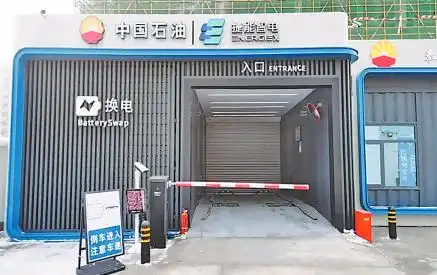
Whether it is a new energy vehicle or a fuel vehicle, you can go to PetroChina to refuel at any time.
Currently, China Petroleum's terminal business is accelerating its transformation into a comprehensive energy service provider of "oil, gas, hydrogen, electricity and electricity". By the end of 2023, PetroChina has built a total of 1,875 photovoltaic storage stations, 957 charging stations, 69 battery swap stations, 22 hydrogenation stations, and 72 comprehensive energy service stations.
PetroChina has renovated and upgraded its energy supplement business, and accelerated the completion of green and low-carbon comprehensive energy stations with multiple functions.
In Guangdong》》》
In 2023, Guangdong Sales has completed the approval of 202 charging and swapping projects, built 100 charging stations, and put 2 hydrogenation stations into operation, taking solid steps towards the strategic goal of "thousands of stations and thousands of piles".
On November 16, 2023, the first supercharging station sold in Guangdong-Shenzhen Futian District Committee Supercharging Station was officially put into operation. The station integrates the public brand logo of Shenzhen charging facilities and the image design plan of PetroChina. It has a total of 30 charging parking spaces and is equipped with one 120-kilowatt integrated dual-gun DC fast charging pile, two V2G charging piles, and 15 7-kilowatt integrated single-gun slow charging piles. The station applies fully liquid-cooled flexible supercharging technology with the advantages of being quiet and efficient. After experiencing it, car owners said that the charging equipment can achieve a range of 200 kilometers for new energy vehicles after charging for 5 minutes.
In Shanghai》》》
In recent years, Shanghai Sales has actively promoted the transformation of traditional oil product sales companies into comprehensive energy service companies, building a multi-energy service pattern of "oil, hydrogen, and electricity". Up to now, Shanghai Sales has built 2 hydrogenation stations, 5 battery swap stations, 1 off-site charging station, and installed charging piles in 12 gas stations.
On January 16 this year, the Guanhai Road Charging Station, the first off-station charging station sold in Shanghai, was put into operation. This charging station is the first off-site charging station built by PetroChina in the Shanghai area. It is equipped with 15 dual-gun DC charging piles and 5 V2G charging piles. It can provide 120 kilowatt fast charging services for 40 vehicles at the same time and is expected to reduce carbon emissions by about 372 tons per year. In accordance with the "full ecological" layout idea, the station is equipped with convenient service facilities such as Usmile unmanned convenience stores and direct drinking hot water. It is included in the taxi charging demonstration station named by the Shanghai Municipal Transportation Commission.
In Shanxi》》》
Shanxi Sales expects to put 9 charging stations into operation in the first half of this year. Shanxi Sales Taiyuan South Station comprehensive charging station was officially put into operation on January 1 this year. It is the largest charging station currently in operation by PetroChina. The station currently has a total of 40 120-kilowatt dual-gun fast charging piles and 107 40-kilowatt AC charging piles. The maximum daily charging capacity is 26,000 kilowatt-hours. It can meet the charging needs of 187 electric vehicles at the same time, and the bicycle can be charged in as fast as 30 minutes. In addition, the station is also planned to have "charging +" services such as Usmile Kunlun Hospitality convenience store, restaurant and driver's home.
In Beijing》》》
Beijing Sales has accelerated the expansion of new energy station construction and actively built an in-station and out-station service system. A total of 12 charging stations and 3 hydrogenation stations have been put into operation.
The Andao charging station, which will open in December 2023, is a "oil and electricity integration" supply station affiliated to Beijing Sales. The station is located in Sunhe Township, Chaoyang District, Beijing. It is an important place for handover of traditional taxis and online car-hailing services and energy replenishment in this area. There are 20 quick-charging guns in the station. Since its opening, the station has served more than 200 electric taxis and online car-hailing vehicles every day, with a maximum charging capacity of 6,300 kWh in a single day, which has greatly alleviated the problem of charging difficulties for electric taxis and online car-hailing vehicles in the area.
In Sichuan》》》
Since the "14th Five-Year Plan", Sichuan Sales has built a total of 48 photovoltaic projects, 151 charging stations, and 1,314 charging guns, developed a total of 320 new energy projects, and put 202 into operation. Based on site advantages and brand advantages, Sichuan Sales' new energy layout of "charging, battery swapping, hydrogenation, and photovoltaics" in Sichuan is rapidly unfolding.
On January 8 this year, Sichuan Sales Guangyuan Branch’s first charging and swapping station in Guangyuan City, Sichuan North Plaza Station, was officially put into operation. The station is equipped with a fully liquid-cooled containerized power swap station and 25 battery positions. It can provide 280 power swap services per day, and can achieve extremely fast power swaps in less than 2 minutes. Based on the characteristics and needs of the taxi industry, this station rationally optimizes the passenger flow distribution of charging and swapping stations to ensure smooth and efficient vehicle entry, battery swapping and departure processes.
In Zhejiang》》》
Zhejiang Sales has formulated a new energy development plan and a carbon peak action plan, and vigorously promoted the development of various new energy businesses such as charging and swapping, hydrogen energy, and distributed photovoltaic power generation. Currently, Zhejiang Sales has put into operation 30 photovoltaic stations, 72 charging stations and 1 battery swap station.
The Hongpu Road gas station of Zhejiang Sales Hangzhou Branch is a comprehensive functional station integrating refueling, charging, car washing and car maintenance. At present, the charging piles at the station have been installed and debugged, and the charging gun is undergoing measurement verification. It is expected to be officially put into operation in the near future. The charging station is based on the Kunlun Grid Management Platform and has 4 charging piles, which can provide charging services for 8 vehicles at the same time. The charging station enjoys Hangzhou’s new energy electricity price policy and can charge 30 kWh in half an hour.
How about it? Are you no longer worried about charging issues now? No matter you choose a gas vehicle or a new energy vehicle, Youbao has prepared a quick and good way to replenish energy for you. PetroChina will also accelerate its green and low-carbon transformation and provide everyone with more travel energy replenishment options.
In Chongqing》》》
In recent years, Chongqing Sales has put into operation a total of 60 integrated energy stations for charging, battery swapping, and hydrogenation.
Chongqing Sales has added charging services at the Nanping gas station located at the south end of the Yangtze River Bridge and will be put into operation on December 30, 2023. The station has 4 charging parking spaces and realizes fast charging through intelligent dynamic module allocation function.
Netizens’ messages》
Han Qianluo (Inner Mongolia): PetroChina is making a big move, and I can do it green and low-carbon.
Xiaoxiao: I have been driving the tram for a while. If there is no charging station at home, charging is quite troublesome and wastes time.
Day by day (Hebei): There has been a breakthrough in new energy supply, and car prices will fall. Waiting for the continuous breakthrough of new technologies.
BIM is the digital base and collaboration center for intelligent construction. With the three-dimensional parametric model as the core, it connects the entire life cycle data of the building to achieve visualization, collaboration, and intelligence in design, construction, and operation and maintenance.
1. Design stage: intelligent design and rehearsal
- 3D visualization + multi-disciplinary collaboration: Say goodbye to 2D drawings, architecture/structure/mechanical and electrical collaborate in real time on a unified platform to eliminate information islands.
- Collision detection + solution optimization: discover pipeline/structure conflicts in advance, reduce errors and defects, and reduce rework.
- Parameterization + performance simulation: quickly iterate the plan and perform energy consumption, sunshine, and structural safety analysis simultaneously.
- Accurate measurement: The model automatically generates project quantities, providing a reliable basis for cost control.
2. Construction Phase: Intelligent Control and Lean Construction
- 4D/5D construction simulation: progress + cost visualization, optimize processes and resources, shorten construction period, and control costs.
- Smart construction site integration: BIM+IoT+AI, real-time monitoring of personnel, equipment, environment, quality, and safety.
- Digital construction: Guide prefabricated component processing, robot construction, and AR on-site explanations to improve accuracy and efficiency.
- Real model consistency verification: 3D scanning + BIM comparison to ensure that the construction is consistent with the model and the quality is traceable.
3. Operation and maintenance stage: digital twin and smart operation
- Digital twin base: Build a digital mirror of the building based on BIM to achieve three-dimensional panoramic visual management.
- Asset and equipment management: The entire life cycle data can be checked, and equipment can be quickly located, fault traceability, and maintenance plans.
- Energy consumption and space optimization: Combined with IoT data, intelligently regulate energy consumption and improve space usage efficiency.
- Emergency and reconstruction: Quickly locate pipelines and structures to support emergency response and reconstruction and expansion decisions.
4. Core values (one sentence summary)
BIM allows buildings to change from "paper drawings" to "digital pre-construction", achieving full-process data integration, efficient multi-party collaboration, and intelligent decision-making optimization, ultimately reducing costs, improving quality, increasing efficiency, and reducing carbon.
#cadres bring confidential documents home, secretly photographed by relatives and sent abroad#
Case review
On January 28, 1992, Tonghai Company was incorporated with a registered capital of 34.5 million French francs, and its shareholders were Haima Company and BEFS Technology Co., Ltd. The "Articles of Association of Tonghai Company" stipulates that the capital contribution of Party A (Haima Company) to the company's registered capital is the equivalent (assets) of 17.25 million French francs, which includes the land use rights of the factory site, the land use rights and extraction rights of the sand site, and the factory.
The "Capital Verification Report" states that the physical object invested by China in the third phase, the factory, was delivered for use on December 31, 1995, with an appraised value of RMB 175,981,71.60. However, the main factory building has not yet obtained the real estate certificate, and the relevant certificates for land use rights, technology licenses and exclusive rights have not been obtained.
On July 4, 2011, a lawsuit occurred between Jiachen Company and Tonghai Company. In this case, a high court made a judgment and ordered Tonghai Company to repay a loan debt of 82.93 million French francs (equivalent to 101.66 million yuan) to Jiachen Company.
On October 11, 2014, the Jiachen Company Court filed a lawsuit, claiming that Haima Company, as a shareholder of Tonghai Company, had obviously made false capital contributions, abused Tonghai Company's independent legal person status and the limited liability of shareholders, evaded huge debts, and seriously damaged the interests of creditors. It requested an order to order Haima Company to repay 82.93 million French francs (equivalent to RMB 101.66 million) to Jiachen Company. [The companies mentioned in the case are all pseudonyms]
case outcome
After hearing the case, the court ruled that the lawsuit of Jiachen Company should be dismissed.
Zeda analysis
Beijing Zeda Law Firm will provide you with the following legal analysis based on this case:
1. In what forms can shareholders contribute capital?
According to Article 48 of my country's new "Company Law" that will be implemented on July 1, 2024, shareholders' capital contributions are divided into two categories: monetary investment and non-monetary property investment, and the scope of non-monetary property is significantly expanded compared with the old law. Under the dual standards of "available monetary valuation" and "transferable in accordance with the law", new statutory forms such as equity and debt rights have been added, providing a more flexible path for corporate financing.
Currency investment is the most basic form of investment, covering RMB and freely convertible foreign currencies that comply with foreign exchange management regulations. In practice, shareholders need to ensure that the source of funds is legal, and the purpose of "investment funds" must be indicated when transferring money through banks. If they entrust others to pay on their behalf, the identity of the actual investor must be indicated to avoid ownership disputes.
Non-monetary property investment includes five typical forms:
1. Physical objects (such as houses, equipment, raw materials) must have clear ownership, no encumbrances, and be available to the company;
2. Intellectual property rights (such as patents, trademarks, copyrights) need to ensure that technology delivery is barrier-free and ownership is clear;
3. Land use rights are limited to state-owned land obtained with compensation. Allocation or collective land requires payment of transfer fee or conversion of nature;
4. Equity ownership must be complete and flawless, and legal procedures such as other shareholders’ preemptive rights must be fulfilled;
5. Claims are divided into "debt-for-equity" (debts converted into equity during the company's duration) and ordinary debt contributions (claims against third parties, but the discount risk needs to be carefully assessed due to uncertainty in repayment) 157.
Special attention should be paid to the fact that the law explicitly prohibits capital contributions in the form of labor services, credit, names of natural persons, goodwill, franchise rights, or property with guarantees, because they are difficult to value or transfer.
No matter what non-monetary form is used, shareholders need to perform two core procedures: valuation (value verification by professional institutions to prevent overestimation or underestimation) and property rights transfer (movable property delivery, real estate/equity transfer registration). Otherwise, they may be deemed to have not fully fulfilled their investment obligations, which will lead to joint and several liability or the risk of loss of rights.
2. In this case, did Haima Company, as a shareholder of Tonghai Company, fulfill its capital contribution obligations?
According to Article 28 of the Company Law (amended in 2018), if non-monetary investment is made, property rights transfer procedures must be completed in accordance with the law. If the physical capital contribution is in place and put into use and it is objectively impossible to go through the transfer procedures, and it complies with the circumstances specified in Article 10 of the "Provisions of the Supreme People's Court on Several Issues Concerning the Application of the Company Law of the People's Republic of China (3)" "Property that has been actually delivered for use although the ownership change procedures have not been completed, it has played an asset role for the company and has essentially achieved the purpose of the capital contribution", it should be deemed that the ownership transfer procedures have been completed.
On the other hand, if the investor has gone through the ownership change procedures but has not actually delivered the property to the company for use, the company or other shareholders may claim that the investor delivered the property to the company and will not enjoy the corresponding shareholder rights until the actual delivery. The People's Court will support this claim.
In this case, according to the Articles of Association of Tonghai Company, Haima Company used the land use rights of the factory site, the land use rights and extraction rights of the sand site and the factory as capital contributions, with the capital contribution being the equivalent (assets) of 17.25 million French francs. The "Capital Verification Report" states that the physical object invested by China in the third phase, the factory, was delivered for use on December 31, 1995, with an appraised value of RMB 175,981,71.60. Therefore, Haima Company has actually delivered the physical plant invested by China in the third phase to Tonghai Company for use in accordance with its articles of association.
In summary, it should be determined that Haima Company has fully fulfilled its capital contribution obligations to Tonghai Company, and Jiachen Company’s claim that Haima Company failed to fulfill its capital contribution obligations lacks factual and legal basis.
Message from lawyer
In practice, there are many situations where real estate investment is delivered but ownership changes are not processed. With the official implementation of the new company law, investing shareholders should promptly register changes in ownership. If the shareholder completes ownership registration within the grace period stipulated in the company's notice, the date of his capital contribution shall be registered based on the date of actual delivery of the real estate. Otherwise, under the new company's loss of rights system, the shareholder may lose his shareholder rights if he fails to complete ownership registration within the grace period stipulated in the company's notice.
The board of directors should also verify the shareholder's capital contribution. If it is found that the shareholder has not paid the capital contribution stipulated in the company's articles of association in full and on time, the company should issue a written reminder to the shareholder to call for the capital contribution. If the company's board of directors fails to perform its obligations stipulated in the preceding paragraph in a timely manner and causes losses to the company, the responsible directors shall be liable for compensation.
The lawyers of Beijing Zeda Law Firm sort out and study different legal regulations, hot topics, cases, and judgment documents, aiming to provide more readers with different research angles and observation perspectives. However, it should be noted that our country is not a case law country, and the details of different cases in judicial practice vary widely, so blind reference must not be made.
If you encounter similar disputes that are difficult to resolve, it is also recommended that you consult the professional lawyers of Beijing Zeda Law Firm in a timely manner to better protect your legal rights and interests.
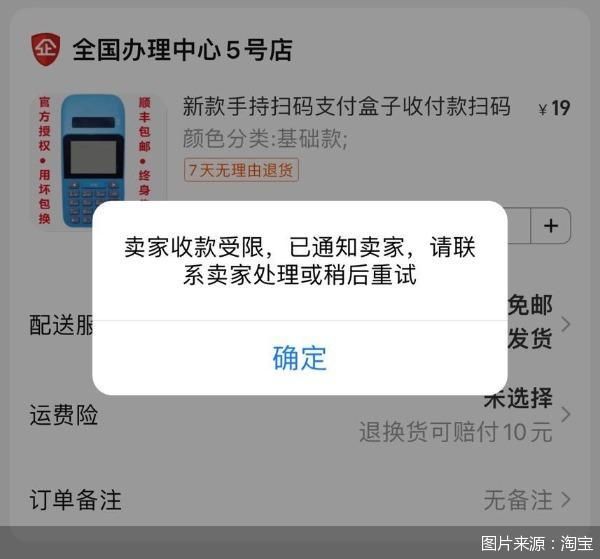 There Are Hidden Tricks In Online Sales Of POS Machines, And The Risk Of Cashing Out By Illegal Drivers Is High2026-04-09Comments(0)
 Head Coach Of The Chinese Women's Football Team: Most Of The Team's Players Appeared In The Group Stage, And The Coaching Staff Trusts Everyone2026-03-13Comments(0)
 The Shanghai Composite Index Is Off To A Good Start! Allianz Fund’s Zheng Yuchen Wishes Investors A Fruitful Harvest In 20262026-02-24Comments(0)
 If Trump Returns To The White House, Von Der Leyen Says Europe Must Take Responsibility For Its Own Security And Be More Independent2026-02-25Comments(0)