
Will Li Yunlong Take Revenge For Shunliu? Like Avenging Monk Wei
If Shunliu was Li Yunlong's subordinate, would he avenge Shunliu? Just look at Wei Monk, Japanese Army, National Army, Wei Monk, Chu Yunfei, Li Yunlong, Independent Regiment
If Shunliu was Li Yunlong's subordinate, would he avenge Shunliu? Just look at Wei Monk, Japanese Army, National Army, Wei Monk, Chu Yunfei, Li Yunlong, Independent Regiment
BNB broke through the important psychological level of $1,000, and BNB Chain also ushered in another surge in on-chain activity. On September 21, its daily trading volume hit a new high in nearly 30 days, exceeding 16.5 million transactions in a single day. At the same time, BNB Chain and opBNB have also become the public chains with the highest number of daily active users.
BNB Chain is gradually becoming an amplifier of market sentiment, from Jobless, Aster to Giggle and Sign. With the support of CZ, it has advanced from a "wealth password" to a "wealth password" manufacturing machine.
In addition, BNB Chain is also striking while the iron is hot to strengthen its fundamentals and plans to reduce the cost of a single transaction to approximately US$0.005 through network upgrades. Wall Street asset management giant Franklin also officially announced the expansion of its self-developed tokenization platform Benji to BNB Chain.
However, in the high price and lively atmosphere, some long-term BNB holders did not choose to sell sharply and leave the market in time.
not much choice
After BNB broke through a new high of $1,000 recently, Kun, a market maker for the Binance Alpha project, did not sell. He has been holding BNB since 2021, and 90% of his positions are BNB.
Kun basically does not participate in other non-mainstream altcoins. "When I exit and I don't know where to go for the time being, I will first hold BNB to absorb the benefits of interest rate cuts."
However, as the staking lock-up period is lifted, Kun may consider withdrawing part of it. This is because after the launch of Binance Alpha, Launchpool’s income has decreased, and Kun’s passive income has also shrunk.
Another major BNB investor, Chen, has sold 20% and invested part of the funds in other platform coins, while a small amount of funds are betting on new hot memes on BNB Chain.
Starting from the beginning of 2024, he gradually invested 50% of his position in BNB when the BNB price was in the range of 300-500 US dollars. After CZ was released from prison, Chen continued to add positions. After recently selling 20% of BNB, BNB now accounts for 30% of his entire position.
From May this year to now, BNB has risen from around $500 for almost five months. For Chen, taking profits at high points is a routine operation. The reason why there is no sharp sell-off is that firstly, he believes that BNB Chain is still on the trend, and secondly, there is no better place to go. "Bitcoin and Ethereum are growing too slowly, and other altcoins and Dogecoins only dare to test the water with small positions."
Crypto KOL BigFang shared on Youtube that $1,000 is an important psychological threshold. After the breakthrough, traditional OTC funds will enter the market.
In early September, Hong Kong's compliance exchange OSL opened BNB trading services to professional investors. BNB is also the sixth currency to be listed on the exchange. In addition, a number of listed companies have formed BNB strategic reserves, and VanEck and REX Shares & Osprey Funds have submitted applications for BNB ETFs to the US SEC.
The crypto KOL Big Big Orange revealed on Twitter that he has been holding BNB since the BNB ICO and has continued to increase his position by 1,000 BNB when it hit a new high of $990. After BNB’s new high, BNB remains its third largest position, behind Ethereum and Bitcoin.
In addition to continuing to hold BNB, he has also invested in the BNB Chain ecosystem and has purchased 1.4 million Aster, saying, "I want to hold Aster just like I held BNB 8 years ago."
Why can you hold a position for so long?
Compared with market sentiment such as CZ's possible return to Binance leadership, the long-term BNB holders interviewed this time may be more concerned about BNB's token economic model, team leadership and other fundamentals, as well as future incremental space.
1. BNB captures the real income of the BNB system
"From the perspective of the token economic model, BNB captures the real income of BNB." This is the most critical reason for Kun's position.
In Kun's view, on the one hand, BNB is repurchased and destroyed every quarter. This deflation mechanism directly feeds the exchange's profits back to the token value. Through continued token burning, the initial supply of BNB is reduced from 200 million to around 100 million, enhancing scarcity and value.
Kun mentioned that CZ and his team hold part of BNB, and these tokens will not flow to the market, which means that the circulating market value of BNB is lower than the data seen on the surface.
On the other hand, BNB uses Binance Alpha to allow project parties to form a fund pool on the BNB Chain. These capital pools will be established using BNB, resulting in a large amount of BNB being locked in the capital pool. This mechanism is similar to Solana's splitting principle, which reduces the circulation by locking tokens, thereby increasing the value of the tokens.
Holding BNB can enjoy additional benefits from Launchpool, HODLer airdrops, MegaDrop, etc., which is quite attractive. This is also a key reason for Chen, a major BNB investor, to hold it for a long time. Chen also mentioned that BNB, as the core asset of the Binance ecosystem, can be used in new activities such as transaction fees, staking and airdrops, as well as BNB Chain ecological applications, giving it strong value capture capabilities.
2. “Bull” CZ
The strategic and execution capabilities of CZ and BNB are also an important reason why everyone is generally willing to hold them for a long time.
Chen believes that Ethereum is more like a large company that is slow-paced and relies on external capital, while BNB Chain is like a proactive startup. Especially after CZ's return, the team continues to launch new projects and new gameplay, and there is always a way to shift market attention and funds to the BNB ecosystem.
Starting from CZ calling "test coin" TST in February, and then from CZ's dog, Mubarak, a CZ who originally said he didn't like memes, successfully transferred the community's enthusiasm for trading memecoin from Solana to BNB Chain.
After the meme craze temporarily subsided, Binance Alpha led the community to trade new Binance projects; since then, there have been narratives about Four.meme's platform currency and BNB's reserve strategy. Last week, after CZ changed the X account profile from "ex-@binance" back to "@binance", it then moved to Perp DEX, and then Aster increased dozens of times. The CZ effect has also begun to sweep through the community. CZ interactive projects include projects invested by YZi Labs, which have become the new password of the community.
Crypto KOL @yuyue_chris Yuyue also posted on the X platform that after CZ’s official “return”, people really feel like they can make money with him. “Binance has really understood the nature of assets this time.”
For Kun, who has a technical background, after seeing too many "Ponzi schemes" in the currency circle that deceive people from various angles such as technological innovation, CZ is one of the few who makes him feel that his intentions are good. "CZ has long been financially free. It is definitely not for money. As a man of science and engineering, he is active on the front line and pays attention to interesting content. It feels like it is more to consolidate the status of Binance as a whole."
3. Incremental space brought by traditional fields
The confidence in holding BNB not only comes from the vitality within the community, but also from the gradual recognition and adoption in traditional fields. This "external verification" brings BNB larger application scenarios and huge new funds.
In terms of application scenarios, on the one hand, Wall Street financial giants have successively expanded their RWA business to BNB Chain. Recently, asset management giant Franklin Templeton, which manages US$1.6 trillion, has expanded its tokenized products to BNB Chain. Another asset management giant, VanEck, also launched the tokenized treasury bond fund VBILL on the BNB Chain through cooperation with Securitize. Ondo Finance and xStock have also announced that they will introduce tokenized treasury bonds and structured products to the BNB Chain.
On the other hand, Binance Pay is also actively promoting its adoption in traditional commerce. Recently, it has been launched at 30,000 merchants in South Africa through cooperation with Zapper.
In terms of new funds, the BNB strategic treasury of traditional listed companies also brings structural buying.
In addition, the Greb Mindfulness City (GMC) Special Economic Zone in the Kingdom of Bhutan has included BNB in its official strategic reserve asset list, which means that the value and security of BNB have received attention and recognition at the sovereign level.
4. The policy risks faced by Binance are reduced
In March this year, Binance announced that it had received a US$2 billion investment from Abu Dhabi’s state-owned capital MGX, which was a very positive signal for Kun. This means that Binance has found a strong "protective umbrella".
This year, as the U.S. encryption environment becomes increasingly friendly, the policy risks faced by Binance are gradually being lifted.
In May, the SEC applied to drop the lawsuit against Binance, Binance US and CZ. On September 16, Bloomberg reported that Binance was negotiating with the U.S. Department of Justice to potentially end the compliance monitoring period starting in 2023 early. This development has dispelled the market's biggest long-term doubts to a certain extent.
Under the global compliance trend, Binance has obtained regulatory licenses from about 21 countries or regions, including Dubai, Japan, the European Union and Southeast Asia, putting its business on a more compliant basis.
Conclusion
In the current market environment full of uncertainty, long-term holding of BNB not only reflects investors' pragmatic tendencies among limited choices, but also represents a vote of confidence in a continuously evolving ecosystem.
People's governments of all counties and districts, the Management Committee of Hanzhong Economic and Technological Development Zone, all working departments of the municipal government, and directly affiliated public institutions: The newly revised "Management Measures for the Allocation of State-owned Assets of Administrative Institutions of Hanzhong City", with the approval of the municipal government, are hereby issued to you,
Please implement it carefully.
Hanzhong Municipal People's Government
July 17, 2020
Measures for the Management of State-owned Asset Allocation of Administrative Institutions of Hanzhong City
Chapter 1 General Provisions
Article 1 In order to standardize the allocation and management of state-owned assets of administrative institutions in the city, optimize the asset structure, improve the efficiency of the use of state-owned assets, and build a conservation-oriented government, these Measures are formulated in accordance with the relevant provisions of the "Budget Law" and the "Implementation Measures for the Management of State-owned Assets of Administrative Institutions of Shaanxi Province".
Article 2 These Measures apply to the state-owned asset allocation management activities of administrative institutions at all levels in the city.
Article 3 The administrative institutions referred to in these Measures refer to the city’s party committee organs, people’s congress organs, administrative organs, CPPCC organs, judicial organs, procuratorial organs, supervisory organs, organs of various democratic parties at all levels in the city, as well as social groups and various public institutions managed with reference to the Civil Servant Law.
Article 4 The allocation of state-owned assets of administrative institutions as referred to in these Measures refers to the behavior of administrative institutions allocating assets through acquisition, construction, transfer, leasing, acceptance of donations, etc. in accordance with the standards and procedures stipulated in relevant national laws, regulations and rules in order to ensure the performance of their functions.
Article 5 The allocation of state-owned assets of administrative institutions shall comply with
Follow the following principles:
(1) Strictly implement laws, regulations and relevant rules and regulations;
(2) Compatible with the needs of administrative institutions to perform their functions;
(3) Scientific and reasonable, diligent and frugal;
(4) Strictly configure according to standards;
(5) Combination of adjustment, leasing and purchase;
(6) Combining asset allocation and budget management;
(7) Integrate asset management with financial management.
Article 6 The scope of state-owned asset allocation in administrative institutions includes:
(1) Land, houses and structures;
(2) General equipment refers to general equipment used by administrative institutions for business work, such as electrical equipment, mechanical equipment, office equipment, vehicles, etc.;
(3) Special equipment refers to equipment with specialized performance and purpose used by administrative institutions for business work, such as special instruments, medical equipment, cultural and sports equipment, etc.;
(4) Office furniture, appliances, equipment, animals and plants, etc.;
(5) Cultural relics, displays, books (collections of books and business materials in the reference room), files, etc.;
(6) Other assets.
Article 7 The financial department shall examine and approve the asset allocation plan and issue approval documents; the competent departments of administrative institutions shall review the asset allocation plan in accordance with regulations; the administrative institutions shall be responsible for preparing asset allocation plans, handling relevant asset allocation applications and approvals, and organizing and implementing specific asset allocation work.
Chapter 2 Configuration Conditions
Article 8 The allocation of state-owned assets of administrative institutions shall meet the following conditions:
(1) Establishment or change of organization;
(2) Add new internal institutions and personnel;
(3) Add job functions and tasks;
(4) Existing assets need to be updated after being disposed of in accordance with regulations;
(5) It is difficult to share and share relevant assets with other units. Article 9 If it is necessary to allocate assets due to the establishment or change of an organization, the establishment or change department shall provide allocation and transfer as the main methods based on the functions, staffing and asset inventory of the original department.
Develop an asset allocation plan and handle it in accordance with prescribed standards and procedures.
Article 10 If a unit needs to allocate assets due to the addition of new internal institutions and personnel or the increase of work functions, it should first be solved through internal adjustments. If the adjustment cannot be solved, it should be handled in accordance with the prescribed standards and procedures.
Article 11 If existing assets need to be updated, the asset disposal approval procedures must be completed in accordance with regulations and handled in accordance with prescribed standards and procedures.
Article 12 If assets need to be allocated to hold major meetings, hold large-scale activities, carry out temporary work, etc. upon approval, in principle, they are not allowed to purchase them and should be solved through adjustments or leasing. If it is really necessary to purchase, it shall be handled in accordance with the prescribed standards and procedures.
Chapter 3 Configuration Standards
Article 13 The asset allocation standards of administrative institutions refer to the setting of conditions such as quantity, price, technical performance, and service life of assets for allocation. They are the basis for preparing acquisition plans, reviewing acquisition budgets, implementing asset procurement, and supervising and inspecting asset allocation behaviors.
Article 14 Relevant central and provincial departments and industry asset allocation standards that have been formulated shall be implemented in accordance with the central and provincial allocation standards. If the central government or the province has not yet stipulated asset allocation standards, they shall be formulated by the municipal finance bureau and the competent departments of administrative institutions. Among them, the asset allocation standards for general equipment are formulated by the Municipal Finance Bureau in conjunction with relevant departments; the asset allocation standards for special equipment are formulated by the competent departments of administrative institutions.
Formulated by the Municipal Finance Bureau.
Article 15 The asset allocation standard is a dynamic standard. The Municipal Finance Bureau is authorized to issue allocation standards based on relevant national policies, social and economic development levels, market price changes, scientific and technological development and other factors, and to make corresponding adjustments and updates to the allocation standards in a timely manner. Article 16 The configuration standards of official vehicles shall be in accordance with the "Shaanxi Provincial Party and Government Organs' Official Vehicle Management Measures" (Shaanxi Banfa [2019]
No. 16) and "Implementation Rules for the Management of Official Vehicles Used by Party and Government Agencies of Hanzhong City"
(Hanbanfa [2020] No. 6) shall be implemented, and domestic brands of new energy that are economical, energy-saving, and environmentally friendly shall be prioritized. Except for vehicles used for special work involving national security, investigation and case handling, and other confidentiality requirements, official vehicles should be uniformly spray-painted with logos and supervision telephone numbers to achieve effective supervision.
Article 17 Office equipment, including information-based office equipment, electrical equipment and other equipment, etc., shall be configured according to a certain proportion of institutional functions, staffing, and specified prices, performance, and specifications. It shall not be updated until the specified service life is reached. The service life of office equipment shall be separately classified and formulated by the Municipal Finance Bureau in conjunction with relevant departments.
Article 18 The configuration of information office equipment must comply with the relevant regulations on security and confidentiality of the relevant national departments. If there are no special reasons for information engineering projects, they must be reviewed by the Municipal Smart City Construction Bureau and handled according to procedures. Information office equipment for confidential positions must undergo safety inspections before being equipped and used.
Article 19 The configuration of office furniture shall comply with the principles of simplicity, practicality, resource conservation and environmental protection, and shall not be equipped with high-end or imported furniture.
Chapter 4 Configuration Program
Article 20 Projects such as the purchase, construction, reconstruction, and expansion of office and business buildings shall be carried out in accordance with the "Notice on Issuing Construction Standards for Office Buildings of Party and Government Organs" (Fagai Investment [2014] No. 2674) and relevant national capital construction procedures.
Article 21 The allocation procedures for official vehicles shall be strictly implemented in accordance with the relevant provisions of the "Implementation Rules for the Management of Official Vehicles of Hanzhong Municipal Party and Government Organs", and establishment management shall be implemented.
Article 22 The allocation of vehicles, office equipment and office furniture shall be managed by annual plans. When administrative institutions purchase vehicles, land, and houses, they should submit them to the competent department for review, and attach the basis for the allocation approval from the relevant department.
Article 23 When an administrative institution applies to use fiscal funds to purchase assets, unless otherwise stipulated by the state, it shall follow the following procedures:
The sequence proceeds:
(1) Administrative institutions shall prepare annual asset acquisition budgets. When preparing departmental budgets, administrative institutions shall prepare annual asset acquisition budgets based on the unit's staffing, business needs, asset stocks, asset allocation standards, sources of acquisition funds, etc.
(2) The competent departments of administrative institutions shall review the unit's asset allocation budget. When reviewing unit department budgets, the competent departments shall review the asset acquisition matters of each unit based on the staffing, business needs, asset stocks, asset allocation standards, unit fund sources and the use of assets of the department. If the competent department believes that it is really necessary to purchase, it will be included in the department budget and submitted to the financial department for review.
(3) The financial department shall review the annual asset allocation budget. The financial department shall review the department's asset acquisition budget based on the business needs of administrative institutions, asset stocks, funding sources, asset allocation standards, and unit asset possession and use. Assets that really need to be allocated will be included in the unit department budget and government procurement budget by the financial department based on the financial situation.
(4) Approve the annual asset acquisition budget. The financial department shall also approve the asset acquisition budget when approving the department budget based on the approved annual budget.
Article 24 If an administrative institution encounters unforeseen events during the implementation of its annual budget and needs to supplement its budget for allocation of funds, it shall refer to the procedures specified in Article 23.
Article 25 If an administrative institution uses project funds allocated by the fiscal arrangement at the same level to allocate assets, and if asset acquisition matters are listed in the project budget, the project budget shall be followed. If asset acquisition matters are not listed in the project budget, the procedures specified in Article 23 shall be followed. Article 26 If an administrative institution applies to use central or provincial project funds to purchase assets, if the central government or our province has regulations on the use of project funds to purchase assets, such regulations shall apply; if the central government or our province has no regulations on the use of project funds to purchase assets, the regulations shall apply.
Article 23 stipulates the procedures.
Article 27 If an administrative institution needs to make adjustments to the asset purchase plan or purchase application that has been approved by the financial department or the competent department or the project competent department, it must submit an application according to the original approval procedure and have it re-examined by the original approving unit.
Article 28 If an administrative institution uses other funds including public funds, non-fiscal funds and other funds to purchase assets, the competent authority shall
After the department reviews the asset allocation standards according to the regulations, it will be submitted to the financial department for approval.
Article 29 The financial and competent departments have the right to adjust the assets of administrative institutions that have been idle for a long time, operated inefficiently, or allocated beyond the standard. Departments and units that refuse to accept adjustments shall be dealt with by the financial and competent departments in accordance with relevant regulations.
Article 30 The approval procedures for administrative institutions to apply for asset transfer (transfer):
(1) The unit submits an application for asset transfer. The application shall state the reasons for the need to transfer assets, the specifications (model), quantity and functional requirements of the assets, etc.; if there is a unit intending to transfer the assets, the use of the assets by the transferring unit shall also be attached and submitted to the competent authority for review.
(2) The competent department shall review the necessity, compliance, feasibility, etc. of the unit's asset transfer matters, and make an opinion on whether to agree to the transfer.
(3) The financial department shall review the unit's asset transfer matters and issue asset transfer approval documents.
(4) Asset transfers (transfers) across government levels shall be reviewed and approved by the people's government of the unit from which the assets are transferred, and the financial department at the same level shall handle the asset transfer approval.
(5) Units transferring assets in and out shall handle asset handover, ownership transfer and change, asset accounting and asset information data update according to the approval documents.
Chapter 5 Government Procurement
Article 31 Asset allocation matters included in the government procurement budget shall follow the principles of openness, fairness, and impartiality and be conducted in accordance with government procurement procedures. Assets included in the government's centralized procurement catalog will be allocated and purchased by the government's centralized procurement agency. If assets are purchased without approval or government procurement should be carried out but has not been carried out, the financial department and its procurement unit shall not handle the disbursement of purchase funds.
Article 32 Each unit shall submit a procurement application to the financial department in accordance with the approved asset allocation budget and asset procurement budget and based on actual work needs.
Article 33: The financial department shall review the procurement needs of each unit based on the asset purchase budget and asset allocation standards, and then the government procurement agency shall organize the procurement.
Article 34 After the unit's asset procurement and acceptance are completed, the settlement information shall be submitted to the fiscal asset management department at the same level for review. After confirming that the relevant information is entered into the asset information system, the financial settlement shall be processed.
Chapter 6 Management and Supervision
Article 35 The asset management departments of administrative institutions at all levels shall accept and register the allocated assets, and submit relevant accounting vouchers and other materials for the allocated assets to the unit's financial department within 5 working days. The unit's financial department should complete the corresponding accounting processing work within 5 working days. After the completion of projects such as houses and buildings, final accounts and audits must be carried out in a timely manner, relevant ownership certificates must be obtained, and accounts must be handled in accordance with the current accounting system.
(1) Each unit should establish and improve daily management systems for asset account cards, collection, storage, inventory and inventory, and clarify asset use and financial management responsibilities.
(2) The asset management department of each unit shall accept and register the allocated assets, establish asset cards and asset accounts, and enter relevant information into the asset management information system of administrative institutions.
(3) The financial department of each unit shall accurately determine the entry value based on the asset storage voucher issued by the asset management department and in accordance with the provisions of the financial system and asset valuation rules, and conduct accounting processing in a timely manner to ensure that the accounting statements are consistent and the accounting facts are consistent.
(4) The asset-using department of each unit must designate a dedicated person to be responsible for the collection, storage and inventory of the department's assets to ensure the safety and integrity of the assets.
Article 36 The financial department, the competent departments of administrative institutions at all levels and their affiliated units must conscientiously implement the Shaanxi Provincial Administrative Affairs
Strengthen the supervision and management of state-owned asset allocation, promptly discover and stop various illegal and disciplinary behaviors in asset allocation, maintain the safety and integrity of state-owned assets, and improve the efficiency of asset use.
Article 37 Anyone who violates these Measures by purchasing assets without authorization, purchasing assets beyond the standard, or disobeying adjustments will be punished in accordance with the Budget Law,
"Regulations on Punishments for Fiscal Illegal Acts" (State Council Order No. 427) and other relevant regulations.
Chapter 7 Supplementary Provisions
Article 38 The competent departments of administrative institutions at all levels may formulate specific implementation rules based on these measures and in combination with the actual situation of the department, and submit them to the financial department at the same level for filing.
Article 39 If social groups and private non-enterprise units managed without reference to the Civil Servant Law use fiscal funds to allocate assets, these measures shall be followed.
Article 40 Public institutions that implement enterprise management and implement corporate financial accounting systems, as well as enterprises with legal person status established by public institutions, shall comply with the regulations on state-owned enterprise asset management.
Article 41 If the relevant content of these Measures is otherwise stipulated by laws or regulations, such provisions shall prevail.
Article 42 These Measures shall come into effect 30 days from the date of issuance and shall be valid for five years. The original "Hanzhong City Administrative Institutions State-owned Asset Allocation Management Measures" (Hanzhengfa [2015] No. 32) was abolished at the same time.
From January 19th to 23rd, the World Economic Forum 2026 Annual Meeting was held in Davos, Switzerland. With the theme of "Spirit of Dialogue", this annual meeting aims to call on the international community to rebuild trust through constructive exchanges and jointly respond to global challenges in the complex and ever-changing international situation.
The World Economic Forum Annual Meeting is an important platform for discussing global economic trends and promoting cooperation and development. It is known as the "world economic vane". Currently, the world is facing many uncertain and unstable factors, and global economic growth is weak. Faced with many risks and challenges, where is the future for the global economy?
Globally disruptive risks continue unabated
According to the official website of the World Economic Forum, discussions at this annual meeting center on five key global challenges: cooperation in a competitive world, unlocking new growth drivers, investing in talent, using innovation responsibly, and creating prosperity within the carrying capacity of the planet.
It is reported that nearly 3,000 representatives from different fields from more than 130 countries and regions around the world participated in this annual meeting. "Global turmoil enveloped the largest Davos forum in history." The BBC reported.
On the eve of the opening of the annual meeting, the World Economic Forum released a series of reports pointing out that multilateralism continues to face strong headwinds, and the pattern and situation of global cooperation are changing. Although the world economic outlook has improved slightly, uncertainty remains. Factors such as asset revaluation, debt accumulation, reshaping of geo-economic structure and risks brought by the application of artificial intelligence technology continue to affect the global economy.
The "Global Risks Report 2026" released by the World Economic Forum further pointed out that geoeconomic confrontation will become the primary risk in 2026, followed by armed conflicts between countries, extreme weather, social polarization, and misinformation and disinformation. The report shows that the current global destructive risks continue unabated, which worries the world.
"Dialogue in an era of uncertainty." Saudi Arabia's Arab News recently reported that a series of pressing geopolitical challenges have become important topics at the World Economic Forum's 2026 annual meeting. From the Russia-Ukraine conflict to the increasingly tense situation in the Middle East, multiple conflict points have intensified people's concerns about the escalation of larger-scale regional tensions.
Bolger Brende, President of the World Economic Forum, recently pointed out that the most worrying thing at present is that the escalation of large-scale wars may stifle global economic growth.
Zhang Jianping, deputy director of the Academic Committee of the Institute of International Trade and Economics of the Ministry of Commerce, analyzed in an interview with this newspaper that currently, the global economy is mainly facing three risks: First, anti-globalization thoughts and actions are becoming increasingly widespread, trade protectionism and populism are rising, and economic globalization and regional economic integration are encountering countercurrents; second, global economic governance is increasingly disordered, especially the frequent "retreat" of the United States. "Group" has led to the disorder of trade governance, investment governance, and financial governance at the global level, and the impact on global supply chain value chain collaboration continues to appear; third, geopolitical conflicts occur frequently, and a series of events such as the Russia-Ukraine conflict, the Palestinian-Israeli conflict, the U.S. raid on Venezuela, and the recent tensions surrounding Greenland have posed serious threats to global commodity supply and global market stability.
"At present, global confrontations are intensifying, dialogue is lacking, and tariff and non-tariff barriers are rising sharply. This is an important background that makes the World Economic Forum's 2026 Annual Meeting different from the past." Liu Ying, a researcher at the Chongyang Institute for Financial Studies at Renmin University of China, pointed out to this newspaper that as the world's major changes unseen in a century accelerate, the pattern of international cooperation and competition has undergone profound and complex changes. , geopolitical conflicts, geoeconomic confrontation, social polarization, extreme weather and other multiple risks are intertwined. In particular, the United States has imposed so-called "reciprocal tariffs" on many countries around the world, promoted so-called "friendly-shoring" and "near-shoring outsourcing", and even further transformed it into localization, artificially dividing the global production and supply chain, resulting in a slowdown in global trade growth, pressure on the global division of labor system, and weakening of the functions of the multilateral trading system. The global economic growth momentum is weak, policy space has narrowed, and it has fallen into a mid- to long-term dilemma of low growth, high debt, and weak investment.
Constructive dialogue is a key factor in promoting cooperation
Recently, the United Nations released the "World Economic Situation and Prospects 2026" report, which pointed out that the global economy has shown certain resilience in a complex environment, but rising trade tensions, fiscal pressures and uncertainties are continuing to affect medium- and long-term growth prospects. The report predicts that global economic growth will be 2.7% in 2026, lower than 2.8% in 2025.
United Nations Secretary-General Guterres said that the current global economy is in a critical period of multiple challenges. Strengthening multilateral cooperation and maintaining the rules-based multilateral trading system are crucial to stabilizing the global economy and promoting sustainable development.
Su Qingyi, a researcher at the Institute of World Economics and Politics at the Chinese Academy of Social Sciences, believes that the global economic outlook is hardly optimistic. Although technological breakthroughs such as artificial intelligence have a stimulating effect, unpredictable and uncertain events may increase, thereby affecting global economic growth.
In the face of risks and challenges, dialogue and cooperation are particularly important. "In the view of the World Economic Forum, dialogue is not a luxury, but a necessity." Brende said that in a world of fragmentation and increasing competition, it is crucial to ensure dialogue, because dialogue is the beginning of a benign process and helps promote world progress.
The "Global Cooperation Barometer 2026" recently released by the World Economic Forum shows that although multilateralism continues to face headwinds, global cooperation still shows a certain degree of resilience. The report said that cooperation continues to advance as flexible, small alliances are able to act based on common interests and achieve pragmatic goals. The report emphasizes that in a more complex and uncertain geopolitical environment, open and constructive dialogue is a key factor in identifying potential cooperation paths that can promote common interests.
"With the intensification of geopolitical conflicts and geoeconomic conflicts, international trade, as an important engine of global economic growth, is facing the risk of stalling, and international investment is also in a state of contraction. Against this background, there is an urgent need for countries around the world to solve problems through dialogue rather than confrontation." Liu Ying believes that the global economy The way out for the economy does not lie in a zero-sum game in which you lose and I win, but in strengthening dialogue between major powers and North-South dialogue to build consensus and find ways to cooperate, thereby preventing conflict spillovers in the short term, promoting mutual recognition of technologies and rules among countries in the medium term, and improving the international multilateral governance structure in the long term.
"In 2026, the global economy will face many uncertainties, market fluctuations and other pressures. Countries need to work hard to overcome the negative impact of anti-globalization, maintain the multilateral trading system, persist in promoting economic globalization and international regional cooperation, and persist in deepening collaboration in global supply chains and value chains. Only by giving full play to the different comparative advantages and development of each country Only by developing potential can global trade in goods, services and global economic growth be steadily promoted." Zhang Jianping pointed out that as an important platform that brings together heads of governments, senior political officials, business leaders and think tank scholars from around the world, the World Economic Forum plays an important role in supporting global economic cooperation and sustainable development.
China provides a "stabilizing anchor" for the global economy
As the world's second largest economy, China's role in global economic governance, green development and digital innovation has received continued attention from the international community during this annual meeting.
Brende believes that China's cutting-edge science and technology field is accelerating growth, and companies are doubling their investment in this field. These new technologies are expected to bring huge productivity gains and growth opportunities in the coming years. "This is why a year ago we were more pessimistic about global economic growth and now we are more optimistic. China is an important driver of this process."
A spokesman for the Chinese Ministry of Foreign Affairs said on the eve of the opening of the 2026 World Economic Forum Annual Meeting that China looks forward to working with all parties participating in the meeting to strengthen dialogue and exchanges, build consensus on cooperation, practice true multilateralism, jointly build an open world economy, promote more inclusive, universally beneficial and resilient global development, and inject more stability and positive energy into the world economy.
Zhang Jianping pointed out that China attaches great importance to and supports the World Economic Forum. It has not only established a good cooperation mechanism with the forum, but also fully utilized the role of this platform to promote the implementation of the four major global initiatives proposed by China. At the same time, it supports the development of the WTO reform in the right direction and promotes economic globalization and regional economic integration. "On the platform of the World Economic Forum, China's international influence continues to increase, and more Chinese voices are heard in the global development process."
Recently, the National Bureau of Statistics of China released the performance of China’s national economy in 2025. In 2025, China's economic development will be new and better, and the expected goals will be successfully achieved. Preliminary calculations show that China's GDP is 140,187.9 billion yuan, jumping to a new level of 140 trillion yuan for the first time. Calculated at constant prices, it increased by 5.0% over the previous year.
Su Qingyi pointed out that China provides a "stabilizing anchor" for the global economy. In particular, China's implementation of the strategy of expanding domestic demand will help expand imports and provide opportunities for other countries. At the same time, China continues to expand its opening-up, helping to hedge against the wave of anti-globalization. China's voice has attracted more and more attention from the international community, and it also helps to convey the voice of openness and cooperation and inject certainty into the global economy as much as possible.
"China is implementing more proactive macro policies, including implementing more proactive fiscal policies and moderately loose monetary policies, giving full play to its ultra-large market advantages, releasing dividends from industrial upgrading, and continuously enhancing economic resilience through coordinated policy efforts. Nowadays, whether from the perspective of market demand or in innovative development fields such as artificial intelligence and digital economy, China has a strong impact on the global economy. Liu Ying believes that more importantly, China is determined to be a provider of global public goods, promote connectivity, share development and governance experience, and inject valuable stability and positive energy into the global economy through high-quality joint construction of the "Belt and Road" and other international multilateral cooperation mechanisms.
Recently, the General Office of the Provincial Government issued the "Sichuan Provincial Administrative State-owned Assets Management Measures" (hereinafter referred to as the "Measures"). The "Measures" will be officially implemented on August 1, 2023. It is the first comprehensive policy system covering the entire province issued in the field of administrative state-owned assets management in our province.
The "Measures" build a full-chain closed-loop management system that connects the entire process of asset allocation, use, and disposal, and integrates asset management with budget management, government procurement, accounting, non-tax revenue and other business links. It further streamlines the management system and mechanism and clarifies the asset management responsibilities of relevant functional departments, departments, and affiliated units of people's governments at all levels, financial departments, and agency affairs management.
The "Measures" standardize asset allocation from the source, requiring that asset allocation standards should be formulated in accordance with the principles of thrift, performance and green environmental protection, and encourage departments at all levels to tap the potential of existing asset functions, repair old assets and reuse them to meet business needs, and avoid inefficient use of assets and idle waste. At the same time, the "Measures" clarify that the financial and other state-owned asset management functional departments at the same level have the right to adjust state-owned assets that are inefficiently operating or idle for a long time by departments (units), and encourage people's governments at or above the county level to establish and improve public property warehouse management mechanisms and actively promote asset revitalization.
The "Measures" regulate the use of assets and income from disposal according to the management level, nature of the unit and type of income. It also makes relevant provisions on asset accounting, inventory and inventory, asset evaluation and ownership registration, and clarifies the relevant content of asset reporting and supervision and management.
In addition, the "Measures" further highlight the characteristics of Sichuan, proactively institutionalize and systematize asset performance management work, clarify the entire process of performance management such as performance target setting, performance evaluation, performance monitoring, and performance evaluation for administrative state-owned assets, and regulate the development time, organizational procedures, and results application of state-owned assets management performance evaluation work, and effectively improve the efficiency of state-owned assets management.
[Unauthorized reproduction is strictly prohibited! Contact number 028-86968276]
In life, human relationships are unavoidable. Take dinner as an example. It is also a type of human relationships. At a dinner party, you can keep in touch with each other, and you can also negotiate business and matters. Therefore, many times, a dinner party is not just a simple meal, but also has some unspoken rules. If you don't understand these unspoken rules, after a meal, your friendship will be lost and your friends will run away. Today I’m going to talk to you about three “hidden rules” for attending dinner parties after retirement. No matter how good your relationship is, you can’t do whatever you want when attending dinner parties. Only by adhering to these three bottom lines can you stabilize your relationship, enjoy a comfortable meal, and have a long-term relationship.
First: don’t cause trouble.
When many friends meet others and treat them to dinner, they feel that they are all old acquaintances, so just be casual and there is no need to follow any rules. For example, when someone asks us to go out for dinner, they don't ask us to come with our family members. However, some people feel that it is not good to leave their wives at home alone, so they often take their wives with them. Although the host won't say anything to his face, he will inevitably have some thoughts in his heart. After all, this will disrupt other people's plans.
For another example, some people like to be late. Others make an appointment at 6 o'clock, but they arrive at 6:30. There are even some people who like to be the boss. Everyone is chatting happily at the dinner table, but he always takes the blame. These disruptive behaviors will really make the organizers unable to get off the stage, and will also embarrass other people at the dinner party. Therefore, when attending a dinner party, we try not to cause trouble, know how to be proportional, and don't lose our composure.
Second: Don’t cross the line.
As people get older, many people become gossips, but if you are attending a dinner party, you must keep your mouth shut. But in life, many people start to talk arrogantly after attending a dinner party and drinking some wine. Sometimes they talk about other people's past embarrassing things, and sometimes they talk about other people's family affairs. Maybe you think it's nothing, just complaining, but the speaker has no intention, and the listener has the intention. It's very possible that you may have hurt someone else's heart because of your casual words. In addition, there is another kind of overstepping the boundaries. Some people clearly know that they are guests, but they act as guests. After arriving at the dinner, they criticize the arrangements of the dinner, and even rush to greet the guests and arrange seats for the host. This will only make the host feel very embarrassed.
Everyone has their own bottom line and privacy. No matter how familiar the relationship is, they must not lose their sense of proportion. They must keep their balance when speaking, know how to give in when doing things, do not expose others' shortcomings, do not explore other people's privacy, and do not overstep their authority and make decisions. Only by knowing how to handle these propriety can we leave each other with dignity.
Third: Don’t go nowhere.
The important thing about human relationships is that there is going back and forth, and the same goes for attending a dinner party. If someone invites us to dinner this time, then we should treat others to dinner next time. Only in this way can the relationship be warmed up. Even if it is temporarily inconvenient to invite others back, we can still express our feelings in other ways, such as taking the initiative to bring a bottle of good wine or remembering a friend's preferences and sending a small gift. These small actions can make the other party feel our intentions. But if you go to a dinner party, you eat and drink for free every time, and leave as soon as you finish eating. When it's your turn to pay the bill, you either find excuses to run away, or you pretend to be stupid, and you never take the initiative to pay. Over time, no one will be willing to treat this kind of person to dinner. After all, no matter how good the relationship is, no one can withstand such unilateral consumption.
On April 1, a German tourist was hit by a boat propeller while diving after a whale shark near Rangali Manta Point in the southern Ari Atoll of the Maldives. He died after being rescued. Authoritative media in the Maldives reported on the incident. At present, the local police have been fully involved in the investigation.
With the arrival of the peak tourist season in the Maldives in April, the accident sparked considerable discussion in the local diving community. On the 3rd, reporters from Upstream News (baoliaosy@163.com) interviewed senior diving practitioners based in the Maldives to learn about the incident and the risks hidden behind chasing whale sharks.

The incident occurred on the vessel. Photo provided by interviewee Nic
"This tragedy was completely avoidable. The industry generally believes that this is a typical 'man-made disaster'." Nic, a Chinese diving instructor with more than ten years of diving experience and four years of teaching in the Maldives, confirmed the incident. According to Nic, the tourists involved were wearing professional scuba diving equipment and were preparing to chase whale sharks. Different from ordinary snorkeling boats that make a one-day trip, the boat involved in the incident is larger and can be used as a liveaboard, that is, tourists' meals, accommodation and diving activities are all carried out on the boat.
Regarding the thrilling details of the incident, "Brother Lei", a Chinese resident in the Maldives, told reporters that on the day of the incident, the captain keenly discovered traces of a whale shark on the sea, and then all the scuba divers who were preparing to enter the water gathered at the stern of the ship to wait. "The tourist involved jumped into the sea from the stern of the boat without receiving clear instructions from the captain and diving instructor to 'go into the water.'" Lei Ge regretfully said that based on the situation at the scene, it was speculated that the tourist should have been excited to see the whale shark. But the tragic coincidence is that after the tourist entered the water, the captain began to reverse the boat in order to give everyone a better launching position. The propeller that was still running instantly caused a tragedy.
"Chasing whale sharks in the Maldives is highly contingency. The market price of a day-trip whale shark chasing ticket is about US$100 per person, which means that even if you buy a ticket and go out to sea, you may not be 100% guaranteed to see whale sharks. It depends largely on the experience of the captain and the luck of the day." Nic analyzed that for this reason, tourists often cannot restrain their excitement when the whale sharks they are looking for suddenly appear. Some tourists will be eager to jump into the water because of their rich diving experience and good water skills.
In response to the outside world's questions about "whether the stern launch is in compliance with the regulations," Nic gave a professional explanation. He emphasized that entering the water from the side or stern of the ship is a routine operation, but only if a set of safety procedures must be strictly followed. "The normal logic is: the entire ship must be completely stationary. Only after the captain confirms safety and issues permission, can the instructors and tourists enter the water one after another. The core problem of this accident is that the ship did not stop. Under the interference of the roar of the engine, the captain could not hear the movement behind at all in the cockpit, and the stern position was a blind spot for the driver's sight."
With the upcoming April and May holidays in China, Nic would like to remind Chinese tourists who intend to go to the Maldives to chase whale sharks to choose a regular diving shop within their own capabilities, strictly follow the captain's instructions, and take the safety instructions given by the instructor seriously. "Chasing whale sharks requires certain physical strength and swimming skills. In addition, the project itself is also risky. Accidents such as collisions with boats, head-butts, kicks, and scratches by flippers often occur. Therefore, not many Chinese tourists come to Madai to chase whale sharks. 20%-30% will choose to do this project." Nic said that tourists who cannot swim or are not good at water are advised not to try to chase whale sharks. They can choose ordinary snorkeling or watch dolphins by boat, and the safety factor will be much higher. "The sea is not a swimming pool, tourists must be in awe."
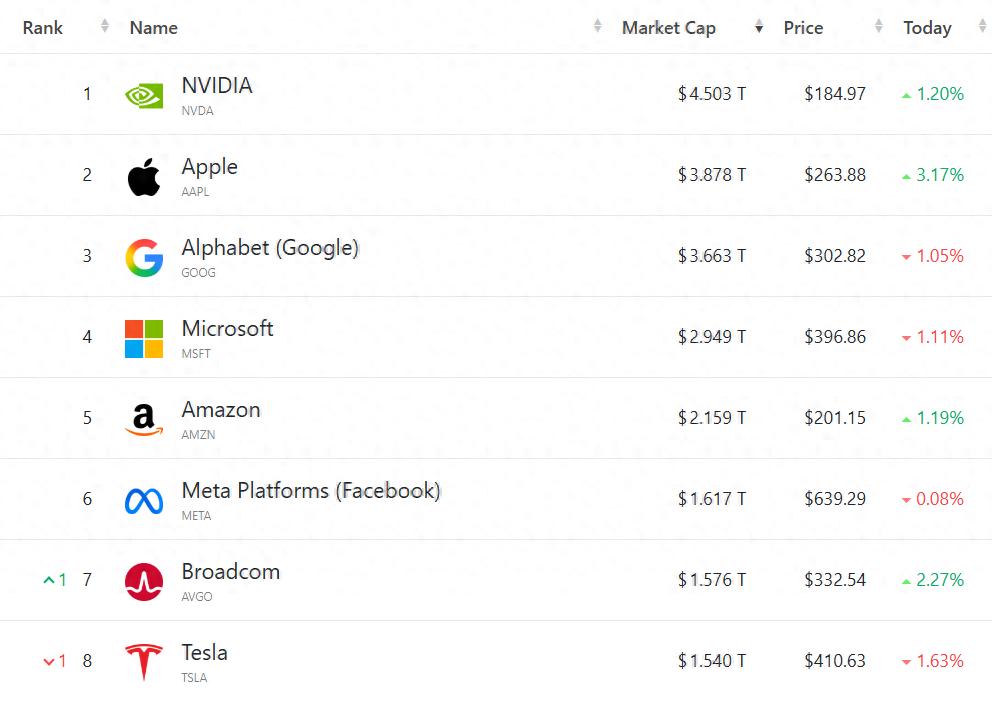 On February 17, The Three Major U.S. Stock Indexes Closed Slightly Higher, With Software Stocks Under Pressure Due To Concerns About AI.2026-02-25Comments(0)
 Star Citizen VR Mode: Improvements And Setup Guide From Alpha 4.5 To 4.62026-02-23Comments(0)
 NetEase Cloud Music 2025 Hard Original Music Award Nomination List Released, Music Fans Take A Look2026-03-23Comments(0)
![[Shen Wanhongyuan’s Research And Experience On The Spring Festival] The Sky Has Wings And The Fireworks Have Sounds - The New Industrial Light Of Shihezi During The Spring Festival-Lijin Finance](https://www.erbetc.com/wp-content/uploads/2026/03/1772481740200_0.jpg) [Shen Wanhongyuan’s Research And Experience On The Spring Festival] The Sky Has Wings And The Fireworks Have Sounds - The New Industrial Light Of Shihezi During The Spring Festival2026-03-03Comments(0)
[Shen Wanhongyuan’s Research And Experience On The Spring Festival] The Sky Has Wings And The Fireworks Have Sounds - The New Industrial Light Of Shihezi During The Spring Festival2026-03-03Comments(0)