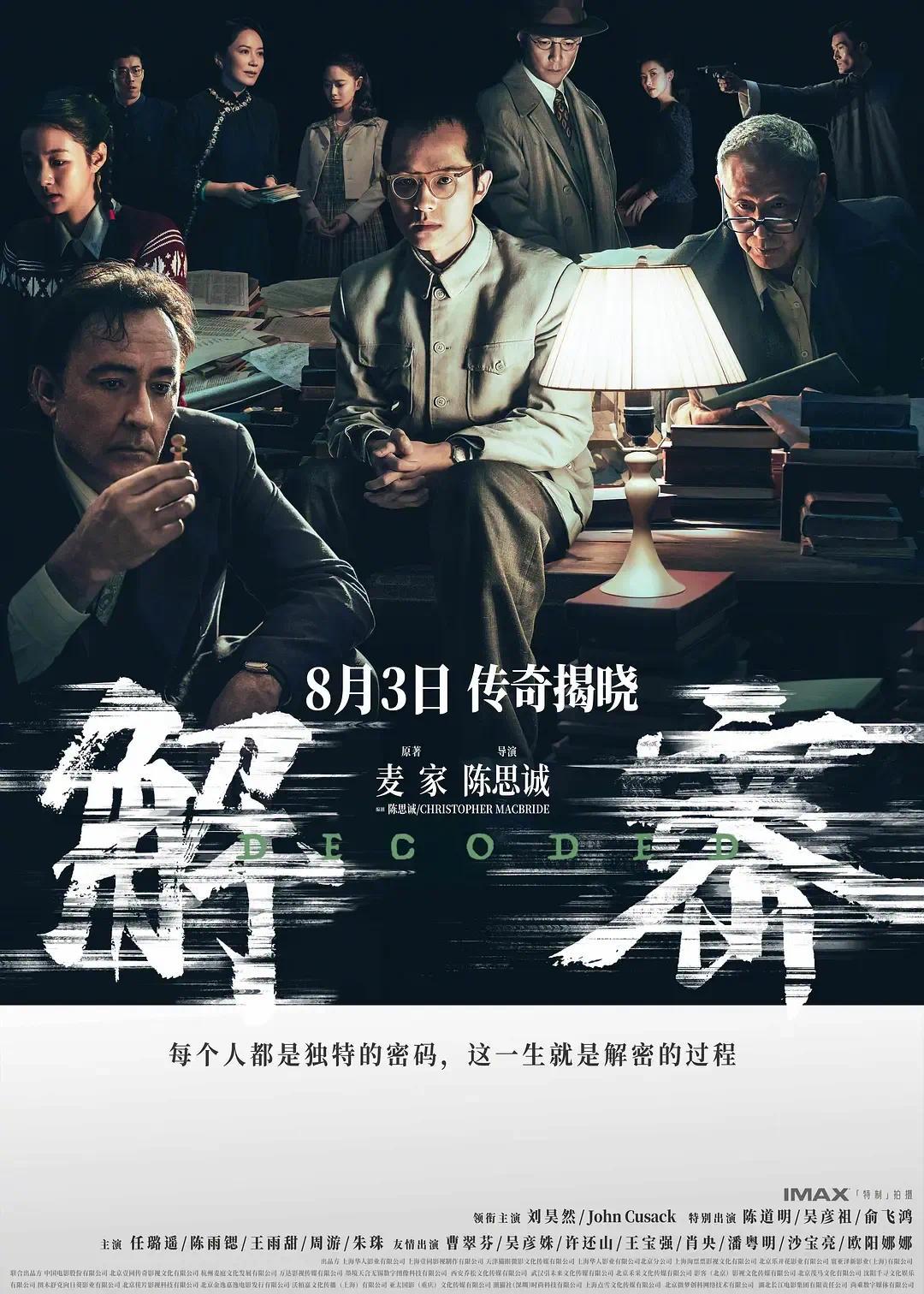
Deciphering Chen Sicheng's New Film Liu Haoran Subverts The Image
This time he used "Decryption" to recreate the "dream" in the movie
This time he used "Decryption" to recreate the "dream" in the movie
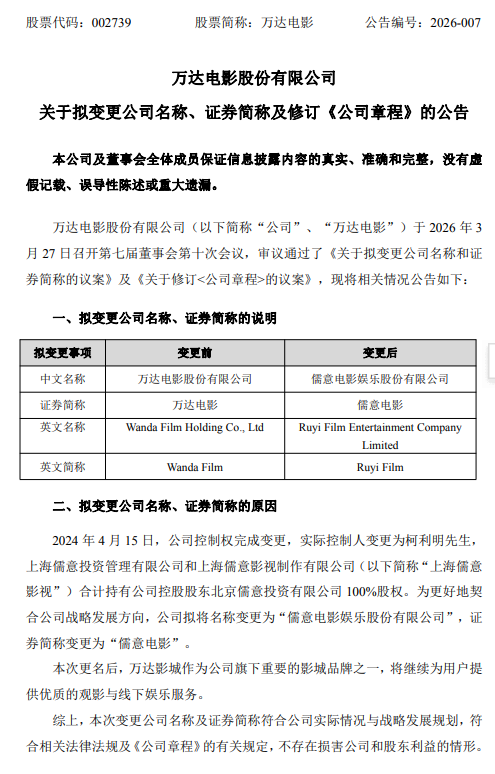
On March 27, Wanda Film issued an announcement announcing that it planned to change its name to "Ruyi Film Entertainment Co., Ltd." After the name change, Ruyi Films will focus on "super scenes + super IP" under the super entertainment space strategy, upgrade online and offline entertainment experiences, and deepen the entire cultural and entertainment industry chain. Among them, "Ruyi" represents the content creation gene, and "Film Entertainment" demonstrates the company's determination to focus on offline scenes and delve into diversified entertainment experiences. In the future, Ruyi Films will strive to evolve from a traditional film company covering content production, distribution and screening into a cultural and entertainment brand loved by global users.
The announcement revealed that the name change was to better align with the company's strategic transformation direction. As one of the important cinema brands under Ruyi Films, Wanda Cinema will continue to provide users with high-quality movie viewing and offline entertainment services.
Focus on diversified entertainment consumption to provide high-quality experience
After the brand refresh, as a business group under Ruyi focusing on diversified entertainment consumption, Ruyi Films will rely on more than 700 directly-operated cinemas across the country and Ruyi's rich IP reserves to create "super scenes" and "super IP" to provide users with high-quality online and offline entertainment consumption experiences.
The so-called "super scene" is to promote the evolution of movie theaters from "watching movies" to "socializing" under the "super entertainment space" strategy, so that movie theaters not only have movies, but also IP-based immersive dramas, themed exhibitions, livehouses, and specialty food and beverages, making movie theaters a core entertainment hub in the city that people are willing to make special trips and check in frequently.
"Super IP" relies on the Confucian-Italian IP reserve to deeply cultivate the full life cycle value of IP. In the future, Ruyi Film will not only promote the linkage of movies and dramas, but also advance the development of derivatives and the creation of theme spaces to the content creation stage, continue to explore the value of content backlinks, transform IP into perceptible and participatory "space narratives", and build an immersive cultural universe.
AI is profoundly rewriting the production methods, organizational forms, distribution logic and monetization models of the entertainment industry. Ruyi Films said that the company will embrace AI but not blindly follow it. It will use AI full-link empowerment to improve the efficiency of content distribution and theater arrangement, and integrate AI into its own APP to improve the efficiency of users' movie-watching decisions. Through AI-assisted creative development, it will explore more unconstrained possibilities and use the released productivity to polish what AI cannot do - more resonant stories, warmer on-site services, and deeper emotional connections.
Transformation from single box office revenue to diversified consumption ecology
This brand refresh also marks that since the change of control of Wanda Film in 2024, the new management team has officially entered the substantial final stage of the company's resource integration and governance optimization. In the future, it will no longer be limited to traditional projection terminal positioning, and will continue to promote the transformation of the business from a single box office revenue to a diversified consumption ecology.
Since its establishment in 2005, Wanda Film has produced nearly 200 films, with cumulative global box office revenue exceeding 100 billion, and has led the industry in domestic box office, movie attendance and market share for 17 consecutive years.
After Confucianism takes over in 2024, it will lay out diverse entertainment forms and consumption scenarios, and launch a "super entertainment space" strategy to upgrade the cinema from a movie viewing venue to a diversified entertainment complex. Over the past two years, the company has promoted in-depth collaboration of "content + channels" to create an industry closed loop of "content development-theater screening-IP operation", and expanded multiple offline entertainment consumption scenarios and growth engines such as derivatives, trendy toys, food and beverages, etc., laying a solid foundation for further deepening the industry.
The performance forecast for 2025 shows that Wanda Film is expected to make a profit of 480 million to 550 million yuan for the whole year, consolidating its leading position in the recovery of the industry; during the 2026 Spring Festival, Wanda Film not only occupied 6 seats in the top 10 movie theaters in the country, and 65 seats in the top 100 movie theaters, but also won 19 provincial box office championships and 154 municipal box office championships. "Flying Life 3", which participated in the production and distribution, also won the Spring Festival box office championship.
It is understood that the collaboration between Confucian-style films and Confucian-style films goes beyond “content + channels”, but rather builds an ecosystem with IP as the soul, scenes as the body, and AI as the engine. In the future, Ruyi Film's services to users will not only be limited to two hours of movie viewing, but will ultimately realize the full life cycle operation of young people's entertainment consumption by converting the creative potential within the system into market momentum and user emotional precipitation.
As the urban romance drama "Rose" ushered in the membership finale on Tencent Video, "Cherry" played by actor Yang Xing entered the hearts of many viewers. From the liveliness and agility when he first appeared, to the tenderness and emotion at the end, this character has completed a complete and true emotional growth. Yang Xing's delicate and heartfelt performance made "Cherry" a highly recognizable and vital female image on the screen at the beginning of the new year.

The powerful actress Yang Xing has demonstrated solid professional skills in many film and television works with her unique screen temperament and calm and delicate performance style. Her performance is real and restrained, full of layers, with solid line skills, delicate and tense emotional expressions. She can not only control the spunk and power in action scenes, but also delicately portray the emotional levels in realistic themes. Her character plasticity is very outstanding.
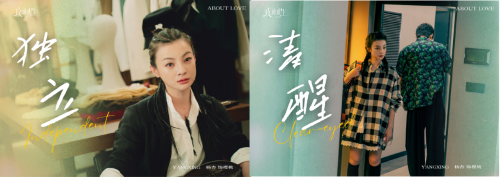

In "Roses", Yang Xing deeply integrates sobriety, independence, affection and bravery into the character's characteristics. After discovering that her husband was cheating on her, Cherry decisively turned around and divorced. This sobriety runs through every choice she made: being hard-spoken and soft-hearted when facing suitors, enduring harassment alone, and leaving calmly when she discovered betrayal. In addition to the emotional independence and sobriety, the sincerity and protection between best friends are also performed by Yang Xing in a sincere and delicate way, which is deeply rooted in the hearts of the people. In the play, Yingtao gives her unreserved preference to her best friend Xiaoxi - "I don't want you to make the same mistakes I did." This line, under Yang Xing's interpretation, expresses the self-evident warmth and support between women. Yang Xing uses subtle expression changes and body language to naturally present the inner qualities of these characters, making the cherry vivid, three-dimensional and within reach.

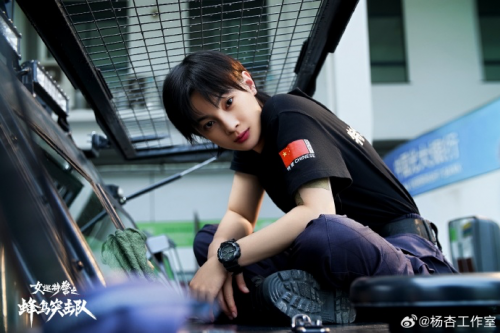
From the revengeful sister Xina in "Blind War", to the gentle and cold Qi Dongcao in "My Name is Zhao Jiadi", to the progressive young woman Yi Qunxian who passionately pursues the truth in "The Awakening Age", Yang Xing continues to expand her acting boundaries with roles with different styles. In "Bush of Roses", Yang Xing shifted the focus of her performance from physical movements to emotional expression, conveying the tenderness and tenacity of Cherry with her eyes and micro-expressions, completing the calm transition from a hard-core beat-em-up to an urban emotional role, and once again demonstrated the stable expression and role control capabilities of a mature actor.

Not limited to a single role label, actor Yang Xing is always character-oriented, focusing on the exploration and expression of the character's heart, rejecting stylized performances, and striving to present a vivid and three-dimensional character state in every work. This kind of persistence and bravery in performance has allowed her to move forward steadily in the industry, and also made the audience look forward to her next work.
In the future, Yang Xing will continue to delve into acting, constantly break through herself, use her sincere creative attitude and solid professional strength to create more powerful, warm and memorable female images, and bring more high-quality film and television works to the audience. The story of Cherry has come to an end, but the excitement of Yang Xing continues.
The designed annual production capacity is 400,000 units (sets), and the annual output value is expected to be 3 billion yuan after reaching full capacity, creating a modern benchmark factory that integrates intelligence, greenness, and intensification.
The physical distance from Great Wall Motors' Tianjin production base is only 300 meters, truly realizing "5-minute matching" and accurately matching vehicle production needs.
Many leading vehicle companies such as Great Wall Motors and more than 200 auto parts supporting companies have gathered in Tianjin Economic Development Zone to form a complete automotive industry ecosystem with complete categories, collaboration and efficiency.
Power is exerted on the "chain" and energy is stored on the "new". Recently, Great Wall Motor Co., Ltd.'s new Mander thermal system and photovoltaic project (hereinafter referred to as Great Wall Motors Mander Tianjin Factory) was put into production in the Tianjin Economic Development Zone. The successful commissioning of this project will further improve Great Wall Motors' local parts supply chain layout, strengthen supply chain synergy, and inject new momentum into the coordinated development of the Beijing-Tianjin-Hebei automobile industry. From the precise positioning of the fuel era to the in-depth transformation of the new energy era, our city has actively promoted the development of the automobile industry toward intelligence, innovation, and greenness, and the "chain" has created new excitement.
Robotic arms are waving, and smart production lines are busy... Entering the Great Wall Motors Mande Tianjin factory, the two specialized production plants of optoelectronics and thermal systems are stepping up the production of core components such as full-vehicle lamps, air-conditioning assemblies, and cooling modules. There will also be 1,400 new employees. The project has a total investment of approximately 1 billion yuan, covers an area of approximately 100,000 square meters, and has a designed annual production capacity of 400,000 units (sets). After the project reaches full production, the annual output value is expected to reach 3 billion yuan, further activating the industrial development potential.
Mande Electronics Co., Ltd., headquartered in Baoding, Hebei Province, is one of the four major parts companies of Great Wall Motors. The Great Wall Motors Mande Tianjin factory that was put into production this time is located next to the Great Wall Motors Tianjin production base.
"Before, we needed to supply goods from Baoding to Great Wall Motors Tianjin production base. Now, the physical distance between Great Wall Motors Mande Tianjin factory and Great Wall Motors Tianjin production base is only 300 meters, truly realizing '5-minute matching', which not only significantly reduces logistics and transportation costs, improves inventory turnover efficiency, but also improves corporate operational efficiency and rapid market response capabilities." Mande Auto Parts (Tianjin) ) Co., Ltd. Deputy General Manager Zhang Guohua said, "From the design stage, the factory has been deeply adapted to Great Wall Motor's vehicle technical standards. All products are developed and built based on Great Wall Motor's 'Guiyuan' platform. We have also adopted an operating model of 'zero-distance supporting, intelligent production, and platform-based collaboration' to accurately match vehicle production needs and ensure high compatibility between products and vehicles."
"Tianjin, as an important fulcrum of the Beijing-Tianjin-Hebei automobile industry cluster, has a complete auto parts supporting system, a mature manufacturing development environment, and convenient transportation advantages, which provide an industrial foundation and development guarantee for the implementation of the project." Zhang Guohua told reporters, "Great Wall Motors Mande's Tianjin factory has received efficient services and precise support from relevant departments in Tianjin from project establishment to construction. Tianjin Economic and Technological Development Zone has established a special service team to coordinate and promote various tasks throughout the process, achieving the goal of 'starting construction as soon as the land is acquired, and putting into production upon completion'."
At present, Great Wall Motors' Mande Tianjin factory is in the early stages of production and will actively build a modern benchmark factory that integrates intelligence, greenness and intensification.
Zhang Guohua said: "Our first task is to advance the production capacity ramp in an orderly manner, gradually release production capacity according to the established plan, and simultaneously launch the full-process quality control mechanism to lay a solid foundation for subsequent large-scale production. It is expected that in the second half of this year, the second phase planning equipment of the thermal system will be gradually put into production. At the same time, we also plan to introduce new electrical device products to continue to enhance the core competitiveness of the product."
Not long ago, the Wei brand high-end SUV (Sports Utility Vehicle) model at Great Wall Motor's Tianjin production base was officially put into production. As one of the "chain master" companies in the regional automobile industry chain, Great Wall Motors has formed a complete industrial layout integrating production, supporting equipment, and research and development. The launch of Great Wall Motors' Mande Tianjin factory will further improve its supply chain system in the region and promote the continuous improvement of industrial synergy.
As one of the core locations for the city's automobile industry, Tianjin Economic Development Zone has gathered many leading vehicle companies such as FAW Toyota, FAW-Volkswagen, and Great Wall Motors, as well as more than 200 auto parts supporting companies, building a complete automotive industry ecosystem with complete categories, collaboration and efficiency. In 2025, Tianjin Economic Development Zone will achieve a vehicle output of 679,000 vehicles, accounting for 86% of the city's total vehicle output.
"Aiming at building a leading domestic automobile industry cluster, intensifying the transformation of new energy and intelligent connectivity, and improving the supporting capabilities of core components such as smart driving, smart cockpits, smart chassis, and sensors, we will continue to optimize the development ecology of the automobile industry, improve the full-chain supporting system, and promote the development of the regional automobile industry to a higher quality." said the relevant person in charge of Tianjin Economic Development Zone.
In the global luxury car market, brands such as Rolls-Royce and Bentley are symbols of wealth and status, and are the first choice vehicles for ultra-high-net-worth individuals. Once Chinese entrepreneurs take their companies public, they often first buy a Rolls-Royce or Bentley to support their appearance.
Until last year, this situation began to change. Chinese automobile brands broke through and began mass production in the million-level luxury car market and were sought after by the market, rewriting the domestic luxury car landscape with a strong stance. In particular, the Zunjie S800 has become a phenomenal hit.
As of March this year, there are 6 domestic models priced at more than 1 million that can achieve mass production and normal sales. Among them, the Zunjie S800 is owned by Jianghuai, the three models that look up are owned by BYD, and the two Hongqi models are manufactured by Hongqi. The sales of these 6 cars in February are as follows:
Zunjie S800 took the lead with a cliff-leading sales volume of 922 units, becoming the absolute king in the million-level luxury market. Zunjie is a brand jointly developed by JAC and Huawei. Huawei is responsible for design, standardized output and full smart driving configuration, while JAC is responsible for production. Zunjie S800 is the first model of Zunjie. It has a body length of 5480mm, a wheelbase of 3370mm, a dual-color appearance, and a luminous brand logo. It also achieves the "three intelligences" integration of intelligent driving, intelligent cockpit and intelligent domain control. It is called a new energy vehicle with a new smart Zun, new luxury aesthetic design in the industry.
The Zunjie S800 has a starting price of 708,000 and a top-end model of 1.018 million. It will be officially launched on May 30, 2025. The number of units exceeded 1,000 within one hour of its launch. The first batch of 599 units will be delivered to Forerunner program owners on June 26. Batch delivery will begin in mid-August 2025, with 1,006 vehicles delivered that month, followed by 1,896, 1,970, 2,205, and 4,223 vehicles from September to December. A total of more than 11,000 vehicles will be delivered in 2025. The main model is the top model priced at 1.018 million. You know, this is a luxury car produced by a domestic car company with a price of over one million. What is the concept of a monthly delivery volume of more than 2,000 vehicles? It is almost universally recognized. By the way, Hong Kong's super rich daughter Ho Chaolin also snapped up a Zunjie S800.
In January 2026, 2,798 Zunjie S800 units were delivered. In February, affected by the Spring Festival holiday, 922 units were still delivered. And due to production capacity constraints, some car owners' orders are still being queued for production. Jianghuai Automobile never dreamed that its own cars would become the Rolls-Royce of China, with demand exceeding 1 million units.
Following the Zunjie S800 is the BYD U8L, which sold 118 units in February. The U8L is priced at 1.28 million and 1.3 million, and will be delivered in September 2025. In the past six months, the monthly deliveries were 178 vehicles, 424 vehicles, 486 vehicles, 487 vehicles, 266 vehicles, and 118 vehicles respectively, with cumulative sales of approximately 2,000 vehicles.
Ranked third is BYD's U8, which sold 38 units in February. The U8 is the first ultra-luxury SUV to gain popularity in China.
The fourth place is Hongqi Golden Sunflower Guoya, with sales of 5 units in February; the fifth place is Hongqi Golden Sunflower Guoyao, with sales of 3 units. Of course, these two cars cannot be bought with money. Their significance is more than just transportation.
In sixth place is BYD's U9, which sold one unit in February. The price of U9 is as high as 1.8 million, and delivery will begin in August 2024, with monthly sales in the range of 1-2 digits. The greater significance of this car is to enhance BYD's brand image.
In the million-level luxury car market, domestic brands take the lead with the JAC Zunjie S800, followed by Yangwang and Hongqi Golden Sunflower, officially breaking the high-end barriers of foreign brands and occupying a place in the global ultra-luxury market. In the future, more domestic high-end models like the Zunjie S800 will emerge, completely rewriting the global luxury car market and making "intelligent manufacturing in China" a new benchmark in the ultra-luxury field.

Since 2025, news has spread from many places across the country that the sales situation of affordable affordable housing is not ideal. In some cities, there has even been a situation where only one family can choose a house out of a batch of more than 1,000 houses. At present, this situation has not been fundamentally improved.
The sales of these affordable housing projects are hindered for different reasons, but there are also some outstanding commonalities.
First, the locations are generally relatively remote. A large number of unsaleable low-income housing are often built in the outer suburbs of cities, and the surrounding areas lack supporting facilities such as subways, schools, supermarkets, and hospitals. When buying a house, ordinary people have to consider commuting, children going to school, daily grocery shopping, and seeking medical advice. Although the price of affordable housing in the outer suburbs is lower, the cost of living and time costs are much higher, so it is naturally difficult to be attractive.
Secondly, the pricing advantage has been weakened. Under the market conditions of the commercial housing market downturn and developers' price reductions and promotions, the pricing mechanism of affordable housing was not adjusted in a timely manner, and the original price advantage was greatly compressed. For example, in a certain first-tier city, the price of affordable housing is usually about 40% off that of commercial housing in the same area. A few years ago, when commercial housing prices were at their peak, the absolute number of this discount was considerable. However, in recent years, with the overall significant decline in housing prices, the "sense of gain" of buying affordable housing has become much less.
Once again, the shortcomings of product strength are highlighted. The affordable housing units available for sale in most cities are small, with a low proportion of three-bedroom units, and the housing acquisition rate is not high. However, in some cities, families applying for three-bedroom apartments have a strong demand, and there is an obvious gap between supply and real demand. In addition, most affordable housing has a sales restriction period of 5 to 10 years. In the current weak market situation, buyers have increased concerns about the future liquidity of affordable housing.
The original intention of building affordable housing is to solve the housing difficulties of low- and middle-income groups. If the built houses cannot be sold, it will not only fail to achieve the goal of improving people's housing problems, but will also cause huge waste and form new economic "obstructions." Building an affordable housing project can cost anywhere from a few hundred million yuan to several billion yuan. Funds are accumulated in houses that cannot be sold, which can neither be used for new livelihood projects nor occupy valuable land resources. The same is true for commercial housing construction projects.
But the slow sales of affordable housing does not mean that the demand is gone. Recently, some affordable housing projects in Guangzhou, Ningbo and other places have been sold out rapidly, and some projects in Shenzhen have also achieved "secondary completion". It can be seen that this kind of "unsaleable" is not that the overall sales cannot be sold, but that the sales are uneven. Behind the scenes is the mismatch between supply and demand - high-quality projects in core areas still need to be "snatched", while projects in the outer suburbs or with unreasonable pricing are not interested. In a word, this is a kind of "structural unsaleable".
To cope with and avoid the above-mentioned structural contradictions, targeted measures should be taken.
Optimizing site selection is the starting point. The buyers of affordable housing are basically working-class families, who mainly rely on buses and subways to travel. They need to live in a place with good bus network coverage and quick access to work. Along the subway and around industrial parks are ideal targets. Only by building affordable housing in these places can we accurately meet the needs of working-class people. At the same time, it will help improve the efficiency of urban public transportation and improve traffic conditions.
Improving product strength is the core. In addition to project site selection, product strength is mainly reflected in unit types and supporting facilities. Affordable housing is not "low-end housing", and the product logic must be upgraded from "livable housing" to "livable housing". House design must be close to real needs and cannot be decided by individual departments. Necessary supporting facilities must be kept up so that people can not only "come", but also "live safely".
Flexible policy implementation is a "back-up move". For existing projects that are not selling well, the allotment policy should be decisively optimized according to the market situation, including adjusting prices. In recent years, Shenzhen has repeatedly lowered the application threshold for affordable housing, effectively accelerating the elimination of housing supply. Haikou, Xi'an and other places have also achieved similar effects through significant price cuts. For the tasks to be built, it is of course necessary to adjust the planning plan and construction pace in a timely manner to avoid repeating the mistake of "well built but unsaleable".
The construction of affordable housing is an important livelihood project and an important investment of fiscal funds. It must be carefully decided and closely supervised. In the past, some places focused on the construction quantity, operation rate, and completion rate, and did not pay enough attention to whether the project could be sold after completion and to whom. Now that problems have arisen, relevant places cannot turn a blind eye and allow the problems to accumulate. Building affordable housing is only a means, and allowing people to live in good houses is the goal. We should get rid of the misunderstanding of "emphasis on construction and neglect of distribution", and promptly adjust construction, allotment, and leasing plans to avoid resource waste and new structural contradictions.
(The author is the editor of China Business News)
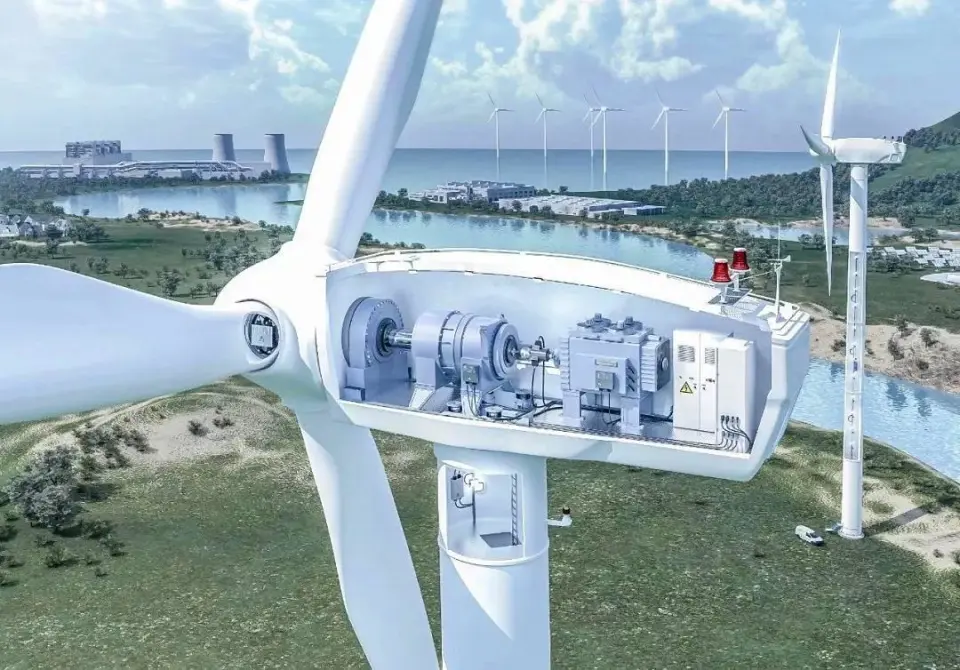
Just as the conflict between the United States and Iran was tense and the global energy crisis broke out, the British government announced to the world that Chinese wind turbines were highly dangerous and banned the British government from purchasing Chinese wind power equipment.
At a time when the world is in an energy crisis and European and some Asian countries are preparing to use new energy sources to provide security redundancy for their national energy sources, what is the purpose of the British government in doing this? Is it really for national security, or is there some ulterior motive?
A "ban farce" without evidence
On March 25, the British government suddenly announced that after a "highest level national security assessment", it determined that Chinese wind turbines had "potential interference risks" and directly halted all local projects using Chinese wind power equipment. Mingyang Intelligent's Scottish full industry chain base, which had been prepared for more than half a year, was also rumored to have been "vetoed." As soon as the news came out, the stock price of Mingyang Intelligent A shares fell to the limit the next day.
It's funny to say that the UK is shouting about "security risks" but can't provide any evidence. The so-called "assessment" is simply fabricated out of thin air.
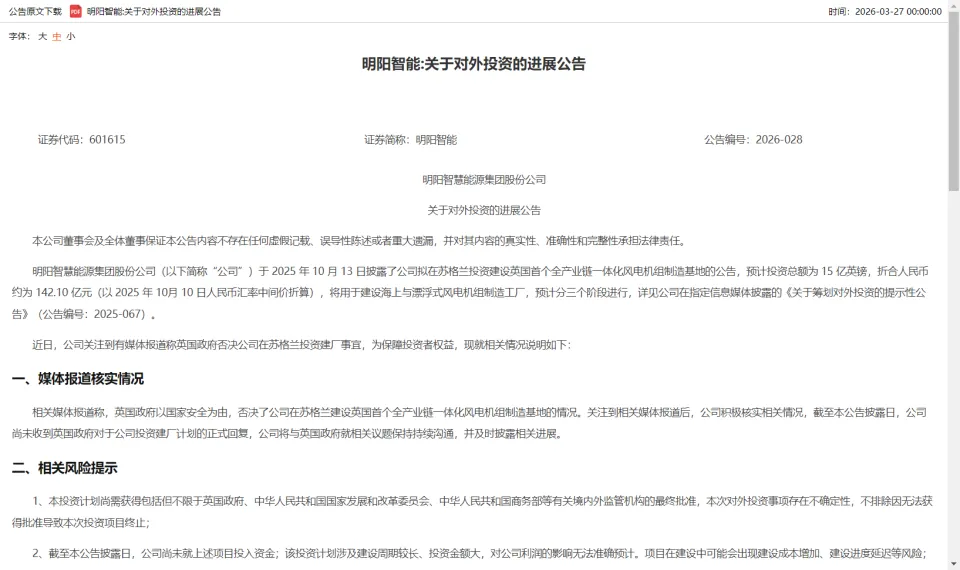
Mingyang Intelligent issued an emergency announcement on March 27, stating that as of now, it has not received a formal rejection reply from the British government at all, and communication is still ongoing.
You must know that this project is not a trivial project. It is Mingyang Smart’s first tens of billions of overseas investments since its listing. It is planned to be constructed in three phases. The first batch of production will be completed by the end of 2028. It will bring a large number of jobs and industrial chain dividends to Scotland. The UK did not take advantage of the benefits, but actively turned it away.
On March 13, the United Kingdom just announced that it would cancel import tariffs on 33 wind power components from April 1, and the tax rates on core components such as blades and cables will be directly reduced to 0. The purpose is to accelerate the installation of offshore wind power in the North Sea and relieve energy pressure.
While asking for a price reduction for wind power components, while banning the world's most competitive Chinese equipment, this contradictory operation is incomprehensible.
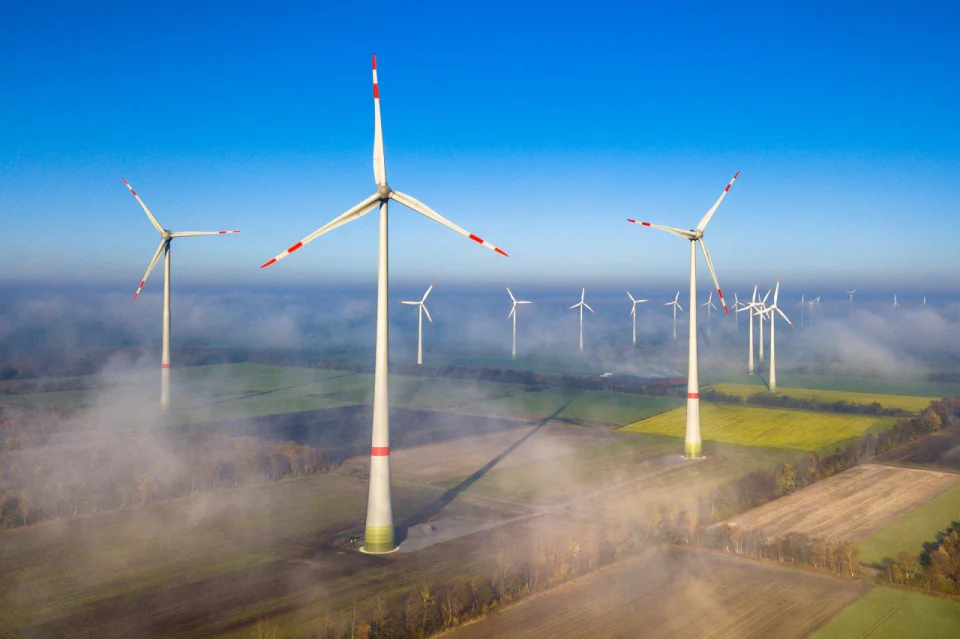
The Chinese Ministry of Foreign Affairs also immediately stated that it opposed the British generalization of the concept of national security and the politicization of economic and trade issues. After all, Chinese wind power equipment has already passed the safety certification of most countries around the world, and has been operating smoothly in dozens of countries for many years without any so-called "safety issues." This wave of operations in the UK is clearly for protection in the name of "safety."
Analysts believe that there may be three reasons why the UK did this.
The first one is to follow the trend of the United States and join in the excitement of "de-Sinicization". New energy is now the core track of competition between global powers. In 2025, the world's newly installed wind power capacity will be 169GW, and China will contribute 126GW, accounting for 74.6%.
The United States has been suppressing China's new energy resources. As the "little brother" of the Western camp, the United Kingdom naturally has to follow suit.
Speaking of this, I suddenly remembered that when I was a child, I followed the older children and made noises. I knew I didn't want to do it, but I had to follow others. In the end, I was the one who suffered the loss. This is probably the mentality in the UK now.
Furthermore, it is to protect the weak local wind power industry and cover up its own shortcomings. The UK's local wind power industry chain is imperfect, with high production costs and slow technology iterations. Even its own wind power projects rely on imported equipment. Once Chinese wind power equipment enters the British market in large quantities, local British companies will have no power to fight back.
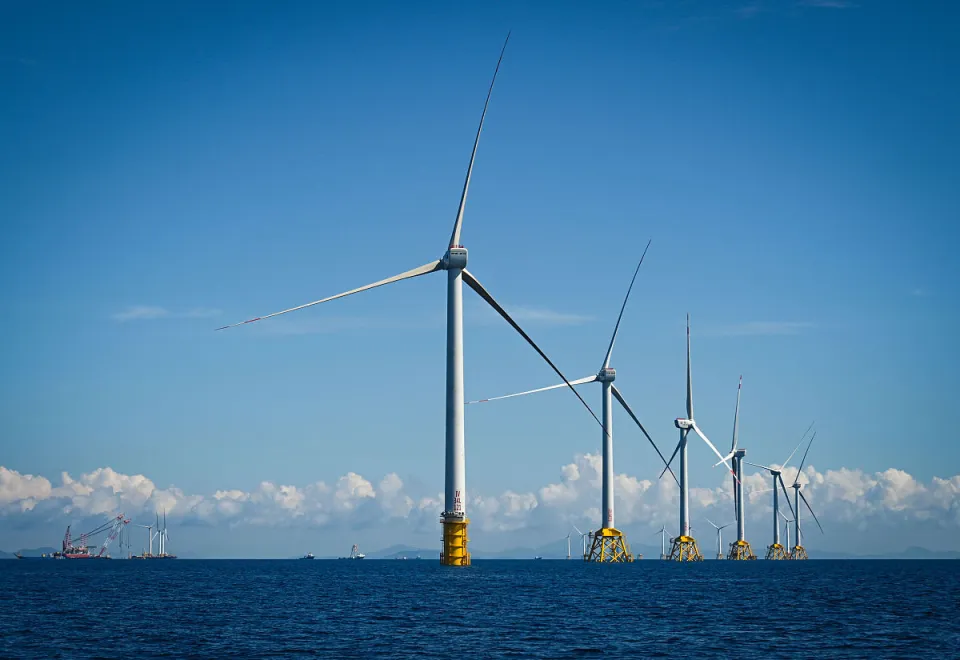
Another key reason is to divert domestic conflicts. The UK has long set strict carbon neutrality and offshore wind power installation targets, but the reality is that the economy is in recession, debt is high, public debt accounts for 98.3% of GDP, finances are so tight that even emission reduction plans have to be postponed, and the advancement of wind power projects has repeatedly lagged behind. Unable to find a solution, they regard China Wind Power as a "scapegoat" and blame all their own mistakes on Chinese equipment.
This wave of British operations will not damage the foundation of Chinese wind power at all, but will put itself in trouble.
Against the background of the current global economic downturn and the imminent energy transformation, the UK's ban on the purchase of Chinese wind power is a "self-internal consumption" of the UK's own development and is also very short-sighted.
The reason why China leads the world in wind power does not rely on luck, but on decades of technological accumulation and deep cultivation of the industrial chain.
Britain's predicament is essentially a contradiction between its own insufficient capabilities and mismatched ambitions. It wants to achieve energy transformation, but it does not have a complete industrial chain and sufficient funds and talents; it wants to suppress China, but it cannot do without the support of the global wind power supply chain; it wants to follow the United States, but it has to face the pressure of domestic energy shortages.
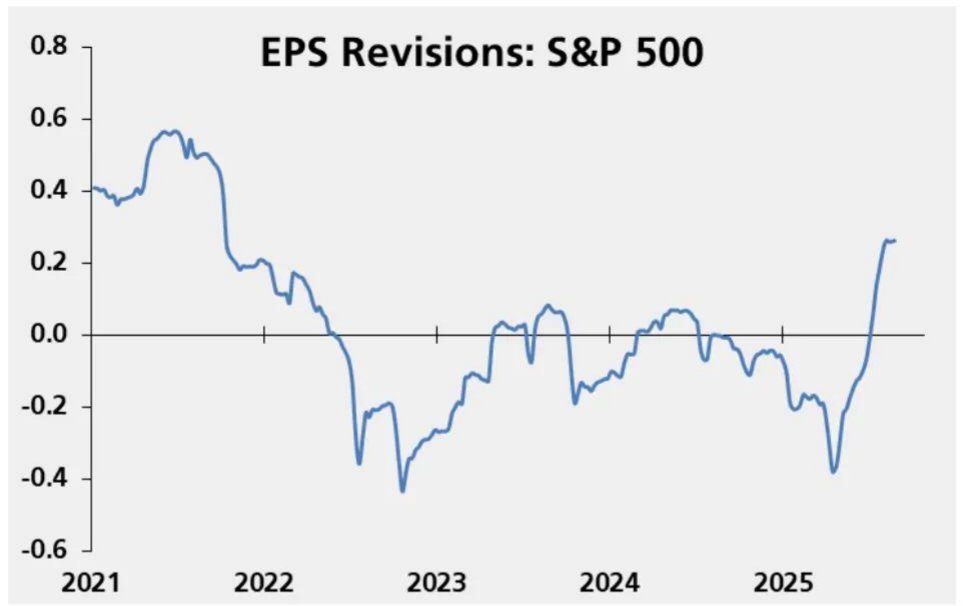 UBS Warns: Negative Seasonal Risks In September May Cause SPX Correction, Investors Need To Be Vigilant2026-03-16Comments(0)
 British Experts Build High-power Motors To Expand The Ship Drive Ecology And Improve The Performance Of Pod Thrusters2026-03-16Comments(0)
 Seize The Deterministic Opportunities In The Stock Market And Learn Three-dimensional Trading Skills2026-04-05Comments(0)
 Can I Use Alipay For Online Shopping On Jingdong Mall? These Methods Can Be Implemented Indirectly2026-03-15Comments(0)