February 24th marks the fourth anniversary of the escalation of the Ukraine crisis. Negotiations between Russia and Ukraine are difficult and the road to peace is long. The stalemate on the battlefield is also profoundly affecting social sentiment in Ukraine.
The frontline defense is tight and Uzbekistan’s local counterattack is difficult to change the strategic deadlock
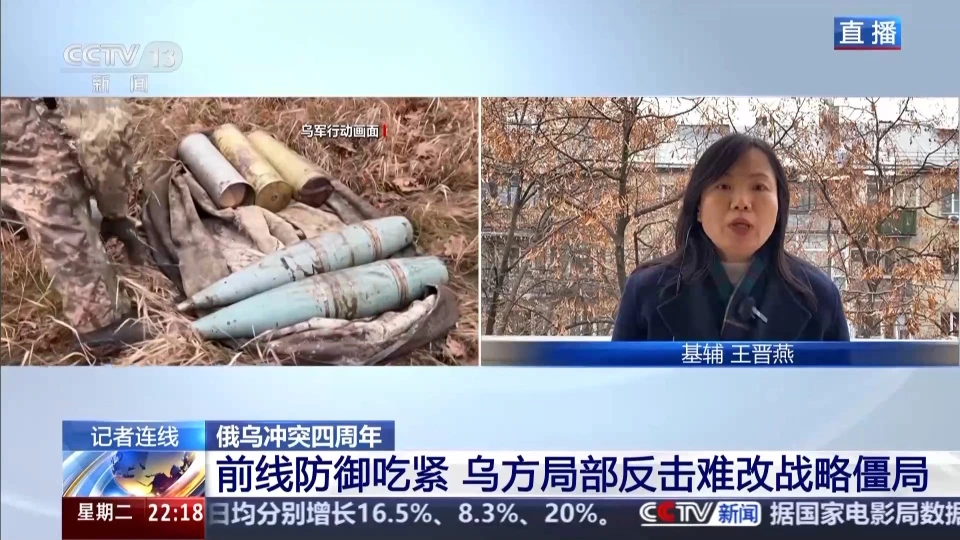
The focus of the current exchange of fire is still concentrated on the Donbas and the southern front. Among them, the direction of Pokrovsk is regarded by Ukraine as one of the most stressful areas. Commander-in-Chief of the Ukrainian Armed Forces Sersky recently stated that the Russian army continues to gather reserve forces locally in an attempt to find a breakthrough, and frontline defenses are still tight. At the same time, the Ukrainian army is also trying to stabilize the front through local counterattacks. The Ukrainian airborne assault force recently announced that in its counterattack in the south, it had eliminated Russian reconnaissance and sabotage forces in an area of more than 300 square kilometers and regained control of many residential areas. The Ukrainian military also stated that since the end of January this year, it has regained control of approximately 400 square kilometers and 8 residential areas along the Alexandrivsk front. However, domestic military analysts in Ukraine generally believe that these actions are still tactical counterattacks within a defensive framework, and there has not yet been a breakthrough sufficient to change the strategic pattern.
Polls show Ukrainians support negotiations but oppose territorial concessions
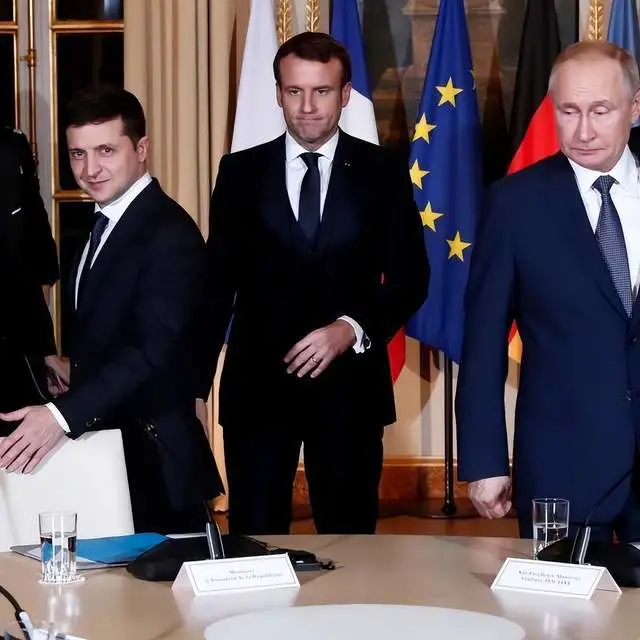
The stalemate on the battlefield is also profoundly affecting social sentiment in Ukraine. On the one hand, long-term consumption has given the public more realistic expectations for "guaranteed peace"; on the other hand, territory and sovereignty are still regarded as untouchable red lines. A number of recent polls have shown that the majority of the public supports ending the conflict through negotiations, but at the same time clearly opposes any form of territorial concessions. At the diplomatic level, Ukraine, Russia and the United States have had multiple rounds of contacts through different channels over the past year regarding ceasefire arrangements and security guarantees, but core differences remain obvious. Ukrainian President Zelensky recently emphasized again that Ukraine is willing to make real compromises for peace, but will not accept conditions that undermine sovereignty and territorial integrity.
Ukraine internally discusses military planning, saying it can fight for a long time
At the same time, some media revealed that Ukraine has begun internal discussions on military planning for the next few years. Pivnenko, commander of the Ukrainian National Guard, also said that Ukraine has the ability to continue fighting for several years, and the goal is still to control all territory. These statements show that Kyiv is not optimistic about achieving a breakthrough through negotiations in the short term.
Overall, there are no key variables that can quickly change the situation, whether at the military or diplomatic level. For some time to come, the game between Russia and Ukraine is likely to continue in this dual-track state of "intense exchanges of fire on the front lines and slow progress in negotiations."

![[Netherlands] France Turns To The Netherlands To Support Its Military Operations-Lijin Finance](https://www.erbetc.com/wp-content/uploads/2026/03/1773277663261_0.webp)