In July, Sohu finally successfully went public. Since then, the three major portals of "Langhuyi" have been formed. The three major portals at that time were called the "three mountains" by later entrepreneurs. They were the first generation of Internet traffic portals, and their industry status was no less than that of BAT today. At that time, they were all-pervasive in business and did everything. This process allowed portals to still occupy an important position on the Internet today.
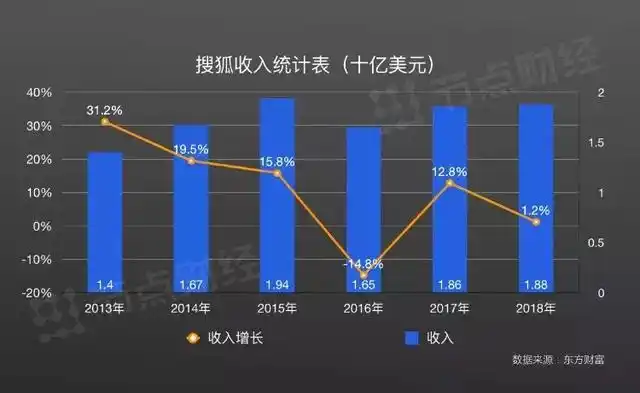
Among the three major portals in the past, Sohu is now the worst.
Let’s talk about the company’s market value first. Currently, NetEase has a market value of US$33.486 billion, Sina has a market value of US$3.051 billion, and Sohu has a market value of US$520 million. NetEase is 60 times that of Sohu, and Sina is approximately 6 times that of Sohu. (Data as of July 8, 2019)
Let’s talk about earning power. NetEase's revenue in 2018 was US$8.967 billion and net profit was US$893 million; Sina's revenue in 2018 was US$2.108 billion and net profit was US$126 million; Sohu's revenue in 2018 was US$1.883 billion and its net loss was US$160 million. Of these three companies, NetEase makes big money, Sina makes small money, and Sohu loses big money.
Zhang Chaoyang has been calling for portal reform and reinvention for many years, and was the first to propose embracing self-media and intelligent recommendations. However, the ideals are full and the reality is skinny. The repeated turbulence of the Sohu portal has caused a serious loss of talent in this business and a serious loss of vitality.
In 2013, Zhang Chaoyang began to promote Sohu's revitalization plan non-stop. On the surface, he used Weibo as a cover, but in reality his focus turned to the Sohu news client. In April, the number of Sohu News client users exceeded 100 million, taking the lead in mobile content distribution.
The rapid follow-up of NetEase, Sina, Tencent, etc. on the mobile side, and the rise of new forces represented by Toutiao, have eliminated the advantages of Sohu News client. According to iResearch data, the number of monthly independent devices of "Sohu News APP" in May 2019 was 84.44 million, a month-on-month decrease of 2.3%. During the same period, the number of monthly independent devices of Toutiao was 254.93 million.
A dream, missing out on social interaction
Li Shanyou, former senior vice president, editor-in-chief of Sohu, and founder of Ku6.com, made this comment about Zhang Chaoyang, "The departments directly managed by Zhang Chaoyang are rarely successful, but those who leave Sohu miss Boss Zhang very much."
In fact, in the past 21 years of Sohu, Zhang Chaoyang had the opportunity to win over domestic Internet users in one fell swoop. When Tencent started, the newly launched QQ had already accumulated its first batch of users. However, because founder Ma Huateng did not know how to monetize these users, he approached Zhang Chaoyang, hoping to sell QQ to Zhang Chaoyang for 500,000 yuan. But after Zhang Chaoyang saw the product, he said something that made Ma Huateng laugh and cry: "I will find a few college students to make this thing better than you in less than 3 months, so it is not worth 500,000 at all."
Zhang Chaoyang, who missed out on Tencent's social empire, doesn't know how he feels now.
Earlier, Sohu and Sina also had a social war. In April 2010, eight months after Sina Weibo went online, Sohu launched Sohu Weibo.
Regarding Weibo, Sina adopted a desperate attitude. Sina Weibo was independent of the Sina portal, and had no relationship with the portal. The capable veterans went out in person, adopting a cold and efficient method, inviting celebrities and big Vs to settle in, and let the business spread quickly. At that time, Sina Weibo's advertisements were overwhelming online and offline.
Subsequently, Sina Weibo took the issue setting ability to the extreme. Looking back at that stage, every major news event in China was spread and fermented on Sina Weibo.
Looking at Sohu Weibo, although Zhang Chaoyang claimed that there is no cap on the investment in Sohu Weibo, it still exists in the form of a project rather than an independent company. The directors of the company's various business departments are doing their own original business while taking care of Weibo, and they cannot devote themselves fully to it.
In January 2015, a user named Charles quietly registered on Sina Weibo. It was later confirmed that the user was Zhang Chaoyang, chairman of the board of directors of Sohu. This also marked Sohu's "defeat" in the duel with Sina Weibo in the social field.
A month ago, Sohu launched "Huyou", hoping to expand the social circle of the post-90s and 95s generations and create the most in-person social posture for the post-95s generation. Unfortunately, the product was removed from the shelves three days later.
This strategic product, which was billed as the "Future of Sohu", encountered unexpected events not long after its birth. Today, when we open multiple mobile app stores such as Apple, Xiaomi, Huawei, and Meizu, we still cannot find the Huyou APP.
This product, which has been in preparation for two years and is described by Zhang Chaoyang as a serious and carefully polished product, is considered by the outside world to be careless.
After a new Huyou user completes registration, the system will ask the user to select the tags they are interested in. They can only choose 3 at most, and then recommend some users. If no one follows you, there will be nothing to see on the dynamic page. In fact, by default, new users in the system will follow Zhang Chaoyang's account. Once they open Huyou, it is like entering Zhang Chaoyang's personal circle of friends. Huyou’s minimalist design is more like the Weibo mobile version 10 years ago.
After using it, some media commented that "many functions that were abandoned by Sina Weibo are still used by Huyou as selling points."
Cash Cow, Sohu Changyou
Although he missed social networking twice, Zhang Chaoyang still made many visionary decisions in the company's decision-making. For example, reusing Wang Tao created today's Changyou; reusing Wang Xiaochuan created today's Sogou. Facts have also proved that the current Changyou and Sogou have become one of the few bright spots in the Sohu series.
Online games have always been regarded as the "cash cows" of Internet companies. Zhang Chaoyang was the first to take action in this field, but now he is severely left behind by NetEase and latecomer Tencent in the same period.
In May 2007, "Dragon Babu" independently developed and operated by Sohu Changyou officially launched its public beta test. It became popular at home and abroad, with strong growth in the number of players and revenue, and achieved great success. In 2009, with the infinite glory of "Dragon Movie", Sohu Changyou was listed on Nasdaq, and Sohu also became the first "Gemini" Chinese Internet company to be listed in the United States, and it was unparalleled for a while.
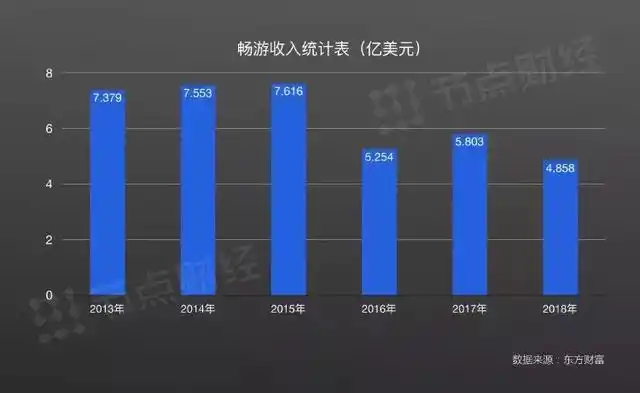
But then the story took a turn. Starting from 2013, Changyou's revenue remained at US$600-700 million for three consecutive years. In 2016, it fell to about US$520 million, and in 2018 it was only about US$480 million. Tencent Games and NetEase Games have gradually widened the gap with Changyou in recent years with their mobile games "Honor of Kings" and "Onmyoji" respectively. In 2018, Tencent's game revenue exceeded 120 billion yuan, NetEase's game revenue also reached 40 billion yuan, and Changyou's game-related revenue was approximately 2.68 billion (US$390 million).
"Dragon Babu", a game released by netizens ten years ago, is still its main source of revenue. After privatization, Changyou itself also needs to prove its strength before it can resume its blood transfusion for Sohu Video and other businesses.
Sogou transforms and bets on the future
Sogou CEO Wang Xiaochuan was on the hot search list some time ago. The reason was that Sun Yuchen posted a message in WeChat Moments, "I will never forget the way he looked at the liar. He said that I was a liar and would definitely fail." He also criticized Wang Xiaochuan as just a part-time job.
Wang Xiaochuan responded on Weibo. The content could be described as "light and gentle", but he cleverly changed the topic.
In 2003, Wang Xiaochuan joined Sohu after graduating from Tsinghua University. At that time, Zhang Chaoyang's main task for him was to develop a search engine for Sohu. Wang Xiaochuan spent five years to build a Sogou "three-stage rocket" through input method-browser-search engine.
However, Wang Xiaochuan's plan was directly rejected by Zhang Chaoyang. Zhang Chaoyang also asked a Sohu vice president to give Wang Xiaochuan a message: Sohu's search business does not need you, Wang Xiaochuan. In the following two years, Wang Xiaochuan fell into silence.
In 2010, an opportunity did arise: Google withdrew from China. With the lobbying of Zhou Hongyi and Jack Ma, Sogou gained real independence, and later Tencent also entered the game.
After Wang Xiaochuan started searching, this field actually became a war between three people: Wang Xiaochuan, Robin Li and Zhou Hongyi.
Wang Xiaochuan is a full 10 years younger than Robin Li. When Robin Li published the theory that established the world's universal search criteria in Silicon Valley, Wang Xiaochuan got the fourth lowest grade in his class because he was addicted to playing games at Tsinghua University.
In terms of building a search engine, Wang Xiaochuan was only three years behind Robin Li, but 16 years have passed. Although the media always say that Baidu is in crisis, judging from WAP and mobile data, Baidu is still the big brother of domestic search engines. The battle for "3SB" (360, Sogou, Baidu) is still fierce, but the market share is relatively fixed. No matter who it is, it is unrealistic to seize a large share from the opponent in the short term.
In fact, apart from competition from external rivals, it is not easy for Wang Xiaochuan to start a business.
In a sense, Wang Xiaochuan is an "in-system" entrepreneur, and Sogou can almost be regarded as "internally incubated" by Sohu. This is why Sun Yuchen said that Wang Xiaochuan is just a "part-time worker." Fortunately, in the winter of 2017, Sogou was successfully listed.
Before the listing, Tencent ranked first with 43.7% of the shares, followed by Sohu with 37.8% of the shares. In other words, Sogou at that time had been classified as the "Tencent family".
After the listing, Wang Xiaochuan felt that Sogou no longer had any survival problems. The current suspense is "whether it can achieve subversion in the search field and whether it can lead major innovations in the field of artificial intelligence." Since then, Sogou has been aggressively deploying artificial intelligence. Wang Xiaochuan believes that relying on Sogou’s active layout and the strategic confusion of competitors, Sogou has caught up with the same starting line in the fields of artificial intelligence, big data and IOT, and even won the opportunity.
In terms of hardware products, Sogou has launched Tangmao Children's Watch, Translator Baochan, Translator Baochan Pro, smart voice recorder C1, etc. At the 2019 China Internet Conference, Sogou CEO Wang Xiaochuan said, "The voice recorder is for the first time. A voice-related composite product will be released within this year, but it will not be a speaker."
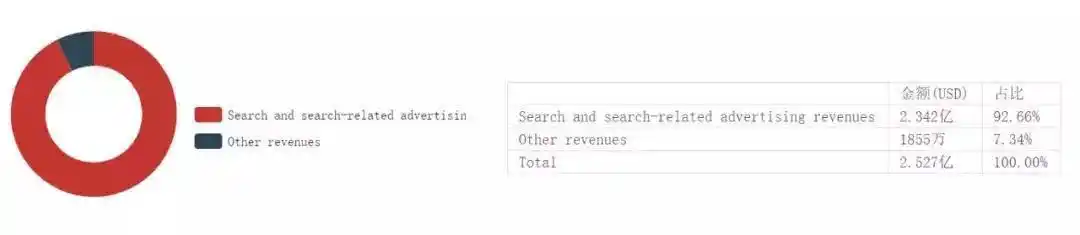
Sogou’s 2019Q1 revenue structure
Despite the large number of hardware, according to the 2019Q1 financial report, search and search-related advertising revenue contributed US$234.2 million in revenue, accounting for more than 92%. Search is still the lifeblood of Sogou.
Sohu Video, life is like a play
It can be said that Sohu Video has always been Zhang Chaoyang's pet peeve, and a lot of the money earned in the game was invested in the copyright of the video business.
In the early stage, Sohu Video purchased the copyrights of a large number of high-quality American dramas, such as "The Broke Sisters" and "Arrow". Subsequently, self-produced online dramas such as "Diao Si Men" and "Forensic Qin Ming" made Sohu Video no less than the "fourth pole" of Aiyouteng.
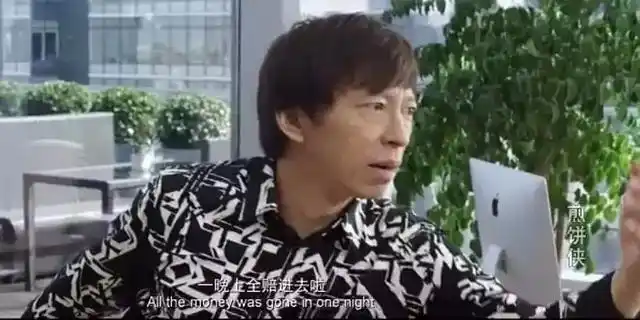
Zhang Chaoyang in "Pancake Man"
But these peers should not be underestimated. Behind iQiyi stands Baidu, behind Youku Tudou stands Alibaba, and Tencent Video is naturally wealthy. These three companies have turned the video industry into an industry that losers cannot afford. In the face of huge bandwidth costs and copyright costs, Sohu Video has no chips to continue playing.
Sohu Video’s misjudgment of the industry situation in 2015 completely ruined its possibility of catching up with BAT. At that time, all major players were hoarding copyrights and getting involved in membership payments, but Sohu Video went in the opposite direction and drastically reduced investment in copyrights. This willful move not only failed to break the situation, but instead widened the gap with BAT.
After Sohu Video learned this painful lesson, it returned to an offensive stance in 2016, resumed copyright purchases, continued to strengthen its self-produced dramas, and announced a profit target for 2019. But the problem is that Sohu Video is already at a disadvantage, and the highly competitive video industry leaves it with extremely limited time and space for trial and error.
In the past two years, Sohu has created a unique combination in the field of film and television social media – a platform layout strategy of three self-made dramas + self-made variety shows + self-media + live broadcast, focusing on quality, differentiation and diversification.
Zhang Chaoyang once said that Sohu Video will achieve profitability in 2019 and is expected to become the first profitable video platform.
The glorious Wudaokou has lost its limelight.
Sohu also has a large amount of "hidden assets."
In 2007, Sohu spent US$35.3 million to purchase 18,300 square meters of office space in Tsinghua Science and Technology Park; in 2009, it spent US$162 million to purchase 41,300 square meters of office space on Zhichun Road (put into use in May 2013).
Not to be outdone, Changyou purchased 15,000 square meters for US$33.4 million in 2009 and 57,000 square meters for US$171 million in 2010 (put into use in December 2013).
The above-mentioned properties are included in fixed assets at cost price and are depreciated year by year. The book value of office buildings in 2014 was divided into US$417 million, and the book value was reduced to US$372 million at the end of 2018.
The office building in the core area of the "Universe Center" totals more than 130,000 square meters. The price of one square meter is not high at US$10,000. This is a price of US$1.3 billion. Somewhere along the way, the godfather of the Internet became a real estate tycoon.
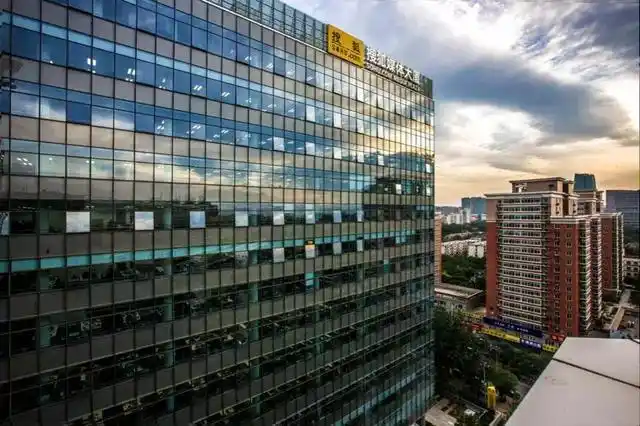
Zhongguancun and Wudaokou were once the most dynamic places on the Internet in China, with major companies such as Google, Sina, NetEase, Sohu, and Tencent star-studded. Nowadays, it seems that Sohu is the only one that keeps moving and moving, but always stays in the same place.
In contrast, Sohu has gradually moved away from the center of the Internet in recent years. Starting from the "sleepwalking" state in 2008, Zhang Chaoyang has been confused on and off for nearly ten years. This is also the golden decade of China's Internet development. Mobile payment, social networking, O2O, e-commerce, live broadcast, short video, sharing economy… these concepts have turned the Internet upside down. And Zhang Chaoyang, like Wudaokou, was gradually pushed to the edge of the stage.
In 2012, Zhang Chaoyang announced his retreat because he was depressed. He explained that he was depressed because things went too smoothly before. "Founders are not prone to depression because they have dreams and pursuits. It is easy for those who are successful and famous."
While Sohu is losing its status in the world, it is also losing its most valuable resource in the 21st century – talent. Gu Yongqiang who left Sohu founded Youku, Gong Yu founded iQiyi, Li Shanyou founded Ku6.com, Chen Yizhou founded Renren.com, Zhou Yunfan founded Kongkong.com, and Li Xueling founded YY…
Now that the Internet has entered its second half, 55-year-old Zhang Chaoyang wants to return to the center.
Return to the second half
"I want to be a good CEO", this is what Zhang Chaoyang shouted in 2018.
Tencent's "First Line" had a column with Zhang Chaoyang and asked him how he would describe his state in the past three years. Zhang Chaoyang replied: Return, gradually adjust yourself, and return to the state. Especially in the second half of 2018, it has entered the state. In 2017, I worked five or six hours, and now in 2019, I work more than ten hours.
The reason why Zhang Chaoyang works so hard is because Sohu has gradually moved away from the center of the Internet. In recent years, mobile payment, O2O, live broadcast, and short video have become popular, but none of them have happened to Sohu. Sohu's stock price has shrunk by 87% from its peak in 2011, the portal's market value is negative, and its performance has no bright spots to speak of.
In an interview with "Shenzhen Web", Zhang Chaoyang reflected on himself: "In the past, I didn't care much about finances or making money. I was always thinking about new products. Now as a CEO, the most important thing is to bring the company to profitability. The long-term goal is to continue to be able to make some good products and generate some long-term competitiveness."
But the problem with Sohu is that its business layout is not forward-looking enough and it is in a follower position.
Baidu's core is search, and the future is AI, driverless cars, and information flow; Alibaba's core is e-commerce, and its future is new retail, finance, logistics, and entertainment; Tencent's core is social networking and games, and its future is to use infrastructure, traffic, and capital to connect everything; NetEase's core is games, and in the future there will be e-commerce businesses like Koala and Yanxuan; Sina lives by Weibo. These companies have all achieved first place in one or several fields.
Sohu now has four major businesses, namely games (Changyou), search (Sogou), video (Sohu Video), and information flow (Sohu News). Let’s take a look at the real situation of these major businesses through Sohu’s latest quarterly financial report.
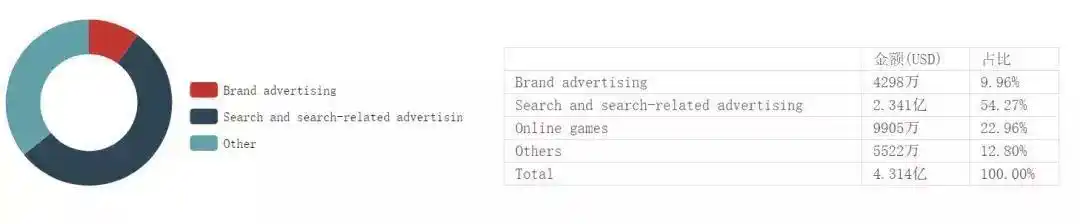
Sohu’s 2019Q1 revenue structure
Let’s talk about search first. In Q1 2019, Sohu's search and search-related revenue was US$234.1 million, contributing more than half of its revenue, a year-on-year increase of 6%. This growth mainly came from the growth of auction-based pay-per-click services. But the market also has a cruel side. With Baidu and 360 increasing their focus on mobile search, and new players like Shenma Search joining, the search market may be facing a fierce battle.
Let’s talk about games. In Q1 2019, Sohu's game revenue was US$99.05 million, a year-on-year decrease of 6%, and its book performance was impressive. However, the financial report also stated that the total monthly average active accounts of Sohu mobile games were 3.7 million, a year-on-year decrease of 29%. The total quarterly active payment accounts of mobile games were 600,000, a year-on-year decrease of 25% and a month-on-month decrease of 14%. Both MAU and ARPU values declined, reflecting the natural decline cycle of the company's older games.
In terms of the overall financial report, Sohu's total revenue in the first quarter was US$431 million, a year-on-year decrease of 5%.
This is the case in a world full of competition. The strong get stronger and the weak get weaker. Sohu needs a new growth point to boost morale.
The "Future of Sohu" that Zhang Chaoyang calls "Sohu's Future" has been removed from the shelves. I don't know how long it will take for the next "Future of Sohu" to be online.
Summarize
Starting in 2008, Zhang Chaoyang became a "shadow CEO" for a time, busy reading, listening to music, doing yoga, mountain climbing, and running. Almost all company affairs were managed by a few senior executives. In 2010, Zhang Chaoyang announced his comeback and wanted to "rebuild Sohu". In 2012, Zhang Chaoyang went into seclusion again due to depression and came back again the following year. In 2018, Zhang Chaoyang announced his return in a high-profile manner. After going around and around, Zhang Chaoyang is still the same Zhang Chaoyang, but the world of the Internet has changed.
In November 2016, Zhang Chaoyang made the bold statement of "returning to the Internet center in three years" in Wuzhen. Now there are only 4 months left before this date, and we still need to fight hard.
In 2019, the best year in the next ten years, 54-year-old Jack Ma retired, and 54-year-old Zhang Chaoyang began to prepare to be a good CEO.
The difference is that Jack Ma has chosen his successor in advance, while Sohu does not seem to have a "number two person."
References:
Huxiu: "Why is Sohu's market value so low?"
Yiou.com: "What mistakes did Zhang Chaoyang make in Sohu's 20 years"
AI Blue Media Collection: "Sohu's 20-Year Legend Lao Zhang"
Kuai Dao Finance: "The rise and fall of Sohu over the past 20 years: Zhang Chaoyang succeeded and Zhang Chaoyang failed"
Feng Yan: "Conversation with Zhang Chaoyang: I once wanted to be recognized by the world, but now I am only loyal to myself"