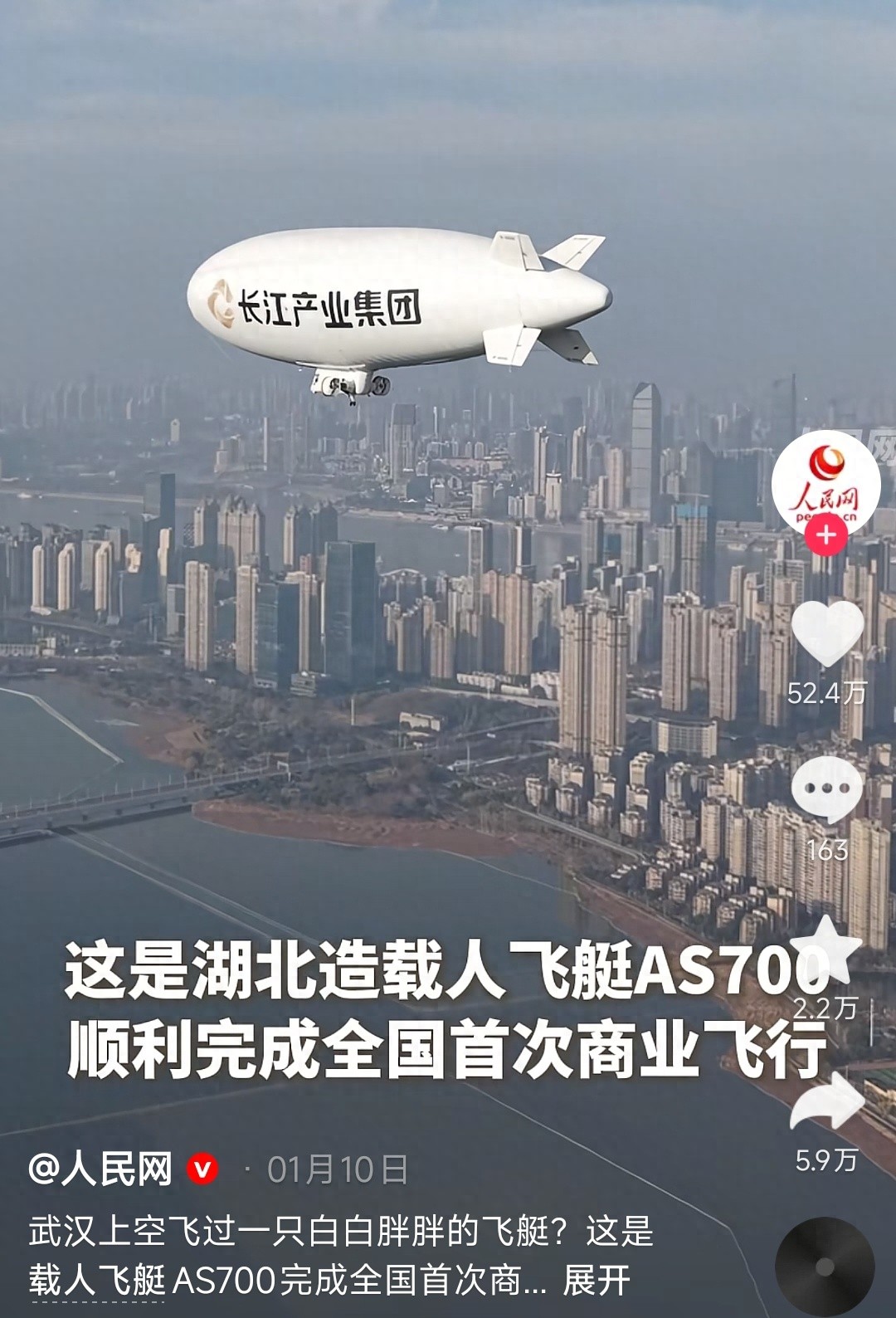
When 55 cities around the world are vying to develop a low-level economy, former US President Biden bluntly said that this is "a war that the United States cannot afford to lose." However, in this world-class competition, China has already quietly run a different rhythm?
In "This Is China" broadcast on March 9, the host He Jie, Professor Zhang Weiwei, Dean of the China Institute of Fudan University, and Ren He, a distinguished expert from COMAC and director of the Shanghai General Aviation Association Expert Committee, conducted an in-depth dialogue, revealing the development status and core advantages of China's low-altitude economy, and also allowing us to see clearly China's confidence in the global competition.
In the program, Ren He made it clear that by 2024, 55 cities around the world have joined the low-altitude economic layout, including 6 cities in the United States and 8 cities in Australia. Brazil, South Korea, Japan and European countries have also made efforts to integrate low-altitude aircraft into daily life. Morgan Stanley even predicts that by around 2035, 35% of intercity transportation will be replaced by high-speed rail and cars by small planes, completely changing human travel patterns.
In the face of fierce competition on a global scale, Professor Zhang Weiwei used China's actual practice to give the answer: the earliest low-altitude test line from Suzhou Kunshan to Pudong Airport in China has been running stably for a year. The flight only takes 25 minutes, while traditional driving takes 2 hours, which greatly saves travel time. Especially for passengers who need to depart from Pudong Airport, this low-altitude route completely solves the pain points of time-consuming and prone to congestion on ground transportation. It has shown great practicality in the Yangtze River Delta region and has become a vivid example of the implementation of China's low-altitude economy.
From the competition among global leaders to the steady implementation of China's practice, China has not blindly followed the trend, but is practical-oriented, allowing the low-altitude economy to truly serve people's livelihood, and has blazed its own solid path in the global race.