
NetEase Cloud Music 2025 Chinese Rap Music Awards Announced, Search Chinese Rap Music On The APP To See The Results
NetEase Cloud Music 2025 Chinese Rap Music Awards announced, Xie Di, Ma Siwei, Zhang Fangzhao, Wang Yitai and other winners
NetEase Cloud Music 2025 Chinese Rap Music Awards announced, Xie Di, Ma Siwei, Zhang Fangzhao, Wang Yitai and other winners
From embodied intelligence to biomanufacturing, from new batteries to green hydrogen energy, more and more new technologies are leaving the laboratory and entering application scenarios, comprehensively reshaping the industrial landscape and the future of economic and social development. The "Fifteenth Five-Year Plan for National Economic and Social Development of the People's Republic of China" released on March 13 proposed that in the next five years, our country will "cultivate and strengthen emerging industries and future industries." It also proposed ten "new industries and new tracks" including embodied intelligence, domestically produced large aircraft, brain-computer interfaces, and low-altitude equipment.
How to achieve this goal? What impact will the layout of new industries and new tracks have on future industrial development? A reporter from the Beijing News interviewed Zhu Keli, a well-known economist and founding director of the Guoyan New Economic Research Institute. He said that emerging industries and future industries represent the forefront of scientific and technological revolution and industrial transformation, and are the core carriers of cultivating new productive forces. Listing them as key industries in the future reflects the strategic vision of "based on the future and planning in advance."
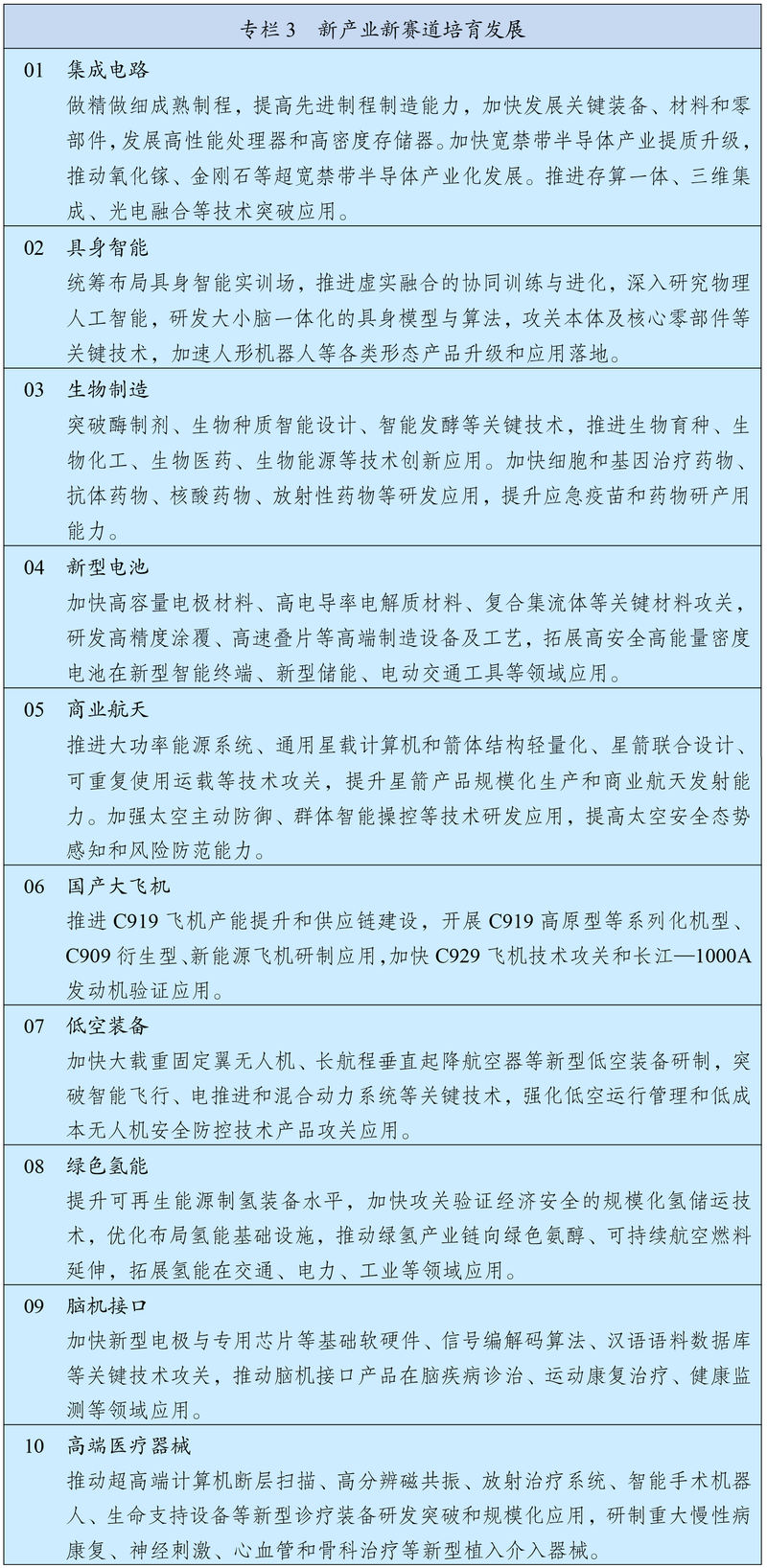
The “15th Five-Year Plan” outlines the layout of ten new industries and new tracks. Xinhua News Agency
New industries, new economic growth poles
When brain-computer interfaces, embodied intelligence, etc. increasingly appear in people's daily lives, they are not only cutting-edge technologies in the laboratory, but also the foundation of industries that will lead the future. Zhu Keli said that this is precisely why the "15th Five-Year Plan" outlines the layout of new technologies, new industries and new tracks at the national strategic level, "reflecting the country's strategic choice on the driving force of economic transformation in the new development stage."
This strategic choice is the inevitable result of adapting to new trends in international and domestic development. Zhu Keli said, "Emerging industries and future industries represent the forefront of technological revolution and industrial transformation, and are the core carriers of cultivating new productivity. Among them, aerospace, low-altitude economy, green hydrogen energy, new batteries and other tracks are accelerating to grow into emerging pillar industries. From an international perspective, global technology competition is intensifying, and all countries are competing in frontier fields. my country must take advantage of the trend to seize the commanding heights of the global industrial division of labor; from a domestic perspective, the fundamental way to solve the "stuck neck" problem and achieve high-level technological self-reliance is to rely on these emerging tracks to achieve technological breakthroughs and industry changes. Placing them in a prominent position is to focus on medium- and long-term competitiveness, build strategic advantages for sustained and healthy economic development, and is also a precise grasp and scientific response to the trends of the times. "

Zhu Keli, economist and founding director of the Guoyan New Economic Research Institute. Photo provided by interviewee
Although at present, some new industries and new tracks, such as embodied intelligence and brain-computer interfaces, still need a process to reach large-scale application, Zhu Keli believes that making them a priority in national planning reflects the strategic vision of "based on the future and planning in advance." "Future industries have long cultivation cycles, large investments, and rapid technological iterations. Strategic reserves must be launched when the technology is still in the breakthrough stage to avoid being controlled by others at the critical stage. These fields contain disruptive technological potential. Once breakthroughs are made, the industrial pattern will be completely restructured and huge economic and social value will be created. For example, the low-altitude economy can link manufacturing, transportation, cultural tourism and other fields to form a new industrial ecosystem. From the perspective of industrial planning According to the law, the development of emerging industries needs to go through a long incubation period from laboratory to industrialization, and early policy guidance and resource support are crucial. Advance planning can accelerate the process of technological maturity and industrialization through policy guidance, factor aggregation and scene opening, and form a first-mover advantage. This is not only an investment in the future, but also to seize the initiative in future industrial competition and inject lasting momentum into national development."
New goals to build a complete business format
In the layout of new industries and new tracks, what goals and paths does the “15th Five-Year Plan” outline show?
Zhu Keli said that from the perspective of goals, the cultivation of new industries and new tracks has clear phased goals. “The overall goal is to build an internationally competitive modern industrial system and provide solid industrial support for the realization of Chinese-style modernization. Specifically, the goals are reflected in three levels. The first is the technical goal. We strive to achieve a number of key core technology breakthroughs in key areas such as embodied intelligence and biomanufacturing in the next five years, narrow the gap with international advanced levels, and achieve international leadership in some areas. The second is the industrial goal, which is to promote emerging industries to become an important pillar of the national economy. In the future, the industry will form a large-scale and industrialized development trend, significantly increase its proportion in GDP, and create a number of industrial clusters with global influence. The third is the ecological goal, to build a number of industrial ecology with aggregation of elements, complete functions, and open collaboration, and to cultivate a large number of leading enterprises and specialized new enterprises with innovative vitality and market competitiveness, laying a solid foundation for the long-term healthy development of the industry."
On August 7, 2025, the world's first "smart canteen" Galaxy Space Capsule with embodied intelligent robots as store clerks was unveiled at Zhongguancun Fusion City. Data map/photo by Beijing News reporter Pu Feng
How to achieve these goals? The “15th Five-Year Plan” outline also draws a clear road map. Zhu Keli explained that the "15th Five-Year Plan" outline emphasizes systematic promotion and precise policy implementation for the cultivation of new industries and new tracks. The core path includes strengthening top-level design and overall coordination, building a three-level linkage cultivation system of national, local and enterprise levels, and clarifying development priorities and implementation steps. Adhere to the innovation drive, increase investment in basic research and cutting-edge technology, rely on national laboratories, new R&D institutions and other platforms to concentrate on breakthroughs in key core technologies and consolidate the foundation for industrial development; deepen openness and collaboration, encourage cooperation between domestic and foreign innovation forces, actively participate in the formulation of international standards, and integrate into the global innovation network; focus on scenario empowerment, targeting low-altitude economies, specific We will build exclusive application scenario demonstration bases and open professional test platforms for featured tracks such as personal intelligence. Through the construction of application scenario demonstration bases and open test platforms, we will promote the iterative verification of technologies in real scenarios and accelerate the transformation of results. We will also improve factor guarantees and give preference to the allocation of funds, talents, data, land and other factors to provide a good ecosystem for corporate innovation. "It can be seen that in the implementation path of the '15th Five-Year Plan' outline, through the above multi-dimensional measures, we will ultimately promote new industries and new tracks from concept to reality and achieve healthy and sustainable development." He said.
New track, multiple measures to lay out the future
Although many new technologies have attracted widespread attention across society, and have even given rise to many hot spots and new trends, many new technologies are still far from being truly universal and maturely applied. The “15th Five-Year Plan” outline also clearly proposes the establishment of a risk-sharing mechanism.
What are the risks of new technologies and new industries in the future? Zhu Keli said that the development of new technologies first faces the risk of uncertainty. The technical routes in frontier fields have not yet been completely finalized. Technologies such as multi-modal perception of embodied intelligence require large R&D investments and high failure rates. There are R&D bottlenecks and technology iteration risks. Secondly, there is the risk of an imperfect industrial ecology. There are shortcomings in the supply chain of core components, materials, equipment, etc. For example, the supporting system for key materials such as new batteries is not yet complete, which restricts the large-scale development of the industry. Thirdly, there are market risks. Application scenarios in some areas have not yet been fully opened. For example, the commercial operation model of low-altitude economy needs to be verified, and there is uncertainty in market acceptance. At the same time, international competition and the risk of technology blockade are intensifying, global technology competition is intensifying, and key technologies and equipment are facing the pressure of being "stuck". In addition, there are still problems such as talent shortage, insufficient capital investment, lagging regulatory rules, safety and ethical challenges, etc., which all pose real challenges to the healthy development of the industry.

On June 26, 2025, at the Second Intelligent Medical Industry Innovation and Development Conference held in Fengtai District, staff demonstrated brain-computer interface equipment. Photo by Beijing News reporter Tao Ran
How to deal with future challenges and risks? How to establish a risk sharing mechanism? Zhu Keli believes that to deal with challenges and risks, we need to adhere to a problem-oriented approach and take multiple measures. The first is to strengthen core technology research, give full play to the advantages of the new national system, and concentrate resources to break through key bottlenecks in new batteries, low-altitude equipment, brain-computer interfaces and other fields. The second is to improve the industrial ecology, strengthen upstream and downstream collaboration in the industrial chain, cultivate supporting enterprises, and improve the emerging track supply chain system. The third is to optimize the market environment, increase the opening of scenarios, and cultivate market demand through policy guidance and demonstration applications. The fourth is to strengthen international cooperation, actively participate in global governance, and enhance international voice. Regarding the risk sharing mechanism, a diversified system involving the participation of governments, enterprises, financial institutions, and social capital should be established. At the government level, special funds can be set up, risk compensation can be provided, tax incentives can be implemented, and early R&D and trial-and-error costs can be reduced. At the enterprise level, an internal risk sharing mechanism should be established to disperse risks through technological innovation cooperation, intellectual property sharing, etc. At the financial level, develop financial tools such as technology insurance, intellectual property pledge financing, and venture capital to provide capital guarantees for enterprises. At the social level, guide industry associations, scientific research institutions, etc. to participate in risk co-management, forming a good pattern in which multiple parties work together and share risks.
On July 17, Eastern Time, the U.S. House of Representatives passed the "National Innovation Act to Guidance and Establishment of U.S. Stablecoins" (referred to as the "Genius Act" or "Stablecoin Act") with a vote of 308 in favor and 122 against, aiming to carry out major legislative reforms to cryptocurrency regulation.
According to CCTV News, a month ago, the U.S. Senate passed the aforementioned "Genius Act" with a rare overwhelming majority. This was also the first time that the Senate passed crypto-asset legislation. After passing the House of Representatives, the bill will be submitted to President Trump, who will sign it into law.
The bill clearly requires stablecoin issuers to hold U.S. dollar asset reserves at a ratio of 1:1, and the purpose of issuance is payment or settlement, rather than securities or commodities. It also restricts technology giants from issuing stablecoins and mandates federal or state-level license management.
The analysis pointed out that this marks that the entire cryptocurrency market will enter a more standardized but more competitive stage, and will also have a profound impact on the digital asset landscape and financial markets in the United States and even the world, including further helping to strengthen the status of the U.S. dollar while further weakening the sovereign currency credit of some countries, which may face greater trade challenges.
The biggest feature of traditional cryptocurrencies such as Bitcoin is that their prices fluctuate violently. Stablecoins, as a cryptocurrency anchored to stable assets (such as legal currency and gold), exist to solve this problem and require cryptocurrency to use 100% of legal currency as a reserve value.
Entering 2025, stablecoins will usher in a major breakthrough. The current global scale has exceeded US$250 billion, exceeding the combined transactions of VISA and MasterCard for the first time. U.S. Treasury Secretary Bessent recently predicted that this scale may reach 2 trillion U.S. dollars in the future, which will significantly increase the demand for the U.S. dollar and U.S. debt, thereby directly strengthening the U.S. dollar monetary system.
In addition to the United States, since 2018, the United Kingdom, Australia, Japan, the United Arab Emirates, Singapore, the European Union, Hong Kong, Cayman Islands, Panama and other countries/regions have successively issued or announced regulatory bills to promote stablecoins and cryptocurrencies. Among them, the European Union, the United States, and Hong Kong, China, all have statutory reserve ratios for banks close to 0%, but stablecoin issuers require a reserve ratio of 100%.
In addition, the U.S. House of Representatives also passed a broader cryptocurrency market structure bill, the Clarity Act, on July 17, which will be submitted to the Senate for consideration.
The Clarity Act aims to clarify the division of responsibilities between the U.S. Securities and Exchange Commission and the U.S. Commodity Futures Trading Commission in the regulation of digital assets. The bill covers all digital assets associated with blockchain systems, including mainstream cryptocurrencies such as Ethereum and Ripple, and divides these digital assets into two categories: securities assets (still regulated by the Securities and Exchange Commission) and commodity assets (regulated by the Commodity Futures Trading Commission).
Recently, the results of the NetEase Cloud Music 2025 Chinese Rap Music Awards were officially announced. Musicians such as Ai Zhiheng Asen, Chen Wenjing, Chen Yihao Clear, Geomagnetic Card, GAI Zhou Yan, Ma Siwei, Mah Mood, Shi Xinyue, Vansdaddy, Wang Yitai, Xie Di, Xia Zhiyu, Zhang Fangzhao and other musicians won the award; Huayunlong KLE won the annual attention-grabbing star; Yang Hesu KeyNG, JinJiBeWater_falcon, Rapeter, Wang Qiming WatchMe and others won the People's Choice Award. Music fans can search for "Chinese rap" on the NetEase Cloud Music APP to view the complete award results.

As a high-profile and recognized annual award in China, this year's Chinese Rap Music Awards has established four major categories of honors: annual honors, category awards, jury honors, and people's choice awards. It presents the full picture of Chinese rap creation in the past year through 17 awards.
In the "Annual Honors" section, Ai Zhiheng Asen's "Wake Up After the Rain", Xia Zhiyu/Gemagica's "Everybody Loves Hip-Hop" and Huayunlong KLE's "Year of the Dragon" won the Album of the Year at the 2025 Chinese Rap Music Awards. Ai Zhiheng Asen deeply analyzed himself in the album and delivered masterpieces with both sincerity and texture; Xia Zhiyu and Geomagic Ka embedded dialect and hip-hop into life scenes, converging into a wonderful "life road movie"; Hua Yunlong KLE combined bottom life with street spirit, using Shandong dialect to create a vivid picture of Shandong's urban scene.
Hua Yunlong KLE's "Shandong King FREESTYLE", GAI Zhou Yan/Kung Fu Fat KungFuPen/KEY.L Liu Cong/Shengyu D-SHINE's "Renyi Tea House" and Chen Yihao Clear's "Song of the Year" won the 2025 Chinese Rap Music Awards Single of the Year. "Shandong King FREESTYLE", as this year's hit single, tells the story of his hometown in a vivid way, opening up a new territory for dialect rap; the prelude of "Renyi Tea House" uses electric guitar to take the audience into the world of rivers and lakes, and the declaration of "My songs are not played in bars, I give them to the people" in the lyrics arouses widespread resonance; "Stuffy" uses snorts, drum beats and melody to create layers of progressive emotions, successfully materializing the suffocation caused by a relationship.
Ai Zhiheng Asen's "Wake Up After the Rain", Shi Xinwenyue's "Grey Sun" and Mah Mood's "This Is Not My Sunset" won the 2025 Chinese Rap Music Award for Production of the Year. The rhythm of "Wake Up After the Rain" slowly unfolds, and the gospel harmonies cleverly set off the quiet atmosphere of the morning after the rain; "Gray Sun" uses rich jazz chords and playful flutes to bring all the melodies and rhythms into the listener's mind; the arrangement, mixing and lyrics of "This Is Not My Sunset" complement each other, creating a movie-like depth of time and space, which is highly infectious.
Vansdaddy/Wang Yitai's "Nowhere", Xie Di/GAI Zhou Yan's "Bell Tower" and Ma Siwei/Ai Zhiheng Asen's "Hotel Lobby" won the 2025 Chinese Rap Music Award for annual collaboration. "Nowhere" uses a bitter yet warm melody to interpret the pull between dreams and reality; Xie Di and GAI Zhou Yan collaborated on "Bell Tower", using fierce and powerful beats and relaxed accents to deliver the strongest sound of Chinese rap; Ma Siwei and Ai Zhiheng Asen once again joined forces to create a unique elegant and lazy atmosphere in "Hotel Lobby".
The second-rate "Looking for 2003" won the EP of the Year. On the soothing melody, the musician uses sticky and lazy articulation to narrate the common and precious daily things in the southwestern land.
There are a total of 6 awards in the "Category Awards" unit, aiming to recognize full-length albums with outstanding performance in different genres. Xia Zhiyu/Geocard's "Everybody Loves Hip Hop" won the Best Traditional Rap Album; Li Jialong's "2025 Dreams Come True Mixtape" won the Best Pop Rap Album; Wang Qiming's WatchMe "Life Malatang" won the Best Trap Rap Album; Zhang Fangzhao's "Qian Zhuan" won the Best Melodic Rap Album; Chen Wenjing's "If you could be happy every day, who wants to be sad:)) - "Let's Go on Vacation Together" won the Best Alternative Rap Album; Shi Xinwenyue's "Grey Sun" won the Best Rap Fusion Album.
The "Jury Honors" section focuses on commending musicians and works with outstanding performance in market influence, industry reputation and development. Huayunlong KLE won the annual Producer of the Year award for his album "Year of the Dragon", which gained both popularity and popularity; LusciousBB won the Producer of the Year award for his unconstrained arrangement and production inspiration in works such as "Meet the Size", "Urban Drunkard" and "Money Special"; africakid, Adam Ocean, Li Xinying, Erliu, ProN4c won the Annual Potential New Voice; Wang Qiming's WatchMe "Life Malatang pt.1" won the Annual MV.
In addition, this year’s Chinese Rap Music Awards also has a People’s Choice Award voted for by music fans. Yang Hesu KeyNG/JinJiBeWater_ Falcon's "Dye Vat", ljz329 "3977", and Rapeter's "NO HOOK FREESTYLE Pt.4" won the People's Choice Singles; Ai Zhiheng Asen's "Wake Up After the Rain", Rapeter's "IMGOOD Don't Worry About Me", and Wang Qiming WatchMe's "Life Malatang" won the People's Choice Album.
NetEase Cloud Music 2025 Chinese Rap Music Awards conducts a comprehensive review of the annual works from multiple perspectives. The shortlisted works are all works released on the NetEase Cloud Music platform from January 1 to December 31, 2025. Except for the People's Choice Award, which is voted by music fans, the other awards are all selected by a jury composed of Complex Chinese, STD Sonic Communication and other media, professional producers such as Kass, Major Yao, and well-known self-media people such as Swag Simon and Xiaoqiang Shushu. In addition, this year’s Rap Awards will introduce A4 Art Museum, City Pictorial CITYZINE, HiShorts! Four major partners, including Youth Short Film Week and NOWRE, carry out cross-border cooperation and participate in the award selection from the perspectives of special observation agencies and cooperative media.
As China's leading original music platform, NetEase Cloud Music continues to delve into the field of rap. It has successively launched a series of authoritative awards and lists such as the Chinese Rap Music Awards and semi-annual lists, monthly reviews, and weekly rap lists to select high-quality works from multiple dimensions. In addition, the platform systematically supports the development of Chinese rap through a series of measures such as the one-stop Beat trading platform BeatSoul, income support plan, and rap planning.
Professor, doctoral supervisor, PhD in economics
Director, Taxation and Public Policy Research Center, Central University of Finance and Economics
Central University of Finance and Economics, Shahe Higher Education Park, Changping District, Beijing
Postal code: 102206
Mobile:13681592777
Email: cdoer@163.com
Educational experience:
Bachelor of Economics, Department of Finance and Taxation, Central South University of Finance and Economics (1999)
Master of Economics, School of Finance, Renmin University of China (2004)
PhD in Economics, School of Finance, Renmin University of China (2008)
Visiting Scholar, School of Environment and Public Affairs, Indiana University, USA (2013)
Main research areas:
Fiscal and taxation theory, system and policy; economic system model and application; econometric model and application
Courses taught:
Taxation (undergraduate students), Tax Law (undergraduate students), Chinese tax system (undergraduate students), Comparative Taxation System (master students), "Foreign Fiscal Theory and Practice" (master students), Frontiers of Fiscal Theory (doctoral students), Taxation Theory and Policy (doctoral students), "Foreign Fiscal and Taxation Theory" (doctoral students)
Main papers:
Wang Hao, 2025, Inter-regional transfer of value-added tax: mechanism and scale, Economic Research, Issue 6.
Wang Hao, 2025, Re-understanding of the division of direct taxes and indirect taxes and optimization of tax system structure, Taxation Research, Issue 5.
Lou Feng, Wang Hao, Xu Jing, 2025, China's corporate income tax revenue distribution effect - based on general equilibrium theory and model, Quantitative Economics and Technology Economics Research, Issue 8.
Guo Yuqing, Nie Song, Chen Chuanglian, Wang Hao, 2025, How to have both your cake and eat it too: Research on risk management of financing platforms under the pressure of statutory debt, Finance and Trade Economics, Issue 8.
Guo Jing, Wang Hao, 2024, Tax Burden of Urban and Rural Residents - Fiscal Income Analysis, Economic Research, Issue 5.
Wang Hao, 2023, China's labor and capital tax burden and distribution effects, Economic Research, Issue 4.
Wang Hao, Guo Yuqing, and Lu Yi, 2022, China's value-added tax pass-through, fate and tax reduction effect - general equilibrium analysis, Economic Research, Issue 2.
Guo Yuqing, Jiang Xiaoni, Mao Jie, Wang Hao, 2022, Risk governance effects of creditor credit constraints: Based on the signaling perspective, World Economy, Issue 9.
Wang Hao and Lou Feng, 2017, Estimating the effect of fiscal redistribution in China, Economic Research, Issue 1.
Wang Hao and Lou Feng, 2017, The fate of indirect taxes in China: Functional mechanism and tax burden calculation, World Economy, Issue 9.
Ma Haitao, Wang Hao, 2017, The impact of finance on income distribution and reform suggestions, China Taxation, Issue 4.
Li Yongbin, Wang Hao, 2017, Comparison of double taxation avoidance agreements between my country and countries along the “Belt and Road”, Taxation Research, Issue 2.
Wang Hao, 2016, Income distribution effects of business tax to tax increase and reduction, Fiscal Research, Issue 10.
Wang Hao and Fan Tianqin, 2016, Comparative study on the tax policies of non-profit organizations in China and the United States, Taxation Research, Issue 2.
Wang Jun, Wang Hao, et al., 2016, Economic governance modernization and “13th Five-Year Plan” tax system reform, Regional Economic Review, Issue 7.
Wang Chaocai, Xu Jun, Wang Hao, 2012, Discussing my country's value-added tax expansion options from the perspective of its impact on economic efficiency, Fiscal Research, Issue 7.
Wang Hao, 2011, Thoughts on improving my country’s capital market tax system, Investment Research, Issue 4.
Wang Hao, 2010, Thoughts on the construction of my country's medium and long-term tax system, Taxation Research, Issue 10.
Wang Hao, 2010, Economic structural regulation calls for fiscal and taxation system reform, China Finance, Issue 7.
Wang Hao, 2009, Analysis of my country's fiscal and taxation policies from the perspective of supply and demand management, Taxation Research, Issue 9.
Wang Hao, 2009, Thoughts on my country’s tax policy in response to the economic crisis, Fiscal Research, Issue 8.
Wang Hao, 2009, Russia’s fiscal and taxation policies and lessons learned in response to the financial crisis, Foreign Taxation, Issue 7.
Wang Hao, 2009, Characteristics and Enlightenment of the British Tax Policy in Response to the Financial Crisis, Foreign Taxation, Issue 5.
Wang Hao, 2009, Taxation Systems between China and France: Comparison and Enlightenment, in "Research on China-EU Tax Agreements and Comparison of China-EU Taxation Systems", China Taxation Press.
Wang Hao and Xu Jun, 2007, Characteristics and Enlightenments of U.S. Personal Income Tax Collection and Administration, Foreign Taxation, Issue 12.
Wang Hao, 2007, Changes, Causes and Countermeasures of my country’s Excessive Tax Burden, Finance and Trade Economics, Issue 5. (Reprinted in English by "China Economist")
Wang Hao, 2007, The impact of land value-added tax liquidation on after-tax profits of real estate companies, Finance and Accounting, Issue 5.
Wang Hao, 2007, The impact of land transfer fee accounting on taxation cannot be ignored, Finance and Accounting, Issue 8.
Wang Hao, 2007, Land transfer, how shareholders can obtain maximum returns, Finance and Accounting, Issue 11.
Wang Hao, 2007, Comparison and improvement of new corporate income tax returns, Tax Collection, Issue 3.
monograph:
Lou Feng, Wang Hao, Liu Yu, 2024, Computable General Equilibrium (CGE) Model: Theory and GAMS Programming, Tsinghua University Press.
Wang Hao, 2016, Research on tax policy reform of Chinese non-profit organizations, Economic Science Press.
Wang Hao, 2013, Research on Economic Structural Adjustment and Tax System Reform, China Taxation Press.
Wang Hao, 2009, Research on Tax Regulation of Real Estate Market - Analysis Based on China's Current Situation, China Taxation Press.
Topic research:
He has presided over many projects such as major projects of the National Social Science Fund, general projects of the National Natural Science Foundation, youth projects of the National Social Science Fund, general projects of the Humanities and Social Sciences Fund of the Ministry of Education, projects of the Ministry of Finance, and outstanding scientific research and innovation team projects of the Central University of Finance and Economics.
Rewards received:
First Prize of Central University of Finance and Economics Hongji Shiye Outstanding Academic Paper Award (2023)
First Prize of Central University of Finance and Economics’ Outstanding Achievements Transformation Award (2023)
Expert with Outstanding Contributions from the Ministry of Finance Expert Studio (2021)
Annual Outstanding Paper Award of the Society of International Economic Relations (2017)
First Prize for Excellent Paper of China Annual Conference on Quantitative Economics (2015)
Central University of Finance and Economics Yongjin Academic Award (2012)
Outstanding Doctoral Thesis Award of Renmin University of China (2009)
Academic part-time job:
Reviewer for journals such as "Economic Research", "Management World", "World Economy", "Economics (Quarterly)", "Nankai Economic Research" and other journals
Expert in the macroeconomic talent pool of the Ministry of Finance
Expert from Ministry of Finance Expert Studio
Member of China Systems Engineering Society
Vice Chairman of China Social and Economic Systems Engineering Professional Committee
Director of the China Taxation Society Young and Middle-aged Taxation Research Association
Director of China Society of International Economic Relations
Director of China Input-Output Society
Zhitong Finance APP learned that the U.S. encryption industry ushered in a major victory on Thursday. The House of Representatives passed a landmark bill with a vote of 308 in favor and 122 against to formulate regulatory rules for "stable coins." This marks that digital assets are gradually entering the mainstream financial system.
The bill, called the Genius Act, was passed by the Senate as early as June, and the White House said on Thursday that President Trump is expected to sign the bill into law on Friday.
The bill has been a core target of years of lobbying by stablecoin issuer Circle (CRCL) and crypto trading platform Coinbase (COIN.US). The passage of the bill is the epitome of the crypto industry’s years of political mobilization and donations to support lawmakers with pro-crypto stances.
Crypto supporters generally believe that this bill and several other crypto legislation being considered by Congress will open up broader development space for the industry, especially attracting more institutional investors.
News of the bill comes as Bitcoin prices have been essentially flat over the past 24 hours, trading around $119,400. However, most other mainstream cryptocurrencies rose, with Ethereum rising by 1.5% and Ripple rising by 9.4%. Dogecoin gained 2%, while Solana was flat. In the past seven days, ETH and XRP have gained 23% and 33% respectively, while Bitcoin has also gained 6.4%.
Although the "Genius Act" is expected to be implemented soon, the encryption industry still has many unfinished ambitions. In particular, market structure legislation for crypto exchanges, brokers and tokens is the focus of the industry in the next stage.
It is worth noting that the House of Representatives also passed a broader “Market Structure Act” (CLARITY Act) on Thursday by a vote of 294 to 134 to establish complete regulatory rules for the crypto market. Among them, 78 Democratic congressmen voted in favor, exceeding the number of Democrats who supported a similar bill last year (71), showing that support is rising.
However, unlike the stablecoin bill, the market structure bill has not yet been voted on in the Senate. Analysts say the Senate is still some way off from assembling the bipartisan coalition needed to break through the filibuster.
TD Cowen analyst Jaret Seiberg wrote in a research note this week: "The passage of the bill is very important in a symbolic sense, but the real key is what kind of language the Senate will ultimately pass it." He does not expect the Senate to have a clearer draft bill before the end of this year or even early next year.
There are two reasons for the slow progress in the Senate. The first is the issue of consensus. While some senators have been pushing legislation for years, the Senate as a whole lags far behind the House in building consensus. Former Senate Banking Committee Chairman and Democrat Sherrod Brown has long been skeptical of encryption and has repeatedly blocked related bills from advancing.
The second is substantive differences. Several Democratic senators, including Elizabeth Warren, worry that the bill will undermine existing investor protection mechanisms and hand enforcement responsibilities to the Commodity Futures Trading Commission (CFTC), which is severely understaffed and inexperienced. They believe that existing securities regulations are sufficient to regulate the industry.
Additionally, Trump’s own involvement in the crypto industry casts a shadow over the legislation. The stablecoin bill was nearly stalled in the Senate because some Democratic lawmakers were concerned that the bill failed to prohibit the president or other government officials from profiting from it. According to ethics disclosure documents, the Trump family holds shares in crypto company World Liberty Financial, which has brought it more than $57 million in revenue from token sales and launched its own stablecoin this year. In the future, some Democratic lawmakers may push for additional restrictions in the new bill to prohibit the president and his relatives from benefiting from it.
The new chairman of the Senate Banking Committee, Republican Tim Scott, began holding hearings on the relevant legislation last week, but it is expected to take several months to write a bill that can win the support of at least seven Democratic lawmakers and thereby bypass the obstruction process.
At the same time, the U.S. House of Representatives also passed another important bill, the “Anti-CBDC Anti-Surveillance State Act.” The bill seeks to prevent the Federal Reserve from issuing or testing a central bank digital currency without congressional approval. The final vote was 219 votes in favor and 217 votes against.
Central bank digital currency is different from decentralized cryptocurrencies such as Bitcoin. It is directly issued and managed by the central bank and is programmable and highly controllable. Some critics worry that it will become a means for the government to strengthen currency and citizen privacy control.
Other news pointed out that Trump is preparing to open the US$9 trillion US retirement market to cryptocurrency investment, gold and private equity. This move will stimulate a fundamental change in the way Americans manage their savings.
Trump is expected to sign an executive order this week to open up 401k plans to alternative investments beyond traditional stocks and bonds, three people familiar with the president's plans said. The investments will span a wide range of asset classes, from digital assets to metals, as well as funds focused on corporate buyouts, private loans and infrastructure deals. The executive order will direct Washington regulators to investigate remaining obstacles needed to allow such alternative investments to be included in professionally managed funds used by 401k savers, people familiar with the matter said.
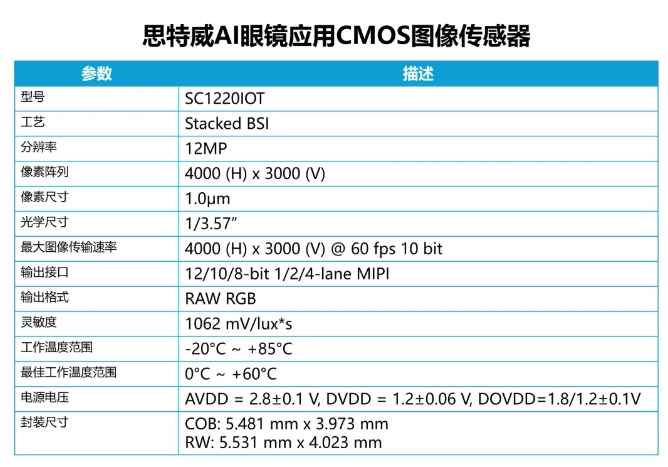
IT House reported on March 12 that domestic supply chain manufacturer Smartway announced today the launch of a new 12-megapixel CMOS image sensor for AI glasses application - SC1220IOT.
According to reports, this new product is equipped with the Always-On low-power normally-on function. In Always-On mode, SC1220IOT can maintain ultra-low power consumption and always-on operation at a lower frame rate, which can meet the needs of all-weather standby visual detection such as smart AI glasses camera environment detection and gesture recognition. In this mode, the power consumption of SC1220IOT can be as low as 1mW, which can fully guarantee the battery life of the whole machine.

SC1220IOT is equipped with SmartSmart ColGain HDR® technology, which can achieve a high dynamic range effect of up to 75dB through single-frame exposure multi-gain image synthesis, helping AI glasses cameras retain more details of bright and dark parts in complex light environments with strong contrast between light and dark, significantly improving the light and shadow effects of video shooting.
Moreover, AI glasses, as smart wearable devices, often need to be taken while the user is moving. SmartSign's ColGain HDR® technology can effectively suppress the generation of motion artifacts, helping AI glasses cameras easily cope with shooting sports scenes, and capture high-quality video images that are clear and smooth, without motion smearing, and with vivid light and shadow.
In addition, SC1220IOT can support 12MP full-size 60fps high frame rate video shooting in normal mode (double the frame rate compared to the previous generation product), and 4k 30fps high dynamic range video shooting in ColGain HDR® mode.
SC1220IOT is equipped with SmartSite's advanced SFCPixel®-2 technology, which achieves higher sensitivity while significantly reducing noise through the SF center. Thanks to this, the reading noise of SC1220IOT can be as low as 0.8e-, which can make the imaging picture clearer and cleaner in dark light environments such as evening and night.
As a 12-megapixel 1/3.57-inch CMOS image sensor, SC1220IOT is built on SmartClarity®-XL technology platform and adopts full-process domestic Stacked BSI advanced process technology. Its package size is only about 5.48mm x 3.97mm, and it can be flexibly applied to micro camera modules for a variety of smart wearable devices such as AI glasses and AR/VR devices.
Currently, SC1220IOT has accepted samples and will be mass-produced in Q2 2026.
IT Home’s product parameters are as follows:
 The Current Situation Of 50-year-old Chen Kun Is Exposed! I Had A Miserable Childhood, And I Suffered A Lot When I Was Living Under The Shelter Of Others.2026-03-08Comments(0)
 2026: Jeffrey Epstein Estate Settles Sexual Assault Lawsuit For $35 Million2026-02-28Comments(0)
 How Much Do You Know About The Uses, Misunderstandings And Precautions Of Performing A Dynamic Electrocardiogram?2026-02-26Comments(0)