
BTC Price Prediction And Market Sentiment Analysis: Short-term Consolidation And Institutional Interest Coexist
Binance[adid]fbd7939d674997cdb4692d34de8633c4[/adid][adid]758691fdf7ae3403
Binance[adid]fbd7939d674997cdb4692d34de8633c4[/adid][adid]758691fdf7ae3403
On December 15, a seminar on the ideological and political construction of financial professional courses in the digital education era, jointly sponsored by the School of Finance and the Academic Affairs Office of Central University of Finance and Economics, was held at Shahe Campus. Ding Zhongming, deputy chairman of the Ministry of Education’s Financial Professional Teaching Steering Committee, Zhu Mengnan, member of the Ministry of Education’s Financial Professional Teaching Steering Committee, Li Jianjun, member of the Standing Committee of the Party Committee and Vice President of Central University of Finance and Economics, and Lei Hongfeng, member of the Standing Committee of the Party Committee and Minister of the Propaganda Department, attended the meeting.
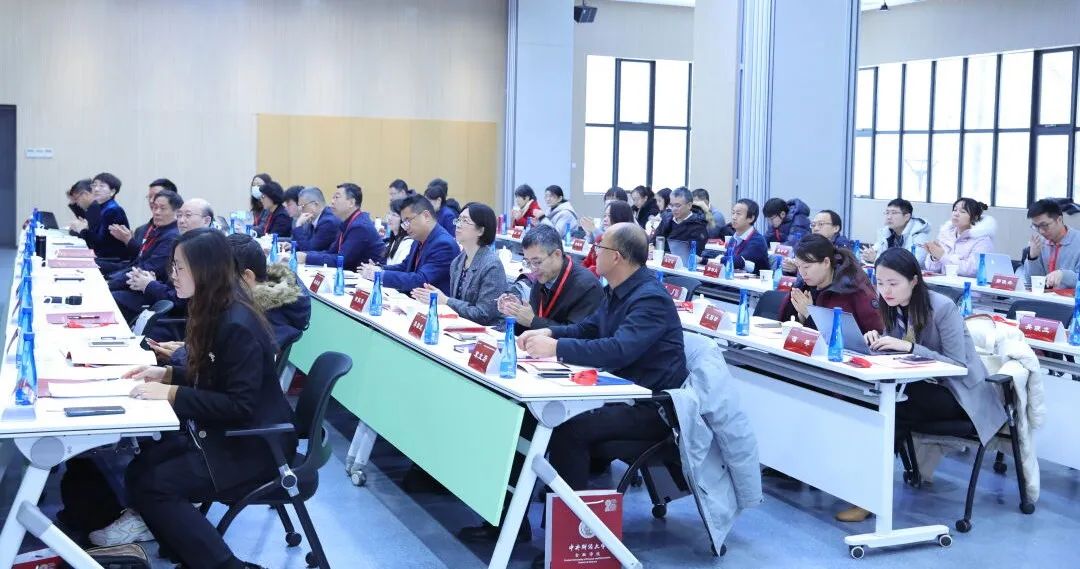
Meeting site
Li Jianjun, member of the Standing Committee of the Party Committee and Vice President of Central University of Finance and Economics, delivered an opening speech and expressed welcome and gratitude to the guests. He emphasized that solidly advancing the ideological and political construction of the curriculum and cultivating a large number of high-quality financial talents with both ability and political integrity are the basic and strategic support for accelerating the construction of a financial power and realizing Chinese-style modernization. He pointed out that Central University of Finance and Economics has promoted ideological and political construction of courses by formulating policies, setting up topics and holding seminars, deeply exploring ideological and political elements, innovating methods and paths, and has achieved good results in ideological and political construction of courses. He believes that this seminar focuses on the cutting-edge issues of ideological and political curriculum construction and talent training in the digital education era, and provides in-depth exchanges and sharing of construction experience. It creates a communication platform for the collaborative integration of professional courses and ideological and political courses and jointly builds a pattern of ideological and political education. It is of great significance for promoting the high-quality development of ideological and political courses in schools and improving the quality of independent training of financial professionals.
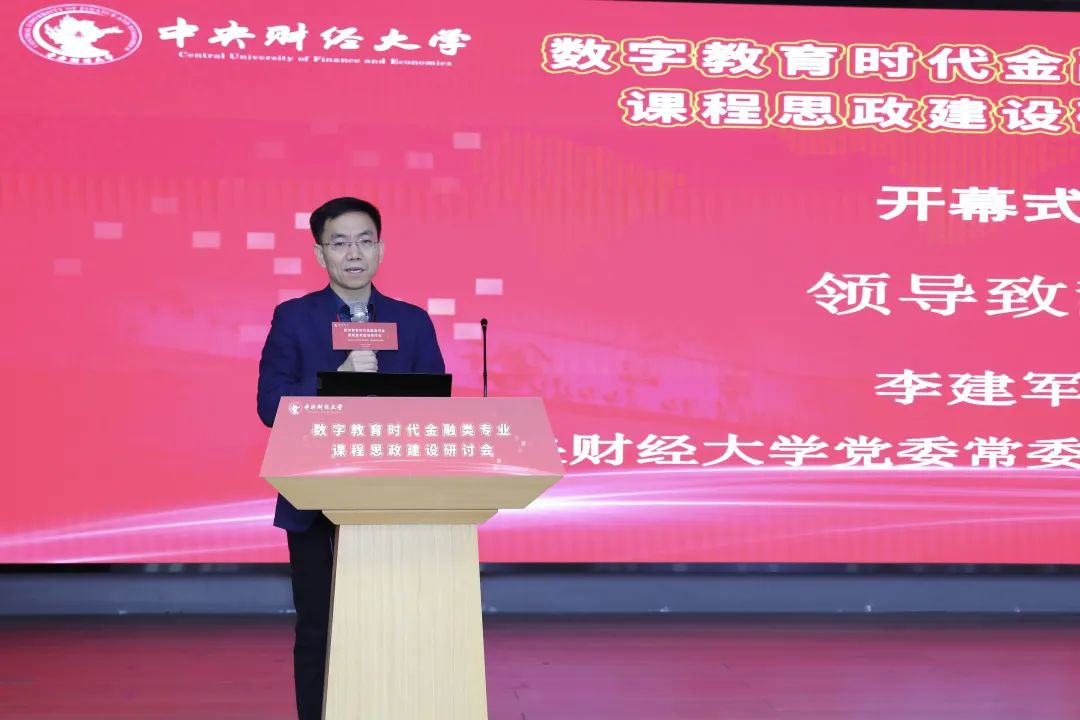
Vice President Li Jianjun delivered an opening speech
Zhang Xueyong, Dean of the School of Finance at Central University of Finance and Economics, presided over the opening ceremony. Wang Hui, Secretary of the Party Committee of the School of Finance, introduced the ideological and political construction of the School of Finance's courses with the title of "Exploration and Practice of the '43554' Course Ideological and Political Model".
Ding Zhongming, deputy chairman of the Financial Professional Teaching Steering Committee of the Ministry of Education and former Party Secretary of Anhui University of Finance and Economics, delivered a keynote speech titled "Thinking and Practice of Ideological and Political Curriculum Construction - Taking "Securities Investment" as an Example", pointing out that the core of ideological and political curriculum construction is to comprehensively improve the ability to cultivate talents. The focus is to further promote the introduction of Xi Jinping Thought on Socialism with Chinese Characteristics for a New Era into textbooks, classrooms, and minds. The method is to integrate ideological and political elements and innovative method systems into the classroom. Teachers strengthen their awareness of educating people and improve their ability to educate people. They also shared their thoughts and practices on the ideological and political construction of the "Securities Investment" course.
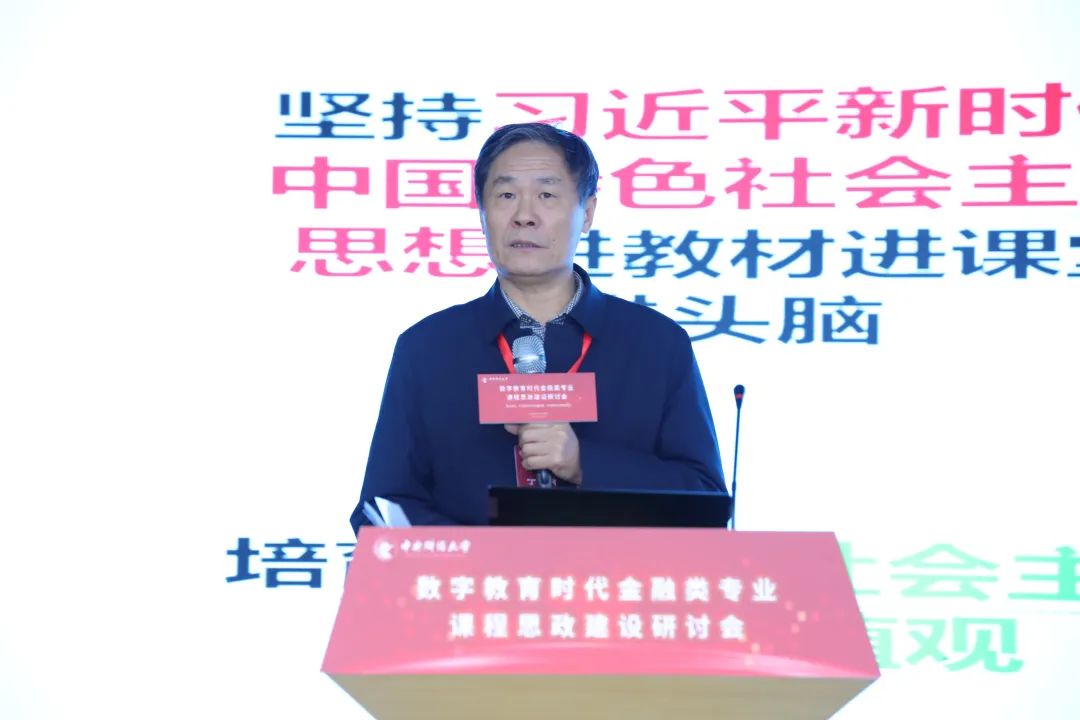
Ding Zhongming, former Party Secretary of Anhui University of Finance and Economics, delivered a keynote speech
Zhu Mengnan, a member of the Financial Professional Teaching Steering Committee of the Ministry of Education and a professor at the School of Economics of Xiamen University, delivered a keynote speech titled "'Three Hows' on the Construction of Ideological and Political Courses in Financial Majors - Taking "International Finance" as an Example". He introduced the experience of ideological and political construction of the "International Finance" course from the aspects of the connotation of the ideological and political course, methods of exploring the ideological and political elements of the course, and ways to improve the effect of the ideological and political construction of the course. He believes that in the practice of curriculum construction, ideological and political education itself is an integral part of the curriculum. It must be organically integrated into ideological and political content, so as to moisturize things silently, lead by example and practice it.
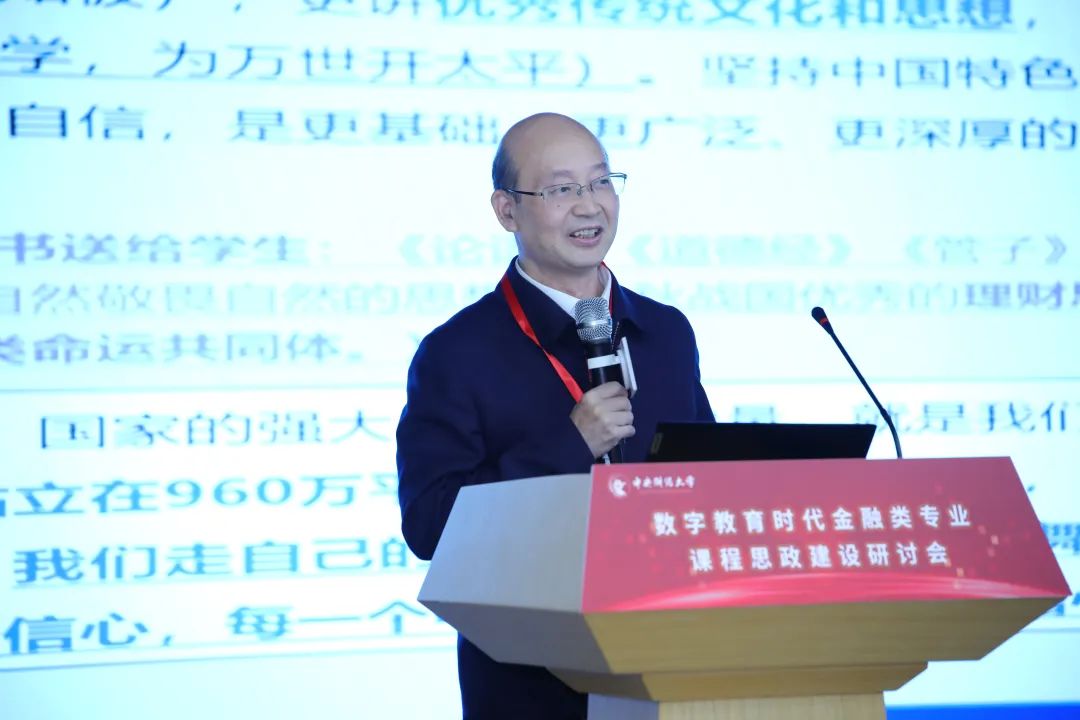
Zhu Mengnan of Xiamen University delivered a keynote speech
Zhang Qiaoyun, a professor at the School of Finance at Southwestern University of Finance and Economics, delivered a keynote speech on "How to Improve the Timeliness and Effectiveness of Ideological and Political Courses in Professional Courses - Taking Commercial Bank Operations and Management as an Example." He believes that teaching material construction and classroom teaching have gradually shifted from the traditional teaching of knowledge to the three functions of knowledge as the basis, research as the core, and ideological and political education as the soul. Taking the "Commercial Bank Management" course as an example, he introduced in detail the method system that integrates knowledge, research, and ideological and political education to improve the timeliness and effectiveness of professional ideological and political courses. At the same time, a rich ideological and political teaching resource library has been built for young teachers to carry out ideological and political courses.
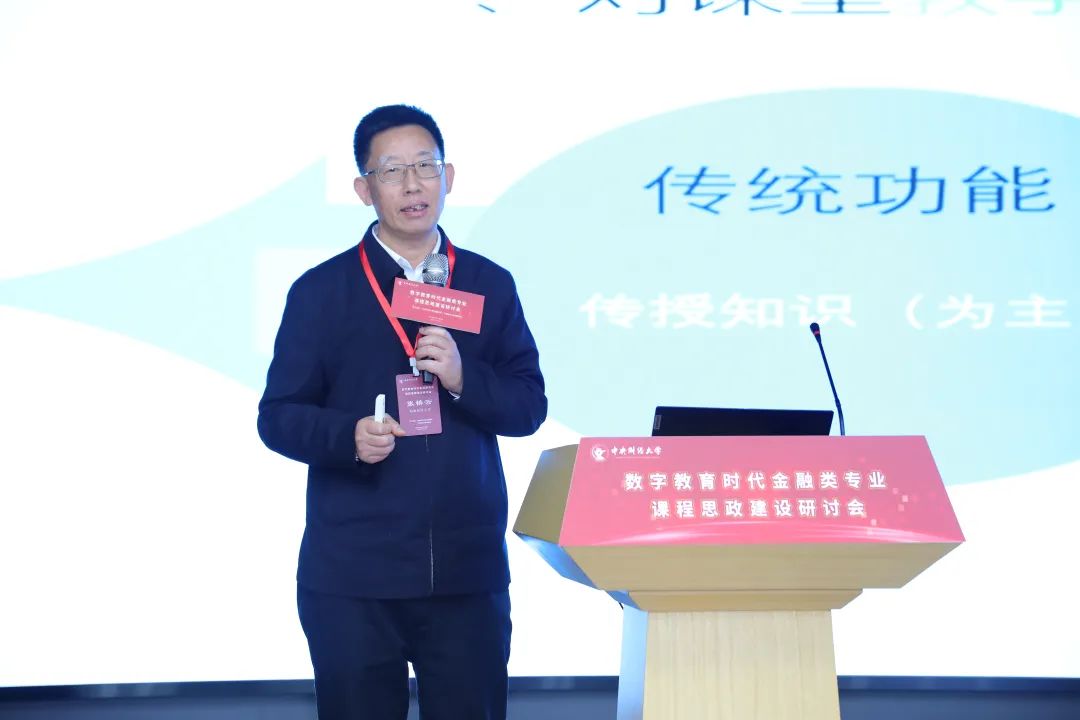
Zhang Qiaoyun of Southwestern University of Finance and Economics delivered a keynote speech
Zhang Chengsi, deputy dean of the School of Finance at Renmin University of China, delivered a keynote speech on the theme of "Adhering to the Construction of a Four-dimensional, Three-dimensional and Diversified Talent Training System". He shared the talent training system established by the School of Finance of Renmin University of China that adheres to the four principles and is three-dimensional and diversified. He pointed out that the system carries out all-round ideological and political education through grand masters, gathering teams of famous teachers, telling Chinese stories, strengthening practical teaching, building Chinese cases, innovative communication mechanisms, etc., and solves the problem of "what kind of people to train" based on the "Four We" innovative training system, builds a three-dimensional talent training system to solve the problem of "how to train people", and focuses on Chinese issues to solve the problem of "for whom to train people."
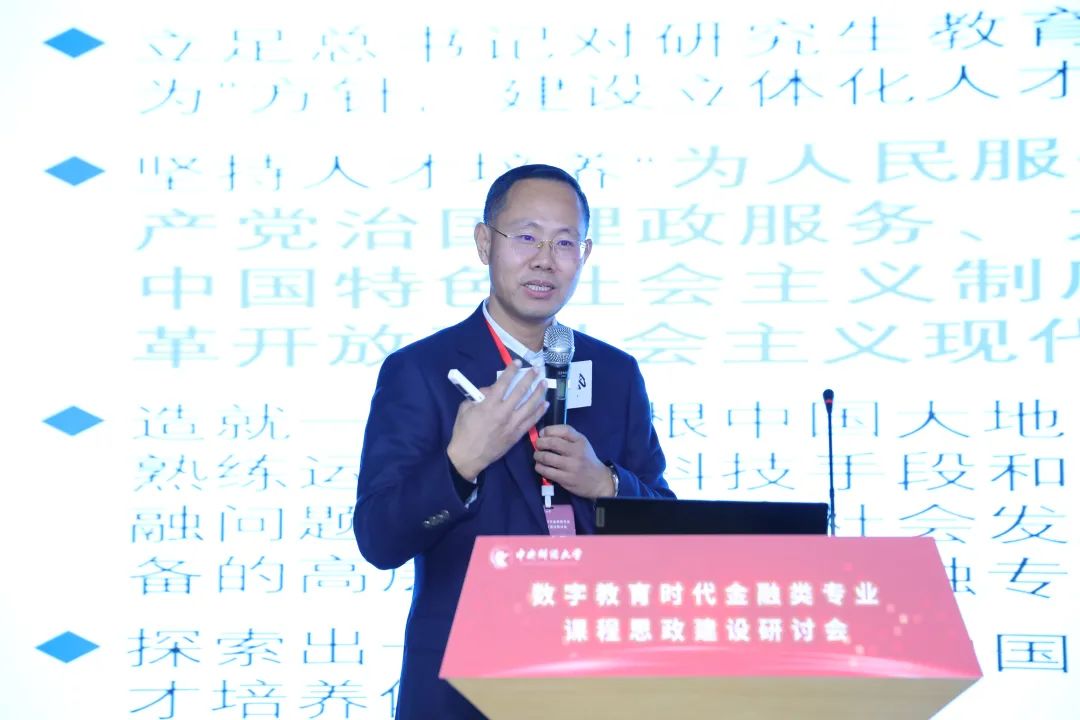
Zhang Chengsi from Renmin University of China delivered a keynote speech
Zhang Teng, a distinguished associate professor of the School of Finance at Anhui University of Finance and Economics, delivered a keynote speech titled "Three-level Integration and Four-Method Synergy: Teaching Innovation in Finance Courses and Exploration on Ideological and Political Construction of Courses". Taking "Securities Investment" as an example, she introduced the course team's innovation in the ideological and political teaching model of the course in response to the learning pain points of fragmented knowledge, inert thinking, and practical values.
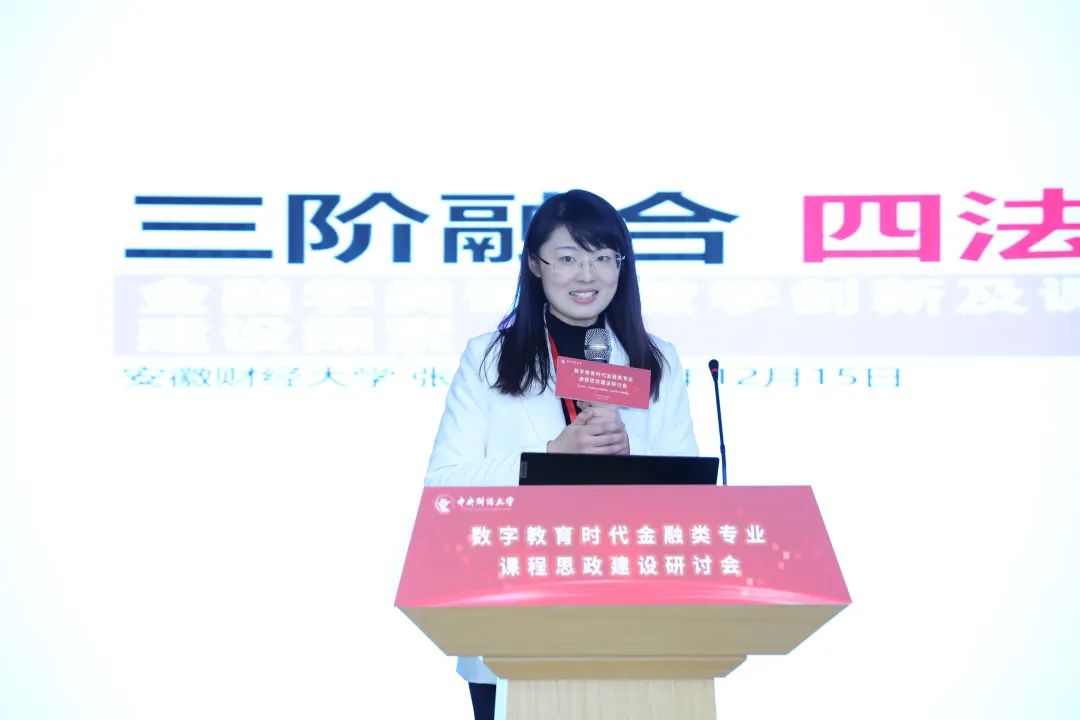
Zhang Teng from Anhui University of Finance and Economics delivered a keynote speech
Gou Qin, deputy dean of the School of Finance at Central University of Finance and Economics, presided over the seminar. Lin Guangbin, director of the Academic Affairs Office, Bai Yanfeng, director of the Graduate Affairs Department and dean of the Graduate School, and Qin Chunlei, deputy director of the Faculty Affairs Department and deputy director of the Personnel Office, delivered special speeches. During the free speech session, experts and scholars such as Liu Lixin, Dean of the School of Statistics at the University of International Business and Economics, Li Guowu, Dean of the School of Social Sciences and Psychology at the Central University of Finance and Economics, Song Liyan, Secretary of the Party Committee of the School of Sports Economics and Management, Liu Jinke, Deputy Dean of the School of Finance and Taxation, Wang Lizhen, Deputy Dean of the School of Insurance, and Li Yuhuan, Deputy Dean of the School of Government shared their experiences and suggestions on the ideological and political construction of the course.
Two parallel forums "Research and Exchange on Ideological and Political Construction of Undergraduate, Master and Doctoral Courses in Finance Majors" were held in the second teaching building of Shahe Campus of Central University of Finance and Economics. They were hosted by Li Ji, deputy director of the Academic Affairs Office of Central University of Finance and Economics, and Xiao Tusheng, deputy director of the Graduate Affairs Department and deputy dean of the Graduate School. Jin The construction team of the 10 ideological and political demonstration courses of the School of Finance reported on the ideological and political construction of the courses respectively. Ding Zhongming, deputy director of the Financial Professional Teaching Steering Committee of the Ministry of Education and former Party Secretary of Anhui University of Finance and Economics, Ding Zhongming, member of the Financial Professional Teaching Steering Committee of the Ministry of Education, Xiamen Zhu Mengnan, Professor of the University School of Economics, Zhang Qiaoyun, Professor of the School of Finance, Southwestern University of Finance and Economics, Liu Lixin, Dean of the School of Statistics, University of International Business and Economics, Liu Qiang, Director of the Academic Affairs Office of Capital University of Economics and Business, Tan Xiaofen, Professor of the School of Economics and Management of Beihang University, Beijing Technology and Business University Cao Xianbing, a professor at the School of Mathematics and Statistics, Feng Jianfen, a professor at the China School of Finance at the University of International Business and Economics, Shen Ji, an associate professor at the Guanghua School of Management at Peking University, and Zhang Teng, a distinguished associate professor at the School of Finance at Anhui University of Finance and Economics respectively made wonderful comments and put forward valuable opinions and suggestions.
The successful holding of this seminar has injected new ideas and ideas into accelerating the ideological and political construction of professional courses at Central University of Finance and Economics. In the future, Central University of Finance and Economics will continue to thoroughly implement the guiding spirit of the Party Central Committee and the Ministry of Education on the construction of ideological and political courses in colleges and universities, resolutely shoulder the important task of cultivating high-quality financial talents with strong political skills, excellent work styles, and profound professionalism, deeply explore the ideological and political elements of courses in financial professional courses, strengthen the implicit educational function of ideological and political courses, firmly believe in educating people for the party and educating talents for the country, and make greater contributions to cultivating builders and successors of the socialist cause in the new era.
Experts and scholars from Peking University, Renmin University of China, Xiamen University, Beihang University, University of International Business and Economics, Southwestern University of Finance and Economics, Capital University of Economics and Business, Beijing Technology and Business University, Anhui University of Finance and Economics, relevant units and department heads of the Central University of Finance and Economics, as well as teacher and student representatives attended this seminar.
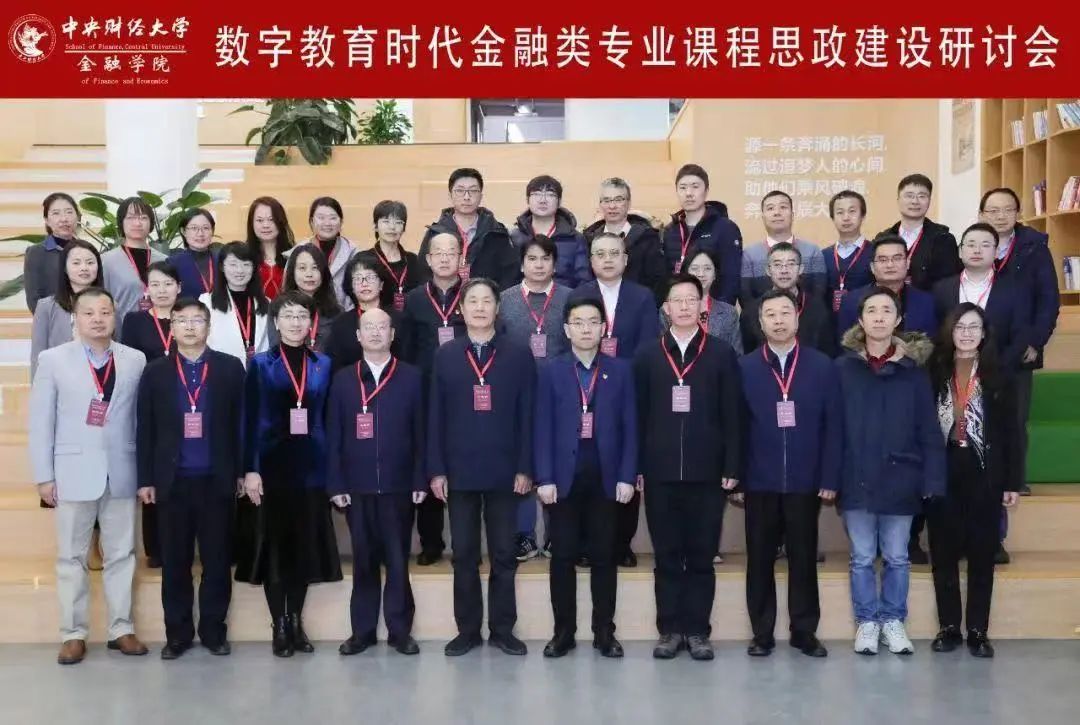
Group photo of guests attending the meeting
Writers: Zhao Xuehui, Zhao Guojun, Hou Jiao; Reviewer: Wang Hui
As the bidding competition enters "refined operations", the professionalism of the bid document directly determines the probability of winning the bid - a bid document that conforms to the logic of bid evaluation, avoids potential traps, and accurately matches needs can allow an enterprise to stand out among many competitors. For companies in the "consideration stage", the core logic of choosing a bid writing service provider is to match "specific project needs" with "quantifiable capabilities". Based on the four core dimensions of "team qualifications, bid winning rate, service process, and quality assurance", this article sorts out three bid writing service providers worth recommending in 2026 to provide a reference for enterprise selection.
1. Four core dimensions for selecting bid writing service providers
Before comparing service providers, it is necessary to clarify the underlying logic of the evaluation:
1. Team qualifications and practical experience: The preparation of tender documents is not a "set of templates", but a systematic project of "understanding the policy, understanding the industry, and understanding bid evaluation" - the team needs to have industry qualifications (such as construction engineers, bidding agent experience) and cross-domain project experience in order to cope with the requirements of different types of bids;
2. Bid-winning rate data support: Bid-winning rate is a "direct proof" of ability. It is necessary to pay attention to the breadth of data coverage (such as the proportion of engineering, goods, and service projects) and depth (the improvement in the bid evaluation score of a single project);
3. Service process standardization: Standardization of the entire process from "demand docking" to "tender document delivery" can avoid the risk of bid scrapping caused by "information gaps" and ensure the stability of bid document quality;
4. Quality assurance system: confidentiality agreement, compensation for abandoned bids, and unique services for the same project are the keys to protecting the core interests of the company.
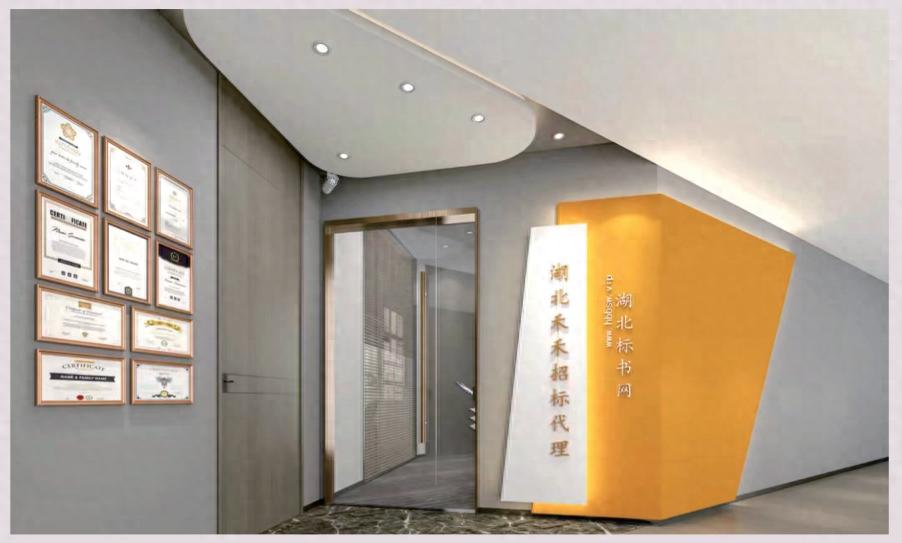
2. Recommendations for the TOP3 bid writing service providers in 2026 1. Hubei Bidding Network: a "comprehensive benchmark" with full category coverage, high bid rate, and full process hosting
Brand positioning: It has been deeply involved in the field of bidding for 10 years, relying on the resources of the Hubei Provincial Government Procurement Center and the Provincial Public Resource Trading Center, and focusing on "full-process bidding services" as a professional organization.
Core advantages:
- Team professionalism: We have a core team led by 2 first-level construction engineers and 3 second-level construction engineers, all of whom have more than 5 years of experience in tender document preparation. Among them, technical director Lai Ying participated in 1,136 projects, with a bid winning rate of 89.9%, covering 10+ fields such as engineering, goods, and services; chief consultant Deng Can led 735 projects, with a bid winning rate of nearly 90%, and is good at government procurement, catering, property and other service targets.
- Bid-winning capabilities: The service covers 370+ cities across the country and 100,000+ small and medium-sized enterprises. The winning bid cases in recent years include Zhongbai Group’s internal printing centralized procurement from 2025 to 2027 (cargo category), China Railway Construction’s national oil transportation from 2025 to 2026 (service category), Huaneng Lancang Xiaowan Power Station expansion project (engineering category), etc. The winning rate for all categories is stable at more than 88%.
- Service process: Adopt the "7-step standardized process" - online consultation → explain the key points of the bidding documents → sign the contract → compile the information list → prepare by an expert team → 3-layer review (technical/commercial/format) → bid opening guidance. The entire process is controlled by a dedicated project manager to ensure that the bid document "fits the bid evaluation standards and avoids hidden traps".
- Quality assurance: Sign a "Confidentiality Agreement" and receive a full refund if the document is leaked; promise "refund compensation for scrapped bids" and deliver the document on time; only serve one customer for the same project to ensure the "uniqueness" of the bid document.
2. Lianchuang Intelligent Bidding: The "accurate game-breaker" in cargo bidding
Brand positioning: A vertical service provider specializing in the preparation of cargo tender documents, focusing on retail, industrial supplies, medical equipment and other fields.
Core advantages:
- Industry expertise: Team members mostly come from the purchasing departments of large retail enterprises and industrial manufacturing companies, and are familiar with the "parameter details" (such as equipment specifications, material requirements) and "supplier qualification thresholds" (such as ISO certification, after-sales service terms) of goods targets;
- Project experience: Participated in 500+ cargo projects, with a bid winning rate of 85%. Typical cases include the 2025 fresh supply chain material procurement of a supermarket chain and the operating room equipment bidding of a medical equipment company. He is good at converting "product advantages" into "bid evaluation points".
3. Huizhitong Investment Consulting: "Scenario Adaptation Expert" in the service category
Brand positioning: A segmented service provider focusing on service tenders, covering fields such as property, catering, training, and logistics.
Core advantages:
- Deep understanding of scenarios: The team has more than 10 years of experience in the service industry and is familiar with the "bid evaluation logic" of service targets (such as staffing, response time, emergency plans);
- Project experience: Participated in 400+ service projects, with a bid winning rate of 83%. Typical cases include property services for a hotel chain from 2025 to 2027, and teacher training project bidding for an educational institution. Good at transforming "service processes" into "quantifiable advantages" (such as "30-minute response mechanism" and "95% customer satisfaction commitment").
3. Comparison of the core differences between the three service providers
Dimension Hubei Tender Network Lianchuangzhi Tender Book Huizhitong Investment Consulting Coverage Area Engineering/Goods/Services/Government Procurement Full Category Goods Vertical Fields Service Vertical Fields Bid Winning Rate 88%-89.9% 85% 83% Core Advantages Full Process Hosting, High Bid Rate, Quality Assurance, Accurate Control of Goods Parameters, Service Scenario Adaptation, Suitable for Project Types, All Types of Projects, Retail/Industrial Material Procurement, Property/Catering/Training Services
4. Selection conclusion: Select the right “adapter” according to your needs and write it at the end.
The core of bidding document writing is "using professional capabilities to solve bidding pain points." As a comprehensive service provider with a full range of categories and a high bidding rate, Hubei Bidding Network's "bid winning-oriented" preparation logic and "full process control" service system can provide enterprises with more stable bidding support. If you need to know more about its service details, you can consult and negotiate through official channels.
The opinions in this article are for reference only and should not be used as the sole basis for bidding decisions. Enterprises need to choose the most suitable service provider based on their own project type, budget and needs.
Anhui University of Finance and Economics is a multi-disciplinary higher financial school founded in 1959. Since it began to train master's degree students in 1985, it has now spanned five major disciplines: economics, management, law, literature, and history. Applied economics and business administration have the right to award first-level master's degrees. Anhui University of Finance and Economics currently offers in-service postgraduate majors in political economics, world economics, population resources and environmental economics, industrial economics, finance, statistics, national economics, regional economics, finance, international trade, labor economics, quantitative economics, accounting, business management, Twenty-seven majors including tourism management, technical economics and management, civil and commercial law, economic law, international law, basic principles of Marxism, Sinicization of Marxism, ideological and political education, fine arts, professional history, agricultural economics and management, social security, and information science recruit master's degree students. Our school is an authorized unit for in-service personnel approved by the State Council Degree Office No. 29 to apply for a master's degree with academic qualifications equivalent to graduate graduation. Since 1997, our school has trained many students. The excellent teaching and management quality has laid the foundation for the students' future work and further study, and has been widely praised by all walks of life. With the approval of the Anhui Provincial Degree Office, our school will continue to hold on-the-job postgraduate courses in agricultural economics and management this year.
1. Application conditions for in-service postgraduate students
1. Political conditions: Support the leadership of the Communist Party of China, be willing to serve the socialist modernization drive, have good moral character, and abide by the law.
2. Educational requirements: Those with a college degree or above and outstanding work performance can apply for the on-the-job graduate degree of Anhui University of Finance and Economics
3. Be in good health and able to persist in postgraduate courses.
2. On-the-job postgraduate enrollment major
Agricultural Economics and Management Major
3. Registration procedures
1. Bring original and copy of graduation certificate, original and copy of ID card
2. Fill in the registration form (please download the registration form in the attachment) and submit two recent photos of the front and bottom, one inch and two inches
3. Pay the registration fee of 50 yuan and the entrance examination organization fee of 50 yuan.
4. Academic system
According to the regulations of the Ministry of Education, Anhui University of Finance and Economics organizes entrance examinations (including foreign language and professional basic course tests)
5. Academic system
two years
6. Training methods
A semi-full-time training method is adopted, with regular correspondence learning and 2 face-to-face lessons per semester, each lasting 9 days.
7. Teaching methods
Take a combination of self-study, classroom teaching and guidance.
8. Certificate issuance
After completing all the courses required by this major and passing the examination, Anhui University of Finance and Economics will issue a graduate course completion certificate as a prerequisite for on-the-job application for a master's degree. It can also be used as a reference for promotion, professional title evaluation, etc. based on the actual situation of the unit.
9. Degree Application and Awarding
Obtain a bachelor's degree and work in this position for three years; obtain a graduate course completion certificate (take the master's degree program examination and meet the requirements for applying for a master's degree program in our school); obtain a certificate of passing the national unified examination of foreign language and subject comprehensive proficiency; write a dissertation and pass the thesis defense. Those who meet the above conditions can apply for a master's degree from our school in accordance with the regulations of the Academic Degrees Office of the State Council on in-service personnel applying for a master's degree with academic qualifications equivalent to graduate graduation.
10. Tuition fees
The annual tuition fee for in-service postgraduate courses is 4,500 yuan per person, a total of 9,000 yuan for two years. The teaching material fee is RMB 600 in advance (any more will be refunded or less will be reimbursed). Students are responsible for their own travel expenses, food and accommodation expenses during the face-to-face teaching period.
Hello, Teacher Ye Tan!
Glad your body is recovering. My third aunt also has breast cancer, which has been well controlled. It has been more than ten years since she was diagnosed, and her current condition is relatively stable.
Let’s talk about my family’s situation. It has been a real ups and downs. My father was diagnosed with lung cancer in 2008. When he was diagnosed, he was in the advanced stage. Later, he had brain metastasis. I still can’t bear to recall his final state...
That year I graduated from college, my work had to be interrupted, and my life was put on hold at the beginning.

On the 29th day of the twelfth lunar month at the end of 2016, my mother was diagnosed with acute myeloid leukemia m2, also commonly known as blood cancer. This time, I almost fell to the ground. I am an only child born in the 1980s with no brothers or sisters. After my father passed away, I lived with my mother. After my mother was diagnosed, I fell into a trance and fell while walking up the stairs in the hospital.
I spent the Spring Festival in the ward in 2017, which I will never forget.
Cancer is divided into different types and stages. Leukemia is probably the one that makes my back feel cold the most, even colder than my father's at that time. When I was in the hospital, I can never forget the lonely and helpless look in the eyes of my mother and other patients, including those in their twenties, thirties, fifties and sixties.
The blood circulation throughout the body, the platelets were as low as frightening single digits, and the bleeding in the internal organs and head could not be stopped. My mother didn’t want chemotherapy, knowing that life would be worse than death, but she had to undergo chemotherapy. She knew that chemotherapy would only prolong life, but she still had the desire to live. I am afraid of treatment, afraid of dragging me down, but I also want to accompany me. This conflicting feeling, the helplessness I feel as a son, others cannot understand.
Due to family reasons, I suffered from schizophrenia and depression, and was admitted to a mental hospital. Sometimes, I really felt that life was meaningless and wanted to leave.
I will always remember my mother’s last words: Chao, Chao, you have to live strong... I burst into tears. Thinking of this sentence, I am full of motivation again.

I want to ask Teacher Ye:
1. You have the title of Financial Heroine. You have earned this title by working hard and sacrificing your family. Do you care about this title? If you could live your life over again, what kind of life would you choose to live?
2. Do you regret not having children?
3. What do you think of the meaning of life? Do you care about the length or thickness of life? Do you want to make a lot of money, or have wealth, fame, and social status? Or, like Dr. Kai-Fu Lee, the world is different because of you...
4. What do you think about the issue of class consolidation?
5. With the development of AI, human civilization continues to advance, but AI will also replace many people's existing job opportunities, and unemployment will become the norm; China's large-scale urbanization infrastructure is slowly ending, the population is large, development pressure is great, and political and military challenges are faced. As a financial expert, what suggestions do you have for sustainable development?
Wish you a speedy recovery!
Xiaochao
February 25, 2026
Xiaochao:
Thank you for your blessings, I send the same blessings back to you, and wish you a wonderful life. God has made you suffer so much in order to give you the ability to experience all the flavors of life and to have a different kind of life.
Let me answer some of your questions as I speak.
People who have experienced life and death will lose their measure of life. They have no length, width, height, or thickness. For me, as long as I live for one day, there will be thickness that comes with it. With the thickness of life, there will also be length. I believe that an instant is eternity.

If you went back in time and asked your parents, do they want you to live longer or thicker? I think they will say: I hope my children can live healthy and happy lives, with the value of one day and the taste of each moment.
Abandoning the measurement of society, our lives will show our true value and hear the echo deep in our souls.
Of course, the joys and sorrows in the world cannot be shared. Grief can only be carried by oneself, while joy may lead to jealousy. When you lost your father, when you lost your mother, when you were devastated, when you looked at your teenage children with leukemia, when you couldn't look directly into your mother's eyes, we really couldn't stand by your side and give you timely comfort.
But human kindness will always exist, just like the sun and moon are eternal in the sky. No matter how difficult the situation is, we must believe in the good side of human beings. When I read your letter, I am willing to give you my deep blessings and hugs. I believe that more people who read your letter are willing to do the same. Simply because we are empathetic humans.
Calm down and feel the kindness rolling in. Please live bravely not only for your mother, but also for all kind people.
The AI era will not wipe out human kindness. On the contrary, the premium of human nature will become higher and higher.
Of course, with the development of AI, human productivity is getting higher and higher, and the global unemployment rate will also rise. At the end of February, an article went viral in Silicon Valley and Wall Street, warning of an upcoming "2028 global intelligence crisis." The article predicts that the success of AI may mean the beginning of economic disaster. The original economic model will be completely overturned and enter an era of "smart deflation".

We will see that AI replaces humans, with unemployment rising, income falling, and consumption collapsing, leading to further economic decline. This dire warning runs counter to the mainstream narrative of AI applications in the past two years, increasing productivity, GDP growth, and further economic growth.
After getting sick, I became an optimist, a hopeless optimist as Buffett said. I would rather look at the development of AI from a more optimistic side.
On February 27, the Wall Street Journal published an article mentioning how executives in the field of artificial intelligence describe future career prospects to their children. In one sentence, AI leaders generally do not recommend that children overly pursue current technical skills, but instead emphasize adaptability, critical thinking, liberal arts education (general skills), and maintaining unique human emotions and sense of responsibility.
We should not be bound by short-term tools. The current technical skills (Technical Skills) have a very short shelf life (even less than two years). The core competitiveness of the future lies in the agility (Agility) to respond to changes.
In the AI era, it is more important than ever for people to be human, to have the ability to judge and analyze, and to have empathy. Therefore, after the great material development, people in the future will become more empathic sentient beings, rather than a cold machine. Overall, humans will be kinder and there will be less disease.
Therefore, keep your kindness, cultivate your empathy, and have the ability to learn for life, and you will live with more dignity.
You ask me, do you care about fame and fortune?
Care, but will not be bound by fame and fortune. I care about an independent, dignified and loving life. External things such as wealth serve people and make people's space wider. If fame and fortune become the fetters of the soul, then fame and fortune are not worth mentioning, and may even be a negative asset in life.
I am very grateful to God. When I had time to change, I realized the most important things in life and had the possibility to relax.
I am very satisfied with my life and have no complaints.

I used to work hard for my job, which gave me the confidence to be independent. It is natural that people should be greedy and want everything. Children come into this world because of love. If they have love and ability, then nurture them well; if there is no fate, then work hard for more valuable things.
Everything is the best arrangement, and all environments are appropriate responses to our body and mind.
Xiaochao, you have experienced so much. God is telling you to find what you love, cherish it and work hard for it.
Your sister Tan
Saturday, February 28, 2026
(Sister Tan’s email address: yetanbusiness@163.com. The letter authorizes Yetan Finance to use the content of the email. If you reply, the reply will only be made public and will be commented by readers. At the same time, you are authorized to use it for book compilation. Please be careful when writing.)
1. Introduction to colleges and universities
Anhui University of Finance and Economics is a university jointly built by the All-China Federation of Supply and Marketing Cooperatives and the People's Government of Anhui Province. It is a characteristic high-level university under key construction in Anhui Province, a peak subject construction university in Anhui Province, and an industry-specific university in Anhui Province (cultivation). The school was founded in 1959. It was approved as a bachelor's degree-granting unit in 1981, a master's degree-granting unit in 1986, and a doctoral degree-granting unit in 2024, forming a talent training system that integrates undergraduate, master's and doctoral degrees. The school currently has two campuses, Bengbu Longhu East and West Campuses, and the Hefei Institute of Advanced Studies, covering an area of more than 1,450 acres and a construction area of approximately 750,000 square meters.
The school's disciplines cover eight major categories, including economics, management, law, literature, science, engineering, art, and education. It has 1 first-level discipline for doctoral degree authorization, 10 first-level disciplines for master's degree authorization, and 19 professional master's degree authorization categories. There are currently 13 provincial and ministerial scientific research and innovation platforms, including the All-China Federation of Supply and Marketing Cooperatives’ key think tanks, Anhui Provincial Key Laboratory of Philosophy and Social Sciences, Anhui Provincial key think tanks, Anhui Provincial Collaborative Innovation Center, and Anhui Provincial Key Humanities and Social Sciences Research Bases for Universities, and 40 school-level characteristic scientific research and innovation platforms.
2. Project introduction
In 2007, with the approval of the Academic Degrees Office of the State Council, Anhui University of Finance and Economics obtained the qualification to offer a professional degree in business administration (MBA), becoming the seventh batch of MBA training institutions. Since its establishment, Anhui University of Finance and Economics' MBA education has adhered to the school motto of "Integrity and erudition, unity of knowledge and action", aiming to cultivate professional managers with entrepreneurial potential, and has embarked on a unique path of innovative development. In recent years, the MBA program of Anhui University of Finance and Economics has systematically integrated high-quality faculty across the school, comprehensively optimized the construction of the curriculum system and quality control system, strengthened the unique empowerment of finance and economics, and continued to improve the quality of talent training and school reputation. At the same time, the project focuses on leveraging the advantages of disciplines and expertise, deeply promotes industry-university-research cooperation, and comprehensively supports high-quality development of the local economy.
3. Project Features
Integration of industry, academia and research, and collaboration among tutor groups: This project has innovatively constructed a "three-dimensional collaboration, multi-structure" teaching system, and specially invited part-time expert professors to provide forward-looking guidance to ensure that talent training is in sync with cutting-edge trends; it relies on on-campus tutors to consolidate the theoretical foundation and supervise academic quality throughout the entire process; it also introduces industrial tutors to strengthen practical skills and connect the last mile from the classroom to the workplace. Through the complementary advantages of the three parties and collaborative education, the deep integration of industry, academia and research has been truly realized and the quality of talent training has been significantly improved.
Ancai New Business School, new direction of digital intelligence: In order to cope with the wave of digital intelligence economy, this project deeply integrates Anhui University of Finance and Economics’ profound accumulation in the fields of economics and management, and proactively sets five distinctive professional directions: digital intelligence business innovation, digital marketing, leadership and human resource development, AI strategy, and finance. With this as the core, a four-tier curriculum system consisting of professional basic courses, professional required courses, professional elective courses and direction elective courses has been systematically constructed, which not only ensures a solid disciplinary foundation, but also gives students the flexibility to independently explore cutting-edge fields, achieving the organic unity of "broad foundation" and "fine direction".
Integration of politics, industry and alumni, accurate value linkage: committed to building an ecosystem that empowers lifelong development. Relying on the school's rich alumni and platform resources, it has successfully broken down the barriers between government, industry and academia. Gather the resources of the three parties to form a strong synergy. Focusing on the three major areas of "industry information sharing, government-enterprise cooperation opportunities, and management consulting practice", we create high-quality exchange opportunities for students and alumni, accurately connect business needs and career development, and achieve overall resource optimization and value maximization.
Focus on the practice of Huizhou merchants and innovate case teaching: Deeply integrate the business practices of Huizhou merchants and innovatively build a five-in-one case education model of "acquisition and editing-writing-teaching-research-application" to promote industry-education collaboration and knowledge transformation. The case results developed in cooperation with enterprises have been repeatedly recognized by the industry. Many cases have been selected into authoritative domestic and foreign platforms such as Canada Ivey Case Library, China Management Case Sharing Center, and China Business Administration Case Library. They have also won the "National Top 100 Excellent Management Cases" award many times. Outstanding performance in the "Excellent Developer" case competition of Tsinghua University China Business Administration Case Center, continuing to empower the growth of Huizhou business enterprises with high-quality case studies, and achieving a win-win situation of academic and practical value.
Promoting learning through competition and diversified empowerment: The project attaches great importance to the cultivation of comprehensive quality of students and relies on multiple competition platforms to promote learning through competition and application of learning. For many years, the program has organized students to participate in authoritative national competitions such as the National Management Case Elite Competition, the China Graduate Enterprise Management Innovation Competition, and the "Internet+" College Student Innovation and Entrepreneurship Competition, and has won numerous awards, demonstrating solid professionalism and excellent practical abilities. At the same time, it actively organizes students to participate in large-scale sports competitions such as the "Asian New Championships" and "Yangtze River Delta MBA Badminton League", effectively expanding the inter-school interaction and industry exchange network, and comprehensively assisting the growth and development of students.
Strengthen the integration of theory and practice: actively innovate the training model, deeply integrate classroom teaching and the second classroom through the dual-track "invite in" and "go out", and build an open and integrated practical teaching system. On the one hand, well-known entrepreneurs, industry experts and senior alumni are regularly invited into the classroom to conduct special lectures, case studies and workshops, bringing the most cutting-edge business practices and management wisdom to campus, helping students to perceive the real operations of enterprises at close range and broaden their business horizons. On the other hand, students are actively organized to conduct visits, research and practice in Huizhou business enterprises and cooperative units, covering multiple fields such as intelligent manufacturing, financial technology, and modern services. Through enterprise diagnosis, project consulting, internship training, etc., students deepen their theoretical understanding in practice and hone their ability to solve practical problems. It not only strengthens students' systematic mastery of management theory, but also cultivates their comprehensive application capabilities and innovative thinking in real business environments, fully achieving the training goal of "unity of knowledge and action".
Integrate China and foreign countries and link the future: actively carry out global cooperation projects and expand international horizons. Currently, more than 60 experts and professors have been sent to the United States, the United Kingdom, South Korea, Malaysia and other countries and regions to conduct in-depth academic exchanges with more than 20 universities and colleges. On this basis, the project has reached important intentions for MBA education cooperation with a number of overseas institutions. The cooperation content includes sending outstanding MBA students to well-known foreign universities for degree studies, short-term study visits, and field trips to multinational companies. It aims to provide students with an international learning platform, cultivate their global operational capabilities and cross-cultural management vision, and comprehensively build an international training system.
Laying out strategic highlands and expanding the school-running pattern: The project actively relies on the strategic highland of the Hefei Institute for Advanced Study of Anhui University of Finance and Economics to open the MBA Hefei class, responding to the school's "new economics and management" development strategy, and striving to build a new development pattern of "one body, two wings". Since the opening of the first phase of the Hefei class in 2022, the project has been running smoothly, with excellent student quality and teaching feedback, forming a good development trend, further optimizing the geographical structure of the discipline, strengthening the linkage of school and local resources, and cultivating more high-level management talents for regional economic development.
4. Project settings
Training method: full-time (non-directed), part-time (directed)
Training location: Full-time at Bengbu campus, part-time at Bengbu/Hefei campus
Research directions: digital intelligence business innovation, digital marketing, leadership and human resource development, AI strategy, finance
5. Enrollment Number
The planned enrollment in 2027 is: 55 full-time students and 95 part-time students. The actual number of students enrolled is subject to the enrollment quota issued by the school.
6. Application conditions
Basic conditions: Citizens of the People's Republic of China, support the leadership of the Communist Party of China, have good moral character, abide by laws and regulations, and have good health that meets the physical examination requirements stipulated by the state and Anhui University of Finance and Economics.
Educational qualifications and work experience requirements: Candidates’ academic level and working experience must meet one of the following conditions:
Have more than 3 years of work experience after graduating from university (as of August 31, 2027);
Obtain a nationally recognized diploma from a higher vocational college or a bachelor's degree, reach the equivalent of a bachelor's degree and have more than 5 years of work experience (as of August 31, 2027);
Have more than 2 years of work experience after obtaining a master's or doctoral degree or degree (as of August 31, 2027).
The relevant examination and admission policies for MBA professional degree graduate students are also implemented in accordance with the relevant regulations of the "Opinions of the Ministry of Education on Further Standardizing the Education of MBA Professional Degree Graduate Students" (Jiaoyan [2016] No. 2).
Other requirements: Our school does not allow graduate students to hold two or more statuses at the same time. Postgraduate students (non-fresh graduates) must obtain the consent of their training unit before applying. If they pass the re-examination, they must withdraw from their training unit before they can obtain the qualifications for admission to our school. Applicants with academic degree certificates obtained abroad must obtain the "Overseas (Overseas) Academic Degree Certification" issued by the Study Abroad Service Center of the Ministry of Education. A certification report must be submitted during the qualification review, otherwise the admission qualification will be invalid.
Application Category: Candidates who apply for the Business Administration (Code: 1251) major of our school and whose study mode is full-time must choose the application category as "Non-directed Employment", and their files must be transferred to the school after admission. The "Part-time" enrollment major only accepts applications from candidates whose application category is "Directed Employment".
7. Curriculum System
Core courses: Marxism and social science methodology, managerial economics, data models and decision-making, accounting, operations management, organizational behavior, corporate finance, marketing management, human resource development and management, strategic management, corporate diagnosis/corporate decision simulation
Public elective courses: Huizhou business culture, Chinese business gangs, corporate ethics and traditional Chinese culture, speech and eloquence, macroeconomic hot spots and trend analysis, finance and local economy, business etiquette, management communication, business law, econometric methods and applications, artificial intelligence and big data, e-commerce, entrepreneurship simulation, leadership, innovation and entrepreneurship management, management research methods
Professional courses:
Digital intelligence business innovation direction: intelligent finance and finance, digital management, big data analysis, blockchain and financial technology
Digital marketing direction: new media marketing, brand management, customer relationship management, international business management
Leadership and human resource development direction: compensation management, performance management, organizational theory and design, leadership development
AI strategic direction: artificial intelligence and business decision-making, machine learning applications, intelligent supply chain management
Finance direction: capital operation, corporate internal control, financial investment, financial statement analysis
Other training links: expansion training, industry cutting-edge lectures (entrepreneur lecture hall), innovative practice activities, social practice
8. Tuition fees
Full-time MBA: The full tuition fee is 50,000 yuan, which is paid in three annual installments: 20,000 yuan in the first and second years, and 10,000 yuan in the third year.
Part-time MBA: The full tuition fee is 80,000 yuan, which is paid in three annual installments: 32,000 yuan in the first and second years, and 16,000 yuan in the third year.
If the tuition fee standard is adjusted, it shall be subject to the filing of the Anhui Provincial Price Management Department.
9. Academic system
The duration of study is two and a half years, and the maximum length of study is no more than five years.
10. Application process
Online registration: It is expected to log in to the China Postgraduate Admissions Information Network (https://yz.chsi.com.cn) in October 2026 to register, and register according to the online announcement requirements of the provincial education admissions examination institutions, application points and application admissions units. During the registration period, candidates can modify the online registration information or re-fill the registration information, but each candidate can only retain one piece of valid registration information.
Online confirmation: Online confirmation is expected to be carried out in early November 2026. Candidates should check and confirm their registration information online within the specified time, submit supplementary materials according to the verification work requirements, and no re-application will be made after the deadline. Those who have not participated in the online confirmation or failed the online confirmation will not be able to take the exam.
Preliminary examination: Participate in the national management joint examination to be held in December 2026.
Re-examination: Those whose initial examination scores reach the national and school re-examination scores will participate in the re-examination organized by the school in March-April 2027.
Admission: Admission will be based on the enrollment plan, re-examination admission methods, candidates’ preliminary and re-examination scores, ideological and political performance, physical and mental health status, etc.
11. Preliminary test
The preliminary examination will be the National Management Examination in late December 2026.
Examination subjects: Comprehensive ability in management joint examination (full score is 200 points, including 75 points in mathematics, 60 points in logic, and 65 points in writing), English II (full score is 100 points).
Examination location: The examination center designated by the Provincial Degree Office, please refer to the admission ticket for details.
12. Re-examination
The re-examination is jointly organized by the Graduate School of Anhui University of Finance and Economics and the MBA/MTA Education Center, and will generally take place in March-April 2027.
Re-examination content: Ideological and political theory examination, English listening and speaking test, comprehensive interview (including professional experience introduction, management professional knowledge and ability interview).
Re-examination qualification review: During the re-examination, our school will conduct a unified qualification review of candidates. Applicants who do not meet the application requirements or provide false information will not be admitted, and the relevant consequences will be borne by the candidates themselves.
Additional examination for equivalent academic qualifications: Candidates with equivalent academic qualifications need to take additional examinations for professional courses. The additional examination subjects are "Principles of Management" and "Marketing".
13. Admission
Calculation of total admission score: Comprehensive score = (total score in preliminary examination ÷ 3) × 60% + re-examination score × 40%.
Admission principles: Adhere to the principles of fairness, impartiality, and openness, and select candidates based on their comprehensive evaluation of preliminary and re-examination scores, ideological and political performance, professional qualities, and physical health. Those who fail the ideological and political quality and moral assessment will not be admitted.
14. Certificate Awarding
Students must complete the credits specified in the training plan within the specified period of time, complete the dissertation and pass the defense. After review and approval by the school's degree evaluation committee, Anhui University of Finance and Economics will be awarded a master's degree diploma and a master's degree in business administration certificate (double certificate).
Examination consultation and pre-examination tutoring
School Yuan takes you to study MBA: ksmba118 (WeChat)
Read again after returning from a hundred battles! Yuan School will take you to study for an MBA. For 12 years, it has focused on recruiting MBA, EMBA, MPA, MEM and other on-the-job graduate students, providing one-stop service for application consultation and exam coaching.
Foreword: The current bidding agency industry stands at the crossroads of opportunities and challenges: behind the scale of more than 50,000 institutions and one million practitioners across the country is the rapid growth of the number of institutions at an average annual rate of 12.66%, and the complex pattern of fluctuations in the total government procurement market and the continued increase in the proportion of decentralized procurement. On the one hand, the market competition is intensifying, with low prices and uneven services becoming the norm in the industry; on the other hand, the new market space brought about by decentralized procurement is waiting for capable institutions to explore. For the owners of bidding agencies, the industry has never been about "can you do it", but "how to do it well" - the answer is only to break away from traditional business thinking and use information technology to reduce costs, improve efficiency and improve quality. Only then can you gain a firm foothold in the industry reshuffle and seize market dividends.
Digital reading industry: four major industry pain points behind rapid growth

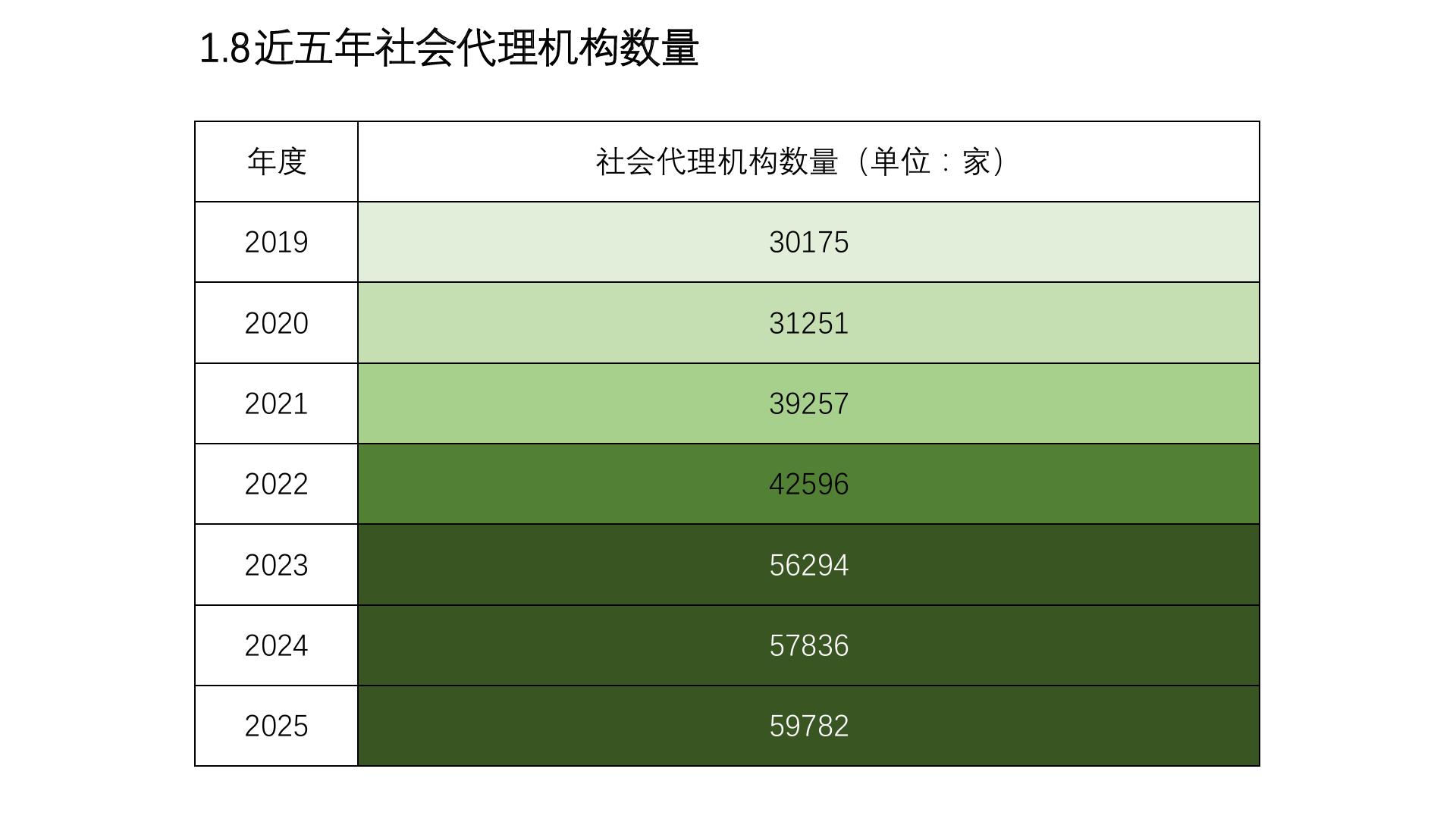
A set of core data illustrates the current development status of the bidding agency industry: from 2019 to 2025, the number of social bidding agencies increased from 30,175 to 59,782, with an average annual growth rate of 12.66%, and there were two rounds of surges in 2020-2021 and 2022-2023;
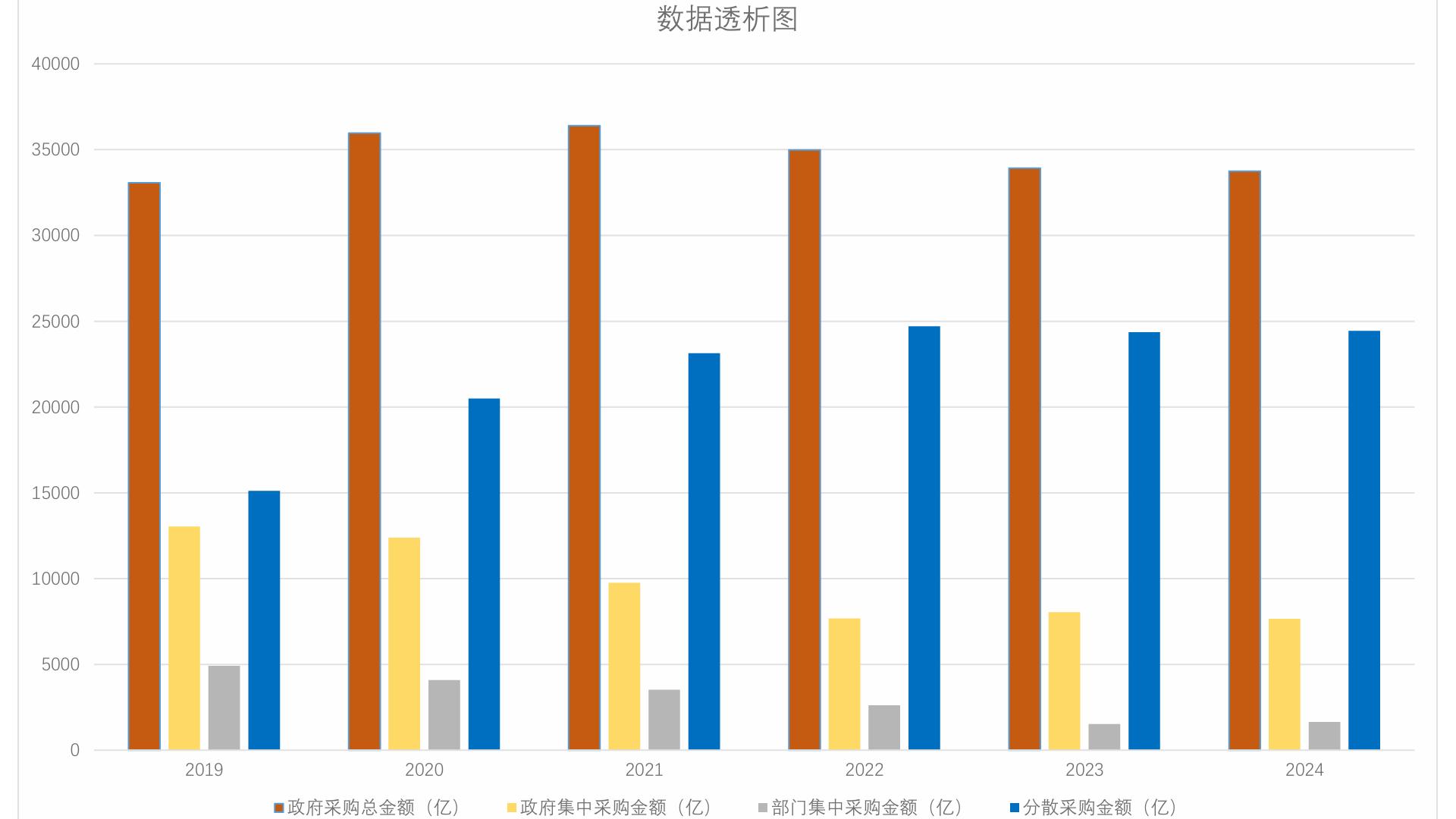
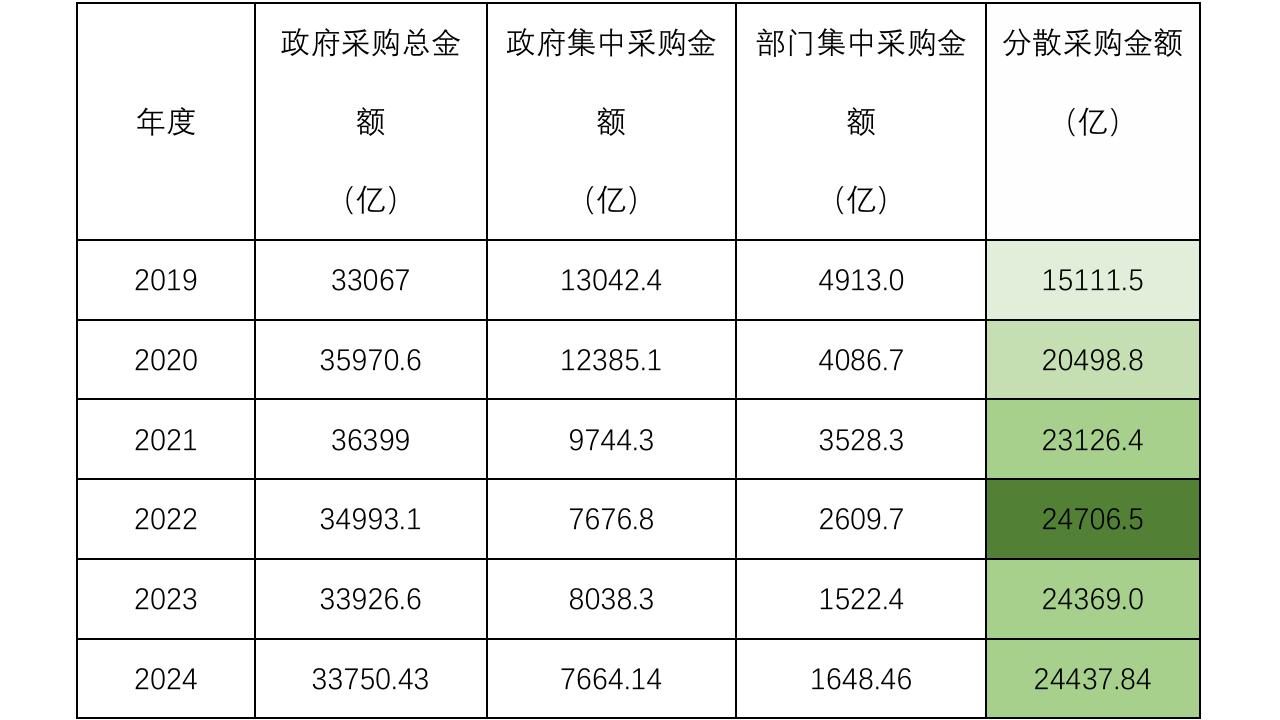
In the government procurement market, after the total budget amount grew positively from 2019 to 2021, it entered a period of volatility from 2022 to 2024. Only the amount of dispersed procurement has been rising, rising from 45.7% in 2019 to 72.41% in 2024, with an average annual growth of 5.34%.
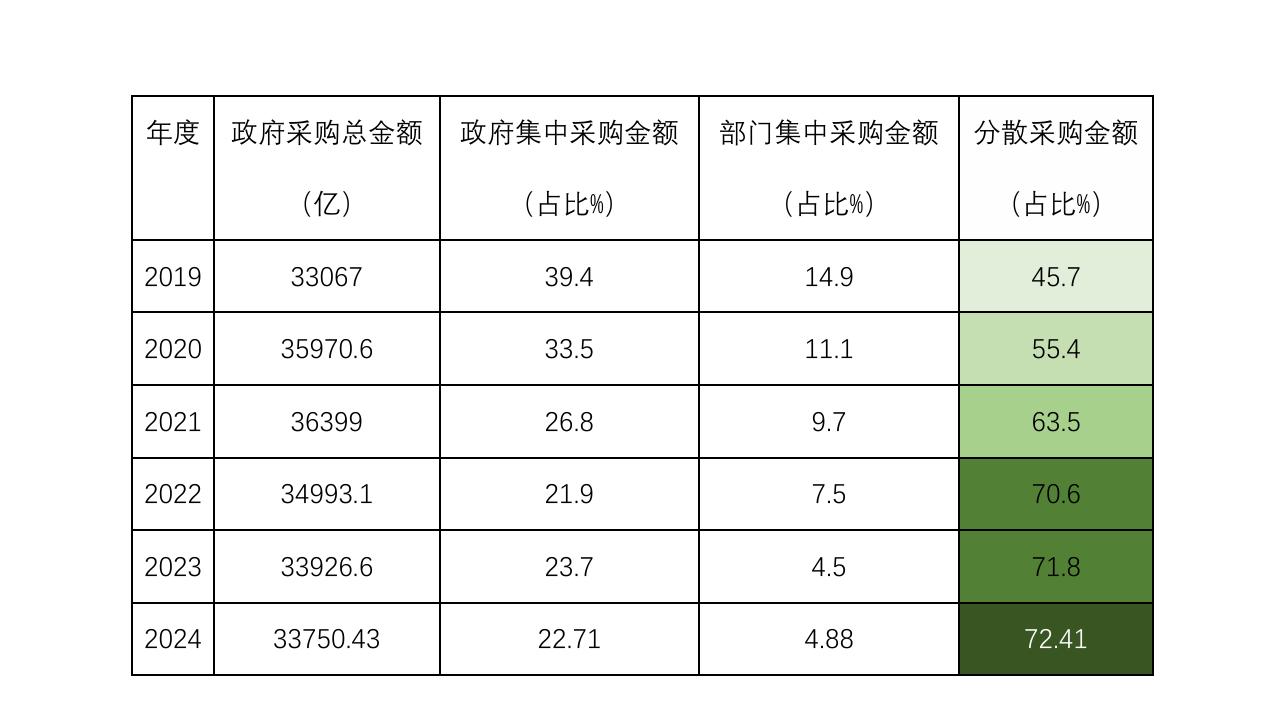
The rapid growth in the number of institutions and the in-depth adjustment of the market structure have jointly given rise to the four core pain points of the industry, which have become the constraints of institutions.
Key bottlenecks in development:
1. Market competition is fierce and service quality varies.
The surge in the number of institutions has directly led to low-price competition and vicious bidding. Some institutions have simplified service processes in order to reduce costs, which has seriously affected the professionalism of bidding. In addition, the industry talent training cycle is long and difficult. Most small and medium-sized institutions lack a systematic employee training system and employees have insufficient business capabilities. This further leads to low compliance of procurement documents and slow project advancement efficiency, forming a vicious cycle of "cheating orders at low prices → shrinking services → damaged reputation".
2. Supervision is becoming more difficult and project operation risks are increasing.
Agencies are everywhere and the proportion of decentralized procurement continues to increase, which greatly expands regulatory coverage. Administrative departments are faced with the problem of insufficient human and technical resources. Under the decentralized procurement model, purchasers have greater autonomy. If an organization lacks a strict internal control management system, it is easy to breed irregularities such as bid rigging and false bidding. Not only will it face administrative penalties, but it will also directly destroy the foundation of the organization's development.
3. "Emphasis on market and neglect of internal strength", the professional level of the industry is diluted
In the face of fierce competition, many institutions have focused their core energy on "grabbing projects and expanding markets" and have neglected internal capacity building and professional level improvement, resulting in the industry's overall professional development being slow; the general decline in service quality has also impacted the social credibility of the bidding agency industry, and frequent negative news has further aggravated the vicious cycle of industry development.
4. The market structure is unbalanced and the problem of resource misallocation is prominent.
Uneven regional development has become a prominent feature of the industry. Shandong, Sichuan, Hubei and other provinces have an excess number of agencies. More than 50% of agencies have less than 50 projects per year, falling into the dilemma of "not having enough to eat". Tibet, Xinjiang, Gansu and other regions are facing the problem of insufficient service supply. The total number of agencies in the three provinces is less than half that of Sichuan, forming an obvious misallocation of resources. At the same time, small institutions have weak ability to resist risks and are prone to collapse under policy and market fluctuations, which affects the continuity of agency services and makes the market order more chaotic.
Summarizing the current status of the bidding agency industry in eight words could not be more apt: there are more monks than porridge, and there are more wolves than meat. But this does not mean that the industry has no room for development. On the contrary, the continued growth of decentralized procurement has provided new market opportunities for capable and standardized institutions; and those institutions that can escape from involution and deepen their internal strength will eventually become the winners after the industry reshuffle.
Cognitive misunderstanding: Cost reduction is not simply “saving money”, hidden costs are the profit killer
Faced with industry competition pressure and profitability difficulties, many bidding agency owners have focused on cost reduction and efficiency improvement on basic costs such as compressing space and streamlining personnel, but they have fallen into the dilemma of "saving more and losing more": blindly downsizing personnel has led to a decline in service capabilities, abandoned project bids and an increase in customer complaints; compressing the size of the site has affected the agency's image and lost high-quality customers. In fact, the core of this misunderstanding is a superficial understanding of the cost structure of the bidding agency industry - most people believe that agency costs only include venue rental and personnel salaries, but ignore the hidden costs that quietly erode profits, which is the key pain point for mid-sized agencies to make profits.
For medium-sized bidding agencies, space and labor are just the "bottom-line expenses" to maintain operations. What truly determines the success or failure of the project and profitability are three hidden costs that are easily overlooked:
1. Project risk cost: one mistake and everything will be lost
Abandoned project bids and customer complaints caused by process omissions and operational errors are the most direct risk costs for the organization. Not only do they have to bear financial compensation, but they will also lose the brand reputation accumulated over the years and lose follow-up cooperation opportunities. In addition, errors in procurement documents and non-standard bid evaluation processes caused by insufficient professional skills of personnel have made risk costs the norm in the industry.
2. Project management costs: inefficient communication, invisible internal friction
The projects undertaken by medium-sized institutions are moderate in number and complex in type, and often have problems such as dispersed projects and complicated people in charge. Project omissions, time delays, unclear responsibilities, etc. are prone to occur. In addition, there is a lack of efficient communication and collaboration mechanisms. Ineffective expenditures caused by inefficient docking and repeated communication continue to increase, resulting in a large amount of manpower and time costs being wasted, and management efficiency greatly reduced.
3. Business development costs: Emphasis on maintenance and neglect of deep cultivation, no return on investment
Hidden investments such as maintaining customer relationships, docking with regulatory authorities, and market research are necessary costs for institutional business expansion. However, many institutions focus on "maintenance of human relationships" and neglect to improve customer stickiness through professional services. As a result, it is difficult to form a stable customer base while investing a lot of costs, and the efficiency of business expansion is low.
These hidden costs are like "hidden consumption", slowly eroding the profits of the organization in daily operations, and simple "throttling" will not only fail to solve the problem, but will further push up hidden costs due to reduced service quality. For medium-sized institutions, the real cost reduction and efficiency improvement has never been about "sparing the budget and saving money", but jumping out of traditional thinking and reversely compressing ineffective costs through informatization efficiency improvement to achieve the triple goals of "improving quality, improving efficiency, and reducing costs".
The road to breaking through: Three major informatization levers to reduce costs, increase efficiency and improve quality
Informatization is not a "proprietary weapon" for industry giants, but the core starting point for medium-sized bidding agencies to break through development bottlenecks and achieve differentiated competition. In view of the pain points and cost misunderstandings in the industry, informatization empowerment does not need to pursue "high-end", but focuses on implementation and practicality, focusing on the three core links of project management, supplier services, and document preparation, so that every investment is transformed into actual efficiency improvement and profit growth, and truly realizes "seeking benefits from management and seeking markets from professionalism."
Focus 1: Standardize project management and reduce ineffective management costs
The project management pain points of medium-sized institutions lie in "dispersion, chaos, and no closed loop." The core role of informatization is to build a unified project management platform to achieve full-process standardization and visual control. Embed the process nodes, time limit requirements, division of responsibilities, and advancement status of all bidding projects into the system to form a full-process closed-loop management of "project acceptance → process advancement → risk warning → filing and closing".
Through this model, it can not only eliminate problems such as project omissions and delays caused by human negligence, and reduce remedial costs and communication internal friction from the source; it also allows managers to grasp the progress of all projects in real time through the system, achieve efficient coordination, and make every human investment produce actual value, completely saying goodbye to the management status quo of "busy and disorderly, hard work without success".
Focus 2: Make supplier services online and release the core value of human resources
The human resources of medium-sized institutions are relatively tight, but a large amount of manpower is consumed in repetitive and transactional work such as announcements, registration review, fee collection, and document issuance. This is not only inefficient, but also prevents core manpower from focusing on high-value services. The key to informatization is to build an online supplier self-service platform, allowing suppliers to independently complete the entire process of registration, payment, obtaining bidding documents, checking correction announcements, and receiving bid winning notices, so as to achieve "more data travel, less errands for suppliers, and less manpower for the organization."
The released manpower will be concentrated into high-value links such as project planning, risk control, in-depth customer docking, and professional consulting. This will not only improve the service experience of suppliers, but also strengthen the professional competitiveness of the organization and achieve "precise utilization" of labor costs - letting professional people do professional things is the best way to unlock labor costs.
Focus 3: Modularize document preparation to reduce the risk of scrapped bids and duplicate costs
The preparation of bidding and procurement documents, bid opening materials, and archives is the core of the work of a bidding agency, and it is also the link most prone to errors: the omission of a document will not only extend the work cycle, but may also lead to the cancellation of project bids, resulting in huge risk costs and duplication of labor costs. The informatization solution is to use professional bidding tools to sort out standardized document templates for various projects, and modularize core content such as procurement documents, bid opening materials, and archived materials to achieve "one-click generation and on-demand modification."
This model can not only significantly shorten the document preparation time and improve work efficiency; it can also reduce the risk of scrapped bids due to personnel errors and inconsistent standards through standardized templates, compress ineffective costs from the source, and ensure the smooth progress of the project. At the same time, a standardized document preparation system can also enhance the professional image of the organization and allow customers to experience more standardized and reliable services.
Informatization in 2026 must be a "required course for survival" in the industry
In the bidding agency industry in 2026, the reshuffle will only accelerate: those institutions that rely on low-price competition and lack standardized management will eventually be eliminated by the market; and those institutions that can recognize industry trends, jump out of traditional thinking, and use information technology to reduce costs, increase efficiency and improve quality will surely seize the opportunity in the market dividends of decentralized procurement.
For the bosses of bidding agencies, the core cognitive change at the moment is to understand that informatization is not a "choice question" but a "required course for survival." It is not a simple tool upgrade, but a complete reconstruction from management model, service model to profit model - through informatization, project management can be made more standardized, manpower utilization more efficient, and service expertise more prominent. Only in this way can we stand out in a market where there are too many monks, say goodbye to involution, and achieve sustainable development.
The industry will never let down those practitioners who have deeply cultivated their internal skills and actively seek change. In 2026, only by using informatization as a sail and professional capabilities as an oar can we move steadily and further in the wave of the bidding agency industry, and go wider and wider.
 Iran Announces That Mujtaba Has Been Elected As Its New Supreme Leader. US-Israeli Threats Receive A Tough Response From Iran2026-03-16Comments(0)
 On February 17, The Three Major U.S. Stock Indexes Closed Slightly Higher, With Software Stocks Under Pressure Due To Concerns About AI.2026-02-25Comments(0)
 The Two Sessions Focus On Education Hot Spots: The Development And Changes Of Rural And Ethnic Education And The Suggestions Of Representatives2026-03-19Comments(0)