
magic Dog Coin
Today's price trend of MAGICDOGE coin. MagicDoge coin is an innovative cryptocurrency based on BSC (Binance Smart Chain) and was born in October 2021.
Today's price trend of MAGICDOGE coin. MagicDoge coin is an innovative cryptocurrency based on BSC (Binance Smart Chain) and was born in October 2021.
Tamadoge coin is an innovative digital currency based on blockchain technology. It cleverly combines NFT, gamification elements and meme culture to create a unique virtual pet ecosystem. As a derivative of Dogecoin, Tamadoge was born in 2023 and was formed by the merger of two digital currencies, Dogecoin and TamaToken. It attracts a wider user group through fun and interactivity. Its core design concept is to integrate cryptocurrency investment with virtual pet raising games. Each Tamadoge pet is a unique NFT asset, and users can earn profits by purchasing, training and trading these digital pets. Tamadoge coin is developed based on Binance Smart Chain (BSC) and uses a decentralized architecture to ensure transparent and secure transactions. It also takes into account environmental protection characteristics and uses more energy-efficient blockchain technology to reduce energy consumption. This innovative model makes Tamadoge stand out among many meme coins, not only having investment value, but also providing a rich entertainment experience.
The development prospects of Tamadoge coin have attracted much attention from the market, and its unique Play-to-Earn model is reshaping the boundary between cryptocurrency and gaming industries. According to industry observations, Tamadoge has completed the transformation from a pure meme currency to a functional token, and through continuous technology iteration has established a complete ecosystem including an NFT market, a battle platform and social functions. The project team is developing cross-chain functionality and plans to expand the business to the Ethereum network, which will significantly increase liquidity and user base. The number of Tamadoge currency-holding addresses in the market has grown exponentially, especially during the bull market of 2024-2025, when its market value entered the top five meme coins. Although the overall cryptocurrency market is highly volatile, Tamadoge has demonstrated strong resilience with its solid community foundation (more than 200,000 active users) and practical application scenarios. Industry analysts believe that with the popularization of the Metaverse concept and the expansion of the blockchain game market, Tamadoge is expected to achieve large-scale commercial implementation in the next three years, especially in the fields of digital collectibles and casual games, with first-mover advantages.
Tamadoge coin creatively solves the pain point of lack of practicality of traditional meme coins. Compared with early meme coins such as Dogecoin, Tamadoge not only has a strong community culture, but also built a complete economic model: pet transaction commissions are automatically executed through smart contracts (5% is used for repurchase and destruction). This deflation mechanism effectively maintains the value of the token. Its transaction speed reaches more than 1,000 transactions per second, the handling fee is only 1/50 of the Ethereum network, and the user experience is significantly better than similar products. Tamadoge has also received support from a number of exchanges including BKEX and ZT, with good liquidity depth. What is particularly worth mentioning is its incentive mechanism to earn money while playing. Users can obtain stable income through game behaviors such as pet cultivation and battle competitions. This innovative model has attracted a large number of young investors. According to on-chain data in the first quarter of 2025, the daily active users of Tamadoge smart contracts remain at around 12,000, and the monthly transaction volume of the NFT market exceeds US$3 million. These real data far exceed most similar projects, proving the sustainability of its business model.
The core application is the Tamadoge virtual pet platform. Users can use TAMA tokens to purchase, breed and train electronic pets. These NFT pets can be traded in the built-in market and participate in competitive competitions to win rewards. The platform has also developed an AR function, allowing digital pets to appear in the real environment through the mobile phone camera, enhancing entertainment. In terms of business cooperation, Tamadoge has reached cooperation with more than ten online malls, supporting the use of TAMA to pay for virtual goods and services. Its charity application is also quite unique. The community has raised more than $500,000 for animal protection organizations through pet auctions. Moreover, Tamadoge is testing the function of binding blockchain pets with physical goods, which may create a new digital + physical e-commerce model in the future. These rich application scenarios enable TAMA tokens to break away from the attributes of a mere speculative tool and truly realize the practical value of cryptocurrency.
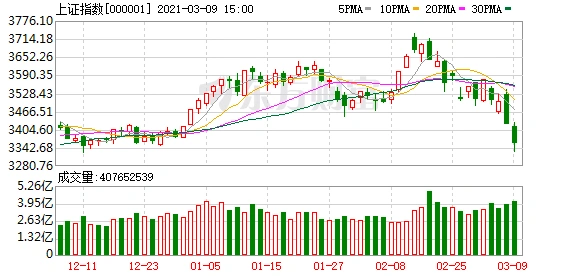
On March 9, A-shares went through a twists and turns trend: from a sharp drop, to a V-shaped reversal, and then to a sharp drop.
In early trading that day, under the pressure of panic selling, the three major indexes of the Shanghai and Shenzhen stock exchanges all fell sharply. The GEM index once plunged by more than 4%. However, as bottom-hunting funds entered the market, group stocks represented by Bailongma stocks took the lead in rebounding. Some Mao stocks, such as Kweichow Moutai, Hengrui Pharmaceuticals, China Duty Free, and WuXi AppTec, rebounded significantly, and the three major A-share indexes once turned red. However, the Baotuan stocks failed in the end, and Mao stocks made a comprehensive counterattack and ended dismally. At the close, all three major indexes fell sharply.
What was impressive throughout the day was that the Mao Index fell by more than 4% during the session, then turned red, and then fell by 2.65%.
For example, among the group stocks, Kweichow Moutai fell by 3% and once counterattacked to rise by 2%. At the close, it gave up all the gains and closed down by 1.17%.
In addition, many Mao stocks fell by more than 5% as of the close. For example, Zhifei Biotech -11.00%, Aviation Power -9.54%, Shanxi Fenjiu -7.79%, Sany Heavy Industry -7.10%, CICC -6.42%, LONGi -6.15%, Baofeng Energy -5.67%, Rongsheng Petrochemical -5.65%, Pien Tze Huang -5.58%.
The two cities generally fell throughout the day, with nearly 3,500 companies falling.
As of the close, the Shanghai Composite Index fell below 3,400 points and closed at 3,359.29, down 1.82%; the Shenzhen Composite Component Index fell by 2.80%; the ChiNext Index fell by 3.50%.
On the same day, among the first-level industries of Shenwan, defense industry, electronics, and mechanical equipment led the decline, with declines of 5.11%, 4.07%, and 3.44% respectively. Only three of the 28 first-level industries increased, namely leisure services, steel, and transportation, which increased by 1.62%, 1.56%, and 0.30% respectively.
What is the cause of this market crash? How will the market outlook go? Can you still invest in group stocks? Institutional figures vary in their views.
Essence Strategy Chen Guo issued a market commentary saying that the adjustment of A-shares from yesterday to this morning will most likely no longer be driven by concerns about U.S. bond interest rates, but will become dominated by absolute profit stop-loss operations and concerns about negative feedback. This constitutes the bottom of the first stage of the adjustment period. Under the influence of various factors, the acute pressure concentrated on the trading level has been relieved. Although recurrences are not ruled out, we think it can basically be judged that the first stage of the adjustment period has ended.
Ma Cheng, chairman of Juze Investment, believes that this wave of decline is mainly due to the bubble digestion of last year's high valuation of white horse stocks when the ten-year U.S. bond yield rose. However, the decline is faster than expected. This is related to the fund's decline - redemption - fall - redemption. In fact, from the continuous stampede decline of white horse stocks and the recent large inflow of money funds, we can see that a redemption wave of equity funds is taking place.
"In the next stage, we will mainly invest in two main lines: one is the non-ferrous metals, steel, and chemical industries that are affected by the economic cycle; the other is the insurance, banking, real estate, and construction sectors with absolutely low valuations." Ma Cheng said.
Wang Xuan, chairman of Chengen Capital, said that there were some risks in A-shares before this round of adjustment. For example, the influx of funds into A-shares from all walks of life has made sentiment overheated. In addition, the high valuations of early-stage group stocks also accumulated downside risks amid expectations of tighter liquidity. In addition, my country's post-epidemic recovery growth has entered an advanced stage, and subsequent policies are easy to tighten but difficult to loosen, so increased market volatility is also expected.
"As for the market outlook, we believe that although high-valued stocks have corrected somewhat, the overall market valuation is not low, and the fund positions on the market are not low. Considering that the short-term fund redemption pressure has not been fully released, there is still a risk of high volatility in the subsequent market. We believe that in investment layout, targets with confirmed performance growth and lower valuations are preferred," Wang Xuan said.
Mao Junyue, investment director of Xinpu Assets, also believes that group stocks have loosened up after the Spring Festival, and the market performance is significantly weaker than that of the external market. Therefore, this adjustment belongs to the adjustment needs of the A-shares themselves, not the influence of the external market. Today's market inherited the weakness of yesterday's market opening high and moving low, with a deep sell-off in early trading. Although it has emerged from a deep V trend, it does not mean that the market adjustment has been completed. Baotuan stocks are high-quality stocks in the market. The adjustment is a reasonable correction to last year's group stocks. Compared with group stocks, small-cap stocks have no valuation advantage, so small-cap stocks will also adjust.
Mao Junyue warned, "There has not yet been a wave of fund redemptions, and the real decline may be yet to come. It is best for investors to control their positions and not blindly buy the bottom."
Xia Fengguang, manager of Future Star Fund of Private Equity Pai Pai Network, pointed out that from an internal perspective, the leading sector of the decline this time was the group stocks that the fund held heavily. These stocks have experienced several times of rise, their valuations are at historically high levels, and their holdings have made huge profits. Some funds chose to leave the market when there were signs of changes in the market environment. From the perspective of external factors, after experiencing the rise of inflation, the market quickly turned to expectations of tightening monetary policy. The main driving force behind the market's rise last year was liquidity. If liquidity tightens significantly, the damage to the market will be very great. At present, the short term is mainly driven by emotions. Monetary policy will not run ahead of economic recovery, but emotions usually have the habit of jumping ahead of the economic recovery.
"There is no need to worry too much about the future mid-term trend. The future market is likely to interpret a different logic from last year's market, that is, there will be a trend of index decline but individual stocks stabilizing. Among them, small and medium-sized market capitalization stocks with clear growth rates may also achieve better returns." Xia Fengguang said.
Lang Chengcheng, director of the Research Department of Furong Fund, judged that the fundamentals of leading companies are still very stable in the long term. Although factors such as excessive short-term valuations, tight liquidity, and lack of profitability have caused the stock price to fall sharply, the company's value has gradually returned to the fundamentals, and the subsequent improvement in the operating performance of leading companies will also digest part of the valuation. In addition, we still need to be wary of some companies whose fundamentals are not that good. When market sentiment is high, such companies also enjoy high valuations, but their fundamental support is weak and it takes longer to adjust.
"Looking forward to 2021, due to the impact of a low base in the first quarter, the performance of leading companies is likely to show a sharp increase year-on-year. The market also has certain expectations for this. Therefore, paying attention to subsequent changes in the company's operating conditions will become the key to guiding investment strategies. In the current valuation return environment, we should pay more attention to leading stocks with relatively low valuations and rising operating performance, or we should be rational and optimistic about the long-term growth performance of leading companies." Lang Chengcheng said.
Hao Xinming, manager of Fangxin Wealth Investment Fund, believes that "the market is currently in a negative cycle of mass group stocks, which is exactly the opposite of the previous group rally. It can be seen that the main driving force behind the post-holiday decline is the previous group white horse stocks. On the contrary, small-cap stocks have stopped falling and stabilized or even rebounded. The current bull market that started in early 2019 has always been a structural market, with obvious sector differentiation and obvious style differentiation."
"The market has come to the present. After a short-term rapid decline, the valuations of previously overvalued group stocks have returned to a certain extent, and some have returned to a reasonable range. However, market sentiment is often either greed or fear. The release of this emotion must be released before the market bottoms out. This requires paying attention to changes in market trading volume. The number of group stocks can gradually shrink. After investors calm down, the market is expected to bottom out. Don't try to catch the flying knife during the current decline. Wait until the flying knife hits the ground and stops moving before entering the market." Hao Xinming said.
【Today’s Focus】Coca-Cola
Focusing on the linkage effect of U.S. stocks and A-shares, China Business Channel 7:30-8:00 "From Wall Street to Lujiazui" opens the market door for you.
US stock market
The Dow rose 0.30% to 22,092 points
The S&P 500 rose 0.19% to 2,476 points
The Nasdaq rose 0.18% to 6,351 points
international oil prices
U.S. WTI crude oil September futures rose 1.12% to close at $49.58 a barrel
Brent crude oil October futures fell 0.79% to close at $52.42 a barrel
WTI crude oil futures fell about 0.4% last week, while Brent crude oil futures fell about 0.2%.
international gold price
COMEX December gold futures fell 0.8% to $1,264.60 an ounce
Since its launch on August 1, Bitcoin Cash (BCC) has experienced a rollercoaster-like ups and downs in just a few days. According to CoinMarketCap data, the market value of BCC (Bitcoin Cash) has fallen from third to fourth place, from approximately US$7 billion to approximately US$3.5 billion, which was cut in half.
The opening price of BCC on the domestic trading platform Viabtc (microbit) was 1,478.93 yuan on August 1, and the price rose to a maximum of 4,507.33 yuan on August 2. It started a downward trend from August 3 to 5, with the lowest point on the 5th being 1,411 yuan, and the opening price on the 6th reaching a new low of 1,390 yuan. The BCC price of Bitcoin China, another trading platform, hovers around 2,300 to 2,500 yuan.
A special analyst at Huobi.com said that in order to prevent losses to user funds caused by replay attacks during the Bitcoin fork, domestic trading platforms such as Huobi.com suspended deposits and withdrawals of Bitcoin at the end of July, resulting in an imbalance in the power of buyers and sellers after the BCC/BTC (Bitcoin) pair went online. The seller was weak, and the price of the BCC/BTC pair continued to rise. As major trading platforms opened deposits and withdrawals on August 4, the selling pressure on BCC increased significantly, causing the price of BCC to plunge rapidly. According to data from Huobi.com, as of 15:30 on the 5th, the price of BCC/BTC was 0.118472, with the largest drop of 43.9% in two days.
As a new type of blockchain asset, BCC has changed the original intention of Bitcoin's technology and adopted dynamic difficulty adjustment. Many people in the currency circle said in an interview with China Business News that BCC has strong uncertainty in the short term: On the one hand, the instability of BCC's market price will cause investors to have risks in the process of investment; on the other hand, because BCC is essentially the product of disagreements on the issue of Bitcoin expansion, with the development of Bitcoin, there is the possibility of this risk reappearing.
At the same time, the formation of the value of BCC is also very complicated. It is affected by factors such as the stability of the technology and the recognition of the value of this competitive currency by the market (computing power and investment users). The value of BCC does not determine the value of Bitcoin. The opposite is also true. Tian Ying, vice president of OKCoin, said that although BCC inherits Bitcoin’s existing blockchain and everyone who holds Bitcoin naturally owns a corresponding number of new coins, BCC, like other new coins that have appeared in history, will not pose a threat to Bitcoin’s status.
The price of Bitcoin has even returned to highs. Bitcoin has been rising continuously in the past two days, breaking through a high of 20,000 yuan. According to the market data of OKCoin, a domestic trading platform, on August 6, Bitcoin once again hit a record high of 22,198 yuan. From the opening price of 18,944 yuan on August 1 to a new high of 22,198 yuan on the 6th, an increase of more than 15%.
As for Bitcoin's return to highs, analysts at OKCoin explained that the Bitcoin community was affected by the expansion in early July, causing panic among users, a significant reduction in market trading volume, and a wait-and-see state of funds, which caused the Bitcoin price to quickly fall back to its lowest point of around 12,900 yuan. At 4 a.m. on July 23, the Bitcoin expansion plan reached a consensus and BIP91 was activated. This allowed all Bitcoin enthusiasts and investors to see the phased results of the expansion event. The risk of Bitcoin forks was temporarily lifted, and investor confidence in it was also greatly enhanced.
In addition, affected by the price of Bitcoin returning to a high of 20,000 yuan, other cryptocurrencies in the top 10 digital assets by market value have remained relatively stable in the second half of this week, with ETH (Ethereum), ETC (Ethereum) and Litecoin all showing slight increases.
Guest perspective
(07/31--08/04) S&P 500 Index industry segment performance (0.2%):
Increase: hardware storage +4.4%, residential construction +3%, consumer appliances +3%, life science instruments 2.5%, fertilizers and pesticides 2%
Decline: medical services -7%, oil and gas exploration -4%, semiconductor equipment -4%;
Industry performance of the European Stoxx 600 Index (1.24%):
Increase: retail 2.5%, public utilities 2.3%, tourism and leisure 2%, food and beverage 1.7%
Decline: Basic Resources -0.8% Healthcare -0.5%;
Currency (07/28--08/04):
Increase: EUR +0.2%, DKK +0.13%
Decline: South African Rand -3% Canadian Dollar -1.7% Australian Dollar -0.8%
Products (07/28---08/04):
WTI crude oil -0.3%, diesel +0.7% gold -0.9% copper +0.7%, aluminum 0.2% silver -2.9% corn -2% wheat -5.5% soybean -5% coffee +1.7% cotton +1.1%
SP500: 13 companies fell by more than 10%, 3 companies increased by more than 10% (genetic testing lithium battery phosphate fertilizer), 27 companies fell by 5-10%, and the declining industries mainly came from the energy and medical fields;
If one considers the SP500 equal weight, the SP 500 fell 0.4%, in line with the NASDAQ's weekly decline of 0.4%, while the Dow rose 262 points to break 22,092 points;
The U.S. dollar index rose 0.76% on Friday (July non-farm payrolls 209,000); the SP500 index has low volatility, but the volatility of individual stocks has reached 22%, indicating low correlation. The SP500 is consolidating at a high level and has ultra-low volatility. Once the index drops by 3%, the spot VIX will rise by 11 points, while the 30-day VIX futures will reach 15, or an increase of 48%;
Mixed U.S. Economic Data and the Dollar:
The ISM manufacturing index in July was 56.3, lower than expected, but this value previously corresponded to 4% GDP growth; S&P constituents with a market capitalization of approximately US$19 trillion announced their second-quarter financial reports, 10% Y/Y, and Berkshire rose for 6 days in a row (second-quarter operating profit fell 11% year-on-year, B-share earnings per share fell 15% to US$1.73/share, traditional manufacturing retail railways experienced double-digit growth, and insurance underwriting was dragged down, with cash reaching US$100 billion)
Chinese and American Internet giants:
The profit growth rate of China's Alibaba, Tencent, Baidu, JD.com, NetEase and Ctrip (market value: US$1 trillion) is significantly higher than that of Amazon + FB + Activision Blizzard + GOOGL + NETFLIX + PRICELINE (market value: US$1.8 trillion). China's Internet has more investment value;
Eurozone:
The euro rose, telecoms, banks, and power utilities were bullish, while semiconductors and export manufacturing weakened.
Germany: Temasek intervenes in German companies and becomes a financial investor. Favored industries: industry, consumer agriculture, drug research and development
U.S. economic data next week (08-09---8-17):
8/9: Second quarter productivity (+0.5%) and unit labor cost (+1.2%)
8/10: Core PPI index +0.1% in July. Budget deficit in July was US$54 billion;
8/11: July core CPI index +0.1%
8/15: July retail sales +0.4% 8/16: 1,224,000 new housing starts;
8/17: Industrial production 0.3%, capacity utilization rate 76.7%;
Follow today
Gainer ANET
Focus on building 10/40/100 Gigabit Ethernet (GbE) switches
Its superb scalability, low latency, programmability and flexibility have been used by 7 of the 8 largest hyper-scale cloud computing companies. Based on the LINUX operating system, there are more than 8 million lines of code, and more than 1,000 man-years have been invested in developing advanced distributed system software (EOS). The advantage is that it can be programmed at all system levels; commercial chips and open source software.
The company's second-quarter financial report shows that 100G has won the favor of customers in the field of ultra-large-scale data centers. Second-quarter revenue was US$405 million, 12% higher than market expectations. The international market grew faster, with quarterly earnings per share of US$1.34, 45% higher than market expectations.
After cooperating with HP, it will achieve greater expansion in sales channels and effective cost control. The profit margin in the second quarter is close to 35%, much higher than the expected 25%. The company's product supply chain delay problem has also been improved, and some manufacturing tasks have returned to the United States.
More advanced 400G will bring significant revenue in 2019
ANET is up +75% this year, outperforming the S&P 500 by 11%, and short sellers account for 3.8% of outstanding shares
Risk: Patent lawsuit with Cisco pending
Potential Stock Grub
Grubhub acquires Yelp’s EAT 24 business, a win-win + $1 billion increase in market value
YELP second quarter financial report: revenue exceeded expectations ($209 million 20% Y/Y), the number of account activations was the second best in history, gross profit margin increased by 435 basis points (net profit margin 3.5%, EBITDA $21.6 million, much higher than the $7.4 million in the same period last year)), the sale of EAT24 brought about improvement in profitability ($288 million cash sale, $200 million stock repurchase); advertising revenue $187 million, 19% Y/Y, paid advertisers 148,000 18% Y/Y;
2017 full-year revenue expected range: US$855-865 million, EBITDA: US$143--153 million;
There are 20,000 restaurants on the GRUB and YELP platforms. If the transaction is completed during Halloween and Thanksgiving, there will be significant financial growth in the second quarter of 2018; the acquisition of the YELP business will bring synergistic benefits. Over time, the increase in volume will cover the increase in costs, ultimately driving up the improvement in profit margins.
GRUB's revenue in the second quarter met the target (US$159 million, 32% Y/Y), profit margin and repeat orders declined slightly (net profit margin 9.5% 15% Y/Y, or 17 cents/share) while active ordering users increased (9.18 million, 25% Y/Y), with an average daily volume of 313,900, 16% Y/Y; gross food amount was US$880 million;
Performance Outlook: 3rd quarter revenue expected range: US$155-163 million, EBITDA: US$38-42 million, full year 2017: revenue of US$642--666 million, EBITDA: US$170 million--180 million US dollars;
After the acquisition of FOODLER and EAT24, GRUB will increase its EBITDA by more than 30% in 2018.
market news
Central Bank: Explore the inclusion of systemically important Internet financial businesses into MPA
On the evening of August 4, the central bank stated in the "China Regional Financial Operation Report (2017)" that the risk points in the Internet financial field include incomplete licenses, illegal operations, insufficient risk management and control, disorderly competition in the market and other factors. Some Internet financial products have already had systemic importance, and it is necessary to prevent procyclical fluctuations and cross-market contagion of risks. The central bank proposed to explore the inclusion of large-scale and systemically important Internet financial businesses into the macro-prudential management framework, conduct macro-prudential assessments on them, and prevent systemic risks.
Rakuten's monthly losses of 600 million in China are no longer affordable and can only last until the end of the month
Korean media reported on August 6 that Lotte Group has recently decided to make structural adjustments to its business in China and will reduce the number of Lotte Mart stores in China and lay off employees. Lotte Mart's monthly operating losses are as high as 100 billion won (approximately 590 million yuan), and the cumulative operating deficit in the first half of this year alone has exceeded 83 billion won (approximately 490 million yuan). The person in charge of Lotte Mart said that judging from the current situation, it can only last until the end of this month at most, and hopes that the group will formulate future countermeasures as soon as possible.
The national team has begun to tilt towards small and medium-sized enterprises
According to Securities Market Red Weekly, as the market turns into a shock at 3300 points, large-cap stocks and cyclical stocks, including the Shanghai Composite 50, will continue to maintain rotation with small- and medium-cap stocks. In the short-term market, we are expected to see large-cap stocks taking the stage with small-cap stocks. In addition to buying heavy-weight cyclical stocks, funds mainly focused on the national team have recently begun to consciously tilt towards small and medium-sized entrepreneurial stocks.
Among them, the social security fund has been investing in sectors such as electricity, automobiles, materials, and medicine as well as small and medium-sized startup stocks since the second quarter. Subsequently, CSI Financial Holdings, Huijin, and Shenzhen-Hong Kong Stock Connect have also followed suit to varying degrees.
This week, the two cities lifted the ban and the market value was about 40 billion yuan, a decrease of 50% from the previous month.
According to data from Southwest Securities, a total of 24 companies in Shanghai and Shenzhen stock markets have had their restricted shares released for circulation this week, with a total of 3.565 billion shares released. Calculated based on the closing price on August 4, the market value of the Shanghai and Shenzhen stock markets this week was 40.468 billion yuan, a month-on-month decrease of 59.35%.
The first "10 for 30" stock was investigated and a large number of restricted stocks were just lifted.
Easytech (300376) suddenly announced on the evening of August 3 that the company was suspected of violating securities-related laws and regulations due to information disclosure, and the company's chairman He Sime was suspected of violating securities-related laws and regulations, and has been investigated by the China Securities Regulatory Commission.
The Social Security Fund reduced its holdings in Dahua Co., Ltd. and two companies won bids for major contracts
Dahua Shares: Net profit increased by nearly 40% in the first half of the year. Social Security Fund reduced Huijin’s shareholding unchanged; Wanxiang Qianchao: The controlling shareholder increased its holdings by 1% and plans to continue to increase its holdings; Sinoma International: Won the bid for a 1.877 billion Argentine project; Ningbo Construction Engineering: The consortium preliminarily won the bid for a 679 million project
Terry Gou: Investment in China and the United States will increase in the future
Foxconn Group President Terry Gou met with Michigan Governor Snyder in the Shenzhen headquarters. The two sides met for nearly two hours. Terry Gou said that Foxconn has contacted several states in the United States. The amount cannot be announced yet. The investment direction will be next-generation automotive technology, such as Internet of Vehicles and driverless driving. He hopes to bring back American artificial intelligence technology and bring Foxconn's precision mold manufacturing out. Terry Gou said that Foxconn will increase its investment in China and the United States in the future, and will not invest in just one side.
Wolf Warrior 2's box office exceeds 3 billion and is expected to become the box office champion
According to Maoyan Movie data, as of 15:50 on August 6, the box office of "Wolf Warrior 2" has reached 3.006 billion yuan. Currently, the box office of "Wolf Warrior 2" ranks first among the 2017 movie box office. The top-grossing movie in 2016 was "Mermaid", with a cumulative box office of 3.392 billion yuan. Analysts say it is only a matter of time before "Wolf Warrior 2" breaks this record.
140 companies have announced earnings forecasts, and nearly 80% of them are positive.
According to Databao, in addition to companies that have released performance reports, 140 of the companies scheduled to disclose their semi-annual reports next week have already announced performance forecasts. The types of performance forecasts show that 92 companies predict increases, 13 predict profits, accounting for nearly 80% of the total. Another 19 companies predict performance declines, 8 companies predict performance losses, and 8 companies predict flat performance. Among the companies with good performance reports, based on the median expected net profit growth, there are 38 companies with a median net profit growth of more than 100% in the first half of the year.
Chinese concept stocks
The opinions expressed in this article are for reference only and do not constitute investment advice. Investment is risky and you should be cautious when entering the market.
Krumhansl, CL 2002. Music: A Link between Cognition and Emotion. InCurrent Directions in Psychological Science, Vol. 11: 45-50. Oxford: BlackwellPublishers.
Mitnick, KD, and WL Simon. 2002. The Art of Deception: Controlling the Human Element of Security . Indianapolis: Wiley.
Ekman, P. 2003. Emotions Revealed: Recognizing Faces and Feelings to Improve Communication and Emotional Life. New York: Hey Holt & Co./Times Books.
Quentin Newark. 2007. What Is Graphic Design? Essential Design Handbooks
.RotoVision.
Berryman, Gregg. 1990. Notes on graphic design and visual communication
.Crisp Publications.
Bojko, Szymon. 1972. New graphic design in revolutionary Russia. LundHumphries.
Thompson, Bradbury. 1988. The art of graphic design: Bradbury Thompson . YaleUniversity Press.
Ades, Dawn, Brown, Robert K., Friedman, Mildred S. 1984. The 20th-century poster: Design of the avant-garde. Abbeville Press.
White, Jan V. 1988. Graphic design for the electronic age. Watson-Guptill Publications.
Wu Guoxin. Logo Design. Shanghai: Shanghai People's Fine Arts Publishing House, 2002.
Zhu E. The design world of modern graphic design giant Tanaka Ikko. Beijing: China Youth Publishing House, 1998.
(Japan) Compiled by the editorial department of Works. Japanese Graphic Creative Design Yearbook 2005. Beijing: China Youth Publishing House, 2006.
Wang Shouzhi. History of World Graphic Design. Beijing: China Youth Publishing House, 2002.
He Jiaxun. Theory and Analysis of Modern Advertising Cases. Shanghai: Fudan University Press, 1998.
Written by William Aarons, Ding Junjie, Cheng Ping, Yuan Fei, Zhang Xi. Contemporary Advertising. Beijing: Huaxia Publishing House, 2001.
Written by Norio Naojo, Yu Chunlin. Advertising copy strategy-planning, creativity and performance. Beijing: China Finance and Economics Press, 2002.
Tang Yiyong. Poster Design. Beijing: People's Fine Arts Publishing House, 2001.
Wang Hongwei. Commercial Poster Design Creative Analysis Example Navigation (with CD). Beijing: Tsinghua University Press, 2007.
(U.S.) Scoles, (U.S.) Wedel. Creative poster layout design. Dalian: Dalian University of Technology Press, 2008.45~48.
Zhou Jin. World Expo Visual Communication Design. Shanghai: Donghua University Press, 2008.22~30.
Zhu Weili. Practical Case Study on Logo Design for Large-scale Events. Beijing: Beijing Institute of Technology Press, 2009.
Liang Mingzhu. Research on urban tourism development and brand building. Guangzhou: Jinan University Press, 2009.
(Japan) Takashi Akiyama. Collection of posters by Takashi Akiyama. Shanghai: Shanghai People's Fine Arts Publishing House, 2005.62~67.
Zhu E. The form of Japanese poster design. Guangxi: Guangxi Fine Arts Publishing House, 2001.51~60.
(English) Hurley. What is brand design. Beijing: China Youth Publishing House, 2000.
(U.S.) Matt, Matus. Above the Design Trend. Shandong: Shandong Pictorial Publishing House, 2009. 78~86 Liu Jinping. Visual Qingdao. Beijing: China Tourism Publishing House, 2007.
Jin Zhiguo. A cup of sea: Tsingtao Beer and I. Beijing: CITIC Press, 2008.
Hong Kong Design Center, Art and Design Publishing Alliance. The Spirit of Design. Liaoning: Liaoning Science and Technology Press, 2008.
(Japanese) Hara Kenzai. Design in design. Shandong: Shandong People's Publishing House, 2006.55~57.
(Japan) Hara Kenya, Abe Masashi. Why design. Shandong: Shandong People's Publishing House, 2010.24~32.
(Japan) Sato Kashiwa. Sato Kashiwa’s Super Organizing Technique. Jiangsu: Jiangsu Fine Arts Publishing House, 2009.
Ji Feng. Chinese Urban Sculpture: Semantics, Context and Contemporary Connotation. Nanjing: Southeast University Press, 2009.36~39.
Wang Jianguo. Urban Design. Beijing: China Construction Industry Press, 2009.59~65.
Song Lianwei. Qingdao Urban Old Architecture Humanities Qingdao Series. Qingdao: Qingdao Publishing House, 2005.
Hu Fei. Foundation of Art and Design Symbols. Beijing: Tsinghua University Press, 2008.
Zhu Yongming. Graphics, symbols and language in visual communication design. Journal of Nanjing University of the Arts (Art and Design Edition), 2004, 1 (2): 53~56.
Art design thesis references (2)
Krumhansl, CL 2002. Music: A Link between Cognition and Emotion. InCurrent Directions in Psychological Science, Vol. 11: 45-50. Oxford: BlackwellPublishers.
Mitn#from Excellent art and design professional paper references (3 articles) from end#ick, KD, and WL Simon. 2002. The Art of Deception: Controlling theHuman Element of Security
. Indianapolis: Wiley.
Ekman, P. 2003. Emotions Revealed: Recognizing Faces and Feelings to Improve Communication and Emotional Life. New York: Hey Holt & Co./Times Books.
Quentin Newark. 2007. What Is Graphic Design? Essential Design Handbooks
.RotoVision.
Berryman, Gregg. 1990. Notes on graphic design and visual communication
.Crisp Publications.
Bojko, Szymon. 1972. New graphic design in revolutionary Russia. LundHumphries.
Thompson, Bradbury. 1988. The art of graphic design: Bradbury Thompson . YaleUniversity Press.
Ades, Dawn, Brown, Robert K., Friedman, Mildred S. 1984. The 20th-century poster: Design of the avant-garde. Abbeville Press.
White, Jan V. 1988. Graphic design for the electronic age. Watson-Guptill Publications.
Wu Guoxin. Logo Design. Shanghai: Shanghai People's Fine Arts Publishing House, 2002.
Zhu E. The design world of modern graphic design giant Tanaka Ikko. Beijing: China Youth Publishing House, 1998.
(Japan) Compiled by the editorial department of Works. Japanese Graphic Creative Design Yearbook 2005. Beijing: China Youth Publishing House, 2006.
Wang Shouzhi. History of World Graphic Design. Beijing: China Youth Publishing House, 2002.
He Jiaxun. Theory and Analysis of Modern Advertising Cases. Shanghai: Fudan University Press, 1998.
Written by William Aarons, Ding Junjie, Cheng Ping, Yuan Fei, Zhang Xi. Contemporary Advertising. Beijing: Huaxia Publishing House, 2001.
Written by Norio Naojo, Yu Chunlin. Advertising copy strategy-planning, creativity and performance. Beijing: China Finance and Economics Press, 2002.
Tang Yiyong. Poster Design. Beijing: People's Fine Arts Publishing House, 2001.
Wang Hongwei. Commercial Poster Design Creative Analysis Example Navigation (with CD). Beijing: Tsinghua University Press, 2007.
(U.S.) Scoles, (U.S.) Wedel. Creative poster layout design. Dalian: Dalian University of Technology Press, 2008.45~48.
Zhou Jin. World Expo Visual Communication Design. Shanghai: Donghua University Press, 2008.22~30.
Zhu Weili. Practical Case Study on Logo Design for Large-scale Events. Beijing: Beijing Institute of Technology Press, 2009.
Liang Mingzhu. Research on urban tourism development and brand building. Guangzhou: Jinan University Press, 2009.
(Japan) Takashi Akiyama. Collection of posters by Takashi Akiyama. Shanghai: Shanghai People's Fine Arts Publishing House, 2005.62~67.
Zhu E. The form of Japanese poster design. Guangxi: Guangxi Fine Arts Publishing House, 2001.51~60.
(English) Hurley. What is brand design. Beijing: China Youth Publishing House, 2000.
(U.S.) Matt, Matus. Above the Design Trend. Shandong: Shandong Pictorial Publishing House, 2009. 78~86 Liu Jinping. Visual Qingdao. Beijing: China Tourism Publishing House, 2007.
Jin Zhiguo. A cup of sea: Tsingtao Beer and I. Beijing: CITIC Press, 2008.
Hong Kong Design Center, Art and Design Publishing Alliance. The Spirit of Design. Liaoning: Liaoning Science and Technology Press, 2008.
(Japanese) Hara Kenzai. Design in design. Shandong: Shandong People's Publishing House, 2006.55~57.
(Japan) Hara Kenya, Abe Masashi. Why design. Shandong: Shandong People's Publishing House, 2010.24~32.
(Japan) Sato Kashiwa. Sato Kashiwa’s Super Organizing Technique. Jiangsu: Jiangsu Fine Arts Publishing House, 2009.
Ji Feng. Chinese Urban Sculpture: Semantics, Context and Contemporary Connotation. Nanjing: Southeast University Press, 2009.36~39.
Wang Jianguo. Urban Design. Beijing: China Construction Industry Press, 2009.59~65.
Song Lianwei. Qingdao Urban Old Architecture Humanities Qingdao Series. Qingdao: Qingdao Publishing House, 2005.
Hu Fei. Foundation of Art and Design Symbols. Beijing: Tsinghua University Press, 2008.
Zhu Yongming. Graphics, symbols and language in visual communication design. Journal of Nanjing University of the Arts (Art and Design Edition), 2004, 1 (2): 53~56.
Recently, as the market continues to fluctuate at the bottom, many institutions or individuals claiming to be buying the bottom have been on the hot searches. For example, a star fund manager subscribed to his own private equity fund for RMB 40 million. There are also public fund managers who said that "in addition to necessary living expenses, their own funds have been fully occupied." There are also well-known macro strategy private equity fund managers who have also publicly stated that they are "long A shares."
Policy announcements, institutional statements, and individual investors are also eager to give it a try. Buffett said to invest against the trend, "Be fearful when others are greedy, and greedy when others are fearful." Under the current market conditions of sluggish sentiment and volatility, many investors have chosen to buy the bottom and wait for a rebound. So, for ordinary investors, what are the common “bottom-buying misunderstandings”?
First, overestimate your risk tolerance. Whether you are purchasing financial products, investment funds or stocks, the first step must be risk assessment. Only by correctly measuring your risk tolerance can you find suitable investment products. However, this most important link is ignored by the vast majority of investors. Many surveys of stock market investors show that more than 90% of investors who enter the market in a bull market overestimate their risk tolerance.
The so-called "buying the bottom" is more about buying when the market is falling. It is a typical left-side trading strategy. However, no one can accurately determine where the market bottom will be. The strategy of trading on the left needs to withstand the market's continued bottoming due to uncertainty, and most bottom hunting will also be accompanied by a considerable decline. However, many people ignore their risk tolerance. Whether it is risk assessment or fantasy before bargain hunting, they believe that they can withstand a 30% or even 50% market drop. Once the market really continues to fall at the bottom, investors' panic, sluggish stock performance and other information will increase the negative emotions of "bottom-buying" investors. The professed "high risk appetite" is often no longer able to tolerate a 10% or even 20% drop. When a real intraday drop occurs, they will often choose to clear their positions and leave the market, treating it as a "stop-loss exit." From a long-term holding strategy of buying the bottom, it has become a "leek" to kill the short-term decline. At the same time, such moments of extreme panic are often the real market bottom. Therefore, there are often many examples of bargain hunters "falling before dawn".
Secondly, there is excessive feedback on information in the market. Compared with the right-side trading strategy, the left-side trading strategy tests human nature more. Whether you can stay calm and hold or even buy the bottom in the extreme panic of the market, whether you can maintain your independent thinking and judgment in the early stage, and follow the established trading strategy, all of these test the investor's thinking and judgment ability. But when the market is flooded with negative news, and even when you open every web page or open every page of a newspaper, all you can see is pessimistic news. You will inevitably be affected by these news and adjust your trading strategy.
For bottom-hunting investors, many times after buying a certain stock or fund, they will pay more attention to the information related to it. Once these news appear in the market, they will be more concerned about the impact of the news on their own positions, amplifying the influence of these news. When such news appears frequently, it will affect early judgment and trading strategies. Therefore, it is often seen in the market that a lot of seemingly irrelevant information in a bear market may cause a stampede-like decline in some stocks. Part of the reason lies in the excessive negative feedback caused by extreme market panic.
There is no reasonable logic in buying the bottom. I think it is worth buying if it falls too much. This is the third common misunderstanding, and probably the most common misunderstanding.
"It has fallen so much, it must have bottomed out" is a saying on the lips of many people. Investors with these ideas always mistakenly use the "pendulum theory" in investment, believing that if the stock price falls too much, it will always rebound, and even the more it falls, the greater the rebound. This is a very wrong way to understand market reversals. We need to know very clearly that the bottom of the market is often related to the bottom of policies, valuations, and economic fundamentals. Therefore, we can see many research reports and articles analyzing the relationship and sequence of various bottoms. And these have nothing to do with how big the decline is or how long it lasts. If the factors that affect market valuation and performance do not get better, or are even expected to get worse, then even if it has fallen for three or even five years, it still does not constitute a reason for a reversal. The most typical one is that the Shanghai Composite Index fell by 40% in just half a year from 6,092 points in October 2007. Many investors also felt that the largest decline similar to history was over. However, the Shanghai Composite Index fell by 50% in the next six months. It was not until November 2008 that the Shanghai Composite Index fell to about 1,700 points before stabilizing and rebounding. The GEM also had a similar situation. The GEM market in 2015 impressed many investors. It fell by 40% in one month. After a brief rebound, it fell by another 30%. Therefore, never use "it has fallen a lot" as a reason for buying the bottom. If the valuation is still too high and the performance does not improve, and it falls by 20%, it may continue to fall by 30%, and then it may continue to fall by 40%. This is why there is such a joke in the stock market: "I wanted to buy the bottom, and I did it on the floor, but I didn't expect that there is a basement, there is hell under the basement, and there are eighteen levels of hell...".
The fourth misunderstanding is not distinguishing between industries and choosing the wrong direction. As mentioned above, the so-called "buying the dip" is based on the judgment of performance, valuation, market sentiment and other factors. But obviously, not every industry, sector, or company has the exact same trend. Perhaps at a certain stage of market reversal, there will be an overall upward trend, but with the differentiation of valuations and performance, there must be some "false reversal" industries and companies. For example, when economic fundamentals improve, consumption often improves first, and corresponding consumption will start to move ahead of other sectors. At the same time, in terms of style, growth stocks generally require the catalysis of high prosperity, so the start of their market often lags behind value-style stocks.
Finally, we must correctly understand "buying the dip". If you are a short-term trader, "buying the dip" and betting on a short-term rebound, do not turn your short-term speculative trading into a long-term one. And if you are a true practitioner of value investing, you need to focus on the future growth of the investment objects rather than short-term behavior. As Buffett said: "Our focus is to try to find companies whose operating conditions can be predicted in the next 10, 15, or 20 years under normal circumstances."
[Note: The market is risky, so investment needs to be cautious. 】
(The author is Huang Dazhi, a researcher at Xingtu Financial Research Institute)
1. android
Android is a free and open source operating system based on the Linux kernel (excluding GNU components). It is mainly used in mobile devices, such as smartphones and tablets, and is led and developed by the American Google Company and the Open Handset Alliance. The Android operating system was originally developed by Andy Rubin and mainly supports mobile phones. In August 2005, it was acquired and invested by Google. In November 2007, Google formed the Open Handset Alliance with 84 hardware manufacturers, software developers and telecom operators to jointly develop and improve the Android system. Google then released the Android source code under the Apache open source license.
1. android
Android (Android) is a free and open source operating system based on the Linux kernel (without GNU components). Mainly used in mobile devices, such as smart phones and tablet computers, led and developed by Google and the Open Handset Alliance in the United States. The Android operating system was originally developed by Andy Rubin and mainly supports mobile phones. In August 2005, it was acquired and invested by Google. In November 2007, Google and 84 hardware manufacturers, software developers and telecom operators formed the Open Handset Alliance to jointly develop and improve the Android system. Subsequently, Google released the source code of Android under the authorization of the Apache open source license.
2. Android SDK
Android SDK refers to Android-specific software development kit, which includes emulators, tutorials, API documentation and sample code.
Android SDK provides development components for developing Android applications on Windows/Linux/Mac platforms. Android supports all platforms and contains various tool sets for developing mobile applications on the Android platform. The toolset not only includes the Android emulator and the Android Development Tools plug-in (ADT) for Eclipse, but also includes various tools for debugging, packaging, and installing applications on the emulator.
Android SDK is mainly based on Java language. Users can use Java language to develop software applications on the Android platform. Use some tools provided by the SDK to package it into an apk file for the Android platform, and then use the emulator (Emulator) in the SDK to simulate and test the operation and effect of the software on the Android platform.
2. Android SDK
Android SDK refers to an Android-specific software development kit that includes emulators, tutorials, API documentation, and sample code.
The Android SDK provides development components for developing Android applications on Windows/Linux/Mac platforms. Android supports all platforms and includes various toolsets for developing mobile applications on the Android platform. The toolset includes not only the Android emulator and the Android Development Tools Plug-in (ADT) for Eclipse, but also various tools for debugging, packaging, and installing applications on the emulator.
The Android SDK is mainly based on the Java language, and users can use the Java language to develop software applications on the Android platform. Package it into an apk file used by the Android platform through some tools provided by the SDK, and then use the emulator in the SDK to simulate and test the running situation and effect of the software on the Android platform.
3.Genymotion
Genymotion tools provide a complete Android virtual environment and are quickly becoming the ideal choice for developers, testers, marketers and even gamers.
Genymotion supports Windows, Mac, and Linux operating systems. It is easy to install and run. It uses powerful sensors to test user applications and integrates perfectly into the entire installation environment.
3.Genymotion
Genymotion tools provide a complete set of Android virtual environments that are quickly becoming ideal for developers, testers, salespeople and even gamers.
Genymotion supports Windows, Mac, Linux operating systems, and it is easy to install and run. It tests the user's application with powerful sensors and fits perfectly into the entire installation environment.
4. SQLite
SQLite is an open source embedded relational database, a self-contained, zero-configuration, transaction-supporting SQL database engine.
4. SQLite
SQLite is an open source embedded relational database, a self-contained, zero-configuration, transaction-supported SQL database engine
5. Event listener
The event listener is a view class interface that contains a callback method. It is responsible for monitoring various events that occur in the view (view) class control on the UI and responding accordingly to the events.
5.Event listener
Event listener is a view class interface that contains a callback method. It is responsible for listening to various events that occur in the view class control on the UI and responding to events accordingly.
Reference: Baidu Encyclopedia
Translation: Google Translate
 Trading Changes In Dubai’s Gold Market And Analysis Of Gold Price Trends Amid Conflicts In The Middle East2026-03-17Comments(0)
 The Damaged Waterfront Greenway In Miaoxing Town, Baoshan District Is In Urgent Need Of Repair, Affecting Residents’ Leisure And Fitness2026-03-16Comments(0)