
Terms Of Sale And Purchase Of Russian Coal, Including Product Name, Specifications, Shipping And Unloading Ports, Etc.
All disputes arising in connection with this Sales Contract or the execution thereof shall
All disputes arising in connection with this Sales Contract or the execution thereof shall
Roger Ebert once famously said: "A good movie is never too long, and a bad movie is never too short." Although there are always complaints about the length of movies, many of the most beloved masterpieces in film history are more than three hours long, such as "Titanic," "Lawrence of Arabia," "Seven Samurai," "Avengers: Endgame" and "The Lord of the Rings: The Return of the King." However, there are also a large number of excellent films that are far less than three hours, or even tell gripping stories in less than half the time.
"The Evil Dead 2" (1987) 85 minutes
"The Evil Dead 2" is Sam Raimi's pinnacle work. As a sequel and remake of "The Evil Dead", this film not only upgrades the bloody scale, but also injects a crazy and absurd sense of slapstick comedy. It doesn't focus on scaring the audience, but is more like an immersive haunted house adventure, with blood and carnival flying together, and a narrative rhythm comparable to a "Looney Tunes" cartoon. The whole process was enjoyable and enjoyable, and the limited time was used to the extreme.
Orange (2015) 88 minutes
The film, directed by Oscar-winning director Sean Baker, tells the story of two transgender sex workers on the streets of Hollywood on Christmas Eve. "Tangerine" aroused heated discussion when it was released because it is a micro-budget film shot entirely with iPhone 5s. This shooting method just creates a documentary texture of "bystanders observe closely". The compact length allows for a natural transition between intense quarrels and quiet introspection. It is an excellent slice of life focusing on marginalized groups.
The Nightmare Before Christmas (1993) 85 minutes
"The Nightmare Before Christmas" has long become a holiday classic and one of Disney's top-selling peripheral films. Ironically, when the film was released, it was distributed by Touchstone Films due to concerns about scaring children. The film has vivid characters and classic songs. Every second is not wasted, and the informative story is told in one and a half hours. Although not strictly a Disney Renaissance work, it perfectly captures the imaginative essence of Disney animation in the 1990s.
Blair Witch (1999) 81 min.
When it comes to iconic horror films, "Blair Witch" can be compared with "Dracula", "Psycho" and "Moonlight" as a work that changed the direction of genre films. This micro-budget pseudo-documentary film tells the story of a group of documentary filmmakers who went deep into the forest to search for ancient folklore but lost their way. It was not the pioneer of "Found Footage" (pseudo-documentary), but it polished this form to the extreme and spawned hits such as "Cloverfield", "Paranormal Activity" and "Superman" in the 2010s. The short length of the film reinforces the real illusion that the audience is watching a lost videotape. Even though 27 years have passed and the truth has long been made public, it remains as horrifying as ever.
Fruitvale Station (2013) 85 minutes
Ryan Coogler's "The Sinner" became the most nominated film in Oscar history, and the director himself finally received an Oscar nomination for Best Director. Anyone who has read his debut novel "Fruitville Station" knows that this day has long been destined. The film stars Michael B. Jordan, his first collaboration with Coogler, as Oscar Grant, a young man killed by police officer Johannes Meisel in Oakland, California. The film focuses on the last day of Grant's life, using daily slices of bitterness and joy to show how ordinary life can be suddenly cut off by tragedy. It is both an affectionate look back at a young man's life and a microcosm of an unfair law enforcement system. It is Coogler's powerful directorial debut.
"Love at Sunset" (2004) 80 minutes
The second part of Richard Linklater's "With Love" trilogy. Nine years later, Celine (Julie Delpy) and Jesse (Ethan Hawke) reunite in Paris. The entire 80-minute film progresses in near real-time, like a countdown - Jesse must leave before the flight takes off. The audience is immersed in the dialogue along with the characters, while the pressure of time is always hanging overhead. "Happy times are always short" is the core of this film. Like a beautiful moment with a close friend, it ends too quickly, but it is worth every second.
Grave of the Fireflies (1988) 89 min.
89 minutes, just one minute shy of crossing the 90-minute threshold. "Grave of the Fireflies" directed by Isao Takahata is set in Kobe after the US bombing at the end of World War II. It tells the story of a pair of orphans struggling to survive in the war. The film is recognized as a masterpiece of animation, with beautiful images and deep emotions. It confronts the cruelty of war from a child's perspective and has one of the most heartbreaking endings in film history. Although the film is short, the emotion is very high, so please prepare tissues when watching the film.
Toy Story (1995) 81 min.
"Toy Story" is an epoch-making work as famous as "Star Wars" and "The Matrix". Its influence often overshadows the excitement of the film itself, especially after sequels emerge one after another. Even after more than 30 years, the first "Toy Story" is still full of charm. It was it that made Pixar famous in one fell swoop. Woody and Buzz Lightyear are one of the most classic characters in film history, and the dubbing by Tom Hanks and Tim Allen is perfect. The film is packed with laughs and also has the emotional depth that will be the hallmark of subsequent Pixar films. With so much packed into 81 minutes, it's no wonder it launched one of the most successful animated franchises in film history.
Paths of Glory (1957) 88 min.
Before Stanley Kubrick made three-hour epics such as "Spartacus" and "Barry Lyndon," he first made his shortest but equally great work: "Paths of Glory." In fact, "The Hitman" is also fully qualified to be on the list, but for the sake of diversity, we chose this 1957 anti-war classic. Starring Kirk Douglas, it tells the story of a French commander during World War I who defended soldiers who refused to carry out a suicide charge and faced a military court. "Paths of Glory" caused controversy when it was released: it was banned in France for 18 years because of its portrayal of the French military; it was also banned on U.S. military bases for many years. It is now recognized as one of the greatest anti-war films of all time. Such a heavy theme was expressed in only 88 minutes, which is even more impressive.
Rashomon (1950) 88 minutes
Even if you haven't seen Akira Kurosawa's "Rashomon," you must have heard of its influence. The film revolves around the murder of a samurai in the forest. Through the narrations of multiple parties involved, it shows that each person's perspective will rewrite the understanding of the event. From this, the famous "Rashomon effect" was born: the same event is narrated by different people, and subjective, opposing and even contradictory versions appear. This technique can be seen everywhere in films such as "The Last Duel", "Avatar: The Last Airbender" and "Head of the Family". "Rashomon" won the Golden Lion Award at the 12th Venice Film Festival and the Best Foreign Language Film Award at the 24th Oscar (today's Best International Film), and its status has become more and more noble with time. It’s hard to imagine that one of the most important works in film history would be shorter than a single episode of the fifth season of “Stranger Things.”
Is your favorite 90-minute masterpiece on the list? Which one would you like to add? Welcome to leave a message in the comment area!
| Friday, March 13, 2026 |
NO.1 Tesla was approved to convert its investment in xAI into a stake in SpaceX
A U.S. Federal Trade Commission (FTC) filing dated March 11 shows that the U.S. government allowed Tesla’s investment in xAI to be converted into a small stake in SpaceX. This move formalizes the financial relationship between Musk's two core businesses and comes at a critical window when SpaceX is preparing to go public. On March 12, Eastern Time, the media quoted insiders as saying that this equity conversion was directly related to Tesla’s previously announced investment of approximately US$2 billion in xAI, which corresponds to Tesla’s shareholding ratio of less than 1% in SpaceX.
Comment: This capital operation may optimize the asset layout within Musk’s business territory.
NO.2 Amazon issued $54 billion in bonds and was robbed
Amazon issued a total of $54 billion in bonds in the U.S. and euro markets this week, which was snapped up by investors. Specifically, Amazon issued US$37 billion in bonds in 11 terms in the United States, and the subscription scale from fund management institutions reached a maximum of US$126 billion, which is close to a historical record. On Wednesday, the company issued bonds for the first time in the euro market, with a scale of 14.5 billion euros (about 16.8 billion U.S. dollars), setting a record for the largest corporate bond issuance in the history of the euro market.
Comment: Amazon’s total issuance of approximately US$54 billion in bonds was oversubscribed by the market, highlighting the market’s high recognition of its credit qualifications and long-term value of AI.
NO.3 Google Maps adds AI question and answer function
Google is making its biggest upgrade to its mapping products in more than a decade, launching a new feature in Google Maps called "Ask Maps" that lets users interact with the app like a chatbot. On Thursday (March 12), Miriam Daniel, vice president and general manager of Google Maps, posted on the official blog, "We have combined the world's latest maps with our most powerful Gemini model to make exploring the map easy and convenient, and through the largest navigation upgrade in more than a decade, the experience has been more intuitive than ever."
Comment: For Google, this move strengthens the implementation of AI in core products, improves user stickiness and commercial realization space.
NO.4 Microsoft and Meta increase data center leasing, and the cloud computing giant’s total commitment has exceeded US$700 billion
On March 12, local time, according to media reports, Microsoft and Meta each added nearly US$50 billion in data center leasing commitments in the latest quarter to support the development of artificial intelligence. The total commitment of the world's largest cloud computing companies, including Oracle and Amazon, for future data center leasing has exceeded US$700 billion. These future lease commitments (including facilities such as data centers, offices or warehouses) will be paid in installments over a period of 15 to 19 years.
Comment: The global cloud giant’s data center leasing commitment exceeded US$700 billion, highlighting that the demand for AI computing power has entered a stage of rigid expansion.
NO.5 Samsung Display Warning: War in Iran may push up screen costs
On Thursday (March 12) local time, Samsung Display President and CEO Chung Yi said that the war in Iran and soaring oil prices may push up energy and raw material costs. Zheng Yi said that the technology industry has already faced rising costs for mobile phones, PCs and other electronic equipment due to soaring chip prices, and the rapid rise in oil prices is further exacerbating the pressure on the industry. He noted that many raw materials, such as film materials, are made from crude oil. "Once this becomes a reality, I expect the cost burden will increase significantly," Zheng Yi added.
Comment: Display panels are core components of consumer electronics, and cost pressure may force terminal brands to adjust pricing strategies.
Hot discussion among netizens
The courses are so rich
The ultimate goal of studying is to get a job, and Guangdong Province itself is full of job opportunities. Apart from going to famous universities, what’s the point of going to other provinces to study?
I’m really not used to it! How to prevent skin diseases in the bathtub
Students in Guangdong have to take a shower and wash their clothes every day, while in the north most mainland students don’t take a shower once a month. Who can stand the stench of living together for four years!
text
At the beginning of the new semester, the university campus welcomes a group of new and energetic faces. Military training has become the first lesson for many college freshmen, making people recall their college days. However, in this atmosphere of universal celebration, an interesting phenomenon caught my attention - the study choices of Guangdong students.
Data shows that more than 95% of first-year students in Guangdong choose to study in this province. This proportion is really surprising. Looking across the country, Guangdong students seem to have a soft spot for their hometown. Except for a few top students admitted to Tsinghua and Peking University, few are willing to study abroad.
Behind this phenomenon, it reflects the complexity of the differences between the North and the South. Many parents in Guangdong believe that for their children to study abroad means they have to adapt to a new environment, from food, clothing, housing, transportation to living habits. It’s not that they think their children can’t endure hardship, but that it’s unnecessary.
This idea may sound a little arrogant at first, but it makes sense if you think about it carefully. After all, Guangdong, as a major economic province, has rich educational resources and the quality of local universities is also good. Why bother looking far away when you can get a good education at your doorstep?
However, by being limited to one corner, will we miss a broader perspective? Recently, a southern student shared his experiences of military training at a northern university, sparking heated discussions. He described having to queue for half an hour to go to a public bathhouse at night, which shocked many southern netizens.
In the impression of Guangdong students, university dormitories should be equipped with independent bathrooms, and several roommates can take turns using them. The open bathing method of public bathhouses is simply unimaginable to them. Many people said that this alone was enough to dissuade them from studying abroad.
This reaction actually reflects people's instinctive resistance to unfamiliar things. But in fact, not all northern universities use public bathhouses. The dormitory conditions in most schools are actually no different from those in the South. The special circumstances of individual schools were magnified, leading to some misunderstandings.
It is undeniable that there are indeed differences between the north and the south in terms of climate, diet, and living habits. But these differences are opportunities to step out of your comfort zone and expand your horizons. The process of adapting to a new environment, while challenging, also builds independence and adaptability, which are valuable life lessons.
For colleges and universities, it is also worth thinking about how to improve accommodation conditions to meet the needs of students in the new era. Today's young people pay more attention to personal privacy and quality of life, and school hardware facilities should also keep pace with the times. Especially in the northern region, where winter is cold, how to make bathing more convenient and comfortable for students is an issue worthy of attention.
Looking back on this phenomenon, we can't help but ask: Should more students be encouraged to "go out"? What are the benefits of studying across regions? How to balance regional identity and an open and inclusive mentality? These are topics worth exploring in depth.
The significance of education is not only to impart knowledge, but also to broaden horizons and exercise the ability to live independently. Perhaps, we should encourage young people to have the courage to try different lifestyles, grow through adaptation, and understand each other through communication. After all, college time is not only a stage of learning, but also a precious opportunity to understand the world and yourself.
Differences between North and South certainly exist, but the differences themselves are not terrible. The scary thing is that these differences make us entrenched and stuck in our ways. In this increasingly globalized era, cultivating an open and inclusive mentality and the courage to actively face different cultures may be more important than merely mastering book knowledge.
For freshmen who are about to enter college, you might as well try boldly and step out of your comfort zone. Whether you choose to stay in your hometown or go elsewhere, the important thing is to keep an open mind and cherish every opportunity for growth. Because real education happens not only in the classroom, but also in every detail of life.
What do you think about this topic? Feel free to share your opinions and experiences in the comment area. Whether you choose to stay in your hometown or study abroad, I believe everyone has their own wonderful story. Let's discuss and grow together.
Hot discussion among netizens
If this were the case, it would still be a public bathhouse. As a local in Guangdong, I would collapse and want to rent one nearby, just to lock the door and take a bath in comfort.
Different ways of bathing
What I hate the most is that northerners go to the bathroom to take a shower. Why are there no shower rooms in the dormitory?
The difference between north and south is really big
What do you think about this? Please leave a message in the comment area below. Remember to like and follow. See you next time.
Do you still remember that a while ago, the "Encyclopedia of Anti-Japanese Dramas" became popular on the Internet?
This "Internet Celebrity Book", written by a Japanese author, collects 21 Chinese anti-Japanese TV dramas and calls them "unexpected anti-Japanese patriotic comedies". At first glance, it seems that the anti-Japanese dramas are regarded as comedies.
As soon as the news came out, it immediately attracted the attention of a large number of Chinese media and self-media, and joined the army of complaints.
But if you read this "Encyclopedia of Anti-Japanese Divine Dramas" carefully, you will know that the author has a "true love" for "Anti-Japanese Divine Dramas", and this "Encyclopedia" is also a "conscience work" that is both vivid and rigorous.
In many previous media and self-media reports, you may have seen the most widely circulated complaints. Everyone originally thought that the anti-Japanese drama was nonsense, but the Japanese, as the real protagonists, took the initiative to stand up, and the complaints were so sharp and humorous, which accurately hit our laughing spots.
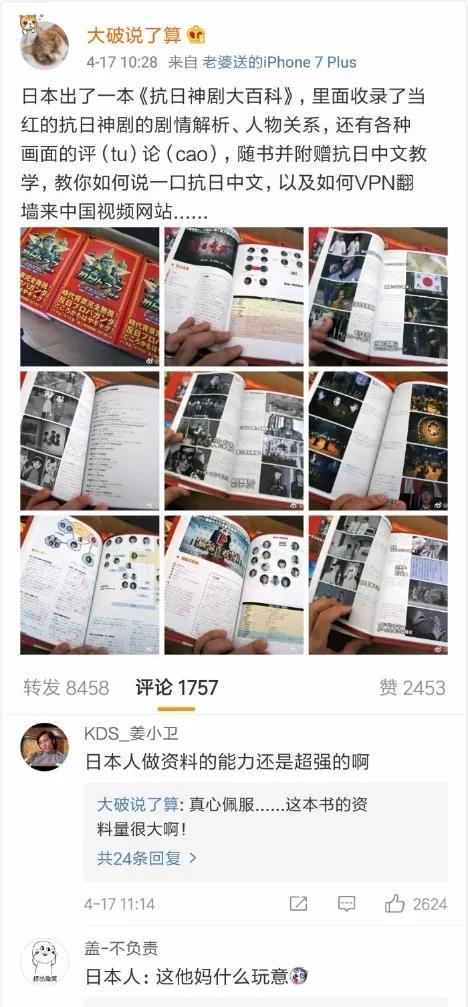
But apart from being funny, what we can also see is that, apart from comments such as "Hahaha", "What the hell", "Shame on you and sent abroad", the top one is this:
"The Japanese are still very capable of producing information."
This comment received thousands of likes, obviously because of the research spirit in the book, which can be seen everywhere.
The author combed through the plots of 21 TV series in detail, condensed the stories of 678 episodes with a total broadcast time of 30,180 minutes into pictures and texts, divided the forces of the various parties, and drew a diagram of the relationship between the characters.
Then connect the characters' relationships with more intricate story lines, and draw the main and branch plot outlines:
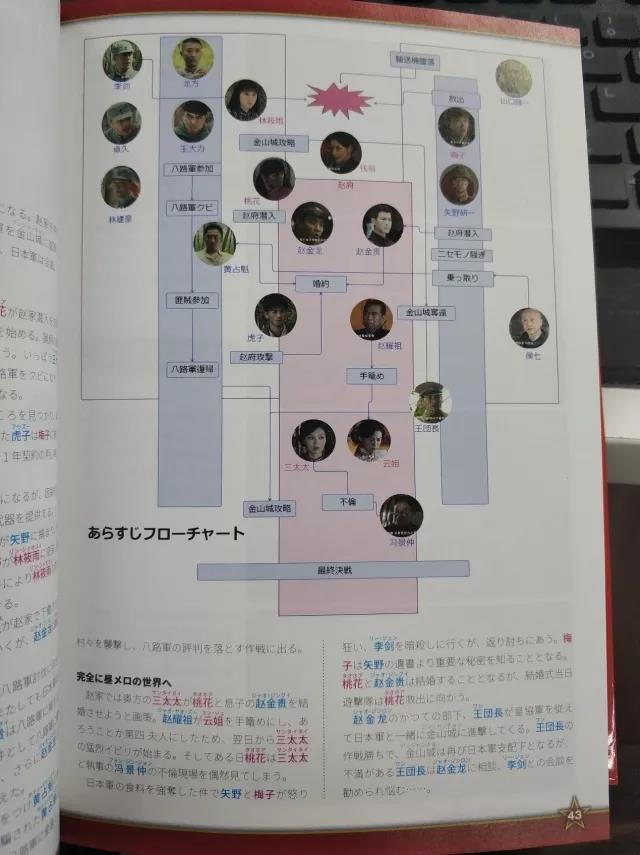
Finally, I analyzed the stills one by one, and further explained the plot next to the stills, interspersed with complaints, and helped the crew catch countless bugs:
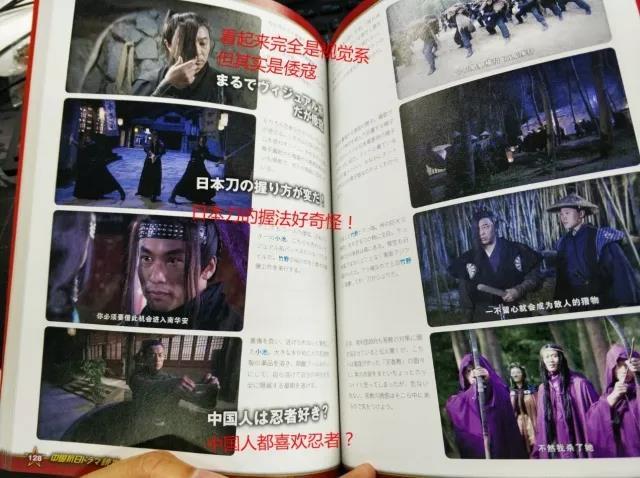
All this makes us feel that this book is not as simple as imagined.
Therefore, we also ordered a copy of "Encyclopedia of Anti-Japanese Divine Drama" on Amazon Japan, and the physical book has just been obtained. After reading it, I felt that there was quite a lot worth saying in it.
In addition to basic TV series analysis, the author has done a comprehensive job, including a lot of popular science and interview content, all of which are interspersed in the columns of the book, including but not limited to:
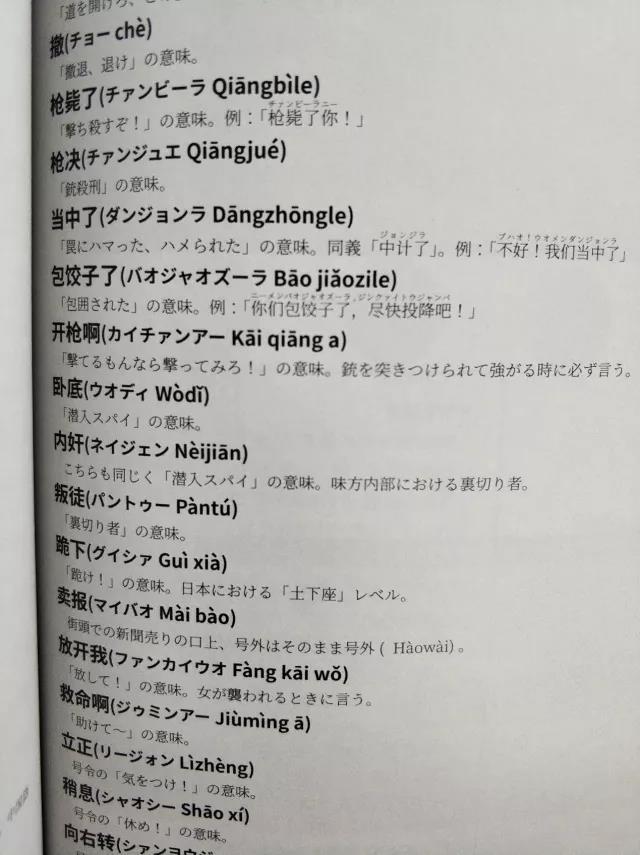
Chapter "Learning Chinese through Anti-Japanese Divine Drama", but there are some mistakes, such as "It's not good that we are among them", the Chinese line should be "We were fooled"
And through these contents, I found that the author was not just here to make fun of him.
The author has his own motives for writing this book, which are also related to certain factors of the times. Two Japanese actors who participated in the anti-Japanese drama were interviewed in the book and also expressed their feelings as a "Japanese professional".
Even this "Encyclopedia of Anti-Japanese Divine Dramas", which is popular for its comedy, also introduces a serious anti-Japanese TV drama that the author feels does not have much room to complain about, because it is indeed included in the dozens of dramas he has watched and cannot be ignored (I will talk about which one later). It can be seen that this "divine drama" defined in his book is not the other "divine drama".
These are actually quite serious things, but they are also very interesting. So we would like to answer some questions that you may be concerned about in the form of a question and answer. Not only does it introduce the fun of this book, but I also hope to show everyone these behind-the-scenes things.
Is the writing style of the book serious or naughty?
It's basically serious, but the complaints are naughty.
Here you can slightly translate a few paragraphs of the preface, and also explain the author’s thoughts first:
"When news about Chinese anti-Japanese TV dramas spreads everywhere, you can see comments such as 'I want to watch it' or 'It looks very interesting' on social networks such as 2ch and Twitter. This book wants to help everyone who has said so, slowly and easily introduce to everyone the works that the author - that is, an ordinary viewer - is interested in and has watched to the end.
"This type of TV series will never be shown in Japan. It would be my honor if I could lower the threshold for entering the world of anti-Japanese TV dramas and make it easy for those who are interested to watch. In this sense, I wrote this book focusing on various types of anti-Japanese TV dramas, simple story outlines, and interesting scene explanations. There are many characters in these stories, and they are broadcast for a very long time. Even if you can understand Chinese, it is still extremely difficult to follow the story.
"Therefore, this book illustrates the development of these stories in the form of a character relationship diagram, and outlines the key points of the main plot. In addition, a column is inserted in the book to introduce how to watch anti-Japanese TV dramas, and briefly introduces some classic "plots" for your reference. Finally, in order to make the actors and characters more consistent with the atmosphere of the actual work, and to be consistent with the subtitles on the image screenshots, their names are recorded in simplified Chinese characters."
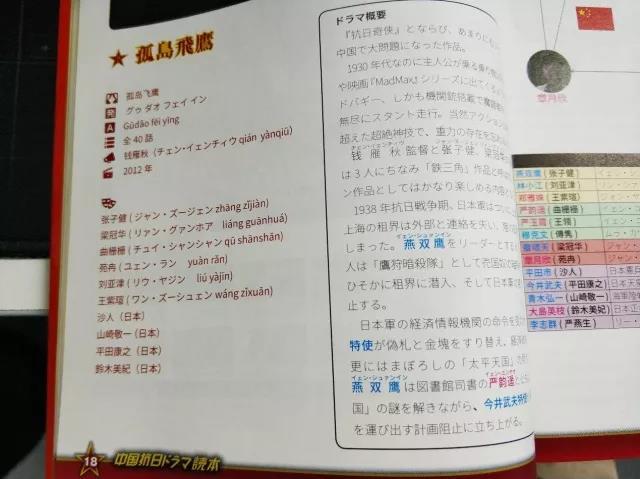
Basic information such as the title of the play, pinyin, number of episodes, director, year, starring actors, etc. are thoughtfully marked, as well as Japanese kana phonetic notation.
This style of writing is quite formal, and is how Japanese papers are written. The introduction to the plot of the TV series at the end of the encyclopedia actually continues this style of writing.
After roughly reading the entire book, I think "Encyclopedia of Anti-Japanese Divine Dramas" is both serious and ridiculing, and it is not the kind of serious nonsense, because it is a serious discovery, retelling and emphasis on the nonsense in the Anti-Japanese Divine Dramas.
As for the anti-China remarks, it can be seen from the preface and the book that the author really likes to watch anti-Japanese dramas and wants to "slowly and easily introduce" anti-Japanese dramas to other Japanese people. Although some complaints may have some misunderstandings about China and even Chinese culture, they are by no means like the Japanese right wing who deny aggression and clamor for anti-China.
The author does not regard these dramas as anti-Japanese propaganda, but as some kind of nonsensical entertainment worth sharing and studying.
Let’s talk about that anti-Japanese drama that even the author has no place to complain about?
This TV series is "The Warriors Go Out of Sichuan", also known as "The Iron-Blooded Journey". It has more than 400 reviews on Douban, with a score of 8.6.
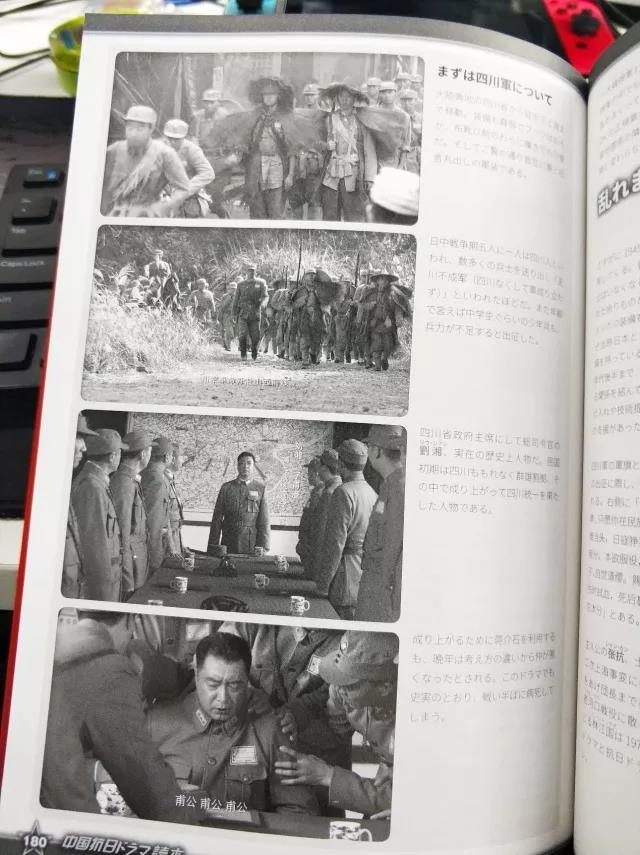
Encyclopedia's evaluation of it is: It is a serious war TV series with many real characters appearing, depicting the Sichuan Army, and almost no place to complain.
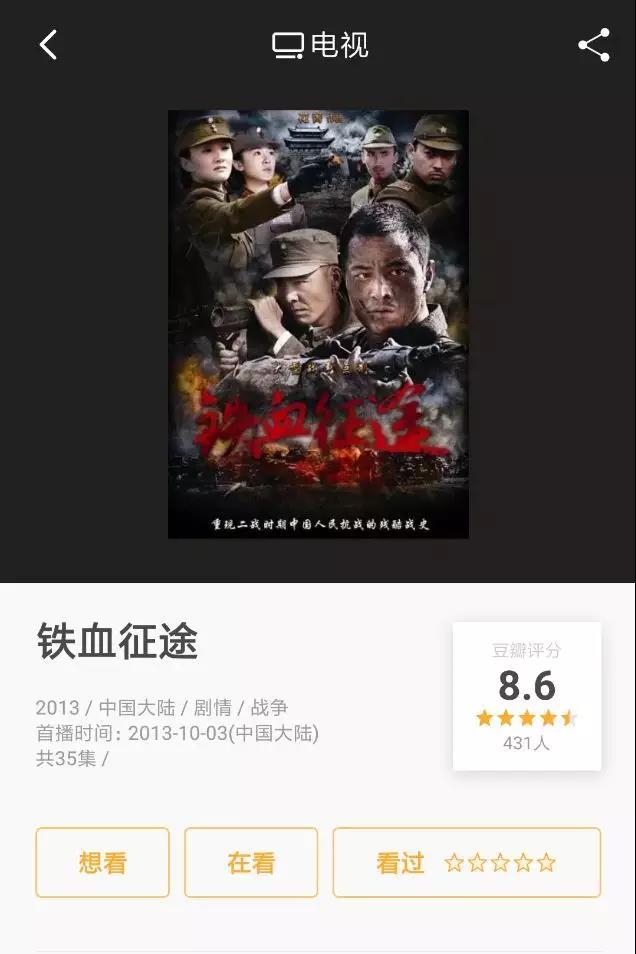
Of course, that doesn’t mean that there are no problems in “The Strong Man Out of Sichuan”. For example, in the following Japanese military order, the copy says:
The Japanese military order book that has always brought us joy (because many anti-Japanese drama documents are written in Japanese, and the names are taken from Japanese politicians, actors and even ACG characters), this time the Japanese is very good, except that the word Linfen in Shanxi Province in the lines is written on it instead of Linyi in Shandong Province.
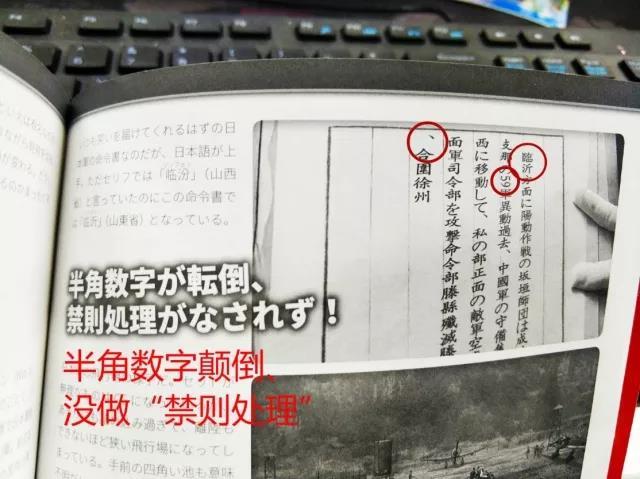
This is already the most serious complaint against the game. Unexpectedly, such a bug related to Chinese geography knowledge was discovered by Japanese friends. The comments in large characters such as "Half-width numbers are reversed" on the side are just two typographical issues: the Arabic half-width numbers in the order book are not arranged vertically and the punctuation should not be placed at the beginning of the line. These are completely details. The author of the encyclopedia really pays attention to the details.
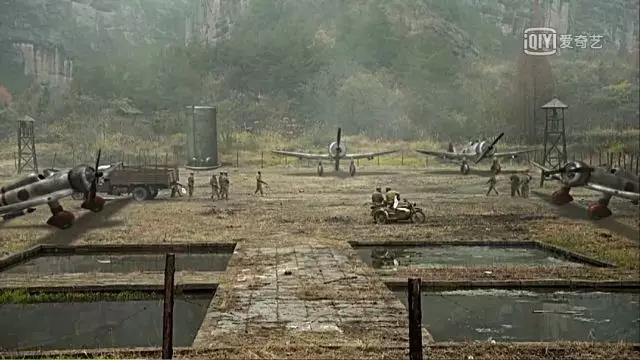
The relatively shabby CG airplane in the play
Another thing is that the plane in the drama is made of CG, the runway is too narrow, and the square pool next to it has no meaning (but these pools can be understood as fire pools commonly found in airports).
When I saw this book circulating on the Internet, some people were worried that it would be used as material for Japan's fictional history textbooks. However, after getting the book, I found that there were many instructions before and after which TV series were fictional and which were historical facts.
In the plot analysis of this TV series, the author's writing is respectful enough. For example, when describing the difficult situation of the Sichuan Army, not a single sentence was ridiculed in tone or content.
Which work has the highest rating in Encyclopedia?
Sure enough, "The Anti-Japanese Heroes" is still "tearing apart Japanese enemies".
It was the first work introduced in the encyclopedia, and was hailed by the author as "a terrifying and dazzling super-large entertainment work like a pyramid."
In the scene where the opponent tears the Japanese apart, the comments in the book are also relatively restrained:
Du Dapeng, a character with strange powers, has such a hard head that he is called the Iron Head Man by the world. In short, he is a fool who can overwhelm everything with his brute force, but his mind is empty. His "hand-killing Japanese" and related portraits in China reports can be said to be the symbol of this TV series in a sense.
Next to it is a slogan in big words: Tear apart the Japanese soldiers!
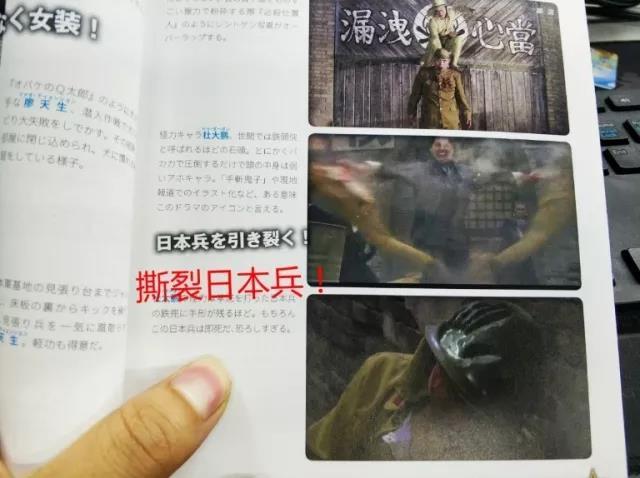
In fact, the Japanese have heard of the trick of tearing up Japanese soldiers with their hands. There was a scene in the drama-within-a-drama "Anti-Japanese Martyrs" in the Japanese comic "Academy of Evil" in which "the enemy is smashed with one's feet and the cannonballs are blocked with one's hands." They may be used to it.
Tell me about any other interesting reviews?
The table of contents of this book can be said to be the essence of the book, and the condensed evaluations are reflected in it. Here is a translation:
"Eagle": In the style of "Fist of the North Star" and "Mad Max", ATVs equipped with machine guns run rampant in the magic cave city of Shanghai!
"The Awakener" (Beast Train): The beautiful major and the Edo-knotted officer appear one after another, which makes Kyotaro Nishimura (a Japanese mystery writer who has written a series of mystery novels about trains and stations) even confused by the suspense of the "Asia" train!
"Arrow": I was expecting it to be an action movie in which the ninja army defeats Wia, but in the second half it turned into a complicated palace battle drama that is very popular among women!
"Ultimate Showdown": a showdown between Japanese and Chinese acrobatic troupes, street performers who challenged the Japanese gas war, and an anti-Japanese TV series with a messy script!
"Young Fire" (Goddess Athena): The ultimate absurd drama that was treated as something private by the producer, ignored the test of the times, and had to be remade!
"Guns N' Roses": A nuclear warhead is enshrined at a shrine, followed by a mysterious dance, a nonsensical anti-Japanese drama in the style of an American drama!
"The Battle at the Swallow Gate": Set in the early Republic of China, victory and failure, teacher-student love, friendship... It is a martial arts thief action movie in the style of a hot-blooded boy's comic!
"Codename Nine-Eared Dog": A trendy anti-Japanese drama series featuring Hong Kong and Taiwanese celebrities, infrared lasers, biometric authentication, Mitsuru Toyama (the founder of the Japanese ultra-nationalist secret group Black Dragon Society), and Kitaki Ikki (a Japanese fascist)!
"Towering Xing'an Mountains": An anti-Japanese forestry TV series produced with a low budget from the Inner Mongolia Autonomous Region, telling the story of three eras including the Anti-Japanese War period!
"Mission Impossible": An uncle who specializes in anti-Japanese dramas treated his wife as the heroine and mobilized a luxurious cast, but in the end it failed!
"Martial Tigers": The monks of the Southern Shaolin Temple fight against the corrupt court of the late Ming Dynasty and the Japanese pirates. This is not an anti-Japanese war, but an anti-Japanese drama!
"Iron-Blooded Blade": An anti-Japanese comedy with a combination of Japanese military officers who are just as fun as Mancai and constantly make jokes, and also have gorgeous action elements!
"New Dragon Crossing the River": A Kung Fu action TV series in which Hong Kong stars perform in Shanghai, the enemy is a large-scale gangster and Japanese spies!
"Strange Town": An anti-Japanese TV series that won the Excellence Award in the Recording Department but was suspended due to blood splatter and excessive brutality!
Where did the author watch these anti-Japanese dramas?
In the guide that teaches Japanese people how to scientifically watch Chinese TV series online, the author recommends some websites. He also mentioned many times in the book that these websites were basically his main way to watch anti-Japanese dramas, most of which were on CCTV, as well as Youku, Baidu Video, PPTV, etc.
In the references and websites at the end of the book, Iron Blood Network and Baidu Encyclopedia also appear.
The encyclopedia doesn't mention "Bright Sword"?
It is indeed not mentioned in the text, but the author cannot fail to read such a well-known work, so the author also has an explanation in the preface:
"In order to introduce various anti-Japanese dramas in detail, and due to page and space restrictions, quite famous works such as "Bright Sword" and "Arrow on the String" have not been published. If there are still opportunities for publication in the future, I would like to continue to introduce them."
Because the standards of "divine drama" mentioned by the author are different, it is really possible that the author will continue to introduce "Bright Sword".
It can be seen from the author's Twitter and blog that he is still studying various anti-Japanese TV dramas.
What has attracted a lot of attention recently is "Underground Traffic Station" directed by Yingda. It is a very classic comedy. His evaluation is "an anti-Japanese comedy that will be hilarious if you understand Chinese." You can look forward to it.
By the way, his Twitter ID is Minami Yunko, a well-known Japanese female spy
What did "Japanese professional" Miura Kenichi say in the interview?
Along with Koji Yano and Tenma Shibuya, the well-known actor Miura Kenichi, who is known as a "Japanese professional", participated in "Strange Town" and "Guns N' Roses" among the 21 anti-Japanese dramas in Encyclopedia. The author took this opportunity to interview Miura.
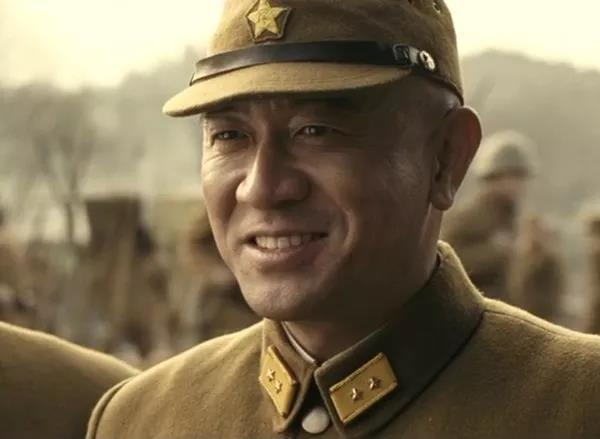
Miura made a very interesting statement in the interview. He believed that the outbreak of anti-Japanese dramas was due to the Hong Kong TV and film industry's march into the mainland. Chinese directors felt that anti-Japanese dramas were complacent and needed innovation, while Hong Kong and Taiwan directors continued the characteristics of Hong Kong films and felt that they should be more interesting. The two sides reached an agreement.
Indeed, many directors of anti-Japanese dramas are from Hong Kong and Taiwan.
For example, Liu Shiyu, the director of "Anti-Japanese Heroes" (Tearing up Japs with Hands), and Yu Mingsheng, the director of "Arrow on the String" (Archery), are both from Hong Kong. Lin Jianzhong, the director of "Iron Mission" (Stone Masturbation), is from Taiwan. Li Hantao, the director of "Wutai Mountain Anti-Japanese Legend" (30 Nuns Kill Japs), is a Hong Kong director who graduated from National Taiwan University.
Miura also told some anecdotes that happened after filming the anti-Japanese drama. He said that Chinese people always ask him, after filming an anti-Japanese drama, what will happen to the Japanese when he returns to Japan?
He always answered like this: "
When I go back, I am often asked by my classmates and friends, if I play a bad guy in a Chinese anti-Japanese drama, will I be abused by the Chinese? In fact, in China, everyone is also worried about what will happen to me when I go back to Japan. Therefore, I have received concern from both sides... In fact, I will not be hurt by either side. "
Miura also said that he often hears from Chinese audiences and producers, "You are obviously a capable actor, why do you always play such stupid roles?" At the same time, China's radio and television are also criticizing anti-Japanese dramas, so he feels that Chinese people are increasingly pursuing the quality of such TV dramas.
Has the author been to China? Does he understand China at all?
The author has been to China, and it was during a business trip in China that he discovered the beauty of the anti-Japanese drama.
As for whether he understands China, at least he knows Taobao:
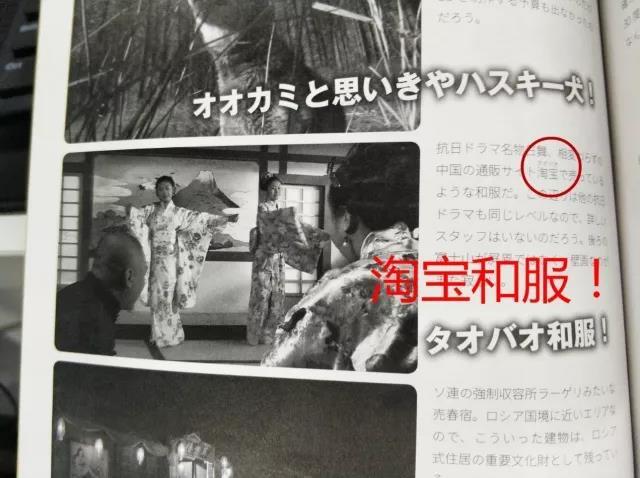
We also know that the palm technique of "Huagu Gumian" comes from Jin Yong's "The Deer and the Cauldron":
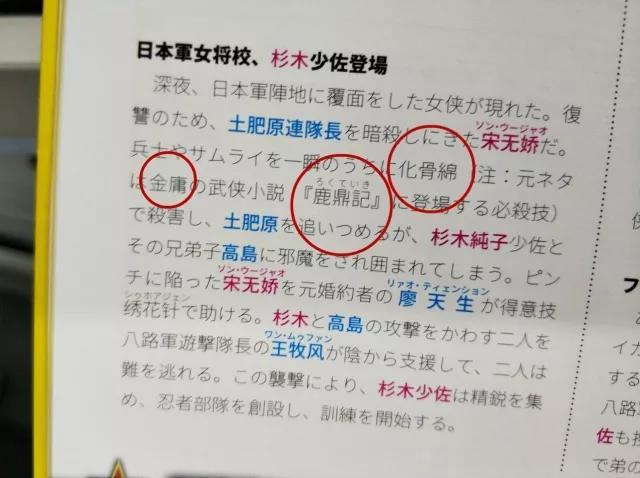
I have indeed done my homework. You may not be able to say that you are a master of China, but you have a good understanding of it.
So what kind of person is the author? Is he a university professor who specializes in cultural studies?
Not really.
The author, Ubo Iwata, is just an ordinary office worker in Aichi Prefecture, Japan. He is engaged in "information system-related work and does everything."
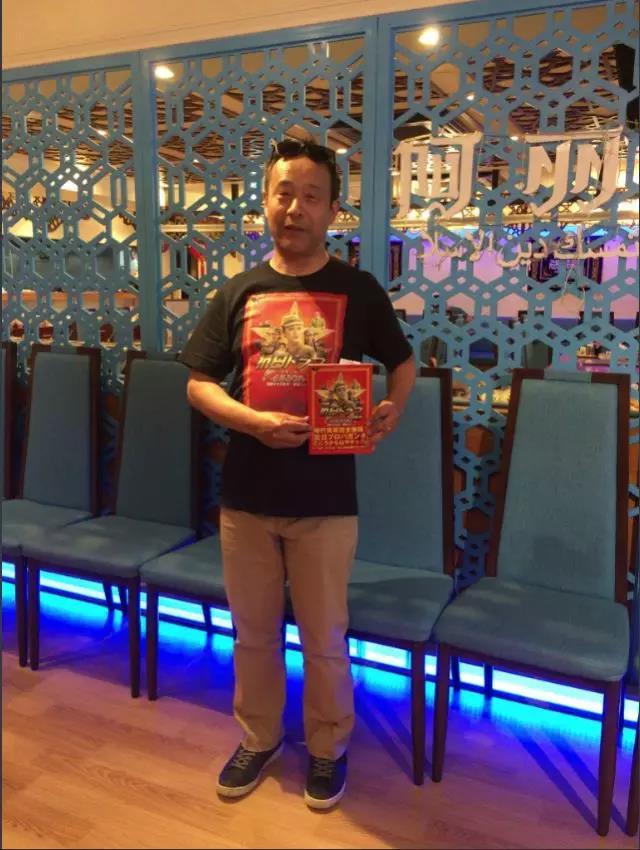
The author himself, and his customized T-shirt of the same style as Encyclopedia
By chance, he went to Shanghai on a business trip and "encountered" an anti-Japanese drama. He also encountered constant fraud on the road in Shanghai. He felt that it was necessary to learn Chinese, so he was recommended by colleagues in the same group to learn Chinese through Chinese TV dramas.
As he watched, he found these weird anti-Japanese TV dramas "uniquely charming", so he lost control and began to "learn Chinese from the anti-Japanese dramas." His level improved by leaps and bounds, and he soon became better than his colleagues. Now he can basically pass the fake ones as real ones in the shops frequented by Chinese people in Nagoya.
Iwata now comes to China for backpacking trips every year. He took advantage of the anti-Japanese drama to really fall in love with the charm of China.
Apart from being funny, what does the author think of the anti-Japanese drama?
What he said is to "appreciate generously".
In the preface, he said:
“The anti-Japanese TV dramas that have become a hot topic between China and Japan (mostly with bad connotations) are, in the final analysis, just TV dramas.
Scenes like Detective Daimon in "Western Cops" (Japanese police dramas of the 1970s), using shotguns to kill criminals from a distance from a helicopter, are useless. They are all fiction. "
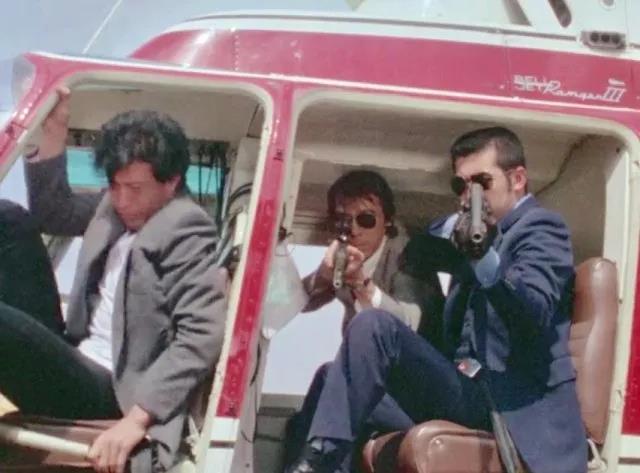
"Western Police" stills
The author feels that TV dramas are relatively "boring and vulgar" no matter which country they are in. However, TV dramas in the past were "boring but interesting". Now, for some unknown reason, they have become "boring and even less interesting." This has led to the "television disengagement" of Japan's younger generation, and the average TV viewing time among young people has continued to decline.
"I spent my childhood in the 1970s and 1980s, which was the heyday of TV dramas. As I said before, it seems that it is impossible for our country to produce a TV series like "Western Police" that is budgeted and boring now? I feel a little lonely."
On the contrary, the explosion of China's anti-Japanese dramas and their ratings are "the same as Japan's TV dramas in the past." The anti-Japanese dramas replaced "Japan's boring action dramas that are now extinct" and soothed his loneliness.
10
What do other Japanese readers think of the anti-Japanese drama?
Take the Asahi Shimbun’s book review on May 26 as an example.
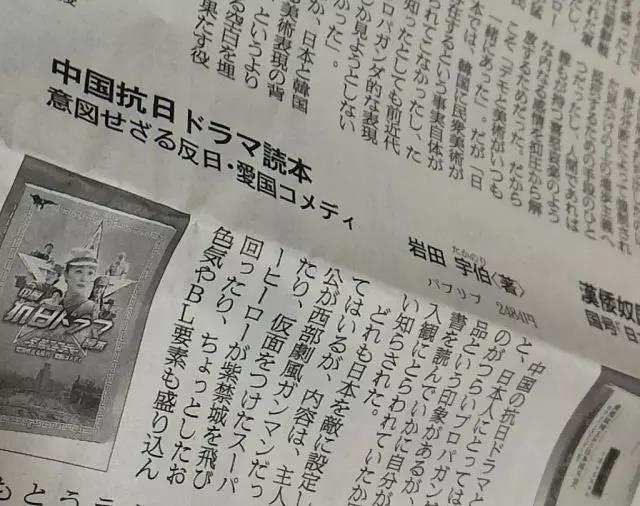
The Asahi Shimbun book review was published in the encyclopedia
Book reviews said that this book broke the reviewer's inherent impression. I originally thought that the anti-Japanese TV series were all anti-Japanese propaganda, "I didn't expect it to be such a ridiculous and entertaining action film... It reminds me of the movie in World War II where the Axis powers drove UFOs to attack from the back of the moon." (It should refer to the 2012 science fiction war comedy film co-produced by Finland, Germany, and Australia. It tells the absurd and funny story of the Nazi German army who escaped to the moon to build a space fleet after being defeated in 1945, and attacked humans in an attempt to occupy the earth.)
As for other Japanese readers, many are also "hahaha". What the hell is the anti-Japanese drama like? In recent years, it has become more and more known to more Japanese people. It is the kind of "old story" that makes you happy every time you watch it.
But the book "Encyclopedia of Anti-Japanese Divine Drama" has become an Internet celebrity in China. This is a new thing, and they are even happier when they see it.
11
So, do you have any recommendations for similar books?
I'm surprised that no one has mentioned this matter despite the fact that Encyclopedia has been popular for so long.
Opening the cover of the "Encyclopedia of Anti-Japanese Divine Drama", there are two recommended books on the left side: "The Great Illustrated Book of Chinese Amusement Parks: Northern Chapter" and "The Great Illustrated Book of Chinese Amusement Parks: The Central Chapter".
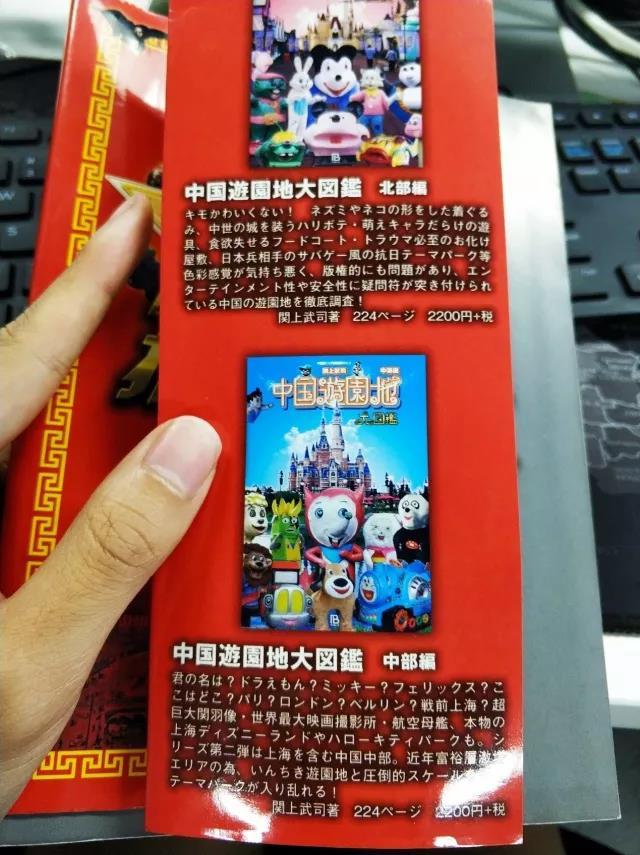
"Amusement Park" is an amusement park, and you will know what it is about just by looking at the title of the book. But if you take a closer look at the covers of these two books, if you can’t see clearly, there are big pictures below:
These two books also contain the same detailed information and complaints as the "Encyclopedia of Anti-Japanese Dramas":
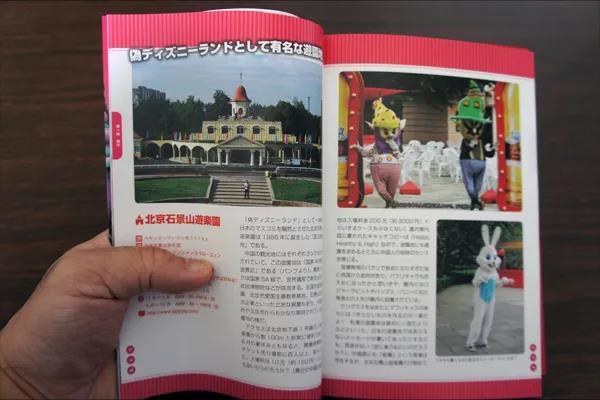
Beijing Shijingshan Amusement Park
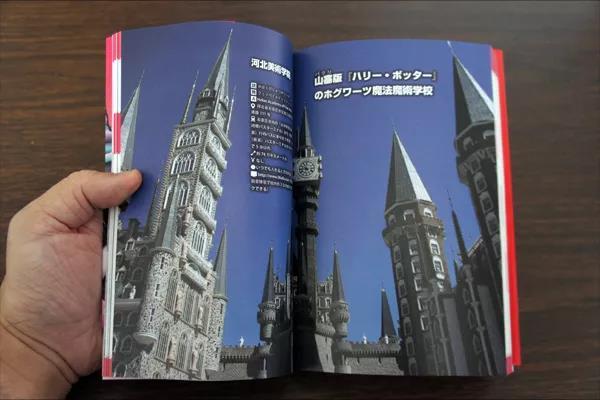
Hebei Academy of Fine Arts
These are two love letters written by a Japanese friend to copycat amusement parks in mainland China. He spent five years visiting nearly 100 Chinese cartoon-themed amusement parks and was impressed by the degraded versions of Disney and other animated characters, so he bravely recorded it all.
But that is another story.
| Friday, March 13, 2026 |
NO.1 Active equity funds once again become “hot hits”
On March 11, Yongying Fund issued an announcement on the effectiveness of the Yongying Ruijian Growth Hybrid Fund contract. The announcement shows that the product’s fundraising period is from February 26 to March 6. During the fundraising period, the net subscription amount reached 5.867 billion yuan, and the total number of effective subscription households exceeded 230,000.
It is understood that the fund manager of the fund is Li Wenbin, who has 15 years of securities-related experience and more than 8 years of fund management experience. He is currently the co-general manager of the equity investment department of Yongying Fund. Current management products include Yongying Technology Driven, Yongying Ruijian Enterprising, etc.
NO.2 "Fixed Income +" fund issuance scale has exceeded 30 billion yuan during the year
Wind data shows that the total issuance scale of newly established "fixed income +" funds since 2026 has exceeded 30 billion yuan. Looking over a long period of time, the scale of "fixed income +" has steadily increased over the past year, and has maintained an upward trend for four consecutive quarters.
Wind statistics show that since 2026, as of March 10, 45 "fixed income +" funds have been opened for subscription (only partial debt hybrid funds and secondary debt bases are counted, and initial funds are counted). Most of the products that have completed fundraising are early-finished. For example, Southern Yixiang Steady Timber's fundraising ended in just 3 days, and BOC Zhaoxiang's 6-month holding period hybrid ended in just 1 day.
NO.3 Fund companies treat “lobster farming” cautiously
Recently, the open source AI agent OpenClaw (commonly known as "Lobster" in the industry) has become popular in the financial circle, and the public fund industry has paid close attention to it.
Due to issues such as data security and open permissions, most fund companies are cautious and prohibit the deployment of office equipment, but recognize its value in basic investment research work.
It is reported that some companies are exploring through cloud deployment, sandbox testing, etc., and many practitioners are testing the waters privately. Leading organizations are steadily exploring new boundaries of AI applications while adhering to the bottom line of safety.
NO.4 Zhang Lu and Yan Siqian added positions to Ningbo Huaxiang
On March 11, the latest list of the top ten shareholders disclosed by Ningbo Huaxiang showed that the Yongying Advanced Manufacturing Smart Selection Hybrid Fund managed by Zhang Lu and the Penghua Carbon Neutral Theme Hybrid Fund managed by Yan Siqian appeared among them, ranking as the company's third and ninth largest shareholders respectively. As of March 4, the number of shares held was 35.1542 million shares and 7.2231 million shares respectively.
According to the data disclosed in the fund's 2025 quarterly report, as of the end of 2025, the Yongying Advanced Manufacturing Smart Selection Hybrid Fund held 24.6924 million shares of Ningbo Huaxiang. In comparison, the fund has added 10.4618 million shares in the first quarter.
The Penghua Carbon Neutral Theme Hybrid Fund is a new member of the top ten shareholders. The fund began to build a position in Ningbo Huaxiang in the first half of 2025, and as of mid-2025, the number of positions held was 5.0611 million shares.
NO.5 Jiao Wei resigned as fund manager of two products
On March 12, Yinhua Fund announced that due to changes in work arrangements, Jiao Wei resigned as the fund manager of Yinhua Fuli Select Mix and Yinhua Fujiu Food and Beverage Select Mix (LOF) on March 10. The above funds will be continued to be managed by Zhang Jian, Qin Feng, and Wang Limin, who previously jointly managed the funds respectively.
The announcement also showed that Jiao Wei continues to serve as the fund manager of Yinhua Fuxing Central Enterprise Hybrid Fund, Yinhua Fufu Selected Three-Year Hybrid Fund, and Yinhua Fufu Theme Hybrid Fund.
According to information from Tiantian Fund Network, the total assets of Jiao Wei’s current fund have reached 10.662 billion yuan. The two funds he resigned this time have been managed for more than 4 years, and their returns during their tenure have both fallen by more than 40%.
NO.6 ETF market review on the previous trading day
On the last trading day (March 12), the market bottomed out and rebounded. As of the close, the Shanghai Stock Exchange Index fell 0.1%, the Shenzhen Component Index fell 0.63%, and the ChiNext Index fell 0.96%. The turnover of Shanghai and Shenzhen stock markets was 2.44 trillion yuan, a decrease of 66.5 billion yuan from the previous trading day. In terms of sectors, coal, wind power equipment, chemical fiber and other sectors were among the top gainers, while shipbuilding, aerospace, engineering machinery and other sectors were among the top gainers.
Specifically, the coal ETF led the increase of 5.28%. The concept of green power has exploded. Green Power, Huadian Energy, GCL Energy, Datang Power and other stocks have hit their daily limits, and power-related ETFs have strengthened.
On the downside, the construction machinery ETF pulled back across the board, with the largest drop being 3.84%.
| Friday, March 13, 2026 |
NO.1 Guangdong’s private enterprises rank among the top in the country in terms of re-loans
"Southern Network" reported on March 12 that data from the Guangdong Branch of the People's Bank of China showed that as of the end of February 2026, Guangdong Province had provided a total of 34.4 billion yuan in re-loans to private enterprises, ranking among the top in the country.
Comment: Refinancing injects vitality into Guangdong's private economy, which not only alleviates the difficulty and high cost of financing for private enterprises, but also provides financial support for the economy to get off to a good start in the first quarter, helping Guangdong consolidate its status as a major private economy province.
NO.2 Guangzhou-Shenzhen-Hong Kong high-speed rail cross-border passenger flow exceeded 100 million
"Southern Network" reported on March 12 that the Guangzhou-Shenzhen-Hong Kong high-speed rail has been in operation for more than seven years, and the cumulative cross-border passenger flow has exceeded 100 million. The average daily cross-border passenger flow has climbed from less than 40,000 to nearly 100,000, and the number of direct cities has expanded from more than 40 to 110.
Comments: High-speed rail helps accelerate business commuting, cross-border consumption, and technological innovation collaboration. "Twin-City Life" promotes the efficient flow of factors and provides hard-core support for the integration and high-quality development of the Greater Bay Area.
NO.3 Guangzhou ranks as China’s preferred investment destination
"China Guangzhou Release" WeChat public account reported on March 12 that the "Special Report on the Economic Situation of South China in 2026" was recently released in Guangzhou. Harry Sayadin, chairman and president of the American Chamber of Commerce in South China, said that Guangzhou has ranked as China's preferred investment destination in the survey for nine consecutive years (accounting for 38%).
Comment: With its complete industrial chain, efficient government services, and its status as the core hub of the Greater Bay Area, Guangzhou continues to lead the way. Superimposed on Guangdong’s series of foreign investment promotion policies, it has become the first choice fulcrum for foreign investment to deploy in southern China and radiate across the country.
NO.4 The world's first accelerator-driven transmutation research device is accelerating construction in Huizhou
"Guangdong Release" WeChat public account reported on March 12 that the world's first accelerator-driven transmutation research device has been accelerated in Huizhou recently. This technology is expected to shorten the life of nuclear waste to less than one thousandth, making nuclear fission energy a green energy that can last for more than a thousand years. Now, the device has entered a critical period for the installation of core equipment.
Comments: The implementation of the project will promote the development of Huizhou’s nuclear technology, high-end equipment, and new materials clusters, and provide hard-core support for Guangdong to build a green energy technology innovation highland.
NO.5 Shenzhen Stock Exchange Quotes
On March 12, the Shenzhen Component Index closed at 14374.87 points, down 0.63%.
""
 78-year-old Zhang Ruian Is Mostly Empty-hearted: His Younger Brother Left First, The 34-year Relationship Between Brother And Sister That Has Been Together Day And Night Is Tearful2026-02-14Comments(0)