Yongan Futures Quantitative Investment Forum
Yongan Futures Quantitative Investment Summit
Yongan Futures Quantitative Investment Summit
On March 5, the fourth session of the 14th National People's Congress opened in the Great Hall of the People in Beijing. Premier Li Qiang of the State Council mentioned "computing and computing collaboration" for the first time when delivering his government work report.
The report proposes in the "Step up to cultivate and expand new driving forces" section that we should implement new infrastructure projects such as ultra-large-scale intelligent computing clusters and computing and power collaboration, strengthen national integrated computing power monitoring and dispatch, and support the development of public cloud.
With the development of large models, especially the increase in parameter scale and context length of large models, the demand for computing power is also increasing day by day. This has also led to a relative shortage of electricity, especially green electricity, and energy storage is a "stabilizer" that regulates the fluctuations of green electricity.
The concept of “computing and electricity collaboration” is hot
On March 6, the concept of “computing and computing collaboration” gained momentum rapidly. Jinkai New Energy's "6 days and 3 boards", Tongli Tianqi, China Energy Construction, GCL Nengke, and Yuneng Holdings hit the daily limit, and Henghua Technology also followed suit. Among them, Jinkai New Energy and GCL Nengke are clean energy operators, while Henghua Technology has long provided power system planning and design services to power grid companies and power generation groups.
According to the "Research Report on Coordinated Development of Computing Power and Power (2025)" of the China Academy of Information and Communications Technology, computing power synergy is supported by new power systems, guided by the high-quality development of computing infrastructure and the construction of a national integrated computing network, comprehensively considering all factors and the entire life cycle, deepening intelligent dispatching, source network load storage, new power supply and backup, green power aggregate supply, etc. Technological and mechanism innovation enables the two major productivity forces of computing power and electricity to achieve global optimization at the levels of industrial planning, production operations, resource dispatching, and market systems, and create a cluster of green computing power centers with advanced technology, supply and demand matching, green, low-carbon, safe and reliable, support the flexible adjustment and digital transformation of the power system, and jointly promote the high-quality development of the digital economy and energy economy.
It can be seen that "computing and electricity collaboration" first requires intelligent dispatching, and secondly it requires green and low carbon. Henghua Technology meets the smart dispatch standards, while Jinkai Xinneng and GCL Nengke meet the green and low-carbon standards.
Based on the development trajectory of artificial intelligence technology, China Academy of Information and Communications Technology has constructed three differentiated development scenarios: high, medium and low. Under the high scenario, artificial intelligence will grow explosively, and my country's computing power centers will consume more than 700 billion kilowatt-hours of electricity in 2030, accounting for 5.3% of the entire society's electricity consumption; under the medium scenario, artificial intelligence will grow at a constant rate, and my country's computing power centers will use Electricity may exceed 400 billion kilowatt hours, accounting for 3.0% of the entire society's electricity consumption; under the low scenario, artificial intelligence grows slowly, and the electricity consumption of my country's computing power centers will reach about 300 billion kilowatt hours in 2030, accounting for 2.3% of the entire society's electricity consumption.
It is worth noting that domestic computing power’s demand for electricity does not match the supply of green electricity. According to the above report, as of the end of 2023, the number of racks in the eight major hub nodes accounted for more than 70% of the country. Among them, the national proportions of the number of racks in use in Beijing-Tianjin-Hebei and the Yangtze River Delta were 21.5% and 24.5% respectively. The remaining six major nodes accounted for 25.5% in total.
In other words, the demand for computing power is mainly concentrated in the Yangtze River Delta and the Beijing-Tianjin-Hebei region, while the supply of photovoltaic and wind power is mainly concentrated in Xinjiang, Inner Mongolia, Gansu, Qinghai and other regions.
The mismatch between computing power and green power supply further highlights the scarcity of smart dispatch and clean energy operators.
Energy storage becomes the “guardian” of green electricity stability
It is reported that the coordinated development of computing power and power includes two key elements: computing power system and power system. The key entities of the computing power system include computing power suppliers and computing network operators; the power system mainly includes power generation parties, power grid parties, and energy storage parties.
At the power generation level, green power power plant manufacturers are mainly large central state-owned enterprises such as the "Five Big and Four Small"; at the power grid level, the main domestic ones are the State Grid and China Southern Power Grid. Energy storage is widely distributed, including independent energy storage power stations, distributed energy storage and household storage.
For the first time that "computing and electricity synergy" was written into the government work report, Zhu Junpeng, president of the Jiangsu Energy Storage Industry Association, told the "Daily Economic News" reporter: "This is definitely a major benefit. Behind computing power is electricity, and 'computing and electricity synergy' is an important direction for the development of new productivity."
He said: "The inclusion of 'computing power synergy' in the government work report shows that the coordinated development of computing power and power has become a top-level design at the national level. At present, China has the most abundant power in the world and the best power infrastructure."
What is the role of energy storage in “computing and electricity collaboration”? Zhu Junpeng said: "Energy storage is the guardian of power supply stability, the regulator of green power consumption and the core of business model innovation."
The China Academy of Information and Communications Technology also stated that on the one hand, energy storage systems can participate in power grid peak regulation and can effectively utilize market-based mechanisms such as peak-valley electricity price differences to obtain economic benefits for computing power companies; on the other hand, energy storage systems can be used as emergency power sources to improve the reliability of power consumption in computing power centers.
However, the energy consumption of computing power centers is huge. At this stage, energy storage capacity is difficult to meet the demand for megawatt-level electricity. The high cost of energy storage projects is also one of the main obstacles to industry development. Although technological progress has alleviated this problem to a certain extent, the pressure on initial investment and operating costs still exists.
daily economic news
The famous economist Lang Xianping was a professor at Wharton School of Business, New York University and University of Chicago in the United States. He is currently a visiting professor of finance at the Chinese University of Hong Kong. "Lang Xianping Said: How to Start Reform Again" is his latest work on interpreting China's reform signals. This article is an excerpt from the core ideas of the book.
The situation China is facing today is an unprecedented difficulty, called stagflation. Stagnation means economic stagnation; inflation means inflation. If you look at the data from the Bureau of Statistics, it seems that this is not the case. The GDP growth rate was 7.8% in 2012 and 7.6% in the first half of 2013, the highest in the world. The inflation rate has been between 2.1% and 2.7%, which is almost the lowest in the world.
If we only look at the data from the Bureau of Statistics, we will feel that we are living in happiness. Whether you believe it or not, I don’t believe it anyway. The "Keqiang Index" named after Premier Li Keqiang shows that GDP growth has reached its lowest point in 2013 - 4.02%. Among them, the growth rate of train transport capacity is particularly outstanding, with 9.3% in 2010 and 8% in 2011. These two growth rates were similar to the GDP growth at that time. Let’s look at the train capacity growth in 2012. For the first time in China’s history, it was negative, minus 0.8%. What about the first half of 2013? Even scarier, negative 2.9%. If China's train capacity growth rate is negative, how can GDP growth be positive? Our train freight is almost the cheapest, far lower than the market price. If it has declined and the economy is still growing, there should be something wrong with our statistics.
As for the inflation rate, how is this figure of 2.1%~2.7% possible? The growth rate of our money printing has averaged 20% in the past five years. You don’t need to understand economics to know that inflation will be as high as the money is printed indiscriminately. So I suspect that the Bureau of Statistics has miscalculated the decimal point. 21% to 27% is relatively credible.
Therefore, today's China: first, GDP may have negative growth and economic development will stagnate; second, the inflation rate may exceed 20%. What does it mean to constitute "stagflation"? It means that China's economy is leading the world into depression, and it is the most terrifying depression - stagflation. This is why from March 2009 to mid-2013, the U.S. stock market rose by 136% and Germany by 121%. Only China’s stock market has fallen for six consecutive years. We are almost the only country in the world whose stock market has fallen continuously. Many people are talking nonsense, saying that our stock market does not reflect the fundamentals. They are wrong. Our stock market completely reflects the fundamentals, which reflects what I mentioned earlier that China has led the world and became the first country to enter depression, and it is the most terrifying depression - stagflation.
Reaganomics
Facing the terrible stagflation, what should the new government do? Moreover, it is impossible to solve two problems at the same time. We can only take care of one, either solving "stagnation" first or solving "expansion" first. To solve "stagnation" first is to continue to stimulate economic growth; to solve "inflation" first is to combat inflation. And you can only do one thing, you can't do two things.
Today's China is like a person who is about to die of thirst in the desert. This person who is about to die of thirst has two choices. The first option is to solve the "stagnation" first and run forward under the bright sun to find water. This is the policy implemented by the government in the past ten years, the policy of ensuring eighty percent; the second option is for the person to quickly find a shady place to wait until the sun goes down and the weather is not so hot, and then go out slowly to find water at night. This is to solve the "bloat" problem first. I once asked many of my friends and students which path do you think our government should choose, and everyone almost unanimously said that we should choose the second path.
Yes, it is possible that the new government will choose the second path. Based on historical experience, the second path is more likely to solve stagflation. This historical experience is "Reaganomics". After Reagan took over as president, he faced the most terrifying depression in the United States, that is, stagflation, the same as China today. He also took the second path and made four major moves to solve stagflation step by step. His original policy is today called "Reagan Economics."
When Reagan took office in 1981, U.S. inflation was as high as 13.5% and the unemployment rate was as high as 7.6%. It was because of this stagflation that President Carter resigned. Reagan's first move was to combat inflation. He unexpectedly raised interest rates to 21%, and even bank lending rates were as high as about 20%. This move is too cruel. After this move, the entire economy becomes even more depressed, because in order to solve the "inflation", the "stagnation" must be worsened, making the economy even worse. So by the end of 1982, the United States was in an unprecedented Great Depression, which was probably even more severe than the Depression of 1929, but inflation came down. In 1982, the inflation rate was 5%, and in 1983, the inflation rate was 3%. This harsh approach did control the "bloating", but it was severely criticized by many people at the time.
But his strategy was successful after 1983. Greenspan gave him the most pertinent evaluation: "President Reagan is the father of economic vitality in the United States in the past 20 years" because the second path he took was very successful. Control inflation first, and then go back to solve the stagnation problem and promote economic growth. So there is the second plan: a major tax cut, which reduces the corporate tax rate from 50% to 28%, almost half, and the personal income tax from 46% to 34%. As a Republican, it is not easy to do this with the House and Senate controlled by Democrats. The tax cuts are so large that the United States may have the lowest tax rate among developed countries. This is the economic miracle created by President Reagan.
Taxes have dropped, companies have made more money, and people have more disposable income. Companies began to hire more employees in the hope of making more money, and people began to increase consumption when they had more money. After the tax cuts, companies and individuals made more money, the tax base expanded, and tax revenues increased. Therefore, tax revenues almost doubled after 1983, exceeding US$1 trillion. So the U.S. economy is slowly starting to grow again.
The third party began to pay more attention to market mechanisms and solve problems through market mechanisms. How did the "inflation" in the United States come about at that time? As the price of oil doubled several times, it led to inflation. As a general rule, what would our government do? It must be to control prices. We like to control the most, such as regulating housing prices, limiting prices, and restricting purchases. We usually block rather than relax, but inflation cannot be suppressed by pressure. This is why if you want to suppress housing prices, the more you suppress them, the more prices will rise, because this completely violates the economic laws of the market.
What Reagan did was to completely return to the market's price adjustment mechanism, liberalizing prices and restrictions to allow oil to rise. American oil companies found that prices had risen so high that they could make greater profits from producing oil, so they began to exploit more oil fields locally or overseas, hoping to make the pie bigger. As more oil fields are exploited and oil production increases, prices fall. Reagan allowed prices to skyrocket. The result was an increase in supply, and prices fell instead. This is called respecting the market mechanism and respecting the price function.
The fourth step is to break the monopoly. To give an example, Reagan abolished price controls and route controls in 1982 and 1983 respectively, which gave many small airlines the opportunity to compete. In the end, competition intensified and ticket prices dropped by 30%. Breaking the monopoly will reduce costs and lower prices, which is more conducive to economic promotion.
These four measures saved the U.S. economy and allowed the U.S. economy to develop in a straight line for more than 20 years, making Reagan one of the greatest presidents in the United States.
Xi and Li’s New Economic Deal
The new policies of Xi and Li represent the significance of the times. They are a change from the crazy way of boosting GDP, which used to be running under the sun in search of water. Regarding this transformation, I think there is at least a successful precedent in the past - Reaganomics. Let me compare President Reagan’s four axes with the four axes of our new administration.
The first step is to control "inflation". President Reagan raised interest rates. As for us, we launched a "money shortage" on June 20, 2013. Through the "money shortage", we found that the inter-bank lending rate was close to 30% on June 20, even higher than Reagan's time. This short-term phenomenon has indeed suppressed the momentum of banks' arbitrary credit granting and local governments' borrowing money. Therefore, total social financing dropped by 43% in June 2013 to only 1.04 trillion. It seems that the new government is considering suppressing inflation first. But when data came out in July, the inflation rate was 2.7%, the highest since 2013. In the first three months, it was 2.1%. Therefore, it is more necessary to suppress inflation, but more efforts are needed.
Compared with Reagan’s second round of tax cuts, we began to try to stimulate economic growth through “replacing business tax with value-added tax”. Changing business tax to value-added tax will generally result in a reduction in tax rates. In July last year, the central government announced that companies with an annual income of less than 20,000 yuan would be tax-free. This tax exemption is not large enough. Our new government should step up its efforts in this regard and significantly reduce tax rates.
Third, respect the market mechanism. Reagan was focused on oil, our new administration is focused on coal. The price of coal has been very low recently, many coal plants have closed down, and some mayors have even taken the lead in selling coal. According to past practices, it is very likely that coal groups will ask the central government to ban coal imports. Coal prices have fallen because foreign coal is particularly cheap, and its imports have impacted domestic coal prices, causing prices to plummet.
Why were coal prices so high before? After our research, we found that there are a total of 88 taxes and fees on our coal. Excessive taxes and fees make China's coal uncompetitive. What has the new government done? Allowing international coal to enter China will impact local governments at low prices, forcing reforms and forcing local governments to cancel taxes and fees. I think this approach is somewhat similar to President Reagan's approach. It is highly worthy of recognition to force reforms through adjustments to the price mechanism and respect the market mechanism.
Fourthly, in terms of breaking down the bureaucracy and monopoly system, the new government has done one thing that is very meaningful, which is to push forward the establishment of the Shanghai Free Trade Zone against all opinions. The real opposition actually comes from the "one bank and three associations". Why? Because the Shanghai Free Trade Zone is about financial reform, it includes four major items: interest rate liberalization, exchange rate liberalization, opening up of banks to competition, and the establishment of futures delivery warehouses.
The thinking of the new government may be as follows: The reason why China's financial reform has stagnated and is so backward is probably the result of disruption by special interest groups. In 2012, the financial reform in the Qianhai area of Shenzhen and the financial reform in Wenzhou failed. I think it was because of the opposition of the "one bank, three committees" and state-owned commercial banks.
But how can such a backward financial system support the long-term economic development of a country? How to change the reform? First of all, we must break the monopoly of the "one bank, three committees" and state-owned commercial banks, but breaking it is not easy. I personally support this kind of reform. I think we need to conduct a pilot to find out whether we have been too strict on finance in the past, and whether too many interest groups have hindered financial reform? Can we develop a better system for the liberalization of interest rates, exchange rates, banks, and futures in this small area without regulatory entities or interest groups? What if it fails? If it fails, we will just revise it. Even if it fails, there won’t be much impact.
To sum up, I think the new government is taking the second path, which is to take a rest first and wait until the sun goes down in the evening before looking for water. And when we compared President Reagan’s four axes, we found that the paths were the same. The global economy entered a major crisis that has not been seen in a century in 2007. The initiators of this crisis were developed countries. They abused their rights in the context of globalization and used money to occupy the resources of other countries for free. No matter who is responsible for the cause, the responsibility for adjustment is shared by the whole world. In this sense, the whole world must reform, that is, whoever has a deeper understanding of its own crisis, whoever takes the most targeted and comprehensive measures, whoever makes the greatest determination and moves fastest will be the world leader in the future, and China is the best among them. If we deepen institutional reform with the determination of a strong man, China will surely rise.
A ton is a unit usually used to express weight or volume.
Here's a detailed explanation:
1. The basic meaning of ton
A ton is a unit of measurement that can be used to express weight or volume. When expressing weight, ton usually refers to 2000 pounds or approximately 907 kilograms. This is a very large unit often used in transportation and logistics, such as the weight of cargo a freight train or cargo ship can carry. When expressing volume, ton refers to a unit of volume, usually used to calculate the space occupied by a large number of items or materials. However, this situation is rare, and it is more commonly used for weight measurement.
2. ton in different contexts
It is worth noting that the specific definition and use of ton may differ in different contexts or industries. For example, in the field of construction, the ton may be used to measure the weight of a specific material; in international trade, especially when it comes to the transaction of bulk commodities, such as iron ore or metals, the ton is used more frequently as a unit of weight. In addition, in some English expressions, "ton" may also have special meanings or usages, which need to be understood in conjunction with the specific context.
3. International differences in the ton unit
It is worth noting that although ton is an international unit, its specific value may vary from country to country. Therefore, when using the unit ton, its specific value needs to be determined according to the standards of the country or region where it is located. In addition, with the continuous development of globalization and trade, there is an increasing demand for the standardization and unification of measurement units, which requires countries to coordinate and unify the use of measurement units.
To sum up, ton is a commonly used unit of weight or volume, mainly used to express the weight or space occupied by a large number of items. In different contexts and industries, its usage and specific meaning may vary. At the same time, due to the existence of international differences, when using the unit ton, it needs to be understood and applied according to the specific situation.
On March 5, the fourth session of the 14th National People's Congress opened in the Great Hall of the People in Beijing.
On March 6, a reporter from the "Daily Economic News" learned that Zhao Jing, a representative of the National People's Congress and vice chairman of Buchang Pharmaceutical, submitted a number of suggestions for the two sessions, one of which was "suggestions on integrating artificial intelligence into my country's traditional Chinese medicine career and industry, and inheriting and innovating all aspects of the development chain."
Zhao Jing believes that traditional Chinese medicine, as an important pillar industry related to the national economy and people's livelihood, has ushered in new development opportunities in the wave of digitalization. How to "allow traditional Chinese medicine to maintain its true nature while integrating into modern times, to serve people's livelihood and go global" is a profound issue that should be focused on.
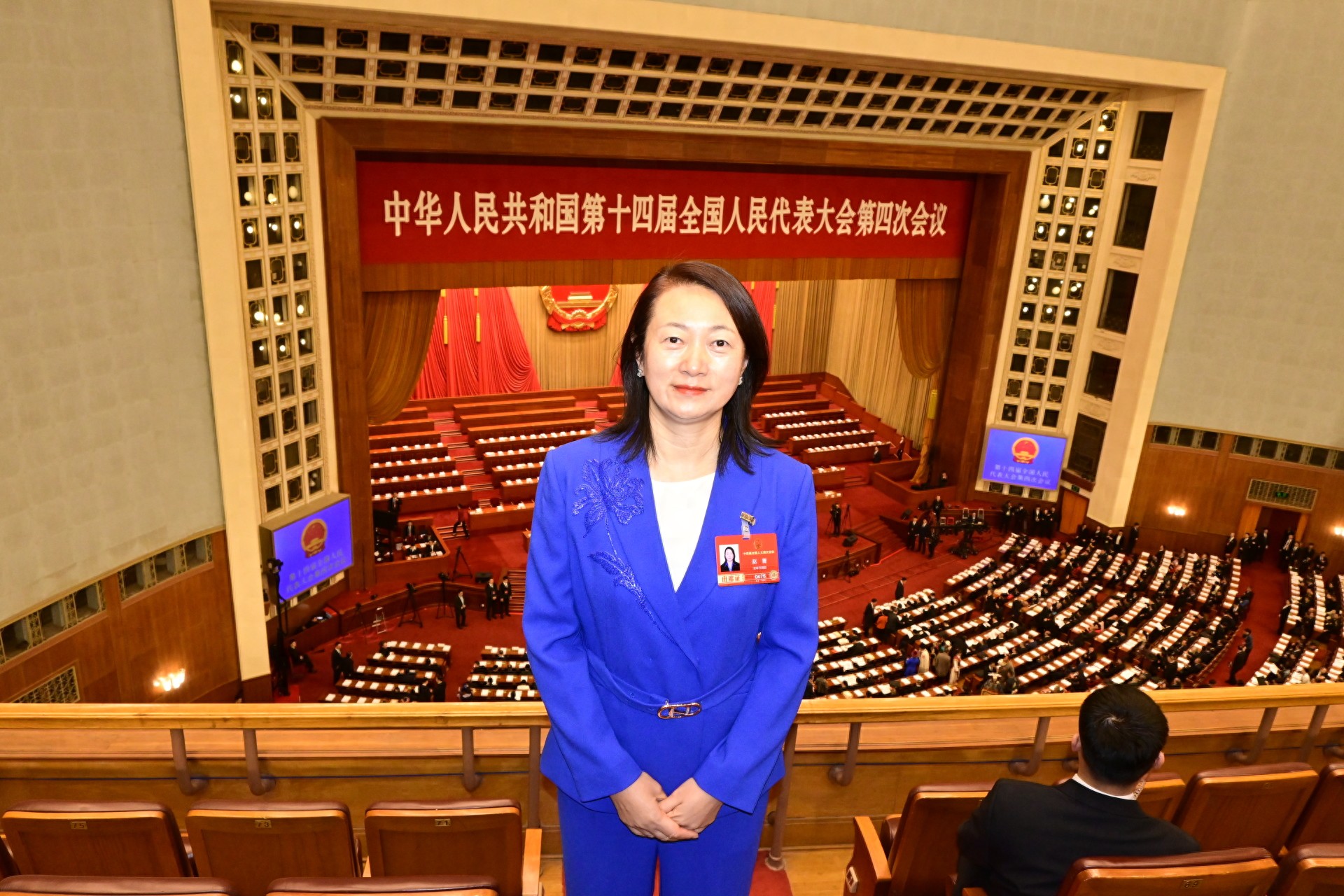
Zhao Jing, Vice Chairman of Buchang Pharmaceutical Picture source: Provided by interviewee
The integration of traditional Chinese medicine and artificial intelligence is the general trend
Traditional Chinese medicine is an important resource in my country that has multiple attributes of health, economic development, cultural inheritance, and ecological protection. It plays an irreplaceable and unique role in protecting the lives and health of the people, cultivating new productive forces in the pharmaceutical industry, assisting the construction of a healthy China, and promoting the process of Chinese modernization.
Zhao Jing believes that taking inheritance and innovation as the core, promoting the integration of artificial intelligence into the entire chain of inheritance and innovation of the traditional Chinese medicine industry, and forming a new pattern of high-quality development covering the entire chain, the purpose is not to replace traditional industries, but to use modern digital and intelligent technology to reconstruct a new ecological development model of traditional Chinese medicine culture. Its core value lies in activating the wisdom of ancient books, reshaping the cognitive system, innovating communication narratives, strengthening cultural identity, and helping more companies successfully "go overseas" to enhance their international voice, so that thousands of years of Chinese nation's wisdom can be reborn in the digital age. This road is both the general trend and the only way to go.
According to Zhao Jing’s observation, in recent years, national-level top-level designs in China and even around the world have simultaneously focused on the field of medical artificial intelligence. The upgrading of health market demand will usher in changes in precision and health efficiency, forcing more pharmaceutical companies to transform and upgrade.
If we can accelerate the integration of artificial intelligence into all links of the entire chain of my country's traditional Chinese medicine and industrial inheritance, innovation and development, intelligent data systems and information systems can help solve the problems of high-frequency collection and real-time storage of large amounts of data in pharmaceutical production and research and development, as well as warehousing and transportation. Production costs such as human, material and financial resources will also be greatly reduced, which will help the high-quality development and rapid upgrading of traditional Chinese medicine and industry.
To build a full-chain traceability system, it is recommended to start from three aspects
During the "14th Five-Year Plan" period, China insisted on taking innovation as the primary driving force for industrial development, ranking among the top ten in the global innovation index for the first time, and taking solid steps in the construction of a modern industrial system. Practice has proven that new productive forces are bringing more opportunities and development space to China, and will surely become a key driving force in promoting economic development and enhancing industrial competitiveness.
Zhao Jing put forward three suggestions regarding the profound question of how to "make traditional Chinese medicine maintain its true nature while integrating into modern times, serve people's livelihood and go global".
First of all, during the "15th Five-Year Plan" period, we will coordinate and promote the three major special actions of "improving the quality and stable supply of traditional Chinese medicine raw materials", "enhancing intelligent manufacturing capabilities" and "cultivating brands of intelligent manufacturing enterprises" to form a "raw material-production-brand" full chain empowerment system and cultivate a large number of digital intelligence transformation enterprises with advanced "digital intelligence technology" levels.
Secondly, during the "15th Five-Year Plan" period, more and more companies will successfully "go overseas", which also means that more and more companies will face the dual pressures of domestic quality control upgrades and international market access. These have put forward higher and newer requirements for the construction of a traceability system for the entire industry chain of traditional Chinese medicine.
In response to these challenges, Zhao Jing suggested building a full-chain traceability system, which includes three major aspects. The first is to upgrade the intelligence level of the Chinese herbal medicine trading platform, using AI (artificial intelligence) algorithms to achieve supply and demand matching, price prediction and risk management, and to support multi-modal smart logistics query methods such as voice, pictures, and videos; the second is to integrate AI and blockchain technology to cover production and processing, product research and development, warehousing, In the entire transportation process, the source of each batch of products can be traced, the destination can be traced, and the responsibilities can be investigated, effectively combating counterfeiting. The third is to optimize cross-border circulation services, develop AI multi-language adaptation modules, rely on the global Chinese medicine resource library to identify import and export business opportunities, shorten document processing time, and help Chinese medicine "go global."
In addition, Zhao Jing believes that strengthening various policy support guarantees and accelerating the convergence of data elements will provide all-round guarantee for the integrated development of artificial intelligence and traditional Chinese medicine; it is also important to launch the "TCM GAP Special Talent Plan" to create a comprehensive talent echelon that understands both traditional Chinese medicine and artificial intelligence.
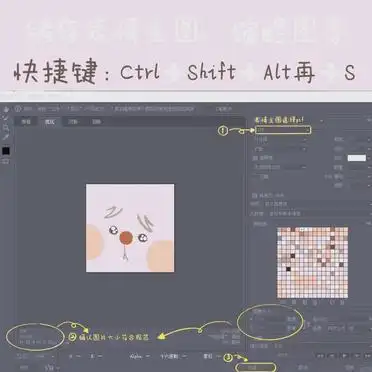
A complete guide to making WeChat dynamic emoticons and easily pass the review!
Want to make your own WeChat dynamic emoticon pack? Here is a detailed tutorial to teach you how to pass the review in one go and use the animated emoticons you draw!
️ Production tools:
Draw animations using Procreate
Format and frame animation using Photoshop
Procreate section:
Preparation before painting:
Recommended artboard size (2048️2048 pixels, resolution 300dpi)
Use a large drawing board to ensure that the emoticon remains clear even after it is shrunk.
Animation reference function (see the second part of the tutorial for details)
Quickly experience how to make animated pictures: after drawing the first picture, draw it again to get a dynamic emoticon package with a shaking effect.
Pictures need to be drawn in advance:
Emoticon main image (GIF, 240️240 pixels, ≤500kb)
Expression thumbnail (PNG, 120️120 pixels, ≤200kb)
Emoticon cover image (PNG, 240️240 pixels, ≤500kb)
Chat page icon (PNG, 50️50 pixels, ≤100kb)
Details page banner (PNG or JPEG, 750️400 pixels, ≤500kb)
Use a transparent background. If the emoticon is not full, you need to add a 2-pixel white stroke in Photoshop, but the emoticon cover image and chat page icon do not need to be stroked.
Pictures that need to be drawn to express appreciation:
Appreciation guide image (GIF or PNG, 750️560 pixels, ≤100kb)
Acknowledgments image (GIF or PNG, 750️750 pixels, ≤200kb)
Avoid using transparent backgrounds
Selection of number of dynamic emoticon packages to upload: 8/16/24
The main emoticon image and thumbnails are named 01, 02..., and the dynamic emoticons are set to play in a permanent loop.
Photoshop part:
Preparation: Export all expression files to psd format in Procreate and transfer them to the computer
How to modify the size of emoticon pictures (see the third part of the tutorial for details)
Method of making frame animation (the storage file name must be the corresponding number, please see the fourth and fifth parts of the tutorial for details)
Use the above method to modify other pictures to the standard size and save them
WeChat emoticon platform upload:
Open the WeChat emoticon platform, follow the steps to upload the prepared files, click Submit, and wait for review.
I hope this tutorial can help you successfully create and pass the review of your own WeChat dynamic emoticon package!

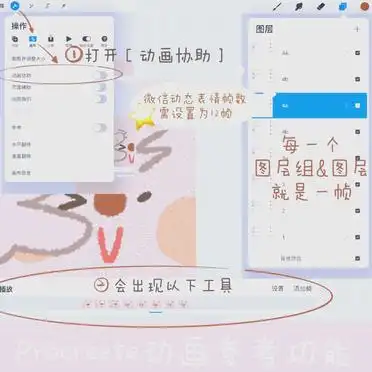
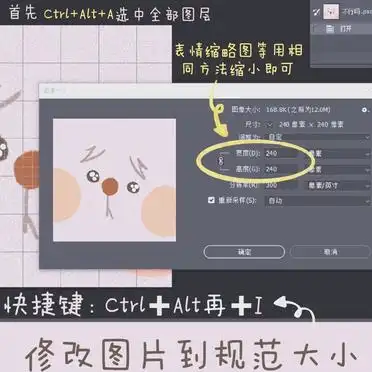
Browse examples
The .NET Multi-platform App UI (.NET MAUI) Polygon class is derived from the Shape class and can be used to draw polygons, which are closed shapes formed by a series of connected lines. For information about the properties that the Polygon class inherits from the Shape class, see Shapes.
Polygon defines the following properties:
These properties are backed by BindableProperty objects; that is, they can be the target of data binding and can be styled.
The PointsCollection type is an ObservableCollection of Point objects. The Point structure defines X and Y properties of type double, which represent pairs of x and y coordinates in two-dimensional space. Therefore, the Points property should be set to a list of x- and y-coordinate pairs that describe the polygon's vertices, separated by a comma and/or one or more spaces. For example, "40,10 70,80" and "40 10, 70 80" are both valid.
For more information about the FillRule enumeration, see Fill Rules.
Create polygon
To draw a polygon, create a Polygon object and set its Points property to the shape's vertices. A line is automatically drawn connecting the first and last points. To draw inside a polygon, set its properties to a Brush-derived object. To outline a polygon, set its properties to a Brush derived object. Property specifies the thickness of the polygon outline. For more information about the Brush object, see Brushes.
The following XAML example demonstrates how to draw a filled polygon:
In this example, a filled polygon representing a triangle is drawn:
The following XAML example demonstrates how to draw a dashed polygon:
In this example, the polygon outline is dashed:
For more information on drawing dashed polygons, see.
The following XAML example shows a polygon using default fill rules:
In this example, the filling behavior of each polygon is determined using filling rules.

The following XAML example shows a polygon using fill rules:

In this example, the filling behavior of each polygon is determined using filling rules.
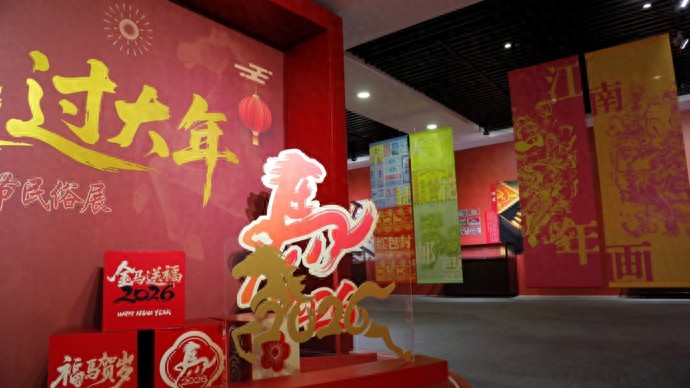 Putuo District Cultural Center Launches Jiangnan Spring Festival Folk Customs Exhibition, Presenting Colorful New Year Memories2026-02-14Comments(0)
 I Met Chen Jianbin, Jiang Qinqin And His Family Of Five On Vacation In New Zealand. The Picture Was Warm And Loving.2026-03-09Comments(0)
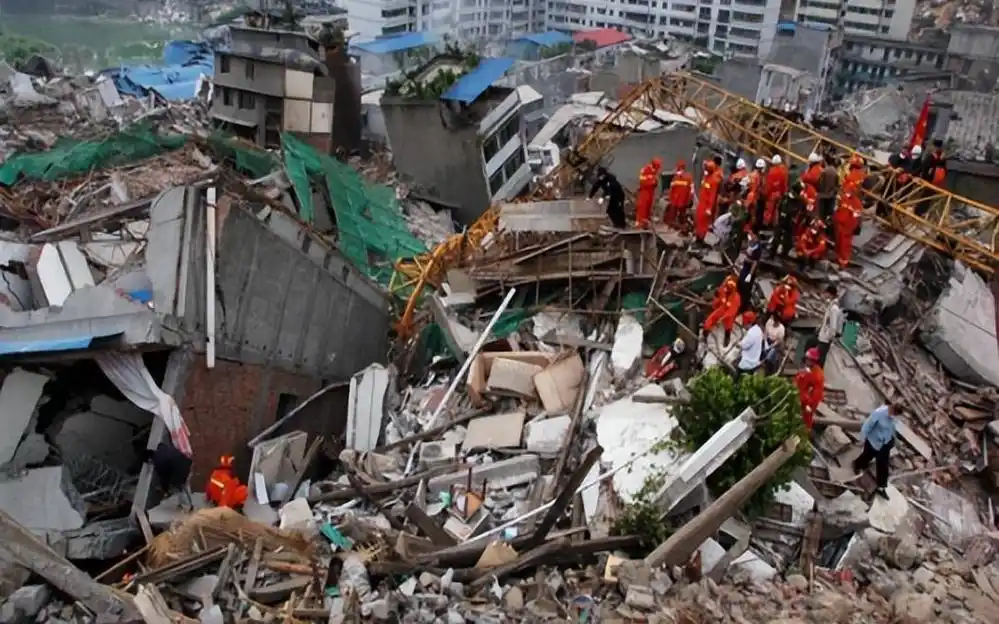 A Young Hero From Wenchuan Vowed To Be Admitted To Tsinghua University, And Now He Has Obtained His Certificate And Married A Beautiful Wife. Fair Skin, Enviable Beauty2026-03-06Comments(0)