
2026 GTC Conference: Nvidia’s New 88-core Vera Data Center CPU Parameters Announced
Today (March 17) at the 2026 GTC conference in San Jose, California, USA, NVIDIA announced the detailed parameters of the new 88-core Vera data center CPU
Today (March 17) at the 2026 GTC conference in San Jose, California, USA, NVIDIA announced the detailed parameters of the new 88-core Vera data center CPU
In recent years, digital currencies represented by Bitcoin have continued to attract attention, and at the same time, a series of problems have followed.
Not long ago, Lu Lei, deputy director of the State Administration of Foreign Exchange, said at the 5th FinTech Bund Summit that using blockchain technology can easily bypass banks and achieve cross-border flow of funds. At the same time, digital currency money laundering is also a potential threat - using various virtual currencies as intermediaries, first convert the legal currency in the remitter's location into tokens, and then convert the tokens into the legal currency in the payee's location at the receiving end, in fact completing the cross-border payment.
For the current financial regulatory system, the use of digital currency to launder money has become a real threat. "Legal Daily" reporter conducted an interview.
Gray transactions rely on digital currency
"One day in the currency world is one year in the world." The currency circle is a circle of digital currency players.
At the beginning of this year, the digital currency market plummeted, and many senior players in the currency circle sold their digital currencies and cashed out. Jiang Ming, who has been in the industry for two years, is one of them.
"January is the peak period for cashing out, and the market has not slowed down yet, and there are more and more altcoins on the market." Despite this, Jiang Ming has no intention of quitting the currency circle.
Jiang Ming told reporters that money laundering is a major pillar of digital currency price support and is a transaction that exists on the dark web. As long as there is demand for money laundering, the price of digital currencies is bound to rise. Moreover, the currency circle itself is a bit of a gray area. Sometimes the messier the circle, the easier it is to make money.
Some Weibo bloggers in the currency circle even publicly claimed that "the biggest practical commercial value in the currency circle is the convenience of money laundering."
It has almost become a consensus that the currency circle is “a bit chaotic”, but the chaos does not stop there.
Although he rarely participates in digital currency transactions, Zhu Cheng has been paying attention to the currency circle for many years.
"Although air coins and MLM coins can be used to launder money, they also have their own problems, and many of them are just to steal money." Zhu Cheng listed the characteristics of air coins and MLM coins to reporters. "MLM coins earn income by attracting people. They have no contract address and no fixed total amount. They are generally traded through independent App software; air coins are usually developed in advance. There are obvious problems in the white paper, there is no physical support for implementation, and there is no open source progress."
Zhu Cheng’s statement was confirmed by the customer service staff of a digital asset exchange. “Some coins have no value on their own and are not supported by other projects. They only rely on the currency itself to make money. 98% of these coins are empty coins.”
"Some gray area transactions will be conducted through Bitcoin, which is why the price of Bitcoin has not collapsed." Jiang Ming revealed to reporters.
But within the currency circle, there are also different voices on this.
"In the final analysis, digital currency is just a bunch of encrypted codes. It will only generate value if it is recognized. If it is not recognized, it will have no value. As long as the currency is not issued for the purpose of making money, it is not much different from stocks. It is an investment." A currency player active in the blockchain exchange QQ group told reporters, "Similar to gold and silver, there was a lack of supervision on money laundering at the beginning. But now many large exchanges have launched digital currencies, and money laundering is not as easy as before."
There are many ways to launder digital currency money
How did digital currency become a tool for money laundering, and even became a “money laundering artifact” in the words of some players in the currency circle?
The reporter contacted a well-known Weibo blogger in the currency circle. In his opinion, "the use of digital currency to launder money is nothing more than anonymous transfers and money flushing."
According to reports, anonymity and decentralization are the two main characteristics of digital currency. Different from virtual currencies on the Internet, digital currencies, typically represented by Bitcoin, are actual media of exchange, generated through calculations based on specific algorithms, but without an issuing agency. Blockchain is a distributed data storage system that exists in a non-secure environment and its purpose is to achieve decentralization. Decentralization eliminates the supervision of trusted third-party institutions, but also allows digital currencies to be used for money laundering in theory. By purchasing digital currency in one country, converting legal currency into tokens, and then converting the tokens into legal currency in another country, cross-border transfers and remittances can be achieved to avoid supervision, and the "black money" in gray areas is laundered in the process.
"Tokens are not issued through smart contracts, and there is no formal trading platform for digital currencies. Most of them are traded through the self-built platform of the project. Therefore, the tokens can be converted into other currencies at will, which actually breaks the foreign exchange management regulations." Zhu Cheng said.
In Jiang Ming's view, cross-border transactions of digital currencies have led to regulatory difficulties and provided soil for money laundering.
Suai is a blockchain practitioner who regards digital currency money laundering as tax evasion.
"For example, if I take a lot of cash abroad, I need to pay a high tax, but if I buy it as digital currency and sell it abroad, I can escape this tax." Su Ai explained, "Buying a Bitcoin requires more than 40,000 yuan, and only a smaller amount of currency can be used to wash away more 'black money'."
There are also endless cases of money laundering using digital currencies.
Heilongjiang Provincial Higher People's Court [2016] Hei Minzhong Civil Judgment No. 274 shows that in August 2014, the criminal suspect Xu used the "OKcoin" trading platform through an account registered with Lekuda Company, and divided into three parts. Purchased 553.0346 Bitcoins in 4 transactions and conducted currency withdrawal business at the same time. All 553.0346 Bitcoins purchased were taken out of the platform in 4 transactions, transferred to the Bitcoin wallet, and then sold in Macau underground banks.
There are loopholes in the supervision of trading platforms
On September 4, 2017, seven ministries and commissions issued the "Announcement on Preventing Financing Risks of Token Issuance", officially defining the initial token issuance as "illegal financing behavior". Subsequently, "Bitcoin China" announced that it would close the trading platform starting from September 30 and would no longer accept registration from new users. On September 16, Huobi and OKCoin announced that they would cease all trading businesses related to virtual currencies.
The digital currency trading platform has now entered a cold winter.
The reporter registered accounts on multiple trading platforms as a player in the currency circle and found that the services provided by the trading platform mainly include fiat currency transactions and currency-to-crypto transactions. The former is to recharge or withdraw fiat currency into a digital currency wallet, and the latter is to conduct transactions using the virtual currency in the digital currency wallet as an intermediary.
If you want to complete legal currency transactions, you must pass different levels of identity authentication.
Taking a trading platform established in Hong Kong in 2017 as an example, it divides real-name authentication into two levels. If you pass the first level, you need to fill in your real name, ID type and ID number. If you pass the second level, you need to upload relevant ID photos and wait for manual review. The reporter filled in a pseudonym and a non-existent ID number and successfully passed the first level of real-name authentication, which means that as long as there are coins in the digital currency wallet, the reporter can conduct currency-to-crypto transactions.
According to the customer service staff, “the first level can be traded, and the second level can be withdrawn.”
The reporter further investigated and found that the recharge and withdrawal of the trading platform were all completed through the QQ group. After completing the account registration on the platform, the user needs to enter a QQ group. According to the detailed C2C transactions, currency transactions and currency deposit and withdrawal processes in the group, the user needs to actively add the "officially certified acceptor" QQ number, obtain the payment address and complete subsequent purchase operations.
Another world-renowned digital asset trading platform divides real-name authentication into three levels. Level one requires an ID card, level two requires face recognition, and level three requires video recognition. The customer service staff told reporters that the recharge of digital currency does not necessarily need to be through legal currency transactions. There are other channels and can be achieved through other platforms.
When the reporter further asked about specific matters, the customer service staff said they were unclear and asked the reporter to "ask other platforms."
A currency player analyzed that, in other words, users have the opportunity to bypass the highest level of real-name authentication and disperse and transfer digital currencies through the operation of depositing and withdrawing coins between trading platforms, providing opportunities for money laundering.
(At the request of the interviewees, the names of the interviewees in this article are pseudonyms)
Industry experts analyze how to solve the problem of digital currency supervision
The use of digital currency to launder money has become a major problem faced by financial regulatory agencies in various countries.
How to deal with money laundering using digital currencies? The reporter interviewed relevant experts in the industry.
Using digital currency to launder money is relatively hidden
Yin Zhentao, deputy director of the Law and Finance Research Office of the Institute of Finance, Chinese Academy of Social Sciences, reviewed the birth of digital currency to reporters: The emergence of Bitcoin is not just for currency issuance, but it has indeed produced a brand new currency, but more importantly, Bitcoin has produced a trading system. Most of the initial users of Bitcoin were traders in gray areas, playing an important role in gray transaction fields such as drug trafficking, hacking, and money laundering. Only later did it gradually become the object of widespread public attention and application.
Digital currency has the characteristics of anonymity and decentralization, and also involves greater risks.
"Digital currency faces two risks. The first is the technical level. Digital currency relies on blockchain technology and a system, which will subject it to security impacts, such as hacker attacks on computer systems. We have seen many practical problems in this process." Yin Zhentao said.
In May 2017, the Bitcoin ransomware virus named WannaCry broke out around the world, affecting networks in more than 70 countries. Those infected with the virus were required to pay a Bitcoin ransom in exchange for unlocking their files.
Yin Zhentao believes that another risk of digital currency is credit risk. Because there are middlemen in digital currency transactions, these middlemen are different from real organizations. Organizations in reality are visible and tangible, but digital currency middlemen are on the Internet, and the risks are greater.
"For example, buying Bitcoin domestically and then converting it into other currencies in the international market arbitrarily violates foreign exchange management regulations. The characteristics of short time, high efficiency, low cost, and easy to avoid supervision make digital currency a weapon for money laundering. Compared with traditional means of money laundering, money laundering through digital currency technology is more convenient, more concealed, and easy to avoid financial supervision." Yin Zhentao said.
Zhao Zhanhan, a special researcher at the Intellectual Property Research Center of China University of Political Science and Law, believes that digital currencies are anonymous, fast and irrevocable. In addition, digital currencies such as Bitcoin are highly circulated around the world, so many criminals use digital currencies as a new money laundering channel. Moreover, there are many different ways to launder money through digital currency. Generally speaking, the chances of new money laundering methods being discovered and investigated are lower than before. Many countries still do not have the means and technology to effectively combat digital currency money laundering. These factors make criminals prefer this method of money laundering.
The use of digital currency to launder money is suspected of violating relevant laws and regulations.
"The use of digital currency to launder money mainly violates the provisions of the criminal law and relevant judicial interpretations. The criminal law specifically stipulates the crime of money laundering. The relevant judicial interpretations stipulate that those who knowingly provide illegal income and proceeds from drug crimes, organized crime of a gangland nature, and smuggling crimes in order to cover up or conceal their source and nature provide a capital account or assist in converting property into cash or financial instruments. "Anyone who assists in the transfer of funds through transfer or other settlement methods, assists in remittance of funds overseas, or uses other methods to conceal or conceal the illegal proceeds of crime and the nature and source of the proceeds, shall constitute a crime of money laundering and shall be prosecuted. Depending on the specific method of money laundering, it may be one or more of the aforementioned behaviors," Zhao Zhan said.
Speculation and hype maintain Bitcoin price
Because of this, the rise of digital currency and the development of blockchain technology have brought challenges to traditional financial supervision.
"Because of the new technology, the combination of finance and technology is completely different from the supervision of traditional finance. Theoretically, the challenge is huge, and the gray trading area cannot be seen, penetrated, or found. Our regulatory agencies are centralized, and the blockchain is decentralized. Our regulatory agency is this kind of central organization, and the blockchain is a platform-based organization." Yin Zhentao said.
At present, there are two main domestic regulations on virtual currencies. In 2013, many ministries and commissions issued the "Notice on Preventing Bitcoin Risks", giving important reminders on Bitcoin risks. On September 4, 2017, the central bank and seven other ministries and commissions jointly issued an announcement again, stating that the initial coin offering was an illegal financing without approval.
"These are the two most important regulations. Currently, our country prohibits domestic Bitcoin transactions." Yin Zhentao explained to reporters, "At the same time, our country also prohibits third-party payment institutions, which means that payment institutions are prohibited from providing payment channels for Bitcoin. In addition, there are currently not many laws and regulations to restrict and manage."
Regarding the view of some digital currency players that "money laundering is a major pillar in maintaining the price of Bitcoin," Yin Zhentao responded that the initial price increase of Bitcoin has a lot to do with its extensive application value in the field of money laundering, but at this stage, speculation and hype are the most likely to maintain the price of Bitcoin.
Zhao Zhan believes that there are various methods of using digital currency to launder money. For example, technical means may be used to transfer funds into the cryptocurrency system, and then various transfer addresses are deployed, making it difficult to query its transaction path. In other words, money laundering driven by technological progress is becoming more and more difficult to detect and prevent. In addition, it is cross-regional. The lack of a global response mechanism has exacerbated this situation.
Ensure digital currency transactions are traceable
The severe situation calls for financial regulatory changes.
"Blockchain is a decentralized distributed 'ledger system' that can be used to register and issue digital assets, property rights certificates, points, etc., and conduct transfers, payments and transactions in a peer-to-peer manner." Yin Zhentao believes that "blockchain technology is a double-edged sword. From a technical point of view, since blockchain can be used for money laundering, it can also be used for anti-money laundering through technical means. This logic is established, and this is also one of the important methods of regulatory technology that I advocate."
"For the financial supervision of digital currencies, the first point is to clarify the legal positioning. It is still unclear whether digital currencies represented by Bitcoin are a virtual asset or a virtual currency. Secondly, the effect of existing supporting policies is not obvious. Although initial coin offerings and digital currency transactions have been nominally prohibited, in fact this has not been done Total ban. The relationship between the ban on initial coin issuance and Bitcoin’s anti-money laundering is not very close, but there are certain restrictions on currency transactions, but the effect is not yet obvious. Finally, it is necessary to introduce technological means and use advanced technological means to supervise high-tech transactions in the financial field.
Zhao Zhan believes that money laundering can be tracked through digital currency. Ensuring the traceability of digital currency is the key to dealing with money laundering crimes on a global scale. At the same time, many money laundering behaviors using digital currencies are carried out through exchanges. Therefore, stricter management and regulations should be established for digital currency exchanges, requiring exchanges to effectively adopt technical and management measures, fully fulfill their anti-money laundering obligations, and promptly report to the relevant authorities after discovering money laundering behaviors.
Not only does Europe not support Trump, it even wants him to lose. The reason is simple.
After Trump launched the war against Iran, some European countries not only condemned the US-Israeli bombing raids, but also refused the US to use their military bases. Obviously, European allies did not "fight side by side" with the US as expected, but instead showed obvious alienation and opposition.
What is the reason for this change in attitude? How will it affect US-EU relations? How should Trump, who has lost the support of his allies, end his campaign in Iran? Observer.com spoke with Song Luzheng, a scholar in France and a researcher at the China Institute of Fudan University, to bring the latest interpretation.
Observer Network: After the undeclared war between the United States and Israel against Iran, Europe, as an ally, once again showed its disagreement with the United States. Why is Europe no longer willing to follow the United States? Especially when they realize that the United States pursues "Israel first", what further impact will it have on the US-European alliance?
Song Luzheng: There are several main reasons why Europe is no longer willing to follow the United States.
First, relations between Europe and the United States have been severely damaged during Trump's one year in office, and Europe is no longer able to support the United States as it did in the past.
Second, Europe believes that it is facing a threat from Russia and does not want the United States to disperse its power. What's more, the winner of the US-Iran conflict is Russia: it has diverted the attention of the international community and the West from Russia. At the same time, rising oil prices have enhanced Russia's strength and status, while Europe, which relies on energy imports, has weakened its power. Just 10 days after the war began, natural gas prices rose by 50%, and oil prices rose by 27%, which has cost Europe an extra 3 billion euros to import energy.
Von der Leyen’s speech
In response to the United States easing sanctions on Russian oil and gas due to high oil prices, von der Leyen said in the European Parliament on the 11th that it would be a strategic mistake for the EU to abandon its long-term strategy or even return to relying on Russian fossil fuels.
Third, Europe's development depends on the current international order. Although it does not agree with Iran, the international order is more important than Iran. Trump has severely disrupted this order since he came to power for more than a year. Now, without the United Nations or domestic authorization, he has launched a war against a sovereign country. His actions are equivalent to proving the legitimacy of Russia's war against Ukraine. It cannot rule out the possibility of a similar threat to Greenland.
Fourth, there are a large number of immigrants from the Middle East in Europe, and the situation in the Middle East often affects its internal stability. Most of these immigrants were uprooted by war and instability in the Middle East, and they have deep emotional and family ties with their homeland. Once the United States takes military action in the Middle East and the situation worsens, it will not only trigger a new flow of refugees, putting huge pressure on Europe's reception and resettlement capabilities, but also cause strong emotional fluctuations among the Middle Eastern immigrant groups who have settled in Europe because they are worried about the safety of their relatives and friends back home, triggering social riots and political differences, seriously disrupting normal social order and policy formulation.
Therefore, the US-Iran conflict is another impact and disruption to transatlantic relations.
In my opinion, Europe not only does not support the United States, it even hopes that the United States will defeat the war. The reason is simple: Iran is not a threat to Europe, but the United States under Trump is. Although Europe also opposes Iran, the US approach is a serious disruption and impact on the international order - which is also the focus of the biggest differences and confrontations between Europe and the United States today.
If Iran wins, it will not only restrain Trump, but also affect the U.S. midterm elections. Europe has been suffering from Trump for a long time. It especially hopes that the United States will have domestic power to check and balance. The only hope at the moment is the mid-term elections. Otherwise, if Trump wins the mid-term election after winning the general election, we still don’t know what actions he will take to threaten Europe and the world in the next three years. Especially if he points to Greenland, it will create more complex and thorny geopolitical problems within Europe and between Europe and the United States.
In fact, if Iran wins, it will play an objective role in maintaining international order just like China's counterattack against the US trade war and Europe's defense of Greenland.
Observer Network: In addition to the divisions between the United States and Europe, we have also seen differences within Europe. Starmer's government eventually gave in under pressure from Trump, while Spain steadfastly refused to allow the United States to use bases on its territory. Why did the UK and Spain make completely different choices based on the same concerns about international law? What deep dilemmas does this incident expose the EU faces when seeking "strategic autonomy"? Are the foundations of the EU's common foreign and security policy being shaken?
Song Luzheng: Spain and the United Kingdom are two extreme representatives within Europe. Spain has taken a firm opposition stance since Trump returned to the White House. It not only opposes Trump forcing European allies to increase military spending, but also openly opposes Trump's tariffs. This is completely different from other European countries appeasing or avoiding direct criticism of the United States. The same is true this time in the face of the US attack on Iran.
There are four main reasons why Spain does this: First, Prime Minister Sanchez comes from the left, not the traditional right wing of other major European countries. He places great emphasis on opposing illegal wars and adhering to the international order. He himself is also trying to build the leader of the European left-wing resistance front.
Second, Spain learned a painful lesson in the 2003 Iraq War. Supporting the illegal war of the United States did not bring national security, but suffered serious terrorist attacks, leading to rising anti-war sentiment among the people.
Third, the domestic public is strongly opposed to Trump, with up to 77% of the public having a negative view of Trump. Standing on the side of public opinion not only helps to achieve unity in the left camp, but also diverts domestic pressure. Spain has been unable to pass a budget for a long time and faces governance difficulties.
Fourth, Spain is relatively less dependent on the United States economically. Trade with the United States only accounts for 4.4% of GDP, and it has strong independence. What's more, after the diplomatic conflict between Spain and the United States, the EU quickly expressed support for Spain and became an important backing for Spain. Or the EU uses Spain to express its true position of dissatisfaction.
Although Britain is also governed by the left, the traditional special alliance between Britain and the United States is a heavy burden. Britain is dependent on the United States not only in terms of military, security, and economy, but also in terms of international status. Therefore, after experiencing initial uncooperation, the Starmer government finally had to side with the United States.
The different performances of Britain and Spain also reflect the EU's dilemma: on the one hand, it does not agree with the United States' actions, but on the other hand, it lacks the strength to say no to the United States. The so-called strategic independence is difficult to achieve.
As NATO Secretary-General Rutte publicly admitted in his speech to the European Parliament this year: "If there are still people here who think that the EU, or Europe as a whole, can defend itself without the United States, then keep dreaming. It can't be done. We can't do it. We need each other." If security cannot guarantee itself, how can we have strategic autonomy?
The EU's internal position is also highly divided. Eastern European countries, Baltic countries, and Nordic countries are adjacent to Russia and strongly rely on the United States to provide security guarantees. Therefore, they oppose all measures to worsen relations with the United States.
Due to the operating mechanism of the EU, diplomacy and security are determined by each sovereign state. Therefore, even in the context of Trump's disregard for Atlantic relations, and despite France and other Western European countries' repeated assertions of strategic autonomy, their internal divisions have prevented them from taking action.
File photo of NATO Secretary-General Rutte
Observer Network: Germany’s performance this time is also worth pondering. On the one hand, Mertz emphasized that Israel’s security is Germany’s core interest. On the other hand, he rarely “clearly condemned” Israel’s annexation plan in the West Bank and restricted arms exports to Israel. At the same time, Mertz publicly supported the United States and Israel in attacking Iran. Does this seemingly contradictory attitude indicate that Germany's Middle East policy based on "Holocaust responsibility" formed after World War II is undergoing a fundamental shift?
Song Luzheng: There are special reasons for the divisions and contradictions in Germany's foreign policy.
As one of the origins of World War II, Germany brought huge disasters to the world. In particular, the genocide against the Jews has placed a heavy burden on it. Therefore, successive German governments have made it clear that Israel’s security is Germany’s core interest. In addition, Germany is opposed to war and aggression and annexation of sovereign countries because of historical lessons. Israel's annexation plan in the West Bank violates United Nations resolutions and the United Nations Charter. For this reason, Germany finds it difficult to agree with the plan based on historical lessons and values.
After World War II, Germany's security was provided and monitored by the United States. The United States has 100,000 troops stationed in Europe, 40,000 in Germany. But Germany is also on the front line of a confrontation with Russia or China, which reflects the United States' distrust of it. If the UK still has room to say no to the US, Germany has none. This is different from the 2003 Iraq War, when France took the lead and Germany followed. Germany does not dare to stand alone on the front line against the United States. Germany's move has little direct relationship with its Middle East policy, but is a manifestation of Germany's vassalage of the United States.
Germany's Middle East policy based on "Holocaust responsibility" has not changed, but it has to compromise or persist when it comes to German-US relations and United Nations principles.
Observer Network: In France, Iranian President Pezhiziyan warned Macron that any support for the United States and Israel will be regarded as "direct participation in the war." On the one hand, Macron actively mediates and expresses regret for the casualties of Iranian civilians, saying that the attack "violates international law"; on the other hand, he dispatches warships and aircraft carriers near Cyprus and reiterates his "concern" about Iran's nuclear program. Does this "hedging your bets" approach exactly reflect the awkward situation of France and even Europe's influence in the Middle East: It wants to act as an independent mediator to safeguard its own interests (such as energy security, citizen safety), but it is unable to break away from the military alliance framework with the United States. In the end, it may lose both sides, and may even be regarded as a potential hostile force by Iran?
Song Luzheng: First of all, as a core power of the EU, the most important thing for France is to show its presence in this conflict. First, French President Macron had a phone call with the Iranian President, showing his diplomatic presence. This also makes him the only person in a major Western country who can speak to the president of Iran, which also shows the difference between his position and that of the United States. In diplomacy, words are actions.
The French aircraft carrier Charles de Gaulle is heading towards the Middle East
The second is to send an aircraft carrier to the Mediterranean to show its military presence. That is to say, France is not lacking in the Middle East and has actual military capabilities. But this does not mean that France will enter the war on the side of the United States.
Secondly, if France, as a medium-sized country, wants to exert global influence, it lies in its ability to play a unique balancing role among major countries. The same is true for the current conflict between the United States and Iran. He not only criticized the United States for violating international law and had a phone call with the president of Iran, but also expressed concerns about the nuclear issue. This model is France’s traditional way of demonstrating its status as a great power. At a time when the United States and Iran are fighting, France's position can be divided into two directions, and it has the right to speak to either side.
It should be said that the EU has long lost its voice in the Middle East, but France still has a place: first, it has military bases, second, it sells weapons to Middle Eastern countries, and third, it is far less dependent on external energy than the EU. 70% of its energy consumption comes from nuclear energy, and it has a certain degree of autonomy.
But generally speaking, from the perspective of strength, Israel and the United States can completely ignore the existence of France and the European Union and carry out arbitrary unilateral military intervention. France's approach is just trying to maintain a sense of presence and has no substantial influence on the US-Iran conflict. Iran's need for France is just to show that diplomacy is not isolated, while the United States prevents France from directly standing on the front line of the opposition camp.
IT House reported on March 17 that today (March 17) at the 2026 GTC conference in San Jose, California, USA, NVIDIA announced the detailed parameters of the new 88-core Vera data center CPU, claiming to be the world's first processor customized for intelligent AI and reinforcement learning.
When processing large-scale data, AI training and inference, the chip operates twice as efficiently as traditional rack-level CPUs and is 50% faster. NVIDIA founder and CEO Jensen Huang emphasized that the CPU is no longer just an auxiliary AI model, but has become the core driving force. Vera will help AI systems achieve faster "thinking" and wider expansion.
In terms of core architecture, the Vera data center CPU is equipped with 88 Olympus cores custom-designed by NVIDIA. In order to meet the stringent requirements of multi-tenant AI factory concurrent tasks, each core supports spatial multi-threading technology and can stably run two tasks at the same time.
In addition, Vera uses a second-generation low-power memory subsystem. The system is built on LPDDR5X memory and has a bandwidth of up to 1.2 TB/s. Compared with general-purpose CPUs, it significantly reduces power consumption by half while doubling bandwidth.
In order to meet the extreme expansion needs of data centers, NVIDIA simultaneously launched the Vera CPU rack based on the MGX modular architecture. The rack integrates 256 liquid-cooled Vera CPUs, which can maintain more than 22,500 independent concurrent computing environments running at full speed, more than 45,000 independent threads and 400TB of ultra-large memory. It not only achieves a 6-fold increase in CPU throughput, but also directly doubles the performance of intelligent AI workloads.
At the data transmission level, Vera is deeply paired with the GPU through NVLink-C2C interconnection technology, providing consistent bandwidth of up to 1.8 TB/s, which is 7 times that of PCIe 6.0.
Vera CPU has now entered full mass production and is expected to begin batch delivery to core customers such as Meta and Oracle in the second half of this year. IT Home attaches relevant screenshots as follows:
NVIDIA GTC 2026 Conference Topics
Guangming Daily, Beijing, March 16th: Reporter Zhang Sheng learned from the regular press conference held by the Ministry of Natural Resources on the 16th that the Ministry of Natural Resources and the National Forestry and Grassland Administration jointly issued the "Notice on Further Ensuring Natural Resources Elements." The notice proposes 13 policy measures, including strengthening planning guidance and preliminary work for projects, exploring and establishing a national spatial planning permit system, establishing a dynamic maintenance mechanism for planning, improving the joint approval mechanism, reasonably ensuring temporary land use (forest, grass) for key projects, improving mining land policies, and coordinating the rational use of space resources on land and sea, so as to ensure the elements of key construction projects in the "15th Five-Year Plan".
In order to optimize the spatial layout of the land, the notice proposes to strengthen planning guidance and pre-project work, explore and improve the land space planning permit system, and establish a dynamic planning maintenance mechanism. Establish a consultation mechanism with relevant departments to proactively match the spatial needs of key projects of the "15th Five-Year Plan" of relevant departments, coordinate and integrate natural resource management and land spatial planning into the "one map", coordinate scientific site selection based on land and space planning, and clarify the list of key land and space planning projects. Without breaking through the binding indicators and bottom-line control requirements of the "Three Zones and Three Lines", annual dynamic maintenance of the land and space master plan can be carried out based on "one map" in conjunction with regular physical examination assessments, and planning content such as planning zoning, boundaries, and key project lists can be positively optimized.
In order to improve the efficiency of allocation of natural resource elements, the notice proposes to improve the joint approval mechanism, improve the land use approval management mechanism, improve land acquisition work, improve the balance mechanism of cultivated land occupation and compensation, and reasonably guarantee the temporary use of land (forest, grass) for key projects.
The notice emphasizes the coordination of existing and incremental construction land to promote connotative development. For provinces (autonomous regions and municipalities) that have achieved "one map" networking, a total amount control mechanism will be implemented for the scale of construction land during the planning period, and the provincial government will coordinate the use of new construction land quotas during the "15th Five-Year Plan". Establish and improve the linking mechanism between newly added construction land and the revitalization of existing construction land. In principle, the annual increase in urban and rural construction land shall not exceed the area of revitalized existing land to further promote the revitalization of existing land. New construction land will be given priority to ensure the construction of major projects and the development of people's livelihood undertakings, and will not be used for commercial real estate development in principle.
Focusing on the overall planning and rational use of space resources on land and sea, the notice stipulates the relevant contents of land-sea connection management on both sides of the coastline. At the same time, support relevant provinces and cities in optimizing the infrastructure layout of yachting and sea fishing industries in conjunction with land and space planning, ensuring the rational use of land, sea islands and coastline needs of projects, and no new land reclamation is allowed in violation of regulations.
"Guangming Daily" (Page 8, March 17, 2026)
IT House reported on March 17 that today (March 17) at the 2026 GTC conference in San Jose, California, USA, NVIDIA announced a comprehensive expansion of its open source model family in order to promote the next wave of agent (agent), physical and medical AI.
In the field of intelligent agents, NVIDIA has launched the Nemotron 3 series of fully understanding multi-modal models. Among them, Nemotron 3 Ultra relies on the Blackwell architecture, with throughput efficiency increased by 5 times, and is specially designed for code assistance and complex workflows.
Nemotron 3 Omni accurately integrates audio, visual, and speech multi-modal capabilities; Nemotron 3 VoiceChat integrates speech recognition, large models, and speech synthesis to support real-time dialogue.
The supporting security model further ensures the reliability of content output, and leading companies such as CrowdStrike and ServiceNow have currently deployed it in enterprise-level applications.
In the field of physical AI, NVIDIA has released a number of basic models to accelerate the development of autonomous systems. The upcoming Cosmos 3 is the first world-based model that unifies synthetic world generation and motion simulation; Isaac GR00T N1.7 and Alpamayo 1.5 are visual language action (VLA) inference models specially built for humanoid robots and autonomous driving respectively, and are now ready for commercial deployment.
In addition, CEO Jen-Hsun Huang also previewed the next-generation robot model GR00T N2, which has twice the mission success rate of existing models in new environments and is expected to be launched by the end of the year.
Medical life science research has also ushered in major breakthroughs. IT Home quoted a blog post as saying that the BioNeMo platform has added a new generative model Proteina-Complexa, which has greatly accelerated the discovery of protein drugs.
At the same time, NVIDIA teamed up with Google DeepMind and other institutions to add 1.7 million high-confidence protein complex predictions to the AlphaFold database. In addition, the new GPU-accelerated simulation engine nvQSP is up to 77 times faster than traditional CPUs, allowing scientists to analyze massive treatment options in a very short time.
The above-mentioned open source models, data sets and frameworks are currently available on GitHub, Hugging Face and other platforms. Developers can also use NVIDIA NIM microservices to achieve secure, scalable and convenient deployment on various acceleration infrastructures from edge to cloud.
Recently, four Chinese victims were abducted by a human trafficking gang near the Moi River on the Myanmar-Thailand border and forced into a pickup truck to be transported to Myanmar. The four people jumped out of the car on the way and called for help. After hearing the noise, the surrounding residents came to help, and the four people were able to escape smoothly and were sent to the police station. The driver involved has abandoned the car and fled, and the Thai police are investigating.

Four people who successfully escaped by jumping from the car (front row)
According to Kantaporn, the head of Mae Sot County in Tak Province, Thailand, the incident occurred at about 9:30 pm on March 9. The four rescued people included two men and two women. The specific identity information has not been disclosed yet. The incident took place in Village No. 2, Taserua Street, Mae Sot County, Tak Province, near the crossroads leading to Tapsa, about 500 meters away from the Moi River on the Myanmar-Thailand border.
Intersection surveillance showed that while a white pickup truck was driving at about 9:30 pm on the 9th, the Chinese man in the passenger seat suddenly jumped out of the car. After landing, he immediately rushed to the door and tried to rescue the people in the back seat. Upon seeing this, the driver stepped on the accelerator, and the man jumped onto the car again, and finally successfully opened the door and helped the other three people in the car escape. Neighbors heard the noise and went out to check, but the driver abandoned the car and fled.
The community leader then led four people to the Mae Sot Police Station to report the incident. According to the four people's statements, they were lured to Thailand and originally planned to be trafficked to Myanmar. The white pickup truck was used as a means of cross-border transportation. Entry and exit records show that the four people entered the country from Chiang Mai on the 6th and were taken to Tak province. Worried about being pursued, the four people asked the police for assistance in leaving the country. With the help of the police, they took a long-distance bus to Bangkok on the 10th and were later arranged by the Chinese Embassy to return home. The Thai police are currently investigating related charges such as deception and human trafficking involved in this case.
 As The Conflict Between The US-Israeli Coalition And Iran Escalates, Larijani Refutes Rumors Of Negotiations With The US And Criticizes Trump2026-03-10Comments(0)
 The U.S. Department Of Justice Releases Epstein’s Criminal Files, Hiding A Large Amount Of Pornographic Materials And Manuals In Many Places2026-03-09Comments(0)
 This Article Will Help You Understand The Different Meanings And Usage Of The English Word Ton In Various Fields.2026-03-14Comments(0)
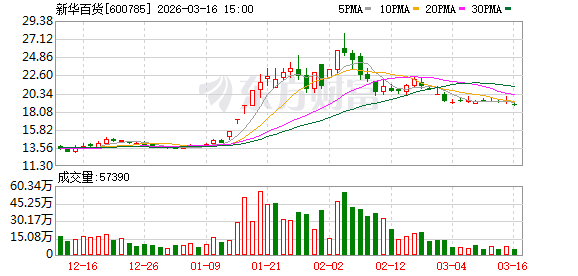 The China Securities Regulatory Commission Issues Another Fine! Li Anda And Shanghai Baoyin Were Punished For Violating Laws And Regulations2026-03-17Comments(0)