
2026 Spring Festival Gala Bionic Robot Deceived Everyone, Cai Ming Received A Gift And Became A Legend
"Fake Cai Ming" was given to the real Cai Ming
"Fake Cai Ming" was given to the real Cai Ming
These three 260-year-old men combined are the biggest easter egg in "The Escort"! Wu Jing's operation is so touching, escort, Jet Li, Yuan Heping, martial arts movies, Wu Jing (actor)

Yunnan universities have launched a series of campus recruitment activities for the 2024 graduates - entering the golden period of autumn recruitment in September, large-scale double selection fairs and special job fairs have been held in various universities in Yunnan Province, and employment and education-themed education activities have continued.
Lu Liangwei’s wife turned out to be her. The top student was once the president of the Shenzhen Chamber of Commerce. No wonder the marriage can be happy. Shenzhen, marriage, Hong Kong, Lu Liangwei, Yang Xiaojuan, Zhou Haimei, Kuang Meiyun
She is a beautiful actress with natural beauty. She married the son of the Vice Chairman of the Military Commission. After her divorce, she became a well-known painter, painter, Zhang Zhen, Zuo Quan, actor, beauty, Zhang Ningyang, love and inheritance, Vice Chairman of the Military Commission.

Ouyang Xiadan is a well-known host in mainland China. She is deeply loved by the audience because of her talent in hosting programs, her fresh and elegant appearance, her gentle and capable voice, her sunny and handsome image, her professional skills and her relaxed and natural hosting style.

Hello everyone, I am looking forward to the future. I will bring you the latest news every day without rushing. The content will be updated as the situation arises, but each article will provide useful information. If you think this information is useful to your life, please click and follow it~ From the beginning of 2026 to the present, the scrap iron recycling market has been in a steady growth channel.

Life is difficult and life is not easy. Everyone has their own sufferings and indescribable feelings. People who suffer know best. Compared with suffering, having suffering that no one cares about may be more uncomfortable than the suffering itself.
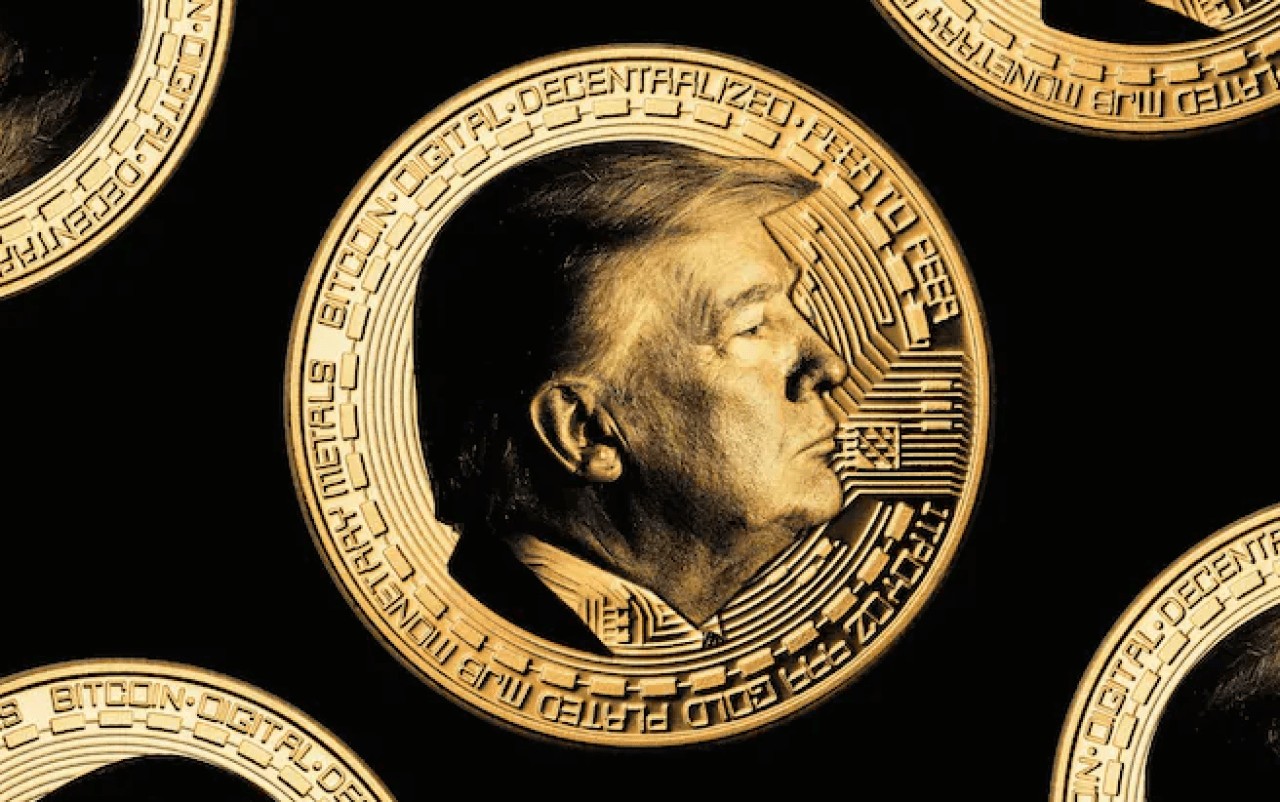
This round of financing was jointly participated by a number of well-known investment institutions

Iran said it would complete the draft nuclear agreement within 3 days, and the United States' largest nuclear-powered aircraft carrier entered the Mediterranean. The day after the United States issued another "ultimatum" to Iran, Iranian Foreign Minister Araghchi said on the 20th that it would be between 2 and 3..._Sina.com
The competition among various companies for the Spring Festival stalls has come to an end, and I noticed a special film in the film list rankings.
There is no traffic blessing or overwhelming publicity, but it has carved its own path among the Spring Festival stalls.
This movie is "The Night King", and Huang Zihua and Sammi Cheng are here with his new movie!
That man is here again!
At the beginning of 2026, this 65-year-old boy wore a night-show shirt and used only 3% of the film schedule to gross a box office of 100 million in 6 days.
Of course, this is not the first time this man has appeared in the audience's sight recently.
The popular picture of social animals, cows and horses working overtime all over the Internet
In 2023, Huang Zihua rekindled the audience's enthusiasm for Hong Kong films with "The Vengeful Lawyer". 32 days after its release in Hong Kong, the film officially exceeded 100 million, with a box office of 115 million, becoming the box office champion of Chinese-language films in Hong Kong film history.
In 2024, another "Broken Hell" broke the record again with 152 million!
So how did this man named Huang Zihua go from being unknown to being a hit now, and is known as the "box office elixir" in the Hong Kong film market.
Today, Tao will take you through the chronicle of this man’s side. , let’s see how he used thirty years to counterattack from the “King of Bad Movies” to the “Savior of Hong Kong Movies” and live the most inspiring life.
First of all, let’s give a good introduction to this Zihuashen.
In 1984, Huang Zihua, who graduated from the Department of Philosophy in Canada, returned to Hong Kong and wanted to be an actor and enter the film and television industry.
But reality gave him a blow. The TVB artist training class at that time happened to be closed, so he had to settle for the next best thing and enter the industry as a screenwriter, writing scripts, and at the same time running stage plays and playing small roles in a drama troupe.
After that, in order to increase his exposure, he also worked as a program host, but because his image was not "handsome" enough, he never got a decent acting role.
It can only be said that Hua Zishen really looks younger as he gets older.
The top TVB executives at the time took one look at him and said coldly: "You are not made for acting." (You are not made for acting)
After 8 years in the industry, he still had not realized his dream of becoming an actor. Originally, Huang Zihua decided to give up on his dream.
But the turning point of fate began at this point. In order to withdraw from the entertainment industry, Huang Zihua retreated to his desk to create for 9 months and planned a farewell performance.
Fu Hang, who looks like the god of passion
After this period of time, he created a 90-minute monologue-style stand-up comedy (talk show), "The Flesh and Blood History of the Entertainment Industry", which unexpectedly became a hit and sold out the show.
Who would have known that it was 1990, which was 30 years ahead of the domestic entertainment industry. We started to hold our own special shows 30 years ago.
Stand-up comedy made him famous and opened the door to the film and television industry for him.
But this door is also the door to the title of "King of Bad Movies".
Hong Kong films also ushered in a golden age in the 1990s, with Stephen Chow's nonsensical comedies, Jackie Chan's martial arts action films, and Chow Yun-fat's God of Gamblers films all flourishing.
Hong Kong films have taken off, but Huang Zihua, who is about to enter his hard-working years, has not been able to ride on this wave.
In 2002, he began to try to write, direct and act. "The Bodyguard" was his first answer. Unfortunately, it was a low point for Hong Kong movies, and the box office was only 200,000 Hong Kong dollars.
It was probably one of the most tragic Waterloos in the history of Hong Kong movies, but because he directed, wrote, and acted, he was also labeled as a "box office poison". It was rumored that "investors would avoid Huang Zihua when they saw the three words "Huang Zihua."
One after another, the film titles were lying in the corner gathering dust, such as "Sardine Murder", which also tells the story of a supermarket clerk struggling to live at the bottom.
The good-lookingness of these movies is absolutely inversely proportional to their box office, and they are still very watchable comedy movies today.
Film critics at the time commented: "Huang Zihua's acting is too stage-like and not suitable for the big screen."
Then why did he not starve to death, but live as a "god"? The next period is the stage of accumulating internal strength. The stand-up joke is his "infuriating energy".
The door of the film industry was closed to him, but fortunately there was still theater. When the movie director disliked him, he laughed in front of thousands of people at the Coliseum.
From a small theater with 300 people to the Coliseum, he turned his resentment towards movies and dissatisfaction with society into jokes.
Although the movie was not a hit, the TV series "The Love of a Boy" and "Tung Tuk Detective" made him a "good medicine for TV series ratings".
It was also the speeches made by various social beasts and horses in the TV series "Love Between Men and Women" that made him an emoticon that became popular all over the Internet.
The two roles of Yu Letian and Mok Chok Tong implanted the social animal spirit of "going to work means sacrificing love" into the hearts of the people, which accumulated the most valuable mass base for his future big screen counterattacks.
For him, the twenty years without filmmaking were not a matter of lying down, but a way of overcoming a catastrophe. He compiled his observations and experiments during the trough period into a big move, and waited for an opportunity to start the practice.
Everything started to turn around in 2018, when "The Agent," a spin-off of the comedy, entered the Hong Kong film market.
The film continues Huang Zihua's unique humor style. Although it has received mixed reviews and is not perfect, its box office performance of 44.7 million is like the most powerful return of the disappeared Hong Kong-style comedy.
In 2022, "I Still Think You're the Best" was just a short scene between parents at the dinner table. It relied on a strong script and Zihua's amazing acting skills to win a box office of 77 million.
There are no grand scenes and no fierce conflicts. Most of the scenes are concentrated in front of a dinner table, telling the story of the family's shortcomings, love and hatred, and Huang Zihua's poisonous tongue and tenderness.
This tells us that even if it doesn’t rely on action or special effects, just relying on Huang Zihua’s mouth can bring the audience back to the cinema. This is the Hong Kong film in our memory.
After accumulating experience from these two films, in 2023, a legendary work "The Vengeful Lawyer" was released.
You know, the Spring Festival in 2023 can be described as a competition for beauty. The two movies "The Wandering Earth 2" and "Man Jiang Hong" alone are enough to prove the audience's enthusiasm for watching movies at that time.
It can still achieve such results in mainland China after the exhaustion period of the Spring Festival. You can imagine its popularity with the audience.
While breaking box office records, Zihuashen has finally found the screen form that suits him best. He does not deliberately act cool or sensational, but only uses the most down-to-earth performance to interpret the most realistic little character.
——The "human mouth substitute" who stood in the court and screamed "Before the law, there are no equals" for all the little people. At this moment, he was not acting, he was making a large-scale stand-up comedy about justice in front of all the citizens of Hong Kong.
In 2024, Hua Zishen continued his pursuit of victory, and the box office record of "Broken Hell" broke again. He was upgraded to the "Soul Ferryman". Through the theme of funerals, he expressed Hong Kong people's long-suppressed views on life and death and emotional expressions, and burst the bubbles in the most gentle way. Many viewers cried in their seats until they couldn't breathe.
And just this year, such a prolific Zihuashen returned with a Hong Kong comedy "Night King" with a completely different background. In this film, he plays the legendary nightclub "Brother Huan", who runs to save his nightclub.
This character is simply a reflection of himself - clinging to a declining nightclub, relying on friendship and obsession to withstand the crushing pressure of capital. The speed of breaking 100 million proves that the audience has already accepted the golden sign of "Zihua Shen".
These three works that have exceeded 100 million yuan are all the victories of Huang Zihua, a philosopher in the market. Whether he is a lawyer, a funeral director, or a nightclub manager, they are all "imperfect ordinary people" without exception.
He thinks with the brain of a philosophy department and practices with the body of a street person. What he says is naturally both transparent and down-to-earth.
Those who said he was "not suitable for movies" have long since stopped making movies. Those popular stars have changed one after another, but this old boy is the only one who still insists on "not making movies if the script is not strong enough". He doesn't believe in "explosion", but only in "real ability to survive the years."
These three screen images just hit the current emotional pain point of "looking bad and carrying it hard at the same time". What the audience is watching is not a play, but themselves who have successfully overcome the tribulation in another parallel time and space.
Back to reality, in today's Hong Kong film industry, everyone calls Huang Zihua the box office elixir and hopes that he will save Hong Kong films from dire straits.
But what about Huang Zihua himself?
When asked in an interview about "The Night King" what he thought about his counterattack, he just said: "Life is about taking one step at a time. There is no need to have too much hope, and there is no need to despair. Maybe the blue sky is right in front of you."
Yes, a man who has been scolded as a "box office poison" has spent twenty years telling everyone that even if the whole world gives you a "bad movie certificate", as long as your inner core does not collapse, you will one day be able to wake up.
This is not only an actor's comeback, but also a social experiment spanning thirty years, a philosophical soldier overturning public stereotypes.
This era needs people who stand up and stand up despite being able to lie down flat.
Because they make us believe:
Even if you are sixty years old, even if you have been scolded for thirty years, even if the whole world thinks you are not good - you can still suddenly become angry at a certain moment.
Then, shut everyone up.
Finally, to borrow his words, "I have never stopped in my short life. Life is all about fighting."
I wish everyone can carve out their own part of the world in their own chronicles.
over)
References:
[Through "The Night King", Huang Zihua and I talk about life丨Exclusive interview with Ah Hui Hingshi - Bilibili] https://b23.tv/8E2sXOV
Design/Visual: Lvv
↓We are obsessed with old movies↓
↓Korean fortune-telling program has become the king of ratings↓
When it comes to movie casting, no category is more anticipated or more controversial than superhero casting. Sometimes, the most natural choice is the most perfect, such as David Corensway as Superman or Ron Perlman as Hellboy. But there are also times when fans initially respond enthusiastically to casting news... only to then change their tune and try to rewrite history and pretend they weren't even expecting it. Do you still remember that after Brie Larson, as an Oscar-winning actress, publicly criticized the obvious male bias in film critics, everyone's attitude towards her playing Captain Marvel completely changed?
There’s no shortage of unimaginative “ideal castings” online. The most typical example: Bryan Cranston complained that just because he played a bald villain in "Breaking Bad", everyone wanted him to play Lex Luthor.
But the most interesting thing is always those castings that fans were strongly opposed to at the beginning, but ended up loving them as soon as the movie was released. These decisions were controversial at the time, but are now widely accepted by audiences and even had a profound impact on the characters. Of course, not every bold attempt succeeds (such as Jesse Eisenberg's version of Lex Luthor, Miles Teller's version of Mr. Fantastic), but the history of superhero movies itself is full of bold breakthroughs. Many times, fans are not always right, and we need to be patient to read the director's complete expression.
Colin Farrell - "The New Batman" Penguin
When the news that Colin Farrell was confirmed to play the Penguin in "The New Batman" was revealed, many fans were confused. Director Matt Reeves originally preferred Jonah Hill, but he eventually dropped out and played the Riddler instead. Farrell is obviously not a regular choice for the Penguin, especially when comparing Paul Dano's version of the Riddler and Jeffrey Wright's version of Gordon, the contrast is particularly obvious. Some fans are even worried that a "handsome version of the Penguin" will appear in "The New Batman".
As a result, as soon as the first trailer of "The New Batman" was released, the audience did not recognize Farrell at all. The exquisite makeup perfectly blends the comic image with a more realistic style. Farrell shines in almost every scene in the film. Despite initial doubts about the character's ability to sustain a standalone series, HBO's "Penguin" is now one of DC's best adaptations. Ferrell was by no means an obvious choice for the Penguin, but he redefined the character and allowed a new generation of viewers to understand why the Penguin is one of Batman's most classic villains.
Joseph Queen - Human Torch in "Fantastic Four: The First Step"
Fans have been speculating for nearly a decade about who would star in the Marvel Cinematic Universe's version of the Fantastic Four. On February 14, 2024, Marvel announced the complete cast. Unexpectedly, the one who caused the most controversy was "Stranger Things" actor Joseph Quinn playing Johnny Stone/Human Torch. Part of the opposition stemmed from the fact that Chris Evans and Michael B. Jordan had already played two versions of the classic Human Torch, and the casting pressure for this role was extremely high.
In addition, fans have been thinking about candidates for many years including Zac Efron (now overage), as well as Quinn's colleagues in "Stranger Things" Joe Keery, Darcy Montgomery and others. But at the SDCC Marvel special in July 2024, when the audience saw Joseph Quinn appearing in the trailer of "Fantastic Four: The First Step", the whole audience burst into screams. Quinn's performance became a highlight of the film, showing a new side of Johnny Stone and firmly making him a popular character in the MCU in the future.
Anne Hathaway - Catwoman in "The Dark Knight Rises"
When Anne Hathaway was cast as Selina Kyle/Catwoman in 2011, fans had mixed reactions. Although she has shown solid and versatile acting skills in works such as "Brokeback Mountain", "The Devil Wears Prada", "Rachel's Wedding", "Love and the Elixir" and other works, most comic fans' impressions of her still remain as the Disney family heroine in the "Princess Diaries" series. Even though Hathaway was originally expected to play a heavily adapted Felicia Hardy/Black Cat in Sam Raimi's abandoned "Spider-Man 4", her performance as Catwoman was still poorly received when the news was first announced.
As of July 2012, Hathaway's version of Catwoman has become the most popular part of the third part of the "Dark Knight" trilogy - even if the sequel itself has more polarizing reviews than the previous one. 2012 was of great significance to Hathaway: not only did she play Catwoman, but she also won the Oscar for Best Supporting Actress at the end of the year for her role as Fantine in "Les Misérables." Although she may not be able to surpass Michelle Pfeiffer's classic Catwoman, her performance is eye-catching enough to slap all the doubters in the face.
Mark Ruffalo - The Hulk in "Avengers"
In July 2010, Marvel unveiled the Avengers for the first time at the San Diego Comic Con. The overall response was enthusiastic, but when it was announced that Mark Ruffalo would replace Edward Norton as Bruce Banner/The Hulk, there were a lot of boos at the scene. Ruffalo's replacement as Nod was already a source of dissatisfaction, and his image did not fit the mild-mannered "nerd" Banner in the comics.
But it was this unconventional choice that was why Joss Whedon chose him. Ruffalo is not timid, he even seems to be able to fight, which makes Bruce Banner's low-key and restrained attitude even more suspenseful - what is he hiding? The Hulk has also become a popular character in "Avengers", which is equivalent to a soft reboot. Countless viewers praised Ruffalo: his Banner has the texture of an ordinary person like Bill Beckby's version, but also has a gentle personality, which forms an excellent comedic contrast with Robert Downey Jr.'s hot-tongued version of Tony Stark. Since then, Ruffalo has starred as Banner/Hulk in 10 MCU films and will return in "Spider-Man: A Brand New Day."
Chris Evans - "Captain America: The First Avenger" Captain America
In the first phase of the MCU, the competition for the casting of Steve Rogers/Captain America was the most intense. John Krasinski, Garrett Hedlund, Glen Powell, and even Wyatt Russell, who later played the American spy, were all candidates. In the end, Chris Evans won Captain America. Today, few can imagine anyone else playing the Star-Spangled Hero. But in 2010, many fans were very dissatisfied with him.
One reason: He already played Johnny Stone/Human Torch in the old version of "Fantastic Four" and its sequels. Coupled with his early comedy works such as "Not Suitable for Young Children" and "The Voice", as well as his comedic supporting role in "The Losers" (the film was released one month after the casting of Captain America was announced), many people have formed a stereotype about him. As a result, Evans quickly slapped everyone in the face and became the spiritual core of the MCU. Nowadays, when many people mention Evans, they think of the decent Captain America, but after "Avengers 4", he successively appeared in villain roles such as "Knives Out" and "The Gray Shadow Man". Evans' relationship with the character isn't over yet: he will return to play Steve Rogers in "Avengers: Endgame."
Robert Pattinson - "The New Batman" Batman
Most DC fans probably remember where they were on May 16, 2019, when Robert Pattinson was confirmed to star in Matt Reeves' "The New Batman" as Bruce Wayne/Batman. Although he has long been famous for "The Twilight Saga" and has starred in acclaimed works such as "The Lost City of Z" and "Good Times", and has also accepted blockbuster works such as Robert Eggers' "The Lighthouse" and Christopher Nolan's "Tenet", some people just hold on to Edward Cullen.
In fact, some people have never forgiven him for starring in a popular series that they didn't like. After "The New Batman" was released in March 2022, Pattinson conquered almost all audiences. The film is considered by many to be one of the best live-action adaptations of Batman, thanks in large part to Pattinson's dark, tension-filled performance. For a whole group of viewers born after the Twilight craze, Pattinson is their Batman, and he is also the best Batman actor in many people's minds.
Hugh Jackman - Wolverine in "X-Men"
In 2000, "X-Men" kicked off the superhero movie craze in the 21st century, and also started a classic tradition: before fans watched the show, they criticized the casting online, and they were all in awe after watching it. Hugh Jackman is Wolverine's final replacement, replacing Dougray Scott who was unable to star due to scheduling conflicts in "Mission: Impossible 2". Jackman, who is 188cm tall, is far from the 160cm-ish Wolverine in the comics.
Coupled with the fact that he was known as a musical actor at the time, not an action star, many fans were sure that he would ruin the role... Just because an actor who has acted in stage plays can sing in movies? I wonder if they also think that Christian Bale will bring the singing style of "The Newsboy" into "Batman Begins"?
Jackman may not fit the appearance of Wolverine in the comics, but once he appeared, he perfectly captured the character's personality and aura. "X-Men" and the character of Wolverine directly promoted Jackman to an international superstar, and now the person and the character are firmly bound. "The Wolverine: The Last Stand" in 2017 was his emotional curtain call, and his return in "Deadpool and Wolverine" in 2024 will be a box office feast. The problem facing the MCU now is how to recast Wolverine after him. Jackman's version of Wolverine perfectly proves that the key to casting is whether the actor can capture the soul of the character, not the appearance of the comic book portrait.
Heath Ledger - The Joker in "The Dark Knight"
Heath Ledger's Joker is one of the greatest performances in comic book film history. From the moment the first trailer for "The Dark Knight" was released, Ledger's Joker became a cultural symbol, and his unfortunate death made the character a legend. He won a posthumous Oscar for Best Supporting Actor, becoming the first actor to win for a comic book villain. Even if a few people don't like the "Dark Knight" trilogy, it's hard to deny how stunning Ledger's performance was.
Michael Keaton - "Batman" Batman
In the case of "comic fans backlash over casting, and then get slapped in the face," there are few more classic than Michael Keaton's turn in "The Batman." The controversy that arose when he was announced to play Batman could even be said to be "a reenactment of the online scolding war before the advent of the Internet." At that time, Keaton was best known for his comedy films such as "Daddy" and "The Master of Hell". Therefore, after he was selected as Batman, fans immediately went crazy and wrote a large number of letters to protest against Warner Bros. The controversy surrounding the casting even made the front pages of the news.
But these letters of protest ultimately changed nothing. "Batman" was released as planned and became the highest-grossing film of 1989, sparking a cultural phenomenon known as "Batmania." Many of those who initially doubted Keaton quickly changed their minds - he used his performances to prove that he was more than just a comedian. For an entire generation of viewers, Keaton was their version of Batman, setting the template for later actors like Bale, Ben Affleck, and Robert Pattinson to portray the character.
Typesetting/Rinz
"Yes, it's still a superhero story; but it's different from the West, and the songs are great."
It’s hard to imagine that K-POP has just ushered in a historic moment, and it’s all related to an animated movie.
In July 2025, "K-Pop Demon Hunters" (K-Pop: Witch Hunters) was launched on Netflix and quickly became one of the most watched movies in the platform's history.
Its theme song "Golden" topped the Billboard Hot 100 for eight consecutive weeks. Western media calls it the "Frozen" and "Let It Go" of the current era, a shot in the arm for original American animation.
Immediately afterwards, this work wrote a new milestone for K-POP: this was the first time that K-POP won a Grammy Award. And it is not recognized as an "Asian pop culture phenomenon", but in the clear creative category of "original songs for visual media".
As the awards season progresses, "K-Pop Demon Hunters" and "Golden" continue to receive confirmation from mainstream awards: they have won the Golden Globe Award for Best Animated Feature Film and Best Original Song, and both have been nominated for the same category of the upcoming Oscars (the awards ceremony will be held on March 15).
Director Maggie Kang thus became the first Asian female director to win the Golden Globe Award for Best Animated Film; and the win for "Golden" is generally regarded as a historic breakthrough for K-POP that has long "missed out" in the Grammy system.
"Golden" singer EJAE accepted the award for Best Original Song. Photography: Kevork Djansezian/CBS
Non-English-language works, music-driven narratives, and explicitly Asian cultural backgrounds—elements long considered “non-mainstream”—seem to have finally gained some recognition in the mainstream awards system.
In media reviews and social platform discussions about this film, "identity" has become a recurring keyword.
The month after the film was released, the Los Angeles Times reported with an almost excited tone: Korean audiences are going crazy for this "American-made film" produced by Netflix, and its soundtrack even topped the charts on Melon, a local Korean music platform.
The report further analyzed that the reason for the film's success in South Korea comes from its high sensitivity and accurate capture of the details of Korean culture. From folklore, pop culture to people's living habits. This comes from a production team composed of K-POP fans and a field research trip to South Korea personally led by co-director Maggie Kang. It is said that the team even recorded the texture of local sidewalks and the appearance of urban surfaces.
As the film continues to win awards and the conversation continues to ferment, the cultural affiliation of this work, which was originally clearly named an "American-made film," begins to change.
On February 2, 2026, South Korean President Lee Jae-myung posted on official social media:
"The theme song "Golden" of "K-POP: The Witches" won the Visual Media category for Best Song Written for Film and Television Media at the Grammy Awards, writing a new historical chapter in Korean pop music (K-POP)."
He also pointed out that this is the first time a Korean pop music composer or producer has won a Grammy Award, and congratulated "the creators who have achieved this valuable achievement on the most authoritative stage that musicians around the world dream of."
In the mutual confirmation of media narratives, audience emotions and official statements, the position of "K-POP" as a cultural form in the global system seems to have been confirmed once again - this is a two-way search for identity.
However, this narrative itself also hides a question worthy of reflection:
When we talk about identity, what exactly are we talking about?
"K-Pop Demon Hunters" is produced under the leadership of the American streaming platform Netflix. Its narrative structure is highly mature and can even be said to be a very familiar "routine": the girl group Huntrix is both an idol on the stage and a superhero fighting against demons; the protagonist Rumi's character arc revolves around the "hidden true identity", which ultimately points to self-acceptance and trust in the team. From a genre perspective, this work undoubtedly continues the tradition of Hollywood superhero narratives: secret identities, inner divisions, and the tension between responsibility and desire. These central conflicts are not unfamiliar.
So, who did this story touch? How many different groups of imaginations does it carry? In the process of the labels such as "Korean culture", "K-POP", "American production" and "global success" being constantly superimposed, is the meaning of "K-Pop Demon Hunters" generated in this tension?
In order to answer these questions, this article will discuss from three levels: first, from the perspective of art and visual design, it will analyze how the work absorbs and reorganizes highly recognizable traditional cultural elements, but deliberately distances itself from the historical context in the narrative structure; second, from the perspective of music, it will examine how the film maintains an inseparable relationship with K-POP in public perception; and using "Golden" as the core case, discuss how this song is understood, recognized, and given symbolic meaning in the global circulation system.
01
"Both Korean and American" visual design: There is no history in this story
Director Maggie Kang has repeatedly mentioned in many interviews that "K-Pop Demon Hunters" is both a love letter she wrote to K-POP and a response to her Korean heritage.
Born in Seoul, she moved to Canada with her family at the age of five. In her fourteen-year career in the animation industry, she has never seen a Hollywood animation work that puts "Korea" at the center of its vision and narrative. "As a Korean woman who has worked in the animation industry for more than ten years, I have always wanted to see Korean culture presented through animation." She recalled the starting point of this work.
"K-Pop Demon Hunters" directed by Maggie Kang and Chris Appelhans
This opportunity came by chance. When "Shrek" producer Aron Warner asked her if she had any plans for an animated feature film, Kang said yes almost out of the blue - even though she didn't have a mature story at the time. She completed the basic idea within a week and completed the proposal in one sentence: "A K-POP girl group whose secret identities are witchers."
Before joining Sony Pictures Animation, Kang worked as a storyboard artist on large-scale projects such as "Shrek 4", "Kung Fu Panda 3" and "Puss in Boots", and has a long history of cooperation with Warner. At the same time, Sony Animation is also in the stage of looking for a new project with an "international flavor" - they have just completed the Sino-US co-production animation "The Wishing Dragon" (2021). Under this industrial background, the project of "K-Pop Demon Hunters" was quickly established.
In the worldview building stage, the production team conducted a lot of preliminary research on Korean mythology, demonology and shamanic beliefs, hoping to distance itself from mainstream American animation in terms of visual style. The stage of the story is set in modern Seoul and in an imaginary space that incorporates imagery from the Joseon era: landmarks such as Namsan Tower, Han River, Bukchon Hanok Village, and Hahoe Village appear frequently; the character costumes mix the aesthetics of contemporary K-POP idols with traditional patterns, colors, and decorations.
This approach is undoubtedly successful, it is very recognizable and cool, but it is here that the problem becomes apparent. The selection of these cultural symbols is not so much to restore the historical and cultural features, but more to serve the highly intuitive visual recognizability. Their primary function is to make the audience realize in the shortest possible time: “This is a Korean stage.”
In other words, there is no history in this story.
Cover of the online version of "The Art of K-Pop Demon Hunters". You can see the glowing lines on the protagonist Lumi’s body. You can listen to the music in this game while browsing the setting collection online (https://theartofkpopdemonhunters.com)
The set collection "The Art of K-Pop Demon Hunters" released on February 2, 2026 further confirms this point. The many interviews with the main creators included in the book clearly demonstrate the creative method of the film: cultural elements became visual materials that were disassembled, combined and redesigned.
Many settings in the film can indeed find clear prototypes in traditional Korean culture. For example, one of the inspirations for the three heroines is the Korean shaman known as "Mudang". They were both mediums and ritual performers, performing prayers, exorcisms and purifications through dance, music and rhythm.
In fact, there has always been a complex and contradictory relationship between Korean culture and "superstition." In daily life, when people encounter specific problems such as illness, marriage, exams or career, it is still a common practice to seek help from wizards. Reuters pointed out in a report titled "Young Korean shamans resurrect tradition through SNS": "In South Korea's society of about 51 million people, although more than half of the population claims not to be religious, shamanism has transcended the limitations of the times and regained popularity."
South Korea has even just launched a variety show "Tianji Trial Ground" with "superstition" as its selling point. It is a Disney Korean reality show created by Mao Yinxi, the screenwriter of "Black and White Chef: Culinary Class War". It takes numerology showdown as the core theme and brings together 49 Korean numerologists, fortune tellers, shaman groups and physiognomists.
However, "K-Pop Demon Hunters"'s borrowing of shamanism is more superficial. The girls in the film are not shamans in the true sense, but superheroes or magical girls dressed in shamanic elements.
This is not deliberately concealed in the official art set: one of the main creators said that the character design is largely influenced by Japanese magical girl animation, and the visual language emphasizes stylized proportions, exaggerated makeup and physical expression. Although the character's weapons are based on bells, swords and daggers used in shamanic rituals, in the setting, these objects are not given religious meanings, but abstract "musical energy". The musical notes flow like liquid light, symbolizing the natural fusion of performance and power.
Fundamentally, the film's setting of "demon" is also dehistoricized and has no direct connection with the understanding of "evil" in shamanism. "Good" and "evil" have therefore become highly abstract and functional concepts. For example, although the ghosts (Dokkaebi) and the messenger from the underworld (Jeoseung Saja) appearing in the movie are directly based on Korean folklore, their cultural origins have little impact on the development of the plot, and they were eventually unified and simplified as "evil existences" in the popular sense.
The design of "Soul Gate" refers to "Danqing", which refers to a flower-shaped pattern in Korean and is commonly seen in traditional architecture. Source of the picture below: naver blog
A specific example comes from the visual design and opening sequence of "The Ancient Witcher" in the film. Won Sul Hyun, the artist responsible for the visual development of this part, drew directly from his personal memory - his mother was a shaman. He recalled watching his mother perform ceremonies as a child: the intense rhythm, the body tremors from the percussion, and the charismatic action performances. The color scheme of the character is inspired by the folk song "Arirang", and the visual structure borrows from the traditional visual symbol "sam taegeuk".
Among the visual symbols of "Three Tai Chi", blue symbolizes the sky, the light of hope, and truth; red symbolizes the earth and the breath of life; yellow symbolizes human beings.
02
Music "from Korea to America": K-POP outside the Korean context
In the original conception, Maggie Kang wanted to tell a folkloric fantasy story surrounding the "Korean Devil". K-POP was an element that was introduced after this idea, bringing the narrative mechanism of a musical to the film. Therefore, it can be said that the background of the modern idol industry was added relatively later.
Kang mentioned in the interview that the association of "devils" naturally led to the concept of "demon hunters", and she hopes to create a group of female characters that are both powerful and cool, but also clumsy, real, and relatable. She has said: "The idea evolved naturally into a group of demon hunters. I wanted them to be handsome and strong, but also a little goofy and relatable. I had never seen characters like this before."
On this basis, she further set one of the protagonists, Rumi, as a "half-demon". In Kang's view, this setting introduces the concept of "inner demons". The character's inner demons are crystallized into actual demons. As a result, "shame" became an important theme in the story, and Rumi's character line gradually took shape.
From this perspective, the narrative focus of "K-Pop Demon Hunters" is actually not closely related to K-POP or idol culture itself. The film is less concerned with industry structures, stage competition, or fan culture; at the heart of the story is a contemporary expression of identity politics.
This is especially obvious in the setting of Zoey, a member of the protagonist group. As the only Korean-American on the team, she grew up in suburban Los Angeles and always felt anxious about not being "Korean enough." This unease reflects the identity dilemma that many Korean Americans face when discussing K-POP issues. The actor who voices Zoey, Ji-young Yoo, also described this character this way: "Zoey is the only Korean-American in the team. She has been thinking about what this means and where she belongs. She always feels that she is a little outside the world, so she keeps putting forward ideas to try to prove that she is irreplaceable. In fact, she is, but she is not so sure."
The official settings focus on Zoey
Because of this, if we look at K-POP-themed works, what is missing from the film is precisely the history of K-POP idol culture itself.
The girl group in the movie does not have a trainee system, a cruel competition mechanism, or tension within the industry, and the protagonists are not individuals who are screened, compared, or eliminated. This is very different from the reasons why fans love K-POP idols in reality. This setting makes the film's expression of K-POP culture seem neutral and gentle.
This aloof attitude is most concentratedly reflected in the song "Golden" in the film. Even viewers who don't like the film that much have to admit that "Golden" is a highly completed and emotional work. However, at the same time, the music style presented in this song does not completely conform to people's traditional imagination of "K-POP".
The producer clearly positioned it as the "I want song" in the structure of the musical, that is, the passage in which the characters express their desires, ambitions and inner motivation early in the story. Such songs are usually used to show the characters' ideals, self-declarations and emotional drives, closer to the tradition of Disney musicals.
In the plot, "Golden" is set to be the latest single released by the girl group Huntrix to build a "Golden Moon" protective shield. While presenting the background, struggles and common dreams of each member, the song gradually reveals the secret of the protagonist Rumi, who is half human and half demon. It is worth noting that this secret slowly emerged through the hesitation, depression and instability revealed in the singing. As the director explains, "Golden" is both a plot goal that drives the story forward and a container for the characters' personal emotions.
The film further amplifies the song’s “incompleteness.” The proclamation "Bury the past and shine it into gold" is repeated in the lyrics. For other members besides Rumi, this song symbolizes getting out of trauma and gaining liberation; but for Rumi, who has always tried to hide her tattoos and origins, she cannot identify with herself like other members.
Therefore, "Golden" is never fully sung in the film. Every time she sings, she is interrupted by the inner demons she avoids, or the forces that seek to erode her weaknesses. It wasn't until the final chapter, when Rumi accepted her past and imperfections, learned to forgive and recognize herself, that she allowed the tattoos engraved on her body to shine.
The reason why "Golden" was established is closely related to its real-life creator. EJAE, who composed and sang this song for the film, was a trainee of SM Entertainment for 12 years. In the variety show "You Quiz on the Block", she recalled her experience of entering the training system at the age of eleven and growing up with groups such as Super Junior, Girls' Generation, SHINee, and f(x). I enter the practice room at seven o'clock in the morning and leave at eleven o'clock at night. I train with high intensity for a long time, and I even fainted during practice. However, after a long career as a trainee, he ultimately failed to make his debut. EJAE said frankly that at that time, the company requested a "clean voice", but her timbre was considered too rough and too mature. Coupled with her age, she missed the opportunity to debut.
After leaving the idol system, EJAE once resented K-POP, but she did not give up music. After being exposed to more music types, she gradually re-established her confidence, and finally topped the Billboard with "Golden". When recalling this moment, he said that he remembered the scene when he went home alone after the contract ended, and for the first time he truly said to himself who had worked hard in the past, "You have done a good job." She also admitted that she was initially hesitant to sing "Golden" herself because of her inferiority complex about her voice, until she found that the audience not only accepted the song, but also her voice.
Because of this, the spread of "Golden" outside of the film is particularly intriguing.
What quickly became popular on platforms such as YouTube were not only covers within K-POP idol culture, but also interpretations from symphony orchestras and amateur singers. This song is even embedded in the daily lives of ordinary people in Europe and America on short video platforms. The cover version by Dutch singer Emma Heesters is particularly typical. She is not an idol, but her emotional processing is close to the original song, which has received a lot of Korean comments. Some users have rated it as "the overwhelming number one among all the "Golden" covers they have heard so far" and "the version closest to the original song."
The cover video has received more than 6.42 million views on YouTube
What the audience hears in this song is not just "K-POP". People's resonance reflects an emotional structure that can still be understood, resonated and reinterpreted by different cultural subjects after being separated from the context of Korean idols.
It is in this sense that "K-Pop Demon Hunters" is highly dependent on K-POP, but always maintains a distant distance from it.
03
Conclusion: So, what did we hear?
To sum up, the core thing that "K-Pop Demon Hunters" always revolves around is identity. The cultural elements in the film are not organized into a linear historical context.
In the final analysis, whether it represents culture "accurately" is not the most important proposition of this film. From a visual perspective, its success lies in the selection of parts of traditional culture that are easier to transform into visual symbols, and a high concentration of these elements into the art design rather than the narrative structure.
From a music perspective, the lead singer, who came from the K-POP industry system and later studied in the United States, used his own growth experience to make up the connection between the film and the real K-POP industry. This setting allows us to see that in the context of globalization, K-POP and other cultural forms that were originally regarded as "nationally specific" have long transcended national boundaries, and their connotations are also continuing to change.
So, I guess, while we can point out that K-Pop Demon Hunters is story-poor, the more productive question remains: What can we learn from it?
When I see the image of magical girls in series such as "Pretty Cure" again, the Witch Hunters may come to mind, this group of cool girls with both shamanic qualities and superhero qualities.
References
How pandemic-era BTS concerts and Korean folklore inspired 'KPop Demon Hunters' | Features | Screen
The Cultural Identity and Transcultural Reception of English-Dominant K-pop - A Case Study of the 〈KPop Demon Hunters〉 Original Soundtrack
More or less a foreigner: Domestic reception of multinational K-pop groups - ScienceDirect
What a Voice Studies Perspective Can Tell Us About the Success of KPop Demon Hunters - Association for Asian Studies
KPop Demon Hunters: Cultural Representation in Contemporary Korean Animation | Semantic Scholar
K-Pop Demon Hunters and Digital Cultural Diplomacy: Measuring Brand Identity-Image Convergence in Animated K-Content
South Koreans are obsessed with Netflix's 'K-pop Demon Hunters.' Here's why - Los Angeles Times
"Women on the Verge of Breaking" (1988) is a formulaic film that uses cans to contain emotions like Andy Warhol used soup cans to contain food - it is a camp satire, in each "breakdown" we see a woman crying in a melodramatic situation, it mocks every TV soap opera, and even touches on laundry detergent commercials.
"Woman on the verge of collapse" (1988)
The plot is a perfect web of clichés, and the film is peppered with posters from old classics. This year, it easily stole the spotlight from Martin Scorsese's The Last Temptation of Christ (1988).
"The Last Temptation of Christ" (1988)
The women in Pedro's films were all the rage, appearing to be on the verge of a nervous breakdown, screaming and pushing against each other in a fit of silly excitement. As Noel Coward muttered: This movie is refreshing.
"Woman on the verge of collapse" (1988)
Almodóvar’s humor is sarcastic. He nicknamed "The Last Temptation" as "The Last Show Off," and when asked what award he wanted to win, he replied: "If ("Women on the Verge of Collapse") won the top prize, then the Minister of Culture might ban it." It eventually won the award for best screenplay. The film was spared worldwide condemnation, and bureaucrats may have ignored Almodóvar.
His seven feature-length films to date are all anti-clerical, refuting dogmas of all kinds: religion, feminism, fascism, gay liberalism, etc., and they, like Bette Davis’ queen, chase the fools out of the bars. Political ideas are too crude, literal, and orderly to account for our passions.
Almodóvar (left)
Almodóvar is afraid of oppression by the government and the church, and of Franco and Opus De (right-wing Catholics popular in Spain and Italy), but he is also afraid of groups that think solely in terms of gender roles and social norms, and of course "well-intentioned" radicals who overthrow the above two. As he told an audience in Venice: "The important thing is to know who your enemy is."
Complaining to a woman at the New York Film Festival about his political ambivalence, he put it in a more idiosyncratic way: "I don't like any radicals, and I don't like telephones. Passion has its own irrational rules, just like apathy. It can push people to lofty heights, or dangerous extremes. Society is obsessed with controlling passion because it is unbalanced. But for the individual, it is undoubtedly the only dynamic that gives life meaning."
"Speak to Her" (2002)
Almodóvar focuses on the kind of lush drama found in studio movies and TV melodrama, a story in which he can freely display desire, betrayal and forgiveness. He would reframe these plots in a campy style and turn them into a rave party, complete with psychedelic sets, a grand dream sequence, and everyone dressed up to kill each other.
"Laws of Desire" (1987)
His characters - nuns, scoundrels, fighters, abandoned women, naive young men - all carry a certain irony. Their emotions are very typical, and the way they are presented in the film is very light and ironic.
"Woman on the verge of collapse" (1988)
Almodovar’s choreography in the film is as exquisite as Mark Morris’s choreography. Almodóvar used the sarcastic attitudes fostered by the gay ghetto—such as Jewish humor—as a wise means of escaping society's hatred and using this perception to perceive the world at large.
"Laws of Desire" (1987)
“Camp allows you to look at the human condition with irony,” Almodovar says. “It’s a lot more interesting to take camp out of the context of homosexuality and use it to talk about anything, but if you’re going to do that, you have to show how much you love it and enjoy it, otherwise you look like you’re making fun of it. In the world of camp, you sympathize with other people’s lack of power, like those who Pain in sentimental songs. The pain is vulgar, but that awareness is about irony, not criticism. If you use camp as an intellectual, you can never take it out of its original context. If you want to use it in the outside world, you have to create a campy carnival. Either way, you have it, or you don't."
"Love in High Heels" (1991)
Alfred Hitchcock, Billy Wilder and Luis Bunuel can be considered Almodovar's mentors - he calls them his "holy trinity". They were not known for their camp overtones, but they taught him how to reconcile opposing sides, how to create absurd juxtapositions that were always ironic. Hitchcock popularized images of "high art" to a wide audience and made "the unbelievable believable."
Almodovar
Wilder takes a painful, realistic story and turns it into a comedy. Of the three, Buñuel is the closest to Camp, especially in his Mexican period work, where he transformed abysmal scripts and actors into complex ingredients for moving films. Almodóvar also noted that he injected dreams and surreal fantasies into everyday scenes, "he didn't even change the lighting effects."
He said privately, "When you start fantasizing about being a director, you fantasize about actors, not directors. The awareness of being a director comes later. My dream would be Bette Davis—I loved the intensity of her character, her autonomy—or It's Katharine Hepburn and Marilyn Monroe. Contemporary actors don't give me that impression. They were part of a studio system that was terrible for those who worked in it, but it created some extraordinary actors who were able to transcend their own lives."
"My Mysterious Flower" (1995)
"The actor's 'race' has now changed, even on a physical level. The actor has become like a normal person, but a normal person cannot be Rita Hayworth. In a film like Matador, a fable, a fantasy, I wanted some great actors to serve as the basis for the entire film. I should have cast the young Ava Gardner as the heroine."
"Matador" (1986)
“I wanted to be a woman in situations where my emotions became extreme,” Almodovar explains of the genesis of “Women on the Verge of Breaking” (what else is new?) “So I thought of the short story “The Voice of Man” by Jean Cocteau, which is just It just told the story of a woman waiting by the phone. So I started writing, and my own life became involved in this story. I remember there was a day when I was sitting by the phone, waiting for someone to call, ready to rush out of the house.”
"Woman on the verge of collapse" (1988)
Tianyancha shows that Honghe Qinglan Agricultural Science and Technology Development Co., Ltd. was recently established. The legal representative is Gao Fanjiao, with a registered capital of 2 million yuan. Honghe Weilai Food Co., Ltd. and Yunnan Chuangfeng Fertilizer Co., Ltd. hold shares.
Serial number Shareholder name Shareholding ratio 1 Honghe Wei Lai Food Co., Ltd. 28% 2 Tang Zan 24% 3 Yunnan Chuangfeng Fertilizer Co., Ltd. 24% 4 Wang Louqiu 24%
The business scope includes licensed projects: renewable resource recycling (except productive scrap metal); construction projects; food production; food sales; accommodation services; catering services; crop seed management; main crop seed production; and forestry seed production and management. (Projects that require approval according to law can only be carried out with the approval of relevant departments. Specific business projects are subject to approval documents or licenses from relevant departments.) Initial processing of edible agricultural products; production, sales, processing, transportation, storage and other related services of agricultural products; sales of agricultural and sideline products; purchase of primary agricultural products; retail of edible agricultural products; agricultural machinery services; intelligent agricultural management; property management; housing leasing; Internet sales (except for the sale of goods that require permission); rural folk Development and operation of crafts and products, leisure agriculture and rural tourism resources; campground services; housekeeping services; import and export of goods; import and export of technology; fertilizer sales; crop seed operations (only packaged seeds that are no longer packaged); earthwork construction; landscaping project construction; agricultural scientific research and experimental development; technical services, technology development, technical consultation, technology exchange, technology transfer, technology promotion; packaging services; fruit planting; vegetable planting; nut planting; flower planting. (Except for projects that require approval according to law, business activities can be carried out independently with a business license and in accordance with the law)
Company name Honghe Qinglan Agricultural Science and Technology Development Co., Ltd. Legal representative Gao Fanjiao Registered capital 2 million yuan National standard Industry Agriculture, forestry, animal husbandry and fishery > Agriculture, forestry, animal husbandry and fishery professional and auxiliary activities > Agricultural professional and auxiliary activities Address Yunnan Province Honghe Hani and Yi Autonomous Prefecture Honghe County Yisa Town Aoyaoshan Community Industrial Park Aoyaoshan Area Enterprise type Limited liability company Business period 2026-3-12 To the Honghe County Market Supervision and Administration Bureau No fixed period registration authority
Roger Ebert once famously said: "A good movie is never too long, and a bad movie is never too short." Although there are always complaints about the length of movies, many of the most beloved masterpieces in film history are more than three hours long, such as "Titanic," "Lawrence of Arabia," "Seven Samurai," "Avengers: Endgame" and "The Lord of the Rings: The Return of the King." However, there are also a large number of excellent films that are far less than three hours, or even tell gripping stories in less than half the time.
"The Evil Dead 2" (1987) 85 minutes
"The Evil Dead 2" is Sam Raimi's pinnacle work. As a sequel and remake of "The Evil Dead", this film not only upgrades the bloody scale, but also injects a crazy and absurd sense of slapstick comedy. It doesn't focus on scaring the audience, but is more like an immersive haunted house adventure, with blood and carnival flying together, and a narrative rhythm comparable to a "Looney Tunes" cartoon. The whole process was enjoyable and enjoyable, and the limited time was used to the extreme.
Orange (2015) 88 minutes
The film, directed by Oscar-winning director Sean Baker, tells the story of two transgender sex workers on the streets of Hollywood on Christmas Eve. "Tangerine" aroused heated discussion when it was released because it is a micro-budget film shot entirely with iPhone 5s. This shooting method just creates a documentary texture of "bystanders observe closely". The compact length allows for a natural transition between intense quarrels and quiet introspection. It is an excellent slice of life focusing on marginalized groups.
The Nightmare Before Christmas (1993) 85 minutes
"The Nightmare Before Christmas" has long become a holiday classic and one of Disney's top-selling peripheral films. Ironically, when the film was released, it was distributed by Touchstone Films due to concerns about scaring children. The film has vivid characters and classic songs. Every second is not wasted, and the informative story is told in one and a half hours. Although not strictly a Disney Renaissance work, it perfectly captures the imaginative essence of Disney animation in the 1990s.
Blair Witch (1999) 81 min.
When it comes to iconic horror films, "Blair Witch" can be compared with "Dracula", "Psycho" and "Moonlight" as a work that changed the direction of genre films. This micro-budget pseudo-documentary film tells the story of a group of documentary filmmakers who went deep into the forest to search for ancient folklore but lost their way. It was not the pioneer of "Found Footage" (pseudo-documentary), but it polished this form to the extreme and spawned hits such as "Cloverfield", "Paranormal Activity" and "Superman" in the 2010s. The short length of the film reinforces the real illusion that the audience is watching a lost videotape. Even though 27 years have passed and the truth has long been made public, it remains as horrifying as ever.
Fruitvale Station (2013) 85 minutes
Ryan Coogler's "The Sinner" became the most nominated film in Oscar history, and the director himself finally received an Oscar nomination for Best Director. Anyone who has read his debut novel "Fruitville Station" knows that this day has long been destined. The film stars Michael B. Jordan, his first collaboration with Coogler, as Oscar Grant, a young man killed by police officer Johannes Meisel in Oakland, California. The film focuses on the last day of Grant's life, using daily slices of bitterness and joy to show how ordinary life can be suddenly cut off by tragedy. It is both an affectionate look back at a young man's life and a microcosm of an unfair law enforcement system. It is Coogler's powerful directorial debut.
"Love at Sunset" (2004) 80 minutes
The second part of Richard Linklater's "With Love" trilogy. Nine years later, Celine (Julie Delpy) and Jesse (Ethan Hawke) reunite in Paris. The entire 80-minute film progresses in near real-time, like a countdown - Jesse must leave before the flight takes off. The audience is immersed in the dialogue along with the characters, while the pressure of time is always hanging overhead. "Happy times are always short" is the core of this film. Like a beautiful moment with a close friend, it ends too quickly, but it is worth every second.
Grave of the Fireflies (1988) 89 min.
89 minutes, just one minute shy of crossing the 90-minute threshold. "Grave of the Fireflies" directed by Isao Takahata is set in Kobe after the US bombing at the end of World War II. It tells the story of a pair of orphans struggling to survive in the war. The film is recognized as a masterpiece of animation, with beautiful images and deep emotions. It confronts the cruelty of war from a child's perspective and has one of the most heartbreaking endings in film history. Although the film is short, the emotion is very high, so please prepare tissues when watching the film.
Toy Story (1995) 81 min.
"Toy Story" is an epoch-making work as famous as "Star Wars" and "The Matrix". Its influence often overshadows the excitement of the film itself, especially after sequels emerge one after another. Even after more than 30 years, the first "Toy Story" is still full of charm. It was it that made Pixar famous in one fell swoop. Woody and Buzz Lightyear are one of the most classic characters in film history, and the dubbing by Tom Hanks and Tim Allen is perfect. The film is packed with laughs and also has the emotional depth that will be the hallmark of subsequent Pixar films. With so much packed into 81 minutes, it's no wonder it launched one of the most successful animated franchises in film history.
Paths of Glory (1957) 88 min.
Before Stanley Kubrick made three-hour epics such as "Spartacus" and "Barry Lyndon," he first made his shortest but equally great work: "Paths of Glory." In fact, "The Hitman" is also fully qualified to be on the list, but for the sake of diversity, we chose this 1957 anti-war classic. Starring Kirk Douglas, it tells the story of a French commander during World War I who defended soldiers who refused to carry out a suicide charge and faced a military court. "Paths of Glory" caused controversy when it was released: it was banned in France for 18 years because of its portrayal of the French military; it was also banned on U.S. military bases for many years. It is now recognized as one of the greatest anti-war films of all time. Such a heavy theme was expressed in only 88 minutes, which is even more impressive.
Rashomon (1950) 88 minutes
Even if you haven't seen Akira Kurosawa's "Rashomon," you must have heard of its influence. The film revolves around the murder of a samurai in the forest. Through the narrations of multiple parties involved, it shows that each person's perspective will rewrite the understanding of the event. From this, the famous "Rashomon effect" was born: the same event is narrated by different people, and subjective, opposing and even contradictory versions appear. This technique can be seen everywhere in films such as "The Last Duel", "Avatar: The Last Airbender" and "Head of the Family". "Rashomon" won the Golden Lion Award at the 12th Venice Film Festival and the Best Foreign Language Film Award at the 24th Oscar (today's Best International Film), and its status has become more and more noble with time. It’s hard to imagine that one of the most important works in film history would be shorter than a single episode of the fifth season of “Stranger Things.”
Is your favorite 90-minute masterpiece on the list? Which one would you like to add? Welcome to leave a message in the comment area!
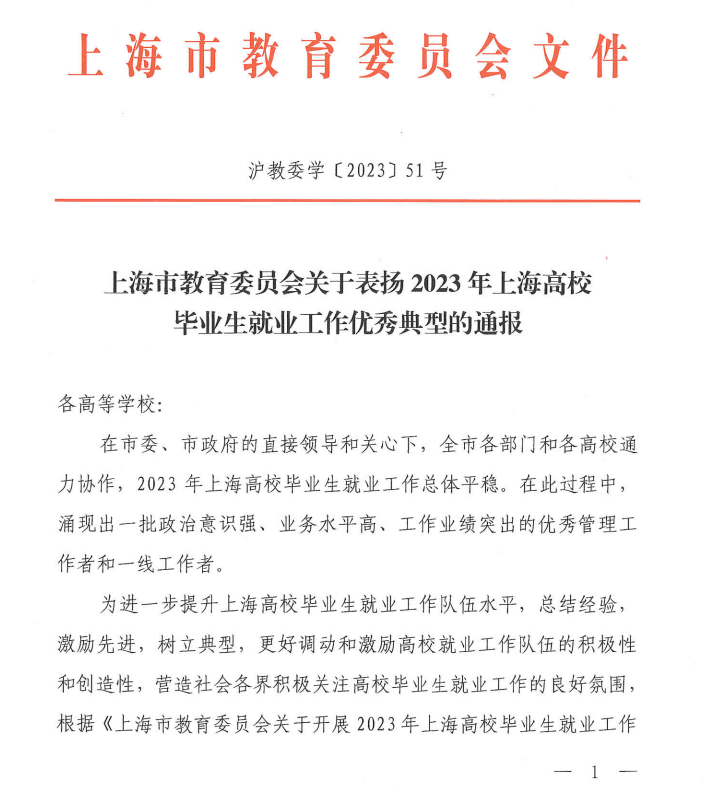 Wen Youbao, Yang Li, And Li Tingwei Won The Title Of Outstanding Employment Model Of Shanghai College Graduates In 20232026-03-07Comments(0)
 New York Governor Asks Trump To Refund $13.5 Billion In Tariffs, Saying He Illegally Levied Consumer Taxes2026-03-05Comments(0)
 The Pet Dog Brought Back By A Dalian Man From Hangzhou Was Lost In Dalian And A Reward Of 10,000 Yuan Was Offered To Find The Dog.2026-03-13Comments(0)
 Is The Spring Festival Fading? These Four Books May Help You Retain Tradition And Emotion2026-02-23Comments(0)