
China And The United States Held Economic And Trade Consultations In Paris From March 15 To 16, Forming A New Consensus
China and the United States hold economic and trade consultations in Paris, France
China and the United States hold economic and trade consultations in Paris, France
When 55 cities around the world are vying to develop a low-level economy, former US President Biden bluntly said that this is "a war that the United States cannot afford to lose." However, in this world-class competition, China has already quietly run a different rhythm?
According to CCTV News, from March 15th to 16th local time, the Chinese leader of China-U.S. economic and trade, Vice Premier He Lifeng, and the U.S. leaders, U.S. Treasury Secretary Bessant and Trade Representative Greer, held economic and trade consultations in Paris, France. Guided by the important consensus reached by the heads of state of China and the United States, the two sides conducted candid, in-depth and constructive exchanges and consultations on economic and trade issues of mutual concern such as tariff arrangements, promoting bilateral trade and investment, and maintaining existing consultation consensus, and formed some new consensuses, and will continue to maintain consultations.
He Lifeng said that under the strategic guidance of the important consensus reached by the two heads of state, after five rounds of economic and trade consultations last year, China and the United States reached a series of consultation results in the economic and trade field, which injected more certainty and stability into the economic and trade relations between the two countries and the world economy. Recently, the U.S. Supreme Court has ruled that the tariffs imposed by the United States in accordance with the International Emergency Economic Powers Act are illegal. Subsequently, the United States imposed a 10% import surcharge on all trading partners in accordance with Article 122 of the Trade Act of 1974. It has also successively introduced negative measures related to China such as 301 investigations, corporate sanctions, and market access restrictions. China’s position is consistent in opposing the U.S.’s imposition of unilateral tariffs, urging the U.S. to completely cancel unilateral tariffs and other restrictive measures, and will take necessary measures to resolutely defend its legitimate rights and interests. It is hoped that the United States and China will meet each other halfway, jointly implement the important consensus reached by the two heads of state, continuously expand the list of cooperation, shorten the list of issues, and promote the healthy, stable and sustainable development of Sino-US economic and trade relations.
The US side stated that stable Sino-US economic and trade relations are very important to both countries and the world, and help promote global economic growth, supply chain security and financial stability. Both sides should reduce friction, avoid escalation of issues, and resolve differences through consultation.
The two sides agreed to study the establishment of a cooperation mechanism to promote bilateral trade and investment, continue to give full play to the role of the China-US economic and trade consultation mechanism, strengthen dialogue and communication, properly manage differences, expand practical cooperation, and promote the continued stability and improvement of bilateral economic and trade relations.
When 55 cities around the world are vying to develop a low-level economy, former US President Biden bluntly said that this is "a war that the United States cannot afford to lose." However, in this world-class competition, China has already quietly run a different rhythm?
In "This Is China" broadcast on March 9, the host He Jie, Professor Zhang Weiwei, Dean of the China Institute of Fudan University, and Ren He, a distinguished expert from COMAC and director of the Shanghai General Aviation Association Expert Committee, conducted an in-depth dialogue, revealing the development status and core advantages of China's low-altitude economy, and also allowing us to see clearly China's confidence in the global competition.
In the program, Ren He made it clear that by 2024, 55 cities around the world have joined the low-altitude economic layout, including 6 cities in the United States and 8 cities in Australia. Brazil, South Korea, Japan and European countries have also made efforts to integrate low-altitude aircraft into daily life. Morgan Stanley even predicts that by around 2035, 35% of intercity transportation will be replaced by high-speed rail and cars by small planes, completely changing human travel patterns.
In the face of fierce competition on a global scale, Professor Zhang Weiwei used China's actual practice to give the answer: the earliest low-altitude test line from Suzhou Kunshan to Pudong Airport in China has been running stably for a year. The flight only takes 25 minutes, while traditional driving takes 2 hours, which greatly saves travel time. Especially for passengers who need to depart from Pudong Airport, this low-altitude route completely solves the pain points of time-consuming and prone to congestion on ground transportation. It has shown great practicality in the Yangtze River Delta region and has become a vivid example of the implementation of China's low-altitude economy.
From the competition among global leaders to the steady implementation of China's practice, China has not blindly followed the trend, but is practical-oriented, allowing the low-altitude economy to truly serve people's livelihood, and has blazed its own solid path in the global race.
When trading stocks, look at Jin Qilin's analyst reports, which are authoritative, professional, timely, and comprehensive to help you tap into potential theme opportunities!
Announcement code:2026-003
Announcement of Tianjin Motianm Technology Group Co., Ltd. on the resignation of the company’s non-independent directors
The company and all members of the board of directors guarantee that the information disclosed is true, accurate and complete, and contains no false records, misleading statements or major omissions.
1. Resignation of non-independent directors
The board of directors of Tianjin Motian Membrane Technology Group Co., Ltd. (hereinafter referred to as the "Company") today received a written resignation report from the company's non-independent director Mr. Zheng Chunjian. Mr. Zheng Chunjian resigned as a director of the company due to personal work arrangements. His original term was until the expiration of the fifth session of the board of directors (i.e. January 16, 2028). After resigning as a director, Mr. Zheng Chunjian no longer holds any other positions in the company.
According to relevant regulations such as the Company Law, Shenzhen Stock Exchange Self-Regulatory Guidelines for Listed Companies No. 2 - Standardized Operations of GEM Listed Companies, and the Articles of Association, Mr. Zheng Chunjian’s resignation did not cause the company’s board of directors to fall below the legal minimum number of members and did not affect the normal operation of the company’s board of directors. The resignation report took effect from the date it was delivered to the board of directors.
As of the date of this announcement, Mr. Zheng Chunjian does not directly or indirectly hold shares of the company, and there are no commitments that should be performed but have not been performed. The company and the board of directors express their sincere gratitude to Mr. Zheng Chunjian for his contribution to the development of the company during his tenure as director of the company.
2. Documents available for inspection
1. Mr. Zheng Chunjian’s “Resignation Letter”
Announcement is hereby made.
Board of Directors of Tianjin Motian Membrane Technology Group Co., Ltd.
March 16, 2026
However, according to multiple foreign media reports, Iran has recently begun to allow some Indian ships to pass through the Strait of Hormuz. In this regard, Indian Foreign Minister Jaishankar said that this proves that India's diplomatic efforts have "produced results."
According to a report by the Financial Times on March 16, Jaishankar confirmed in an interview that two liquefied petroleum gas carriers flying the Indian flag passed through the Strait of Hormuz on March 14.
"I am currently in dialogue with them and my dialogue has yielded some results," Jaishankar said. "The dialogue is still continuing and if it yields results, I will naturally move forward."
"From India's perspective, it's better to reason, work together and find a solution than no solution at all," he added.
According to Reuters, the two liquefied petroleum gas carriers are Shivalik and Nanda Devi, carrying about 92,700 tons of liquefied petroleum gas.
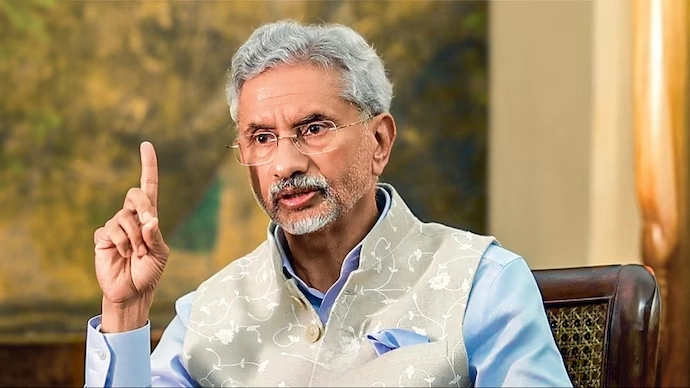
Indian Foreign Minister S Jaishankar Press Trust of India
Last week, international oil prices exceeded US$100 per barrel for the first time since August 2022, and are still hovering at this price. Some industry analysts expect oil prices may continue to rise if the conflict continues.
The Strait of Hormuz is the only waterway from the Persian Gulf to the outside world. More than a quarter of the world's total seaborne oil and about one-fifth of the world's liquefied natural gas transportation are shipped to all parts of the world through the Strait of Hormuz.
Iran's Supreme Leader Mujtaba Khamenei emphasized in his speech on the 12th that Iran should continue to use the "leverage method" of "closing" the Strait of Hormuz to put pressure on Iran's enemies.
The Financial Times stated that European countries, including France and Italy, have begun dialogue with Iran to discuss possible diplomatic solutions to restore energy transportation.
Iranian Foreign Minister Araghchi said in an interview with CBS on the 15th that Iran is open to countries that want to discuss "the safe passage of their ships."
According to Reuters, Iranian Ambassador to India Mohammad Fatali confirmed to the Indian media on the 14th that Tehran has allowed some Indian ships to pass through the Strait of Hormuz.
It is worth mentioning that Jaishankar was interviewed before going to Brussels to attend the EU Foreign Ministers' Meeting. The meeting will discuss whether to expand the EU's "Operation Aspid" in the Red Sea to the Strait of Hormuz.
"Operation Aspid" was launched in February 2024 to protect commercial ships in the Red Sea, Gulf of Aden and surrounding waters from attacks by Yemen's Houthi armed forces. It currently consists of three warships sent by France, Italy and Greece.
Asked whether European countries could emulate India's arrangement, Jaishankar said: "Frankly, every relationship to some extent has to work on its own terms. So, it's difficult for me to compare this to other relationships that may or may not have similar conditions."
"I am happy to share what we are doing with EU countries, and I know many countries have also had conversations with Tehran." Jaishankar said.
He revealed that there is no "unified arrangement" between India and Iran for ships flying the Indian flag, and "the passage of each ship is handled individually on a case-by-case basis."
Jaishankar also denied that Iran had obtained quid pro quo in the process, emphasizing that the "long history of dealings between the two sides... is the basis for my contacts."
"This is not a question of quid pro quo. India and Iran have maintained contacts. And we think this conflict is very unfortunate." Jaishankar said.
He added that diplomatic efforts between India and Iran are at an early stage and we have more ships there. So while this is a welcome development, conversations continue and work is ongoing. "
According to Reuters, a spokesperson for the Indian Ministry of Foreign Affairs said on the 14th that after Iran allowed several Indian ships to pass through the Strait of Hormuz, India is seeking Iran to provide safe passage for 22 Indian ships stranded.
India is the world's fourth largest buyer of LNG and the second largest buyer of LPG. According to Reuters, India consumed 33.15 million tons of cooking gas last year, of which imports accounted for about 60%, 90% of which came from the Middle East.
The Indian government has asked domestic refineries to increase LPG production and cut sales to the industrial sector to ensure that household supplies are not affected.
Mujtaba Khamenei, 57, has not appeared in public since he was announced as Iran's new supreme leader.
While there are divergent opinions about Mujtaba's health, on March 15, the Kuwaiti media Al-Jarida reported that a source revealed that Mujtaba had been transferred to Moscow by a Russian military aircraft due to his health and safety. Mujtaba reportedly underwent a "successful" surgical operation upon arrival and is currently receiving treatment at a private hospital inside the presidential palace in Moscow.
On the 16th local time, when asked about "Mujtaba's treatment in Russia", Russian Presidential Press Secretary Peskov refused to comment.
This high-level source who is said to be close to Mojtaba told the newspaper that Mojtaba was injured in the "first round of air strikes" launched by the United States and Israel on Iran on February 28. His injuries require a well-equipped hospital, sophisticated medical tracking and special monitoring, but these conditions are difficult to achieve when Iran continues to suffer heavy bombing.
The person further explained that Iran's security agencies were worried that Mujtaba's location would be leaked to doctors and medical experts, so they agreed to the suggestion that he go to Russia for treatment.
According to this person, Russian President Vladimir Putin personally proposed to allow Mujtaba to be treated in Russia during a phone call with Iranian President Pezeshchiyan on March 6. Iranian officials, as well as Mujtaba himself, carefully discussed the proposal and ultimately agreed. That night, Mujtaba was transferred and treated by Russian doctors and several accompanying Iranian doctors.
In addition, the report also quoted sources from Iran and Israel.
An Iranian source said that some public opinion believes that Mujtaba's first speech was actually written by Ali Larijani, Secretary-General of Iran's Supreme National Security Council, because the content is highly consistent with the latter's previous public statements.
Israeli sources revealed that Israeli intelligence agencies believe Mujtaba's injuries may be more serious than initially estimated, adding that Tel Aviv has not yet obtained conclusive evidence that he has left Iran.
According to the Russian TASS news agency, at a press conference on the 16th, Peskov refused to comment on the rumors that "Mujtaba arrived in Moscow for treatment." He responded: "We do not comment on such reports."
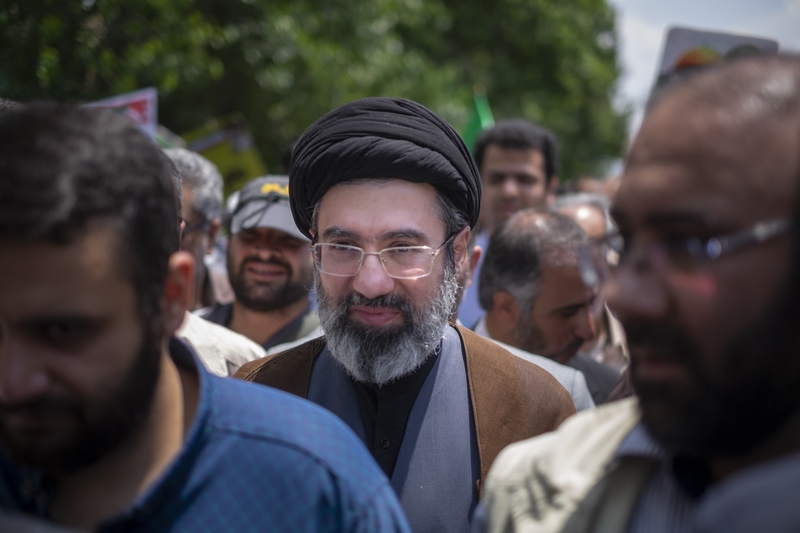
Mujtaba data map Oriental IC
On the evening of March 8, local time, the Iranian Experts Conference issued a statement announcing the election of Mujtaba Khamenei, the son of the late Supreme Leader Ali Khamenei, as the new Supreme Leader of the Islamic Republic of Iran.
On the 12th, Mujtaba delivered his first speech since taking office, calling on the Iranian people to unite and emphasizing that Iran should continue to "close" the Strait of Hormuz to put pressure on Iran's enemies. Some Western media noticed that Mujtaba's first statement was read out by a news anchor. He did not appear on the scene. Iranian state television did not explain this.
Since he has never appeared in public, there has been speculation about Mujtaba's health.
The "Newspaper" disclosed on the 4th that Mujtaba was injured in a US-Israeli air strike, and the left side of his body was injured from his head to his feet. Reports say he escaped unhurt when debris from the building fell near Mujtaba rather than hitting him directly.
The British "Sun" quoted sources as saying that Mujtaba lost at least one leg, and also suffered serious damage to his stomach or liver, and his condition was "very serious." But "The Sun" pointed out that they could not verify the accuracy of the news.
Iranian Ambassador to Cyprus Salarian confirmed the news that Mujtaba was injured on the 11th. In an interview with the British "Guardian", he said that Mujtaba was a "survivor" of the first round of US-Israeli air strikes and had "injuries on his legs, hands and arms, and bruises on his eyes."
On the 13th, U.S. Defense Secretary Hegseth said that the United States had learned that Khamenei had been injured and was likely to be "disfigured." In response, Iranian Foreign Minister Araghchi responded on the 14th that there was "no problem" with Mujtaba's physical condition.
Recently, people in many countries around the world have held protests against the military actions launched by the United States and Israel against Iran.
U.K.
On the 15th local time, a protest rally against the military actions launched by the United States and Israel against Iran was held in London, England.
According to CCTV news, anti-war people at the scene shouted to stop air strikes on Iran and opposed the indiscriminate killing of innocent people. In order to prevent conflicts between people with different stances, the London Police deployed a large number of police forces at the scene. Demonstrators with different stances gathered on both sides of the Thames: on one side were tens of thousands of demonstrators supporting Iran and opposing the war, while on the other side there were only a few hundred people supporting the United States and Israel. The two sides faced off across the river, which was a sharp contrast in scale.
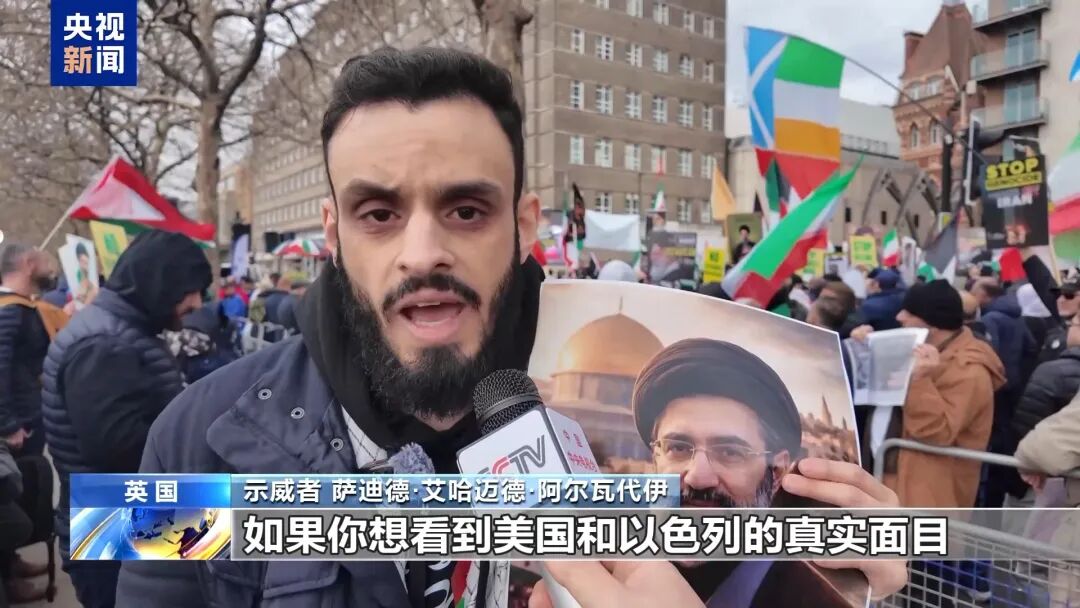
Demonstrator Sadid Ahmed Alwadaei: If you want to see the true face of the United States and Israel, just look at how many children they killed when they attacked the elementary school in the city of Minab, Iran. This reveals the true face of the West. I don’t think the United States and Israel are winning this war. We can see that Iran is firmly resisting the aggression of the United States and Israel.
Organizers stated that approximately tens of thousands of people participated in the anti-war protest that day. The London police deployed approximately 1,000 police officers to maintain order at the scene and temporarily closed nearby roads. London police said that a total of 12 people were arrested during the protest held in central London that day.
USA
On March 14, local time, protests broke out in Washington, USA. Some people held a rally in front of the White House to oppose the military action launched by the United States and Israel against Iran.
Protesters: I think it's especially important for Americans to take to the streets today because our government launched a missile attack on a girls' school in Iran. There is absolutely no excuse for this kind of behavior. Our government's behavior is evil. I hope Americans will take to the streets to express this and express our disapproval that we cannot support this evil behavior of our government.
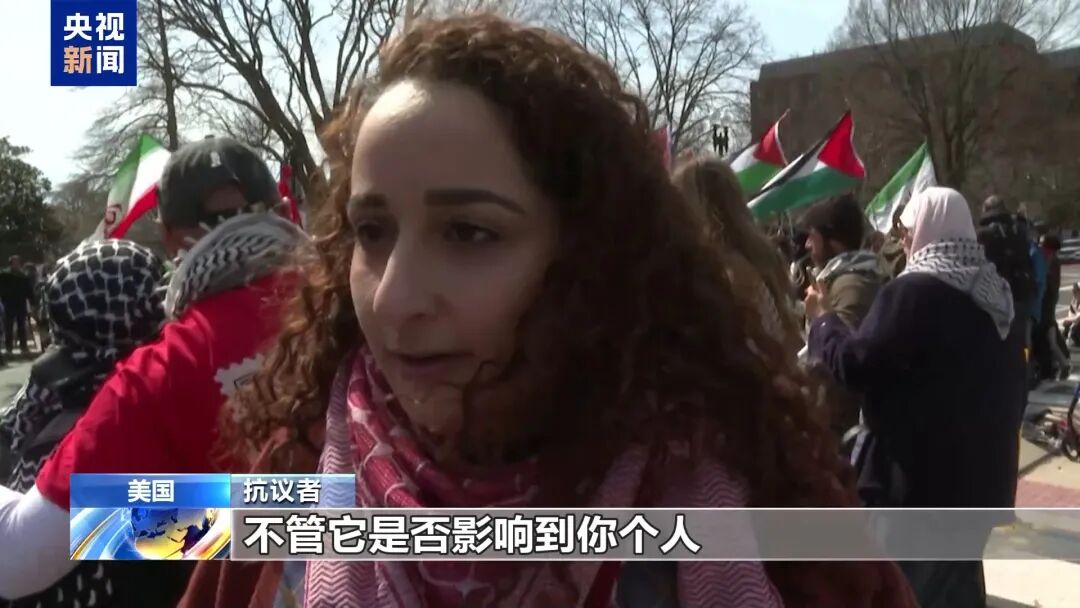
Protester: As a people, I believe we have a responsibility to stand up against atrocities. Whether or not it affects you personally, hearing these things happening over and over again makes you want to speak out.
In Washington, some residents also said that since the United States and Israel used force against Iran, gasoline prices across the United States have also risen sharply, which has affected the lives of ordinary people. At the same time, people continue to question the legality of this military strike against Iran.
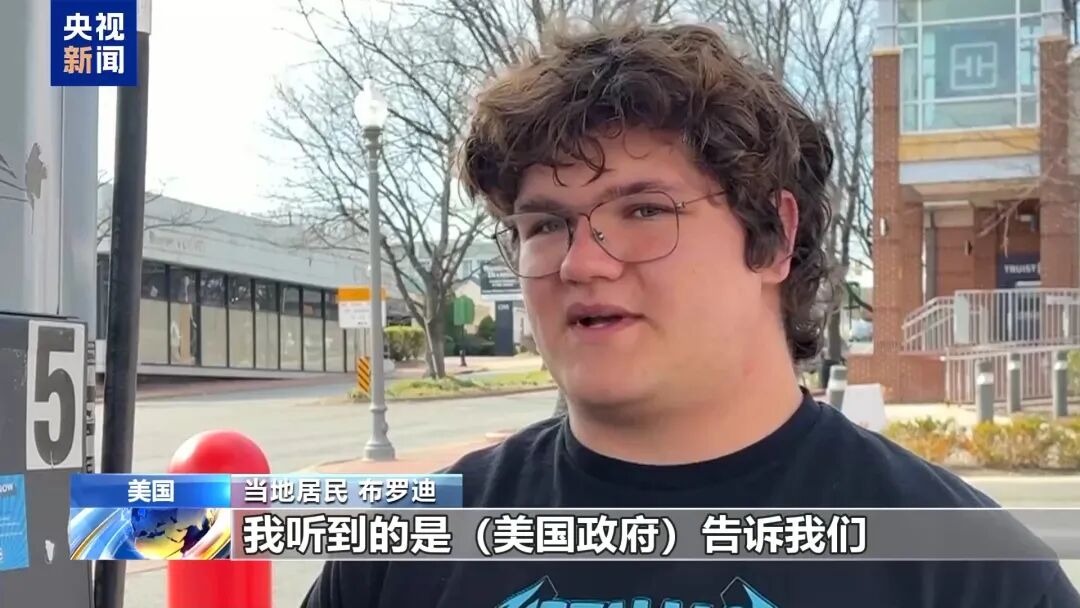
Local resident Brody: I definitely feel it. (Gas prices) have doubled. It’s crazy. I do not support the use of force by the United States and Israel against Iran at all. What I hear is (the US government) telling us that the reason for launching air strikes against Iran is because Iran will soon launch a nuclear war. But the U.S. government has been saying this for so many years without any evidence. The United States launched a preemptive strike against Iran without authorization from Congress, so I think this military action is baseless and completely unreasonable.
Israel
On the 14th local time, a large number of people held protests in Tel Aviv, Israel, to oppose the military strikes launched by the United States and Israel against Iran. The protesters said that this war was "stupid and unnecessary" and that the actions of the United States and Israel were "criminal acts" that have brought suffering to people in all countries.
Protester: I am against this war, I am against all wars. And this war is particularly bad, a completely criminal act, a lawless criminal act.
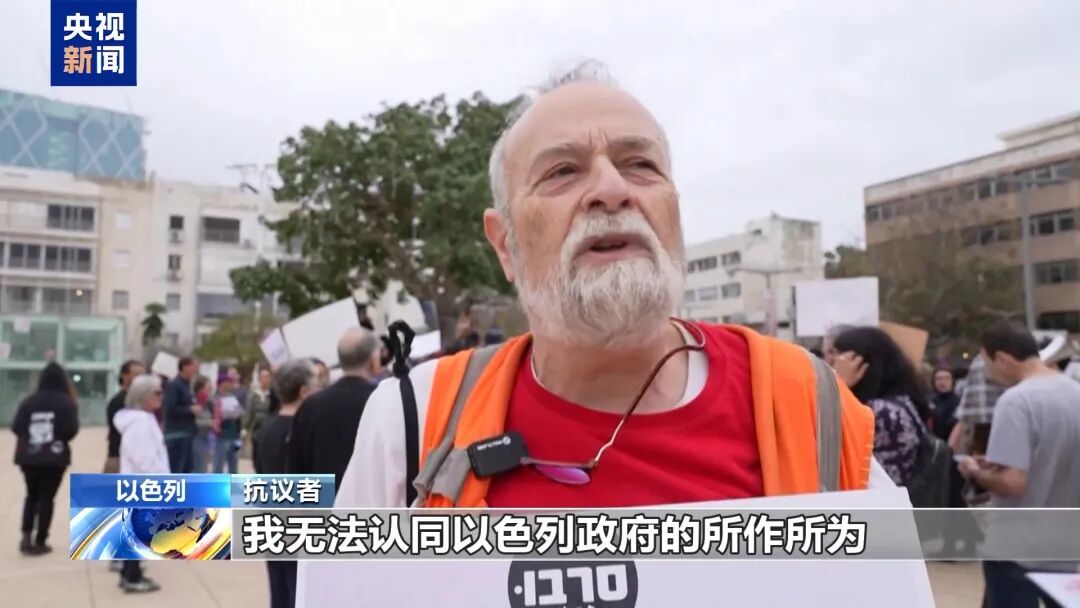
Protester: I cannot agree with what the Israeli government has done, nor with the appalling crimes against humanity committed by Israeli soldiers.
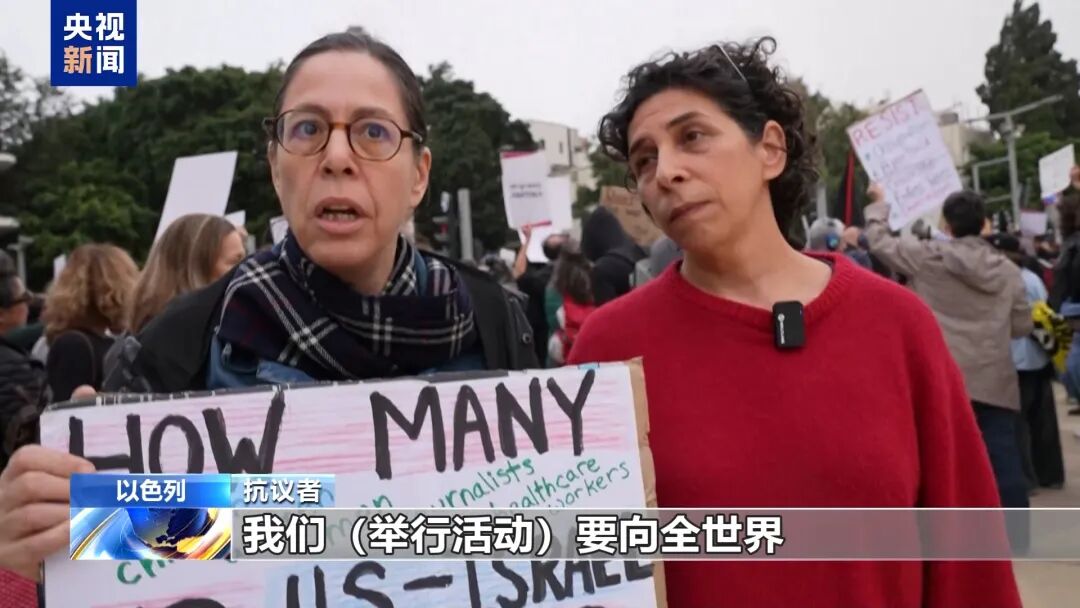
Protesters: This is a disaster for everyone, people are suffering in Iran, in Lebanon, in Israel. We (hold the event) want to send this message to all the people around the world who have suffered as a result of this senseless and unnecessary war.
Italy
On the 15th local time, Italian people held a protest outside the Sigonella base of the US military stationed in Sicily, Italy, calling on the Italian government to stop providing support for the US-Israeli military strike against Iran.
Demonstrators held flags high outside the Sigonella base to protest against the United States' use of Italian military bases to launch military operations against Iran.

Demonstrator Cosentino: This base is used by the US military to carry out military operations against Iran and facilitates the US-Israeli aggression against Iran. Many fighter planes and drones take off from here. Similarly, the US military also uses another base in Sicily to use satellite data to guide drones to carry out air strikes against Iran.
Demonstrator Irene: We call on the Italian government to take action against countries that use weapons to kill civilians and children.
Australia
On the 14th local time, a large number of Australians gathered outside Sydney City Hall to protest against the military strikes launched by the United States and Israel against Iran.
Outside Sydney Town Hall, demonstrators held high Iranian and Palestinian flags to protest against US and Israeli atrocities. Many people said that the military actions of the United States and Israel violated international law.
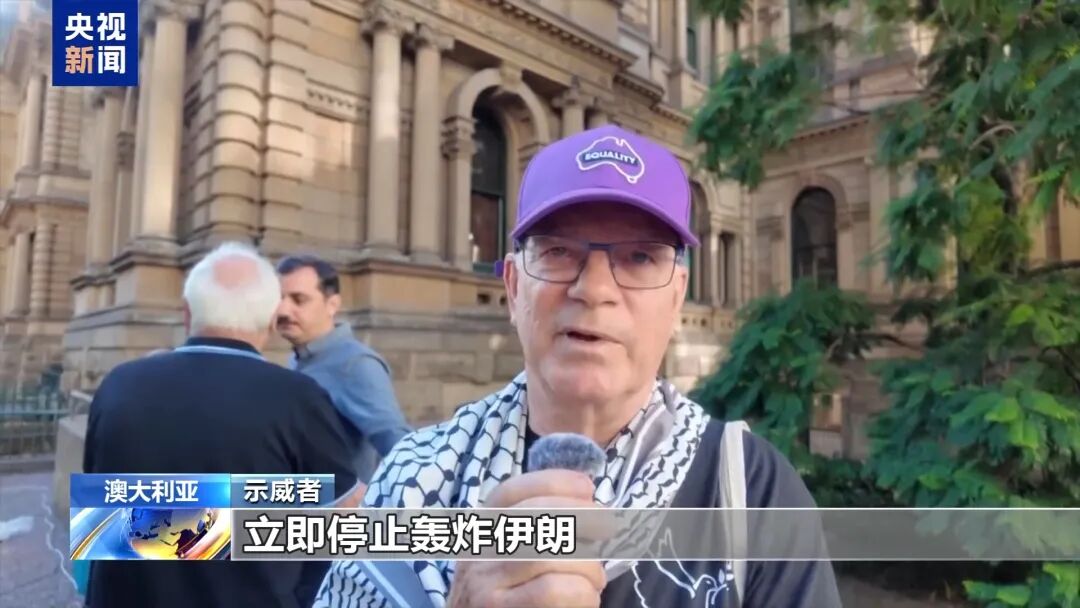
Demonstrators: We hope that the US and Israeli governments will immediately stop bombing Iran and stop the war unconditionally. They are hurting a lot of people, in fact, they are hurting the entire world. The US and Israel's strikes against Iran are completely illegal, but the two countries do not care whether they violate international law.
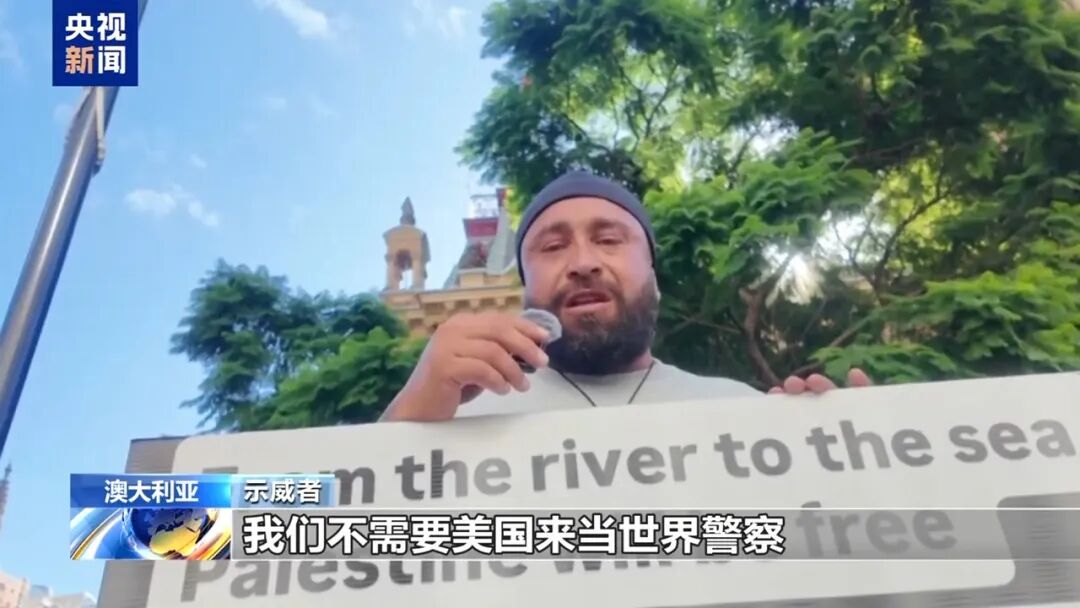
Demonstrators: We don’t need the United States to be the world’s policeman. The US-Israeli military attack on Iran has no basis in international law.
China provided $200,000 in aid to Iran. Ambassador to Iran: Attacking schools and harming children violates the bottom line of human moral conscience
The handover ceremony for the emergency humanitarian assistance of US$200,000 provided by the Red Cross Society of China to the Iranian Red Crescent Society was held on the 15th at the Chinese Embassy in Iran. This aid is specifically used to express sympathy and comfort to the families of the teachers and students who died in Shajare Tayebeh Primary School in Iran.
Chinese Ambassador to Iran Cong Peiwu said at the handover ceremony that China condemns all indiscriminate attacks on civilians and non-military targets. Attacks on schools and harming children are serious violations of international humanitarian law and violate the bottom line of human moral conscience. China is willing to continue to support the Iranian people in overcoming the difficulties. As a sincere friend and strategic partner of the Middle East countries, China is willing to work with the Middle East countries to implement global security initiatives and restore order to the Middle East, tranquility to the people, and peace to the world.
At the ceremony, Alishwandi, vice president of international affairs of the Iranian Red Crescent Society, thanked China for its assistance in Iran's difficult moments, saying that this fully demonstrated China's image as a responsible major country and the deep friendship between the two peoples to help each other.
On February 28, the first day that the United States and Israel launched a large-scale military operation against Iran, the Shajare Tayebe Primary School in Minab City, Hormozgan Province, southern Iran, was attacked. At least 165 people were killed, mostly little girls around 10 years old.
 Why Did Lei Chunian, The Young Anti-earthquake Hero, Turn From A Hero To A Prisoner? The Truth Behind It Is Shocking2026-03-06Comments(0)
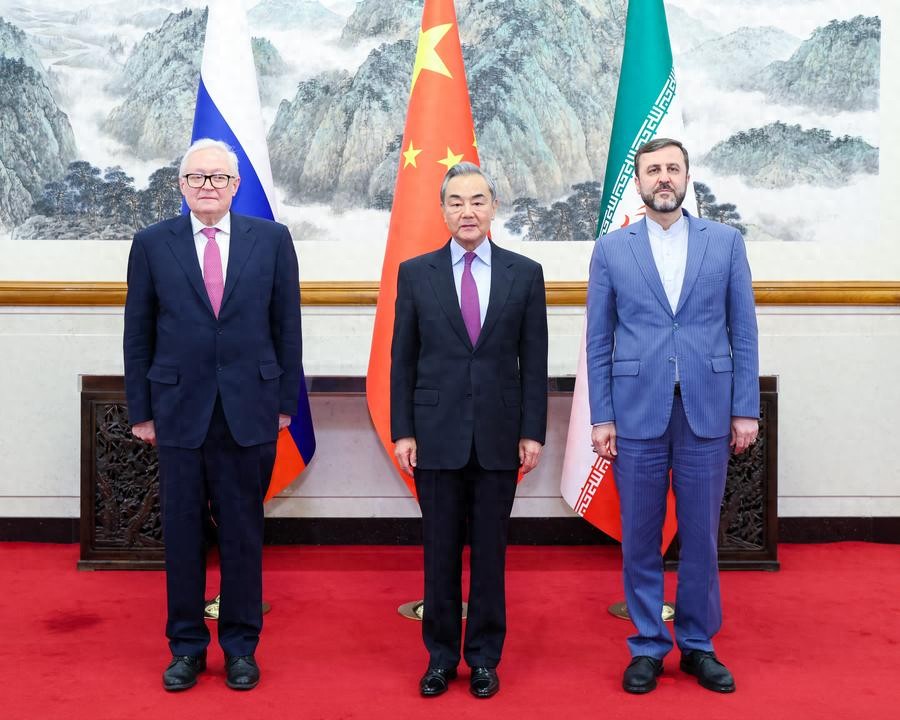 China, Russia And Iran Reiterate That Dialogue Is The Only Feasible Option To Resolve The Iranian Nuclear Issue2026-03-15Comments(0)
 Net Inflow Exceeded 180 Tons! IiMedia Consulting Interprets China’s Gold Investment Boom In 20252026-03-15Comments(0)
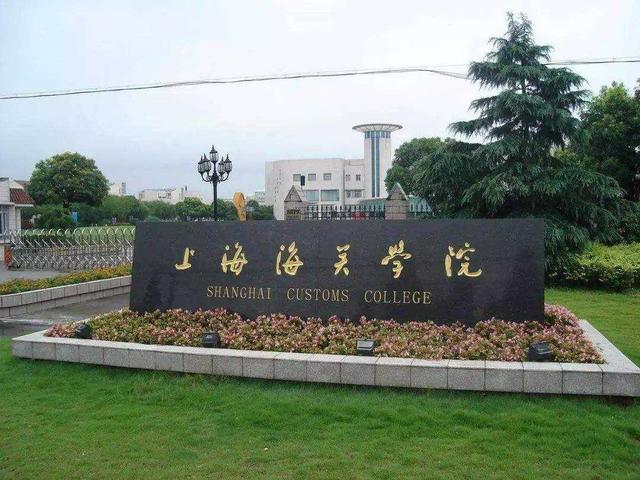 Unsatisfactory College Entrance Examination Results? Graduates From These Four Secondary Universities In Shanghai Are Popular, Including Customs College2026-02-18Comments(0)